Water Quality Monitoring: Initiatives to Improve
Water Quality
Freshwater is a finite resource as essential to
agriculture and industry as it is to basic human
existence. Water quality monitoring is a
fundamental tool in the management of
freshwater resources.
Water Quality Monitoring: Initiatives to Improve
Water Quality
Water quality refers to the chemical, physical and
biological characteristics of water. It is a measure of
the condition of water relative to the requirements of
one or more biotic species and or to any human need or
purpose. It is most frequently used by reference to a set
of standards against which compliance can be
assessed. The most common standards used to assess
water quality relate to health of ecosystems, safety of
human contact and drinking water.
What is Water
Quality?
Every living thing on earth needs water to survive. Human
bodies are made up of more than 60 percent water! We use
clean water to drink, grow crops for food, operate
factories, and for swimming, surfing, fishing and sailing.
Water is vitally important to every aspect of our lives.
Monitoring the quality of surface water will help protect our
waterways from pollution. Our local, state and national
governments use monitoring information to help control
pollution levels. We can use this information to understand
exactly how we impact our water supply and to help us
understand the important role we all play in water
conservation.
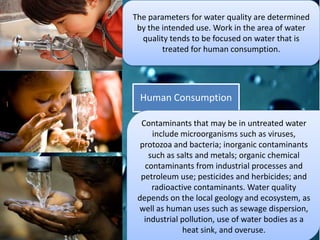
The parameters for water quality are determined
by the intended use. Work in the area of water
quality tends to be focused on water that is
treated for human consumption.
Human Consumption
Contaminants that may be in untreated water
include microorganisms such as viruses,
protozoa and bacteria; inorganic contaminants
such as salts and metals; organic chemical
contaminants from industrial processes and
petroleum use; pesticides and herbicides; and
radioactive contaminants. Water quality
depends on the local geology and ecosystem, as
well as human uses such as sewage dispersion,
industrial pollution, use of water bodies as a
heat sink, and overuse.
Water quality can be difficult to measure. Water is a vast network
of branching rivers, springs, creeks, swamps, estuaries,
wetlands, lakes, bays, etc. Each water body can contain
dramatically different levels of pollution. Water quality issues
influence human and environmental health, so the more we
monitor our water the better we will be able to recognize and
Water is constantly moving through rivers and streams, while
lakes are areas where water collects and is stored for long
periods of time. As a result, pollutants that make their way into
lakes have no way of getting out.
To Test Water Quality
Estuaries (a semi-enclosed body
of water where fresh and salt
water mix) have the highest rate of
impairment. Major rivers that
empty into the ocean create these
estuarine habitats. Pollution can
travel from hundreds of miles
upstream and empty directly into
Water Quality Monitoring: Pollutants
It is important to remember that you cannot tell
very much about the quality of water simply by
looking at it. Most pollutants are invisible to the
naked eye. There are three major types of
pollutants that affect water quality:
DIRT
Rain can wash dirt into rivers and streams. The dirt can
smother tiny organisms and kill fish eggs clinging to rocks on
the riverbed. Dirt can also clog gills and suffocate fish. Too
much dirt in a water body can block sunlight that plants use to
grow and make food in a process called photosynthesis. If
plants don’t get sunlight to grow, not only do the plants die,
but they also don’t make oxygen that other organisms, such
as fish, need to live.
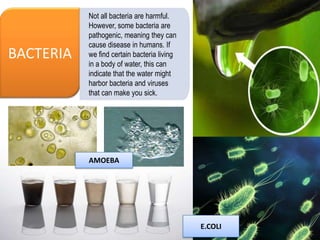
BACTERIA
Not all bacteria are harmful.
However, some bacteria are
pathogenic, meaning they can
cause disease in humans. If
we find certain bacteria living
in a body of water, this can
indicate that the water might
harbor bacteria and viruses
that can make you sick.
E.COLI
AMOEBA
NUTRIENTS
This is the primary cause of water pollution. The primary pollutants in
this category are nitrogen and phosphorus, but there are many
others. This type of pollution has impaired more than 3.8 million
acres of lakes, ponds and reservoirs nationwide! Excess nutrients
cause algae to grow out of control and use all the available oxygen
in water, killing off other organisms that need oxygen to live. The
excessive growth can also block sunlight and cause the death of
plants and other aquatic organisms.
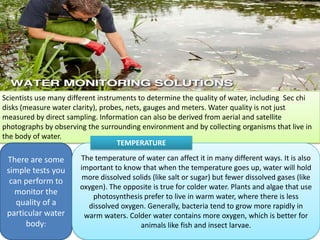
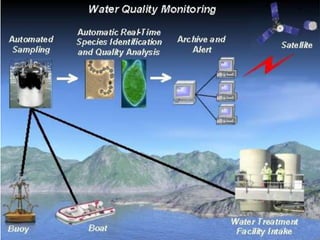
Scientists use many different instruments to determine the quality of water, including Sec chi
disks (measure water clarity), probes, nets, gauges and meters. Water quality is not just
measured by direct sampling. Information can also be derived from aerial and satellite
photographs by observing the surrounding environment and by collecting organisms that live in
the body of water.
There are some
simple tests you
can perform to
monitor the
quality of a
particular water
body:
The temperature of water can affect it in many different ways. It is also
important to know that when the temperature goes up, water will hold
more dissolved solids (like salt or sugar) but fewer dissolved gases (like
oxygen). The opposite is true for colder water. Plants and algae that use
photosynthesis prefer to live in warm water, where there is less
dissolved oxygen. Generally, bacteria tend to grow more rapidly in
warm waters. Colder water contains more oxygen, which is better for
animals like fish and insect larvae.
TEMPERATURE
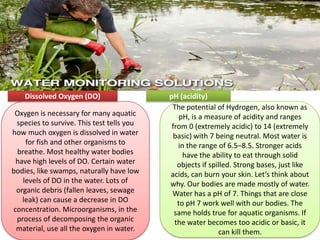
Oxygen is necessary for many aquatic
species to survive. This test tells you
how much oxygen is dissolved in water
for fish and other organisms to
breathe. Most healthy water bodies
have high levels of DO. Certain water
bodies, like swamps, naturally have low
levels of DO in the water. Lots of
organic debris (fallen leaves, sewage
leak) can cause a decrease in DO
concentration. Microorganisms, in the
process of decomposing the organic
material, use all the oxygen in water.
Dissolved Oxygen (DO)
The potential of Hydrogen, also known as
pH, is a measure of acidity and ranges
from 0 (extremely acidic) to 14 (extremely
basic) with 7 being neutral. Most water is
in the range of 6.5–8.5. Stronger acids
have the ability to eat through solid
objects if spilled. Strong bases, just like
acids, can burn your skin. Let’s think about
why. Our bodies are made mostly of water.
Water has a pH of 7. Things that are close
to pH 7 work well with our bodies. The
same holds true for aquatic organisms. If
the water becomes too acidic or basic, it
can kill them.
pH (acidity)
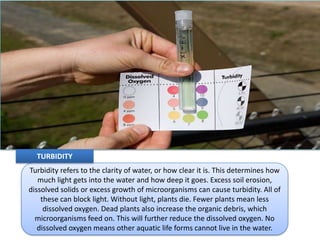
Turbidity refers to the clarity of water, or how clear it is. This determines how
much light gets into the water and how deep it goes. Excess soil erosion,
dissolved solids or excess growth of microorganisms can cause turbidity. All of
these can block light. Without light, plants die. Fewer plants mean less
dissolved oxygen. Dead plants also increase the organic debris, which
microorganisms feed on. This will further reduce the dissolved oxygen. No
dissolved oxygen means other aquatic life forms cannot live in the water.
TURBIDITY
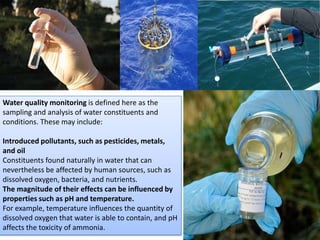
Water quality monitoring is defined here as the
sampling and analysis of water constituents and
conditions. These may include:
Introduced pollutants, such as pesticides, metals,
and oil
Constituents found naturally in water that can
nevertheless be affected by human sources, such as
dissolved oxygen, bacteria, and nutrients.
The magnitude of their effects can be influenced by
properties such as pH and temperature.
For example, temperature influences the quantity of
dissolved oxygen that water is able to contain, and pH
affects the toxicity of ammonia.
Water Quality Monitoring: Initiatives to Improve
Water Quality
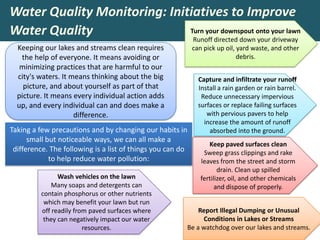
Keeping our lakes and streams clean requires
the help of everyone. It means avoiding or
minimizing practices that are harmful to our
city's waters. It means thinking about the big
picture, and about yourself as part of that
picture. It means every individual action adds
up, and every individual can and does make a
difference.
Taking a few precautions and by changing our habits in
small but noticeable ways, we can all make a
difference. The following is a list of things you can do
to help reduce water pollution:
Keep paved surfaces clean
Sweep grass clippings and rake
leaves from the street and storm
drain. Clean up spilled
fertilizer, oil, and other chemicals
and dispose of properly.
Capture and infiltrate your runoff
Install a rain garden or rain barrel.
Reduce unnecessary impervious
surfaces or replace failing surfaces
with pervious pavers to help
increase the amount of runoff
absorbed into the ground.
Wash vehicles on the lawn
Many soaps and detergents can
contain phosphorus or other nutrients
which may benefit your lawn but run
off readily from paved surfaces where
they can negatively impact our water
resources.
Turn your downspout onto your lawn
Runoff directed down your driveway
can pick up oil, yard waste, and other
debris.
Report Illegal Dumping or Unusual
Conditions in Lakes or Streams
Be a watchdog over our lakes and streams.
END.

Water Quality Monitoring Initiatives

  • 1.
    Water Quality Monitoring:Initiatives to Improve Water Quality Freshwater is a finite resource as essential to agriculture and industry as it is to basic human existence. Water quality monitoring is a fundamental tool in the management of freshwater resources.
  • 2.
    Water Quality Monitoring:Initiatives to Improve Water Quality Water quality refers to the chemical, physical and biological characteristics of water. It is a measure of the condition of water relative to the requirements of one or more biotic species and or to any human need or purpose. It is most frequently used by reference to a set of standards against which compliance can be assessed. The most common standards used to assess water quality relate to health of ecosystems, safety of human contact and drinking water. What is Water Quality?
  • 3.
    Every living thingon earth needs water to survive. Human bodies are made up of more than 60 percent water! We use clean water to drink, grow crops for food, operate factories, and for swimming, surfing, fishing and sailing. Water is vitally important to every aspect of our lives. Monitoring the quality of surface water will help protect our waterways from pollution. Our local, state and national governments use monitoring information to help control pollution levels. We can use this information to understand exactly how we impact our water supply and to help us understand the important role we all play in water conservation.
  • 4.
    The parameters forwater quality are determined by the intended use. Work in the area of water quality tends to be focused on water that is treated for human consumption. Human Consumption Contaminants that may be in untreated water include microorganisms such as viruses, protozoa and bacteria; inorganic contaminants such as salts and metals; organic chemical contaminants from industrial processes and petroleum use; pesticides and herbicides; and radioactive contaminants. Water quality depends on the local geology and ecosystem, as well as human uses such as sewage dispersion, industrial pollution, use of water bodies as a heat sink, and overuse.
  • 5.
    Water quality canbe difficult to measure. Water is a vast network of branching rivers, springs, creeks, swamps, estuaries, wetlands, lakes, bays, etc. Each water body can contain dramatically different levels of pollution. Water quality issues influence human and environmental health, so the more we monitor our water the better we will be able to recognize and
  • 6.
    Water is constantlymoving through rivers and streams, while lakes are areas where water collects and is stored for long periods of time. As a result, pollutants that make their way into lakes have no way of getting out. To Test Water Quality Estuaries (a semi-enclosed body of water where fresh and salt water mix) have the highest rate of impairment. Major rivers that empty into the ocean create these estuarine habitats. Pollution can travel from hundreds of miles upstream and empty directly into
  • 7.
    Water Quality Monitoring:Pollutants It is important to remember that you cannot tell very much about the quality of water simply by looking at it. Most pollutants are invisible to the naked eye. There are three major types of pollutants that affect water quality: DIRT Rain can wash dirt into rivers and streams. The dirt can smother tiny organisms and kill fish eggs clinging to rocks on the riverbed. Dirt can also clog gills and suffocate fish. Too much dirt in a water body can block sunlight that plants use to grow and make food in a process called photosynthesis. If plants don’t get sunlight to grow, not only do the plants die, but they also don’t make oxygen that other organisms, such as fish, need to live.
  • 8.
    BACTERIA Not all bacteriaare harmful. However, some bacteria are pathogenic, meaning they can cause disease in humans. If we find certain bacteria living in a body of water, this can indicate that the water might harbor bacteria and viruses that can make you sick. E.COLI AMOEBA
  • 9.
    NUTRIENTS This is theprimary cause of water pollution. The primary pollutants in this category are nitrogen and phosphorus, but there are many others. This type of pollution has impaired more than 3.8 million acres of lakes, ponds and reservoirs nationwide! Excess nutrients cause algae to grow out of control and use all the available oxygen in water, killing off other organisms that need oxygen to live. The excessive growth can also block sunlight and cause the death of plants and other aquatic organisms.
  • 10.
    Scientists use manydifferent instruments to determine the quality of water, including Sec chi disks (measure water clarity), probes, nets, gauges and meters. Water quality is not just measured by direct sampling. Information can also be derived from aerial and satellite photographs by observing the surrounding environment and by collecting organisms that live in the body of water. There are some simple tests you can perform to monitor the quality of a particular water body: The temperature of water can affect it in many different ways. It is also important to know that when the temperature goes up, water will hold more dissolved solids (like salt or sugar) but fewer dissolved gases (like oxygen). The opposite is true for colder water. Plants and algae that use photosynthesis prefer to live in warm water, where there is less dissolved oxygen. Generally, bacteria tend to grow more rapidly in warm waters. Colder water contains more oxygen, which is better for animals like fish and insect larvae. TEMPERATURE
  • 11.
    Oxygen is necessaryfor many aquatic species to survive. This test tells you how much oxygen is dissolved in water for fish and other organisms to breathe. Most healthy water bodies have high levels of DO. Certain water bodies, like swamps, naturally have low levels of DO in the water. Lots of organic debris (fallen leaves, sewage leak) can cause a decrease in DO concentration. Microorganisms, in the process of decomposing the organic material, use all the oxygen in water. Dissolved Oxygen (DO) The potential of Hydrogen, also known as pH, is a measure of acidity and ranges from 0 (extremely acidic) to 14 (extremely basic) with 7 being neutral. Most water is in the range of 6.5–8.5. Stronger acids have the ability to eat through solid objects if spilled. Strong bases, just like acids, can burn your skin. Let’s think about why. Our bodies are made mostly of water. Water has a pH of 7. Things that are close to pH 7 work well with our bodies. The same holds true for aquatic organisms. If the water becomes too acidic or basic, it can kill them. pH (acidity)
  • 12.
    Turbidity refers tothe clarity of water, or how clear it is. This determines how much light gets into the water and how deep it goes. Excess soil erosion, dissolved solids or excess growth of microorganisms can cause turbidity. All of these can block light. Without light, plants die. Fewer plants mean less dissolved oxygen. Dead plants also increase the organic debris, which microorganisms feed on. This will further reduce the dissolved oxygen. No dissolved oxygen means other aquatic life forms cannot live in the water. TURBIDITY
  • 13.
    Water quality monitoringis defined here as the sampling and analysis of water constituents and conditions. These may include: Introduced pollutants, such as pesticides, metals, and oil Constituents found naturally in water that can nevertheless be affected by human sources, such as dissolved oxygen, bacteria, and nutrients. The magnitude of their effects can be influenced by properties such as pH and temperature. For example, temperature influences the quantity of dissolved oxygen that water is able to contain, and pH affects the toxicity of ammonia.
  • 15.
    Water Quality Monitoring:Initiatives to Improve Water Quality Keeping our lakes and streams clean requires the help of everyone. It means avoiding or minimizing practices that are harmful to our city's waters. It means thinking about the big picture, and about yourself as part of that picture. It means every individual action adds up, and every individual can and does make a difference. Taking a few precautions and by changing our habits in small but noticeable ways, we can all make a difference. The following is a list of things you can do to help reduce water pollution: Keep paved surfaces clean Sweep grass clippings and rake leaves from the street and storm drain. Clean up spilled fertilizer, oil, and other chemicals and dispose of properly. Capture and infiltrate your runoff Install a rain garden or rain barrel. Reduce unnecessary impervious surfaces or replace failing surfaces with pervious pavers to help increase the amount of runoff absorbed into the ground. Wash vehicles on the lawn Many soaps and detergents can contain phosphorus or other nutrients which may benefit your lawn but run off readily from paved surfaces where they can negatively impact our water resources. Turn your downspout onto your lawn Runoff directed down your driveway can pick up oil, yard waste, and other debris. Report Illegal Dumping or Unusual Conditions in Lakes or Streams Be a watchdog over our lakes and streams.
  • 16.