Water Management
In
Environmental Planning
Pakistan
By: tariq mushtaq
to: Prof.Kai Tobias
MLA: Anhalt University of Applied Sciences
Table of Contents:
a) Water Resources of Pakistan
b) Water Use and consumption in
Pakistan
c) Macro Level Water Management
d) Micro Level Water Management
e) Environmental Impacts
f) Suggestions
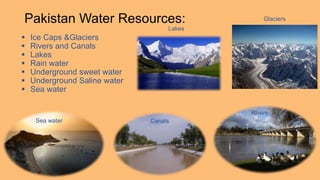
Pakistan Water Resources:
 Ice Caps &Glaciers
 Rivers and Canals
 Lakes
 Rain water
 Underground sweet water
 Underground Saline water
 Sea water
Rivers
Canals
Lakes
Glaciers
Sea water
Water Use and Consumption
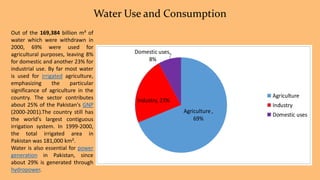
Agriculture ,
69%
Industry, 23%
Domestic uses,
8%
Agriculture
Industry
Domestic uses
Out of the 169,384 billion m³ of
water which were withdrawn in
2000, 69% were used for
agricultural purposes, leaving 8%
for domestic and another 23% for
industrial use. By far most water
is used for irrigated agriculture,
emphasizing the particular
significance of agriculture in the
country. The sector contributes
about 25% of the Pakistan's GNP
(2000-2001).The country still has
the world's largest contiguous
irrigation system. In 1999-2000,
the total irrigated area in
Pakistan was 181,000 km².
Water is also essential for power
generation in Pakistan, since
about 29% is generated through
hydropower.
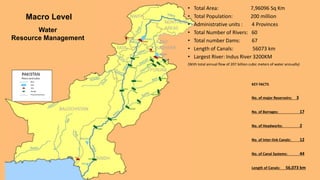
KEY FACTS
No. of major Reservoirs: 3
No. of Barrages: 17
No. of Headworks: 2
No. of Inter-link Canals: 12
No. of Canal Systems: 44
Length of Canals: 56,073 km
• Total Area: 7,96096 Sq Km
• Total Population: 200 million
• Administrative units : 4 Provinces
• Total Number of Rivers: 60
• Total number Dams: 67
• Length of Canals: 56073 km
• Largest River: Indus River 3200KM
(With total annual flow of 207 billion cubic meters of water annually)
Water
Resource Management
Macro Level
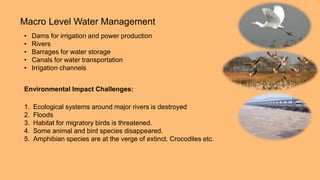
Macro Level Water Management
• Dams for irrigation and power production
• Rivers
• Barrages for water storage
• Canals for water transportation
• Irrigation channels
Environmental Impact Challenges:
1. Ecological systems around major rivers is destroyed
2. Floods
3. Habitat for migratory birds is threatened.
4. Some animal and bird species disappeared.
5. Amphibian species are at the verge of extinct. Crocodiles etc.
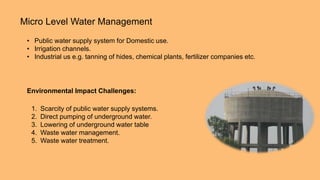
Micro Level Water Management
• Public water supply system for Domestic use.
• Irrigation channels.
• Industrial us e.g. tanning of hides, chemical plants, fertilizer companies etc.
Environmental Impact Challenges:
1. Scarcity of public water supply systems.
2. Direct pumping of underground water.
3. Lowering of underground water table
4. Waste water management.
5. Waste water treatment.
Environmental Impacts:
1. Due to water storage in dames, ecosystem around rivers is destroyed.
2. Dams result in to massive floods in summer when glaciers melt.
3. Floods in two rainy seasons due to dam overflow.
4. Reduction in life of dams by earth filling.
5. Glaciers are melting due to global warming which is also causing unusual floods.
6. Water table in urban areas is dropping quickly.
7. Due to lining of water channels underground water table is dropping.
8. Water bodies in Pakistan are habitat to migratory birds in winter.
9. Millions of cubic meters of water is wasted to flow to the oceans.
Suggestions:
1. Small dams at the tail of river should be planned.
2. Restoration of rivers to their natural flow.
3. Water supply companies should only be permitted to extract ground water.
4. Only licensed water extraction should be allowed to industries.
5. No lining of water channels near urban areas so that underground water table recharge.
6. Water bodies in Pakistan are habitat to migratory birds should me monitored.
7. Water storage to stope wastage of water.
8. Modern methods of irrigation should be adopted.
9. Education of masses about water conservation.
10.Local production and lowering of technical equipment.
Thank you

Water management in pakistan

  • 1.
    Water Management In Environmental Planning Pakistan By:tariq mushtaq to: Prof.Kai Tobias MLA: Anhalt University of Applied Sciences
  • 2.
    Table of Contents: a)Water Resources of Pakistan b) Water Use and consumption in Pakistan c) Macro Level Water Management d) Micro Level Water Management e) Environmental Impacts f) Suggestions
  • 3.
    Pakistan Water Resources: Ice Caps &Glaciers  Rivers and Canals  Lakes  Rain water  Underground sweet water  Underground Saline water  Sea water Rivers Canals Lakes Glaciers Sea water
  • 4.
    Water Use andConsumption Agriculture , 69% Industry, 23% Domestic uses, 8% Agriculture Industry Domestic uses Out of the 169,384 billion m³ of water which were withdrawn in 2000, 69% were used for agricultural purposes, leaving 8% for domestic and another 23% for industrial use. By far most water is used for irrigated agriculture, emphasizing the particular significance of agriculture in the country. The sector contributes about 25% of the Pakistan's GNP (2000-2001).The country still has the world's largest contiguous irrigation system. In 1999-2000, the total irrigated area in Pakistan was 181,000 km². Water is also essential for power generation in Pakistan, since about 29% is generated through hydropower.
  • 5.
    KEY FACTS No. ofmajor Reservoirs: 3 No. of Barrages: 17 No. of Headworks: 2 No. of Inter-link Canals: 12 No. of Canal Systems: 44 Length of Canals: 56,073 km • Total Area: 7,96096 Sq Km • Total Population: 200 million • Administrative units : 4 Provinces • Total Number of Rivers: 60 • Total number Dams: 67 • Length of Canals: 56073 km • Largest River: Indus River 3200KM (With total annual flow of 207 billion cubic meters of water annually) Water Resource Management Macro Level
  • 6.
    Macro Level WaterManagement • Dams for irrigation and power production • Rivers • Barrages for water storage • Canals for water transportation • Irrigation channels Environmental Impact Challenges: 1. Ecological systems around major rivers is destroyed 2. Floods 3. Habitat for migratory birds is threatened. 4. Some animal and bird species disappeared. 5. Amphibian species are at the verge of extinct. Crocodiles etc.
  • 7.
    Micro Level WaterManagement • Public water supply system for Domestic use. • Irrigation channels. • Industrial us e.g. tanning of hides, chemical plants, fertilizer companies etc. Environmental Impact Challenges: 1. Scarcity of public water supply systems. 2. Direct pumping of underground water. 3. Lowering of underground water table 4. Waste water management. 5. Waste water treatment.
  • 8.
    Environmental Impacts: 1. Dueto water storage in dames, ecosystem around rivers is destroyed. 2. Dams result in to massive floods in summer when glaciers melt. 3. Floods in two rainy seasons due to dam overflow. 4. Reduction in life of dams by earth filling. 5. Glaciers are melting due to global warming which is also causing unusual floods. 6. Water table in urban areas is dropping quickly. 7. Due to lining of water channels underground water table is dropping. 8. Water bodies in Pakistan are habitat to migratory birds in winter. 9. Millions of cubic meters of water is wasted to flow to the oceans.
  • 9.
    Suggestions: 1. Small damsat the tail of river should be planned. 2. Restoration of rivers to their natural flow. 3. Water supply companies should only be permitted to extract ground water. 4. Only licensed water extraction should be allowed to industries. 5. No lining of water channels near urban areas so that underground water table recharge. 6. Water bodies in Pakistan are habitat to migratory birds should me monitored. 7. Water storage to stope wastage of water. 8. Modern methods of irrigation should be adopted. 9. Education of masses about water conservation. 10.Local production and lowering of technical equipment.
  • 10.