DISPOSAL OF
SOLID WASTE
CONTENT :
• What is solid waste?
• Examples
• Types of solid waste
• Method of disposal of waste
• Cause and effects
• Solutions
●Solid waste means any garbage, refuse, sludge from a
wastewater treatment plant, water supply treatment plant,
or air pollution control facility and other discarded materials
● Solid or semisolid, nonsoluble material, such
as agricultural refuse, demolition waste, industrial waste,
mining residues, municipal garbage, and sewage sludge.
What is solid waste?
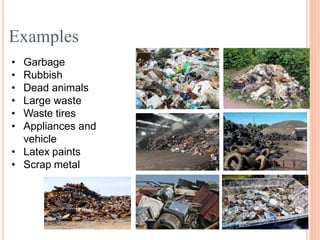
• Garbage
• Rubbish
• Dead animals
• Large waste
• Waste tires
• Appliances and
vehicle
• Latex paints
• Scrap metal
Examples
• Municipal Waste
• Hazardous Waste
• Bio-Medical Waste
Types of solid waste
Consist of household waste, construction waste, and
demolition debris, sanitation residue, and waste from
streets.
With rising urbanization and change in life style and
food habits, the amount of municipal solid waste has
been increasing rapidly and its composition changing.
Municipal waste
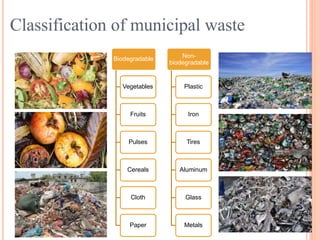
Biodegradable
Vegetables
Fruits
Pulses
Cereals
Cloth
Paper
Non-
biodegradable
Plastic
Iron
Tires
Aluminum
Glass
Metals
Classification of municipal waste
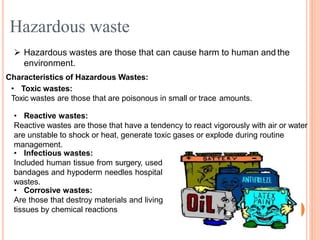
 Hazardous wastes are those that can cause harm to human and the
environment.
Characteristics of Hazardous Wastes:
• Toxic wastes:
Toxic wastes are those that are poisonous in small or trace amounts.
• Reactive wastes:
Reactive wastes are those that have a tendency to react vigorously with air or water
are unstable to shock or heat, generate toxic gases or explode during routine
management.
• Infectious wastes:
Included human tissue from surgery, used
bandages and hypoderm needles hospital
wastes.
• Corrosive wastes:
Are those that destroy materials and living
tissues by chemical reactions
Hazardous waste
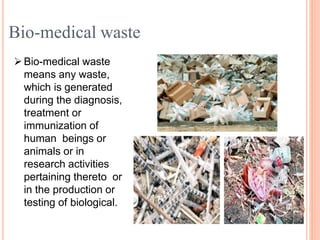
Bio-medical waste
means any waste,
which is generated
during the diagnosis,
treatment or
immunization of
human beings or
animals or in
research activities
pertaining thereto or
in the production or
testing of biological.
Bio-medical waste
 This process of waste disposal focuses attention on burying the waste
in the land.
Landfill
 It is a disposal method in which municipal solid wastes are burned
at high temperatures so as as to convert them into residue and
gaseous products.
 This process is also known as thermal treatment where solid waste
materials are converted by Incinerators into heat, gas, steam and
ash.
 is a easy and natural bio-degradation process that takes organic wastes
i.e. remains of plants and garden and kitchen waste and turns into nutrient
rich food for your plants.
Incineration/Combustion
Composting
Methods of disposal waste
RECOVERY AND RECYCLING
 Resource recovery is the process of taking useful discarded items fora
specific next use.
 Recycling is the process of converting waste products into new products
to prevent energy usage and consumption of fresh raw materials.
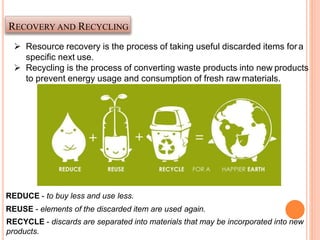
REDUCE - to buy less and use less.
REUSE - elements of the discarded item are used again.
RECYCLE - discards are separated into materials that may be incorporated into new
products.
• Solid waste thrown in streets, highways, and waterways
can cause pollution when they are carried off by
rainwaters run-offs or by flood to the mainstream or
drainage.
• Burning of industrial waste produce furans,
droxins, that are harmful to human beings.
• Toxic substances may contaminate the
groundwater
Cause and effects
 Compost your waste
 Composting waste in an option for getting rid of your
household waste. You can compost lots of items.
Anything that that is organic can be composed.
 Recycling
 Recycling waste is another option for getting rid of
waste.
 Buy products that are good for the Environment
 Instead of purchasing those plastic pop bottles, find a
way that you can buy things that are more
environmentally friendly.
Solutions
THANK
YOU!

disposal of solid waste

  • 1.
  • 2.
    CONTENT : • Whatis solid waste? • Examples • Types of solid waste • Method of disposal of waste • Cause and effects • Solutions
  • 3.
    ●Solid waste meansany garbage, refuse, sludge from a wastewater treatment plant, water supply treatment plant, or air pollution control facility and other discarded materials ● Solid or semisolid, nonsoluble material, such as agricultural refuse, demolition waste, industrial waste, mining residues, municipal garbage, and sewage sludge. What is solid waste?
  • 4.
    • Garbage • Rubbish •Dead animals • Large waste • Waste tires • Appliances and vehicle • Latex paints • Scrap metal Examples
  • 5.
    • Municipal Waste •Hazardous Waste • Bio-Medical Waste Types of solid waste
  • 6.
    Consist of householdwaste, construction waste, and demolition debris, sanitation residue, and waste from streets. With rising urbanization and change in life style and food habits, the amount of municipal solid waste has been increasing rapidly and its composition changing. Municipal waste
  • 7.
  • 8.
     Hazardous wastesare those that can cause harm to human and the environment. Characteristics of Hazardous Wastes: • Toxic wastes: Toxic wastes are those that are poisonous in small or trace amounts. • Reactive wastes: Reactive wastes are those that have a tendency to react vigorously with air or water are unstable to shock or heat, generate toxic gases or explode during routine management. • Infectious wastes: Included human tissue from surgery, used bandages and hypoderm needles hospital wastes. • Corrosive wastes: Are those that destroy materials and living tissues by chemical reactions Hazardous waste
  • 9.
    Bio-medical waste means anywaste, which is generated during the diagnosis, treatment or immunization of human beings or animals or in research activities pertaining thereto or in the production or testing of biological. Bio-medical waste
  • 10.
     This processof waste disposal focuses attention on burying the waste in the land. Landfill  It is a disposal method in which municipal solid wastes are burned at high temperatures so as as to convert them into residue and gaseous products.  This process is also known as thermal treatment where solid waste materials are converted by Incinerators into heat, gas, steam and ash.  is a easy and natural bio-degradation process that takes organic wastes i.e. remains of plants and garden and kitchen waste and turns into nutrient rich food for your plants. Incineration/Combustion Composting Methods of disposal waste
  • 11.
    RECOVERY AND RECYCLING Resource recovery is the process of taking useful discarded items fora specific next use.  Recycling is the process of converting waste products into new products to prevent energy usage and consumption of fresh raw materials. REDUCE - to buy less and use less. REUSE - elements of the discarded item are used again. RECYCLE - discards are separated into materials that may be incorporated into new products.
  • 12.
    • Solid wastethrown in streets, highways, and waterways can cause pollution when they are carried off by rainwaters run-offs or by flood to the mainstream or drainage. • Burning of industrial waste produce furans, droxins, that are harmful to human beings. • Toxic substances may contaminate the groundwater Cause and effects
  • 13.
     Compost yourwaste  Composting waste in an option for getting rid of your household waste. You can compost lots of items. Anything that that is organic can be composed.  Recycling  Recycling waste is another option for getting rid of waste.  Buy products that are good for the Environment  Instead of purchasing those plastic pop bottles, find a way that you can buy things that are more environmentally friendly. Solutions
  • 14.