African Americans Fights for
Change

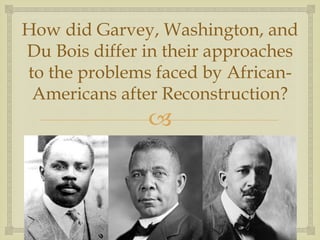
How did Garvey, Washington, and
Du Bois differ in their approaches
to the problems faced by African-
Americans after Reconstruction?

“The problem of the Twentieth
Century is the problem of the
color-line.”
Do now:
– W.E.B. Du Bois
1. What do you think this quotation means? What is
the ‘problem’ that Du Bois refers to?
2. Is this question still relevant today?

Think… Pair… Share
After Plessy v Ferguson, Jim Crow Laws
and segregation became the norm in the South.
Discriminatory laws oppressed African Americans
and denied them equal rights.
If you were an African American in
1900, How would you try to gain
equality in the United States?

Task
Vocab:
 Disenfranchisement: to deprive a person of a privilege or right
(specially the right to vote)
 Suffrage: the right to vote.
In groups of 3, read the speeches,
answer the question, and complete
the triple Venn diagram.
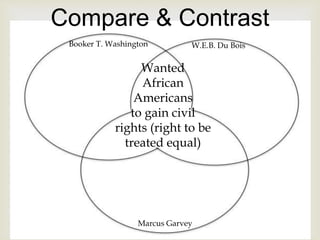
Compare & Contrast
Wanted
African
Americans
to gain civil
rights (right to be
treated equal)
Booker T. Washington W.E.B. Du Bois
Marcus Garvey
Booker T. Washington
Problem
• African Americans lack access to economic
opportunities because whites have denied them
opportunities and are trying to use immigrants to fill
jobs instead of African Americans.
Solution
• African Americans and whites must work together in
the South
• African Americans need vocational training and whites
need to be willing to provide them with education and
jobs.
Washington argues that once African Americans
achieve economic prosperity as a race, social
equality will follow…
W.E.B. Du Bois
Problem
• African Americans have been consistently denied their
civil and social rights
Solution
• consistent advocacy (fight for) rights by African
Americans
Without rights, nothing else is possible (African
Americans cannot achieve economic success and
ensure the safety of that success without suffrage,
equal opportunities).
Marcus Garvey
Problem
• African Americans have no jobs because white men are
taking over all economic opportunities and will soon ask
African Americans to leave or die.
Solution
• the creation of black nations in Africa.
According to Garvey, there will be no place for
Blacks unless they create one for themselves
(Garvey gives the example of how overcrowding of
Europe made America into a land of Europeans;
overcrowding in Europe and America threaten to do the
same thing to Africa).

Which one you think would be
the most effective solution to the
problem of inequity?
Garvey’s solution
Washington’s solution
Or
Du Bois’ solution
WHY???

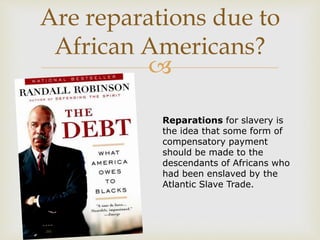
Are reparations due to
African Americans?
Reparations for slavery is
the idea that some form of
compensatory payment
should be made to the
descendants of Africans who
had been enslaved by the
Atlantic Slave Trade.

Barack Obama on reparations for
African Americans
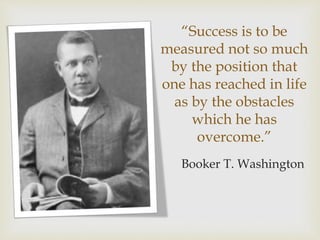
“Success is to be
measured not so much
by the position that
one has reached in life
as by the obstacles
which he has
overcome.”
Booker T. Washington
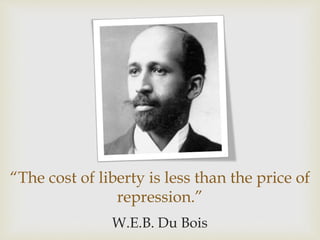
“The cost of liberty is less than the price of
repression.”
W.E.B. Du Bois
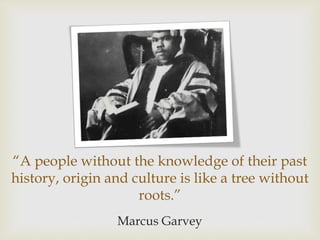
“A people without the knowledge of their past
history, origin and culture is like a tree without
roots.”
Marcus Garvey

Washington-DuBois-Garvey

  • 1.
  • 2.
     How did Garvey,Washington, and Du Bois differ in their approaches to the problems faced by African- Americans after Reconstruction?
  • 3.
     “The problem ofthe Twentieth Century is the problem of the color-line.” Do now: – W.E.B. Du Bois 1. What do you think this quotation means? What is the ‘problem’ that Du Bois refers to? 2. Is this question still relevant today?
  • 4.
     Think… Pair… Share AfterPlessy v Ferguson, Jim Crow Laws and segregation became the norm in the South. Discriminatory laws oppressed African Americans and denied them equal rights. If you were an African American in 1900, How would you try to gain equality in the United States?
  • 5.
     Task Vocab:  Disenfranchisement: todeprive a person of a privilege or right (specially the right to vote)  Suffrage: the right to vote. In groups of 3, read the speeches, answer the question, and complete the triple Venn diagram.
  • 6.
    Compare & Contrast Wanted African Americans togain civil rights (right to be treated equal) Booker T. Washington W.E.B. Du Bois Marcus Garvey
  • 7.
    Booker T. Washington Problem •African Americans lack access to economic opportunities because whites have denied them opportunities and are trying to use immigrants to fill jobs instead of African Americans. Solution • African Americans and whites must work together in the South • African Americans need vocational training and whites need to be willing to provide them with education and jobs. Washington argues that once African Americans achieve economic prosperity as a race, social equality will follow…
  • 8.
    W.E.B. Du Bois Problem •African Americans have been consistently denied their civil and social rights Solution • consistent advocacy (fight for) rights by African Americans Without rights, nothing else is possible (African Americans cannot achieve economic success and ensure the safety of that success without suffrage, equal opportunities).
  • 9.
    Marcus Garvey Problem • AfricanAmericans have no jobs because white men are taking over all economic opportunities and will soon ask African Americans to leave or die. Solution • the creation of black nations in Africa. According to Garvey, there will be no place for Blacks unless they create one for themselves (Garvey gives the example of how overcrowding of Europe made America into a land of Europeans; overcrowding in Europe and America threaten to do the same thing to Africa).
  • 10.
     Which one youthink would be the most effective solution to the problem of inequity? Garvey’s solution Washington’s solution Or Du Bois’ solution WHY???
  • 11.
     Are reparations dueto African Americans? Reparations for slavery is the idea that some form of compensatory payment should be made to the descendants of Africans who had been enslaved by the Atlantic Slave Trade.
  • 12.
     Barack Obama onreparations for African Americans
  • 13.
    “Success is tobe measured not so much by the position that one has reached in life as by the obstacles which he has overcome.” Booker T. Washington
  • 14.
    “The cost ofliberty is less than the price of repression.” W.E.B. Du Bois
  • 15.
    “A people withoutthe knowledge of their past history, origin and culture is like a tree without roots.” Marcus Garvey