PRODUCT MANAGEMENT:-
PRESENTATION ON
Presented By:-
Gaurav Patil
1
SECTORIAL ANALYSIS
 Worldwide total retail sales were more than $22
Trillion in 2014, which in 2015 reached $24 Trillion
(report from eMarketer.com)
 Estimated 2/3rd of the GDP of USA comes from
retail sector
 76 of the World’s Largest Retailing Company are
US based
www.retailindustry.about.com
2
SECTORIAL ANALYSIS (INDIA)
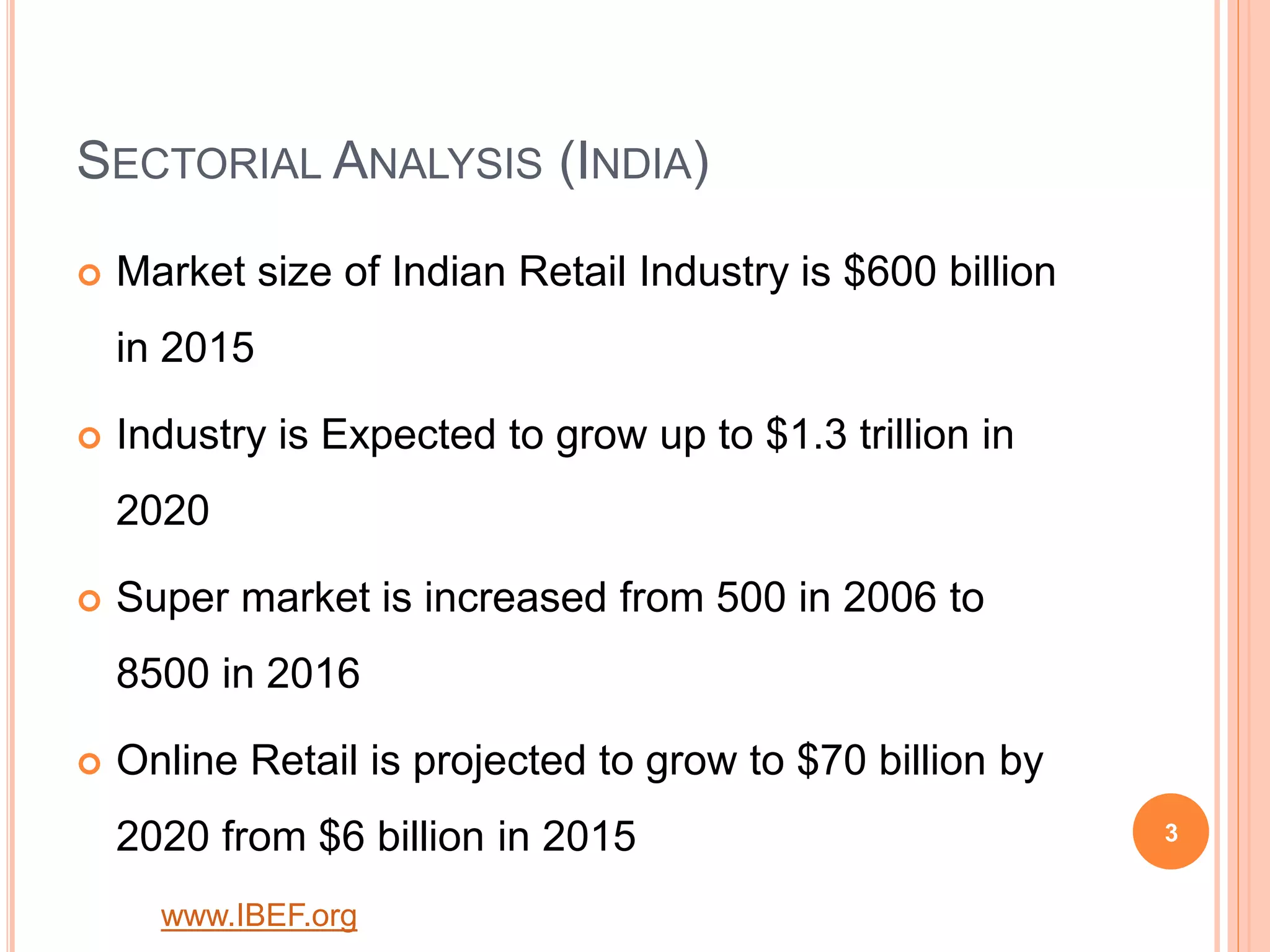
 Market size of Indian Retail Industry is $600 billion
in 2015
 Industry is Expected to grow up to $1.3 trillion in
2020
 Super market is increased from 500 in 2006 to
8500 in 2016
 Online Retail is projected to grow to $70 billion by
2020 from $6 billion in 2015
www.IBEF.org
3
SECTORIAL ANALYSIS (INDIA)
www.IBEF.org
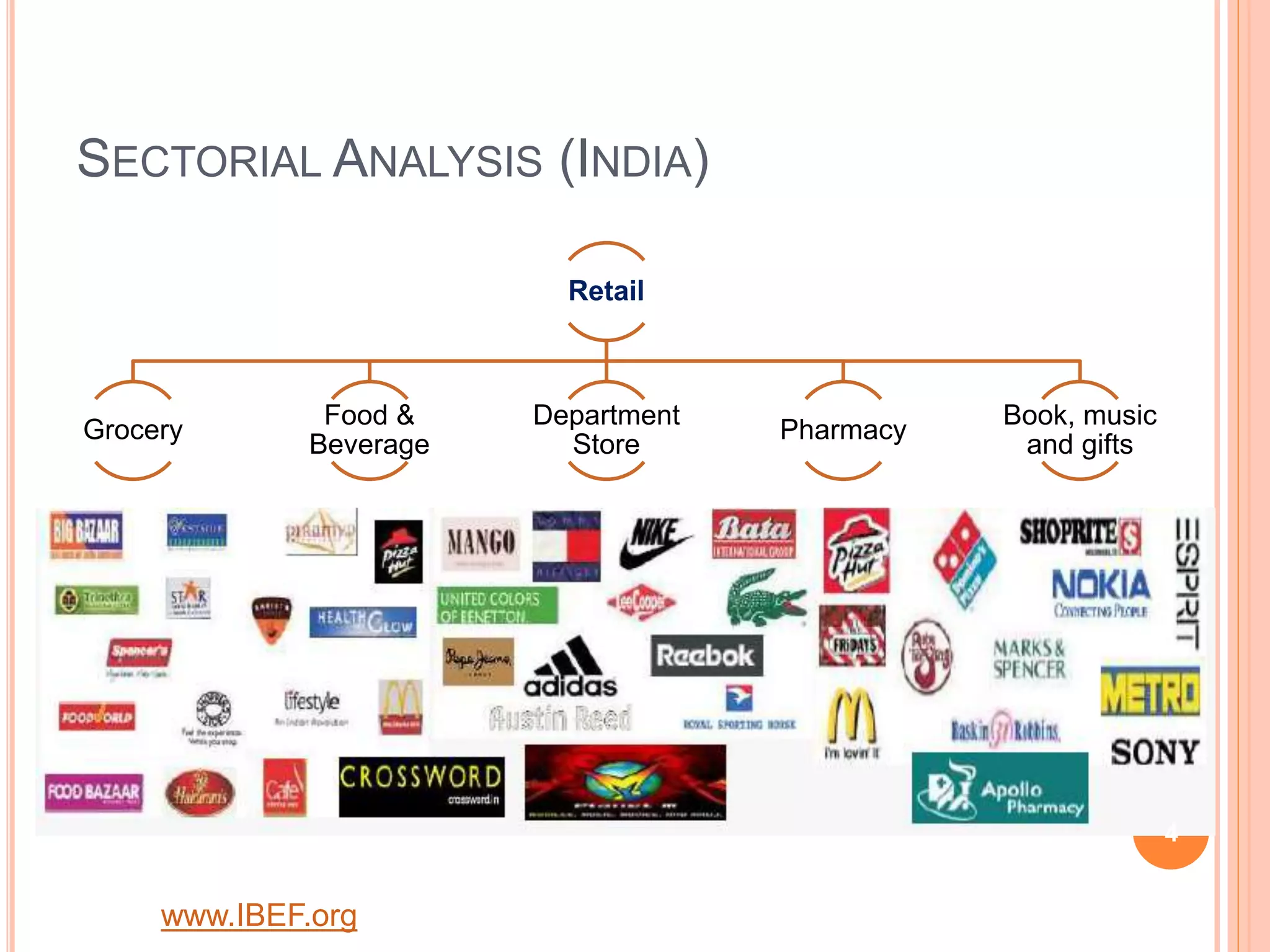
Retail
Grocery
Food &
Beverage
Department
Store
Pharmacy
Book, music
and gifts
4
WAL-MART
 CEO: C. Douglas Mcmillon
 Founder: Sam Walton
 Founded: July 2, 1962, Roges, Arkansas, US
 Revenue: $482.1 billion (2015)
 Headquarters: Bentonville, Arkansas, US
 Net income: 14.69 billion USD (2015)
 Stock Price: WMT (NYSE) US$ 69.22
5
www.wikipedia.com
HISTORY OF WAL-MART
 In 1950, Sam walton purchased a store from Luther E.
Harrison in Bentonville
 By 1967, the company grew to 24 stores and had
reached $12.6 million in sales
 The company's first stock split occurred in May 1972 at
a market price of $47
 25th anniversary in 1987
 Wal-Mart was ranked fifth by Fortune magazine on its
Global Most Admired All-Stars list and in 2003 and 2004
6
www.wikipedia.com
COMPETITORS
 General Merchandise Retailing
 Kmart and Target
 Warehouse club Segment
 Costco
 Super Market Retailing
 Kroger, Albertson’s and Safeway
7
CORE STRATEGIES
 Low – cost Leadership
 Supplying wide selection of the lowest – cost
general merchandise
 Controlling its cost drivers and relentlessly
8
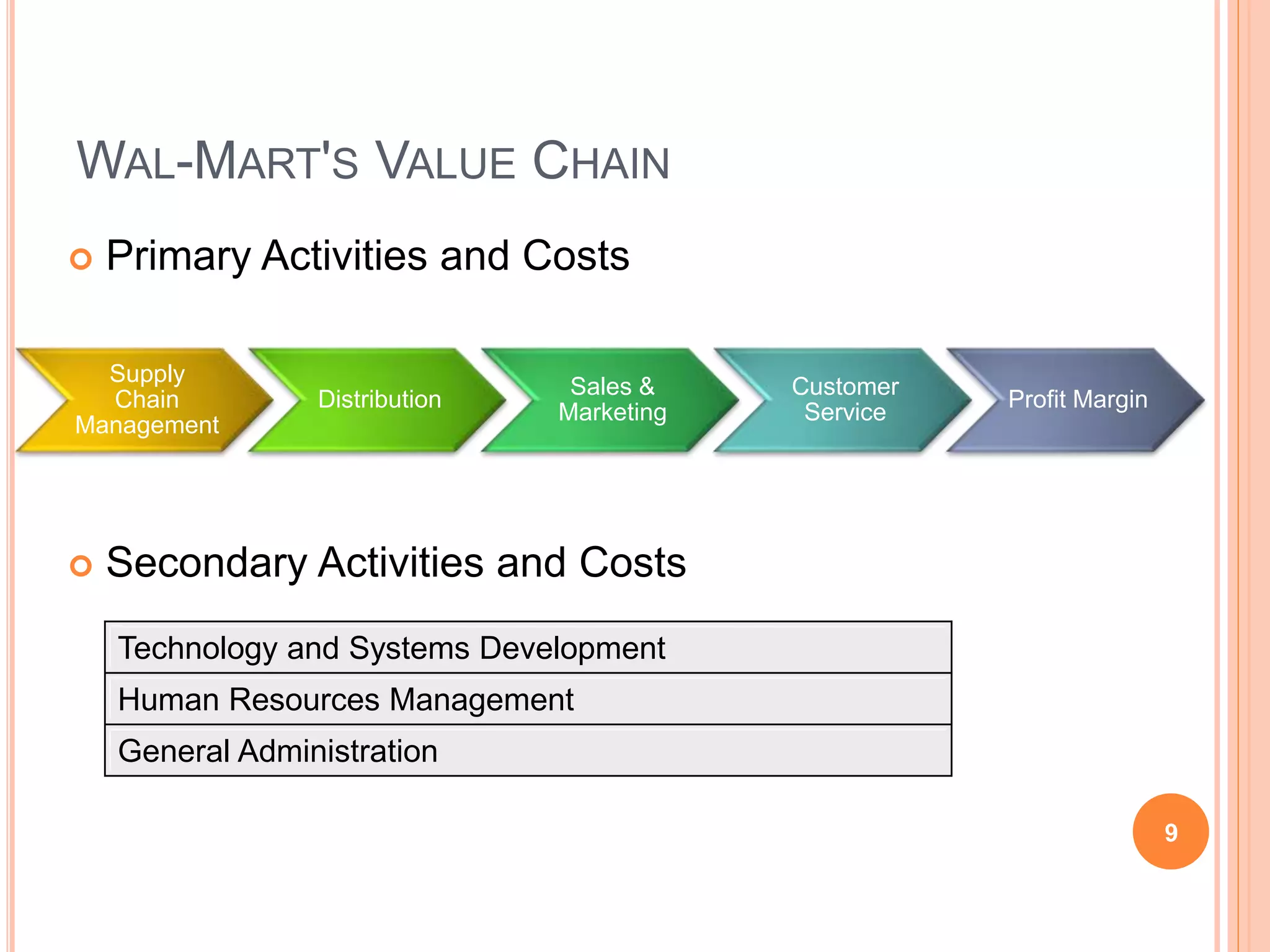
WAL-MART'S VALUE CHAIN
 Primary Activities and Costs
 Secondary Activities and Costs
9
Supply
Chain
Management
Distribution
Sales &
Marketing
Customer
Service
Profit Margin
Technology and Systems Development
Human Resources Management
General Administration
CUSTOMER TARGET
 “Wal-Mart's targeted demographic:
 Modest incomes
 Shoppers interested in prices
 But the customer base is changing
10
PORTER’S FIVE FORCE MODEL
1.Bargaining Power of Customers: Low
 Customers usually make small purchases.
 A large number of customers.
 Wal-Mart’s main customers are individuals.
2.Bargaining Power of Suppliers: Moderate
 Wal-Mart purchases huge quantities of products from its
suppliers.
 Low switching costs from one supplier to another.
 Products have a lot of substitutes.
 Almost all the products are not critical for Wal-Mart.
11
PORTER’S FIVE FORCE MODEL
3.Potential entrants / Barriers to entry:
Medium-High
 Economies of scale.
 High capital requirements.
 Customers mainly look for products with low prices and standard
quality.
 Low switching costs among companies for customers.
 Requires a precise distribution system.
4.Power of Substitutes: High
 Prices and quality of substitute products are very competitive.
 Performance of substitute products are similar.
 Consumer switching costs are low.
12
PORTER’S FIVE FORCE MODEL
5.Potential Competitors/ Rivalry: High
 Wal-Mart represents the 25% share of the U.S. Supermarket
business.
 Competitors have similar sizes.
 Industry growth is slow.
 Exit barriers are high.
 There is a high production capacity
13
14
STRENGTH
• Diversity in products & services
• Convenient prices & locations
• Strong market presence
• Customer loyalty
• Strong financial performance
• Cost and pricing advantages over rivals
15
WEAKNESS
• Brand image-weak reputation
• Low global presence
• Behind rivals in e-commerce
16
OPPORTUNITIES
• Global Expansion: new geographic areas
• Increasing online sales
• Strategic alliances
• Acquiring rival firms
17
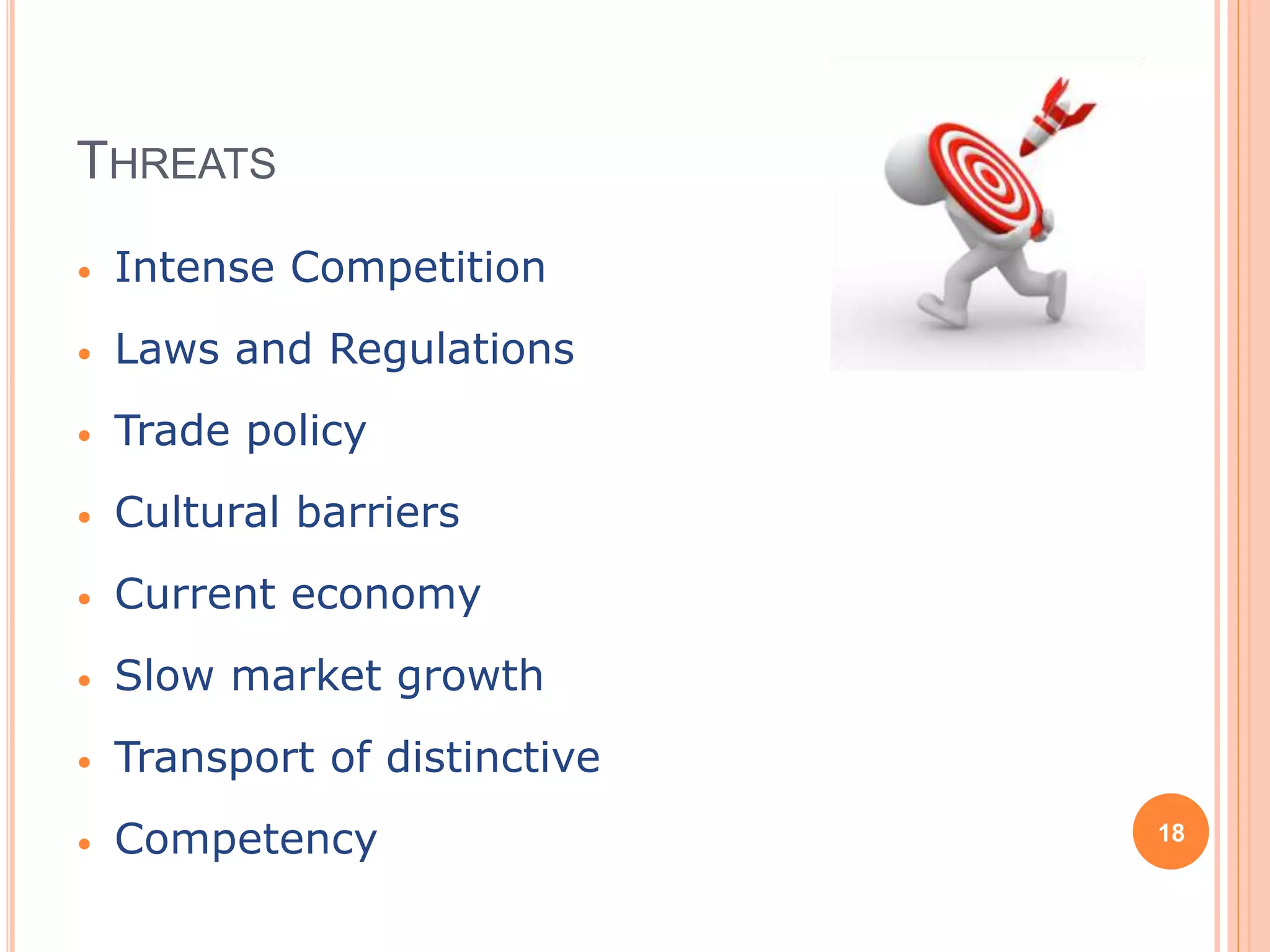
THREATS
• Intense Competition
• Laws and Regulations
• Trade policy
• Cultural barriers
• Current economy
• Slow market growth
• Transport of distinctive
• Competency 18
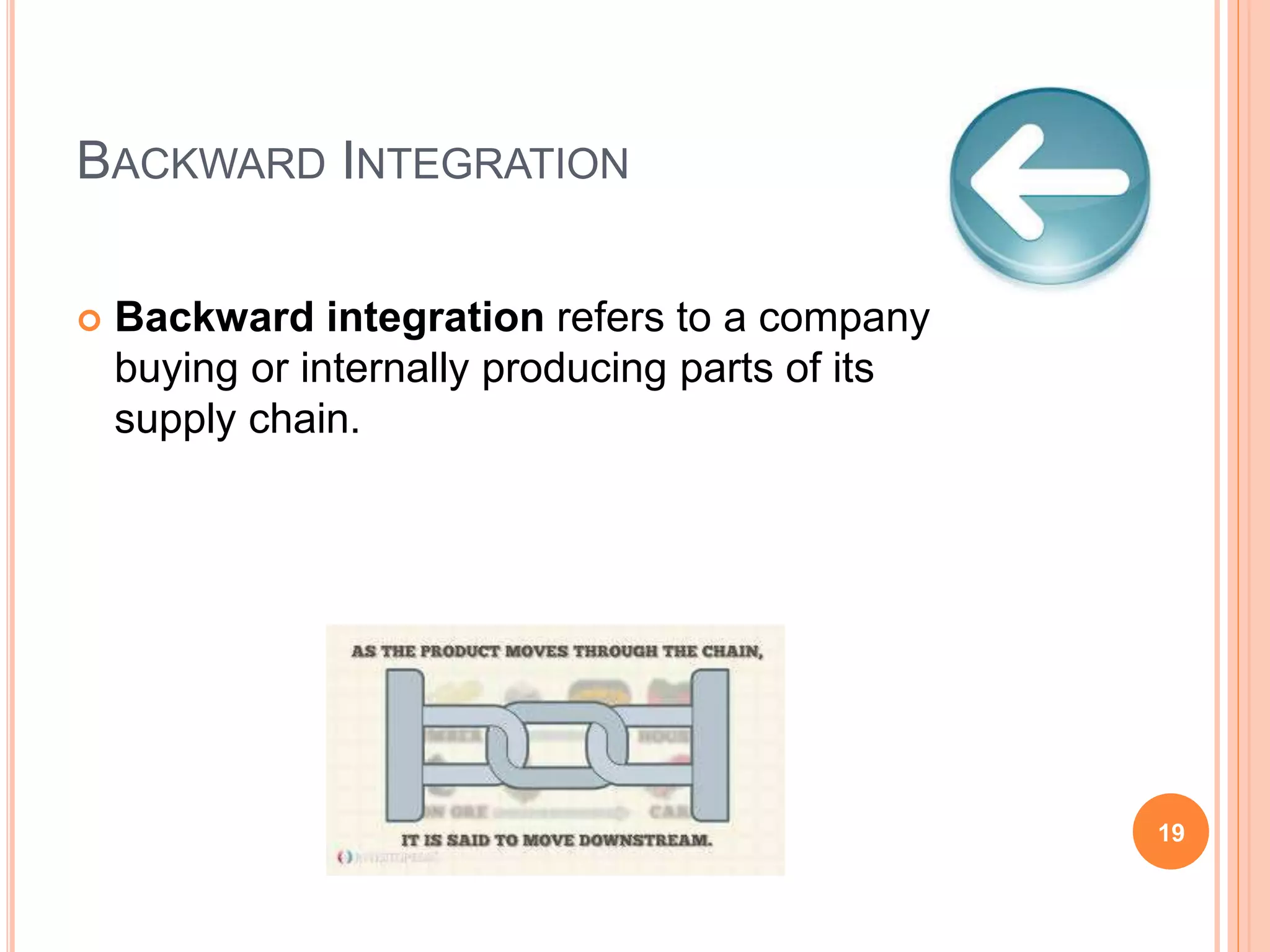
BACKWARD INTEGRATION
 Backward integration refers to a company
buying or internally producing parts of its
supply chain.
19
BACKWARD EXPANSION IN WAL-MART
 Acquire McLane company, Texas retail grocery
supplier
 Not dependent on a single supplier
 Investing in suppliers if they need funds
 They learned how manufacturer are performing
20
DISTRIBUTION CENTERS
21
• ECONOMIES OF SCALE
• HUB AND SPOKE MODEL
• CUT OUT THE MIDDLE MAN
• INVENTORY TURNOVER
• HIGH STORE VOLUME
 Inbound Logistics
 First users of EDI to communicate with suppliers
 High bargain power
 Operation
 They uniquely operate each store
 Better in store execution than competitors
 Outbound Logistics
 Low Distribution cost
 Marketing & Sales
 Unbeatable Prices
 Service 22
ACTIVITIES
WAL-MART’S STRATEGIES
EXECUTION PROCESS
 Use of cutting – edge technology
 Providing superior customer service and striving for
continuous improvement
 Implementing a corporate culture
 Strong management team
 State of the art training resources
23
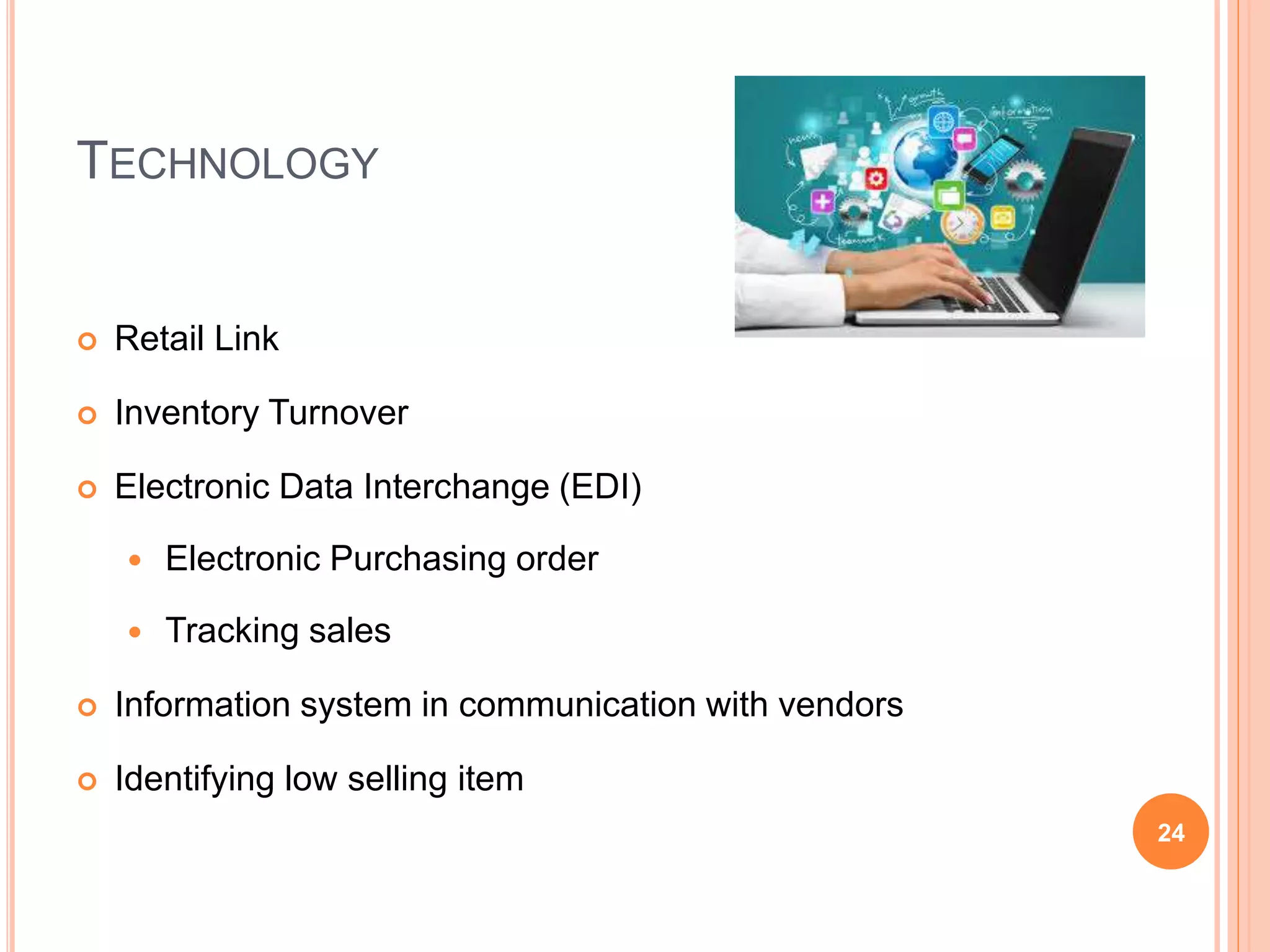
TECHNOLOGY
 Retail Link
 Inventory Turnover
 Electronic Data Interchange (EDI)
 Electronic Purchasing order
 Tracking sales
 Information system in communication with vendors
 Identifying low selling item
24
Thank You …!!!
25

Walmart project

  • 1.
  • 2.
    SECTORIAL ANALYSIS  Worldwidetotal retail sales were more than $22 Trillion in 2014, which in 2015 reached $24 Trillion (report from eMarketer.com)  Estimated 2/3rd of the GDP of USA comes from retail sector  76 of the World’s Largest Retailing Company are US based www.retailindustry.about.com 2
  • 3.
    SECTORIAL ANALYSIS (INDIA) Market size of Indian Retail Industry is $600 billion in 2015  Industry is Expected to grow up to $1.3 trillion in 2020  Super market is increased from 500 in 2006 to 8500 in 2016  Online Retail is projected to grow to $70 billion by 2020 from $6 billion in 2015 www.IBEF.org 3
  • 4.
    SECTORIAL ANALYSIS (INDIA) www.IBEF.org Retail Grocery Food& Beverage Department Store Pharmacy Book, music and gifts 4
  • 5.
    WAL-MART  CEO: C.Douglas Mcmillon  Founder: Sam Walton  Founded: July 2, 1962, Roges, Arkansas, US  Revenue: $482.1 billion (2015)  Headquarters: Bentonville, Arkansas, US  Net income: 14.69 billion USD (2015)  Stock Price: WMT (NYSE) US$ 69.22 5 www.wikipedia.com
  • 6.
    HISTORY OF WAL-MART In 1950, Sam walton purchased a store from Luther E. Harrison in Bentonville  By 1967, the company grew to 24 stores and had reached $12.6 million in sales  The company's first stock split occurred in May 1972 at a market price of $47  25th anniversary in 1987  Wal-Mart was ranked fifth by Fortune magazine on its Global Most Admired All-Stars list and in 2003 and 2004 6 www.wikipedia.com
  • 7.
    COMPETITORS  General MerchandiseRetailing  Kmart and Target  Warehouse club Segment  Costco  Super Market Retailing  Kroger, Albertson’s and Safeway 7
  • 8.
    CORE STRATEGIES  Low– cost Leadership  Supplying wide selection of the lowest – cost general merchandise  Controlling its cost drivers and relentlessly 8
  • 9.
    WAL-MART'S VALUE CHAIN Primary Activities and Costs  Secondary Activities and Costs 9 Supply Chain Management Distribution Sales & Marketing Customer Service Profit Margin Technology and Systems Development Human Resources Management General Administration
  • 10.
    CUSTOMER TARGET  “Wal-Mart'stargeted demographic:  Modest incomes  Shoppers interested in prices  But the customer base is changing 10
  • 11.
    PORTER’S FIVE FORCEMODEL 1.Bargaining Power of Customers: Low  Customers usually make small purchases.  A large number of customers.  Wal-Mart’s main customers are individuals. 2.Bargaining Power of Suppliers: Moderate  Wal-Mart purchases huge quantities of products from its suppliers.  Low switching costs from one supplier to another.  Products have a lot of substitutes.  Almost all the products are not critical for Wal-Mart. 11
  • 12.
    PORTER’S FIVE FORCEMODEL 3.Potential entrants / Barriers to entry: Medium-High  Economies of scale.  High capital requirements.  Customers mainly look for products with low prices and standard quality.  Low switching costs among companies for customers.  Requires a precise distribution system. 4.Power of Substitutes: High  Prices and quality of substitute products are very competitive.  Performance of substitute products are similar.  Consumer switching costs are low. 12
  • 13.
    PORTER’S FIVE FORCEMODEL 5.Potential Competitors/ Rivalry: High  Wal-Mart represents the 25% share of the U.S. Supermarket business.  Competitors have similar sizes.  Industry growth is slow.  Exit barriers are high.  There is a high production capacity 13
  • 14.
  • 15.
    STRENGTH • Diversity inproducts & services • Convenient prices & locations • Strong market presence • Customer loyalty • Strong financial performance • Cost and pricing advantages over rivals 15
  • 16.
    WEAKNESS • Brand image-weakreputation • Low global presence • Behind rivals in e-commerce 16
  • 17.
    OPPORTUNITIES • Global Expansion:new geographic areas • Increasing online sales • Strategic alliances • Acquiring rival firms 17
  • 18.
    THREATS • Intense Competition •Laws and Regulations • Trade policy • Cultural barriers • Current economy • Slow market growth • Transport of distinctive • Competency 18
  • 19.
    BACKWARD INTEGRATION  Backwardintegration refers to a company buying or internally producing parts of its supply chain. 19
  • 20.
    BACKWARD EXPANSION INWAL-MART  Acquire McLane company, Texas retail grocery supplier  Not dependent on a single supplier  Investing in suppliers if they need funds  They learned how manufacturer are performing 20
  • 21.
    DISTRIBUTION CENTERS 21 • ECONOMIESOF SCALE • HUB AND SPOKE MODEL • CUT OUT THE MIDDLE MAN • INVENTORY TURNOVER • HIGH STORE VOLUME
  • 22.
     Inbound Logistics First users of EDI to communicate with suppliers  High bargain power  Operation  They uniquely operate each store  Better in store execution than competitors  Outbound Logistics  Low Distribution cost  Marketing & Sales  Unbeatable Prices  Service 22 ACTIVITIES
  • 23.
    WAL-MART’S STRATEGIES EXECUTION PROCESS Use of cutting – edge technology  Providing superior customer service and striving for continuous improvement  Implementing a corporate culture  Strong management team  State of the art training resources 23
  • 24.
    TECHNOLOGY  Retail Link Inventory Turnover  Electronic Data Interchange (EDI)  Electronic Purchasing order  Tracking sales  Information system in communication with vendors  Identifying low selling item 24
  • 25.

Editor's Notes

  • #21 Obtain bargaining power through backward integration