PRESENTED TO : Sir Mahesh Ahujha
PRESENTED BY : Zeeshan Ali Khan


Information system:
 Set of interrelated components
 Collect, process, store, and distribute information

 Support decision making, coordination, and

control


Information vs. data
 Data are streams of raw facts
 Information is data shaped into meaningful form


System that provides information needed to
manage organizations effectively and
efficiently.


To improve the Management decision
making



By providing accurate and up-to-date
information about the key aspects of
organizational performance.
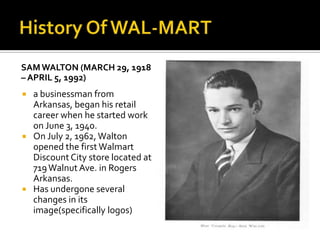
SAM WALTON (MARCH 29, 1918
– APRIL 5, 1992)

a businessman from
Arkansas, began his retail
career when he started work
on June 3, 1940.
 On July 2, 1962, Walton
opened the first Walmart
Discount City store located at
719 Walnut Ave. in Rogers
Arkansas.
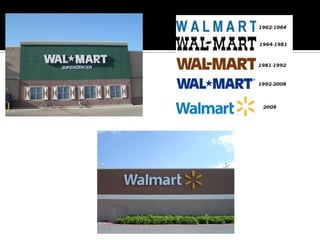
 Has undergone several
changes in its
image(specifically logos)






WalMart is the largest and most profitable
retailer on the earth
the Worlds second largest public corporation
Walmart has 8,500 stores in 15 countries,
under 55 different names
And have around 2 Million employees


We save people money so they can live better


This phenomenal growth of Walmart is
attributed to its continued focus on customer
needs and reducing cost through efficient
SCM Practices.


Walmart invested heavily in IT and
communication systems
 to effectively track sales and merchandise

inventories in stores across the country.


With the rapid expansion,
 it was essential to have a good communication

system.


Hence, Walmart set up its own satellite
communication system in 1983.


Employees at the stores had the
“Magic Wand,” a hand-held computer which
was linked to in-store terminals through a
radio frequency network.



These helped them to keep track of the
inventory in stores, deliveries, and backup
merchandise in stock at the distribution
centers.


In the early 1970’s Walmart introduced the
centralized distribution system.
HUB & SPOKE



Goods were centrally ordered, assembled at a
massive warehouse, known as ‘distribution
center’ (hub), then dispatched to the
individual stores (spoke).


The hub and spoke system enabled Walmart
to achieve significant cost advantages by the
centralized purchasing of goods in huge
quantities;


Order management and store replenishment
of goods were entirely executed with the help
of computers through the Point-of-Sales
(POS) system.



Through this system, it was possible to
monitor and track the sales and merchandise
stock levels on the store shelves.


Since the floor area of any Walmart store
varied between 40,000 to 200,000 square
feet, movement of goods within the store
was an important part of logistics operations.



Walmart made significant investments in IT
to quickly locate and replenish goods at the
stores.
 In 1991, Walmart had invested approximately $4

billion to build a retail link system.
 More than 10,000 Walmart retail suppliers used
the retail link system to monitor the sales of their
goods at stores and replenish inventories.
 Details of daily transactions (~10 million per day)
were processed through this system.




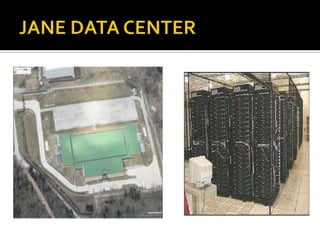
Jane data center is the data center of WalMart which has a capacity of 460 terabytes of
data
it has helped Wal-Mart become the biggest
retailer in the world,


According to the econometric society, WalMart deals with the following data:
 Store openings data
 Store closing data



It also used a software Called GAUSS DATA
SETS for its TPS. Which included:
 Sales
 Operating profits
 Distribution miles
When UNIVERSAL BARCODE was
established the manufacturers adopted a
common labelling
 Wal-Mart became very good at using the
information behind the bar code due to its
sophisticated technology to track inventory.
(as we have discussed earlier in the in the
Presentation)



Professor Edna Bonacich put it simply:
 "The shift in Wal-Mart's power was when it started

to really develop its control over information
technology”



The key to that was the power of the
information that is hidden in the bar code.
No one has used the technology as
efficiently as Wal-Mart.





The input of TPS is raw data
The processing involves with the
summarizing, recording, and merging the
data and the output is in the form of report.
Example of TPS is Point-of-sales.




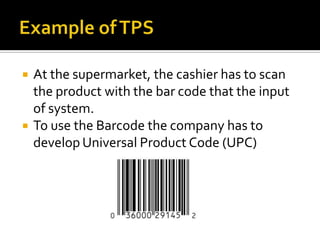
At the supermarket, the cashier has to scan
the product with the bar code that the input
of system.
To use the Barcode the company has to
develop Universal Product Code (UPC)




a standard method for identifying products
with numbers and coding those numbers as
the type of bar code.
And it had many benefits found by Wal-Mart,
were it
– Ensure accurate pricing
– Improve efficiency
– Reduce Shrinkage
– Improve communications
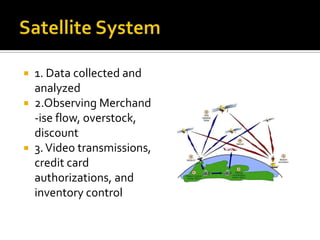
1. Data collected and
analyzed
 2.Observing Merchand
-ise flow, overstock,
discount
 3. Video transmissions,
credit card
authorizations, and
inventory control





MIS is the system provides the actual
performance report of the company that use
in middle management, which created based
on the data from TPS.
They use a tool called EDI for the MIS




EDI enabled the suppliers to download
purchase orders along with store-to-store
sales information relating to their products
sold.
On receiving information about the sales of
various products, the suppliers shipped the
required goods to Walmart’s distribution
centers
EDI is Used for:
1.Forecasting
2.Planning
3.Replenishing
4.Shipping applications




DSS should be the effectiveness of decision
makers rather than on increasing the efficiency
of data storage and retrieval.
Some of the benefits of DSS are as follows.
1.DSS improves individual productivity.
2.it improves the decision quality and speed up problem
solving.
3.it improves interpersonal communications.
4. it improves decision making skills.
5. Increase organizational control


A number of strategic DSS has been
implemented. Which are as follows:
 sale data warehouse .
 including retail link



Walmart collects sales data from stores in its
data warehouse ,



Retail link consolidated data into useful
reports and distributes it to suppliers with
weekly forecasting information .




It's awesome the way Walmart control its
information system.
Its accurate enough manage everything.
The Satellite System is perfect in collect
information & share it easily between the
supplier and Walmart.


http://seokisumu.hubpages.com/hub/KNOWLEDGEMANAGEMENT-A-CASE-STUDY-OFWALLMART. http://walm.blogspot.com/p/informationsystems.html.
http://help.walmart.com/app/answers/detail/a_id/6.
MIS in Walmart

MIS in Walmart

  • 1.
    PRESENTED TO :Sir Mahesh Ahujha PRESENTED BY : Zeeshan Ali Khan
  • 2.
     Information system:  Setof interrelated components  Collect, process, store, and distribute information  Support decision making, coordination, and control  Information vs. data  Data are streams of raw facts  Information is data shaped into meaningful form
  • 3.
     System that providesinformation needed to manage organizations effectively and efficiently.
  • 4.
     To improve theManagement decision making  By providing accurate and up-to-date information about the key aspects of organizational performance.
  • 5.
    SAM WALTON (MARCH29, 1918 – APRIL 5, 1992) a businessman from Arkansas, began his retail career when he started work on June 3, 1940.  On July 2, 1962, Walton opened the first Walmart Discount City store located at 719 Walnut Ave. in Rogers Arkansas.  Has undergone several changes in its image(specifically logos) 
  • 6.
        WalMart is thelargest and most profitable retailer on the earth the Worlds second largest public corporation Walmart has 8,500 stores in 15 countries, under 55 different names And have around 2 Million employees
  • 7.
     We save peoplemoney so they can live better
  • 9.
     This phenomenal growthof Walmart is attributed to its continued focus on customer needs and reducing cost through efficient SCM Practices.
  • 10.
     Walmart invested heavilyin IT and communication systems  to effectively track sales and merchandise inventories in stores across the country.  With the rapid expansion,  it was essential to have a good communication system.  Hence, Walmart set up its own satellite communication system in 1983.
  • 11.
     Employees at thestores had the “Magic Wand,” a hand-held computer which was linked to in-store terminals through a radio frequency network.  These helped them to keep track of the inventory in stores, deliveries, and backup merchandise in stock at the distribution centers.
  • 12.
     In the early1970’s Walmart introduced the centralized distribution system. HUB & SPOKE  Goods were centrally ordered, assembled at a massive warehouse, known as ‘distribution center’ (hub), then dispatched to the individual stores (spoke).
  • 13.
     The hub andspoke system enabled Walmart to achieve significant cost advantages by the centralized purchasing of goods in huge quantities;
  • 14.
     Order management andstore replenishment of goods were entirely executed with the help of computers through the Point-of-Sales (POS) system.  Through this system, it was possible to monitor and track the sales and merchandise stock levels on the store shelves.
  • 15.
     Since the floorarea of any Walmart store varied between 40,000 to 200,000 square feet, movement of goods within the store was an important part of logistics operations.  Walmart made significant investments in IT to quickly locate and replenish goods at the stores.
  • 16.
     In 1991,Walmart had invested approximately $4 billion to build a retail link system.  More than 10,000 Walmart retail suppliers used the retail link system to monitor the sales of their goods at stores and replenish inventories.  Details of daily transactions (~10 million per day) were processed through this system.
  • 17.
      Jane data centeris the data center of WalMart which has a capacity of 460 terabytes of data it has helped Wal-Mart become the biggest retailer in the world,
  • 19.
     According to theeconometric society, WalMart deals with the following data:  Store openings data  Store closing data  It also used a software Called GAUSS DATA SETS for its TPS. Which included:  Sales  Operating profits  Distribution miles
  • 20.
    When UNIVERSAL BARCODEwas established the manufacturers adopted a common labelling  Wal-Mart became very good at using the information behind the bar code due to its sophisticated technology to track inventory. (as we have discussed earlier in the in the Presentation) 
  • 21.
     Professor Edna Bonacichput it simply:  "The shift in Wal-Mart's power was when it started to really develop its control over information technology”   The key to that was the power of the information that is hidden in the bar code. No one has used the technology as efficiently as Wal-Mart.
  • 22.
       The input ofTPS is raw data The processing involves with the summarizing, recording, and merging the data and the output is in the form of report. Example of TPS is Point-of-sales.
  • 23.
      At the supermarket,the cashier has to scan the product with the bar code that the input of system. To use the Barcode the company has to develop Universal Product Code (UPC)
  • 24.
      a standard methodfor identifying products with numbers and coding those numbers as the type of bar code. And it had many benefits found by Wal-Mart, were it – Ensure accurate pricing – Improve efficiency – Reduce Shrinkage – Improve communications
  • 25.
    1. Data collectedand analyzed  2.Observing Merchand -ise flow, overstock, discount  3. Video transmissions, credit card authorizations, and inventory control 
  • 26.
      MIS is thesystem provides the actual performance report of the company that use in middle management, which created based on the data from TPS. They use a tool called EDI for the MIS
  • 27.
      EDI enabled thesuppliers to download purchase orders along with store-to-store sales information relating to their products sold. On receiving information about the sales of various products, the suppliers shipped the required goods to Walmart’s distribution centers
  • 28.
    EDI is Usedfor: 1.Forecasting 2.Planning 3.Replenishing 4.Shipping applications
  • 29.
      DSS should bethe effectiveness of decision makers rather than on increasing the efficiency of data storage and retrieval. Some of the benefits of DSS are as follows. 1.DSS improves individual productivity. 2.it improves the decision quality and speed up problem solving. 3.it improves interpersonal communications. 4. it improves decision making skills. 5. Increase organizational control
  • 30.
     A number ofstrategic DSS has been implemented. Which are as follows:  sale data warehouse .  including retail link  Walmart collects sales data from stores in its data warehouse ,  Retail link consolidated data into useful reports and distributes it to suppliers with weekly forecasting information .
  • 31.
       It's awesome theway Walmart control its information system. Its accurate enough manage everything. The Satellite System is perfect in collect information & share it easily between the supplier and Walmart.
  • 32.

Editor's Notes

  • #2 Walmart/ˈwɒlmɑrt/, is an American multinational retail corporation that runs chains of large discount department stores and warehouse stores
  • #20 Distribution miles for any given configuration of Wal-Mart stores in any given year
  • #24 Point of sales Through this system, it was possible to monitor and track the sales and merchandise stock levels on the store shelves
  • #32 Bloomberg a tv channel was