Volatile Organic Compounds
By:HINA YASMEEN
ROLL#19011506-060
BOT-402(Plant
Biochemistry-II)
Presented To
Dr.khalid Nawaz
Department of Botany
What areVolatile Organic
Compounds
• A VOC is any compound that contains carbon
and participates in atmospheric
photochemical reactions.
What areVolatile
Organic Compounds
• Volatile Organic Compounds (VOCS)are organic
chemicals that evaporate at room temperature.
• VOCs have high vapor pressure and low boiling point.
• VOCs are both human-made and natural occurring
chemical compounds.
• VOCs may have long term adverse effects to both
humans and the environment.
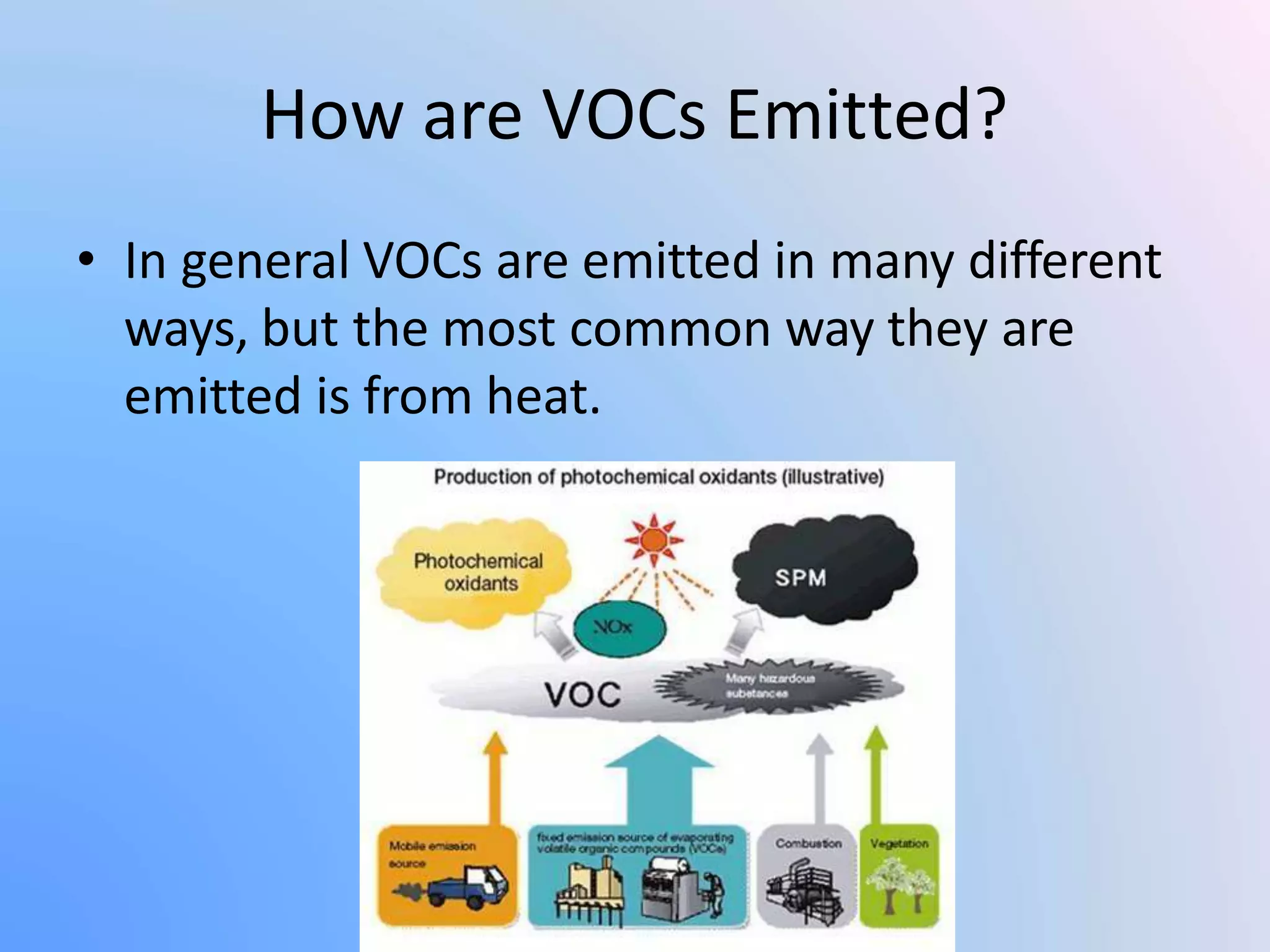
How are VOCs Emitted?
• In general VOCs are emitted in many different
ways, but the most common way they are
emitted is from heat.
Biosynthesis of VOCs
• Plants synthesize an amazing diversity of volatile
organic compounds (VOCs) that facilitate
• interactions with their environment,
• from attracting pollinators
• and seed dispersers to protecting themselves from
pathogens, parasites and herbivores.
• Biosynthesis of VOCs depends on the availability of
carbon, nitrogen and sulfur as well as energy
provided by primary metabolism.
Biosynthesis of terpenoids
• Terpenoids constitute the largest and most diverse
class of secondary metabolites with many volatile
constituents, which are derived from two common
five-carbon precursors,
• Isopentenyl diphosphate (IPP) and its allylic isomer,
• dimethylallyl diphosphate (DMAPP) .
compartmentally separated pathways –
• the mevalonic acid (MVA) and
• methylerythritol phosphate (MEP) – are responsible
for the formation of these C5-isoprene building
units
• The MVA pathway gives rise to volatile
sesquiterpenes (C15),
• while the MEP pathway provides precursors to
volatile hemiterpenes (C5), monoterpenes (C10) and
diterpenes (C ).
Biosynthesis of
phenylpropanoid/benzenoid
noid compounds
• The second largest class of plant VOCs comprises
phenylpropanoid and benzenoid compounds (which originate
from the aromatic amino acid phenylalanine (Phe).
• Seven enzymatic reactions of the shikimate pathway and
three of the arogenate pathway connect central carbon
metabolism to Phe.
• The immediate precursors of the shikimate pathway,
phosphoenolpyruvate (PEP) and D-erythrose 4-phosphate
(E4P), derive from glycolysis and the PPP, respectively.
3. Biosynthesis
of volatile fatty
acid derivatives
• Biosynthesis of these fatty acids relies on a plastidic
pool of acetyl-CoA generated from Pyr, the final
product of glycolysis.
After entering the ‘lipoxygenase (LOX) pathway’,
unsaturated fatty acids undergo stereospecific
oxygenation to form 9-hydroperoxy and 13-
hydroperoxy intermediates which are further
metabolized via the two branches of the LOX pathway
yielding volatile compounds.
•
• The allene oxide synthase branch uses only the 13-
hydroperoxy intermediate and leads to the formation of
jasmonic acid (JA), which in turn is converted to methyl
jasmonate by A carboxyl methyl transferase
• By contrast, the hydroperoxide lyase branch converts both
types of hydroperoxide fatty acid derivatives into C6 and
C9 aldehydes, which are often reduced to alcohols by
alcohol dehydrogenases followed by further conversion to
their esters
Biosynthesis of volatiles
derived from branched-
chain amino acids
• Numerous volatile compounds, especially
those highly abundant in floral scents and
fruit aromas, are derived from amino acids
such as alanine, valine, leucine, isoleucine,
and methionine, or intermediates in their
biosynthesis, and contain nitrogen and
sulfur .
• The biosynthesis of these amino acid-
derived volatiles in plants is believed to
proceed in a similar way to that found in
bacteria or yeast where these pathways have
been studied more extensively.
• As in microorganisms, the amino acids undergo an initial deamination
or transamination catalyzed by aminotransferases, leading to the
formation of the corresponding α-ketoacid .
• These α-ketoacids can be further subjected to decarboxylation,
followed by reductions, oxidations and/or esterifications, forming
aldehydes, acids, alcohols and esters
References
•Adam K-P, Thiel R, Zapp J. 1999. Incorporation of 1-
[1-13C]deoxy-d-xylulose in chamomile
sesquiterpenes. Archives of Biochemistry and
Biophysics 369: 127– 132.
•Aharoni A, Giri AP, Deuerlein S, Griepink F, de Kogel
WJ, Verstappen FW, Verhoeven HA, Jongsma
MA, Schwab W, Bouwmeester HJ. 2003. Terpenoid
metabolism in wild-type and transgenic Arabidopsis
plants. Plant Cell 15: 2866– 2884.

volatile organic compounds.pptx

  • 1.
    Volatile Organic Compounds By:HINAYASMEEN ROLL#19011506-060 BOT-402(Plant Biochemistry-II) Presented To Dr.khalid Nawaz Department of Botany
  • 2.
    What areVolatile Organic Compounds •A VOC is any compound that contains carbon and participates in atmospheric photochemical reactions.
  • 3.
    What areVolatile Organic Compounds •Volatile Organic Compounds (VOCS)are organic chemicals that evaporate at room temperature. • VOCs have high vapor pressure and low boiling point. • VOCs are both human-made and natural occurring chemical compounds. • VOCs may have long term adverse effects to both humans and the environment.
  • 4.
    How are VOCsEmitted? • In general VOCs are emitted in many different ways, but the most common way they are emitted is from heat.
  • 5.
    Biosynthesis of VOCs •Plants synthesize an amazing diversity of volatile organic compounds (VOCs) that facilitate • interactions with their environment, • from attracting pollinators • and seed dispersers to protecting themselves from pathogens, parasites and herbivores. • Biosynthesis of VOCs depends on the availability of carbon, nitrogen and sulfur as well as energy provided by primary metabolism.
  • 6.
    Biosynthesis of terpenoids •Terpenoids constitute the largest and most diverse class of secondary metabolites with many volatile constituents, which are derived from two common five-carbon precursors, • Isopentenyl diphosphate (IPP) and its allylic isomer, • dimethylallyl diphosphate (DMAPP) . compartmentally separated pathways – • the mevalonic acid (MVA) and • methylerythritol phosphate (MEP) – are responsible for the formation of these C5-isoprene building units • The MVA pathway gives rise to volatile sesquiterpenes (C15), • while the MEP pathway provides precursors to volatile hemiterpenes (C5), monoterpenes (C10) and diterpenes (C ).
  • 8.
    Biosynthesis of phenylpropanoid/benzenoid noid compounds •The second largest class of plant VOCs comprises phenylpropanoid and benzenoid compounds (which originate from the aromatic amino acid phenylalanine (Phe). • Seven enzymatic reactions of the shikimate pathway and three of the arogenate pathway connect central carbon metabolism to Phe. • The immediate precursors of the shikimate pathway, phosphoenolpyruvate (PEP) and D-erythrose 4-phosphate (E4P), derive from glycolysis and the PPP, respectively.
  • 10.
    3. Biosynthesis of volatilefatty acid derivatives • Biosynthesis of these fatty acids relies on a plastidic pool of acetyl-CoA generated from Pyr, the final product of glycolysis. After entering the ‘lipoxygenase (LOX) pathway’, unsaturated fatty acids undergo stereospecific oxygenation to form 9-hydroperoxy and 13- hydroperoxy intermediates which are further metabolized via the two branches of the LOX pathway yielding volatile compounds. •
  • 12.
    • The alleneoxide synthase branch uses only the 13- hydroperoxy intermediate and leads to the formation of jasmonic acid (JA), which in turn is converted to methyl jasmonate by A carboxyl methyl transferase • By contrast, the hydroperoxide lyase branch converts both types of hydroperoxide fatty acid derivatives into C6 and C9 aldehydes, which are often reduced to alcohols by alcohol dehydrogenases followed by further conversion to their esters
  • 13.
    Biosynthesis of volatiles derivedfrom branched- chain amino acids • Numerous volatile compounds, especially those highly abundant in floral scents and fruit aromas, are derived from amino acids such as alanine, valine, leucine, isoleucine, and methionine, or intermediates in their biosynthesis, and contain nitrogen and sulfur . • The biosynthesis of these amino acid- derived volatiles in plants is believed to proceed in a similar way to that found in bacteria or yeast where these pathways have been studied more extensively.
  • 14.
    • As inmicroorganisms, the amino acids undergo an initial deamination or transamination catalyzed by aminotransferases, leading to the formation of the corresponding α-ketoacid . • These α-ketoacids can be further subjected to decarboxylation, followed by reductions, oxidations and/or esterifications, forming aldehydes, acids, alcohols and esters
  • 16.
    References •Adam K-P, ThielR, Zapp J. 1999. Incorporation of 1- [1-13C]deoxy-d-xylulose in chamomile sesquiterpenes. Archives of Biochemistry and Biophysics 369: 127– 132. •Aharoni A, Giri AP, Deuerlein S, Griepink F, de Kogel WJ, Verstappen FW, Verhoeven HA, Jongsma MA, Schwab W, Bouwmeester HJ. 2003. Terpenoid metabolism in wild-type and transgenic Arabidopsis plants. Plant Cell 15: 2866– 2884.