Voice Classifications
Voice classification refers to the characteristics of a
certain person’s voice
So how many classifications are there?
More than you may think!
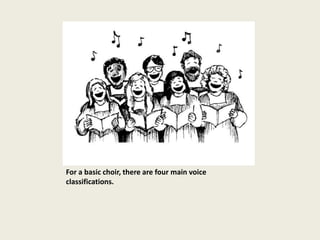
For a basic choir, there are four main voice
classifications.
Soprano
Alto
Tenor
Bass
What about solo performers?
They have a few more classifications of
their own!
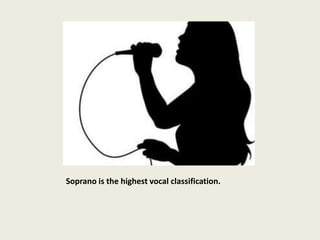
Soprano is the highest vocal classification.
Some further classifications for soprano include
coloratura (very high range and vocal agility), lyric
(bright and full sound), and dramatic (darker full
sound)
Mezzo-soprano is the middle classification of the
female voice.
Some further classifications for mezzo-soprano include
coloratura, lyric, and dramatic.
Contralto is the lowest classification of the female voice
and the most rare.
Some further classifications for contralto include
coloratura, lyric, and dramatic.
Countertenor is the highest male classification.
Some further classifications for countertenor
include Sopranist (a Soprano-range), castrato, and
Haute-contre.
Tenor is the next highest male voice classification.
Some further classifications for tenor include
Leggiero (high and light quality), lyric, and
dramatic.
Baritone is the middle male voice classification and the
most common.
Some further classifications for Baritone include Bel
Canto (coloratura), lyric, and dramatic.
Bass is the lowest male voice classification.
Some further classifications for Bass include Basso
Cantante (high and light), dramatic, and Basso
Profondo (lowest bass voice).
So which is for you?
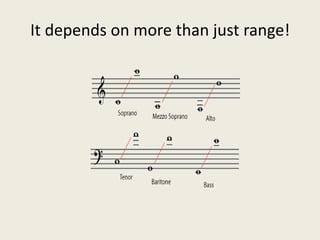
It depends on more than just range!
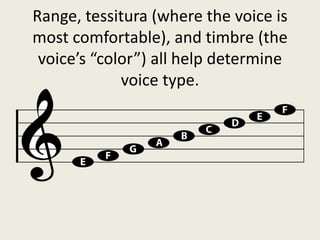
Range, tessitura (where the voice is
most comfortable), and timbre (the
voice’s “color”) all help determine
voice type.
A typical voice does not mature until a
singer is in their 20s…
…So don’t be surprised if your
classification changes!

Voice classifications