Downloaded 317 times


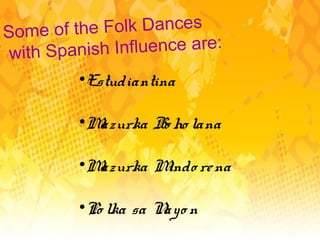


Dancing has long been an important part of Filipino culture and social activities. Originally, dances were performed for religious ceremonies celebrating events like harvests or battles. During Spanish colonial rule, new dances like the Fandango and Rigodon were introduced, while traditional dances like the Kumintang and Pampango adapted but continued. Over time, dances with Spanish influences like the Estudiantina, Mazurka Boholana, and Polka sa Nayon emerged and remained popular parts of Filipino folk culture and special events.


