

The many ways to obtain Vitamin D;

Vitamin D

Demonstrating some of the many benefits of vitamin D;
While expressing some of the dangers in vitamin D deficiency, with the
potential to become chronic.
Vitamin D is best obtained through
absorption of direct sunlight.
• The amount of direct sunlight needed varies according to the skin
complexion. The melatonin in our skin act as a natural sunblock.
• Which makes people with darker complexion require 20-30
minutes of direct sunlight three times a week.
• People with lighter complexion has less melatonin, which means
less natural sun block.
• Which makes people of lighter complexion require only 15-20
minutes of direct sunlight three times a week.

Vitamin D
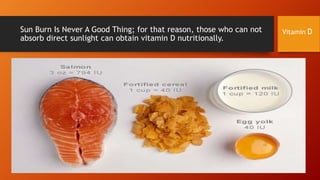
Sun Burn Is Never A Good Thing; for that reason, those who can not
absorb direct sunlight can obtain vitamin D nutritionally.

Vitamin D
Vitamin D is produced in the body through absorption of the sun;
It is needed to process the calcium and phosphorus we obtain
nutritionally. Vitamin D helps promote good health and well-being.

Vitamin D
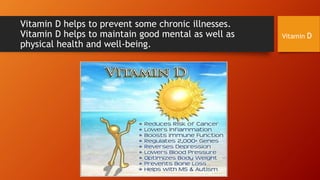
Vitamin D helps to prevent some chronic illnesses.
Vitamin D helps to maintain good mental as well as
physical health and well-being.

Vitamin D
Vitamin D

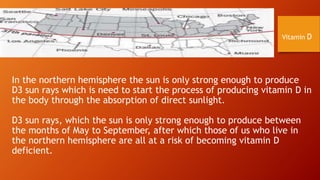
In the northern hemisphere the sun is only strong enough to produce
D3 sun rays which is need to start the process of producing vitamin D in
the body through the absorption of direct sunlight.
D3 sun rays, which the sun is only strong enough to produce between
the months of May to September, after which those of us who live in
the northern hemisphere are all at a risk of becoming vitamin D
deficient.
There are other life altering factor that can cause some of us to be
at a bigger risk of being vitamin D deficient than others.
• There are illnesses that can hinder the body from absorbing
vitamin D. Such illnesses as:

• chronic illnesses that may affect the digestive system
• Chronic illnesses that may affect the liver.
• Chronic illnesses that may affect the Endocrine System

Vitamin D
There are several life choices that can play a major role in the
hindering of the absorption of direct sunlight, which can play a
major role in some one becoming vitamin D deficient.
• Due to some religions and or food allergies, one may have a strict
diet which does not allow the intake of dairy or animal by
products that contain vitamin D.
• Certain religions and/or cultures require the women to cover from
head to toe. This hinders their absorption of direct sunlight. In
their own country most women would have a private court yard to
sit and absorb sun.
• People who are incarcerated have limited sunlight depending on
their status in jail. The more secure the facility is the less time
inmates are allotted outside.
• People who are allergic to the sun or have certain medical
condition like seizures, or take certain medication which restricts
or limits the amount of direct sunlight they can have.

Vitamin D
Vitamin D deficiency Symptoms are so subtle
• Vitamin D deficiency symptoms can be
so subtle and/or common they often
go unnoticed or ignored until they
become bothersome.
• Some vitamin D deficiency affects go
miss treated because the subtle signs
are often mistaken for common
everyday nagging aches and pains,
until the affects worsen and/or
become permanent.

Vitamin D
Vitamin D contributes to several chronic mental and physical
illnesses. If these symptoms are not attended to in a timely manner
some of them can become permanent.
• Some of the chronic illnesses are:
• S.A.D- seasonal affective disorder; also know as seasonal blues; winter
blues and summer blues. It is a type of depression that occurs at a
certain time of year, every year, usually in winter.
The U.S National Library of Medicine notes that
some people experience a serious mood change when the seasons
change. They may sleep too much, have little energy, and may also
feel depressed. Although the symptoms may be severe they usually
clear up. The condition in the summer can include heightened
anxiety.
“Although experts were initially skeptical, this condition is now recognized
as a common disorder, with it’s prevalence in the U.S. ranging from 1.4% in
Florida to 9.7% in New Hampshire.

Vitamin D
The sun is only strong enough to produce D3 rays from May
through to September in the Northern Hemisphere.

Vitamin D
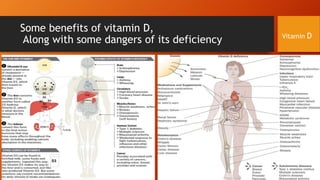
Some benefits of vitamin D,
Along with some dangers of its deficiency

Vitamin D
According to Dr. Edward Giovannucci; Professor of Nutrition and
Epidemiology, Harvard School of Public Health.
• Research over the past few decades has uncovered several new potential
roles of vitamin D. Many types of cells in the body can use vitamin D to help
regulate critical cellular functions
• Vitamin D deficiency could thus lead to several potential problems, such as
weakened immune system and an increased risk of colon and other cancers.
• Immune dysfunction may lead to an increased risk of autoimmune diseases
including type 1 diabetes and multiple sclerosis, and perhaps to some
infectious diseases such as tuberculosis.
• Other scientist have found that vitamin D plays a role in controlling blood
pressure and preventing artery damage.
• The latest research in the Health Professionals Follow UpStudy suggest that
vitamin D deficiency may also be linked to heart disease.

Vitamin D
The first step to preventing vitamin D deficiency;
Open a dialogue with your primary physician

Vitamin D

• Ask Questions
What is my vitamin D level ? If you haven’t been tested,

Get Tested

Get Tested

Get Tested

Get tested

Get tested

Get Tested

Get Tested

Get Tested
References

Vitamin D deficiency

  • 1.
    The many waysto obtain Vitamin D; Vitamin D Demonstrating some of the many benefits of vitamin D; While expressing some of the dangers in vitamin D deficiency, with the potential to become chronic.
  • 2.
    Vitamin D isbest obtained through absorption of direct sunlight. • The amount of direct sunlight needed varies according to the skin complexion. The melatonin in our skin act as a natural sunblock. • Which makes people with darker complexion require 20-30 minutes of direct sunlight three times a week. • People with lighter complexion has less melatonin, which means less natural sun block. • Which makes people of lighter complexion require only 15-20 minutes of direct sunlight three times a week. Vitamin D
  • 3.
    Sun Burn IsNever A Good Thing; for that reason, those who can not absorb direct sunlight can obtain vitamin D nutritionally. Vitamin D
  • 4.
    Vitamin D isproduced in the body through absorption of the sun; It is needed to process the calcium and phosphorus we obtain nutritionally. Vitamin D helps promote good health and well-being. Vitamin D
  • 5.
    Vitamin D helpsto prevent some chronic illnesses. Vitamin D helps to maintain good mental as well as physical health and well-being. Vitamin D
  • 6.
    Vitamin D In thenorthern hemisphere the sun is only strong enough to produce D3 sun rays which is need to start the process of producing vitamin D in the body through the absorption of direct sunlight. D3 sun rays, which the sun is only strong enough to produce between the months of May to September, after which those of us who live in the northern hemisphere are all at a risk of becoming vitamin D deficient.
  • 7.
    There are otherlife altering factor that can cause some of us to be at a bigger risk of being vitamin D deficient than others. • There are illnesses that can hinder the body from absorbing vitamin D. Such illnesses as: • chronic illnesses that may affect the digestive system • Chronic illnesses that may affect the liver. • Chronic illnesses that may affect the Endocrine System Vitamin D
  • 8.
    There are severallife choices that can play a major role in the hindering of the absorption of direct sunlight, which can play a major role in some one becoming vitamin D deficient. • Due to some religions and or food allergies, one may have a strict diet which does not allow the intake of dairy or animal by products that contain vitamin D. • Certain religions and/or cultures require the women to cover from head to toe. This hinders their absorption of direct sunlight. In their own country most women would have a private court yard to sit and absorb sun. • People who are incarcerated have limited sunlight depending on their status in jail. The more secure the facility is the less time inmates are allotted outside. • People who are allergic to the sun or have certain medical condition like seizures, or take certain medication which restricts or limits the amount of direct sunlight they can have. Vitamin D
  • 9.
    Vitamin D deficiencySymptoms are so subtle • Vitamin D deficiency symptoms can be so subtle and/or common they often go unnoticed or ignored until they become bothersome. • Some vitamin D deficiency affects go miss treated because the subtle signs are often mistaken for common everyday nagging aches and pains, until the affects worsen and/or become permanent. Vitamin D
  • 10.
    Vitamin D contributesto several chronic mental and physical illnesses. If these symptoms are not attended to in a timely manner some of them can become permanent. • Some of the chronic illnesses are: • S.A.D- seasonal affective disorder; also know as seasonal blues; winter blues and summer blues. It is a type of depression that occurs at a certain time of year, every year, usually in winter. The U.S National Library of Medicine notes that some people experience a serious mood change when the seasons change. They may sleep too much, have little energy, and may also feel depressed. Although the symptoms may be severe they usually clear up. The condition in the summer can include heightened anxiety. “Although experts were initially skeptical, this condition is now recognized as a common disorder, with it’s prevalence in the U.S. ranging from 1.4% in Florida to 9.7% in New Hampshire. Vitamin D
  • 11.
    The sun isonly strong enough to produce D3 rays from May through to September in the Northern Hemisphere. Vitamin D
  • 12.
    Some benefits ofvitamin D, Along with some dangers of its deficiency Vitamin D
  • 13.
    According to Dr.Edward Giovannucci; Professor of Nutrition and Epidemiology, Harvard School of Public Health. • Research over the past few decades has uncovered several new potential roles of vitamin D. Many types of cells in the body can use vitamin D to help regulate critical cellular functions • Vitamin D deficiency could thus lead to several potential problems, such as weakened immune system and an increased risk of colon and other cancers. • Immune dysfunction may lead to an increased risk of autoimmune diseases including type 1 diabetes and multiple sclerosis, and perhaps to some infectious diseases such as tuberculosis. • Other scientist have found that vitamin D plays a role in controlling blood pressure and preventing artery damage. • The latest research in the Health Professionals Follow UpStudy suggest that vitamin D deficiency may also be linked to heart disease. Vitamin D
  • 14.
    The first stepto preventing vitamin D deficiency; Open a dialogue with your primary physician Vitamin D • Ask Questions What is my vitamin D level ? If you haven’t been tested, Get Tested Get Tested Get Tested Get tested Get tested Get Tested Get Tested Get Tested
  • 15.