Cornelius Puschmann
Katrin Weller
University of Düsseldorf


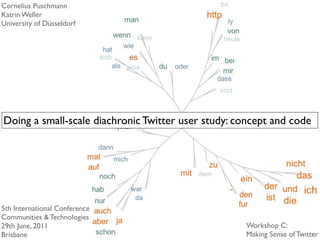
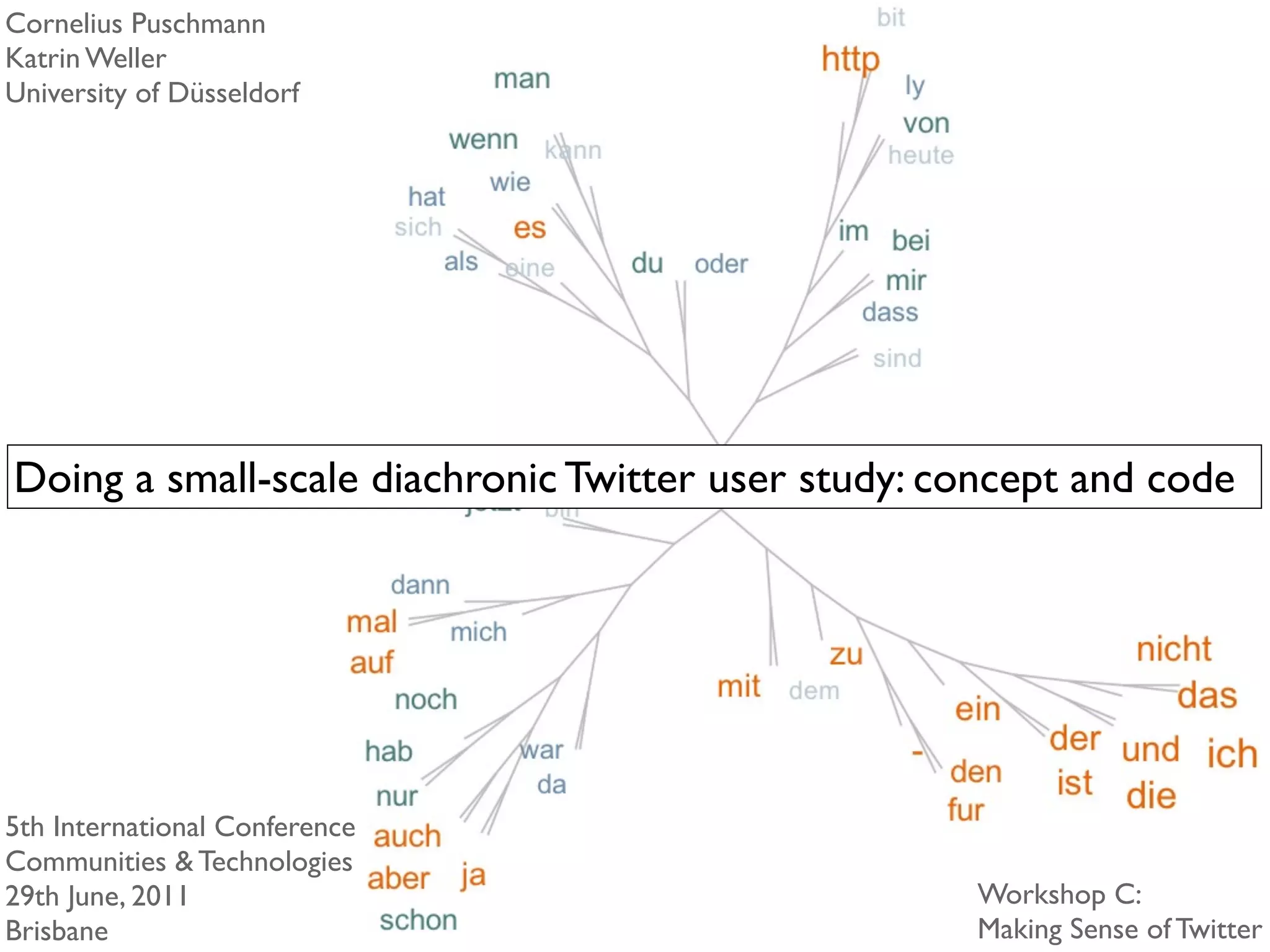
Doing a small-scale diachronic Twitter user study: concept and code


5th International Conference
Communities & Technologies
29th June, 2011                                     Workshop C:
Brisbane                                            Making Sense of Twitter
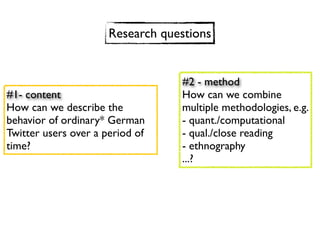
Research questions


                                  #2 - method
#1- content                       How can we combine
How can we describe the           multiple methodologies, e.g.
behavior of ordinary* German      - quant./computational
Twitter users over a period of    - qual./close reading
time?                             - ethnography
                                  ...?
Rationale


thick analysis


            rich, ambiguous data


                             small vs. BIG data
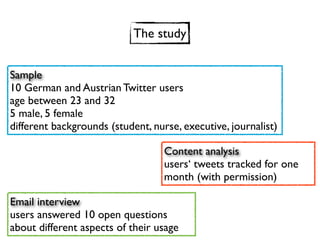
The study


Sample
10 German and Austrian Twitter users
age between 23 and 32
5 male, 5 female
different backgrounds (student, nurse, executive, journalist)

                                   Content analysis
                                   users‘ tweets tracked for one
                                   month (with permission)

Email interview
users answered 10 open questions
about different aspects of their usage
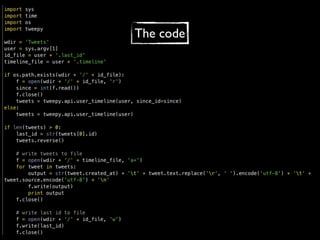
The code
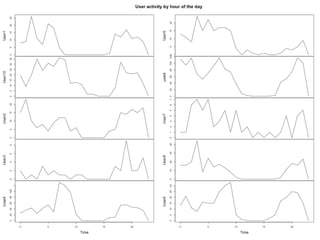
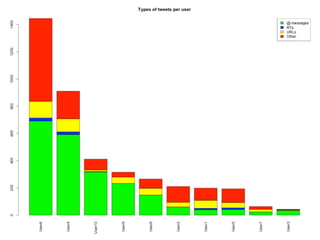
Content analysis
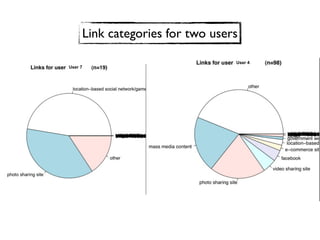
Link categories for two users

                                 User 4
User 7
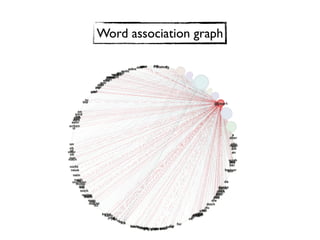
Word association graph
Email interview
Questions

1. When and how did you first become aware of Twitter?
2. How is Twitter integrated into your daily routine?
3. What devices do you use to access Twitter?
4. Has your use of Twitter changed over time?
5. What other social media services do you use?
6. Do you use them to communicate with t.s. people as on Twitter?
7. How important is publishing photos to you?
8. What prompts you to follow someone?
9. What prompts you to unfollow somone?
10. Who do you picture as your readers?
11. What wouldn‘t you tweet about and why?
12. Which advantages do you see in your use of Twitter?
13. Which disadvantages do you see in your use?
10. Who do you picture as your readers?

That‘s a tough one[..] I think many of my followers have a sense of
humor similar to my own. Add to that a number who like something
about my tweets and just read them, without doing anything further with
them. (User 1)

Phew, I don‘t really picture anyone specific. Since reaching 2,000
followers I think more about what I tweet, but what I end up typing into
that text field just goes “out into the Internet“. (User 2)

I‘ve never really thought about that. I just wonder why anyone would
care, apart from people who know me personally. (User 7)

People like myself. But I‘m surprised sometimes when people reply to me
who come from entirely different areas of interest. (User 11)
11. What wouldn‘t you tweet about and why?

I try to only tweet what I would also like to read [...] Even when my
tweets seem personal, that‘s often not true [..] I would never tweet
„I‘m having trouble with my parents“ or „my girlfriend is getting on
my nerves“. (User 1)

Recently I just try to shut up when I don‘t have anything nice to
say[..] I try to refrain from bitching, bad-mouthing, and complaints
without entertainment value. (User 2)

Body functions. I try not to tweet that I have a headache. (User 4)

Information about my workplace[..] I wouldn‘t post anything on
Twitter that I also wouldn‘t tell someone I had just met or was
briefly acquainted with. (User 7)
Summary
Content analysis
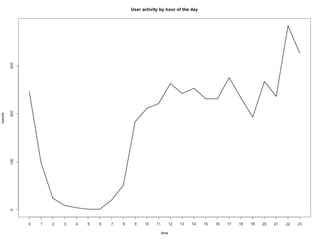
 Usage patterns vary greatly from user to user and from one
 usage episode to another.

 Usage pattern of ordinary* users are likely to differ from
 groups using Twitter professionally in a number of ways.

Interviews
  The users we interviewed were aware of the publicness of
  their tweets and balanced privacy concerns with the
  opportunity to connect with friends.

 Different user types and usage episodes can be discerned by
 connecting CA and an ethnographic approach.
Tools
  R (www.r-project.org)
  Python /w Tweepy package
  (www.python.org ; code.google.com/p/tweepy/ )
  Gephi (www.gephi.org)
thanks for listening!

Cornelius Puschmann
cornelius.puschmann@uni-duesseldorf.de
@coffee001

Katrin Weller
weller@phil.uni-duesseldorf.de
@kwelle

Doing A Small-Scale Diachronic Twitter User Study

  • 1.
    Cornelius Puschmann Katrin Weller Universityof Düsseldorf Doing a small-scale diachronic Twitter user study: concept and code 5th International Conference Communities & Technologies 29th June, 2011 Workshop C: Brisbane Making Sense of Twitter
  • 2.
    Research questions #2 - method #1- content How can we combine How can we describe the multiple methodologies, e.g. behavior of ordinary* German - quant./computational Twitter users over a period of - qual./close reading time? - ethnography ...?
  • 3.
    Rationale thick analysis rich, ambiguous data small vs. BIG data
  • 4.
    The study Sample 10 Germanand Austrian Twitter users age between 23 and 32 5 male, 5 female different backgrounds (student, nurse, executive, journalist) Content analysis users‘ tweets tracked for one month (with permission) Email interview users answered 10 open questions about different aspects of their usage
  • 5.
  • 6.
  • 10.
    Link categories fortwo users User 4 User 7
  • 11.
  • 12.
  • 13.
    Questions 1. When andhow did you first become aware of Twitter? 2. How is Twitter integrated into your daily routine? 3. What devices do you use to access Twitter? 4. Has your use of Twitter changed over time? 5. What other social media services do you use? 6. Do you use them to communicate with t.s. people as on Twitter? 7. How important is publishing photos to you? 8. What prompts you to follow someone? 9. What prompts you to unfollow somone? 10. Who do you picture as your readers? 11. What wouldn‘t you tweet about and why? 12. Which advantages do you see in your use of Twitter? 13. Which disadvantages do you see in your use?
  • 14.
    10. Who doyou picture as your readers? That‘s a tough one[..] I think many of my followers have a sense of humor similar to my own. Add to that a number who like something about my tweets and just read them, without doing anything further with them. (User 1) Phew, I don‘t really picture anyone specific. Since reaching 2,000 followers I think more about what I tweet, but what I end up typing into that text field just goes “out into the Internet“. (User 2) I‘ve never really thought about that. I just wonder why anyone would care, apart from people who know me personally. (User 7) People like myself. But I‘m surprised sometimes when people reply to me who come from entirely different areas of interest. (User 11)
  • 15.
    11. What wouldn‘tyou tweet about and why? I try to only tweet what I would also like to read [...] Even when my tweets seem personal, that‘s often not true [..] I would never tweet „I‘m having trouble with my parents“ or „my girlfriend is getting on my nerves“. (User 1) Recently I just try to shut up when I don‘t have anything nice to say[..] I try to refrain from bitching, bad-mouthing, and complaints without entertainment value. (User 2) Body functions. I try not to tweet that I have a headache. (User 4) Information about my workplace[..] I wouldn‘t post anything on Twitter that I also wouldn‘t tell someone I had just met or was briefly acquainted with. (User 7)
  • 16.
  • 17.
    Content analysis Usagepatterns vary greatly from user to user and from one usage episode to another. Usage pattern of ordinary* users are likely to differ from groups using Twitter professionally in a number of ways. Interviews The users we interviewed were aware of the publicness of their tweets and balanced privacy concerns with the opportunity to connect with friends. Different user types and usage episodes can be discerned by connecting CA and an ethnographic approach.
  • 18.
    Tools R(www.r-project.org) Python /w Tweepy package (www.python.org ; code.google.com/p/tweepy/ ) Gephi (www.gephi.org)
  • 19.
    thanks for listening! CorneliusPuschmann cornelius.puschmann@uni-duesseldorf.de @coffee001 Katrin Weller weller@phil.uni-duesseldorf.de @kwelle