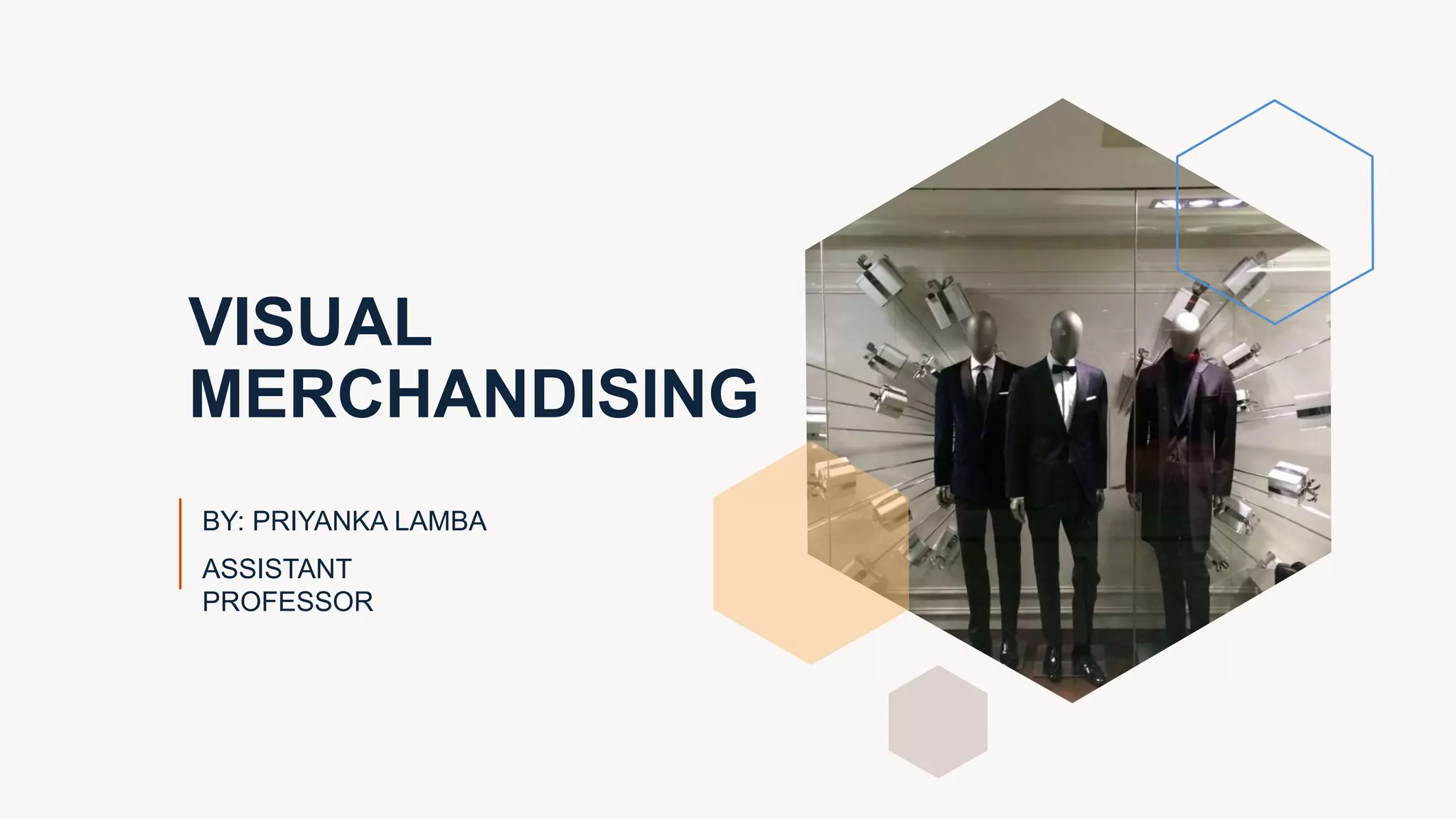
VISUAL
MERCHANDISING
BY: PRIYANKA LAMBA
ASSISTANT
PROFESSOR
History of Visual
Merchandising
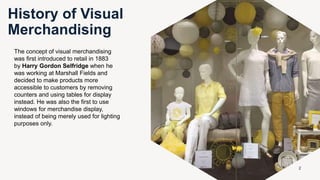
The concept of visual merchandising
was first introduced to retail in 1883
by Harry Gordon Selfridge when he
was working at Marshall Fields and
decided to make products more
accessible to customers by removing
counters and using tables for display
instead. He was also the first to use
windows for merchandise display,
instead of being merely used for lighting
purposes only.
2
Introduction
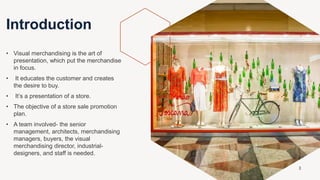
• Visual merchandising is the art of
presentation, which put the merchandise
in focus.
• It educates the customer and creates
the desire to buy.
• It’s a presentation of a store.
• The objective of a store sale promotion
plan.
• A team involved- the senior
management, architects, merchandising
managers, buyers, the visual
merchandising director, industrial-
designers, and staff is needed.
3
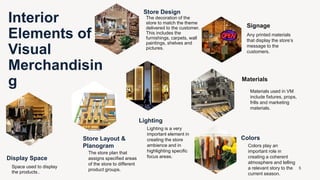
Interior Elements of Visual
Merchandising
Exterior Elements of Visual
Merchandising
ELEMENTS OF
VISUAL
MERCHANDISIN
G
Interior
Elements of
Visual
Merchandisin
g
Store Design
The decoration of the
store to match the theme
delivered to the customer.
This includes the
furnishings, carpets, wall
paintings, shelves and
pictures.
Store Layout &
Planogram
The store plan that
assigns specified areas
of the store to different
product groups.
Display Space
Space used to display
the products.
Signage
Any printed materials
that display the store’s
message to the
customers.
Lighting
Lighting is a very
important element in
creating the store
ambience and in
highlighting specific
focus areas.
Materials
Materials used in VM
include fixtures, props,
frills and marketing
materials.
Colors
Colors play an
important role in
creating a coherent
atmosphere and telling
a relevant story to the
current season.
5
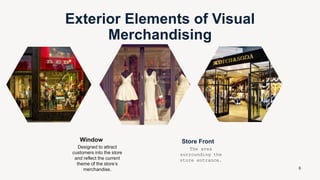
Exterior Elements of Visual
Merchandising
Window
Designed to attract
customers into the store
and reflect the current
theme of the store’s
merchandise.
Store Front
The area
surrounding the
store entrance.
6
Components of a Store
Image
• Colors
• Theme
• Lighting
• Space
• Sound
• Smell
• Technology
• Use of Banners
• Height & Cleanliness
• Interior representation
• Exterior representation
• Exterior signs
7
Marketing Strategies for Visual
Merchandising
• Attract customers from outside of the store
• Group products together
• Maximize exposure to merchandise
• Refresh displays and layouts
• Online visual merchandising for e-commerce
• Create a seamless shopping experience
• Present your products in the best light
• Personalize the shopping experience
• Optimize your store for mobile
• What’s in store
• Tell a Story/ Storytelling
• Be Specific with Signage
• Window Display attract foot traffic
• Sales team knowledge
• Analyse weekly sales & change display
8
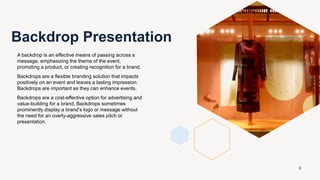
A backdrop is an effective means of passing across a
message, emphasizing the theme of the event,
promoting a product, or creating recognition for a brand.
Backdrops are a flexible branding solution that impacts
positively on an event and leaves a lasting impression.
Backdrops are important as they can enhance events.
Backdrops are a cost-effective option for advertising and
value-building for a brand. Backdrops sometimes
prominently display a brand’s logo or message without
the need for an overly-aggressive sales pitch or
presentation.
Backdrop Presentation
9
Elevate the
Theme and
Décor of any
Event
Backdrops
Hide The
Imperfections
Of The Venue
Wide Range of
Color, Material,
and Style
Durable And
Reusable
Easy To
Customize And
Personalize
Importance Of Backdrop Presentation
10
Backdrops Can
Double As
Gorgeous
Photo Booths
Seamless
Paper, Muslin
Backdrops,
and Digital
Backdrops
Purchase or
Rent
Take Away
Different
Backdrops-
Vinyl, Floor
Drops, Canvas,
Muslin,
Collapsible
Backdrp
Importance Of Backdrop Presentation
11
Thank you

VISUAL MERCHANDISING.pptx

  • 1.
  • 2.
    History of Visual Merchandising Theconcept of visual merchandising was first introduced to retail in 1883 by Harry Gordon Selfridge when he was working at Marshall Fields and decided to make products more accessible to customers by removing counters and using tables for display instead. He was also the first to use windows for merchandise display, instead of being merely used for lighting purposes only. 2
  • 3.
    Introduction • Visual merchandisingis the art of presentation, which put the merchandise in focus. • It educates the customer and creates the desire to buy. • It’s a presentation of a store. • The objective of a store sale promotion plan. • A team involved- the senior management, architects, merchandising managers, buyers, the visual merchandising director, industrial- designers, and staff is needed. 3
  • 4.
    Interior Elements ofVisual Merchandising Exterior Elements of Visual Merchandising ELEMENTS OF VISUAL MERCHANDISIN G
  • 5.
    Interior Elements of Visual Merchandisin g Store Design Thedecoration of the store to match the theme delivered to the customer. This includes the furnishings, carpets, wall paintings, shelves and pictures. Store Layout & Planogram The store plan that assigns specified areas of the store to different product groups. Display Space Space used to display the products. Signage Any printed materials that display the store’s message to the customers. Lighting Lighting is a very important element in creating the store ambience and in highlighting specific focus areas. Materials Materials used in VM include fixtures, props, frills and marketing materials. Colors Colors play an important role in creating a coherent atmosphere and telling a relevant story to the current season. 5
  • 6.
    Exterior Elements ofVisual Merchandising Window Designed to attract customers into the store and reflect the current theme of the store’s merchandise. Store Front The area surrounding the store entrance. 6
  • 7.
    Components of aStore Image • Colors • Theme • Lighting • Space • Sound • Smell • Technology • Use of Banners • Height & Cleanliness • Interior representation • Exterior representation • Exterior signs 7
  • 8.
    Marketing Strategies forVisual Merchandising • Attract customers from outside of the store • Group products together • Maximize exposure to merchandise • Refresh displays and layouts • Online visual merchandising for e-commerce • Create a seamless shopping experience • Present your products in the best light • Personalize the shopping experience • Optimize your store for mobile • What’s in store • Tell a Story/ Storytelling • Be Specific with Signage • Window Display attract foot traffic • Sales team knowledge • Analyse weekly sales & change display 8
  • 9.
    A backdrop isan effective means of passing across a message, emphasizing the theme of the event, promoting a product, or creating recognition for a brand. Backdrops are a flexible branding solution that impacts positively on an event and leaves a lasting impression. Backdrops are important as they can enhance events. Backdrops are a cost-effective option for advertising and value-building for a brand. Backdrops sometimes prominently display a brand’s logo or message without the need for an overly-aggressive sales pitch or presentation. Backdrop Presentation 9
  • 10.
    Elevate the Theme and Décorof any Event Backdrops Hide The Imperfections Of The Venue Wide Range of Color, Material, and Style Durable And Reusable Easy To Customize And Personalize Importance Of Backdrop Presentation 10
  • 11.
    Backdrops Can Double As Gorgeous PhotoBooths Seamless Paper, Muslin Backdrops, and Digital Backdrops Purchase or Rent Take Away Different Backdrops- Vinyl, Floor Drops, Canvas, Muslin, Collapsible Backdrp Importance Of Backdrop Presentation 11
  • 12.