VISITING AGRA
AN EPITOME OF MUGHAL ART, CULTURE AND HERITAGE
INTRODUCTION
 ALL THE EARLY MUGHAL RULERS EXCEPT AURANGZEB WERE
GREAT BUILDERS.
 WITH THE COMING OF MUGHALS INDIAN ARCHITECTURE
WAS GREATLY INFLUENCED BY PERSIAN STYLE .
 THE MUGHALS CONSTRUCTED EXCELLENT MAUSOLEUMS,
MOSQUES,FORTS ,GARDEN AND CITIES WHICH SHOWED A
UNIFORM PATTERN BOTH IN STRUCTURE AND CHARACTER .
 MUGHAL ARCHITECTURE BEGINS WITH AKBAR WHO
SHOWED HIS PASSION FOR BUILDING BY PLANNING AND
CONSTRUCTING SPLENDID EDIFICES.
 During his reign Mughal architecture took on new
forms.
 Akbar made free use of both hindu and Persian
styles.
 The use of red sand stone inlaid with white marble
and painted designs on walls and ceiling are the
salient features of his buildings .
 Akbar constructed numerous forts ,towers , palaces,
mosques,mausoleums and gateways
CHARACTERESTIC FEATURES
 Bulbous domes
 Slender minarets with cupolas at four corners
 Large halls
 Massive vaulted gateways and delicate
ornamentation
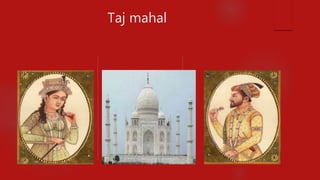
Taj mahal
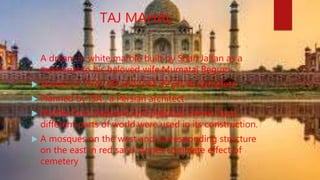
TAJ MAHAL
 A dream in white marble built by Shah Jahan as a
memorial to his beloved wife Mumataj Begum
 Started in 1632 AD and took 22 yrs to complete
 Planned by ISA , a Persian architect
 Marble from makrana and precious stones from
different parts of world were used in its construction.
 A mosques on the west and corresponding structure
on the east in red sand stones complete effect of
cemetery
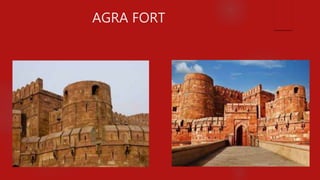
AGRA FORT
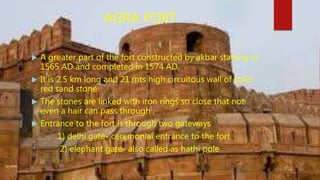
AGRA FORT
 A greater part of the fort constructed by akbar starting in
1565 AD and completed in 1574 AD.
 It is 2.5 km long and 21 mts high circuitous wall of solid
red sand stone
 The stones are linked with iron rings so close that not
even a hair can pass through .
 Entrance to the fort is through two gateways
1) delhi gate- ceremonial entrance to the fort
2) elephant gate- also called as hathi pole
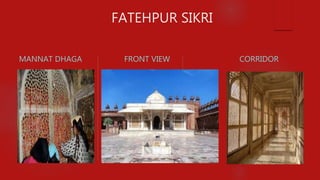
FATEHPUR SIKRI
MANNAT DHAGA FRONT VIEW CORRIDOR
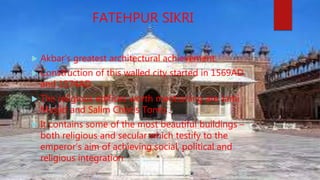
FATEHPUR SIKRI
 Akbar’s greatest architectural achievement.
 Construction of this walled city started in 1569AD
and 1574AD
 The religious edifices worth mentioning are Jami
Masjid and Salim Chistis Tomb .
 It contains some of the most beautiful buildings –
both religious and secular which testify to the
emperor’s aim of achieving social, political and
religious integration
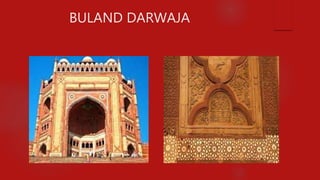
BULAND DARWAJA
BULAND DARWAZA
 This magnificent gateway was added to fatehpur sikri
later in 1571-72 AD to commemorade his conquest
of Gujarat.
 Built of red sand ston and marble it is said to be the
most perfect architectural achievemaents in whole of
india.
 Flight of steps lead to gateway which is about 53 mts
in ht. and 39 mts in wdth.
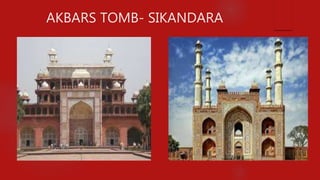
AKBARS TOMB- SIKANDARA
 THIS MAUSOLEUM OF AKBAR WAS STARTED BY
AKBAR AND COMPLETED BY HIS SON Jahangir in
1612 AD ,who changed the original design of his
father.
 Designed on the model of buddist vihara , it is said in
the centre of square garden
 The mausoleum has five terraces rising from the
basement ,one above the other , diminishing inside
as they ascend
 The red sandstone entrance gateway is the largest
and richily decorated with inlaid coloured stone work
.
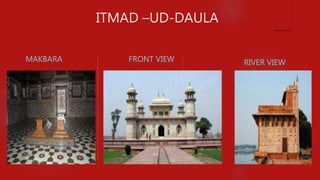
ITMAD –UD-DAULA
MAKBARA FRONT VIEW RIVER VIEW
ITMAD-UD-DAULA’S TOMB
 The mausoleum of itmad-ud-daula ,the revenue
minister of Jahangir and Noor Jahan’s father was
started by Jahagir and completed by Noor Jahan in
1628 AD
 It is delicate and beautiful piece of architecture
 It is the first pure marble monument and differs from
the typical massive , red sand stone structures of
earlier Mughals
 It does not show the masculinity of akbar’s solid red
stone construction and instead were marked by
quality ,feminity, grace and elegance
OTHER NOTABLE CONSTRUCTIONS
OF THAT ERA
 Humayun’s tomb in delhi
 Red fort in delhi
 Jama Masjid in delhi
 Bibi ka maqbara in Aurangabad
SUMMARY
 The mughal period in indian history is one of the glorious periods that
have enriched india in multi factorial ways .
 Art and architecture had received a great fillip during the Mughal period
that has gifted us with architectural gems that have defied the passage of
time in their appeal and splendor
THANK YOU
SHWETA TIWARI ARYA

Visiting agra

  • 1.
    VISITING AGRA AN EPITOMEOF MUGHAL ART, CULTURE AND HERITAGE
  • 2.
    INTRODUCTION  ALL THEEARLY MUGHAL RULERS EXCEPT AURANGZEB WERE GREAT BUILDERS.  WITH THE COMING OF MUGHALS INDIAN ARCHITECTURE WAS GREATLY INFLUENCED BY PERSIAN STYLE .  THE MUGHALS CONSTRUCTED EXCELLENT MAUSOLEUMS, MOSQUES,FORTS ,GARDEN AND CITIES WHICH SHOWED A UNIFORM PATTERN BOTH IN STRUCTURE AND CHARACTER .  MUGHAL ARCHITECTURE BEGINS WITH AKBAR WHO SHOWED HIS PASSION FOR BUILDING BY PLANNING AND CONSTRUCTING SPLENDID EDIFICES.
  • 3.
     During hisreign Mughal architecture took on new forms.  Akbar made free use of both hindu and Persian styles.  The use of red sand stone inlaid with white marble and painted designs on walls and ceiling are the salient features of his buildings .  Akbar constructed numerous forts ,towers , palaces, mosques,mausoleums and gateways
  • 4.
    CHARACTERESTIC FEATURES  Bulbousdomes  Slender minarets with cupolas at four corners  Large halls  Massive vaulted gateways and delicate ornamentation
  • 5.
  • 6.
    TAJ MAHAL  Adream in white marble built by Shah Jahan as a memorial to his beloved wife Mumataj Begum  Started in 1632 AD and took 22 yrs to complete  Planned by ISA , a Persian architect  Marble from makrana and precious stones from different parts of world were used in its construction.  A mosques on the west and corresponding structure on the east in red sand stones complete effect of cemetery
  • 7.
  • 8.
    AGRA FORT  Agreater part of the fort constructed by akbar starting in 1565 AD and completed in 1574 AD.  It is 2.5 km long and 21 mts high circuitous wall of solid red sand stone  The stones are linked with iron rings so close that not even a hair can pass through .  Entrance to the fort is through two gateways 1) delhi gate- ceremonial entrance to the fort 2) elephant gate- also called as hathi pole
  • 9.
    FATEHPUR SIKRI MANNAT DHAGAFRONT VIEW CORRIDOR
  • 10.
    FATEHPUR SIKRI  Akbar’sgreatest architectural achievement.  Construction of this walled city started in 1569AD and 1574AD  The religious edifices worth mentioning are Jami Masjid and Salim Chistis Tomb .  It contains some of the most beautiful buildings – both religious and secular which testify to the emperor’s aim of achieving social, political and religious integration
  • 11.
  • 12.
    BULAND DARWAZA  Thismagnificent gateway was added to fatehpur sikri later in 1571-72 AD to commemorade his conquest of Gujarat.  Built of red sand ston and marble it is said to be the most perfect architectural achievemaents in whole of india.  Flight of steps lead to gateway which is about 53 mts in ht. and 39 mts in wdth.
  • 13.
  • 14.
    AKBARS TOMB- SIKANDARA THIS MAUSOLEUM OF AKBAR WAS STARTED BY AKBAR AND COMPLETED BY HIS SON Jahangir in 1612 AD ,who changed the original design of his father.  Designed on the model of buddist vihara , it is said in the centre of square garden  The mausoleum has five terraces rising from the basement ,one above the other , diminishing inside as they ascend  The red sandstone entrance gateway is the largest and richily decorated with inlaid coloured stone work .
  • 15.
  • 16.
    ITMAD-UD-DAULA’S TOMB  Themausoleum of itmad-ud-daula ,the revenue minister of Jahangir and Noor Jahan’s father was started by Jahagir and completed by Noor Jahan in 1628 AD  It is delicate and beautiful piece of architecture  It is the first pure marble monument and differs from the typical massive , red sand stone structures of earlier Mughals  It does not show the masculinity of akbar’s solid red stone construction and instead were marked by quality ,feminity, grace and elegance
  • 17.
    OTHER NOTABLE CONSTRUCTIONS OFTHAT ERA  Humayun’s tomb in delhi  Red fort in delhi  Jama Masjid in delhi  Bibi ka maqbara in Aurangabad
  • 18.
    SUMMARY  The mughalperiod in indian history is one of the glorious periods that have enriched india in multi factorial ways .  Art and architecture had received a great fillip during the Mughal period that has gifted us with architectural gems that have defied the passage of time in their appeal and splendor
  • 19.