Vincent M. Material January 21, 2021
BSN-2A Mrs. Crispina Linang
Toxoplasmosis (tok-so-plaz-MOE-sis) is a disease that results from infection with
the Toxoplasma gondii parasite, one of the world's most common parasites. Infection
usually occurs by eating undercooked contaminated meat, exposure from infected cat
feces, or mother-to-child transmission during pregnancy.
Toxoplasmosis may cause flu-like symptoms in some people, but most people
affected never develop signs and symptoms. For infants born to infected mothers and
for people with weakened immune systems, toxoplasmosis may cause serious
complications.
If you're generally healthy, not pregnant, and have been diagnosed with
toxoplasmosis, you probably won't need any treatment other than conservative
management. If you're pregnant or have lowered immunity, you may need medical
management to avoid severe complications. The best approach, though, is prevention.
Most healthy people who are infected with toxoplasmosis have no signs or
symptoms and aren't aware that they're infected. Some people, however, develop signs
and symptoms similar to those of the flu, including:
 Body aches
 Swollen lymph nodes
 Headache
 Fever
 Fatigue
Toxoplasma gondii (T. gondii) is a single-celled parasitic organism that can infect
most animals and birds. Because T. gondii infectious organisms are excreted only in cat
feces, wild and domestic cats are the parasite's ultimate host.
Although you can't "catch" toxoplasmosis from an infected child or adult, you can
become infected if you:
 Come into contact with cat feces that contain the parasite. You may
accidentally ingest the parasites if you touch your mouth after gardening,
cleaning a litter box or touching anything that has come in contact with infected
cat feces. Cats who hunt or who are fed raw meat are most likely to harbor T.
gondii.
 Eat or drink contaminated food or water. Lamb, pork and venison are
especially likely to be infected with T. gondii. Occasionally, unpasteurized dairy
products also may contain the parasite. Water contaminated with T. gondii isn't
common in the United States.
 Use contaminated knives, cutting boards or other utensils. Kitchen utensils
that come into contact with raw meat can harbor the parasites unless the utensils
are washed thoroughly in hot, soapy water.
 Eat unwashed fruits and vegetables. The surface of fruits and vegetables may
contain the parasite. To be safe, thoroughly wash and peel all produce,
especially any you eat raw.
 Receive an infected organ transplant or transfused blood. In rare cases,
toxoplasmosis can be transmitted through an organ transplant or blood
transfusion.
When a person becomes infected with T. gondii, the parasite forms cysts that can
affect almost any part of the body — often your brain and muscle tissue of different
organs, including the heart.
If you're generally healthy, your immune system keeps the parasites in check. They
remain in your body in an inactive state, providing you with lifelong immunity so that you
can't become infected with the parasite again. But if your immune system is weakened
by disease or certain medications, the infection can be reactivated, leading to serious
complications.
The only known definitive hosts for T. gondii are members of family Felidae
(domestic cats and their relatives).
1a. Oocysts are shed in the cat’s feces. Large numbers are shed, but usually only for 1–
2 weeks. Oocysts take 1–5 days to sporulate and become infective.
1b. Cats become reinfected by ingesting sporulated oocysts.
2. Soil, water, plant material, or cat litter becomes contaminated with oocysts.
Intermediate hosts in nature (eg, birds, rodents, wild game, animals bred for human
consumption) become infected after ingesting infective materials.
3. Oocysts develop into tachyzoites shortly after ingestion.
4. Tachyzoites spread throughout the body and form tissue cysts in neural, eye, and
muscle tissue.
5. Cats become infected after consuming intermediate hosts containing tissue cysts.
6a. Humans can become infected by ingesting undercooked meat containing tissue
cysts.
6b. Humans can become infected by ingesting food or water contaminated with cat
feces or other feces-contaminated materials (eg, soil) or contact with a pet cat’s litter.
7. Rarely, human infection results from blood transfusion or organ transplantation.
8. Rarely, transplacental transmission from mother to fetus occurs.
9. In the human host, parasites form tissue cysts, most commonly in skeletal muscle,
myocardium, the brain, and the eyes; these cysts may remain throughout the life of the
host and can reactivate if the host becomes immunocompromised.
Anyone can become infected with toxoplasmosis. The parasite is found throughout
the world.
You're at risk of serious health problems from toxoplasmosis infection if:
 You have HIV/AIDS. Many people with HIV/AIDS also have toxoplasmosis,
either a recent infection or an old infection that has reactivated.
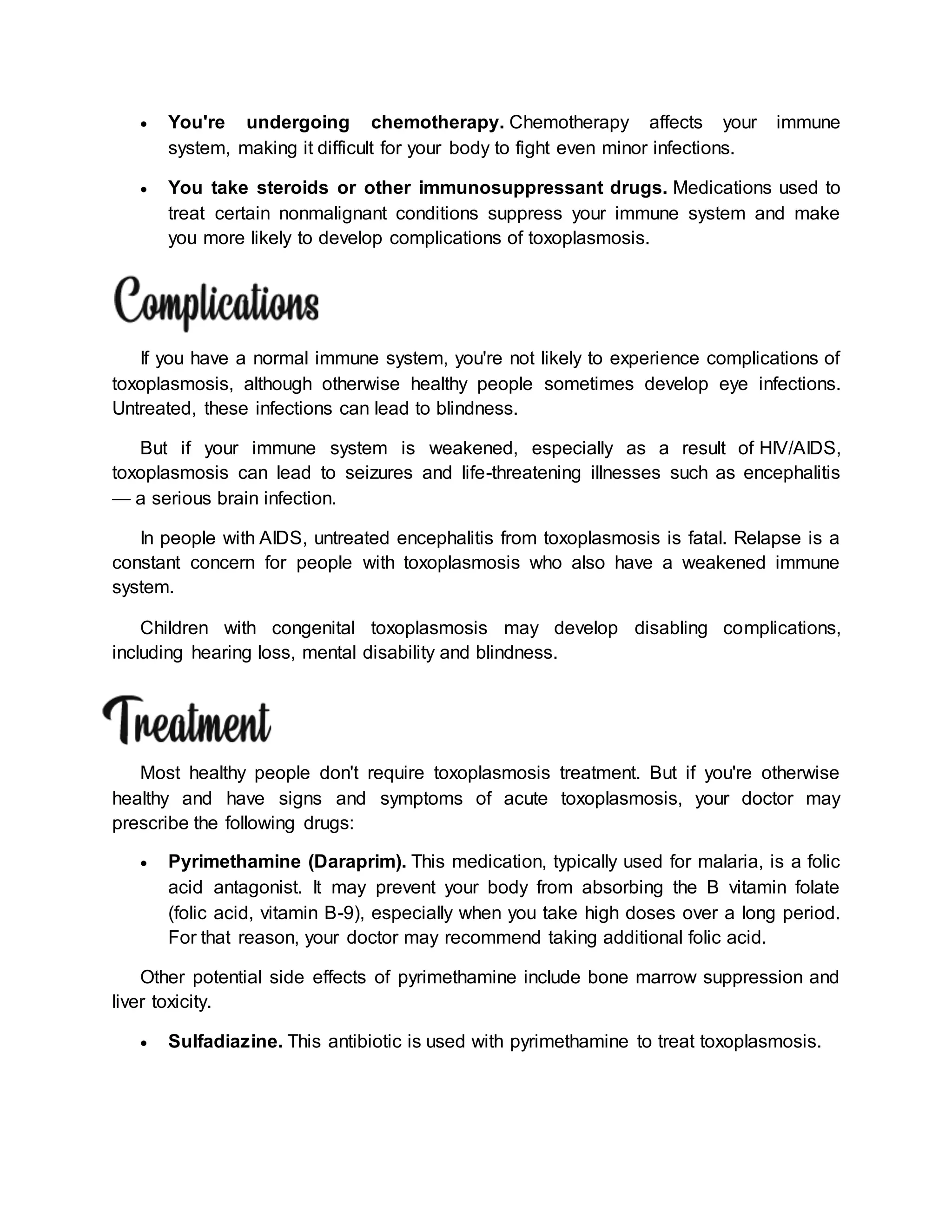
 You're undergoing chemotherapy. Chemotherapy affects your immune
system, making it difficult for your body to fight even minor infections.
 You take steroids or other immunosuppressant drugs. Medications used to
treat certain nonmalignant conditions suppress your immune system and make
you more likely to develop complications of toxoplasmosis.
If you have a normal immune system, you're not likely to experience complications of
toxoplasmosis, although otherwise healthy people sometimes develop eye infections.
Untreated, these infections can lead to blindness.
But if your immune system is weakened, especially as a result of HIV/AIDS,
toxoplasmosis can lead to seizures and life-threatening illnesses such as encephalitis
— a serious brain infection.
In people with AIDS, untreated encephalitis from toxoplasmosis is fatal. Relapse is a
constant concern for people with toxoplasmosis who also have a weakened immune
system.
Children with congenital toxoplasmosis may develop disabling complications,
including hearing loss, mental disability and blindness.
Most healthy people don't require toxoplasmosis treatment. But if you're otherwise
healthy and have signs and symptoms of acute toxoplasmosis, your doctor may
prescribe the following drugs:
 Pyrimethamine (Daraprim). This medication, typically used for malaria, is a folic
acid antagonist. It may prevent your body from absorbing the B vitamin folate
(folic acid, vitamin B-9), especially when you take high doses over a long period.
For that reason, your doctor may recommend taking additional folic acid.
Other potential side effects of pyrimethamine include bone marrow suppression and
liver toxicity.
 Sulfadiazine. This antibiotic is used with pyrimethamine to treat toxoplasmosis.
Treating people with HIV/AIDS
If you have HIV/AIDS, the treatment of choice for toxoplasmosis is also
pyrimethamine and sulfadiazine, with folinic acid (leucovorin). An alternative is
pyrimethamine taken with clindamycin (Cleocin).
Treating pregnant women and babies
If you're pregnant and infected with toxoplasmosis, treatment may vary
depending on where you receive medical care.
If infection occurred before the 16th week of pregnancy, you may receive the
antibiotic spiramycin. Use of this drug may reduce your baby's risk of neurological
problems from congenital toxoplasmosis. Spiramycin is routinely used to treat
toxoplasmosis in Europe, but is still considered experimental in the United States.
If infection occurred after the 16th week of pregnancy, or if tests show that your
unborn child has toxoplasmosis, you may be given pyrimethamine and sulfadiazine and
folinic acid (leucovorin). Your doctor will help you determine the optimal treatment.
If your infant has toxoplasmosis or is likely to have it, treatment with
pyrimethamine and sulfadiazine and folinic acid (leucovorin) is recommended. Your
baby's doctor will need to monitor your baby while he or she is taking these
medications.
Reference: https://www.mayoclinic.org/diseases-conditions/toxoplasmosis/symptoms-
causes/syc-20356249
Assessment Diagnosis Planning Intervention Rationale Evaluation
Subjective Data:
”Simula nung
nalaman kong buntis
ako, humiwalay na
kami sa bahay ng
mga magulang ko at
nagsama sa iisang
bubong ng asawa ko.
Madaming pusa sa
nilipatan naming
bahay at simula non
nawili na ko sa mga
pusa. Makalipas
lamang ang ilang
araw ay
pakiramdam koy
unti-unti akong
nanghihina. Di
kalaunay sumakit
ang katawan at ulo
ko at tuluyan nang
nilagnat. ” as
verbalized by the
patient.
Risk for
maternal/fetal
infection manifested
by environmental
exposure as
evidenced by the
Defining
characteristics:
 Body aches
 Swollen
lymph nodes
 Headache
 Fever
 Fatigue
Short term:
- Patient will verbalize
understanding of
individual
causative/risk factors.
- Patient will initiate
behaviors to limit the
spread of infection, as
appropriate, and
reduce the risk of
complications.
Long term:
- Patient will achieve
timely healing, free of
complications.
- Patient will achieve
high level of wellness.
Independent:
- Assess for presence of
host-specific factors that
affect immunity
 Environmental
exposure
Dependent:
- Administer
antibiotics/medications
as indicated and note the
client’s response
Interdependent:
- Prepare for/assist in
transfer to tertiary care
center as indicated.
- Accidental exposures
can result from
exposure to
contaminants arising
from common place
processes, through
animal contact, or
through contact with
humans.
- to determine the
effectiveness of
therapy or presence of
side effects
- Availability of staff
and equipment
ensures optimal care
of high-risk client and
fetus/newborn.
Short-term goal met:
- Patient verbalized
understanding of the
individual
causative/risk factors.
- Patient initiated
behaviors to limit the
spread of infection, as
appropriate, and
reduce the risk of
complications.
Long-term goal met:
- Patient achieved
timely healing, free of
complications.
-Patient achieved high
level of wellness.
Nursing Care Plan
Lipa City Colleges
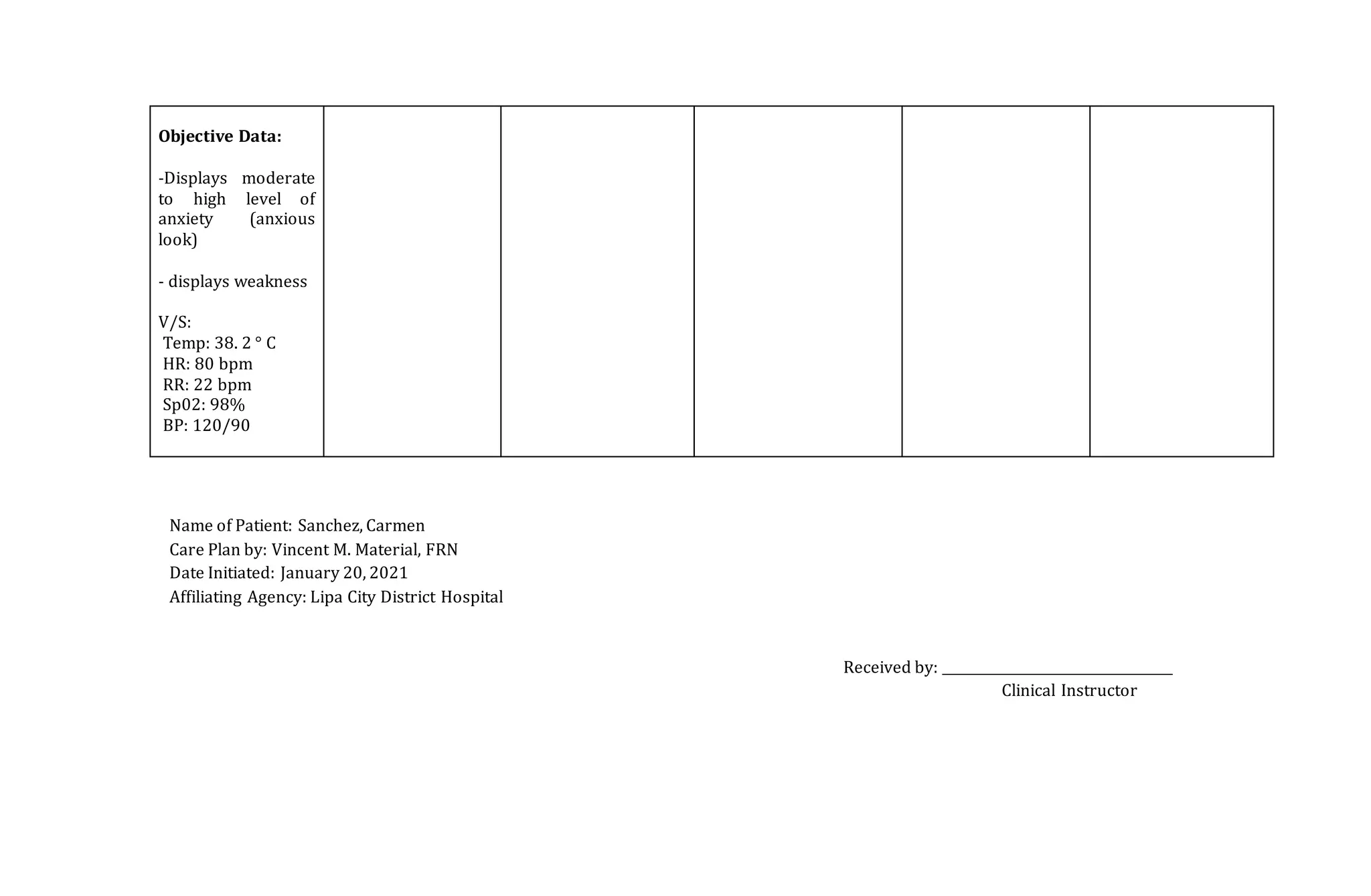
Objective Data:
-Displays moderate
to high level of
anxiety (anxious
look)
- displays weakness
V/S:
Temp: 38. 2 ° C
HR: 80 bpm
RR: 22 bpm
Sp02: 98%
BP: 120/90
Name of Patient: Sanchez, Carmen
Care Plan by: Vincent M. Material, FRN
Date Initiated: January 20, 2021
Affiliating Agency: Lipa City District Hospital
Received by: ___________________________________
Clinical Instructor
Toxoplasmosis is a disease caused by the parasite Toxoplasma gondii.
Toxoplasmosis has been reported in many different countries in Southeast Asia. In the
Philippines, studies that have documented toxoplasmosis have mainly used serological
methods, with several reports in pigs, rats, cats and a few histopathological studies in
rats and cats. Most of the infected agents don't get sick but the parasite causes serious
problems for some people. These include people with weak immune systems and
babies whose mothers become infected for the first time during pregnancy. Problems
can include damage to the brain, eyes, and other organs.
You can get toxoplasmosis from
 Waste from an infected cat
 Eating contaminated meat that is raw or not well cooked
 Using utensils or cutting boards after they've had contact with
contaminated raw meat
 Drinking infected water
 Receiving an infected organ transplant or blood transfusion
Most people with toxoplasmosis don't need treatment. There are drugs to treat it
for pregnant women and people with weak immune systems.
Toxoplasmosis is a very rare disease found all throughout the world. This
being said, we can say that we are all vulnerable to it. Fortunately, there is a minute
number of cases here in our country, the Philippines. If the infection usually occurs by
eating undercooked contaminated meat or exposure from infected cat feces, I think the
best thing to do is to reciprocate its causative agents. Therefore, we have to ensure the
safety of all the foods that we prepare and consume and more so lessen the contact
with domestic cats. Although it doesn’t need treatment for most people, I think the best
approach is still prevention. As holism, we don’t need to fear toxoplasmosis very much
as long as we comply in taking care of ourselves and taking the right foods and
medications.

Vincent m. material (case study and ncp toxoplasmosis)

  • 1.
    Vincent M. MaterialJanuary 21, 2021 BSN-2A Mrs. Crispina Linang Toxoplasmosis (tok-so-plaz-MOE-sis) is a disease that results from infection with the Toxoplasma gondii parasite, one of the world's most common parasites. Infection usually occurs by eating undercooked contaminated meat, exposure from infected cat feces, or mother-to-child transmission during pregnancy. Toxoplasmosis may cause flu-like symptoms in some people, but most people affected never develop signs and symptoms. For infants born to infected mothers and for people with weakened immune systems, toxoplasmosis may cause serious complications. If you're generally healthy, not pregnant, and have been diagnosed with toxoplasmosis, you probably won't need any treatment other than conservative management. If you're pregnant or have lowered immunity, you may need medical management to avoid severe complications. The best approach, though, is prevention.
  • 2.
    Most healthy peoplewho are infected with toxoplasmosis have no signs or symptoms and aren't aware that they're infected. Some people, however, develop signs and symptoms similar to those of the flu, including:  Body aches  Swollen lymph nodes  Headache  Fever  Fatigue Toxoplasma gondii (T. gondii) is a single-celled parasitic organism that can infect most animals and birds. Because T. gondii infectious organisms are excreted only in cat feces, wild and domestic cats are the parasite's ultimate host. Although you can't "catch" toxoplasmosis from an infected child or adult, you can become infected if you:  Come into contact with cat feces that contain the parasite. You may accidentally ingest the parasites if you touch your mouth after gardening, cleaning a litter box or touching anything that has come in contact with infected cat feces. Cats who hunt or who are fed raw meat are most likely to harbor T. gondii.  Eat or drink contaminated food or water. Lamb, pork and venison are especially likely to be infected with T. gondii. Occasionally, unpasteurized dairy products also may contain the parasite. Water contaminated with T. gondii isn't common in the United States.  Use contaminated knives, cutting boards or other utensils. Kitchen utensils that come into contact with raw meat can harbor the parasites unless the utensils are washed thoroughly in hot, soapy water.  Eat unwashed fruits and vegetables. The surface of fruits and vegetables may contain the parasite. To be safe, thoroughly wash and peel all produce, especially any you eat raw.
  • 3.
     Receive aninfected organ transplant or transfused blood. In rare cases, toxoplasmosis can be transmitted through an organ transplant or blood transfusion. When a person becomes infected with T. gondii, the parasite forms cysts that can affect almost any part of the body — often your brain and muscle tissue of different organs, including the heart. If you're generally healthy, your immune system keeps the parasites in check. They remain in your body in an inactive state, providing you with lifelong immunity so that you can't become infected with the parasite again. But if your immune system is weakened by disease or certain medications, the infection can be reactivated, leading to serious complications.
  • 4.
    The only knowndefinitive hosts for T. gondii are members of family Felidae (domestic cats and their relatives). 1a. Oocysts are shed in the cat’s feces. Large numbers are shed, but usually only for 1– 2 weeks. Oocysts take 1–5 days to sporulate and become infective. 1b. Cats become reinfected by ingesting sporulated oocysts. 2. Soil, water, plant material, or cat litter becomes contaminated with oocysts. Intermediate hosts in nature (eg, birds, rodents, wild game, animals bred for human consumption) become infected after ingesting infective materials. 3. Oocysts develop into tachyzoites shortly after ingestion. 4. Tachyzoites spread throughout the body and form tissue cysts in neural, eye, and muscle tissue. 5. Cats become infected after consuming intermediate hosts containing tissue cysts. 6a. Humans can become infected by ingesting undercooked meat containing tissue cysts. 6b. Humans can become infected by ingesting food or water contaminated with cat feces or other feces-contaminated materials (eg, soil) or contact with a pet cat’s litter. 7. Rarely, human infection results from blood transfusion or organ transplantation. 8. Rarely, transplacental transmission from mother to fetus occurs. 9. In the human host, parasites form tissue cysts, most commonly in skeletal muscle, myocardium, the brain, and the eyes; these cysts may remain throughout the life of the host and can reactivate if the host becomes immunocompromised. Anyone can become infected with toxoplasmosis. The parasite is found throughout the world. You're at risk of serious health problems from toxoplasmosis infection if:  You have HIV/AIDS. Many people with HIV/AIDS also have toxoplasmosis, either a recent infection or an old infection that has reactivated.
  • 5.
     You're undergoingchemotherapy. Chemotherapy affects your immune system, making it difficult for your body to fight even minor infections.  You take steroids or other immunosuppressant drugs. Medications used to treat certain nonmalignant conditions suppress your immune system and make you more likely to develop complications of toxoplasmosis. If you have a normal immune system, you're not likely to experience complications of toxoplasmosis, although otherwise healthy people sometimes develop eye infections. Untreated, these infections can lead to blindness. But if your immune system is weakened, especially as a result of HIV/AIDS, toxoplasmosis can lead to seizures and life-threatening illnesses such as encephalitis — a serious brain infection. In people with AIDS, untreated encephalitis from toxoplasmosis is fatal. Relapse is a constant concern for people with toxoplasmosis who also have a weakened immune system. Children with congenital toxoplasmosis may develop disabling complications, including hearing loss, mental disability and blindness. Most healthy people don't require toxoplasmosis treatment. But if you're otherwise healthy and have signs and symptoms of acute toxoplasmosis, your doctor may prescribe the following drugs:  Pyrimethamine (Daraprim). This medication, typically used for malaria, is a folic acid antagonist. It may prevent your body from absorbing the B vitamin folate (folic acid, vitamin B-9), especially when you take high doses over a long period. For that reason, your doctor may recommend taking additional folic acid. Other potential side effects of pyrimethamine include bone marrow suppression and liver toxicity.  Sulfadiazine. This antibiotic is used with pyrimethamine to treat toxoplasmosis.
  • 6.
    Treating people withHIV/AIDS If you have HIV/AIDS, the treatment of choice for toxoplasmosis is also pyrimethamine and sulfadiazine, with folinic acid (leucovorin). An alternative is pyrimethamine taken with clindamycin (Cleocin). Treating pregnant women and babies If you're pregnant and infected with toxoplasmosis, treatment may vary depending on where you receive medical care. If infection occurred before the 16th week of pregnancy, you may receive the antibiotic spiramycin. Use of this drug may reduce your baby's risk of neurological problems from congenital toxoplasmosis. Spiramycin is routinely used to treat toxoplasmosis in Europe, but is still considered experimental in the United States. If infection occurred after the 16th week of pregnancy, or if tests show that your unborn child has toxoplasmosis, you may be given pyrimethamine and sulfadiazine and folinic acid (leucovorin). Your doctor will help you determine the optimal treatment. If your infant has toxoplasmosis or is likely to have it, treatment with pyrimethamine and sulfadiazine and folinic acid (leucovorin) is recommended. Your baby's doctor will need to monitor your baby while he or she is taking these medications. Reference: https://www.mayoclinic.org/diseases-conditions/toxoplasmosis/symptoms- causes/syc-20356249
  • 7.
    Assessment Diagnosis PlanningIntervention Rationale Evaluation Subjective Data: ”Simula nung nalaman kong buntis ako, humiwalay na kami sa bahay ng mga magulang ko at nagsama sa iisang bubong ng asawa ko. Madaming pusa sa nilipatan naming bahay at simula non nawili na ko sa mga pusa. Makalipas lamang ang ilang araw ay pakiramdam koy unti-unti akong nanghihina. Di kalaunay sumakit ang katawan at ulo ko at tuluyan nang nilagnat. ” as verbalized by the patient. Risk for maternal/fetal infection manifested by environmental exposure as evidenced by the Defining characteristics:  Body aches  Swollen lymph nodes  Headache  Fever  Fatigue Short term: - Patient will verbalize understanding of individual causative/risk factors. - Patient will initiate behaviors to limit the spread of infection, as appropriate, and reduce the risk of complications. Long term: - Patient will achieve timely healing, free of complications. - Patient will achieve high level of wellness. Independent: - Assess for presence of host-specific factors that affect immunity  Environmental exposure Dependent: - Administer antibiotics/medications as indicated and note the client’s response Interdependent: - Prepare for/assist in transfer to tertiary care center as indicated. - Accidental exposures can result from exposure to contaminants arising from common place processes, through animal contact, or through contact with humans. - to determine the effectiveness of therapy or presence of side effects - Availability of staff and equipment ensures optimal care of high-risk client and fetus/newborn. Short-term goal met: - Patient verbalized understanding of the individual causative/risk factors. - Patient initiated behaviors to limit the spread of infection, as appropriate, and reduce the risk of complications. Long-term goal met: - Patient achieved timely healing, free of complications. -Patient achieved high level of wellness. Nursing Care Plan Lipa City Colleges
  • 8.
    Objective Data: -Displays moderate tohigh level of anxiety (anxious look) - displays weakness V/S: Temp: 38. 2 ° C HR: 80 bpm RR: 22 bpm Sp02: 98% BP: 120/90 Name of Patient: Sanchez, Carmen Care Plan by: Vincent M. Material, FRN Date Initiated: January 20, 2021 Affiliating Agency: Lipa City District Hospital Received by: ___________________________________ Clinical Instructor
  • 9.
    Toxoplasmosis is adisease caused by the parasite Toxoplasma gondii. Toxoplasmosis has been reported in many different countries in Southeast Asia. In the Philippines, studies that have documented toxoplasmosis have mainly used serological methods, with several reports in pigs, rats, cats and a few histopathological studies in rats and cats. Most of the infected agents don't get sick but the parasite causes serious problems for some people. These include people with weak immune systems and babies whose mothers become infected for the first time during pregnancy. Problems can include damage to the brain, eyes, and other organs. You can get toxoplasmosis from  Waste from an infected cat  Eating contaminated meat that is raw or not well cooked  Using utensils or cutting boards after they've had contact with contaminated raw meat  Drinking infected water  Receiving an infected organ transplant or blood transfusion Most people with toxoplasmosis don't need treatment. There are drugs to treat it for pregnant women and people with weak immune systems. Toxoplasmosis is a very rare disease found all throughout the world. This being said, we can say that we are all vulnerable to it. Fortunately, there is a minute number of cases here in our country, the Philippines. If the infection usually occurs by eating undercooked contaminated meat or exposure from infected cat feces, I think the best thing to do is to reciprocate its causative agents. Therefore, we have to ensure the safety of all the foods that we prepare and consume and more so lessen the contact with domestic cats. Although it doesn’t need treatment for most people, I think the best approach is still prevention. As holism, we don’t need to fear toxoplasmosis very much as long as we comply in taking care of ourselves and taking the right foods and medications.