Lipa City Colleges
College of Nursing
G.A Solis St., Lipa City
CASE STUDY
FOR PEDIATRIC
NURSING CLINICAL ROTATION
Group 3
Aclan, Aeron Gabriel
Aliwalas, Harold
Lingao, Joseph
Material, Vincent
Mendoza, Nikho
Orense, Jhon Llyod
Abalos, Rona May
Bandies, Gelyn
Bugarin, Trixie
Demetita, Michelle
Francisco, Rea
Lajara, Kathlene
Maurillo, Rochelle
Papera, Maria Angela
Quinto, Micaella
Torres, Jeremy Jane
Lipa City Colleges
College of Nursing
G.A Solis St., Lipa City
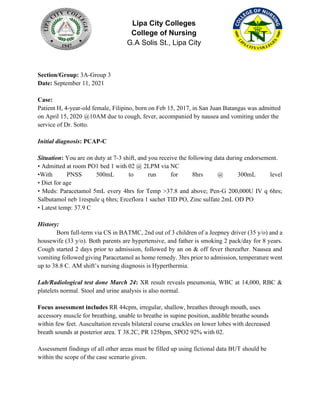
Section/Group: 3A-Group 3
Date: September 11, 2021
Case:
Patient H, 4-year-old female, Filipino, born on Feb 15, 2017, in San Juan Batangas was admitted
on April 15, 2020 @10AM due to cough, fever, accompanied by nausea and vomiting under the
service of Dr. Sotto.
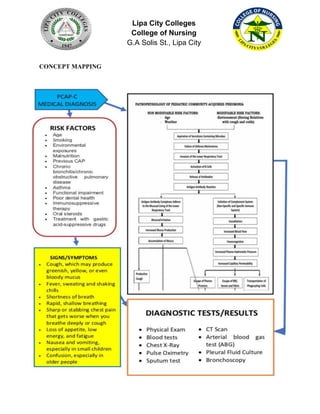
Initial diagnosis: PCAP-C
Situation: You are on duty at 7-3 shift, and you receive the following data during endorsement.
• Admitted at room PO1 bed 1 with 02 @ 2LPM via NC
•With PNSS 500mL to run for 8hrs @ 300mL level
• Diet for age
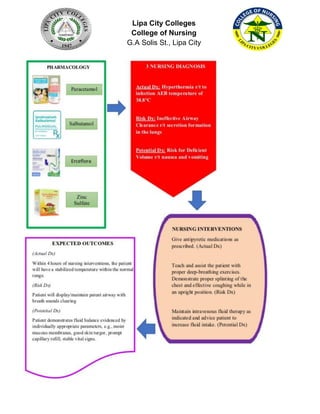
• Meds: Paracetamol 5mL every 4hrs for Temp >37.8 and above; Pen-G 200,000U IV q 6hrs;
Salbutamol neb 1respule q 6hrs; Erceflora 1 sachet TID PO, Zinc sulfate 2mL OD PO
• Latest temp: 37.9 C
History:
Born full-term via CS in BATMC, 2nd out of 3 children of a Jeepney driver (35 y/o) and a
housewife (33 y/o). Both parents are hypertensive, and father is smoking 2 pack/day for 8 years.
Cough started 2 days prior to admission, followed by an on & off fever thereafter. Nausea and
vomiting followed giving Paracetamol as home remedy. 3hrs prior to admission, temperature went
up to 38.8 C. AM shift’s nursing diagnosis is Hyperthermia.
Lab/Radiological test done March 24: XR result reveals pneumonia, WBC at 14,000, RBC &
platelets normal. Stool and urine analysis is also normal.
Focus assessment includes RR 44cpm, irregular, shallow, breathes through mouth, uses
accessory muscle for breathing, unable to breathe in supine position, audible breathe sounds
within few feet. Auscultation reveals bilateral course crackles on lower lobes with decreased
breath sounds at posterior area. T 38.2C, PR 125bpm, SPO2 92% with 02.
Assessment findings of all other areas must be filled up using fictional data BUT should be
within the scope of the case scenario given.
Lipa City Colleges
College of Nursing
G.A Solis St., Lipa City
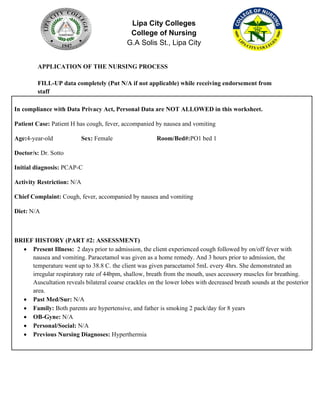
APPLICATION OF THE NURSING PROCESS
FILL-UP data completely (Put N/A if not applicable) while receiving endorsement from
staff
In compliance with Data Privacy Act, Personal Data are NOT ALLOWED in this worksheet.
Patient Case: Patient H has cough, fever, accompanied by nausea and vomiting
Age:4-year-old Sex: Female Room/Bed#:PO1 bed 1
Doctor/s: Dr. Sotto
Initial diagnosis: PCAP-C
Activity Restriction: N/A
Chief Complaint: Cough, fever, accompanied by nausea and vomiting
Diet: N/A
BRIEF HISTORY (PART #2: ASSESSMENT)
• Present Illness: 2 days prior to admission, the client experienced cough followed by on/off fever with
nausea and vomiting. Paracetamol was given as a home remedy. And 3 hours prior to admission, the
temperature went up to 38.8 C. the client was given paracetamol 5mL every 4hrs. She demonstrated an
irregular respiratory rate of 44bpm, shallow, breath from the mouth, uses accessory muscles for breathing.
Auscultation reveals bilateral coarse crackles on the lower lobes with decreased breath sounds at the posterior
area.
• Past Med/Sur: N/A
• Family: Both parents are hypertensive, and father is smoking 2 pack/day for 8 years
• OB-Gyne: N/A
• Personal/Social: N/A
• Previous Nursing Diagnoses: Hyperthermia
Lipa City Colleges
College of Nursing
G.A Solis St., Lipa City
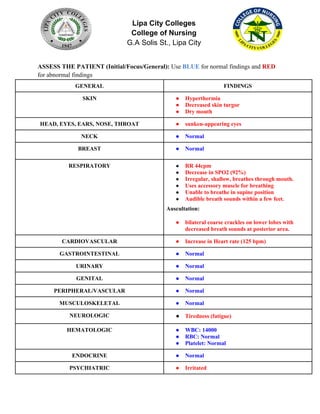
ASSESS THE PATIENT (Initial/Focus/General): Use BLUE for normal findings and RED
for abnormal findings
GENERAL FINDINGS
SKIN ● Hyperthermia
● Decreased skin turgor
● Dry mouth
HEAD, EYES, EARS, NOSE, THROAT ● sunken-appearing eyes
NECK ● Normal
BREAST ● Normal
RESPIRATORY ● RR 44cpm
● Decrease in SPO2 (92%)
● Irregular, shallow, breathes through mouth.
● Uses accessory muscle for breathing
● Unable to breathe in supine position
● Audible breath sounds within a few feet.
Auscultation:
● bilateral coarse crackles on lower lobes with
decreased breath sounds at posterior area.
CARDIOVASCULAR ● Increase in Heart rate (125 bpm)
GASTROINTESTINAL ● Normal
URINARY ● Normal
GENITAL ● Normal
PERIPHERAL/VASCULAR ● Normal
MUSCULOSKELETAL ● Normal
NEUROLOGIC ● Tiredness (fatigue)
HEMATOLOGIC ● WBC: 14000
● RBC: Normal
● Platelet: Normal
ENDOCRINE ● Normal
PSYCHIATRIC ● Irritated
Lipa City Colleges
College of Nursing
G.A Solis St., Lipa City
CONCEPT MAPPING
Lipa City Colleges
College of Nursing
G.A Solis St., Lipa City
Lipa City Colleges
College of Nursing
G.A Solis St., Lipa City
DRUG STUDY WITH IV LINE
DRUG DOSE/
FREQUENCY/
TIME OF
ADMINISTRA
TION
CLASSIFICA
TION
MECHANISM
OF ACTION NURSING
RESPONSIBILITIES
Paracetamol 5mL q4
Pharmacologi
c class:
Synthetic
nonopioid p-
aminophenol
derivative
Therapeutic
class:
Analgesic,
antipyretic
●Unclear. Pain
relief may result
from inhibition of
prostaglandin
synthesis in CNS,
with subsequent
blockage of pain
impulses. Fever
reduction may
result
from vasodilation
and increased
peripheral blood
flow in
hypothalamus,
which dissipates
heat and lowers
body
temperature.
●Observe for acute toxicity and
overdose. Signs and symptoms of acute
toxicity are as follows:
Phase 1: Nausea,
vomiting, anorexia, malaise, diaphoresis.
Phase 2: Right upper quadrant
pain or tenderness, liver enlargement,
elevated bilirubin and hepatic enzyme
levels, prolonged prothrombin time,
oliguria (occasional).
Phase 3: Recurrent anorexia, nausea,
vomiting, and
malaise; jaundice; hypoglycemia;
coagulopathy; encephalopathy; possible
renal failure and cardiomyopathy.
Phase 4: Either recovery or progression
to fatal complete hepatic failure.
● Caution parents or other caregivers
not to give acetaminophen to children
younger than age 2 without consulting
prescriber first.
● Tell patient, parents, or other caregivers
not to use drug concurrently
with other acetaminophen-containing
products or to use more than 4,000 mg
of regular-strength acetaminophen in
24 hours.
● Inform patient, parents, or other
caregivers not to use extra-strength
Lipa City Colleges
College of Nursing
G.A Solis St., Lipa City
caplets in dosages above 3,000 mg (six
caplets) in 24 hours because of risk of
severe liver damage.
● Advise patient, parents, or other
caregivers to contact prescriber if fever
or other symptoms persist despite taking a
recommended amount of drug.
● Inform patients with chronic alcoholism
that drug may increase risk of
severe liver damage.
● As appropriate, review all other
significant and life-threatening adverse
reactions and interactions, especially
those related to the drugs, tests, and
behaviors mentioned above.
Salbutamol 1 respule q6 Pharmacologi
c class:
Sympathomim
etic (beta2-
adrenergic
agonist)
Therapeutic
class:
Bronchodilator
,
Anti-asthmatic
Relaxes smooth
muscles by
stimulating
beta2-receptors,
thereby causing
bronchodilation
and vasodilation
●Stay alert for hypersensitivity
reactions and paradoxical bronchospasm.
Stop drug immediately
if these occur.
● Monitor serum electrolyte
levels.
● Tell patient to swallow extended-release
tablets whole and not to mix
with food.
● Follow manufacturer’s directions
supplied with inhalation drugs.
●Teach patient signs and symptoms of
hypersensitivity reaction and paradoxical
bronchospasm. Tell him to stop taking
drug immediately and contact
prescriber if these occur.
●Instruct patient to notify prescriber
immediately if prescribed dosage fails to
provide usual relief,
because this may indicate seriously
worsening asthma.
Lipa City Colleges
College of Nursing
G.A Solis St., Lipa City
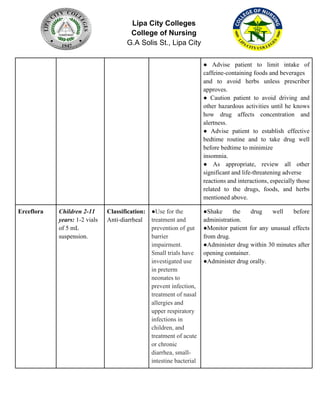
● Advise patient to limit intake of
caffeine-containing foods and beverages
and to avoid herbs unless prescriber
approves.
● Caution patient to avoid driving and
other hazardous activities until he knows
how drug affects concentration and
alertness.
● Advise patient to establish effective
bedtime routine and to take drug well
before bedtime to minimize
insomnia.
● As appropriate, review all other
significant and life-threatening adverse
reactions and interactions, especially those
related to the drugs, foods, and herbs
mentioned above.
Erceflora Children 2-11
years: 1-2 vials
of 5 mL
suspension.
Classification:
Anti-diarrheal
●Use for the
treatment and
prevention of gut
barrier
impairment.
Small trials have
investigated use
in preterm
neonates to
prevent infection,
treatment of nasal
allergies and
upper respiratory
infections in
children, and
treatment of acute
or chronic
diarrhea, small-
intestine bacterial
●Shake the drug well before
administration.
●Monitor patient for any unusual effects
from drug.
●Administer drug within 30 minutes after
opening container.
●Administer drug orally.
Lipa City Colleges
College of Nursing
G.A Solis St., Lipa City
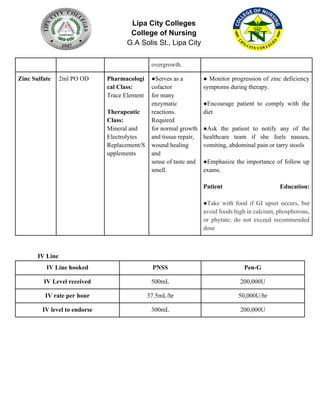
overgrowth.
Zinc Sulfate 2ml PO OD Pharmacologi
cal Class:
Trace Element
Therapeutic
Class:
Mineral and
Electrolytes
Replacement/S
upplements
●Serves as a
cofactor
for many
enzymatic
reactions.
Required
for normal growth
and tissue repair,
wound healing
and
sense of taste and
smell.
● Monitor progression of zinc deficiency
symptoms during therapy.
●Encourage patient to comply with the
diet
●Ask the patient to notify any of the
healthcare team if she feels nausea,
vomiting, abdominal pain or tarry stools
●Emphasize the importance of follow up
exams.
Patient Education:
●Take with food if GI upset occurs, but
avoid foods high in calcium, phosphorous,
or phytate; do not exceed recommended
dose
IV Line
IV Line hooked PNSS Pen-G
IV Level received 500mL 200,000U
IV rate per hour 37.5mL/hr 50,000U/hr
IV level to endorse 300mL 200,000U
Lipa City Colleges
College of Nursing
G.A Solis St., Lipa City
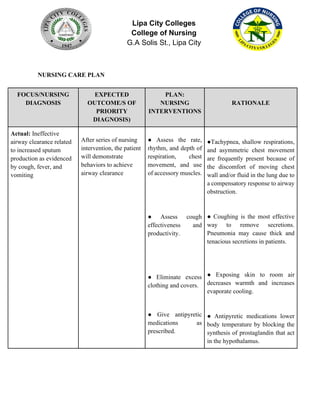
NURSING CARE PLAN
FOCUS/NURSING
DIAGNOSIS
EXPECTED
OUTCOME/S OF
PRIORITY
DIAGNOSIS)
PLAN:
NURSING
INTERVENTIONS
RATIONALE
Actual: Ineffective
airway clearance related
to increased sputum
production as evidenced
by cough, fever, and
vomiting
After series of nursing
intervention, the patient
will demonstrate
behaviors to achieve
airway clearance
● Assess the rate,
rhythm, and depth of
respiration, chest
movement, and use
of accessory muscles.
● Assess cough
effectiveness and
productivity.
● Eliminate excess
clothing and covers.
● Give antipyretic
medications as
prescribed.
●Tachypnea, shallow respirations,
and asymmetric chest movement
are frequently present because of
the discomfort of moving chest
wall and/or fluid in the lung due to
a compensatory response to airway
obstruction.
● Coughing is the most effective
way to remove secretions.
Pneumonia may cause thick and
tenacious secretions in patients.
● Exposing skin to room air
decreases warmth and increases
evaporate cooling.
● Antipyretic medications lower
body temperature by blocking the
synthesis of prostaglandin that act
in the hypothalamus.
Lipa City Colleges
College of Nursing
G.A Solis St., Lipa City
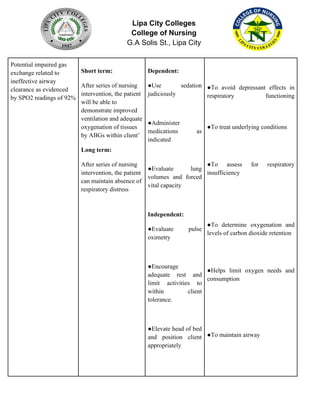
Potential impaired gas
exchange related to
ineffective airway
clearance as evidenced
by SPO2 readings of 92%
Short term:
After series of nursing
intervention, the patient
will be able to
demonstrate improved
ventilation and adequate
oxygenation of tissues
by ABGs within client’
Long term:
After series of nursing
intervention, the patient
can maintain absence of
respiratory distress
Dependent:
●Use sedation
judiciously
●Administer
medications as
indicated
●Evaluate lung
volumes and forced
vital capacity
Independent:
●Evaluate pulse
oximetry
●Encourage
adequate rest and
limit activities to
within client
tolerance.
●Elevate head of bed
and position client
appropriately
●To avoid depressant effects in
respiratory functioning
●To treat underlying conditions
●To assess for respiratory
insufficiency
●To determine oxygenation and
levels of carbon dioxide retention
●Helps limit oxygen needs and
consumption
●To maintain airway
Lipa City Colleges
College of Nursing
G.A Solis St., Lipa City
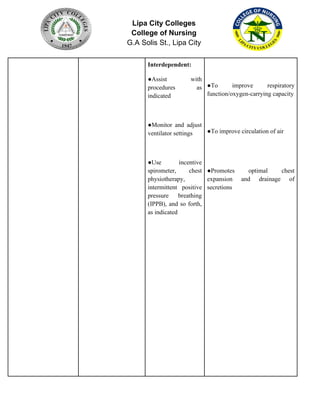
Interdependent:
●Assist with
procedures as
indicated
●Monitor and adjust
ventilator settings
●Use incentive
spirometer, chest
physiotherapy,
intermittent positive
pressure breathing
(IPPB), and so forth,
as indicated
●To improve respiratory
function/oxygen-carrying capacity
●To improve circulation of air
●Promotes optimal chest
expansion and drainage of
secretions
Lipa City Colleges
College of Nursing
G.A Solis St., Lipa City
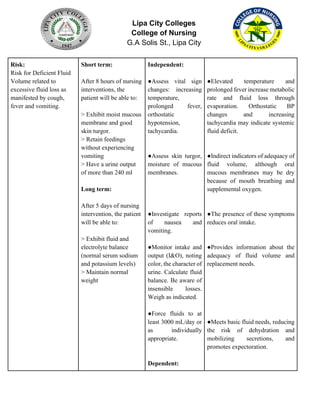
Risk:
Risk for Deficient Fluid
Volume related to
excessive fluid loss as
manifested by cough,
fever and vomiting.
Short term:
After 8 hours of nursing
interventions, the
patient will be able to:
> Exhibit moist mucous
membrane and good
skin turgor.
> Retain feedings
without experiencing
vomiting
> Have a urine output
of more than 240 ml
Long term:
After 5 days of nursing
intervention, the patient
will be able to:
> Exhibit fluid and
electrolyte balance
(normal serum sodium
and potassium levels)
> Maintain normal
weight
Independent:
●Assess vital sign
changes: increasing
temperature,
prolonged fever,
orthostatic
hypotension,
tachycardia.
●Assess skin turgor,
moisture of mucous
membranes.
●Investigate reports
of nausea and
vomiting.
●Monitor intake and
output (I&O), noting
color, the character of
urine. Calculate fluid
balance. Be aware of
insensible losses.
Weigh as indicated.
●Force fluids to at
least 3000 mL/day or
as individually
appropriate.
Dependent:
●Elevated temperature and
prolonged fever increase metabolic
rate and fluid loss through
evaporation. Orthostatic BP
changes and increasing
tachycardia may indicate systemic
fluid deficit.
●Indirect indicators of adequacy of
fluid volume, although oral
mucous membranes may be dry
because of mouth breathing and
supplemental oxygen.
●The presence of these symptoms
reduces oral intake.
●Provides information about the
adequacy of fluid volume and
replacement needs.
●Meets basic fluid needs, reducing
the risk of dehydration and
mobilizing secretions, and
promotes expectoration.
Lipa City Colleges
College of Nursing
G.A Solis St., Lipa City
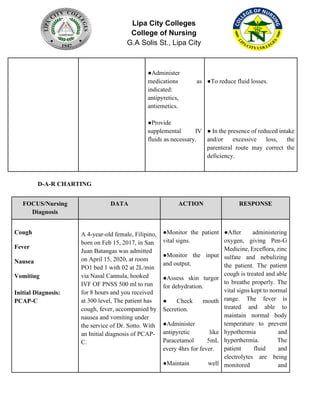
●Administer
medications as
indicated:
antipyretics,
antiemetics.
●Provide
supplemental IV
fluids as necessary.
●To reduce fluid losses.
● In the presence of reduced intake
and/or excessive loss, the
parenteral route may correct the
deficiency.
D-A-R CHARTING
FOCUS/Nursing
Diagnosis
DATA ACTION RESPONSE
Cough
Fever
Nausea
Vomiting
Initial Diagnosis:
PCAP-C
A 4-year-old female, Filipino,
born on Feb 15, 2017, in San
Juan Batangas was admitted
on April 15, 2020, at room
PO1 bed 1 with 02 at 2L/min
via Nasal Cannula, hooked
IVF OF PNSS 500 ml to run
for 8 hours and you received
at 300 level, The patient has
cough, fever, accompanied by
nausea and vomiting under
the service of Dr. Sotto. With
an Initial diagnosis of PCAP-
C.
●Monitor the patient
vital signs.
●Monitor the input
and output.
●Assess skin turgor
for dehydration.
● Check mouth
Secretion.
●Administer
antipyretic like
Paracetamol 5mL
every 4hrs for fever.
●Maintain well
●After administering
oxygen, giving Pen-G
Medicine, Erceflora, zinc
sulfate and nebulizing
the patient. The patient
cough is treated and able
to breathe properly. The
vital signs kept to normal
range. The fever is
treated and able to
maintain normal body
temperature to prevent
hypothermia and
hyperthermia. The
patient fluid and
electrolytes are being
monitored and
Lipa City Colleges
College of Nursing
G.A Solis St., Lipa City
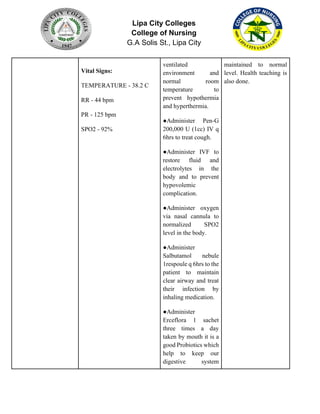
Vital Signs:
TEMPERATURE - 38.2 C
RR - 44 bpm
PR - 125 bpm
SPO2 - 92%
ventilated
environment and
normal room
temperature to
prevent hypothermia
and hyperthermia.
●Administer Pen-G
200,000 U (1cc) IV q
6hrs to treat cough.
●Administer IVF to
restore fluid and
electrolytes in the
body and to prevent
hypovolemic
complication.
●Administer oxygen
via nasal cannula to
normalized SPO2
level in the body.
●Administer
Salbutamol nebule
1respoule q 6hrs to the
patient to maintain
clear airway and treat
their infection by
inhaling medication.
●Administer
Erceflora 1 sachet
three times a day
taken by mouth it is a
good Probiotics which
help to keep our
digestive system
maintained to normal
level. Health teaching is
also done.
Lipa City Colleges
College of Nursing
G.A Solis St., Lipa City
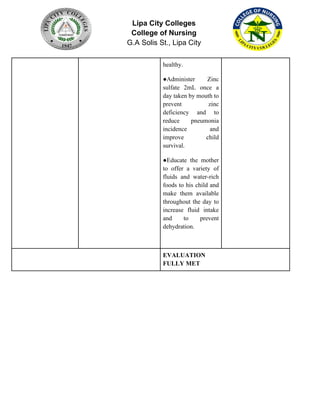
healthy.
●Administer Zinc
sulfate 2mL once a
day taken by mouth to
prevent zinc
deficiency and to
reduce pneumonia
incidence and
improve child
survival.
●Educate the mother
to offer a variety of
fluids and water-rich
foods to his child and
make them available
throughout the day to
increase fluid intake
and to prevent
dehydration.
EVALUATION
FULLY MET
Lipa City Colleges
College of Nursing
G.A Solis St., Lipa City
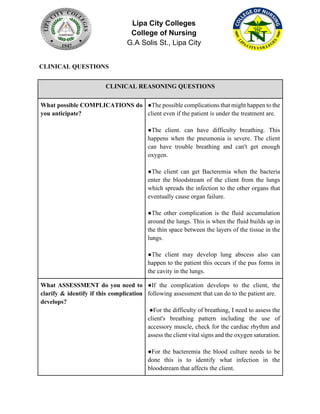
CLINICAL QUESTIONS
CLINICAL REASONING QUESTIONS
What possible COMPLICATIONS do
you anticipate?
●The possible complications that might happen to the
client even if the patient is under the treatment are.
●The client. can have difficulty breathing. This
happens when the pneumonia is severe. The client
can have trouble breathing and can't get enough
oxygen.
●The client can get Bacteremia when the bacteria
enter the bloodstream of the client from the lungs
which spreads the infection to the other organs that
eventually cause organ failure.
●The other complication is the fluid accumulation
around the lungs. This is when the fluid builds up in
the thin space between the layers of the tissue in the
lungs.
●The client may develop lung abscess also can
happen to the patient this occurs if the pus forms in
the cavity in the lungs.
What ASSESSMENT do you need to
clarify & identify if this complication
develops?
●If the complication develops to the client, the
following assessment that can do to the patient are.
●For the difficulty of breathing, I need to assess the
client's breathing pattern including the use of
accessory muscle, check for the cardiac rhythm and
assess the client vital signs and the oxygen saturation.
●For the bacteremia the blood culture needs to be
done this is to identify what infection in the
bloodstream that affects the client.
Lipa City Colleges
College of Nursing
G.A Solis St., Lipa City
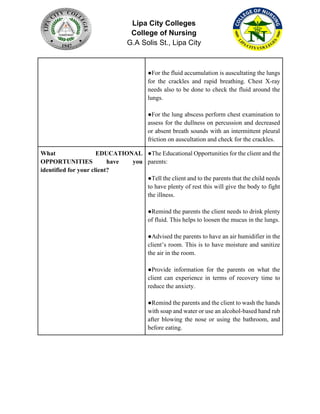
●For the fluid accumulation is auscultating the lungs
for the crackles and rapid breathing. Chest X-ray
needs also to be done to check the fluid around the
lungs.
●For the lung abscess perform chest examination to
assess for the dullness on percussion and decreased
or absent breath sounds with an intermittent pleural
friction on auscultation and check for the crackles.
What EDUCATIONAL
OPPORTUNITIES have you
identified for your client?
●The Educational Opportunities for the client and the
parents:
●Tell the client and to the parents that the child needs
to have plenty of rest this will give the body to fight
the illness.
●Remind the parents the client needs to drink plenty
of fluid. This helps to loosen the mucus in the lungs.
●Advised the parents to have an air humidifier in the
client’s room. This is to have moisture and sanitize
the air in the room.
●Provide information for the parents on what the
client can experience in terms of recovery time to
reduce the anxiety.
●Remind the parents and the client to wash the hands
with soap and water or use an alcohol-based hand rub
after blowing the nose or using the bathroom, and
before eating.
Lipa City Colleges
College of Nursing
G.A Solis St., Lipa City
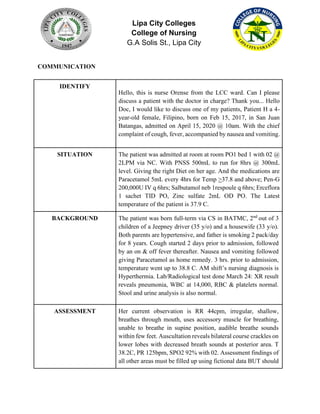
COMMUNICATION
IDENTIFY
Hello, this is nurse Orense from the LCC ward. Can I please
discuss a patient with the doctor in charge? Thank you... Hello
Doc, I would like to discuss one of my patients, Patient H a 4-
year-old female, Filipino, born on Feb 15, 2017, in San Juan
Batangas, admitted on April 15, 2020 @ 10am. With the chief
complaint of cough, fever, accompanied by nausea and vomiting.
SITUATION The patient was admitted at room at room PO1 bed 1 with 02 @
2LPM via NC. With PNSS 500mL to run for 8hrs @ 300mL
level. Giving the right Diet on her age. And the medications are
Paracetamol 5mL every 4hrs for Temp >37.8 and above; Pen-G
200,000U IV q 6hrs; Salbutamol neb 1respoule q 6hrs; Erceflora
1 sachet TID PO, Zinc sulfate 2mL OD PO. The Latest
temperature of the patient is 37.9 C.
BACKGROUND The patient was born full-term via CS in BATMC, 2nd
out of 3
children of a Jeepney driver (35 y/o) and a housewife (33 y/o).
Both parents are hypertensive, and father is smoking 2 pack/day
for 8 years. Cough started 2 days prior to admission, followed
by an on & off fever thereafter. Nausea and vomiting followed
giving Paracetamol as home remedy. 3 hrs. prior to admission,
temperature went up to 38.8 C. AM shift’s nursing diagnosis is
Hyperthermia. Lab/Radiological test done March 24: XR result
reveals pneumonia, WBC at 14,000, RBC & platelets normal.
Stool and urine analysis is also normal.
ASSESSMENT Her current observation is RR 44cpm, irregular, shallow,
breathes through mouth, uses accessory muscle for breathing,
unable to breathe in supine position, audible breathe sounds
within few feet. Auscultation reveals bilateral course crackles on
lower lobes with decreased breath sounds at posterior area. T
38.2C, PR 125bpm, SPO2 92% with 02. Assessment findings of
all other areas must be filled up using fictional data BUT should
Lipa City Colleges
College of Nursing
G.A Solis St., Lipa City
be within the scope of the case scenario given.
RECOMMENDATION
Give the patient antipyretic medications as prescribed. And teach
and assist the patient with proper deep breathing exercises. Will
demonstrate proper splinting of the chest and effective coughing
while in upright position. Maintain intravenous fluid therapy as
indicated and advice patient to increase fluid intake.
COLLABORATION
C I am Concerned about my client condition.
U I am Uncomfortable with my client condition.
S I believe the Safety of the client is at risk.
ETHICO-MORAL-LEGAL
NURSING ACTION AND ETHICAL PRINCIPLE UPHELD
Ethics is a discipline that is concerned with what is morally good and bad and morally right
and wrong. The term also covers the study of the nature of morals and the specific moral choices
to be made. In medical or clinical settings, ethics is an inherent and inseparable part in which the
doctors or physicians have an ethical obligation to benefit the patient, to avoid or minimize harm,
and to respect the values and preferences of the patient. Medical ethics principles are made to
practice some moral rules and utilize by which healthcare providers perform a specific action to
the patient, each healthcare team member must adhere to these principles.
In Clinical situations, for instance the doctor prescribed a treatment or medication, but
patient or family members may not easily agree because they have a different preference about it.
The nurse had a big role to facilitate this kind of situation, one of the major roles of a nurse is to
address and explicit each circumstance that will show the view of each side and weigh it for the
best possible way to approach and resolve the problems. The nursing action is to make a solution
to the moral conflict, nurse education and guidance are so important at this point. The nurse must
do a thorough assessment of the patient and family members about the conditions or treatment that
Lipa City Colleges
College of Nursing
G.A Solis St., Lipa City
needs to be done and its purpose. Informed consent
must be given and not disclosed to them for practicing their moral rules, and confidentiality and
fidelity also apply.
In this case, Ethical principles connected are Beneficence, Non-maleficence, and
Accountability. Beneficence, nurses must be committed to helping patients and seeking out the
best possible healthcare outcomes for them. Nonmaleficence, nurses must make sure they are not
purposely harming patients in their care, while treatment or procedure can have negative impacts
on patients not intended and lastly. Accountability, nurses should be faithful to their promises and
responsibility to provide high-quality care and accept personal and professional consequences for
their actions.
LEARNING INSIGHTS/REFLECTIVE JOURNALING
Our patient is a 4-years-old female from San Juan Batangas with initial diagnosis PCAP-
C. She was admitted on April 15, 2020, at 10am due to cough, fever, accompanied by nausea and
vomiting under the service of Dr. sotto. Our case study shows the proper action that has to do with
our handled patient. We also find out what medications we should give to our patient who has been
diagnosed with PCAP-C and the patient's history is important before we act and give the
medication. Let's find out if she has an allergic reaction with the medications prescribed by her
doctor. Also, most of the important is to have a physical assessment with the patient. Here we can
notice if the findings are normal or not, it would be the basis for the next action that we do. And,
we have to need good communication with the patient so that we can properly explain the actions
that we will take with them and especially when giving advice on what they can do and should
not. In this case study, we realized that it provides easy steps for assessing the patient such as
Identify, Situation, Background, Assessment and Recommendations in other words ISBAR. It is
also shown what are the possible complications of the patient and what we should do to prevent
the patient from having complications.

Grp3_CaseStudy.pdf

  • 1.
    Lipa City Colleges Collegeof Nursing G.A Solis St., Lipa City CASE STUDY FOR PEDIATRIC NURSING CLINICAL ROTATION Group 3 Aclan, Aeron Gabriel Aliwalas, Harold Lingao, Joseph Material, Vincent Mendoza, Nikho Orense, Jhon Llyod Abalos, Rona May Bandies, Gelyn Bugarin, Trixie Demetita, Michelle Francisco, Rea Lajara, Kathlene Maurillo, Rochelle Papera, Maria Angela Quinto, Micaella Torres, Jeremy Jane
  • 2.
    Lipa City Colleges Collegeof Nursing G.A Solis St., Lipa City Section/Group: 3A-Group 3 Date: September 11, 2021 Case: Patient H, 4-year-old female, Filipino, born on Feb 15, 2017, in San Juan Batangas was admitted on April 15, 2020 @10AM due to cough, fever, accompanied by nausea and vomiting under the service of Dr. Sotto. Initial diagnosis: PCAP-C Situation: You are on duty at 7-3 shift, and you receive the following data during endorsement. • Admitted at room PO1 bed 1 with 02 @ 2LPM via NC •With PNSS 500mL to run for 8hrs @ 300mL level • Diet for age • Meds: Paracetamol 5mL every 4hrs for Temp >37.8 and above; Pen-G 200,000U IV q 6hrs; Salbutamol neb 1respule q 6hrs; Erceflora 1 sachet TID PO, Zinc sulfate 2mL OD PO • Latest temp: 37.9 C History: Born full-term via CS in BATMC, 2nd out of 3 children of a Jeepney driver (35 y/o) and a housewife (33 y/o). Both parents are hypertensive, and father is smoking 2 pack/day for 8 years. Cough started 2 days prior to admission, followed by an on & off fever thereafter. Nausea and vomiting followed giving Paracetamol as home remedy. 3hrs prior to admission, temperature went up to 38.8 C. AM shift’s nursing diagnosis is Hyperthermia. Lab/Radiological test done March 24: XR result reveals pneumonia, WBC at 14,000, RBC & platelets normal. Stool and urine analysis is also normal. Focus assessment includes RR 44cpm, irregular, shallow, breathes through mouth, uses accessory muscle for breathing, unable to breathe in supine position, audible breathe sounds within few feet. Auscultation reveals bilateral course crackles on lower lobes with decreased breath sounds at posterior area. T 38.2C, PR 125bpm, SPO2 92% with 02. Assessment findings of all other areas must be filled up using fictional data BUT should be within the scope of the case scenario given.
  • 3.
    Lipa City Colleges Collegeof Nursing G.A Solis St., Lipa City APPLICATION OF THE NURSING PROCESS FILL-UP data completely (Put N/A if not applicable) while receiving endorsement from staff In compliance with Data Privacy Act, Personal Data are NOT ALLOWED in this worksheet. Patient Case: Patient H has cough, fever, accompanied by nausea and vomiting Age:4-year-old Sex: Female Room/Bed#:PO1 bed 1 Doctor/s: Dr. Sotto Initial diagnosis: PCAP-C Activity Restriction: N/A Chief Complaint: Cough, fever, accompanied by nausea and vomiting Diet: N/A BRIEF HISTORY (PART #2: ASSESSMENT) • Present Illness: 2 days prior to admission, the client experienced cough followed by on/off fever with nausea and vomiting. Paracetamol was given as a home remedy. And 3 hours prior to admission, the temperature went up to 38.8 C. the client was given paracetamol 5mL every 4hrs. She demonstrated an irregular respiratory rate of 44bpm, shallow, breath from the mouth, uses accessory muscles for breathing. Auscultation reveals bilateral coarse crackles on the lower lobes with decreased breath sounds at the posterior area. • Past Med/Sur: N/A • Family: Both parents are hypertensive, and father is smoking 2 pack/day for 8 years • OB-Gyne: N/A • Personal/Social: N/A • Previous Nursing Diagnoses: Hyperthermia
  • 4.
    Lipa City Colleges Collegeof Nursing G.A Solis St., Lipa City ASSESS THE PATIENT (Initial/Focus/General): Use BLUE for normal findings and RED for abnormal findings GENERAL FINDINGS SKIN ● Hyperthermia ● Decreased skin turgor ● Dry mouth HEAD, EYES, EARS, NOSE, THROAT ● sunken-appearing eyes NECK ● Normal BREAST ● Normal RESPIRATORY ● RR 44cpm ● Decrease in SPO2 (92%) ● Irregular, shallow, breathes through mouth. ● Uses accessory muscle for breathing ● Unable to breathe in supine position ● Audible breath sounds within a few feet. Auscultation: ● bilateral coarse crackles on lower lobes with decreased breath sounds at posterior area. CARDIOVASCULAR ● Increase in Heart rate (125 bpm) GASTROINTESTINAL ● Normal URINARY ● Normal GENITAL ● Normal PERIPHERAL/VASCULAR ● Normal MUSCULOSKELETAL ● Normal NEUROLOGIC ● Tiredness (fatigue) HEMATOLOGIC ● WBC: 14000 ● RBC: Normal ● Platelet: Normal ENDOCRINE ● Normal PSYCHIATRIC ● Irritated
  • 5.
    Lipa City Colleges Collegeof Nursing G.A Solis St., Lipa City CONCEPT MAPPING
  • 6.
    Lipa City Colleges Collegeof Nursing G.A Solis St., Lipa City
  • 7.
    Lipa City Colleges Collegeof Nursing G.A Solis St., Lipa City DRUG STUDY WITH IV LINE DRUG DOSE/ FREQUENCY/ TIME OF ADMINISTRA TION CLASSIFICA TION MECHANISM OF ACTION NURSING RESPONSIBILITIES Paracetamol 5mL q4 Pharmacologi c class: Synthetic nonopioid p- aminophenol derivative Therapeutic class: Analgesic, antipyretic ●Unclear. Pain relief may result from inhibition of prostaglandin synthesis in CNS, with subsequent blockage of pain impulses. Fever reduction may result from vasodilation and increased peripheral blood flow in hypothalamus, which dissipates heat and lowers body temperature. ●Observe for acute toxicity and overdose. Signs and symptoms of acute toxicity are as follows: Phase 1: Nausea, vomiting, anorexia, malaise, diaphoresis. Phase 2: Right upper quadrant pain or tenderness, liver enlargement, elevated bilirubin and hepatic enzyme levels, prolonged prothrombin time, oliguria (occasional). Phase 3: Recurrent anorexia, nausea, vomiting, and malaise; jaundice; hypoglycemia; coagulopathy; encephalopathy; possible renal failure and cardiomyopathy. Phase 4: Either recovery or progression to fatal complete hepatic failure. ● Caution parents or other caregivers not to give acetaminophen to children younger than age 2 without consulting prescriber first. ● Tell patient, parents, or other caregivers not to use drug concurrently with other acetaminophen-containing products or to use more than 4,000 mg of regular-strength acetaminophen in 24 hours. ● Inform patient, parents, or other caregivers not to use extra-strength
  • 8.
    Lipa City Colleges Collegeof Nursing G.A Solis St., Lipa City caplets in dosages above 3,000 mg (six caplets) in 24 hours because of risk of severe liver damage. ● Advise patient, parents, or other caregivers to contact prescriber if fever or other symptoms persist despite taking a recommended amount of drug. ● Inform patients with chronic alcoholism that drug may increase risk of severe liver damage. ● As appropriate, review all other significant and life-threatening adverse reactions and interactions, especially those related to the drugs, tests, and behaviors mentioned above. Salbutamol 1 respule q6 Pharmacologi c class: Sympathomim etic (beta2- adrenergic agonist) Therapeutic class: Bronchodilator , Anti-asthmatic Relaxes smooth muscles by stimulating beta2-receptors, thereby causing bronchodilation and vasodilation ●Stay alert for hypersensitivity reactions and paradoxical bronchospasm. Stop drug immediately if these occur. ● Monitor serum electrolyte levels. ● Tell patient to swallow extended-release tablets whole and not to mix with food. ● Follow manufacturer’s directions supplied with inhalation drugs. ●Teach patient signs and symptoms of hypersensitivity reaction and paradoxical bronchospasm. Tell him to stop taking drug immediately and contact prescriber if these occur. ●Instruct patient to notify prescriber immediately if prescribed dosage fails to provide usual relief, because this may indicate seriously worsening asthma.
  • 9.
    Lipa City Colleges Collegeof Nursing G.A Solis St., Lipa City ● Advise patient to limit intake of caffeine-containing foods and beverages and to avoid herbs unless prescriber approves. ● Caution patient to avoid driving and other hazardous activities until he knows how drug affects concentration and alertness. ● Advise patient to establish effective bedtime routine and to take drug well before bedtime to minimize insomnia. ● As appropriate, review all other significant and life-threatening adverse reactions and interactions, especially those related to the drugs, foods, and herbs mentioned above. Erceflora Children 2-11 years: 1-2 vials of 5 mL suspension. Classification: Anti-diarrheal ●Use for the treatment and prevention of gut barrier impairment. Small trials have investigated use in preterm neonates to prevent infection, treatment of nasal allergies and upper respiratory infections in children, and treatment of acute or chronic diarrhea, small- intestine bacterial ●Shake the drug well before administration. ●Monitor patient for any unusual effects from drug. ●Administer drug within 30 minutes after opening container. ●Administer drug orally.
  • 10.
    Lipa City Colleges Collegeof Nursing G.A Solis St., Lipa City overgrowth. Zinc Sulfate 2ml PO OD Pharmacologi cal Class: Trace Element Therapeutic Class: Mineral and Electrolytes Replacement/S upplements ●Serves as a cofactor for many enzymatic reactions. Required for normal growth and tissue repair, wound healing and sense of taste and smell. ● Monitor progression of zinc deficiency symptoms during therapy. ●Encourage patient to comply with the diet ●Ask the patient to notify any of the healthcare team if she feels nausea, vomiting, abdominal pain or tarry stools ●Emphasize the importance of follow up exams. Patient Education: ●Take with food if GI upset occurs, but avoid foods high in calcium, phosphorous, or phytate; do not exceed recommended dose IV Line IV Line hooked PNSS Pen-G IV Level received 500mL 200,000U IV rate per hour 37.5mL/hr 50,000U/hr IV level to endorse 300mL 200,000U
  • 11.
    Lipa City Colleges Collegeof Nursing G.A Solis St., Lipa City NURSING CARE PLAN FOCUS/NURSING DIAGNOSIS EXPECTED OUTCOME/S OF PRIORITY DIAGNOSIS) PLAN: NURSING INTERVENTIONS RATIONALE Actual: Ineffective airway clearance related to increased sputum production as evidenced by cough, fever, and vomiting After series of nursing intervention, the patient will demonstrate behaviors to achieve airway clearance ● Assess the rate, rhythm, and depth of respiration, chest movement, and use of accessory muscles. ● Assess cough effectiveness and productivity. ● Eliminate excess clothing and covers. ● Give antipyretic medications as prescribed. ●Tachypnea, shallow respirations, and asymmetric chest movement are frequently present because of the discomfort of moving chest wall and/or fluid in the lung due to a compensatory response to airway obstruction. ● Coughing is the most effective way to remove secretions. Pneumonia may cause thick and tenacious secretions in patients. ● Exposing skin to room air decreases warmth and increases evaporate cooling. ● Antipyretic medications lower body temperature by blocking the synthesis of prostaglandin that act in the hypothalamus.
  • 12.
    Lipa City Colleges Collegeof Nursing G.A Solis St., Lipa City Potential impaired gas exchange related to ineffective airway clearance as evidenced by SPO2 readings of 92% Short term: After series of nursing intervention, the patient will be able to demonstrate improved ventilation and adequate oxygenation of tissues by ABGs within client’ Long term: After series of nursing intervention, the patient can maintain absence of respiratory distress Dependent: ●Use sedation judiciously ●Administer medications as indicated ●Evaluate lung volumes and forced vital capacity Independent: ●Evaluate pulse oximetry ●Encourage adequate rest and limit activities to within client tolerance. ●Elevate head of bed and position client appropriately ●To avoid depressant effects in respiratory functioning ●To treat underlying conditions ●To assess for respiratory insufficiency ●To determine oxygenation and levels of carbon dioxide retention ●Helps limit oxygen needs and consumption ●To maintain airway
  • 13.
    Lipa City Colleges Collegeof Nursing G.A Solis St., Lipa City Interdependent: ●Assist with procedures as indicated ●Monitor and adjust ventilator settings ●Use incentive spirometer, chest physiotherapy, intermittent positive pressure breathing (IPPB), and so forth, as indicated ●To improve respiratory function/oxygen-carrying capacity ●To improve circulation of air ●Promotes optimal chest expansion and drainage of secretions
  • 14.
    Lipa City Colleges Collegeof Nursing G.A Solis St., Lipa City Risk: Risk for Deficient Fluid Volume related to excessive fluid loss as manifested by cough, fever and vomiting. Short term: After 8 hours of nursing interventions, the patient will be able to: > Exhibit moist mucous membrane and good skin turgor. > Retain feedings without experiencing vomiting > Have a urine output of more than 240 ml Long term: After 5 days of nursing intervention, the patient will be able to: > Exhibit fluid and electrolyte balance (normal serum sodium and potassium levels) > Maintain normal weight Independent: ●Assess vital sign changes: increasing temperature, prolonged fever, orthostatic hypotension, tachycardia. ●Assess skin turgor, moisture of mucous membranes. ●Investigate reports of nausea and vomiting. ●Monitor intake and output (I&O), noting color, the character of urine. Calculate fluid balance. Be aware of insensible losses. Weigh as indicated. ●Force fluids to at least 3000 mL/day or as individually appropriate. Dependent: ●Elevated temperature and prolonged fever increase metabolic rate and fluid loss through evaporation. Orthostatic BP changes and increasing tachycardia may indicate systemic fluid deficit. ●Indirect indicators of adequacy of fluid volume, although oral mucous membranes may be dry because of mouth breathing and supplemental oxygen. ●The presence of these symptoms reduces oral intake. ●Provides information about the adequacy of fluid volume and replacement needs. ●Meets basic fluid needs, reducing the risk of dehydration and mobilizing secretions, and promotes expectoration.
  • 15.
    Lipa City Colleges Collegeof Nursing G.A Solis St., Lipa City ●Administer medications as indicated: antipyretics, antiemetics. ●Provide supplemental IV fluids as necessary. ●To reduce fluid losses. ● In the presence of reduced intake and/or excessive loss, the parenteral route may correct the deficiency. D-A-R CHARTING FOCUS/Nursing Diagnosis DATA ACTION RESPONSE Cough Fever Nausea Vomiting Initial Diagnosis: PCAP-C A 4-year-old female, Filipino, born on Feb 15, 2017, in San Juan Batangas was admitted on April 15, 2020, at room PO1 bed 1 with 02 at 2L/min via Nasal Cannula, hooked IVF OF PNSS 500 ml to run for 8 hours and you received at 300 level, The patient has cough, fever, accompanied by nausea and vomiting under the service of Dr. Sotto. With an Initial diagnosis of PCAP- C. ●Monitor the patient vital signs. ●Monitor the input and output. ●Assess skin turgor for dehydration. ● Check mouth Secretion. ●Administer antipyretic like Paracetamol 5mL every 4hrs for fever. ●Maintain well ●After administering oxygen, giving Pen-G Medicine, Erceflora, zinc sulfate and nebulizing the patient. The patient cough is treated and able to breathe properly. The vital signs kept to normal range. The fever is treated and able to maintain normal body temperature to prevent hypothermia and hyperthermia. The patient fluid and electrolytes are being monitored and
  • 16.
    Lipa City Colleges Collegeof Nursing G.A Solis St., Lipa City Vital Signs: TEMPERATURE - 38.2 C RR - 44 bpm PR - 125 bpm SPO2 - 92% ventilated environment and normal room temperature to prevent hypothermia and hyperthermia. ●Administer Pen-G 200,000 U (1cc) IV q 6hrs to treat cough. ●Administer IVF to restore fluid and electrolytes in the body and to prevent hypovolemic complication. ●Administer oxygen via nasal cannula to normalized SPO2 level in the body. ●Administer Salbutamol nebule 1respoule q 6hrs to the patient to maintain clear airway and treat their infection by inhaling medication. ●Administer Erceflora 1 sachet three times a day taken by mouth it is a good Probiotics which help to keep our digestive system maintained to normal level. Health teaching is also done.
  • 17.
    Lipa City Colleges Collegeof Nursing G.A Solis St., Lipa City healthy. ●Administer Zinc sulfate 2mL once a day taken by mouth to prevent zinc deficiency and to reduce pneumonia incidence and improve child survival. ●Educate the mother to offer a variety of fluids and water-rich foods to his child and make them available throughout the day to increase fluid intake and to prevent dehydration. EVALUATION FULLY MET
  • 18.
    Lipa City Colleges Collegeof Nursing G.A Solis St., Lipa City CLINICAL QUESTIONS CLINICAL REASONING QUESTIONS What possible COMPLICATIONS do you anticipate? ●The possible complications that might happen to the client even if the patient is under the treatment are. ●The client. can have difficulty breathing. This happens when the pneumonia is severe. The client can have trouble breathing and can't get enough oxygen. ●The client can get Bacteremia when the bacteria enter the bloodstream of the client from the lungs which spreads the infection to the other organs that eventually cause organ failure. ●The other complication is the fluid accumulation around the lungs. This is when the fluid builds up in the thin space between the layers of the tissue in the lungs. ●The client may develop lung abscess also can happen to the patient this occurs if the pus forms in the cavity in the lungs. What ASSESSMENT do you need to clarify & identify if this complication develops? ●If the complication develops to the client, the following assessment that can do to the patient are. ●For the difficulty of breathing, I need to assess the client's breathing pattern including the use of accessory muscle, check for the cardiac rhythm and assess the client vital signs and the oxygen saturation. ●For the bacteremia the blood culture needs to be done this is to identify what infection in the bloodstream that affects the client.
  • 19.
    Lipa City Colleges Collegeof Nursing G.A Solis St., Lipa City ●For the fluid accumulation is auscultating the lungs for the crackles and rapid breathing. Chest X-ray needs also to be done to check the fluid around the lungs. ●For the lung abscess perform chest examination to assess for the dullness on percussion and decreased or absent breath sounds with an intermittent pleural friction on auscultation and check for the crackles. What EDUCATIONAL OPPORTUNITIES have you identified for your client? ●The Educational Opportunities for the client and the parents: ●Tell the client and to the parents that the child needs to have plenty of rest this will give the body to fight the illness. ●Remind the parents the client needs to drink plenty of fluid. This helps to loosen the mucus in the lungs. ●Advised the parents to have an air humidifier in the client’s room. This is to have moisture and sanitize the air in the room. ●Provide information for the parents on what the client can experience in terms of recovery time to reduce the anxiety. ●Remind the parents and the client to wash the hands with soap and water or use an alcohol-based hand rub after blowing the nose or using the bathroom, and before eating.
  • 20.
    Lipa City Colleges Collegeof Nursing G.A Solis St., Lipa City COMMUNICATION IDENTIFY Hello, this is nurse Orense from the LCC ward. Can I please discuss a patient with the doctor in charge? Thank you... Hello Doc, I would like to discuss one of my patients, Patient H a 4- year-old female, Filipino, born on Feb 15, 2017, in San Juan Batangas, admitted on April 15, 2020 @ 10am. With the chief complaint of cough, fever, accompanied by nausea and vomiting. SITUATION The patient was admitted at room at room PO1 bed 1 with 02 @ 2LPM via NC. With PNSS 500mL to run for 8hrs @ 300mL level. Giving the right Diet on her age. And the medications are Paracetamol 5mL every 4hrs for Temp >37.8 and above; Pen-G 200,000U IV q 6hrs; Salbutamol neb 1respoule q 6hrs; Erceflora 1 sachet TID PO, Zinc sulfate 2mL OD PO. The Latest temperature of the patient is 37.9 C. BACKGROUND The patient was born full-term via CS in BATMC, 2nd out of 3 children of a Jeepney driver (35 y/o) and a housewife (33 y/o). Both parents are hypertensive, and father is smoking 2 pack/day for 8 years. Cough started 2 days prior to admission, followed by an on & off fever thereafter. Nausea and vomiting followed giving Paracetamol as home remedy. 3 hrs. prior to admission, temperature went up to 38.8 C. AM shift’s nursing diagnosis is Hyperthermia. Lab/Radiological test done March 24: XR result reveals pneumonia, WBC at 14,000, RBC & platelets normal. Stool and urine analysis is also normal. ASSESSMENT Her current observation is RR 44cpm, irregular, shallow, breathes through mouth, uses accessory muscle for breathing, unable to breathe in supine position, audible breathe sounds within few feet. Auscultation reveals bilateral course crackles on lower lobes with decreased breath sounds at posterior area. T 38.2C, PR 125bpm, SPO2 92% with 02. Assessment findings of all other areas must be filled up using fictional data BUT should
  • 21.
    Lipa City Colleges Collegeof Nursing G.A Solis St., Lipa City be within the scope of the case scenario given. RECOMMENDATION Give the patient antipyretic medications as prescribed. And teach and assist the patient with proper deep breathing exercises. Will demonstrate proper splinting of the chest and effective coughing while in upright position. Maintain intravenous fluid therapy as indicated and advice patient to increase fluid intake. COLLABORATION C I am Concerned about my client condition. U I am Uncomfortable with my client condition. S I believe the Safety of the client is at risk. ETHICO-MORAL-LEGAL NURSING ACTION AND ETHICAL PRINCIPLE UPHELD Ethics is a discipline that is concerned with what is morally good and bad and morally right and wrong. The term also covers the study of the nature of morals and the specific moral choices to be made. In medical or clinical settings, ethics is an inherent and inseparable part in which the doctors or physicians have an ethical obligation to benefit the patient, to avoid or minimize harm, and to respect the values and preferences of the patient. Medical ethics principles are made to practice some moral rules and utilize by which healthcare providers perform a specific action to the patient, each healthcare team member must adhere to these principles. In Clinical situations, for instance the doctor prescribed a treatment or medication, but patient or family members may not easily agree because they have a different preference about it. The nurse had a big role to facilitate this kind of situation, one of the major roles of a nurse is to address and explicit each circumstance that will show the view of each side and weigh it for the best possible way to approach and resolve the problems. The nursing action is to make a solution to the moral conflict, nurse education and guidance are so important at this point. The nurse must do a thorough assessment of the patient and family members about the conditions or treatment that
  • 22.
    Lipa City Colleges Collegeof Nursing G.A Solis St., Lipa City needs to be done and its purpose. Informed consent must be given and not disclosed to them for practicing their moral rules, and confidentiality and fidelity also apply. In this case, Ethical principles connected are Beneficence, Non-maleficence, and Accountability. Beneficence, nurses must be committed to helping patients and seeking out the best possible healthcare outcomes for them. Nonmaleficence, nurses must make sure they are not purposely harming patients in their care, while treatment or procedure can have negative impacts on patients not intended and lastly. Accountability, nurses should be faithful to their promises and responsibility to provide high-quality care and accept personal and professional consequences for their actions. LEARNING INSIGHTS/REFLECTIVE JOURNALING Our patient is a 4-years-old female from San Juan Batangas with initial diagnosis PCAP- C. She was admitted on April 15, 2020, at 10am due to cough, fever, accompanied by nausea and vomiting under the service of Dr. sotto. Our case study shows the proper action that has to do with our handled patient. We also find out what medications we should give to our patient who has been diagnosed with PCAP-C and the patient's history is important before we act and give the medication. Let's find out if she has an allergic reaction with the medications prescribed by her doctor. Also, most of the important is to have a physical assessment with the patient. Here we can notice if the findings are normal or not, it would be the basis for the next action that we do. And, we have to need good communication with the patient so that we can properly explain the actions that we will take with them and especially when giving advice on what they can do and should not. In this case study, we realized that it provides easy steps for assessing the patient such as Identify, Situation, Background, Assessment and Recommendations in other words ISBAR. It is also shown what are the possible complications of the patient and what we should do to prevent the patient from having complications.