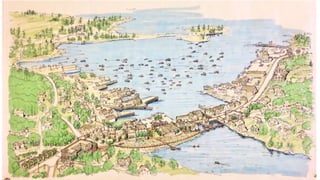
Vinalhaven: Turning the Tide
Design & Resiliency Team (October 2017)
Design & Resiliency Team (DART)
• Wayne Feiden, FAICP, Director of Planning & Sustainability, Northampton, MA
• Cori Burbach, Assistant City Manager, City of Dubuque, Iowa
• Michael Davis, FAIA LEED AP, Bergmeyer Associates; Boston Civic Design Commission
• Peter Flinker, ASLA AICP, Principal, Flinker and Dodson
• David Kriebel, PhD, PE, Professor of Coastal and Ocean Engineering, US Naval Academy
• Joel Mills, Senior Director, Communities by Design, AIA
• Erin Simmons, Senior Director, Design Assistance, AIA
• Binh Minh Hoang (Vietnam) & Idfi Septiani (Indonesia), YSEALI
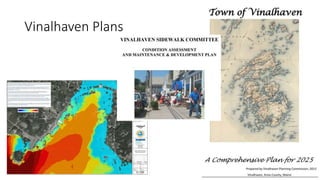
Vinalhaven Plans
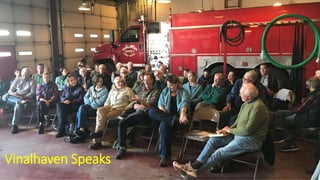
Vinalhaven Speaks
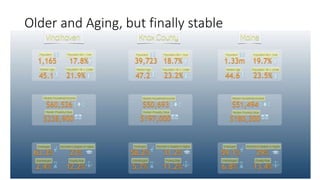
Older and Aging, but finally stable
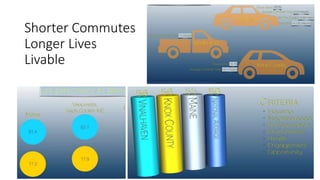
Shorter Commutes
Longer Lives
Livable
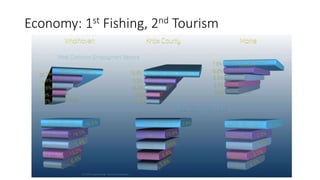
Economy: 1st Fishing, 2nd Tourism
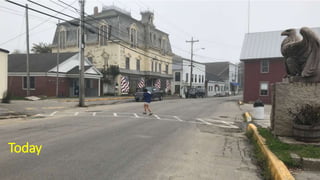
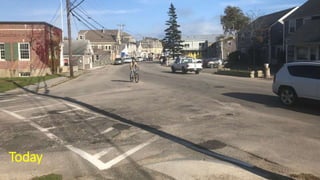
Today
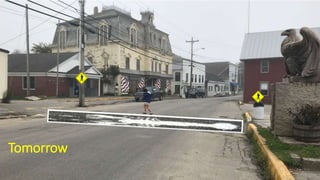
Tomorrow
Today
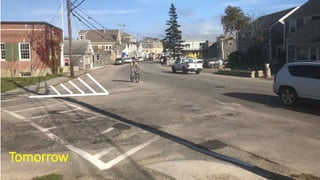
Tomorrow
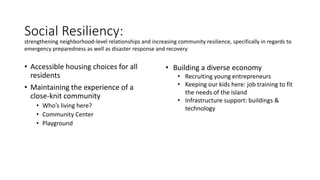
Social Resiliency:
• Accessible housing choices for all
residents
• Maintaining the experience of a
close-knit community
• Who’s living here?
• Community Center
• Playground
strengthening neighborhood-level relationships and increasing community resilience, specifically in regards to
emergency preparedness as well as disaster response and recovery
• Building a diverse economy
• Recruiting young entrepreneurs
• Keeping our kids here: job training to fit
the needs of the island
• Infrastructure support: buildings &
technology
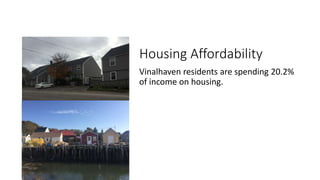
Housing Affordability
Vinalhaven residents are spending 20.2%
of income on housing.
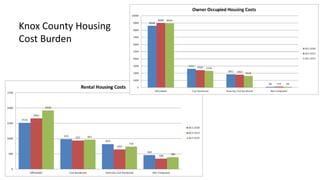
Knox County Housing
Cost Burden
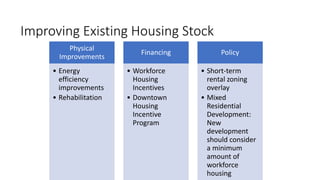
Improving Existing Housing Stock
Physical
Improvements
• Energy
efficiency
improvements
• Rehabilitation
Financing
• Workforce
Housing
Incentives
• Downtown
Housing
Incentive
Program
Policy
• Short-term
rental zoning
overlay
• Mixed
Residential
Development:
New
development
should consider
a minimum
amount of
workforce
housing
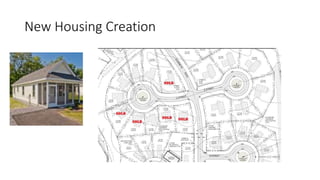
New Housing Creation
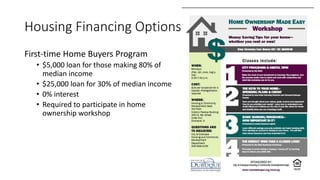
Housing Financing Options
First-time Home Buyers Program
• $5,000 loan for those making 80% of
median income
• $25,000 loan for 30% of median income
• 0% interest
• Required to participate in home
ownership workshop
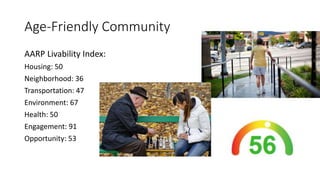
Age-Friendly Community
AARP Livability Index:
Housing: 50
Neighborhood: 36
Transportation: 47
Environment: 67
Health: 50
Engagement: 91
Opportunity: 53
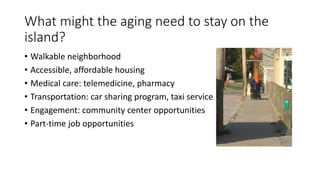
What might the aging need to stay on the
island?
• Walkable neighborhood
• Accessible, affordable housing
• Medical care: telemedicine, pharmacy
• Transportation: car sharing program, taxi service
• Engagement: community center opportunities
• Part-time job opportunities
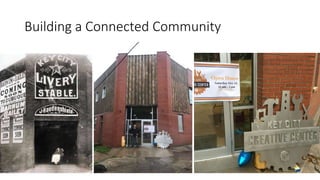
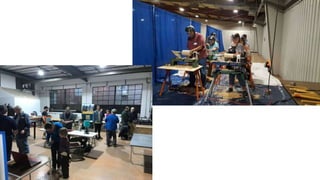
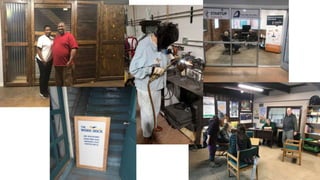
Building a Connected Community
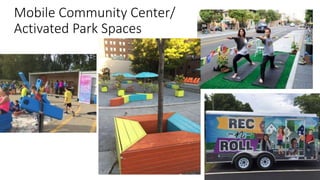
Mobile Community Center/
Activated Park Spaces
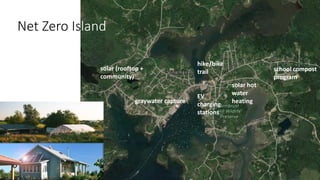
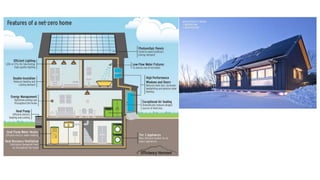
Net Zero Island
graywater capture
solar (rooftop +
community)
solar hot
water
heating
school compost
program
hike/bike
trail
EV
charging
stations
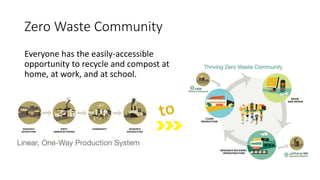
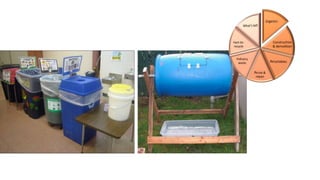
Zero Waste Community
Everyone has the easily-accessible
opportunity to recycle and compost at
home, at work, and at school.
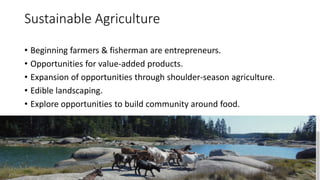
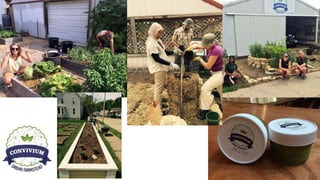
Sustainable Agriculture
• Beginning farmers & fisherman are entrepreneurs.
• Opportunities for value-added products.
• Expansion of opportunities through shoulder-season agriculture.
• Edible landscaping.
• Explore opportunities to build community around food.
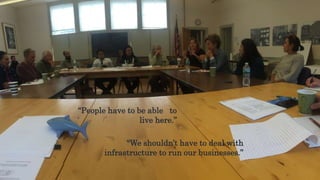
“We shouldn’t have to deal with
infrastructure to run our businesses.”
“People have to be able to
live here.”
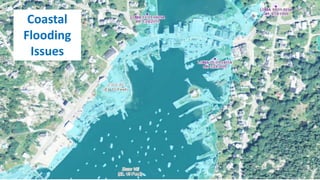
Coastal
Flooding
Issues
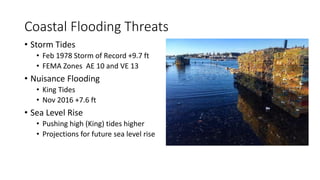
Coastal Flooding Threats
• Storm Tides
• Feb 1978 Storm of Record +9.7 ft
• FEMA Zones AE 10 and VE 13
• Nuisance Flooding
• King Tides
• Nov 2016 +7.6 ft
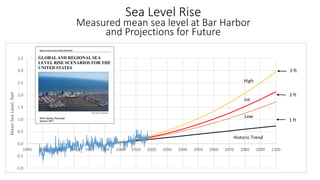
• Sea Level Rise
• Pushing high (King) tides higher
• Projections for future sea level rise
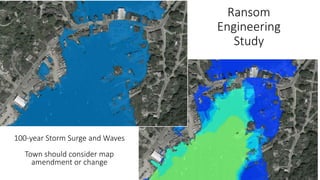
Ransom
Engineering
Study
100-year Storm Surge and Waves
Town should consider map
amendment or change
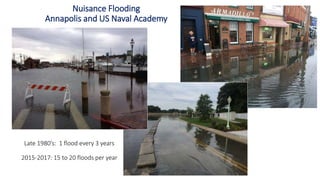
Nuisance Flooding
Annapolis and US Naval Academy
Dec 2012
The Weather Channel
Late 1980’s: 1 flood every 3 years
2015-2017: 15 to 20 floods per year
Sea Level Rise
Measured mean sea level at Bar Harbor
and Projections for Future
Maine Geological Survey
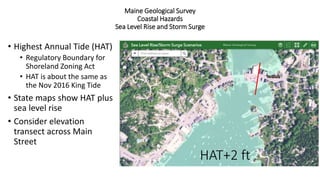
Coastal Hazards
Sea Level Rise and Storm Surge
• Highest Annual Tide (HAT)
• Regulatory Boundary for
Shoreland Zoning Act
• HAT is about the same as
the Nov 2016 King Tide
• State maps show HAT plus
sea level rise
• Consider elevation
transect across Main
Street
HAT+2 ft
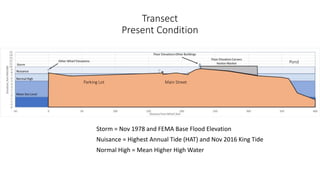
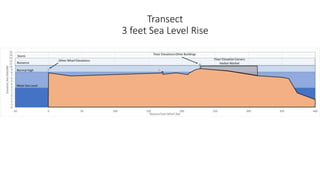
Transect
Present Condition
Storm = Nov 1978 and FEMA Base Flood Elevation
Nuisance = Highest Annual Tide (HAT) and Nov 2016 King Tide
Normal High = Mean Higher High Water
Main StreetParking Lot
Pond
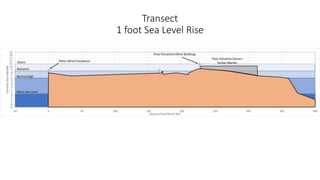
Transect
1 foot Sea Level Rise
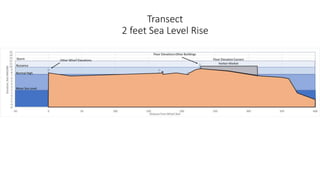
Transect
2 feet Sea Level Rise
Transect
3 feet Sea Level Rise
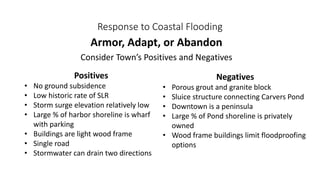
Response to Coastal Flooding
Armor, Adapt, or Abandon
Consider Town’s Positives and Negatives
Positives
• No ground subsidence
• Low historic rate of SLR
• Storm surge elevation relatively low
• Large % of harbor shoreline is wharf
with parking
• Buildings are light wood frame
• Single road
• Stormwater can drain two directions
Negatives
• Porous grout and granite block
• Sluice structure connecting Carvers Pond
• Downtown is a peninsula
• Large % of Pond shoreline is privately
owned
• Wood frame buildings limit floodproofing
options
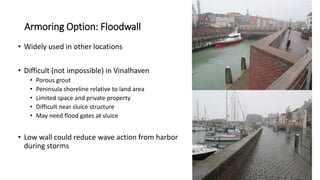
Armoring Option: Floodwall
• Widely used in other locations
• Difficult (not impossible) in Vinalhaven
• Porous grout
• Peninsula shoreline relative to land area
• Limited space and private property
• Difficult near sluice structure
• May need flood gates at sluice
• Low wall could reduce wave action from harbor
during storms
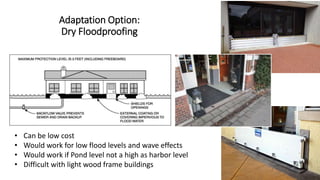
Adaptation Option:
Dry Floodproofing
• Can be low cost
• Would work for low flood levels and wave effects
• Would work if Pond level not a high as harbor level
• Difficult with light wood frame buildings
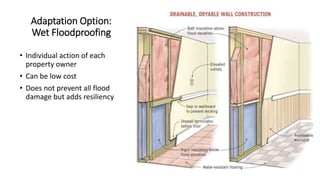
• Individual action of each
property owner
• Can be low cost
• Does not prevent all flood
damage but adds resiliency
Adaptation Option:
Wet Floodproofing
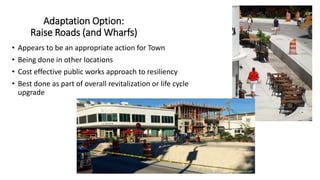
Adaptation Option:
Raise Roads (and Wharfs)
• Appears to be an appropriate action for Town
• Being done in other locations
• Cost effective public works approach to resiliency
• Best done as part of overall revitalization or life cycle
upgrade
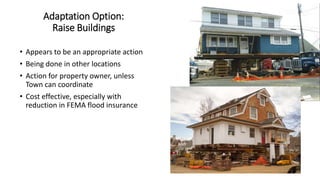
Adaptation Option:
Raise Buildings
• Appears to be an appropriate action
• Being done in other locations
• Action for property owner, unless
Town can coordinate
• Cost effective, especially with
reduction in FEMA flood insurance
Improving Resiliency to Coastal Flooding
• Near term (to 2050):
• Elevate road and sidewalks
• Prevent nuisance flooding with 1 ft SLR scenario
• Need to evaluate stormwater and sewer
• Encourage prudent wet or dry floodproofing measures
• Long term (to 2100):
• Consider long term plan to raise wharf elevations
• Consider modifying sluice structure
• Consider long term plan to raise buildings
• First floor above future FEMA base flood elevation
• Take advantage of life cycle replacement and upgrades
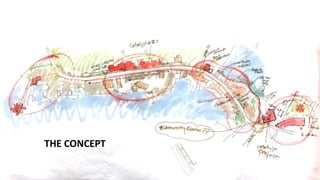
THE CONCEPT
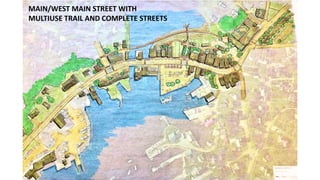
MAIN/WEST MAIN STREET WITH
MULTIUSE TRAIL AND COMPLETE STREETS
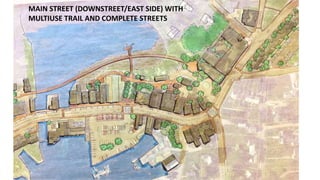
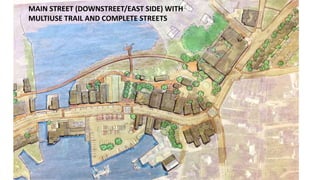
MAIN STREET (DOWNSTREET/EAST SIDE) WITH
MULTIUSE TRAIL AND COMPLETE STREETS
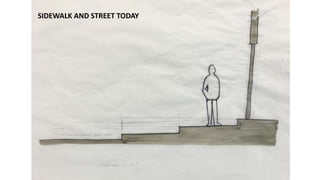
SIDEWALK AND STREET TODAY
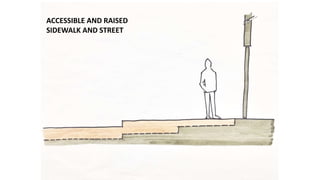
ACCESSIBLE AND RAISED
SIDEWALK AND STREET
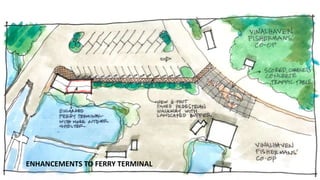
ENHANCEMENTS TO FERRY TERMINAL
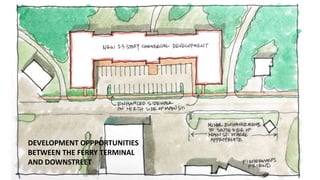
DEVELOPMENT OPPPORTUNITIES
BETWEEN THE FERRY TERMINAL
AND DOWNSTREET
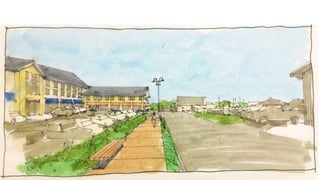
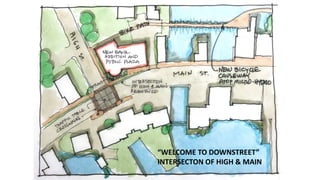
“WELCOME TO DOWNSTREET”
INTERSECTON OF HIGH & MAIN
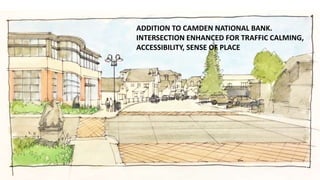
ADDITION TO CAMDEN NATIONAL BANK.
INTERSECTION ENHANCED FOR TRAFFIC CALMING,
ACCESSIBILITY, SENSE OF PLACE
MAIN STREET (DOWNSTREET/EAST SIDE) WITH
MULTIUSE TRAIL AND COMPLETE STREETS
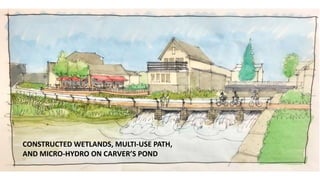
CONSTRUCTED WETLANDS, MULTI-USE PATH,
AND MICRO-HYDRO ON CARVER’S POND
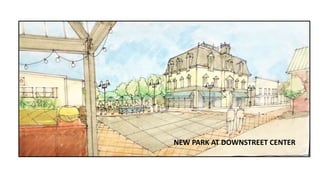
NEW PARK AT DOWNSTREET CENTER
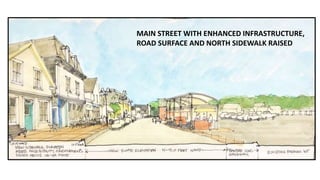
MAIN STREET WITH ENHANCED INFRASTRUCTURE,
ROAD SURFACE AND NORTH SIDEWALK RAISED
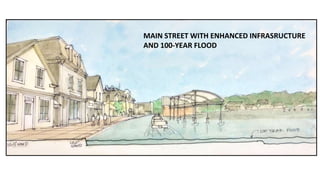
MAIN STREET WITH ENHANCED INFRASRUCTURE
AND 100-YEAR FLOOD
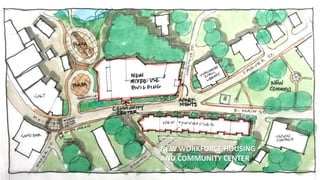
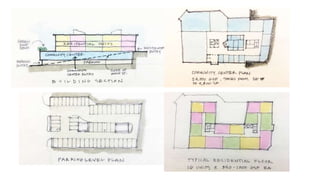
NEW WORKFORCE HOUSING
AND COMMUNITY CENTER
NEW WORKFORCE HOUSING
& COMMUNITY CENTER
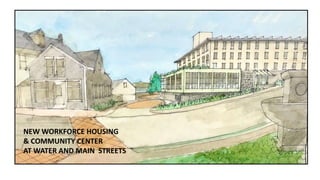
AT WATER AND MAIN STREETS
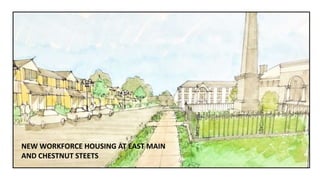
NEW WORKFORCE HOUSING AT EAST MAIN
AND CHESTNUT STEETS
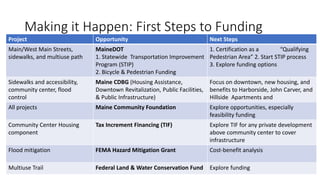
Making it Happen: First Steps to Funding
Project Opportunity Next Steps
Main/West Main Streets,
sidewalks, and multiuse path
MaineDOT
1. Statewide Transportation Improvement
Program (STIP)
2. Bicycle & Pedestrian Funding
1. Certification as a “Qualifying
Pedestrian Area” 2. Start STIP process
3. Explore funding options
Sidewalks and accessibility,
community center, flood
control
Maine CDBG (Housing Assistance,
Downtown Revitalization, Public Facilities,
& Public Infrastructure)
Focus on downtown, new housing, and
benefits to Harborside, John Carver, and
Hillside Apartments and
All projects Maine Community Foundation Explore opportunities, especially
feasibility funding
Community Center Housing
component
Tax Increment Financing (TIF) Explore TIF for any private development
above community center to cover
infrastructure
Flood mitigation FEMA Hazard Mitigation Grant Cost-benefit analysis
Multiuse Trail Federal Land & Water Conservation Fund Explore funding
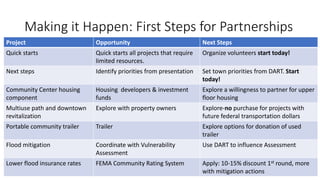
Making it Happen: First Steps for Partnerships
Project Opportunity Next Steps
Quick starts Quick starts all projects that require
limited resources.
Organize volunteers start today!
Next steps Identify priorities from presentation Set town priorities from DART. Start
today!
Community Center housing
component
Housing developers & investment
funds
Explore a willingness to partner for upper
floor housing
Multiuse path and downtown
revitalization
Explore with property owners Explore-no purchase for projects with
future federal transportation dollars
Portable community trailer Trailer Explore options for donation of used
trailer
Flood mitigation Coordinate with Vulnerability
Assessment
Use DART to influence Assessment
Lower flood insurance rates FEMA Community Rating System Apply: 10-15% discount 1st round, more
with mitigation actions
Vinalhaven: Turning the Tide www.DesignResliency.org

Vinalhaven, Maine Resilience Strategy

  • 1.
    Vinalhaven: Turning theTide Design & Resiliency Team (October 2017)
  • 2.
    Design & ResiliencyTeam (DART) • Wayne Feiden, FAICP, Director of Planning & Sustainability, Northampton, MA • Cori Burbach, Assistant City Manager, City of Dubuque, Iowa • Michael Davis, FAIA LEED AP, Bergmeyer Associates; Boston Civic Design Commission • Peter Flinker, ASLA AICP, Principal, Flinker and Dodson • David Kriebel, PhD, PE, Professor of Coastal and Ocean Engineering, US Naval Academy • Joel Mills, Senior Director, Communities by Design, AIA • Erin Simmons, Senior Director, Design Assistance, AIA • Binh Minh Hoang (Vietnam) & Idfi Septiani (Indonesia), YSEALI
  • 3.
  • 7.
  • 9.
    Older and Aging,but finally stable
  • 10.
  • 11.
  • 12.
  • 13.
  • 14.
  • 15.
  • 16.
    Social Resiliency: • Accessiblehousing choices for all residents • Maintaining the experience of a close-knit community • Who’s living here? • Community Center • Playground strengthening neighborhood-level relationships and increasing community resilience, specifically in regards to emergency preparedness as well as disaster response and recovery • Building a diverse economy • Recruiting young entrepreneurs • Keeping our kids here: job training to fit the needs of the island • Infrastructure support: buildings & technology
  • 17.
    Housing Affordability Vinalhaven residentsare spending 20.2% of income on housing.
  • 18.
  • 19.
    Improving Existing HousingStock Physical Improvements • Energy efficiency improvements • Rehabilitation Financing • Workforce Housing Incentives • Downtown Housing Incentive Program Policy • Short-term rental zoning overlay • Mixed Residential Development: New development should consider a minimum amount of workforce housing
  • 20.
  • 22.
    Housing Financing Options First-timeHome Buyers Program • $5,000 loan for those making 80% of median income • $25,000 loan for 30% of median income • 0% interest • Required to participate in home ownership workshop
  • 23.
    Age-Friendly Community AARP LivabilityIndex: Housing: 50 Neighborhood: 36 Transportation: 47 Environment: 67 Health: 50 Engagement: 91 Opportunity: 53
  • 24.
    What might theaging need to stay on the island? • Walkable neighborhood • Accessible, affordable housing • Medical care: telemedicine, pharmacy • Transportation: car sharing program, taxi service • Engagement: community center opportunities • Part-time job opportunities
  • 25.
  • 28.
  • 30.
    Net Zero Island graywatercapture solar (rooftop + community) solar hot water heating school compost program hike/bike trail EV charging stations
  • 32.
    Zero Waste Community Everyonehas the easily-accessible opportunity to recycle and compost at home, at work, and at school.
  • 34.
    Sustainable Agriculture • Beginningfarmers & fisherman are entrepreneurs. • Opportunities for value-added products. • Expansion of opportunities through shoulder-season agriculture. • Edible landscaping. • Explore opportunities to build community around food.
  • 36.
    “We shouldn’t haveto deal with infrastructure to run our businesses.” “People have to be able to live here.”
  • 37.
  • 38.
    Coastal Flooding Threats •Storm Tides • Feb 1978 Storm of Record +9.7 ft • FEMA Zones AE 10 and VE 13 • Nuisance Flooding • King Tides • Nov 2016 +7.6 ft • Sea Level Rise • Pushing high (King) tides higher • Projections for future sea level rise
  • 39.
    Ransom Engineering Study 100-year Storm Surgeand Waves Town should consider map amendment or change
  • 40.
    Nuisance Flooding Annapolis andUS Naval Academy Dec 2012 The Weather Channel Late 1980’s: 1 flood every 3 years 2015-2017: 15 to 20 floods per year
  • 41.
    Sea Level Rise Measuredmean sea level at Bar Harbor and Projections for Future
  • 42.
    Maine Geological Survey CoastalHazards Sea Level Rise and Storm Surge • Highest Annual Tide (HAT) • Regulatory Boundary for Shoreland Zoning Act • HAT is about the same as the Nov 2016 King Tide • State maps show HAT plus sea level rise • Consider elevation transect across Main Street HAT+2 ft
  • 43.
    Transect Present Condition Storm =Nov 1978 and FEMA Base Flood Elevation Nuisance = Highest Annual Tide (HAT) and Nov 2016 King Tide Normal High = Mean Higher High Water Main StreetParking Lot Pond
  • 44.
  • 45.
  • 46.
  • 47.
    Response to CoastalFlooding Armor, Adapt, or Abandon Consider Town’s Positives and Negatives Positives • No ground subsidence • Low historic rate of SLR • Storm surge elevation relatively low • Large % of harbor shoreline is wharf with parking • Buildings are light wood frame • Single road • Stormwater can drain two directions Negatives • Porous grout and granite block • Sluice structure connecting Carvers Pond • Downtown is a peninsula • Large % of Pond shoreline is privately owned • Wood frame buildings limit floodproofing options
  • 48.
    Armoring Option: Floodwall •Widely used in other locations • Difficult (not impossible) in Vinalhaven • Porous grout • Peninsula shoreline relative to land area • Limited space and private property • Difficult near sluice structure • May need flood gates at sluice • Low wall could reduce wave action from harbor during storms
  • 49.
    Adaptation Option: Dry Floodproofing •Can be low cost • Would work for low flood levels and wave effects • Would work if Pond level not a high as harbor level • Difficult with light wood frame buildings
  • 50.
    • Individual actionof each property owner • Can be low cost • Does not prevent all flood damage but adds resiliency Adaptation Option: Wet Floodproofing
  • 51.
    Adaptation Option: Raise Roads(and Wharfs) • Appears to be an appropriate action for Town • Being done in other locations • Cost effective public works approach to resiliency • Best done as part of overall revitalization or life cycle upgrade
  • 52.
    Adaptation Option: Raise Buildings •Appears to be an appropriate action • Being done in other locations • Action for property owner, unless Town can coordinate • Cost effective, especially with reduction in FEMA flood insurance
  • 53.
    Improving Resiliency toCoastal Flooding • Near term (to 2050): • Elevate road and sidewalks • Prevent nuisance flooding with 1 ft SLR scenario • Need to evaluate stormwater and sewer • Encourage prudent wet or dry floodproofing measures • Long term (to 2100): • Consider long term plan to raise wharf elevations • Consider modifying sluice structure • Consider long term plan to raise buildings • First floor above future FEMA base flood elevation • Take advantage of life cycle replacement and upgrades
  • 54.
  • 55.
    MAIN/WEST MAIN STREETWITH MULTIUSE TRAIL AND COMPLETE STREETS
  • 56.
    MAIN STREET (DOWNSTREET/EASTSIDE) WITH MULTIUSE TRAIL AND COMPLETE STREETS
  • 57.
  • 58.
  • 59.
  • 60.
    DEVELOPMENT OPPPORTUNITIES BETWEEN THEFERRY TERMINAL AND DOWNSTREET
  • 62.
  • 63.
    ADDITION TO CAMDENNATIONAL BANK. INTERSECTION ENHANCED FOR TRAFFIC CALMING, ACCESSIBILITY, SENSE OF PLACE
  • 64.
    MAIN STREET (DOWNSTREET/EASTSIDE) WITH MULTIUSE TRAIL AND COMPLETE STREETS
  • 65.
    CONSTRUCTED WETLANDS, MULTI-USEPATH, AND MICRO-HYDRO ON CARVER’S POND
  • 66.
    NEW PARK ATDOWNSTREET CENTER
  • 67.
    MAIN STREET WITHENHANCED INFRASTRUCTURE, ROAD SURFACE AND NORTH SIDEWALK RAISED
  • 68.
    MAIN STREET WITHENHANCED INFRASRUCTURE AND 100-YEAR FLOOD
  • 69.
    NEW WORKFORCE HOUSING ANDCOMMUNITY CENTER
  • 70.
    NEW WORKFORCE HOUSING &COMMUNITY CENTER AT WATER AND MAIN STREETS
  • 72.
    NEW WORKFORCE HOUSINGAT EAST MAIN AND CHESTNUT STEETS
  • 75.
    Making it Happen:First Steps to Funding Project Opportunity Next Steps Main/West Main Streets, sidewalks, and multiuse path MaineDOT 1. Statewide Transportation Improvement Program (STIP) 2. Bicycle & Pedestrian Funding 1. Certification as a “Qualifying Pedestrian Area” 2. Start STIP process 3. Explore funding options Sidewalks and accessibility, community center, flood control Maine CDBG (Housing Assistance, Downtown Revitalization, Public Facilities, & Public Infrastructure) Focus on downtown, new housing, and benefits to Harborside, John Carver, and Hillside Apartments and All projects Maine Community Foundation Explore opportunities, especially feasibility funding Community Center Housing component Tax Increment Financing (TIF) Explore TIF for any private development above community center to cover infrastructure Flood mitigation FEMA Hazard Mitigation Grant Cost-benefit analysis Multiuse Trail Federal Land & Water Conservation Fund Explore funding
  • 76.
    Making it Happen:First Steps for Partnerships Project Opportunity Next Steps Quick starts Quick starts all projects that require limited resources. Organize volunteers start today! Next steps Identify priorities from presentation Set town priorities from DART. Start today! Community Center housing component Housing developers & investment funds Explore a willingness to partner for upper floor housing Multiuse path and downtown revitalization Explore with property owners Explore-no purchase for projects with future federal transportation dollars Portable community trailer Trailer Explore options for donation of used trailer Flood mitigation Coordinate with Vulnerability Assessment Use DART to influence Assessment Lower flood insurance rates FEMA Community Rating System Apply: 10-15% discount 1st round, more with mitigation actions
  • 77.
    Vinalhaven: Turning theTide www.DesignResliency.org

Editor's Notes

  • #17 Building a diverse economy: this is not an economic development strategy. What are some of the ways the community you build directly influences the economy?
  • #19 Knox County household cost burden statistics, 2010-2015 Affordable: , 30% of income Burdened: 30-49% Severely burdened: 50+%
  • #20 In addition to cost of home ownership/rental, renters pay about 30% more, as a portion of their income, on their utility bills because they’re living in inefficient places. Downtown housing incentive program: investment in vacant second stories. Workforce housing incentive (80-100% of median income) Resource: Workforce Housing Coalition of the Greater Seacoast
  • #21 Bridgton ME: 600 to 1800 sq ft homes, goal is net-zero energy. Includes solar panels.
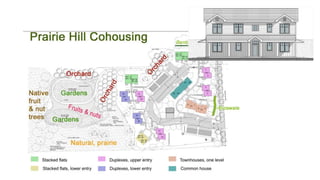
  • #22 Prairie Hill Cohousing (Iowa City, IA)
  • #23 First time home buyers program:
  • #24 If you build a community that’s age-friendly, you’re also building a community that’s stroller-friendly.
  • #25 Accessible, affordable housing: universal design
  • #27 Sr. Margaret
  • #29 $16k: Dubuque’s Rec n Roll trailer, which includes tables, chairs, basketball hoops, inflatable movie screen & projector, giant jenga game, etc
  • #31 Photos from Abundance Village in Fairfield IA. Greenhouses and hoophouses extending the growing season
  • #34 Zero Waste means designing and managing products and processes to systematically avoid and eliminate the volume and toxicity of waste and materials, conserve and recover all resources, and not burn or bury them.
  • #36 Part-time farming: it doesn’t have to be your fulltime living