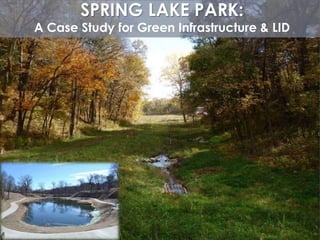
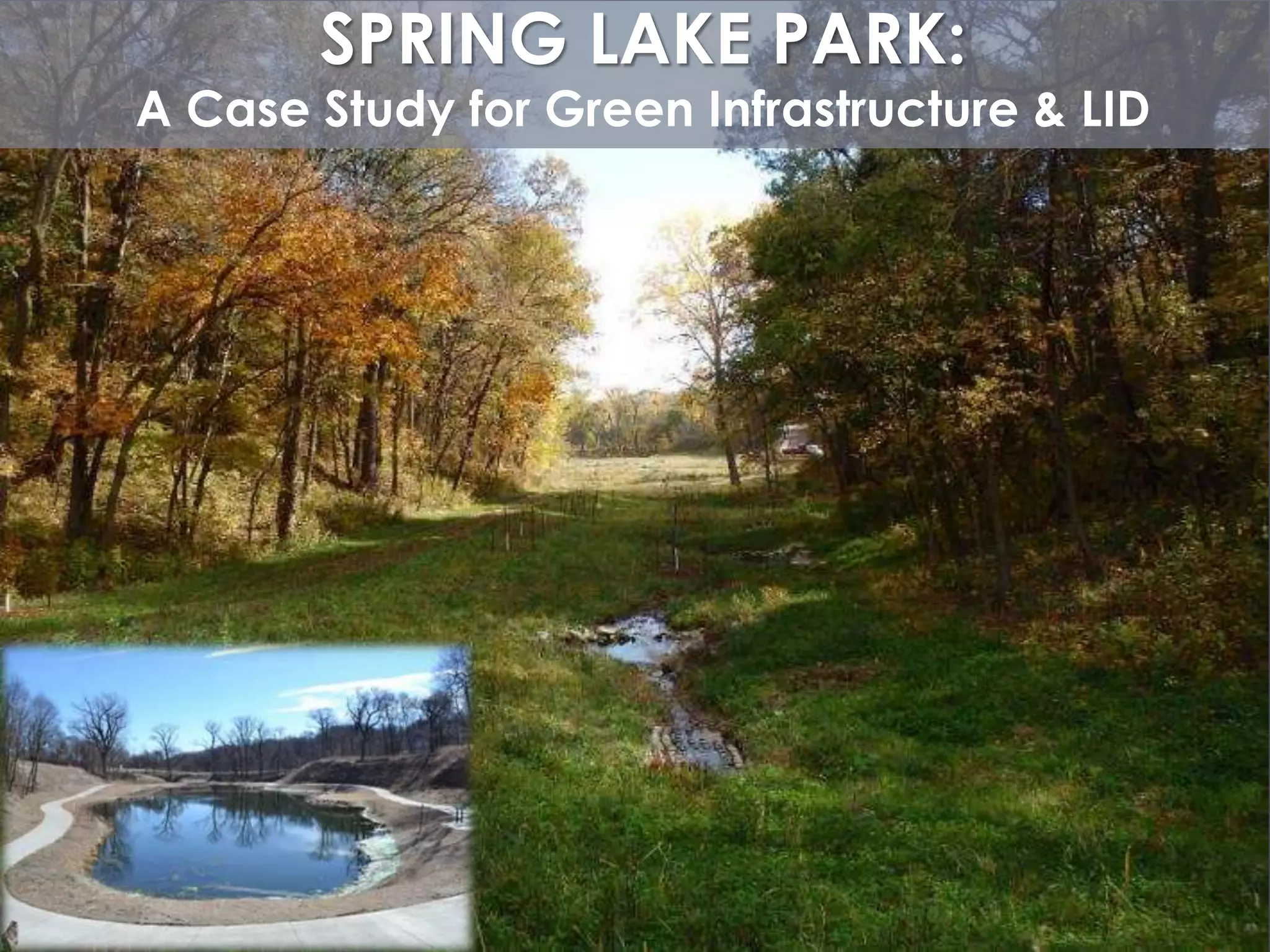
SPRING LAKE PARK:
A Case Study for Green Infrastructure & LID
Jim Theiler
James.Theiler@cityofomaha.org
City of Omaha
Environmental Services Manager
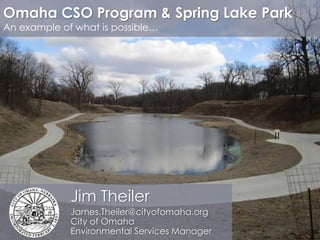
Omaha CSO Program & Spring Lake Park
An example of what is possible…
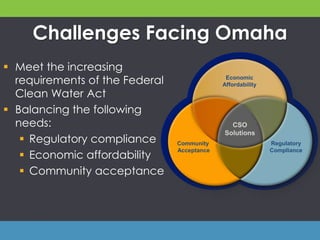
Challenges Facing Omaha
 Meet the increasing
requirements of the Federal
Clean Water Act
 Balancing the following
needs:
 Regulatory compliance
 Economic affordability
 Community acceptance
Economic
Affordability
Community
Acceptance
Regulatory
Compliance
CSO
Solutions
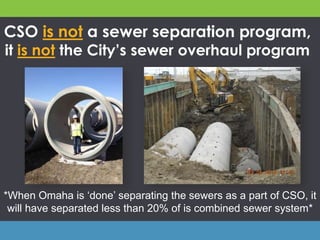
CSO is not a sewer separation program,
it is not the City’s sewer overhaul program
*When Omaha is ‘done’ separating the sewers as a part of CSO, it
will have separated less than 20% of is combined sewer system*
CSO is a Public Health Program that
must meet federal law that requires
us to reduce the amount of human
sewage and disease causing
bacteria that enter the rivers and
streams.
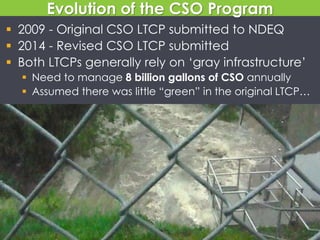
Evolution of the CSO Program
 2009 - Original CSO LTCP submitted to NDEQ
 2014 - Revised CSO LTCP submitted
 Both LTCPs generally rely on ‘gray infrastructure’
 Need to manage 8 billion gallons of CSO annually
 Assumed there was little “green” in the original LTCP…
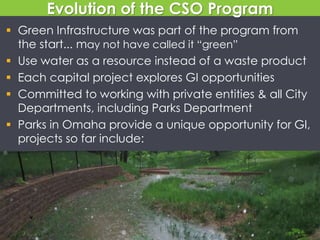
Evolution of the CSO Program
 Green Infrastructure was part of the program from
the start... may not have called it “green”
 Use water as a resource instead of a waste product
 Each capital project explores GI opportunities
 Committed to working with private entities & all City
Departments, including Parks Department
 Parks in Omaha provide a unique opportunity for GI,
projects so far include:
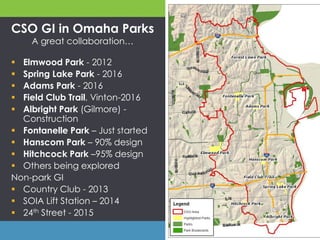
CSO GI in Omaha Parks
A great collaboration…
 Elmwood Park - 2012
 Spring Lake Park - 2016
 Adams Park - 2016
 Field Club Trail, Vinton-2016
 Albright Park (Gilmore) -
Construction
 Fontanelle Park – Just started
 Hanscom Park – 90% design
 Hitchcock Park –95% design
 Others being explored
Non-park GI
 Country Club - 2013
 SOIA Lift Station – 2014
 24th Street - 2015
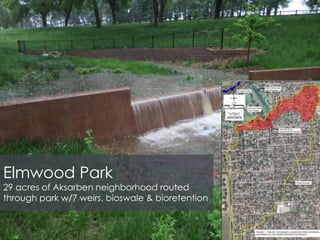
Elmwood Park
29 acres of Aksarben neighborhood routed
through park w/7 weirs, bioswale & bioretention
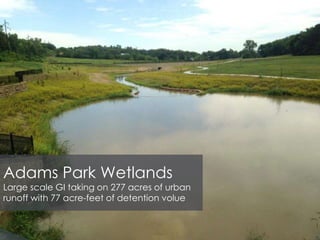
Adams Park Wetlands
Large scale GI taking on 277 acres of urban
runoff with 77 acre-feet of detention volue
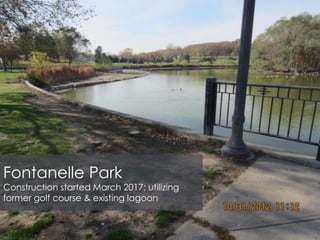
Fontanelle Park
Construction started March 2017; utilizing
former golf course & existing lagoon
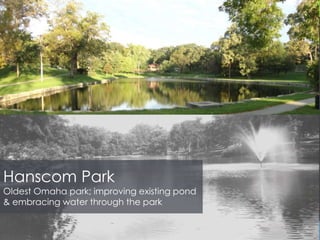
Hanscom Park
Oldest Omaha park; improving existing pond
& embracing water through the park
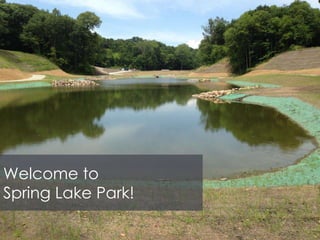
Welcome to
Spring Lake Park!
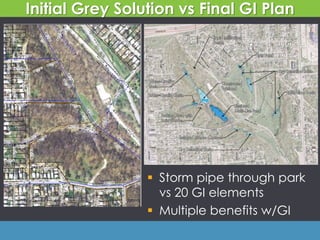
Initial Grey Solution vs Final GI Plan
 Storm pipe through park
vs 20 GI elements
 Multiple benefits w/GI
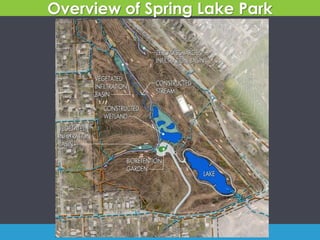
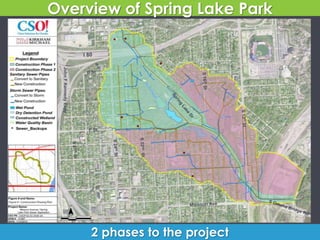
Overview of Spring Lake Park
2 phases to the project
JohnFKennedyExpy
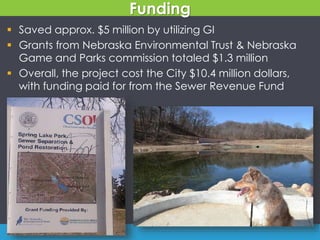
Funding
 Saved approx. $5 million by utilizing GI
 Grants from Nebraska Environmental Trust & Nebraska
Game and Parks commission totaled $1.3 million
 Overall, the project cost the City $10.4 million dollars,
with funding paid for from the Sewer Revenue Fund
Why this project…
 This was not the City’s idea, this was the neighborhood’s
idea.
 My boss at the time, Marty Grate, said that the City
needed a ‘signature project’ that helped give back to
the community something tangible, to help them see
what they are paying for
 The Public Works Department asked permission from the
Parks Department to use Spring Lake as that project.
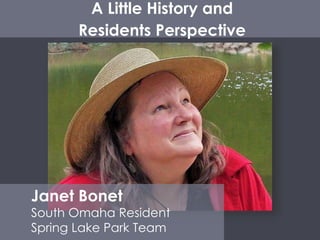
Janet Bonet
South Omaha Resident
Spring Lake Park Team
A Little History and
Residents Perspective
Spring Lake
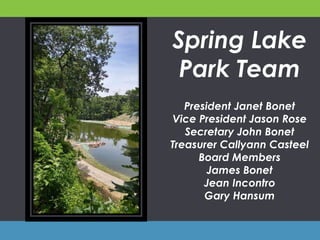
Park Team
President Janet Bonet
Vice President Jason Rose
Secretary John Bonet
Treasurer Callyann Casteel
Board Members
James Bonet
Jean Incontro
Gary Hansum
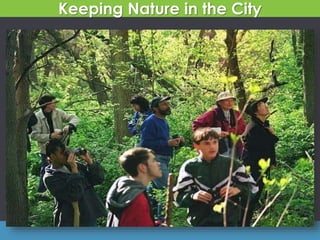
Keeping Nature in the City
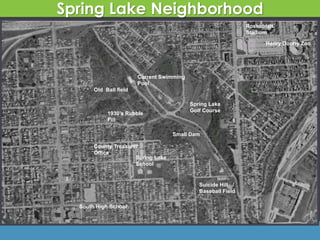
Spring Lake Neighborhood
Spring Lake
School
Henry Doorly Zoo
Rosenblatt
Stadium
Spring Lake
Golf Course
South High School
Suicide Hill /
Baseball Field
County Treasurer
Office
Current Swimming
Pool
Old Ball field
1930’s Rubble
Fill
Small Dam
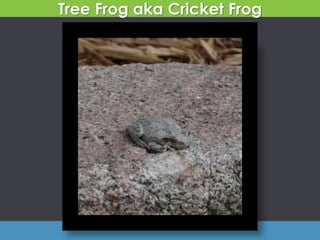
Tree Frog aka Cricket Frog
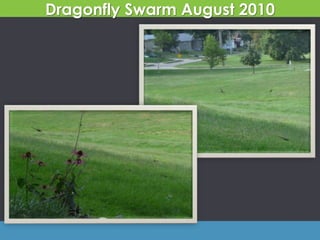
Dragonfly Swarm August 2010
Sunflower and Honey Bee
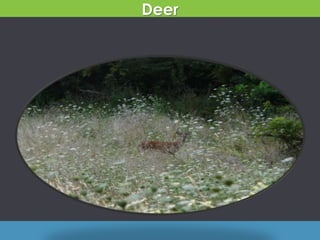
Deer
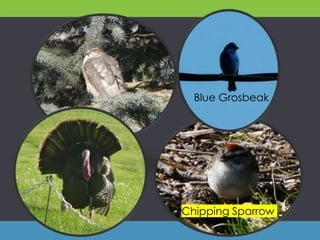
Blue Grosbeak
Chipping Sparrow
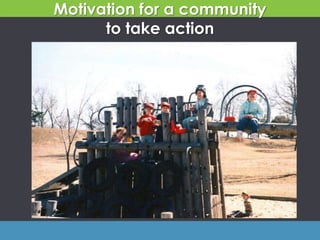
Motivation for a community
to take action
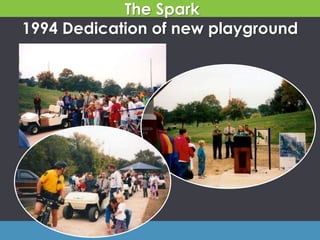
The Spark
1994 Dedication of new playground
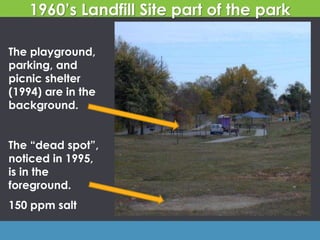
1960’s Landfill Site part of the park
The playground,
parking, and
picnic shelter
(1994) are in the
background.
The “dead spot”,
noticed in 1995,
is in the
foreground.
150 ppm salt
Somebody
should
do
something
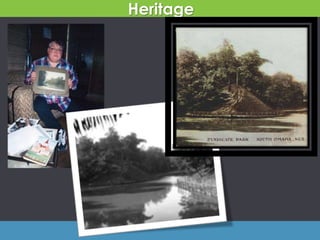
Heritage
 1994 – SLPT BLOSSOMS DRIVES EFFORT TO “PUT
THE LAKE BACK IN SPRING LAKE PARK”
 1995 – FEDERAL MANDATE SEWER SEPARATION
 1999 – SLPT & KSU COMMUNITY VISIONING
 2000 – COMPLIANCE ENFORCEMENT NOTICE
 2001 – SLPT CONCEPT PRESENTED TO MAYOR
 2002 – OMAHA GEARS UP FOR CSO
PROGRAM
 2005 – SLPT AMONG COMMUNITY
STAKEHOLDERS ON CSO STEERING COMMITTEE
Moving toward doing something
Why do it? It has been said:
 It’ll never happen, City does not care about
South O
 It’s just a dump anyway, just fill it in
 I’ll be dead before those trees make shade
 I’m leaving the neighborhood why should I care
 The city doesn’t care about our parks why
should I
 The kids today will just mess it up so why try
 It’ll cost too much
 Nobody will appreciate all that work
 Who the heck cares
 Who is going to take care of it when it’s done
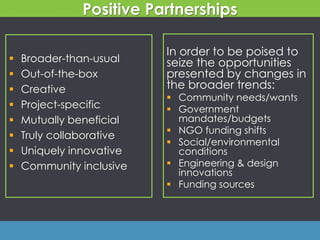
Positive Partnerships
 Broader-than-usual
 Out-of-the-box
 Creative
 Project-specific
 Mutually beneficial
 Truly collaborative
 Uniquely innovative
 Community inclusive
In order to be poised to
seize the opportunities
presented by changes in
the broader trends:
 Community needs/wants
 Government
mandates/budgets
 NGO funding shifts
 Social/environmental
conditions
 Engineering & design
innovations
 Funding sources
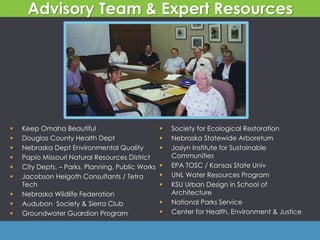
 Keep Omaha Beautiful
 Douglas County Health Dept
 Nebraska Dept Environmental Quality
 Papio Missouri Natural Resources District
 City Depts. – Parks, Planning, Public Works
 Jacobson Helgoth Consultants / Tetra
Tech
 Nebraska Wildlife Federation
 Audubon Society & Sierra Club
 Groundwater Guardian Program
 Society for Ecological Restoration
 Nebraska Statewide Arboretum
 Joslyn Institute for Sustainable
Communities
 EPA TOSC / Kansas State Univ
 UNL Water Resources Program
 KSU Urban Design in School of
Architecture
 National Parks Service
 Center for Health, Environment & Justice
Advisory Team & Expert Resources
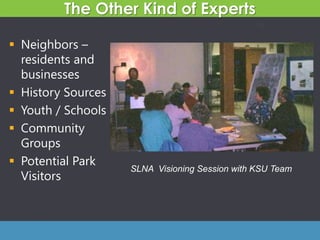
The Other Kind of Experts
 Neighbors –
residents and
businesses
 History Sources
 Youth / Schools
 Community
Groups
 Potential Park
Visitors
39
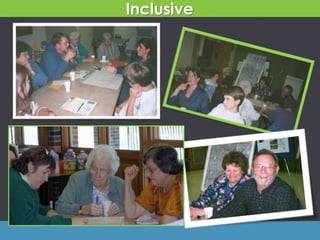
SLNA Visioning Session with KSU Team
Inclusive
40
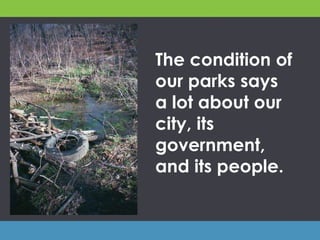
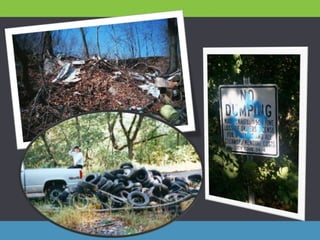
The condition of
our parks says
a lot about our
city, its
government,
and its people.
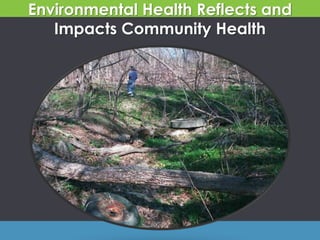
Environmental Health Reflects and
Impacts Community Health
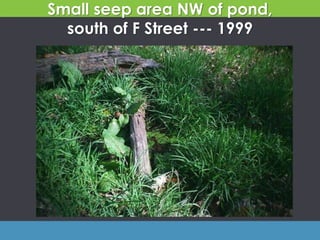
Small seep area NW of pond,
south of F Street --- 1999
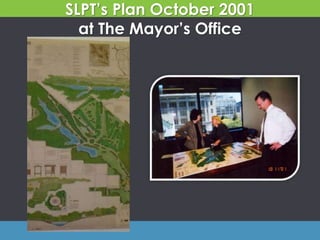
SLPT’s Plan October 2001
at The Mayor’s Office
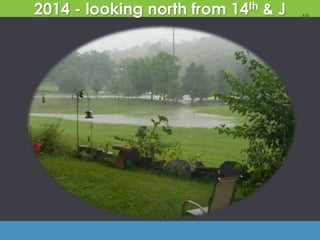
2014 - looking north from 14th & J 48
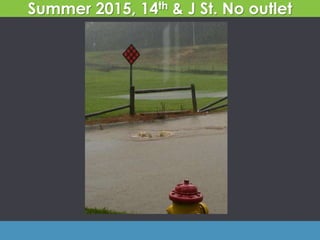
Summer 2015, 14th & J St. No outlet
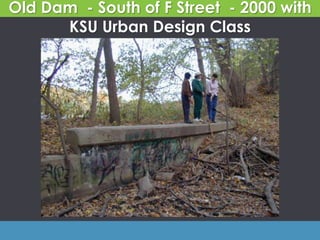
Old Dam - South of F Street - 2000 with
KSU Urban Design Class
.
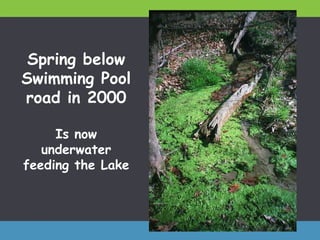
Spring below
Swimming Pool
road in 2000
Is now
underwater
feeding the Lake
Of Miracles and Mandates:
Maximizing Opportunities for Partnership Building
By Janet Bonet
Neighborhood Activist
South Omaha, Nebraska
NUSA
Houston, TX
May 22, 2015
EPA – Region 7
Technical Outreach
Services to Communities at
Kansas State University
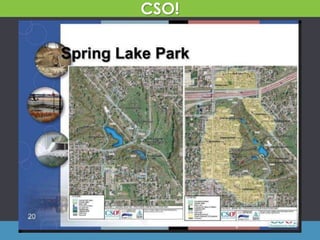
CSO!
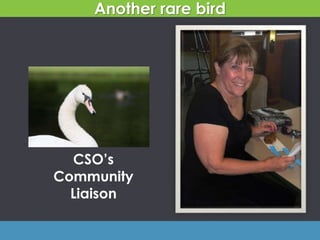
CSO’s
Community
Liaison
Another rare bird
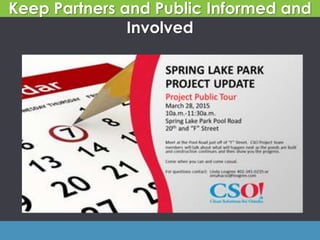
Keep Partners and Public Informed and
Involved
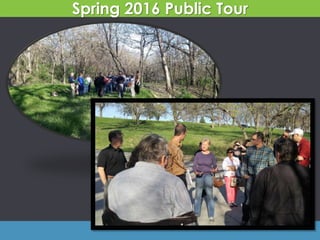
Spring 2016 Public Tour
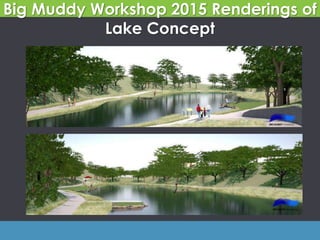
Big Muddy Workshop 2015 Renderings of
Lake Concept
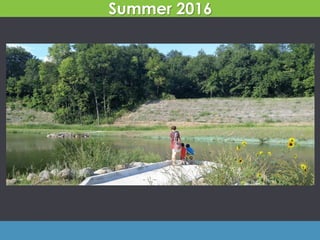
Summer 2016
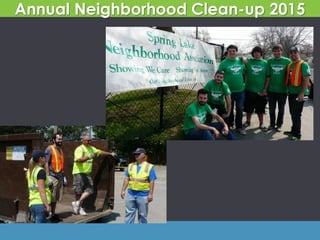
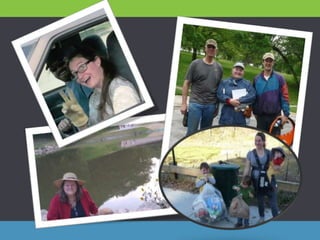
Annual Neighborhood Clean-up 2015
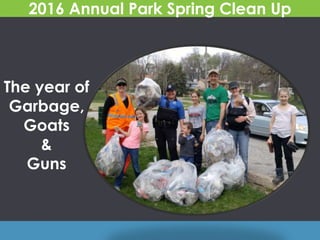
2016 Annual Park Spring Clean Up
The year of
Garbage,
Goats
&
Guns
Thank you!
Pat Slaven, PLA, ASLA
City of Omaha
Park Planner
Omaha Parks and the CSO Program
Project Role:
Department Liaison
between the Parks Department
and everyone else
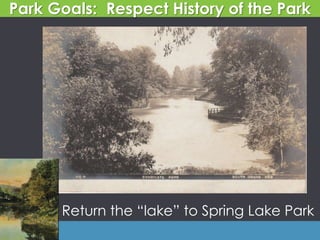
Return the “lake” to Spring Lake Park
Park Goals: Respect History of the Park
Attract more and a greater
diversity of wildlife
Park Goals: Wildlife Habitat
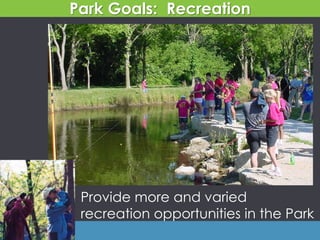
Provide more and varied
recreation opportunities in the Park
Park Goals: Recreation
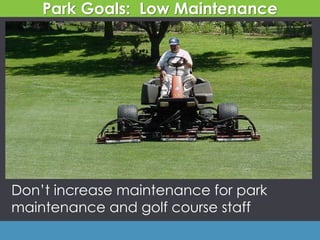
Don’t increase maintenance for park
maintenance and golf course staff
Park Goals: Low Maintenance
Making sure we’re all swimming
in the same direction
Parks and the Project Team
Park Planner Responsibilities on CSO Projects:
 Make sure everyone understands Parks Department goals for the project
 Attend regular meetings with Public Works, consultants, project
management team
 Attend onsite meetings to discuss issues and solutions
 Review and comment on progress plans in terms of park goals
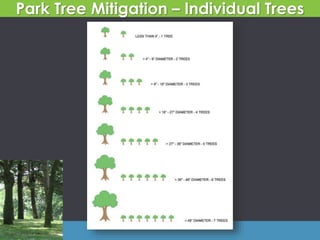
 Enforce Parks Dept. tree mitigation requirements
 Coordinate with other park entities, i.e. golf course staff, park
maintenance staff, etc. and communicate their concerns to the project
team
Park Tree Mitigation – Individual Trees
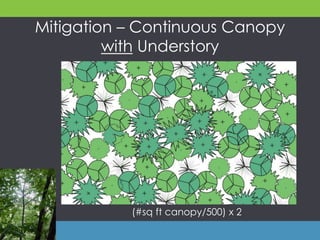
(#sq ft canopy/500) x 2
Mitigation – Continuous Canopy
with Understory
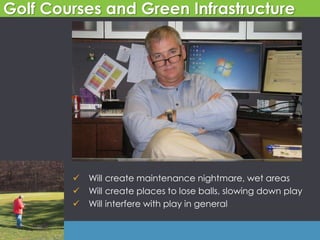
 Will create maintenance nightmare, wet areas
 Will create places to lose balls, slowing down play
 Will interfere with play in general
Golf Courses and Green Infrastructure
 G.I. Team met onsite Bob and golf course staff
 Discussed concerns
 Developed design to address concerns
Golf Courses and Green Infrastructure
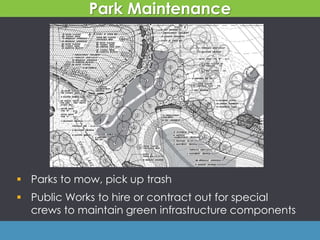
 Parks to mow, pick up trash
 Public Works to hire or contract out for special
crews to maintain green infrastructure components
Park Maintenance
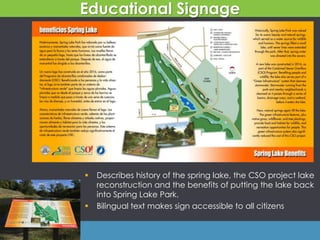
Educational Signage
 Describes history of the spring lake, the CSO project lake
reconstruction and the benefits of putting the lake back
into Spring Lake Park.
 Bilingual text makes sign accessible to all citizens
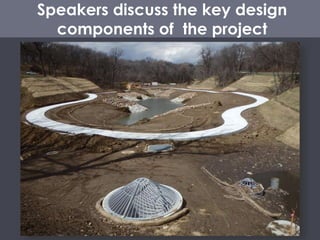
Speakers discuss the key design
components of the project
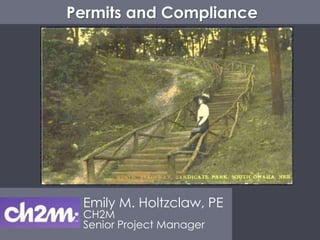
Emily M. Holtzclaw, PE
CH2M
Senior Project Manager
Permits and Compliance
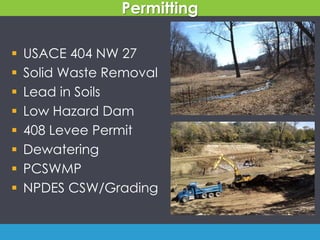
Permitting
 USACE 404 NW 27
 Solid Waste Removal
 Lead in Soils
 Low Hazard Dam
 408 Levee Permit
 Dewatering
 PCSWMP
 NPDES CSW/Grading
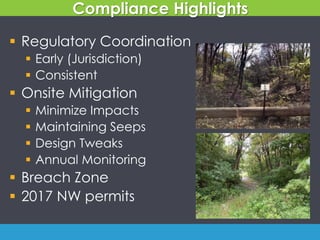
Compliance Highlights
 Regulatory Coordination
 Early (Jurisdiction)
 Consistent
 Onsite Mitigation
 Minimize Impacts
 Maintaining Seeps
 Design Tweaks
 Annual Monitoring
 Breach Zone
 2017 NW permits
Hydrology & Hydraulic Design
Rocky J Keehn, PE
SEH
Senior Water Resources Engineer
Project Role:
Lead Water Resources Engineer
for Consultant Team
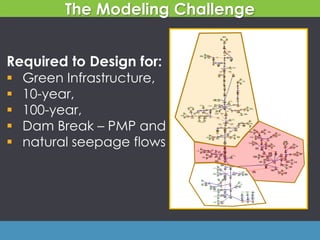
The Modeling Challenge
Required to Design for:
 Green Infrastructure,
 10-year,
 100-year,
 Dam Break – PMP and
 natural seepage flows
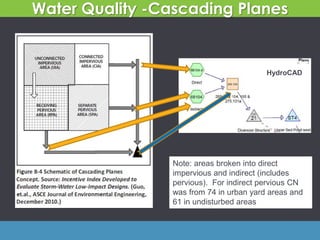
Water Quality -Cascading Planes
Lots of models
use this concept.
Aids in showing
Note: areas broken into direct
impervious and indirect (includes
pervious). For indirect pervious CN
was from 74 in urban yard areas and
61 in undisturbed areas
HydroCAD
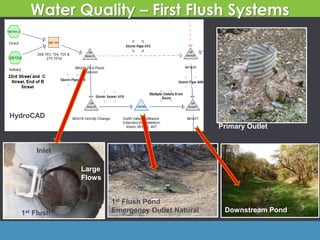
Water Quality – First Flush Systems
HydroCAD
Inlet
1st Flush
Large
Flows
1st Flush Pond
Emergency Outlet Natural Downstream Pond
Primary Outlet
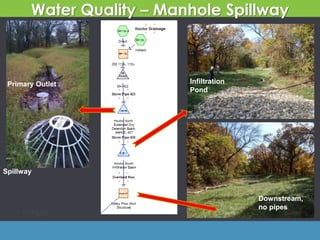
Water Quality – Manhole Spillway
HydroCAD
Inlet
1st Flush
Large
Flows
1st Flush Pond
Emergency Outlet Natural
Spillway
Primary Outlet Infiltration
Pond
Downstream,
no pipes
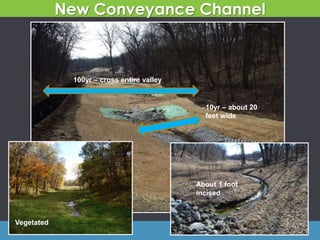
New Conveyance Channel
HydroCAD
100yr – cross entire valley
10yr – about 20
feet wide
Vegetated
About 1 foot
incised
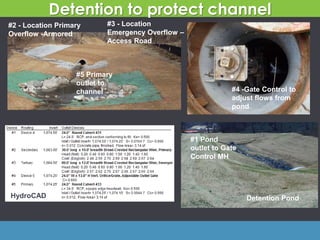
Detention to protect channel
#5 Primary
outlet to
channel #4 -Gate Control to
adjust flows from
pond
HydroCAD
#2 - Location Primary
Overflow -Armored
#3 - Location
Emergency Overflow –
Access Road
#1 Pond
outlet to Gate
Control MH
Detention Pond
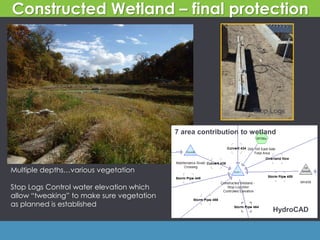
Constructed Wetland – final protection
Multiple depths…various vegetation
Stop Logs Control water elevation which
allow “tweaking” to make sure vegetation
as planned is established
Stop Logs
HydroCAD
7 area contribution to wetland
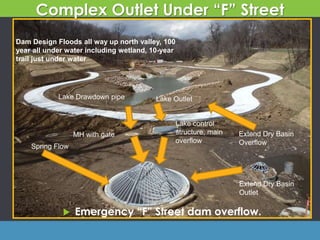
Extend Dry Basin
Outlet
Spring Flow
Lake Drawdown pipe
MH with gate
Lake control
structure, main
overflow
 Emergency “F” Street dam overflow.
Lake Outlet
Complex Outlet Under “F” Street
Extend Dry Basin
Overflow
Dam Design Floods all way up north valley, 100
year all under water including wetland, 10-year
trail just under water
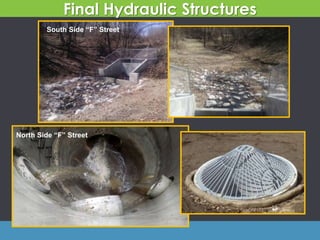
Final Hydraulic Structures
South Side “F” Street
North Side “F” Street
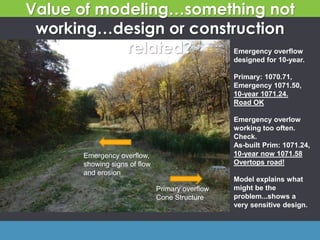
Value of modeling…something not
working…design or construction
related?
Emergency overflow,
showing signs of flow
and erosion
Primary overflow
Cone Structure
Emergency overflow
designed for 10-year.
Primary: 1070.71,
Emergency 1071.50,
10-year 1071.24.
Road OK
Emergency overlow
working too often.
Check.
As-built Prim: 1071.24,
10-year now 1071.58
Overtops road!
Model explains what
might be the
problem...shows a
very sensitive design.
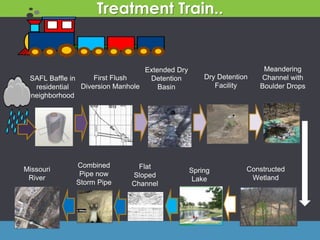
Treatment Train..
SAFL Baffle in
residential
neighborhood
First Flush
Diversion Manhole
Extended Dry
Detention
Basin
Dry Detention
Facility
Meandering
Channel with
Boulder Drops
Constructed
Wetland
Flat
Sloped
Channel
Spring
Lake
Combined
Pipe now
Storm Pipe
Missouri
River
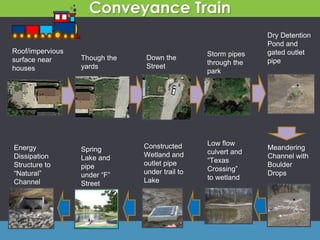
Conveyance Train
Dry Detention
Pond and
gated outlet
pipe
Meandering
Channel with
Boulder
Drops
Constructed
Wetland and
outlet pipe
under trail to
Lake
Energy
Dissipation
Structure to
“Natural”
Channel
Spring
Lake and
pipe
under “F”
Street
Low flow
culvert and
“Texas
Crossing”
to wetland
Roof/impervious
surface near
houses
Though the
yards
Down the
Street
Storm pipes
through the
park
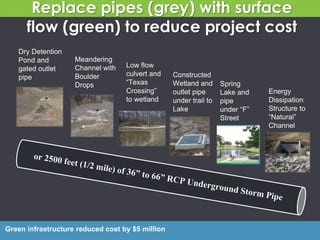
Replace pipes (grey) with surface
flow (green) to reduce project cost
Dry Detention
Pond and
gated outlet
pipe
Meandering
Channel with
Boulder
Drops
Constructed
Wetland and
outlet pipe
under trail to
Lake
Energy
Dissipation
Structure to
“Natural”
Channel
Spring
Lake and
pipe
under “F”
Street
Low flow
culvert and
“Texas
Crossing”
to wetland
Green infrastructure reduced cost by $5 million
Questions . . .
Or time for a break!

Spring Lake - A Case Study for Green Infrastructure & LID (part 1)

  • 1.
    SPRING LAKE PARK: ACase Study for Green Infrastructure & LID
  • 2.
    Jim Theiler James.Theiler@cityofomaha.org City ofOmaha Environmental Services Manager Omaha CSO Program & Spring Lake Park An example of what is possible…
  • 3.
    Challenges Facing Omaha Meet the increasing requirements of the Federal Clean Water Act  Balancing the following needs:  Regulatory compliance  Economic affordability  Community acceptance Economic Affordability Community Acceptance Regulatory Compliance CSO Solutions
  • 4.
    CSO is nota sewer separation program, it is not the City’s sewer overhaul program *When Omaha is ‘done’ separating the sewers as a part of CSO, it will have separated less than 20% of is combined sewer system*
  • 5.
    CSO is aPublic Health Program that must meet federal law that requires us to reduce the amount of human sewage and disease causing bacteria that enter the rivers and streams.
  • 6.
    Evolution of theCSO Program  2009 - Original CSO LTCP submitted to NDEQ  2014 - Revised CSO LTCP submitted  Both LTCPs generally rely on ‘gray infrastructure’  Need to manage 8 billion gallons of CSO annually  Assumed there was little “green” in the original LTCP…
  • 7.
    Evolution of theCSO Program  Green Infrastructure was part of the program from the start... may not have called it “green”  Use water as a resource instead of a waste product  Each capital project explores GI opportunities  Committed to working with private entities & all City Departments, including Parks Department  Parks in Omaha provide a unique opportunity for GI, projects so far include:
  • 8.
    CSO GI inOmaha Parks A great collaboration…  Elmwood Park - 2012  Spring Lake Park - 2016  Adams Park - 2016  Field Club Trail, Vinton-2016  Albright Park (Gilmore) - Construction  Fontanelle Park – Just started  Hanscom Park – 90% design  Hitchcock Park –95% design  Others being explored Non-park GI  Country Club - 2013  SOIA Lift Station – 2014  24th Street - 2015
  • 9.
    Elmwood Park 29 acresof Aksarben neighborhood routed through park w/7 weirs, bioswale & bioretention
  • 10.
    Adams Park Wetlands Largescale GI taking on 277 acres of urban runoff with 77 acre-feet of detention volue
  • 11.
    Fontanelle Park Construction startedMarch 2017; utilizing former golf course & existing lagoon
  • 12.
    Hanscom Park Oldest Omahapark; improving existing pond & embracing water through the park
  • 13.
  • 14.
    Initial Grey Solutionvs Final GI Plan  Storm pipe through park vs 20 GI elements  Multiple benefits w/GI
  • 15.
  • 16.
    Overview of SpringLake Park 2 phases to the project JohnFKennedyExpy
  • 17.
    Funding  Saved approx.$5 million by utilizing GI  Grants from Nebraska Environmental Trust & Nebraska Game and Parks commission totaled $1.3 million  Overall, the project cost the City $10.4 million dollars, with funding paid for from the Sewer Revenue Fund
  • 18.
    Why this project… This was not the City’s idea, this was the neighborhood’s idea.  My boss at the time, Marty Grate, said that the City needed a ‘signature project’ that helped give back to the community something tangible, to help them see what they are paying for  The Public Works Department asked permission from the Parks Department to use Spring Lake as that project.
  • 19.
    Janet Bonet South OmahaResident Spring Lake Park Team A Little History and Residents Perspective
  • 20.
    Spring Lake Park Team PresidentJanet Bonet Vice President Jason Rose Secretary John Bonet Treasurer Callyann Casteel Board Members James Bonet Jean Incontro Gary Hansum
  • 21.
  • 22.
    Spring Lake Neighborhood SpringLake School Henry Doorly Zoo Rosenblatt Stadium Spring Lake Golf Course South High School Suicide Hill / Baseball Field County Treasurer Office Current Swimming Pool Old Ball field 1930’s Rubble Fill Small Dam
  • 23.
    Tree Frog akaCricket Frog
  • 25.
  • 26.
  • 27.
  • 28.
  • 29.
    Motivation for acommunity to take action
  • 30.
    The Spark 1994 Dedicationof new playground
  • 31.
    1960’s Landfill Sitepart of the park The playground, parking, and picnic shelter (1994) are in the background. The “dead spot”, noticed in 1995, is in the foreground. 150 ppm salt
  • 32.
  • 33.
  • 35.
     1994 –SLPT BLOSSOMS DRIVES EFFORT TO “PUT THE LAKE BACK IN SPRING LAKE PARK”  1995 – FEDERAL MANDATE SEWER SEPARATION  1999 – SLPT & KSU COMMUNITY VISIONING  2000 – COMPLIANCE ENFORCEMENT NOTICE  2001 – SLPT CONCEPT PRESENTED TO MAYOR  2002 – OMAHA GEARS UP FOR CSO PROGRAM  2005 – SLPT AMONG COMMUNITY STAKEHOLDERS ON CSO STEERING COMMITTEE Moving toward doing something
  • 36.
    Why do it?It has been said:  It’ll never happen, City does not care about South O  It’s just a dump anyway, just fill it in  I’ll be dead before those trees make shade  I’m leaving the neighborhood why should I care  The city doesn’t care about our parks why should I  The kids today will just mess it up so why try  It’ll cost too much  Nobody will appreciate all that work  Who the heck cares  Who is going to take care of it when it’s done
  • 37.
    Positive Partnerships  Broader-than-usual Out-of-the-box  Creative  Project-specific  Mutually beneficial  Truly collaborative  Uniquely innovative  Community inclusive In order to be poised to seize the opportunities presented by changes in the broader trends:  Community needs/wants  Government mandates/budgets  NGO funding shifts  Social/environmental conditions  Engineering & design innovations  Funding sources
  • 38.
     Keep OmahaBeautiful  Douglas County Health Dept  Nebraska Dept Environmental Quality  Papio Missouri Natural Resources District  City Depts. – Parks, Planning, Public Works  Jacobson Helgoth Consultants / Tetra Tech  Nebraska Wildlife Federation  Audubon Society & Sierra Club  Groundwater Guardian Program  Society for Ecological Restoration  Nebraska Statewide Arboretum  Joslyn Institute for Sustainable Communities  EPA TOSC / Kansas State Univ  UNL Water Resources Program  KSU Urban Design in School of Architecture  National Parks Service  Center for Health, Environment & Justice Advisory Team & Expert Resources
  • 39.
    The Other Kindof Experts  Neighbors – residents and businesses  History Sources  Youth / Schools  Community Groups  Potential Park Visitors 39 SLNA Visioning Session with KSU Team
  • 40.
  • 41.
    The condition of ourparks says a lot about our city, its government, and its people.
  • 42.
    Environmental Health Reflectsand Impacts Community Health
  • 44.
    Small seep areaNW of pond, south of F Street --- 1999
  • 46.
    SLPT’s Plan October2001 at The Mayor’s Office
  • 48.
    2014 - lookingnorth from 14th & J 48
  • 49.
    Summer 2015, 14th& J St. No outlet
  • 50.
    Old Dam -South of F Street - 2000 with KSU Urban Design Class .
  • 51.
    Spring below Swimming Pool roadin 2000 Is now underwater feeding the Lake
  • 52.
    Of Miracles andMandates: Maximizing Opportunities for Partnership Building By Janet Bonet Neighborhood Activist South Omaha, Nebraska NUSA Houston, TX May 22, 2015 EPA – Region 7 Technical Outreach Services to Communities at Kansas State University
  • 53.
  • 54.
  • 55.
    Keep Partners andPublic Informed and Involved
  • 56.
  • 57.
    Big Muddy Workshop2015 Renderings of Lake Concept
  • 58.
  • 60.
  • 61.
    2016 Annual ParkSpring Clean Up The year of Garbage, Goats & Guns
  • 63.
  • 64.
    Pat Slaven, PLA,ASLA City of Omaha Park Planner Omaha Parks and the CSO Program Project Role: Department Liaison between the Parks Department and everyone else
  • 65.
    Return the “lake”to Spring Lake Park Park Goals: Respect History of the Park
  • 66.
    Attract more anda greater diversity of wildlife Park Goals: Wildlife Habitat
  • 67.
    Provide more andvaried recreation opportunities in the Park Park Goals: Recreation
  • 68.
    Don’t increase maintenancefor park maintenance and golf course staff Park Goals: Low Maintenance
  • 69.
    Making sure we’reall swimming in the same direction Parks and the Project Team Park Planner Responsibilities on CSO Projects:  Make sure everyone understands Parks Department goals for the project  Attend regular meetings with Public Works, consultants, project management team  Attend onsite meetings to discuss issues and solutions  Review and comment on progress plans in terms of park goals  Enforce Parks Dept. tree mitigation requirements  Coordinate with other park entities, i.e. golf course staff, park maintenance staff, etc. and communicate their concerns to the project team
  • 70.
    Park Tree Mitigation– Individual Trees
  • 71.
    (#sq ft canopy/500)x 2 Mitigation – Continuous Canopy with Understory
  • 72.
     Will createmaintenance nightmare, wet areas  Will create places to lose balls, slowing down play  Will interfere with play in general Golf Courses and Green Infrastructure
  • 73.
     G.I. Teammet onsite Bob and golf course staff  Discussed concerns  Developed design to address concerns Golf Courses and Green Infrastructure
  • 74.
     Parks tomow, pick up trash  Public Works to hire or contract out for special crews to maintain green infrastructure components Park Maintenance
  • 75.
    Educational Signage  Describeshistory of the spring lake, the CSO project lake reconstruction and the benefits of putting the lake back into Spring Lake Park.  Bilingual text makes sign accessible to all citizens
  • 76.
    Speakers discuss thekey design components of the project
  • 77.
    Emily M. Holtzclaw,PE CH2M Senior Project Manager Permits and Compliance
  • 78.
    Permitting  USACE 404NW 27  Solid Waste Removal  Lead in Soils  Low Hazard Dam  408 Levee Permit  Dewatering  PCSWMP  NPDES CSW/Grading
  • 79.
    Compliance Highlights  RegulatoryCoordination  Early (Jurisdiction)  Consistent  Onsite Mitigation  Minimize Impacts  Maintaining Seeps  Design Tweaks  Annual Monitoring  Breach Zone  2017 NW permits
  • 80.
    Hydrology & HydraulicDesign Rocky J Keehn, PE SEH Senior Water Resources Engineer Project Role: Lead Water Resources Engineer for Consultant Team
  • 81.
    The Modeling Challenge Requiredto Design for:  Green Infrastructure,  10-year,  100-year,  Dam Break – PMP and  natural seepage flows
  • 82.
    Water Quality -CascadingPlanes Lots of models use this concept. Aids in showing Note: areas broken into direct impervious and indirect (includes pervious). For indirect pervious CN was from 74 in urban yard areas and 61 in undisturbed areas HydroCAD
  • 83.
    Water Quality –First Flush Systems HydroCAD Inlet 1st Flush Large Flows 1st Flush Pond Emergency Outlet Natural Downstream Pond Primary Outlet
  • 84.
    Water Quality –Manhole Spillway HydroCAD Inlet 1st Flush Large Flows 1st Flush Pond Emergency Outlet Natural Spillway Primary Outlet Infiltration Pond Downstream, no pipes
  • 85.
    New Conveyance Channel HydroCAD 100yr– cross entire valley 10yr – about 20 feet wide Vegetated About 1 foot incised
  • 86.
    Detention to protectchannel #5 Primary outlet to channel #4 -Gate Control to adjust flows from pond HydroCAD #2 - Location Primary Overflow -Armored #3 - Location Emergency Overflow – Access Road #1 Pond outlet to Gate Control MH Detention Pond
  • 87.
    Constructed Wetland –final protection Multiple depths…various vegetation Stop Logs Control water elevation which allow “tweaking” to make sure vegetation as planned is established Stop Logs HydroCAD 7 area contribution to wetland
  • 88.
    Extend Dry Basin Outlet SpringFlow Lake Drawdown pipe MH with gate Lake control structure, main overflow  Emergency “F” Street dam overflow. Lake Outlet Complex Outlet Under “F” Street Extend Dry Basin Overflow Dam Design Floods all way up north valley, 100 year all under water including wetland, 10-year trail just under water
  • 89.
    Final Hydraulic Structures SouthSide “F” Street North Side “F” Street
  • 90.
    Value of modeling…somethingnot working…design or construction related? Emergency overflow, showing signs of flow and erosion Primary overflow Cone Structure Emergency overflow designed for 10-year. Primary: 1070.71, Emergency 1071.50, 10-year 1071.24. Road OK Emergency overlow working too often. Check. As-built Prim: 1071.24, 10-year now 1071.58 Overtops road! Model explains what might be the problem...shows a very sensitive design.
  • 91.
    Treatment Train.. SAFL Bafflein residential neighborhood First Flush Diversion Manhole Extended Dry Detention Basin Dry Detention Facility Meandering Channel with Boulder Drops Constructed Wetland Flat Sloped Channel Spring Lake Combined Pipe now Storm Pipe Missouri River
  • 92.
    Conveyance Train Dry Detention Pondand gated outlet pipe Meandering Channel with Boulder Drops Constructed Wetland and outlet pipe under trail to Lake Energy Dissipation Structure to “Natural” Channel Spring Lake and pipe under “F” Street Low flow culvert and “Texas Crossing” to wetland Roof/impervious surface near houses Though the yards Down the Street Storm pipes through the park
  • 93.
    Replace pipes (grey)with surface flow (green) to reduce project cost Dry Detention Pond and gated outlet pipe Meandering Channel with Boulder Drops Constructed Wetland and outlet pipe under trail to Lake Energy Dissipation Structure to “Natural” Channel Spring Lake and pipe under “F” Street Low flow culvert and “Texas Crossing” to wetland Green infrastructure reduced cost by $5 million
  • 94.
    Questions . .. Or time for a break!

Editor's Notes

  • #4 Find safe places for our state regulators and local elected officials to allow us to act in the best interest of the community
  • #9 Feel free to do whatever you want with this, used it in Portland so put in in case you saw a benefit Over $23 million saved by utilizing GI
  • #10 Do whatever you want, thought it might be good to have some slides showing other examples of GI w/the CSO program
  • #11 Do whatever you want, thought it might be good to have some slides showing other examples of GI w/the CSO program
  • #12 Do whatever you want, thought it might be good to have some slides showing other examples of GI w/the CSO program
  • #13 Do whatever you want, thought it might be good to have some slides showing other examples of GI w/the CSO program
  • #14 Making the pivot to specifically talking about SLP, switch out photo if you want this is just a place holder
  • #15 These photos are from Rocky. The thought here is to tie in the discussion of how things have evolved early with the Spring Lake Park project…
  • #18 Not sure if you want more space or just create another slide if needed. Put sign in to highlight the grant funding