AIA Resilience Curriculum Workshop
Kick Off
August 16, 2016
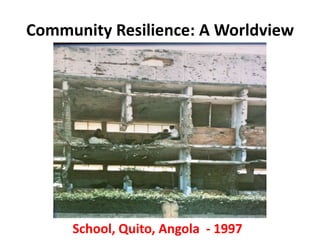
Community Resilience: A Worldview
School, Quito, Angola - 1997
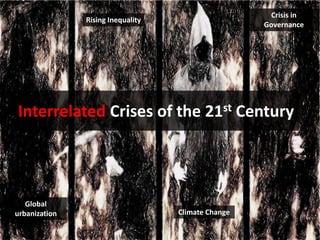
Interrelated Crises of the 21st Century
Global
urbanization
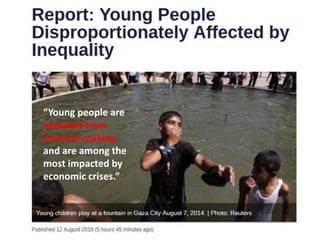
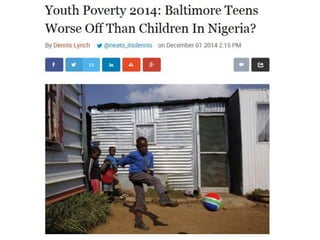
Rising Inequality
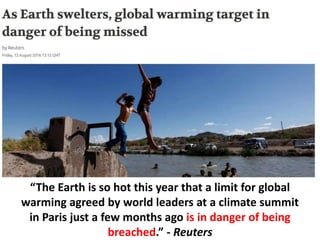
Climate Change
Crisis in
Governance
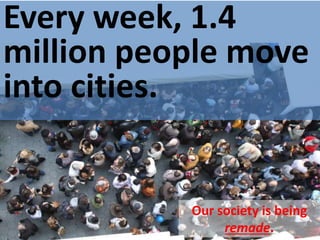
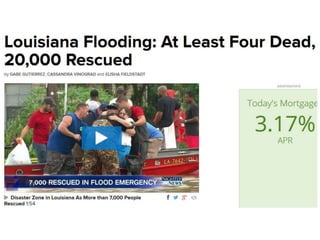
Every week, 1.4
million people move
into cities.
Our society is being
remade.
“The Earth is so hot this year that a limit for global
warming agreed by world leaders at a climate summit
in Paris just a few months ago is in danger of being
breached.” - Reuters
“Young people are
excluded from
decision-making
and are among the
most impacted by
economic crises.”
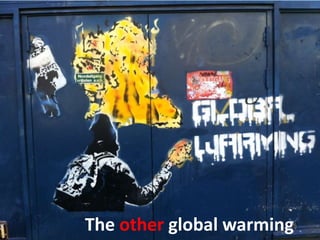
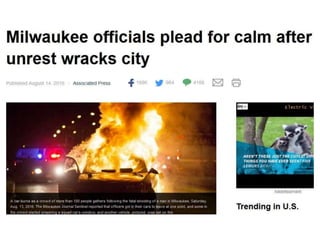
The other global warming
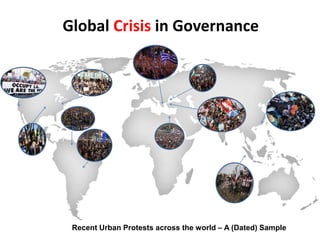
Global Crisis in Governance
Recent Urban Protests across the world – A (Dated) Sample
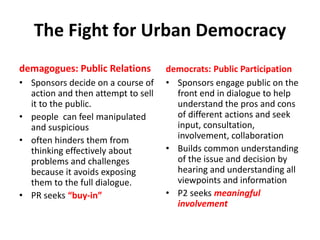
The Fight for Urban Democracy
demagogues: Public Relations
• Sponsors decide on a course of
action and then attempt to sell
it to the public.
• people can feel manipulated
and suspicious
• often hinders them from
thinking effectively about
problems and challenges
because it avoids exposing
them to the full dialogue.
• PR seeks “buy-in”
democrats: Public Participation
• Sponsors engage public on the
front end in dialogue to help
understand the pros and cons
of different actions and seek
input, consultation,
involvement, collaboration
• Builds common understanding
of the issue and decision by
hearing and understanding all
viewpoints and information
• P2 seeks meaningful
involvement
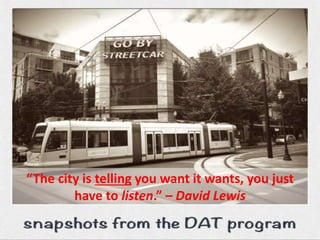
“The city is telling you want it wants, you just
have to listen.” – David Lewis
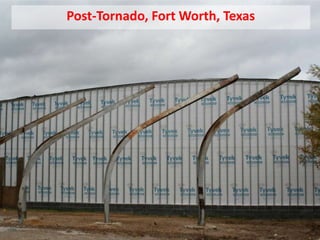
Post-Tornado, Fort Worth, Texas
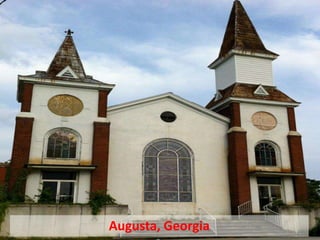
Augusta, Georgia
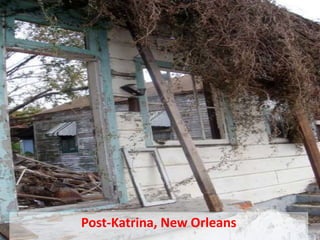
Post-Katrina, New Orleans
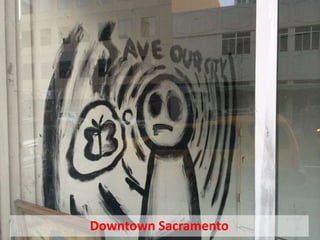
Downtown Sacramento
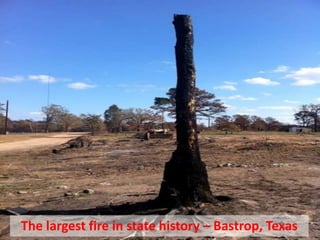
The largest fire in state history – Bastrop, Texas
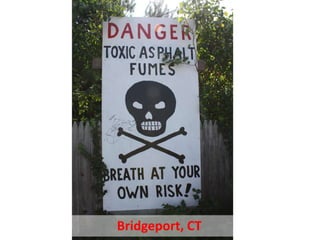
Bridgeport, CT
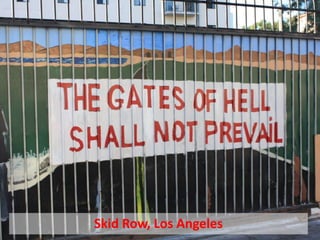
Skid Row, Los Angeles
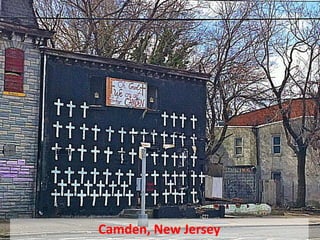
Camden, New Jersey
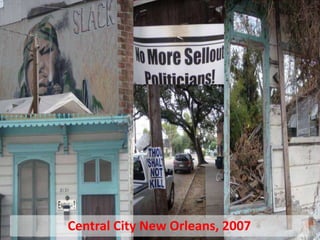
Central City New Orleans, 2007
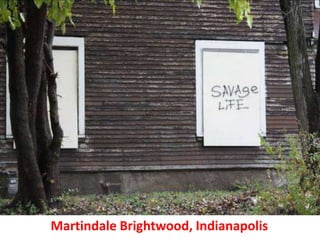
Martindale Brightwood, Indianapolis
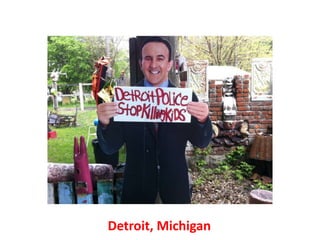
Detroit, Michigan
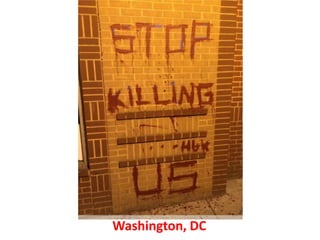
Washington, DC
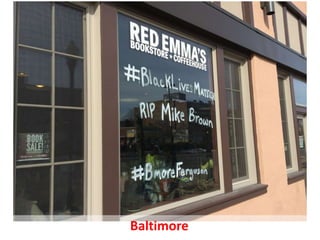
Baltimore
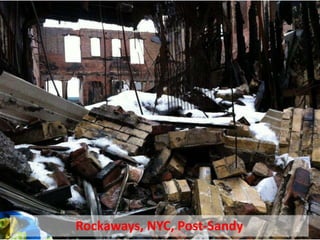
Rockaways, NYC, Post-Sandy
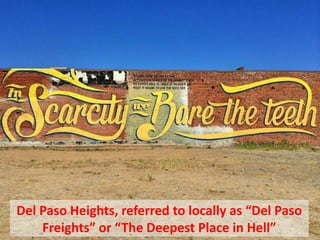
Del Paso Heights, referred to locally as “Del Paso
Freights” or “The Deepest Place in Hell”
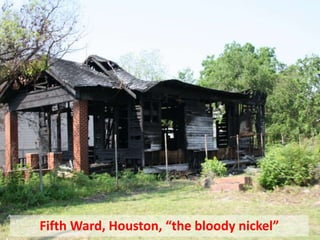
Fifth Ward, Houston, “the bloody nickel”
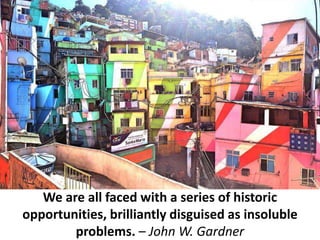
We are all faced with a series of historic
opportunities, brilliantly disguised as insoluble
problems. – John W. Gardner
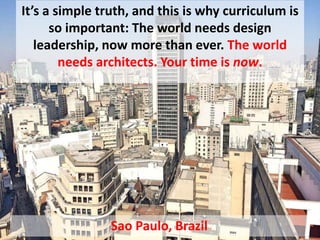
It’s a simple truth, and this is why curriculum is
so important: The world needs design
leadership, now more than ever. The world
needs architects. Your time is now.
Sao Paulo, Brazil
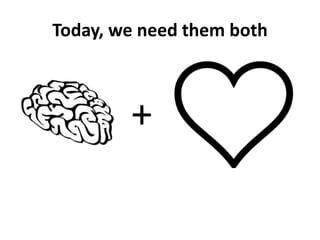
Today, we need them both
+
We don’t know what we don’t
know
• 20yrs from now, we will look back on today’s
practice and laugh at its lack of sophistication.
• Millennial values are going to define a new
direction, a more democratic, participatory,
collaborative approach
• And kids represent the future.
• …BUT, we have much to share and build upon!
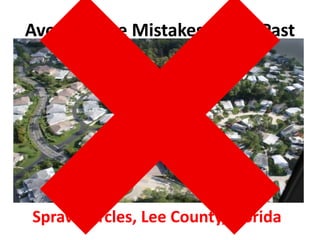
Avoiding the Mistakes of the Past
Sprawl circles, Lee County, Florida
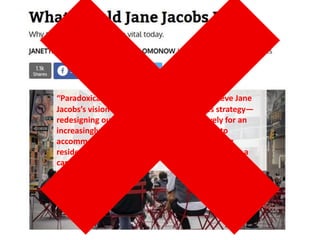
“Paradoxically, what is most needed to achieve Jane
Jacobs’s vision is to deploy a Robert Moses strategy—
redesigning our streets quickly and decisively for an
increasingly urban age, this time committed to
accommodating population growth and offering
residents more options for getting around without a
car.”
Today’s Context Emphasizes…
• The Importance of Urban Design
• The Importance of Participatory Design Skills
• The Importance of Facilitative Leadership Skills
• The technical knowledge around energy, land use
regulation, architecture, and other core components
“The biggest problem is the understanding of what
urban design is… the urban community has become
lost in strategic planning, masterplanning, zoning and
landscaping … All these have their own purposes, of
course – but they don’t address the principal
question, which is the relationship in a city between
public space and buildable space. This is the art and
science of building cities – and until we recover this
basic knowledge, we will continue to make huge
mistakes … Huge mistakes.” – Joan Clos, UNHABITAT
The citizen architect
“To get to the future from where we are now, we must make
room for, and nurture, what I call the “citizen architect.” What
does this citizen architect look like? This person is committed
to universal enfranchisement, and works to see that everyone
in the community is given a meaningful stake in, and a part in
directing, the future. The citizen architect is committed to
seeing that, at the drafting table, the public’s hand exerts at
least as much force as the developer’s or banker’s. The
practice of architecture must no longer be seen as a luxury that
only the wealthy can afford. The public must be a vital part of
the process. Architecture is the most public of the arts. It
should be collaborative.” - Ted Pappas, President of the AIA,
1988
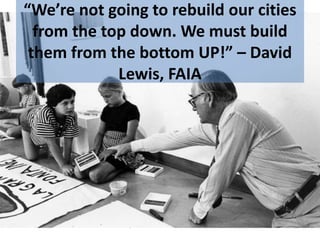
“We’re not going to rebuild our cities
from the top down. We must build
them from the bottom UP!” – David
Lewis, FAIA
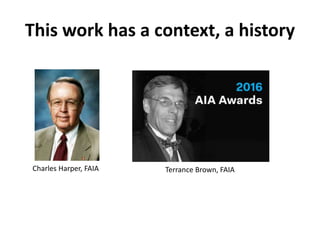
This work has a context, a history
Charles Harper, FAIA Terrance Brown, FAIA
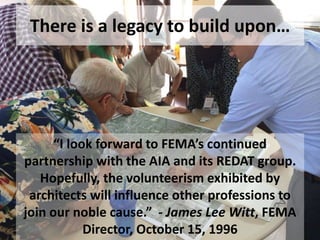
There is a legacy to build upon…
“I look forward to FEMA’s continued
partnership with the AIA and its REDAT group.
Hopefully, the volunteerism exhibited by
architects will influence other professions to
join our noble cause.” - James Lee Witt, FEMA
Director, October 15, 1996
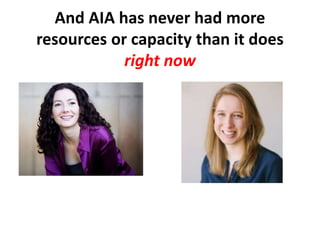
And AIA has never had more
resources or capacity than it does
right now
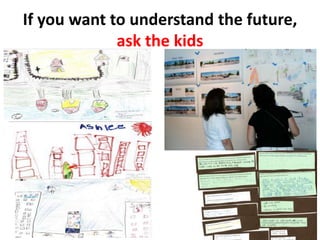
If you want to understand the future,
ask the kids
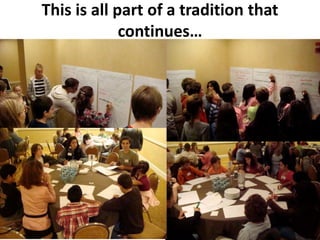
This is all part of a tradition that
continues…
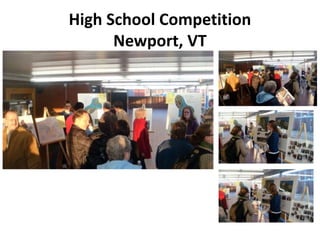
High School Competition
Newport, VT
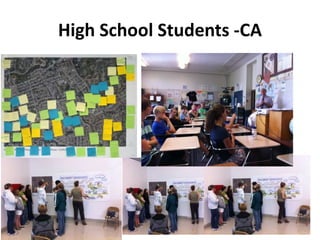
High School Students -CA
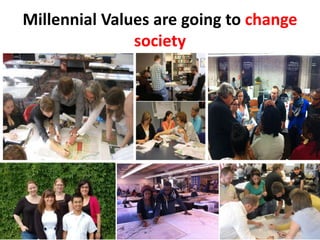
Millennial Values are going to change
society
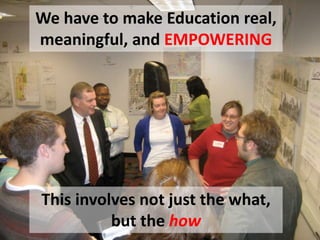
We have to make Education real,
meaningful, and EMPOWERING
This involves not just the what,
but the how
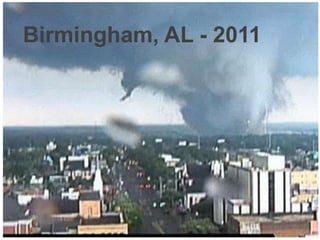
Birmingham, AL - 2011
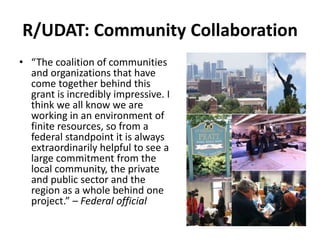
R/UDAT: Community Collaboration
• “The coalition of communities
and organizations that have
come together behind this
grant is incredibly impressive. I
think we all know we are
working in an environment of
finite resources, so from a
federal standpoint it is always
extraordinarily helpful to see a
large commitment from the
local community, the private
and public sector and the
region as a whole behind one
project.” – Federal official
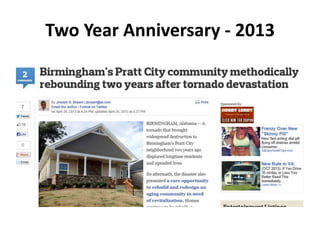
Two Year Anniversary - 2013
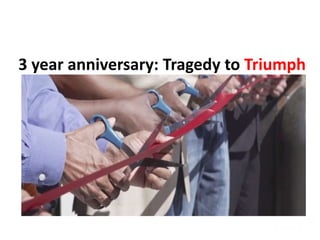
3 year anniversary: Tragedy to Triumph
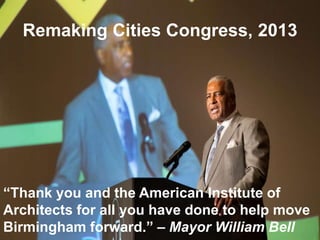
Remaking Cities Congress, 2013
“Thank you and the American Institute of
Architects for all you have done to help move
Birmingham forward.” – Mayor William Bell
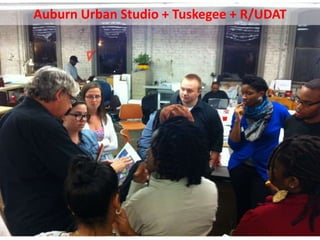
Auburn Urban Studio + Tuskegee + R/UDAT
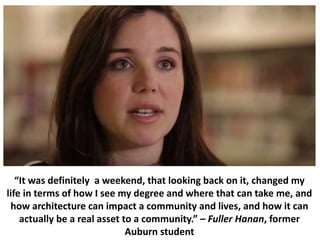
“It was definitely a weekend, that looking back on it, changed my
life in terms of how I see my degree and where that can take me, and
how architecture can impact a community and lives, and how it can
actually be a real asset to a community.” – Fuller Hanan, former
Auburn student
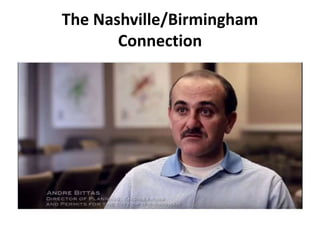
The Nashville/Birmingham
Connection
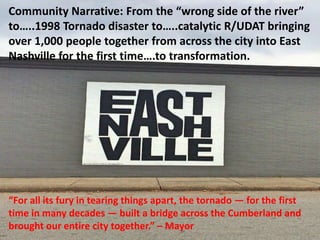
“For all its fury in tearing things apart, the tornado — for the first
time in many decades — built a bridge across the Cumberland and
brought our entire city together.” – Mayor
Community Narrative: From the “wrong side of the river”
to…..1998 Tornado disaster to…..catalytic R/UDAT bringing
over 1,000 people together from across the city into East
Nashville for the first time….to transformation.
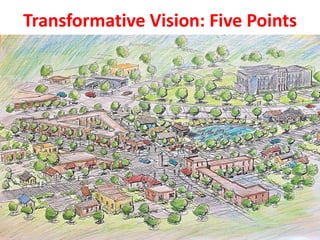
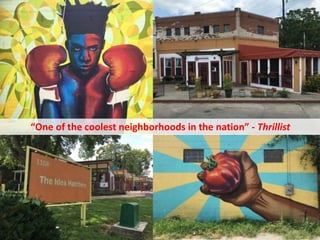
Transformative Vision: Five Points
“One of the coolest neighborhoods in the nation” - Thrillist
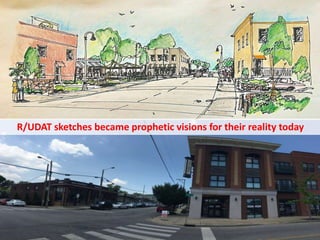
R/UDAT sketches became prophetic visions for their reality today
The bottom line
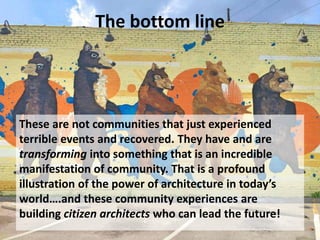
These are not communities that just experienced
terrible events and recovered. They have and are
transforming into something that is an incredible
manifestation of community. That is a profound
illustration of the power of architecture in today’s
world….and these community experiences are
building citizen architects who can lead the future!
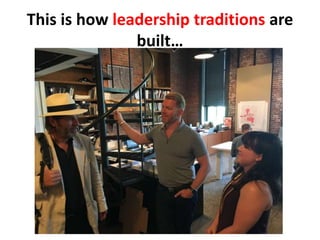
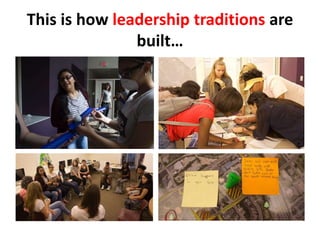
This is how leadership traditions are
built…
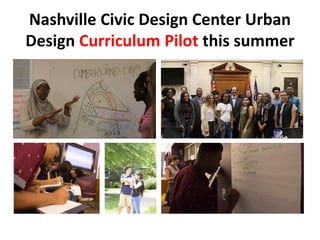
Nashville Civic Design Center Urban
Design Curriculum Pilot this summer
This is how leadership traditions are
built…
It’s not just about what skills you think
the next generation of leaders need.
What values do you want the next
generation to hold? This gets to the
core of what it means to be an
architect in the 21st century.
Your mission today
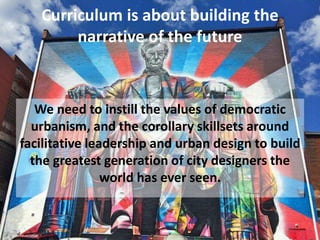
Curriculum is about building the
narrative of the future
We need to instill the values of democratic
urbanism, and the corollary skillsets around
facilitative leadership and urban design to build
the greatest generation of city designers the
world has ever seen.
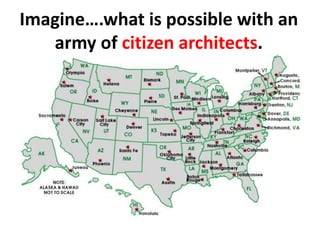
Imagine….what is possible with an
army of citizen architects.
Build Us a Path to the Future
Carpe Diem!

Community Resilience: Pushing the Envelope

  • 1.
    AIA Resilience CurriculumWorkshop Kick Off August 16, 2016
  • 2.
    Community Resilience: AWorldview School, Quito, Angola - 1997
  • 3.
    Interrelated Crises ofthe 21st Century Global urbanization Rising Inequality Climate Change Crisis in Governance
  • 4.
    Every week, 1.4 millionpeople move into cities. Our society is being remade.
  • 5.
    “The Earth isso hot this year that a limit for global warming agreed by world leaders at a climate summit in Paris just a few months ago is in danger of being breached.” - Reuters
  • 7.
    “Young people are excludedfrom decision-making and are among the most impacted by economic crises.”
  • 9.
  • 11.
    Global Crisis inGovernance Recent Urban Protests across the world – A (Dated) Sample
  • 12.
    The Fight forUrban Democracy demagogues: Public Relations • Sponsors decide on a course of action and then attempt to sell it to the public. • people can feel manipulated and suspicious • often hinders them from thinking effectively about problems and challenges because it avoids exposing them to the full dialogue. • PR seeks “buy-in” democrats: Public Participation • Sponsors engage public on the front end in dialogue to help understand the pros and cons of different actions and seek input, consultation, involvement, collaboration • Builds common understanding of the issue and decision by hearing and understanding all viewpoints and information • P2 seeks meaningful involvement
  • 14.
    “The city istelling you want it wants, you just have to listen.” – David Lewis
  • 15.
  • 16.
  • 17.
  • 18.
  • 19.
    The largest firein state history – Bastrop, Texas
  • 20.
  • 21.
  • 22.
  • 23.
    Central City NewOrleans, 2007
  • 24.
  • 25.
  • 26.
  • 27.
  • 28.
  • 29.
    Del Paso Heights,referred to locally as “Del Paso Freights” or “The Deepest Place in Hell”
  • 30.
    Fifth Ward, Houston,“the bloody nickel”
  • 32.
    We are allfaced with a series of historic opportunities, brilliantly disguised as insoluble problems. – John W. Gardner
  • 33.
    It’s a simpletruth, and this is why curriculum is so important: The world needs design leadership, now more than ever. The world needs architects. Your time is now. Sao Paulo, Brazil
  • 34.
    Today, we needthem both +
  • 35.
    We don’t knowwhat we don’t know • 20yrs from now, we will look back on today’s practice and laugh at its lack of sophistication. • Millennial values are going to define a new direction, a more democratic, participatory, collaborative approach • And kids represent the future. • …BUT, we have much to share and build upon!
  • 36.
    Avoiding the Mistakesof the Past Sprawl circles, Lee County, Florida
  • 37.
    “Paradoxically, what ismost needed to achieve Jane Jacobs’s vision is to deploy a Robert Moses strategy— redesigning our streets quickly and decisively for an increasingly urban age, this time committed to accommodating population growth and offering residents more options for getting around without a car.”
  • 38.
    Today’s Context Emphasizes… •The Importance of Urban Design • The Importance of Participatory Design Skills • The Importance of Facilitative Leadership Skills • The technical knowledge around energy, land use regulation, architecture, and other core components
  • 39.
    “The biggest problemis the understanding of what urban design is… the urban community has become lost in strategic planning, masterplanning, zoning and landscaping … All these have their own purposes, of course – but they don’t address the principal question, which is the relationship in a city between public space and buildable space. This is the art and science of building cities – and until we recover this basic knowledge, we will continue to make huge mistakes … Huge mistakes.” – Joan Clos, UNHABITAT
  • 40.
    The citizen architect “Toget to the future from where we are now, we must make room for, and nurture, what I call the “citizen architect.” What does this citizen architect look like? This person is committed to universal enfranchisement, and works to see that everyone in the community is given a meaningful stake in, and a part in directing, the future. The citizen architect is committed to seeing that, at the drafting table, the public’s hand exerts at least as much force as the developer’s or banker’s. The practice of architecture must no longer be seen as a luxury that only the wealthy can afford. The public must be a vital part of the process. Architecture is the most public of the arts. It should be collaborative.” - Ted Pappas, President of the AIA, 1988
  • 41.
    “We’re not goingto rebuild our cities from the top down. We must build them from the bottom UP!” – David Lewis, FAIA
  • 42.
    This work hasa context, a history Charles Harper, FAIA Terrance Brown, FAIA
  • 43.
    There is alegacy to build upon… “I look forward to FEMA’s continued partnership with the AIA and its REDAT group. Hopefully, the volunteerism exhibited by architects will influence other professions to join our noble cause.” - James Lee Witt, FEMA Director, October 15, 1996
  • 44.
    And AIA hasnever had more resources or capacity than it does right now
  • 45.
    If you wantto understand the future, ask the kids
  • 46.
    This is allpart of a tradition that continues…
  • 47.
  • 48.
  • 49.
    Millennial Values aregoing to change society
  • 50.
    We have tomake Education real, meaningful, and EMPOWERING This involves not just the what, but the how
  • 51.
  • 52.
    R/UDAT: Community Collaboration •“The coalition of communities and organizations that have come together behind this grant is incredibly impressive. I think we all know we are working in an environment of finite resources, so from a federal standpoint it is always extraordinarily helpful to see a large commitment from the local community, the private and public sector and the region as a whole behind one project.” – Federal official
  • 53.
  • 54.
    3 year anniversary:Tragedy to Triumph
  • 55.
    Remaking Cities Congress,2013 “Thank you and the American Institute of Architects for all you have done to help move Birmingham forward.” – Mayor William Bell
  • 56.
    Auburn Urban Studio+ Tuskegee + R/UDAT
  • 57.
    “It was definitelya weekend, that looking back on it, changed my life in terms of how I see my degree and where that can take me, and how architecture can impact a community and lives, and how it can actually be a real asset to a community.” – Fuller Hanan, former Auburn student
  • 58.
  • 59.
    “For all itsfury in tearing things apart, the tornado — for the first time in many decades — built a bridge across the Cumberland and brought our entire city together.” – Mayor Community Narrative: From the “wrong side of the river” to…..1998 Tornado disaster to…..catalytic R/UDAT bringing over 1,000 people together from across the city into East Nashville for the first time….to transformation.
  • 60.
  • 61.
    “One of thecoolest neighborhoods in the nation” - Thrillist
  • 62.
    R/UDAT sketches becameprophetic visions for their reality today
  • 63.
    The bottom line Theseare not communities that just experienced terrible events and recovered. They have and are transforming into something that is an incredible manifestation of community. That is a profound illustration of the power of architecture in today’s world….and these community experiences are building citizen architects who can lead the future!
  • 64.
    This is howleadership traditions are built…
  • 65.
    Nashville Civic DesignCenter Urban Design Curriculum Pilot this summer
  • 66.
    This is howleadership traditions are built…
  • 67.
    It’s not justabout what skills you think the next generation of leaders need. What values do you want the next generation to hold? This gets to the core of what it means to be an architect in the 21st century. Your mission today
  • 68.
    Curriculum is aboutbuilding the narrative of the future We need to instill the values of democratic urbanism, and the corollary skillsets around facilitative leadership and urban design to build the greatest generation of city designers the world has ever seen.
  • 69.
    Imagine….what is possiblewith an army of citizen architects.
  • 70.
    Build Us aPath to the Future Carpe Diem!

Editor's Notes