*
    By Marisa Scarpitta
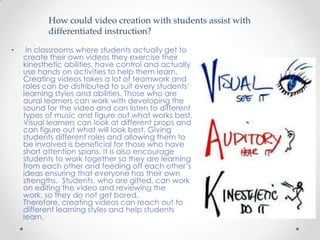
How could video creation with students assist with
           differentiated instruction?

•    In classrooms where students actually get to
    create their own videos they exercise their
    kinesthetic abilities, have control and actually
    use hands on activities to help them learn.
    Creating videos takes a lot of teamwork and
    roles can be distributed to suit every students’
    learning styles and abilities. Those who are
    aural learners can work with developing the
    sound for the video and can listen to different
    types of music and figure out what works best.
    Visual learners can look at different props and
    can figure out what will look best. Giving
    students different roles and allowing them to
    be involved is beneficial for those who have
    short attention spans. It is also encourage
    students to work together so they are learning
    from each other and feeding off each other’s
    ideas ensuring that everyone has their own
    strengths. Students, who are gifted, can work
    on editing the video and reviewing the
    work, so they do not get bored.
    Therefore, creating videos can reach out to
    different learning styles and help students
    learn.
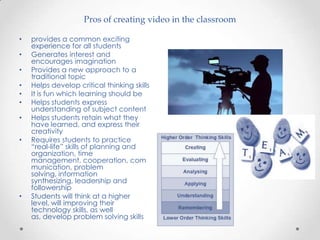
What level(s) of Bloom's Taxonomy does video creation fit in at?


• Students apply what they learned in class by conducting
  research on the topic they want to film
• They analyze the information or ideas for the movie and
  distinguish from what kinds of scenes should be included, and
  what is not needed
• They evaluate or plan out their ideas on storyboard or by
  sketching them out
• They create their presentation of their movie, whether it is on
  Movie Maker, iMovie, or any other video software
• * Film making is more than just remembering information and
  reproducing it, it takes investigation of
  sources, structuring, and inventing. It also helps students
  enhance their problem-solving skills, and exercises the higher
  levels of thinking like writing, teamwork, planning, producing
  and sharing creations.
What can be done to ensure that video creation is at the highest
 level of Bloom possible?
• Teachers should make sure they give their students
  opportunities to use their unique abilities and work together to
  create awesome original videos. They can create videos for
  every subject area. They can make documentaries or film
  school events or even make their own news show. Teachers
  should develop a plan to make sure students have the
  equipment and resources to create a brilliant film.
Pros of creating video in the classroom

•   provides a common exciting
    experience for all students
•   Generates interest and
    encourages imagination
•   Provides a new approach to a
    traditional topic
•   Helps develop critical thinking skills
•   It is fun which learning should be
•   Helps students express
    understanding of subject content
•   Helps students retain what they
    have learned, and express their
    creativity
•   Requires students to practice
    “real-life” skills of planning and
    organization, time
    management, cooperation, com
    munication, problem
    solving, information
    synthesizing, leadership and
    followership
•   Students will think at a higher
    level, will improving their
    technology skills, as well
    as, develop problem solving skills
Cons of creating video in the classroom

• It requires a lot of extra
  time
• Additional
  management and
  equipment
  responsibilities
• Tacks on to day-to-day
  activities
• Hard Work
How can watching videos assist with differentiated instruction?

•   Watching video in the classroom can accommodate a variety
    of learning styles, and work levels. First off, many students are
    bored of the regular lectures in school and zone off during class,
    but videos are a great way to engage students and keep them
    interested in the lesson. This is helpful for those students who
    have short attention spans, or whose grades are falling because
    of lack of concentration in school. Traditional lectures do not
    benefit every student’s learning style. On the other hand, videos
    appeal to different learning styles like visual and aural, because
    students can actually view images and pictures, as well as listen
    to music or various sounds, which makes the lesson more real
    and entertaining. The guided use of video in the classroom can
    express curricular content in a more accessible form for all
    learners. Also, when using Google Video, Caption It Yourself can
    make the video understandable to the deaf, or ESL students.
Watching a video can fall on many different levels of Bloom's
       Taxonomy. What level(s) of Bloom do watching videos fit in at?


• Students can remember information better when they
  watch a video on a given topic like earthquakes, as
  opposed to just listening to a lecture.
• Students can understand the video by discussing what it
  means after they watch it, or by illustrating a picture that
  goes along with the movie.
• Students can analyze the video by having a debate on
  what they learned or by making a diagram to map out
  the important aspects of the video.
• Teachers can evaluate students’ interpretation of the
  video by pausing the video midway and having the
  students predict the outcome.
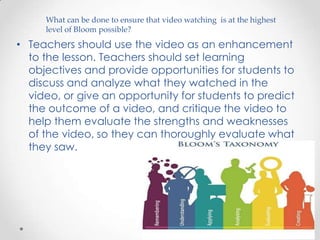
What can be done to ensure that video watching is at the highest
     level of Bloom possible?
• Teachers should use the video as an enhancement
  to the lesson. Teachers should set learning
  objectives and provide opportunities for students to
  discuss and analyze what they watched in the
  video, or give an opportunity for students to predict
  the outcome of a video, and critique the video to
  help them evaluate the strengths and weaknesses
  of the video, so they can thoroughly evaluate what
  they saw.
Pros of watching video in the classroom

• Using sight and
  sound, video is perfect for
  audio and visual learners
• It engages and interests
  students
• Video provides another
  sensory experience that
  allows concepts to
  actually be
  "experienced" and come
  to life
• Engaging students can
  make lessons more
  interactive
Cons of watching video in the classroom
• Equipment failures
• Teachers may have trouble
  managing classroom time
  when using videos, or they
  may not be adequately
  trained in using videos and
  technology in the classroom
• Videos may become relied
  on and may become the
  lesson instead of an
  enhancement to the lesson
• Must make sure videos are
  appropriate
Conclusion

• Watching videos and creating videos are great
  ways to spice up everyday lessons, and attend to
  the learning needs of all students. It is important to
  take certain precautions when working with
  video, and always have a plan to keep students on
  track.

Video in the classroom

  • 1.
    * By Marisa Scarpitta
  • 2.
    How could videocreation with students assist with differentiated instruction? • In classrooms where students actually get to create their own videos they exercise their kinesthetic abilities, have control and actually use hands on activities to help them learn. Creating videos takes a lot of teamwork and roles can be distributed to suit every students’ learning styles and abilities. Those who are aural learners can work with developing the sound for the video and can listen to different types of music and figure out what works best. Visual learners can look at different props and can figure out what will look best. Giving students different roles and allowing them to be involved is beneficial for those who have short attention spans. It is also encourage students to work together so they are learning from each other and feeding off each other’s ideas ensuring that everyone has their own strengths. Students, who are gifted, can work on editing the video and reviewing the work, so they do not get bored. Therefore, creating videos can reach out to different learning styles and help students learn.
  • 3.
    What level(s) ofBloom's Taxonomy does video creation fit in at? • Students apply what they learned in class by conducting research on the topic they want to film • They analyze the information or ideas for the movie and distinguish from what kinds of scenes should be included, and what is not needed • They evaluate or plan out their ideas on storyboard or by sketching them out • They create their presentation of their movie, whether it is on Movie Maker, iMovie, or any other video software • * Film making is more than just remembering information and reproducing it, it takes investigation of sources, structuring, and inventing. It also helps students enhance their problem-solving skills, and exercises the higher levels of thinking like writing, teamwork, planning, producing and sharing creations.
  • 4.
    What can bedone to ensure that video creation is at the highest level of Bloom possible? • Teachers should make sure they give their students opportunities to use their unique abilities and work together to create awesome original videos. They can create videos for every subject area. They can make documentaries or film school events or even make their own news show. Teachers should develop a plan to make sure students have the equipment and resources to create a brilliant film.
  • 5.
    Pros of creatingvideo in the classroom • provides a common exciting experience for all students • Generates interest and encourages imagination • Provides a new approach to a traditional topic • Helps develop critical thinking skills • It is fun which learning should be • Helps students express understanding of subject content • Helps students retain what they have learned, and express their creativity • Requires students to practice “real-life” skills of planning and organization, time management, cooperation, com munication, problem solving, information synthesizing, leadership and followership • Students will think at a higher level, will improving their technology skills, as well as, develop problem solving skills
  • 6.
    Cons of creatingvideo in the classroom • It requires a lot of extra time • Additional management and equipment responsibilities • Tacks on to day-to-day activities • Hard Work
  • 7.
    How can watchingvideos assist with differentiated instruction? • Watching video in the classroom can accommodate a variety of learning styles, and work levels. First off, many students are bored of the regular lectures in school and zone off during class, but videos are a great way to engage students and keep them interested in the lesson. This is helpful for those students who have short attention spans, or whose grades are falling because of lack of concentration in school. Traditional lectures do not benefit every student’s learning style. On the other hand, videos appeal to different learning styles like visual and aural, because students can actually view images and pictures, as well as listen to music or various sounds, which makes the lesson more real and entertaining. The guided use of video in the classroom can express curricular content in a more accessible form for all learners. Also, when using Google Video, Caption It Yourself can make the video understandable to the deaf, or ESL students.
  • 8.
    Watching a videocan fall on many different levels of Bloom's Taxonomy. What level(s) of Bloom do watching videos fit in at? • Students can remember information better when they watch a video on a given topic like earthquakes, as opposed to just listening to a lecture. • Students can understand the video by discussing what it means after they watch it, or by illustrating a picture that goes along with the movie. • Students can analyze the video by having a debate on what they learned or by making a diagram to map out the important aspects of the video. • Teachers can evaluate students’ interpretation of the video by pausing the video midway and having the students predict the outcome.
  • 9.
    What can bedone to ensure that video watching is at the highest level of Bloom possible? • Teachers should use the video as an enhancement to the lesson. Teachers should set learning objectives and provide opportunities for students to discuss and analyze what they watched in the video, or give an opportunity for students to predict the outcome of a video, and critique the video to help them evaluate the strengths and weaknesses of the video, so they can thoroughly evaluate what they saw.
  • 10.
    Pros of watchingvideo in the classroom • Using sight and sound, video is perfect for audio and visual learners • It engages and interests students • Video provides another sensory experience that allows concepts to actually be "experienced" and come to life • Engaging students can make lessons more interactive
  • 11.
    Cons of watchingvideo in the classroom • Equipment failures • Teachers may have trouble managing classroom time when using videos, or they may not be adequately trained in using videos and technology in the classroom • Videos may become relied on and may become the lesson instead of an enhancement to the lesson • Must make sure videos are appropriate
  • 12.
    Conclusion • Watching videosand creating videos are great ways to spice up everyday lessons, and attend to the learning needs of all students. It is important to take certain precautions when working with video, and always have a plan to keep students on track.