An approach to
Vertigo
ASHOK ARYAL
MS (ENT)
Introduction
Gowers
“Any movement or sense of movement, either in an individual himself
or in external rotation, that involves a defect, real or seeming, in the
equilibrium of the body” Synopsis of Otolaryngology 5th
ed.
Need to differentiate with Presyncope and disequilibrium
Classification
• Central
• Peripheral
Peripheral (Common- 80-90%*)
Labyrinth
• BPPV * *
• MD *
• Peri-lymphatic fistula *
• Cogan’s Syndrome *- autoimmune diz
• Labyrinthitis- COM, post-surgical, inner ear
neoplasm
Vestibular/Vestibulocochlear Nerve
• Vestibular neuritis (Labyrinthitis)
• Acoustic Neuroma
• Ramsay Hunt Syndrome
• Vestibular paroxysmia *
• Vestibulotoxic drugs- aminoglycoside
(Streptomycin, gentamycin, kanamycin), diuretics,
alchohol, tobacco, antimalarials, anticancer,
analgesics (indomethacin, ibuprofen)
* Most common cause of vertigo
* Causes of episodic vertigo
* American Medical Association
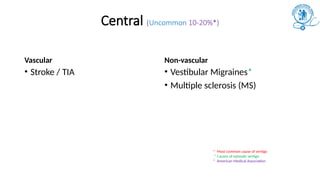
Central (Uncommon 10-20%*)
Vascular
• Stroke / TIA
Non-vascular
• Vestibular Migraines*
• Multiple sclerosis (MS)
* Most common cause of vertigo
* Causes of episodic vertigo
* American Medical Association
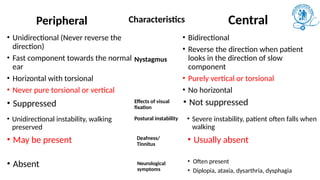
Peripheral
• Unidirectional (Never reverse the
direction)
• Fast component towards the normal
ear
• Horizontal with torsional
• Never pure torsional or vertical
Central
• Bidirectional
• Reverse the direction when patient
looks in the direction of slow
component
• Purely vertical or torsional
• No horizontal
• Suppressed • Not suppressed
• Unidirectional instability, walking
preserved
• Severe instability, patient often falls when
walking
• Absent
• May be present
• Often present
• Diplopia, ataxia, dysarthria, dysphagia
• Usually absent
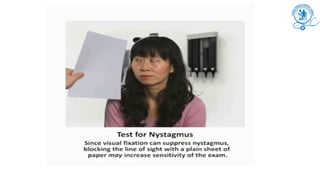
Nystagmus
Effects of visual
fixation
Postural instability
Deafness/
Tinnitus
Neurological
symptoms
Characteristics
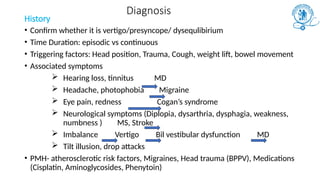
Diagnosis
• Confirm whether it is vertigo/presyncope/ dysequlibirium
• Time Duration: episodic vs continuous
• Triggering factors: Head position, Trauma, Cough, weight lift, bowel movement
• Associated symptoms
 Hearing loss, tinnitus MD
 Headache, photophobia Migraine
 Eye pain, redness Cogan’s syndrome
 Neurological symptoms (Diplopia, dysarthria, dysphagia, weakness,
numbness ) MS, Stroke
 Imbalance Vertigo Bil vestibular dysfunction MD
 Tilt illusion, drop attacks
• PMH- atherosclerotic risk factors, Migraines, Head trauma (BPPV), Medications
(Cisplatin, Aminoglycosides, Phenytoin)
History
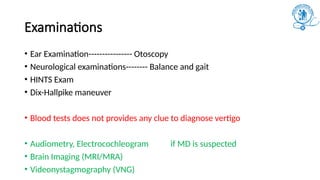
Examinations
• Ear Examination---------------- Otoscopy
• Neurological examinations-------- Balance and gait
• HINTS Exam
• Dix-Hallpike maneuver
• Blood tests does not provides any clue to diagnose vertigo
• Audiometry, Electrocochleogram if MD is suspected
• Brain Imaging (MRI/MRA)
• Videonystagmography (VNG)
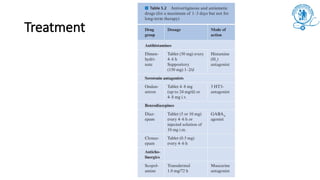
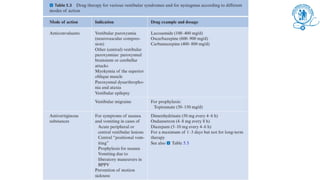
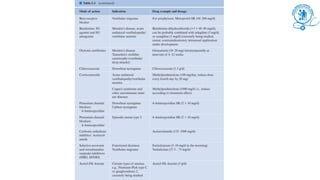
Treatment
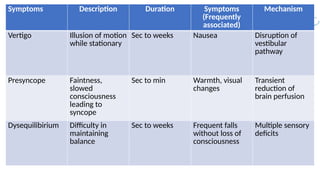
Symptoms Description Duration Symptoms
(Frequently
associated)
Mechanism
Vertigo Illusion of motion
while stationary
Sec to weeks Nausea Disruption of
vestibular
pathway
Presyncope Faintness,
slowed
consciousness
leading to
syncope
Sec to min Warmth, visual
changes
Transient
reduction of
brain perfusion
Dysequilibirium Difficulty in
maintaining
balance
Sec to weeks Frequent falls
without loss of
consciousness
Multiple sensory
deficits
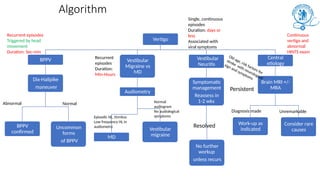
Vertigo
BPPV
Dix-Hallpike
maneuver
BPPV
confirmed
Uncommon
forms
of BPPV
Vestibular
Migraine vs
MD
Audiometry
MD
Vestibular
migraine
Vestibular
Neuritis
Symptomatic
management
Reassess in
1-2 wks
No further
workup
unless recurs
Central
etiology
Brain MRI +/-
MRA
Work-up as
indicated
Consider rare
causes
Recurrent episodes
Triggered by head
movement
Duration: Sec-min
Recurrent
episodes
Duration:
Min-Hours
Single, continuous
episodes
Duration: days or
less
Associated with
viral symptoms
Continuous
vertigo and
abnormal
HINTS exam
Abnormal Normal
Episodic HL, tinnitus
Low frequency HL in
audiometry
Normal
audiogram
No audiological
symptoms
Resolved
Persistent
Old age, risk factors for
stroke with neurological
sign and symptoms
Diagnosis made Unremarkable
Algorithm
References
• Uptodate
• Synopsis of Otolaryngology, 5th
Edition, 1990
• Vertigo and Dizziness common complaints, 3rd
edition, 2013
Thank You All

An approach to vertigo with flowchart algorithm

  • 1.
  • 2.
    Introduction Gowers “Any movement orsense of movement, either in an individual himself or in external rotation, that involves a defect, real or seeming, in the equilibrium of the body” Synopsis of Otolaryngology 5th ed. Need to differentiate with Presyncope and disequilibrium
  • 4.
  • 5.
    Peripheral (Common- 80-90%*) Labyrinth •BPPV * * • MD * • Peri-lymphatic fistula * • Cogan’s Syndrome *- autoimmune diz • Labyrinthitis- COM, post-surgical, inner ear neoplasm Vestibular/Vestibulocochlear Nerve • Vestibular neuritis (Labyrinthitis) • Acoustic Neuroma • Ramsay Hunt Syndrome • Vestibular paroxysmia * • Vestibulotoxic drugs- aminoglycoside (Streptomycin, gentamycin, kanamycin), diuretics, alchohol, tobacco, antimalarials, anticancer, analgesics (indomethacin, ibuprofen) * Most common cause of vertigo * Causes of episodic vertigo * American Medical Association
  • 6.
    Central (Uncommon 10-20%*) Vascular •Stroke / TIA Non-vascular • Vestibular Migraines* • Multiple sclerosis (MS) * Most common cause of vertigo * Causes of episodic vertigo * American Medical Association
  • 7.
    Peripheral • Unidirectional (Neverreverse the direction) • Fast component towards the normal ear • Horizontal with torsional • Never pure torsional or vertical Central • Bidirectional • Reverse the direction when patient looks in the direction of slow component • Purely vertical or torsional • No horizontal • Suppressed • Not suppressed • Unidirectional instability, walking preserved • Severe instability, patient often falls when walking • Absent • May be present • Often present • Diplopia, ataxia, dysarthria, dysphagia • Usually absent Nystagmus Effects of visual fixation Postural instability Deafness/ Tinnitus Neurological symptoms Characteristics
  • 9.
    Diagnosis • Confirm whetherit is vertigo/presyncope/ dysequlibirium • Time Duration: episodic vs continuous • Triggering factors: Head position, Trauma, Cough, weight lift, bowel movement • Associated symptoms  Hearing loss, tinnitus MD  Headache, photophobia Migraine  Eye pain, redness Cogan’s syndrome  Neurological symptoms (Diplopia, dysarthria, dysphagia, weakness, numbness ) MS, Stroke  Imbalance Vertigo Bil vestibular dysfunction MD  Tilt illusion, drop attacks • PMH- atherosclerotic risk factors, Migraines, Head trauma (BPPV), Medications (Cisplatin, Aminoglycosides, Phenytoin) History
  • 10.
    Examinations • Ear Examination----------------Otoscopy • Neurological examinations-------- Balance and gait • HINTS Exam • Dix-Hallpike maneuver • Blood tests does not provides any clue to diagnose vertigo • Audiometry, Electrocochleogram if MD is suspected • Brain Imaging (MRI/MRA) • Videonystagmography (VNG)
  • 12.
  • 15.
    Symptoms Description DurationSymptoms (Frequently associated) Mechanism Vertigo Illusion of motion while stationary Sec to weeks Nausea Disruption of vestibular pathway Presyncope Faintness, slowed consciousness leading to syncope Sec to min Warmth, visual changes Transient reduction of brain perfusion Dysequilibirium Difficulty in maintaining balance Sec to weeks Frequent falls without loss of consciousness Multiple sensory deficits
  • 16.
    Vertigo BPPV Dix-Hallpike maneuver BPPV confirmed Uncommon forms of BPPV Vestibular Migraine vs MD Audiometry MD Vestibular migraine Vestibular Neuritis Symptomatic management Reassessin 1-2 wks No further workup unless recurs Central etiology Brain MRI +/- MRA Work-up as indicated Consider rare causes Recurrent episodes Triggered by head movement Duration: Sec-min Recurrent episodes Duration: Min-Hours Single, continuous episodes Duration: days or less Associated with viral symptoms Continuous vertigo and abnormal HINTS exam Abnormal Normal Episodic HL, tinnitus Low frequency HL in audiometry Normal audiogram No audiological symptoms Resolved Persistent Old age, risk factors for stroke with neurological sign and symptoms Diagnosis made Unremarkable Algorithm
  • 17.
    References • Uptodate • Synopsisof Otolaryngology, 5th Edition, 1990 • Vertigo and Dizziness common complaints, 3rd edition, 2013
  • 18.