CLASSIFICATION
OF ANIMALS
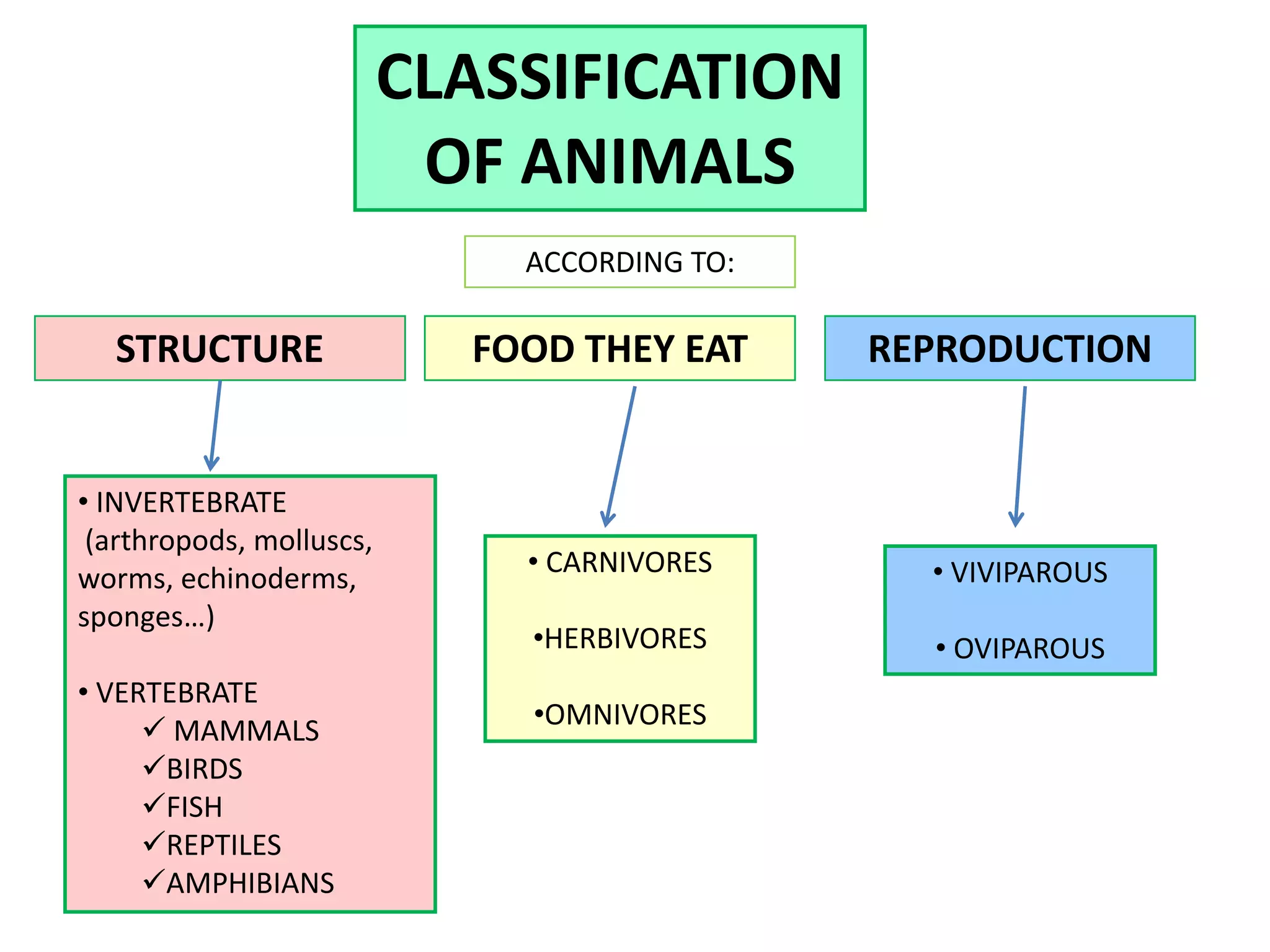
STRUCTURE FOOD THEY EAT REPRODUCTION
• CARNIVORES
•HERBIVORES
•OMNIVORES
• VIVIPAROUS
• OVIPAROUS
• INVERTEBRATE
(arthropods, molluscs,
worms, echinoderms,
sponges…)
• VERTEBRATE
 MAMMALS
BIRDS
FISH
REPTILES
AMPHIBIANS
ACCORDING TO:
CLASSIFICATION
OF ANIMALS
ACCORDING TO:
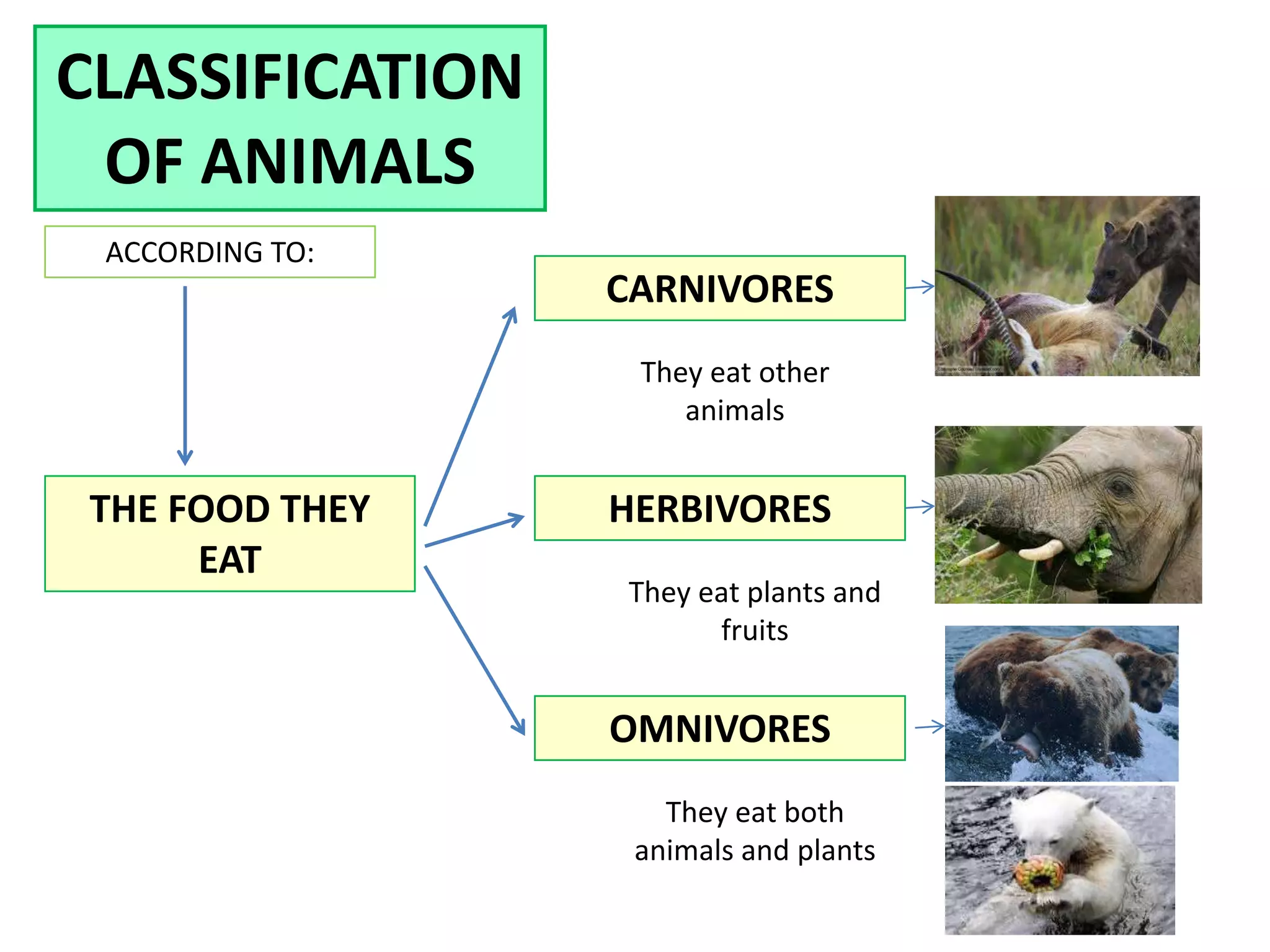
THE FOOD THEY
EAT
CARNIVORES
HERBIVORES
OMNIVORES
They eat other
animals
They eat plants and
fruits
They eat both
animals and plants
CLASSIFICATION
OF ANIMALS
ACCORDING TO:
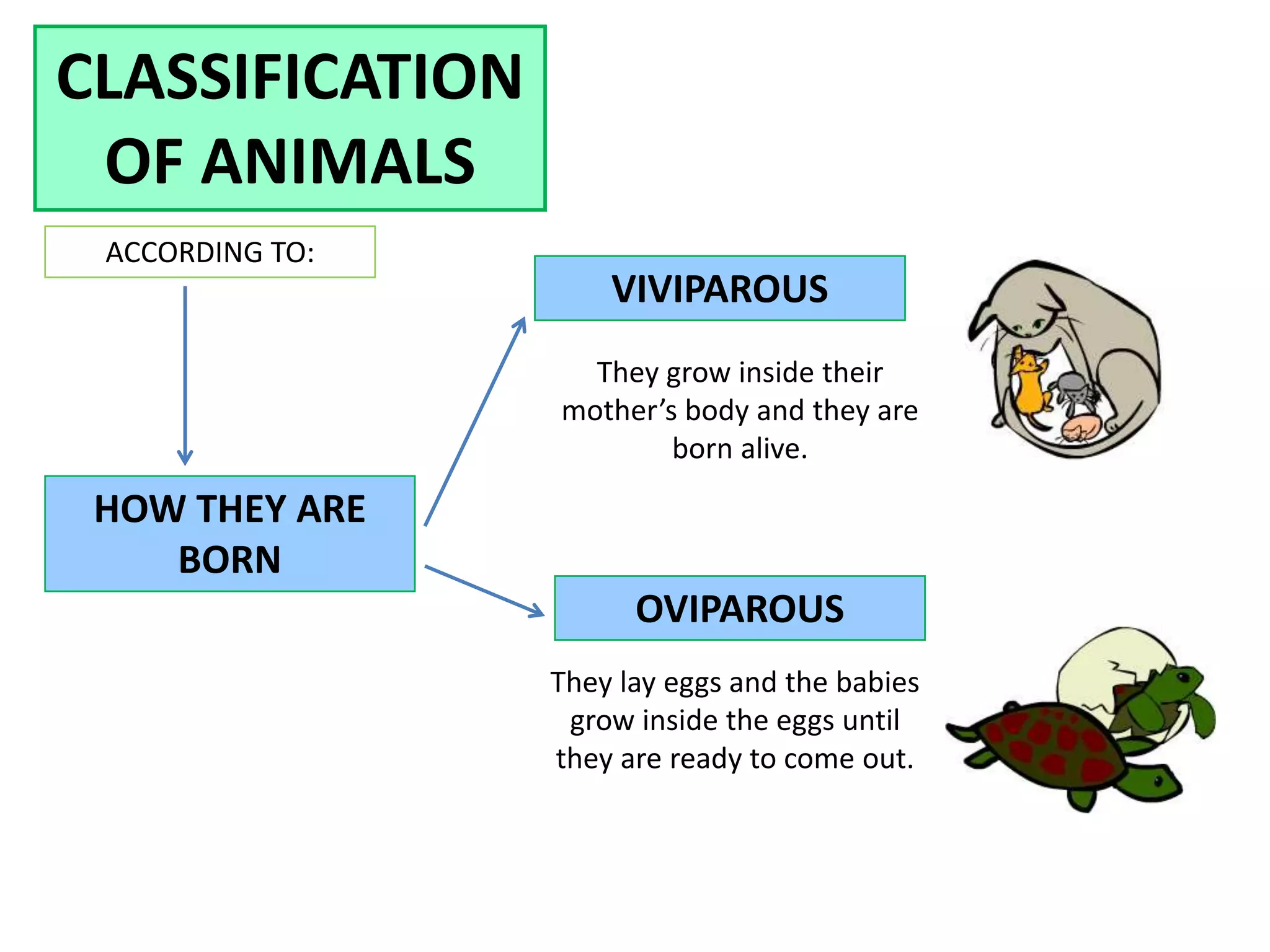
HOW THEY ARE
BORN
VIVIPAROUS
OVIPAROUS
They grow inside their
mother’s body and they are
born alive.
They lay eggs and the babies
grow inside the eggs until
they are ready to come out.
CLASSIFICATION
OF ANIMALS
ACCORDING TO:
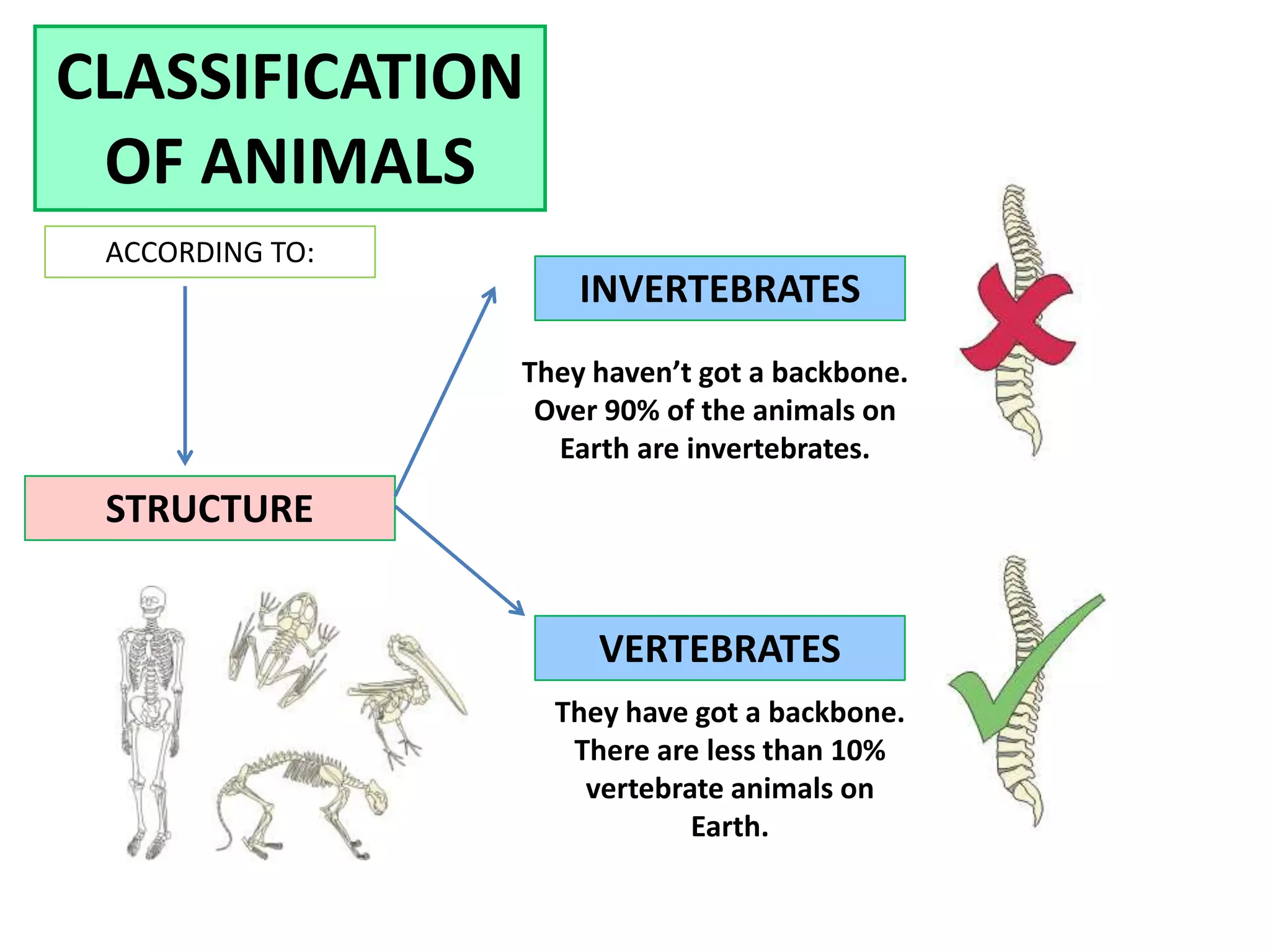
STRUCTURE
INVERTEBRATES
VERTEBRATES
They have got a backbone.
There are less than 10%
vertebrate animals on
Earth.
They haven’t got a backbone.
Over 90% of the animals on
Earth are invertebrates.
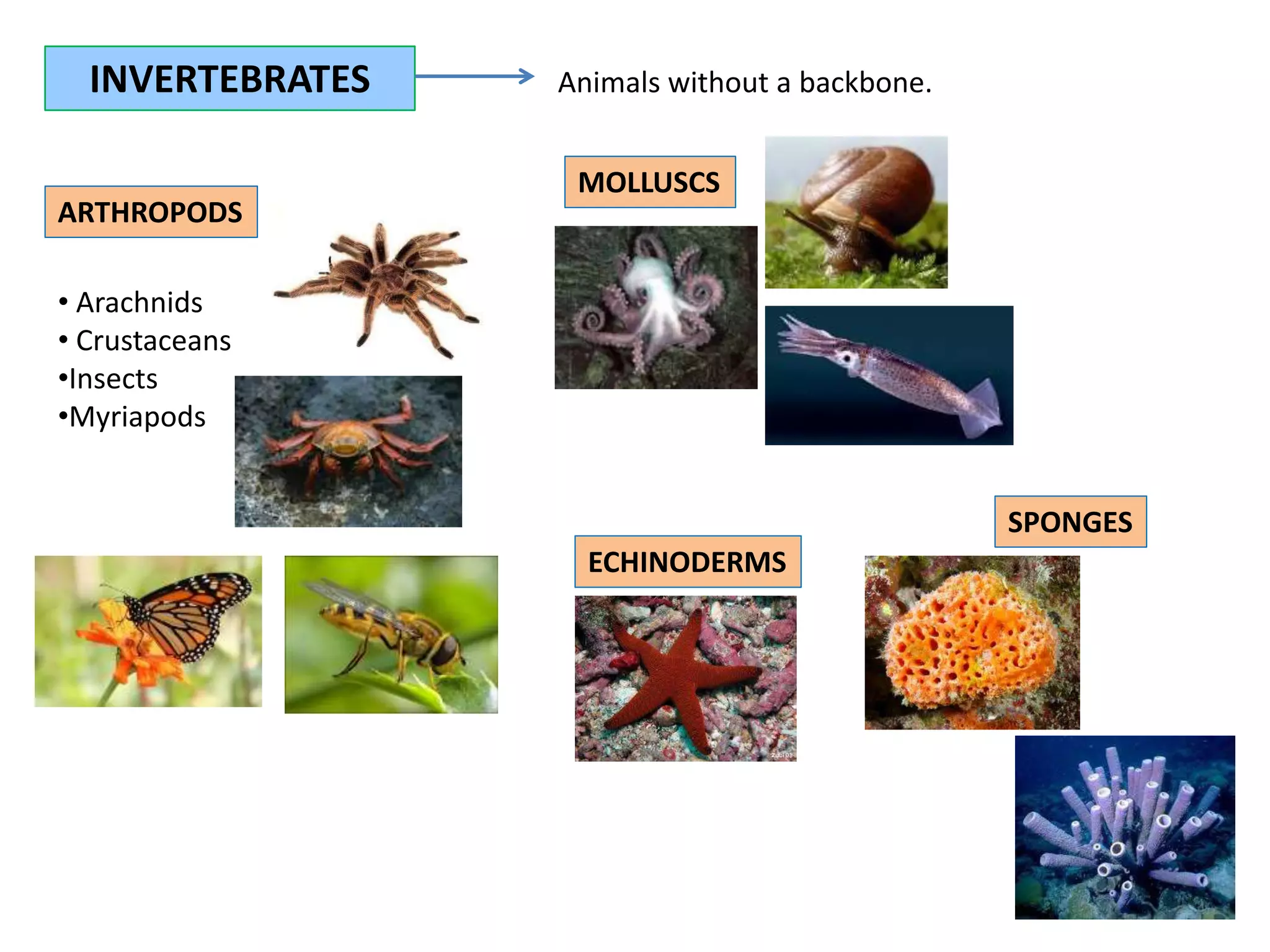
INVERTEBRATES
ARTHROPODS
• Arachnids
• Crustaceans
•Insects
•Myriapods
Animals without a backbone.
MOLLUSCS
ECHINODERMS
SPONGES
VERTEBRATES Animals with a backbone.
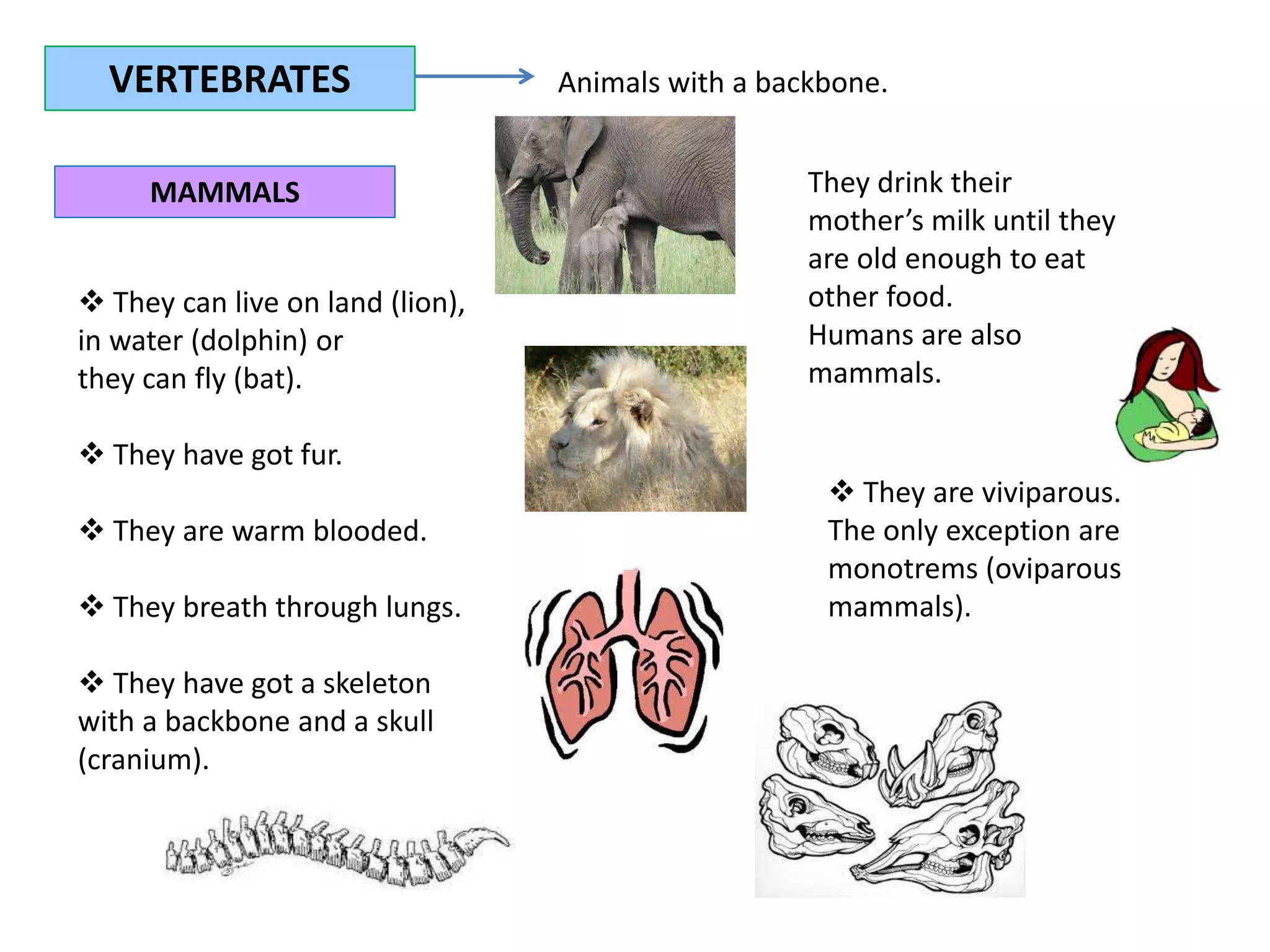
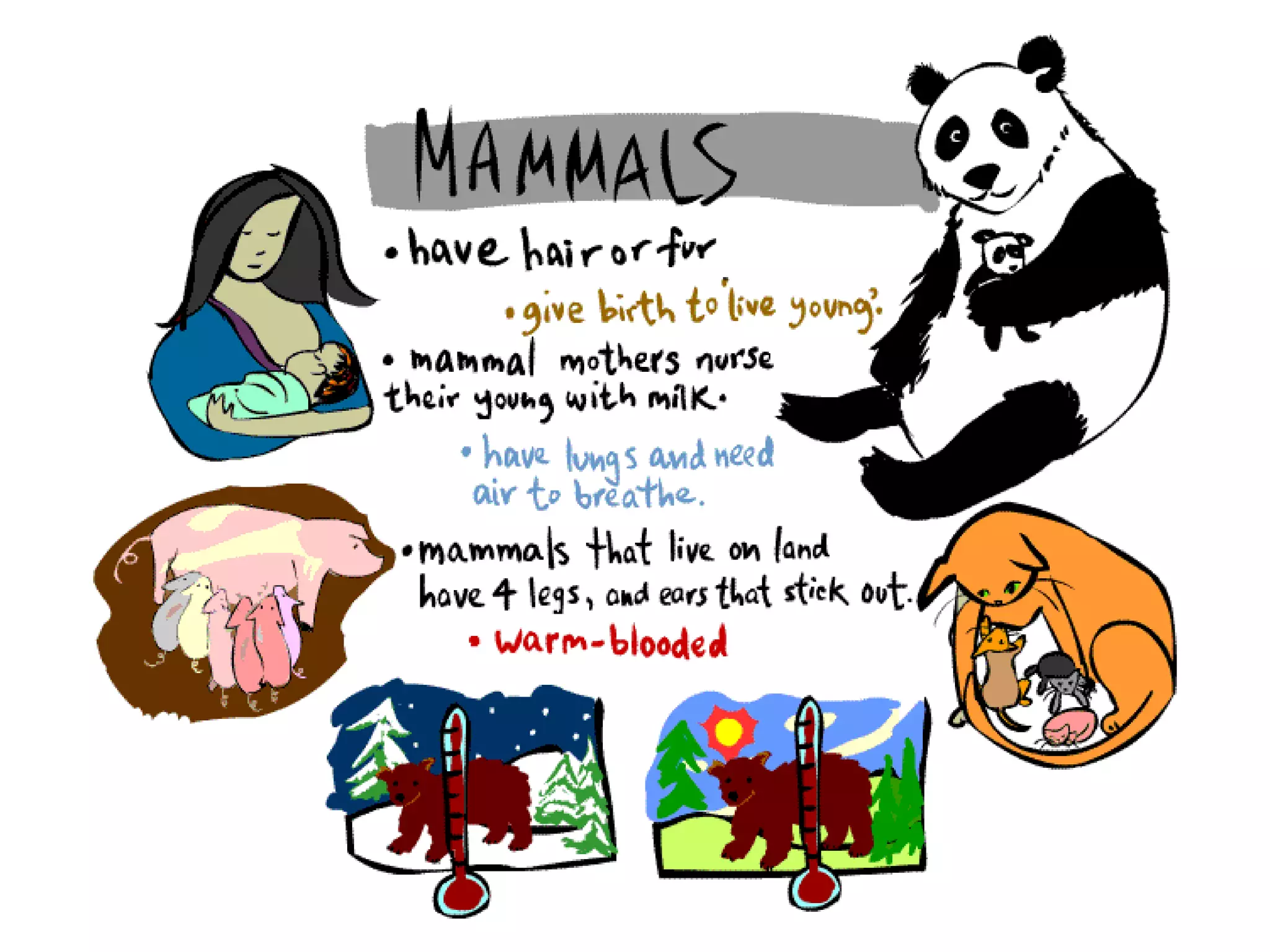
MAMMALS
 They can live on land (lion),
in water (dolphin) or
they can fly (bat).
 They have got fur.
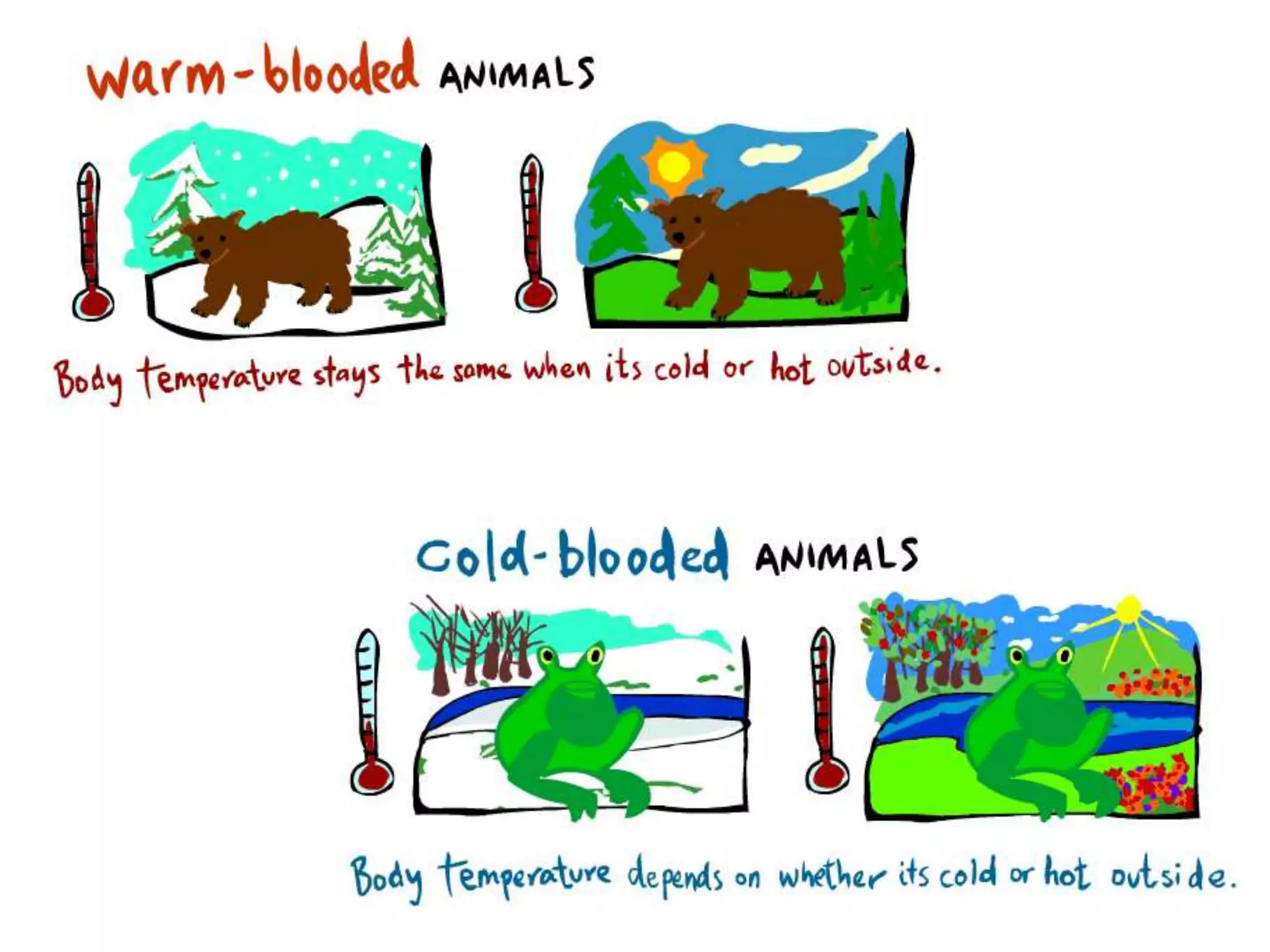
 They are warm blooded.
 They breath through lungs.
 They have got a skeleton
with a backbone and a skull
(cranium).
They drink their
mother’s milk until they
are old enough to eat
other food.
Humans are also
mammals.
 They are viviparous.
The only exception are
monotrems (oviparous
mammals).
VERTEBRATES Animals with a backbone.
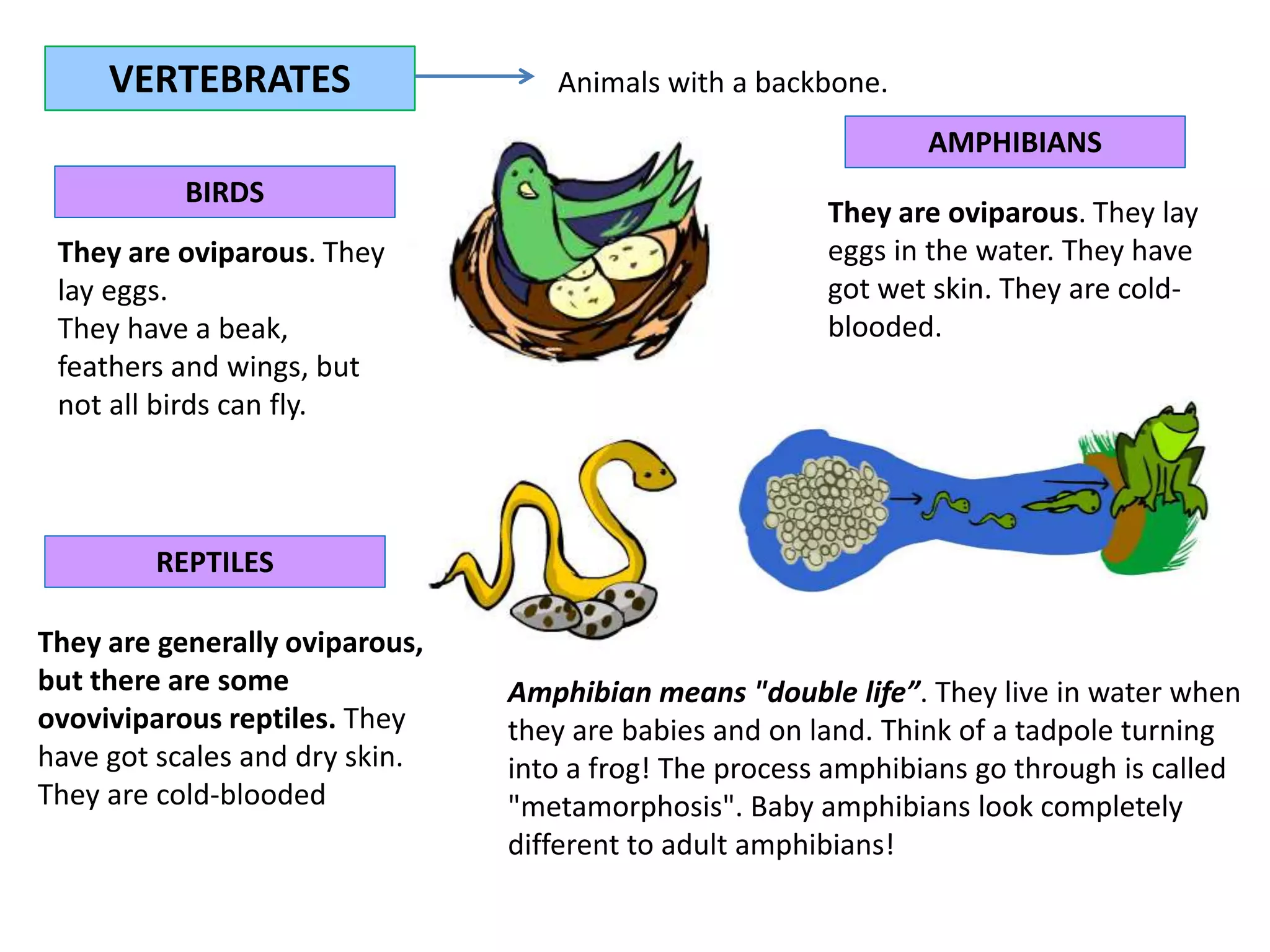
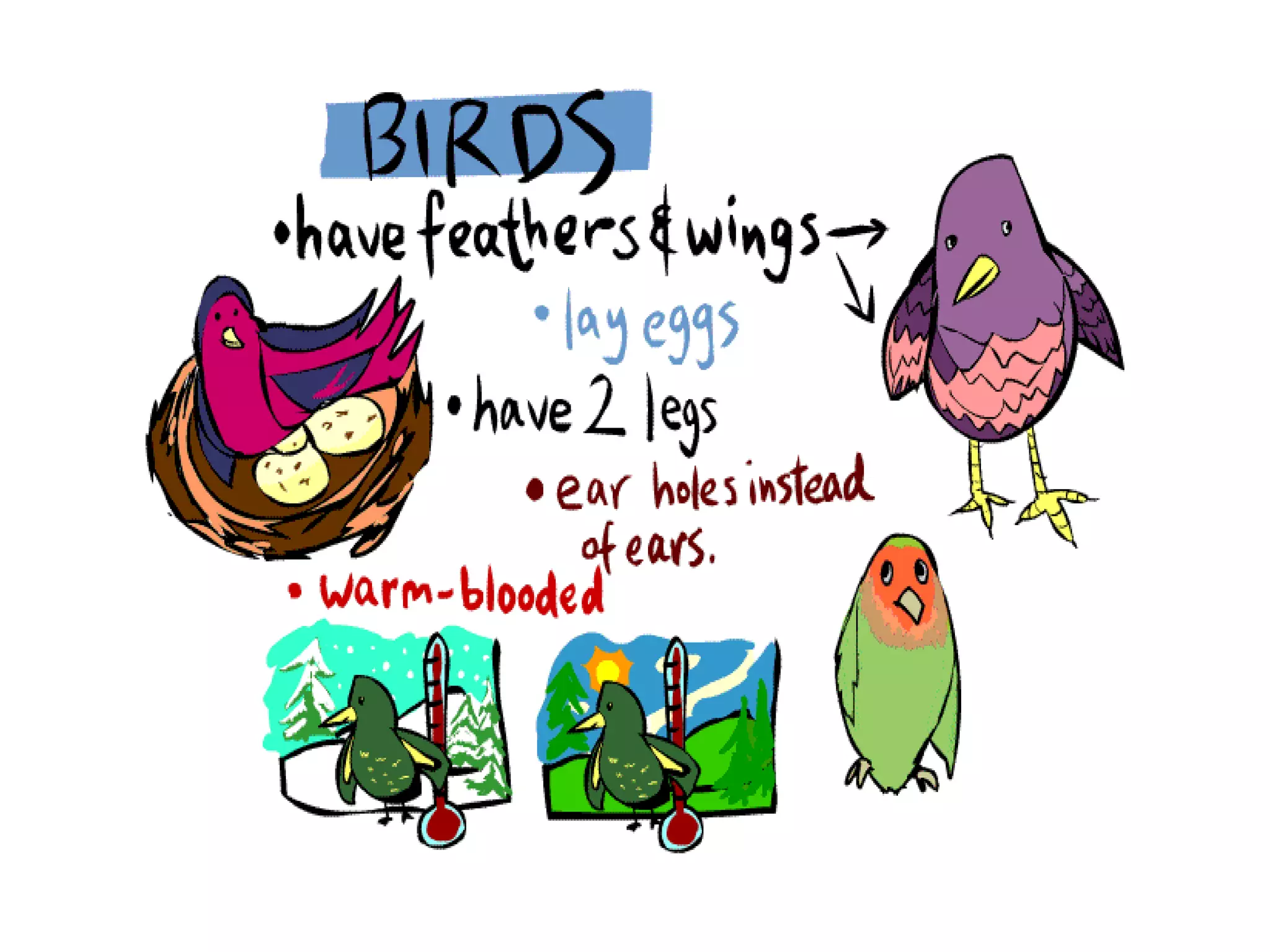
BIRDS
They are oviparous. They
lay eggs.
They have a beak,
feathers and wings, but
not all birds can fly.
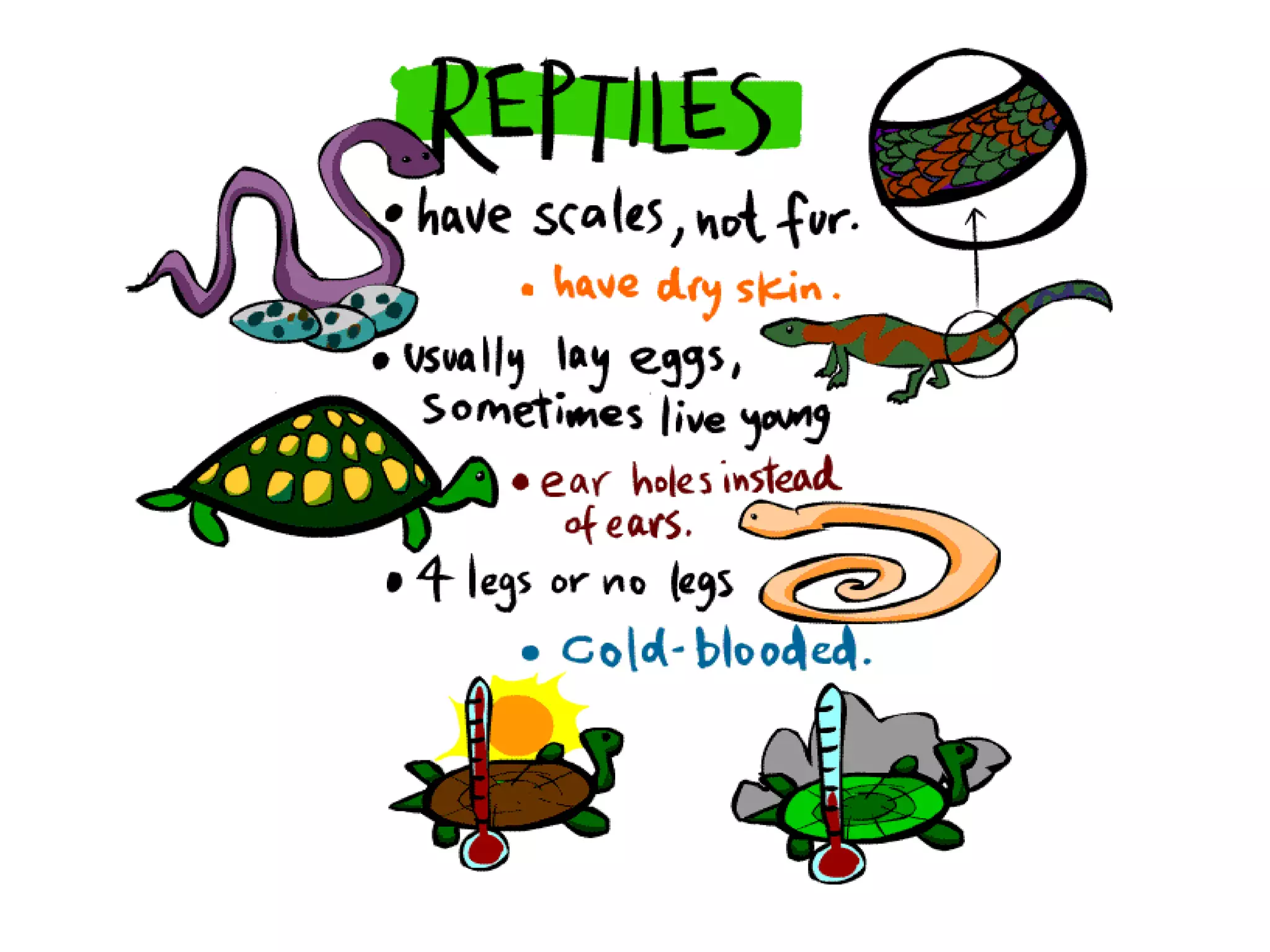
REPTILES
They are generally oviparous,
but there are some
ovoviviparous reptiles. They
have got scales and dry skin.
They are cold-blooded
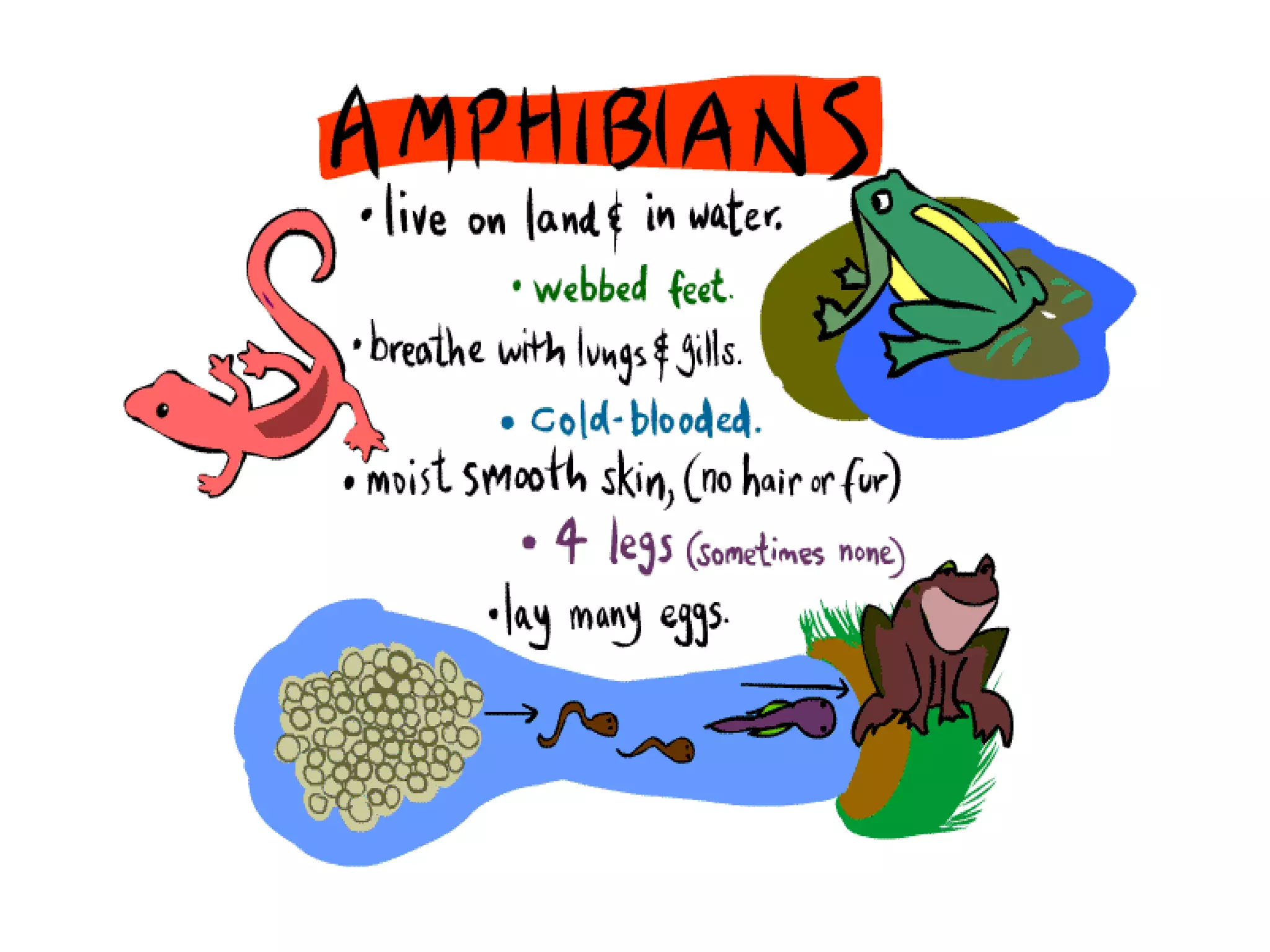
AMPHIBIANS
They are oviparous. They lay
eggs in the water. They have
got wet skin. They are cold-
blooded.
Amphibian means "double life”. They live in water when
they are babies and on land. Think of a tadpole turning
into a frog! The process amphibians go through is called
"metamorphosis". Baby amphibians look completely
different to adult amphibians!
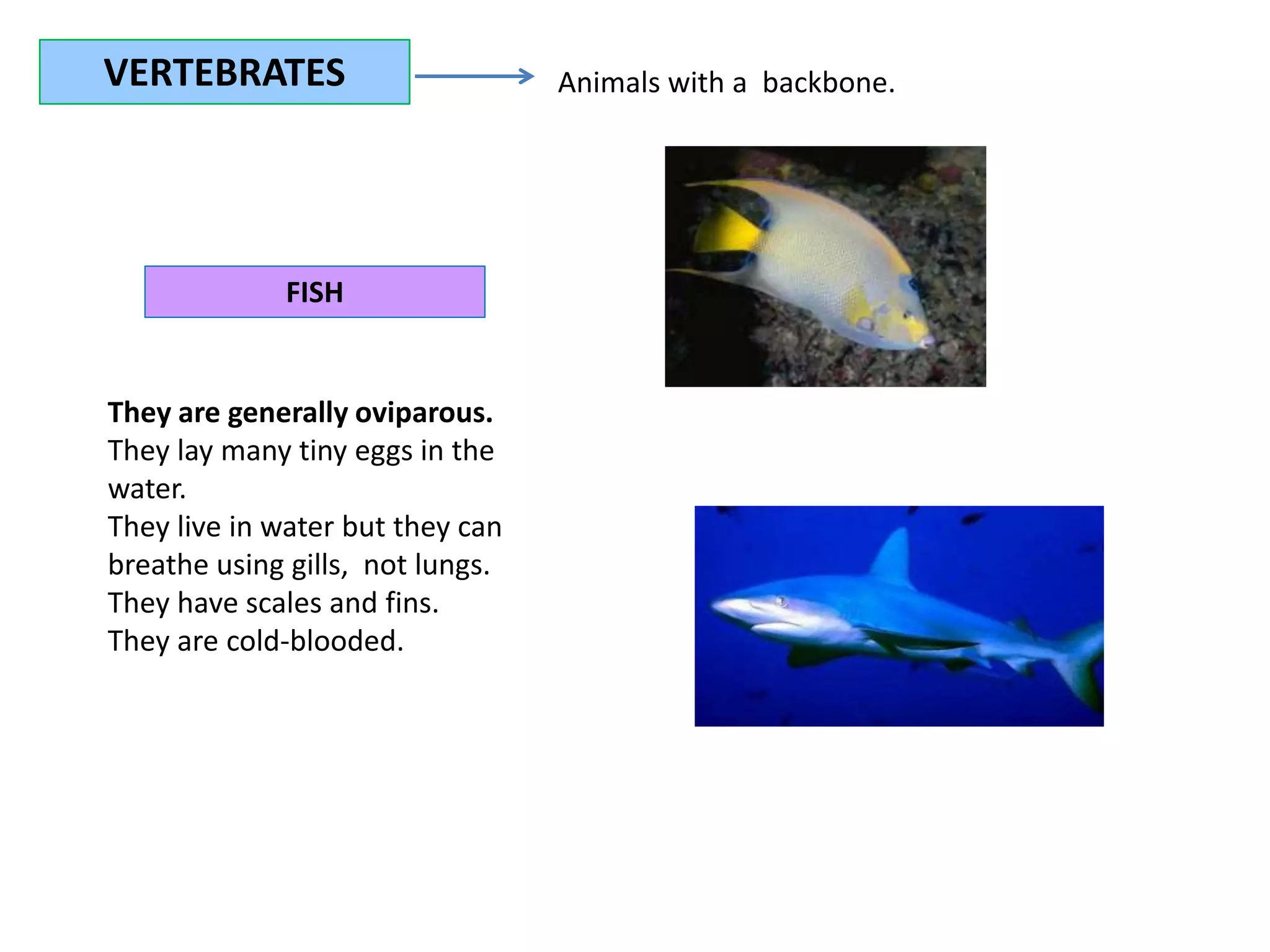
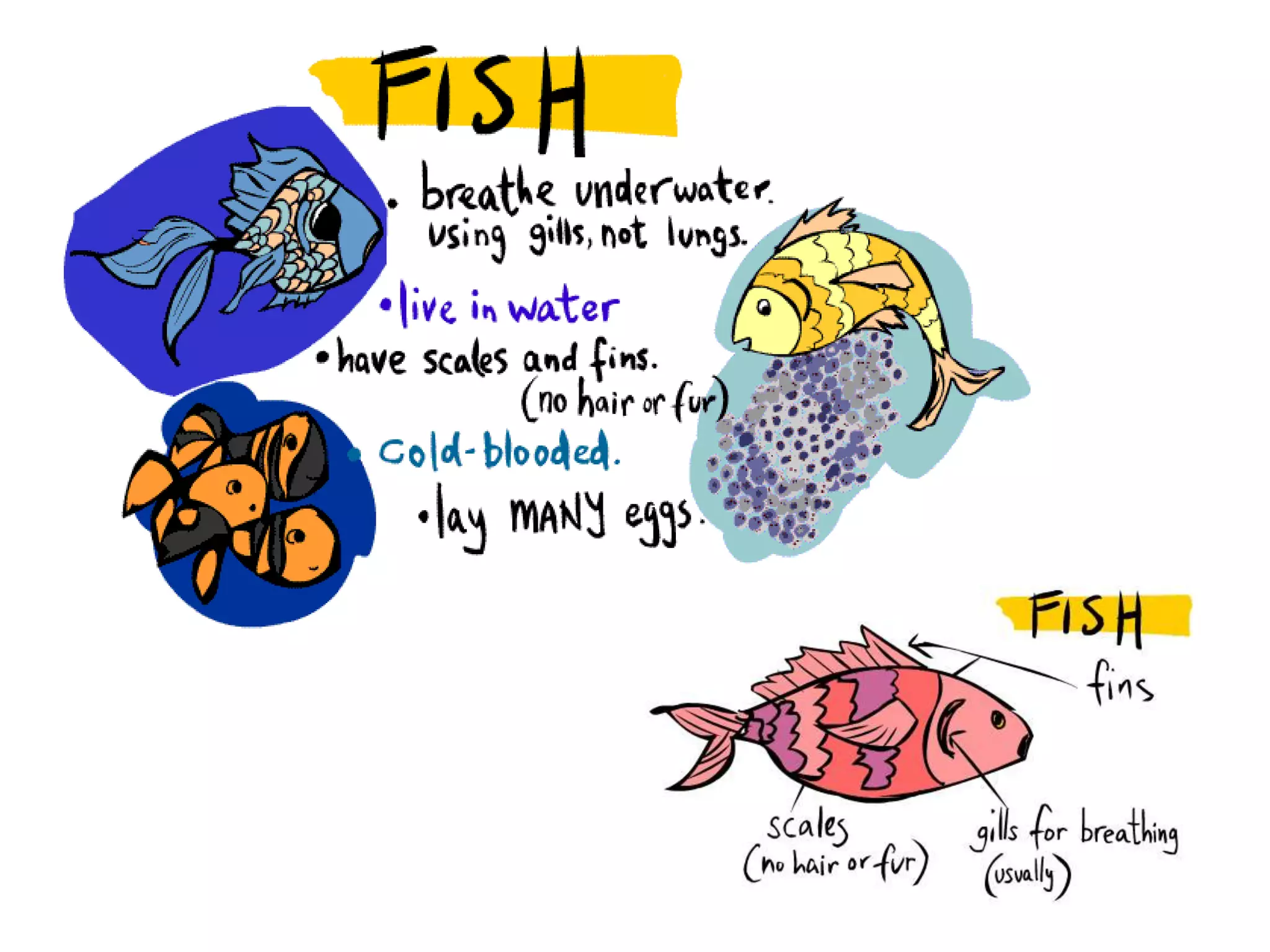
FISH
VERTEBRATES Animals with a backbone.
They are generally oviparous.
They lay many tiny eggs in the
water.
They live in water but they can
breathe using gills, not lungs.
They have scales and fins.
They are cold-blooded.
Classification of animals

Classification of animals

  • 1.
    CLASSIFICATION OF ANIMALS STRUCTURE FOODTHEY EAT REPRODUCTION • CARNIVORES •HERBIVORES •OMNIVORES • VIVIPAROUS • OVIPAROUS • INVERTEBRATE (arthropods, molluscs, worms, echinoderms, sponges…) • VERTEBRATE  MAMMALS BIRDS FISH REPTILES AMPHIBIANS ACCORDING TO:
  • 2.
    CLASSIFICATION OF ANIMALS ACCORDING TO: THEFOOD THEY EAT CARNIVORES HERBIVORES OMNIVORES They eat other animals They eat plants and fruits They eat both animals and plants
  • 3.
    CLASSIFICATION OF ANIMALS ACCORDING TO: HOWTHEY ARE BORN VIVIPAROUS OVIPAROUS They grow inside their mother’s body and they are born alive. They lay eggs and the babies grow inside the eggs until they are ready to come out.
  • 4.
    CLASSIFICATION OF ANIMALS ACCORDING TO: STRUCTURE INVERTEBRATES VERTEBRATES Theyhave got a backbone. There are less than 10% vertebrate animals on Earth. They haven’t got a backbone. Over 90% of the animals on Earth are invertebrates.
  • 5.
  • 6.
    VERTEBRATES Animals witha backbone. MAMMALS  They can live on land (lion), in water (dolphin) or they can fly (bat).  They have got fur.  They are warm blooded.  They breath through lungs.  They have got a skeleton with a backbone and a skull (cranium). They drink their mother’s milk until they are old enough to eat other food. Humans are also mammals.  They are viviparous. The only exception are monotrems (oviparous mammals).
  • 7.
    VERTEBRATES Animals witha backbone. BIRDS They are oviparous. They lay eggs. They have a beak, feathers and wings, but not all birds can fly. REPTILES They are generally oviparous, but there are some ovoviviparous reptiles. They have got scales and dry skin. They are cold-blooded AMPHIBIANS They are oviparous. They lay eggs in the water. They have got wet skin. They are cold- blooded. Amphibian means "double life”. They live in water when they are babies and on land. Think of a tadpole turning into a frog! The process amphibians go through is called "metamorphosis". Baby amphibians look completely different to adult amphibians!
  • 8.
    FISH VERTEBRATES Animals witha backbone. They are generally oviparous. They lay many tiny eggs in the water. They live in water but they can breathe using gills, not lungs. They have scales and fins. They are cold-blooded.