Natural Science Unit 2
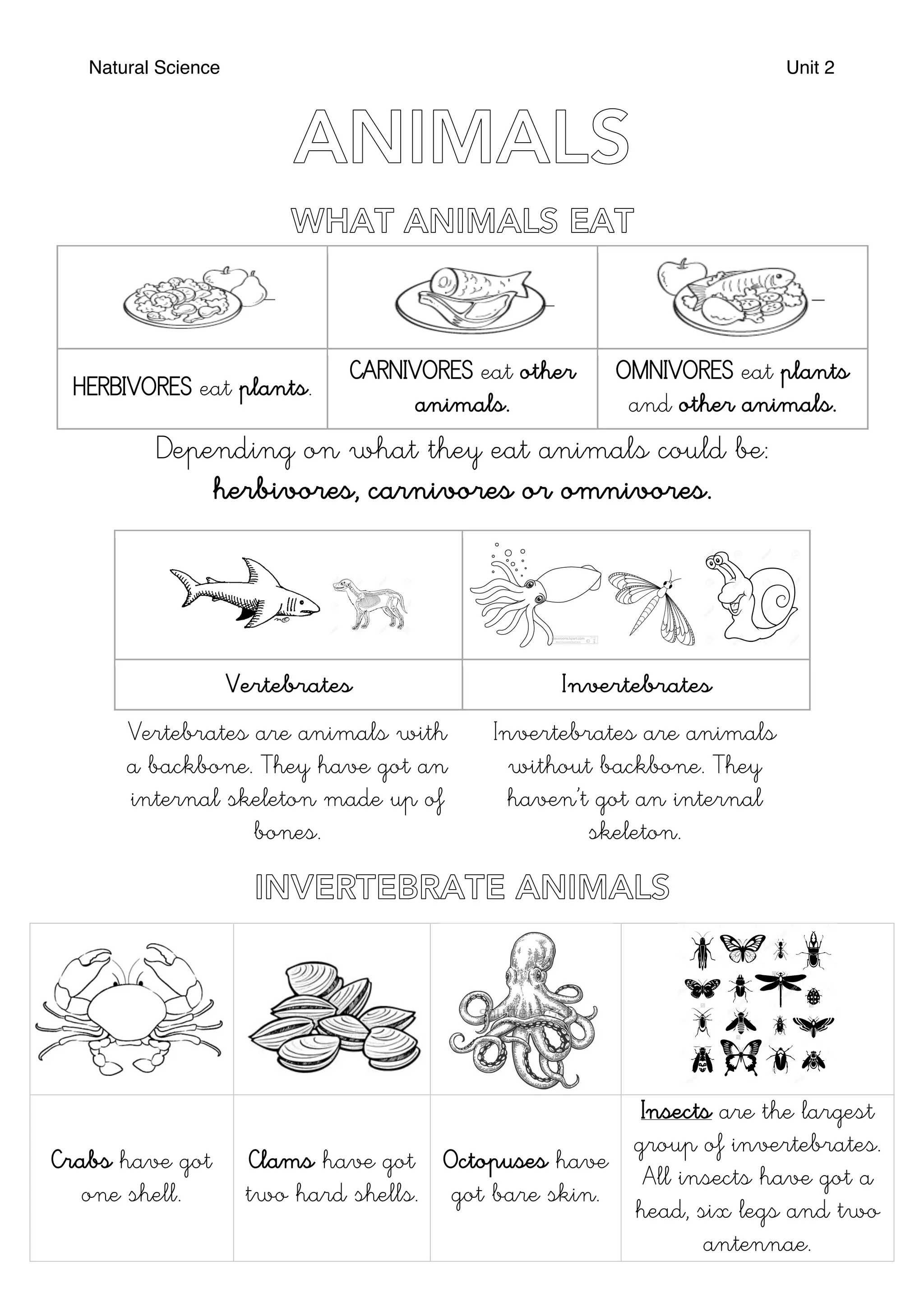
HERBIVORES eat plants.
CARNIVORES eat other
animals.
OMNIVORES eat plants
and other animals.
Depending on what they eat animals could be:
herbivores, carnivores or omnivores.
Vertebrates Invertebrates
Vertebrates are animals with
a backbone. They have got an
internal skeleton made up of
bones.
Invertebrates are animals
without backbone. They
haven’t got an internal
skeleton.
Crabs have got
one shell.
Clams have got
two hard shells.
Octopuses have
got bare skin.
Insects are the largest
group of invertebrates.
All insects have got a
head, six legs and two
antennae.
Natural Science Unit 2
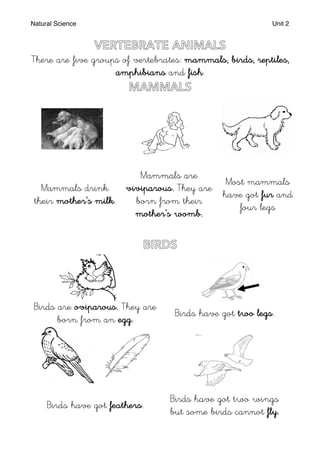
There are five groups of vertebrates: mammals, birds, reptiles,
amphibians and fish.
Mammals drink
their mother’s milk.
Mammals are
viviparous. They are
born from their
mother’s womb.
Most mammals
have got fur and
four legs
Birds are oviparous. They are
born from an egg.
Birds have got two legs.
Birds have got feathers.
Birds have got two wings
but some birds cannot fly.
Natural Science Unit 2
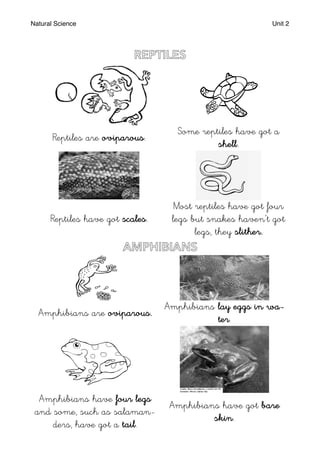
Reptiles are oviparous.
Some reptiles have got a
shell.
Reptiles have got scales.
Most reptiles have got four
legs but snakes haven’t got
legs, they slither.
Amphibians are oviparous.
Amphibians lay eggs in wa-
ter.
Amphibians have four legs
and some, such as salaman-
ders, have got a tail.
Amphibians have got bare
skin.
Natural Science Unit 2
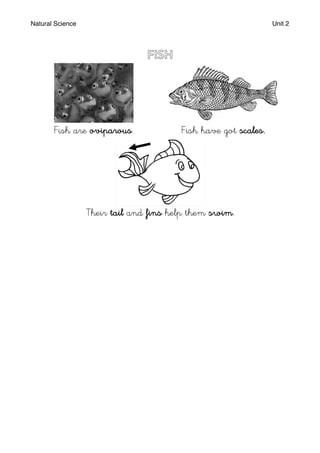
Fish are oviparous. Fish have got scales.
Their tail and fins help them swim.

Resumen unit 3 animals natural science

  • 1.
    Natural Science Unit2 HERBIVORES eat plants. CARNIVORES eat other animals. OMNIVORES eat plants and other animals. Depending on what they eat animals could be: herbivores, carnivores or omnivores. Vertebrates Invertebrates Vertebrates are animals with a backbone. They have got an internal skeleton made up of bones. Invertebrates are animals without backbone. They haven’t got an internal skeleton. Crabs have got one shell. Clams have got two hard shells. Octopuses have got bare skin. Insects are the largest group of invertebrates. All insects have got a head, six legs and two antennae.
  • 2.
    Natural Science Unit2 There are five groups of vertebrates: mammals, birds, reptiles, amphibians and fish. Mammals drink their mother’s milk. Mammals are viviparous. They are born from their mother’s womb. Most mammals have got fur and four legs Birds are oviparous. They are born from an egg. Birds have got two legs. Birds have got feathers. Birds have got two wings but some birds cannot fly.
  • 3.
    Natural Science Unit2 Reptiles are oviparous. Some reptiles have got a shell. Reptiles have got scales. Most reptiles have got four legs but snakes haven’t got legs, they slither. Amphibians are oviparous. Amphibians lay eggs in wa- ter. Amphibians have four legs and some, such as salaman- ders, have got a tail. Amphibians have got bare skin.
  • 4.
    Natural Science Unit2 Fish are oviparous. Fish have got scales. Their tail and fins help them swim.