SUMMARY-UNIT 3-ANIMALS 
SCIENCE – PRIMARY YEAR 4 
MAMMALS 
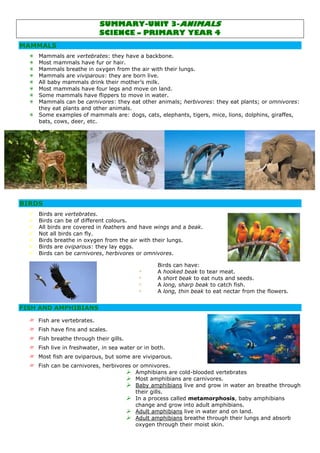
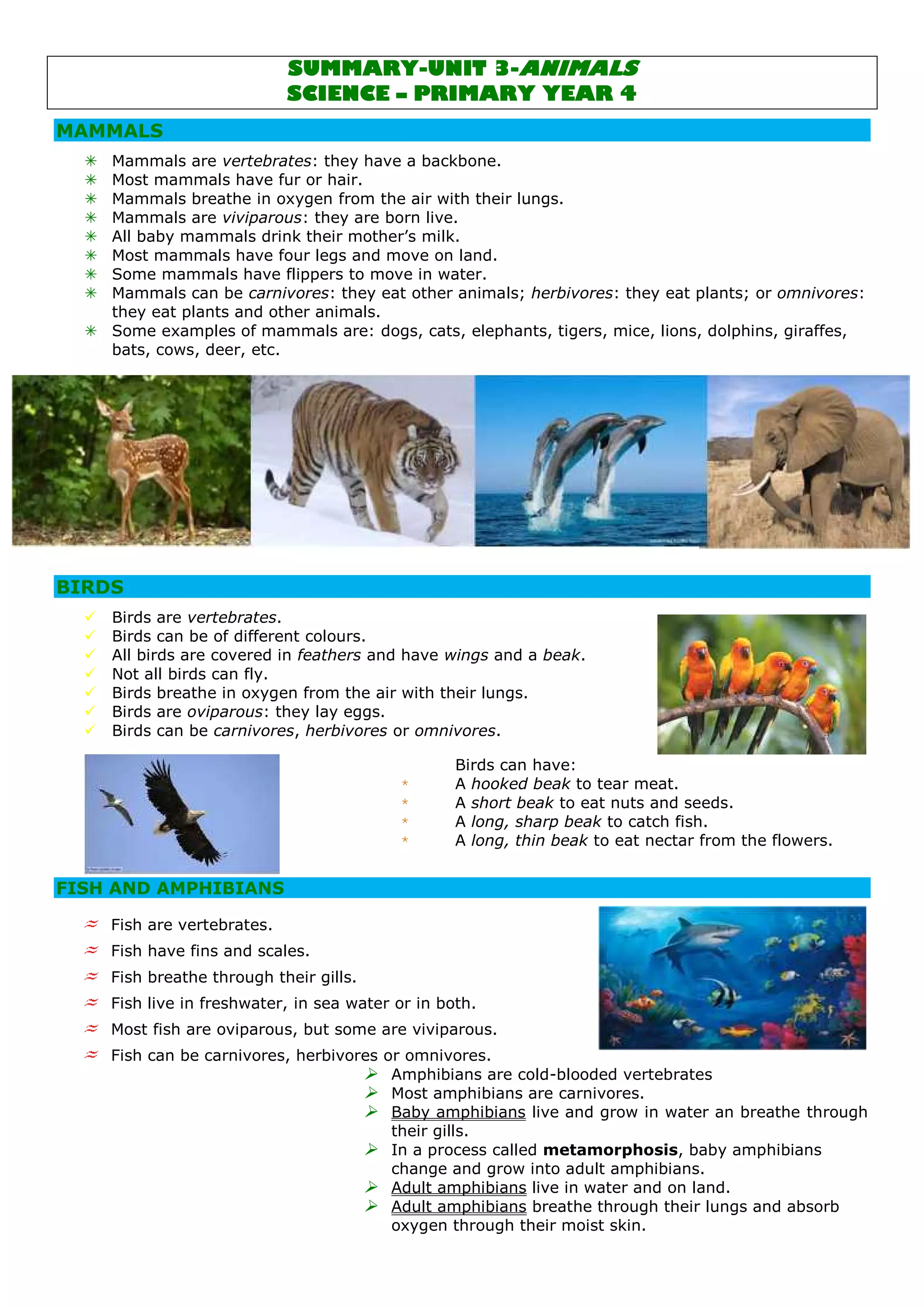
 Mammals are vertebrates: they have a backbone. 
 Most mammals have fur or hair. 
 Mammals breathe in oxygen from the air with their lungs. 
 Mammals are viviparous: they are born live. 
 All baby mammals drink their mother’s milk. 
 Most mammals have four legs and move on land. 
 Some mammals have flippers to move in water. 
 Mammals can be carnivores: they eat other animals; herbivores: they eat plants; or omnivores: 
they eat plants and other animals. 
 Some examples of mammals are: dogs, cats, elephants, tigers, mice, lions, dolphins, giraffes, 
bats, cows, deer, etc. 
BIRDS 
 Birds are vertebrates. 
 Birds can be of different colours. 
 All birds are covered in feathers and have wings and a beak. 
 Not all birds can fly. 
 Birds breathe in oxygen from the air with their lungs. 
 Birds are oviparous: they lay eggs. 
 Birds can be carnivores, herbivores or omnivores. 
Birds can have: 
* A hooked beak to tear meat. 
* A short beak to eat nuts and seeds. 
* A long, sharp beak to catch fish. 
* A long, thin beak to eat nectar from the flowers. 
* 
FISH AND AMPHIBIANS 
≈ Fish are vertebrates. 
≈ Fish have fins and scales. 
≈ Fish breathe through their gills. 
≈ Fish live in freshwater, in sea water or in both. 
≈ Most fish are oviparous, but some are viviparous. 
≈ Fish can be carnivores, herbivores or omnivores. 
 Amphibians are cold-blooded vertebrates 
 Most amphibians are carnivores. 
 Baby amphibians live and grow in water an breathe through 
their gills. 
 In a process called metamorphosis, baby amphibians 
change and grow into adult amphibians. 
 Adult amphibians live in water and on land. 
 Adult amphibians breathe through their lungs and absorb 
oxygen through their moist skin.
INVERTEBRATES 
 Invertebrates are all around us. 
 Invertebrates don’t have a backbone. 
 Invertebrates live on land and in water. 
 Invertebrates walk, swim, crawl and fly. 
 Many invertebrates have an exoskeleton, a shell or a soft body. 
INSECTS: 
 Insects have an exoskeleton. 
 Insects have their body divided into 
three parts: the head, the thorax and 
the abdomen. 
 Insects have two antennae; six legs and 
most insects have wings. 
SPIDERS: 
 Spiders have a body that is divided into 
two parts: the head and the abdomen. 
 All spiders have eight legs. 
 Most spiders have eight eyes, but some 
can have six, four or two eyes. 
CRABS: 
 Crabs have ten legs and two eyes. 
 Crabs usually move sideways. 
 Crabs have a thick exoskeleton. 
REPTILES 
CENTIPEDES: 
 Centipedes have lots of legs and many 
body parts. 
 Centipedes have two antennae. 
 Centipedes can move quickly. 
WORMS: 
 Worms have a soft body that is divided 
into many parts. 
 An earthworm has no lungs and 
breathes in oxygen through its moist 
skin. 
OCTOPUSES: 
 Octopuses have a soft body and eight 
legs. 
 They have a very good sense of touch in 
their suckers. 
SNAILS: 
 Snails have a head with two tentacles 
and there is an eye at the end of each 
tentacle. 
 Snails have a soft body that is protected 
by a shell. 
 Reptiles were the first vertebrates to 
leave the water and live on land. 
 Most reptiles have four limbs. 
 Reptiles have scales. 
 Reptiles breathe in oxygen with their 
lungs. 
 Reptiles are cold-blooded. 
 Most reptiles are oviparous and lay their 
eggs on land. 
 Most reptiles are carnivores. 
SNAKES: 
 Snakes need to lose a layer of skin as they 
grow. 
LIZARDS: 
 Lizards need to replace their skin with new 
skin. 
 Some lizards can also lose their tail to 
protect themselves from predators. It usually 
grows back. 
CROCODILES: 
 The scales of crocodiles grow as the crocodile 
grows. 
 Crocodiles can move quickly both on land 
and in water. 
TORTOISES: 
 Tortoises have a shell. 
 Tortoises live on land and are mostly 
herbivores. 
TURTLES: 
 Turtles live in water. 
 Turtles lay their eggs on land. 
 Most turtles are omnivores

Unit 3 summary

  • 1.
    SUMMARY-UNIT 3-ANIMALS SCIENCE– PRIMARY YEAR 4 MAMMALS  Mammals are vertebrates: they have a backbone.  Most mammals have fur or hair.  Mammals breathe in oxygen from the air with their lungs.  Mammals are viviparous: they are born live.  All baby mammals drink their mother’s milk.  Most mammals have four legs and move on land.  Some mammals have flippers to move in water.  Mammals can be carnivores: they eat other animals; herbivores: they eat plants; or omnivores: they eat plants and other animals.  Some examples of mammals are: dogs, cats, elephants, tigers, mice, lions, dolphins, giraffes, bats, cows, deer, etc. BIRDS  Birds are vertebrates.  Birds can be of different colours.  All birds are covered in feathers and have wings and a beak.  Not all birds can fly.  Birds breathe in oxygen from the air with their lungs.  Birds are oviparous: they lay eggs.  Birds can be carnivores, herbivores or omnivores. Birds can have: * A hooked beak to tear meat. * A short beak to eat nuts and seeds. * A long, sharp beak to catch fish. * A long, thin beak to eat nectar from the flowers. * FISH AND AMPHIBIANS ≈ Fish are vertebrates. ≈ Fish have fins and scales. ≈ Fish breathe through their gills. ≈ Fish live in freshwater, in sea water or in both. ≈ Most fish are oviparous, but some are viviparous. ≈ Fish can be carnivores, herbivores or omnivores.  Amphibians are cold-blooded vertebrates  Most amphibians are carnivores.  Baby amphibians live and grow in water an breathe through their gills.  In a process called metamorphosis, baby amphibians change and grow into adult amphibians.  Adult amphibians live in water and on land.  Adult amphibians breathe through their lungs and absorb oxygen through their moist skin.
  • 2.
    INVERTEBRATES  Invertebratesare all around us.  Invertebrates don’t have a backbone.  Invertebrates live on land and in water.  Invertebrates walk, swim, crawl and fly.  Many invertebrates have an exoskeleton, a shell or a soft body. INSECTS:  Insects have an exoskeleton.  Insects have their body divided into three parts: the head, the thorax and the abdomen.  Insects have two antennae; six legs and most insects have wings. SPIDERS:  Spiders have a body that is divided into two parts: the head and the abdomen.  All spiders have eight legs.  Most spiders have eight eyes, but some can have six, four or two eyes. CRABS:  Crabs have ten legs and two eyes.  Crabs usually move sideways.  Crabs have a thick exoskeleton. REPTILES CENTIPEDES:  Centipedes have lots of legs and many body parts.  Centipedes have two antennae.  Centipedes can move quickly. WORMS:  Worms have a soft body that is divided into many parts.  An earthworm has no lungs and breathes in oxygen through its moist skin. OCTOPUSES:  Octopuses have a soft body and eight legs.  They have a very good sense of touch in their suckers. SNAILS:  Snails have a head with two tentacles and there is an eye at the end of each tentacle.  Snails have a soft body that is protected by a shell.  Reptiles were the first vertebrates to leave the water and live on land.  Most reptiles have four limbs.  Reptiles have scales.  Reptiles breathe in oxygen with their lungs.  Reptiles are cold-blooded.  Most reptiles are oviparous and lay their eggs on land.  Most reptiles are carnivores. SNAKES:  Snakes need to lose a layer of skin as they grow. LIZARDS:  Lizards need to replace their skin with new skin.  Some lizards can also lose their tail to protect themselves from predators. It usually grows back. CROCODILES:  The scales of crocodiles grow as the crocodile grows.  Crocodiles can move quickly both on land and in water. TORTOISES:  Tortoises have a shell.  Tortoises live on land and are mostly herbivores. TURTLES:  Turtles live in water.  Turtles lay their eggs on land.  Most turtles are omnivores