AL-QUDS University
Faculty of Health Proffessions
Nursing Department
VENTILATOR ASSOCIATED PNEUMONIA
CARE AND PREVENTION
.
Prepared by:
Introduction to Patient Safety:
Definition
• Patient safety is a discipline in the health care
sector that applies safety science methods
toward the goal of achieving a trustworthy
system of health care delivery. Patient safety is
also an attribute of health care systems; it
minimizes the incidence and impact of, and
maximizes recovery from, adverse
events (Emanuel et al., 2008) .
2
Introduction to Patient Safety:
Background
• Adverse medical events are widespread and
preventable (Emanuel et ai., 2008) .
• Much unnecessary harm is caused by
health-care errors and system failures.
- Ex. 1: Hospital acquired infections from poor
hand-washing.
- Ex. 2: Complications from administering the
wrong medication.
3
ICU patients
• Sickest patients (multiple diagnoses,
multi-organ failure,
immunocompromised, septic and
trauma)
• Move less
• Malnourished
• More obtunded (Glasgow coma
scale)
• Diabetics and Heart failure
Dr.T.V.Rao MD 5
ICU patients
• Sickest patients (multiple diagnoses,
multi-organ failure,
immunocompromised, septic and
trauma)
• Move less
• Malnourished
• More obtunded (Glasgow coma
scale)
• Diabetics and Heart failure
Dr.T.V.Rao MD 6
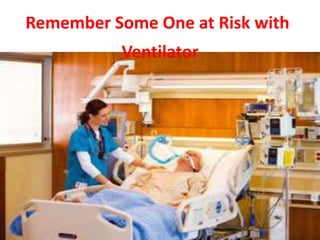
Remember Some One at Risk with
Ventilator
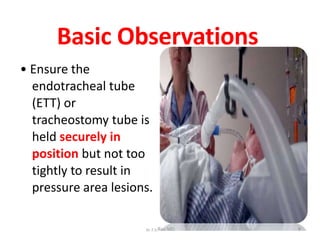
Basic Observations
• Ensure the
endotracheal tube
(ETT) or
tracheostomy tube is
held securely in
position but not too
tightly to result in
pressure area lesions.
Dr.T.V.
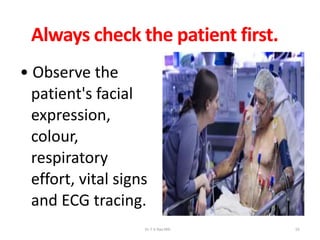
Always check the patient first.
• Observe the
patient's facial
expression,
colour,
respiratory
effort, vital signs
and ECG tracing.
Dr.T.V.Rao MD 10
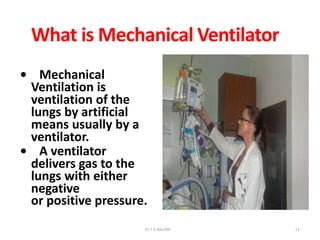
What is Mechanical Ventilator
• Mechanical
Ventilation is
ventilation of the
lungs by artificial
means usually by a
ventilator.
• A ventilator
delivers gas to the
lungs with either
negative
or positive pressure.
Dr.T.V.Rao MD 11
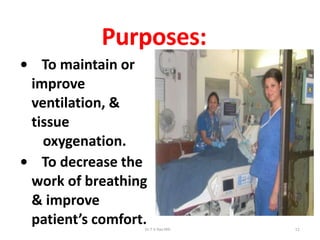
Purposes:
• To maintain or
improve
ventilation, &
tissue
oxygenation.
• To decrease the
work of breathing
& improve
patient’s comfort.Dr.T.V.Rao MD 12
VENTILATOR ASSOCIATED PNEUMONIA
(VAP)
• VAP is the leading cause of nosocomial
infection in the ICU and reflects 60% of
all deaths attributable to nosocomial
infections.
Pneumonia rates are much higher in
mechanically ventilated patients due to
the artificial airway, which increases the
opportunity for aspiration and
colonization. 14
Definition- "Know thy enemy"
Pneumonia that develops in someone who has been
intubated
-Typically in studies, patients are only included if
intubated greater than 48 hours
-Early onset= less than 4 days
-Late onset= greater than 4 days
Endotracheal intubation increases risk of developing
pneumonia by 6 to 21 fold
Accounts for 90% of infections in mechanically
ventilated patients
15
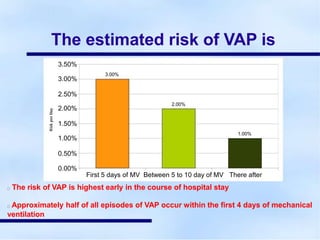
The estimated risk of VAP is
3.50%
3.00%
3.00%
2.50%
2.00%
2.00%
1.50%
1.00%
1.00%
0.50%
0.00%
First 5 days of MV Between 5 to 10 day of MV There after
The risk of VAP is highest early in the course of hospital stay
Approximately half of all episodes of VAP occur within the first 4 days of mechanical
ventilation
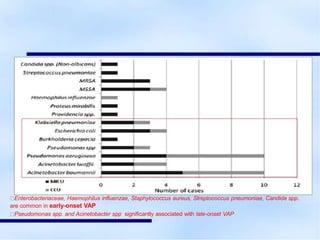
Enterobacteriaceae, Haemophilus influenzae, Staphylococcus aureus, Streptococcus pneumoniae, Candida spp.
are common in early-onset VAP
Pseudomonas spp. and Acinetobacter spp significantly associated with late-onset VAP
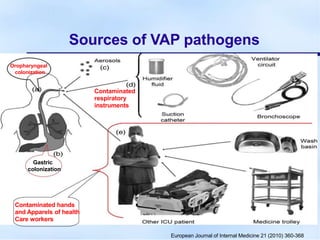
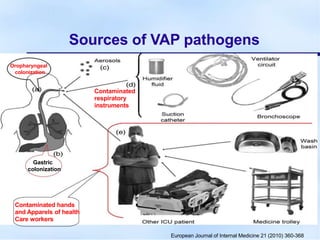
Sources of VAP pathogens
Oropharyngeal
colonization
Contaminated
respiratory
instruments
Gastric
colonization
Contaminated hands
and Apparels of health
Care workers
European Journal of Internal Medicine 21 (2010) 360-368
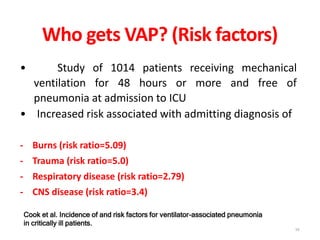
Who gets VAP? (Risk factors)
• Study of 1014 patients receiving mechanical
ventilation for 48 hours or more and free of
pneumonia at admission to ICU
• Increased risk associated with admitting diagnosis of
- Burns (risk ratio=5.09)
- Trauma (risk ratio=5.0)
- Respiratory disease (risk ratio=2.79)
- CNS disease (risk ratio=3.4)
Cook et al. Incidence of and risk factors for ventilator-associated pneumonia
in critically ill patients.
16
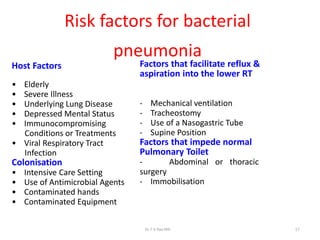
Risk factors for bacterial
pneumonia
Host Factors
• Elderly
• Severe Illness
• Underlying Lung Disease
• Depressed Mental Status
• Immunocompromising
Conditions or Treatments
• Viral Respiratory Tract
Infection
Colonisation
• Intensive Care Setting
• Use of Antimicrobial Agents
• Contaminated hands
• Contaminated Equipment
Factors that facilitate reflux &
aspiration into the lower RT
- Mechanical ventilation
- Tracheostomy
- Use of a Nasogastric Tube
- Supine Position
Factors that impede normal
Pulmonary Toilet
- Abdominal or thoracic
surgery
- Immobilisation
Dr.T.V.Rao MD 17
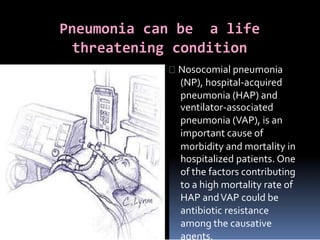
Pneumonia can be a life
threatening condition
Nosocomial pneumonia
(NP), hospital-acquired
pneumonia (HAP) and
ventilator-associated
pneumonia (VAP), is an
important cause of
morbidity and mortality in
hospitalized patients. One
of the factors contributing
to a high mortality rate of
HAP andVAP could be
antibiotic resistance
among the causative
agents.
Definition- Ventilator Associate
Pneumonia
Pneumonia that develops in someone who has
been intubated
-Typically in studies, patients are only included if
intubated greater than 48 hours
-Early onset= less than 4 days
-Late onset= greater than 4 days
Endotracheal intubation increases risk of
developing pneumonia by 6 to 21 fold
Accounts for 90% of infections in mechanically
ventilated patients
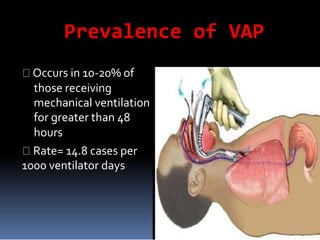
Prevalence of VAP
Occurs in 10-20% of
those receiving
mechanical ventilation
for greater than 48
hours
Rate= 14.8 cases per
1000 ventilator days
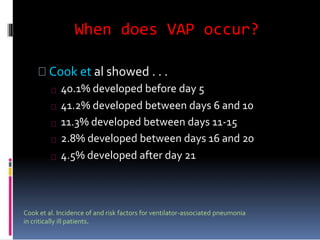
When does VAP occur?
Cook et al showed . . .
40.1% developed before day 5
41.2% developed between days 6 and 10
11.3% developed between days 11-15
2.8% developed between days 16 and 20
4.5% developed after day 21
Cook et al. Incidence of and risk factors for ventilator-associated pneumonia
in critically ill patients.
Resistant Bacteria leading Cause
MDR pathogens
19
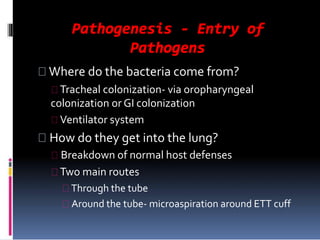
Pathogenesis - Entry of
Pathogens
Where do the bacteria come from?
Tracheal colonization- via oropharyngeal
colonization or GI colonization
Ventilator system
How do they get into the lung?
Breakdown of normal host defenses
Two main routes
Through the tube
Around the tube- microaspiration around ETT cuff
Etiology
Bacteria cause
most cases of
HAP, VAP,
and many
infections are
polymicrobial;
rates are
especially high in
patients with
ARDS
19
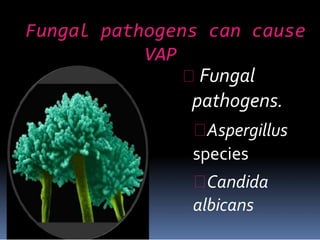
Fungal pathogens can cause
VAP
Fungal
pathogens.
Aspergillus
species
Candida
albicans
Causative Organisms
Early onset:
Hemophilus influenza
Streptococcus pneumoniae
Staphylococcus aureus (methicillin sensitive)
Escherichia coli
Klebsiella pneumoniae
Late onset:
Pseudomonas aeruginosa
Acinetobacter spp.
Staphylococcus aureus (methicillin resistant)
Most strains responsible for early onset VAP are
antibiotic sensitive. Those responsible for late
onset VAP are usually multiple antibiotic resistant
Am J Resp Crit Care (1995)
Antibiotic-resistant ???
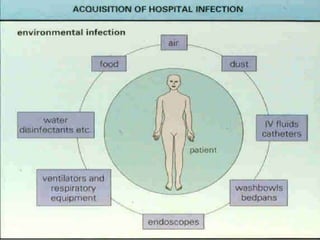
Sources of VAP pathogens
Oropharyngeal
colonization
Contaminated
respiratory
instruments
Gastric
colonization
Contaminated hands
and Apparels of health
Care workers
European Journal of Internal Medicine 21 (2010) 360-368
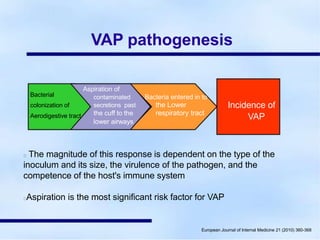
VAP pathogenesis
Aspiration of
Bacterial
colonization of
Aerodigestive tract
contaminated Bacteria entered in to
secretions past the Lower
the cuff to the respiratory tract
lower airways
Incidence of
VAP
The magnitude of this response is dependent on the type of the
inoculum and its size, the virulence of the pathogen, and the
competence of the host's immune system
Aspiration is the most significant risk factor for VAP
European Journal of Internal Medicine 21 (2010) 360-368
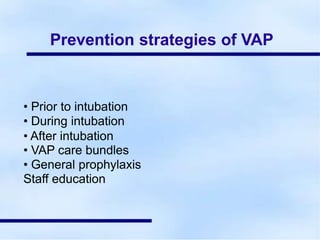
Prevention strategies of VAP
• Prior to intubation
• During intubation
• After intubation
• VAP care bundles
• General prophylaxis
Staff education
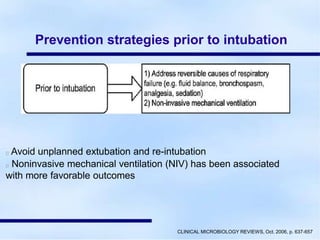
Prevention strategies prior to intubation
Avoid unplanned extubation and re-intubation
Noninvasive mechanical ventilation (NIV) has been associated
with more favorable outcomes
CLINICAL MICROBIOLOGY REVIEWS, Oct. 2006, p. 637-657
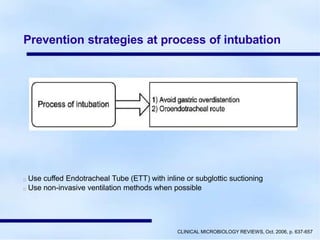
Prevention strategies at process of intubation
Use cuffed Endotracheal Tube (ETT) with inline or subglottic suctioning
Use non-invasive ventilation methods when possible
CLINICAL MICROBIOLOGY REVIEWS, Oct. 2006, p. 637-657
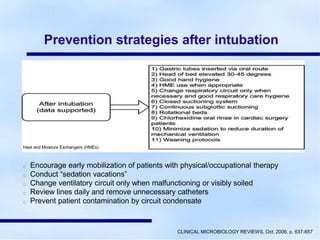
Prevention strategies after intubation
Heat and Moisture Exchangers (HMEs)
Encourage early mobilization of patients with physical/occupational therapy
Conduct “sedation vacations”
Change ventilatory circuit only when malfunctioning or visibly soiled
Review lines daily and remove unnecessary catheters
Prevent patient contamination by circuit condensate
CLINICAL MICROBIOLOGY REVIEWS, Oct. 2006, p. 637-657
The key components of a Ventilator Bundle are
Elevation of the head of the bed
Daily interruption of sedation and assessment of
readiness to extubate
Peptic Ulcer Disease Prophylaxis
Deep Venous Thrombosis (DVT) Prophylaxis
Daily Oral Care with Chlorhexidine
Hand hyigene
http://www.ihi.org/IHI/Topics/CriticalCare/IntensiveCare/Changes/ImplementtheVentilatorBundle.htm
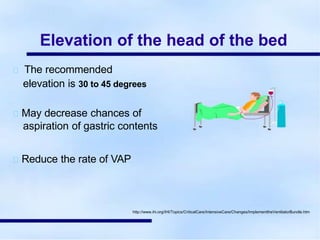
Elevation of the head of the bed
The recommended
elevation is 30 to 45 degrees
May decrease chances of
aspiration of gastric contents
Reduce the rate of VAP
http://www.ihi.org/IHI/Topics/CriticalCare/IntensiveCare/Changes/ImplementtheVentilatorBundle.htm
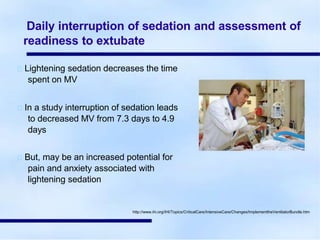
Daily interruption of sedation and assessment of
readiness to extubate
Lightening sedation decreases the time
spent on MV
In a study interruption of sedation leads
to decreased MV from 7.3 days to 4.9
days
But, may be an increased potential for
pain and anxiety associated with
lightening sedation
http://www.ihi.org/IHI/Topics/CriticalCare/IntensiveCare/Changes/ImplementtheVentilatorBundle.htm
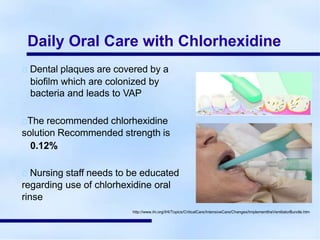
Daily Oral Care with Chlorhexidine
Dental plaques are covered by a
biofilm which are colonized by
bacteria and leads to VAP
The recommended chlorhexidine
solution Recommended strength is
0.12%
Nursing staff needs to be educated
regarding use of chlorhexidine oral
rinse
http://www.ihi.org/IHI/Topics/CriticalCare/IntensiveCare/Changes/ImplementtheVentilatorBundle.htm
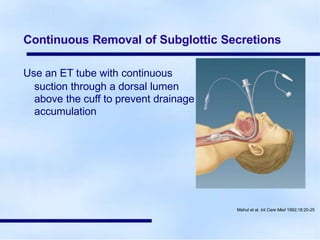
Continuous Removal of Subglottic Secretions
Use an ET tube with continuous
suction through a dorsal lumen
above the cuff to prevent drainage
accumulation
Mahul et al. Int Care Med 1992;18:20-25
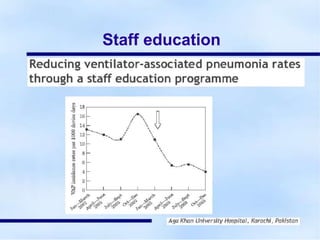
Staff education
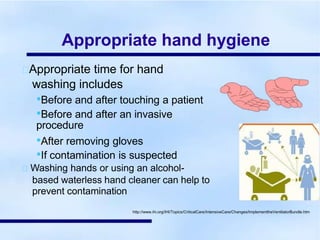
Appropriate hand hygiene
Appropriate time for hand
washing includes
•Before and after touching a patient
•Before and after an invasive
procedure
•After removing gloves
•If contamination is suspected
Washing hands or using an alcohol-
based waterless hand cleaner can help to
prevent contamination
http://www.ihi.org/IHI/Topics/CriticalCare/IntensiveCare/Changes/ImplementtheVentilatorBundle.htm
Handwashing
The greatest role
Suctioning mechanically ventilated
patients
• Hand washing before and after the procedure.
• Wear clean gloves to prevent
crosscontamination
• Use a sterile single-use catheter ; if it is not
possible then rinse catheter with sterile water
and store it in a dry, clean container between
uses and change the catheter every 8 -12 hours.
Dr.T.V.Rao MD 29
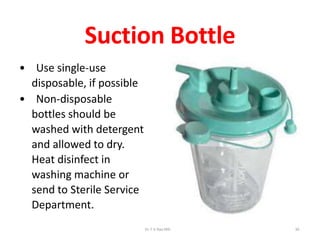
Suction Bottle
• Use single-use
disposable, if possible
• Non-disposable
bottles should be
washed with detergent
and allowed to dry.
Heat disinfect in
washing machine or
send to Sterile Service
Department.
Dr.T.V.Rao MD 30
Nebulizers
• Use sterile medications and fluids for nebulization
• Fill with sterile water only.
• Change and reprocess device between patients by
using sterilization or a high level disinfection or use
single-use disposable item.
• Small hand held nebulizers
— minimise unnecessary use
— between uses for the same patient disinfect,
rinse with sterile water, or air dry and store in a
clean, dry place
• Reprocess nebulizers daily
Dr.T.V.Rao MD 31
Humidifiers
• Clean and sterilize device between
patients.
• Fill with sterile water which must
be changed every 24 hours or sooner,
if necessary.
• Single-use disposable humidifiers
are available but they are expensive.
Dr.T.V.Rao MD 32
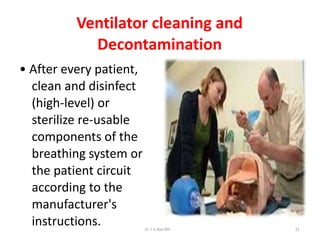
Ventilator cleaning and
Decontamination
• After every patient,
clean and disinfect
(high-level) or
sterilize re-usable
components of the
breathing system or
the patient circuit
according to the
manufacturer's
instructions. Dr.T.V.Rao MD 33
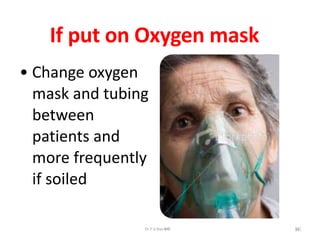
If put on Oxygen mask
• Change oxygen
mask and tubing
between
patients and
more frequently
if soiled
Dr.T.V.Rao MD 34
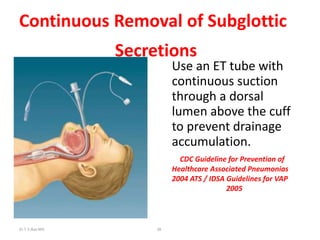
Continuous Removal of Subglottic
Secretions
Use an ET tube with
continuous suction
through a dorsal
lumen above the cuff
to prevent drainage
accumulation.
CDC Guideline for Prevention of
Healthcare Associated Pneumonias
2004 ATS / IDSA Guidelines for VAP
2005
Dr.T.V.Rao MD 38
HOB Elevation
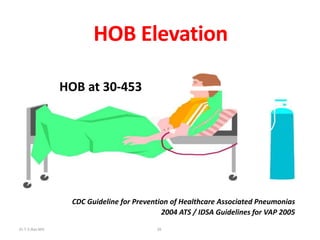
HOB at 30-453
CDC Guideline for Prevention of Healthcare Associated Pneumonias
2004 ATS / IDSA Guidelines for VAP 2005
Dr.T.V.Rao MD 39
HOB UP 30 DEGREES OR HIGHER
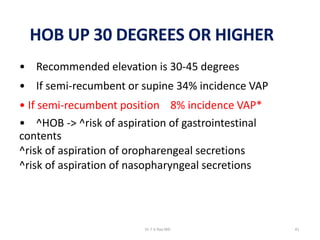
• Recommended elevation is 30-45 degrees
• If semi-recumbent or supine 34% incidence VAP
• If semi-recumbent position 8% incidence VAP*
• ^HOB -> ^risk of aspiration of gastrointestinal
contents
^risk of aspiration of oropharengeal secretions
^risk of aspiration of nasopharyngeal secretions
Dr.T.V.Rao MD 41
HOB UP 30 DEGREES OR HIGHER
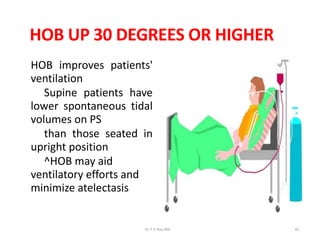
HOB improves patients'
ventilation
Supine patients have
lower spontaneous tidal
volumes on PS
than those seated in
upright position
^HOB may aid
ventilatory efforts and
minimize atelectasis
Dr.T.V.Rao MD 42
Suction of an Artificial Airway
• To maintain a patent airway
• • To promote improved gas exchange
• • To obtain tracheal aspirate specimens
• • To prevent effects of retained secretions eg.
infection, consolidation , atelectasis, increased
airway pressures or a blocked tube.
• • It is important to oxygenate before and after
suctioning
Dr.T.V.Rao MD 54
Compliance with Isolation
Precautions
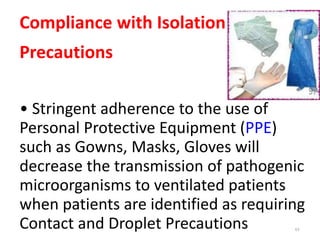
• Stringent adherence to the use of
Personal Protective Equipment (PPE)
such as Gowns, Masks, Gloves will
decrease the transmission of pathogenic
microorganisms to ventilated patients
when patients are identified as requiring
Contact and Droplet Precautions 63
Eye & Mouth care
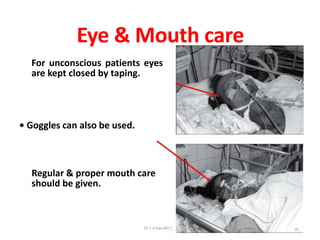
For unconscious patients eyes
are kept closed by taping.
• Goggles can also be used.
81
Regular & proper mouth care
should be given.
Dr.T.V.Rao MD ^
Monitoring for infection
• Color, consistency, and amount of
the sputum / secretions with each
suctioning should be observed.
• Fever and other parameters have
to closely observed for any other
infection. (central line, etc)
84
Centres for Disease and Control
The diagnosis of
pneumonia in mechanically
ventilated patients is
difficult, and still there is
no "gold-standard"
diagnostic method.
It is usually based on the
combination of
clinical, radiological, and
microbiological criteria
defined by Centres for
Disease and Control
(CDC)
Diagnosis is imprecise and usually
based on a Combination of
Clinical factors - fever or
hypothermia; change in secretions;
cough; apnea/ bradycardia; tachypnea
Microbiological factors - positive
cultures of blood/sputum/tracheal
aspirate/pleural fluids
CXR factors - new or changing
infiltrates
Clinical Strategy in
Diagnosis of VAP
Clinical Strategy
The presence of a new or progressive
radiographic infiltrate
At least two of three clinical features
fever greater than 38_C,
leukocytosis or leukopenia,
purulent secretions
Represents the most accurate
combination of criteria for starting
empiric antibiotic therapy.
41
Strategies in Diagnosis in VAP
are multifaceted
Clinical
Strategy
Bacteriologic
Strategy
Comparing
Diagnostic
Strategy
Summary
Clinical evidence suggests that early
use of appropriate empiric antibiotic
therapy improves patient outcomes in
terms of:
reduced mortality
reduced morbidity
reduced duration of hospital stay
Summary
● VAP is a common, morbid ICU complication of
ventilated patients
● Diagnosis of VAP is very challenging with high
inter-observer variability
● Focus on prevention
- Elevate head of the bed
- Regular oral care with antiseptic
- Daily sedation interruption and assessment of
readiness to extubate
- Regularly audit prevention practices and Staff
education
Required Attitudes
Being an effective team player.
Commitment to preventing HAIs
4
Ventilator associated infections VAP

Ventilator associated infections VAP

  • 1.
    AL-QUDS University Faculty ofHealth Proffessions Nursing Department VENTILATOR ASSOCIATED PNEUMONIA CARE AND PREVENTION . Prepared by:
  • 2.
    Introduction to PatientSafety: Definition • Patient safety is a discipline in the health care sector that applies safety science methods toward the goal of achieving a trustworthy system of health care delivery. Patient safety is also an attribute of health care systems; it minimizes the incidence and impact of, and maximizes recovery from, adverse events (Emanuel et al., 2008) . 2
  • 3.
    Introduction to PatientSafety: Background • Adverse medical events are widespread and preventable (Emanuel et ai., 2008) . • Much unnecessary harm is caused by health-care errors and system failures. - Ex. 1: Hospital acquired infections from poor hand-washing. - Ex. 2: Complications from administering the wrong medication. 3
  • 4.
    ICU patients • Sickestpatients (multiple diagnoses, multi-organ failure, immunocompromised, septic and trauma) • Move less • Malnourished • More obtunded (Glasgow coma scale) • Diabetics and Heart failure Dr.T.V.Rao MD 5
  • 5.
    ICU patients • Sickestpatients (multiple diagnoses, multi-organ failure, immunocompromised, septic and trauma) • Move less • Malnourished • More obtunded (Glasgow coma scale) • Diabetics and Heart failure Dr.T.V.Rao MD 6
  • 6.
    Remember Some Oneat Risk with Ventilator
  • 7.
    Basic Observations • Ensurethe endotracheal tube (ETT) or tracheostomy tube is held securely in position but not too tightly to result in pressure area lesions. Dr.T.V.
  • 8.
    Always check thepatient first. • Observe the patient's facial expression, colour, respiratory effort, vital signs and ECG tracing. Dr.T.V.Rao MD 10
  • 9.
    What is MechanicalVentilator • Mechanical Ventilation is ventilation of the lungs by artificial means usually by a ventilator. • A ventilator delivers gas to the lungs with either negative or positive pressure. Dr.T.V.Rao MD 11
  • 10.
    Purposes: • To maintainor improve ventilation, & tissue oxygenation. • To decrease the work of breathing & improve patient’s comfort.Dr.T.V.Rao MD 12
  • 11.
    VENTILATOR ASSOCIATED PNEUMONIA (VAP) •VAP is the leading cause of nosocomial infection in the ICU and reflects 60% of all deaths attributable to nosocomial infections. Pneumonia rates are much higher in mechanically ventilated patients due to the artificial airway, which increases the opportunity for aspiration and colonization. 14
  • 12.
    Definition- "Know thyenemy" Pneumonia that develops in someone who has been intubated -Typically in studies, patients are only included if intubated greater than 48 hours -Early onset= less than 4 days -Late onset= greater than 4 days Endotracheal intubation increases risk of developing pneumonia by 6 to 21 fold Accounts for 90% of infections in mechanically ventilated patients 15
  • 13.
    The estimated riskof VAP is 3.50% 3.00% 3.00% 2.50% 2.00% 2.00% 1.50% 1.00% 1.00% 0.50% 0.00% First 5 days of MV Between 5 to 10 day of MV There after The risk of VAP is highest early in the course of hospital stay Approximately half of all episodes of VAP occur within the first 4 days of mechanical ventilation
  • 14.
    Enterobacteriaceae, Haemophilus influenzae,Staphylococcus aureus, Streptococcus pneumoniae, Candida spp. are common in early-onset VAP Pseudomonas spp. and Acinetobacter spp significantly associated with late-onset VAP
  • 15.
    Sources of VAPpathogens Oropharyngeal colonization Contaminated respiratory instruments Gastric colonization Contaminated hands and Apparels of health Care workers European Journal of Internal Medicine 21 (2010) 360-368
  • 16.
    Who gets VAP?(Risk factors) • Study of 1014 patients receiving mechanical ventilation for 48 hours or more and free of pneumonia at admission to ICU • Increased risk associated with admitting diagnosis of - Burns (risk ratio=5.09) - Trauma (risk ratio=5.0) - Respiratory disease (risk ratio=2.79) - CNS disease (risk ratio=3.4) Cook et al. Incidence of and risk factors for ventilator-associated pneumonia in critically ill patients. 16
  • 17.
    Risk factors forbacterial pneumonia Host Factors • Elderly • Severe Illness • Underlying Lung Disease • Depressed Mental Status • Immunocompromising Conditions or Treatments • Viral Respiratory Tract Infection Colonisation • Intensive Care Setting • Use of Antimicrobial Agents • Contaminated hands • Contaminated Equipment Factors that facilitate reflux & aspiration into the lower RT - Mechanical ventilation - Tracheostomy - Use of a Nasogastric Tube - Supine Position Factors that impede normal Pulmonary Toilet - Abdominal or thoracic surgery - Immobilisation Dr.T.V.Rao MD 17
  • 18.
    Pneumonia can bea life threatening condition Nosocomial pneumonia (NP), hospital-acquired pneumonia (HAP) and ventilator-associated pneumonia (VAP), is an important cause of morbidity and mortality in hospitalized patients. One of the factors contributing to a high mortality rate of HAP andVAP could be antibiotic resistance among the causative agents.
  • 19.
    Definition- Ventilator Associate Pneumonia Pneumoniathat develops in someone who has been intubated -Typically in studies, patients are only included if intubated greater than 48 hours -Early onset= less than 4 days -Late onset= greater than 4 days Endotracheal intubation increases risk of developing pneumonia by 6 to 21 fold Accounts for 90% of infections in mechanically ventilated patients
  • 20.
    Prevalence of VAP Occursin 10-20% of those receiving mechanical ventilation for greater than 48 hours Rate= 14.8 cases per 1000 ventilator days
  • 21.
    When does VAPoccur? Cook et al showed . . . 40.1% developed before day 5 41.2% developed between days 6 and 10 11.3% developed between days 11-15 2.8% developed between days 16 and 20 4.5% developed after day 21 Cook et al. Incidence of and risk factors for ventilator-associated pneumonia in critically ill patients.
  • 23.
    Resistant Bacteria leadingCause MDR pathogens 19
  • 24.
    Pathogenesis - Entryof Pathogens Where do the bacteria come from? Tracheal colonization- via oropharyngeal colonization or GI colonization Ventilator system How do they get into the lung? Breakdown of normal host defenses Two main routes Through the tube Around the tube- microaspiration around ETT cuff
  • 25.
    Etiology Bacteria cause most casesof HAP, VAP, and many infections are polymicrobial; rates are especially high in patients with ARDS 19
  • 26.
    Fungal pathogens cancause VAP Fungal pathogens. Aspergillus species Candida albicans
  • 27.
    Causative Organisms Early onset: Hemophilusinfluenza Streptococcus pneumoniae Staphylococcus aureus (methicillin sensitive) Escherichia coli Klebsiella pneumoniae Late onset: Pseudomonas aeruginosa Acinetobacter spp. Staphylococcus aureus (methicillin resistant) Most strains responsible for early onset VAP are antibiotic sensitive. Those responsible for late onset VAP are usually multiple antibiotic resistant Am J Resp Crit Care (1995)
  • 28.
  • 29.
    Sources of VAPpathogens Oropharyngeal colonization Contaminated respiratory instruments Gastric colonization Contaminated hands and Apparels of health Care workers European Journal of Internal Medicine 21 (2010) 360-368
  • 30.
    VAP pathogenesis Aspiration of Bacterial colonizationof Aerodigestive tract contaminated Bacteria entered in to secretions past the Lower the cuff to the respiratory tract lower airways Incidence of VAP The magnitude of this response is dependent on the type of the inoculum and its size, the virulence of the pathogen, and the competence of the host's immune system Aspiration is the most significant risk factor for VAP European Journal of Internal Medicine 21 (2010) 360-368
  • 31.
    Prevention strategies ofVAP • Prior to intubation • During intubation • After intubation • VAP care bundles • General prophylaxis Staff education
  • 32.
    Prevention strategies priorto intubation Avoid unplanned extubation and re-intubation Noninvasive mechanical ventilation (NIV) has been associated with more favorable outcomes CLINICAL MICROBIOLOGY REVIEWS, Oct. 2006, p. 637-657
  • 33.
    Prevention strategies atprocess of intubation Use cuffed Endotracheal Tube (ETT) with inline or subglottic suctioning Use non-invasive ventilation methods when possible CLINICAL MICROBIOLOGY REVIEWS, Oct. 2006, p. 637-657
  • 34.
    Prevention strategies afterintubation Heat and Moisture Exchangers (HMEs) Encourage early mobilization of patients with physical/occupational therapy Conduct “sedation vacations” Change ventilatory circuit only when malfunctioning or visibly soiled Review lines daily and remove unnecessary catheters Prevent patient contamination by circuit condensate CLINICAL MICROBIOLOGY REVIEWS, Oct. 2006, p. 637-657
  • 35.
    The key componentsof a Ventilator Bundle are Elevation of the head of the bed Daily interruption of sedation and assessment of readiness to extubate Peptic Ulcer Disease Prophylaxis Deep Venous Thrombosis (DVT) Prophylaxis Daily Oral Care with Chlorhexidine Hand hyigene http://www.ihi.org/IHI/Topics/CriticalCare/IntensiveCare/Changes/ImplementtheVentilatorBundle.htm
  • 36.
    Elevation of thehead of the bed The recommended elevation is 30 to 45 degrees May decrease chances of aspiration of gastric contents Reduce the rate of VAP http://www.ihi.org/IHI/Topics/CriticalCare/IntensiveCare/Changes/ImplementtheVentilatorBundle.htm
  • 37.
    Daily interruption ofsedation and assessment of readiness to extubate Lightening sedation decreases the time spent on MV In a study interruption of sedation leads to decreased MV from 7.3 days to 4.9 days But, may be an increased potential for pain and anxiety associated with lightening sedation http://www.ihi.org/IHI/Topics/CriticalCare/IntensiveCare/Changes/ImplementtheVentilatorBundle.htm
  • 38.
    Daily Oral Carewith Chlorhexidine Dental plaques are covered by a biofilm which are colonized by bacteria and leads to VAP The recommended chlorhexidine solution Recommended strength is 0.12% Nursing staff needs to be educated regarding use of chlorhexidine oral rinse http://www.ihi.org/IHI/Topics/CriticalCare/IntensiveCare/Changes/ImplementtheVentilatorBundle.htm
  • 39.
    Continuous Removal ofSubglottic Secretions Use an ET tube with continuous suction through a dorsal lumen above the cuff to prevent drainage accumulation Mahul et al. Int Care Med 1992;18:20-25
  • 40.
  • 41.
    Appropriate hand hygiene Appropriatetime for hand washing includes •Before and after touching a patient •Before and after an invasive procedure •After removing gloves •If contamination is suspected Washing hands or using an alcohol- based waterless hand cleaner can help to prevent contamination http://www.ihi.org/IHI/Topics/CriticalCare/IntensiveCare/Changes/ImplementtheVentilatorBundle.htm
  • 42.
  • 43.
    Suctioning mechanically ventilated patients •Hand washing before and after the procedure. • Wear clean gloves to prevent crosscontamination • Use a sterile single-use catheter ; if it is not possible then rinse catheter with sterile water and store it in a dry, clean container between uses and change the catheter every 8 -12 hours. Dr.T.V.Rao MD 29
  • 44.
    Suction Bottle • Usesingle-use disposable, if possible • Non-disposable bottles should be washed with detergent and allowed to dry. Heat disinfect in washing machine or send to Sterile Service Department. Dr.T.V.Rao MD 30
  • 45.
    Nebulizers • Use sterilemedications and fluids for nebulization • Fill with sterile water only. • Change and reprocess device between patients by using sterilization or a high level disinfection or use single-use disposable item. • Small hand held nebulizers — minimise unnecessary use — between uses for the same patient disinfect, rinse with sterile water, or air dry and store in a clean, dry place • Reprocess nebulizers daily Dr.T.V.Rao MD 31
  • 46.
    Humidifiers • Clean andsterilize device between patients. • Fill with sterile water which must be changed every 24 hours or sooner, if necessary. • Single-use disposable humidifiers are available but they are expensive. Dr.T.V.Rao MD 32
  • 47.
    Ventilator cleaning and Decontamination •After every patient, clean and disinfect (high-level) or sterilize re-usable components of the breathing system or the patient circuit according to the manufacturer's instructions. Dr.T.V.Rao MD 33
  • 48.
    If put onOxygen mask • Change oxygen mask and tubing between patients and more frequently if soiled Dr.T.V.Rao MD 34
  • 49.
    Continuous Removal ofSubglottic Secretions Use an ET tube with continuous suction through a dorsal lumen above the cuff to prevent drainage accumulation. CDC Guideline for Prevention of Healthcare Associated Pneumonias 2004 ATS / IDSA Guidelines for VAP 2005 Dr.T.V.Rao MD 38
  • 50.
    HOB Elevation HOB at30-453 CDC Guideline for Prevention of Healthcare Associated Pneumonias 2004 ATS / IDSA Guidelines for VAP 2005 Dr.T.V.Rao MD 39
  • 51.
    HOB UP 30DEGREES OR HIGHER • Recommended elevation is 30-45 degrees • If semi-recumbent or supine 34% incidence VAP • If semi-recumbent position 8% incidence VAP* • ^HOB -> ^risk of aspiration of gastrointestinal contents ^risk of aspiration of oropharengeal secretions ^risk of aspiration of nasopharyngeal secretions Dr.T.V.Rao MD 41
  • 52.
    HOB UP 30DEGREES OR HIGHER HOB improves patients' ventilation Supine patients have lower spontaneous tidal volumes on PS than those seated in upright position ^HOB may aid ventilatory efforts and minimize atelectasis Dr.T.V.Rao MD 42
  • 53.
    Suction of anArtificial Airway • To maintain a patent airway • • To promote improved gas exchange • • To obtain tracheal aspirate specimens • • To prevent effects of retained secretions eg. infection, consolidation , atelectasis, increased airway pressures or a blocked tube. • • It is important to oxygenate before and after suctioning Dr.T.V.Rao MD 54
  • 54.
    Compliance with Isolation Precautions •Stringent adherence to the use of Personal Protective Equipment (PPE) such as Gowns, Masks, Gloves will decrease the transmission of pathogenic microorganisms to ventilated patients when patients are identified as requiring Contact and Droplet Precautions 63
  • 55.
    Eye & Mouthcare For unconscious patients eyes are kept closed by taping. • Goggles can also be used. 81 Regular & proper mouth care should be given. Dr.T.V.Rao MD ^
  • 56.
    Monitoring for infection •Color, consistency, and amount of the sputum / secretions with each suctioning should be observed. • Fever and other parameters have to closely observed for any other infection. (central line, etc) 84
  • 57.
    Centres for Diseaseand Control The diagnosis of pneumonia in mechanically ventilated patients is difficult, and still there is no "gold-standard" diagnostic method. It is usually based on the combination of clinical, radiological, and microbiological criteria defined by Centres for Disease and Control (CDC)
  • 58.
    Diagnosis is impreciseand usually based on a Combination of Clinical factors - fever or hypothermia; change in secretions; cough; apnea/ bradycardia; tachypnea Microbiological factors - positive cultures of blood/sputum/tracheal aspirate/pleural fluids CXR factors - new or changing infiltrates
  • 59.
    Clinical Strategy in Diagnosisof VAP Clinical Strategy The presence of a new or progressive radiographic infiltrate At least two of three clinical features fever greater than 38_C, leukocytosis or leukopenia, purulent secretions Represents the most accurate combination of criteria for starting empiric antibiotic therapy. 41
  • 60.
    Strategies in Diagnosisin VAP are multifaceted Clinical Strategy Bacteriologic Strategy Comparing Diagnostic Strategy
  • 61.
    Summary Clinical evidence suggeststhat early use of appropriate empiric antibiotic therapy improves patient outcomes in terms of: reduced mortality reduced morbidity reduced duration of hospital stay
  • 62.
    Summary ● VAP isa common, morbid ICU complication of ventilated patients ● Diagnosis of VAP is very challenging with high inter-observer variability ● Focus on prevention - Elevate head of the bed - Regular oral care with antiseptic - Daily sedation interruption and assessment of readiness to extubate - Regularly audit prevention practices and Staff education
  • 63.
    Required Attitudes Being aneffective team player. Commitment to preventing HAIs 4