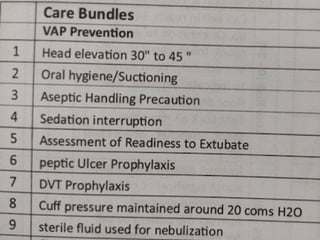
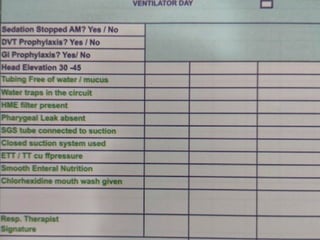
Ventilator Associated Pneumonia
Dr Mohammad Abbas
MBBS,MD, DrNB (Critical Care
Medicine)
Kauvery Hospital, Bangalore
CASE
•A 52-year-old female admitted with left pontine infarct was being
ventilated for Type 1 respiratory failure for the past 6 days.
•She was not on any antibiotics and seemed to be improving.
•She becomes febrile overnight (102 F
ᴼ ).
•How will you approach this patient?
CASE CONTINUED..
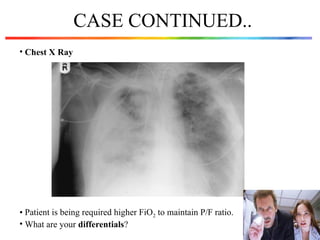
• Chest X Ray
• Patient is being required higher FiO2 to maintain P/F ratio.
• What are your differentials?
What is it?
• On Ventilator
• More than 6 days
• New onset fever
• New changes in the LUNG
Provisional diagnosis - VAP
DEFINITION
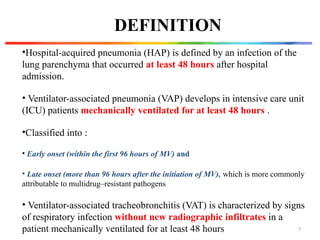
•Hospital-acquired pneumonia (HAP) is defined by an infection of the
lung parenchyma that occurred at least 48 hours after hospital
admission.
• Ventilator-associated pneumonia (VAP) develops in intensive care unit
(ICU) patients mechanically ventilated for at least 48 hours .
•Classified into :
• Early onset (within the first 96 hours of MV) and
• Late onset (more than 96 hours after the initiation of MV), which is more commonly
attributable to multidrug–resistant pathogens
• Ventilator-associated tracheobronchitis (VAT) is characterized by signs
of respiratory infection without new radiographic infiltrates in a
patient mechanically ventilated for at least 48 hours 7
Ventilator-Associated Pneumonia
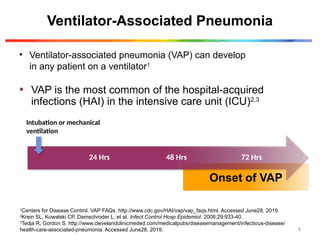
• Ventilator-associated pneumonia (VAP) can develop
in any patient on a ventilator1
1
Centers for Disease Control. VAP FAQs. http://www.cdc.gov/HAI/vap/vap_faqs.html. Accessed June28, 2019.
2
Krein SL, Kowalski CP, Damschroder L, et al. Infect Control Hosp Epidemiol. 2008;29:933-40.
3
Tedja R, Gordon S. http://www.clevelandclinicmeded.com/medicalpubs/diseasemanagement/infectious-disease/
health-care-associated-pneumonia. Accessed June28, 2019.
• VAP is the most common of the hospital-acquired
infections (HAI) in the intensive care unit (ICU)2,3
Onset of VAP
Intubation or mechanical
ventilation
24 Hrs 48 Hrs 72 Hrs
8
Ventilator-Associated Pneumonia:
Characterization
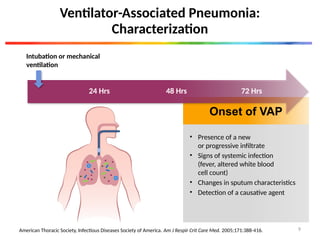
• Presence of a new
or progressive infiltrate
• Signs of systemic infection
(fever, altered white blood
cell count)
• Changes in sputum characteristics
• Detection of a causative agent
Onset of VAP
Intubation or mechanical
ventilation
24 Hrs 48 Hrs 72 Hrs
American Thoracic Society, Infectious Diseases Society of America. Am J Respir Crit Care Med. 2005;171:388-416. 9
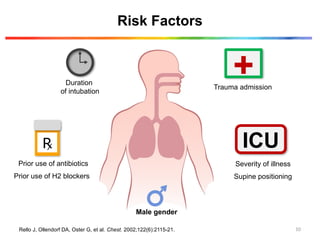
Risk Factors
Rello J, Ollendorf DA, Oster G, et al. Chest. 2002;122(6):2115-21.
Duration
of intubation
Male gender
Trauma admission
Severity of illness
Prior use of antibiotics
Supine positioning
Prior use of H2 blockers
℞ ICU
+
10
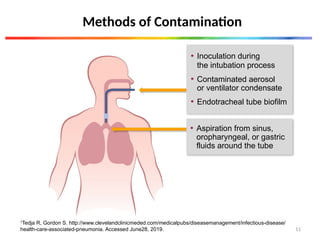
Methods of Contamination
1
Tedja R, Gordon S. http://www.clevelandclinicmeded.com/medicalpubs/diseasemanagement/infectious-disease/
health-care-associated-pneumonia. Accessed June28, 2019.
• Inoculation during
the intubation process
• Contaminated aerosol
or ventilator condensate
• Endotracheal tube biofilm
• Aspiration from sinus,
oropharyngeal, or gastric
fluids around the tube
11
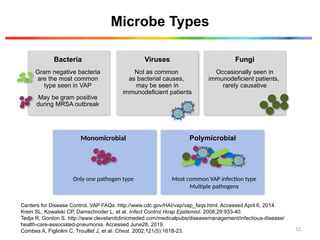
Microbe Types
Polymicrobial
Centers for Disease Control. VAP FAQs. http://www.cdc.gov/HAI/vap/vap_faqs.html. Accessed April 6, 2014.
Krein SL, Kowalski CP, Damschroder L, et al. Infect Control Hosp Epidemiol. 2008;29:933-40.
Tedja R, Gordon S. http://www.clevelandclinicmeded.com/medicalpubs/diseasemanagement/infectious-disease/
health-care-associated-pneumonia. Accessed June28, 2019.
Combes A, Figliolini C, Trouillet J, et al. Chest. 2002;121(5):1618-23.
Bacteria
Gram negative bacteria
are the most common
type seen in VAP
May be gram positive
during MRSA outbreak
Viruses
Not as common
as bacterial causes,
may be seen in
immunodeficient patients
Fungi
Occasionally seen in
immunodeficient patients,
rarely causative
Monomicrobial
Only one pathogen type Most common VAP infection type
Multiple pathogens
12
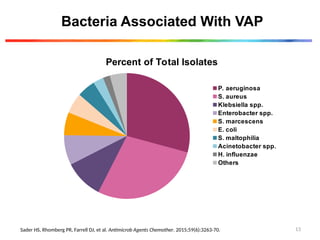
Bacteria Associated With VAP
Percent of Total Isolates
P. aeruginosa
S. aureus
Klebsiella spp.
Enterobacter spp.
S. marcescens
E. coli
S. maltophilia
Acinetobacter spp.
H. influenzae
Others
Sader HS, Rhomberg PR, Farrell DJ, et al. Antimicrob Agents Chemother. 2015;59(6):3263-70. 13
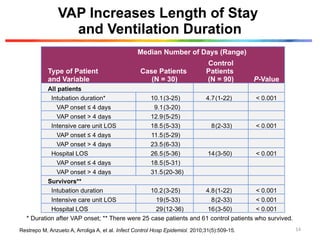
VAP Increases Length of Stay
and Ventilation Duration
Restrepo M, Anzueto A, Arroliga A, et al. Infect Control Hosp Epidemiol. 2010;31(5):509-15.
Median Number of Days (Range)
Type of Patient
and Variable
Case Patients
(N = 30)
Control
Patients
(N = 90) P-Value
All patients
Intubation duration* 10.1(3-25) 4.7(1-22) < 0.001
VAP onset ≤ 4 days 9.1(3-20)
VAP onset > 4 days 12.9(5-25)
Intensive care unit LOS 18.5(5-33) 8(2-33) < 0.001
VAP onset ≤ 4 days 11.5(5-29)
VAP onset > 4 days 23.5(6-33)
Hospital LOS 26.5(5-36) 14(3-50) < 0.001
VAP onset ≤ 4 days 18.5(5-31)
VAP onset > 4 days 31.5(20-36)
Survivors**
Intubation duration 10.2(3-25) 4.8(1-22) < 0.001
Intensive care unit LOS 19(5-33) 8(2-33) < 0.001
Hospital LOS 29(12-36) 16(3-50) < 0.001
* Duration after VAP onset; ** There were 25 case patients and 61 control patients who survived.
14
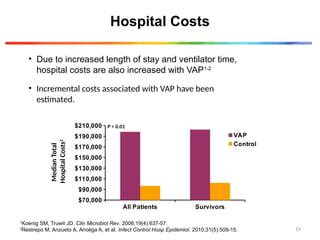
Hospital Costs
• Due to increased length of stay and ventilator time,
hospital costs are also increased with VAP1-2
• Incremental costs associated with VAP have been
estimated.
1
Koenig SM, Truwit JD. Clin Microbiol Rev. 2006;19(4):637-57.
2
Restrepo M, Anzueto A, Arroliga A, et al. Infect Control Hosp Epidemiol. 2010;31(5):509-15.
All Patients Survivors
$70,000
$90,000
$110,000
$130,000
$150,000
$170,000
$190,000
$210,000
VAP
Control
Median
Total
Hospital
Costs
2
P < 0.01
15
EPIDEMIOLOGY
16
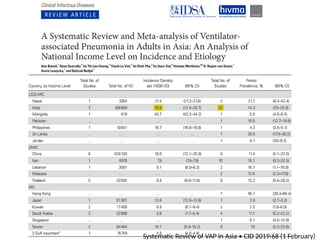
Systematic Review of VAP in Asia • CID 2019:68 (1 February)
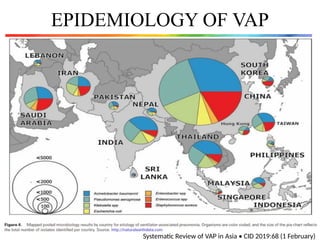
EPIDEMIOLOGY OF VAP
Systematic Review of VAP in Asia • CID 2019:68 (1 February)
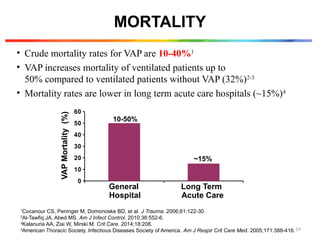
MORTALITY
• Crude mortality rates for VAP are 10-40%1
• VAP increases mortality of ventilated patients up to
50% compared to ventilated patients without VAP (32%)2-3
• Mortality rates are lower in long term acute care hospitals (~15%)4
1
Cocanour CS, Peninger M, Domonoske BD, et al. J Trauma. 2006;61:122-30.
2
Al-Tawfiq JA, Abed MS. Am J Infect Control. 2010;38:552-6.
3
Kalanuria AA, Ziai W, Mirski M. Crit Care. 2014;18:208.
4
American Thoracic Society, Infectious Diseases Society of America. Am J Respir Crit Care Med. 2005;171:388-416.19
10-50%
~15%
VAP
Mortality
(%)
Long Term
Acute Care
General
Hospital
0
10
20
30
40
50
60
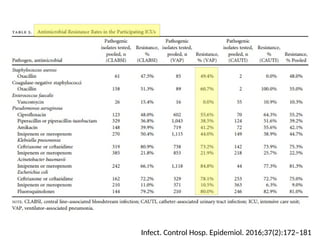
Infect. Control Hosp. Epidemiol. 2016;37(2):172–181
GUIDELINES AND
RECOMMENDATIONS
21
Guidelines
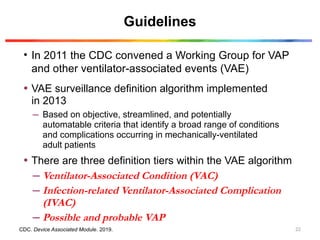
• In 2011 the CDC convened a Working Group for VAP
and other ventilator-associated events (VAE)
CDC. Device Associated Module. 2019.
• VAE surveillance definition algorithm implemented
in 2013
– Based on objective, streamlined, and potentially
automatable criteria that identify a broad range of conditions
and complications occurring in mechanically-ventilated
adult patients
• There are three definition tiers within the VAE algorithm
– Ventilator-Associated Condition (VAC)
– Infection-related Ventilator-Associated Complication
(IVAC)
– Possible and probable VAP
22
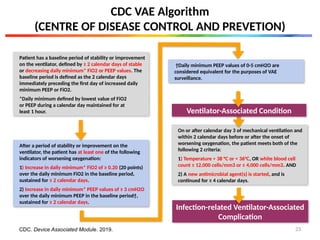
CDC VAE Algorithm
(CENTRE OF DISEASE CONTROL AND PREVETION)
CDC. Device Associated Module. 2019.
Infection-related Ventilator-Associated
Complication
23
After a period of stability or improvement on the
ventilator, the patient has at least one of the following
indicators of worsening oxygenation:
1) Increase in daily minimum* FiO2 of ≥ 0.20 (20 points)
over the daily minimum FiO2 in the baseline period,
sustained for ≥ 2 calendar days.
2) Increase in daily minimum* PEEP values of ≥ 3 cmH2O
over the daily minimum PEEP in the baseline period†,
sustained for ≥ 2 calendar days.
Patient has a baseline period of stability or improvement
on the ventilator, defined by ≥ 2 calendar days of stable
or decreasing daily minimum* FiO2 or PEEP values. The
baseline period is defined as the 2 calendar days
immediately preceding the first day of increased daily
minimum PEEP or FiO2.
*Daily minimum defined by lowest value of FiO2
or PEEP during a calendar day maintained for at
least 1 hour.
On or after calendar day 3 of mechanical ventilation and
within 2 calendar days before or after the onset of
worsening oxygenation, the patient meets both of the
following 2 criteria:
1) Temperature > 38 °C or < 36°C, OR white blood cell
count ≥ 12,000 cells/mm3 or ≤ 4,000 cells/mm3. AND
2) A new antimicrobial agent(s) is started, and is
continued for ≥ 4 calendar days.
Ventilator-Associated Condition
†Daily minimum PEEP values of 0-5 cmH2O are
considered equivalent for the purposes of VAE
surveillance.
Possible Ventilator-Associated Pneumonia
On or after calendar day 3 of mechanical ventilation
and within 2 calendar days before or after the onset
of worsening oxygenation, ONE of the following
criteria is met:
1) Criterion 1: Positive culture of one of the following specimens, meeting quantitative or semi-quantitative thresholds as outlined in pr
requirement for purulent respiratory secretions:
Endotracheal aspirate- ≥ 105
CFU/mL or corresponding semi-quantitative result;
bronchoalveolar lavage- ≥ 104
CFU/mL or corresponding semi-quantitative result;
lung tissue- ≥ 104
CFU/g or corresponding
semi-quantitative result;
protected specimen brush -≥ 103
CFU/mL or corresponding semi-quantitative
result
2) Criterion 2: Purulent respiratory secretions
(defined as secretions from the lungs, bronchi,
or trachea that contain > 25 neutrophils and
< 10 squamous epithelial cells per low power field
[lpf, x100]) plus organism identified from one of the following specimens (to include qualitative culture,
or quantitative/semi-quantitative culture without
sufficient growth to meet criterion #1):
Sputum, endotracheal aspirate, bronchoalveolar
lavage, lung tissue, protected specimen brush
3) Criterion 3: One of the fo
Organism identified from p
of chest tube and NOT from
1) abscess formation or foc
intense neutrophil accumu
and alveoli; 2) evidence of
by fungi (hyphae, pseudohy
3) evidence of infection wit
on respiratory secretions fo
CDC VAE Algorithm
CDC. Device Associated Module. 2019.
Infection-related Ventilator-Associated Complication
24
Diagnostics and Point-of-Care
25
Diagnostic Methods
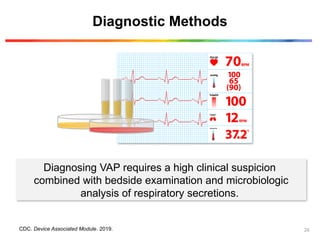
Diagnosing VAP requires a high clinical suspicion
combined with bedside examination and microbiologic
analysis of respiratory secretions.
CDC. Device Associated Module. 2019. 26
VAP Clinical Criteria
Johanson
Criteria
Presence of a new or progressive radiographic infiltrate
Plus at least two of three clinical features:
• Fever > 38ºC
• Leukocytosis or leukopenia
• Purulent secretions
Koenig SM, Truwit JD. Clin Microbiol Rev. 2006;19(4):637-57.
Rea-Neto A, Cherif M, Youssef N, et al. Critical Care. 2008;12:R56.
Accepted clinical criteria for pneumonia
are of limited diagnostic value in definitively
establishing the presence of VAP.
27
VAP Clinical Criteria
ARDS = acute respiratory distress syndrome
Rea-Neto A, Cherif M, Youssef N, et al. Critical Care. 2008;12:R56
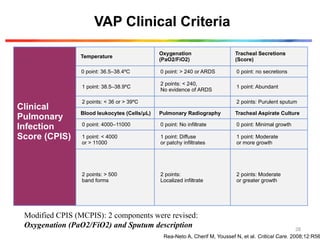
VAP Score > 6
Clinical
Pulmonary
Infection
Score (CPIS)
Temperature
Oxygenation
(PaO2/FiO2)
Tracheal Secretions
(Score)
0 point: 36.5–38.4ºC 0 point: > 240 or ARDS 0 point: no secretions
1 point: 38.5–38.9ºC
2 points: < 240,
No evidence of ARDS
1 point: Abundant
2 points: < 36 or > 39ºC 2 points: Purulent sputum
Blood leukocytes (Cells/μL) Pulmonary Radiography Tracheal Aspirate Culture
0 point: 4000–11000 0 point: No infiltrate 0 point: Minimal growth
1 point: < 4000
or > 11000
1 point: Diffuse
or patchy infiltrates
1 point: Moderate
or more growth
2 points: > 500
band forms
2 points:
Localized infiltrate
2 points: Moderate
or greater growth
28
Modified CPIS (MCPIS): 2 components were revised:
Oxygenation (PaO2/FiO2) and Sputum description
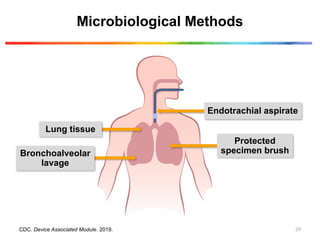
Microbiological Methods
Bronchoalveolar
lavage
Protected
specimen brush
Endotrachial aspirate
Lung tissue
CDC. Device Associated Module. 2019. 29
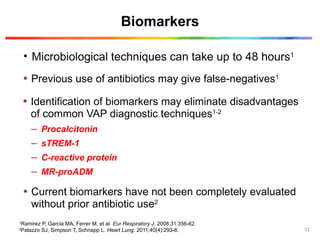
Biomarkers
• Microbiological techniques can take up to 48 hours1
• Current biomarkers have not been completely evaluated
without prior antibiotic use2
• Previous use of antibiotics may give false-negatives1
• Identification of biomarkers may eliminate disadvantages
of common VAP diagnostic techniques1-2
– Procalcitonin
– sTREM-1
– C-reactive protein
– MR-proADM
1
Ramirez P, Garcia MA, Ferrer M, et al. Eur Respiratory J. 2008;31:356-62.
2
Palazzo SJ, Simpson T, Schnapp L. Heart Lung. 2011;40(4):293-8. 31
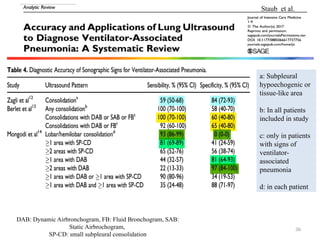
36
DAB: Dynamic Airbronchogram, FB: Fluid Bronchogram, SAB:
Static Airbrochogram,
SP-CD: small subpleural consolidation
a: Subpleural
hypoechogenic or
tissue-like area
b: In all patients
included in study
c: only in patients
with signs of
ventilator-
associated
pneumonia
d: in each patient
Staub et al.
Treatment of VAP
• Initial antibiotic choice
• Presence of shock
• Possible risk factors for MDR pathogens.
• MDR risk factors:
• Immunosupressed patient
• Hospital stay >/=5 days currently
• Antibiotic use in prior 90 days.
• High frequency of resistance in ICU (>25%).
• HAP risk factors.
Treatment of VAP issues
• Antibiotic choice
• Single antibiotic Vs combination.
• Antibiotics with good lung penetration.
• Short duration Vs long duration.
• Role of biomarkers and cultures in de-escalation.
• Other modes of administration.
TREATMENT
• Recommendations (IDSA 2016):
• Should Selection of an Empiric Antibiotic Regimen for
VAP Be Guided by Local Antibiotic-Resistance data?
• TREATMENT OF VAP
• Hospitals regularly generate and disseminate a local
antibiogram, specific to their intensive care population(s) if
possible.
• Empiric treatment regimens by the local distribution of
pathogens associated with VAP and their antimicrobial
susceptibilities.
IDSA 2016
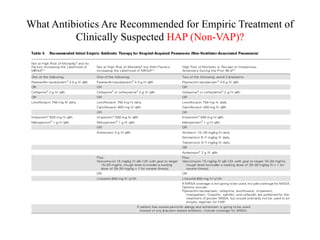
What Antibiotics Are Recommended for Empiric Treatment of
Clinically Suspected HAP (Non-VAP)?
ROLE OF INHALED ANTIBIOTIC THERAPY
• Should Patients With VAP Due to Gram-Negative Bacilli Be
Treated With a Combination of Inhaled and Systemic
Antibiotics, or Systemic Antibiotics Alone?
• VAP due to gram-negative bacilli that are susceptible to only
aminoglycosides or polymyxins (colistin or polymyxin B), use
both inhaled and systemic antibiotics, rather than systemic
antibiotics alone.
IDSA 2016
LENGTH OF THERAPY
• Should Patients With VAP Receive 7 Days or 8–15
Days of Antibiotic Therapy?
• Patients with VAP, 7-day course of antimicrobial
therapy rather than a longer duration
IDSA 2016
DE-ESCALATION
• Should Antibiotic Therapy Be De-escalated or Fixed
in Patients With HAP/VAP?
• Patients with HAP/VAP, antibiotic therapy be de-
escalated rather than fixed
IDSA 2016
DE-ESCALATION
• Should Discontinuation of Antibiotic Therapy Be Based Upon
PCT Levels Plus Clinical Criteria or Clinical Criteria Alone
in Patients With HAP/VAP?
• Use PCT levels plus clinical criteria to guide the
discontinuation of antibiotic therapy, rather than clinical
criteria alone
IDSA 2016
PREVENTION
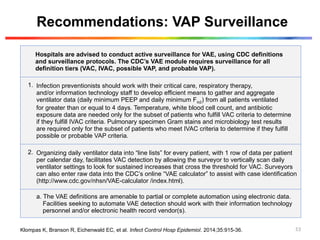
Recommendations: VAP Surveillance
Hospitals are advised to conduct active surveillance for VAE, using CDC definitions
and surveillance protocols. The CDC’s VAE module requires surveillance for all
definition tiers (VAC, IVAC, possible VAP, and probable VAP).
1. Infection preventionists should work with their critical care, respiratory therapy,
and/or information technology staff to develop efficient means to gather and aggregate
ventilator data (daily minimum PEEP and daily minimum Fio2) from all patients ventilated
for greater than or equal to 4 days. Temperature, white blood cell count, and antibiotic
exposure data are needed only for the subset of patients who fulfill VAC criteria to determine
if they fulfill IVAC criteria. Pulmonary specimen Gram stains and microbiology test results
are required only for the subset of patients who meet IVAC criteria to determine if they fulfill
possible or probable VAP criteria.
2. Organizing daily ventilator data into “line lists” for every patient, with 1 row of data per patient
per calendar day, facilitates VAC detection by allowing the surveyor to vertically scan daily
ventilator settings to look for sustained increases that cross the threshold for VAC. Surveyors
can also enter raw data into the CDC’s online “VAE calculator” to assist with case identification
(http://www.cdc.gov/nhsn/VAE-calculator /index.html).
a. The VAE definitions are amenable to partial or complete automation using electronic data.
Facilities seeking to automate VAE detection should work with their information technology
personnel and/or electronic health record vendor(s).
Klompas K, Branson R, Eichenwald EC, et al. Infect Control Hosp Epidemiol. 2014;35:915-36. 53
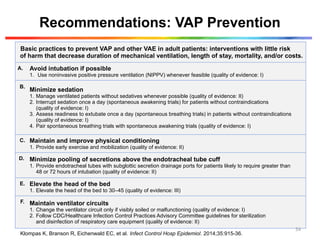
Recommendations: VAP Prevention
Basic practices to prevent VAP and other VAE in adult patients: interventions with little risk
of harm that decrease duration of mechanical ventilation, length of stay, mortality, and/or costs.
A. Avoid intubation if possible
1. Use noninvasive positive pressure ventilation (NIPPV) whenever feasible (quality of evidence: I)
B.
Minimize sedation
1. Manage ventilated patients without sedatives whenever possible (quality of evidence: II)
2. Interrupt sedation once a day (spontaneous awakening trials) for patients without contraindications
(quality of evidence: I)
3. Assess readiness to extubate once a day (spontaneous breathing trials) in patients without contraindications
(quality of evidence: I)
4. Pair spontaneous breathing trials with spontaneous awakening trials (quality of evidence: I)
C. Maintain and improve physical conditioning
1. Provide early exercise and mobilization (quality of evidence: II)
D. Minimize pooling of secretions above the endotracheal tube cuff
1. Provide endotracheal tubes with subglottic secretion drainage ports for patients likely to require greater than
48 or 72 hours of intubation (quality of evidence: II)
E. Elevate the head of the bed
1. Elevate the head of the bed to 30–45 (quality of evidence: III)
F. Maintain ventilator circuits
1. Change the ventilator circuit only if visibly soiled or malfunctioning (quality of evidence: I)
2. Follow CDC/Healthcare Infection Control Practices Advisory Committee guidelines for sterilization
and disinfection of respiratory care equipment (quality of evidence: II)
Klompas K, Branson R, Eichenwald EC, et al. Infect Control Hosp Epidemiol. 2014;35:915-36.
54
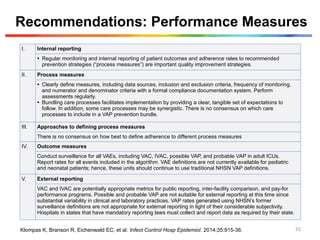
Recommendations: Performance Measures
I. Internal reporting
• Regular monitoring and internal reporting of patient outcomes and adherence rates to recommended
prevention strategies (“process measures”) are important quality improvement strategies.
II. Process measures
• Clearly define measures, including data sources, inclusion and exclusion criteria, frequency of monitoring,
and numerator and denominator criteria with a formal compliance documentation system. Perform
assessments regularly.
• Bundling care processes facilitates implementation by providing a clear, tangible set of expectations to
follow. In addition, some care processes may be synergistic. There is no consensus on which care
processes to include in a VAP prevention bundle.
III. Approaches to defining process measures
There is no consensus on how best to define adherence to different process measures
IV. Outcome measures
Conduct surveillance for all VAEs, including VAC, IVAC, possible VAP, and probable VAP in adult ICUs.
Report rates for all events included in the algorithm. VAE definitions are not currently available for pediatric
and neonatal patients; hence, these units should continue to use traditional NHSN VAP definitions.
V. External reporting
VAC and IVAC are potentially appropriate metrics for public reporting, inter-facility comparison, and pay-for
performance programs. Possible and probable VAP are not suitable for external reporting at this time since
substantial variability in clinical and laboratory practices. VAP rates generated using NHSN’s former
surveillance definitions are not appropriate for external reporting in light of their considerable subjectivity.
Hospitals in states that have mandatory reporting laws must collect and report data as required by their state.
Klompas K, Branson R, Eichenwald EC, et al. Infect Control Hosp Epidemiol. 2014;35:915-36. 55
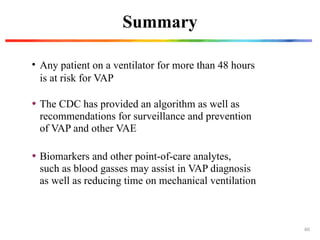
Summary
• Any patient on a ventilator for more than 48 hours
is at risk for VAP
• Biomarkers and other point-of-care analytes,
such as blood gasses may assist in VAP diagnosis
as well as reducing time on mechanical ventilation
• The CDC has provided an algorithm as well as
recommendations for surveillance and prevention
of VAP and other VAE
60
•THANK YOU

VAP- Ventilator associated pnemonia.pptx

  • 1.
    Ventilator Associated Pneumonia DrMohammad Abbas MBBS,MD, DrNB (Critical Care Medicine) Kauvery Hospital, Bangalore
  • 2.
    CASE •A 52-year-old femaleadmitted with left pontine infarct was being ventilated for Type 1 respiratory failure for the past 6 days. •She was not on any antibiotics and seemed to be improving. •She becomes febrile overnight (102 F ᴼ ). •How will you approach this patient?
  • 3.
    CASE CONTINUED.. • ChestX Ray • Patient is being required higher FiO2 to maintain P/F ratio. • What are your differentials?
  • 4.
    What is it? •On Ventilator • More than 6 days • New onset fever • New changes in the LUNG Provisional diagnosis - VAP
  • 5.
    DEFINITION •Hospital-acquired pneumonia (HAP)is defined by an infection of the lung parenchyma that occurred at least 48 hours after hospital admission. • Ventilator-associated pneumonia (VAP) develops in intensive care unit (ICU) patients mechanically ventilated for at least 48 hours . •Classified into : • Early onset (within the first 96 hours of MV) and • Late onset (more than 96 hours after the initiation of MV), which is more commonly attributable to multidrug–resistant pathogens • Ventilator-associated tracheobronchitis (VAT) is characterized by signs of respiratory infection without new radiographic infiltrates in a patient mechanically ventilated for at least 48 hours 7
  • 6.
    Ventilator-Associated Pneumonia • Ventilator-associatedpneumonia (VAP) can develop in any patient on a ventilator1 1 Centers for Disease Control. VAP FAQs. http://www.cdc.gov/HAI/vap/vap_faqs.html. Accessed June28, 2019. 2 Krein SL, Kowalski CP, Damschroder L, et al. Infect Control Hosp Epidemiol. 2008;29:933-40. 3 Tedja R, Gordon S. http://www.clevelandclinicmeded.com/medicalpubs/diseasemanagement/infectious-disease/ health-care-associated-pneumonia. Accessed June28, 2019. • VAP is the most common of the hospital-acquired infections (HAI) in the intensive care unit (ICU)2,3 Onset of VAP Intubation or mechanical ventilation 24 Hrs 48 Hrs 72 Hrs 8
  • 7.
    Ventilator-Associated Pneumonia: Characterization • Presenceof a new or progressive infiltrate • Signs of systemic infection (fever, altered white blood cell count) • Changes in sputum characteristics • Detection of a causative agent Onset of VAP Intubation or mechanical ventilation 24 Hrs 48 Hrs 72 Hrs American Thoracic Society, Infectious Diseases Society of America. Am J Respir Crit Care Med. 2005;171:388-416. 9
  • 8.
    Risk Factors Rello J,Ollendorf DA, Oster G, et al. Chest. 2002;122(6):2115-21. Duration of intubation Male gender Trauma admission Severity of illness Prior use of antibiotics Supine positioning Prior use of H2 blockers ℞ ICU + 10
  • 9.
    Methods of Contamination 1 TedjaR, Gordon S. http://www.clevelandclinicmeded.com/medicalpubs/diseasemanagement/infectious-disease/ health-care-associated-pneumonia. Accessed June28, 2019. • Inoculation during the intubation process • Contaminated aerosol or ventilator condensate • Endotracheal tube biofilm • Aspiration from sinus, oropharyngeal, or gastric fluids around the tube 11
  • 10.
    Microbe Types Polymicrobial Centers forDisease Control. VAP FAQs. http://www.cdc.gov/HAI/vap/vap_faqs.html. Accessed April 6, 2014. Krein SL, Kowalski CP, Damschroder L, et al. Infect Control Hosp Epidemiol. 2008;29:933-40. Tedja R, Gordon S. http://www.clevelandclinicmeded.com/medicalpubs/diseasemanagement/infectious-disease/ health-care-associated-pneumonia. Accessed June28, 2019. Combes A, Figliolini C, Trouillet J, et al. Chest. 2002;121(5):1618-23. Bacteria Gram negative bacteria are the most common type seen in VAP May be gram positive during MRSA outbreak Viruses Not as common as bacterial causes, may be seen in immunodeficient patients Fungi Occasionally seen in immunodeficient patients, rarely causative Monomicrobial Only one pathogen type Most common VAP infection type Multiple pathogens 12
  • 11.
    Bacteria Associated WithVAP Percent of Total Isolates P. aeruginosa S. aureus Klebsiella spp. Enterobacter spp. S. marcescens E. coli S. maltophilia Acinetobacter spp. H. influenzae Others Sader HS, Rhomberg PR, Farrell DJ, et al. Antimicrob Agents Chemother. 2015;59(6):3263-70. 13
  • 12.
    VAP Increases Lengthof Stay and Ventilation Duration Restrepo M, Anzueto A, Arroliga A, et al. Infect Control Hosp Epidemiol. 2010;31(5):509-15. Median Number of Days (Range) Type of Patient and Variable Case Patients (N = 30) Control Patients (N = 90) P-Value All patients Intubation duration* 10.1(3-25) 4.7(1-22) < 0.001 VAP onset ≤ 4 days 9.1(3-20) VAP onset > 4 days 12.9(5-25) Intensive care unit LOS 18.5(5-33) 8(2-33) < 0.001 VAP onset ≤ 4 days 11.5(5-29) VAP onset > 4 days 23.5(6-33) Hospital LOS 26.5(5-36) 14(3-50) < 0.001 VAP onset ≤ 4 days 18.5(5-31) VAP onset > 4 days 31.5(20-36) Survivors** Intubation duration 10.2(3-25) 4.8(1-22) < 0.001 Intensive care unit LOS 19(5-33) 8(2-33) < 0.001 Hospital LOS 29(12-36) 16(3-50) < 0.001 * Duration after VAP onset; ** There were 25 case patients and 61 control patients who survived. 14
  • 13.
    Hospital Costs • Dueto increased length of stay and ventilator time, hospital costs are also increased with VAP1-2 • Incremental costs associated with VAP have been estimated. 1 Koenig SM, Truwit JD. Clin Microbiol Rev. 2006;19(4):637-57. 2 Restrepo M, Anzueto A, Arroliga A, et al. Infect Control Hosp Epidemiol. 2010;31(5):509-15. All Patients Survivors $70,000 $90,000 $110,000 $130,000 $150,000 $170,000 $190,000 $210,000 VAP Control Median Total Hospital Costs 2 P < 0.01 15
  • 14.
  • 15.
    Systematic Review ofVAP in Asia • CID 2019:68 (1 February)
  • 16.
    EPIDEMIOLOGY OF VAP SystematicReview of VAP in Asia • CID 2019:68 (1 February)
  • 17.
    MORTALITY • Crude mortalityrates for VAP are 10-40%1 • VAP increases mortality of ventilated patients up to 50% compared to ventilated patients without VAP (32%)2-3 • Mortality rates are lower in long term acute care hospitals (~15%)4 1 Cocanour CS, Peninger M, Domonoske BD, et al. J Trauma. 2006;61:122-30. 2 Al-Tawfiq JA, Abed MS. Am J Infect Control. 2010;38:552-6. 3 Kalanuria AA, Ziai W, Mirski M. Crit Care. 2014;18:208. 4 American Thoracic Society, Infectious Diseases Society of America. Am J Respir Crit Care Med. 2005;171:388-416.19 10-50% ~15% VAP Mortality (%) Long Term Acute Care General Hospital 0 10 20 30 40 50 60
  • 18.
    Infect. Control Hosp.Epidemiol. 2016;37(2):172–181
  • 19.
  • 20.
    Guidelines • In 2011the CDC convened a Working Group for VAP and other ventilator-associated events (VAE) CDC. Device Associated Module. 2019. • VAE surveillance definition algorithm implemented in 2013 – Based on objective, streamlined, and potentially automatable criteria that identify a broad range of conditions and complications occurring in mechanically-ventilated adult patients • There are three definition tiers within the VAE algorithm – Ventilator-Associated Condition (VAC) – Infection-related Ventilator-Associated Complication (IVAC) – Possible and probable VAP 22
  • 21.
    CDC VAE Algorithm (CENTREOF DISEASE CONTROL AND PREVETION) CDC. Device Associated Module. 2019. Infection-related Ventilator-Associated Complication 23 After a period of stability or improvement on the ventilator, the patient has at least one of the following indicators of worsening oxygenation: 1) Increase in daily minimum* FiO2 of ≥ 0.20 (20 points) over the daily minimum FiO2 in the baseline period, sustained for ≥ 2 calendar days. 2) Increase in daily minimum* PEEP values of ≥ 3 cmH2O over the daily minimum PEEP in the baseline period†, sustained for ≥ 2 calendar days. Patient has a baseline period of stability or improvement on the ventilator, defined by ≥ 2 calendar days of stable or decreasing daily minimum* FiO2 or PEEP values. The baseline period is defined as the 2 calendar days immediately preceding the first day of increased daily minimum PEEP or FiO2. *Daily minimum defined by lowest value of FiO2 or PEEP during a calendar day maintained for at least 1 hour. On or after calendar day 3 of mechanical ventilation and within 2 calendar days before or after the onset of worsening oxygenation, the patient meets both of the following 2 criteria: 1) Temperature > 38 °C or < 36°C, OR white blood cell count ≥ 12,000 cells/mm3 or ≤ 4,000 cells/mm3. AND 2) A new antimicrobial agent(s) is started, and is continued for ≥ 4 calendar days. Ventilator-Associated Condition †Daily minimum PEEP values of 0-5 cmH2O are considered equivalent for the purposes of VAE surveillance.
  • 22.
    Possible Ventilator-Associated Pneumonia Onor after calendar day 3 of mechanical ventilation and within 2 calendar days before or after the onset of worsening oxygenation, ONE of the following criteria is met: 1) Criterion 1: Positive culture of one of the following specimens, meeting quantitative or semi-quantitative thresholds as outlined in pr requirement for purulent respiratory secretions: Endotracheal aspirate- ≥ 105 CFU/mL or corresponding semi-quantitative result; bronchoalveolar lavage- ≥ 104 CFU/mL or corresponding semi-quantitative result; lung tissue- ≥ 104 CFU/g or corresponding semi-quantitative result; protected specimen brush -≥ 103 CFU/mL or corresponding semi-quantitative result 2) Criterion 2: Purulent respiratory secretions (defined as secretions from the lungs, bronchi, or trachea that contain > 25 neutrophils and < 10 squamous epithelial cells per low power field [lpf, x100]) plus organism identified from one of the following specimens (to include qualitative culture, or quantitative/semi-quantitative culture without sufficient growth to meet criterion #1): Sputum, endotracheal aspirate, bronchoalveolar lavage, lung tissue, protected specimen brush 3) Criterion 3: One of the fo Organism identified from p of chest tube and NOT from 1) abscess formation or foc intense neutrophil accumu and alveoli; 2) evidence of by fungi (hyphae, pseudohy 3) evidence of infection wit on respiratory secretions fo CDC VAE Algorithm CDC. Device Associated Module. 2019. Infection-related Ventilator-Associated Complication 24
  • 23.
  • 24.
    Diagnostic Methods Diagnosing VAPrequires a high clinical suspicion combined with bedside examination and microbiologic analysis of respiratory secretions. CDC. Device Associated Module. 2019. 26
  • 25.
    VAP Clinical Criteria Johanson Criteria Presenceof a new or progressive radiographic infiltrate Plus at least two of three clinical features: • Fever > 38ºC • Leukocytosis or leukopenia • Purulent secretions Koenig SM, Truwit JD. Clin Microbiol Rev. 2006;19(4):637-57. Rea-Neto A, Cherif M, Youssef N, et al. Critical Care. 2008;12:R56. Accepted clinical criteria for pneumonia are of limited diagnostic value in definitively establishing the presence of VAP. 27
  • 26.
    VAP Clinical Criteria ARDS= acute respiratory distress syndrome Rea-Neto A, Cherif M, Youssef N, et al. Critical Care. 2008;12:R56 VAP Score > 6 Clinical Pulmonary Infection Score (CPIS) Temperature Oxygenation (PaO2/FiO2) Tracheal Secretions (Score) 0 point: 36.5–38.4ºC 0 point: > 240 or ARDS 0 point: no secretions 1 point: 38.5–38.9ºC 2 points: < 240, No evidence of ARDS 1 point: Abundant 2 points: < 36 or > 39ºC 2 points: Purulent sputum Blood leukocytes (Cells/μL) Pulmonary Radiography Tracheal Aspirate Culture 0 point: 4000–11000 0 point: No infiltrate 0 point: Minimal growth 1 point: < 4000 or > 11000 1 point: Diffuse or patchy infiltrates 1 point: Moderate or more growth 2 points: > 500 band forms 2 points: Localized infiltrate 2 points: Moderate or greater growth 28 Modified CPIS (MCPIS): 2 components were revised: Oxygenation (PaO2/FiO2) and Sputum description
  • 27.
    Microbiological Methods Bronchoalveolar lavage Protected specimen brush Endotrachialaspirate Lung tissue CDC. Device Associated Module. 2019. 29
  • 28.
    Biomarkers • Microbiological techniquescan take up to 48 hours1 • Current biomarkers have not been completely evaluated without prior antibiotic use2 • Previous use of antibiotics may give false-negatives1 • Identification of biomarkers may eliminate disadvantages of common VAP diagnostic techniques1-2 – Procalcitonin – sTREM-1 – C-reactive protein – MR-proADM 1 Ramirez P, Garcia MA, Ferrer M, et al. Eur Respiratory J. 2008;31:356-62. 2 Palazzo SJ, Simpson T, Schnapp L. Heart Lung. 2011;40(4):293-8. 31
  • 29.
    36 DAB: Dynamic Airbronchogram,FB: Fluid Bronchogram, SAB: Static Airbrochogram, SP-CD: small subpleural consolidation a: Subpleural hypoechogenic or tissue-like area b: In all patients included in study c: only in patients with signs of ventilator- associated pneumonia d: in each patient Staub et al.
  • 30.
    Treatment of VAP •Initial antibiotic choice • Presence of shock • Possible risk factors for MDR pathogens. • MDR risk factors: • Immunosupressed patient • Hospital stay >/=5 days currently • Antibiotic use in prior 90 days. • High frequency of resistance in ICU (>25%). • HAP risk factors.
  • 31.
    Treatment of VAPissues • Antibiotic choice • Single antibiotic Vs combination. • Antibiotics with good lung penetration. • Short duration Vs long duration. • Role of biomarkers and cultures in de-escalation. • Other modes of administration.
  • 32.
    TREATMENT • Recommendations (IDSA2016): • Should Selection of an Empiric Antibiotic Regimen for VAP Be Guided by Local Antibiotic-Resistance data? • TREATMENT OF VAP • Hospitals regularly generate and disseminate a local antibiogram, specific to their intensive care population(s) if possible. • Empiric treatment regimens by the local distribution of pathogens associated with VAP and their antimicrobial susceptibilities. IDSA 2016
  • 33.
    What Antibiotics AreRecommended for Empiric Treatment of Clinically Suspected HAP (Non-VAP)?
  • 34.
    ROLE OF INHALEDANTIBIOTIC THERAPY • Should Patients With VAP Due to Gram-Negative Bacilli Be Treated With a Combination of Inhaled and Systemic Antibiotics, or Systemic Antibiotics Alone? • VAP due to gram-negative bacilli that are susceptible to only aminoglycosides or polymyxins (colistin or polymyxin B), use both inhaled and systemic antibiotics, rather than systemic antibiotics alone. IDSA 2016
  • 35.
    LENGTH OF THERAPY •Should Patients With VAP Receive 7 Days or 8–15 Days of Antibiotic Therapy? • Patients with VAP, 7-day course of antimicrobial therapy rather than a longer duration IDSA 2016
  • 36.
    DE-ESCALATION • Should AntibioticTherapy Be De-escalated or Fixed in Patients With HAP/VAP? • Patients with HAP/VAP, antibiotic therapy be de- escalated rather than fixed IDSA 2016
  • 37.
    DE-ESCALATION • Should Discontinuationof Antibiotic Therapy Be Based Upon PCT Levels Plus Clinical Criteria or Clinical Criteria Alone in Patients With HAP/VAP? • Use PCT levels plus clinical criteria to guide the discontinuation of antibiotic therapy, rather than clinical criteria alone IDSA 2016
  • 38.
  • 39.
    Recommendations: VAP Surveillance Hospitalsare advised to conduct active surveillance for VAE, using CDC definitions and surveillance protocols. The CDC’s VAE module requires surveillance for all definition tiers (VAC, IVAC, possible VAP, and probable VAP). 1. Infection preventionists should work with their critical care, respiratory therapy, and/or information technology staff to develop efficient means to gather and aggregate ventilator data (daily minimum PEEP and daily minimum Fio2) from all patients ventilated for greater than or equal to 4 days. Temperature, white blood cell count, and antibiotic exposure data are needed only for the subset of patients who fulfill VAC criteria to determine if they fulfill IVAC criteria. Pulmonary specimen Gram stains and microbiology test results are required only for the subset of patients who meet IVAC criteria to determine if they fulfill possible or probable VAP criteria. 2. Organizing daily ventilator data into “line lists” for every patient, with 1 row of data per patient per calendar day, facilitates VAC detection by allowing the surveyor to vertically scan daily ventilator settings to look for sustained increases that cross the threshold for VAC. Surveyors can also enter raw data into the CDC’s online “VAE calculator” to assist with case identification (http://www.cdc.gov/nhsn/VAE-calculator /index.html). a. The VAE definitions are amenable to partial or complete automation using electronic data. Facilities seeking to automate VAE detection should work with their information technology personnel and/or electronic health record vendor(s). Klompas K, Branson R, Eichenwald EC, et al. Infect Control Hosp Epidemiol. 2014;35:915-36. 53
  • 40.
    Recommendations: VAP Prevention Basicpractices to prevent VAP and other VAE in adult patients: interventions with little risk of harm that decrease duration of mechanical ventilation, length of stay, mortality, and/or costs. A. Avoid intubation if possible 1. Use noninvasive positive pressure ventilation (NIPPV) whenever feasible (quality of evidence: I) B. Minimize sedation 1. Manage ventilated patients without sedatives whenever possible (quality of evidence: II) 2. Interrupt sedation once a day (spontaneous awakening trials) for patients without contraindications (quality of evidence: I) 3. Assess readiness to extubate once a day (spontaneous breathing trials) in patients without contraindications (quality of evidence: I) 4. Pair spontaneous breathing trials with spontaneous awakening trials (quality of evidence: I) C. Maintain and improve physical conditioning 1. Provide early exercise and mobilization (quality of evidence: II) D. Minimize pooling of secretions above the endotracheal tube cuff 1. Provide endotracheal tubes with subglottic secretion drainage ports for patients likely to require greater than 48 or 72 hours of intubation (quality of evidence: II) E. Elevate the head of the bed 1. Elevate the head of the bed to 30–45 (quality of evidence: III) F. Maintain ventilator circuits 1. Change the ventilator circuit only if visibly soiled or malfunctioning (quality of evidence: I) 2. Follow CDC/Healthcare Infection Control Practices Advisory Committee guidelines for sterilization and disinfection of respiratory care equipment (quality of evidence: II) Klompas K, Branson R, Eichenwald EC, et al. Infect Control Hosp Epidemiol. 2014;35:915-36. 54
  • 41.
    Recommendations: Performance Measures I.Internal reporting • Regular monitoring and internal reporting of patient outcomes and adherence rates to recommended prevention strategies (“process measures”) are important quality improvement strategies. II. Process measures • Clearly define measures, including data sources, inclusion and exclusion criteria, frequency of monitoring, and numerator and denominator criteria with a formal compliance documentation system. Perform assessments regularly. • Bundling care processes facilitates implementation by providing a clear, tangible set of expectations to follow. In addition, some care processes may be synergistic. There is no consensus on which care processes to include in a VAP prevention bundle. III. Approaches to defining process measures There is no consensus on how best to define adherence to different process measures IV. Outcome measures Conduct surveillance for all VAEs, including VAC, IVAC, possible VAP, and probable VAP in adult ICUs. Report rates for all events included in the algorithm. VAE definitions are not currently available for pediatric and neonatal patients; hence, these units should continue to use traditional NHSN VAP definitions. V. External reporting VAC and IVAC are potentially appropriate metrics for public reporting, inter-facility comparison, and pay-for performance programs. Possible and probable VAP are not suitable for external reporting at this time since substantial variability in clinical and laboratory practices. VAP rates generated using NHSN’s former surveillance definitions are not appropriate for external reporting in light of their considerable subjectivity. Hospitals in states that have mandatory reporting laws must collect and report data as required by their state. Klompas K, Branson R, Eichenwald EC, et al. Infect Control Hosp Epidemiol. 2014;35:915-36. 55
  • 45.
    Summary • Any patienton a ventilator for more than 48 hours is at risk for VAP • Biomarkers and other point-of-care analytes, such as blood gasses may assist in VAP diagnosis as well as reducing time on mechanical ventilation • The CDC has provided an algorithm as well as recommendations for surveillance and prevention of VAP and other VAE 60
  • 46.

Editor's Notes

  • #7 The CDC has been classifying VAP as a ventilator-associated event (VAE) or ventilator-associated condition (VAC), yet the terminology has not been thoroughly defined. Therefore, for purposes of this presentation, VAP will be defined as ventilator-associated pneumonia which is an active infection. Ventilator-associated pneumonia (VAP) is a subtype of hospital-acquired pneumonia (HAP) which occurs in people receiving mechanical ventilation. Ventilator associated pneumonia is difficult to diagnose and surveillance is curtailed by the subjectivity of many components of the surveillance definition. This learning activity will describe how bedside analyte testing may assist with therapeutic decision making and improve the prognosis for patients with VAP.
  • #8 Ventilator-associated pneumonia (VAP) is one of the most common hospital-acquired infections (HAI). It can develop in any patient on a ventilator, yet most occurrences are seen in intubated or ventilated patients after 48 hours. In these cases it is thought that the ventilator itself, or the process of intubation, acts as a vector for pathogenic bacterial flora to colonize the lungs.
  • #9 VAP is defined by a new or progressive infiltrate with signs of systemic infection and changes in sputum characteristics in the presence of at least one detectible causative agent. These characteristics are generally seen 48-72 hours after intubation or mechanical ventilation.
  • #10 There are multiple risk factors associated with VAP. Duration of intubation, male gender, trauma, illness severity are all risks associated with the potential development of VAP prior to entering the intensive care unit (ICU). Within the ICU or critical care hospital setting, prior use of antibiotics, histamine type 2 receptor antagonists, and supine positioning are all factors which dramatically increase the risk for VAP.
  • #11 There are several methods of aspiration that could lead to VAP. There is no consensus that one method may be more virulent than the others as any aspiration has the ability to produce VAP. Bacteria reaches the lungs from the oropharynx during the intubation process, yet there is also bacteria colonization possible from a contaminated ventilator, the leakage of sinus or stomach secretions, as well as leakage of secretions around the endotracheal tube. A secondary problem with endotracheal tubes can occur if a biofilm forming bacteria is present. These particular types of bacteria create a coating on the tube itself that is very difficult to remove. These biofilms protect bacteria from the presence of antibiotics, leading to antibiotic resistance as well as polymicrobial infections as the biofilm gains other bacterial types that may be present.
  • #12 A monomicrobial infection contains only one pathogen. These are more rare than polymicrobial infections, which will contain multiple pathogens. The majority of VAPs are caused by endogenous gram negative bacteria that colonize the airway during intubation. Additionally, viruses and fungi may lead to VAPs, yet fungi us rarely ever the cause. Organisms resulting in infections are determined by local ecology and largely the result of antibiotic selection pressure. While nationally, gram negatives may be the most common cause of infection, this is absolutely not true in many hospitals where MRSA is the number one cause. Local ecology changes the likely cause.
  • #13 The number and types of VAP causing organisms depend on the duration of mechanical ventilation, as well as prior antibiotic use. In a study by Sader et al., 339 bacterial isolates from VAP patients in 25 medical centers were typed during the SENTRY Antimicrobial Surveillance Program. The researchers found that gram negative bacteria were most common, with the highest percentage of isolates typed as P. aeruginosa.
  • #14 A study by Restrepo et al. suggest that the length of stay and days on a ventilator increase with VAP. Specifically, patients with VAP had a significantly longer duration of mechanical ventilation (10.1 days vs 4.7 days, P < 0.001), ICU stay (18.5 days vs 8 days, P < 0.001), and hospital stay (26.5 days vs 14 days, P < 0.001).
  • #15 The increased length of stay and ventilation time leads directly to increased medical costs. Several studies have noted that the incremental costs associated with VAP are between $5,000 and $20,000 while Restrepo et al., also found that total hospital costs were significantly increased in all patients with VAP as well as VAP survivors when compared to control ventilated patients without VAP.
  • #16 This section will look at incidence and mortality associated with VAP.
  • #19 Mortality rates can also vary depending on the type of facility and the diagnostic methods used. Crude mortality rates are 10-40% in general hospitals, while some settings such as long term acute care facilities have a much lower rate of ~15%. Many experts in the field now question if there is any incremental mortality associated with VAP.
  • #21 There are several guidelines and recommendations for VAP.
  • #22 The CDC now recognizes VAP as part of ventilator-associated events (VAEs). In 2011 a workgroup was convened to provide new definitions and algorithms for VAEs. There are three new tiers of diagnostic algorithms: (1) ventilator-associated conditions, (2) infection-related ventilator-associated complications, and (3) possible and probable VAPs.
  • #23 The CDC’s VAE algorithm includes all three tiers. Patients must meet criteria for decreasing stability or oxygenation while on a ventilator for at least two days for a diagnosis of a ventilator-associated condition (VAC). When VAC is combined with signs of infection, it leads to infection-related ventilator-associated complication (IVAC).
  • #24 IVACs that are present after 3 days of ventilation must meet one of three criteria to meet the conditions for a possible ventilator-associated pneumonia (PVAP). These criteria are a positive culture, purulent respiratory secretions with organism identification, or a positive organism from pleural fluid and lung pathology.
  • #25 The following will review the diagnostics and usefulness of point-of-care devices for VAP.
  • #26 Diagnosing VAP is a multifaceted process. There is no one method that can accurately and effectively diagnose this condition. Current recommendations include clinical characteristics such as fever, combined with microbiological analysis. Previous definitions have required radiographic analysis, however the CDC now suggests that chest radiograph findings do not accurately identify VAP. Based on recent evidence, the CDC has determined that the subjectivity and variability inherent in chest radiograph techniques, interpretation, and reporting make chest imaging ill-suited for inclusion in a definition algorithm for VAP or other VAEs. Despite the CDC’s claim, some currently used definitions still include radiographic analysis.
  • #27 The accepted clinical criteria for pneumonia are not definitively useful for determining the presence or absence of VAP. There are some criterial still utilized that are based on clinical data. The Johanson Criteria is specific to clinical criteria, such as fever, the presence of white cells, and purulent secretions.
  • #28 The Clinical Pulmonary Infection Score utilizes clinical, radiological, and microbiological diagnostic tools.
  • #29 Microbiological diagnostic methods vary from qualitative gram staining to semi-quantitative and quantitative cell counts and PCR. The first step in any microbiological analysis of VAP is the specimen collection. There are multiple ways to collect these specimens and there is some debate on whether the method of collection can change results. There are three primary types of collection recommended by the CDC, the protected specimen brush (PSB), endotrachial aspirates, and bronchoalveolar lavage (BAL).
  • #31 Biomarkers may be beneficial to help with some of the disadvantages of microbiological assessments. Previous use of antibiotics often leads to false-negatives regardless of whether qualitative or quantitative analysis was performed. The use of biomarkers would eliminate false findings and could also be tested more rapidly. There are four biomarkers currently being evaluated for VAP. Procalcitonin, sTREM-1, C-reactive protein, and MR-proADM. All of these biomarkers do increase with inflammation, regardless of whether infection is present, and can increase with non-pneumonia infections. These markers have not been evaluated with prior antibiotic use, but there is data suggesting that they may decrease with infection rates, possibly indicating the ability to be used as a method to guide therapy.
  • #32 Among the biomarkers studied by Povoa et al., CRP and CRP ratio showed the best performance in VAP prediction. The slope of CRP change over time (adjusted odds ratio [aOR] 1.624, confidence interval [CI]95% [1.206, 2.189], p = 0.001), the highest CRP ratio concentration (aOR 1.202, CI95% [1.061, 1.363], p = 0.004) and Δmax CRP (aOR 1.139, CI95% [1.039, 1.248], p = 0.006), during the first 6 days of mechanical ventilation, were all significantly associated with VAP development. Both PCT and MR-proADM showed a poor predictive performance as well as temperature and white cell count.
  • #33 Gradual VAP is defined by Ramirez et al. as presence of purulent respiratory secretions, plus one or both of the following: temperature above 38 °C and a white cell count greater than 12,000/mm3, and without a new or progressive pulmonary infiltrate on a chest x-ray in the pre-VAP period. CRP may also be a sign of the development of gradual VAP, as well as VAP that is definitive from early on in mechanical ventilation. As a result of recent studies showing an increase in VAP in both gradual and early onset of VAP, it may be utilized in the future as a marker for early antibiotic usage in a ventilated patient.
  • #34 Forty-five patients were enrolled in a study by Tanriverdi et al. Of them, 22 (48.8%) died before day 28 after the pneumonia diagnosis. There was no significant difference between the survivor and non-survivor groups in terms of PCT on the day of pneumonia diagnosis or CRP levels at any point. However, the PCT levels days 3 and 7 were significantly higher in the non-survivor group than the survivor group. Whereas PCT levels decreased significantly from D0 to D7 in the survivor group, CRP did not. A PCT level above 1 ng/mL on day 3 was the strongest predictor of mortality, with an odds ratio of 22.6. These data suggest that PCT may have a predictive value for mortality of VAP.
  • #35 In addition to biomarker testing, there are some other rapid diagnostic and point-of-care tests currently being evaluated for VAP. Bacterial PCR has the ability to test for multiple bacterial species as well as susceptibility and resistance genes. These tests have a good negative predicative value, eliminating false-negatives and are cost-effective compared to traditional time-consuming tests. Other tests that can be offered as point-of-care are useful for limiting the amount of time a patient may have to be on a ventilator, either before or after the onset of VAP. These test include blood gas and electrolyte analyses. By utilizing these tests at the bedside, physicians can make decisions more rapidly regarding the benefit of mechanical ventilation.
  • #53 The Society for Healthcare Epidemiology of America and the Infectious Diseases Society of America suggests recommended surveillance in line with CDC definitions and protocols. This guideline recommends monitoring ventilator data for any patient ventilated greater or equal to 4 days. Data that should be obtained is temperature, white blood cell count, antibiotic exposure, and pulmonary specimens. This data should be organized into a VAE calculator to determine who may be at risk for VAP or development of other VAEs.
  • #54 There are some best practices to prevent VAP and other VAEs in adult patients. These practices include avoiding intubation or using non-invasive positive pressure ventilation whenever possible, minimizing sedation, maintaining and improving physical conditioning, minimizing secretions, bed elevation, and maintenance of ventilator circuits..
  • #55 In addition to surveillance and prevention recommendations, the SHEA/IDSA also recommends performance measures include methods of internal and external reporting, process and outcome measures.
  • #60 Any patient on mechanical ventilation for more than 48 hours is at risk for VAP. Due to the increased mortality and costs associated with VAP and other VAEs, the CDC has provided a diagnostic algorithm, as well as surveillance and prevention recommendations for these conditions. Biomarkers such as CRP and PCT may be of use in diagnosis and risk stratification for patients at risk of VAP, while point-of-care monitoring bacterial types and blood gasses may be of use in reducing ventilator time, one of the largest risk factors for VAP.