Vendor Managed Inventory
(VMI)
VMI is essentially an integrated approach
whereby the inventory at the
distributor/retailer (downstream) is monitored
and managed by the manufacturer/vendor (upstream)
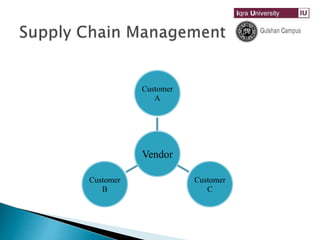
Vendor
Customer
A
Customer
C
Customer
B
VMI underlying principal
By pushing the decision making responsibility further up
the supply chain, the manufacturer/vendor will be in a better
position to support the objectives of the entire integrated
supply chain resulting in sustainable competitive advantage
Choose the correct answer:
1. Optimizes supply chain performance
2. Supplier has access to customer’s inventory data
3. Supplier is responsible for maintaining the inventory level
required by the customer
4. The process is to resupply inventory by the vendor via
scheduled reviews
5. All of the above
Questions for Selecting VMI
 What are your intentions?
 What are the critical materials?
 Which items/commodities have attributed to the greatest
delays?
Typical Benefits to Manufacturers
 Lower inventory investments (raw and finished)
 Better scheduling and planning
 Better market information
 Good relationship with customer
 Visibility via information sharing
Typical Benefits to Retailers
 Fewer stock-out with higher inventory turnover
 Better market information
 Less inventory in channels (transfer costs)
 Lower administrative replenishment costs
 Greater customer satisfaction
 Reduce cycle time
VMI success factors
 Top management commitment
 Focus on effort
 Trust and partnership between supply chain stakeholders
 Highly effective computer/information systems (EDI, Bar
coding, Scanning)
 Competent manufacturers and the ability to forecast
 Willing stakeholders partners and patience
6
Rules to the Road
Electronic Data Interchange
(EDI)
EDI is
Computer to computer exchange of business
transaction in a standard format
EDI Benefits
 Quick access to information
 Reduced labor and material costs associated with handling
paper-based business transaction
 Better communication
 Increases productivity
 Improved tracing and expediting
 Improved billing
 Better customer service
Ownership of inventory in VMI
 Initially, ownership transferred to retailer upon receipt of
goods
 Now, VMI is based on consignment relationship in which
manufacturer owns goods until sold
 Retailer benefit: lower inventory cost
 Manufacturers benefits: better control
 Supply chain benefit: system-wide cost reduction
Requirements for Effective VMI
 Advanced information systems
 Top management commitment
 Mutual trust
◦ Information sharing
◦ Management of the entire supply chain
◦ Initial loss of revenues
Important VMI Issues
 Inventory ownership:
◦ Who owns inventory
◦ In case of Supplier owns the goods until they are sold
 Why would a firm do this?
 Confidentiality
 Communication and cooperation
◦ When one Vendor started partnering with Kmart, Kmart often claimed
that its supplier was not living up to its agreement to keep two weeks of
inventory at all times. It turned out that this was due to the fact that the
two companies employed different forecasting methods.
Performance Measurements
 How to ensure VMI will enhance the business?
 Operational improvements
◦ Internal
 The number of stock outs and duration
 Cost of material/service before and after
◦ External
 Customer satisfaction
 Improvement of delivery availability
 Competitive advantage considerations
End of Topic

Vendor managed inventory

  • 1.
  • 2.
    VMI is essentiallyan integrated approach whereby the inventory at the distributor/retailer (downstream) is monitored and managed by the manufacturer/vendor (upstream)
  • 3.
  • 4.
    VMI underlying principal Bypushing the decision making responsibility further up the supply chain, the manufacturer/vendor will be in a better position to support the objectives of the entire integrated supply chain resulting in sustainable competitive advantage
  • 5.
    Choose the correctanswer: 1. Optimizes supply chain performance 2. Supplier has access to customer’s inventory data 3. Supplier is responsible for maintaining the inventory level required by the customer 4. The process is to resupply inventory by the vendor via scheduled reviews 5. All of the above
  • 6.
    Questions for SelectingVMI  What are your intentions?  What are the critical materials?  Which items/commodities have attributed to the greatest delays?
  • 7.
    Typical Benefits toManufacturers  Lower inventory investments (raw and finished)  Better scheduling and planning  Better market information  Good relationship with customer  Visibility via information sharing
  • 8.
    Typical Benefits toRetailers  Fewer stock-out with higher inventory turnover  Better market information  Less inventory in channels (transfer costs)  Lower administrative replenishment costs  Greater customer satisfaction  Reduce cycle time
  • 9.
    VMI success factors Top management commitment  Focus on effort  Trust and partnership between supply chain stakeholders  Highly effective computer/information systems (EDI, Bar coding, Scanning)  Competent manufacturers and the ability to forecast  Willing stakeholders partners and patience
  • 10.
  • 11.
  • 12.
    EDI is Computer tocomputer exchange of business transaction in a standard format
  • 13.
    EDI Benefits  Quickaccess to information  Reduced labor and material costs associated with handling paper-based business transaction  Better communication  Increases productivity  Improved tracing and expediting  Improved billing  Better customer service
  • 14.
    Ownership of inventoryin VMI  Initially, ownership transferred to retailer upon receipt of goods  Now, VMI is based on consignment relationship in which manufacturer owns goods until sold  Retailer benefit: lower inventory cost  Manufacturers benefits: better control  Supply chain benefit: system-wide cost reduction
  • 15.
    Requirements for EffectiveVMI  Advanced information systems  Top management commitment  Mutual trust ◦ Information sharing ◦ Management of the entire supply chain ◦ Initial loss of revenues
  • 16.
    Important VMI Issues Inventory ownership: ◦ Who owns inventory ◦ In case of Supplier owns the goods until they are sold  Why would a firm do this?  Confidentiality  Communication and cooperation ◦ When one Vendor started partnering with Kmart, Kmart often claimed that its supplier was not living up to its agreement to keep two weeks of inventory at all times. It turned out that this was due to the fact that the two companies employed different forecasting methods.
  • 17.
    Performance Measurements  Howto ensure VMI will enhance the business?  Operational improvements ◦ Internal  The number of stock outs and duration  Cost of material/service before and after ◦ External  Customer satisfaction  Improvement of delivery availability  Competitive advantage considerations
  • 18.