Presented By : Shahid Hussain
Faculty : Sir Zahid Ali
Subject : AHN-11
Date : 21-10-2023
Objectives
 At the end of this topic student will be able to………
1. Define Vericose veins, venous system, valves in the veins and factors
affecting in venous return
2. Causes, pathophysiology , clinical manifestation and diagnosis
3. Complications, medical and nursing management
4. Define venous thrombosis, etiology, pathophysilogy and clinical
menifestation
5. Lab and physical assessment findings
6. Diagnosis, prevention, treatment and nursing management
VARICOSE VEINS
 Defined as dilated ,
elongated , tortuous
and palpable
superficial veins as a
result of venous
hypertension .
 More common in
males
 Long saphenous
system affected in most
cases
Venous system
 Deep system of veins lies below the deep fascia .
 Superficial system of veins lies outside the deep fascia
 Perforating veins which pass through the deep fascia joining superficial to
the deep venous system .
Valves in the veins
 Valves present in
superficial veins
 Prevent blood from
proximal to distal
and from deep o
superficial .
 Valves can resist
pressure up to 300
mmHg .
Factors helping in venous return
 Negative pressure during inspiration
 Muscles contraction
 Competent valves in the veins
Etiology
 Long hours of standing
 Family history
 Pregnancy
 Aging
 DVT
 Oral contraceptives
 Obesity
Pathophysiology
 Etiological factors
 Changes in vein wall
 Over stretching of veins
 Increase in size of veins
 Secondary valvular incompetence
 Backflow
 Pooling and further dilation of veins
 Varicosity – dilated tortuous veins
Clinical manifestations
 Cosmetically disfigurement
 Dull aches
 Muscles cramps
 Increased muscle fatigue in lower legs
 Ankle edema
 Feeling of heaviness of the legs
 Nocturnal cramps
 Pigmentation and ulceration
Diagnosis
 History collection
 Physical examination
 Duplex ultrasonography
 Venography
Nursing diagnosis
 Acute pain r/t venous congestion impaired venous return and
inflammation.
 Potential complication bleeding related to anticoagulant therapy.
 Risk for impaired skin integrity r/t altered peripheral tissue perfussion
Complications
 Bleeding
 Thrombophlebitis
 Venous hypertension leads to venous ulcers
 Calcification
 Eczematoid dermatitis
 pigmentation
Management
 Avoid prolong standing
 Elastic stockings limb
 elevation above the level of
heart while lying down
 Sclerotherpy
 Surgical management ( high
end ligation and striping
 Laser fiber produce
endoluminal heat that
destroy the vascular
endothelium
Nursing management
 Bed rest for first 24 hours , after which the patient begins walking every 2
hours for 5 to 10 minutes .
 Elastic compression stockings . Continuously for 1 week after stripping
 Foot end of bed should be elevated
 Discourage Still standing and sitting
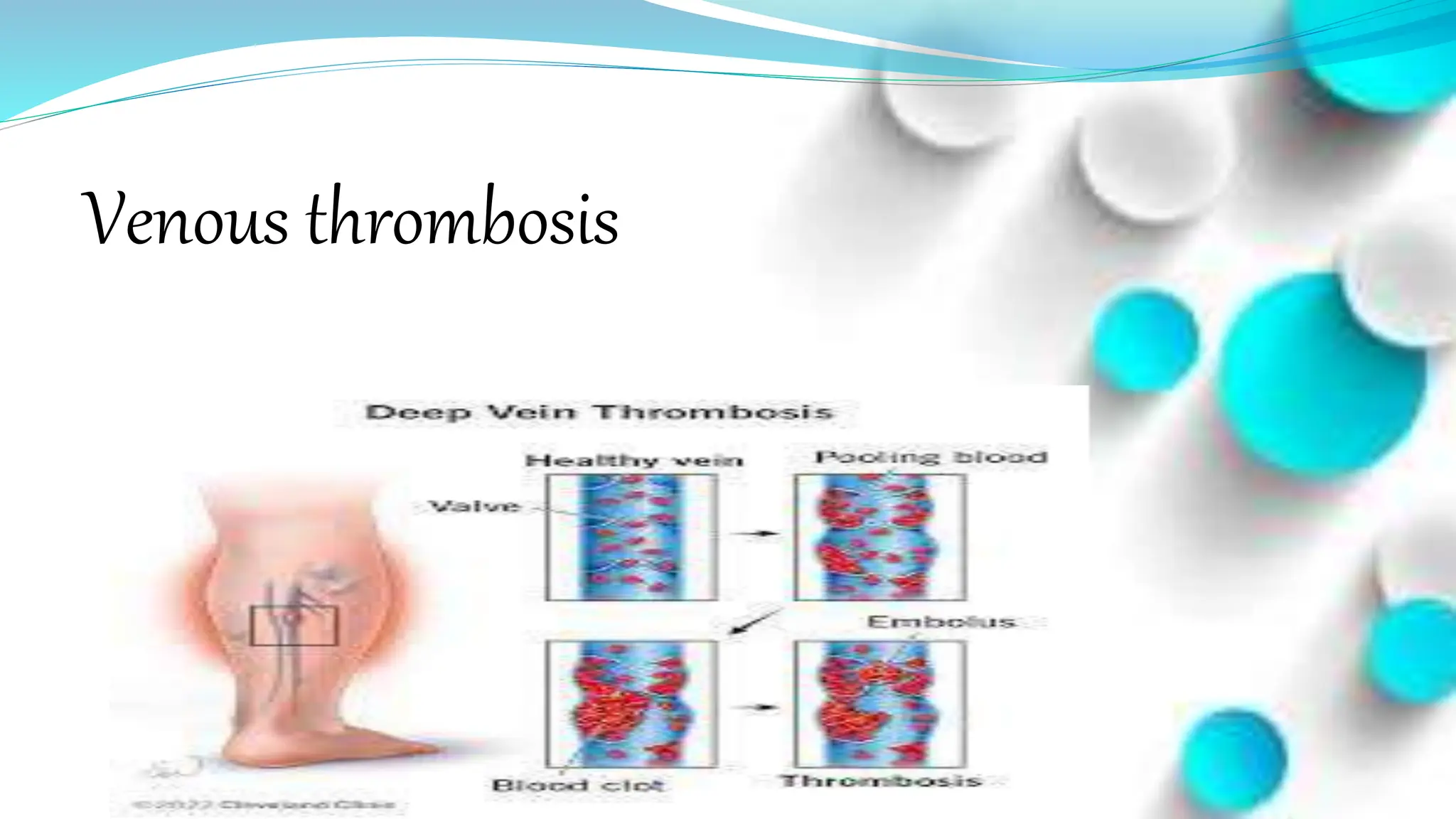
Venous thrombosis
Venous thrombosis
 Presence of thrombus in a vein and the accompany inflammatory
response in the vessel wall .
 Commonly occur in lower extremities .
 Complicated by pulmonary embolism , recurrent episodes , development
of chronic venous insufficiency .
 If left untreated , it may extend to larger ,with an increased risk of
pulmonary emboli up to 90% .
Etiology
 VENOUS STASIS
 Immobility
 Spinal cord injury
 Acute MI
 Congestive heart
failure
 Shock
 Venous obstruction
 HYPERREACTIVITY
OF BLOOD
COAGULATION
 Genetic factors
 Stress and trauma
 Pregnancy
 Childbirth
 Oral contraceptives
 Dehydration
 Cancer
 Hyperhomocysteinemi
a
 VASCULAR TRAUMA
 Indewelling venous
catheters
 Surgery
 Massive trauma or
infection
 Fractured hip
 Orthopedic surgery
Pathophysiology
 Reduced blood flow
 Damage to the lining of blood vessels creates a site for clot formation with
platelets aggregation
 Thrombus accompanies inflammation ( phlebitis )
 dislodgement of thrombi
 pulmonary embolism
Clinical manifestations
 Pain
 Swelling
 Deep muscle tenderness
 Fever
 General malaise
Lab findings
 Increased WBCs
 Increased ESR
 Increased plasma D-dimer
Physical assessment findings
 Site of thrombus determines the location of physical findings
 Most common site is in the venous sinuses of Soleus Muscle , Posterior
Tibial & Peroneal Veins .( pain in foot ankle and calf )
 Femoral Vein Thrombosis (pain in distal thigh and popliteal area )
 Iliofemoral Vein Thrombosis ( Pain in entire extremity )
Diagnosis
 Ascending venography
 Ultrasonography
Prevention
 Early ambulation after surgery
 Exercising
 Wearing support stockings
 Antiembolism stockings
 Lifestyle changes i.e weight loss
smoking cessation.
Treatment
Goal of treatment is to
1. Prevent formation of additional thrombi
2.Prevent extension and embolization of existing thrombi
3. Minimize venous valve damage
 Heat (to relieve venospasm )
 Prophylactic anticoagulant drug therapy
 Elastic support
 SURGICAL TREATMENT
 Surgical removal of thrombus
 Percutaneous insertion of intracaval filters
Nursing management
 Assessment of temperature , color ,
tenderness , swelling , & measure
circumference of affected limb
 Asses signs for embolization .
 Mobilize the client .
 15 to 20 degree elevation of the legs
 Apply pneumatic compression device.
 Keep the limb warm .
 Physiotherapy
 Do not massage legs
 Asses for any bleeding if on
anticoagulant therapy
 Educate regarding modification of
risks
 Smoking cessation
 Weight loss
 Compression stockings
 Hydrate well
 Encourage physical activity e.g walking
and swimming
Nurses

VARICOSE VEINS & DEEP VENOUS THROMBOSIS.pptx

  • 2.
    Presented By :Shahid Hussain Faculty : Sir Zahid Ali Subject : AHN-11 Date : 21-10-2023
  • 3.
    Objectives  At theend of this topic student will be able to……… 1. Define Vericose veins, venous system, valves in the veins and factors affecting in venous return 2. Causes, pathophysiology , clinical manifestation and diagnosis 3. Complications, medical and nursing management 4. Define venous thrombosis, etiology, pathophysilogy and clinical menifestation 5. Lab and physical assessment findings 6. Diagnosis, prevention, treatment and nursing management
  • 4.
    VARICOSE VEINS  Definedas dilated , elongated , tortuous and palpable superficial veins as a result of venous hypertension .  More common in males  Long saphenous system affected in most cases
  • 5.
    Venous system  Deepsystem of veins lies below the deep fascia .  Superficial system of veins lies outside the deep fascia  Perforating veins which pass through the deep fascia joining superficial to the deep venous system .
  • 6.
    Valves in theveins  Valves present in superficial veins  Prevent blood from proximal to distal and from deep o superficial .  Valves can resist pressure up to 300 mmHg .
  • 7.
    Factors helping invenous return  Negative pressure during inspiration  Muscles contraction  Competent valves in the veins
  • 8.
    Etiology  Long hoursof standing  Family history  Pregnancy  Aging  DVT  Oral contraceptives  Obesity
  • 9.
    Pathophysiology  Etiological factors Changes in vein wall  Over stretching of veins  Increase in size of veins  Secondary valvular incompetence  Backflow  Pooling and further dilation of veins  Varicosity – dilated tortuous veins
  • 10.
    Clinical manifestations  Cosmeticallydisfigurement  Dull aches  Muscles cramps  Increased muscle fatigue in lower legs  Ankle edema  Feeling of heaviness of the legs  Nocturnal cramps  Pigmentation and ulceration
  • 11.
    Diagnosis  History collection Physical examination  Duplex ultrasonography  Venography
  • 12.
    Nursing diagnosis  Acutepain r/t venous congestion impaired venous return and inflammation.  Potential complication bleeding related to anticoagulant therapy.  Risk for impaired skin integrity r/t altered peripheral tissue perfussion
  • 13.
    Complications  Bleeding  Thrombophlebitis Venous hypertension leads to venous ulcers  Calcification  Eczematoid dermatitis  pigmentation
  • 14.
    Management  Avoid prolongstanding  Elastic stockings limb  elevation above the level of heart while lying down  Sclerotherpy  Surgical management ( high end ligation and striping  Laser fiber produce endoluminal heat that destroy the vascular endothelium
  • 15.
    Nursing management  Bedrest for first 24 hours , after which the patient begins walking every 2 hours for 5 to 10 minutes .  Elastic compression stockings . Continuously for 1 week after stripping  Foot end of bed should be elevated  Discourage Still standing and sitting
  • 16.
  • 17.
    Venous thrombosis  Presenceof thrombus in a vein and the accompany inflammatory response in the vessel wall .  Commonly occur in lower extremities .  Complicated by pulmonary embolism , recurrent episodes , development of chronic venous insufficiency .  If left untreated , it may extend to larger ,with an increased risk of pulmonary emboli up to 90% .
  • 18.
    Etiology  VENOUS STASIS Immobility  Spinal cord injury  Acute MI  Congestive heart failure  Shock  Venous obstruction  HYPERREACTIVITY OF BLOOD COAGULATION  Genetic factors  Stress and trauma  Pregnancy  Childbirth  Oral contraceptives  Dehydration  Cancer  Hyperhomocysteinemi a  VASCULAR TRAUMA  Indewelling venous catheters  Surgery  Massive trauma or infection  Fractured hip  Orthopedic surgery
  • 19.
    Pathophysiology  Reduced bloodflow  Damage to the lining of blood vessels creates a site for clot formation with platelets aggregation  Thrombus accompanies inflammation ( phlebitis )  dislodgement of thrombi  pulmonary embolism
  • 20.
    Clinical manifestations  Pain Swelling  Deep muscle tenderness  Fever  General malaise
  • 21.
    Lab findings  IncreasedWBCs  Increased ESR  Increased plasma D-dimer
  • 22.
    Physical assessment findings Site of thrombus determines the location of physical findings  Most common site is in the venous sinuses of Soleus Muscle , Posterior Tibial & Peroneal Veins .( pain in foot ankle and calf )  Femoral Vein Thrombosis (pain in distal thigh and popliteal area )  Iliofemoral Vein Thrombosis ( Pain in entire extremity )
  • 23.
  • 24.
    Prevention  Early ambulationafter surgery  Exercising  Wearing support stockings  Antiembolism stockings  Lifestyle changes i.e weight loss smoking cessation.
  • 25.
    Treatment Goal of treatmentis to 1. Prevent formation of additional thrombi 2.Prevent extension and embolization of existing thrombi 3. Minimize venous valve damage  Heat (to relieve venospasm )  Prophylactic anticoagulant drug therapy  Elastic support  SURGICAL TREATMENT  Surgical removal of thrombus  Percutaneous insertion of intracaval filters
  • 26.
    Nursing management  Assessmentof temperature , color , tenderness , swelling , & measure circumference of affected limb  Asses signs for embolization .  Mobilize the client .  15 to 20 degree elevation of the legs  Apply pneumatic compression device.  Keep the limb warm .  Physiotherapy  Do not massage legs  Asses for any bleeding if on anticoagulant therapy  Educate regarding modification of risks  Smoking cessation  Weight loss  Compression stockings  Hydrate well  Encourage physical activity e.g walking and swimming
  • 27.

Editor's Notes

  • #9 Pregnancy may cause varicosities because of hormonal effects related to decrease venous outflow ,increased pressure by uterus and increase blood volume
  • #19 This is also known as virchow,s triad