BITS Pilani
Dubai Campus
VAPOUR POWER CYCLE
SIMPLE STEAM VAPOUR POWER CYCLE
 A power cycle continuously converts heat( energy released
by the burning of fuel) into work , in which a working fluid
repeatedly performs a succession of processes.

 In the vapour power cycle, the working fluid, which is water,
undergoes a change of phase.
 Steam power plant is working on the vapour power cycle.
 Heat is transferred to water in the boiler from an external
source( furnace, where fuel is continuously burnt) to raise steam
with high pressure and temperature.
VAPOUR POWER CYCLE
4
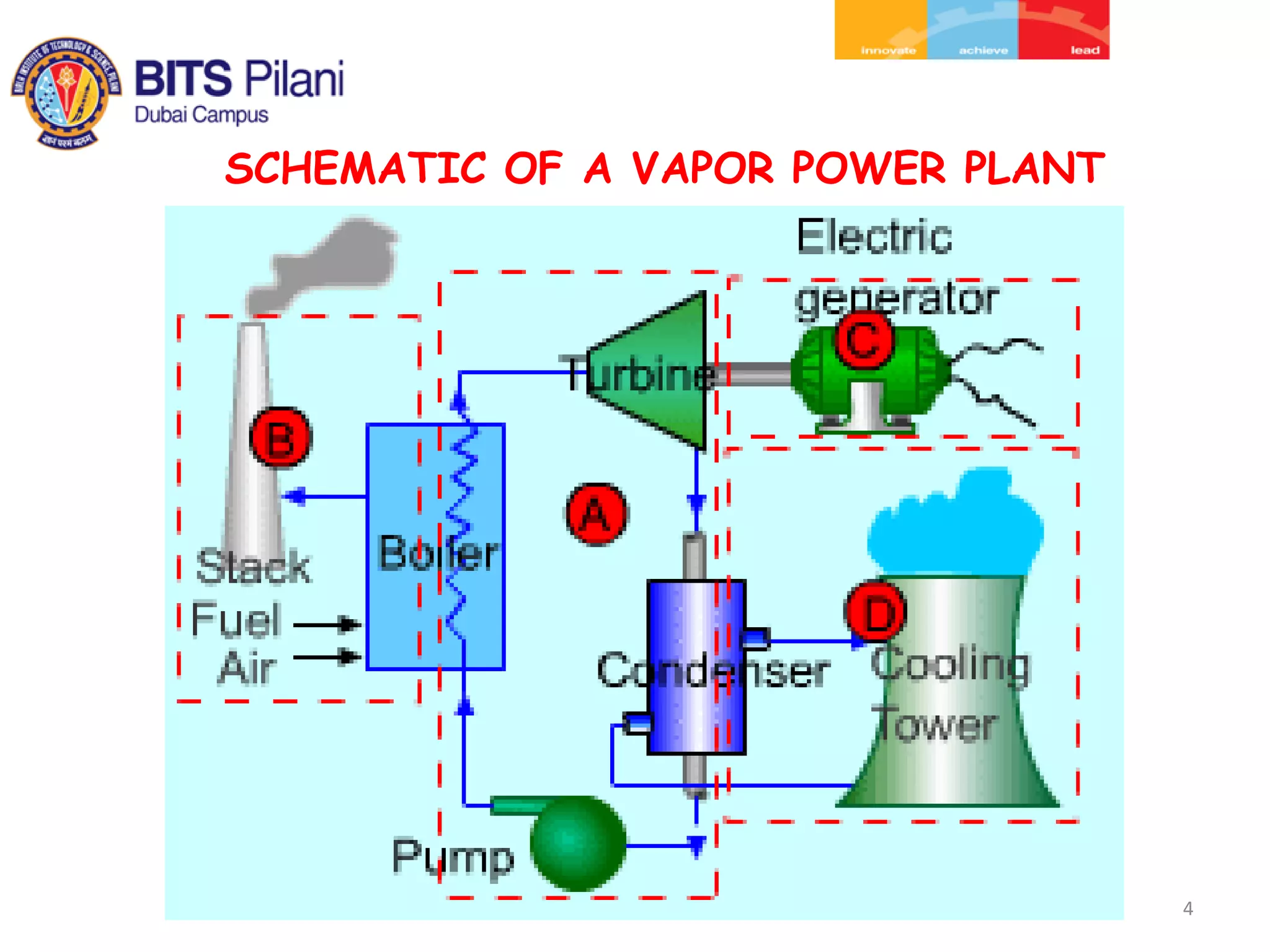
SCHEMATIC OF A VAPOR POWER PLANT
5
6
Vapor Power Cycle
Pump (process 1-2): Pump pressurized
the liquid water from the condenser
prior to going back to the boiler.
Assuming no heat transfer with the
surroundings, the energy balance in the
pump is
wpump, in = h2 - h1
Boiler (process 2-3): Liquid water enters
the boiler and is heated to superheated
state in the boiler. The energy balance in
the boiler is
qin = h3 - h2
7
Turbine (process 3-4): Steam from the boiler,
which has an elevated temperature and
pressure, expands through the turbine to
produce work and then is discharged to the
condenser with relatively low pressure.
Neglecting heat transfer with the surroundings,
the energy balance in the turbine is
wturbine, out = h3 - h4
Condenser (process 4-1): Steam from the
turbine is condensed to liquid water in the
condenser. The energy balance in the condenser
is
qout = h4 - h1
8
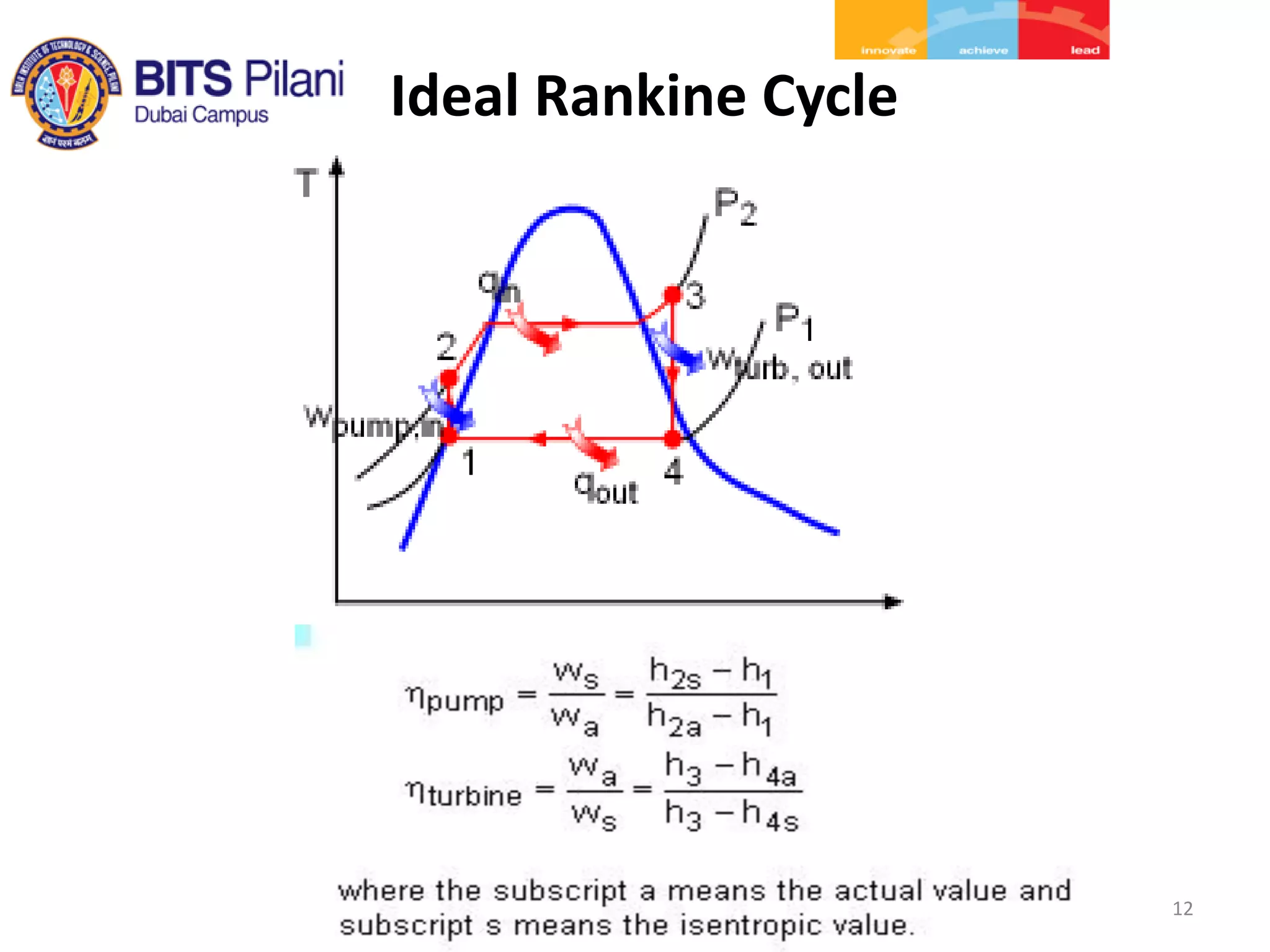
 The Rankine cycle is an ideal cycle
. The ideal Rankine cycle consists of the following four processes,
as shown on the T-s diagram on the left:
 1-2: Isentropic compression in a pump
 2-3: Constant pressure heat addition in a boiler
 3-4: Isentropic expansion in a turbine
 4-1: Constant pressure heat rejection in a condenser
RANKINE CYCLE
9
RANKINE CYCLE
11
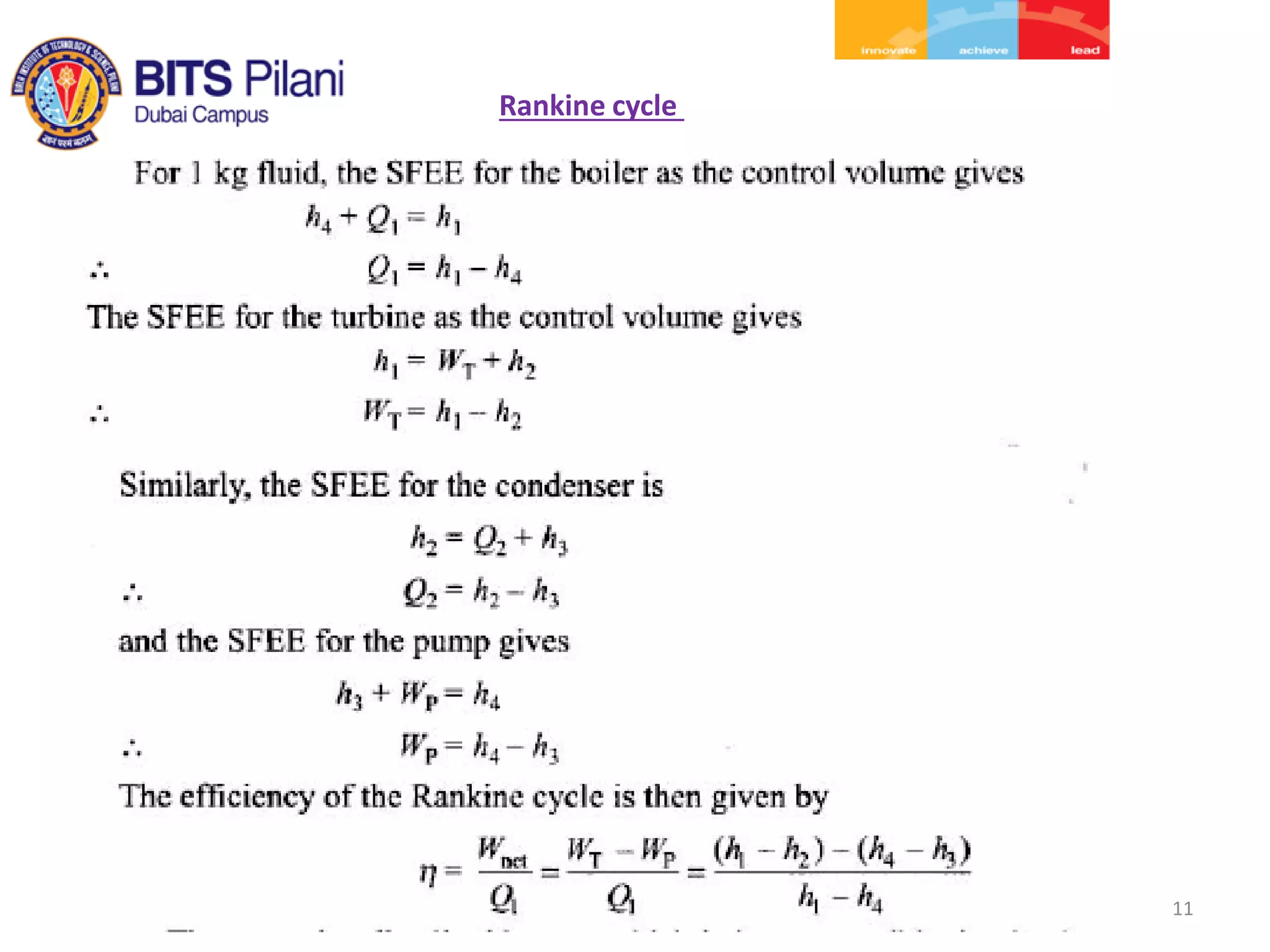
Rankine cycle
12
Ideal Rankine Cycle
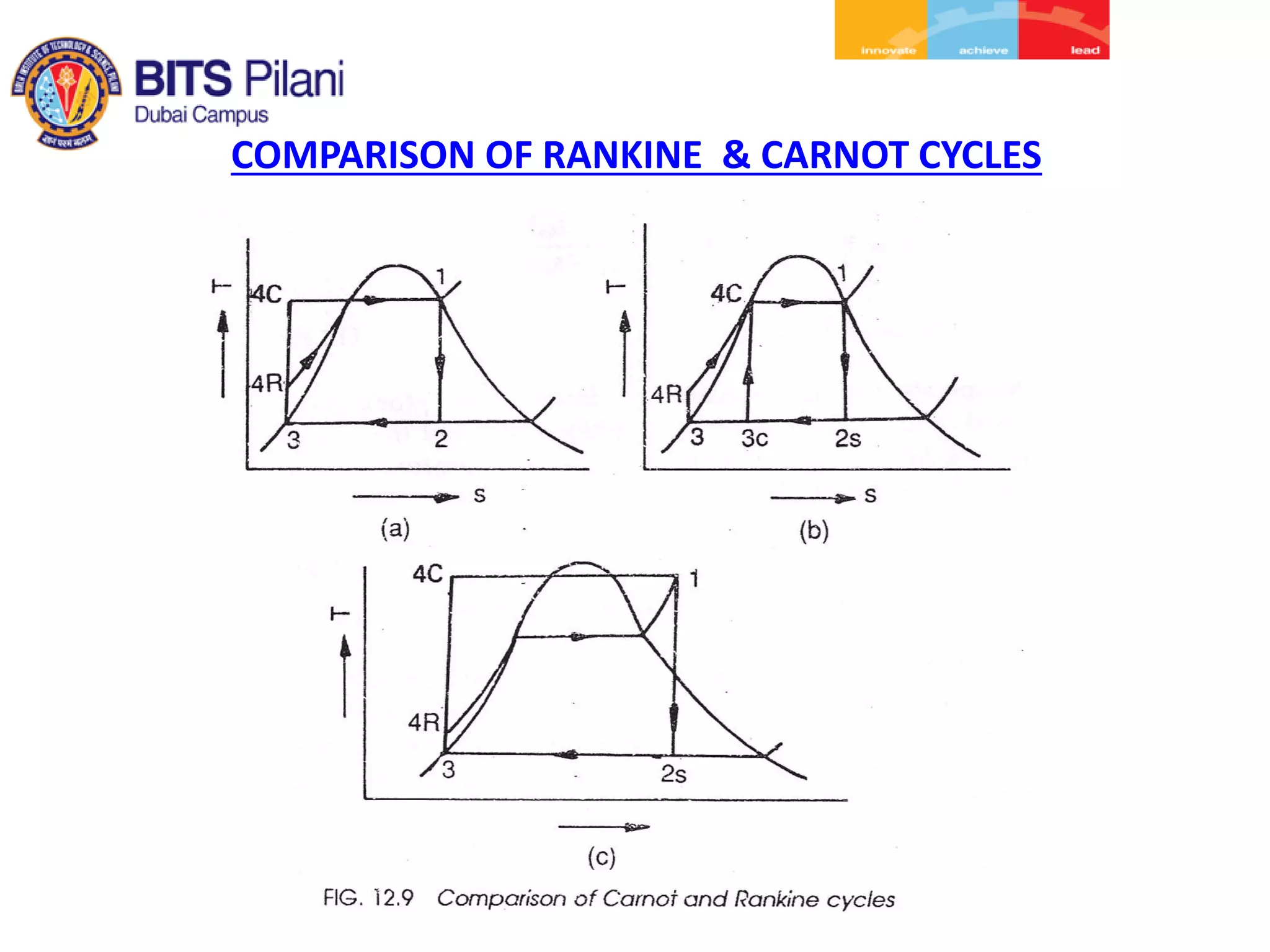
COMPARISON OF RANKINE & CARNOT CYCLES
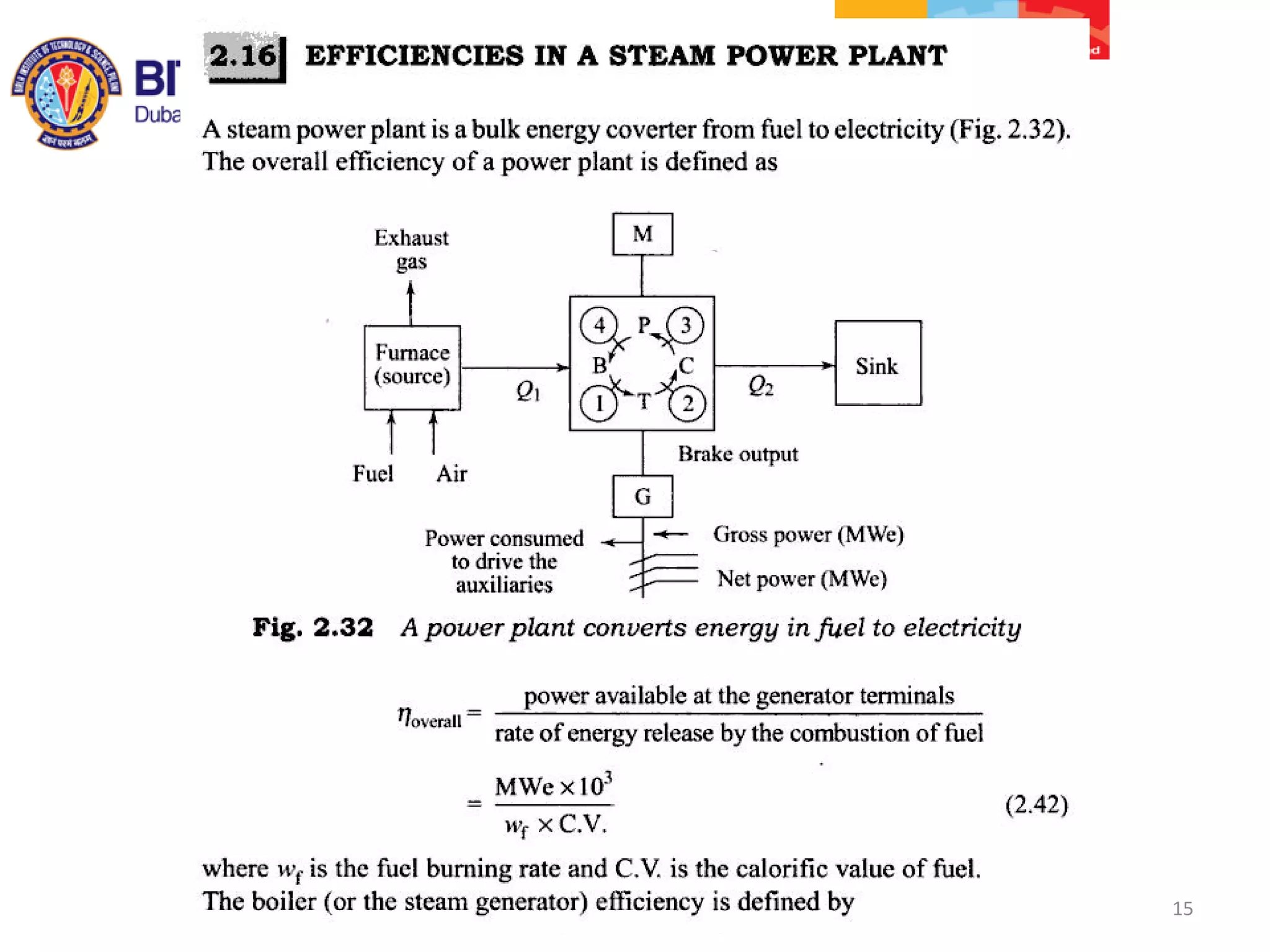
15
16
17
EFECT OF SUPER HEAT CONDITION
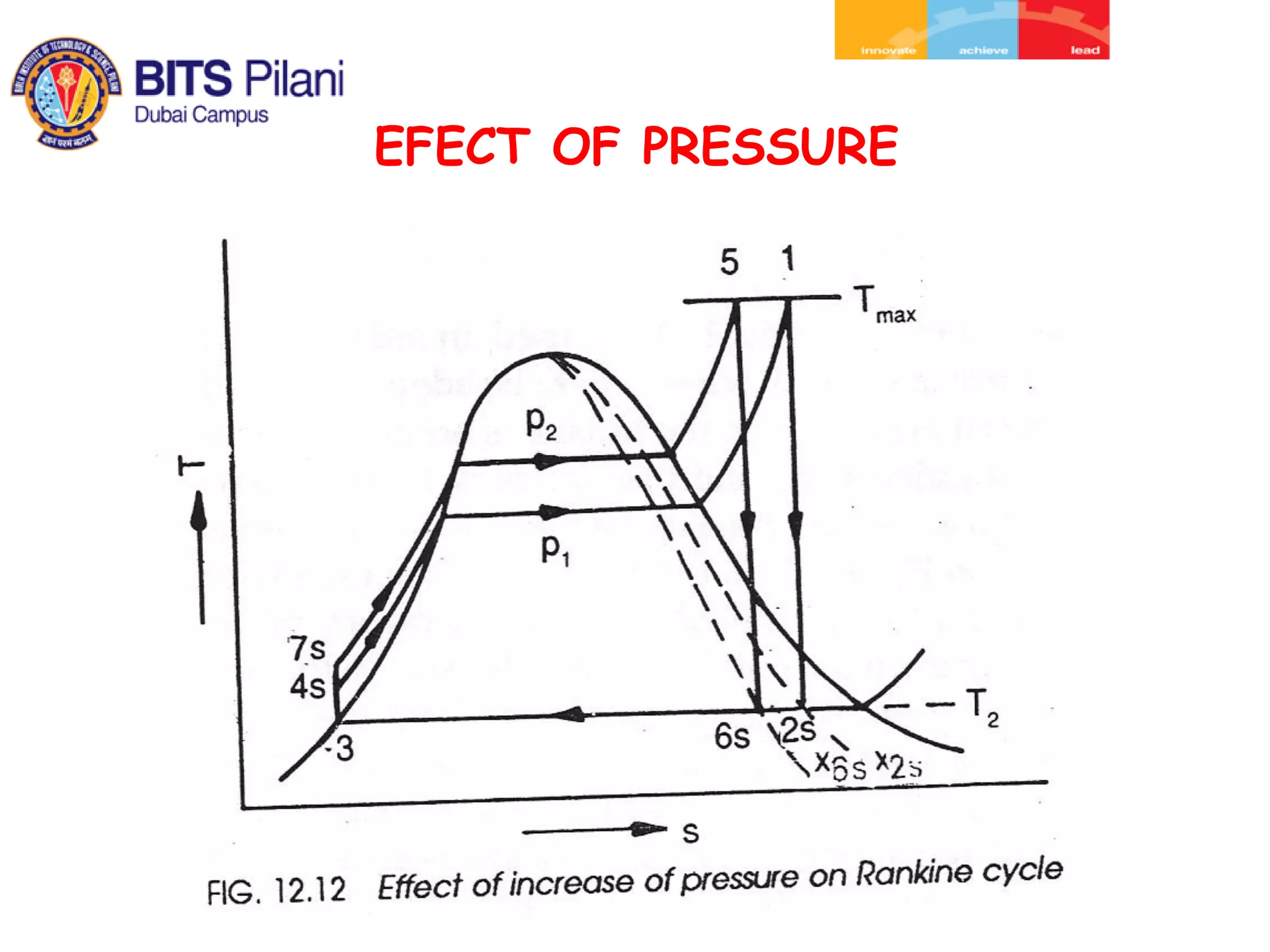
EFECT OF PRESSURE
REHEAT CYCLE
REGENERATIVE CYCLE
25
Example:1
26
27
28
29
30
31
32
33
34
35
36
37
38
39

Vapur power cycle

  • 1.
  • 2.
    SIMPLE STEAM VAPOURPOWER CYCLE  A power cycle continuously converts heat( energy released by the burning of fuel) into work , in which a working fluid repeatedly performs a succession of processes.  In the vapour power cycle, the working fluid, which is water, undergoes a change of phase.  Steam power plant is working on the vapour power cycle.  Heat is transferred to water in the boiler from an external source( furnace, where fuel is continuously burnt) to raise steam with high pressure and temperature.
  • 3.
  • 4.
    4 SCHEMATIC OF AVAPOR POWER PLANT
  • 5.
  • 6.
    6 Vapor Power Cycle Pump(process 1-2): Pump pressurized the liquid water from the condenser prior to going back to the boiler. Assuming no heat transfer with the surroundings, the energy balance in the pump is wpump, in = h2 - h1 Boiler (process 2-3): Liquid water enters the boiler and is heated to superheated state in the boiler. The energy balance in the boiler is qin = h3 - h2
  • 7.
    7 Turbine (process 3-4):Steam from the boiler, which has an elevated temperature and pressure, expands through the turbine to produce work and then is discharged to the condenser with relatively low pressure. Neglecting heat transfer with the surroundings, the energy balance in the turbine is wturbine, out = h3 - h4 Condenser (process 4-1): Steam from the turbine is condensed to liquid water in the condenser. The energy balance in the condenser is qout = h4 - h1
  • 8.
    8  The Rankinecycle is an ideal cycle . The ideal Rankine cycle consists of the following four processes, as shown on the T-s diagram on the left:  1-2: Isentropic compression in a pump  2-3: Constant pressure heat addition in a boiler  3-4: Isentropic expansion in a turbine  4-1: Constant pressure heat rejection in a condenser RANKINE CYCLE
  • 9.
  • 11.
  • 12.
  • 14.
    COMPARISON OF RANKINE& CARNOT CYCLES
  • 15.
  • 16.
  • 17.
  • 18.
    EFECT OF SUPERHEAT CONDITION
  • 19.
  • 20.
  • 22.
  • 25.
  • 26.
  • 27.
  • 28.
  • 29.
  • 30.
  • 31.
  • 32.
  • 33.
  • 34.
  • 35.
  • 36.
  • 37.
  • 38.
  • 39.