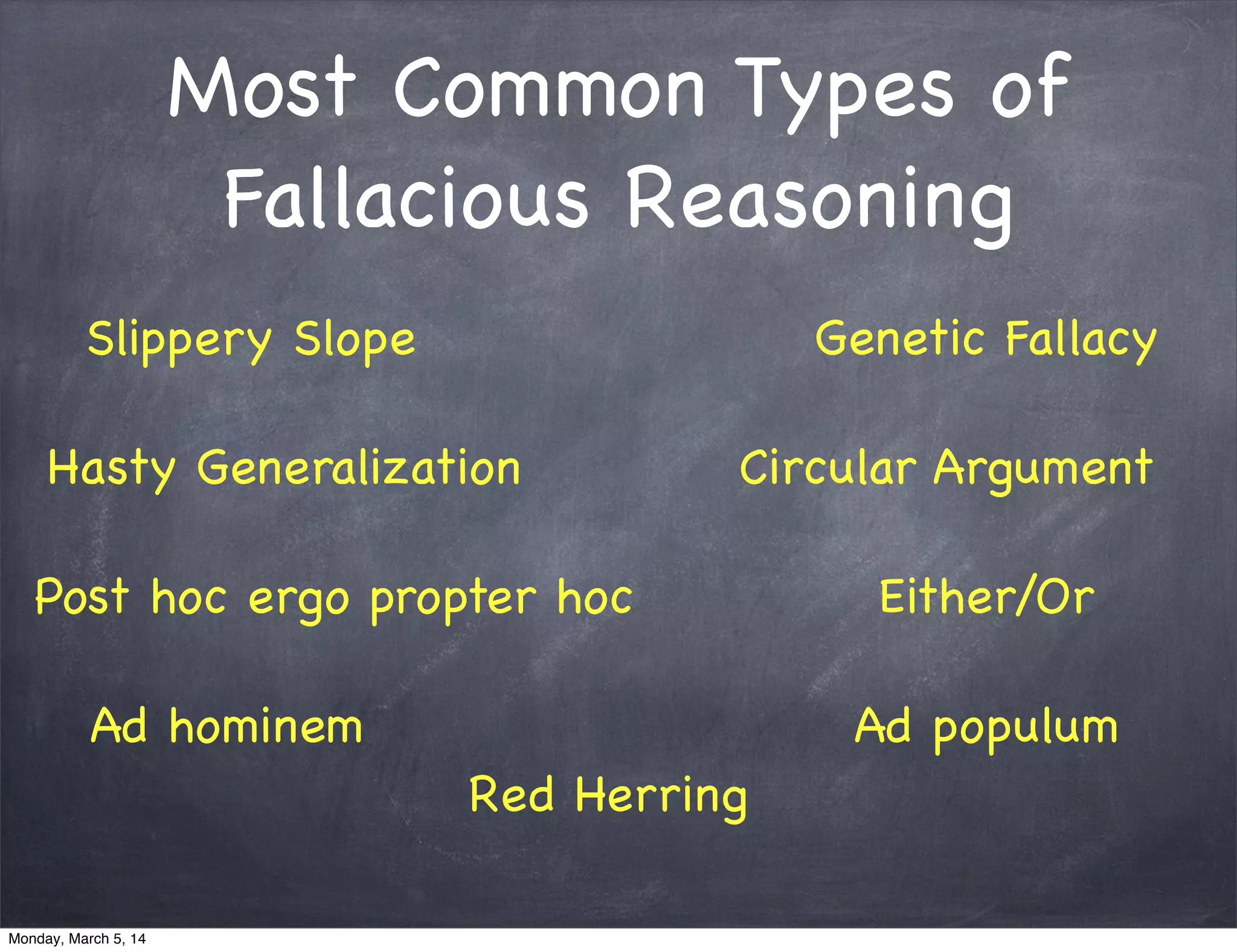
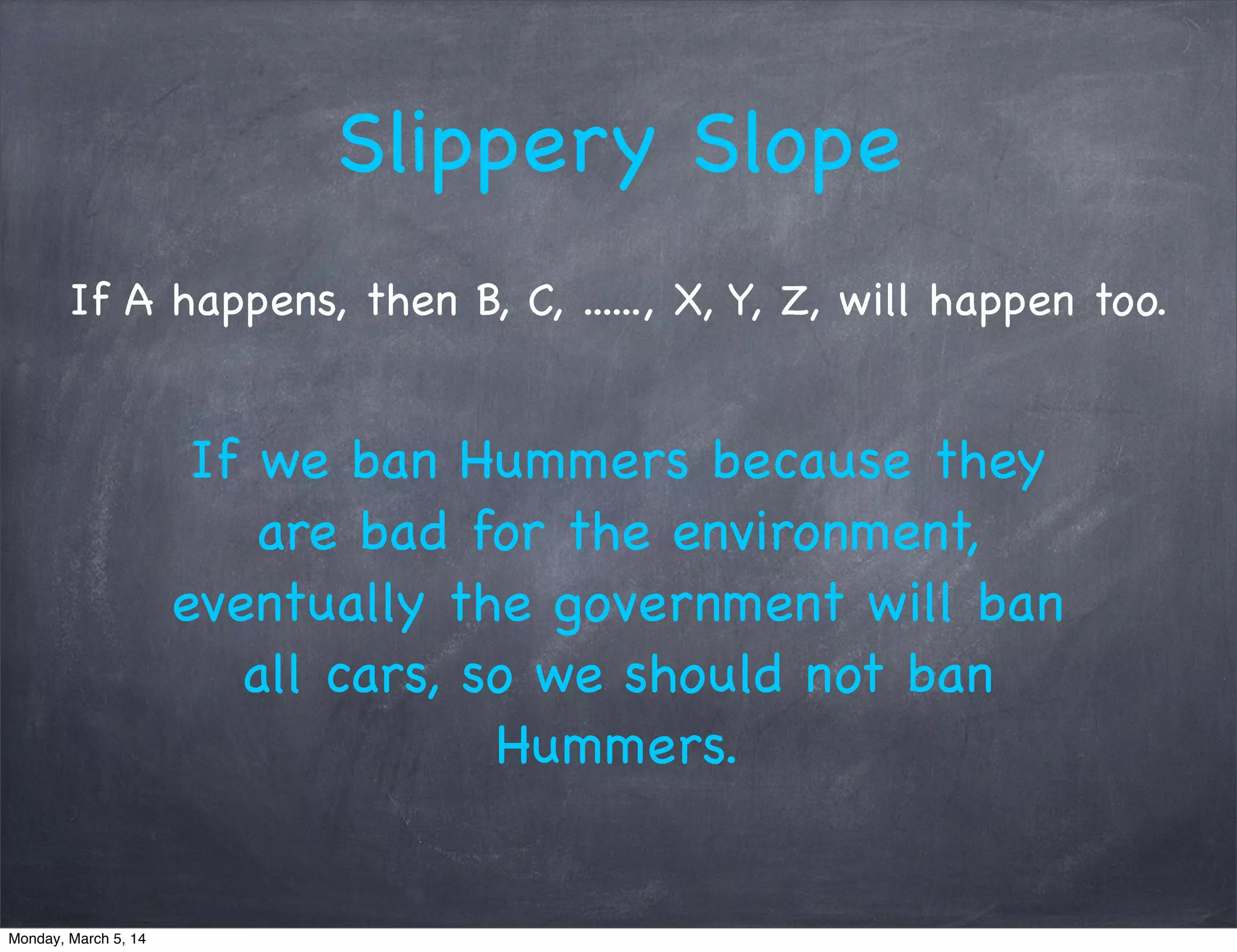
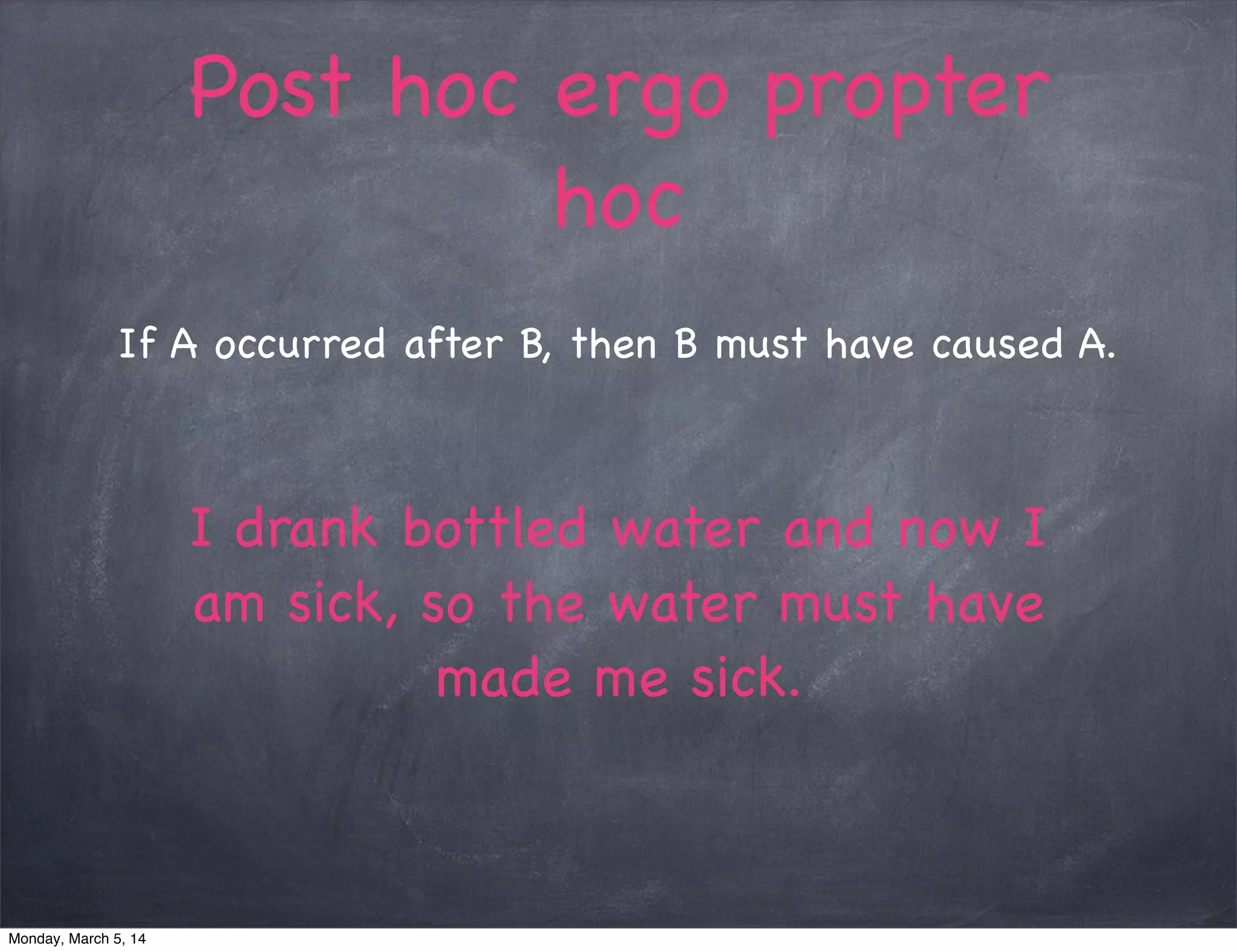
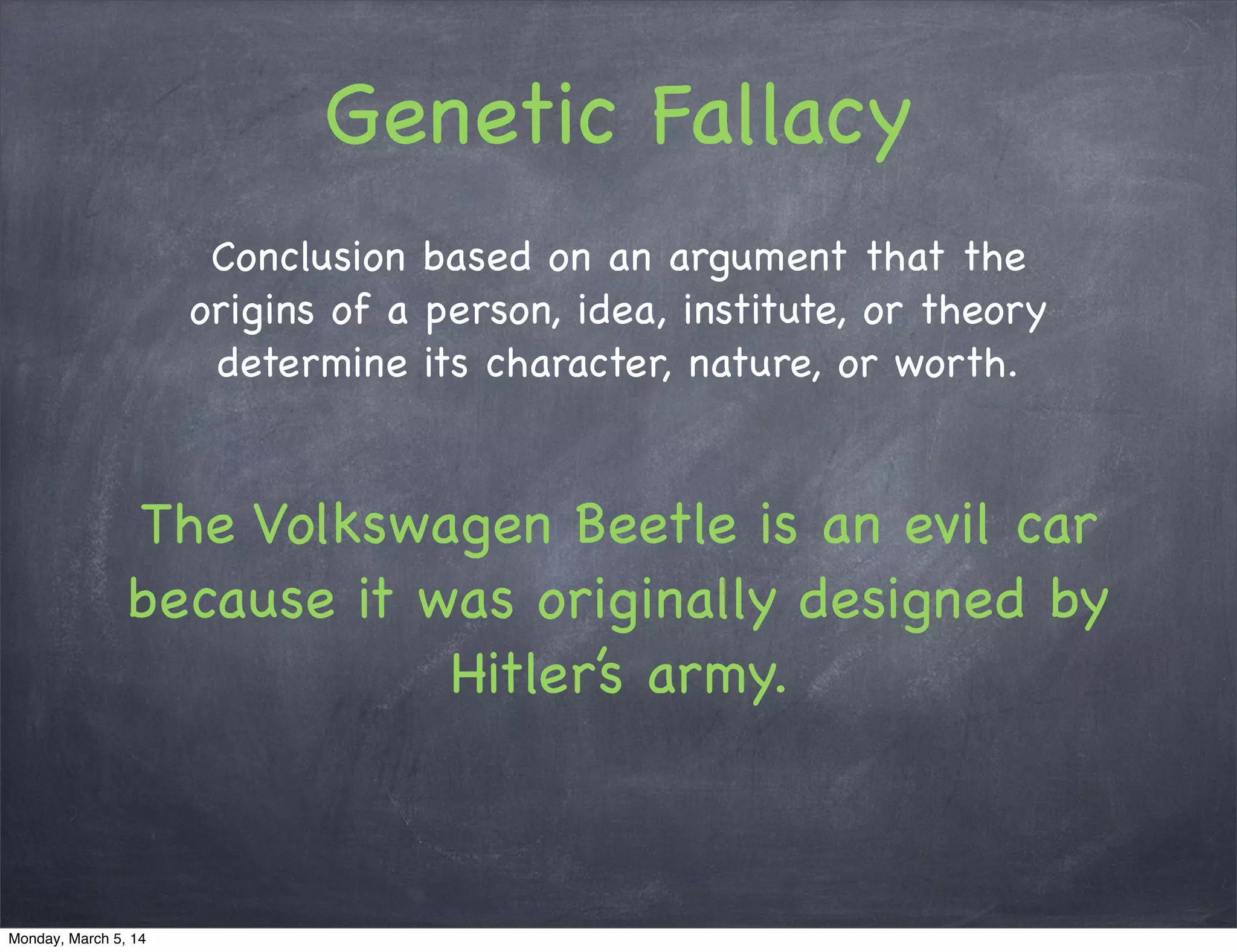
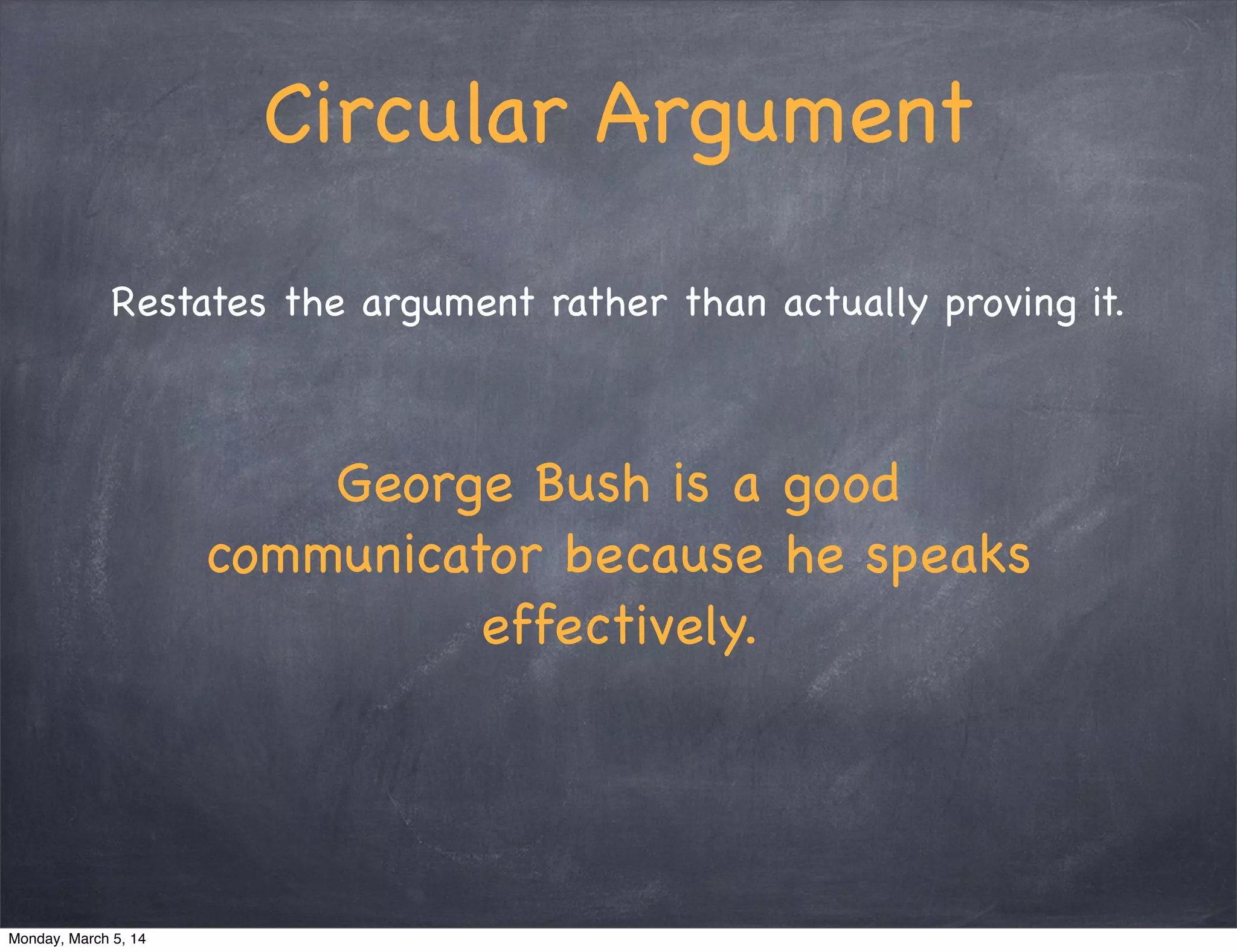
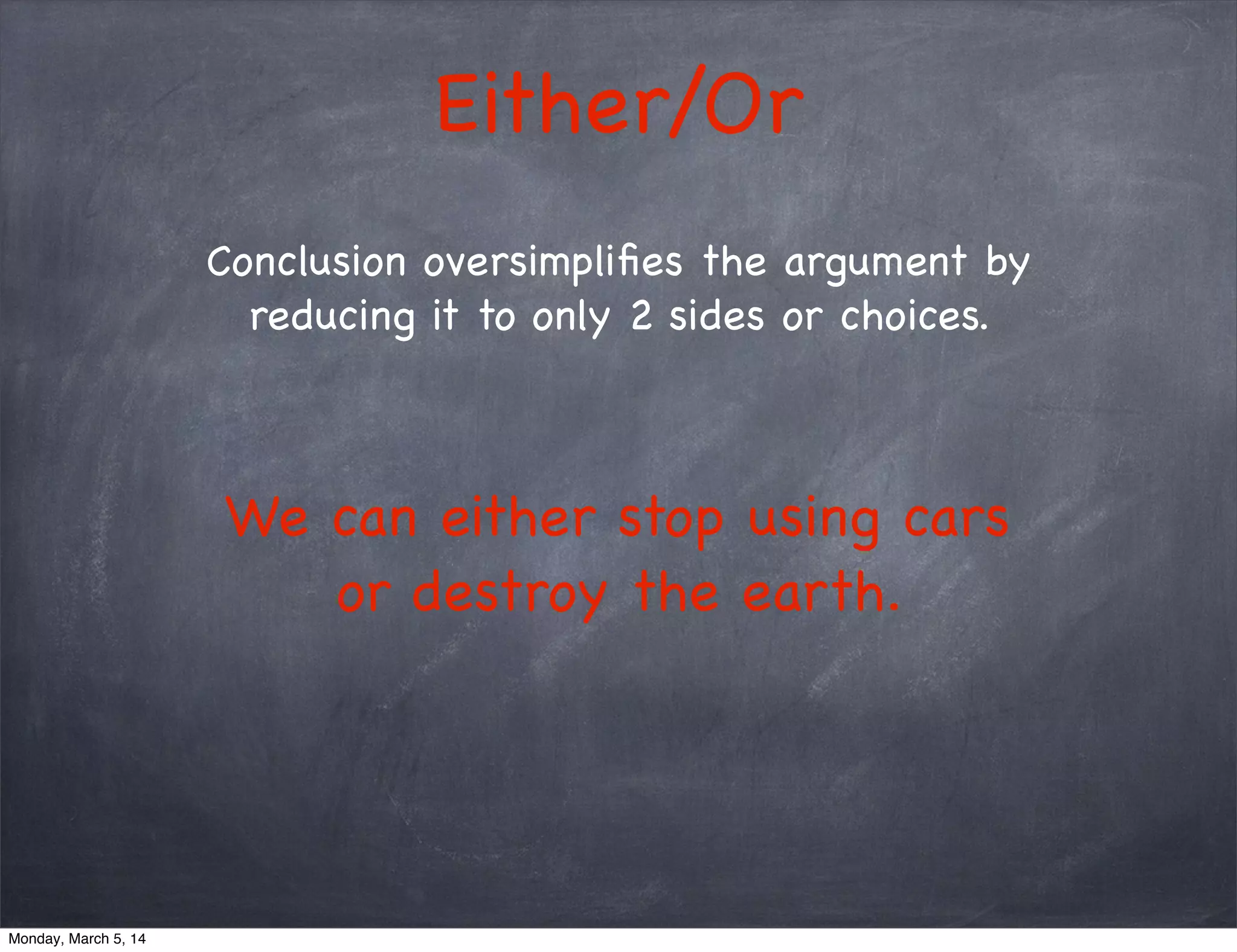
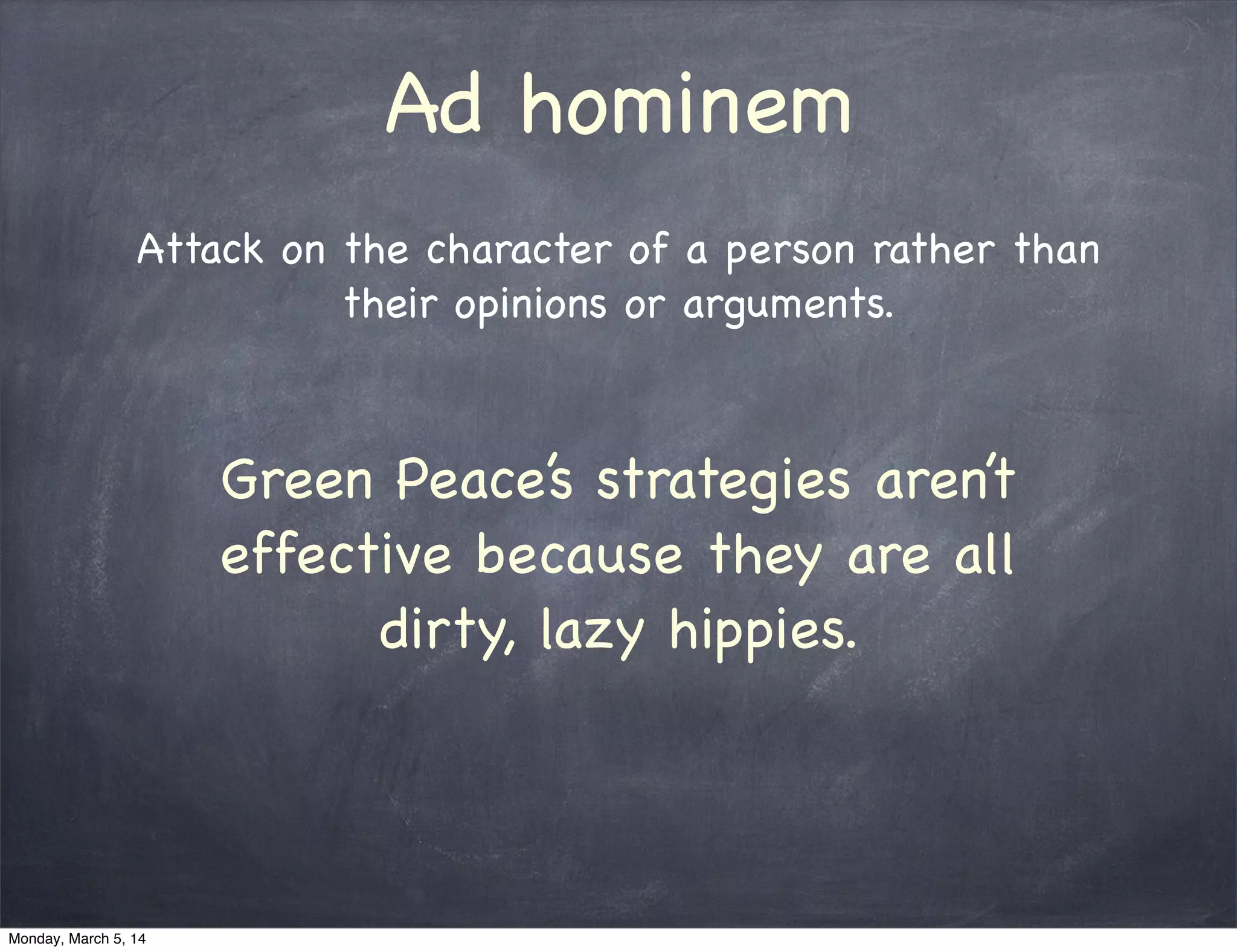
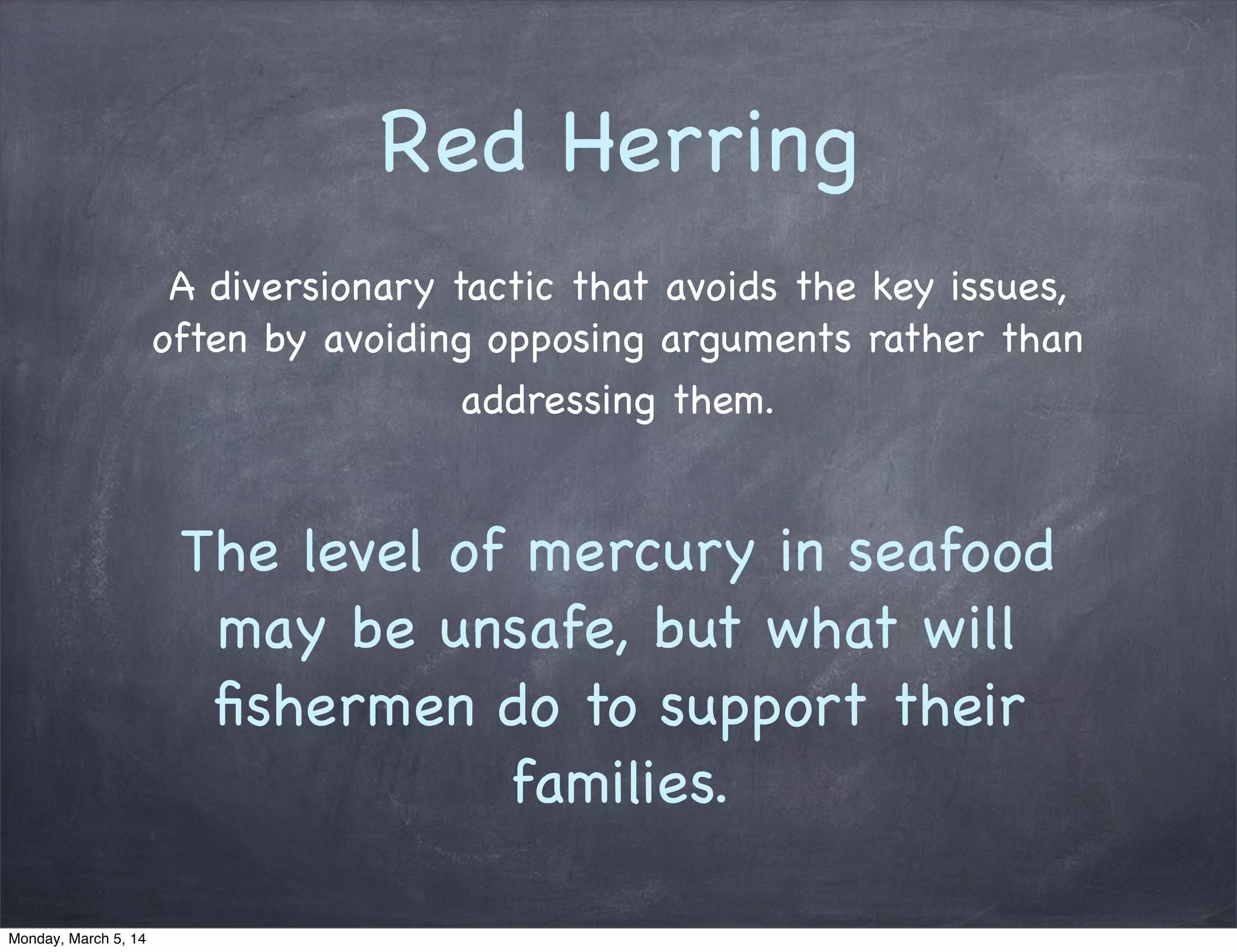
This document discusses valid and fallacious reasoning. Valid reasoning uses facts, statistics, or personal experience to logically support a claim. An example of valid reasoning is a student claiming their allergies act up on the playground due to pollen, since this follows a logical sequence based on true statements. Fallacious reasoning fails to sufficiently back up claims. Common types of fallacious reasoning include slippery slope, hasty generalization, post hoc ergo propter hoc, genetic fallacy, circular argument, either/or, ad hominem, ad populum, and red herring. The document provides examples of each type of fallacious reasoning.