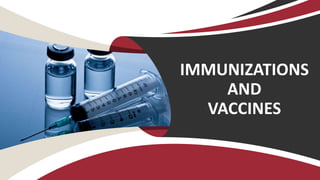
IMMUNIZATIONS
AND
VACCINES
What is vaccination?
• A vaccination is a biological
preparation that provides
active acquired immunity to a
particular disease.
• A vaccine typically contains an
agent that resembles a disease-
causing microorganism and is
often made from weakened or
killed forms of the microbe, its
toxins, or one of its surface
proteins.
Why it is called vaccine?
• The word "vaccine" was created
by Edward Jenner. The word
comes from the Latin word
vacca, meaning cow.
• A virus that mainly affects cows
(Cowpox) was used in the first
scientific demonstration that
giving a person one virus could
protect against a related and
more dangerous one.
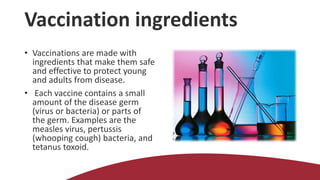
Vaccination ingredients
• Vaccinations are made with
ingredients that make them safe
and effective to protect young
and adults from disease.
• Each vaccine contains a small
amount of the disease germ
(virus or bacteria) or parts of
the germ. Examples are the
measles virus, pertussis
(whooping cough) bacteria, and
tetanus toxoid.
Can you die from vaccination?
• Millions of vaccinations are
administered to children and
adults in the world each year.
Serious adverse reactions are
uncommon and deaths
caused by vaccines are very
rare.
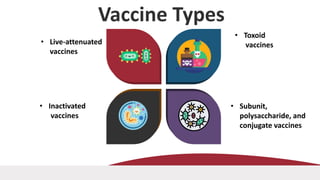
Vaccine Types
• Subunit,
polysaccharide, and
conjugate vaccines
• Inactivated
vaccines
• Toxoid
vaccines• Live-attenuated
vaccines
Live-attenuated vaccines
• Live vaccines use a weakened
(or attenuated) form of the
germ that causes a disease.
• Because these vaccines are so
similar to the natural infection
that they help prevent, they
create a strong and long-
lasting immune response. Just
1 or 2 doses of most live
vaccines can give you a lifetime
of protection against a germ
and the disease it causes.
Inactivated vaccines
• Inactivated vaccines use the
killed version of the germ
that causes a disease.
• Inactivated vaccines usually
don’t provide immunity
(protection) that’s as strong
as live vaccines. So you may
need several doses over
time (booster shots) in
order to get ongoing
immunity against diseases.
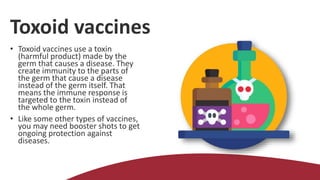
Toxoid vaccines
• Toxoid vaccines use a toxin
(harmful product) made by the
germ that causes a disease. They
create immunity to the parts of
the germ that cause a disease
instead of the germ itself. That
means the immune response is
targeted to the toxin instead of
the whole germ.
• Like some other types of vaccines,
you may need booster shots to get
ongoing protection against
diseases.
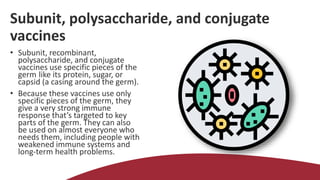
Subunit, polysaccharide, and conjugate
vaccines
• Subunit, recombinant,
polysaccharide, and conjugate
vaccines use specific pieces of the
germ like its protein, sugar, or
capsid (a casing around the germ).
• Because these vaccines use only
specific pieces of the germ, they
give a very strong immune
response that’s targeted to key
parts of the germ. They can also
be used on almost everyone who
needs them, including people with
weakened immune systems and
long-term health problems.
Vaccination can save your time
and money.
• A child with a vaccine-preventable
disease can be denied attendance
at schools or child care facilities.
• Some vaccine-preventable
diseases can result in prolonged
disabilities and can take a financial
toll because of lost time at work,
medical bills or long-term
disability care.
• In contrast, getting vaccinated
against these diseases is a good
investment and usually covered by
insurance.
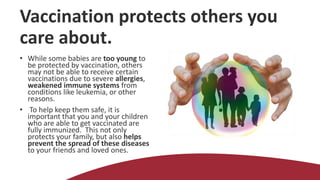
Vaccination protects others you
care about.
• While some babies are too young to
be protected by vaccination, others
may not be able to receive certain
vaccinations due to severe allergies,
weakened immune systems from
conditions like leukemia, or other
reasons.
• To help keep them safe, it is
important that you and your children
who are able to get vaccinated are
fully immunized. This not only
protects your family, but also helps
prevent the spread of these diseases
to your friends and loved ones.
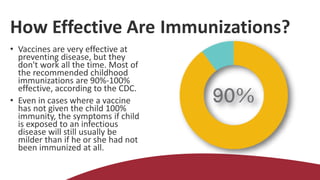
How Effective Are Immunizations?
• Vaccines are very effective at
preventing disease, but they
don't work all the time. Most of
the recommended childhood
immunizations are 90%-100%
effective, according to the CDC.
• Even in cases where a vaccine
has not given the child 100%
immunity, the symptoms if child
is exposed to an infectious
disease will still usually be
milder than if he or she had not
been immunized at all.
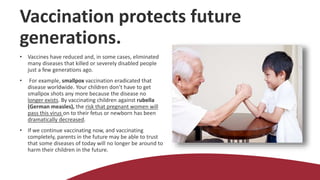
Vaccination protects future
generations.
• Vaccines have reduced and, in some cases, eliminated
many diseases that killed or severely disabled people
just a few generations ago.
• For example, smallpox vaccination eradicated that
disease worldwide. Your children don’t have to get
smallpox shots any more because the disease no
longer exists. By vaccinating children against rubella
(German measles), the risk that pregnant women will
pass this virus on to their fetus or newborn has been
dramatically decreased.
• If we continue vaccinating now, and vaccinating
completely, parents in the future may be able to trust
that some diseases of today will no longer be around to
harm their children in the future.

Vaccination

  • 1.
  • 2.
    What is vaccination? •A vaccination is a biological preparation that provides active acquired immunity to a particular disease. • A vaccine typically contains an agent that resembles a disease- causing microorganism and is often made from weakened or killed forms of the microbe, its toxins, or one of its surface proteins.
  • 3.
    Why it iscalled vaccine? • The word "vaccine" was created by Edward Jenner. The word comes from the Latin word vacca, meaning cow. • A virus that mainly affects cows (Cowpox) was used in the first scientific demonstration that giving a person one virus could protect against a related and more dangerous one.
  • 4.
    Vaccination ingredients • Vaccinationsare made with ingredients that make them safe and effective to protect young and adults from disease. • Each vaccine contains a small amount of the disease germ (virus or bacteria) or parts of the germ. Examples are the measles virus, pertussis (whooping cough) bacteria, and tetanus toxoid.
  • 5.
    Can you diefrom vaccination? • Millions of vaccinations are administered to children and adults in the world each year. Serious adverse reactions are uncommon and deaths caused by vaccines are very rare.
  • 6.
    Vaccine Types • Subunit, polysaccharide,and conjugate vaccines • Inactivated vaccines • Toxoid vaccines• Live-attenuated vaccines
  • 7.
    Live-attenuated vaccines • Livevaccines use a weakened (or attenuated) form of the germ that causes a disease. • Because these vaccines are so similar to the natural infection that they help prevent, they create a strong and long- lasting immune response. Just 1 or 2 doses of most live vaccines can give you a lifetime of protection against a germ and the disease it causes.
  • 8.
    Inactivated vaccines • Inactivatedvaccines use the killed version of the germ that causes a disease. • Inactivated vaccines usually don’t provide immunity (protection) that’s as strong as live vaccines. So you may need several doses over time (booster shots) in order to get ongoing immunity against diseases.
  • 9.
    Toxoid vaccines • Toxoidvaccines use a toxin (harmful product) made by the germ that causes a disease. They create immunity to the parts of the germ that cause a disease instead of the germ itself. That means the immune response is targeted to the toxin instead of the whole germ. • Like some other types of vaccines, you may need booster shots to get ongoing protection against diseases.
  • 10.
    Subunit, polysaccharide, andconjugate vaccines • Subunit, recombinant, polysaccharide, and conjugate vaccines use specific pieces of the germ like its protein, sugar, or capsid (a casing around the germ). • Because these vaccines use only specific pieces of the germ, they give a very strong immune response that’s targeted to key parts of the germ. They can also be used on almost everyone who needs them, including people with weakened immune systems and long-term health problems.
  • 11.
    Vaccination can saveyour time and money. • A child with a vaccine-preventable disease can be denied attendance at schools or child care facilities. • Some vaccine-preventable diseases can result in prolonged disabilities and can take a financial toll because of lost time at work, medical bills or long-term disability care. • In contrast, getting vaccinated against these diseases is a good investment and usually covered by insurance.
  • 12.
    Vaccination protects othersyou care about. • While some babies are too young to be protected by vaccination, others may not be able to receive certain vaccinations due to severe allergies, weakened immune systems from conditions like leukemia, or other reasons. • To help keep them safe, it is important that you and your children who are able to get vaccinated are fully immunized. This not only protects your family, but also helps prevent the spread of these diseases to your friends and loved ones.
  • 13.
    How Effective AreImmunizations? • Vaccines are very effective at preventing disease, but they don't work all the time. Most of the recommended childhood immunizations are 90%-100% effective, according to the CDC. • Even in cases where a vaccine has not given the child 100% immunity, the symptoms if child is exposed to an infectious disease will still usually be milder than if he or she had not been immunized at all.
  • 14.
    Vaccination protects future generations. •Vaccines have reduced and, in some cases, eliminated many diseases that killed or severely disabled people just a few generations ago. • For example, smallpox vaccination eradicated that disease worldwide. Your children don’t have to get smallpox shots any more because the disease no longer exists. By vaccinating children against rubella (German measles), the risk that pregnant women will pass this virus on to their fetus or newborn has been dramatically decreased. • If we continue vaccinating now, and vaccinating completely, parents in the future may be able to trust that some diseases of today will no longer be around to harm their children in the future.

Editor's Notes

  • #7 © Copyright PresentationGO.com – The free PowerPoint and Google Slides template library