Download to read offline
![Some experiences of formative use of TurnitinUK
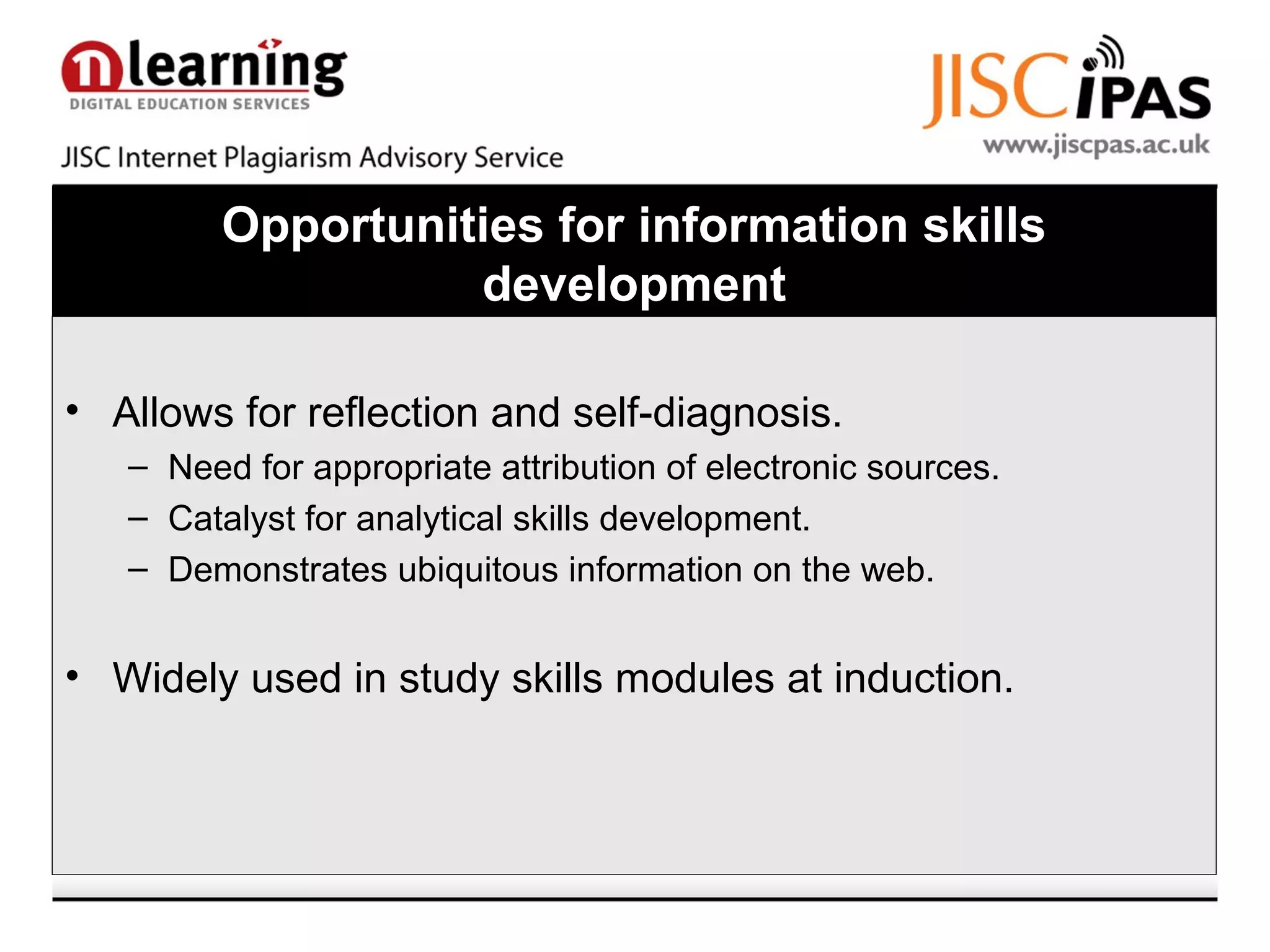
“most of the staff who are using Turnitin on a regular basis seem to see it as
a useful tool for teaching students about plagiarism, rather than a method of
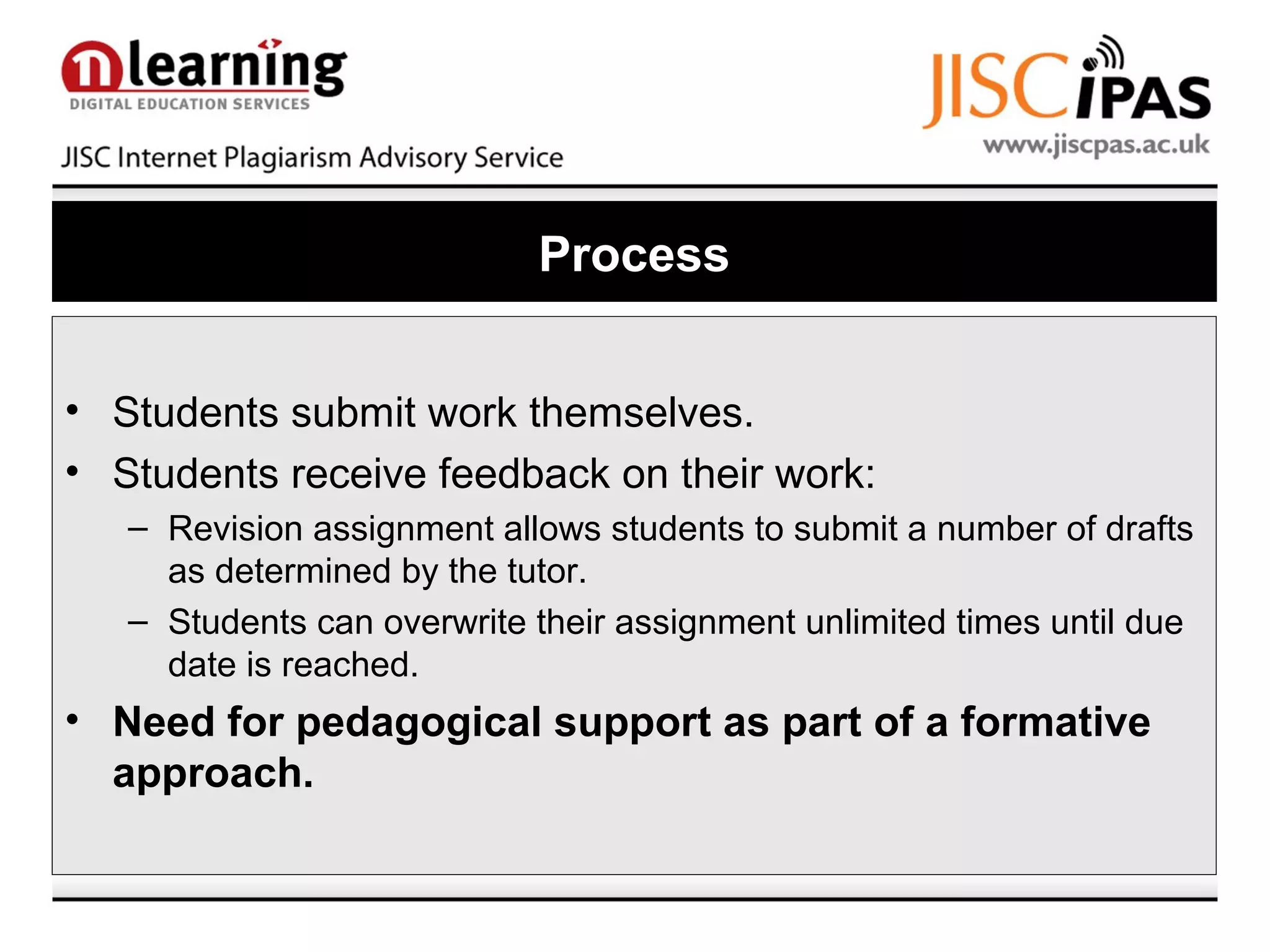
"catching them at it"… The practice is for the students to submit a formative
assignment and the tutor to discuss the implications of a high scoring match
with the student concerned should this occur.” (Beckton, 2007)
“Some staff are concerned about the use by students - "some students use it
to make the colour go away" - but generally even that is seen as having an
educative dimension. "To make the colour go away" requires them to think
about the content of their answers and their form of expression.” (Raeburn,
2006)
Beckton, J. (2007) ‘Student access to Turnitin’, Plagiarism discussion list, 1 February [Online]. Available email:
plagiarism@jiscmail.ac.uk
Raeburn, S. (2006) ‘Use of Turnitin at UK institutions’, Plagiarism discussion list, 2 March [Online]. Available email:
plagiarism@jiscmail.ac.uk](https://image.slidesharecdn.com/66rowellworkshop-170922140209/75/Using-TurnitinUK-to-promote-ethical-use-of-electronic-sources-Rowell-7-2048.jpg)


The document discusses TurnitinUK, a plagiarism detection tool used by UK universities and colleges. It explains that TurnitinUK checks student work against internet sources and other student papers to generate an Originality Report that can help identify plagiarized content. The document notes that while TurnitinUK can detect plagiarism, it is most effectively used formatively to educate students on properly attributing sources and developing their information literacy and writing skills. Examples are given of how some schools have successfully used TurnitinUK reports to provide feedback and learning opportunities for students to improve their work.


