Download to read offline
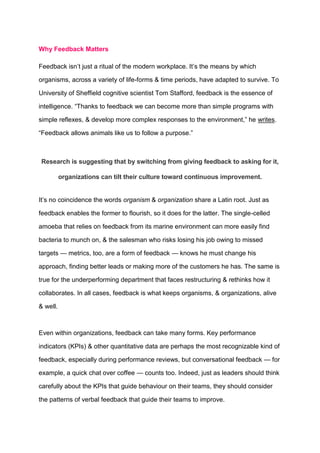
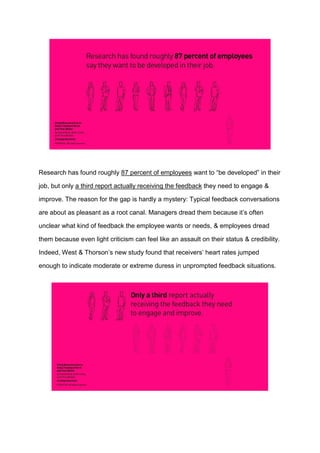


1) A study found that giving or receiving feedback elicits anxiety in participants, as measured by increased heart rates. Asking for feedback, rather than just giving it, reduces anxiety and leads to more honest and constructive feedback. 2) Feedback is essential for organisms and organizations to adapt and improve. However, typical feedback conversations activate the brain's threat response and put people on the defensive. 3) To make feedback more effective, organizations should encourage a culture of asking for feedback - specifically, asking for feedback that is broad, explicit, and frequent. This establishes psychological safety and puts people in a learning mindset.


