

NEGOTIATION
SKILL
Why do we negotiate
Because a deal as
presented, as it stands,
doesn't fit one of the
parties' needs or
requirements -to find
out what the other one
wants.
Negotiation Basics
• Get Data- information is power
• Have alternatives
• Practice with colleagues
• Be clear about what is most important to you
• Be relentlessly pleasant
Rules
• Preparation
You have to prepare - be clear about what is to be
negotiated
• Planning
Define the issues - get the facts.
• Execution
Understand other's position
Develop a strategy that takes both to gain
Execute with flexibility and patience
Games people Play
Threatening
Making Threats-warning of
unwelcome repercussions if you fail to
agree to the terms on offer saying
penalties will be incurred by your side.
Tell the other party that you can
negotiate under duress and the
concessions will be made only if the
party can prove the merits of the case.
Review other options and backup
plan. A party which threatens cannot
be a long term and beneficial team.
Offering insults
Questioning the performance of
your organization or your
professional competence,
criticizing the quality of your
products and service
Stay calm; do not lose your
temper or offer insults in return.
Restate your position firmly, and
request the other party to stick
to the issue in concern. You can
warn them that you will not
move the discussion forward
unless the other party is more
constructive.
Bluffing
Threatening punitive action without
being too specific; making dubious
assertions that the competitors are
undercutting price.
Call their bluff; refuse the agree to
other party's terms and wait for the
reaction.
Question all statements and ask for
evidence to support any claims that
appear dubious.
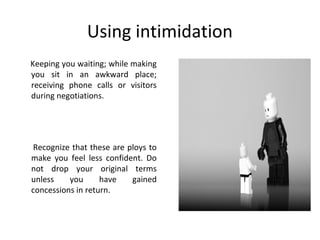
Using intimidation
Keeping you waiting; while making
you sit in an awkward place;
receiving phone calls or visitors
during negotiations.
Recognize that these are ploys to
make you feel less confident. Do
not drop your original terms
unless you have gained
concessions in return.
Dividing and Ruling
Exploiting potential
disagreements among members
of your team by appealing to the
person most sympathetic to their
case.
Brief team members in advance
and decide on a common
position. Call for an adjournment
if there is a difference in opinion
in your team and settle it
internally before approaching the
party.
Using leading questions
Asking you a series of questions
which lead you to declare a
weakness in your negotiating
position, force concessions from
your side.
Avoid answering question if you
doubt the intention behind it.
Attach conditions to any
concessions.
Making emotional appeal
Accusing you of acting unfairly in
not agreeing terms; stressing
their sacrifices; claiming to be
offended by your lack of trust.
Affirm your commitment to
achieving a fair settlement or
business terms. Ask questions to
test the validity of manipulative
claims. Lead the conversion back
to real issue.
Testing the boundaries
Gaining additional boundaries
concessions through minor
infringements of the terms
agreed, resulting in substantial
gain over a long period.
Be clear on what you are
agreeing to when you reach a
settlement. Draw a clearly
worded statement of terms
agreed and hold the other party
to these at all times.
Five Ways To Negotiate
More Effectively
• Learn to flinch.
• Recognize that people often ask for more than they
expect to get.
• The person with the most information usually does
better.
• Practice at every opportunity.
• Maintain your walk away power.
summary
I never refuse. I contradict. I sometimes forget.
Benjamin Disraeli
Thank you

Usefull negotiation-skill

  • 1.
  • 2.
    Why do wenegotiate Because a deal as presented, as it stands, doesn't fit one of the parties' needs or requirements -to find out what the other one wants.
  • 3.
    Negotiation Basics • GetData- information is power • Have alternatives • Practice with colleagues • Be clear about what is most important to you • Be relentlessly pleasant
  • 4.
    Rules • Preparation You haveto prepare - be clear about what is to be negotiated • Planning Define the issues - get the facts. • Execution Understand other's position Develop a strategy that takes both to gain Execute with flexibility and patience
  • 5.
  • 6.
    Threatening Making Threats-warning of unwelcomerepercussions if you fail to agree to the terms on offer saying penalties will be incurred by your side. Tell the other party that you can negotiate under duress and the concessions will be made only if the party can prove the merits of the case. Review other options and backup plan. A party which threatens cannot be a long term and beneficial team.
  • 7.
    Offering insults Questioning theperformance of your organization or your professional competence, criticizing the quality of your products and service Stay calm; do not lose your temper or offer insults in return. Restate your position firmly, and request the other party to stick to the issue in concern. You can warn them that you will not move the discussion forward unless the other party is more constructive.
  • 8.
    Bluffing Threatening punitive actionwithout being too specific; making dubious assertions that the competitors are undercutting price. Call their bluff; refuse the agree to other party's terms and wait for the reaction. Question all statements and ask for evidence to support any claims that appear dubious.
  • 9.
    Using intimidation Keeping youwaiting; while making you sit in an awkward place; receiving phone calls or visitors during negotiations. Recognize that these are ploys to make you feel less confident. Do not drop your original terms unless you have gained concessions in return.
  • 10.
    Dividing and Ruling Exploitingpotential disagreements among members of your team by appealing to the person most sympathetic to their case. Brief team members in advance and decide on a common position. Call for an adjournment if there is a difference in opinion in your team and settle it internally before approaching the party.
  • 11.
    Using leading questions Askingyou a series of questions which lead you to declare a weakness in your negotiating position, force concessions from your side. Avoid answering question if you doubt the intention behind it. Attach conditions to any concessions.
  • 12.
    Making emotional appeal Accusingyou of acting unfairly in not agreeing terms; stressing their sacrifices; claiming to be offended by your lack of trust. Affirm your commitment to achieving a fair settlement or business terms. Ask questions to test the validity of manipulative claims. Lead the conversion back to real issue.
  • 13.
    Testing the boundaries Gainingadditional boundaries concessions through minor infringements of the terms agreed, resulting in substantial gain over a long period. Be clear on what you are agreeing to when you reach a settlement. Draw a clearly worded statement of terms agreed and hold the other party to these at all times.
  • 14.
    Five Ways ToNegotiate More Effectively • Learn to flinch. • Recognize that people often ask for more than they expect to get. • The person with the most information usually does better. • Practice at every opportunity. • Maintain your walk away power.
  • 15.
    summary I never refuse.I contradict. I sometimes forget. Benjamin Disraeli
  • 16.

Editor's Notes

  • #2 Ability to do things is skill and discussing something to someone to reach in an agreement is negotiation. Ability to negotiate.
  • #5 http://www.analytictech.com/mb021/negotiat.htm
  • #15 http://sbinfocanada.about.com/cs/marketing/a/negotiationkr.htm
  • #16 http://www.thenegotiationguru.com/top-41-negotiation-quotes