USE THE SIMPLE PRESENT TO EXPRESS THE IDEA THAT AN ACTION IS
REPEATED OR USUAL. THE ACTION CAN BE A HABIT, A HOBBY, A DAILY
EVENT, A SCHEDULED EVENT OR SOMETHING THAT OFTEN HAPPENS. IT
CAN ALSO BE SOMETHING A PERSON OFTEN FORGETS OR USUALLY DOES

NOT DO .


I play tennis.
She does not play tennis.
Does he play tennis?
The train leaves every morning at 8 AM.
The train does not leave at 9 AM.
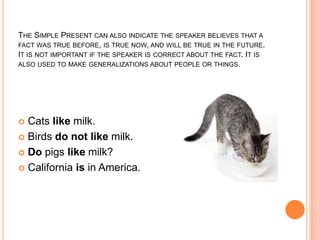
THE SIMPLE PRESENT CAN ALSO INDICATE THE SPEAKER BELIEVES THAT A
FACT WAS TRUE BEFORE, IS TRUE NOW, AND WILL BE TRUE IN THE FUTURE.
IT IS NOT IMPORTANT IF THE SPEAKER IS CORRECT ABOUT THE FACT. IT IS
ALSO USED TO MAKE GENERALIZATIONS ABOUT PEOPLE OR THINGS.


 Cats like milk.
 Birds do not like milk.

 Do pigs like milk?

 California is in America.
SPEAKERS OCCASIONALLY USE SIMPLE PRESENT TO TALK ABOUT
SCHEDULED EVENTS IN THE NEAR FUTURE. THIS IS MOST COMMONLY DONE
WHEN TALKING ABOUT PUBLIC TRANSPORTATION, BUT IT CAN BE USED WITH
OTHER SCHEDULED EVENTS AS WELL.


   The train leaves tonight at 6 PM.
   The bus does not arrive at 11 AM, it arrives at 11 PM.
   When do we board the plane?
   The party starts at 8 o'clock.
SPEAKERS SOMETIMES USE THE SIMPLE PRESENT TO EXPRESS THE IDEA
THAT AN ACTION IS HAPPENING OR IS NOT HAPPENING NOW. THIS CAN ONLY
BE DONE WITH NON-CONTINUOUS VERBS AND CERTAIN MIXED VERBS.


   I am here now.
   She is not here now.
   He needs help right now.
   He does not need help now.
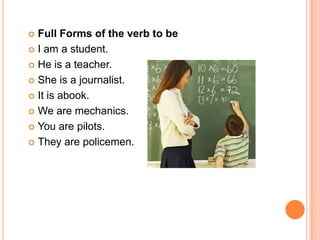
 Full Forms of the verb to be
 I am a student.

 He is a teacher.

 She is a journalist.

 It is abook.

 We are mechanics.

 You are pilots.

 They are policemen.
 Full negative forms of the verb to be
 I am not a singer.

 He is not a receptionist.

 She is not a nurse.

 It is not my book.

 We are not musicians.

 You are not a shop assistant.

 They are not taxi drivers.
   The verb to be - yes / no questions

 Am I right?
 I she here?

 Is she a nurse?

 Is it second-hand?

 Are we wrong?

 Are you Alan Parker?

 Are they American?
 Affirmative sentences:
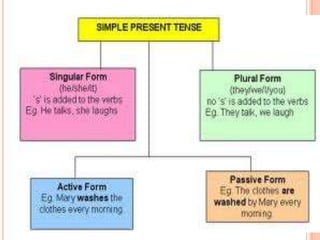
 I read books.

 My brother reads books.

 We sing pop songs.

 She sings pop songs.

 I play handball.

 John plays handball.
 Negative sentences:
You must not negate a full verb in English.
Always use the auxiliary do for negations.
 I like computers.

 I don't like computers at all.
  My friend likes computers.
 My mum doesn't like computers at all.
   Look at these examples with the main verb like:

   subject          auxiliary verb    main verb

+I, you, we, they                           like     coffee.
   He, she, it                               likes    coffee.
-I, you, we, they           do not          like     coffee.
   He, she, it              does not        like     coffee?
   Do I, you, we, they                       like    coffee?
   Does he, she, it                          like    coffee?
 Look at these examples with the main verb be.
  Notice that there is no auxiliary:
 subject             main verb
     I                        am           French.
  You, we, they              are         French.
  He, she, it                is          French. -
  I                        am not          old. You,
  we, they           are not          old.       He,
  she, it             is not           old.      ?
  Am                      I               late?
    Are               you, we, they          late?
      I                she, she, it           late?
We use the simple present tense when:
 the action is general

 the action happens all the time, or habitually, in the
  past, present and future
 the action is not only happening now

 the statement is always true
   -s or -es ?
 With most verbs, the third person singular form is created
  simply by adding -S. However, with some verbs, you need to
  add -ES or change the ending a little. Here are the rules:
Verb ending in... How to make the 3rd person singular
S                    Add –ES                      He passes
Z                    Add –ES                      She waltzes
Sh                   Add –ES                      She wishes
Ch                   Add –ES                       He watches
X                   Add –ES                        She mixes
O                   Add –ES                         He goes
consonant + y      Change Y to I, then add ES It flies
  [anything else]    Add –S                       He sings
Use the simple present to express the idea

Use the simple present to express the idea

  • 2.
    USE THE SIMPLEPRESENT TO EXPRESS THE IDEA THAT AN ACTION IS REPEATED OR USUAL. THE ACTION CAN BE A HABIT, A HOBBY, A DAILY EVENT, A SCHEDULED EVENT OR SOMETHING THAT OFTEN HAPPENS. IT CAN ALSO BE SOMETHING A PERSON OFTEN FORGETS OR USUALLY DOES NOT DO . I play tennis. She does not play tennis. Does he play tennis? The train leaves every morning at 8 AM. The train does not leave at 9 AM.
  • 3.
    THE SIMPLE PRESENTCAN ALSO INDICATE THE SPEAKER BELIEVES THAT A FACT WAS TRUE BEFORE, IS TRUE NOW, AND WILL BE TRUE IN THE FUTURE. IT IS NOT IMPORTANT IF THE SPEAKER IS CORRECT ABOUT THE FACT. IT IS ALSO USED TO MAKE GENERALIZATIONS ABOUT PEOPLE OR THINGS.  Cats like milk.  Birds do not like milk.  Do pigs like milk?  California is in America.
  • 4.
    SPEAKERS OCCASIONALLY USESIMPLE PRESENT TO TALK ABOUT SCHEDULED EVENTS IN THE NEAR FUTURE. THIS IS MOST COMMONLY DONE WHEN TALKING ABOUT PUBLIC TRANSPORTATION, BUT IT CAN BE USED WITH OTHER SCHEDULED EVENTS AS WELL.  The train leaves tonight at 6 PM.  The bus does not arrive at 11 AM, it arrives at 11 PM.  When do we board the plane?  The party starts at 8 o'clock.
  • 5.
    SPEAKERS SOMETIMES USETHE SIMPLE PRESENT TO EXPRESS THE IDEA THAT AN ACTION IS HAPPENING OR IS NOT HAPPENING NOW. THIS CAN ONLY BE DONE WITH NON-CONTINUOUS VERBS AND CERTAIN MIXED VERBS.  I am here now.  She is not here now.  He needs help right now.  He does not need help now.
  • 6.
     Full Formsof the verb to be  I am a student.  He is a teacher.  She is a journalist.  It is abook.  We are mechanics.  You are pilots.  They are policemen.
  • 7.
     Full negativeforms of the verb to be  I am not a singer.  He is not a receptionist.  She is not a nurse.  It is not my book.  We are not musicians.  You are not a shop assistant.  They are not taxi drivers.
  • 8.
    The verb to be - yes / no questions  Am I right?  I she here?  Is she a nurse?  Is it second-hand?  Are we wrong?  Are you Alan Parker?  Are they American?
  • 9.
     Affirmative sentences: I read books.  My brother reads books.  We sing pop songs.  She sings pop songs.  I play handball.  John plays handball.
  • 10.
     Negative sentences: Youmust not negate a full verb in English. Always use the auxiliary do for negations.  I like computers.  I don't like computers at all. My friend likes computers.  My mum doesn't like computers at all.
  • 11.
    Look at these examples with the main verb like:  subject auxiliary verb main verb +I, you, we, they like coffee. He, she, it likes coffee. -I, you, we, they do not like coffee. He, she, it does not like coffee? Do I, you, we, they like coffee? Does he, she, it like coffee?
  • 12.
     Look atthese examples with the main verb be. Notice that there is no auxiliary:  subject main verb I am French. You, we, they are French. He, she, it is French. - I am not old. You, we, they are not old. He, she, it is not old. ? Am I late? Are you, we, they late? I she, she, it late?
  • 13.
    We use thesimple present tense when:  the action is general  the action happens all the time, or habitually, in the past, present and future  the action is not only happening now  the statement is always true
  • 14.
    -s or -es ?  With most verbs, the third person singular form is created simply by adding -S. However, with some verbs, you need to add -ES or change the ending a little. Here are the rules: Verb ending in... How to make the 3rd person singular S Add –ES He passes Z Add –ES She waltzes Sh Add –ES She wishes Ch Add –ES He watches X Add –ES She mixes O Add –ES He goes consonant + y Change Y to I, then add ES It flies [anything else] Add –S He sings