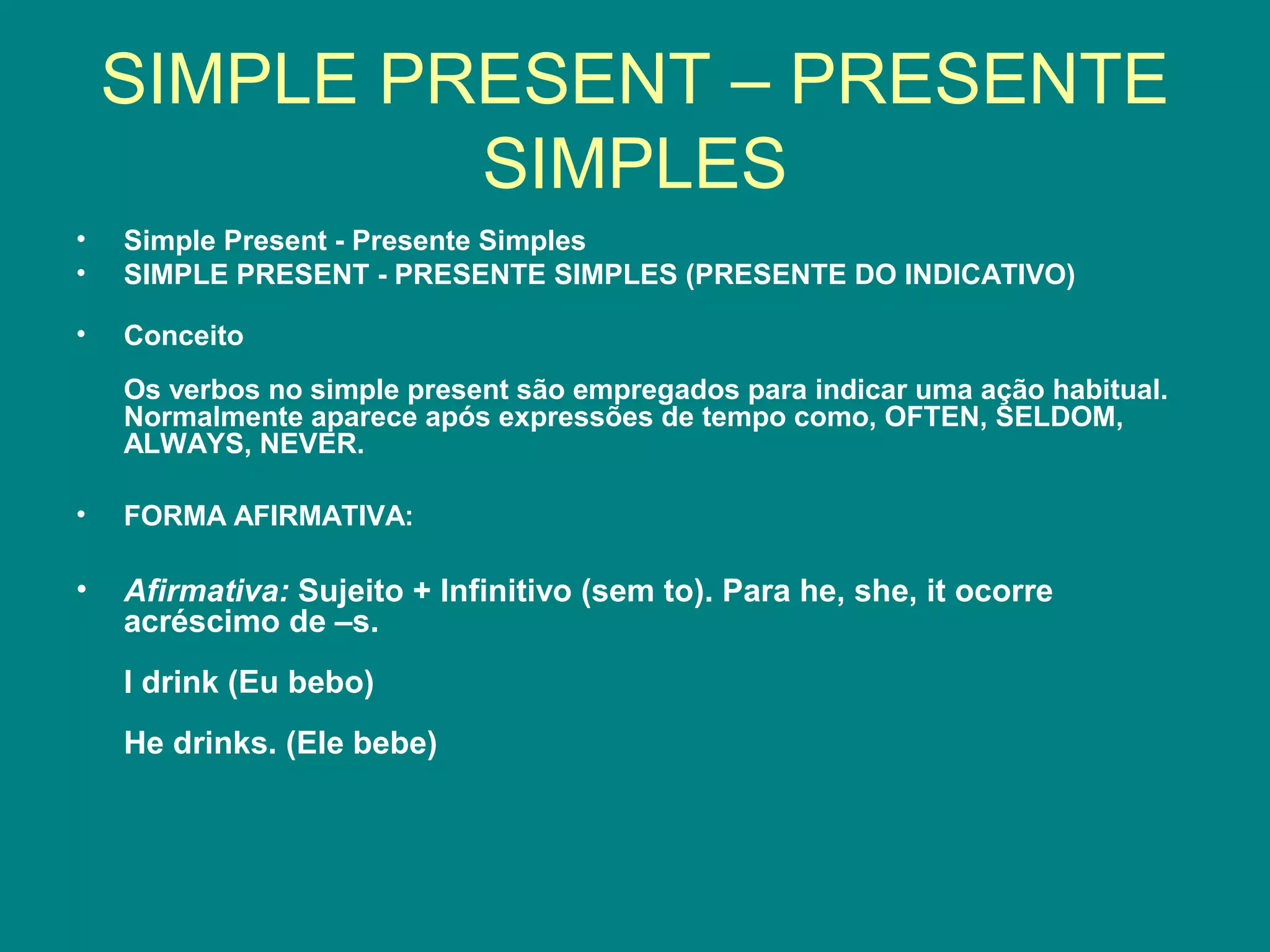
SIMPLE PRESENT – PRESENTE
SIMPLES
• Simple Present - Presente Simples
• SIMPLE PRESENT - PRESENTE SIMPLES (PRESENTE DO INDICATIVO)
• Conceito
Os verbos no simple present são empregados para indicar uma ação habitual.
Normalmente aparece após expressões de tempo como, OFTEN, SELDOM,
ALWAYS, NEVER.
• FORMA AFIRMATIVA:
• Afirmativa: Sujeito + Infinitivo (sem to). Para he, she, it ocorre
acréscimo de –s.
I drink (Eu bebo)
He drinks. (Ele bebe)
SIMPLE PRESENT – PRESENTE
SIMPLES
• VERBOS AUXILIARES
• DO E DOES
• DO USADO COM OS PRONOMES
PESSOAIS: I WE YOU THEY
• DOES USADO COM OS PRONOMES
PESSOAIS: HE SHE IT
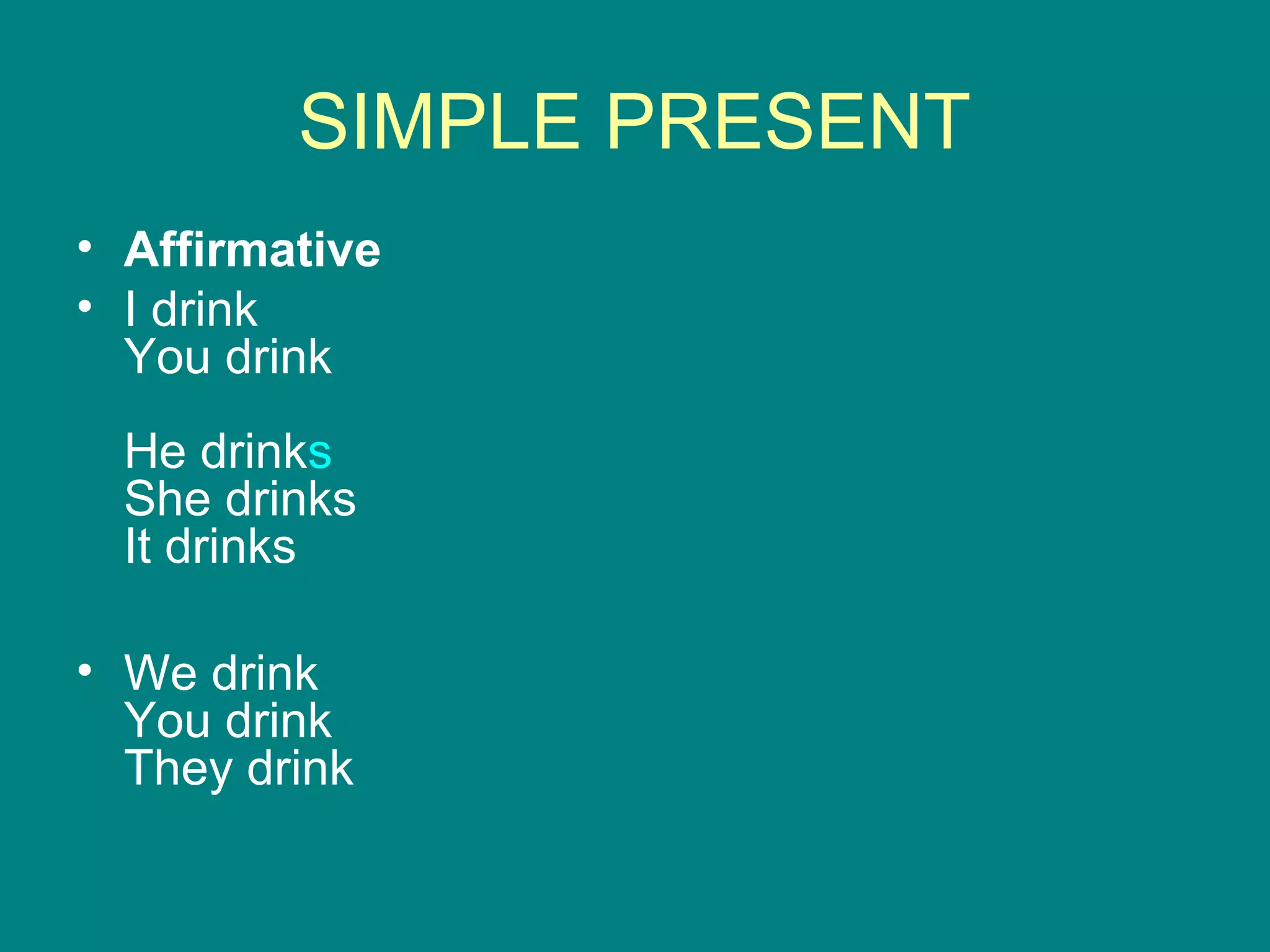
SIMPLE PRESENT
• Affirmative
• I drink
You drink
He drinks
She drinks
It drinks
• We drink
You drink
They drink
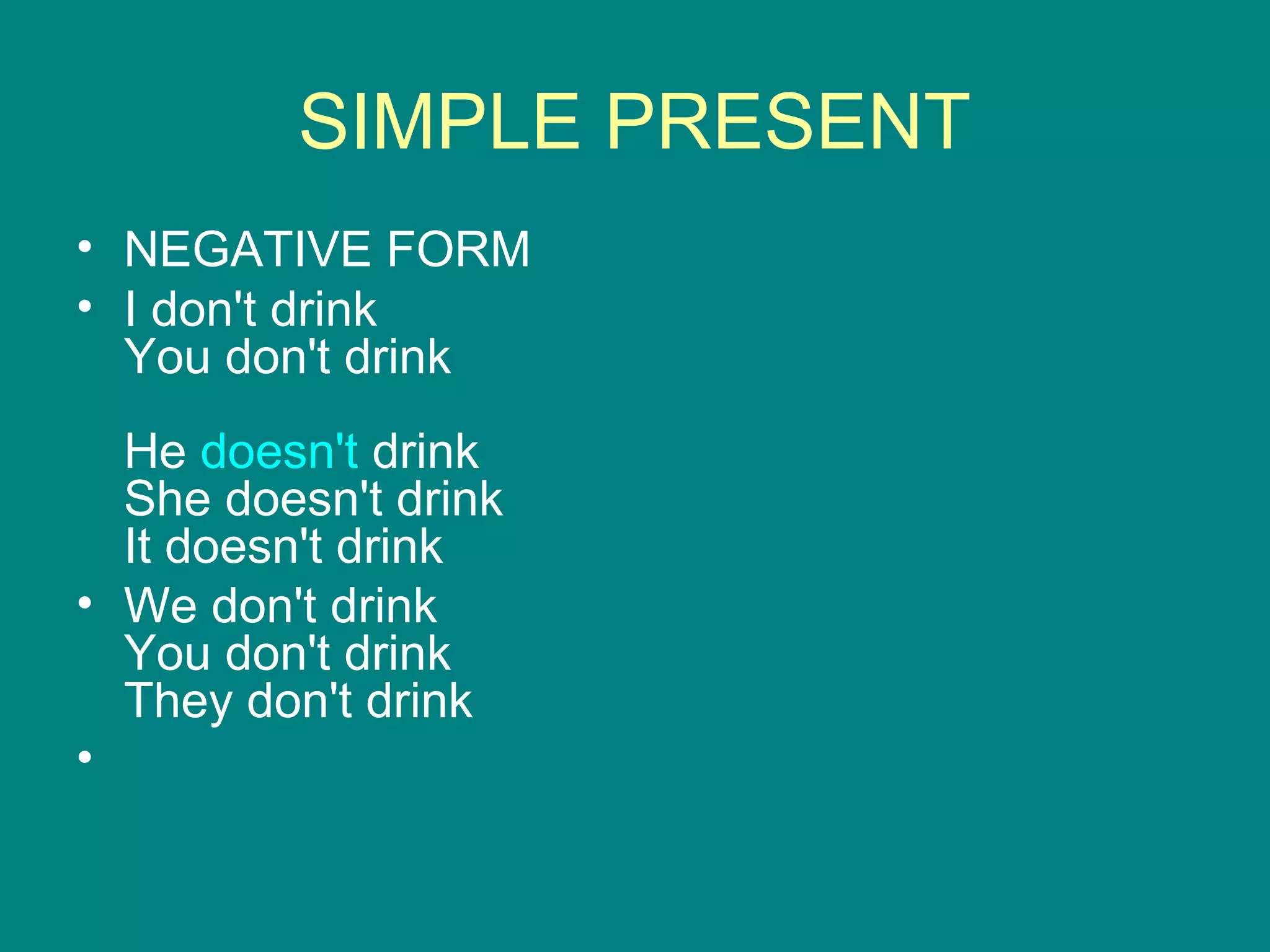
SIMPLE PRESENT
• NEGATIVE FORM
• I don't drink
You don't drink
He doesn't drink
She doesn't drink
It doesn't drink
• We don't drink
You don't drink
They don't drink
•
SIMPLE PRESENT
• INTERROGATIVE
• I don't drink
You don't drink
He doesn't drink
She doesn't drink
It doesn't drink
• We don't drink
You don't drink
They don't drink
•
SIMPLE PRESENT – FORMA
NEGATIVA
• Negativa: Sujeito + Do/Does + Not + Verbo
principal no infinitivo (sem to). Para he, she, it
usa-se does; para as demais usa-se do.
I do not drink = I don’t drink. (Eu não bebo)
He does not drink = He doesn’t drink. (Ele
não bebe)
SIMPLE PRESENT – FORMA
INTERROGATIVA
• Interrogativa: Do/Does + Sujeito + Verbo
no infinitivo (sem to)
• EXEMPLOS:
• DO YOU PLAY TENNIS?
• DOES SHE STUDY ENGLISH?
• DOES HE GO TO SCHOOL?
• DO YOU DANCE?
SIMPLE PRESENT
• Examples:
• I play tennis.
• She does not play tennis.
• Does he play tennis?
• The train leaves every morning at 8 AM.
• The train does not leave at 9 AM.
• When does the train usually leave?
• She always forgets her purse.
• He never forgets his wallet.
• Every twelve months, the Earth circles the Sun.
• Does the Sun circle the Earth?
SIMPLE PRESENT
• Na 3ª. pessoa do singular (he, she, it),
quando o verbo terminar em:
a) o > go (ir), acrescenta-se es.
Exemplo: He goes to school by bus.
Ele vai para a escola de ônibus.
b) s > kiss (beijar), acrescenta-se es.
Exemplo: She kisses her husband.
Ela beija o marido dela.
SIMPLE PRESENT
• c) sh/ch > wash / watch, acrescenta-se es.
Exemplo: She washes her hands.
Ela lava suas mãos.
She watches TV every night.
Ela assisti TV todas as noites.
d) x > wax, acrescenta-se es.
Exemplo: He waxes his car.
Ele encera seu carro.
SIMPLE PRESENT
• e) y > precedido de consoante > study (estudar),
tira-se o y e acrescenta-se ies.
Exemplo: He studies English at school.
Ele estuda Inglês na escola.
f) y > precedido de vogal > play (tocar, jogar),
acrescenta-se s.
Exemplo: She plays tennis every Sunday.
Ela joga tênis todo Domingo.
He plays the guitar every day.
Ele toca violão todos os dias.

Simple present tense

  • 1.
    SIMPLE PRESENT –PRESENTE SIMPLES • Simple Present - Presente Simples • SIMPLE PRESENT - PRESENTE SIMPLES (PRESENTE DO INDICATIVO) • Conceito Os verbos no simple present são empregados para indicar uma ação habitual. Normalmente aparece após expressões de tempo como, OFTEN, SELDOM, ALWAYS, NEVER. • FORMA AFIRMATIVA: • Afirmativa: Sujeito + Infinitivo (sem to). Para he, she, it ocorre acréscimo de –s. I drink (Eu bebo) He drinks. (Ele bebe)
  • 2.
    SIMPLE PRESENT –PRESENTE SIMPLES • VERBOS AUXILIARES • DO E DOES • DO USADO COM OS PRONOMES PESSOAIS: I WE YOU THEY • DOES USADO COM OS PRONOMES PESSOAIS: HE SHE IT
  • 3.
    SIMPLE PRESENT • Affirmative •I drink You drink He drinks She drinks It drinks • We drink You drink They drink
  • 4.
    SIMPLE PRESENT • NEGATIVEFORM • I don't drink You don't drink He doesn't drink She doesn't drink It doesn't drink • We don't drink You don't drink They don't drink •
  • 5.
    SIMPLE PRESENT • INTERROGATIVE •I don't drink You don't drink He doesn't drink She doesn't drink It doesn't drink • We don't drink You don't drink They don't drink •
  • 6.
    SIMPLE PRESENT –FORMA NEGATIVA • Negativa: Sujeito + Do/Does + Not + Verbo principal no infinitivo (sem to). Para he, she, it usa-se does; para as demais usa-se do. I do not drink = I don’t drink. (Eu não bebo) He does not drink = He doesn’t drink. (Ele não bebe)
  • 7.
    SIMPLE PRESENT –FORMA INTERROGATIVA • Interrogativa: Do/Does + Sujeito + Verbo no infinitivo (sem to) • EXEMPLOS: • DO YOU PLAY TENNIS? • DOES SHE STUDY ENGLISH? • DOES HE GO TO SCHOOL? • DO YOU DANCE?
  • 8.
    SIMPLE PRESENT • Examples: •I play tennis. • She does not play tennis. • Does he play tennis? • The train leaves every morning at 8 AM. • The train does not leave at 9 AM. • When does the train usually leave? • She always forgets her purse. • He never forgets his wallet. • Every twelve months, the Earth circles the Sun. • Does the Sun circle the Earth?
  • 9.
    SIMPLE PRESENT • Na3ª. pessoa do singular (he, she, it), quando o verbo terminar em: a) o > go (ir), acrescenta-se es. Exemplo: He goes to school by bus. Ele vai para a escola de ônibus. b) s > kiss (beijar), acrescenta-se es. Exemplo: She kisses her husband. Ela beija o marido dela.
  • 10.
    SIMPLE PRESENT • c)sh/ch > wash / watch, acrescenta-se es. Exemplo: She washes her hands. Ela lava suas mãos. She watches TV every night. Ela assisti TV todas as noites. d) x > wax, acrescenta-se es. Exemplo: He waxes his car. Ele encera seu carro.
  • 11.
    SIMPLE PRESENT • e)y > precedido de consoante > study (estudar), tira-se o y e acrescenta-se ies. Exemplo: He studies English at school. Ele estuda Inglês na escola. f) y > precedido de vogal > play (tocar, jogar), acrescenta-se s. Exemplo: She plays tennis every Sunday. Ela joga tênis todo Domingo. He plays the guitar every day. Ele toca violão todos os dias.