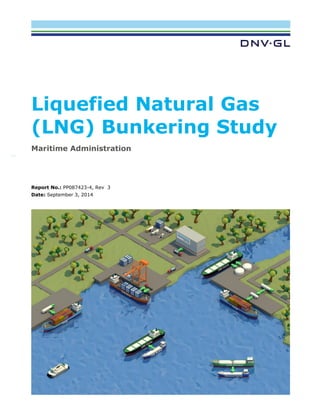
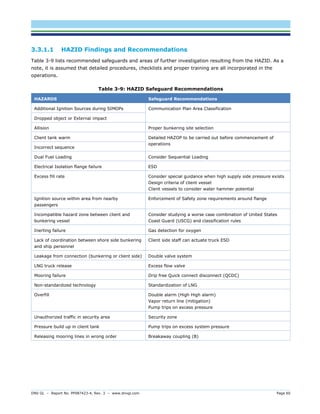
Liquefied Natural Gas (LNG) Bunkering Study 
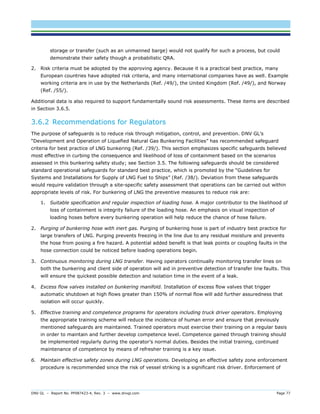
Maritime Administration 
Report No.: PP087423-4, Rev 3 
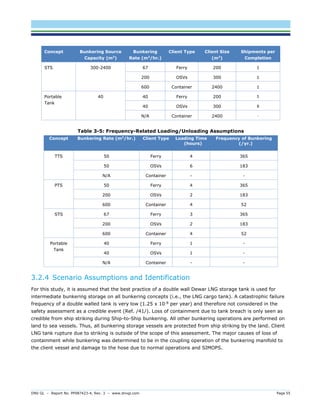
Date: September 3, 2014
DNV GL – Report No. PP087423-4, Rev. 3 – www.dnvgl.com Page i 
Disclaimer 
This material is based upon work supported by the U.S. Department of Transportation Maritime Administration under Agreement No. DTMA-91-H-2013. Opinions or points of view expressed in this document are those of the authors and do not necessarily reflect the Official position of, or a position that is endorsed by, the U.S. Government, the U.S. Department of Transportation, or any sub-agency or employee thereof. 
Contributors 
Jan Hagen Andersen 
Matthé Bakker 
Lars Petter Blikom 
Aaron Brown 
Derek Chen 
Richard Green 
Danielle Holden 
Chris Johnson 
Crystal Jones 
Houssein Kheireddine 
Seeba Ann Matthew 
Dennis van der Meulen 
Henning Mohn 
Tatiana Norman 
Marisa Pierce 
Robin Pitblado 
Anna Qiao 
Vijay Raghunathan 
Erik Skramstad 
Per Sollie 
Cheryl Stahl 
Katrine Lie Strøm 
Xingyan Elsie Tang 
Jan Tellkamp 
Tony Teo 
Sofie Van Volsem
DNV GL – Report No. PP087423-4, Rev. 3 – www.dnvgl.com Page ii 
About DNV GL 
Driven by its purpose of safeguarding life, property and the environment, DNV GL enables organizations to advance the safety and sustainability of their business. DNV GL provides classification and technical assurance along with software and independent expert advisory services to the maritime, oil and gas, and energy industries. It also provides certification services to customers across a wide range of industries. 
Combining leading technical and operational expertise, risk methodology, and in-depth industry knowledge, DNV GL empowers its customers’ decisions and actions with trust and confidence. The company continuously invests in research and collaborative innovation to provide customers and society with operational and technological foresight. DNV GL, whose origins go back to 1864, operates globally in more than 100 countries with its 16,000 professionals dedicated to helping their customers make the world safer, smarter, and greener. 
DNV GL is the leading technical advisor to the global oil and gas industry. The company provides consistent, integrated services within technical and marine assurance and advisory, risk management, and offshore classification, to enable safe, reliable and enhanced performance in projects and operations. Together with its partners, DNV GL drives the industry forward by developing best practices and standards. Its people combine industry expertise, multi-disciplinary skills, and innovation to solve complex challenges for its customers.
DNV GL – Report No. PP087423-4, Rev. 3 – www.dnvgl.com Page iii 
EXECUTIVE SUMMARY 
LNG is an attractive fuel choice for many vessels because it exceeds the air quality standards set forth in the North American Emission Control Area (ECA), and the price of LNG is significantly lower than ECA-compliant fuel. However, because the use of LNG as a marine propulsion fuel is a relatively new concept in the U.S., there are significant safety and regulatory gaps. In addition, there are several challenges related to the development of a national infrastructure for LNG bunkering. 
MARAD has partnered with other government agencies, industry, and academia to determine the feasibility and likelihood of using natural gas as a propulsion fuel in the maritime sector. Through previous research and outreach with all of the stakeholders, MARAD identified specific information needs regarding natural gas infrastructure and the refueling of vessels (i.e., bunkering). 
MARAD contracted with DNV GL to complete this study with the objective of analyzing existing LNG bunkering infrastructure, safety, regulations, and training, and identifying and recommending best practices. Over the course of this study, DNV GL has made recommendations for specific audiences concerning standards and integration of LNG bunkering into U.S. maritime operations. The study is divided into four sections that analyze the following topics: LNG bunkering infrastructure; LNG bunkering safety; regulations; and personnel training. 
LNG Bunkering Infrastructure in the U.S. 
Infrastructure development as well as vessel transition to LNG propulsion will be driven by tighter environmental regulations and price differences between conventional fuels and natural gas. Because the development of infrastructure is acutely dependent on the needs of specific ports and stakeholders, there is no single bunkering option. 
To address key factors for the development of infrastructure at a port, four potential bunkering options were identified and evaluated. The bunkering options included truck to ship, shore to ship, ship to ship, and portable tank transfer. 
Recommendations necessary to be considered for development of bunkering infrastructure should be focused on the following: 
 Analysis of vessel types that utilize ports in the U.S. to determine what bunkering methods will be necessary. The analysis should include an assessment of select ports in order to determine the most viable alternatives given port-specific constraints. A component of the analysis should include identification of ports where LNG bunkering infrastructure would be in the national best interest as opposed to locations that are less desirable for security, safety, or other reasons. 
 Evaluation of LNG bunkering site availability for increases in demand, considering transfer volume and frequency. The evaluation should include an optimization study that assesses the optimal infrastructure build-out to provide LNG bunkering for both high-frequency, low volume transfers and low frequency, high volume transfers more efficiently. Further evaluation would include a comparative risk assessment study of the safety aspects for large-scale truck transport to port locations vs. large-scale rail transport to port locations vs. natural gas pipeline and local liquefaction. 
 Comprehensive analysis of road transportation safety and security risks from initial infrastructure build-out. Specifically, a traffic study is recommended which would assess LNG transport
DNV GL – Report No. PP087423-4, Rev. 3 – www.dnvgl.com Page iv 
safety/security risks, investigate acceptable limits on national, regional, and local scales, and identify possible practical risk reducing measures. In addition, a detailed study of potential routes for LNG transportation (truck, rail, and pipeline) that avoid densely populated areas along with emergency response capabilities should be completed. 
LNG Bunkering Safety 
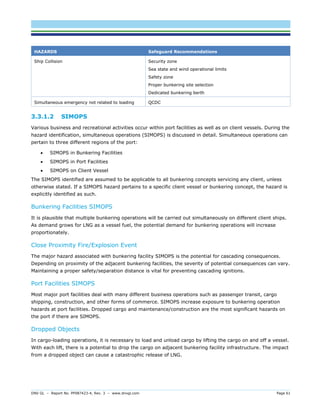
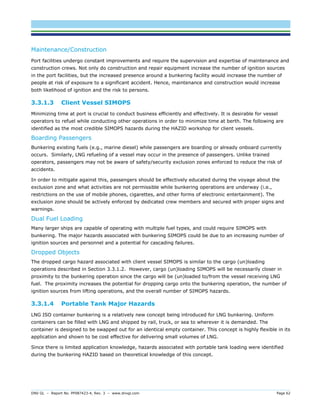
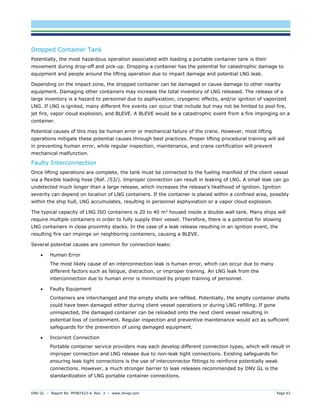
To address safety during bunkering, potential hazards associated with LNG bunkering, hazard distances, and risks associated with each bunkering concept were analyzed. In addition, relative risks and safety zone guidance were evaluated for three different bunkering concepts: Truck to Ship (TTS), Port to Ship (PTS) and Ship to Ship (STS). Individual risk was estimated and compared for the three different bunkering concepts. 
In general, development and implementation of a regulatory approval process for LNG bunkering operations and associated facilities is recommended. The process should include a Quantitative Risk Assessment (QRA) that utilizes probabilistic risk acceptance criteria to assess the acceptability of the risk posed. Specific recommendations to promote safe LNG bunkering operations include the following: 
 Completion of a port risk assessment at each port where LNG bunkering will likely take place. 
 Development of a methodology for and completion of a quantitative port-wide navigational risk assessment that determines how changes in traffic character and frequency/density affect the safety and security of the public, workers, critical infrastructure, and commercial operations. 
 Development of effective security and safety zone enforcement procedures to promote a safe environment for the port population. 
Regulatory Gaps Related to LNG Bunkering 
Although the use of LNG marine fuel is not a new concept, there exists a significant regulatory gap for bunkering and associated infrastructure operation. The establishment of uniform standards and guidelines for state and local lawmakers will allow for a consistent and predictable regulatory framework. Regulatory gaps were identified for LNG metrology, local vs. federal jurisdiction over bunkering operations, and a lack of framework for the review of potential risks related to LNG bunkering from non-self-propelled barges. One of the primary conclusions identified the need for greater clarity in regulations addressing simultaneous operations (SIMOPS). 
Training Needs for LNG Bunkering 
Proper training for crew and operators involved with LNG bunkering operations is critical for establishment and maintenance of safe practices. Existing national and international regulations associated with LNG bunkering operations were identified and evaluated. Recommendations were provided based on current efforts at the IMO for updating the IGF (The International Code of Safety for Ships using Gases or other Low-Flashpoint Fuels ) code, ISO (The International Organization for Standardization ) Draft TS 18683, and DNV GL Competence Related to the On Board Use of LNG as Fuel standard No. 3.325 that recommend safeguard criteria for best practice of LNG bunkering. A training scheme for crew and first responders has been provided that addresses basic, advanced, and site-specific recommended practices.
DNV GL – Report No. PP087423-4, Rev. 3 – www.dnvgl.com Page v 
Table of Contents 
1 INTRODUCTION ................................................................................................................... 1 
1.1 Background......................................................................................................................... 1 
1.2 Structure of this Report ........................................................................................................ 3 
1.3 Study Boundaries ................................................................................................................ 3 
1.4 List of Abbreviations ............................................................................................................. 7 
1.5 Glossary of Terms .............................................................................................................. 11 
2 LNG INFRASTRUCTURE IN THE U.S. .................................................................................... 13 
2.1 Assessment of LNG Bunkering Options ................................................................................. 13 
2.2 Bunkering Option Comparison ............................................................................................. 19 
2.3 Existing or Planned Operations ............................................................................................ 21 
2.4 Infrastructure Development in Europe .................................................................................. 24 
2.5 Threat Assessment of the LNG Bunkering Supply Chain .......................................................... 25 
2.6 Location Restrictions .......................................................................................................... 28 
2.7 Barriers to Co-locating........................................................................................................ 29 
2.8 Key Findings and Conclusions .............................................................................................. 31 
2.9 Recommendations ............................................................................................................. 32 
3 BUNKERING AND SAFETY: SAFETY RISK ASSESSMENT .......................................................... 38 
3.1 Approach .......................................................................................................................... 38 
3.2 Study Assumptions ............................................................................................................ 52 
3.3 Results and Analysis .......................................................................................................... 59 
3.4 Sensitivities ...................................................................................................................... 72 
3.5 Key Findings and Conclusions .............................................................................................. 75 
3.6 Recommendations ............................................................................................................. 76 
4 REGULATORY GAPS IN LNG BUNKERING POLICY ................................................................. 82 
4.1 Regulatory Gaps ................................................................................................................ 82 
4.2 Lessons Learned from International Experience ................................................................... 104 
4.3 Promotion of a National Framework ................................................................................... 106 
4.4 Participating in International Trade .................................................................................... 107 
4.5 Key Findings and Conclusions ............................................................................................ 109 
4.6 Summary of Recommendations ......................................................................................... 111 
5 TRAINING REQUIREMENTS: CREW AND LOCAL FIRST RESPONDERS .................................... 118 
5.1 LNG Bunkering Operations ................................................................................................ 118 
5.2 Responder Training .......................................................................................................... 138 
5.3 Key Findings and Conclusions ............................................................................................ 148 
5.4 Summary of Recommendations ......................................................................................... 150 
APPENDIX A INTERACTION WITH ENVIRONMENTAL LAWS ................................................................ 155
DNV GL – Report No. PP087423-4, Rev. 3 – www.dnvgl.com Page vi 
List of Figures 
Figure 1-1: Organization of this Report ................................................................................................ 4 
Figure 2-1: Potential Bunkering Options............................................................................................. 14 
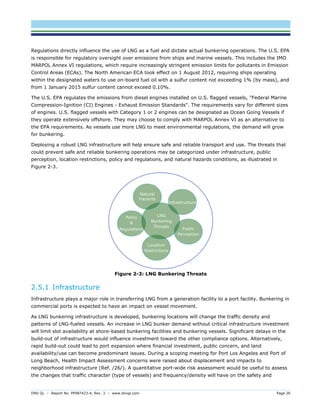
Figure 2-2: LNG Bunkering Installations in Operation in Norway Today .................................................. 25 
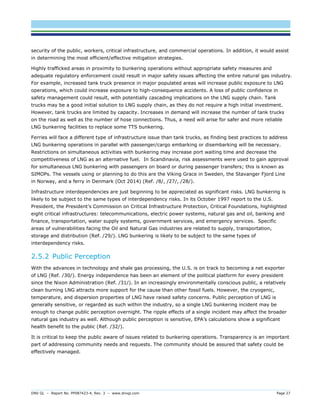
Figure 2-3: LNG Bunkering Threats ................................................................................................... 26 
Figure 2-4: Potential Bunkering Options............................................................................................. 31 
Figure 3-1: Representation of a Classic Risk Assessment Procedure ...................................................... 39 
Figure 3-2: Swiss Cheese Concept .................................................................................................... 41 
Figure 3-3: Possible Outcome Flow Diagram ....................................................................................... 42 
Figure 3-4: LNG Spill Sequence of Events .......................................................................................... 44 
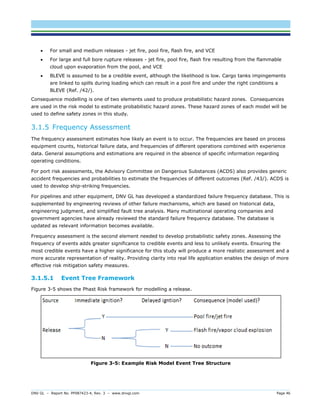
Figure 3-5: Example Risk Model Event Tree Structure ......................................................................... 46 
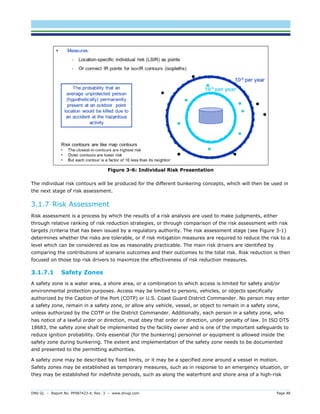
Figure 3-6: Individual Risk Presentation............................................................................................. 48 
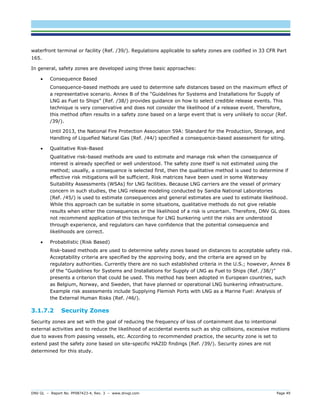
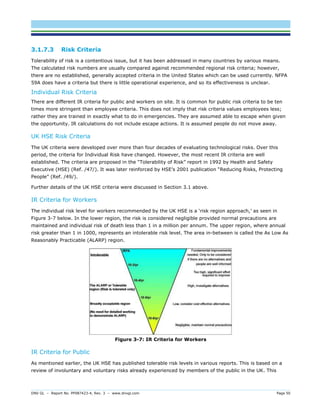
Figure 3-7: IR Criteria for Workers .................................................................................................... 50 
Figure 3-8: LNG Bunkering Best Practice Operational Diagram .............................................................. 57 
Figure 3-9: Truck-to-Ship (TTS) IR Contour ....................................................................................... 66 
Figure 3-10: Shore-to-Ship (PTS) IR Contour ..................................................................................... 66 
Figure 3-11: Ship-to-Ship (STS) IR Contour ....................................................................................... 67 
Figure 4-1: ISO tanks ...................................................................................................................... 92 
Figure 4-2: Regulatory Oversight of Key Equipment and Operations .................................................... 102 
List of Tables 
Table 2-1: Advantages and Disadvantages of Ship-to-Ship Bunkering of LNG ......................................... 18 
Table 2-2: Comparison of Bunker Operation Durations for Typical Vessels .............................................. 19 
Table 2-3: Number of Tank Trucks or Portable Tanks Required for Refueling .......................................... 20 
Table 3-1: LNG Loss of Containment Hole Sizes .................................................................................. 45 
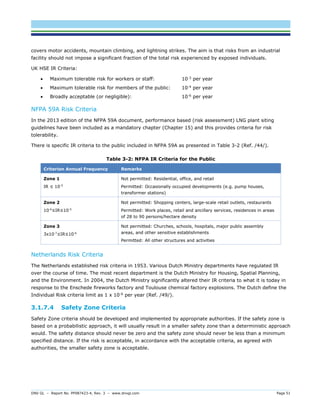
Table 3-2: NFPA IR Criteria for the Public ........................................................................................... 51 
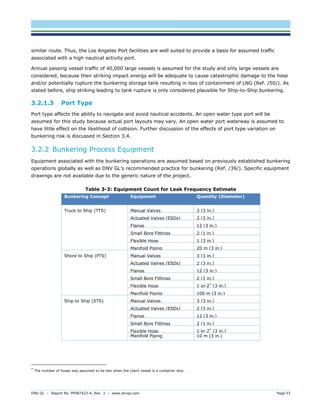
Table 3-3: Equipment Count for Leak Frequency Estimate .................................................................... 53 
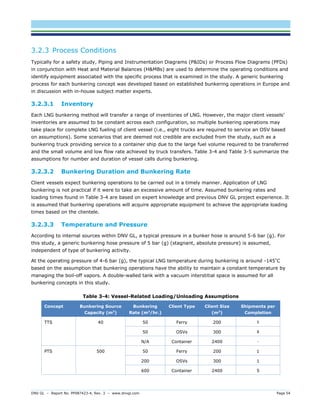
Table 3-4: Vessel-Related Loading/Unloading Assumptions .................................................................. 54 
Table 3-5: Frequency-Related Loading/Unloading Assumptions ............................................................. 55 
Table 3-6: Loss of Containment Scenarios ......................................................................................... 58 
Table 3-7: Representative Detection and Response Time ..................................................................... 59 
Table 3-8: Flexible Loading Hose Isolation Times ................................................................................ 59 
Table 3-9: HAZID Safeguard Recommendations ................................................................................. 60 
Table 3-10: Consequence Safety Zone Distances ................................................................................ 64 
Table 3-11: Individual Risk Contour Region Sizes (Approximate) .......................................................... 67 
Table 3-12: Risk Contribution by Client Vessel- 20 m Away from Bunkering Location............................... 68 
Table 3-13: Risk Contribution by Client Vessel-100 m Away from the Bunkering Location ........................ 69 
Table 3-14: Risk Contribution by Client Cessel-500 m Away from the Bunkering Location ........................ 69 
Table 3-15: Risk Contribution by Scenario - 20 m Away from the Bunkering Location .............................. 70 
Table 3-16: Risk Contribution by Scenario - 100 m Away from the Bunkering Location ............................ 70 
Table 3-17: Risk Contribution by Scenario - 500 m Away from the Bunkering Location ............................ 71 
Table 3-18: Probabilistic Safety Zone Distances .................................................................................. 71 
Table 3-19: Individual Risk Contour Region Sizes (Approximate) .......................................................... 75 
Table 3-20: Safety Zone Comparison ................................................................................................ 76 
Table 4-1: “Large” Shoreside Fixed LNG Storage Tank ......................................................................... 89 
Table 4-2: Truck Carrying LNG as Cargo ............................................................................................ 91
DNV GL – Report No. PP087423-4, Rev. 3 – www.dnvgl.com Page vii 
Table 4-3: LNG Rail Car ................................................................................................................... 93 
Table 4-4: Cargo Transfer (Shore–Sea or Sea-Shore) Including from Shoreside Tank Truck, Rail Car, or LNG Portable Tank ................................................................................................................................. 94 
Table 4-5: Lightering (LNG Cargo Transfer Ship to Ship) ...................................................................... 95 
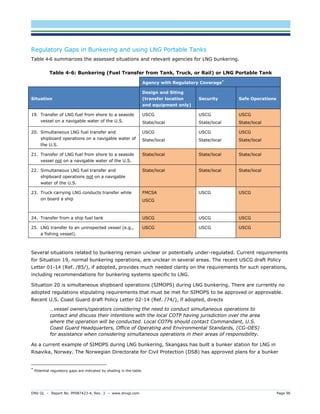
Table 4-6: Bunkering (Fuel Transfer from Tank, Truck, or Rail) or LNG Portable Tank .............................. 96 
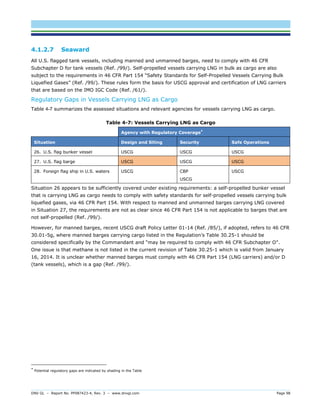
Table 4-7: Vessels Carrying LNG as Cargo ......................................................................................... 98 
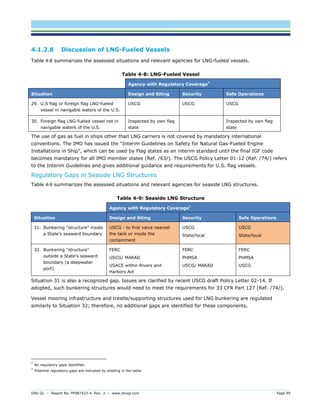
Table 4-8: LNG-Fueled Vessel ........................................................................................................... 99 
Table 4-9: Seaside LNG Structure ..................................................................................................... 99 
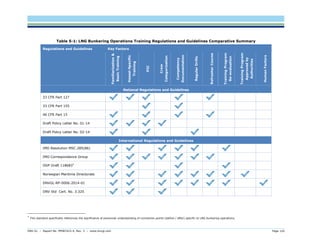
Table 5-1: LNG Bunkering Operations Training Regulations and Guidelines Comparative Summary ......... 120 
Table 5-2: Crew Category Description (Ref. /121/) ........................................................................... 126 
Table 5-3: Training Structure ......................................................................................................... 128 
Table 5-4: Personnel Training (Ref. /123/) ....................................................................................... 129 
Table 5-5: Suggested Training Content for LNG Bunkering Marine Crew............................................... 135 
Table 5-6: Suggested Training Content for Crew on LNG-Fueled Vessels .............................................. 136 
Table 5-7: Suggested Training Content for LNG Shore-Side Crew........................................................ 137 
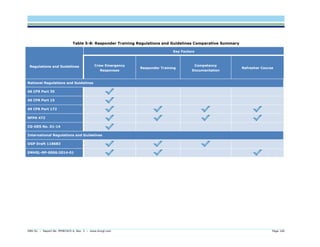
Table 5-8: Responder Training Regulations and Guidelines Comparative Summary................................ 140 
Table 5-9: Base Case Planning Assumptions ..................................................................................... 144 
Table 5-10: Suggested Training Needs for Local First Responders ....................................................... 147
DNV GL – Report No. PP087423-4, Rev. 3 – www.dnvgl.com Page 1 
1 INTRODUCTION 
1.1 Background 
LNG, or liquefied natural gas, is natural gas that is cooled to a cryogenic liquid at -162 degree Celsius. In the United States (U.S.), LNG is a source of energy for residential and commercial purposes, and is a traded commodity. The U.S. has developed a natural gas network by building 96 peak-shaving plants for storage to support times of peak demand, a national pipeline network for distribution, and import/export terminals for international trade. This network is regulated and supported by various government agencies and recommendations/best practices from international and national non-profit organizations. 
Recently, LNG has been used for a different purpose: as a marine transportation fuel. The benefit of using LNG as a transportation fuel is that it is clean and cost-effective. When compared to Heavy Fuel Oil (HFO), LNG emits 85% less nitrogen oxide (NOx) and sulfur oxides, 90% less Particulate Matter (PM), and 30% less carbon dioxide; it is also 75% less expensive on an energy equivalent basis than HFO, on average (Ref. /1/, Ref. /2/). Diesel is at least 85% more expensive on an energy equivalent basis than LNG (Ref. /2/). 
Stakeholders in Norway conceptualized using LNG as a marine transportation fuel in response to emerging regulations. In 2007, in response to the NOx tax from the Norwegian Government, the Confederation of Norwegian Enterprise established a private NOx fund.The NOX fund is an alternative to the fiscal NOX tax for operation on the Norwegian Continental Shelf. Affiliated enterprises to the NOX Fund are exempt from the fiscal tax. The money paid into the Fund is used to support NOX reducing measures in the affiliated enterprises. The NOX Fund has granted support to almost 600 applications reducing more than 28,500 tons of NOX from 2008 until early 2015. The fund is now experiencing an increasing trend of applications for LNG fuelled ships and up to this date, the NOX Fund has granted support to 43 LNG fuelled ships and the number is expected to increase in the future. The support rate for LNG fuelled newbuilds and conversions are up to 80% of the investment cost. 
The U.S. is currently in a similar situation. In 2010, the Environmental Protection Agency (EPA) implemented a regulatory program that adopted the IMO’s Annex VI to the International Convention for the Prevention of Pollution from Ships (MARPOL), which includes engine and fuel sulfur limits, and an extension of the ECA,
DNV GL – Report No. PP087423-4, Rev. 3 – www.dnvgl.com Page 2 
and additional engine and fuel requirements to U.S. internal waters. MARPOL Annex VI contains two sets of fuel sulfur limits, consisting of a global cap on fuel sulfur levels and regional requirements for designated ECAs. Regional requirements set the maximum sulfur content in fuel that vessels can use while operating in those areas. Pending amendments in MARPOL applied stringent new global NOx standards in designated ECAs in 2011, new global fuel sulfur standards in 2012, and more stringent NOx and fuel sulfur controls that will apply in designated ECAs (Ref. /4/). Given that Northern Europe, particularly Norway, has been successful in establishing a sustainable and compliant LNG-fueled ship network, it is possible that the U.S can benefit from a similar program in order to meet EPA’s regulations. 
Norway has been able to support a LNG-fueled ship network because they have been able to provide refueling infrastructure, so that LNG-fueled ships can refuel without interfering with normal operations. The act of refueling a LNG-fueled ship is called bunkering. There are four different LNG bunkering methods that either have been commonly used or have been idealized (these methods will be discussed in PART 1): 
1. Truck-to-Ship (TTS): is the most common method used to support the LNG-fueled ship network, to date. It is the transfer of LNG from a truck’s storage tank to a vessel moored to the dock or jetty. Typically, this is undertaken by connecting a flexible hose designed for cryogenic LNG service. A typical LNG tank truck can carry 13,000 gallons of LNG and transfer a complete load in approximately one hour. 
2. Shore/Pipeline-to-Ship (PTS): LNG is transferred from a fixed storage tank on land through a cryogenic pipeline with a flexible end piece or hose to a vessel moored to a nearby dock or jetty. These facilities have scalable onsite storage such that designs could be capable of performing bunkering of larger volumes than TTS or with portable tanks. 
3. Ship-to-Ship (STS): It is the transfer of LNG from one vessel or barge, with LNG as cargo, to another vessel for use as fuel. STS offers a wide range of flexibility in location bunkering, and flexibility on quantity and transfer rate. There are two types of STS bunkering operations, one is performed at the port, and the other is carried out at sea. This has only been carried out at the Port of Stockholm for the new LNG-fueled ferry, Viking Grace. 
4. Portable tanks: They can be used as portable fuel storage. They can be driven or lifted on and off a vessel for refueling. The quantity transferred is flexible and dependent on the number of portable tanks transferred. A 40-foot (ISO-scale) intermodal portable tank can hold approximately 13,000 gallons of LNG. 
In determining the feasibility of the U.S. benefiting from a LNG-fueled ship network, MARAD has been collaborating with other government agencies, industry, and academia to determine the feasibility and likelihood of using natural gas as a propulsion fuel in the maritime sector. This study addresses the following researched items: 
Infrastructure 
 Identify and provide an analysis of the most realistic options for delivering natural gas to a vessel, assuming the quantities needed for fueling oceangoing vessels, lakers, and inland tugs. The analysis should compare advantages and disadvantages of using various modal supply methods and potential barriers. 
 Identify the barriers associated with co-locating bunkering infrastructure for multiple modal uses. 
 Identify gaps in the existing regulatory framework for providing oversight of various phases of the LNG supply chain including production, storage, transportation, and fueling.
DNV GL – Report No. PP087423-4, Rev. 3 – www.dnvgl.com Page 3 
 Identify the agencies that regulate shoreside bunkering facilities and what authorities they have and any conflicting jurisdictional issues. 
Bunkering and Safety 
 Identify risks/hazards associated with conducting other operations during bunkering. Note any risk mitigation, as necessary. 
 Identify differences in risk between bunkering from shoreside structures versus bunkering from vessels. 
 Identify U.S. safety and security regulations that are required for shoreside and in-water infrastructure in support of bunkering operations. 
 Identify the areas of U.S. bunkering regulations that need to be standardized to promote a national framework 
 Identify the areas of US bunkering regulations that will influence international trade 
 Identify how bunkering operation requirements interact with other environmental regulations 
Training Requirements 
 Identify the level of crew training that will be required in bunkering operations for safety, and reduce methane leakage and LNG spillage. 
 Identify the safety equipment and training needs for local first responders for bunkering whether shoreside or aboard a vessel. 
1.2 Structure of this Report 
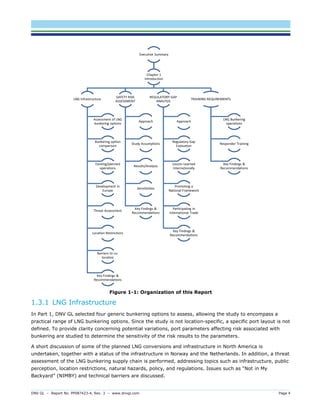
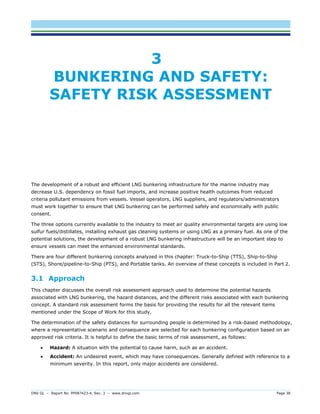
Figure 1-1 depicts the structure of this report. This report consists of four parts: LNG infrastructure, safety risk assessment, regulatory gap analysis, and training requirements. Each part has an introduction, discussion with supporting information, conclusion with key findings, and a description of recommendations that DNV GL recommends to stakeholders. 
1.3 Study Boundaries 
As a practical necessity, this report covers only some of the regulatory aspects related to the LNG supply chain. Since the study is intended to focus on bunkering, oversight of infrastructure, and conflicting jurisdictions, abandonment and decommissioning were reserved.
DNV GL – Report No. PP087423-4, Rev. 3 – www.dnvgl.com Page 4 
Figure 1-1: Organization of this Report 
1.3.1 LNG Infrastructure 
In Part 1, DNV GL selected four generic bunkering options to assess, allowing the study to encompass a practical range of LNG bunkering options. Since the study is not location-specific, a specific port layout is not defined. To provide clarity concerning potential variations, port parameters affecting risk associated with bunkering are studied to determine the sensitivity of the risk results to the parameters. 
A short discussion of some of the planned LNG conversions and infrastructure in North America is undertaken, together with a status of the infrastructure in Norway and the Netherlands. In addition, a threat assessment of the LNG bunkering supply chain is performed, addressing topics such as infrastructure, public perception, location restrictions, natural hazards, policy, and regulations. Issues such as “Not in My Backyard” (NIMBY) and technical barriers are discussed. 
Executive Summary 
Chapter 1 Introduction 
LNG Infrastructure 
Assessment of LNG bunkering options 
Bunkering option comparison 
Existing/planned operations 
Development in Europe 
Threat Assessment 
Location Restrictions 
Barriers to co- location 
Key Findings & Recommendations 
SAFETY RISK ASSESSMENT 
Approach 
Study Assumptions 
Results/Analysis 
Sensitivities 
Key Findings & Recommendations 
REGULATORY GAP ANALYSIS 
Approach 
Regulatory Gap Evaluation 
Lesson Learned Internationally 
Promoting a National Framework 
Participating in International Trade 
Key Findings & Recommendations 
TRAINING REQUIREMENTS 
LNG Bunkering operations 
Responder Training 
Key Findings & Recommendations
DNV GL – Report No. PP087423-4, Rev. 3 – www.dnvgl.com Page 5 
1.3.2 Safety Risk Assessment 
Part 2 used risk-based criteria to compare bunkering options. The Safety Study assessed the hazards with the potential to cause a loss of containment, and estimated the associated consequences (dispersion, fires, and explosions) and risks from such releases. LNG is non-toxic, but is an asphyxiant and a cryogenic hazard. This study does not assess the risk associated with asphyxiation and cryogenic harm because the risk associated with these hazards have a much smaller potential consequence than fire and explosion events. Risks related to other accidents, which are not directly associated with the actual bunkering operation, are excluded from the study (e.g., occupational risks and external events like earthquakes). 
The boundaries of the four bunkering options are: 
 LNG bunkering from a truck to a client vessel (TTS) – from the bunkering truck up to the final Emergency Shut Down (ESD) valve before the client’s vessel 
 LNG bunkering from shore side jetty to client vessel (PTS) – from the shoreside storage tank up to the final ESD valve before the client’s vessel 
 LNG transfer from bunker ship to client vessel (STS) - from the bunker ship LNG tank up through the ESD valve before the client’s vessel 
 LNG intermodal tank loading onto client vessel (Portable tank) was not assessed quantitatively as no connections/release locations are associated with the LNG transfer. Instead, major hazards associated with the Tank trainer are evaluated qualitatively. This technology is expected to be used significantly less than the three other bunkering options. 
The above bunkering options represent the boundaries of the scope of work. Any risk related to an incoming pipeline (up to the bunkering port battery limit-isolation valve) and/or suppliers to the bunkering facility are not a part of the work scope. 
The risk is estimated for the following operational stages: 
 Normal operations for each bunkering option 
 SIMOPS (Simultaneous Operations) 
The basis for this analysis is the conceptual design of available LNG bunkering technologies. It should be noted that since this is a safety study based on conceptual design, the most general assumptions have been made. In the absence of industry standard published information, DNV GL will use its previous knowledge of LNG facilities of similar capacity and design. Results are conducted based on representative conditions not based on any specific port. The conditions are established with the goal of developing credible bunkering operation scenarios under sound port conditions. 
The following examples are details that may be missing in a representative model and must be estimated through assumptions: 
 Location of port facility 
 Port facility layout 
 Process flow diagrams of bunkering concepts 
 Client ship traffic 
 Process safeguards in place
DNV GL – Report No. PP087423-4, Rev. 3 – www.dnvgl.com Page 6 
Only Individual Risk will be used in the comparison of the four bunkering concepts. The analysis will not include population-based risk, due to lack of a specific port facility. Societal risk would add very little value to the overall assessment of the bunkering methods without acceptance criteria available for comparison. 
The LNG bunkering concepts are assumed to be conducted based on best practice implemented in well- established bunkering operations and DNV GL Recommended Practice (Ref. /5/). Safeguards that have been assumed to be incorporated into each bunkering concept are the following: 
 Automatic Double ESD system: Ensure reliability of isolation system 
o Assumed isolation would not fail 
 Quick Connect Disconnect System: Quickly isolates hose loss of containment 
o Reduces inventory released due to rupture of loading hose 
 Gas Detection around loading lines: Ensures fast detection time for all equipment 
 Continuous Operator Monitoring of hose: Ensures exceptionally fast detection time around transfer lines 
The absence of any of these critical safeguards would lead to higher risks than predicted in this study. 
1.3.3 Regulatory Gap Analysis 
Part 3 focuses on gaps in the existing regulatory framework. DNV GL focused on analyzing the participation of agencies that regulate shoreside-bunkering facilities, analyzing the regulations required for bunkering infrastructure, and analyzing the needs for regulations in international trade. 
1.3.4 Training Requirements 
Part 4 of this study covers the anticipated crew and first responder training aspects related to LNG bunkering. A review of the existing regulations, standards and guidance is performed related to crew, operators and emergency responders. A comparative summary highlighted similarities and differences. 
Safety culture and safety management systems are discussed as how their roles tie into LNG bunkering and response training. Some current LNG training examples are described. 
Since the study is a portion of a larger effort, the following are excluded from the scope of this report: 
 Equipment and operation of LNG facilities, terminals, or ports not directly related to LNG bunkering 
 Non-marine uses of LNG 
 Liquefaction facilities 
 Occupational safety (except for that related to crew and responder training) 
 Abandonment or decommissioning of facilities 
 National security issues, particularly those lying outside the purview of the U.S. Coast Guard and the Department of Transportation
DNV GL – Report No. PP087423-4, Rev. 3 – www.dnvgl.com Page 7 
1.4 List of Abbreviations Acronym Meaning 
ACDS 
Advisory Committee on Dangerous Substances 
ADN 
The European Agreement concerning the International Carriage of Dangerous Goods by Inland Waterways 
ADR 
The European Agreement concerning the International Carriage of Dangerous Goods by Road 
AHJ 
Authorities Having Jurisdiction 
ALARP 
As Low As Reasonably Practicable 
ATB 
Articulated Tow Barge 
BLEVE 
Boiling Liquid Expanding Vapor Explosions. It is an explosion caused by the rupture of a vessel containing a pressurized liquid above its boiling point. 
BLG 
IMO Sub-Committee on Bulk Liquids and Gases 
BOEM 
The Bureau of Ocean Energy Management 
BSEE 
The Bureau of Safety and Environmental Enforcement 
CCNR 
Central Commission for the Navigation on the Rhine 
CCPS 
Center for Chemical Process Safety 
CEN 
European Committee for Standardisation 
CENELEC 
European Committee for Electrotechnical Standardisation 
CFR 
The Code of Federal Regulations 
CG-OES 
The U.S. Coast Guard Office of Operating and Environmental Standards 
CNG 
Compressed Natural Gas 
COTP 
The Captain of the Port 
DMA 
Danish Maritime Authority 
DNV 
Det Norske Veritas 
DOE 
The U.S. Department of Energy 
DSB 
The Norwegian Directorate for Civil Protection 
EC 
European Commission 
ECA 
Emission Control Area 
ECSA 
European Community Shipowners Association 
EMS 
Emergency Medical Services 
EMSA 
European Maritime Safety Agency 
EPA 
United States Environmental Protection Agency 
U.S. EPA 
The U.S. Environmental Protection Agency 
ESD 
Emergency Shutdown
DNV GL – Report No. PP087423-4, Rev. 3 – www.dnvgl.com Page 8 
ESPO 
European Sea Ports Organization 
ERS 
Emergency Release System 
ETSI 
European Telecommunications Standards Institute 
FERC 
The Federal Energy Regulatory Commission 
FMCSA 
The U.S. Department of Transportation Federal Motor Carrier Safety Administration 
FWS 
The U.S. Fish and Wildlife Service 
GIIGNL 
International Group of Liquefied Natural Gas (LNG) Importers 
GL 
Germanischer Lloyd 
H&MB 
Heat and Material Balances 
HAZID 
Hazard Identification 
HCRD 
Hydrocarbon Release Database 
HFO 
Heavy Fuel Oil 
HSE 
Health and Safety Executive 
IAPH 
International Association of Ports and Harbours 
ICAO 
International Civil Aviation Organization 
ICS 
International Chamber of Shipping 
IEC 
International Electrotechnical Commission 
IGC 
The International Code for the Construction and Equipment of Ships Carrying Liquefied Gases in Bulk 
IGF 
The International Code of Safety for Ships using Gases or other Low-Flashpoint Fuels 
IGU 
The International Gas Union 
IMDG 
International Maritime Dangerous Goods Code 
IMO 
The International Maritime Organization 
IMO MSC 
The International Maritime Organization Maritime Safety Committee 
IR 
Individual Risk. It is the risk for an individual who is present at a particular location continuously all year (i.e., 24 hours a day 7 days every week). 
ISGOTT 
The International Safety Guide for Oil Tankers & Terminals 
ISM 
International Safety Management 
ISO 
The International Organization for Standardization 
LESAS 
Legal and Safety Assessment 
LFL 
Lower Flammability Limit. LFL is the lower end of the concentration at which a flammable gas in air can ignite under ambient conditions. 
LNG 
Liquefied Natural Gas. LNG is produced in large liquefaction plants as an ambient pressure cryogenic fluid at about -161°C (-258°F). However when used as a transport fuel it is usually warmed a little and at 4 to 8 bar pressure (60 to 120 psig). 
LPG 
Liquefied Petroleum Gas
DNV GL – Report No. PP087423-4, Rev. 3 – www.dnvgl.com Page 9 
MAEs 
Major Accidental Events 
MARPOL 
International Convention for the Prevention of Pollution from Ships 
MFA 
Massachusetts Firefighting Academy 
MGO 
Marine Gas Oil 
MOC 
Management of Change 
MSC 
Maritime Safety Committee 
NASFM 
National Association of State Fire Marshals 
NFPA 
National Fire Protection Association 
NIMBY 
Not In My Backyard 
NMA 
Norwegian Maritime Authority 
NVIC 
Navigation and Vessel Inspection Circulars 
OCIMF 
The Oil Companies International Marine Forum 
OGP 
International Association of Oil and Gas Producers 
OSHA 
The U.S. Department of Labor Occupational Safety & Health Administration 
OSV 
Offshore supply vessel 
P&ID 
Piping and Instrumentation Diagrams 
PFD 
Process Flow Diagrams 
PHMSA 
The U.S. Department of Transportation Pipeline and Hazardous Materials Safety Administration 
PIC 
Person(s) in Charge 
PMoU 
Paris Memorandum of Understanding on Port State Control 
PPE 
Personal Protective Equipment 
PSM 
Process Safety Management 
PTS 
Pipeline/Terminal-to-Ship 
QCDC 
Drip free Quick connect disconnect 
QRA 
Quantitative Risk Assessment 
RMP 
Risk Management Plan 
RP 
Recommended Practice 
RPT 
Rapid Phase Transformation. It is a phenomenon realized in liquefied natural gas incidents in which LNG vaporizes violently upon coming in contact with water causing what is known as a physical explosion or cold explosion. 
RVIR 
Rhine Vessel Inspection Regulations 
SIGTTO 
The Society of International Gas Tanker and Terminal Operators 
SIMOPS 
Simultaneous Operations 
SMS 
Safety Management System 
SOLAS 
The International Convention for the Safety of Life at Sea
DNV GL – Report No. PP087423-4, Rev. 3 – www.dnvgl.com Page 10 
STCW 
International Convention on Standards of Training, Certification and Watchkeeping for Seafarers 
STS 
Ship-to-Ship 
TC 
Technical Committee 
TEEX 
Texas A&M Engineering Extension Service 
TFEU 
Treaty on the Functioning of the Union 
TSA 
The U.S. Department of Transportation, Transportation Security Administration 
TTS 
Truck-to-Ship 
UFL 
Upper Flammability Limit. UFL is the highest concentration at which a flammable mixture of gas or vapor can ignite at a given temperature and pressure. 
UNECE 
United Nations Economic Commission for Europe 
USACE 
The U.S. Department of Defense Army Corps of Engineers 
USCG 
The U.S. Department of Homeland Security United States Coast Guard 
VCE 
Vapor Cloud Explosion. It occurs when a sufficient amount of flammable or combustible material is released, mixes with air, and is ignited. 
VOC’s 
Volatile Organic Compounds 
WPCI 
World Port Climate Initiative 
WSA 
Waterway Suitability Assessment
DNV GL – Report No. PP087423-4, Rev. 3 – www.dnvgl.com Page 11 
1.5 Glossary of Terms Term Definition 
Bunkering 
This is the process of transferring fuel from a supplier to a consumer. In the context of this document, bunkering relates to the transfer of LNG from a supply installation to a receiving vessel. The supplied LNG has the sole purpose of being used as a fuel. 
F-N 
A measure to represent societal risk, usually expressed in the form of a curve where the y- axis is the cumulative frequency of experiencing N or more fatalities. 
Individual Risk 
A measure to represent the risk to an individual, usually expressed in units of fatalities per year. 
Lightering 
The process of transferring cargo between vessels; also referred to as “ship-to-ship” or STS transfer. 
Liquefaction 
The process of converting natural gas to LNG, i.e., converting gas to liquid. 
LNG 
LNG is natural gas cooled down to condense at -161ºC (-258ºF). It consists primarily of methane. Impurities and heavy hydrocarbons are removed before the cooling process. The volume of the liquid is approximately 1/600 of the volume of the gas at atmospheric conditions. 
Metocean 
Meteorological and Oceanographic conditions 
Metrology 
Science of measurement and its application 
Port 
A port may be an individual berth, wharf, terminal or nearby location. 
Safety zone 
A safety zone is established around the bunkering station for the purpose of ensuring only essential personnel and activities are allowed in the area that could be exposed to a flammable gas in case of an accidental release event during the bunkering operation 
Seaside 
Location description for the purposes of this study. Refers to equipment or operations that are in water and not onshore. 
Security zone 
Security zones are set with the goal of reducing the frequency of loss of containment due to external activities. 
Shoreside 
Location description for the purposes of this study. Refers to study components that are onshore. 
Waterfront Facility 
All piers, wharves, and similar structures to which a vessel may be secured; areas of land, water, or land and water under and in the immediate proximity to these structures; buildings on or contiguous to these structures; and the equipment and materials on or in these structures or buildings (33 CFR 126).
DNV GL – Report No. PP087423-4, Rev. 3 – www.dnvgl.com Page 12 
References Number Reference 
/1/ 
Bull, D. and Lombardo, S. “Shipping Shapes Up Preparing for New Legislation with LNG Bunkering.” Royal Haskoning DHV. 2010 [Online]. Available: http://www.royalhaskoningdhv.com/en- gb/innovation/international-innovation-day/shipping-shapes-up 
/2/ 
Balon, T., Lowell, D., Curry, T., Van Atten, C., and Hoffman-Andrews, L. “Natural Gas for Marine Vessels: U.S. Market Opportunities.” M.J. Bradley & Associates for American Clean Skies Foundation. April 2012 [Online]. Available: http://www.cleanskies.org/wp- content/uploads/2012/04/Marine_Vessels_Final_forweb.pdf 
/3/ 
Danish Maritime Authority. North European LNG Infrastructure Project: A feasibility study for an LNG filling station infrastructure and test of recommendations. April 2012 [Online]. Available: http://www.dma.dk/themes/LNGinfrastructureproject/Documents/Final%20Report/LNG_Full_report_Mgg_2012_04_02_1.pdf. [Accessed : 9 May 2014] 
/4/ 
The Environmental Protection Agency. EPA Finalises More Stringent Standards for Control of Emissions from New Marine Compression-ignition Engines At or Above 30 Liters per Cylinder. Report EPA-420-F-09-068. 
/5/ 
DNV GL “Development and Operation of Liquefied Natural Gas Bunkering Facilities” DNV GL Recommend Practice, DNVGL-RP-0006: January 2014.
DNV GL – Report No. PP087423-4, Rev. 3 – www.dnvgl.com Page 13 
2 LNG INFRASTRUCTURE IN THE U.S. 
2.1 Assessment of LNG Bunkering Options 
The development of a robust and efficient LNG bunkering infrastructure for the marine industry may decrease U.S. dependency on fossil fuel imports and increase positive health outcomes from reduced air emissions. Vessel operators, LNG suppliers, and regulators/administrators working together must ensure LNG bunkering can be performed safely and economically with public consent. Although LNG has been transferred to LNG cargo vessels internationally for decades, it is not until recently that fueling vessels with LNG has commenced in the U.S. By the year 2015, ships are required to meet criteria that will reduce air emissions. Options currently available to the industry to meet air quality environmental targets include using low sulfur fuels/distillates, installing exhaust gas cleaning systems, using alternative bioenergy fuels, or using LNG as a primary fuel. 
As one of the potential solutions, the development of a robust LNG bunkering infrastructure will be an important approach to ensure vessels can meet the enhanced environmental standards. 
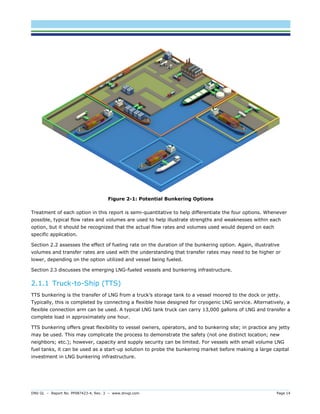
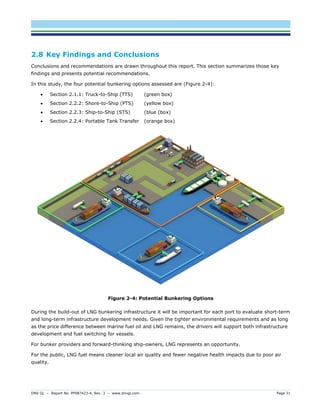
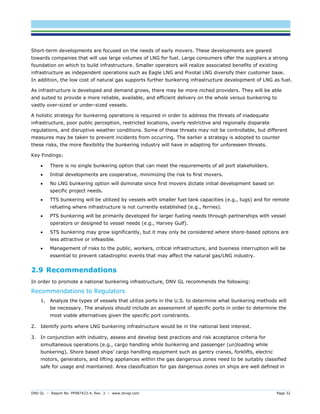
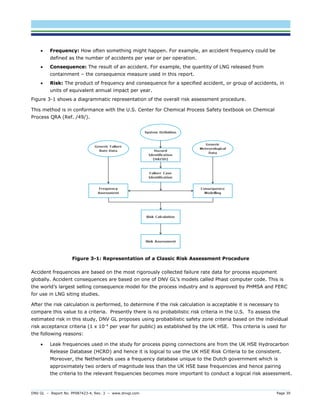
In this section, the four potential bunkering options assessed are (Figure 2-1): 
 Section 2.1.1: Truck-to-Ship (TTS) (green box) 
 Section 2.2.2: Shore-to-Ship (PTS) (yellow box) 
 Section 2.2.3: Ship-to-Ship (STS) (blue box) 
 Section 2.2.4: Portable Tank Transfer (orange box)
DNV GL – Report No. PP087423-4, Rev. 3 – www.dnvgl.com Page 14 
Figure 2-1: Potential Bunkering Options 
Treatment of each option in this report is semi-quantitative to help differentiate the four options. Whenever possible, typical flow rates and volumes are used to help illustrate strengths and weaknesses within each option, but it should be recognized that the actual flow rates and volumes used would depend on each specific application. 
Section 2.2 assesses the effect of fueling rate on the duration of the bunkering option. Again, illustrative volumes and transfer rates are used with the understanding that transfer rates may need to be higher or lower, depending on the option utilized and vessel being fueled. 
Section 2.3 discusses the emerging LNG-fueled vessels and bunkering infrastructure. 
2.1.1 Truck-to-Ship (TTS) 
TTS bunkering is the transfer of LNG from a truck’s storage tank to a vessel moored to the dock or jetty. Typically, this is completed by connecting a flexible hose designed for cryogenic LNG service. Alternatively, a flexible connection arm can be used. A typical LNG tank truck can carry 13,000 gallons of LNG and transfer a complete load in approximately one hour. 
TTS bunkering offers great flexibility to vessel owners, operators, and to bunkering site; in practice any jetty may be used. This may complicate the process to demonstrate the safety (not one distinct location; new neighbors; etc.); however, capacity and supply security can be limited. For vessels with small volume LNG fuel tanks, it can be used as a start-up solution to probe the bunkering market before making a large capital investment in LNG bunkering infrastructure.
DNV GL – Report No. PP087423-4, Rev. 3 – www.dnvgl.com Page 15 
Current designs, for example, IMO Type C tank, can achieve a 30-day holding time*. Its portability means that LNG can be supplied at nearly any location. As a result, the only limit geographically is identifying a port that will permit shoreside LNG bunkering from a dock or jetty. 
Potential Application 
TTS bunkering has many potential applications. It will be an important part of the bunkering infrastructure in the U.S. to promote a transition to LNG as a marine fuel and more broadly as fuel for road and rail (Section 2.3.3). 
TTS bunkering will be attractive now and in the future because of their portability, low capital investment, and capability to transport LNG to remote locations on short notice. However, it is not without its drawbacks. The feasibility of transferring LNG TTS for very large volume transfers is limited by transfer rate and the number of trucks required. TTS bunkering has one of the lowest transfer rates at ~10,000 gal/hr. The rate is driven primarily by the rate at which the receiving vessel can bunker LNG, the connecting pipework/hoses, any truck-installed transfer pump, and the difference in pressure of the supply and fuel tanks. 
In the TTS concept, a key operator will be the truck driver who will not be a permanent member of the bunkering operation. As a result, the truck driver may not be as familiar with the safety requirements as a permanent operator of a fixed installation. 
Other considerations are its safety risks associated with on-road transport, which are defined by the likelihood that trucks carrying LNG will have an LNG-related accident and the consequence of this LNG- related accident on those in proximity to the truck. The likelihood of an LNG-related accident is considered in situations where trucks transport LNG in highly congested areas like public roads and waterfront facilities. Therefore, when considering this option, potential impacts should be assessed for an increase in truck traffic between refueling and bunkering locations. Compared to PTS and STS bunkering options, this option has greater risk to the public because of proximity. 
In spite of these drawbacks, TTS bunkering has a strong, flexible position for delivering LNG to remote places or to smaller vessels where the duration and number of trucks needed for refueling is less impactful to the operation. 
2.1.2 Shore-to-Ship (PTS) 
In the PTS bunkering option, LNG is transferred from a fixed storage tank on land through a cryogenic pipeline with a flexible end piece or hose to a vessel moored to a nearby dock or jetty. This is referred to as pipeline-to-ship in other references. 
These facilities have scalable onsite storage such that designs could be capable of performing bunkering of larger volumes than TTS (Section 2.1.1) or with portable tanks (Section 2.1.4). Harvey Gulf is developing a PTS bunkering solution in Port Fourchon, LA (refer to Harvey Gulf). 
* The holding time of a tank refers to the duration an LNG tank can maintain the pressure buildup before venting. Hold time depends on tank pressure, heat loss/boil-off rate, ambient conditions, insulation, fill volume, etc.
DNV GL – Report No. PP087423-4, Rev. 3 – www.dnvgl.com Page 16 
LNG may be transported to the facility by truck, rail, or bunker barge, and may be transported from a remote liquefaction facility. LNG may be produced (i.e., converted from gas to liquid) at a small-scale production facility known as a liquefaction facility. In principle, small-scale LNG liquefaction facilities may provide LNG bunkering onsite in the future. The existing/planned facilities discussed in Section 2.3 include small-scale LNG liquefaction facilities that intend to supply LNG-fueled vessels but none has indicated bunkering will be co-located with liquefaction. 
Potential Application 
The PTS option has good design flexibility that can meet the needs of specific or many customers. The needs of customers will influence operational constraints on design. PTS bunkering can potentially supply much higher flow rates than TTS bunkering. In addition, PTS bunkering that takes place in ports will fall within the security arrangements of the port boundaries. 
Although the PTS option has great flexibility in the design for transfer rate and volume, it is the least flexible with respect to geography. It must be sited at a fixed location, relatively close to the dock or jetty. Heat loss from long sections of pipeline and costs of cryogenic-service pipelines necessitate this proximity constraint. 
In addition, as a fixed installation, vessels must make the necessary arrangements to be at the loading berth for transfers. For vessels with other activities (i.e., cargo transfers) in the port, bunkering occurs at the same time as the other activity to reduce the time spent in port. If PTS bunkering locations cannot perform simultaneously with other activities, it will extend the time in port and reduce the PTS option viability. 
Existing LNG terminals cannot be immediately converted to provide an LNG bunkering option. These facilities undergo a rigorous regulatory review by PHMSA and FERC to confirm suitable design safety and separation distances. They have long-term contracts that dictate the availability for loading or unloading of LNG carriers. In addition, these facilities are currently designed for low frequency, high volume transfers. New LNG terminals may consider LNG bunkering, but they will need to evaluate: 
 Dual use (high flow rate with large volume and low flow rate small volume transfers) in the design and operation so that one operation does not interfere with the other 
 Future contracts incorporate bunkering aspects (e.g., who owns the LNG stored at the facility, prioritizations, etc.) 
 Dedicated jetty allocated for LNG-fueled ships to avoid interference with large scale LNG transfer to LNG carriers 
An intermediate storage location with bunkering capability is a viable alternative (i.e., a smaller LNG tank supplied by LNG tank trucks). Onsite storage at the bunkering facility could be replenished by truck, rail, pipeline, or directly by a small-scale liquefaction plant receiving natural gas. Initial designs for flexibility to bunker large and small amounts of LNG will allow these facilities to compete with TTS and STS options. However, flexibility will likely sacrifice some on optimal operation because it needs to be designed for all potential bunkering rates and volumes.
DNV GL – Report No. PP087423-4, Rev. 3 – www.dnvgl.com Page 17 
In the long run, facilities may be designed for niche bunkering customers so that facilities can be designed to transfer LNG more efficiently. An assessment should determine an optimal approach to provide high frequency transfers with lower transfer rates to some vessels (e.g., tugs, ferries) and larger, low frequency transfers with higher transfer rates to others (e.g., cargo and passenger vessels). 
Until a robust shoreside infrastructure is developed, STS operations may be preferred due their geographic flexibility within and outside of the port area. 
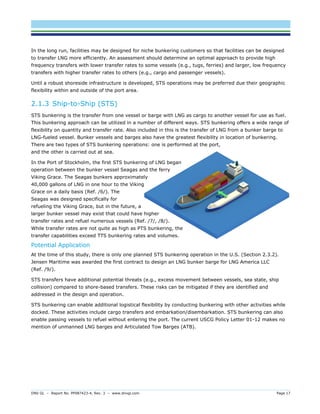
2.1.3 Ship-to-Ship (STS) 
STS bunkering is the transfer from one vessel or barge with LNG as cargo to another vessel for use as fuel. This bunkering approach can be utilized in a number of different ways. STS bunkering offers a wide range of flexibility on quantity and transfer rate. Also included in this is the transfer of LNG from a bunker barge to LNG-fueled vessel. Bunker vessels and barges also have the greatest flexibility in location of bunkering. There are two types of STS bunkering operations: one is performed at the port, and the other is carried out at sea. 
In the Port of Stockholm, the first STS bunkering of LNG began operation between the bunker vessel Seagas and the ferry Viking Grace. The Seagas bunkers approximately 40,000 gallons of LNG in one hour to the Viking Grace on a daily basis (Ref. /6/). The Seagas was designed specifically for refueling the Viking Grace, but in the future, a larger bunker vessel may exist that could have higher transfer rates and refuel numerous vessels (Ref. /7/, /8/). While transfer rates are not quite as high as PTS bunkering, the transfer capabilities exceed TTS bunkering rates and volumes. 
Potential Application 
At the time of this study, there is only one planned STS bunkering operation in the U.S. (Section 2.3.2). Jensen Maritime was awarded the first contract to design an LNG bunker barge for LNG America LLC (Ref. /9/). 
STS transfers have additional potential threats (e.g., excess movement between vessels, sea state, ship collision) compared to shore-based transfers. These risks can be mitigated if they are identified and addressed in the design and operation. 
STS bunkering can enable additional logistical flexibility by conducting bunkering with other activities while docked. These activities include cargo transfers and embarkation/disembarkation. STS bunkering can also enable passing vessels to refuel without entering the port. The current USCG Policy Letter 01-12 makes no mention of unmanned LNG barges and Articulated Tow Barges (ATB).
DNV GL – Report No. PP087423-4, Rev. 3 – www.dnvgl.com Page 18 
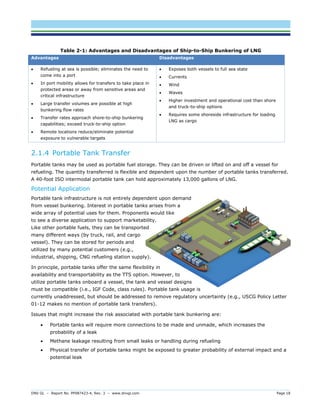
Table 2-1: Advantages and Disadvantages of Ship-to-Ship Bunkering of LNG Advantages Disadvantages 
 Refueling at sea is possible; eliminates the need to come into a port 
 In port mobility allows for transfers to take place in protected areas or away from sensitive areas and critical infrastructure 
 Large transfer volumes are possible at high bunkering flow rates 
 Transfer rates approach shore-to-ship bunkering capabilities; exceed truck-to-ship option 
 Remote locations reduce/eliminate potential exposure to vulnerable targets 
 Exposes both vessels to full sea state 
 Currents 
 Wind 
 Waves 
 Higher investment and operational cost than shore and truck-to-ship options 
 Requires some shoreside infrastructure for loading LNG as cargo 
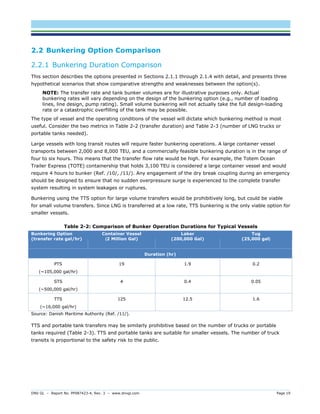
2.1.4 Portable Tank Transfer 
Portable tanks may be used as portable fuel storage. They can be driven or lifted on and off a vessel for refueling. The quantity transferred is flexible and dependent upon the number of portable tanks transferred. A 40-foot ISO intermodal portable tank can hold approximately 13,000 gallons of LNG. 
Potential Application 
Portable tank infrastructure is not entirely dependent upon demand from vessel bunkering. Interest in portable tanks arises from a wide array of potential uses for them. Proponents would like to see a diverse application to support marketability. Like other portable fuels, they can be transported many different ways (by truck, rail, and cargo vessel). They can be stored for periods and utilized by many potential customers (e.g., industrial, shipping, CNG refueling station supply). 
In principle, portable tanks offer the same flexibility in availability and transportability as the TTS option. However, to utilize portable tanks onboard a vessel, the tank and vessel designs must be compatible (i.e., IGF Code, class rules). Portable tank usage is currently unaddressed, but should be addressed to remove regulatory uncertainty (e.g., USCG Policy Letter 01-12 makes no mention of portable tank transfers). 
Issues that might increase the risk associated with portable tank bunkering are: 
 Portable tanks will require more connections to be made and unmade, which increases the probability of a leak 
 Methane leakage resulting from small leaks or handling during refueling 
 Physical transfer of portable tanks might be exposed to greater probability of external impact and a potential leak
DNV GL – Report No. PP087423-4, Rev. 3 – www.dnvgl.com Page 19 
2.2 Bunkering Option Comparison 
2.2.1 Bunkering Duration Comparison 
This section describes the options presented in Sections 2.1.1 through 2.1.4 with detail, and presents three hypothetical scenarios that show comparative strengths and weaknesses between the option(s). 
NOTE: The transfer rate and tank bunker volumes are for illustrative purposes only. Actual bunkering rates will vary depending on the design of the bunkering option (e.g., number of loading lines, line design, pump rating). Small volume bunkering will not actually take the full design-loading rate or a catastrophic overfilling of the tank may be possible. 
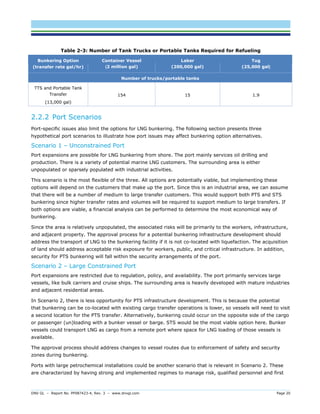
The type of vessel and the operating conditions of the vessel will dictate which bunkering method is most useful. Consider the two metrics in Table 2-2 (transfer duration) and Table 2-3 (number of LNG trucks or portable tanks needed). 
Large vessels with long transit routes will require faster bunkering operations. A large container vessel transports between 2,000 and 8,000 TEU, and a commercially feasible bunkering duration is in the range of four to six hours. This means that the transfer flow rate would be high. For example, the Totem Ocean Trailer Express (TOTE) containership that holds 3,100 TEU is considered a large container vessel and would require 4 hours to bunker (Ref. /10/, /11/). Any engagement of the dry break coupling during an emergency should be designed to ensure that no sudden overpressure surge is experienced to the complete transfer system resulting in system leakages or ruptures. 
Bunkering using the TTS option for large volume transfers would be prohibitively long, but could be viable for small volume transfers. Since LNG is transferred at a low rate, TTS bunkering is the only viable option for smaller vessels. 
Table 2-2: Comparison of Bunker Operation Durations for Typical Vessels Bunkering Option (transfer rate gal/hr) Container Vessel (2 Million Gal) Laker (200,000 Gal) Tug (25,000 gal) Duration (hr) 
PTS 
(~105,000 gal/hr) 
19 
1.9 
0.2 
STS 
(~500,000 gal/hr) 
4 
0.4 
0.05 
TTS 
(~16,000 gal/hr) 
125 
12.5 
1.6 
Source: Danish Maritime Authority (Ref. /11/). 
TTS and portable tank transfers may be similarly prohibitive based on the number of trucks or portable tanks required (Table 2-3). TTS and portable tanks are suitable for smaller vessels. The number of truck transits is proportional to the safety risk to the public.
DNV GL – Report No. PP087423-4, Rev. 3 – www.dnvgl.com Page 20 
Table 2-3: Number of Tank Trucks or Portable Tanks Required for Refueling Bunkering Option (transfer rate gal/hr) Container Vessel (2 million gal) Laker (200,000 gal) Tug (25,000 gal) Number of trucks/portable tanks 
TTS and Portable Tank Transfer 
(13,000 gal) 
154 
15 
1.9 
2.2.2 Port Scenarios 
Port-specific issues also limit the options for LNG bunkering. The following section presents three hypothetical port scenarios to illustrate how port issues may affect bunkering option alternatives. 
Scenario 1 – Unconstrained Port 
Port expansions are possible for LNG bunkering from shore. The port mainly services oil drilling and production. There is a variety of potential marine LNG customers. The surrounding area is either unpopulated or sparsely populated with industrial activities. 
This scenario is the most flexible of the three. All options are potentially viable, but implementing these options will depend on the customers that make up the port. Since this is an industrial area, we can assume that there will be a number of medium to large transfer customers. This would support both PTS and STS bunkering since higher transfer rates and volumes will be required to support medium to large transfers. If both options are viable, a financial analysis can be performed to determine the most economical way of bunkering. 
Since the area is relatively unpopulated, the associated risks will be primarily to the workers, infrastructure, and adjacent property. The approval process for a potential bunkering infrastructure development should address the transport of LNG to the bunkering facility if it is not co-located with liquefaction. The acquisition of land should address acceptable risk exposure for workers, public, and critical infrastructure. In addition, security for PTS bunkering will fall within the security arrangements of the port. 
Scenario 2 – Large Constrained Port 
Port expansions are restricted due to regulation, policy, and availability. The port primarily services large vessels, like bulk carriers and cruise ships. The surrounding area is heavily developed with mature industries and adjacent residential areas. 
In Scenario 2, there is less opportunity for PTS infrastructure development. This is because the potential that bunkering can be co-located with existing cargo transfer operations is lower, so vessels will need to visit a second location for the PTS transfer. Alternatively, bunkering could occur on the opposite side of the cargo or passenger (un)loading with a bunker vessel or barge. STS would be the most viable option here. Bunker vessels could transport LNG as cargo from a remote port where space for LNG loading of those vessels is available. 
The approval process should address changes to vessel routes due to enforcement of safety and security zones during bunkering. 
Ports with large petrochemical installations could be another scenario that is relevant in Scenario 2. These are characterized by having strong and implemented regimes to manage risk, qualified personnel and first
DNV GL – Report No. PP087423-4, Rev. 3 – www.dnvgl.com Page 21 
responders, and that the additional risk from LNG bunkering will be small compared with the total risk picture. In such ports, the main challenge will be to control the additional traffic. 
Scenario 3 – Small Constrained Port 
Port expansions are restricted due to regulation, policy, and availability. The port services a large number of fishing, ferry, and other small to medium size vessels. These vessels typically have smaller fuel requirements and travel shorter distances. 
The PTS bunkering may not be viable due to restrictions on available land. The demand for STS transfers may not be adequate to justify the infrastructure needs of an STS option. Since many of the bunkering operations are smaller vessels, it may be feasible to refuel a vessel bunkering by the TTS option or portable tank. 
Portable tank transfers may be possible in this scenario for some niche uses. Ferry systems could be interested in this option because it does not require the installation of tank filling and boil-off gas lines. 
Summary 
Evaluations of ports for LNG bunkering are specific to the port and characteristics of the marine traffic, which takes into account vessel types, segments, traffic patterns, and routes. U.S. ports with extensive use by large vessels may have greater preference for the PTS and STS operations. 
Since larger vessels are supported by smaller vessels (e.g., tugs, offshore supply vessels, ferries), it is possible that TTS operations will still bunker smaller support vessels unless niche PTS bunkering becomes available for high frequency, low volume customers. 
The development of fit-for-purpose PTS bunkering options, as in Harvey Gulf, may come from co- development of LNG-fueled ships and supporting infrastructure. This is because the capital investment to convert small ships can be a larger proportion of their revenue generation capability than for larger vessels. 
Preferences for bunkering options are not strictly dictated by the transfer rate since facilities can be designed to meet the needs of different LNG-fueled vessels. LNG suppliers may need to conduct a financial study to determine which bunkering options are feasible at a given port considering infrastructure development cost, demand from LNG-fueled vessels at the port, and the effect of LNG price. 
2.3 Existing or Planned Operations 
There are several “first movers” who plan to supply or utilize LNG as fuel. Among the reasons for being first movers, include: 
 Concerns about the potential supply shortages for ultra-low sulfur diesel (ULSD) in 2015 (Ref. /10/) 
 A potential price spike due to high demand for ULSD (Ref. /10/) and scrubber installation cost 
 Environmental stewardship 
 Low cost and abundant supply of natural gas 
 LNG meets the ECA and EPA Tier 4 requirements 
This section summarizes the companies in the process of converting to LNG-fueled vessels and the infrastructure developments associated with them (Section 2.3.1), and companies supplying LNG for marine vessels (Section 2.3.2).
DNV GL – Report No. PP087423-4, Rev. 3 – www.dnvgl.com Page 22 
At the time of writing this there are five U.S. companies with planned projects to fuel vessels with LNG: TOTE, Harvey Gulf, Interlake Steamship Co., Washington State Ferries, and Staten Island Ferries. Eagle LNG is planning to construct liquefaction facilities to supply LNG, and Jensen Maritime has an LNG bunker barge on order. Other projects will utilize the existing supply of LNG from nearby liquefaction plants. 
2.3.1 Emerging LNG-Fueled Vessels 
Totem Ocean Trailer Express (TOTE) 
TOTE plans to convert two of its existing Orca-class vessels to be LNG-fueled and is having two new vessels built. The converted LNG ships will bunker LNG in the Port of Tacoma before departing to Alaska. TOTE has a preliminary agreement with Pivotal LNG to supply LNG bunkering operations in Jacksonville, FL, for its new LNG-fueled cargo vessels (see Section 2.3.2). As of 2012, Puget Sound Energy and TGE Marine Gas Engineering were partners in bunkering developments in Tacoma. Although detailed designs have not been released, a PTS solution seems more likely than TTS or STS bunkering. It would take approximately 45 LNG tank trucks* to fill from empty (Ref. /12/). 
Although an STS transfer is technically feasible, it would be an additional capital investment versus a PTS bunkering option since some shore-based infrastructure would be needed for the cargo transfer to the bunker vessel. If shore-based bunkering operations are not feasible while loading cargo, STS options may be preferred. 
Matson 
Matson has contracted with a Philadelphia shipyard to build two new 3600 TEU containerships. The vessels will be constructed with dual fuel engines but be converted to LNG later, depending on the availability of LNG on the west coast (Ref. /13/, /14/). These ships will transport containers from the continental U.S. to Hawaii. 
Harvey Gulf 
Harvey Gulf will build two fit-for-purpose PTS LNG bunkering facilities at Port Fourchon, LA, to refuel their fleet of LNG-fueled offshore support vessels (OSVs). The LNG tanks will be replenished via LNG tank truck deliveries on a continuous basis. Each facility will have 3 x 90,000 gallon Type-C pressure vessels (Ref. /15/). In addition to supplying LNG to their OSVs, the facility is said to be capable of supplying LNG to on- road vehicles (Ref. /16/). Shell has chartered the first three Harvey Gulf OSVs. 
At the time of this study, no information was available about the supplier of LNG. Shell is expanding a facility nearby, in Geismar, LA, to include a small-scale LNG liquefaction operation as it looks for new markets for natural gas. 
Interlake Steamship Company 
The Interlake Steamship Co. has expressed interest to convert its existing diesel powered vessel to LNG. In order to do this, they have an agreement with Shell to provide LNG. This supply will come from Shell's new LNG liquefaction capability at its Sarnia Manufacturing Centre. This center is in Sarnia, Ontario, on the southern shore of Lake Huron at the head of the St. Clair River. 
* Assuming diesel tanks could store 581,000 (Ref. /12/) gallons of diesel then divide by 13,000 gallons per LNG truck-to-ship transfer yields over 45 truck-to-ship bunkers
DNV GL – Report No. PP087423-4, Rev. 3 – www.dnvgl.com Page 23 
Their ship, M/V Mesabi Miner, will be retrofitted with four vertical LNG tanks at the ship’s stern. Each tank will hold 52,800 gallons. As with TOTE, large volumes of LNG require many LNG trucks so other options will likely be faster, more economical, and increase road safety for the public and workers. 
Washington State Ferries 
The Washington State Ferry system is the largest in the nation. In 2013, Washington State DOT (WSDOT) completed a study that determined it was technically and financially feasible to convert six of their ferries to LNG fuel. The payback period was seven to twelve years, depending on the estimate (Ref. /17/, /18/). 
WSDOT expects LNG to be delivered by truck from nearby liquefaction facilities. In the vicinity, there are three such facilities: two on the Oregon/Washington border and one in British Columbia. Puget Sound Energy currently delivers LNG by truck to its Gig Harbor peak shaving facility near Tacoma, WA (Ref. /19/, /20/). 
Staten Island Ferry 
The Staten Island Ferry system is considering conversion of its ferries to LNG fuel. They plan to retrofit one ferry for LNG as part of a pilot project. Since a supplier is unspecified for this single user, it may be unlikely that a PTS or STS bunkering approach will be considered due to the large capital investment needed for these options. 
Present capacity of the diesel tank is 40,000 gallons (Austen Class), and it is refueled once per week (Ref. /21/). To achieve the same energy content, the LNG fuel volume needs to be at least ~1.67x larger for a minimum capacity of 64,000 gallons. Refueling from empty* with the TTS option will take slightly less than five full loads of 13,000-gallon capacity tank trucks. 
The source of LNG supply for this project has not been released publicly. 
2.3.2 Emerging LNG Bunkering Infrastructure 
With a variety of different operators moving to fuel their vessels with LNG, the infrastructure investment will grow accordingly. There are several known plans to expand infrastructure to meet a growing demand for LNG as a fuel (bunkering and otherwise). Some of these infrastructure expansions are discussed below. 
Jensen Maritime LNG Bunker Barge 
LNG America LLC awarded the contract to design an LNG bunker barge that will operate in the U.S. Jensen Maritime won the contract and LNG America LLC plans to serve the Gulf Coast region. The vessel is to be delivered in 2015 (Ref. /22/). 
The vessel has a planned LNG cargo capacity of nearly 800,000 gallons. 
Eagle LNG (Jacksonville, FL) 
Eagle LNG, a consortium comprising Clean Energy, GE Ventures, GE Energy Financial Services, and Ferus Natural Gas Fuels, has publicly announced plans to build an LNG liquefaction plant in Jacksonville, FL, to supply a variety of transportation sectors with a focus on marine vessels. The location Eagle LNG selected is on the St. Johns River with rail lines running along the northern side of the property. They plan to supply LNG for marine vessels, heavy trucking, and rail. 
* Normally, the tank would not be empty or it would risk running out of fuel so the actual quantity transferred would not be the entire fuel tank volume.
DNV GL – Report No. PP087423-4, Rev. 3 – www.dnvgl.com Page 24 
2.3.3 Other Infrastructure 
In addition to marine applications of LNG, suppliers are actively developing other infrastructure to support the natural gas supply chain. These developments will promote the availability and accessibility of LNG for vessels. However, it is important to consider the implication of incidents occurring in one LNG subsector on all the others in order to incorporate the effect that loss of public confidence could have on safety management (Section 2.5). 
Clean Energy, an Eagle LNG partner, supplies fuel for UPS and other integrated logistics companies. It has plans to establish a network of LNG refueling stations throughout the U.S. by collaborating with local travel centers such as Flying J and Pilot Travel Center (Ref. /24/). Shell also plans to supply LNG for on road and rail use (Ref. /23/). 
There are specific partnerships being formed to provide LNG as fuel. For example, Pivotal LNG just entered into its second agreement with UPS for a third LNG refueling center to be near the UPS operations in Jacksonville, FL (Ref. /25/). Pivotal LNG will also supply LNG for TOTE’s LNG container ships serving Puerto Rico-Jacksonville. 
2.4 Infrastructure Development in Europe 
In Northern Europe, LNG infrastructure generally begins with large users that can support TTS operations economically. This will transition into more permanent infrastructure like PTS or STS as additional vessels switch to be LNG-fueled. 
In areas where LNG infrastructure is established, bunkering operations at large LNG terminals typically use a mix of STS and TTS to fuel small RoRos and RoPax, and STS for all other vessels. At smaller intermediary terminals, it is common to use strictly PTS and TTS for small and large RoRos, RoPax, and PTS for all other vessels (Ref. /11/). It is believed that TTS is a temporary bunkering option until LNG bunkering is fully integrated into the port. 
2.4.1 Norway 
In Norway, the public, government, authorities, and eventually the private sector in early 2000’s began providing financial incentive to use LNG as fuel. Funds were allocated to strategic research and development in order to conceptualize and build the first LNG ferries. In 2007, in response to the Nitrogen Oxide (NOx) tax from the Norwegian Government, the Confederation of Norwegian Enterprise established a private NOx fund, where ship owners would receive 50% of subsidies for using “green technologies.” Recently, LNG- fueled ships have been introduced on a commercial basis, although the government and institutions like EU are still subsidizing or implementing development programs. 
There are five LNG bunkering installations in operation in Norway at the date of this report, as seen in Figure 2-2; Fjordbase, CCB, Halhjem, Vestbase and Risavika. The location of the bunkering facilities are shown on the detailed map below. These are bunkering stations with permanent storage tanks onshore. Trucks are used to transport LNG to remote locations away from these facilities. Gasnor is the operator of Fjordbase, Vestbase, CCB and Halhjem. Skangass is operating the liquefaction plant and loading station at Risavika. Skangass also operates a small scale receiving LNG terminal in Øra, Fredrikstad South-East in Norway, where LNG for fuel can be transported out to receiving vessels by truck. Barents NaturGass AS has won the contract to supply LNG by truck to the seven new Torghatten Nord AS LNG ferries.
DNV GL – Report No. PP087423-4, Rev. 3 – www.dnvgl.com Page 25 
Figure 2-2: LNG Bunkering Installations in Operation in Norway Today 
2.4.2 Netherlands 
In the Netherlands, companies that support moderate volumes of LNG use, such as ferries or container vessel operators, are starting to implement TTS operations from public quays or other locations identified by port authorities. If their operation grows, they may incorporate local storage and convert the operation to a PTS operation depending on cost benefit. 
There is more interest in PTS stations serving multiple customers. Construction of these facilities depends on securing enough pre-contracts to realize a financially feasible outcome. 
Development of STS transfers in the Netherlands is not anticipated. Presently, port bylaws prevent this option in spite of its cost effectiveness, such that no rerouting of vessels required, and no refueling while underway. STS while moored is allowed and could be a viable option but requires that bunker barges and pre-contract commitments be established. 
The use of skids (ISO-containers) is a relatively new concept. Companies in the Netherlands are planning that this concept will also be developed. All operations, which include filling skids and placing them onto LNG-fueled vessels, will be performed primarily at the bunker stations. The financial feasibility remains uncertain and may serve in some niche capacity where other operations are not feasible or allowed. 
2.5 Threat Assessment of the LNG Bunkering Supply Chain 
Although LNG is recognized as a cleaner energy source with lower NOx, SOx and particulate matter (PM) emissions, operators face challenges transporting and using LNG as fuel. Unavailability of LNG may increase the cost of LNG fuel, reducing one of the main drivers for its adoption. It is more likely that LNG will be the cheaper alternative in the short-term, for ships operating predominantly within the U.S.
DNV GL – Report No. PP087423-4, Rev. 3 – www.dnvgl.com Page 26 
Regulations directly influence the use of LNG as a fuel and dictate actual bunkering operations. The U.S. EPA is responsible for regulatory oversight over emissions from ships and marine vessels. This includes the IMO MARPOL Annex VI regulations, which require increasingly stringent emission limits for pollutants in Emission Control Areas (ECAs). The North American ECA took effect on 1 August 2012, requiring ships operating within the designated waters to use on-board fuel oil with a sulfur content not exceeding 1% (by mass), and from 1 January 2015 sulfur content cannot exceed 0.10%. 
The U.S. EPA regulates the emissions from diesel engines installed on U.S. flagged vessels, "Federal Marine Compression-Ignition (CI) Engines - Exhaust Emission Standards". The requirements vary for different sizes of engines. U.S. flagged vessels with Category 1 or 2 engines can be designated as Ocean Going Vessels if they operate extensively offshore. They may choose to comply with MARPOL Annex VI as an alternative to the EPA requirements. As vessels use more LNG to meet environmental regulations, the demand will grow for bunkering. 
Deploying a robust LNG infrastructure will help ensure safe and reliable transport and use. The threats that could prevent safe and reliable bunkering operations may be categorized under infrastructure, public perception, location restrictions, policy and regulations, and natural hazards conditions, as illustrated in Figure 2-3. 
Figure 2-3: LNG Bunkering Threats 
2.5.1 Infrastructure 
Infrastructure plays a major role in transferring LNG from a generation facility to a port facility. Bunkering in commercial ports is expected to have an impact on vessel movement. 
As LNG bunkering infrastructure is developed, bunkering locations will change the traffic density and patterns of LNG-fueled vessels. An increase in LNG bunker demand without critical infrastructure investment will limit slot availability at shore-based bunkering facilities and bunkering vessels. Significant delays in the build-out of infrastructure would influence investment toward the other compliance options. Alternatively, rapid build-out could lead to port expansion where financial investment, public concern, and land availability/use can become predominant issues. During a scoping meeting for Port Los Angeles and Port of Long Beach, Health Impact Assessment concerns were raised about displacement and impacts to neighborhood infrastructure (Ref. /26/). A quantitative port-wide risk assessment would be useful to assess the changes that traffic character (type of vessels) and frequency/density will have on the safety and
DNV GL – Report No. PP087423-4, Rev. 3 – www.dnvgl.com Page 27 
security of the public, workers, critical infrastructure, and commercial operations. In addition, it would assist in determining the most efficient/effective mitigation strategies. 
Highly trafficked areas in proximity to bunkering operations without appropriate safety measures and adequate regulatory enforcement could result in major safety issues affecting the entire natural gas industry. For example, increased tank truck presence in major populated areas will increase public exposure to LNG operations, which could increase exposure to high-consequence accidents. A loss of public confidence in safety management could result, with potentially cascading implications on the LNG supply chain. Tank trucks may be a good initial solution to LNG supply chain, as they do not require a high initial investment. However, tank trucks are limited by capacity. Increases in demand will increase the number of tank trucks on the road as well as the number of hose connections. Thus, a need will arise for safer and more reliable LNG bunkering facilities to replace some TTS bunkering. 
Ferries will face a different type of infrastructure issue than tank trucks, as finding best practices to address LNG bunkering operations in parallel with passenger/cargo embarking or disembarking will be necessary. Restrictions on simultaneous activities with bunkering may increase port waiting time and decrease the competitiveness of LNG as an alternative fuel. In Scandinavia, risk assessments were used to gain approval for simultaneous LNG bunkering with passengers on board or during passenger transfers; this is known as SIMOPs. The vessels using or planning to do this are the Viking Grace in Sweden, the Stavanger Fjord Line in Norway, and a ferry in Denmark (Oct 2014) (Ref. /8/, /27/, /28/). 
Infrastructure interdependencies are just beginning to be appreciated as significant risks. LNG bunkering is likely to be subject to the same types of interdependency risks. In its October 1997 report to the U.S. President, the President’s Commission on Critical Infrastructure Protection, Critical Foundations, highlighted eight critical infrastructures: telecommunications, electric power systems, natural gas and oil, banking and finance, transportation, water supply systems, government services, and emergency services. Specific areas of vulnerabilities facing the Oil and Natural Gas industries are related to supply, transportation, storage and distribution (Ref. /29/). LNG bunkering is likely to be subject to the same types of interdependency risks. 
2.5.2 Public Perception 
With the advances in technology and shale gas processing, the U.S. is on track to becoming a net exporter of LNG (Ref. /30/). Energy independence has been an element of the political platform for every president since the Nixon Administration (Ref. /31/). In an increasingly environmentally conscious public, a relatively clean burning LNG attracts more support for the cause than other fossil fuels. However, the cryogenic, temperature, and dispersion properties of LNG have raised safety concerns. Public perception of LNG is generally sensitive, or regarded as such within the industry, so a single LNG bunkering incident may be enough to change public perception overnight. The ripple effects of a single incident may affect the broader natural gas industry as well. Although public perception is sensitive, EPA’s calculations show a significant health benefit to the public (Ref. /32/). 
It is critical to keep the public aware of issues related to bunkering operations. Transparency is an important part of addressing community needs and requests. The community should be assured that safety could be effectively managed.
DNV GL – Report No. PP087423-4, Rev. 3 – www.dnvgl.com Page 28 
2.6 Location Restrictions 
As mentioned above, availability of LNG in U.S. waterways is crucial for the adoption of LNG as an alternative fuel. However, aside from existing near densely populated port cities, bunkering operations may be restricted by many other factors. Port cities like Miami, San Diego, and San Francisco benefit from substantial tourism, which may be degraded by the presence of tank trucks, heavy cargo traffic, and other side effects of heavy industry. 
Differences in regulations between states and cities along the U.S. coasts and inland waterways may prompt vessel operators to adopt avoidance routes. The potential consequences of avoidance strategy could be the subject of a separate study. The study should examine the effect of marine traffic routing changes and its direct and indirect implication on economics, safety – including tank holding times, and health (i.e., air quality). 
2.6.1 Policy and Regulations 
Policy plays a major role not only in the adoption of LNG as a fuel, but also in the approval of bunkering in the U.S. waters. Incentives for vessels and trucks to run on LNG fuel will increase LNG demand and promote LNG bunkering. One practice among a port operator in North America (The Port of Los Angeles) is to provide financial incentives to encourage ship operators to make voluntary engine, fuel, and technology enhancements to reduce emissions beyond what IMO has established. These financial incentives are based on an Environmental Ship Index system that gauges the vessels emission level. U.S. officials and regulators on national and state levels could influence LNG bunkering practices. Their endorsements could affect the selection of LNG bunkering sites, terminal layouts, and port operations (Ref. /33/). 
In addition to domestic policies, U.S. international policies influence LNG bunkering. Policies could restrict entry of LNG bunkering vessels, thus affecting LNG demand. Future LNG bunkering infrastructure could depend heavily on these policies. 
Implementation of policies, regulations, and standards at the national level could promote bunkering safety and standardize infrastructure and operational procedures. Examples include the draft ISO standard and DNV GL Recommended Practice for LNG Bunkering (Ref. /34/, /35/). Regional differences in regulations and enforcement may limit or promote bunkering unevenly. 
Many other regulatory issues are covered under this cooperative agreement and summarized in the fourth part of this report. 
2.6.2 Natural Hazards 
Every region in the U.S. has predominant natural hazards. The bunkering industry should anticipate icy conditions, hurricanes, earthquakes, and climate change which may threaten LNG bunkering operations or its supply lines on shore to marine assets. 
Meteorological and Oceanographic Conditions (Metocean) 
Metocean data are the wind, wave current and tidal conditions at the specific location of an installation, facility or vessel. At some locations and for specific types of operations, other parameters may be important (e.g., air and sea temperature, visibility and ice conditions). 
Observing metocean conditions is already a well understood and managed practice within the offshore industry. Offshore companies have established limits for the design and operational considerations of the
DNV GL – Report No. PP087423-4, Rev. 3 – www.dnvgl.com Page 29 
vessels based on sea state, wind, and currents, and work around the environment. By monitoring the weather and sea, an appropriate window of calm winds, currents, and waves can be created to allow safe bunkering. With good weather prediction capability and continuous monitoring during bunkering operations, LNG bunkering is a well-managed threat. 
Extreme Cold Weather 
Icy conditions are a concern mainly in Alaska and in the northern parts of the U.S. as they can last for months in these locations. Extremely cold weather conditions may pose a threat to bunkering operations, potentially increasing the risk and frequency of tank truck incidents, limiting rescue operations, or preventing vessels from reaching bunkering facilities. In some cases, these conditions lead to shut downs or delays in affected ports. Icy conditions in the Great Lakes limit the shipping season to March through December. Cold weather can lead to more difficult handling of bunkering systems and equipment. 
Hurricanes 
Seasonal hurricanes could result in major incidents that could affect LNG supply chain and infrastructure in the same manner they affect other existing infrastructure. Widespread damage to LNG bunkering infrastructure could lead to interruptions in LNG bunkering supply. The National Weather Service claims that one hurricane per three year period is expected to occur within the state of Louisiana based on the hurricane history in the state (Ref. /36/). The effects of recent major hurricanes remind us that supply lines can be disrupted and infrastructure can be significantly damaged. As an example, Hurricane Katrina in 2005 caused widespread infrastructure collapse. The risk to unmanned LNG bunker barges and barges with unattended ATBs needs to be examined. 
Geologic Hazards 
Earthquakes and related geologic hazards areas, especially in California and Alaska, could influence the location and design of LNG bunkering facilities. Earthquakes can cause catastrophic natural disasters such as intense ground shaking, surface rupture, slope instability, and tsunamis. Any of these hazards could affect the LNG bunkering supply chain or a critical bunkering facility. The effect of tsunamis may interrupt supply chains or damage onshore infrastructure related to LNG bunkering. 
Climate Change 
Climate change may alter the frequency of extreme events and disrupt LNG supply and bunkering (Ref. /37/). An increased frequency of extreme weather events predicted in the Midwest due to climate change could result in lower water levels or flooding in the Mississippi River (Ref. /37/). Lower water levels in 1988 stranded 4,000 barges on the Mississippi River. A similar event could prevent vessels from reaching onshore bunkering facilities, or it may require significant decrease in cargo weight. 
2.7 Barriers to Co-locating 
The hazards and threats discussed previously in this report are relevant to co-location of LNG bunkering with multi-modal use. Co-locating infrastructure for multi-modal use reduces capital expenditures and increases resource use efficiency (i.e., land, LNG supply infrastructure, system design redundancies can be minimized). The boil-off gas could be compressed and used to co-locate a compressed natural gas (CNG) operation together with LNG operations. 
Additional barriers are discussed below and include Not in My Backyard (NIMBY), technical barriers, and regulatory barriers.
DNV GL – Report No. PP087423-4, Rev. 3 – www.dnvgl.com Page 30 
NIMBY 
The greatest challenge to co-locating bunkering with other uses of LNG as a transportation fuel is the management of public perception of risks. NIMBY issues will likely be the default and most pervasive position of opponents to LNG bunkering. Co-locating LNG with other activities may present additional challenges from the public because they will have more direct interaction with industrial uses of LNG. Issues that could arise include potential visual impacts from larger LNG tanks, security, and public safety. LNG truck usage could be reduced if a small-scale liquefaction process could feed an intermediate storage site. 
In addition, the administrative and regulatory burden is likely to grow as LNG use increases. If public risk perceptions remain high, tight oversight will be expected. 
Technical Barriers 
In addition to stakeholder issues, there are many potential barriers arising from technical issues. MARAD in conjunction with other governmental bodies should assess barriers that would separate the LNG operations geographically or by physical barrier, and operationally to ensure that an incident does not cascade into a failure of the entire LNG delivery system. 
An evaluation should be made at each site to determine the impact to the safety of users of the facility and nearby populations. Initial developments will need to demonstrate an acceptable level of risk to workers and the public. Since many ports have high population densities nearby, a poorly performed risk assessment associated with an incident could lead to widespread public distrust. 
Port expansions may be required at some ports. In some cases, available sites may not be suitable for multi-modal use. Ports may also be developed in remote areas that are not easily accessible. For example, developments in Port Fourchon could support other forms of LNG use but its remoteness to nearby populations means that it may not support public transportation. 
All bunkering operations need to be performed safely under any scenario and protected from external events. Boil-off gas management needs to be accounted for in the increased use. 
A port risk assessment would identify and quantify alternative strategies to overcome technical barriers and mitigate risk to an acceptable level (as per EN1473 or NFPA 59A). As a best practice, each facility should conduct a barrier risk assessment to define all the critical barriers, clearly assign responsibility, and manage these throughout the facility’s life. 
Regulatory Barriers 
The regulatory barriers to co-locating are elaborated upon in Part 4 as part of the scope of this work.
DNV GL – Report No. PP087423-4, Rev. 3 – www.dnvgl.com Page 31 
2.8 Key Findings and Conclusions 
Conclusions and recommendations are drawn throughout this report. This section summarizes those key findings and presents potential recommendations. 
In this study, the four potential bunkering options assessed are (Figure 2-4): 
 Section 2.1.1: Truck-to-Ship (TTS) (green box) 
 Section 2.2.2: Shore-to-Ship (PTS) (yellow box) 
 Section 2.2.3: Ship-to-Ship (STS) (blue (box) 
 Section 2.2.4: Portable Tank Transfer (orange box) 
Figure 2-4: Potential Bunkering Options 
During the build-out of LNG bunkering infrastructure it will be important for each port to evaluate short-term and long-term infrastructure development needs. Given the tighter environmental requirements and as long as the price difference between marine fuel oil and LNG remains, the drivers will support both infrastructure development and fuel switching for vessels. 
For bunker providers and forward-thinking ship-owners, LNG represents an opportunity. 
For the public, LNG fuel means cleaner local air quality and fewer negative health impacts due to poor air quality.
DNV GL – Report No. PP087423-4, Rev. 3 – www.dnvgl.com Page 32 
Short-term developments are focused on the needs of early movers. These developments are geared towards companies that will use large volumes of LNG for fuel. Large consumers offer the suppliers a strong foundation on which to build infrastructure. Smaller operators will realize associated benefits of existing infrastructure as independent operations such as Eagle LNG and Pivotal LNG diversify their customer base. In addition, the low cost of natural gas supports further bunkering infrastructure development of LNG as fuel. 
As infrastructure is developed and demand grows, there may be more niched providers. They will be able and suited to provide a more reliable, available, and efficient delivery on the whole versus bunkering to vastly over-sized or under-sized vessels. 
A holistic strategy for bunkering operations is required in order to address the threats of inadequate infrastructure, poor public perception, restricted locations, overly restrictive and regionally disparate regulations, and disruptive weather conditions. Some of these threats may not be controllable, but different measures may be taken to prevent incidents from occurring. The earlier a strategy is adopted to counter these risks, the more flexibility the bunkering industry will have in adapting for unforeseen threats. 
Key Findings: 
 There is no single bunkering option that can meet the requirements of all port stakeholders. 
 Initial developments are cooperative, minimizing the risk to first movers. 
 No LNG bunkering option will dominate since first movers dictate initial development based on specific project needs. 
 TTS bunkering will be utilized by vessels with smaller fuel tank capacities (e.g., tugs) and for remote refueling where infrastructure is not currently established (e.g., ferries). 
 PTS bunkering will be primarily developed for larger fueling needs through partnerships with vessel operators or designed to vessel needs (e.g., Harvey Gulf). 
 STS bunkering may grow significantly, but it may only be considered where shore-based options are less attractive or infeasible. 
 Management of risks to the public, workers, critical infrastructure, and business interruption will be essential to prevent catastrophic events that may affect the natural gas/LNG industry. 
2.9 Recommendations 
In order to promote a national bunkering infrastructure, DNV GL recommends the following: 
Recommendations to Regulators 
1. Analyze the types of vessels that utilize ports in the U.S. to determine what bunkering methods will be necessary. The analysis should include an assessment of specific ports in order to determine the most viable alternatives given the specific port constraints. 
2. Identify ports where LNG bunkering infrastructure would be in the national best interest. 
3. In conjunction with industry, assess and develop best practices and risk acceptance criteria for simultaneous operations (e.g., cargo handling while bunkering and passenger (un)loading while bunkering). Shore based ships’ cargo handling equipment such as gantry cranes, forklifts, electric motors, generators, and lifting appliances within the gas dangerous zones need to be suitably classified safe for usage and maintained. Area classification for gas dangerous zones on ships are well defined in
DNV GL – Report No. PP087423-4, Rev. 3 – www.dnvgl.com Page 33 
the IGC Code but not clearly defined on the shore side for small-scale LNG installations, storage and operation. 
4. Develop a methodology for and conduct a quantitative port-wide navigational risk assessment to determine how changes in traffic character (type of vessels) and frequency/density affect the safety and security of the public, workers, critical infrastructure, and commercial operations. It will be critical to identify mitigation strategies (including their effectiveness and costs) to determine the most efficient/effective strategies. 
5. A port risk assessment would identify and quantify alternative strategies to overcome technical barriers and mitigate risk to an acceptable level (as per EN1473 or NFPA 59A). As a best practice, each facility should conduct a barrier risk assessment to define all the critical barriers, clearly assign responsibility, and manage these throughout the facility’s life. 
6. Incentivize first movers that establish LNG bunkering infrastructure in ports of the nation’s best interest through an Environmental Ship Index that defines a scale for financial rewards. 
7. Identify strategic port locations along the U.S. coasts to avoid populated, tourism, military, and protected areas. 
8. Encourage initial developments that promote flexibility on the LNG supplier for bunkering to different types of vessels. 
9. Develop an interagency working group to identify and develop management strategies and mitigation opportunities for potential threats (Section 2.5). 
10. Perform a comparative risk assessment study of the safety aspects for large-scale truck transport to port locations vs. large-scale rail transport to port locations vs. natural gas pipeline and local liquefaction. 
Recommendations to Ports 
11. Conduct an optimization study that assesses the optimal infrastructure build-out to provide LNG bunkering for both high-frequency, low volume transfers and low frequency, high volume transfers more efficiently. 
Recommendations to Asset Owners 
12. Evaluate LNG bunkering site availability as demand increases for more high frequency, low volume transfers. 
13. Involve stakeholders throughout the development of LNG bunkering and co-locating LNG bunkering with multi-modal uses. 
14. Assess the effectiveness of mitigation strategies (such as training, gas detection, firefighting capability, and emergency response) against potential incidents arising from co-locating bunkering activities with other uses of LNG. 
15. Perform a detailed study of potential routes for LNG transportation (truck, rail, and pipeline) that avoid densely populated areas and identify emergency response capabilities along the route. 
16. Assess the impacts and mitigation/adaptation strategies from climate change. 
17. Study road transportation safety and security risks from initial build out of bunkering infrastructure. A truck traffic study is recommended, which would assess transport safety/security risks, investigate
DNV GL – Report No. PP087423-4, Rev. 3 – www.dnvgl.com Page 34 
acceptable limits on national, regional, and local scales, and identify possible practical risk reducing measures. 
18. Balance quality, safety, and cost for new LNG investments in a way that ensures continued safe performance in the LNG industry.
DNV GL – Report No. PP087423-4, Rev. 3 – www.dnvgl.com Page 35 
References Number Reference 
/6/ 
“Seagas – the world’s first fuelling vessel for LNG named in Stockholm,” AGA Region Europe North. [Online]. Available: http://www.aga.com/international/web/lg/aga/like35agacom.nsf/0/3A72E0CE1A1327A5C1257B36002CCA71. [Accessed: 25-Feb-2014] 
/7/ 
“LNG Bunkering Barge Design ,” Houlder Ltd. [Online]. Available: http://houlderltd.com/case-study/lg- bunkering-barge-concept-design-2/. [Accessed: 12-Feb-2014] 
/8/ 
“Stockholm offers vessel-to-vessel LNG bunkering,” Marine Log, 29-Mar-2012. [Online]. Available: http://www.marinelog.com/index.php?option=com_k2&view=item&id=3819:stockholm-offers- vessel-to-vessel-lng-bunkering&Itemid=230. [Accessed: 12-Feb-2014] 
/9/ 
“Jensen Maritime to Design First LNG Bunker Barges in U.S.,” The Maritime Executive, 24-Feb-2014. [Online]. Available: http://www.maritime-executive.com/article/Jensen-Maritime-to-Design-First-LNG-Bunker-Barges- in-US-2014-02-24/. [Accessed: 26-Feb-2014] 
/10/ 
“TOTE to Convert Two Large Ships to LNG” [Online]. Available: http://www.fleetsandfuels.com/fuels/lng/2012/08/tote-converting-two-to-lng/. [Accessed: 17-Feb-2014] 
/11/ 
Danish Maritime Authority, “North European LNG Infrastructure Project: A feasibility study for an LNG filling station infrastructure and test of recommendations,” April 2012 [Online]. Available: http://www.dma.dk/themes/LNGinfrastructureproject/Documents/Final%20Report/LNG_Full_report_Mgg_2012_04_02_1.pdf. [Accessed : 9-May-2014] Added sources. 
/12/ 
“Wärtsilä to supply technology for Orca class LNG conversions - Ship Technology,” Ship Technology, 20-Feb- 2014. [Online]. Available: http://www.ship-technology.com/news/newswrtsil-to-supply-technology-for-orca- class-lng-conversions-4180688. [Accessed: 28-Feb-2014] 
/13/ 
“Matson Signs Contract With Aker Philadelphia Shipyard For Two New ‘Aloha Class’ Containerships, First Ship To Be Named The Daniel K. Inouye,” Matson, 06-Nov-2013. [Online]. Available: http://investor.matson.com/releasedetail.cfm?ReleaseID=805068. [Accessed: 28-Feb-2014] 
/14/ 
B. Parker, “Surfer girls, Philadelphia freedom and newbuilding finance,” Seatrade Global, 03-Feb-2014. [Online]. Available: http://www.seatrade-global.com/news/americas/surfer-girls-philadelphia-freedom-and- us-newbuilds-finance.html. [Accessed: 28-Feb-2014] 
/15/ 
“GO GREEN - HARVEY GULF,” Harvey Gulf. [Online]. Available: http://harveygulf.com/green.html. [Accessed: 18-Feb-2014] 
/16/ 
“Lockheed Confirms Role with Harvey Gulf,” HHPInsight.com, 14-Dec-2013. [Online]. Available: http://hhpinsight.com/marine/2013/12/lockheed-confirms-role-with-harvey-gulf/. [Accessed: 18-Feb-2014] 
/17/ 
R. Almeida, “Washington State Ferries and DNV Explore LNG as a Fuel,” gCaptain Maritime & Offshore News, 05-Feb-2013. [Online]. Available: http://gcaptain.com/washington-state-ferries-explore/. [Accessed: 18-Feb- 2014] 
/18/ 
R. Piellisch, “WSF’s LNG Ferries: One Step Closer,” HHPInsight.com, 25-Nov-2013. [Online]. Available: http://hhpinsight.com/marine/2013/11/wsfs-lng-ferries-said-one-step-closer/. [Accessed: 18-Feb-2014] 
/19/ 
C. Fay, “LNG As Fuel in Passenger Vessels,” WSDOT, 24-Jan-2013. [Online]. Available: http://www.wsdot.wa.gov/NR/rdonlyres/87A58CA1-1A7D-4C9A-9740- 508989E64164/0/LNGRevisedBriefingPaperC2.pdf. [Accessed: 18-Feb-2014] 
/20/ 
“2013 Integrated Resource Plan,” Puget Sound Energy, May 2013 [Online]. Available: http://pse.com/aboutpse/EnergySupply/Documents/IRP_2013_Chapters.pdf. [Accessed: 18-Feb-2014]
DNV GL – Report No. PP087423-4, Rev. 3 – www.dnvgl.com Page 36 
Number Reference 
/21/ 
M. Sedon, “LNG to power a Staten Island Ferry, saving a boatload on fuel costs,” SILive.com, 31-Dec-2012. [Online]. Available: http://www.silive.com/news/index.ssf/2012/12/staten_islands_austen_class_fe.html. [Accessed: 18-Feb-2014] 
/22/ 
“Jensen Maritime to design LNG America’s bunker barges,” Offshore Technology, 25-Feb-2014. [Online]. Available: http://www.offshore-technology.com/news/newsjensen-maritime-to-design-lng-americas-bunker- barges-4183850. [Accessed: 27-Feb-2014] 
/23/ 
“Shell to develop two additional natural gas for transport corridors in North America,” Shell Global, 05-Mar- 2013. [Online]. Available: http://www.shell.com/global/aboutshell/media/news-and-media- releases/2013/natural-gas-for-transport-corridors-05032012.html. [Accessed: 20-Feb-2014] 
/24/ 
“America’s Natural Gas Highway” [Online]. Available: http://www.cleanenergyfuels.com/pdf/CE- OS.ANGH.111912.pdf. [Accessed: 20-Feb-2014] 
/25/ 
A. Martinez, “Pivotal LNG to supply LNG to UPS facility in Jacksonville, Fla.,” 16-Jan-2014 [Online]. Available: http://www.pivotallng.com/Shared/docs/FDRLSPivotalJan2014.pdf. [Accessed: 19-Feb-2014] 
/26/ 
Port of Los Angeles and Port of Long Beach Health Impact Assessment Scoping Meeting: Notes from Facilitated Feedback Sessions. U.S. Environmental Protection Agency, 2010 [Online]. Available: http://www.epa.gov/Region09/nepa/PortsHIA/pdfs/NotesFromFacilitatedSession.pdf. [Accessed: 21-Feb- 2014] 
/27/ 
R. Piellisch, “Skangass for Fjord Line’s All-LNG Ferries,” HHPInsight.com, 13-Feb-2014. [Online]. Available: http://hhpinsight.com/marine/2014/02/skangass-for-fjord-lines-all-lng-ferries/. [Accessed: 27-Feb-2014] 
/28/ 
R. Piellisch, “LNG Ferries for Two Denmark Operators,” HHPInsight.com, 08-Jul-2013. [Online]. Available: http://hhpinsight.com/marine/2013/07/lng-ferries-for-denmark-pair/. [Accessed: 27-Feb-2014] 
/29/ 
United States President’s Commission on Critical Infrastructure Protection, Critical foundations: protecting America’s infrastructures: the report of the President’s Commission on Critical Infrastructure Protection. Commission, 1997 [Online]. Available: https://www.fas.org/sgp/library/pccip.pdf 
/30/ 
U.S. Energy Information Administration. “U.S. boost natural gas output and use since 2005, while OCD Europe scales back.” January 14, 2014. http://www.eia.gov/todayinenergy/detail.cfm?id=14591. Accessed February 26, 2014. 
/31/ 
Prakash, Loungani. "The Elusive Quest For Energy Independence." International Finance 12.2 (2009): 291- 299. Business Source Alumni Edition. Web. 26 Feb. 2014. 
/32/ 
U.S. Environmental Protection Agency, “EPA Finalizes More Stringent Standards for Control of Emissions from New Marine Compression-Ignition Engines at or Above 30 Liters per Cylinder,” Dec-2009 [Online]. Available: http://www.epa.gov/nonroad/marine/ci/420f09068.pdf. [Accessed: 28-Feb-2014] 
/33/ 
The Port of Los Angeles. “Environmental Ship Index Incentive Program Ocean-Going Vessel Incentives ” [Online]. Available: http://www.portoflosangeles.org/pdf/ESI_brochure_web_version.pdf. [Accessed: 9-May- 2014]. 
/34/ 
“Guidelines for Systems and Installations for Supply of LNG as Fuel to Ships,” The International Association of Oil and Gas Producers, OGP Draft 118683, Jun. 2013 [Online]. Available: www.ogp.org.uk/index.php/download_file/view/473/2876/. [Accessed: 14-Oct-2013] 
/35/ 
K. L. Strom, S. A. Mathew, H. Mohn, E. Skramstad, J. Tellkamp, A. V. der Maat, S. V. Volsem, E. X. Tang, and B. Yannart, “Recommended Practices: Development and Operation of LNG Bunkering Facilities,” Draft RP - G106, Oct. 2013. 
/36/ 
National Weather Service. “Louisiana Hurricane History.” Issued April 8, 2010.
DNV GL – Report No. PP087423-4, Rev. 3 – www.dnvgl.com Page 37 
Number Reference 
/37/ 
“Midwest | Global Climate Change Impacts in the United States 2009 Report.” [Online]. Available: http://nca2009.globalchange.gov/midwest#Heavy_Precipitation_and_Drought. [Accessed: 23-Feb-2014]
DNV GL – Report No. PP087423-4, Rev. 3 – www.dnvgl.com Page 38 
3 BUNKERING AND SAFETY: SAFETY RISK ASSESSMENT 
The development of a robust and efficient LNG bunkering infrastructure for the marine industry may decrease U.S. dependency on fossil fuel imports, and increase positive health outcomes from reduced criteria pollutant emissions from vessels. Vessel operators, LNG suppliers, and regulators/administrators must work together to ensure that LNG bunkering can be performed safely and economically with public consent. 
The three options currently available to the industry to meet air quality environmental targets are using low sulfur fuels/distillates, installing exhaust gas cleaning systems or using LNG as a primary fuel. As one of the potential solutions, the development of a robust LNG bunkering infrastructure will be an important step to ensure vessels can meet the enhanced environmental standards. 
There are four different bunkering concepts analyzed in this chapter: Truck-to-Ship (TTS), Ship-to-Ship (STS), Shore/pipeline-to-Ship (PTS), and Portable tanks. An overview of these concepts is included in Part 2. 
3.1 Approach 
This chapter discusses the overall risk assessment approach used to determine the potential hazards associated with LNG bunkering, the hazard distances, and the different risks associated with each bunkering concept. A standard risk assessment forms the basis for providing the results for all the relevant items mentioned under the Scope of Work for this study. 
The determination of the safety distances for surrounding people is determined by a risk-based methodology, where a representative scenario and consequence are selected for each bunkering configuration based on an approved risk criteria. It is helpful to define the basic terms of risk assessment, as follows: 
 Hazard: A situation with the potential to cause harm, such as an accident. 
 Accident: An undesired event, which may have consequences. Generally defined with reference to a minimum severity. In this report, only major accidents are considered.
DNV GL – Report No. PP087423-4, Rev. 3 – www.dnvgl.com Page 39 
 Frequency: How often something might happen. For example, an accident frequency could be defined as the number of accidents per year or per operation. 
 Consequence: The result of an accident. For example, the quantity of LNG released from containment – the consequence measure used in this report. 
 Risk: The product of frequency and consequence for a specified accident, or group of accidents, in units of equivalent annual impact per year. 
Figure 3-1 shows a diagrammatic representation of the overall risk assessment procedure. 
This method is in conformance with the U.S. Center for Chemical Process Safety textbook on Chemical Process QRA (Ref. /49/). 
Figure 3-1: Representation of a Classic Risk Assessment Procedure 
Accident frequencies are based on the most rigorously collected failure rate data for process equipment globally. Accident consequences are based on one of DNV GL’s models called Phast computer code. This is the world’s largest selling consequence model for the process industry and is approved by PHMSA and FERC for use in LNG siting studies. 
After the risk calculation is performed, to determine if the risk calculation is acceptable it is necessary to compare this value to a criteria. Presently there is no probabilistic risk criteria in the U.S. To assess the estimated risk in this study, DNV GL proposes using probabilistic safety zone criteria based on the individual risk acceptance criteria (1 x 10⁻⁴ per year for public) as established by the UK HSE. This criteria is used for the following reasons: 
 Leak frequencies used in the study for process piping connections are from the UK HSE Hydrocarbon Release Database (HCRD) and hence it is logical to use the UK HSE Risk Criteria to be consistent. Moreover, the Netherlands uses a frequency database unique to the Dutch government which is approximately two orders of magnitude less than the UK HSE base frequencies and hence pairing the criteria to the relevant frequencies becomes more important to conduct a logical risk assessment.
DNV GL – Report No. PP087423-4, Rev. 3 – www.dnvgl.com Page 40 
 The risk criteria published in NFPA 59A are very recent and do not qualify as industry standard as of yet. Moreover, the source of the frequency numbers presented in the NFPA document is not very clear and it becomes difficult to apply as a metric. 
 Overall, the UK HSE Criteria is well established in the industry, as it has become an acceptable international criteria published in numerous journals and reports. 
The UK HSE has published tolerable risk levels in various reports. This is based on a review of involuntary and voluntary risks already experienced by members of the public in the UK. This covers motor accidents, mountain climbing, and lightning strikes. The aim is that risks from an industrial facility should not impose a significant fraction of the total risk experienced by exposed individuals. 
UK HSE IR Criteria: 
 Maximum tolerable risk for workers or staff: 10-3 per year 
 Maximum tolerable risk for members of the public: 10-4 per year 
 Broadly acceptable (or negligible): 10-6 per year 
By performing this risk assessment, hazards have been identified, the resulting accident frequency and consequence severity have been estimated, and the sensitivity of calculated risks has been assessed. Comparing calculated risks to the UK HSE probabilistic safety criteria, one is able to assess the acceptability of the risks associated with an activity/operation or plan actions that might reduce some aspects of frequency or consequence that might reduce overall risk. 
The conclusions drawn from the assessment are recorded along with all sources of data, evidence, principal criteria, and assumptions. 
3.1.1 Hazard Identification 
Hazard Identification (HAZID) is the first and arguably the most critical stage in the risk assessment procedure, since if hazards are not identified their contribution to overall risk levels cannot be assessed. A HAZID is a systematic process to identify accidental events that may pose a threat to personnel, environment, or assets. The hazard identification process provides a qualitative review of possible accidents that may occur. For this study, the HAZID exercise was carried out at the offices of DNV GL with in-house subject matter experts and project team members. During the HAZID, the causes and consequences of each of the hazards were identified, and the exiting safeguards for mitigating each hazard were recorded. Since this study was conducted for four conceptual designs with no specific details, the designs were assumed to have certain reasonable industry standard safeguards in place (Ref. /38/, /39/). The Swiss cheese risk model developed by Professor Reason can be used to better understand how barriers interrupt a potential accident sequence. 
The four barriers shown in Figure 3-2 represent the existing safeguards that lie between the hazard and the undesired accident outcome (Ref. /40/). The holes in the barriers represent potential unreliability in the safeguards. A risk assessment can determine if the current barriers are sufficient or if additional barriers or enhanced reliability will reduce risks to the required target level.
DNV GL – Report No. PP087423-4, Rev. 3 – www.dnvgl.com Page 41 
Figure 3-2: Swiss Cheese Concept 
The major hazards associated with conducting bunkering operations were determined from the workshop, and this usually feeds into the next step of the risk assessment. Also carried out in the HAZID was a Simultaneous Operations (SIMOPS) hazards discussion in order to identify major hazards associated with conducting other operations during bunkering. See Section 3.3.1 for further discussion regarding major hazards from LNG bunkering and simultaneous operations carried out around bunkering operations. 
3.1.2 Potential Effects of LNG Hazards 
This section describes the potential consequences of LNG release based on LNG’s physical characteristics. The assessed hazards associated with LNG are the following: 
 Cryogenic exposure 
 Asphyxiation 
 Fire and explosion 
The hazards mentioned above are real possible dangers from LNG release. However, each hazard is not guaranteed upon release, and is instead conditional on operating conditions and the surrounding location of the LNG release. For example, fire and/or explosion events can have different ignition characteristics depending on release conditions. Below is a brief discussion of potential LNG release behaviors based on Appendix B of the DNV GL Recommended Practice (Ref. /38/). The full range of possible outcomes is shown in Figure 3-3.
DNV GL – Report No. PP087423-4, Rev. 3 – www.dnvgl.com Page 42 
Figure 3-3: Possible Outcome Flow Diagram 
3.1.2.1 Outflow of Non-Pressurized LNG 
LNG is normally stored at its atmospheric boiling point (approximately -162°C) in bulk storage tanks, which are equipped with pressure relief valves to set the tank's pressure to allow only a very low net positive pressure. Another preventive measure to stabilize tank pressure includes collection of boil-off gases from the tanks. Most spill scenarios for the storage tanks occur at atmospheric pressure, and the amount of LNG liquid released is determined by the amount of static liquid above the point of release. Releases that are greater than atmospheric pressure will likely cause a pressure flashing of LNG to methane, and a phase change occurs due to rapid heat transfer and boil-off involved. 
In small cases where LNG would be released from heights, most of the LNG will vaporize before reaching the impoundment trenches, soil, or water due to heat transfer with the air and concrete. For very large spills, most of the LNG spill will likely end up in the pool since air cannot transfer enough heat to vaporize much of the LNG. 
3.1.2.2 Liquid Pool Formation 
Spilled LNG will simultaneously undergo several physical processes such as pool formation, spread, and boil- off. Pool formation for cryogenic boiling liquids is a dynamic process balancing the LNG input rate, gravitational spread, surface tension effects, heat transfer, and gas boil-off.
DNV GL – Report No. PP087423-4, Rev. 3 – www.dnvgl.com Page 43 
3.1.2.3 Rapid Phase Transformation (RPT) 
Rapid physical phase transformation is when LNG liquid is rapidly converted to methane vapor after LNG liquid is submersed in water. Small pockets of LNG that evaporate instantaneously when superheated in water create pressure pulses, which will travel at the speed of sound and decay as any other pressure pulse. RPT is not characterized as a detonation since it does not involve any combustion. Rather, RPTs generate overpressures only capable of nearby window breakage. Pressure pulse is unlikely to damage large structural elements of a ship. Therefore, no specific modelling is recommended as it is not likely to increase the hazard range of a major spill that has already occurred. 
3.1.2.4 Dispersion 
Methane gas and other associated heavier hydrocarbons, if present, that boil off from the pool will form a dense gas cloud due to its very cold temperature (initially -162°C) and condensation of atmospheric temperature. As the cloud disperses with the wind, it will spread, mix with air, and eventually reach its neutral density. Depending on circumstances, the cloud may eventually become buoyant because methane is much lighter than air at ambient conditions. However, the presence of heavier hydrocarbons and colder ambient temperature may reduce the buoyancy. The cloud may also be so diluted with air before it becomes buoyant that it may not affect the flammable hazards. 
3.1.2.5 Flash Fire 
A flash fire is the non-explosive combustion of a flammable vapor cloud resulting from a release of LNG into the open air. A dispersed cloud of methane, and any other hydrocarbons present, can be ignited anywhere where the concentration is above the Lower Flammable Limit (LFL) (i.e., the lower end of the concentration at which a flammable gas in air can ignite under ambient conditions) and below Upper Flammable Limit (UFL). The majority of clouds that are ignited disperse and meet a strong ignition source (i.e., open flame, internal combustion engine, and sparks). Once ignited, the cloud will “flash back” across all its flammable mass (i.e., parts of the cloud between the UFL and LFL) and will burn at the UFL boundary until all hydrocarbons are burned. Then, the rest of the cloud will flash back to the source and ignite the pool and will cause a pool fire. The flame initially propagates slowly, often 10m/s or less; however, where congestion or confinement exist, flame speeds can accelerate to hundreds of m/s and overpressure effects could occur. A flash fire hazard exists to people and to equipment within the flame envelope. Flame duration and intensity for most flammable clouds are insufficient to cause a significant thermal radiation hazard outside the flame envelope. 
3.1.2.6 Jet Fire 
Jet fires can occur upon immediate ignition of the LNG release. If ignition is delayed, a flash fire will occur. This flash fire will typically flash back to the source forming a residual jet fire. 
3.1.2.7 Pool Fire 
A pool fire may take place when an LNG spill is ignited on a horizontal, solid surface in open areas, within enclosures, or on sea surfaces. If an LNG spill is located near an ignition source, the ratio of gas and air is large enough to create a pool fire. When an LNG pool is ignited, it generates significant amounts of thermal radiation. The thermal radiation decreases as the distance from the pool increases.
DNV GL – Report No. PP087423-4, Rev. 3 – www.dnvgl.com Page 44 
When an LNG spill is ignited, it creates heavy smoke that reduces the thermal radiation. Once a pool forms, its size is limited by the evaporation (before ignition) and evaporation and combustion (after ignition). Open air and on-sea pool fires rarely cause fatalities as the time between when the fire starts until the time when the fire is fully developed is usually sufficient for people to escape. If there are fatalities, these tend to be people caught within the pool. Figure 3-4 shows the sequence of events leading up to a pool/flash fire when LNG is spilled from a vessel. 
Figure 3-4: LNG Spill Sequence of Events 
3.1.2.8 Fireball/BLEVE 
Fireballs are very rapid combustion processes most often associated with Boiling Liquid Expanding Vapor Explosions (BLEVE) and pressurized liquids. When pressurized liquids are rapidly released, LNG flashes almost instantly and creates a large fireball. The fireball will burn from the outside in because there is no air inside the expanded hydrocarbon. While burning, it will rise simultaneously due to thermal buoyancy effects. Fireballs can generate large amounts of thermal radiation over a period of 20-40 seconds and pose a hazard to any unprotected people nearby. 
Fireballs could be possible with large releases of gases, but these will generate flash fires rather than fireballs for releases of LNG. 
3.1.2.9 Vapor Cloud Explosion 
A vapor cloud explosion (VCE) can occur when a large flammable vaporous mass is ignited in a confined or partially confined situation. In an open space or outdoor environment, with limited confinement, experimental results show that methane gas mixed with air will burn relatively slow, in the order of 10 m/s, and will rise due to combustion. Previous ignition trials have also confirmed that no significant overpressures (>1 mbar) are developed in open space or water because sufficient flame acceleration (i.e., >100m/s) cannot be achieved where there is low congestion. There is a slow flame propagation and also the flame can
DNV GL – Report No. PP087423-4, Rev. 3 – www.dnvgl.com Page 45 
be extinguished prematurely and not be sustained through the whole cloud. Hence, VCEs in open water are not considered credible events in this study. 
However, in the Buncefield accident report (Ref. /41/), it is concluded that a vapor cloud passing over a dense line of trees results in rapid flame acceleration that can cause a VCE which may also transition to a detonation (Ref. /41/). This phenomenon is still under detailed investigation and can be evaluated at a later stage when more port specific information is available. Dense vegetation is not a typical feature of loading docks. 
3.1.3 Failure Case Estimation 
One of the key outcomes of the HAZID session is the selection of the representative failure cases that can result in a loss of containment of LNG. Various loss of containment scenarios associated with failure of LNG equipment are considered in the risk assessment based on expert discussion during the HAZID. The discussion of what scenarios are classified as significant bunkering hazards highlighted the scenarios to be included. The release scenarios assessed are discussed in detail in Section 3.3.1. The basic credible hole sizes are shown in Table 3-1. 
Table 3-1: LNG Loss of Containment Hole Sizes Scenario Representative Size (Diameter Equivalent) [mm] 
Small 
5 
Medium 
25 
Large 
250 
Rupture 
Full Bore 
A key feature of this list is that the hole sizes cover the full range from small leaks to full bore rupture events. The team did not screen out the worst-case events, even though they might be rare. 
Each bunkering concept is evaluated for equipment failure from bunkering LNG storage tank to the client side ESD valve on the LNG tank. The bunkering storage tank is assumed to be a double walled pressurized vessel (the likelihood of equipment failure from a double walled tank is negligible, but is still considered within the study). 
Also modelled is the possibility of hose rupture due to a client's ship being struck during bunkering. Tank rupture due to striking is only considered for the Ship-to-Ship (STS) bunkering concept. All other operations are done from land to the client vessel, so a cargo tank being struck by vessels is not credible. 
3.1.4 Consequence Modelling 
The magnitude of the potential consequences from a hydrocarbon-related failure (i.e., LNG) is estimated using DNV GL’s proprietary software package Phast Risk version 6.7. It uses discharge, dispersion, and impact models to estimate effect zones of flammable dispersion, heat radiation, and explosion overpressures. The consequence modelling includes parameters such as released material, release condition, duration, weather condition, wind speed and stability, and surface roughness. 
The following scenarios are modeled for LNG releases:
DNV GL – Report No. PP087423-4, Rev. 3 – www.dnvgl.com Page 46 
 For small and medium releases - jet fire, pool fire, flash fire, and VCE 
 For large and full bore rupture releases - jet fire, pool fire, flash fire resulting from the flammable cloud upon evaporation from the pool, and VCE 
 BLEVE is assumed to be a credible event, although the likelihood is low. Cargo tanks impingements are linked to spills during loading which can result in a pool fire and under the right conditions a BLEVE (Ref. /42/). 
Consequence modelling is one of two elements used to produce probabilistic hazard zones. Consequences are used in the risk model to estimate probabilistic hazard zones. These hazard zones of each model will be used to define safety zones in this study. 
3.1.5 Frequency Assessment 
The frequency assessment estimates how likely an event is to occur. The frequencies are based on process equipment counts, historical failure data, and frequencies of different operations combined with experience data. General assumptions and estimations are required in the absence of specific information regarding operating conditions. 
For port risk assessments, the Advisory Committee on Dangerous Substances (ACDS) also provides generic accident frequencies and probabilities to estimate the frequencies of different outcomes (Ref. /43/). ACDS is used to develop ship-striking frequencies. 
For pipelines and other equipment, DNV GL has developed a standardized failure frequency database. This is supplemented by engineering reviews of other failure mechanisms, which are based on historical data, engineering judgment, and simplified fault tree analysis. Many multinational operating companies and government agencies have already reviewed the standard failure frequency database. The database is updated as relevant information becomes available. 
Frequency assessment is the second element needed to develop probabilistic safety zones. Assessing the frequency of events adds greater significance to credible events and less to unlikely events. Ensuring the most credible events have a higher significance for this study will produce a more realistic assessment and a more accurate representation of reality. Providing clarity into real life application enables the design of more effective risk mitigation safety measures. 
3.1.5.1 Event Tree Framework 
Figure 3-5 shows the Phast Risk framework for modelling a release. 
Figure 3-5: Example Risk Model Event Tree Structure
DNV GL – Report No. PP087423-4, Rev. 3 – www.dnvgl.com Page 47 
Immediate ignition has a defined probability for each release. Given that immediate ignition occurs, the majority of gas release scenarios are modelled as a jet fire. Where rainout occurs (i.e., where some liquid is present in the release), a similar event tree applies where the equivalent outcome is a pool fire (liquid only), or both pool and jet fires (where liquid rains out from the initial discharge). 
Delayed ignition has a defined probability for each release. Where delayed ignition occurs, the outcome is split into flash fire and explosion scenarios. This applies equally to vapor clouds arising from gas releases or clouds flashed from liquid releases. 
A BLEVE is an escalated pool fire event and is considered in the risk assessment event tree. 
3.1.6 Risk Analysis 
The Risk Analysis first brings together calculations from the frequency assessment and consequence modeling so that both can be presented together. DNV GL’s Phast Risk tool combines the consequences for each failure case in each wind direction, the wind probability data, the frequency of the event, and the vulnerability data to arrive at risk numbers at the different locations. The risk estimate is calculated for each frequency-consequence pair, and is summed for each location to provide the total risk for the area. 
Risk analysis results are typically presented in several different ways to provide a complete picture. For this study, since there is no area specific population data, the risk metric used is independent of the population in any area and is therefore presented as the “Individual Risk”. The other form of risk measure that is commonly used is the Societal Risk, which cannot be used in this study at this stage, as it is population dependent. 
Individual Risk (IR) – IR is the risk for an individual who is present at a particular location, continuously all year (i.e., 24 hours a day 7 days a week) without wearing personal protective equipment. Individual risk is the frequency at which an individual may be expected to sustain a given level of harm from the realization of specific hazards. Individual risk is often interpreted as an incident every X number of years. Examples of how to interpret individual risk are as follows: 
 1x10⁻³ per year is equivalent to one incident every 1,000 years 
 1x10⁻⁴ per year is equivalent to one incident every 10,000 years 
 1x10⁻⁶ per year or one incident every 1,000,000 years 
These numbers do not imply that no event will occur for the specified time period. These risk levels are statistical representations of risk. They predict that an incident might occur within this average timeframe. The incident could happen tomorrow or sometime during the next 1,000 years. 
Individual Risk is presented as isopleths similar to elevation contours on a map. The inner contour is the highest risk (often 10-3 or 10-4 per annum [pa]), and normally contours are plotted in declining order of magnitude circles until some very low level of risk is predicted, often 10-6 or 10-7 pa. Figure 3-6 is an example of an IR contour.
DNV GL – Report No. PP087423-4, Rev. 3 – www.dnvgl.com Page 48 
Figure 3-6: Individual Risk Presentation 
The individual risk contours will be produced for the different bunkering concepts, which will then be used in the next stage of risk assessment. 
3.1.7 Risk Assessment 
Risk assessment is a process by which the results of a risk analysis are used to make judgments, either through relative ranking of risk reduction strategies, or through comparison of the risk assessment with risk targets /criteria that has been issued by a regulatory authority. The risk assessment stage (see Figure 3-1) determines whether the risks are tolerable, or if risk mitigation measures are required to reduce the risk to a level which can be considered as low as reasonably practicable. The main risk drivers are identified by comparing the contributions of scenario outcomes and their outcomes to the total risk. Risk reduction is then focused on those top risk drivers to maximize the effectiveness of risk reduction measures. 
3.1.7.1 Safety Zones 
A safety zone is a water area, a shore area, or a combination to which access is limited for safety and/or environmental protection purposes. Access may be limited to persons, vehicles, or objects specifically authorized by the Caption of the Port (COTP) or U.S. Coast Guard District Commander. No person may enter a safety zone, remain in a safety zone, or allow any vehicle, vessel, or object to remain in a safety zone, unless authorized by the COTP or the District Commander. Additionally, each person in a safety zone, who has notice of a lawful order or direction, must obey that order or direction, under penalty of law. In ISO DTS 18683, the safety zone shall be implemented by the facility owner and is one of the important safeguards to reduce ignition probability. Only essential (for the bunkering) personnel or equipment is allowed inside the safety zone during bunkering. The extent and implementation of the safety zone needs to be documented and presented to the permitting authorities. 
A safety zone may be described by fixed limits, or it may be a specified zone around a vessel in motion. Safety zones may be established as temporary measures, such as in response to an emergency situation, or they may be established for indefinite periods, such as along the waterfront and shore area of a high-risk
DNV GL – Report No. PP087423-4, Rev. 3 – www.dnvgl.com Page 49 
waterfront terminal or facility (Ref. /39/). Regulations applicable to safety zones are codified in 33 CFR Part 165. 
In general, safety zones are developed using three basic approaches: 
 Consequence Based 
Consequence-based methods are used to determine safe distances based on the maximum effect of a representative scenario. Annex B of the “Guidelines for Systems and Installations for Supply of LNG as Fuel to Ships” (Ref. /38/) provides guidance on how to select credible release events. This technique is very conservative and does not consider the likelihood of a release event. Therefore, this method often results in a safety zone based on a large event that is very unlikely to occur (Ref. /39/). 
Until 2013, the National Fire Protection Association 59A: Standard for the Production, Storage, and Handling of Liquefied Natural Gas (Ref. /44/) specified a consequence-based assessment for siting. 
 Qualitative Risk-Based 
Qualitative risk-based methods are used to estimate and manage risk when the consequence of interest is already specified or well understood. The safety zone itself is not estimated using the method; usually, a consequence is selected first, then the qualitative method is used to determine if effective risk mitigations will be sufficient. Risk matrices have been used in some Waterway Suitability Assessments (WSAs) for LNG facilities. Because LNG carriers are the vessel of primary concern in such studies, the LNG release modeling conducted by Sandia National Laboratories (Ref. /45/) is used to estimate consequences and general estimates are used to estimate likelihood. While this approach can be suitable in some situations, qualitative methods do not give reliable results when either the consequences or the likelihood of a risk is uncertain. Therefore, DNV GL does not recommend application of this technique for LNG bunkering until the risks are understood through experience, and regulators can have confidence that the potential consequence and likelihoods are correct. 
 Probabilistic (Risk Based) 
Risk-based methods are used to determine safety zones based on distances to acceptable safety risk. Acceptability criteria are specified by the approving body, and the criteria are agreed on by regulatory authorities. Currently there are no such established criteria in the U.S.; however, Annex B of the “Guidelines for Systems and Installations for Supply of LNG as Fuel to Ships (Ref. /38/)” presents a criterion that could be used. This method has been adopted in European countries, such as Belgium, Norway, and Sweden, that have planned or operational LNG bunkering infrastructure. Example risk assessments include Supplying Flemish Ports with LNG as a Marine Fuel: Analysis of the External Human Risks (Ref. /46/). 
3.1.7.2 Security Zones 
Security zones are set with the goal of reducing the frequency of loss of containment due to intentional external activities and to reduce the likelihood of accidental events such as ship collisions, excessive motions due to waves from passing vessels, etc. According to recommended practice, the security zone is set to extend past the safety zone based on site-specific HAZID findings (Ref. /39/). Security zones are not determined for this study.
DNV GL – Report No. PP087423-4, Rev. 3 – www.dnvgl.com Page 50 
3.1.7.3 Risk Criteria 
Tolerability of risk is a contentious issue, but it has been addressed in many countries by various means. The calculated risk numbers are usually compared against recommended regional risk criteria; however, there are no established, generally accepted criteria in the United States which can be used currently. NFPA 59A does have a criteria but there is little operational experience, and so its effectiveness is unclear. 
Individual Risk Criteria 
There are different IR criteria for public and workers on site. It is common for public risk criteria to be ten times more stringent than employee criteria. This does not imply that risk criteria values employees less; rather they are trained in exactly what to do in emergencies. They are assumed able to escape when given the opportunity. IR calculations do not include escape actions. It is assumed people do not move away. 
UK HSE Risk Criteria 
The UK criteria were developed over more than four decades of evaluating technological risks. Over this period, the criteria for Individual Risk have changed. However, the most recent IR criteria are well established. The criteria are proposed in the “Tolerability of Risk” report in 1992 by Health and Safety Executive (HSE) (Ref. /47/). It was later reinforced by HSE’s 2001 publication “Reducing Risks, Protecting People” (Ref. /49/). 
Further details of the UK HSE criteria were discussed in Section 3.1 above. 
IR Criteria for Workers 
The individual risk level for workers recommended by the UK HSE is a ‘risk region approach,’ as seen in Figure 3-7 below. In the lower region, the risk is considered negligible provided normal precautions are maintained and individual risk of death less than 1 in a million per annum. The upper region, where annual risk greater than 1 in 1000, represents an intolerable risk level. The area in-between is called the As Low As Reasonably Practicable (ALARP) region. 
Figure 3-7: IR Criteria for Workers 
IR Criteria for Public 
As mentioned earlier, the UK HSE has published tolerable risk levels in various reports. This is based on a review of involuntary and voluntary risks already experienced by members of the public in the UK. This
DNV GL – Report No. PP087423-4, Rev. 3 – www.dnvgl.com Page 51 
covers motor accidents, mountain climbing, and lightning strikes. The aim is that risks from an industrial facility should not impose a significant fraction of the total risk experienced by exposed individuals. 
UK HSE IR Criteria: 
 Maximum tolerable risk for workers or staff: 10-3 per year 
 Maximum tolerable risk for members of the public: 10-4 per year 
 Broadly acceptable (or negligible): 10-6 per year 
NFPA 59A Risk Criteria 
In the 2013 edition of the NFPA 59A document, performance based (risk assessment) LNG plant siting guidelines have been included as a mandatory chapter (Chapter 15) and this provides criteria for risk tolerability. 
There is specific IR criteria to the public included in NFPA 59A as presented in Table 3-2 (Ref. /44/). 
Table 3-2: NFPA IR Criteria for the Public Criterion Annual Frequency Remarks 
Zone 1 
IR ≤ 10-5 
Not permitted: Residential, office, and retail 
Permitted: Occasionally occupied developments (e.g. pump houses, transformer stations) 
Zone 2 
10-6≤IR≤10-5 
Not permitted: Shopping centers, large-scale retail outlets, restaurants 
Permitted: Work places, retail and ancillary services, residences in areas of 28 to 90 persons/hectare density 
Zone 3 
3x10⁻⁷≤IR≤10-6 
Not permitted: Churches, schools, hospitals, major public assembly areas, and other sensitive establishments 
Permitted: All other structures and activities 
Netherlands Risk Criteria 
The Netherlands established risk criteria in 1953. Various Dutch Ministry departments have regulated IR over the course of time. The most recent department is the Dutch Ministry for Housing, Spatial Planning, and the Environment. In 2004, the Dutch Ministry significantly altered their IR criteria to what it is today in response to the Enschede fireworks factory and Toulouse chemical factory explosions. The Dutch define the Individual Risk criteria limit as 1 x 10⁻⁶ per year (Ref. /49/). 
3.1.7.4 Safety Zone Criteria 
Safety Zone criteria should be developed and implemented by appropriate authorities. If the safety zone is based on a probabilistic approach, it will usually result in a smaller safety zone than a deterministic approach would. The safety distance should never be zero and the safety zone should never be less than a minimum specified distance. If the risk is acceptable, in accordance with the acceptable criteria, as agreed with authorities, the smaller safety zone is acceptable.
DNV GL – Report No. PP087423-4, Rev. 3 – www.dnvgl.com Page 52 
NFPA 59A Consequence Based Criteria 
Chapter 5 and Chapter 14 of NFPA 59A provide some guidance on minimum separation distances for LNG process equipment, containers, transfer operations, impoundment areas, and other portable LNG facilities from the nearest property line and ignition sources. These distances are approximately 50 m. Though NFPA 59A does not specifically say these distances apply to bunkering activities, the safety distances estimated from an LNG bunkering risk assessment should be evaluated against the minimum distances prescribed in NFPA 59A while doing a site specific safety assessment as these are relevant to LNG operations in North America. 
3.2 Study Assumptions 
Being a conceptual study that is generalized to port facilities throughout the United States, many assumptions are needed in order to produce a study with conclusive results. The risk results are highly dependent on the assumptions. A site-specific study would determine the bunkering risk more accurately. The purpose of this study is to show possible risk profiles for LNG bunkering depending on representative assumptions and scenarios. This section documents key assumptions as well as an explanation of the assumptions. 
3.2.1 Location Assumptions 
As mentioned before, this study is not location specific. Therefore, many of the software parameters related to geography and climate are selected to be representative of a variety of conditions. Variation in these parameters is discussed in Section 3.4. 
3.2.1.1 Meteorological Data 
Typically when performing a safety study for a specific location, climatological data such as ambient temperature, pressure, humidity, and prevailing wind direction is needed. In an attempt to represent normalized port climate conditions, an average temperature, pressure, and relative humidity are estimated based on the annual average of each parameter for seaside states and states bordering the Great Lakes. 
Wind directions are assumed to be uniformly distributed in all directions, meaning that no dominant wind direction is used in this study. Selecting a prevailing wind direction would add complexity and is deemed to not aid the comparison of the bunkering operations. 
3.2.1.2 Port Nautical Activity 
The U.S. has a huge variety of port facilities in terms of port activity and waterway layout. For this study, a high level of nautical activity is assumed in order to maintain conservatism in the safety analysis. In an area with high nautical activity, the intensive nautical traffic area is defined as a location where large ships will pass the moored LNG bunker vessel. The potential impact energy (i.e., collisions) of this scenario is high due to the size of ships and volume of ship traffic. 
The well-established Port of Los Angeles provided a basis to develop realistic assumptions for this study. The Port of Los Angeles is one of the busiest cargo ports in the United States. Along with a major cargo-shipping route, the harbor also contains regular ferry routes to San Pedro Island contributing to overall activity. The port is a large mouth port that opens directly to the ocean, so the majority of traffic is funneled through a
DNV GL – Report No. PP087423-4, Rev. 3 – www.dnvgl.com Page 53 
similar route. Thus, the Los Angeles Port facilities are well suited to provide a basis for assumed traffic associated with a high nautical activity port. 
Annual passing vessel traffic of 40,000 large vessels is assumed for the study and only large vessels are considered, because their striking impact energy will be adequate to cause catastrophic damage to the hose and/or potentially rupture the bunkering storage tank resulting in loss of containment of LNG (Ref. /50/). As stated before, ship striking leading to tank rupture is only considered plausible for Ship-to-Ship bunkering. 
3.2.1.3 Port Type 
Port type affects the ability to navigate and avoid nautical accidents. An open water type port will be assumed for this study because actual port layouts may vary. An open water port waterway is assumed to have little effect on the likelihood of collision. Further discussion of the effects of port type variation on bunkering risk is discussed in Section 3.4. 
3.2.2 Bunkering Process Equipment 
Equipment associated with the bunkering operations are assumed based on previously established bunkering operations globally as well as DNV GL’s recommended practice for bunkering (Ref. /39/). Specific equipment drawings are not available due to the generic nature of the project. 
Table 3-3: Equipment Count for Leak Frequency Estimate Bunkering Concept Equipment Quantity (Diameter) 
Truck to Ship (TTS) 
Manual Valves 
3 (3 in.) 
Actuated Valves (ESDs) 
2 (3 in.) 
Flange 
12 (3 in.) 
Small Bore Fittings 
2 (1 in.) 
Flexible Hose 
1 (3 in.) 
Manifold Piping 
20 m (3 in.) 
Shore to Ship (PTS) 
Manual Valves 
3 (3 in.) 
Actuated Valves (ESDs) 
2 (3 in.) 
Flange 
12 (3 in.) 
Small Bore Fittings 
2 (1 in.) 
Flexible Hose 
1 or 2* (3 in.) 
Manifold Piping 
100 m (3 in.) 
Ship to Ship (STS) 
Manual Valves 
3 (3 in.) 
Actuated Valves (ESDs) 
2 (3 in.) 
Flange 
12 (3 in.) 
Small Bore Fittings 
2 (1 in.) 
Flexible Hose 
1 or 2* (3 in.) 
Manifold Piping 
10 m (3 in.) 
* The number of hoses was assumed to be two when the client vessel is a container ship.
DNV GL – Report No. PP087423-4, Rev. 3 – www.dnvgl.com Page 54 
3.2.3 Process Conditions 
Typically for a safety study, Piping and Instrumentation Diagrams (P&IDs) or Process Flow Diagrams (PFDs) in conjunction with Heat and Material Balances (H&MBs) are used to determine the operating conditions and identify equipment associated with the specific process that is examined in the study. A generic bunkering process for each bunkering concept was developed based on established bunkering operations in Europe and in discussion with in-house subject matter experts. 
3.2.3.1 Inventory 
Each LNG bunkering method will transfer a range of inventories of LNG. However, the major client vessels’ inventories are assumed to be constant across each configuration, so multiple bunkering operations may take place for complete LNG fueling of client vessel (i.e., eight trucks are required to service an OSV based on assumptions). Some scenarios that are deemed not credible are excluded from the study, such as a bunkering truck providing service to a container ship due to the large fuel volume required to be transferred and the small volume and low flow rate achieved by truck transfers. Table 3-4 and Table 3-5 summarize the assumptions for number and duration of vessel calls during bunkering. 
3.2.3.2 Bunkering Duration and Bunkering Rate 
Client vessels expect bunkering operations to be carried out in a timely manner. Application of LNG bunkering is not practical if it were to take an excessive amount of time. Assumed bunkering rates and loading times found in Table 3-4 are based on expert knowledge and previous DNV GL project experience. It is assumed that bunkering operations will acquire appropriate equipment to achieve the appropriate loading times based on the clientele. 
3.2.3.3 Temperature and Pressure 
According to internal sources within DNV GL, a typical pressure in a bunker hose is around 5-6 bar (g). For this study, a generic bunkering hose pressure of 5 bar (g) (stagnant, absolute pressure) is assumed, independent of type of bunkering activity. 
At the operating pressure of 4-6 bar (g), the typical LNG temperature during bunkering is around -145°C based on the assumption that bunkering operations have the ability to maintain a constant temperature by managing the boil-off vapors. A double-walled tank with a vacuum interstitial space is assumed for all bunkering concepts in this study. 
Table 3-4: Vessel-Related Loading/Unloading Assumptions Concept Bunkering Source Capacity (m3) Bunkering Rate (m3/hr.) Client Type Client Size (m3) Shipments per Completion 
TTS 
40 
50 
Ferry 
200 
5 
50 
OSVs 
300 
8 
N/A 
Container 
2400 
- 
PTS 
500 
50 
Ferry 
200 
1 
200 
OSVs 
300 
1 
600 
Container 
2400 
5
DNV GL – Report No. PP087423-4, Rev. 3 – www.dnvgl.com Page 55 
Concept Bunkering Source Capacity (m3) Bunkering Rate (m3/hr.) Client Type Client Size (m3) Shipments per Completion 
STS 
300-2400 
67 
Ferry 
200 
1 
200 
OSVs 
300 
1 
600 
Container 
2400 
1 
Portable Tank 
40 
40 
Ferry 
200 
5 
40 
OSVs 
300 
8 
N/A 
Container 
2400 
- 
Table 3-5: Frequency-Related Loading/Unloading Assumptions Concept Bunkering Rate (m3/hr.) Client Type Loading Time (hours) Frequency of Bunkering (/yr.) 
TTS 
50 
Ferry 
4 
365 
50 
OSVs 
6 
183 
N/A 
Container 
- 
- 
PTS 
50 
Ferry 
4 
365 
200 
OSVs 
2 
183 
600 
Container 
4 
52 
STS 
67 
Ferry 
3 
365 
200 
OSVs 
2 
183 
600 
Container 
4 
52 
Portable Tank 
40 
Ferry 
1 
- 
40 
OSVs 
1 
- 
N/A 
Container 
- 
- 
3.2.4 Scenario Assumptions and Identification 
For this study, it is assumed that the best practice of a double wall Dewar LNG storage tank is used for intermediate bunkering storage on all bunkering concepts (i.e., the LNG cargo tank). A catastrophic failure frequency of a double walled tank is very low (1.25 x 10⁻⁸ per year) and therefore not considered in the safety assessment as a credible event (Ref. /41/). Loss of containment due to tank breach is only seen as credible from ship striking during Ship-to-Ship bunkering. All other bunkering operations are performed on land to sea vessels. Thus, all bunkering storage vessels are protected from ship striking by the land. Client LNG tank rupture due to striking is outside of the scope of this assessment. The major causes of loss of containment while bunkering was determined to be in the coupling operation of the bunkering manifold to the client vessel and damage to the hose due to normal operations and SIMOPS.
DNV GL – Report No. PP087423-4, Rev. 3 – www.dnvgl.com Page 56 
3.2.4.1 Manifold Coupling Failure 
Operational steps are typically taken under best practices to ensure proper coupling, as seen in Figure 3-8 (Ref. /38/). However, potential for human error and equipment failure are still present at any stage of the bunkering process. Therefore the following potential hole sizes seen in Table 3-6 were determined to be credible scenarios. Detection time varies based on hole size due to likelihood of detection, as seen in Section 3.2.5. Best practice is the placement of multiple gas detection systems, QCDC and ERS. However, dilution of release due to outdoor wind is a possibility and is accounted for in the isolation times.
DNV GL – Report No. PP087423-4, Rev. 3 – www.dnvgl.com Page 57 
Figure 3-8: LNG Bunkering Best Practice Operational Diagram 
Pre bunker check list 
Pre transfer check list 
Cool-down of transfer lines 
Connect- ion of hoses 
Inert transfer lines with N2 
Purge transfer lines with NG 
Start of LNG filling sequence 
Bunker stop sequence 
After bunker transfer checklist 
Draining of liquid lines 
Inerting of transfer lines 
Dis- connect hoses 
Delivery of bunker-ing note
DNV GL – Report No. PP087423-4, Rev. 3 – www.dnvgl.com Page 58 
3.2.4.2 Loading Hose Failure 
The flexible loading hose is susceptible to a variety of different hazards during normal operations within the bounds of the bunkering process: 
 Equipment fatigue due to extreme temperature and pressure 
 Ship securing/mooring line failure 
 Striking of vessel by passing ship 
 Extreme weather conditions 
During bunkering operations the client and bunker vessel are secured by mooring lines. In the case of striking, the mooring lines will partially absorb the impact energy. Therefore, it is assumed that only vessels with sufficient potential impact energy could cause a loss of containment by rupturing a flexible loading hose or breaching a tank. Traffic density is assumed significant and therefore a vessel striking while bunkering is a credible event. 
3.2.4.3 Loss of Containment Scenarios 
During bunkering operations, loss of containment can occur for many different reasons and in different parts of the bunkering process as described previously. In emphasis, only potential loss of containment scenarios are considered during bunkering operations. Potential failure of not-in-use equipment and failure of client side equipment (i.e., equipment after the client side emergency shutdown valve) are out of scope for this study. All equipment onshore associated with refueling (i.e., pumps, pipelines, refueling equipment) are also out of scope of this study. The loss of containment scenarios used in the risk calculation per bunkering concept are specified in Table 3-6. 
Table 3-6: Loss of Containment Scenarios Scenario Description Representative Size (Diameter Equivalent) [mm] 
Small 
Manifold Small Release 
5 
Medium 
Manifold Medium Release 
25 
Large 
Manifold Large Release 
Full Bore 
Hose Leak 
Small Hose Leak 
10% of Hose Diameter 
Hose Rupture 
Hose Rupture 
Full Bore 
Cargo Tank Rupture* 
Tank Rupture from Ship Striking 
250 
Ship Striking 
Hose Rupture from Ship Striking 
Full Bore 
3.2.5 Detection and Isolation 
The time assumed to detect and isolate is necessary to determine the inventory able to be released during a loss of containment event. Minimizing the time an event is detected and isolated will minimize the amount of inventory able to be released and hence the impact to the surroundings. 
* Tank Rupture only applies to Ship-to-Ship option.
DNV GL – Report No. PP087423-4, Rev. 3 – www.dnvgl.com Page 59 
 Detection is the time from when the release event starts until someone becomes aware of the release event either by operator inspection or by loss of containment detection regime. 
 Isolation is the time from detection until the segment incurring the release event is isolated and the shutdown valves are closed. 
The detection times associated with each release size from the piping manifold are shown in Table 3-7 and Table 3-8. These hole sizes and isolation times are based on DNV GL’s previous project experience and public guidelines for QRA (Ref. /52/). 
Table 3-7: Representative Detection and Response Time Leak Size Response Time (min) Cumulative Time to Shutdown (min) Detection Isolation 
Small 
5 
10 
15 
Medium 
3 
3 
6 
Large 
1 
1 
2 
Rupture 
1 
1 
2 
The detection and isolation times for small and medium leaks are quite conservative. However, a longer isolation and detection time for these release sizes will not increase the risk contour results, because the maximum cloud footprint is reached soon after the release. 
The detection times associated with flexible loading hoses are based on values from established Norwegian bunkering operations of Truck to Ship loading via loading hose. It is assumed that the best practice of manual local supervision by an operator during loading operations is implemented; therefore, the likelihood of detection and response is very high and assumed to be quick. 
Table 3-8: Flexible Loading Hose Isolation Times Leak Size Response Time (min) Cumulative Time to Initiation (min) Detection Isolation Isolation 
Leak 
1 
0.5 
1.5 
Rupture 
0.5 
0.25 
0.75 
3.3 Results and Analysis 
This section provides a summary of the results obtained from the assessment of the risk for each bunkering option. The results are provided in terms of risk consequence and frequency. 
3.3.1 HAZID 
The hazards identified as credible focused on the loss of containment scenarios only during bunkering operations (normal operations) and other additional activities conducted during bunkering (SIMOPS). During the HAZID, the cause, consequence, and potential safeguards are identified. The main bunkering equipment discussed in the HAZID is the LNG bunkering storage tank, bunkering manifold, loading hoses, and associated connection points.
DNV GL – Report No. PP087423-4, Rev. 3 – www.dnvgl.com Page 60 
3.3.1.1 HAZID Findings and Recommendations 
Table 3-9 lists recommended safeguards and areas of further investigation resulting from the HAZID. As a note, it is assumed that detailed procedures, checklists and proper training are all incorporated in the operations. 
Table 3-9: HAZID Safeguard Recommendations HAZARDS Safeguard Recommendations 
Additional Ignition Sources during SIMOPs 
Communication Plan Area Classification 
Dropped object or External impact 
Allision 
Proper bunkering site selection 
Client tank warm 
Detailed HAZOP to be carried out before commencement of operations 
Incorrect sequence 
Dual Fuel Loading 
Consider Sequential Loading 
Electrical Isolation flange failure 
ESD 
Excess fill rate 
Consider special guidance when high supply side pressure exists Design criteria of client vessel Client vessels to consider water hammer potential 
Ignition source within area from nearby passengers 
Enforcement of Safety zone requirements around flange 
Incompatible hazard zone between client and bunkering vessel 
Consider studying a worse case combination of United States Coast Guard (USCG) and classification rules 
Inerting failure 
Gas detection for oxygen 
Lack of coordination between shore side bunkering and ship personnel 
Client side staff can actuate truck ESD 
Leakage from connection (bunkering or client side) 
Double valve system 
LNG truck release 
Excess flow valve 
Mooring failure 
Drip free Quick connect disconnect (QCDC) 
Non-standardized technology 
Standardization of LNG 
Overfill 
Double alarm (High High alarm) Vapor return line (mitigation) Pump trips on excess pressure 
Unauthorized traffic in security area 
Security zone 
Pressure build up in client tank 
Pump trips on excess system pressure 
Releasing mooring lines in wrong order 
Breakaway coupling (B)
DNV GL – Report No. PP087423-4, Rev. 3 – www.dnvgl.com Page 61 
HAZARDS Safeguard Recommendations 
Ship Collision 
Security zone 
Sea state and wind operational limits 
Safety zone 
Proper bunkering site selection 
Dedicated bunkering berth 
Simultaneous emergency not related to loading 
QCDC 
3.3.1.2 SIMOPS 
Various business and recreational activities occur within port facilities as well as on client vessels. During the hazard identification, simultaneous operations (SIMOPS) is discussed in detail. Simultaneous operations can pertain to three different regions of the port: 
 SIMOPS in Bunkering Facilities 
 SIMOPS in Port Facilities 
 SIMOPS on Client Vessel 
The SIMOPS identified are assumed to be applicable to all bunkering concepts servicing any client, unless otherwise stated. If a SIMOPS hazard pertains to a specific client vessel or bunkering concept, the hazard is explicitly identified as such. 
Bunkering Facilities SIMOPS 
It is plausible that multiple bunkering operations will be carried out simultaneously on different client ships. As demand grows for LNG as a vessel fuel, the potential demand for bunkering operations will increase proportionately. 
Close Proximity Fire/Explosion Event 
The major hazard associated with bunkering facility SIMOPS is the potential for cascading consequences. Depending on proximity of the adjacent bunkering facilities, the severity of potential consequences can vary. Maintaining a proper safety/separation distance is vital for preventing cascading ignitions. 
Port Facilities SIMOPS 
Most major port facilities deal with many different business operations such as passenger transit, cargo shipping, construction, and other forms of commerce. SIMOPS increase exposure to bunkering operation hazards at port facilities. Dropped cargo and maintenance/construction are the most significant hazards on the port if there are SIMOPS. 
Dropped Objects 
In cargo-loading operations, it is necessary to load and unload cargo by lifting the cargo on and off a vessel. With each lift, there is a potential to drop the cargo on adjacent bunkering facility infrastructure. The impact from a dropped object can cause a catastrophic release of LNG.
DNV GL – Report No. PP087423-4, Rev. 3 – www.dnvgl.com Page 62 
Maintenance/Construction 
Port facilities undergo constant improvements and require the supervision and expertise of maintenance and construction crews. Not only do construction and repair equipment increase the number of ignition sources in the port facilities, but the increased presence around a bunkering facility would increase the number of people at risk of exposure to a significant accident. Hence, maintenance and construction would increase both likelihood of ignition and the risk to persons. 
3.3.1.3 Client Vessel SIMOPS 
Minimizing time at port is crucial to conduct business efficiently and effectively. It is desirable for vessel operators to refuel while conducting other operations in order to minimize time at berth. The following are identified as the most credible SIMOPS hazards during the HAZID workshop for client vessels. 
Boarding Passengers 
Bunkering existing fuels (e.g., marine diesel) while passengers are boarding or already onboard currently occurs. Similarly, LNG refueling of a vessel may occur in the presence of passengers. Unlike trained operators, passengers may not be aware of safety/security exclusion zones enforced to reduce the risk of accidents. 
In order to mitigate against this, passengers should be effectively educated during the voyage about the exclusion zone and what activities are not permissible while bunkering operations are underway (i.e., restrictions on the use of mobile phones, cigarettes, and other forms of electronic entertainment). The exclusion zone should be actively enforced by dedicated crew members and secured with proper signs and warnings. 
Dual Fuel Loading 
Many larger ships are capable of operating with multiple fuel types, and could require SIMOPS with bunkering. The major hazards associated with bunkering SIMOPS could be due to an increasing number of ignition sources and personnel and a potential for cascading failures. 
Dropped Objects 
The dropped cargo hazard associated with client vessel SIMOPS is similar to the cargo (un)loading operations described in Section 3.3.1.2. However, cargo (un)loading SIMOPS will be necessarily closer in proximity to the bunkering operation since the cargo will be (un)loaded to/from the vessel receiving LNG fuel. The proximity increases the potential for dropping cargo onto the bunkering operation, the number of ignition sources from lifting operations, and the overall number of SIMOPS hazards. 
3.3.1.4 Portable Tank Major Hazards 
LNG ISO container bunkering is a relatively new concept being introduced for LNG bunkering. Uniform containers can be filled with LNG and shipped by rail, truck, or sea to wherever it is demanded. The container is designed to be swapped out for an identical empty container. This concept is highly flexible in its application and shown to be cost effective for delivering small volumes of LNG. 
Since there is limited application knowledge, hazards associated with portable tank loading were identified during the bunkering HAZID based on theoretical knowledge of this concept.
DNV GL – Report No. PP087423-4, Rev. 3 – www.dnvgl.com Page 63 
Dropped Container Tank 
Potentially, the most hazardous operation associated with loading a portable container tank is their movement during drop-off and pick-up. Dropping a container has the potential for catastrophic damage to equipment and people around the lifting operation due to impact damage and potential LNG leak. 
Depending on the impact zone, the dropped container can be damaged or cause damage to other nearby equipment. Damaging other containers may increase the total inventory of LNG released. The release of a large inventory is a hazard to personnel due to asphyxiation, cryogenic effects, and/or ignition of vaporized LNG. If LNG is ignited, many different fire events can occur that include but may not be limited to pool fire, jet fire, vapor cloud explosion, and BLEVE. A BLEVE would be a catastrophic event from a fire impinging on a container. 
Potential causes of this may be human error or mechanical failure of the crane. However, most lifting operations mitigate these potential causes through best practices. Proper lifting procedural training will aid in preventing human error, while regular inspection, maintenance, and crane certification will prevent mechanical malfunction. 
Faulty Interconnection 
Once lifting operations are complete, the tank must be connected to the fueling manifold of the client vessel via a flexible loading hose (Ref. /53/). Improper connection can result in leaking of LNG. A small leak can go undetected much longer than a large release, which increases the release’s likelihood of ignition. Ignition severity can depend on location of LNG containers. If the container is placed within a confined area, possibly within the ship hull, LNG accumulates, resulting in personnel asphyxiation or a vapor cloud explosion. 
The typical capacity of LNG ISO containers is 20 to 40 m3 housed inside a double wall tank. Many ships will require multiple containers in order to fully supply their vessel. Therefore, there is a potential for stowing LNG containers in close proximity stacks. In the case of a leak release resulting in an ignition event, the resulting fire can impinge on neighboring containers, causing a BLEVE. 
Several potential causes are common for connection leaks: 
 Human Error 
The most likely cause of an interconnection leak is human error, which can occur due to many different factors such as fatigue, distraction, or improper training. An LNG leak from the interconnection due to human error is minimized by proper training of personnel. 
 Faulty Equipment 
Containers are interchanged and the empty shells are refilled. Potentially, the empty container shells could have been damaged either during client vessel operations or during LNG refilling. If gone uninspected, the damaged container can be reloaded onto the next client vessel resulting in potential loss of containment. Regular inspection and preventive maintenance would act as sufficient safeguards for the prevention of using damaged equipment. 
 Incorrect Connection 
Portable container service providers may each develop different connection types, which will result in improper connection and LNG release due to non-leak tight connections. Existing safeguards for ensuring leak tight connections is the use of interconnector fittings to reinforce potentially weak connections. However, a much stronger barrier to leak releases recommended by DNV GL is the standardization of LNG portable container connections.
DNV GL – Report No. PP087423-4, Rev. 3 – www.dnvgl.com Page 64 
3.3.2 Consequence Safety Zones 
As mentioned in Section 3.1.4, consequence is a measure of the magnitude of effect that a release event can potentially inflict on the surrounding area. It is typically used in conjunction with the likelihood (frequency) of the event occurring to determine risk. It can also be used to display worst-case instances of release events. 
The consequence-based approach uses a representative scenario to determine the safety zone. The safety zone is determined based on the dispersion of gas from a maximum realistic release of LNG. The consequence approach develops safety zones on a conservative basis considering the operation and the implemented safeguards. Table 3-10 shows the consequence safety zones for each bunkering concept. 
The maximum effect of the representative scenario is a flash fire. The largest area at which cloud release can ignite is at the LFL concentration distance. In order to account for uncertainties in the dispersion and mixture of the gas cloud, a distance of effect of 0.5 LFL for the safety zone is also common practice (Ref. /39/). 
Table 3-10: Consequence Safety Zone Distances Bunkering Concept Representative Scenario Distance to LFL Safety Zone Radius Distance to 0.5 LFL Safety Zone Radius 
Truck-to-Ship (TTS) 
Hose rupture during bunkering to OSV 
78 m 
167 m 
Ship-to-Ship (STS) 
Hose rupture during bunkering to Container Ship 
335 m 
635 m 
Shore-to-Ship (PTS) 
Hose rupture during bunkering to Container Ship 
335 m 
635 m 
Using the consequence method for developing safety distances gives the results shown in Table 3-10; TTS bunkering has the smallest safety zones due to the limitation in operations (low flow rate and small LNG volume transferred). Ship-to-ship (STS) and Shore-to-ship (PTS) both have the same size for the largest consequence safety zone, because they are able to service large vessel types and are assumed to have similar operational functions/capabilities. Releases during large vessel service will result in the most severe consequence due to higher flow rates and inventories associated with the loading operation. 
Safety zones for large LNG carriers are presented for comparison. These are not relevant to the smaller vessels associated with LNG bunkering operations; however, they provide a perspective on established safety zones within the industry. 
3.3.2.1 Safety Zones for Moored LNG Carriers 
33 CFR 165 —Regulated Navigation Areas and Limited Access Areas provides examples of fixed safety zones currently in place around LNG carriers while they are moored pier side in U.S. ports. These include: 
 Boston Harbor, MA: 400-yard (366 m) radius while at the dock, increased from a previous 150 feet requirement) 
 Chesapeake Bay, MD: 500-yard (457 m) radius around the berthed vessel 
 Savannah River, GA: 70-yard (64 m) radius around the vessel while transferring cargo 
 Lake Charles, LA: 50 feet (15 m) beyond the carrier
DNV GL – Report No. PP087423-4, Rev. 3 – www.dnvgl.com Page 65 
 Long Island Sound, NY/CT (proposed): 1,210 yards (1106 m) around the floating LNG storage and regasification unit (FSRU) 
 Piscataqua River, NH: 500-yard (457 m) radius while the (LPG) carrier is moored at the receiving terminal 
3.3.2.2 Sandia Safety Zones 
In 2004, Sandia National Laboratories (Sandia) developed guidance on a risk-based analysis approach to assess and quantify the potential hazards and consequences of a large spill from an LNG ship (125,000 m3 to 165,000 m3 capacity). 
The key conclusions from this study are as follows: 
 The system-level, risk-based guidance developed in this report, though general in nature (non- site-specific), can be applied as a baseline process for evaluating LNG operations where there is the potential for LNG spills over water. 
 The most significant impacts to public safety and property from an accidental spill exist within approximately 250 m of a spill, with lower impacts at distances beyond approximately 750 m from a spill. 
3.3.3 Risk 
This section discusses the risk levels associated with each bunkering concept. Risk levels are assessed only on an individual risk basis, because individual risk levels are population independent. Each bunkering concept's individual risk has been shown as Individual Risk (IR) and probabilistic safety zones. The IR of each bunkering concept has been assessed based on different client vessel types. Each vessel type considered has recorded instances utilizing LNG as a fuel source throughout the world. The general background information used for determining these risk results are documented in Section 3.2 of this report. 
3.3.3.1 Individual Risk 
IR is the risk for an individual who is present at a particular location, continuously all year (i.e., 24 hours a day 7 days every week) without wearing personal protective equipment. Individual risk is the frequency at which an individual may be expected to sustain a given level of harm from the realization of specific hazards. IR is often interpreted as the risk of death and is expressed as risk per year. 
As a frame of reference, this report will compare IR results against the criteria of the UK. The UK HSE has adopted Individual Risk Criteria using the “As Low As Reasonably Practicable” (ALARP) principle (i.e., cost- effective risk reduction would be considered) (Ref. /54/). 
3.3.3.2 UK HSE IR Criteria 
UK HSE IR criteria for workers are: 
 Maximum Tolerable risk for workers or staff: 10-3 per year 
 Maximum Tolerable risk for members of the public: 10-4 per year 
 Broadly acceptable (or negligible): 10-6 per year 
The suggested maximum tolerable individual risk level with respect to the public is recommended to be an order of magnitude less than it is for workers (i.e., 10-4 per year), and where the target criterion for the
DNV GL – Report No. PP087423-4, Rev. 3 – www.dnvgl.com Page 66 
public should be the tolerable individual risk level of 10-6 per year; see Section 3.1.7.3. The IR contours for the three bunkering concepts are presented in Table 3-11. 
Figure 3-9: Truck-to-Ship (TTS) IR Contour 
Figure 3-10: Shore-to-Ship (PTS) IR Contour
DNV GL – Report No. PP087423-4, Rev. 3 – www.dnvgl.com Page 67 
Figure 3-11: Ship-to-Ship (STS) IR Contour 
3.3.3.3 IR Discussion 
Figure 3-9, Figure 3-10, and Figure 3-11 show the difference in risk results between the three concepts. Based on IR criteria previously discussed in Section 3.1.7.3, the maximum tolerable risk level to the public is 10-4/yr. For workers, the maximum tolerable level of risk exposure is 10-3/yr. The major risk drivers for the risk contours are discussed below. 
Table 3-11: Individual Risk Contour Region Sizes (Approximate) Bunkering Concept 10-5 Contour Distance (m) 10-4 Contour Distance (m) 10-3 Contour Distance (m) 
Truck-to-Ship (TTS) 
73 
46 
12 
Shore-to-Ship (PTS) 
230 
50 
13 
Ship-to-Ship (STS) 
275 
60 
15 
At first glance, TTS appears to have dramatically less individual risk associated with it. However, the other two bunkering types consider bunkering with container ships. The TTS bunkering concept cannot conceivably bunker such a large vessel. Container ships are a large risk driver for all bunkering concepts and thus special preparation should be taken at ports servicing large capacity vessels such as container ships to ensure safe practice. One such port design preparation includes designating an isolated bunkering berth for large vessels.
DNV GL – Report No. PP087423-4, Rev. 3 – www.dnvgl.com Page 68 
When comparing STS and PTS, the 10-5/yr. contour for STS bunkering is much larger. This is because bunkering at sea has the added risk of cargo tank rupture due to vessel striking impact, which is not a credible scenario for the PTS option. The tank rupture scenario is the driver of this increase in risk contour distance. 
Although the ship risk contour distance is larger, STS has the additional benefit of flexibility in comparison to PTS. STS bunkering may bunker out at sea away from port populations, which has the benefit of removing risk exposure to the port population. Considering ship striking is such a large driver of STS bunkering risk, guaranteeing bunkering vessel protection during operations is essential for best practices. 
3.3.3.4 Vessel Type Risk Contribution 
As shown in Figure 3-9, Figure 3-10, and Figure 3-11, the TTS IR contour results are much smaller than both PTS and STS. However, TTS is limited in feasibility of application. It is impractical to utilize TTS bunkering when the client vessel demands a large volume of LNG. Table 3-12 to Table 3-14 show the different risk contributions of each feasible client vessel relative to the distance, at 20 m, 100 m, and 500 m away from the client location, from each bunkering concept. 
OSV clients contribute 60% of risks to TTS bunkering, and ferry clients contribute 40%, as seen in Table 3-12. OSVs have the greatest risk to TTS because of their increased release size; more inventories are being transferred to OSVs in comparison to ferries. Truck loading does not have any impact at further distance due to the lack of service to container ships. 
As Table 3-13 to Table 3-14 show, a major risk driver for farther distance is releases while fueling large container vessels for STS and PTS. PTS bunkering risk is driven by the large release associated with a container ship fueling release. PTS bunkering has negligible impact at 500 m away from the bunkering operations. 
STS bunkering risk at 500 m away is largely driven by ferry vessels due to a large frequency of visits similar to TTS. There is risk of a more severe consequence from a striking event associated with STS bunkering per visit due to the chance of cargo tank rupture. With each additional bunkering operation, the chance to rupture the cargo tank increases during STS bunkering operations. Ferries have the highest bunkering frequency. Therefore, ferries are the main driver of cargo tank rupture risk. 
Table 3-12: Risk Contribution by Client Vessel- 20 m Away from Bunkering Location Client Vessel Truck to Ship (TTS) Shore to Ship (PTS) Ship to Ship (STS) Individual Risk (/yr.) Risk Contribution (%) Individual Risk (/yr.) Risk Contribution (%) Individual Risk (/yr.) Risk Contribution (%) 
Container 
- 
- 
5.3 x10⁻⁴ 
88.2 
4.7 x10⁻⁴ 
86.3 
OSV 
7.4 x10⁻⁵ 
58 
1.5 x10⁻⁵ 
2.5 
5.6 x10⁻⁵ 
10.4 
Ferry 
5.3 x10⁻⁵ 
42 
5.6 x10⁻⁵ 
9.3 
1.8 x10⁻⁵ 
3.3 
Total 
1.3 x10⁻⁴ 
100 
6.0 x10⁻⁴ 
100 
5.4 x10⁻⁴ 
100
DNV GL – Report No. PP087423-4, Rev. 3 – www.dnvgl.com Page 69 
Table 3-13: Risk Contribution by Client Vessel-100 m Away from the Bunkering Location Client Vessel Truck to Ship (TTS) Shore to Ship (PTS) Ship to Ship (STS) Individual Risk (/yr.) Risk Contribution (%) Individual Risk (/yr.) Risk Contribution (%) Individual Risk (/yr.) Risk Contribution (%) 
Container 
- 
- 
3.6 x10⁻⁵ 
71.1 
4.1 x10⁻⁵ 
66.5 
OSV 
<1 x10⁻⁶ 
- 
1.47e-5 
28.9 
1.6 x10⁻⁵ 
27 
Ferry 
<1 x10⁻⁶ 
- 
<1 x10⁻⁶ 
- 
5.0 x10⁻⁶ 
7.9 
Total 
<1 x10⁻⁶ 
- 
5.1 x10⁻⁵ 
100 
6.2 x10⁻⁵ 
100 
Table 3-14: Risk Contribution by Client Cessel-500 m Away from the Bunkering Location Client Vessel Truck to Ship (TTS) Shore to Ship (PTS) Ship to Ship (STS) Individual Risk (/yr.) Risk Contribution (%) Individual Risk (/yr.) Risk Contribution (%) Individual Risk (/yr.) Risk Contribution (%) 
Container 
- 
- 
<1 x10⁻⁶ 
- 
1.3 x10⁻⁶ 
28.9 
OSV 
<1 x10⁻⁶ 
- 
<1 x10⁻⁶ 
- 
7.0 x10⁻⁷ 
15.2 
Ferry 
<1 x10⁻⁶ 
- 
<1 x10⁻⁶ 
- 
2.6 x10⁻⁶ 
55.9 
Total 
<1 x10⁻⁶ 
- 
<1 x10⁻⁶ 
- 
4.6 x10⁻⁶ 
100 
3.3.3.5 Scenario Risk Contribution 
For each bunkering concept, ship-striking leading to flexible hose line rupture is a significant source of risk. Table 3-15 to Table 3-17 below show the top contributors of risk at three different distances (20 m, 100 m, and 500 m away from the client vessel) from the bunkering operations. Each bunkering concept’s risk contributors are assessed at each distance. 
The failure of the loading hose is a very significant factor in risks associated with all bunkering concepts at all distances. Failure of the hose can occur from either equipment failure or striking of the client ship leading to hose rupture. It is clear that ensuring implementation of sufficient safeguards around the loading hose is vital to minimizing risk. 
As shown in Table 3-16 to Table 3-17, the tank rupture due to striking is the primary difference between STS and PTS bunkering. The tank rupture scenario is the sole risk driver for risk exposure at 500 m or above. The frequency for tank rupture is low for PTS bunkering because the cargo tank is on land. The failure scenarios for all bunkering concepts are related to the striking hazard from the surrounding vessel traffic. Developing an effective protective zone around any bunkering operation is an effective barrier against this risk. 
It should be noted that the striking risk in this study is a result of the assumption of a highly active port. Striking risk will vary by port, and thus a navigational risk assessment for any port considering bunkering infrastructure development is recommended.
DNV GL – Report No. PP087423-4, Rev. 3 – www.dnvgl.com Page 70 
Table 3-15: Risk Contribution by Scenario - 20 m Away from the Bunkering Location Client Vessel Truck to Ship (TTS) Shore to Ship (PTS) Ship to Ship (STS) Individual Risk (/yr.) Risk Contribution (%) Individual Risk (/yr.) Risk Contribution (%) Individual Risk (/yr.) Risk Contribution (%) 
Hose Rupture-Ship Striking 
7.7 x10⁻⁵ 
60 
5.3 x10⁻⁵ 
8.9 
5.9 x10⁻⁵ 
11 
Hose Rupture-Other Causes 
4.5 x10⁻⁵ 
35 
4.0x10⁻⁵ 
6.6 
3.5 x10⁻⁵ 
6.5 
Hose Leak 
<1 x10⁻⁶ 
- 
5.0 x10⁻⁴ 
83.1 
4.4 x10⁻⁴ 
80.9 
Manifold Large Leak 
1.7 x10⁻⁶ 
1.3 
2.9 x10⁻⁶ 
0.5 
1.2 x10⁻⁶ 
0.2 
Manifold Medium Leak 
<1 x10⁻⁶ 
- 
5.3 x10⁻⁶ 
0.9 
2.5 x10⁻⁶ 
0.5 
Manifold Small Leak 
4.0 x10⁻⁶ 
3.2 
<1 x10⁻⁶ 
- 
<1 x10⁻⁶ 
- 
Tank Rupture 
- 
- 
- 
- 
6.1 x10⁻⁶ 
0.9 
Total 
1.3 x10⁻⁴ 
100 
6.3 x10⁻⁴ 
100 
5.4 x10⁻⁴ 
100 
Table 3-16: Risk Contribution by Scenario - 100 m Away from the Bunkering Location Client Vessel Truck to Ship (TTS) Shore to Ship (PTS) Ship to Ship (STS) Individual Risk (/yr.) Risk Contribution (%) Individual Risk (/yr.) Risk Contribution (%) Individual Risk (/yr.) Risk Contribution (%) 
Hose Rupture-Ship Striking 
<1 x10⁻⁶ 
- 
3.6 x10⁻⁵ 
70.4 
3.9 x10⁻⁵ 
62.1 
Hose Rupture-Other Causes 
<1 x10⁻⁶ 
- 
1.4 x10⁻⁵ 
28 
1.4 x10⁻⁵ 
22.6 
Hose Leak 
<1 x10⁻⁶ 
- 
<1 x10⁻⁶ 
- 
<1 x10⁻⁶ 
- 
Manifold Large Leak 
<1 x10⁻⁶ 
- 
7.8 x10⁻⁷ 
1.5 
3.7 x10⁻⁷ 
0.6 
Manifold Medium Leak 
<1 x10⁻⁶ 
- 
<1 x10⁻⁶ 
- 
<1 x10⁻⁶ 
-- 
Manifold Small Leak 
<1 x10⁻⁶ 
- 
<1 x10⁻⁶ 
- 
<1 x10⁻⁶ 
- 
Tank Rupture 
- 
- 
- 
- 
9.1 x10⁻⁶ 
14.7 
Total 
<1 x10⁻⁶ 
- 
3.6 x10⁻⁵ 
100 
6.2 x10⁻⁵ 
100
DNV GL – Report No. PP087423-4, Rev. 3 – www.dnvgl.com Page 71 
Table 3-17: Risk Contribution by Scenario - 500 m Away from the Bunkering Location Client Vessel Truck to Ship (TTS) Shore to Ship (PTS) Ship to Ship (STS) Individual Risk (/yr.) Risk Contribution (%) Individual Risk (/yr.) Risk Contribution (%) Individual Risk (/yr.) Risk Contribution (%) 
Hose Rupture-Ship Striking 
<1 x10⁻⁶ 
- 
<1 x10⁻⁶ 
- 
<1 x10⁻⁶ 
- 
Hose Rupture-Other Causes 
<1 x10⁻⁶ 
- 
<1 x10⁻⁶ 
- 
<1 x10⁻⁶ 
- 
Hose Leak 
<1 x10⁻⁶ 
- 
<1 x10⁻⁶ 
- 
<1 x10⁻⁶ 
- 
Manifold Large Leak 
<1 x10⁻⁶ 
- 
<1 x10⁻⁶ 
- 
<1 x10⁻⁶ 
- 
Manifold Medium Leak 
<1 x10⁻⁶ 
- 
<1 x10⁻⁶ 
- 
<1 x10⁻⁶ 
- 
Manifold Small Leak 
<1 x10⁻⁶ 
- 
<1 x10⁻⁶ 
- 
<1 x10⁻⁶ 
- 
Tank Rupture 
- 
- 
- 
- 
4.6 x10⁻⁶ 
100 
Total 
<1 x10⁻⁶ 
- 
<1 x10⁻⁶ 
- 
4.6 x10⁻⁶ 
100 
3.3.4 Probabilistic Safety Zones 
A safety zone can be established by a probabilistic quantitative risk assessment. In order to establish a probabilistic safety zone, the risk assessment Risk acceptance criteria are necessary; however, there are no established, generally accepted criteria in the U.S. NFPA 59A does establish a criteria but there is little operational experience using the criteria with LNG. DNV GL proposes to use the UK HSE criteria, which sets a cumulative frequency of 1x10⁻⁴/yr, as the maximum tolerable risk for members of the public (Ref. /49/). “Maximum tolerable risk” implies that any risk exposure greater than 1x10⁻⁴/yr. for the public is unacceptable, and thus the public is not allowed within the area where risk exposure is greater than 1x10 4/yr. 
Table 3-18 shows the probabilistic safety distance for different bunkering concepts based on the UK HSE criteria. As the table shows, the safety zone has a direct correlation between client LNG capacity and bunkering safety zone size. Accommodating the largest safety zone, container ships may require unique measures to be taken in order enforce the larger perimeter. Developing a dedicated bunkering berth for PTS bunkering as isolated as possible is recommended, and performing STS bunkering, where appropriately isolated, should be an effective method of enforcing the safety zones. Safety zones for OSVs and ferries are more manageable and could be enforced by port authorities. 
Table 3-18: Probabilistic Safety Zone Distances Bunkering Concept UK HSE Criteria: Distance to 10-4 /yr. 
Truck-to-Ship (TTS) 
46 m 
Shore-to-Ship (PTS) 
50 m 
Ship-to-Ship (STS) 
60 m
DNV GL – Report No. PP087423-4, Rev. 3 – www.dnvgl.com Page 72 
3.3.5 Consequence vs. Probabilistic 
As evident when comparing Table 3-18 and Table 3-11, the consequence-based safety zones are significantly larger than the probabilistic risk-based zones. This will be consistently true because the consequence approach is based on the maximum credible event. The consequence-based safety zone heavily errs on the side of caution. The largest consequence-based safety zone at 635 m radius would be very difficult to enforce along many waterways because it would require stopping all traffic during bunkering operations. 
Both methodologies, consequence or probabilistic, are in use and approved as best practices. However, in certain cases, the consequence approach recommends extreme measures that are beyond what might be considered cost-beneficial. Development of safeguards accounting for likelihood assures a more optimal balance between risks and mitigations. Resources unnecessarily allocated toward consequence reduction can, and sometimes have, meant taking resources that could have been allocated to prevention of events. Prevention is a more effective and efficient use of resources to properly safeguard the general population from risk associated with bunkering operations. 
Probabilistic zones are typically more representative of reality, because likelihood is considered. However, risk criteria must be adopted by authorities to effectively establish probabilistic zones. In contrast, the consequence approach produces greater conservative results with simpler execution and approval. 
The scenarios modelled in this study are based on assumptions that do not necessarily represent a conservative estimate for all possible locations. The results are comparatively representative rather than absolutely applicable to a real port. Risk parameters vary from port to port, and background risk varies from port to port. Thus, it is recommended to perform a detailed quantitative risk assessment for each specific port planning to design and develop bunkering infrastructure using probabilistic methods and risk criteria. 
3.4 Sensitivities 
The broad applicability of this risk assessment precludes its application to a specific situation. Many parameters will affect the overall results of the assessment. Some bunkering concepts are more sensitive to varying these parameters than others. This section provides a qualitative assessment of the bunkering concepts in relation to these variables. Below is a brief description for each of the sensitivities and how bunkering concepts are affected. All bunkering concepts will be affected by sensitivities in the same way, but the degree of effect will vary by bunkering concept. 
 Nautical Activity is the amount of passing vessel exposure within the port during bunkering operations. As nautical activity levels increase at port, the ship traffic density increases proportionally and the likelihood of striking increases. 
 Port Type accounts for the waterway width in the port where the bunkering operation is located. Typically, a narrower waterway is more difficult to navigate. Therefore, the striking risk of a passing vessel is inversely proportional to the waterway width, so the likelihood of ship striking increases as waterways narrow. 
 Ambient Temperature throughout the United States is highly differentiated by region. A higher ambient temperature will cause vaporization of LNG at a much faster rate when released into the atmosphere, affecting the consequence of release. An increased vaporization rate will form large vapor clouds. Larger vapor clouds have the potential for forming larger vapor cloud explosion or flash fires.
DNV GL – Report No. PP087423-4, Rev. 3 – www.dnvgl.com Page 73 
At lower temperatures, rainout is more likely and the potential formation of pool fires increases. However, the vapor cloud formation will decrease, reducing maximum VCE or flash fire consequence event. Vapor ignition events will have a larger impact area. Because of this, they are seen as a higher risk factor than pool fire events. 
 SIMOPS have already been addressed in detail in Results and Analysis (see Section 3.3.1.2). There are different locations for SIMOPS, and based on the location, different bunkering concepts are more or less affected. In most cases with SIMOPS, the bunkering risk will be increased. Land or water is the differentiation of SIMOPS locations. 
 Client Capacity Size will affect the risk associated with each bunkering concept differently due to the limitation of each bunkering vessels’ storage capacity. For large client vessels, a small capacity- bunkering concept, such as a bunkering truck, will require additional trucks to complete loading operations. Each additional bunkering operation increases the risk accompanying the bunkering concept. 
o Ferry is the smallest client vessel capacity considered. Its frequency of visit for bunkering will be the highest. 
o Offshore Supply Vessels (OSVs) have the second most visits to bunker at port and have an estimated mid-range LNG fuel capacity. 
o Container Ships are estimated to have the largest vessel capacity and visit the port the least. 
 Transfer Pressure may vary based on port operating conditions. A higher transfer pressure will typically result in a more hazardous release due to increased rate of release. As the release rate increases, greater inventory is lost before isolation. 
 Bunkering Flow Rate may vary based on port operating conditions. A higher transfer rate will result in more inventories being released prior to isolation. 
 Number of Flexible Loading Hoses affects the frequency of leaks and ruptures to the loading flexible hoses as well as the flow rate going to each hose. Increasing the amount of loading hoses used will decrease the flow rate supplied to each additional hose, which will decrease the consequence of release due to a single hose failure. However, the likelihood of hose failure is multiplicative by the number of hoses. Usually in these cases, the likelihood increases at a faster rate than the consequence diminishes, resulting in an overall increase risk of release event when using more hoses. 
 Port Population is an important parameter when considering societal risk. Exposing a larger population to a release event increases the potential for loss of life, and thus makes the consequence of the release greater. This could be an additional hazard if passengers are being boarded onto the client vessel as a SIMOPS activity. 
 Interconnection Mechanism failure frequencies vary based on mechanism used. The most common forms of LNG loading connectors are flexible hoses and fixed loading arms. Loading arms in general have been used for complicated loading operations in the industry and have advanced reliable safeguards; hence, their historical failure frequency is recorded to be lower than loading hoses. Loading hoses are more common due to lower cost and flexibility of deployment. 
 Wind Direction is usually derived out of a wind rose for any specific location. The prevailing wind direction can either direct the inventory released to the open sea or straight to the most congested
DNV GL – Report No. PP087423-4, Rev. 3 – www.dnvgl.com Page 74 
region of the port facility. Assessing release risk for specific locations accounts for the prevailing wind direction in order to predict the most likely direction of dispersion and the subsequent impact 
3.4.1 Sensitivity Discussion 
As mentioned before, each bunkering concept is impacted more-or-less by the type of bunkering and its operating conditions, SIMOPS and environmental variables. Certain parameters are assessed to affect all bunkering concepts equally (i.e., bunkering flow rate and transfer pressure), while other parameters are applied to all bunkering concepts (i.e., the use of flexible loading hoses). 
In this assessment, all bunkering concepts are assumed to use flexible loading hoses. Increasing the number of hoses (or hard arms) used will increase the chance of failure equally for all concepts, so all concepts are highly sensitive to the number of hoses. However, using hard arms instead of flexible hoses would decrease potential risk. 
TTS is a low capacity-bunkering concept performed on land. Therefore, TTS bunkering is very sensitive to the activities port side. More activity and congestion at the port from either SIMOPS or people will result in an increase in risk from more people or additional hazards. In addition, since the truck does not have the capacity to carry more than 40 m3 of LNG for bunkering, vessels that hold larger volumes of LNG fuel would require additional trucks. The additional trucks needed for larger transfers would increase risk. 
PTS is a fixed land-based installation with a high bunkering capacity. Bunkering from a fixed installation on land is highly sensitive to SIMOPS and population present on the port for the same reasons as TTS bunkering. However, unlike TTS, PTS bunkering is not sensitive to client vessel demand. The fixed installation is assumed to be designed to handle a wide range of potential clients, and thus multiple connect/disconnect loading operations are not necessary. 
STS is a mobile high capacity-bunkering concept. The major benefit of STS is the flexibility to perform bunkering operations away from the port. This flexibility makes its sensitivity to SIMOPS and port population lower than the other concepts. STS bunkering still has some sensitivity to SIMOPS because passenger (un)loading or dual-fueling can still take place away from the port, but there are still less SIMOPS in close proximity, potentially. Another benefit of performing bunkering away from the port is that wind direction has less of an impact on consequence of release. The wind typically will not have a substantial enough effect to direct the LNG dispersion close to the port if bunkering is performed at a sufficient distance away. Bunkering ships are able to carry high capacities of LNG, similar to fixed shore-based installations, so its sensitivity to client vessel demand is low. 
TTS, PTS, and STS all have been shown to be significantly affected by nautical activity and port type due to striking hazards. However, STS is the only bunkering operation done completely at sea. As a result, STS is the only operation whose bunkering storage vessel is exposed to ship striking. Therefore, STS is determined to have a high sensitivity to the major parameters of ship striking, port type, and nautical activity, while the other concepts have lower sensitivities. 
LNG portable container loading is much different from the other LNG loading operations due to a decrease in transfer time and an introduction of lifting operations. Portable container bunkering is the only concept that is deemed a low sensitivity to nautical activity and port type because these parameters drive ship striking. Portable container bunkering is not susceptible to releases due to ship striking. The major hazard associated with ship striking is a release due to the rupturing of the loading hose during transfer. Since all flexible hose connections are on the client vessel between the portable tanks and the client manifold, there is little
DNV GL – Report No. PP087423-4, Rev. 3 – www.dnvgl.com Page 75 
potential for a release event due to striking on the bunkering side of operations (Ref. /53/). Portable container bunkering is low capacity and assumed land based like TTS. Thus, it has the same sensitivities to SIMOPS, port population, client vessel size, and wind direction. Since there is not a transfer time discounting lifting operation, the transfer pressure and bunkering flow rate do not apply for this operation. 
3.5 Key Findings and Conclusions 
Bunkering activities for LNG as a fuel are in an early stage of development in the U.S. and throughout the world. Determining the appropriate application and development of LNG bunkering networks is essential to establishing a reliable and permanent LNG infrastructure throughout the United States. The two key sets of results presented in this study report are: 
1. Relative Risks for the Bunkering Concepts presented as Individual Risk, which is defined as the combination of hazard consequence zone and likelihood experienced by a single hypothetical individual in a given time period - usually risk of death per year. For example, if risk is expressed as 1 x 10⁻⁵ per year, there is a one in 100,000 chance of one fatality per year for an individual who is present at that particular location continuously. Risk levels are statistical representations of risk; the incident could occur tomorrow or 100,000 years from now. 
The individual risk (IR) results are presented in Table 3-19 for the different bunkering concepts. For example, for the Truck-to-Ship (TTS) concept, the 1 x 10⁻³ per year risk extends up to 50 m from the bunkering location; in other words, at a distance of 50 m, there is a one in 1,000 chance of having of one statistical fatality per year. 
Table 3-19: Individual Risk Contour Region Sizes (Approximate) Bunkering Concept 10-5/yr. Contour Distance (m) 10-4/yr. Contour Distance (m) 10-3/yr. Contour Distance (m) 
Truck to Ship (TTS) 
73 
46 
12 
Shore to Ship (PTS) 
230 
57 
13 
Ship to Ship (STS) 
290 
70 
23 
Key observations are: 
o The TTS concept has much smaller contours compared to PTS and STS because servicing container client ships (large capacity vessels) are not included for the TTS concept - and hence loading rates and equipment sizes are less. 
o STS and PTS are able to service a wide range of client vessel capacities. However, the STS risk contours are larger than PTS. STS has larger risk contours due to the additional hazard of ship striking leading to cargo tank rupture. Tank rupture for PTS is not considered credible because the tank is located on land and shore tanks are usually of full containment design. 
o Although STS risk contours are the largest, the bunkering concept is able to perform operations with good separation from port facilities, which can reduce the risk of public exposure greatly. 
2. Safety Zone Guidance using both consequence-based and risk-based assessments. Consequence- based methods are used to determine safety zones based on the maximum effect of a representative scenario. In this case, it is the dispersion of an LNG vapor cloud to the lower flammable limit (LFL). Risk
DNV GL – Report No. PP087423-4, Rev. 3 – www.dnvgl.com Page 76 
based safety zones are determined based on the UK HSE’s Intolerable Individual Risk criteria of 1 x 10⁻⁴ per year. 
Table 3-20 shows the safety zone dimension determined based on both consequence based and probabilistic (risk) based approaches. 
Table 3-20: Safety Zone Comparison Bunkering Concept Consequence Safety Zone Probabilistic Safety Zone Distance to LFL (m) Distance to 0.5 LFL (m) Distance to 10-4 /yr. contour 
Truck to Ship (TTS) 
78 
167 
46 
Shore to Ship (PTS) 
335 
635 
57 
Ship to Ship (STS) 
335 
635 
70 
The consequence-based safety zones are significantly larger than the probabilistic risk-based zones. This will be consistently true because the consequence approach is based on the maximum credible event. The consequence based safety zone heavily errs on the side of caution. 
Both methodologies, consequence or probabilistic, are in use and approved as best practices. 
Probabilistic zones are typically more representative of reality because likelihood is considered. However, risk criteria must be adopted by authorities to effectively establish probabilistic zones. In contrast, the consequence approach produces a greater amount of conservative results with the added benefit of simplicity in execution and approval. 
3.6 Recommendations 
Because the use of LNG as a marine fuel is just beginning in the U.S., risk assessment is a best practice tool that should be used to identify safety critical barriers such as location, equipment, and procedures. 
3.6.1 Adoption of Probabilistic Risk Assessment 
It is recommended to develop and implement a regulatory approval process that is based on probabilistic risk criteria and that requires probabilistic QRA as the basis of approval of all LNG bunkering operations and facilities. Although all facilities would be required to demonstrate that they meet risk criteria, pre-defined “standard practices” in locations meeting specified requirements could demonstrate this through a checklist or other simple analysis. For this recommendation to be implementable, several predecessors are needed: 
1. The risks related to the standard practices must be studied and known, such as has been completed in the OGP “Guidelines for Systems and Installations for Supply of LNG as Fuel to Ships” and DNV GL “Development and Operation of Liquefied Natural Gas Bunkering Facilities” (Ref. /38/, Ref. /39/). 
The highly sensitive parameters identified in this study for each of the bunkering options are the defining inputs to the risk results. If a proposed facility can demonstrate that it will operate within the background assumptions (e.g., manned transfer and ESD equipment) and within the stated ranges of all highly sensitive parameters, a simplified approval process can be used. Unmanned LNG
DNV GL – Report No. PP087423-4, Rev. 3 – www.dnvgl.com Page 77 
storage or transfer (such as an unmanned barge) would not qualify for such a process, but could demonstrate their safety though a probabilistic QRA. 
2. Risk criteria must be adopted by the approving agency. Because it is a practical best practice, many European countries have adopted risk criteria, and many international companies have as well. Example working criteria are in use by the Netherlands (Ref. /49/), the United Kingdom (Ref. /49/), and Norway (Ref. /55/). 
Additional data is also required to support fundamentally sound risk assessments. These items are described in Section 3.6.5. 
3.6.2 Recommendations for Regulators 
The purpose of safeguards is to reduce risk through mitigation, control, and prevention. DNV GL’s “Development and Operation of Liquefied Natural Gas Bunkering Facilities” has recommended safeguard criteria for best practice of LNG bunkering (Ref. /39/). This section emphasizes specific safeguards believed most effective in curbing the consequence and likelihood of loss of containment based on the scenarios assessed in this bunkering safety study; see Section 3.5. The following safeguards should be considered standard operational safeguards for standard best practice, which is promoted by the “Guidelines for Systems and Installations for Supply of LNG Fuel to Ships” (Ref. /38/). Deviation from these safeguards would require validation through a site-specific safety assessment that operations can be carried out within appropriate levels of risk. For bunkering of LNG the preventive measures to reduce risk are: 
1. Suitable specification and regular inspection of loading hose. A major contributor to the likelihood of loss of containment is integrity failure of the loading hose. An emphasis on visual inspection of loading hoses before every bunkering operation will help reduce the chance of hose failure. 
2. Purging of bunkering hose with inert gas. Purging of bunkering hose is part of industry best practice for large transfers of LNG. Purging prevents freezing in the line due to any residual moisture and prevents the hose from posing a fire hazard. A potential added benefit is that leak points or coupling faults in the hose connection could be noticed before loading operations begin. 
3. Continuous monitoring during LNG transfer. Having operators continually monitoring transfer lines on both the bunkering and client side of operation will aid in preventive detection of transfer line faults. This will ensure the quickest possible detection and isolation time in the event of a leak. 
4. Excess flow valves installed on bunkering manifold. Installation of excess flow valves that trigger automatic shutdown at high flows greater than 150% of normal flow will add further assuredness that isolation will occur quickly. 
5. Effective training and competence programs for operators including truck driver operators. Employing the appropriate training scheme will reduce the incidence of human error and ensure that previously mentioned safeguards are maintained. Trained operators must exercise their training on a regular basis in order to maintain and further develop competence level. Competence gained through training should be implemented regularly during the operator’s normal duties. Besides the initial training, continued maintenance of competence by means of refresher training is a key issue. 
6. Maintain effective safety zones during LNG operations. Developing an effective safety zone enforcement procedure is recommended since the risk of vessel striking is a significant risk driver. Enforcement of
DNV GL – Report No. PP087423-4, Rev. 3 – www.dnvgl.com Page 78 
safety zones can be executed by either isolation of bunkering berth, or through tug or other support vessel protection during bunkering operations. 
7. Use of multicomposite loading hoses. Multicomposite hoses are widely applied in the Netherlands for LNG transfers. Hoses of this material are more reliable than metal hoses, and thus loss of containment is less likely. 
8. Compatibility of equipment and operations. Since the LNG bunkering industry has become international and there are multitudes of global players, it is important that the bunkering equipment and its operations are compatible to ensure flexibility for global operators. Enforcing consistent bunkering practices within the U.S. will also enhance safety and potentially minimize confusion and human errors. 
In addition to the preventive measures mentioned, mitigation measures can be taken to reduce the consequence of a loss of containment. 
9. Implementation of fast acting and reliable ESD system design. The release volume can be minimized by an effective ESD system that quickly detects and isolates segments. A double ESD system is the recommended best practice for LNG bunkering (Ref. /39/). 
o ESD 1 shuts down the LNG transfer operation by quickly closing shutdown valves and stopping the transfer pumps. 
o ESD 2 provides an additional level of protection by providing rapid disconnection of the transfer hose from the client vessel. 
10. Application of emergency release or breakaway couplings with ESD. The installation of Drip-free Quick Connect/Disconnect (QCDC) hose coupling will reduce the isolation time and minimize inventory release from the hose. 
The potential for cascading effects due to SIMOPS or other hazards can be controlled to reduce the likelihood of escalation. 
11. Assess the effectiveness of mitigation strategies (such as training, gas detection, firefighting capability, and emergency response) against potential incidents arising from co-locating bunkering activities with other uses of LNG. 
12. Applying emergency deluge systems around the bunkering storage tank. The deluge system will apply a water curtain over the storage tank to reduce the heat transfer into the storage vessel due to a nearby fire event. Such an approach greatly reduces the potential for a BLEVE event as well. 
3.6.3 Recommendations for Ports 
13. Effective security zone enforcement. Developing an effective security zone enforcement procedure is recommended since the risk of vessel striking is a significant risk driver. Enforcement of security zones can be executed by either isolation of bunkering berth or through tug or other support vessel protection during bunkering operations. 
14. Effective safety zone enforcement. Developing an effective security zone enforcement procedure is recommended to promote a safe environment for port population. A safety zone shall be promoted and enforced based on accepted risk criteria for risk exposure to the untrained public.
DNV GL – Report No. PP087423-4, Rev. 3 – www.dnvgl.com Page 79 
15. High-level barrier assessment. Approval of proposed LNG bunkering facilities in a given port presupposes that the existing risk at the port is acceptable and would not pose unacceptable risks onto the bunkering operations. Port-area risk assessments would identify and quantify risks, and if needed, alternative strategies to overcome technical barriers and mitigate risk to an acceptable level (as per ISO/TS 18683, EN1473 or NFPA 59A). As a best practice, each port should conduct a high-level barrier risk assessment to define all the critical barriers, clearly assign responsibility, and manage these to prevent degradation. Each port could then have location-specific risk checklist inputs to assure LNG risks are managed optimally. Examples of key barriers are: 
o Implementation of Vessel Tracking System. The use of radar, Automatic Identification System, closed circuit television, and other forms of real time monitoring functions as an effective means for providing navigational advice for passing vessels. Monitoring and advising passing vessels is critical for reducing vessel strikings and collisions. 
o Enforcement of port facility speed limit. Requiring a speed limit of less than 6 knots within an acceptable distance from the bunkering berth will minimize impact energy exposure to bunkering operations. 
3.6.4 Recommendations for Asset Owners 
Asset owners should manage the critical barriers identified in the risk assessment for their LNG facility. Specifically included in this is management of the activities within the safety zone, which entails managing SIMOPS hazards. Impacts are a primary risk and traffic controls and lifting controls near or over LNG equipment is very important. 
An example would be a detailed dropped object study. In order to completely understand the risk associated with LNG ISO container risk and lifting SIMOPS, conduct a detailed dropped object study for operations at the proposed facility. As discussed previously, dropped objects are a significant hazard to safe transfer of LNG in containers. Information such as lift management procedures, crane type/capacity/inspections/and maintenance, operator certifications, pick-up and set-down locations, and hazard zones are necessary to perform a dropped object risk study and quantify the risk. Without this information, a meaningful quantification of dropped object risk cannot be obtained. 
3.6.5 Additional Studies 
Risk assessments provide insight and guidance to protecting operations against hazards inherent with operations. However, the level of accuracy and applicability of an assessment is limited by specificity. More information available specific to a site or facility empowers the assessment to identify hazards and make recommendations specific to said site or facility. 
16. Gather additional data. Related to the recommendation to conduct risk assessments for non-standard LNG bunkering operations, additional data and assessments are needed to establish maximum thresholds concerning marine traffic density. It is unclear at what density marine traffic poses an unacceptable hazard to bunkering operations, and if/when, additional safeguards such as a tug on standby are warranted to manage the risk to an acceptable level. Data gathering should focus on: 
o Annual bunkering facility utilization on the basis of: 
- Specific port 
- Vessel type and capacity 
o Annual bunkering failure events on the basis of:
DNV GL – Report No. PP087423-4, Rev. 3 – www.dnvgl.com Page 80 
- Categorization of incident (i.e., collision, equipment malfunction) 
- Inventory released 
- Hole size 
The assessments to be conducted should clearly establish a threshold to marine traffic exposure for LNG bunkering.
DNV GL – Report No. PP087423-4, Rev. 3 – www.dnvgl.com Page 81 
References Number Reference 
/38/ 
IAOGP. “Guidelines for Systems and Installations for Supply of LNG as Fuel to Ships, “International Association of Oil and Gas Producers (OGP) Draft 118683. June 2013. 
/39/ 
DNV GL “Development and Operation of Liquefied Natural Gas Bunkering Facilities” DNV GL Recommend Practice, DNVGL-RP-0006: January 2014. 
/40/ 
Reason, J. Human Error. Cambridge University Press. 1990. 
/41/ 
“Buncefield Explosion Mechanism Phase 1” Steel Construction Institute, 2009. [Online] http://www.hse.gov.uk/research/rrpdf/rr718.pdf. [Accessed: 5-March-2014] 
/42/ 
Bevi Risk Assessments, Reference Manual Bevi Risk Assessments. version 3.2 Module C, 2009. 
/43/ 
ACDS. Advisory Committee on Dangerous Substances. Health & Safety Commission. Major Hazard Aspects of the Transport of Dangerous Substances. 1991. 
/44/ 
NFPA. National Fire Protection Association 59A: Standard for the Production, Storage, and Handling of Liquefied Natural Gas. 2009. 
/45/ 
Sandia National Laboratories Report SAND2008-3153. Breach and Safety Analysis of Spills over Water from Large Liquefied Natural Gas Carriers. May 2008. 
/46/ 
Port of Ghent, Port of Antwerp, Port of Zeebrugge, Departement Mobiliteit en Openbare Werken, and Fluxys. Risk Assessment Study - Supplying Flemish Ports with LNG as a Marine Fuel: Analysis of the External Human Risks. Executive Summary. M-Tech Protec Engineering. September 2012. http://www.flanderslogistics.be/fpa/lng-summary.pdf. [Accessed on March 27, 2014] 
/47/ 
UK HSE 1992. The Tolerability of Risk from Nuclear Power Stations, 1992. 
/48/ 
HSE 2001. Reducing Risks, Protecting People – HSE’s Decision-Making Process, 2001. 
/49/ 
Center for Chemical Process Safety (CCPS). Guidelines for Developing Quantitative Safety Criteria. 2009. 
/50/ 
Los Angeles Alamanac. Vessel Traffic Los Angeles-Long Beach Harbors, 1997-2001. http://www.laalmanac.com/transport/tr47.htm. [Accessed 4-March 2014 ] 
/51/ 
BSI. EN 12434: Cryogenic Vessels - Cryogenic Flexible Hoses. 15 October 2000. 
/52/ 
The Hague. TNO Guideline for Quantitative Risk Assessment (Purple Book). Uijt de Haag PAM and Ale BJ, CPR 18E. December 2005. 
/53/ 
“International Code of Safety for Ships Using Gases or Other Low-Flashpoint Fuels” [DRAFT] IGF Code, 2014. 
/54/ 
UK HSE. Reducing Risks, Protecting People, HSE's Decision-Making Process. 2001. ISBN 0717621510. 
/55/ 
Bjondal, L. H. LNG Bunkering-Risk Assessment and Risk Acceptance Criteria” Norwegian University of Science and Technology Department of Marine Technology. 2012.
DNV GL – Report No. PP087423-4, Rev. 3 – www.dnvgl.com Page 82 
4 REGULATORY GAPS IN LNG BUNKERING POLICY 
This chapter describes current oversight of LNG bunkering operations from the government and other organizations, as well as key equipment and operations that could be addressed by regulations. A mature regulatory framework should provide oversight and guidelines for the design, manufacturing, installation, personnel certification, and operation of LNG-fuelled ships. U.S. regulations should ideally address the risks associated with the carriage, storage, handling, transfer, exposure, release, and use of natural gas on board a ship. Additional aspects of the interface with shore-side activities should also be subject to regulatory oversight including personnel certification and maintenance; however, such aspects are the scope of a separate, ongoing study. 
4.1 Regulatory Gaps 
Equipment and operations directly involved in LNG bunkering are mapped to the list of issues requiring oversight in the tables below. For simplicity, the regulatory citations and common names of the laws are not cited, but where relevant to gaps, more detail is provided following each table. The tables do not discuss jurisdictional issues where several agencies are listed in a single table cell; however, there is a brief overview of jurisdictional issues in Section 4.1.2.2. A more detailed discussion of these issues and regulatory requirements is covered in separate reports (Ref. /56/, /57/). 
4.1.1 Approach and Scope 
This portion of the assessment identifies adequate LNG bunkering regulations. The approach taken is to first develop a list of key issues that might reasonably be regulated for any equipment or activity, then develop a list of equipment and activities to be evaluated (Sections 4.1.1.1 through 4.1.1.3). The focus is LNG bunkering with a peripheral view of supporting infrastructure.
DNV GL – Report No. PP087423-4, Rev. 3 – www.dnvgl.com Page 83 
The issues below are used to guide the evaluation process, which is further described in Section 4.1.2: 
• Design and siting issues (including effects on nearby activities). Potential hazards from nearby activities will be discussed in text rather than included in the table. 
• Security issues to include security assessment and planning. 
• Safe operations, including operational procedures for storage and transfer. Training issues are addressed in a separate report (Ref. /58/). 
4.1.1.1 Shoreside Infrastructure 
Shoreside infrastructure components that have been incorporated into the scope include a range of large to small LNG bunkering infrastructure: 
 “Large” LNG fixed storage tanks – An explicit definition of what constitutes a large LNG tank is not possible given the regulatory scheme in the U.S. The distinction is only important for providing separate assessments of those tanks that are not providing LNG as a marine fuel to a small number of vessels. 
 Trucks carrying LNG as cargo 
 Rail cars carrying LNG as cargo 
 Portable tanks 
4.1.1.2 Transfer Types 
Transfer types assessed in the scope of this bunkering study include: 
 Cargo transfer – Movement of LNG from a storage tank (any type of shoreside tank or from an LNG cargo vessel) to another storage tank (which can be shoreside or seaside) 
 Lightering – Movement of LNG from a vessel’s cargo tank to another vessel’s cargo tank (not a bunkering operation) 
 Bunkering – In the context of this document, bunkering relates to the transfer of LNG from a supply installation to a receiving vessel. The supplied LNG has the sole purpose of being used as a fuel. This category is also used to capture movement of LNG from one vessel’s fuel tank to another vessel’s fuel tank, which does not fit within the definition of bunkering. 
4.1.1.3 Seaside Infrastructure 
Seaside infrastructure components in the scope of this bunkering study include: 
 Vessels that carry LNG as cargo, which include: 
o LNG carriers 
o LNG barges 
o LNG portable container-carrying ships 
o Other vessels fitted with an LNG cargo tank 
 Vessels that use LNG as a fuel (nearly any type of vessel) 
 Structures
DNV GL – Report No. PP087423-4, Rev. 3 – www.dnvgl.com Page 84 
 Vessel mooring infrastructure, trestle/supporting structures and hoses and connections 
4.1.1.4 U.S. Environmental Policies 
At this time, no new environmental regulations are being considered for promulgation because of the possibility of LNG bunkering in the U.S. Existing environmental regulations will apply to LNG bunkering facilities and operations as the demand for LNG as fuel increases. Please refer to Appendix A for a higher- level discussion of these regulations. 
4.1.2 Gap Assessment 
This portion of the study is organized as follows: 
 Subsection 4.1.2.1 provides a brief overview of international regulations and guidelines. 
 Subsection 4.1.2.2 provides a brief overview of U.S. regulations. 
 Subsection 4.1.2.3 discusses LNG transfer quality and measurement. Because this issue is more a technological issue than a regulatory issue, and relates to LNG bunkering regardless of geographic location, it is kept separate from the other portions of the gap analysis. 
 Subsection 4.1.2.4 describes regulatory gaps related to shoreside equipment. 
 Subsection 4.1.2.6 describes regulatory gaps related to LNG transfer. 
 Subsection 4.1.2.5 discusses regulations associated with Rail Cars Carrying LNG as cargo. 
 Subsection 4.1.2.7 describes regulatory gaps related to seaside equipment. 
4.1.2.1 International Regulations and Guidelines 
A brief overview of the current supporting systems/regimes for LNG-fueled shipping is provided here. Although many more standards, organizations, and regulatory bodies exist, key relevant organizations and their current initiatives are described below. 
International Maritime Organization 
The most relevant International Maritime Organization (IMO) regulations applicable to the use of LNG as a fuel for shipping are: 
 The International Convention for the Safety of Life at Sea (SOLAS) convention, including requirements for maritime fuels (Ref. /59/) 
 The International Convention on Standard of Training, Certification and Watchkeeping (STCW) convention, including training requirements for crews (Ref. /60/) 
 The International Code for Construction and Equipment of Ships Carrying Liquefied Gases in Bulk (IGC Code, referenced within SOLAS Chapter VII, Part C), including requirements for the construction and operation of LNG tankers (Ref. /61/) 
 The Interim Guidelines on Safety for Natural Gas-Fuelled Engine Installations in Ships. MSC.285(86) (Ref. /62/) 
 The International Code of Safety for Ships using Gases or Other Low Flashpoint Fuels (IGF Code, in development, will be referenced within SOLAS) including requirements for the construction and operation of gas-fueled ships (Ref. /63/)
DNV GL – Report No. PP087423-4, Rev. 3 – www.dnvgl.com Page 85 
In the IGC code, IMO recognizes the use of LNG as a ship fuel in gas-carrying ships, but historically IMO did not explicitly allow LNG as fuel for other types of ships. However, the IGF code that is currently under development will allow the use of gases or other low-flashpoint fuels. It will be finished in 2014, but will probably not be ratified for another two years. While the IGF code is ratified, there is a set of guidelines that were issued in 2009 called the Interim Guidelines (Ref. /62/). Interim Guidelines provide substantial guidance, and the IGF Code will be consistent with these guidelines. Ships built today are ships built in accordance with the Interim Guidelines and the Classification Rules, but the acceptance of a gas-fueled ship and the Interim Guidelines is up to each flag state. 
International Organization for Standardization 
The International Organization for Standardization (ISO) is a non-governmental organization network for national standard bodies developing standards for all kinds of industries internationally. There is a specific working group (WG) within a technical committee (TC), called ISO TC67 WG10. This group works with the IMO and is involved in the development of standards for the maritime industry. There are seven project teams researching different options for installations, equipment, risk assessments, and infrastructure (Ref. /64/). Three important documents are currently being developed by the ISO: 
 ISO TC 67/DTS 16901: Guidance on Performing Risk Assessment in the Design of Onshore LNG Installations Including the Ship/Shore Interface 
 ISO TC 67/DTS 118683: Guidelines for Systems and Installations for Supply of LNG as Fuel to Ships (Ref. /65/) 
 ISO 28460:2010: Installation and Equipment for Liquefied Natural Gas – Ship to Shore Interface and Port (Ref. /66/) 
Classification Societies 
Most Classification Societies have issued rules and guidelines related to the design and safety requirements for gas-fueled ships and on board systems. In addition, Classification societies are developing guidelines and standards related to bunkering. DNV GL’s Recommended Practice for LNG Bunkering was issued in February 2014 (Ref. /57/). 
Industry Groups and Associations 
The Society of International Gas Tanker and Terminal Operators (SIGTTO) is a non-profit organization representing the liquefied gas carrier operators and terminal industries. The purpose of SIGTTO is to promote shipping and terminal operations for liquefied gases that are safe, environmentally responsible, and reliable. SIGTTO also publishes guidelines and reports for development of best operating practices. 
Key guidelines are: 
 LNG Ship to Ship Transfer Guidelines, including guidance for safety, communication, maneuvering, mooring, and equipment for vessels undertaking side-by-side ship to ship transfer (Ref. /67/) 
 Liquefied Gas Fire Hazard Management, including the principles of liquefied gas fire prevention and firefighting (Ref. /68/) 
 ESD Arrangements & Linked Ship/Shore Systems for Liquefied Gas Carriers, including guidance for functional requirements and associated safety systems for ESD arrangements (Ref. /69/)
DNV GL – Report No. PP087423-4, Rev. 3 – www.dnvgl.com Page 86 
 Liquefied Gas Handling Principles on Ships and in Terminals, including guidance for the handling of LNG, LPG and chemical gases for serving ship’s officers and terminal operational staff (Ref. /70/) 
 LNG Operations in Port Areas, including an overview of risk related to LNG handling within port areas (Ref. /71/) 
In May 2013, SIGTTO announced the formation of a new organization: Society for Gas as a Marine Fuel (SGMF). One of the purposes of SGMF will be to develop advice and guidance for best industrial practice among its members and to develop best practice for the use of LNG as marine fuel. 
The International Association of Ports and Harbours (IAPH) established the World Ports Climate Initiative (WPCI) “LNG-fuelled Vessels Working Group.” The group is assigned to develop implementation guidelines on safe procedures for LNG bunkering operations (Ref. /72/). 
Northern European Countries 
Of the Northern European countries that have implemented LNG bunkering systems, Norway was the pioneer country that initiated this movement. For a discussion of Norway’s regulations and lessons learned, please refer to Section 4.2. 
4.1.2.2 U.S. Regulations 
U.S. regulations pertaining directly to bunkering activities are described in this subsection. Appendix A provides a description of interaction with environmental law/regulations. 
The U.S. Coast Guard (USCG) is responsible for the U.S. flag and port state regulations for the design, construction, and operation of LNG-fueled ships and has regulatory oversight of the bunkering of LNG-fueled ships. 
The USCG issued Policy Letter CG-521 No. 01-12 “Equivalency Determination – Design Criteria for Natural Gas Fuel Systems” (Ref. /73/). It provides a basis for designing gas-fueled ships and is based on IMO Resolution MSC.285 (86) (Ref. /62/) with some modifications and additions. The main differences between the Policy Letter and the Resolution are: 
 Use of U.S. standards for type approved products 
 Fire protection, including monitoring systems 
 Electrical systems, in particular the designation of hazardous areas 
The USCG requires special approval for the use of LNG storage tanks below the accommodation area of a ship, and for the use of the ESD (Emergency Shut Down) concept for gas engines on board an LNG-fueled ship.
DNV GL – Report No. PP087423-4, Rev. 3 – www.dnvgl.com Page 87 
The USCG has also drafted a Policy Letter related to bunkering facilities and vessel bunker operations: Draft Policy Letter No. 02-14 “Guidance Related to Vessels and Waterfront facilities Conducting Liquefied Natural Gas (LNG) Marine Fuel Transfer (Bunkering) Operations (Ref. /74/). 
The existing U.S. Federal regulations for LNG facilities, regardless of the size, are generally covered in the following codes and regulations: Code Description 
33 CFR Part 127 
Waterfront facilities handling LNG and Liquefied Hazardous Gas 
49 CFR Part 193 
LNG facilities: Federal Safety Standard 
18 CFR Part 153 
Applications for authorization to construct, operate, or modify facilities used for the export or import of natural gas 
The Code of Federal Regulations (CFR) is the codification of the general and permanent rules and regulations (sometimes called administrative law) published in the Federal Register by the executive departments and agencies of the Federal government of the U.S. (Ref. /75/). 
Other Federal agencies that have regulations and responsibilities related to LNG facilities are: 
 The U.S. Department of Energy (DOE) 
 The Federal Energy Regulatory Commission (FERC) 
 The U.S. Department of Transportation (DOT) 
 The U.S. Environmental Protection Agency (EPA) 
 The U.S. Bureau of Safety and Environmental Enforcement (BSEE) 
 The U.S. Bureau of Ocean Energy Management (BOEM) 
 The U.S. Fish and Wildlife Service (FWS) 
 The U.S. Department of Labor Occupational Safety & Health Administration (OSHA) 
 The U.S. Army Corps of Engineers (USACE) 
 The U.S. Department of Homeland Security (DHS) 
There are also State and local agencies that might have separate or authorized oversight and regulations, including each State’s department of environmental protection and the local fire departments. 
There are jurisdictional issues between federal, state, and local parties associated with LNG bunkering because each agency has overlapping roles, particularly with the review of the location, design, and construction of a facility. Although FERC approves the site, the Office of Pipeline Safety and a state agency authorized to act as the Office’s agent many complement FERC’s efforts in reviewing design and monitoring construction of a LNG facility. There are also jurisdictional issues with state and local regulation of LNG, because they may have their own requirements for granting permits, construction, operation, and maintenance of LNG facilities (Ref. /56/). 
4.1.2.3 Metrology 
LNG quality and quantity are issues that require oversight, but are not considered in this report. Currently, sampling of LNG during a transfer is necessary to determine the value of the transfer. Since lighter components of LNG boil off during the transit or storage and exit the tank, this changes the composition of the LNG and the quality of it for use as a fuel.
DNV GL – Report No. PP087423-4, Rev. 3 – www.dnvgl.com Page 88 
There is equipment installed in storage and fuel tanks that maintains LNG quality before it transfers in bunkering operations. Equipment is standardized under the IGC Code but is not addressed in U.S. regulations (Ref. /61/). 
Measurement of LNG transfer currently requires specialized equipment, in conformance with ISO 10715- 2001-Natural Gas Sampling Guidelines, ISO 8943-Refrigerated Light Hydrocarbon Fluids-Sampling of LNG- Continuous and Intermittent Methods, and the ISO 6974 series which covers Determination of Composition with Defined Uncertainty by Gas Chromatography. Other international standards worth mentioning include EN 12838-Suitability Testing of LNG Sampling Systems, and ISGOTT/ISGINTT Chapter 11.8-Cargo Measurement, ullaging, dipping and sampling (Ref. /76/). 
Research is ongoing in metrology technology for LNG, specifically in quantifying what is “large” and “small,” by the European Metrology Research Programme. There are 12 funded and unfunded research partners through the support of the European Commission and participating countries within the European Association of National Metrology Institutes. Although there is not a date when this project will be completed, research is in its last phase. Progress was recently presented at the Metrology for LNG conference in December 2013 (Ref. /77/). Once the technology is accepted and a standard is developed for a practical small-scale technology, regulators should adopt such standards so that fuel composition is standardized. LNG bunkering infrastructure can fully mature when measurement and quality are regulated. 
4.1.2.4 Shoreside 
Table 4-1 summarizes regulatory coverage for typical scenarios for “large” shoreside LNG fixed tanks. Large LNG tanks are typically, but not always, connected to the interstate pipeline system and/or located at export/import facilities. Permits needed to import and export at facilities are authorized by the DOE (Ref. /78/). Several Federal agencies approve production facilities that handle large quantities of LNG, including FERC and the U.S. DOT Pipeline Hazardous Materials Safety Administration (PHMSA). FERC exclusively authorizes the siting of facilities for imports or exports of LNG. The Natural Gas Act, 15 U.S.C. § 717, also gives FERC comprehensive regulatory authority over companies that engage in either the sale of natural gas for resale or its interstate transportation (Ref. /78/, /79/). 
An additional situation that was considered but not included in Table 4-1 is the use of a large tank for LNG bunkering at a marina. It is determined to be an unlikely option within the foreseeable future, not requiring analysis at this time.
DNV GL – Report No. PP087423-4, Rev. 3 – www.dnvgl.com Page 89 
Table 4-1: “Large” Shoreside Fixed LNG Storage Tank* 
Agency with Regulatory Coverage Situation Design and Siting Security Safe Operations 
1. Tank is within an LNG import/export facility on coast OR within state waters. 
FERC 
USCG/MARAD 
USACE within Rivers and Harbors Act 
State/local laws 
FERC 
PHMSA 
USCG/MARAD 
State/local 
FERC 
PHMSA- tanks connected to regulated pipelines 
USCG– vessels and the marine transfer area 
State/local 
2. Tank is connected to the interstate gas transmission system, and not within an LNG import/export facility. 
FERC 
USCG–navigation and port issues 
USACE within Rivers and Harbors Act 
State/local 
FERC 
USCG–navigation and port issues 
PHMSA 
State/local 
FERC 
PHMSA - tanks connected to regulated pipelines 
USCG- vessels and the marine transfer area 
State/local 
3. Tank is connected to an intrastate pipeline or standalone; not within an LNG import/export facility; not on or adjacent to a navigable water of the U.S. 
State/local 
USACE within Rivers and Harbors Act State/local State (usually by agreement with PHMSA) 
4. Standalone bunker fuel tank on or adjacent to a navigable water of the U.S. (This situation could occur in a public or private marina.) 
USCG- to first valve nearest the tank or inside the containment 
USACE - within Rivers and Harbors Act 
State/local 
USCG–navigation and port issues 
State/local 
USCG- vessels and the marine transfer area 
State/local 
5. Standalone bunker fuel tank not on or adjacent to a navigable water of the U.S. (e.g., on or adjacent to some lakes or inland rivers) 
State/local 
USACE - within Rivers and Harbors Act State/local State/local 
Regulatory Gaps in Shoreside Fixed LNG Storage Tanks 
The first identified gap is inconsistency in local adoption of NFPA 59A. This problem would be addressed if there was a U.S. regulation that mandated the 2013 version of NFPA 59A, which provides plant siting requirements (see Sections 3.1.7.3 and 3.1.7.4). Most terminals in areas such as Houston, Seattle/Tacoma, and Jacksonville have the option to adopt the 2013 version of NFPA 59A, but are not mandated to do so by 
* Potential regulatory gaps are indicated by shading in the table.
DNV GL – Report No. PP087423-4, Rev. 3 – www.dnvgl.com Page 90 
law (Ref. /80/; Ref. /81/; Ref. /82/). Other terminals, however, are affected by state and local jurisdiction. For example, the Port of New York and New Jersey is under jurisdiction of both the Departments of Transportation of New York and New Jersey; both states require that the 2013 version of NFPA 59A be mandated (Ref. /83/; Ref. /84/). In Louisiana, Ports of Fourchon and New Orleans abide to the Office of the State Fire Marshal which has adopted the 2013 version of NFPA 59A (Ref. /88/). In California, the Office of the State Fire Marshal also amended the California Fire Code to include the 2013 version, which affects ports such as the Port of Los Angeles/Long Beach (Ref. /89/). Applying NFPA 59A standards as regulations would provide port operators nationwide with a baseline for how to address typical LNG storage tank scenarios. 
The second gap to address is the potential difference in the quality of inspections and enforcements, seen in Situation 4. Consistent regulatory coverage of safe operations is robust but sometimes unclear within the frameworks of deepwater ports, import/export facilities, and interstate pipelines. Oversight is less comprehensive for tanks, which are outside these frameworks. Many states and local enforcement agencies promulgate and enforce regulations for aboveground storage tanks, such as LNG tanks. However, there is a lack of consistency between the states in the level of inspection and proactive enforcement. These gaps would be filled through adoption and implementation of the draft Policy Letters (Ref. /85/ and Ref. /74/) issued by the USCG. If the draft policies are to be implemented, any container used to transfer LNG to vessels for use as a marine fuel must be viewed and regulated as a waterfront facility handling LNG (Ref. /74/). Section 4.4 discusses draft policies in the context of their potential impact on development of a mature LNG bunkering infrastructure. 
Situations 3 and 5 typify an additional point for discussion. The USCG has certain authorities only on or adjacent to navigable waterways as defined in 33 CFR Part 2 (Ref. /90/). Many waterways in the U.S. can and do support vessel traffic and commerce, but are not defined as navigable waterways. Other waterways are defined in The Rivers and Harbors Act of 1899, which prohibits three actions without consent: creating obstructions not authorized by Congress to the navigable capacity of all U.S. waters; building a marine structure outside harbor lines; and modifying the location, course, and/or condition of all marine structures (Ref. /91/). Under this act, deepwater ports that have bunkering “structure” would need siting approval from the USACE and the Secretary of Army. Therefore, security and safe operations of Situations 3 and 5 are not covered by regulations. 
Regulatory Gaps in Trucks Carrying LNG as Cargo 
Table 4-2 summarizes situations and relevant agencies for trucks carrying LNG as cargo. Primarily, the PHMSA and the Federal Motor Carrier Safety Administration (FMSCA) regulate truck transport of hazardous materials on public roads. Drivers must obtain a Transportation Safety Authority (TSA) Hazardous Materials Endorsement, which is comparable to a Transportation Worker Identification Credential (TWIC), which is required to have unescorted access within a port facility. To clarify, FERC, who has jurisdiction over site design and safety zones in waterfront facilities, does not have jurisdiction over companies that use LNG for transportation. Likewise, DOE’s jurisdiction does not include small amounts of LNG being transported via an intermodal system (i.e., truck or rail).
DNV GL – Report No. PP087423-4, Rev. 3 – www.dnvgl.com Page 91 
Table 4-2: Truck Carrying LNG as Cargo* 
Agency with Regulatory Coverage Situation Design and Siting (including route) Security Safe Operations 
6. Truck transports LNG over public roads to a standalone storage tank not on or adjacent to a navigable water of the U.S. 
FMCSA 
TSA 
FMCSA 
State/local 
7. Truck transports LNG over public roads up to the perimeter of a “waterfront facility”. [Fuel transfer is in Section 3.3.3] 
FMCSA 
TSA 
FMCSA 
State/local 
8. Truck transports LNG within the perimeter of a “waterfront facility”. FMCSA (dependent on circumstances) State/local FMCSA (dependent on circumstances) State/local 
9. Truck transports LNG over public roads up to a bunker fuel tank not on or adjacent to a navigable water of the U.S. 
State/local 
TSA 
State/local 
State/local 
10. Truck transports LNG over private roads up to the perimeter of a “waterfront facility”. [Fuel transfer is in Section 3.3.3] 
State/local 
DHS 
State/local 
11. Truck transports LNG, drives onto a vessel for carriage across a waterway. 
FMCSA 
USCG- vessel and the marine transfer area 
TSA 
USCG - vessel and the marine transfer area 
USCG- vessel and the marine transfer area 
State/local 
State and local oversight of hazardous material transport is not identified as gaps since they are generally considered sufficiently consistent. 
A significant gap with trucks carrying LNG as cargo is in Situation 8, which involves transport within the perimeter of a “waterfront facility”. Such facilities can be either private or public. Recent draft Policy Letter 02-14, issued by the USCG (Ref. /74/), if adopted, would cover design, siting, security and safe operations of trucks used to transfer LNG to vessels for use as a marine fuel: 
Coast Guard jurisdiction of waterfront facilities handling LNG applies primarily over the marine transfer area for LNG as defined in 33 CFR 127.005. For the particular case at hand, this should generally be from the vessel to the last manifold or valve immediately before the tank truck or railcar and would normally include associated piping and transfer hoses. However due to this unique situation and potential for overlapping federal jurisdiction between the Coast Guard and the Department of Transportation, special consideration should be given to the Hazardous Material Regulations outlined in 49 CFR Subchapter C. Owners and operators intending to use tank trucks or rail cars as part of their LNG transfer operation should provide the COTP with a detailed list of requirements in 49 CFR Subchapter C that are applicable to their intended operation. 
* Potential regulatory gaps are indicated by shading in the table.
DNV GL – Report No. PP087423-4, Rev. 3 – www.dnvgl.com Page 92 
Typical tank trucks and railcars will carry around 13,000 gallons (49.2 m3) and 34,500 gallons (130.6 m3) of LNG respectively. These quantities are far less than the 265,000 m3 cargo capacity vessels envisioned by the regulations. Accordingly, it would be appropriate for the COTP to consider alternatives for some of the requirements outlined in 33 CFR Part 127 when considering these types of operations. However, as noted previously, the regulations should be applied to the extent practicable utilizing the provisions in 33 CFR 127.017 allowing the COTP to consider alternatives. See the previous section for additional details on consideration of alternatives. 
This provision includes ISO tanks, which are designed to carry and contain hazardous and non-hazardous liquid cargo, which are pictured below in Figure 4-1: 
Figure 4-1: ISO tanks 
4.1.2.5 Discussion of Rail Cars Carrying LNG as Cargo 
Table 4-3 summarizes the assessed situations and relevant agencies for rail cars carrying LNG as cargo. The PHMSA has authority to enforce regulations covering the shipment of hazardous materials, with the Federal Railroad Administration (FRA) having an emphasis on safety and security requirements for rail transport of hazardous materials.
DNV GL – Report No. PP087423-4, Rev. 3 – www.dnvgl.com Page 93 
Table 4-3: LNG Rail Car* 
Agency with Regulatory Coverage Situation Design and Siting (include route) Security Safe Operations 
12. Rail car transports LNG to a storage tank not on or adjacent to a navigable water of the U.S. 
FRA 
PHMSA 
FRA 
FRA 
PHMSA 
13. Rail car transports LNG to and into a waterfront facility. 
FRA 
PHMSA 
FRA 
FRA 
PHMSA 
With an increasing proportion of hazardous cargo being transported by rail in the U.S. and Canada, and the related increase in accidents, further attention is being given to review, and if needed, update the existing requirements. PHMSA announced in September 2013 that it is considering steps to improve rail tank car safety requirements (Ref. /92/). 
Recent USCG draft Policy Letter 02-14 (Ref. /74/), if adopted, would cover LNG bunkering oversight of the railcar in the marine transfer area. This applies only if loading will be adjacent to a navigable water of the U.S. The previous discussion concerning broadening existing regulations and the need for consultation to clarify requirements are relevant here. They are further discussed in Section 4.2. 
4.1.2.6 LNG Transfer 
LNG transfer has different labels depending on where it occurs and how it is used by the receiver. All three types of LNG transfer - cargo transfer, bunkering, and lightering - are considered in this assessment. 
Discussion of Cargo Transfer from Shoreside Infrastructure 
Table 4-4 summarizes the assessed situations and relevant agencies for cargo transfer of LNG between the shore and sea. The USCG has broad, multi-faceted jurisdictional authority to enforce U.S. maritime law. 14 U.S.C. § 2 grants the USCG authority to "enforce or assist in the enforcement of all applicable laws on, under and over the high seas and waters subject to the jurisdiction of the United States" (Ref. /93/). In addition, 14 USC § 89 authorizes USCG personnel to enforce Federal law on waters subject to U.S. jurisdiction and in international waters, as well as on all vessels subject to U.S. jurisdiction, including U.S., foreign, and stateless vessels (Ref. /94/). 
* No regulatory gaps identified.
DNV GL – Report No. PP087423-4, Rev. 3 – www.dnvgl.com Page 94 
Table 4-4: Cargo Transfer (Shore–Sea or Sea-Shore) Including from Shoreside Tank Truck, Rail Car, or LNG Portable Tank* 
Agency with Regulatory Coverage Situation Design and Siting (transfer location and equipment only) Security Safe Operations 
14. A barge or other large vessel (the bunkering vessel) receives LNG as cargo while at berth in a navigable water of the U.S. [At another time, the LNG will be transferred from the bunkering vessel to another vessel for use as a fuel.] 
USCG 
State/local 
USCG 
State/local 
USCG 
State/local 
Although there are no regulatory gaps identified, there would have been a gap if there was consideration for a seaside vessel to receive LNG as cargo while at berth but not in a navigable water of the U.S. This is a situation which the USCG may not have jurisdiction, although this is unclear. It is deemed unlikely to occur (but theoretically possible) based on the formal definition of a “navigable waterway” under 33 CFR 329.4 (Ref. /95/). This situation may also not be covered by FERC, who does not initiate regulation of facilities that receive, load, and unload containers filled with other cargo when LNG becomes one of the products in the container, according to 142 FERC 61 036. As such, pier facilities do not constitute 'natural gas facilities' per the Section 2 definition in the Natural Gas Act (Ref. /79/). 
Regulatory Gaps in Lightering 
Table 4-5 summarizes the assessed situations and relevant agencies for lightering. Lightering is not a new operation to the shipping industry or regulatory agencies. Hence, existing regulations require written transfer procedures. 
* No regulatory gaps identified.
DNV GL – Report No. PP087423-4, Rev. 3 – www.dnvgl.com Page 95 
Table 4-5: Lightering (LNG Cargo Transfer Ship to Ship)* 
Agency with Regulatory Coverage Situation Design and Siting (transfer location and equipment only) Security Safe Operations 
15. Lightering from an inspected tank vessel (except tank barge) on a navigable water of the U.S. 
USCG 
USCG USCG 
16. Lightering from a manned or unmanned non self-propelled tank barge on a navigable water of the U.S. 
USCG 
USCG USCG 
17. Lightering from an inspected tank vessel (not a tank barge) not on a navigable water of the U.S. State/local State/local State/local 
18. Lightering from a tank barge not on a navigable water of the U.S. State/local State/local State/local 
Situation 15 is covered by existing lightering regulations, although the need for additional clarity is recognized. Covering this need, the USCG draft Policy Letter 01-14 (Ref. /85/) provides recommendations for transfer procedures specific to LNG fuel. 
Situation 16, which is lightering from a tank barge, is currently being considered as an alternative by several companies. A footnote in USCG draft Policy Letter 01-14 (Ref. /85/) provides some additional clarity: 
Manned and unmanned non self-propelled barges are subject to the requirements of 46 CFR Subchapter D. In accordance with 46 CFR 30.01-5(g), manned barges carrying any of the cargoes listed in Table 30.25-1 are considered individually by the Commandant and may be required to comply with the requirements of 46 CFR Subchapter O, as applicable, as well as the requirements of 46 CFR Subchapter D. The U.S. Coast Guard, Headquarters Office of Design and Engineering Standards, Commandant (CG-ENG), has determined that unmanned barges proposed to carry LNG in bulk should also be reviewed under 46 CFR Subchapter O as novel vessel designs that require concept approval. 
Situations 17 and 18 are similar to Situations 15 and 16, except that lightering is conducted outside the jurisdiction of the USCG. Not many states have relevant regulations or funding to enforce such regulations. This is an identified gap. 
It is difficult for the U.S. to create lightering regulations because an LNG bunker vessel that carries and transfers LNG to a receiving ship has not been built yet. There are, however, plans to build a bunker vessel (Ref. /96/). In creating regulations for lightering, the U.S. can consider how Northern European countries implemented these regulations; this is further analyzed in Section 4.2. 
* Potential regulatory gaps are indicated by shading in the table.
DNV GL – Report No. PP087423-4, Rev. 3 – www.dnvgl.com Page 96 
Regulatory Gaps in Bunkering and using LNG Portable Tanks 
Table 4-6 summarizes the assessed situations and relevant agencies for LNG bunkering. 
Table 4-6: Bunkering (Fuel Transfer from Tank, Truck, or Rail) or LNG Portable Tank 
Agency with Regulatory Coverage* Situation Design and Siting (transfer location and equipment only) Security Safe Operations 
19. Transfer of LNG fuel from shore to a seaside vessel on a navigable water of the U.S. 
USCG 
State/local 
USCG 
State/local USCG State/local 
20. Simultaneous LNG fuel transfer and shipboard operations on a navigable water of the U.S. 
USCG 
State/local 
USCG 
State/local USCG State/local 
21. Transfer of LNG fuel from shore to a seaside vessel not on a navigable water of the U.S. State/local State/local State/local 
22. Simultaneous LNG fuel transfer and shipboard operations not on a navigable water of the U.S. State/local State/local State/local 
23. Truck carrying LNG conducts transfer while on board a ship FMCSA USCG 
USCG USCG 
24. Transfer from a ship fuel tank USCG 
USCG USCG 
25. LNG transfer to an uninspected vessel (e.g., a fishing vessel). USCG 
USCG USCG 
Several situations related to bunkering remain unclear or potentially under-regulated. Current requirements for Situation 19, normal bunkering operations, are unclear in several areas. The recent USCG draft Policy Letter 01-14 (Ref. /85/), if adopted, provides much needed clarity on the requirements for such operations, including recommendations for bunkering systems specific to LNG. 
Situation 20 is simultaneous shipboard operations (SIMOPS) during LNG bunkering. There are currently no adopted regulations stipulating requirements that must be met for SIMOPS to be approved or approvable. Recent U.S. Coast Guard draft Policy Letter 02-14 (Ref. /74/), if adopted, directs 
…vessel owners/operators considering the need to conduct simultaneous operations to contact and discuss their intentions with the local COTP having jurisdiction over the area where the operation will be conducted. Local COTPs should contact Commandant, U.S. Coast Guard Headquarters, Office of Operating and Environmental Standards, (CG-OES) for assistance when considering simultaneous operations in their areas of responsibility. 
As a current example of SIMOPS during LNG bunkering, Skangass has built a bunker station for LNG in Risavika, Norway. The Norwegian Directorate for Civil Protection (DSB) has approved plans for a bunker 
* Potential regulatory gaps are indicated by shading in the table.
DNV GL – Report No. PP087423-4, Rev. 3 – www.dnvgl.com Page 97 
station dedicated for Fjord Line’s LNG-fueled cruise ferries. For the first time in Norway, ferries have the opportunity to bunker LNG while having passengers on board. Skangass has designed the bunker solution with the target to minimize the turnaround time of receiving vessels in the port. High capacity and efficiency when bunkering are essential for LNG as a preferred solution for the marine market. Bunkering while having passengers on board will reduce the turnaround time for ferries running on LNG (Ref. /97/). 
A second example of SIMOPS during LNG bunkering is the Viking Grace ferry that sails between the Port of Stockholm and Turku, Finland. An application was submitted to the Swedish Transport Agency for permission to perform bunkering in the Port of Stockholm. The approval process included parties such as Swedish Transport Agency, Port of Stockholm, Local Fire Brigade and Police, Swedish Coast Guard and the City of Stockholm. A lack of regulation and support documents covering the handling of LNG in a maritime environment is the reason why a number of risk and safety analyses are performed to better understand and handle potential risks related to LNG operations. Based upon the risk and safety analyses, bunkering has been approved for simultaneous disembarking and embarking of passengers and cars (Ref. /98/). 
Situations 21 and 22 are much like Situation 3, being outside the jurisdiction of the USCG. Not many states have relevant regulations or funding to enforce such regulations, therefore this is an identified gap. 
Situations 23 and 24 are bunkering from a truck that is on board a vessel and “bunkering” from another ship’s fuel tank. Given the lack of experience with such situations, specific standards are needed. The USCG’s draft Policy Letter 02-14 (Ref. /74/) prohibits Situation 24 except if authorized for specific reasons, and directs questions on both of these situations to the USCG Headquarters. 
Situation 25 is bunkering to an uninspected vessel. Some commercial operations use uninspected vessels. Some of the gap in this scenario would be covered if the USCG draft Policy Letter 02-13 (Ref. /74/) is adopted; the definition of “waterfront facility” would be broadened to include such vessels: 
Vessels inspected under the regulations in Title 46 of the CFR are never considered facilities; however, craft that are routinely operated dockside and not inspected under Title 46 may be considered part of a facility. If they are part of a waterfront facility handling LNG, the same Part 127 regulations and alternatives provision apply. 
The expected impact of broadening existing regulations and the need for consultation to clarify requirements are further discussed in Section 4.3. 
LNG pipes and pipelines used for bunkering are subject to the same regulations as either the sending or client vessel; therefore, no additional gaps are identified for pipes and pipelines.
DNV GL – Report No. PP087423-4, Rev. 3 – www.dnvgl.com Page 98 
4.1.2.7 Seaward 
All U.S. flagged tank vessels, including manned and unmanned barges, need to comply with 46 CFR Subchapter D for tank vessels (Ref. /99/). Self-propelled vessels carrying LNG in bulk as cargo are also subject to the requirements in 46 CFR Part 154 “Safety Standards for Self-Propelled Vessels Carrying Bulk Liquefied Gases” (Ref. /99/). These rules form the basis for USCG approval and certification of LNG carriers that are based on the IMO IGC Code (Ref. /61/). 
Regulatory Gaps in Vessels Carrying LNG as Cargo 
Table 4-7 summarizes the assessed situations and relevant agencies for vessels carrying LNG as cargo. 
Table 4-7: Vessels Carrying LNG as Cargo 
Agency with Regulatory Coverage* Situation Design and Siting Security Safe Operations 
26. U.S. flag bunker vessel 
USCG 
USCG 
USCG 
27. U.S. flag barge USCG 
USCG USCG 
28. Foreign flag ship in U.S. waters 
USCG 
CBP 
USCG 
USCG 
Situation 26 appears to be sufficiently covered under existing requirements: a self-propelled bunker vessel that is carrying LNG as cargo needs to comply with safety standards for self-propelled vessels carrying bulk liquefied gases, via 46 CFR Part 154. With respect to manned and unmanned barges carrying LNG covered in Situation 27, the requirements are not as clear since 46 CFR Part 154 is not applicable to barges that are not self-propelled (Ref. /99/). 
However, for manned barges, recent USCG draft Policy Letter 01-14 (Ref. /85/), if adopted, refers to 46 CFR 30.01-5g, where manned barges carrying cargo listed in the Regulation’s Table 30.25-1 should be considered specifically by the Commandant and “may be required to comply with 46 CFR Subchapter O”. One issue is that methane is not listed in the current revision of Table 30.25-1 which is valid from January 16, 2014. It is unclear whether manned barges must comply with 46 CFR Part 154 (LNG carriers) and/or D (tank vessels), which is a gap (Ref. /99/). 
* Potential regulatory gaps are indicated by shading in the Table
DNV GL – Report No. PP087423-4, Rev. 3 – www.dnvgl.com Page 99 
4.1.2.8 Discussion of LNG-Fueled Vessels 
Table 4-8 summarizes the assessed situations and relevant agencies for LNG-fueled vessels. 
Table 4-8: LNG-Fueled Vessel 
Agency with Regulatory Coverage* Situation Design and Siting Security Safe Operations 
29. U.S flag or foreign flag LNG-fueled vessel in navigable waters of the U.S. 
USCG 
USCG 
USCG 
30. Foreign flag LNG-fueled vessel not in navigable waters of the U.S. 
Inspected by own flag state 
The use of gas as fuel in ships other than LNG carriers is not covered by mandatory international conventions. The IMO has issued the “Interim Guidelines on Safety for Natural Gas-Fueled Engine Installations in Ship”, which can be used by Flag states as an interim standard until the final IGF code becomes mandatory for all IMO member states (Ref. /63/). The USCG Policy Letter 01-12 (Ref. /74/) refers to the Interim Guidelines and gives additional guidance and requirements for U.S. flag vessels. 
Regulatory Gaps in Seaside LNG Structures 
Table 4-9 summarizes the assessed situations and relevant agencies for seaside LNG structures. 
Table 4-9: Seaside LNG Structure 
Agency with Regulatory Coverage† Situation Design and Siting Security Safe Operations 
31. Bunkering “structure” inside a State’s seaward boundary USCG - to first valve nearest the tank or inside the containment 
USCG 
State/local USCG State/local 
32. Bunkering “structure” outside a State’s seaward boundary (a deepwater port) 
FERC 
USCG/ MARAD 
USACE within Rivers and Harbors Act 
FERC 
PHMSA 
USCG/ MARAD 
FERC 
PHMSA 
USCG 
Situation 31 is also a recognized gap. Issues are clarified by recent USCG draft Policy Letter 02-14. If adopted, such bunkering structures would need to meet the requirements for 33 CFR Part 127 (Ref. /74/). 
Vessel mooring infrastructure and trestle/supporting structures used for LNG bunkering are regulated similarly to Situation 32; therefore, no additional gaps are identified for these components. 
* No regulatory gaps identified. 
† Potential regulatory gaps are indicated by shading in the table.
DNV GL – Report No. PP087423-4, Rev. 3 – www.dnvgl.com Page 100 
4.1.3 Other Identified Risks and Opportunities 
The previous Subsection 4.1.2 focused on areas and issues that require regulatory oversight. For LNG bunkering, the opportunity is at hand to establish well-known international best practices to prevent a major accident. Given the regulatory intricacy in the U.S., design and implementation of a new regulatory scheme would be challenging and could increase complexity rather than improve the risk situation. Two opportunities to implement global best practices have been identified through this work, and are presented herein: quantitative safety risk assessment and port-wide risk assessment. The use of risk assessments for LNG developments is now included in the NFPA 59A (Ref. /86/) and EN1473 (Ref. /87/) standards, as these allow better understanding of potential threats across the whole range of likelihoods – from smaller more frequent events to larger rare events. 
4.1.3.1 Safety Quantitative Risk Assessment 
A safety quantitative risk assessment uses previous data to mathematically determine safety risk. The expected value of this data is the likelihood that LNG events will occur, and the anticipated consequence associated with those events. In turn, this estimates risks to employees, neighboring activities, nearby public facilities, and population centers. It also determines the suitability of installed safety devices (gas detection, isolation vales) and ignition controls. 
As noted in Subsection 4.1.2.4, many of the existing regulatory gaps would be filled if the content of the draft U.S. Coast Guard Policy Letters are adopted. One of the key items in the letters is the potential requirement for a new LNG bunkering facility to meet the stipulations in 33 CFR Part 127, including the need for a Waterway Suitability Assessment (WSA). The WSA guidance in NVIC 01-2011 requires risk assessment at a facility level, which is often accomplished through use of qualitative risk tools. 
The requirements in a WSA do not include a quantitative analysis, which is necessary to investigate frequencies and consequences and allow deep investigation of where the risks originate. This allows identification of safety critical barriers and the cost-effective efforts that would reduce those risks. Given the possible number of LNG bunker tanks, frequency of LNG transfers, and level of consequence, accidents can be expected unless rigorous mitigations are in place. 
In order for quantitative risk assessments to be optimized, risk criteria for the public and for workers are strongly recommended. These would ideally be in the form of individual risk contours and societal risk (best practice is use of F-N curves and criteria). 
The ISO has issued draft Guidance on Performing Risk Assessment in the Design of Onshore LNG Installations including the Ship/Shore Interface (ISO116901) (Ref. /100/). The ISO guideline defines the overall philosophies of designs and operations relevant to LNG bunkering and suggests a list of 24 functional requirements. However, it is not intended to be concrete and descriptive about how to achieve the requirements’ objectives. The risk criteria adopted by the regulatory body could be met in many different ways, allowing technical and engineering progress to continue unimpeded by the need for specific regulatory changes. 
It is recommended to require safety quantitative risk assessment for typical scenarios representing a standard set of operations for proposed new bunkering facilities. Once these standard-based case studies are available, new proposed facilities could reference the approved studies, justifying their risks as “equal to or less than” the approved studies show. If necessary, the baseline studies could be made site-specific through development and use of look-up tables and simple tools. It would be critically important for the key
DNV GL – Report No. PP087423-4, Rev. 3 – www.dnvgl.com Page 101 
assumptions in the assessments to be well documented so that comparisons between facilities are made easy and the number of separate studies would be kept to a minimum. If this aspect is inadequately completed, each new facility would need to conduct a separate, complete quantitative study. 
For an example of a safety quantitative risk assessment methodology, one should refer to “Guidelines for Quantitative Risk Assessment” from the Committee for the Prevention of Disasters from the Dutch Government. This considers risk criteria for the public, workers, and safety critical barriers through considering individual and societal risk. This methodology is described in Bunkering & Safety: Safety Risk Assessment. 
4.1.3.2 Port Area Risk Assessment 
Whether WSA or quantitative risk methods are used to manage risk at a facility level, as LNG bunkering activity increases in a given area (and more bunkering facilities are constructed), it will be increasingly important to assess and manage the complete preparedness spectrum of prevention, protection, response, and recovery resources needed for a given port area and its interdependencies. It will be necessary to consider the total marine navigation, safety, and security risks associated with multiple facilities. 
A port area risk assessment would also provide estimates of area-specific LNG demand as an input to other studies, such as supply and logistics, smart distribution, and hub locations and sizes. Examples are estimates of the following: 
 Frequency and volume of LNG shipments from LNG production/import facilities to intermediate storage facilities 
 Frequency of truck transits between locations 
 Frequency and volume for feeder tanker/bunker barge transits 
One advantage of the quantitative risk assessment is that individual facility studies can be combined to obtain an overview of the risk picture as it develops. For example, Germanischer Lloyd SE (GL) conducted a port area risk assessment on the Port of Gothenburg. This port is comprised of three different energy ports and 24 berths that handle oil and energy products. Underground storage of oil, above ground storage of oil, diesel, petrol renewable products and chemicals, and three large refineries are all considered in this particular port area study. By characterizing the flux of oil and gas to and from the Port of Gothenburg, GL provided an overview of legitimate area risks created by oil and gas infrastructure. It recommended preparedness and emergency response measures that should be implemented by the Port Authority, local and state decision makers, and the 20 companies that operate at the port (Ref. /101/). 
One challenge facing the U.S. regarding port area risk will be to identify the type and number of vessels that may use an LNG bunkering facility over the course of the facility’s lifetime. For facilities under consideration now, that may be relatively simple, but may be difficult to measure as more and more vessels are constructed or converted to LNG fuel, thereby increasing traffic. The inputs concerning current risk can be gathered (current vessel types and numbers), together with future estimates of vessel types and at what rate LNG conversions will occur. The results of a port area risk assessment would quantify the existing baseline risk, and an estimate of differential risk from LNG bunkering in its risk context.
DNV GL – Report No. PP087423-4, Rev. 3 – www.dnvgl.com Page 102 
4.1.4 Summary of Important Regulatory Gaps 
The LNG supply chain is not evenly covered by existing regulations in the U.S. Figure 4-2 depicts various 
portions of envisaged LNG bunkering infrastructure and operations and the Federal Agencies with 
jurisdiction/enforcement activities. 
LNG Rail Car 
FRA 
PHMSA 
(see Table 4-3) 
Cargo Transfer 
USCG 
(see Table 4-4) 
Bunkering 
USCG 
FMCSA 
(see Table 4-6) 
Portable Tanks 
USCG 
FMCSA 
(see Table 4-4) 
Lightering 
USCG 
(see Table 4-5) 
Storage Tanks 
FERC 
USCG 
USACE 
PHMSA 
(see Table 4-1) 
LNG Cargo Trucks 
USCG 
TSA 
FMCSA 
(see Table 4-2) 
Figure 4-2: Regulatory Oversight of Key Equipment and Operations 
Nine specific regulatory gaps are identified during this assessment, four of which would be filled should the 
draft U.S. Coast Guard Policy Letters be adopted and implemented (Ref. /74/, /85/).
DNV GL – Report No. PP087423-4, Rev. 3 – www.dnvgl.com Page 103 
Regulator Gap Explanation 
1. Mature LNG metrology 
Research is ongoing regarding improved metrology technology for LNG. Once the technology is accepted, regulations should incorporate such standards, and the fuel composition needs to be standardized. 
2. Lightering from an inspected vessel on a navigable water of the U.S. 
Current lightering regulations leave a gap concerning detailed guidelines and requirements specific to LNG. Covering this need (excluding barges), the U.S. Coast Guard draft Policy Letter 01-14 (Ref. /85/) provides recommendations for transfer procedures specific to LNG fuel. 
A gap remains for manned and unmanned non self-propelled barges. The draft Policy Letter requires Commandant consideration for manned barges, and concept approval for unmanned barges. 
The issue of non-self-propelled barges is underscored here because there is not a framework in place at this time to allow a structured review of the potential risks related to LNG bunkering from non-self-propelled barges. 
3. LNG tank, standalone or connected to intrastate only pipelines, not on or adjacent to a navigable water of the U.S. 
4. LNG transfer not on or adjacent to a navigable water of the U.S. 
5. Lightering from an inspected vessel not on a navigable water of the U.S. 
These are regulated at the State level, and are outside the jurisdiction of the U.S. Coast Guard. Since not all states have adopted the 2013 version of NFPA 59A (Ref. /86/), the potential exists for an LNG tank to be sited outside generally accepted industry standards. 
6. Bunkering to an uninspected vessel 
Some commercial operations use uninspected vessels. This gap would be covered if the U.S. Coast Guard draft Policy Letter 02-14 (Ref. /74/) is adopted; the definition of “waterfront facility” would be broadened to include such vessels. 
7. Bunkering from an inspected vessel on a navigable water of the U.S. 
Existing bunkering regulations leave a gap concerning detailed guidelines and requirements specific to LNG. Covering this need, the U.S. Coast Guard draft Policy Letter 01-14 (Ref. /85/) provides recommendations for procedures specific to LNG fuel. 
8. Seaside bunkering structure inside a State’s seaward boundary. 
Existing bulk liquid transfer regulations (33 CFR 154) leave a gap concerning detailed guidelines and requirements specific to offshore bunkering of LNG. Issues are clarified by recent U.S. Coast Guard draft Policy Letter 02-14 (Ref. /74/). If adopted, such bunkering structures would need to meet the requirements for “waterfront facilities handling LNG located shoreward of a State’s seaward boundary” (33 CFR Part 127). 
9. LNG tank, standalone or connected to intrastate only pipelines, on or adjacent to a navigable water of the U.S. 
These are regulated at the State level. There is a lack of consistency between the states and often a State-to-State disparity in the level of inspection and proactive enforcement. 
For shoreside large tanks, these gaps would be filled through adoption and implementation of the draft U.S. Coast Guard Policy Letters (Ref. /85/ and Ref. /74/). 
In addition to the identified gaps, two specific areas are recognized as needing additional clarity. They are characterized by the need for case-by-case consultation with one or more agencies. If LNG bunkering is to
DNV GL – Report No. PP087423-4, Rev. 3 – www.dnvgl.com Page 104 
grow and have a mature infrastructure, these areas should receive attention now in order to assure that risk-informed regulations are developed to optimize the balance between competing interests. 
These areas include: 
 SIMOPS during LNG bunkering 
 Whether all bunkering activities will be required to develop a Waterway Suitability Assessment (WSA) and meet other requirements applicable to waterfront facilities, or implement a risk-based scheme as recommended in Part 2 of this LNG bunkering study. 
This assessment identified two other best practices that are potential opportunities to reduce risks to the public and to workers at the lowest cost. Best Practice Explanation 
1. Quantitative Safety Risk Assessment 
Risk management of bunkering activities could be cost-effectively improved through a requirement to quantitatively evaluate public and worker safety risk. Once a baseline of studies is available, new proposed facilities could reference the approved studies, justifying their risks as “equal to or less than” the approved studies show. It would be critically important for the key assumptions in the assessments to be well documented so that comparisons between facilities are made easy. In order for quantitative risk to be put to its best use, risk criteria for the public and for workers are strongly recommended. 
2. Port Area Risk Assessment 
As LNG bunkering activity increases in a given area (and more bunkering facilities are constructed), it will be increasingly important to assess and manage the complete preparedness spectrum of prevention, protection, response, and recovery resources needed for a given port area and its interdependencies. 
It will be necessary to consider the total marine navigation, safety, and security risks associated with multiple facilities. One advantage of quantitative risk analysis is that individual facility studies can be combined to get an overview of the risk picture as it develops. 
4.2 Lessons Learned from International Experience 
The purpose of performing a regulatory gap analysis is to review required regulations for bunkering infrastructure, and identify needs for regulatory standardization. DNV GL has identified significant gaps in operations pertaining to: lightering on-water, bunkering on-water, LNG transfers off or adjacent to water, and LNG tanks that are on, off, or adjacent to waters. Most of these gaps exist because there are jurisdictional issues among federal agencies, details in existing regulations that need clarification, and ambiguity in state and local laws. Without creating a consistent platform, regulations can vary in how stringent lightering, bunkering, and LNG transfer regulations are. 
Current regulations create confusion among U.S. port operators and ship-owners. This is apparent in Lloyd’s Register LNG deep-sea bunkering study in 2011, where the busiest ports likely to service deep-sea LNG- fueled ships were surveyed (Ref. /102/). The study revealed that North American port authorities did not plan to develop LNG bunkering infrastructure, yet they acknowledged that using LNG-fueled ships is a viable long-term shipping solution. Port operators expressed uncertainty about operational procedures, obtaining construction permits, and bunkering protocols (Ref. /103/). By referring to Lloyd’s Register, it validates that port operators and ship owners have encountered similar gaps that this study identified. It also verifies that these gaps are significant reasons as to why there is struggle with implementing LNG bunkering operations.
DNV GL – Report No. PP087423-4, Rev. 3 – www.dnvgl.com Page 105 
While the U.S. is inexperienced at using natural gas as a marine fuel, other parts of the world have already taken advantage, such as Northern Europe. It is important to reflect on the progress that Northern European countries have made in initiating the LNG-bunkering movement. 
The motivation behind this movement in Northern Europe was a string of incentives. In 2007, in response to the Nitrogen Oxide tax from the Norwegian Government, the Confederation of Norwegian Enterprise established a private NOx fund, where ship owners would receive 50% of subsidies for using “green technologies.” Later, the European Union applied standards from IMO stating that the sulfur content in marine fuel must decrease from 1.0% to 0.1% in Emission Controlled Areas (ECAs) after January 1, 2015 in the North Sea, English Channel, and Baltic Sea (Ref. /103). Ship owners were forced to consider alternative short-sea-shipping methods that would be cost effective and compliant to new regulations; the greatest ROI came from installing natural-gas engines. 
Over the last decade, there has been growing financial and political support for LNG bunkering through the European Union, the European Parliament, port operators, and national governments. Through support, Norway has developed a large network of LNG-fueled ships and bunkering infrastructure. Given that most of the LNG-fueled ships are ferries or roll-on/roll-off (Ro-Ro) ships engaging in short-sea shipping, the current demand for LNG is handled by truck-to-ship bunkering. It is anticipated that larger LNG-fueled ships will be built, which means different bunkering infrastructure will be used (Ref. /104/). 
Other Northern European nations are not far behind Norway, as there is an EU-funded, LNG-fueled short-sea shipping fleet and bunkering network forming along the Rhine-Main-Danube that has been approved by the Port Authorities of Antwerp, Mannheim, Rotterdam, Strasbourg, and Switzerland. Deep-sea shipping of LNG- fueled ships is also being considered and is likely to develop on routes between Asia, North America, and the North Sea because there is infrastructure to support these larger ships. Infrastructure is set to be available and perfected by 2025 and European government entities are already investing in this new technology. It is anticipated that 1,000 LNG-fueled ships will operate by 2020; and 3,200 LNG-fueled ships will operate by 2025 with 653 new builds expected to engage in deep-sea shipping (Ref. /76/; /102/; /104/; /105/). 
Northern Europe was in a similar situation as the U.S. a decade ago. There was a lack of infrastructure to support LNG-fueled ships because natural gas providers would not build infrastructure until there was significant demand. At the same time, ship owners and Port Authorities would not invest unless natural gas was available. As mentioned earlier, there are plans to construct more LNG bunker stations; however, these companies will not start constructing the stations unless they have enough pre-contracts with LNG-fueled ships. In addition, research conducted by classification societies such as DNV GL and the private/public sector has made implementing standards easier, as standards have been developed to secure operational practices, technologies, infrastructure requirements, and safeguards so that local governments can adopt these standards and regulations (Ref. /102/; /105/; /106/). 
Another setback that was experienced in Northern Europe and is relevant to the U.S. concerns bunkering protocols. The schedules developed by European ship owners and terminal operators do not allow additional time for bunkering. Simultaneous heavy-fuel oil (HFO) bunkering is routinely conducted during other operations, such as cargo loading (i.e., SIMOPS). Unless the scheduling of LNG bunkering can mimic that of HFO, the schedule and economic impact could hinder use of LNG as a marine fuel (Ref. /104/). As mentioned, small shipping companies with a few LNG-fueled ships typically start with truck-to-ship, and bunkering is carried out on public quays and on establishments that are deemed suitable by Port Authorities. Once their fleets are established and contracts are made with other companies with LNG-fueled ships, shore- to-ship bunkering can occur. Ship-to-ship bunkering is increasingly common in Northern Europe because it is
DNV GL – Report No. PP087423-4, Rev. 3 – www.dnvgl.com Page 106 
cost effective. However, there is a lack of bunker barges supplying fuel, and regulations do not allow bunkering-at-sea because of potential safety issues (Ref. /106/). 
U.S. state and local lawmakers and stakeholders have not had the same exposure to LNG; therefore, education and training are needed to support decisions involving LNG infrastructure (education and training needs are described in Part 5). Through the lessons learned by Northern European countries, which is going through the same setbacks that the U.S. is now encountering, state and local lawmakers have the resources to solidify LNG bunkering regulations. Some of these resources are standards created by U.S. organizations and government officials, such as NFPA 59A, EN1473, and policy letters drafted by the USCG (Ref. /74/; /85/; Ref. /86/; Ref. /87/). Others are international standards that are described further in this report. The U.S. can benefit from the lessons learned by Northern European countries. U.S. lawmakers have many of the key resources necessary to solidify LNG bunkering regulations. 
4.3 Promotion of a National Framework 
The Great Lakes Marine Research Institute conducted a feasibility study of the use of natural gas as a fuel in the Great Lakes (Ref. /107/). While it concluded that conversion from oil to natural gas is possible from an engineering perspective, it also concluded “safe and economically viable regulations specific to vessels using NG (natural gas) as a fuel need to be fully developed.” 
A vision for a national framework would be a set of easily understood standards that are comprehensive, consistent and under clear jurisdictional authority in order to facilitate a safely operated, critical mass of LNG bunkering infrastructure. There are many international standards and recommended practices that can supplement local standards in developing good practice for all aspects of using LNG as fuel (see Section 4.4). 
This study identified the following actions to facilitate a national standardized framework to support LNG bunkering: Action Explanation 
1. Close regulatory gaps 
The gaps highlighted in Section 4.1.2 are a critical component to promotion of a national framework for LNG bunkering. 
Among the list of gaps, one of the most important to ensure the widespread adoption of LNG-fueled ships is clear and reasonable requirements for bunker barges. The ship-to-ship bunker option is considered the preferred and most practical method of bunkering LNG in the quantities needed for larger ships; the availability of LNG bunker vessels is a critical driver. 
2. Adopt or develop additional standards and guidelines 
Establish uniform: 
 Bunkering guidelines and approval requirements 
 Standards for technical design 
 Manning, responsibilities, certifications, and training requirements 
 Emergency preparedness and response requirements 
 Requirements for simultaneous LNG bunkering and goods/passenger loading/ unloading 
 Standards for bunkering equipment and system interfaces 
 Vapor gas management requirements 
 Certification of Inspection requirements
DNV GL – Report No. PP087423-4, Rev. 3 – www.dnvgl.com Page 107 
Action Explanation 
3. Differentiate between bunkering requirements and cargo requirements 
Develop a risk-based regulatory scheme with clear acceptance criteria that would address the differences in risk between LNG as fuel and LNG as cargo. 
Clear differentiation between cargo transfer of LNG and bunkering of LNG is needed and appropriate because: 
 Risks involved can be different. Knowledge of the risk is key to optimizing safety and efficiency. 
 Nearby activities are expected to be different. 
 Simultaneous operations are anticipated by many commercial operations. 
 Bunkering critical safety equipment may be different (e.g., hoses, manifolds, loading arms). New connections/couplings are being developed for bunkering. 
4. Study where bunkering facilities would be needed to form a sustainable national infrastructure 
It is unclear how many and where LNG bunkering facilities would be necessary to comprise a sustainable national infrastructure. The boundaries and critical variables are not well understood. Once these are understood, the scope of potential regulatory oversight will be clearer, and a cost/benefit analysis of LNG as a marine fuel will be possible. 
5. Study road transportation safety and security risks from initial build out of bunkering infrastructure 
As currently envisioned by companies considering operating LNG bunkering facilities, trucks would be considered as a potential initial transit method to carry LNG to the waterfront. Important public safety issues include: 
 Determining how much LNG truck traffic in a given locale is within acceptable public safety limits. 
 Determining how much LNG truck traffic is anticipated during build out of LNG bunkering infrastructure. 
A truck traffic study is recommended which would assess transport safety/security risks, investigate acceptable limits on national, regional, and local scales, and identify possible practical risk reducing measures. 
4.4 Participating in International Trade 
LNG-fueled ships are a new and expanding segment, driven by the IMO, EPA requirements related to air emissions from vessels, and cost effectiveness (Ref. /107/). Interest in using LNG as a fuel in international shipping is increasing. With this interest are strategies to build hub terminals and redistribute LNG in small quantities to satellite terminals, which will re-distribute it for use as a fuel. The potential volume of international trade likely to occur as direct LNG trade, and facilitated by LNG as a marine fuel, could be the subject of a separate study, similar to the studies mentioned in Section 4.3. 
International harmonization always benefits international trade. For LNG-fueled shipping, a new industry is beginning, from the source to the end user. Now is a unique opportunity to ensure a consistently high safety level globally. Trade is fostered by common standards: the implementation of the same basic requirements for bunkering, plus localized adaptation. In addition, common standards will also foster technology deployment: a globally compatible regime will enhance the ability to reach international markets. It is likely the deep-sea trades will bunker in the U.S. and sail to Europe and Asia. 
During the past few years, several ports worldwide have developed bunkering routines. ISO has released its LNG Bunkering Guideline, and most major ship classification societies have released Class Rules for LNG- fueled vessels. All of these guidelines contribute to a greater understanding of the uses and limitations of
DNV GL – Report No. PP087423-4, Rev. 3 – www.dnvgl.com Page 108 
LNG as fuel, easing the development of a worldwide LNG bunkering network. Moving forward, uniform bunkering practices, vapor return, and connections are crucial for developing an efficient international bunkering network. 
This assessment recommends, where possible, adoption of international standards to the extent practical, and active engagement of the U.S. in development of guidelines and standards to be used globally. Where not possible, the U.S. should monitor and review drafts developed by standards organizations, ship classification societies, the IMO, ports, industry groups, and shippers. 
Germanischer Lloyd recently conducted a Study on Standards and Rules for Bunkering of Gas-Fuelled Ships (Ref. /76/) for the European Maritime Safety Agency, which summarizes the European regulatory gaps and anticipated progress in the near term. 
Currently available guidelines that can be useful to the U.S. regulatory framework include: 
1. ISO TC 67/DTS 118683: Guidelines for Systems and Installations for Supply of LNG as Fuel to Ships (Ref. /65/). This guidance defines the overall philosophies of designs and operations relevant to LNG bunkering and suggests a list of 24 functional requirements. However, it is not concrete and descriptive about how to achieve the requirements’ objectives. 
2. DNV GL recently issued RP-0006:2004-1 Development and Operation of Liquefied Natural Gas Bunkering Facilities (Ref. /57/). The RP is a practical guide for authorities, LNG bunker suppliers, and ship operators on developing design solutions and operating procedures to undertake LNG bunkering safely and efficiently. 
3. The Society of International Gas Tanker and Terminal Operators: Ship-to-Ship Transfer Guide for Petroleum, Chemicals, and Liquefied Gases (Ref. /67/). 
4. The Society of International Gas Tanker and Terminal Operators: Liquefied Gas Handling Principles on Ships and in Terminals (Ref. /70/) 
5. The Port of Gothenburg Gothenburg Energy Port. Proposed LNG Operating Regulations including LNG Bunkering (Ref. /102/) – The Port of Gothenburg developed proposed LNG bunkering guidelines and plans the construction and operation of an LNG intermediate storage facility. 
The ISO TC 67 and DNV RP, referred to above, describe the best practice of risk assessment of standard scenarios to determine minimum safety zones for routine operations. The standard scenarios are (Ref. /65/): 
1. LNG bunkering via pipeline from onshore supply facilities permanently installed, “shore to ship LNG bunkering” 
2. LNG bunkering from onshore trucks 
3. LNG bunkering from offshore supply facilities, “ship to ship LNG bunkering” 
In cases where the proposed bunkering deviates from the standard scenarios, it is recommended to conduct a comprehensive quantitative risk assessment. The use of standard scenarios and quantitative risk assessment provides the dual benefits of managing safety risk and simplifying regulatory oversight for all lawmakers and stakeholders.
DNV GL – Report No. PP087423-4, Rev. 3 – www.dnvgl.com Page 109 
4.5 Key Findings and Conclusions 
Bunkering activities for LNG as a fuel are in an early stage of development in the U.S. and throughout the world. LNG is being used as a marine fuel in a few areas of the world, particularly in Northern Europe; hence, significant growth in LNG infrastructure is anticipated in the U.S. The currently developing regulatory scheme will influence safety, security, and the shape of the final arrangement of bunkering infrastructure in the U.S. 
Key findings are: 
1. Regulatory gaps, including: Remaining Gaps Gaps Closed by U.S. Coast Guard Draft Policy Letters (Ref. /85/ and Ref. /74/) 
 Lightering from an inspected vessel on a navigable water of the U.S. 
 Bunkering to an uninspected vessel 
 LNG metrology (i.e., quality/quantity measurement) 
 Bunkering from an inspected vessel on a navigable water of the U.S. 
 LNG tank, standalone or connected to intrastate only pipelines, not on or adjacent to a navigable water of the U.S. 
 Seaside bunkering structure inside a State’s seaward boundary. 
 LNG transfer not on or adjacent to a navigable water of the U.S. 
 Lightering from an inspected vessel not on a navigable water of the U.S. 
 LNG bunker barge requirements 
 LNG tank, standalone or connected to intrastate only pipelines, on or adjacent to a navigable water of the U.S. 
Among the list of gaps, one of the most important to ensure the widespread adoption of LNG-fueled ships is clear and risk-informed requirements for non-self-propelled bunker barges. The ship-to-ship bunker option is considered the preferred and most practical method of bunkering LNG in the quantities needed for larger ships. The availability of LNG bunker vessels is a critical driver. 
2. Issues requiring clarity or standardization (in addition to the above gaps): 
o Bunkering guidelines and approval requirements 
o Standards for technical design 
o Manning, responsibilities, certifications, and training requirements 
o Emergency preparedness and response requirements 
o Requirements for simultaneous LNG bunkering and goods/passenger loading/unloading 
o Standards for bunkering equipment and system interfaces 
o Vapor gas management requirements 
o Certification of Inspection requirements 
3. Best practices that could be implemented consist of developing a risk-based regulatory scheme with clear acceptance criteria that address the differences in risk between LNG as a fuel and LNG as a cargo, promoting consistency in implementation, and allowing regional and national risk to be evaluated. Risk assessment methodology is now included in the NFPA 59A (Ref. /86/) and EN1473
DNV GL – Report No. PP087423-4, Rev. 3 – www.dnvgl.com Page 110 
(Ref. /87/) standards as these allow better understanding of potential threat and their consequences. Two opportunities in this area are incorporation of the following into the regulatory scheme: 
a. Safety Quantitative Risk Assessment – It is recommended to require Safety Quantitative Risk Assessment for typical LNG bunkering operation scenarios. Once results are available, new proposed facilities could reference the approved studies, justifying their risks as “equal to or less than” the approved studies show. 
b. Port Area Risk Assessment - As LNG bunkering activity increases in a given area (and more bunkering facilities are constructed), it will be necessary to assess and manage the complete preparedness spectrum of prevention, protection, response, and recovery resources needed for a given port area and its interdependencies. It will be necessary to consider the total marine navigation, safety, and security risks associated with multiple facilities. This is advantageous because individual facility studies can be combined to provide an overview of risk in the port area. 
4. Additional studies to inform regulators and provide a basis for key rulemaking decisions: 
a. Identify location and demand for LNG bunkering facilities in the next five to ten years. The quantity and location of LNG bunkering facilities are unknown, because the U.S. is unfamiliar with what is needed to support infrastructure and operations. Once these are understood, the scope of potential regulatory oversight will be clearer. A cost/benefit analysis can be conducted to assess the resource needs of regulatory agencies. 
b. Study road transportation safety and security risks during the initial build out of LNG bunkering infrastructure. A truck traffic study would assess transport safety/security risks, investigate acceptable limits on national, regional, and local scales, and identify possible practical risk reducing measures. Important public safety issues include: 
– How much LNG truck traffic in a given locale is within acceptable public safety limits? 
– How much LNG truck traffic is anticipated during build out of LNG bunkering infrastructure? 
The U.S. national regulatory framework for LNG bunkering will either promote or discourage the current impetus to develop an LNG bunkering infrastructure. Key factors to consider in developing the national framework are the effects of regulations on international trade. 
Regarding the effect of regulations on international trade, this assessment recommends, where possible, adoption of international standards to the extent practical, and active engagement of the U.S. in development of guidelines and standards to be used globally. 
In general, the interaction of environmental Federal law/regulations and LNG bunkering is complex, but typical of similar industries in the U.S. No significant issues have surfaced during this study regarding Federal environmental oversight of LNG bunkering. 
Federal environmental statutes and regulations have primacy over State statutes and regulations. A review of State-level laws and regulations is outside the scope of this study; however, it is likely that significant differences exist between states in which hydrocarbon production has been accepted for many decades, and states that have less historical interaction with hydrocarbon developments. It is recommended to conduct a review of State regulations relevant to LNG bunkering.
DNV GL – Report No. PP087423-4, Rev. 3 – www.dnvgl.com Page 111 
4.6 Summary of Recommendations 
This section comprises a compilation of the recommendations made throughout this analysis. Several of the recommendations are interrelated, but they are intentionally presented separately here to provide reference to the detailed discussions earlier in the report. 
4.6.1 Close Identified Regulatory Gaps 
Close identified regulatory gaps not filled by the draft USCG Policy Letters, which are: 
1. Mature LNG metrology 
Research is ongoing regarding improved metrology technology for LNG. Once the technology is accepted, and a standard is developed for a practical small-scale technology, regulations should incorporate such standards, and the fuel composition should be standardized. 
2. LNG tank, standalone or connected to intrastate only pipelines, not on or adjacent to a navigable water of the U.S. 
3. LNG transfer not on or adjacent to a navigable water of the U.S. 
4. Lightering from an inspected vessel not on a navigable water of the U.S. 
These are regulated at the State level, and are outside the jurisdiction of the U.S. Coast Guard. Since not all states have adopted the 2013 version of NFPA 59A, the potential exists for an LNG tank to be sited outside generally accepted industry standards. 
5. Lightering from an inspected vessel on a navigable water of the U.S. 
The issue of non-self-propelled barges is underscored here because there is not a framework in place at this time to allow a structured review of the potential risks related to LNG bunkering from non-self- propelled barges. 
4.6.2 Provide Additional Clarity 
Provide additional clarity to assure that risk-informed regulations are developed to optimize the balance between competing interests. These are: 
6. Simultaneous shipboard operations during LNG bunkering 
7. Whether all bunkering activities will be required to meet WSA and other requirements applicable to waterfront facilities 
4.6.3 Take Advantage of Opportunities 
Take advantage of opportunities to reduce risks to the public and to workers at the lowest cost: quantitative safety risk assessment and port-wide risk assessment, described below. 
8. Quantitative Safety Risk Assessment 
Risk management of bunkering activities could be cost-effectively improved through a requirement to quantitatively evaluate public and worker safety risk. It is recommended to require safety quantitative risk assessment or equivalency for proposed standard operations of LNG bunkering to develop general insight of the associated risks and cost effective available safeguards. 
Once an initial baseline of studies is available for standard scenarios, new proposed facilities could qualitatively reference the approved studies, justifying their risks as “equal to or less than” the approved studies show, as long as they are considered “standard operations“. It would be critically important for the key assumptions in the assessments to
DNV GL – Report No. PP087423-4, Rev. 3 – www.dnvgl.com Page 112 
be well documented, so that comparisons between facilities are made easy. In order for quantitative risk to be put to its best use, risk criteria for the public and for workers are strongly recommended. 
9. Port Wide Risk Assessment 
As LNG bunkering increases in a given area (and more bunkering facilities are constructed), it will be increasingly important to assess and manage the complete preparedness spectrum of prevention protection, response, and recovery resources needed for a given port area and their interdependencies. 
One advantage of quantitative risk analysis is that individual facility studies can be combined to get an overview of the risk picture as it develops. 
4.6.4 Take Actions to Promote a National Framework 
Take actions to promote a national framework, as follows: 
10. Close regulatory gaps 
The gaps highlighted in Section 4.1.3 are a critical component to promotion of a national framework for LNG bunkering. 
11. Adopt or develop additional standards and guidelines 
Establish uniform standards and guidelines for state and local lawmakers: 
 Bunkering guidelines and approval requirements 
 Standards for technical design 
 Manning, responsibilities, certifications, and training requirements 
 Emergency preparedness and response requirements 
 Requirements for simultaneous LNG bunkering and goods/passenger loading/ unloading 
 Standards for bunkering equipment and system interfaces 
 Vapor gas management requirements 
 Certification of Inspection requirements 
12. Differentiate between bunkering requirements and cargo requirements 
Develop a risk-based regulatory scheme with clear acceptance criteria that would address the differences in risk between LNG as fuel and LNG as cargo. 
Clear differentiation between cargo transfer of LNG and bunkering of LNG is needed and appropriate because: 
 Risks involved can be different. Knowledge of the risk is key to optimizing safety and efficiency 
 Nearby activities are expected to be different 
 Simultaneous operations are anticipated by many commercial operations 
 Bunkering critical safety equipment may be different (e.g., hoses, manifolds, loading arms). New connections/ couplings are being developed for bunkering 
13. Study where bunkering facilities would be needed to form a sustainable national infrastructure 
It is unclear how many and where LNG bunkering facilities would be necessary to comprise a sustainable national infrastructure. The boundaries and critical variables are not well understood. Once these are understood, the scope of potential regulatory oversight will be clearer, and a cost/benefit analysis of LNG as a marine fuel will be possible. In addition, it would provide input frequencies and volumes as input to the risk assessments.
DNV GL – Report No. PP087423-4, Rev. 3 – www.dnvgl.com Page 113 
14. Study road transportation safety and security risks from initial build out of bunkering infrastructure 
As currently envisioned by companies considering operating LNG bunkering facilities, trucks would be considered as a potential initial transit method to carry LNG to the waterfront. Important public safety issues include: 
How much LNG truck traffic in a given locale is within acceptable public safety limits 
How much LNG truck traffic is anticipated during build out of LNG bunkering infrastructure 
A truck traffic study is recommended, which would assess transport safety/security risks, investigate acceptable limits on national, regional, and local scales, and identify possible practical risk reducing measures. 
4.6.5 International Trade 
To positively influence U.S. international trade, the following is recommended: 
15. Adopt and engage in development of new standards 
This assessment recommends, where possible, adoption of international standards to the extent practical, and active engagement of the U.S. in development of guidelines and standards to be used globally. 
4.6.6 Interaction with Environmental Law 
To allow an evaluation of the need for consistent environmental regulation of LNG bunkering, the following is recommended, as per Appendix A: 
16. Review State-level environmental laws and regulations 
This assessment recommends a review of State regulations relevant to LNG bunkering. It is likely that significant differences exist between states in which hydrocarbon production has been accepted for many decades, and states that have less historical interaction with hydrocarbon developments.
DNV GL – Report No. PP087423-4, Rev. 3 – www.dnvgl.com Page 114 
Reference Number Reference 
/56/ 
Foss, M. LNG Safety and Security. June 2012. [Online]. Available: http://www.beg.utexas.edu/energyecon/LNG_Safety_and_Security_Update_2012.pdf. [Accessed 8 May 2014] 
/57/ 
DNV GL. Recommended Practice for the Development and Operation of Liquefied Natural Gas Bunkering Facilities. RP-0006:2004-1. February 2014. http://www.dnv.com/industry/oil_gas/lng_rp_document_download.asp 
/58/ 
DNV GL. Liquefied Natural Gas (LNG) Bunkering Study: Training Requirements: Crew and Local First Responders. PP087423-3. June 2014. 
/59/ 
International Convention for the Safety of Life at Sea (SOLAS). 1974. http://www.imo.org/About/Conventions/ListOfConventions/Pages/International-Convention-for-the-Safety- of-Life-at-Sea-(SOLAS),-1974.aspx. 
/60/ 
International Convention on Standard of Training, Certification and Watchkeeping (STCW). 1978. as amended. http://www.admiraltylawguide.com/conven/stcw1978.html 
/61/ 
International Maritime Organization. International Code for Construction and Equipment of Ships Carrying Liquefied Gases in Bulk: IGC Code. IMO Publishing. 1993. ISBN 9789280112771. 
/62/ 
Maritime Safety Committee. Annex 11: Resolution MSC.285(86). Interim Guidelines on Safety for Natural Gas Fuelled Engine Installations in Ships. MSC 285(86). Adopted on 1 June 2009. http://www.imo.org/blast/blastDataHelper.asp?data_id=25897&filename=285(86).pdf 
/63/ 
International Maritime Organization. International Code of Safety for Ships using Gases or other Low Flashpoint Fuels (IGF Code). http://regulations.justia.com/regulations/fedreg/2014/03/12/2014- 05398.html. 
/64/ 
Thomas, C. LNG Standardisation Road Map. ISO TC 67 WG 10 Convenor-TOTAL E&P/LNG group. 2012. http://www.igu.org/IGU%20Events/wgc/wgc-2012/wgc-2012-proceedings/programme-committee- papers/programme-committee-d-pgcd/interactive-expert-showcase/lng-standardisation-road- map/@@download/download 
/65/ 
International Organization for Standardization. ISO TC 67/DTS 118683. Guidelines for Systems and Installations for Supply of LNG as Fuel to Ships. June 4, 2013. http://www.google.com/url?sa=t&rct=j&q=&esrc=s&frm=1&source=web&cd=1&ved=0CCkQFjAA&url=http%3A%2F%2Fwww.ogp.org.uk%2Findex.php%2Fdownload_file%2Fview%2F473%2F2876%2F&ei=uNAEU5OCNee8ygOwsYG4BQ&usg=AFQjCNGqyWJ4mS50qIIX_fys_EBSq- aieg&sig2=WvnGXamBWRGRtnPZiQeYaQ&bvm=bv.61535280,d.bGQ 
/66/ 
International Organization for Standardization. International Standard 28460. Petroleum and natural gas industries — Installation and equipment for liquefied natural gas — Ship-to-shore interface and port operations. First Ed. December 15, 2010. http://www.dma.dk/themes/LNGinfrastructureproject/Documents/European%20Committee%20for%20Standardization/ISO_28460_2010[1].pdf 
/67/ 
The Society of International Gas Tanker and Terminal Operators (SIGTTO). Ship to Ship Transfer Guide for Petroleum, Chemicals and Liquefied Gases. SIGTTO Publications. 2013. http://www.sigtto.org/publications/publications-and-downloads 
/68/ 
The Society of International Gas Tanker and Terminal Operators (SIGTTO). Liquefied Gas Fire Hazard Management. SIGTTO Publications. 2011. http://www.sigtto.org/publications/publications-and-downloads
DNV GL – Report No. PP087423-4, Rev. 3 – www.dnvgl.com Page 115 
Number Reference 
/69/ 
The Society of International Gas Tanker and Terminal Operators (SIGTTO). ESD Arrangements & Linked Ship/ Shore Systems for Liquefied Gas Carriers. SIGTTO Publications. 2009. http://www.sigtto.org/publications/publications-and-downloads 
/70/ 
The Society of International Gas Tanker and Terminal Operators. Liquefied Gas Handling Principles on Ships and in Terminals. Third Ed. April 2000. http://www.sigtto.org/publications/publications-and-downloads 
/71/ 
The Society of International Gas Tanker and Terminal Operators. LNG Operations in Port Areas. 2003. http://www.sigtto.org/publications/publications-and-downloads 
/72/ 
International Association of Ports and Harbours. Press Release. Ports Work Together on Cleaner Fuels for Shipping. http://wpci.iaphworldports.org/project-in- progress/WPCI_LNG_Fuelled_Vessels_PressRelease(Mar2013).pdf. [Accessed February 13, 2014] 
/73/ 
U.S. Department of Homeland Security. United States Coast Guard. Equivalency Determination – Design Criteria for Natural Gas Fuel Systems. CG-521 Policy Letter No. 01-12. April 9, 2012. http://www.uscg.mil/hq/cg5/cg521/docs/CG-521.PolicyLetter.01-12.pdf 
/74/ 
U.S. Department of Homeland Security. United States Coast Guard. Draft for Public Comment: Guidance Related to Vessels and Waterfront Facilities Conducting Liquefied Natural Gas (LNG) Marine Fuel Transfer (Bunkering) Operations. CG-OES Policy Letter No. 02-14. February 2014. http://www.uscg.mil/tvncoe/Documents/default/LNGBunkering.pdf 
/75/ 
U.S. Government Printing Office. The Electronic Code of Federal Regulations. http://www.gpo.gov/fdsys/browse/collectionCfr.action?collectionCode=CFR. [Accessed 12 September 2013] 
/76/ 
Germanischer Lloyd. Final Report: European Maritime Safety Agency (EMSA) - Study on Standards and Rules for Bunkering of Gas-Fuelled Ships. Report No. 2012.005. Version 1.1/2013-02-15. http://www.emsa.europa.eu/emsa-documents/latest/77-publications/1714-study-on-standards-and-rules- for-bunkering-of-gas-fuelled-ships.html 
/77/ 
VSL B.V. the Netherlands. LNG metrology. http://www.lngmetrology.info. [Accessed 2 May 2014] 
/78/ 
Federal Energy Regulatory Commission. Office of Energy Enforcement. Energy Primer. A Handbook of Energy Market Basics. A staff report of the Division of Energy Market Oversight. July 2012. http://www.ferc.gov/market-oversight/guide/energy-primer.pdf 
/79/ 
O’Donnell, L. “LNG Exports from the U.S.: FERC’s “Nuts and Bolts” Perspective,” LNG Export Forum North America 2012, Houston, Texas, 16 May 2012. 
/80/ 
State of Texas, Department of Insurance. Adopted Standards: Flammable Liquids. Version 39 TexReg 2293, amended to be effective 1 April 2014. http://info.sos.state.tx.us/pls/pub/readtac$ext.TacPage?sl=R&app=9&p_dir=&p_rloc=&p_tloc=&p_ploc=&pg=1&p_tac=&ti=28&pt=1&ch=34&rl=5 
/81/ 
State of Washington, Department of Planning and Development. 2012 Seattle Fire Code: Chapter 55: Cryogenic Fluids. 2012. http://www.seattle.gov/dpd/cs/groups/pan/@pan/documents/web_informational/s047894.pdf 
/82/ 
Florida Administrative Register. Rule No. 69ª-3.012: Standards for the National Fire Protection Association and Other Standards Adopted. Volume 40, Number 79. 23 April 2014. https://www.flrules.org/Faw/FAWDocuments/FAWVOLUMEFOLDERS2014/4079/4079doc.pdf 
/83/ 
New Jersey Register. Transportation of Hazardous Materials. Division of Multimodal Services, New Jersey Department of Transportation. 7 April 2014 [Online]. Available: http://www.nj.gov/transportation/about/rules/documents/AdoptionN.J.A.C.16- 49TransportationofHazardousMaterials_000.pdf [Accessed 28 May 2014]
DNV GL – Report No. PP087423-4, Rev. 3 – www.dnvgl.com Page 116 
Number Reference 
/84/ 
Suarez, D. Allowing LNG fueling in New York State will provide economic and environmental benefits. NGV Today. 9 December 2013 [Online]. Available: http://columbus.gov/uploadedFiles/Columbus/Departments/Finance_and_Management/Asset_Management_ Group/Fleet_Management/NGV-Today%20SEE%20PG%206%20FOR%20COLUMBUS-December-9-2013.pdf. [Accessed 12 May 2014] 
/85/ 
U.S. Department of Homeland Security. United States Coast Guard. Draft for Public Comment: Guidelines for Liquefied Natural Gas Fuel Transfer Operations and Training of Personnel on Vessel Using Natural Gas as Fuel. CG-OES Policy Letter No. 01-14. February 2014. http://www.uscg.mil/TVNCOE/Documents/default/LNGTransferOperationsTraining.pdf 
/86/ 
National Fire Protection Association. NFPA 59A: Standard for the Production, Storage, and Handling of Liquefied Natural Gas (LNG). 2013 Ed. ISBN: 978-145590462-4. 
/87/ 
CSN EN 1473. Installation and equipment for liquefied natural gas - Design of onshore installations. 2007. 
/88/ 
Louisiana Register. Title 55 Public Safety, part V. Fire Protection, Chapter 1. Preliminary Provisions. Vol. 39, No. 6. 20 June 2013. 
/89/ 
Commission Action Matrix Agency. Title (Code) CCR, Title 24, Part 9 (2013 California Code): Amend 2013 California Fire Code. Office of the State Fire Marshal. 14 August 2012 [Online]. Available: http://www.documents.dgs.ca.gov/bsc/prpsd_chngs/2012/2nd-45Day/SFM-03-12-Pt9/Comm-Matrix-SFM- 03-12-Pt9-45Day.PDF. [Accessed 28 May 2014] 
/90/ 
U.S. Department of Homeland Security Coast Guard. Title 33 – Navigation and Navigable Waters. 2009. http://www.gpo.gov/fdsys/pkg/CFR-2009-title33-vol1/content-detail.html. 
/91/ 
U.S. Army Corp of Engineers. Rivers and Harbors Appropriation Act of 1899. Revised 2011. https://www.fws.gov/laws/lawsdigest/RIV1899.HTML. 
/92/ 
U.S. Department of Transportation Pipeline and Hazardous Materials Safety Administration. U.S. Department of Transportation Seeks Public Input On Rail Car Safety Proposals. September 5, 2013. http://www.phmsa.dot.gov/portal/site/PHMSA/menuitem.6f23687cf7b00b0f22e4c6962d9c8789/?vgnextoid=23e87697ccae0410VgnVCM100000d2c97898RCRD&vgnextchannel=8fd9f08df5f3f010VgnVCM1000008355a8c0RCRD&vgnextfmt=print. [Accessed January 15, 2014] 
/93/ 
U.S. Department of Homeland Security Coast Guard. 14 U.S.C. §2. .2012. http://www.gpo.gov/fdsys/pkg/USCODE-2012-title14/pdf/USCODE-2012-title14-partI-chap1-sec2.pdf. 
/94/ 
U.S. Department of Homeland Security Coast Guard. 14 U.S.C. §89. 2011. http://www.gpo.gov/fdsys/granule/USCODE-2010-title14/USCODE-2010-title14-partI-chap5-sec89/content- detail.html. 
/95/ 
U.S. Army Corp of Engineers. 33 CFR 329.4. http://www.nap.usace.army.mil/Portals/39/docs/regulatory/regs/33cfr329.pdf. 
/96/ 
LNG World News. Jensen Maritime to Design LNG Bunker Barges, USA. [Online]. Available: http://www.lngworldnews.com/jensen-maritime-to-design-lng-bunker-barges-usa/. 
/97/ 
NGV Global News. LNG Supply Secured for Fjord Line Cruise Ferries. [Online]. Available: http://www.ngvglobal.com/lng-supply-secured-for-fjord-line-cruise-ferries-1214. 
/98/ 
Joslin, O. LNG in the Port of Stockholm. 14 October 2013. http://www.lngsummit.com/pdf/Ola_Joslin.pdf. 
/99/ 
U.S. Department of Homeland Security Coast Guard. 46 CFR Ch.1. 1 October 2012. http://www.gpo.gov/fdsys/pkg/CFR-2012-title46-vol5/pdf/CFR-2012-title46-vol5-part154.pdf
DNV GL – Report No. PP087423-4, Rev. 3 – www.dnvgl.com Page 117 
Number Reference 
/100/ 
International Association of Oil and Gas Producers. ISO/TS 116901. Guidance on Performing Risk Assessment in the Design of Onshore LNG Installations including the Ship/Shore Interface. OGP Draft 116901. 6, February 2013. http://www.google.com/url?sa=t&rct=j&q=&esrc=s&frm=1&source=web&cd=1&ved=0CCkQFjAA&url=http%3A%2F%2Fwww.ogp.org.uk%2Findex.php%2Fdownload_file%2Fview%2F408%2F2876%2F&ei=-6kHU- mhCuG9ygPUh4H4DA&usg=AFQjCNEKN7Jf364ppTCNUKLx1TOmJw2onw&sig2=9z6B5F074VOADU92ZIJhMQ&bvm=bv.61725948,d.bGQ 
/101/ 
Port of Gothenburg. Gothenburg Energy Port. Proposed LNG Operating Regulations including LNG Bunkering. Germanischer Lloyd SE. Revision 1.8. Last Updated: 11 February 2013. http://smtf.se/fileadmin/documents/LNG02_projektrapport_appendix_www.pdf 
/102/ 
Aagesen, J. LNG deep-sea shipping: The outlook for LNG bunker and LNG-fuelled newbuild demand up to 2025. Lloyd Register. August 2012 [Online]. Available: http://www.lr.org/en/_images/12- 9491_LR_bunkering_study_Final_for_web_tcm155-243482.pdf. [Accessed 6 May 2014] 
/103/ 
Danish Maritime Authority. North European LNG Infrastructure Project: A feasibility study for an LNG filling station infrastructure and test of recommendations. April 2012 [Online]. Available: http://www.dma.dk/themes/LNGinfrastructureproject/Documents/Final%20Report/LNG_Full_report_Mgg_2012_04_02_1.pdf. [Accessed : 9 May 2014] 
/104/ 
Tellkamp, J. “Northwest Europe at LNG Bunkering Forefront.” BunkerWorld, April 2014. 
/105/ 
Port of Rotterdam Authority. Port of Rotterdam in LNG joint venture with four ports. 25 April 2014. [Online]. Available: http://www.portofrotterdam.com/en/News/pressreleases-news/Pages/port-rotterdam-lng-joint- venture-ports.aspx. [Accessed: 8 May 2014] 
/106/ 
Redlin, J. “Beating the Bunkering Challenge.” LNG Industry, March 2014. 
/107/ 
Great Lakes Maritime Research Institute. MARAD Great Lakes Natural Gas Feasibility and Design Study. December 2012. http://www.glmri.org/downloads/MARADstudy2012/MARAD- GLMRI%20Great%20Lakes%20Natural%20Gas%20Study-December%202012.pdf 
/108/ 
International Convention for the Prevention of Pollution from Ships (MARPOL). MARPOL Annex VI: Regulations for the prevention of air pollution from ships with Supplement. NTC 2008. 2013 Ed. ISBN: 9789280115604. 
/109/ 
U.S. Environmental Protection Agency. Federal Marine Compression Ignition Engines Exhaust Emissions. June 2009. http://www.epa.gov/nonroad/marine/ci/420f09029.pdf. 
/110/ 
International Maritime Organization. International Convention of Control and Management of Ships’ Ballast Water and Sediments.2004. ISBN 92-801-0033-5.
DNV GL – Report No. PP087423-4, Rev. 3 – www.dnvgl.com Page 118 
5 TRAINING REQUIREMENTS: CREW AND LOCAL FIRST RESPONDERS 
In general, crewmembers and local first responders are expected to follow and comply with governing regulations, operation manuals, maintenance regimes, and emergency response plans for LNG bunkering operations. These documents will vary according to the type of installation and/or receiving vessel. Various training content is required based on the different levels of employment/responsibility of the crewmembers and local first responders. 
5.1 LNG Bunkering Operations 
Key LNG bunkering operations training guidelines that are identified by regulations, standards, and guidance will be described in Section 5.2, and have been divided into the following subsections: 
 National Regulations and Guidelines 
 International Regulations and Guidelines 
 Safety Culture and Safety Management Systems 
 Current Training Course Examples 
 Comparative Review of LNG Bunkering Operations Training 
 Suggested Content for LNG Crew Training 
A comparative summary highlights similarities and differences between the LNG bunkering operations training requirements per various regulations, standards, and guidelines (See Table 5-1) (Ref. /111; /112/; /113/; /114/; /115/; /116/; /117/; /118/; /119/; /120/; /121/; /122/; /123/; /124/; /125/; /126/; /127/).
DNV GL – Report No. PP087423-4, Rev. 3 – www.dnvgl.com Page 119 
The following list provides a description of the identified key factors in Table 5-1. 
 Familiarization and Basic Training: This key factor includes crew knowledge, understanding, application, and integration of the operations manual, maintenance regimes, and emergency response plans. 
 Vessel Specific Training: This includes if the regulation or guideline describes vessel specific training requirements. 
 Person in Charge (PIC): PICs are described in the regulation or guideline and the qualifications and credentials of the PIC are maintained and available. 
 Crew Categorization: This is based on the categories included in IMO Resolution MSC 285(86). 
o Category A - Basic: Basic competence for all officers/crew, regardless of role or function 
o Category B - Deck: Competence requirements for deck officers/operational deck crew 
o Category C - Engine: Competence requirements for engine officers/operational engine crew 
 Competency Documentation: This includes if the regulation or guideline describes documenting or record keeping of the personnel training. 
 Regular Drills: The regulation or guideline specifically states that regular drills are conducted to ensure safe transfers. 
 Refresher Course: Internal refresher courses are mandatory for crewmembers to assume duties on board, if such crewmembers have been absent for a specified (e.g., 6 months) period of time. 
 Training Program Re-evaluation: This regulation or guideline specifically states training programs are to be regularly re-verified. 
 Training Program Approved by Authorities: This regulation or guideline specifically states training programs are to be approved by Authorities Having Jurisdiction (AHJ). 
 Human Factors: This includes if the regulation or guideline has remarks about human and organizational factors as part of the training.
DNV GL – Report No. PP087423-4, Rev. 3 – www.dnvgl.com Page 120 
Table 5-1: LNG Bunkering Operations Training Regulations and Guidelines Comparative Summary Regulations and Guidelines Key Factors Familiarization & Basic Training Vessel-Specific Training PIC Crew Categorization Competency Documentation Regular Drills Refresher Course Training Program Re-evaluation Training Program Approved by Authorities Human Factors National Regulations and Guidelines 
33 CFR Part 127 
33 CFR Part 155 
46 CFR Part 15 
Draft Policy Letter No. 01-14 
Draft Policy Letter No. 02-14 
International Regulations and Guidelines 
IMO Resolution MSC.285(86) 
IMO Correspondence Group 
OGP Draft 118683* 
Norwegian Maritime Directorate 
DNVGL-RP-0006:2014-01 
DNV Std Cert. No. 3.325 
* This standard specifically references the significance of personnel understanding of connection points (before / after) specific to LNG bunkering operations.
DNV GL – Report No. PP087423-4, Rev. 3 – www.dnvgl.com Page 121 
5.1.1 National Regulations and Guidelines 
A high-level summary of the LNG bunkering operations training related contents is provided in the following regulations and guidelines (draft policy letters): 
 Code of Federal Regulations (CFRs) 
o 33 CFR Part 127 – Waterfront Facilities Handling Liquefied Natural Gas and Liquefied Hazardous Gas 
– Subpart B – Waterfront Facilities Handling Liquefied Natural Gas 
 Operations 
 §127.301 Persons in Charge of shoreside transfer operations: Qualifications and certification 
 Personnel Training 
 §127.503 Training: General 
– Subpart C – Waterfront Facilities Handling Liquefied Hazardous Gas 
 Operations 
 §127.1301 Persons in charge of transfers for the facility: Qualifications and certification 
 §127.1302 Training 
o 33 CFR Part 155 – Oil or Hazardous Material Pollution Prevention Regulations for Vessels 
– Subpart C – Transfer Personnel, Procedures, Equipment, and Records 
 §155.700 Designation of person in charge 
 §155.710 Qualifications of person in charge 
– 46 CFR Part 15 – Manning Requirements 
 Subpart K – Vessels Subject to Requirements of STCW 
 §15.1105 Familiarization and basic training 
 CG-OES Draft Policy Letters 
o No. 01-14 
– Guidelines for Liquefied Natural Gas Fuel Transfer Operations and Training of Personnel on Vessels Using Natural Gas As Fuel 
o No. 02-14 
– Guidance Related to Vessels and Waterfront Facilities Conducting Liquefied Natural Gas (LNG) Marine Fuel Transfer (Bunkering) Operations
DNV GL – Report No. PP087423-4, Rev. 3 – www.dnvgl.com Page 122 
5.1.1.1 Code of Federal Regulations (CFRs) 
This section contains a brief description of the contents included in the following CFRs: 
 33 CFR Part 127 Subpart B and Subpart C 
 33 CFR Part 155 Subpart C 
 46 CFR Part 15 Subpart K 
33 CFR Part 127 – Waterfront Facilities Handling Liquefied Natural Gas and Liquefied Hazardous Gas 
This CFR details the specific training qualifications and certification requirements for the PIC of shoreside transfer operations. Prior to fulfilling the expected role, the operator is responsible for ensuring that the PIC has the knowledge and understanding of LNG bunkering operations and their application. This includes having at least 48 hours of LNG transfer experience, knowledge of LNG properties, awareness of hazards associated with LNG, understanding of the operations manual and emergency manual and proper documentation ensuring compliance with training requirements. 
Subsequent knowledge that personnel must have includes advanced LNG firefighting procedures, awareness of security violations, knowledge of LNG vessel design and cargo transfer operations, LNG release response procedures and first aid procedures. Training on these subjects is ongoing, and must be maintained on a 5- year basis. 
33 CFR Part 155 – Oil or Hazardous Material Pollution Prevention Regulations for Vessels 
The operator of a vessel with a capacity of 250 or more barrels of liquefied gas is responsible for ensuring that a PIC (either by name or by position in the crew) is designated for LNG transferring operations. The operator must maintain the PIC’s credentials in order to ensure that the PIC is qualified to complete LNG transferring operations (e.g., knowledge of safe LNG transfer procedures, emergency manuals, and incident reporting). 
46 CFR Part 15 – Manning Requirements 
In order to perform desired duties on board a seagoing vessel, the following training and/or familiarization has to be achieved (Ref. /132/): 
 Personal survival techniques as set out under STCW Regulation VI/1 
 Effective communication with all personnel about elementary safety matters and basic understanding of informational safety symbols, signs, and alarms 
o This includes identification of stations for muster and embarkation, emergency-escape routes, taking immediate action upon encountering an accident or other medical emergency before seeking further medical assistance. 
o This includes closing/opening fire doors, weather-tight doors, and watertight doors other than for hull openings as well as knowledge of the location of life jackets. 
 Informative on procedure for personnel overboard, if fire or smoke is detected and if fire alarm or abandon-ship alarm sounds 
o This includes knowledge of raising alarms when necessary and use of portable fire extinguishers 
This regulation, in accordance with STCW Regulation I/14, indicates that knowledge of the vessel’s arrangements, installations, equipment, procedures, and characteristics relevant to normal procedures and emergency responses must be known prior to fulfilling a position on board the vessel. Proper documentation such as training certificates must be supplied in order to perform any task for any position. Knowledge and
DNV GL – Report No. PP087423-4, Rev. 3 – www.dnvgl.com Page 123 
qualifications based on training must be maintained within the last 5 years in accordance with STCW Regulation VI/1 in order to fulfill the duties (e.g., LNG bunkering operations) required by the personnel (Ref. /132/). 
This CFR describes transfer requirements applicable to the vessel while 33 CFR Part 127 directs the designation and qualifications of the PIC as well as establishing the procedures for the LNG bunkering operations. 
5.1.1.2 CG-OES Draft Policy Letters 
This section includes the following CG-OES Draft Policy Letters: 
 No. 01-14 
 No. 02-14 
No. 01-14 Guidelines for Liquefied Natural Gas Fuel Transfer Operations and Training of Personnel on Vessels Using Natural Gas as Fuel 
This draft policy letter provides recommended guidance that aligns with existing regulations and industry best practices. It references numerous Code of Federal Regulations (CFRs) as well as international standards such as: 
 33 CFR Part 127, Part 155, Part 156 
 46 CFR Part 10, Part 11, Part 15, Part 154 
 STCW Chapter II and III 
 IMO Resolution MSC.285(86) 
This draft policy letter requires the operator of the facility and/or transferring vessel for the LNG transferring operation to ensure that the vessel-specific operations manual, maintenance regimes, and emergency response plans are safely followed by the trained personnel. The operations manual is required to detail the responsibilities of personnel. Existing regulations (e.g., 46 CFR §15.405) set forth by the USGC for familiarization and basic safety training can be used for, but not limited to, LNG fuel transfer operations. Vessels that are inspected, uninspected, domestic, and foreign LNG-fueled vessels all equally share the same level of training requirements for LNG transferring operations. All personnel (especially PIC) are required to meet defined qualification levels (e.g., 46 CFR Part 10 and 11, STCW Chapter II or III, IMO Resolution MSC.285[86] Chapter 8 Section 8.2.1.2) in order to be authorized to complete the LNG transfer operation. 
No. 02-14 Guidance Related to Vessels and Waterfront Facilities Conducting Liquefied Natural Gas (LNG) Marine Fuel Transfer (Bunkering) Operations 
Draft Policy Letter No. 02-14 is comparable to the guidance and contents of Draft Policy Letter No. 01-14. The Draft Policy Letter No. 02-14 references numerous CFRs such as: 
 33 CFR Part 127, Part 155 
 49 CFR Part 172 
o Subpart G (§172.600-§172.606) – Emergency Response Information 
o Subpart H (§172.700-§172.704) – Training 
o Subpart I (§172.800-§172.822) – Safety and Security Plans 
The level of crew training required for facilities that use tank trucks and/or rail cars involves taking into consideration the policy as defined under ‘Training’ in 49 CFR Subpart H (§172.700-§172.704) as well as 33
DNV GL – Report No. PP087423-4, Rev. 3 – www.dnvgl.com Page 124 
CFR Part 127. These requirements will aid in developing the operations manual, maintenance regimes, and emergency response plans specific for the vessels and waterfront facilities. 
Specific policies (e.g., 46 CFR §35.35-1 and 46 CFR §154.1831) detail the obligations and restrictions of the PIC and persons on duty. This also requires that certain qualifications and credentials of the PIC are met (e.g., 33 CFR §155.710) in order to safely and competently follow the procedures for the LNG transferring operations. All coordination of the receiving vessel must be handled through the PIC and indicated as such in the operations manual. The transfer of LNG (cool-down, warm-up, gas-free, or air-out) must be supervised by a designated PIC. The 33 CFR Part 127 details the requirements that the PIC must ensure that preliminary transfer inspections, declaration of inspection, and transfers are met. Limitations are in place to ensure that the PIC does not serve more than one transfer point at a time, unless given authority to in special cases. 
This draft policy letter indicates the variation and complexity of the LNG transferring systems and suggests conducting dry transfer drills, meetings, and walk-throughs at regular intervals to ensure that all personnel involved can conduct a safe transfer. 
5.1.2 International Regulations and Guidelines 
The International Regulations and Guidelines subsection provides a high-level summary of the LNG bunkering operations training related contents in the following regulations and guidelines (standards): 
 International Maritime Organization (IMO) 
o Resolution MSC.285(86), Interim Guidelines on Safety for Natural Gas-Fuelled Engine Installations in Ships 
– Chapter 8 – Operational and Training Requirements 
o IMO Correspondence Group in Development of the International Code of Safety for Ships using Gases or Log-Flashpoint Fuels (IGF Code), Development of Training and Certification Requirements for Seafarers for Ships Using Gases or Low-flashpoint Fuels 
 International Association of Oil and Gas Producers (OGP) Draft 118683 (to be published as ISO Technical Specification 18683) 
o Guidelines for Systems and Installations for Supply of LNG as a Fuel to Ships 
– Chapter 10 – Training 
– Chapter 11 – Requirements for documentation 
 11.7 – Training documentation 
 Norwegian Maritime Directorate 
o Regulation of 9 September 2005 No. 1218 Concerning the Construction and Operation of Gas- Fueled Passenger Ships 
– Chapter 4 - §28 Training 
 DNVGL-RP-0006:2014-01 
o Development and Operation of Liquefied Natural Gas Bunkering Facilities 
– Section 4 – Concept for Development of LNG Bunkering Facilities 
 4.4.2 LNG bunker supplier 
– Section 5 – Planning, design and operation of LNG bunkering facilities 
 5.2.8 Operations inside the safety zone
DNV GL – Report No. PP087423-4, Rev. 3 – www.dnvgl.com Page 125 
– Section 6 – Safety Management System 
 6.2.8 Emergency Management 
 6.2.10 Training 
– Section 7 – Risk assessment for LNG bunkering facilities 
 7.2.2.1 HAZID question categories 
 7.3.2 The QRA process 
 7.3.6 Barriers 
 DNV Standard for Certification No. 3.325 
o Competence Related to the On Board Use of LNG as a Fuel 
– Section 1.3: Target Groups 
– Section 1.4: Professional Profile 
– Section 2.2: Levels of Cognition 
– Section 2.3: Professional Behavior Verbs 
 ABS’s Study of Bunkering of LNG-fueled Vessels in North America 
o Chapter 3, Section 3.2: Operational and Training Requirements For Personnel (Natural Gas- fueled Marine Vessels) 
o Chapter 3, Section 3.3.1.3: Crew Certification and Training Requirements based on 46 CFR Parts 10, 11, 12, 13, and 15 
5.1.2.1 International Maritime Organization (IMO) Resolution MSC.285 (86) - Interim Guidelines on Safety for Natural Gas-Fueled Engine Installations in Ships 
All personnel who are performing LNG transferring operations should take training courses in gas-related safety, operation, and maintenance. Specialized training is available for personnel with direct responsibilities and with knowledge continually being maintained and documented, as shown in Table 5-2.
DNV GL – Report No. PP087423-4, Rev. 3 – www.dnvgl.com Page 126 
Table 5-2: Crew Category Description (Ref. /121/) Category Crew Training Description 
A 
Basic training for the basic safety crew 
Basic fundamental understanding of the properties of the LNG gas as fuel (e.g., technical characteristics of liquid and compressed states of gas, risks, and safeguards) is required. Training to cover both theoretical and practical exercises related to LNG transferring operations. Understanding and following of normal operations and emergency operations. This includes proper use of PPE and safety requirements. 
B* 
Supplementary training for deck officers 
Training shall go beyond the requirements for basic training for the basic safety crew. Level of training distinctions between the deck and engineering officers is to be determined and arranged by the PIC. 
Training is to cover all gas-related systems (e.g., gas-fueled engine installations), manual operations (e.g., considered in explosion hazardous spaces and zones), maintenance regimes (e.g., performance of technical maintenance of gas equipment) and emergency response plans. All risk analysis conducted by senior management is to be reviewed during this training. 
Clearance for this crew (in relation to gas-related training) should be given by the master and chief engineer. It should be properly documented and regularly evaluated. All training related to the gas system is required to be evaluated at least once a year. 
C* 
Supplementary training for engineer officers 
All personnel should be given a training manual specific for the vessel and facility. Regular drills should be implemented to ensure that all personnel involved can conduct a safe transfer and that such activities would cover gas-related emergency exercises. 
5.1.2.2 IMO Correspondence Group in Development of the International Code of Safety for Ships using Gases or Low-Flashpoint Fuels (IGF Code), Development of Training and Certification Requirements for Seafarers for Ships Using Gases or Low-flashpoint Fuels 
The Sub-Committee on Human Element, Training, and Watchkeeping (HTW 1) has developed draft amendments to Chapter V of the STCW Convention and Code relating to training and certification requirements for seafarers on board ships using gases or other low flashpoint fuels as well as interim guidance on training for seafarers serving on ships using gases or other low flashpoint fuels. This document prepared by the HTW Sub-Committee will be forwarded for the approval of the Maritime Safety Committee May 2014. 
Three levels of training standards are proposed in the draft amendment: 
1. General familiarization training for all seafarers 
2. Basic training for seafarers responsible for designated safety duties 
3. Advanced training for the master, engineers, officers and any person with immediate responsibility for the care of fuels addressed by the IGF Code. 
* This includes ordinary crewmembers who will participate in the actual bunkering operations.
DNV GL – Report No. PP087423-4, Rev. 3 – www.dnvgl.com Page 127 
All seafarers on board a vessel using fuels addressed by the IGF code should receive familiarization training to be able to do the following: 
 Communicate with other persons on board on elementary safety matters relating to the hazards associated with the fuel 
 Take precautions to prevent fuel-related hazards 
 Know the procedures to follow in the event of a fuel-related emergency 
 Take part in fuel-related emergency and contingency procedures 
The specified minimum standard of competence in the basic training is comprised of six competence elements: 
1. Contribute to the safe operation of a ship subject to the IGF Code 
2. Take precautions to prevent hazards on a ship subject to the IGF Code 
3. Apply occupational health and safety precautions and measures 
4. Carry out firefighting operations on a ship subject to the IGF Code 
5. Respond to emergencies 
6. Take precautions to prevent pollution of the environment from the release of fuels found on ships subject to the IGF Code 
The specified minimum standard of competence in the advanced training is comprised of eleven competence elements: 
1. Familiarity with physical and chemical properties of fuels aboard ships subject to the IGF Code 
2. Operate remote controls of fuel related to propulsion plant and engineering systems and services on ships subject to the IGF Code 
3. Ability to safely perform and monitor all operations related to the fuels used onboard ships subject to the IGF Code 
4. Plan and monitor safe bunkering, stowage, and securing of the fuel onboard ships subject to the IGF Code 
5. Take precautions to prevent pollution of the environment from the release of fuels from ships subject to the IGF Code 
6. Monitor and control compliance with legislative requirements 
7. Take precautions to prevent hazards 
8. Application of leadership and team working skills on board a ship subject to the IGF Code 
9. Apply occupational health and safety precautions and measures on board a ship subject to the IGF Code 
10. Prevent, control, and fight fires onboard ships subject to the IGF Code 
11. Develop emergency and damage control plans and handle emergency situations onboard ships subject to the IGF Code
DNV GL – Report No. PP087423-4, Rev. 3 – www.dnvgl.com Page 128 
Two main points arise from the above draft publication: 
 Seafarers qualified in advanced training should be required, every five years, to provide evidence of having maintained the required standard of competence to undertake their duties and responsibilities. 
 There is a need to take account of risk analyses. All risk analyses carried out should be made available to participants during training. 
The draft interim guidance would not function as an amendment to resolution MSC.285(86), Interim Guidelines on safety for natural gas-fueled engine installations in ships because the resolution and the draft interim guidance are not compatible. The resolution addresses training in the use of fuels in addition to the natural gas fueled ships that are subject to it. In addition, the training hierarchy of the draft presents significant differences to the text in the resolution. 
5.1.2.3 International Association of Oil and Gas Producers (OGP) Draft 118683 - Guidelines for Systems and Installations for Supply of LNG as a Fuel to Ships 
The objective of this technical specification is to provide guidance for the planning and design of the bunkering facility, the ship/bunkering facility interface, procedures for connection and disconnection, the emergency shutdown interface, and the LNG bunkering process control. To ensure that a LNG-fueled vessel can refuel with a high level of safety, integrity, and reliability the guidelines for training include operator and crew competency, training, and the functional requirements for equipment. Table 5-3 highlights the LNG bunkering operations training structure requirements (Ref. /123/). 
Table 5-3: Training Structure Training Structure Description 
Training is to be in accordance with written programs, independently verified at least every five years and given by persons who are experienced and qualified. 
Structured to include methods, media of delivery, procedures, assessment, and course materials 
Dependent on required standards of competence 
Existing regulations for basic safety training can be used to fulfill the minimum requirements 
Training only permitted in the workplace if it does not adversely affect normal operations and can be safely carried out 
Adequate training is necessary for all personnel during manual operations, maintenance regimes, and emergency response plans. Qualifications of personnel shall be prepared, retained, and properly documented. Table 5-4 provides training detail for personnel regarding LNG bunkering operations.
DNV GL – Report No. PP087423-4, Rev. 3 – www.dnvgl.com Page 129 
Table 5-4: Personnel Training (Ref. /123/) Personnel Training Description Minimum Training Topics 
International or regulations guidelines regarding LNG fuel transfer operations 
Properties hazards of LNG relevant to LNG bunkering operations and effects of mixing LNG with different properties 
Risk reducing measures and safe operation of LNG fuel transfer equipment 
First aid response LNG Bunkering Operations Procedures 
Routine maintenance and testing procedures (including pre transfer procedures, tests, and checks) 
Safe connection and disconnection procedures 
Checks and procedures during LNG bunkering operations (including LNG fuel quality and properties confirmation) 
SIMOPS - Management of operations other than LNG fuel transfer that can occur simultaneously with that transfer Non-Standard and Emergency Operations Training 
Immediate action to be taken (according to emergency response plans) in response to emergency situations that can occur during LNG fuel transfer operations including liquid and/or vapor leakage (proper management procedures), fire or emergency breakaway 
5.1.2.4 Norwegian Maritime Directorate - Regulation of 9 September 2005 No. 1218 Concerning the Construction and Operation of Gas-Fueled Passenger Ships 
All training should comply with the Norwegian Maritime Directorate guidelines. This regulation assists with aligning global competence development for Category A, B, and C training (reference IMO Resolution MSC.285 [86]) for personnel on a gas-fueled passenger ship. The Norwegian Maritime Directorate must approve the structure for training of the three categories and completed training documentation (internal and external) must be available on board: 
 Category A - Basic: Basic competence for all officers/crew, regardless of role or function 
 Category B - Deck: Competence requirements for deck officers/operational deck crew 
 Category C - Engine: Competence requirements for engine officers/operational engine crew 
Internal refresher courses are mandatory for crewmembers to assume duties on board, if such crewmembers have been absent for a continuous period of more than six months.
DNV GL – Report No. PP087423-4, Rev. 3 – www.dnvgl.com Page 130 
5.1.2.5 DNVGL-RP-0006:2014-01 – Development and Operation of Liquefied Natural Gas Bunkering Facilities 
The overall objective of this recommended practice (RP) is to ensure that: 
 Safety targets are met for all involved in or potentially affected by LNG bunker operations. 
 During normal conditions, the operations are conducted without emissions of methane to the environment. The aim is to achieve zero emissions of methane to the environment during normal operations. 
A key practice is that release of natural gas into the atmosphere shall be avoided because it is for inspection or testing operations. All natural gas released during inspection shall be properly disposed without venting. 
Further objectives are to increase the overall understanding of the risks associated with LNG bunkering and demonstrate how to best manage such risks. 
In general, this RP recommends that all staff should obtain appropriate training to be competent in designated roles and to perform their responsibilities safely. Besides the initial training, refreshment training is important in order to maintain competence and perform safe operations. Training should include human and organizational factors. 
Training requirements in Europe for personnel involved in LNG bunkering operations are structured according to the IMO Resolution MSC.285(86), STCW, the OGP Draft 118683, ADN/ADR regulations and industry codes (e.g., SIGTTO). 
All personnel working with LNG bunkering operations are to be trained and authorized for working with cryogenic and flammable liquids. It is also recommended that the records of training of crew personnel shall be maintained and documented. 
A direct link between Safety Management System, Risk Analysis, and Training is described. 
5.1.2.6 DNV Standard for Certification No. 3.325 - Competence Related to the On Board Use of LNG as a Fuel 
This standard specifies the competence requirements of a shipboard-working environment in which LNG is used as a fuel, and specifies required competence of those having to manage such operations. The standard assists with aligning global competence development for Category A, B, and C training as defined in the Interim Guidelines on Safety for Natural Gas-Fuelled Engine Installations in Ships (IMO Resolution MSC.285 [86]), and expects to support further industry initiatives. 
The following categories are defined as: 
 Category A - Basic: Basic competence for all officers/crew, regardless of role or function 
 Category B - Deck: Competence requirements for deck officers/operational deck crew 
 Category C - Engine: Competence requirements for engine officers/operational engine crew 
There are four levels of what a person has to master based on instructional design principles: knowledge, understanding, application, and integration. For each level, it is a prerequisite that the preceding level is mastered. Familiarity with similar activities aboard a conventionally fueled vessel is considered part of the skill set of the crew and is not addressed.
DNV GL – Report No. PP087423-4, Rev. 3 – www.dnvgl.com Page 131 
This standard serves as a guide to competence requirements that employers should place on their crew as well as a guide to training providers who are to develop courses according to the requirements of the standard. Crew assessment is addressed, as well as providing a reference document for competence related services such as competence management system certification or learning program certification. 
5.1.2.7 Bunkering of Liquefied Natural Gas-fueled Marine Vessels in North America, ABS Publication 
The recently published ABS Study, Bunkering of Liquefied Natural Gas-Fueled Marine Vessels in North America, addresses the different training arrangements that currently exist, i.e., Resolution MSC.285(86), The Standards of Training, Certification and Watchkeeping (STCW) Convention and Code, The USCG Policy letters, and the various CFRs that apply. 
5.1.3 Safety Culture and Safety Management Systems 
The role of effective and safety-conscious leadership is well recognized, e.g., Center for Chemical Process Safety’s (CCPS) Risk Based Process Safety and the Baker Panel Investigation (Texas City) as leaders set the standard for how operations are conducted and for the overall success of the Process Safety Management (PSM) program. This aspect is no less important at small facilities as it is for large ones. 
Shore based permanent facilities, as well as being covered by Occupational Safety and Health Administration’s Process Safety Management Program (OSHA PSM), would also normally be covered by the Environmental Protection Agency’s Risk Management Plan (EPA RMP) regulations. These have the same general structure as OSHA PSM but require additional offsite consequence assessment for worst-case dispersion, fire, and explosion events. This is not used for setting buffer zones, but used for public communications and by local emergency responders for planning their emergency response. It is well recognized that LNG is a major hazard liquid similar in properties to LPG although cryogenic and thus a greater hazard than current bunkering fuels. 
A major learning for the industry was the Texas City explosion in 2005 where the Baker Panel Report particularly highlighted gaps in safety leadership and a culture for Process safety. Behavior based safety programs (BBS) build a safety culture for occupational safety but do not generally address process safety. 
CCPS published a book after Texas City also addressing this issue called Guidelines for Conduct of Operations/Operational Discipline (Ref. /131/). This involves instilling a culture amongst leaders and staff to fully comply with well-constructed procedures but to recognize when any part of the activity extends beyond the operating envelope and to stop and take advice before continuing. 
In this context, process safety is different to “safety culture” and it is an extension to address respect for the equipment and the hazards of LNG fuel. 
Safety Management Systems (SMS) are required on vessels according to the International Safety Management (ISM) code and for shore-based facilities as per the OSHA PSM standard, as supply inventory will exceed 10,000 lbs. Potentially, individual LNG trucks may not be covered by the PSM regulations. In addition, PSM does not require a safety culture program. In Secretary of Labor v. Meer Corporation (1997) (OSHRC Docket No. 95-0341), an administrative law judge ruled that PSM coverage does not extend to flammables stored in atmospheric tanks, even if the tanks are connected to a process. As a result, employers can exclude the amount of flammable liquid contained in an atmospheric storage tank, or in transfer to or from storage, from the quantity contained in the process when determining whether a process meets the
DNV GL – Report No. PP087423-4, Rev. 3 – www.dnvgl.com Page 132 
10,000-pound threshold quantity. This is clarified in a recent OSHA request for information to update the PSM regulation (Ref. /129/). 
There are 12 main elements in PSM and some key aspects of PSM that are related to LNG operations, not previously addressed: 
 Operating Procedures 
 Safe Work Practices 
 Training and Competence 
 Mechanical Integrity 
 Hazardous Identification 
 Safety Documentation 
 Management of Change (MOC) 
 Incident Investigation 
 Emergency Planning and Response 
 Pre-Startup Safety Review (initial commissioning) 
 Compliance Audits 
 Contractors 
Mechanical integrity is a key part in PSM programs and is required to maintain safe ongoing operations, e.g., auditing, routine inspections, maintenance programs, and material suitability. 
According to the recent OGP Draft 118683, bunkering operations should be developed and conducted by a recognized SMS. Therefore, the LNG bunkering operations training needs to go beyond the typical technical training and safety to address management systems and safety culture (Ref. /123/). 
5.1.4 Current Training Course Examples for LNG-Fueled Vessels 
The following list details different training courses from two major LNG engine and systems suppliers that currently cover LNG related training topics as part of their scope of delivery of engines and systems for LNG- fueled vessels. 
 Wärtsilä Land & Sea Academy – LNG Training 
 Rolls Royce Technology & Training Centre - LNG Training 
5.1.4.1 Wärtsilä Land & Sea Academy – LNG Training 
Wärtsilä’s program addresses training needs for crewmembers in different categories with different competence requirements (Ref. /130/): 
 Category A – Generic: All ship crew 
o Competence requirements related to gas safety and IMO 
 Category B – Specialized (Equipment): Deck and engine room crew 
o Competence requirements for gas terminal operations on/offshore, bunkering process, LNG system functionality, and LNG-fueled engines 
 Category C – Specialized (Automation System): Deck and engine room crew
DNV GL – Report No. PP087423-4, Rev. 3 – www.dnvgl.com Page 133 
o Competence requirements for LNG system components, LNG-fueled engines and propulsion control system 
5.1.4.2 Rolls Royce Technology & Training Centre - LNG Training 
A typical training program for the LNG operational crew aboard an LNG-fueled vessel may contain the following main topics (Ref. /131/): 
 Classroom training - Inspectors, Staff Chief Engineers, Engine Room Crew, Electricians, Master and Mates 
o Competence related to Gas Engine, Engine Control and Monitor System, LNG tank system and safety, propeller and thruster control 
o The above training would be done at different intervals, at first delivery of systems, prior to sea trials, and after completed sea trials 
 In-Service training - All crew members 
o Troubleshooting and maintenance, test and adjustments, performance evaluation, safety precautions, special tools and equipment operation 
As seen in the above two training programs, both focus on the needs of the different crew members in order for them to operate the systems in a safe and efficient manner. Both courses are tailor-made specifically for each hull and installation to cater for engine and equipment specific procedures and operations. These programs seem to cover the specific LNG engine and system training needs for all crewmembers. 
In Section 5.2.4, current examples of two Fire Suppression courses are described. Parts of these courses would be appropriate for the training of an LNG vessel crew. 
5.1.5 Comparative Review of LNG Bunkering Operations Training 
Based on the findings summarized in Table 5-1, as well as the descriptions provided in Section 5.1, the following regulations and guidelines contain the most comprehensive training content for LNG bunkering operations training: 
 IMO Resolution MSC.285(86) 
 Norwegian Maritime Directorate 
 DNVGL-RP-0006:2014-01 
IMO Resolution MSC.285 (86) does not include the requirement for conducting refresher courses for crewmember training, unlike the Norwegian Maritime Directorate and DNVGL-RP-0006:2014-01. Additionally, the refresher training key factor is covered in 33 CFR Part 127 and 46 CFR Part 15. 
The following key factors are captured in the majority of the researched regulations and guidelines: 
 Familiarization and Basic Training 
 Vessel Specific Training 
 Competency Documentation 
A comparison of the regulations and guidelines is summarized below: 
 The main variance between the national and international regulations and guidelines is the re- evaluation of the training programs. The international regulations and guidelines indicate that training programs must be re-evaluated on a regular basis in order to meet the requirements of LNG
DNV GL – Report No. PP087423-4, Rev. 3 – www.dnvgl.com Page 134 
bunkering operations training. Such training programs constitute part of a continuous improvement program and frequency of re-evaluation varies between the regulations and guidelines. Based on findings in the researched documents, national regulations and guidelines do not include re- evaluation as part of the structuring for LNG bunkering operations training. 
 Regulations and guidelines should include the requirement for re-evaluation of training programs on a regular basis or after significant changes in order to ensure the training curricula meets updated requirements for LNG bunkering operations. This approach could be adopted into the existing continuous improvement programs (e.g., safety management system) of the facility and/or vessel. This identified key factor includes reviewing/re-establishing training requirements based on the three identified categories (e.g., basic training for all officers/crew, supplementary training for deck officers/operational deck crew, and supplementary training for engine officers/operational engine crew). The frequency of re-evaluation should be identified based on vessel specific and crew responsibility requirements and included as part of the recommendation. Best practices will emerge through continued LNG bunkering operations and should be included as part of the training program re-evaluation for continual adaptations for safer operations through training. This will also include optimizing the amount of time required for training to an efficient standard of comprehension. 
 The need for training program changes could include inputs from a Captain of the Port, NASFM, NFPA, USCG, or relevant international organizations. 
 The Norwegian Maritime Directorate states that internal refresher courses are mandatory for crew members to assume duties on board, if such crew members have been absent for a continuous period of more than six months. The DNVGL-RP-0006:2014-01 describes that continued maintenance of competence by means of refresher training is significant for safe operations. National regulations, 33 CFR Part 127 and 46 CFR Part 15, detail training on the same subjects must be maintained on a five-year basis. Therefore, all regulations and guidelines should include the requirement for continually completing refresher courses, especially if the personnel have been inactive within LNG bunkering operations for a defined period of time. This approach will aid in continued maintenance for personnel competence in order to safely conduct LNG bunkering operations. Refresher courses should be mandatory for all three training categories and conducted in a manner that promotes the specific knowledge, understanding, application, and integration of the LNG bunkering operations. The level of requirements for what constitutes as re-training and frequency of such refresher training courses should be defined and included in the respective regulation or guideline. 
 Several of the researched regulations and guidelines suggest that regular drills should be conducted to ensure safe transfers. Such drills would also cover gas-related emergency situations. 
 The majority of the regulations and guidelines indicate that documentation must be maintained and be available to verify training level competencies. 
 PIC is a nationally recognized term for indicating roles and responsibilities on board the vessel and/or facility. It is included in all the CFRs and the two draft policy letters. International regulations and guidelines tend to not utilize the same naming designation. As an example, the DNVGL-RP- 0006:2014-01 is more focused upon the roles and responsibilities of the LNG bunkering personnel. 
 Only one of the regulations mentions requirements pertaining to acceptance and approval of the training scheme. The Norwegian Maritime Directorate must approve the structure for the training of all three categories (A, B, and C). As training is a key factor in ensuring that LNG bunkering remains a safe and secure operation, it is suggested that there is a national training approval authority that
DNV GL – Report No. PP087423-4, Rev. 3 – www.dnvgl.com Page 135 
can uphold a high level of standard expertise and knowledge. For example, this could be done in liaison with the National Association of State Fire Marshals (NASFM) and the USCG. This would ensure that common grounds are laid in order to have a uniform training scheme in the U.S. The goal of this approval would be twofold: 
o Ensure that companies or training facilities offering a nationally recognized LNG bunkering operations training are delivering the training in a manner that meets all regulations and guidelines. 
o Provide a thorough understanding of LNG hazards and means to mitigate a fire or gas leak event in order to protect the nearby community, the emergency responders, the vessel being loaded, and the supply facility. 
 DNVGL-RP-0006:2014-01 states that training should include human and organizational factors. These factors would typically include elements such as motivation, procedures, and methods defining organizational tasks, safety culture, leadership, and operational discipline/control of operations. 
 46 CFR Part 15 details transfer requirements applicable to the specific vessel while 33 CFR Part 127 directs the designation and qualifications of the PIC as well as establishing the procedures for the LNG bunkering operations. 
 There is a lack of specific shore-side training related to the LNG shore-side bunkering personnel. 
 Though emissions from Volatile Organic Compounds (VOCs) are well known within the oil and gas industry and methane is a well-known greenhouse gas, none of the regulations and guidelines describes how to avoid and/or reduce potential methane leakage during bunkering. DNVGL-RP- 0006:2014-01 identifies scenarios and conditions in which particular care must be taken to avoid release of methane. Section 4.1 lists layers of defense to avoid methane leakages or releases. 
5.1.6 Suggested Content for LNG Crew Training 
Based on the findings as summarized in Table 5-5, Table 5-6, and Table 5-7, as well as the descriptions provided in Sections 5.1.1 through 5.1.4, an LNG Crew Training Scheme is proposed. The training content for the LNG Crew (both the vessel and shoreside crews) that are involved with the planning, preparation, and executing the bunkering may include the following topics as shown in Table 5-5, Table 5-6, and Table 5-7. 
Table 5-5: Suggested Training Content for LNG Bunkering Marine Crew Training Level Description 
Basic Training 
 Basic training covering operations and LNG hazards including elements from IMO requirements, STCW and DNV GL’s LNG Bunkering RP 
 Training should include their role in testing of operating (pumps, hoses, etc.) and emergency equipment and practicing emergency drills 
 Training should include implications of human and organizational factors 
Advanced Training 
 Training should address avoidance of methane leakage or smaller LNG releases during bunkering operations. 
 Training should address how to respond to the identified facility/port specific MAEs, e.g., large cryogenic liquid and gas releases, BLEVEs, fires onboard the bunkering vessel, receiving vessel or facility, and sinking events submerging the LNG tanks.
DNV GL – Report No. PP087423-4, Rev. 3 – www.dnvgl.com Page 136 
Training Level Description 
Site Specific Training 
 Training should include vessel specific SMS including understanding vessel/facility emergency procedures. 
 Drills on the contingency plan should be part of the training program. This should be practiced at regular intervals both as “desk top” and as practical exercises. 
 Staff members need to understand situations that could escalate into a MAE and when to call on assistance of the wider resources available in the port and how to respond before help arrives. 
 A thorough understanding of the mechanical integrity of LNG bunkering equipment and safety systems is essential in order to maintain safe ongoing operations, e.g., safe work practices, routine inspections, maintenance programs, material suitability, and auditing,. For example, this would be competence relating to the LNG tank system, LNG transfer system, safety systems, purging, and venting. 
 An understanding of the interface, roles, and responsibilities for both the LNG supply and LNG receiving vessels 
 An understanding of all relevant port regulations relating to LNG transfers and emergency response 
Table 5-6: Suggested Training Content for Crew on LNG-Fueled Vessels Training Level Description 
Basic Training 
 Basic training covering operations and LNG hazards including elements from IMO requirements, STCW, and DNV GL’s LNG Bunkering RP. 
 Training should include their role in testing of operating and emergency equipment and practicing emergency drills. 
 Training should include implications of human and organizational factors. 
Advanced Training 
 Training should address avoidance of methane leakage or smaller LNG releases during bunkering operations 
 Training should address how to respond to the identified facility/port specific MAEs, e.g., large cryogenic liquid and gas releases, BLEVEs, fires onboard the bunkering vessel, receiving vessel or facility, and sinking events submerging the LNG tanks.
DNV GL – Report No. PP087423-4, Rev. 3 – www.dnvgl.com Page 137 
Training Level Description 
Site Specific Training 
 Training should include vessel specific SMS including understanding vessel/facility emergency procedures 
 Drills on the contingency plan should be part of the training program. This should be practiced at regular intervals both as “desk top” and as practical exercises. 
 Staff members need to understand situations that could escalate into a MAE and when to call on assistance of the wider resources available in the port and how to respond before help arrives. 
 A thorough understanding of the mechanical integrity of LNG receiving equipment and safety systems is essential in order to maintain safe ongoing operations, e.g., safe work practices, routine inspections, maintenance programs, material suitability, and auditing. For example, this would be competence relating to the LNG tank system, LNG transfer system, safety systems, purging, and venting. 
 An understanding of what simultaneous operations are permitted or forbidden during supply of LNG to the receiving vessel. 
 An understanding of the interface, roles, and responsibilities for both the LNG supply and LNG receiving vessels. 
 An understanding of all relevant port regulations relating to LNG transfers and emergency response. 
Table 5-7: Suggested Training Content for LNG Shore-Side Crew Training Level Description 
Basic Training 
 Basic training covering operations and LNG hazards including elements from the OSHA PSM standard 
 Training should include their role in testing of operating (pumps, hoses) and emergency equipment and practicing emergency drills. 
 Training should include implications of human and organizational factors. 
Advanced Training 
 Training should address avoidance of methane leakage or smaller LNG releases during bunkering operations. 
 Training should address how to respond to the identified facility/port specific MAEs, e.g., large cryogenic and gas releases, BLEVE’s, fires onboard the LNG-fueled and bunkering vessel, receiving vessel, or to the facility itself.
DNV GL – Report No. PP087423-4, Rev. 3 – www.dnvgl.com Page 138 
Training Level Description 
Site Specific Training 
 Training should include shore-side site-specific SMS including understanding control of access/safety zones (if any) and facility emergency procedures. 
 Drills on the contingency plan should be part of the training program. This should be practiced at regular intervals as both “desk top” and practical exercises. 
 Staff members need to understand situations that could escalate into an MAE and when to call on assistance of the wider resources available in the port and how to respond before help arrives. 
 A thorough understanding of the mechanical integrity of LNG supply equipment and safety systems is essential in order to maintain safe ongoing operations, e.g., safe work practices, routine inspections, maintenance programs, material suitability, and auditing. This would, for example, be competence relating to the LNG tank system, LNG transfer system, safety systems, purging, and venting. 
 An understanding of what simultaneous operations are permitted or forbidden during supply of LNG to the receiving vessel 
 An understanding of the interface and roles and responsibilities for both the LNG facility and LNG receiving vessels 
 An understanding of all relevant port regulations relating to LNG transfers and emergency response 
For all of the above-mentioned training levels, continued maintenance of competence by means of refreshment training and continuous education is a key issue. Re-training should be undertaken at regular intervals. The records of training should also be maintained and documented in a formalized manner. International cooperation activities should be considered (with organizations such as IMO) within the LNG crew-training requirements. This would ensure there is a common alignment amongst LNG crews across international boundaries. 
5.2 Responder Training 
This section describes key responder training guidelines for local responders for bunkering whether shore- side or aboard a vessel. This includes personnel from the USCG, emergency medical services (EMS), local firefighters and hazmat teams that are identified by regulations, standards and guidance. Section 5.2 has been divided into the following subsections: 
 Section 5.2.1 – National Regulations and Guidelines 
 Section 5.2.2 – International Regulations and Guidelines 
 Section 5.2.3- Current Emergency Response Plan Example 
 Section 5.2.4 - Current Fire Suppression Training Examples 
 Section 5.2.5 – Comparative Review of Responder Training 
 Section 5.2.6 - Suggested Training Needs for Local First Responders 
A comparative summary highlights similarities and differences between the local responder training requirements (See Table 5-8) (Ref. /118/; /119/; /121/; /125/; /133/; /134/; /135/). The following list provides a description of the identified key factors in Table 5-8. 
 Crew Emergency Responses: This indicates crew responsibilities for emergency responses (e.g., emergency manuals) and not the actual responsibilities of the local responders.
DNV GL – Report No. PP087423-4, Rev. 3 – www.dnvgl.com Page 139 
 Responder Training: The regulation or guideline indicates the training needs for local responders. 
 Competency Documentation: The regulation or guideline addresses documenting or record keeping of the local responder training. 
 Refresher Course: Internal refresher courses are mandatory for local responders on a regular basis, especially if such responders have been absent for a continuous period of time. 
In general, local first responders are expected to be able to recognize and identify hazardous materials and protect employees from such hazards. Initial and recurrent training is mandatory for local first responders, and must continually be maintained and documented.
DNV GL – Report No. PP087423-4, Rev. 3 – www.dnvgl.com Page 140 
Table 5-8: Responder Training Regulations and Guidelines Comparative Summary Regulations and Guidelines Key Factors Crew Emergency Responses Responder Training Competency Documentation Refresher Course National Regulations and Guidelines 46 CFR Part 35 46 CFR Part 15 49 CFR Part 172 NFPA 472 CG-OES No. 01-14 International Regulations and Guidelines OGP Draft 118683 DNVGL-RP-0006:2014-01
DNV GL – Report No. PP087423-4, Rev. 3 – www.dnvgl.com Page 141 
5.2.1 National Regulations and Guidelines 
The National Regulations and Guidelines subsection provides a high-level summary of the responder training related contents in the following regulations and guidelines (draft policy letter): 
 Code of Federal Regulations (CFRs) 
o 46 CFR Part 35 – Operations 
– Subpart 35.10 – Fire and Emergency Requirements 
 §35.10-1 Emergency training, musters, and drills 
o 46 CFR Part 15 – Manning Requirements 
– Subpart D – Manning Requirements; All Vessels 
 §15.405 Familiarity with vessel characteristics 
o 49 CFR Part 172 – Hazardous Materials Table, Special Provisions, Hazardous Materials Communications, Emergency Response Information, Training Requirements, and Security Plans 
– Subpart H – Training 
 §172.704 Training requirements 
 National Fire Protection Association (NFPA): 
o NFPA 472, Standard for Competence of Responders to Hazardous Materials/Weapons of Mass Destruction Incidents 
o NFPA, Third Needs Assessment of the U.S. Fire Service 
 CG-OES Draft Policy Letter No. 01-14 
o Guidelines for Liquefied Natural Gas Fuel Transfer Operations and Training of Personnel on Vessels Using Natural Gas As Fuel 
5.2.1.1 Code of Federal Regulations (CFRs) 
This section contains a brief description of the responder training related contents included in the following CFRs: 
 46 CFR Part 35.10 
 46 CFR Part 15 Subpart D 
 49 CFR Part 172 Subpart H 
46 CFR Part 35 Subpart 35.10: Operations 
This regulation indicates that all emergency training, musters, and drills must be in accordance with the Lifesaving Appliances and Arrangements subchapter. This CFR details crew responsibilities only and does not feature local responder training requirements. 
46 CFR Part 15 Subpart D: Manning Requirements 
Each licensed, registered, or certificated individual must become familiar with the relevant characteristics of the vessel prior to assuming his or her duties. As appropriate, these include firefighting and lifesaving equipment and emergency duties. This CFR describes crew responsibilities only, and does not feature local responder training requirements.
DNV GL – Report No. PP087423-4, Rev. 3 – www.dnvgl.com Page 142 
49 CFR Part 172 Subpart H: Hazardous Materials Table, Special Provisions, Hazardous Materials Communications, Emergency Response Information, Training Requirements, and Security Plans 
This CFR indicates the requirements for hazmat employee training. Hazmat training has been summarized as: 
 General Awareness/Familiarization 
o Recognition and identification of hazardous materials consistent with the hazard communication standards (e.g., OSHA, EPA) 
 Function Specific 
o Authorized by the ICAO Technical Instructions and the IMDG Code as necessary 
 Safety Training 
o Emergency response information (e.g., measures to protect employee from hazards and methods/procedures to avoid accidents) 
 Initial and Recurrent Training 
o Training to be complete under direct supervision of a properly trained hazmat employee within 90 days of employment or changing job function 
o Training must be received every three years and such training must be recorded and retained by the employer. This CFR details what the record (documentation) must include. 
5.2.1.2 National Fire Protection Association (NFPA) 
This section contains a brief description of the responder training related contents included in the NFPA 472 and the NFPA publication Third Needs Assessment of the U.S. Fire Service. 
NFPA 472 – Core Competencies for Operations Level Responders 
Personnel include law enforcement, public service, fire or emergency services, and a variety of private organizations who are first to arrive at the scene of a hazardous materials incident. Generally, such personnel are not members of a hazardous materials response team. 
Those who are required to receive the responder training must complete the pre-requisite ‘Awareness Level Training’ course. Responder training typically ranges from 16 to 24 hours and is recommended to be conducted in a classroom setting or as field exercise in conjunction with the training. The training will result in developed competencies of analyzing a HAZMAT incident, planning an initial response, implementing a planned response, and evaluating progress. Annual refresher training (an 8-hour course) includes competency retesting of all response cognitive skills, technical updates to hazards and response protocols, as well as critique of incident scene decision-making using simulated emergencies. 
The NFPA 472 provides a detailed training objectives list for competency development of the intended responders. 
NFPA – Third Needs Assessment of the U.S. Fire Service 
The goal of the NFPA Assessment Survey is to identify major gaps in the needs of the U.S. Fire Service, where needs are identified by comparing what departments have with what existing consensus standards, government regulations, and other nationally recognized guidance documents say they need to have in order to be safe and effective in conducting their many responsibilities. 
Fire service needs are extensive across the board, and in nearly every area of need, the smaller the community protected, the greater the need. The number of identified needs have decreased by a
DNV GL – Report No. PP087423-4, Rev. 3 – www.dnvgl.com Page 143 
considerable degree particularly related to personal protective and firefighting equipment. Declines in needs have been more modest in some other important areas, such as training. 
Based on this survey conducted in 2010, the majority of the local fire departments with responsibility for handling hazardous materials incidents reported not having all personnel fully trained to respond properly to the hazardous incidents. Gaps can be tolerated in low hazard rural areas; however, this should not be permitted in LNG Ports. This can be resolved through a uniform approach, which should be adapted across the nation especially in the areas where LNG bunkering operations is planned to be executed (Ref. /136/). 
5.2.1.3 CG-OES Draft Policy Letter No. 01-14: Guidelines for Liquefied Natural Gas Fuel Transfer Operations and Training of Personnel on Vessels Using Natural Gas as Fuel 
This draft policy letter indicates that emergency contact information for local coast guard units, hospitals, fire departments, police departments, and other emergency response organizations should be included in the emergency manual. The emergency manual should be continually updated and readily available to the coast guard inspectors upon request. 
This draft policy letter details crew responsibilities only and does not feature local responder training requirements (Ref. /119/). 
5.2.2 International Regulations and Guidelines 
The International Regulations and Guidelines subsection provides a high-level summary of the responder training related contents in the following regulations and guidelines: 
 International Association of Oil and Gas Producers (OGP) Draft 118683 
o Guidelines for Systems and Installations for Supply of LNG as a Fuel to Ships 
– Chapter 10 – Training 
 DNVGL-RP-0006:2014-01 
o Development and Operation of Liquefied Natural Gas Bunkering Facilities 
– Section 6 – Safety Management System 
 6.2.3 Roles and responsibilities 
 6.2.8 Emergency management 
International Association of Oil and Gas Producers (OGP) Draft 118683 (ISO Technical Specification 18683) - Guidelines for Systems and Installations for Supply of LNG as a Fuel to Ships 
The LNG bunkering supplier is responsible for planning and conducting training of personnel before first delivery of LNG at the selected facility. This also includes emergency response services. 
This guideline mentions emergency response services; however, it is under the context of bunkering personnel and not local responders. This guideline also requires that an emergency response plan is established and that this plan include first responders.
DNV GL – Report No. PP087423-4, Rev. 3 – www.dnvgl.com Page 144 
DNVGL-RP-0006:2014-01 – Development and Operation of Liquefied Natural Gas Bunkering Facilities 
The LNG bunkering supplier is responsible for planning and conducting training related to emergency response services of the crew. Varying roles in LNG bunkering are described, one of which is the local fire brigade. The responsibilities of the roles are to be included in the operations and emergency manuals. As part of the contingency plan, the emergency manual shall contain facility contact details and telephone numbers of key operating, safety, and security personnel (local medical facility, fire department, facility supervisors/responsible, port security, police). 
This recommended practice details crew responsibilities only and refers that shore personnel are to be trained according to national applicable standards. 
5.2.3 Current Emergency Response Plan Example 
The following describes an example of a current emergency response overview of the Skangass LNG Bunkering Facility in Risavika harbor, close to Stavanger, Norway (Ref. /137/). Skangass will be operating a bunkering facility beginning in summer 2014 that will be dedicated to Fjord Lines LNG-fueled cruise ferries that are sailing between Norway and Denmark. The Norwegian Directorate for Civil Protection has given an approval for bunkering the cruise ferries while having passengers on board. The main reason for having passengers on board is to reduce the duration of turnaround time of the receiving vessels while at port. 
Skangass will be responsible for the emergency response plan related to the bunkering facility and bunkering operations. Skangass, which operates the LNG liquefaction plant and distributes the LNG, and Fjord Line, which operates the LNG-fueled ferry, are jointly coordinating their emergency response plans with respect to the procedures related to potential LNG related events. This enables common communication and evacuation procedures for vessels at the quayside. 
The Fjord Line crew will receive specific evacuation training prior to start-up of LNG bunkering. The local emergency responders will also be an important part of the operative emergency preparedness at the facility. Local emergency responders will receive LNG-specific theoretical and practical training courses in order to be able to respond to identified threats to the facility. For the planning and execution of emergency response training and drills the following events have been assumed as a base case as shown in Table 5-9 (Ref. /137/): 
Table 5-9: Base Case Planning Assumptions Description of Event Justification 
LNG leak at the quayside during LNG bunkering of the receiving vessel 
 Dimensioning of response barriers and measures at the quayside 
 Impacts on 3rd party 
 Requirement for system and evacuation procedures with respect to the ferry and the terminal 
LNG leak from 8” supply pipeline between the LNG facility and the bunkering terminal 
 Requirement for alerting neighboring parties regarding gas leaks 
 The terminal operator does not control activities within this area
DNV GL – Report No. PP087423-4, Rev. 3 – www.dnvgl.com Page 145 
Description of Event Justification 
Ignited gas leak with a following fire on the receiving vessel or within the bunkering terminal 
 Impacts on 3rd party 
 Requirement for system and evacuation procedures with respect to the ferry and the terminal 
 Requirement for presence of emergency response personnel 
The emergency response plan for the LNG bunkering facility will be developed and incorporated into Skangass’ s emergency response plan which will include elements in conjunction with potential situations on board the LNG-fueled ferry (Fjord Lines “Muster Plan”) and situations that may occur on the ferry terminal (Fjord Lines “Evacuation Procedure”). 
5.2.4 Current Fire Suppression Training Examples 
The following list includes different training courses from two major U.S. fire and emergency service training facilities that currently cover LNG/Flammable Gas-related training topics as part of training to the fire service and industry. 
 Texas A&M Engineering Extension Service 
 Massachusetts Fire Fighting Academy 
Texas A&M Engineering Extension Service (TEEX) – LNG Spill Control & Fire Suppression Training 
The TEEX has a LNG fire training ground for fires of a size similar to what might be expected for bunkering. The LNG Spill Control and Fire Suppression course provides the information, training, and practical experience necessary to safely respond to and control liquefied natural gas spills and fires. The 16 hours course content is presented using a classroom presentations and hands-on training (Ref. /138/). 
Course topics include: 
 LNG characteristics and behavior 
 Behavior of confined and unconfined LNG spills on land and water 
 LNG vapor cloud behavior and control techniques 
 Use of high expansion foam for LNG vapor and fire control 
 Use of dry chemical agents for suppression of LNG pool fires 
Massachusetts Firefighting Academy (MFA) – LNG/Flammable Gas Fire Suppression Training 
The MFA also has a LNG fire training ground for fires of a size similar to what might be expected for bunkering. There are different courses (Flammable Gas Firefighter Training Classroom and Practical, Basic Liquefied Gas, Command and Control of Gas Emergencies, Firefighting Foam for Class B Fires and LNG - Awareness) that provide information, training, and practical experience necessary to safely respond to and control liquefied natural gas spills and fires. The mentioned courses have a total content of 44 hours and through classroom instruction and real world props, students learn to safely, and effectively manage incidents involving these products (Ref. /139/).
DNV GL – Report No. PP087423-4, Rev. 3 – www.dnvgl.com Page 146 
Course topics include: 
 General properties of flammable gases and LNG 
 How to handle LNG emergencies 
 Hands-on exercises consisting of controlling or extinguishing leaks and fires involving LNG 
 Use of different types of firefighting foam and considerations in their selection and application 
The intended audience of the above courses is related to personnel involved in the production, storage, or transportation of liquefied natural gas or anyone who might be called upon to respond to an LNG incident. 
The identified training courses from two of the major U.S. fire and emergency service training facilities seem to cover the necessary LNG/Flammable Gas related training topics as part of the general familiarization and basic training to the fire service and industry. 
5.2.5 Comparative Review of Responder Training 
Based on the findings as summarized in Table 5-8, as well as the descriptions provided in Sections 5.2.1, 5.2.2, and 5.2.4; the following regulations and guidelines include a comprehensive training content for LNG responder training: 
 49 CFR Part 172 
 NFPA 472 
The above CFR and standard include the following key factors: 
 Crew Emergency Responses 
 Responder Training 
 Competency Documentation 
 Refresher Course 
A comparison of the regulations and guidelines is summarized below: 
 All researched documentation for responder training related content has indicated specific requirements for emergency response services; however, the majority of such regulations and guidelines are under the context of crew training and not local responders. 
 The 49 CFR Part 172 and NFPA 472 are the only two (of the researched content) that contain thorough descriptions of all of the identified key factors for local responder training. 
In addition, there are specific fire and emergency service training facilities that currently cover LNG/Flammable Gas-related training topics. These courses are tailored to local responders. The emphasis is to train responders on more common LNG accidental events and not on rare catastrophic events, which can have impacts over significant distances and seriously affect the asset, the emergency responders, and the general public. This gap can be addressed by having an individual with a higher competency deal with rare MAEs at every port where LNG bunkering may take place. Training of these individuals would include the understanding of MAEs, escalation of LNG-related events, risk assessments, and mitigation. 
The aforementioned regulations, guidelines or standards do not have any discussion pertaining to local first responder training with respect to Major Accidental Events (MAEs), e.g., large cryogenic and gas releases, BLEVE’s, fires onboard the LNG bunkering vessel, receiving vessel, or facility.
DNV GL – Report No. PP087423-4, Rev. 3 – www.dnvgl.com Page 147 
A joint effort between the bunkering facility and receiving vessel should be made to coordinate their emergency response plans with respect to the procedures related to potential LNG related events. This would enable common emergency response procedures for vessels at the quayside, e.g., such as ferry operators carrying over 1,000 people. 
There needs to be careful consideration for emergency response planning concerning the sinking of an LNG- fueled or bunker vessel. There seems to be a need of a competent person in every port with respect to LNG MAEs where LNG bunkering may take place. The knowledgeable person needs to be located at the port to facilitate ongoing training of local emergency response teams in routing events and rare MAE’s as well as providing local competence should an MAE occur. This would pave forward the ability to assess the potential for escalation and the need to maintain exclusion zones and to retreat responders at some suitable point. 
Potential first responders in the area (tugs, firefighters at adjacent plants, hospitals) should be informed about the specific hazards of LNG. Firefighters, for example, should know to avoid use of water for fighting LNG fires. They should also know the effects of LNG on exposed steels (e.g., fracturing due to cold embrittlement). Emergency medical technicians and other medical professionals should be aware of the impacts of LNG exposure such as frostbite and asphyxiation. 
5.2.6 Suggested Training Needs for Local First Responders 
Based on the findings as summarized from the previous sections, a suggested Training Scheme content for Local First Responders is proposed. The Training content for Local First Responders may include the following topics as shown in Table 5-10: 
Table 5-10: Suggested Training Needs for Local First Responders Training Level Description 
General Familiarization 
 The basic assumption is that emergency fire personnel are trained firefighters, as per NFPA guidance. Similar requirements would apply to police, medical and maritime responders trained in their respective disciplines and appropriate level in their response organization. 
 First responders should be trained in the hazards and properties of LNG with particular attention to emergency response procedures, including, for example, cryogenic hazards, asphyxiation hazards, dense gas dispersion hazards, ignition hazards and fire and explosion hazards. 
Basic Training 
 Training should also include materials as per TEEX and MFA curricula, but should also address the specific technical features pertaining to the facilities that firefighters need to attend. 
Advanced Training 
 Training should encompass how to respond to the identified facility/port specific MAEs, e.g., large cryogenic liquid and gas releases, BLEVE’s, supply tank fires, gas leaks, and fires onboard the LNG bunkering vessel, receiving vessel or facility, or a sinking vessel. 
 There is a need for an individual with higher competency to deal with rare MAEs in every port where LNG bunkering may take place. Training of these individuals would include the understanding of MAEs, escalation of LNG related events, risk assessments, and mitigation.
DNV GL – Report No. PP087423-4, Rev. 3 – www.dnvgl.com Page 148 
Training Level Description 
Site Specific Training 
 Training should include site-specific details such as understanding the technical features of each site such as access, gas detection emergency shut down and isolation, location of local fire equipment, fire hydrants and monitors, foam supplies, and the location of vulnerable objects requiring protection. 
 Knowledge and understanding of possible hazard zones for the event occurring and thus any necessary barricading or local evacuation should be part of the curriculum. 
 Training should include understanding of the facility emergency response procedures, and integration of local responders into this plan, e.g., command structure and mutual aid. 
 The contingency plan should be part of the training program. This should be practiced at regular intervals as both “desk top” exercises and drills. 
 The training should also address maritime emergency response including firefighting and towing of a stricken vessel to safe anchorage. Maritime response also needs to address a sinking vessel where the LNG tank could be submerged. 
For all of the above training levels, continued maintenance of competence by means of refresher training and continuous education is a key issue. First responders should be re-trained at regular intervals. For documentation purposes, the records of training should be maintained and documented in a formalized manner. 
5.3 Key Findings and Conclusions 
Bunkering activities for LNG as a fuel are in an early stage of development in the U.S. and throughout the world. LNG is being used as a marine fuel in a few areas of the world, particularly in Northern Europe, but significant growth in LNG infrastructure is anticipated. Training for both LNG bunkering operators and local first responders in the event of an emergency are key focus points for LNG operations in the U.S. These issues are closely connected by realities and perceptions concerning risk and consequences of a potential LNG release event. The currently developing regulatory scheme for LNG bunkering operations training and local first responder training will influence the preferred national framework for training requirements. 
Significant findings primarily involve issues that require standardizing training requirements for the LNG bunkering operations crew and local first responders. 
1. Topic: Identify level of crew training for LNG bunkering operations to reduce methane leakage and LNG spillage. 
a. IMO Resolution MSC.285 (86), Norwegian Maritime Directorate and DNVGL-RP-0006:2014- 01 contains comprehensive training content for LNG bunkering operations training. 
b. Familiarization and Basic Training, Vessel-Specific Training and Competency Documentation are the most widely identified and accepted key factors amongst the regulations and guidelines for LNG bunkering operations training. 
c. National training standards for LNG bunkering operations (equipment, interfaces, and operations) including normal operations, maintenance regimes, and emergency responses should be mandated under a national framework to achieve a high level of safe bunkering operations. These training standards will help support a safety culture amongst the personnel involved with the LNG bunkering operations.
DNV GL – Report No. PP087423-4, Rev. 3 – www.dnvgl.com Page 149 
d. A common ground should be established for internal refresher training courses as well as continued re-evaluation of training programs. 
i. Internal refresher courses should be mandatory for crewmembers to assume duties on board, if such crewmembers have been absent for a continuous period of more than a pre-determined period, e.g., 6 months. 
ii. Re-evaluation of training programs must be conducted on a regular basis in order to meet the requirements of LNG bunkering operations training. For continuous improvement, frequency and re-evaluation must be identified and included as part of the regulations and guidelines. 
e. Additional collaboration across international boundaries regarding training requirements (e.g., meetings and/or seminars to define the correct approach in the organizations working together for international LNG bunkering operations), should be mandated. This will establish harmonization and common grounds between international organizations. 
f. Existing training courses for LNG bunkering operations training include Wärtsilä Land & Sea Academy and Rolls Royce Technology & Training Centre. These two programs focus on the training requirements for various crew levels as well as hull and installation specific equipment. 
2. Topic: Identify safety equipment and training needs for local first responders for bunkering whether shoreside or aboard a vessel. 
a. 49 CFR Part 172 and NFPA 472 contain the most comprehensive training content for local first responder requirements. 
b. Crew Emergency Responses, Responder Training, Competency Documentation and Refresher Training are the most widely identified and accepted key factors amongst the regulations and guidelines for local first responders training. 
c. There are opportunities to include the coordination, communication, and planning between the facility owner/operators and the local first responders of the surrounding communities. 
d. Supplementary developments can be found in providing consistent procedures for local first responders on a national framework. 
e. An existing thorough approach for an emergency response plan related to LNG bunkering operations is already part of the management system within the Skangass LNG Bunkering Facility in Norway. A joint communication effort has been supported by the Skangass facility along with Fjord Line (which operates the LNG-fueled ferry) to have a coordinated emergency response plan. 
3. A notable gap regarding training to reduce methane leakage and LNG spillage includes: 
a. The overall objective of OGP Draft 118683 and DNVGL-RP-0006:2014-01 is: 
i. Safety targets are met for all involved in or potentially affected by LNG bunker operations. 
ii. During normal conditions, the operations are conducted without emissions of methane to the environment. The aim is to achieve zero emissions of methane to the environment during normal operations. This implies that avoiding methane leakage has to be covered by training
DNV GL – Report No. PP087423-4, Rev. 3 – www.dnvgl.com Page 150 
b. Majority of the regulations and guidelines require sufficient training of crew personnel in emergency preparedness for LNG bunkering operations, however training requirements to reduce methane leakages or LNG spillage are not specifically stated in such documents. 
5.4 Summary of Recommendations 
The following subsections summarize recommendations for the LNG bunkering operations training (Section 5.1) and the responder training material (Section 5.2). 
5.4.1 LNG Bunkering Operations Training Recommendations 
The following provides recommendations for the LNG bunkering operations training: 
National Training Standards 
 Based on the findings from the review of current regulations and guidelines, adoption and implementation of portions of the IMO, STCW, and LNG Bunkering RP DNV GL into the current regulatory regime is highly recommended. These documents contain useful content for safe LNG bunkering operations training and additional material in Table 5-5, Table 5-6, and Table 5-7 could potentially close the identified training gaps. Training for LNG bunkering operations (equipment, interfaces, and operations) includes normal operations, maintenance and testing regimes, and emergency responses that should all be in place. These training standards will help create the desired process safety culture amongst the personnel involved with the LNG bunkering operations. 
 Key factors that are thoroughly covered in the existing regulations and guidelines consist of Familiarization & Basic Training, Vessel Specific Training and Competency Documentation. These key factors should be the starting basis for conducting and receiving the highest quality LNG bunkering operations training. Further to this baseline, the additional key factors including PIC, Crew Categorization, Regular Drills, Refresher Course, Training Program Re-Evaluation, Training Program Approved by Authorities and Human Factors should be considered and implemented into the current regulatory regime. There is a need for selected individuals to complete advanced training to recognize and respond to MAEs. 
 International cooperation activities should be considered within the LNG crew training requirements. This would ensure there is a common alignment amongst LNG crew across international boundaries. 
National Training Approved Scheme 
As training is a key factor in ensuring that LNG bunkering remains a safe and secure operation, it is suggested that there is a national training approval authority that can uphold a high level of expertise and knowledge. For example, this could be done by the local COTP through guidance from a designated organization, such as the National Association of State Fire Marshals (NASFM) NFPA, or the USCG. This would ensure that common standards exist for a uniform training scheme in the US. 
Human Factors and Organizational Tasks 
As human and organizational factors have been identified as important contributors to several recent MAEs, the design and operation of LNG bunkering facilities need to consider these factors. Similarly, training in these aspects is important and should be included in relevant curricula. Some examples include ergonomics, stress and fatigue management, incentive schemes, normalization of deviance, interfaces, and clear roles and responsibilities.
DNV GL – Report No. PP087423-4, Rev. 3 – www.dnvgl.com Page 151 
Training Program Re-Evaluations 
Regulations and guidelines should include the requirement for re-evaluation of training programs on a regular basis or after significant changes in order to ensure the training curricula meets updated requirements for LNG bunkering operations. This approach could be adopted into the existing continuous improvement programs (e.g., safety management system) of the facility and/or vessel. 
The need for training program changes could include inputs from a Captain of the Port, NASFM, NFPA, USCG, or relevant international organizations. 
Continual Refresher Courses 
Regulations and guidelines should include the requirement for completing refresher courses, especially if the personnel have been inactive within LNG bunkering operations for a defined period of time. This approach will ensure personnel competence for safe conduct of LNG bunkering operations. 
5.4.2 Responder Training Recommendations 
The following includes recommendations for the responder training that should be considered within a national framework. 
National Training Standards 
 Development of national training standards is highly recommended in order to have consistent practices around the country enabling crews to operate safely in all locations. These standards could be in accordance with existing ISO standards or DNV GL RPs. This suggested development would aid in closing the gap for responder training requirements. The National Training Standards approach requires collaboration with existing guidelines within a national framework to provide consistent local first responder procedures (especially within the confines of safe LNG bunkering operations). 
 Based on a NFPA survey conducted in 2010, the majority of the local fire departments with responsibility for handling hazardous materials incidents reported not having all personnel fully trained to respond properly to the hazardous incidents. This can be resolved through a uniform approach, which should be adapted across the nation especially in the areas where LNG bunkering operations is planned to be executed. 
Joint Emergency Response Plans 
 Based on findings from the NFPA, it is recommended that local first responders (e.g., local fire department, EMS, and law enforcement agencies) and facility owners/operators cooperatively develop the emergency response plan so that all involved parties are well informed and experienced should there be an emergency situation regarding LNG hazards. 
 A common coordination, communication, and planning between facility owner/operators and the local first responders of the surrounding communities are strongly recommended. This includes prior knowledge to potential hazards within the facility boundaries as well as an understanding of local responder capabilities. One notable example of a solution to this issue is illustrated within the emergency response plan set forth by Fjordline and Skangass at the Skangass facility in Norway. 
 The issue of what happens if an LNG-fueled or bunker vessel sinks needs careful consideration for emergency response planning. This issue could be addressed by creating a role in each port employed by an individual with higher competency and specific knowledge of LNG hazards and effective firefighting and mitigation strategies where LNG bunkering may take place. This would
DNV GL – Report No. PP087423-4, Rev. 3 – www.dnvgl.com Page 152 
provide the ability to assess the potential for escalation, provide guidance for safety barriers and exclusion zones and retrieval of responders at some suitable point.
DNV GL – Report No. PP087423-4, Rev. 3 – www.dnvgl.com Page 153 
References Number Reference 
/111/ 
“Handing of Dangerous Cargo at Waterfront Facilities.” 33 CFR 126.3.2008. Web. May 15, 2014. http://www.ecfr.gov/ 
/112/ 
“Waterfront Facilities Handling Liquefied Natural Gas and Liquefied Hazardous Gas.” 33 CFR 127.301.1995. Web. May 15, 2014. http://www.ecfr.gov/ 
/113/ 
“Waterfront Facilities Handling Liquefied Natural Gas and Liquefied Hazardous Gas.” 33 CFR 127.503. Web. May 15, 2014. http://www.ecfr.gov/ 
/114/ 
“Waterfront Facilities Handling Liquefied Natural Gas and Liquefied Hazardous Gas.” 33 CFR 127.1301.1995. Web. May 15, 2014. http://www.ecfr.gov/ 
/115/ 
“Waterfront Facilities Handling Liquefied Natural Gas and Liquefied Hazardous Gas.” 33 CFR 127.1302. Web. May 15, 2014. http://www.ecfr.gov/ 
/116/ 
“Oil or Hazardous Material Pollution Prevention Regulations for Vessels.” 33 CFR 155.700.1997. Web. May 15, 2014. http://www.ecfr.gov/ 
/117/ 
“Oil or Hazardous Material Pollution Prevention Regulations for Vessels.” 33 CFR 155.710.2009. Web. May 15, 2014. http://www.ecfr.gov/ 
/118/ 
“Manning Requirements.” 46 CFR 15.1105. Web. May 15, 2014. http://www.ecfr.gov/ 
/119/ 
“U.S. Department of Homeland Security. United States Coast Guard. Draft for Public Comment: Guidelines for Liquefied Natural Gas Fuel Transfer Operations and Training of Personnel on Vessel Using Natural Gas as Fuel. CG-OES Draft Policy Letter No. 01-14. February 2014. Web. May 15, 2014. http://www.uscg.mil/TVNCOE/Documents/default/LNGTransferOperationsTraining.pdf 
/120/ 
U.S. Department of Homeland Security. United States Coast Guard. Draft for Public Comment: Guidance Related to Vessels and Waterfront Facilities Conducting Liquefied Natural Gas (LNG) Marine Fuel Transfer (Bunkering) Operations. CG-OES Draft Policy Letter No. 02-14. February 2014. Web. May 15, 2014. http://www.uscg.mil/tvncoe/Documents/default/LNGBunkering.pdf 
/121/ 
Maritime Safety Committee. Annex 11: Resolution MSC.285(86). Interim Guidelines on Safety for Natural Gas Fuelled Engine Installations in Ships. MSC 285(86). Adopted on June 1, 2009. Web. May 15, 2014. http://www.imo.org/blast/blastDataHelper.asp?data_id=25897&filename=285(86).pdf 
/122/ 
International Maritime Organization IMO Correspondence Group in Development of the International Code of Safety for Ships using Gases or Log-Flashpoint Fuels (IGF Code), Development of Training and Certification Requirements for Seafarers for Ships Using Gases or Low-flashpoint Fuels. November 29, 2013. Web. May 16, 2014. 
http://www.iadc.org/wp-content/uploads/HTW_1-17_- _Development_of_training_and_certification_requirements_for_seafarers_for_ships_using_gases_or_low- fl..._United_States1.pdf 
/123/ 
International Organization for Standardization. ISO TC 67/DTS 118683. Guidelines for Systems and Installations for Supply of LNG as Fuel to Ships. June 4, 2013. Web. May 15, 2014. 
/124/ 
Norwegian Maritime Directorate - Regulation of 9 September 2005 No. 1218 Concerning the Construction and Operation of Gas-Fuelled Passenger Ships 
/125/ 
DNV GL. Recommended Practice for the Development and Operation of Liquefied Natural Gas Bunkering Facilities. RP-0006:2004-1. February 2014. Web. May 15, 2014. http://www.dnv.com/industry/oil_gas/lng_rp_document_download.asp
DNV GL – Report No. PP087423-4, Rev. 3 – www.dnvgl.com Page 154 
Number Reference 
/126/ 
DNV GL. Competence Related to the On Board Use of LNG as Fuel. Standard for Certification No. 3.325.April 2013. https://exchange.dnv.com/servicedocuments/dnvgl/dnvglstandards 
/127/ 
American Bureau of Shipping. “Bunkering of Liquefied Natural Gas-fueled Marine Vessels in North America.” Web. May 16, 2014. http://www.eagle.org/eagleExternalPortalWEB/ShowProperty/BEA%20Repository/References/Capability% 20Brochures/BunkeringReport 
/128/ 
Center for Chemical Process Safety (CCPS). Conduct of Operations and Operational Discipline. 2011. 
/129/ 
U. S. Department of Labor. Federal Register 78 no.236 Dec 9 2013. Web. May 16, 2014. https://www.osha.gov/pls/oshaweb/owadisp.show_document?p_table=FEDERAL_REGISTER&p_id=24053 
/130/ 
Hatley, J. “LNG as Fuel for Ships: Why It’s Happening in America.” The Pierre Hotel, New York, New York. June 18, 2013. Web. May 16, 2014. http://www.marinemoney.com/sites/all/themes/marinemoney/forums/MMWeek13/presentations/Tuesday/John%20F%20Hatley.pdf 
/131/ 
Rolls Royce Technology & Training Centre - LNG Training 
Puri, G. "Fw: training packages." Message to the author. April 23, 2014. E-mail. 
/132/ 
International Convention on Standard of Training, Certification and Watchkeeping (STCW). 1978. as amended. May 15, 2014. http://www.admiraltylawguide.com/conven/stcw1978.html 
/133/ 
“Operations.” 46 CFR 35.10.1996. Web. May 15, 2014. http://www.ecfr.gov/ 
/134/ 
“Training.” 49 CFR 172.704.2013. Web. May 15, 2014. http://www.ecfr.gov/ 
/135/ 
National Fire Protection Association. NFPA 472: Standard for Competence of Responders to Hazardous Materials/Weapons of Mass Destruction Incidents.2013 Ed. 
/136/ 
National Fire Protection Association. Third Needs Assessment of the U.S. Fire Service. June 2011. Web. May 15, 2014. http://www.nfpa.org/~/media/Files/Research/NFPA%20reports/Fire%20service%20statistics/2011needsassessment.pdf 
/137/ 
Skangass. Vedlegg 1 - Konsekvensutredning: Bunkringsanlegg for LNG (flytende naturgass) i Risavika, Sola kommune, Rogaland fylke. Emergency response overview to The Norwegian Directorate for Civil Protection. June 2013. Web. May 15, 2014. http://www.dsb.no/Global/6%20Konsekvensutredning.pdf 
/138/ 
Texas A&M Engineering Extension Service (TEEX) – LNG Spill Control & Fire Suppression Training. Web. May 16, 2014. 
http://www.teex.org/teex.cfm?pageid=training&area=teex&templateid=14&Division=ESTI&Course=LNG101 
/139/ 
Massachusetts Firefighting Academy (MFA) – LNG/Flammable Gas Fire Suppression Training Course. Web. May 16, 2014. 
http://www.mass.gov/eopss/docs/dfs/mfa/training/resource-guide/training-resource-guide.pdf
DNV GL – Report No. PP087423-4, Rev. 3 – www.dnvgl.com Page 155 
Appendix A 
Interaction with Environmental Laws 
At this time, no new environmental regulations are being considered for promulgation specifically because of the possibility of LNG bunkering in the U.S.; however, existing environmental regulations will apply to bunkering facilities and operations. Liquefaction facilities are subject to more regulation than bunkering facilities. The discussion in this appendix focuses on environmental regulations that are directly applicable to bunkering facilities and operations. 
Summary 
In general, the interaction of Federal law/regulations and LNG bunkering is complex, but typical of similar industries in the U.S. No significant issues have surfaced during this study regarding Federal oversight of LNG bunkering. 
Federal environmental statutes and regulations have primacy over State statutes and regulations. A review of State-level laws and regulations is outside the scope of this study. It is likely that significant differences exist between states in which hydrocarbon production has been accepted for many decades, and states that have less historical interaction with hydrocarbon developments. It is recommended to conduct a review of State regulations relevant to LNG bunkering. 
U.S. Environmental Protection Agency Regulatory Oversight 
The U.S. Environmental Protection Agency (EPA) has direct responsibility under the following Federal statutes relevant to LNG bunkering: Federal Law Applicability 
The Marine Protection, Research and Sanctuaries Act (MPSRA, the “ocean- dumping” statute), 33 U.S.C. §§ 1401-1445 
Applies to activities in all U.S. waters, and prohibits the dumping of material into the ocean that would unreasonably degrade or endanger human health or the marine environment. 
The Safe Drinking Water Act (SDWA), 42 U.S.C. §§ 300f-300j 
Applies to facilities that provide drinking water to 15 service connections or 25 regularly served persons. Most of these requirements are delegated to the states. 
The Resource Conservation and Recovery Act (RCRA), 42 U.S.C. §§ 6901-6991i 
Applies to generators of waste and waste disposal for solid waste and hazardous waste (several types). Some states have delegated authority to oversee and enforce these requirements. 
The Clean Air Act (CAA), 42 U.S.C. §§ 7401- 7671q 
Applies to facilities that emit regulated substances exceeding certain thresholds, and requires permits for point sources listed in the regulation. In non-attainment areas, additional approval, reporting, and permits are required. Most of these requirements are delegated to the states. 
The Clean Water Act (CWA), 33 U.S.C. §§ 1251-1387 
Applies to facilities that discharge into the nation’s waters. It requires permits and sets baseline, technology-based controls, response plans for facilities storing hazardous substances exceeding certain thresholds. 
The responsibility of the EPA also includes regulatory oversight over emissions from ships and marine vessels, including the IMO’s International Convention for the Prevention of Pollution from Ships (MARPOL) Annex VI regulations, which requires increasingly stringent emission limits for pollutants in Emission Control Areas (ECAs). The North American ECA took effect on 1 August 2012, requiring ships operating within the
DNV GL – Report No. PP087423-4, Rev. 3 – www.dnvgl.com Page 156 
designated waters to use onboard fuel oil with a sulfur content not exceeding 1% (by mass), and from 1 January 2015 not exceeding sulfur content not exceeding 0.10%. Puerto Rico is located in the Caribbean ECA, which took effect in January 2014. (Ref. /108/). The three main options currently available to the industry to meet air quality environmental targets are using low sulfur fuels/distillates, installing exhaust gas cleaning systems, or using LNG as a primary fuel. LNG as fuel is often considered a cost-efficient solution to the upcoming ECA requirements in the U.S. in 2015. 
The USCG is responsible for enforcement of the international and national maritime regulations pertaining to ships and marine vessels, including the IMO MARPOL Annex VI regulations (Ref. /85/). 
The EPA regulates the emissions from diesel engines installed on U.S. flagged vessels, “Federal Marine Compression-Ignition (CI) Engines -- Exhaust Emission Standards” (Ref. /54/). The requirements vary for different sizes of engines. U.S. flagged vessels with Category 1 or 2 engines can be designated as Ocean Going Vessels if they operate extensively offshore, and may choose to comply with MARPOL Annex VI as an alternative to the EPA requirements. 
In 2004, the IMO, adopted resolution A.1005(25) on the Application of the International Convention for the Control and Management of Ships’ Ballast Water and Sediments (Ref. /110/). While the U.S. is not a party to the Convention, the EPA and USCG have adopted some aspects of the Convention. Both agencies oversee requirements related to ballast water management. Specific applicability and options for complying are outlined in the regulations and guidance. These requirements are expected to change to better align with the Convention after it is ratified. 
Other Agency Regulatory Oversight 
The U.S. DOT, under the Hazardous Materials Transportation Act (HMTA) (49 U.S.C. § 5101-5127), has broad discretion regarding the packaging, labeling, and transportation of hazardous materials (Ref. /92/). The DOT outlines basic transportation requirements for all Hazardous Materials, including cryogenic liquids such as LNG. It also requires development of response plans to prepare for potential spills. These requirements are specifically codified for each mode of transportation and apply to truck/road, rail, and pipeline transportation of hazardous materials. 
The U.S. ACOE has authority to oversee implementation of certain requirements under the CWA, 33 U.S.C. §404, using EPA's environmental criteria and subject to EPA's concurrence. The ACOE issues permits to dredge and fill (required for construction of piers and other structures) in waters of the U.S. 
Local Oversight 
In addition to Federal and State requirements, local requirements are likely to include zoning restrictions, uniform fire and building codes, and other uniform codes such as electrical, plumbing and mechanical codes.

US (MARAD) LNG Bunkering Study 2014

  • 1.
    Liquefied Natural Gas(LNG) Bunkering Study Maritime Administration Report No.: PP087423-4, Rev 3 Date: September 3, 2014
  • 3.
    DNV GL –Report No. PP087423-4, Rev. 3 – www.dnvgl.com Page i Disclaimer This material is based upon work supported by the U.S. Department of Transportation Maritime Administration under Agreement No. DTMA-91-H-2013. Opinions or points of view expressed in this document are those of the authors and do not necessarily reflect the Official position of, or a position that is endorsed by, the U.S. Government, the U.S. Department of Transportation, or any sub-agency or employee thereof. Contributors Jan Hagen Andersen Matthé Bakker Lars Petter Blikom Aaron Brown Derek Chen Richard Green Danielle Holden Chris Johnson Crystal Jones Houssein Kheireddine Seeba Ann Matthew Dennis van der Meulen Henning Mohn Tatiana Norman Marisa Pierce Robin Pitblado Anna Qiao Vijay Raghunathan Erik Skramstad Per Sollie Cheryl Stahl Katrine Lie Strøm Xingyan Elsie Tang Jan Tellkamp Tony Teo Sofie Van Volsem
  • 4.
    DNV GL –Report No. PP087423-4, Rev. 3 – www.dnvgl.com Page ii About DNV GL Driven by its purpose of safeguarding life, property and the environment, DNV GL enables organizations to advance the safety and sustainability of their business. DNV GL provides classification and technical assurance along with software and independent expert advisory services to the maritime, oil and gas, and energy industries. It also provides certification services to customers across a wide range of industries. Combining leading technical and operational expertise, risk methodology, and in-depth industry knowledge, DNV GL empowers its customers’ decisions and actions with trust and confidence. The company continuously invests in research and collaborative innovation to provide customers and society with operational and technological foresight. DNV GL, whose origins go back to 1864, operates globally in more than 100 countries with its 16,000 professionals dedicated to helping their customers make the world safer, smarter, and greener. DNV GL is the leading technical advisor to the global oil and gas industry. The company provides consistent, integrated services within technical and marine assurance and advisory, risk management, and offshore classification, to enable safe, reliable and enhanced performance in projects and operations. Together with its partners, DNV GL drives the industry forward by developing best practices and standards. Its people combine industry expertise, multi-disciplinary skills, and innovation to solve complex challenges for its customers.
  • 5.
    DNV GL –Report No. PP087423-4, Rev. 3 – www.dnvgl.com Page iii EXECUTIVE SUMMARY LNG is an attractive fuel choice for many vessels because it exceeds the air quality standards set forth in the North American Emission Control Area (ECA), and the price of LNG is significantly lower than ECA-compliant fuel. However, because the use of LNG as a marine propulsion fuel is a relatively new concept in the U.S., there are significant safety and regulatory gaps. In addition, there are several challenges related to the development of a national infrastructure for LNG bunkering. MARAD has partnered with other government agencies, industry, and academia to determine the feasibility and likelihood of using natural gas as a propulsion fuel in the maritime sector. Through previous research and outreach with all of the stakeholders, MARAD identified specific information needs regarding natural gas infrastructure and the refueling of vessels (i.e., bunkering). MARAD contracted with DNV GL to complete this study with the objective of analyzing existing LNG bunkering infrastructure, safety, regulations, and training, and identifying and recommending best practices. Over the course of this study, DNV GL has made recommendations for specific audiences concerning standards and integration of LNG bunkering into U.S. maritime operations. The study is divided into four sections that analyze the following topics: LNG bunkering infrastructure; LNG bunkering safety; regulations; and personnel training. LNG Bunkering Infrastructure in the U.S. Infrastructure development as well as vessel transition to LNG propulsion will be driven by tighter environmental regulations and price differences between conventional fuels and natural gas. Because the development of infrastructure is acutely dependent on the needs of specific ports and stakeholders, there is no single bunkering option. To address key factors for the development of infrastructure at a port, four potential bunkering options were identified and evaluated. The bunkering options included truck to ship, shore to ship, ship to ship, and portable tank transfer. Recommendations necessary to be considered for development of bunkering infrastructure should be focused on the following:  Analysis of vessel types that utilize ports in the U.S. to determine what bunkering methods will be necessary. The analysis should include an assessment of select ports in order to determine the most viable alternatives given port-specific constraints. A component of the analysis should include identification of ports where LNG bunkering infrastructure would be in the national best interest as opposed to locations that are less desirable for security, safety, or other reasons.  Evaluation of LNG bunkering site availability for increases in demand, considering transfer volume and frequency. The evaluation should include an optimization study that assesses the optimal infrastructure build-out to provide LNG bunkering for both high-frequency, low volume transfers and low frequency, high volume transfers more efficiently. Further evaluation would include a comparative risk assessment study of the safety aspects for large-scale truck transport to port locations vs. large-scale rail transport to port locations vs. natural gas pipeline and local liquefaction.  Comprehensive analysis of road transportation safety and security risks from initial infrastructure build-out. Specifically, a traffic study is recommended which would assess LNG transport
  • 6.
    DNV GL –Report No. PP087423-4, Rev. 3 – www.dnvgl.com Page iv safety/security risks, investigate acceptable limits on national, regional, and local scales, and identify possible practical risk reducing measures. In addition, a detailed study of potential routes for LNG transportation (truck, rail, and pipeline) that avoid densely populated areas along with emergency response capabilities should be completed. LNG Bunkering Safety To address safety during bunkering, potential hazards associated with LNG bunkering, hazard distances, and risks associated with each bunkering concept were analyzed. In addition, relative risks and safety zone guidance were evaluated for three different bunkering concepts: Truck to Ship (TTS), Port to Ship (PTS) and Ship to Ship (STS). Individual risk was estimated and compared for the three different bunkering concepts. In general, development and implementation of a regulatory approval process for LNG bunkering operations and associated facilities is recommended. The process should include a Quantitative Risk Assessment (QRA) that utilizes probabilistic risk acceptance criteria to assess the acceptability of the risk posed. Specific recommendations to promote safe LNG bunkering operations include the following:  Completion of a port risk assessment at each port where LNG bunkering will likely take place.  Development of a methodology for and completion of a quantitative port-wide navigational risk assessment that determines how changes in traffic character and frequency/density affect the safety and security of the public, workers, critical infrastructure, and commercial operations.  Development of effective security and safety zone enforcement procedures to promote a safe environment for the port population. Regulatory Gaps Related to LNG Bunkering Although the use of LNG marine fuel is not a new concept, there exists a significant regulatory gap for bunkering and associated infrastructure operation. The establishment of uniform standards and guidelines for state and local lawmakers will allow for a consistent and predictable regulatory framework. Regulatory gaps were identified for LNG metrology, local vs. federal jurisdiction over bunkering operations, and a lack of framework for the review of potential risks related to LNG bunkering from non-self-propelled barges. One of the primary conclusions identified the need for greater clarity in regulations addressing simultaneous operations (SIMOPS). Training Needs for LNG Bunkering Proper training for crew and operators involved with LNG bunkering operations is critical for establishment and maintenance of safe practices. Existing national and international regulations associated with LNG bunkering operations were identified and evaluated. Recommendations were provided based on current efforts at the IMO for updating the IGF (The International Code of Safety for Ships using Gases or other Low-Flashpoint Fuels ) code, ISO (The International Organization for Standardization ) Draft TS 18683, and DNV GL Competence Related to the On Board Use of LNG as Fuel standard No. 3.325 that recommend safeguard criteria for best practice of LNG bunkering. A training scheme for crew and first responders has been provided that addresses basic, advanced, and site-specific recommended practices.
  • 7.
    DNV GL –Report No. PP087423-4, Rev. 3 – www.dnvgl.com Page v Table of Contents 1 INTRODUCTION ................................................................................................................... 1 1.1 Background......................................................................................................................... 1 1.2 Structure of this Report ........................................................................................................ 3 1.3 Study Boundaries ................................................................................................................ 3 1.4 List of Abbreviations ............................................................................................................. 7 1.5 Glossary of Terms .............................................................................................................. 11 2 LNG INFRASTRUCTURE IN THE U.S. .................................................................................... 13 2.1 Assessment of LNG Bunkering Options ................................................................................. 13 2.2 Bunkering Option Comparison ............................................................................................. 19 2.3 Existing or Planned Operations ............................................................................................ 21 2.4 Infrastructure Development in Europe .................................................................................. 24 2.5 Threat Assessment of the LNG Bunkering Supply Chain .......................................................... 25 2.6 Location Restrictions .......................................................................................................... 28 2.7 Barriers to Co-locating........................................................................................................ 29 2.8 Key Findings and Conclusions .............................................................................................. 31 2.9 Recommendations ............................................................................................................. 32 3 BUNKERING AND SAFETY: SAFETY RISK ASSESSMENT .......................................................... 38 3.1 Approach .......................................................................................................................... 38 3.2 Study Assumptions ............................................................................................................ 52 3.3 Results and Analysis .......................................................................................................... 59 3.4 Sensitivities ...................................................................................................................... 72 3.5 Key Findings and Conclusions .............................................................................................. 75 3.6 Recommendations ............................................................................................................. 76 4 REGULATORY GAPS IN LNG BUNKERING POLICY ................................................................. 82 4.1 Regulatory Gaps ................................................................................................................ 82 4.2 Lessons Learned from International Experience ................................................................... 104 4.3 Promotion of a National Framework ................................................................................... 106 4.4 Participating in International Trade .................................................................................... 107 4.5 Key Findings and Conclusions ............................................................................................ 109 4.6 Summary of Recommendations ......................................................................................... 111 5 TRAINING REQUIREMENTS: CREW AND LOCAL FIRST RESPONDERS .................................... 118 5.1 LNG Bunkering Operations ................................................................................................ 118 5.2 Responder Training .......................................................................................................... 138 5.3 Key Findings and Conclusions ............................................................................................ 148 5.4 Summary of Recommendations ......................................................................................... 150 APPENDIX A INTERACTION WITH ENVIRONMENTAL LAWS ................................................................ 155
  • 8.
    DNV GL –Report No. PP087423-4, Rev. 3 – www.dnvgl.com Page vi List of Figures Figure 1-1: Organization of this Report ................................................................................................ 4 Figure 2-1: Potential Bunkering Options............................................................................................. 14 Figure 2-2: LNG Bunkering Installations in Operation in Norway Today .................................................. 25 Figure 2-3: LNG Bunkering Threats ................................................................................................... 26 Figure 2-4: Potential Bunkering Options............................................................................................. 31 Figure 3-1: Representation of a Classic Risk Assessment Procedure ...................................................... 39 Figure 3-2: Swiss Cheese Concept .................................................................................................... 41 Figure 3-3: Possible Outcome Flow Diagram ....................................................................................... 42 Figure 3-4: LNG Spill Sequence of Events .......................................................................................... 44 Figure 3-5: Example Risk Model Event Tree Structure ......................................................................... 46 Figure 3-6: Individual Risk Presentation............................................................................................. 48 Figure 3-7: IR Criteria for Workers .................................................................................................... 50 Figure 3-8: LNG Bunkering Best Practice Operational Diagram .............................................................. 57 Figure 3-9: Truck-to-Ship (TTS) IR Contour ....................................................................................... 66 Figure 3-10: Shore-to-Ship (PTS) IR Contour ..................................................................................... 66 Figure 3-11: Ship-to-Ship (STS) IR Contour ....................................................................................... 67 Figure 4-1: ISO tanks ...................................................................................................................... 92 Figure 4-2: Regulatory Oversight of Key Equipment and Operations .................................................... 102 List of Tables Table 2-1: Advantages and Disadvantages of Ship-to-Ship Bunkering of LNG ......................................... 18 Table 2-2: Comparison of Bunker Operation Durations for Typical Vessels .............................................. 19 Table 2-3: Number of Tank Trucks or Portable Tanks Required for Refueling .......................................... 20 Table 3-1: LNG Loss of Containment Hole Sizes .................................................................................. 45 Table 3-2: NFPA IR Criteria for the Public ........................................................................................... 51 Table 3-3: Equipment Count for Leak Frequency Estimate .................................................................... 53 Table 3-4: Vessel-Related Loading/Unloading Assumptions .................................................................. 54 Table 3-5: Frequency-Related Loading/Unloading Assumptions ............................................................. 55 Table 3-6: Loss of Containment Scenarios ......................................................................................... 58 Table 3-7: Representative Detection and Response Time ..................................................................... 59 Table 3-8: Flexible Loading Hose Isolation Times ................................................................................ 59 Table 3-9: HAZID Safeguard Recommendations ................................................................................. 60 Table 3-10: Consequence Safety Zone Distances ................................................................................ 64 Table 3-11: Individual Risk Contour Region Sizes (Approximate) .......................................................... 67 Table 3-12: Risk Contribution by Client Vessel- 20 m Away from Bunkering Location............................... 68 Table 3-13: Risk Contribution by Client Vessel-100 m Away from the Bunkering Location ........................ 69 Table 3-14: Risk Contribution by Client Cessel-500 m Away from the Bunkering Location ........................ 69 Table 3-15: Risk Contribution by Scenario - 20 m Away from the Bunkering Location .............................. 70 Table 3-16: Risk Contribution by Scenario - 100 m Away from the Bunkering Location ............................ 70 Table 3-17: Risk Contribution by Scenario - 500 m Away from the Bunkering Location ............................ 71 Table 3-18: Probabilistic Safety Zone Distances .................................................................................. 71 Table 3-19: Individual Risk Contour Region Sizes (Approximate) .......................................................... 75 Table 3-20: Safety Zone Comparison ................................................................................................ 76 Table 4-1: “Large” Shoreside Fixed LNG Storage Tank ......................................................................... 89 Table 4-2: Truck Carrying LNG as Cargo ............................................................................................ 91
  • 9.
    DNV GL –Report No. PP087423-4, Rev. 3 – www.dnvgl.com Page vii Table 4-3: LNG Rail Car ................................................................................................................... 93 Table 4-4: Cargo Transfer (Shore–Sea or Sea-Shore) Including from Shoreside Tank Truck, Rail Car, or LNG Portable Tank ................................................................................................................................. 94 Table 4-5: Lightering (LNG Cargo Transfer Ship to Ship) ...................................................................... 95 Table 4-6: Bunkering (Fuel Transfer from Tank, Truck, or Rail) or LNG Portable Tank .............................. 96 Table 4-7: Vessels Carrying LNG as Cargo ......................................................................................... 98 Table 4-8: LNG-Fueled Vessel ........................................................................................................... 99 Table 4-9: Seaside LNG Structure ..................................................................................................... 99 Table 5-1: LNG Bunkering Operations Training Regulations and Guidelines Comparative Summary ......... 120 Table 5-2: Crew Category Description (Ref. /121/) ........................................................................... 126 Table 5-3: Training Structure ......................................................................................................... 128 Table 5-4: Personnel Training (Ref. /123/) ....................................................................................... 129 Table 5-5: Suggested Training Content for LNG Bunkering Marine Crew............................................... 135 Table 5-6: Suggested Training Content for Crew on LNG-Fueled Vessels .............................................. 136 Table 5-7: Suggested Training Content for LNG Shore-Side Crew........................................................ 137 Table 5-8: Responder Training Regulations and Guidelines Comparative Summary................................ 140 Table 5-9: Base Case Planning Assumptions ..................................................................................... 144 Table 5-10: Suggested Training Needs for Local First Responders ....................................................... 147
  • 10.
    DNV GL –Report No. PP087423-4, Rev. 3 – www.dnvgl.com Page 1 1 INTRODUCTION 1.1 Background LNG, or liquefied natural gas, is natural gas that is cooled to a cryogenic liquid at -162 degree Celsius. In the United States (U.S.), LNG is a source of energy for residential and commercial purposes, and is a traded commodity. The U.S. has developed a natural gas network by building 96 peak-shaving plants for storage to support times of peak demand, a national pipeline network for distribution, and import/export terminals for international trade. This network is regulated and supported by various government agencies and recommendations/best practices from international and national non-profit organizations. Recently, LNG has been used for a different purpose: as a marine transportation fuel. The benefit of using LNG as a transportation fuel is that it is clean and cost-effective. When compared to Heavy Fuel Oil (HFO), LNG emits 85% less nitrogen oxide (NOx) and sulfur oxides, 90% less Particulate Matter (PM), and 30% less carbon dioxide; it is also 75% less expensive on an energy equivalent basis than HFO, on average (Ref. /1/, Ref. /2/). Diesel is at least 85% more expensive on an energy equivalent basis than LNG (Ref. /2/). Stakeholders in Norway conceptualized using LNG as a marine transportation fuel in response to emerging regulations. In 2007, in response to the NOx tax from the Norwegian Government, the Confederation of Norwegian Enterprise established a private NOx fund.The NOX fund is an alternative to the fiscal NOX tax for operation on the Norwegian Continental Shelf. Affiliated enterprises to the NOX Fund are exempt from the fiscal tax. The money paid into the Fund is used to support NOX reducing measures in the affiliated enterprises. The NOX Fund has granted support to almost 600 applications reducing more than 28,500 tons of NOX from 2008 until early 2015. The fund is now experiencing an increasing trend of applications for LNG fuelled ships and up to this date, the NOX Fund has granted support to 43 LNG fuelled ships and the number is expected to increase in the future. The support rate for LNG fuelled newbuilds and conversions are up to 80% of the investment cost. The U.S. is currently in a similar situation. In 2010, the Environmental Protection Agency (EPA) implemented a regulatory program that adopted the IMO’s Annex VI to the International Convention for the Prevention of Pollution from Ships (MARPOL), which includes engine and fuel sulfur limits, and an extension of the ECA,
  • 11.
    DNV GL –Report No. PP087423-4, Rev. 3 – www.dnvgl.com Page 2 and additional engine and fuel requirements to U.S. internal waters. MARPOL Annex VI contains two sets of fuel sulfur limits, consisting of a global cap on fuel sulfur levels and regional requirements for designated ECAs. Regional requirements set the maximum sulfur content in fuel that vessels can use while operating in those areas. Pending amendments in MARPOL applied stringent new global NOx standards in designated ECAs in 2011, new global fuel sulfur standards in 2012, and more stringent NOx and fuel sulfur controls that will apply in designated ECAs (Ref. /4/). Given that Northern Europe, particularly Norway, has been successful in establishing a sustainable and compliant LNG-fueled ship network, it is possible that the U.S can benefit from a similar program in order to meet EPA’s regulations. Norway has been able to support a LNG-fueled ship network because they have been able to provide refueling infrastructure, so that LNG-fueled ships can refuel without interfering with normal operations. The act of refueling a LNG-fueled ship is called bunkering. There are four different LNG bunkering methods that either have been commonly used or have been idealized (these methods will be discussed in PART 1): 1. Truck-to-Ship (TTS): is the most common method used to support the LNG-fueled ship network, to date. It is the transfer of LNG from a truck’s storage tank to a vessel moored to the dock or jetty. Typically, this is undertaken by connecting a flexible hose designed for cryogenic LNG service. A typical LNG tank truck can carry 13,000 gallons of LNG and transfer a complete load in approximately one hour. 2. Shore/Pipeline-to-Ship (PTS): LNG is transferred from a fixed storage tank on land through a cryogenic pipeline with a flexible end piece or hose to a vessel moored to a nearby dock or jetty. These facilities have scalable onsite storage such that designs could be capable of performing bunkering of larger volumes than TTS or with portable tanks. 3. Ship-to-Ship (STS): It is the transfer of LNG from one vessel or barge, with LNG as cargo, to another vessel for use as fuel. STS offers a wide range of flexibility in location bunkering, and flexibility on quantity and transfer rate. There are two types of STS bunkering operations, one is performed at the port, and the other is carried out at sea. This has only been carried out at the Port of Stockholm for the new LNG-fueled ferry, Viking Grace. 4. Portable tanks: They can be used as portable fuel storage. They can be driven or lifted on and off a vessel for refueling. The quantity transferred is flexible and dependent on the number of portable tanks transferred. A 40-foot (ISO-scale) intermodal portable tank can hold approximately 13,000 gallons of LNG. In determining the feasibility of the U.S. benefiting from a LNG-fueled ship network, MARAD has been collaborating with other government agencies, industry, and academia to determine the feasibility and likelihood of using natural gas as a propulsion fuel in the maritime sector. This study addresses the following researched items: Infrastructure  Identify and provide an analysis of the most realistic options for delivering natural gas to a vessel, assuming the quantities needed for fueling oceangoing vessels, lakers, and inland tugs. The analysis should compare advantages and disadvantages of using various modal supply methods and potential barriers.  Identify the barriers associated with co-locating bunkering infrastructure for multiple modal uses.  Identify gaps in the existing regulatory framework for providing oversight of various phases of the LNG supply chain including production, storage, transportation, and fueling.
  • 12.
    DNV GL –Report No. PP087423-4, Rev. 3 – www.dnvgl.com Page 3  Identify the agencies that regulate shoreside bunkering facilities and what authorities they have and any conflicting jurisdictional issues. Bunkering and Safety  Identify risks/hazards associated with conducting other operations during bunkering. Note any risk mitigation, as necessary.  Identify differences in risk between bunkering from shoreside structures versus bunkering from vessels.  Identify U.S. safety and security regulations that are required for shoreside and in-water infrastructure in support of bunkering operations.  Identify the areas of U.S. bunkering regulations that need to be standardized to promote a national framework  Identify the areas of US bunkering regulations that will influence international trade  Identify how bunkering operation requirements interact with other environmental regulations Training Requirements  Identify the level of crew training that will be required in bunkering operations for safety, and reduce methane leakage and LNG spillage.  Identify the safety equipment and training needs for local first responders for bunkering whether shoreside or aboard a vessel. 1.2 Structure of this Report Figure 1-1 depicts the structure of this report. This report consists of four parts: LNG infrastructure, safety risk assessment, regulatory gap analysis, and training requirements. Each part has an introduction, discussion with supporting information, conclusion with key findings, and a description of recommendations that DNV GL recommends to stakeholders. 1.3 Study Boundaries As a practical necessity, this report covers only some of the regulatory aspects related to the LNG supply chain. Since the study is intended to focus on bunkering, oversight of infrastructure, and conflicting jurisdictions, abandonment and decommissioning were reserved.
  • 13.
    DNV GL –Report No. PP087423-4, Rev. 3 – www.dnvgl.com Page 4 Figure 1-1: Organization of this Report 1.3.1 LNG Infrastructure In Part 1, DNV GL selected four generic bunkering options to assess, allowing the study to encompass a practical range of LNG bunkering options. Since the study is not location-specific, a specific port layout is not defined. To provide clarity concerning potential variations, port parameters affecting risk associated with bunkering are studied to determine the sensitivity of the risk results to the parameters. A short discussion of some of the planned LNG conversions and infrastructure in North America is undertaken, together with a status of the infrastructure in Norway and the Netherlands. In addition, a threat assessment of the LNG bunkering supply chain is performed, addressing topics such as infrastructure, public perception, location restrictions, natural hazards, policy, and regulations. Issues such as “Not in My Backyard” (NIMBY) and technical barriers are discussed. Executive Summary Chapter 1 Introduction LNG Infrastructure Assessment of LNG bunkering options Bunkering option comparison Existing/planned operations Development in Europe Threat Assessment Location Restrictions Barriers to co- location Key Findings & Recommendations SAFETY RISK ASSESSMENT Approach Study Assumptions Results/Analysis Sensitivities Key Findings & Recommendations REGULATORY GAP ANALYSIS Approach Regulatory Gap Evaluation Lesson Learned Internationally Promoting a National Framework Participating in International Trade Key Findings & Recommendations TRAINING REQUIREMENTS LNG Bunkering operations Responder Training Key Findings & Recommendations
  • 14.
    DNV GL –Report No. PP087423-4, Rev. 3 – www.dnvgl.com Page 5 1.3.2 Safety Risk Assessment Part 2 used risk-based criteria to compare bunkering options. The Safety Study assessed the hazards with the potential to cause a loss of containment, and estimated the associated consequences (dispersion, fires, and explosions) and risks from such releases. LNG is non-toxic, but is an asphyxiant and a cryogenic hazard. This study does not assess the risk associated with asphyxiation and cryogenic harm because the risk associated with these hazards have a much smaller potential consequence than fire and explosion events. Risks related to other accidents, which are not directly associated with the actual bunkering operation, are excluded from the study (e.g., occupational risks and external events like earthquakes). The boundaries of the four bunkering options are:  LNG bunkering from a truck to a client vessel (TTS) – from the bunkering truck up to the final Emergency Shut Down (ESD) valve before the client’s vessel  LNG bunkering from shore side jetty to client vessel (PTS) – from the shoreside storage tank up to the final ESD valve before the client’s vessel  LNG transfer from bunker ship to client vessel (STS) - from the bunker ship LNG tank up through the ESD valve before the client’s vessel  LNG intermodal tank loading onto client vessel (Portable tank) was not assessed quantitatively as no connections/release locations are associated with the LNG transfer. Instead, major hazards associated with the Tank trainer are evaluated qualitatively. This technology is expected to be used significantly less than the three other bunkering options. The above bunkering options represent the boundaries of the scope of work. Any risk related to an incoming pipeline (up to the bunkering port battery limit-isolation valve) and/or suppliers to the bunkering facility are not a part of the work scope. The risk is estimated for the following operational stages:  Normal operations for each bunkering option  SIMOPS (Simultaneous Operations) The basis for this analysis is the conceptual design of available LNG bunkering technologies. It should be noted that since this is a safety study based on conceptual design, the most general assumptions have been made. In the absence of industry standard published information, DNV GL will use its previous knowledge of LNG facilities of similar capacity and design. Results are conducted based on representative conditions not based on any specific port. The conditions are established with the goal of developing credible bunkering operation scenarios under sound port conditions. The following examples are details that may be missing in a representative model and must be estimated through assumptions:  Location of port facility  Port facility layout  Process flow diagrams of bunkering concepts  Client ship traffic  Process safeguards in place
  • 15.
    DNV GL –Report No. PP087423-4, Rev. 3 – www.dnvgl.com Page 6 Only Individual Risk will be used in the comparison of the four bunkering concepts. The analysis will not include population-based risk, due to lack of a specific port facility. Societal risk would add very little value to the overall assessment of the bunkering methods without acceptance criteria available for comparison. The LNG bunkering concepts are assumed to be conducted based on best practice implemented in well- established bunkering operations and DNV GL Recommended Practice (Ref. /5/). Safeguards that have been assumed to be incorporated into each bunkering concept are the following:  Automatic Double ESD system: Ensure reliability of isolation system o Assumed isolation would not fail  Quick Connect Disconnect System: Quickly isolates hose loss of containment o Reduces inventory released due to rupture of loading hose  Gas Detection around loading lines: Ensures fast detection time for all equipment  Continuous Operator Monitoring of hose: Ensures exceptionally fast detection time around transfer lines The absence of any of these critical safeguards would lead to higher risks than predicted in this study. 1.3.3 Regulatory Gap Analysis Part 3 focuses on gaps in the existing regulatory framework. DNV GL focused on analyzing the participation of agencies that regulate shoreside-bunkering facilities, analyzing the regulations required for bunkering infrastructure, and analyzing the needs for regulations in international trade. 1.3.4 Training Requirements Part 4 of this study covers the anticipated crew and first responder training aspects related to LNG bunkering. A review of the existing regulations, standards and guidance is performed related to crew, operators and emergency responders. A comparative summary highlighted similarities and differences. Safety culture and safety management systems are discussed as how their roles tie into LNG bunkering and response training. Some current LNG training examples are described. Since the study is a portion of a larger effort, the following are excluded from the scope of this report:  Equipment and operation of LNG facilities, terminals, or ports not directly related to LNG bunkering  Non-marine uses of LNG  Liquefaction facilities  Occupational safety (except for that related to crew and responder training)  Abandonment or decommissioning of facilities  National security issues, particularly those lying outside the purview of the U.S. Coast Guard and the Department of Transportation
  • 16.
    DNV GL –Report No. PP087423-4, Rev. 3 – www.dnvgl.com Page 7 1.4 List of Abbreviations Acronym Meaning ACDS Advisory Committee on Dangerous Substances ADN The European Agreement concerning the International Carriage of Dangerous Goods by Inland Waterways ADR The European Agreement concerning the International Carriage of Dangerous Goods by Road AHJ Authorities Having Jurisdiction ALARP As Low As Reasonably Practicable ATB Articulated Tow Barge BLEVE Boiling Liquid Expanding Vapor Explosions. It is an explosion caused by the rupture of a vessel containing a pressurized liquid above its boiling point. BLG IMO Sub-Committee on Bulk Liquids and Gases BOEM The Bureau of Ocean Energy Management BSEE The Bureau of Safety and Environmental Enforcement CCNR Central Commission for the Navigation on the Rhine CCPS Center for Chemical Process Safety CEN European Committee for Standardisation CENELEC European Committee for Electrotechnical Standardisation CFR The Code of Federal Regulations CG-OES The U.S. Coast Guard Office of Operating and Environmental Standards CNG Compressed Natural Gas COTP The Captain of the Port DMA Danish Maritime Authority DNV Det Norske Veritas DOE The U.S. Department of Energy DSB The Norwegian Directorate for Civil Protection EC European Commission ECA Emission Control Area ECSA European Community Shipowners Association EMS Emergency Medical Services EMSA European Maritime Safety Agency EPA United States Environmental Protection Agency U.S. EPA The U.S. Environmental Protection Agency ESD Emergency Shutdown
  • 17.
    DNV GL –Report No. PP087423-4, Rev. 3 – www.dnvgl.com Page 8 ESPO European Sea Ports Organization ERS Emergency Release System ETSI European Telecommunications Standards Institute FERC The Federal Energy Regulatory Commission FMCSA The U.S. Department of Transportation Federal Motor Carrier Safety Administration FWS The U.S. Fish and Wildlife Service GIIGNL International Group of Liquefied Natural Gas (LNG) Importers GL Germanischer Lloyd H&MB Heat and Material Balances HAZID Hazard Identification HCRD Hydrocarbon Release Database HFO Heavy Fuel Oil HSE Health and Safety Executive IAPH International Association of Ports and Harbours ICAO International Civil Aviation Organization ICS International Chamber of Shipping IEC International Electrotechnical Commission IGC The International Code for the Construction and Equipment of Ships Carrying Liquefied Gases in Bulk IGF The International Code of Safety for Ships using Gases or other Low-Flashpoint Fuels IGU The International Gas Union IMDG International Maritime Dangerous Goods Code IMO The International Maritime Organization IMO MSC The International Maritime Organization Maritime Safety Committee IR Individual Risk. It is the risk for an individual who is present at a particular location continuously all year (i.e., 24 hours a day 7 days every week). ISGOTT The International Safety Guide for Oil Tankers & Terminals ISM International Safety Management ISO The International Organization for Standardization LESAS Legal and Safety Assessment LFL Lower Flammability Limit. LFL is the lower end of the concentration at which a flammable gas in air can ignite under ambient conditions. LNG Liquefied Natural Gas. LNG is produced in large liquefaction plants as an ambient pressure cryogenic fluid at about -161°C (-258°F). However when used as a transport fuel it is usually warmed a little and at 4 to 8 bar pressure (60 to 120 psig). LPG Liquefied Petroleum Gas
  • 18.
    DNV GL –Report No. PP087423-4, Rev. 3 – www.dnvgl.com Page 9 MAEs Major Accidental Events MARPOL International Convention for the Prevention of Pollution from Ships MFA Massachusetts Firefighting Academy MGO Marine Gas Oil MOC Management of Change MSC Maritime Safety Committee NASFM National Association of State Fire Marshals NFPA National Fire Protection Association NIMBY Not In My Backyard NMA Norwegian Maritime Authority NVIC Navigation and Vessel Inspection Circulars OCIMF The Oil Companies International Marine Forum OGP International Association of Oil and Gas Producers OSHA The U.S. Department of Labor Occupational Safety & Health Administration OSV Offshore supply vessel P&ID Piping and Instrumentation Diagrams PFD Process Flow Diagrams PHMSA The U.S. Department of Transportation Pipeline and Hazardous Materials Safety Administration PIC Person(s) in Charge PMoU Paris Memorandum of Understanding on Port State Control PPE Personal Protective Equipment PSM Process Safety Management PTS Pipeline/Terminal-to-Ship QCDC Drip free Quick connect disconnect QRA Quantitative Risk Assessment RMP Risk Management Plan RP Recommended Practice RPT Rapid Phase Transformation. It is a phenomenon realized in liquefied natural gas incidents in which LNG vaporizes violently upon coming in contact with water causing what is known as a physical explosion or cold explosion. RVIR Rhine Vessel Inspection Regulations SIGTTO The Society of International Gas Tanker and Terminal Operators SIMOPS Simultaneous Operations SMS Safety Management System SOLAS The International Convention for the Safety of Life at Sea
  • 19.
    DNV GL –Report No. PP087423-4, Rev. 3 – www.dnvgl.com Page 10 STCW International Convention on Standards of Training, Certification and Watchkeeping for Seafarers STS Ship-to-Ship TC Technical Committee TEEX Texas A&M Engineering Extension Service TFEU Treaty on the Functioning of the Union TSA The U.S. Department of Transportation, Transportation Security Administration TTS Truck-to-Ship UFL Upper Flammability Limit. UFL is the highest concentration at which a flammable mixture of gas or vapor can ignite at a given temperature and pressure. UNECE United Nations Economic Commission for Europe USACE The U.S. Department of Defense Army Corps of Engineers USCG The U.S. Department of Homeland Security United States Coast Guard VCE Vapor Cloud Explosion. It occurs when a sufficient amount of flammable or combustible material is released, mixes with air, and is ignited. VOC’s Volatile Organic Compounds WPCI World Port Climate Initiative WSA Waterway Suitability Assessment
  • 20.
    DNV GL –Report No. PP087423-4, Rev. 3 – www.dnvgl.com Page 11 1.5 Glossary of Terms Term Definition Bunkering This is the process of transferring fuel from a supplier to a consumer. In the context of this document, bunkering relates to the transfer of LNG from a supply installation to a receiving vessel. The supplied LNG has the sole purpose of being used as a fuel. F-N A measure to represent societal risk, usually expressed in the form of a curve where the y- axis is the cumulative frequency of experiencing N or more fatalities. Individual Risk A measure to represent the risk to an individual, usually expressed in units of fatalities per year. Lightering The process of transferring cargo between vessels; also referred to as “ship-to-ship” or STS transfer. Liquefaction The process of converting natural gas to LNG, i.e., converting gas to liquid. LNG LNG is natural gas cooled down to condense at -161ºC (-258ºF). It consists primarily of methane. Impurities and heavy hydrocarbons are removed before the cooling process. The volume of the liquid is approximately 1/600 of the volume of the gas at atmospheric conditions. Metocean Meteorological and Oceanographic conditions Metrology Science of measurement and its application Port A port may be an individual berth, wharf, terminal or nearby location. Safety zone A safety zone is established around the bunkering station for the purpose of ensuring only essential personnel and activities are allowed in the area that could be exposed to a flammable gas in case of an accidental release event during the bunkering operation Seaside Location description for the purposes of this study. Refers to equipment or operations that are in water and not onshore. Security zone Security zones are set with the goal of reducing the frequency of loss of containment due to external activities. Shoreside Location description for the purposes of this study. Refers to study components that are onshore. Waterfront Facility All piers, wharves, and similar structures to which a vessel may be secured; areas of land, water, or land and water under and in the immediate proximity to these structures; buildings on or contiguous to these structures; and the equipment and materials on or in these structures or buildings (33 CFR 126).
  • 21.
    DNV GL –Report No. PP087423-4, Rev. 3 – www.dnvgl.com Page 12 References Number Reference /1/ Bull, D. and Lombardo, S. “Shipping Shapes Up Preparing for New Legislation with LNG Bunkering.” Royal Haskoning DHV. 2010 [Online]. Available: http://www.royalhaskoningdhv.com/en- gb/innovation/international-innovation-day/shipping-shapes-up /2/ Balon, T., Lowell, D., Curry, T., Van Atten, C., and Hoffman-Andrews, L. “Natural Gas for Marine Vessels: U.S. Market Opportunities.” M.J. Bradley & Associates for American Clean Skies Foundation. April 2012 [Online]. Available: http://www.cleanskies.org/wp- content/uploads/2012/04/Marine_Vessels_Final_forweb.pdf /3/ Danish Maritime Authority. North European LNG Infrastructure Project: A feasibility study for an LNG filling station infrastructure and test of recommendations. April 2012 [Online]. Available: http://www.dma.dk/themes/LNGinfrastructureproject/Documents/Final%20Report/LNG_Full_report_Mgg_2012_04_02_1.pdf. [Accessed : 9 May 2014] /4/ The Environmental Protection Agency. EPA Finalises More Stringent Standards for Control of Emissions from New Marine Compression-ignition Engines At or Above 30 Liters per Cylinder. Report EPA-420-F-09-068. /5/ DNV GL “Development and Operation of Liquefied Natural Gas Bunkering Facilities” DNV GL Recommend Practice, DNVGL-RP-0006: January 2014.
  • 22.
    DNV GL –Report No. PP087423-4, Rev. 3 – www.dnvgl.com Page 13 2 LNG INFRASTRUCTURE IN THE U.S. 2.1 Assessment of LNG Bunkering Options The development of a robust and efficient LNG bunkering infrastructure for the marine industry may decrease U.S. dependency on fossil fuel imports and increase positive health outcomes from reduced air emissions. Vessel operators, LNG suppliers, and regulators/administrators working together must ensure LNG bunkering can be performed safely and economically with public consent. Although LNG has been transferred to LNG cargo vessels internationally for decades, it is not until recently that fueling vessels with LNG has commenced in the U.S. By the year 2015, ships are required to meet criteria that will reduce air emissions. Options currently available to the industry to meet air quality environmental targets include using low sulfur fuels/distillates, installing exhaust gas cleaning systems, using alternative bioenergy fuels, or using LNG as a primary fuel. As one of the potential solutions, the development of a robust LNG bunkering infrastructure will be an important approach to ensure vessels can meet the enhanced environmental standards. In this section, the four potential bunkering options assessed are (Figure 2-1):  Section 2.1.1: Truck-to-Ship (TTS) (green box)  Section 2.2.2: Shore-to-Ship (PTS) (yellow box)  Section 2.2.3: Ship-to-Ship (STS) (blue box)  Section 2.2.4: Portable Tank Transfer (orange box)
  • 23.
    DNV GL –Report No. PP087423-4, Rev. 3 – www.dnvgl.com Page 14 Figure 2-1: Potential Bunkering Options Treatment of each option in this report is semi-quantitative to help differentiate the four options. Whenever possible, typical flow rates and volumes are used to help illustrate strengths and weaknesses within each option, but it should be recognized that the actual flow rates and volumes used would depend on each specific application. Section 2.2 assesses the effect of fueling rate on the duration of the bunkering option. Again, illustrative volumes and transfer rates are used with the understanding that transfer rates may need to be higher or lower, depending on the option utilized and vessel being fueled. Section 2.3 discusses the emerging LNG-fueled vessels and bunkering infrastructure. 2.1.1 Truck-to-Ship (TTS) TTS bunkering is the transfer of LNG from a truck’s storage tank to a vessel moored to the dock or jetty. Typically, this is completed by connecting a flexible hose designed for cryogenic LNG service. Alternatively, a flexible connection arm can be used. A typical LNG tank truck can carry 13,000 gallons of LNG and transfer a complete load in approximately one hour. TTS bunkering offers great flexibility to vessel owners, operators, and to bunkering site; in practice any jetty may be used. This may complicate the process to demonstrate the safety (not one distinct location; new neighbors; etc.); however, capacity and supply security can be limited. For vessels with small volume LNG fuel tanks, it can be used as a start-up solution to probe the bunkering market before making a large capital investment in LNG bunkering infrastructure.
  • 24.
    DNV GL –Report No. PP087423-4, Rev. 3 – www.dnvgl.com Page 15 Current designs, for example, IMO Type C tank, can achieve a 30-day holding time*. Its portability means that LNG can be supplied at nearly any location. As a result, the only limit geographically is identifying a port that will permit shoreside LNG bunkering from a dock or jetty. Potential Application TTS bunkering has many potential applications. It will be an important part of the bunkering infrastructure in the U.S. to promote a transition to LNG as a marine fuel and more broadly as fuel for road and rail (Section 2.3.3). TTS bunkering will be attractive now and in the future because of their portability, low capital investment, and capability to transport LNG to remote locations on short notice. However, it is not without its drawbacks. The feasibility of transferring LNG TTS for very large volume transfers is limited by transfer rate and the number of trucks required. TTS bunkering has one of the lowest transfer rates at ~10,000 gal/hr. The rate is driven primarily by the rate at which the receiving vessel can bunker LNG, the connecting pipework/hoses, any truck-installed transfer pump, and the difference in pressure of the supply and fuel tanks. In the TTS concept, a key operator will be the truck driver who will not be a permanent member of the bunkering operation. As a result, the truck driver may not be as familiar with the safety requirements as a permanent operator of a fixed installation. Other considerations are its safety risks associated with on-road transport, which are defined by the likelihood that trucks carrying LNG will have an LNG-related accident and the consequence of this LNG- related accident on those in proximity to the truck. The likelihood of an LNG-related accident is considered in situations where trucks transport LNG in highly congested areas like public roads and waterfront facilities. Therefore, when considering this option, potential impacts should be assessed for an increase in truck traffic between refueling and bunkering locations. Compared to PTS and STS bunkering options, this option has greater risk to the public because of proximity. In spite of these drawbacks, TTS bunkering has a strong, flexible position for delivering LNG to remote places or to smaller vessels where the duration and number of trucks needed for refueling is less impactful to the operation. 2.1.2 Shore-to-Ship (PTS) In the PTS bunkering option, LNG is transferred from a fixed storage tank on land through a cryogenic pipeline with a flexible end piece or hose to a vessel moored to a nearby dock or jetty. This is referred to as pipeline-to-ship in other references. These facilities have scalable onsite storage such that designs could be capable of performing bunkering of larger volumes than TTS (Section 2.1.1) or with portable tanks (Section 2.1.4). Harvey Gulf is developing a PTS bunkering solution in Port Fourchon, LA (refer to Harvey Gulf). * The holding time of a tank refers to the duration an LNG tank can maintain the pressure buildup before venting. Hold time depends on tank pressure, heat loss/boil-off rate, ambient conditions, insulation, fill volume, etc.
  • 25.
    DNV GL –Report No. PP087423-4, Rev. 3 – www.dnvgl.com Page 16 LNG may be transported to the facility by truck, rail, or bunker barge, and may be transported from a remote liquefaction facility. LNG may be produced (i.e., converted from gas to liquid) at a small-scale production facility known as a liquefaction facility. In principle, small-scale LNG liquefaction facilities may provide LNG bunkering onsite in the future. The existing/planned facilities discussed in Section 2.3 include small-scale LNG liquefaction facilities that intend to supply LNG-fueled vessels but none has indicated bunkering will be co-located with liquefaction. Potential Application The PTS option has good design flexibility that can meet the needs of specific or many customers. The needs of customers will influence operational constraints on design. PTS bunkering can potentially supply much higher flow rates than TTS bunkering. In addition, PTS bunkering that takes place in ports will fall within the security arrangements of the port boundaries. Although the PTS option has great flexibility in the design for transfer rate and volume, it is the least flexible with respect to geography. It must be sited at a fixed location, relatively close to the dock or jetty. Heat loss from long sections of pipeline and costs of cryogenic-service pipelines necessitate this proximity constraint. In addition, as a fixed installation, vessels must make the necessary arrangements to be at the loading berth for transfers. For vessels with other activities (i.e., cargo transfers) in the port, bunkering occurs at the same time as the other activity to reduce the time spent in port. If PTS bunkering locations cannot perform simultaneously with other activities, it will extend the time in port and reduce the PTS option viability. Existing LNG terminals cannot be immediately converted to provide an LNG bunkering option. These facilities undergo a rigorous regulatory review by PHMSA and FERC to confirm suitable design safety and separation distances. They have long-term contracts that dictate the availability for loading or unloading of LNG carriers. In addition, these facilities are currently designed for low frequency, high volume transfers. New LNG terminals may consider LNG bunkering, but they will need to evaluate:  Dual use (high flow rate with large volume and low flow rate small volume transfers) in the design and operation so that one operation does not interfere with the other  Future contracts incorporate bunkering aspects (e.g., who owns the LNG stored at the facility, prioritizations, etc.)  Dedicated jetty allocated for LNG-fueled ships to avoid interference with large scale LNG transfer to LNG carriers An intermediate storage location with bunkering capability is a viable alternative (i.e., a smaller LNG tank supplied by LNG tank trucks). Onsite storage at the bunkering facility could be replenished by truck, rail, pipeline, or directly by a small-scale liquefaction plant receiving natural gas. Initial designs for flexibility to bunker large and small amounts of LNG will allow these facilities to compete with TTS and STS options. However, flexibility will likely sacrifice some on optimal operation because it needs to be designed for all potential bunkering rates and volumes.
  • 26.
    DNV GL –Report No. PP087423-4, Rev. 3 – www.dnvgl.com Page 17 In the long run, facilities may be designed for niche bunkering customers so that facilities can be designed to transfer LNG more efficiently. An assessment should determine an optimal approach to provide high frequency transfers with lower transfer rates to some vessels (e.g., tugs, ferries) and larger, low frequency transfers with higher transfer rates to others (e.g., cargo and passenger vessels). Until a robust shoreside infrastructure is developed, STS operations may be preferred due their geographic flexibility within and outside of the port area. 2.1.3 Ship-to-Ship (STS) STS bunkering is the transfer from one vessel or barge with LNG as cargo to another vessel for use as fuel. This bunkering approach can be utilized in a number of different ways. STS bunkering offers a wide range of flexibility on quantity and transfer rate. Also included in this is the transfer of LNG from a bunker barge to LNG-fueled vessel. Bunker vessels and barges also have the greatest flexibility in location of bunkering. There are two types of STS bunkering operations: one is performed at the port, and the other is carried out at sea. In the Port of Stockholm, the first STS bunkering of LNG began operation between the bunker vessel Seagas and the ferry Viking Grace. The Seagas bunkers approximately 40,000 gallons of LNG in one hour to the Viking Grace on a daily basis (Ref. /6/). The Seagas was designed specifically for refueling the Viking Grace, but in the future, a larger bunker vessel may exist that could have higher transfer rates and refuel numerous vessels (Ref. /7/, /8/). While transfer rates are not quite as high as PTS bunkering, the transfer capabilities exceed TTS bunkering rates and volumes. Potential Application At the time of this study, there is only one planned STS bunkering operation in the U.S. (Section 2.3.2). Jensen Maritime was awarded the first contract to design an LNG bunker barge for LNG America LLC (Ref. /9/). STS transfers have additional potential threats (e.g., excess movement between vessels, sea state, ship collision) compared to shore-based transfers. These risks can be mitigated if they are identified and addressed in the design and operation. STS bunkering can enable additional logistical flexibility by conducting bunkering with other activities while docked. These activities include cargo transfers and embarkation/disembarkation. STS bunkering can also enable passing vessels to refuel without entering the port. The current USCG Policy Letter 01-12 makes no mention of unmanned LNG barges and Articulated Tow Barges (ATB).
  • 27.
    DNV GL –Report No. PP087423-4, Rev. 3 – www.dnvgl.com Page 18 Table 2-1: Advantages and Disadvantages of Ship-to-Ship Bunkering of LNG Advantages Disadvantages  Refueling at sea is possible; eliminates the need to come into a port  In port mobility allows for transfers to take place in protected areas or away from sensitive areas and critical infrastructure  Large transfer volumes are possible at high bunkering flow rates  Transfer rates approach shore-to-ship bunkering capabilities; exceed truck-to-ship option  Remote locations reduce/eliminate potential exposure to vulnerable targets  Exposes both vessels to full sea state  Currents  Wind  Waves  Higher investment and operational cost than shore and truck-to-ship options  Requires some shoreside infrastructure for loading LNG as cargo 2.1.4 Portable Tank Transfer Portable tanks may be used as portable fuel storage. They can be driven or lifted on and off a vessel for refueling. The quantity transferred is flexible and dependent upon the number of portable tanks transferred. A 40-foot ISO intermodal portable tank can hold approximately 13,000 gallons of LNG. Potential Application Portable tank infrastructure is not entirely dependent upon demand from vessel bunkering. Interest in portable tanks arises from a wide array of potential uses for them. Proponents would like to see a diverse application to support marketability. Like other portable fuels, they can be transported many different ways (by truck, rail, and cargo vessel). They can be stored for periods and utilized by many potential customers (e.g., industrial, shipping, CNG refueling station supply). In principle, portable tanks offer the same flexibility in availability and transportability as the TTS option. However, to utilize portable tanks onboard a vessel, the tank and vessel designs must be compatible (i.e., IGF Code, class rules). Portable tank usage is currently unaddressed, but should be addressed to remove regulatory uncertainty (e.g., USCG Policy Letter 01-12 makes no mention of portable tank transfers). Issues that might increase the risk associated with portable tank bunkering are:  Portable tanks will require more connections to be made and unmade, which increases the probability of a leak  Methane leakage resulting from small leaks or handling during refueling  Physical transfer of portable tanks might be exposed to greater probability of external impact and a potential leak
  • 28.
    DNV GL –Report No. PP087423-4, Rev. 3 – www.dnvgl.com Page 19 2.2 Bunkering Option Comparison 2.2.1 Bunkering Duration Comparison This section describes the options presented in Sections 2.1.1 through 2.1.4 with detail, and presents three hypothetical scenarios that show comparative strengths and weaknesses between the option(s). NOTE: The transfer rate and tank bunker volumes are for illustrative purposes only. Actual bunkering rates will vary depending on the design of the bunkering option (e.g., number of loading lines, line design, pump rating). Small volume bunkering will not actually take the full design-loading rate or a catastrophic overfilling of the tank may be possible. The type of vessel and the operating conditions of the vessel will dictate which bunkering method is most useful. Consider the two metrics in Table 2-2 (transfer duration) and Table 2-3 (number of LNG trucks or portable tanks needed). Large vessels with long transit routes will require faster bunkering operations. A large container vessel transports between 2,000 and 8,000 TEU, and a commercially feasible bunkering duration is in the range of four to six hours. This means that the transfer flow rate would be high. For example, the Totem Ocean Trailer Express (TOTE) containership that holds 3,100 TEU is considered a large container vessel and would require 4 hours to bunker (Ref. /10/, /11/). Any engagement of the dry break coupling during an emergency should be designed to ensure that no sudden overpressure surge is experienced to the complete transfer system resulting in system leakages or ruptures. Bunkering using the TTS option for large volume transfers would be prohibitively long, but could be viable for small volume transfers. Since LNG is transferred at a low rate, TTS bunkering is the only viable option for smaller vessels. Table 2-2: Comparison of Bunker Operation Durations for Typical Vessels Bunkering Option (transfer rate gal/hr) Container Vessel (2 Million Gal) Laker (200,000 Gal) Tug (25,000 gal) Duration (hr) PTS (~105,000 gal/hr) 19 1.9 0.2 STS (~500,000 gal/hr) 4 0.4 0.05 TTS (~16,000 gal/hr) 125 12.5 1.6 Source: Danish Maritime Authority (Ref. /11/). TTS and portable tank transfers may be similarly prohibitive based on the number of trucks or portable tanks required (Table 2-3). TTS and portable tanks are suitable for smaller vessels. The number of truck transits is proportional to the safety risk to the public.
  • 29.
    DNV GL –Report No. PP087423-4, Rev. 3 – www.dnvgl.com Page 20 Table 2-3: Number of Tank Trucks or Portable Tanks Required for Refueling Bunkering Option (transfer rate gal/hr) Container Vessel (2 million gal) Laker (200,000 gal) Tug (25,000 gal) Number of trucks/portable tanks TTS and Portable Tank Transfer (13,000 gal) 154 15 1.9 2.2.2 Port Scenarios Port-specific issues also limit the options for LNG bunkering. The following section presents three hypothetical port scenarios to illustrate how port issues may affect bunkering option alternatives. Scenario 1 – Unconstrained Port Port expansions are possible for LNG bunkering from shore. The port mainly services oil drilling and production. There is a variety of potential marine LNG customers. The surrounding area is either unpopulated or sparsely populated with industrial activities. This scenario is the most flexible of the three. All options are potentially viable, but implementing these options will depend on the customers that make up the port. Since this is an industrial area, we can assume that there will be a number of medium to large transfer customers. This would support both PTS and STS bunkering since higher transfer rates and volumes will be required to support medium to large transfers. If both options are viable, a financial analysis can be performed to determine the most economical way of bunkering. Since the area is relatively unpopulated, the associated risks will be primarily to the workers, infrastructure, and adjacent property. The approval process for a potential bunkering infrastructure development should address the transport of LNG to the bunkering facility if it is not co-located with liquefaction. The acquisition of land should address acceptable risk exposure for workers, public, and critical infrastructure. In addition, security for PTS bunkering will fall within the security arrangements of the port. Scenario 2 – Large Constrained Port Port expansions are restricted due to regulation, policy, and availability. The port primarily services large vessels, like bulk carriers and cruise ships. The surrounding area is heavily developed with mature industries and adjacent residential areas. In Scenario 2, there is less opportunity for PTS infrastructure development. This is because the potential that bunkering can be co-located with existing cargo transfer operations is lower, so vessels will need to visit a second location for the PTS transfer. Alternatively, bunkering could occur on the opposite side of the cargo or passenger (un)loading with a bunker vessel or barge. STS would be the most viable option here. Bunker vessels could transport LNG as cargo from a remote port where space for LNG loading of those vessels is available. The approval process should address changes to vessel routes due to enforcement of safety and security zones during bunkering. Ports with large petrochemical installations could be another scenario that is relevant in Scenario 2. These are characterized by having strong and implemented regimes to manage risk, qualified personnel and first
  • 30.
    DNV GL –Report No. PP087423-4, Rev. 3 – www.dnvgl.com Page 21 responders, and that the additional risk from LNG bunkering will be small compared with the total risk picture. In such ports, the main challenge will be to control the additional traffic. Scenario 3 – Small Constrained Port Port expansions are restricted due to regulation, policy, and availability. The port services a large number of fishing, ferry, and other small to medium size vessels. These vessels typically have smaller fuel requirements and travel shorter distances. The PTS bunkering may not be viable due to restrictions on available land. The demand for STS transfers may not be adequate to justify the infrastructure needs of an STS option. Since many of the bunkering operations are smaller vessels, it may be feasible to refuel a vessel bunkering by the TTS option or portable tank. Portable tank transfers may be possible in this scenario for some niche uses. Ferry systems could be interested in this option because it does not require the installation of tank filling and boil-off gas lines. Summary Evaluations of ports for LNG bunkering are specific to the port and characteristics of the marine traffic, which takes into account vessel types, segments, traffic patterns, and routes. U.S. ports with extensive use by large vessels may have greater preference for the PTS and STS operations. Since larger vessels are supported by smaller vessels (e.g., tugs, offshore supply vessels, ferries), it is possible that TTS operations will still bunker smaller support vessels unless niche PTS bunkering becomes available for high frequency, low volume customers. The development of fit-for-purpose PTS bunkering options, as in Harvey Gulf, may come from co- development of LNG-fueled ships and supporting infrastructure. This is because the capital investment to convert small ships can be a larger proportion of their revenue generation capability than for larger vessels. Preferences for bunkering options are not strictly dictated by the transfer rate since facilities can be designed to meet the needs of different LNG-fueled vessels. LNG suppliers may need to conduct a financial study to determine which bunkering options are feasible at a given port considering infrastructure development cost, demand from LNG-fueled vessels at the port, and the effect of LNG price. 2.3 Existing or Planned Operations There are several “first movers” who plan to supply or utilize LNG as fuel. Among the reasons for being first movers, include:  Concerns about the potential supply shortages for ultra-low sulfur diesel (ULSD) in 2015 (Ref. /10/)  A potential price spike due to high demand for ULSD (Ref. /10/) and scrubber installation cost  Environmental stewardship  Low cost and abundant supply of natural gas  LNG meets the ECA and EPA Tier 4 requirements This section summarizes the companies in the process of converting to LNG-fueled vessels and the infrastructure developments associated with them (Section 2.3.1), and companies supplying LNG for marine vessels (Section 2.3.2).
  • 31.
    DNV GL –Report No. PP087423-4, Rev. 3 – www.dnvgl.com Page 22 At the time of writing this there are five U.S. companies with planned projects to fuel vessels with LNG: TOTE, Harvey Gulf, Interlake Steamship Co., Washington State Ferries, and Staten Island Ferries. Eagle LNG is planning to construct liquefaction facilities to supply LNG, and Jensen Maritime has an LNG bunker barge on order. Other projects will utilize the existing supply of LNG from nearby liquefaction plants. 2.3.1 Emerging LNG-Fueled Vessels Totem Ocean Trailer Express (TOTE) TOTE plans to convert two of its existing Orca-class vessels to be LNG-fueled and is having two new vessels built. The converted LNG ships will bunker LNG in the Port of Tacoma before departing to Alaska. TOTE has a preliminary agreement with Pivotal LNG to supply LNG bunkering operations in Jacksonville, FL, for its new LNG-fueled cargo vessels (see Section 2.3.2). As of 2012, Puget Sound Energy and TGE Marine Gas Engineering were partners in bunkering developments in Tacoma. Although detailed designs have not been released, a PTS solution seems more likely than TTS or STS bunkering. It would take approximately 45 LNG tank trucks* to fill from empty (Ref. /12/). Although an STS transfer is technically feasible, it would be an additional capital investment versus a PTS bunkering option since some shore-based infrastructure would be needed for the cargo transfer to the bunker vessel. If shore-based bunkering operations are not feasible while loading cargo, STS options may be preferred. Matson Matson has contracted with a Philadelphia shipyard to build two new 3600 TEU containerships. The vessels will be constructed with dual fuel engines but be converted to LNG later, depending on the availability of LNG on the west coast (Ref. /13/, /14/). These ships will transport containers from the continental U.S. to Hawaii. Harvey Gulf Harvey Gulf will build two fit-for-purpose PTS LNG bunkering facilities at Port Fourchon, LA, to refuel their fleet of LNG-fueled offshore support vessels (OSVs). The LNG tanks will be replenished via LNG tank truck deliveries on a continuous basis. Each facility will have 3 x 90,000 gallon Type-C pressure vessels (Ref. /15/). In addition to supplying LNG to their OSVs, the facility is said to be capable of supplying LNG to on- road vehicles (Ref. /16/). Shell has chartered the first three Harvey Gulf OSVs. At the time of this study, no information was available about the supplier of LNG. Shell is expanding a facility nearby, in Geismar, LA, to include a small-scale LNG liquefaction operation as it looks for new markets for natural gas. Interlake Steamship Company The Interlake Steamship Co. has expressed interest to convert its existing diesel powered vessel to LNG. In order to do this, they have an agreement with Shell to provide LNG. This supply will come from Shell's new LNG liquefaction capability at its Sarnia Manufacturing Centre. This center is in Sarnia, Ontario, on the southern shore of Lake Huron at the head of the St. Clair River. * Assuming diesel tanks could store 581,000 (Ref. /12/) gallons of diesel then divide by 13,000 gallons per LNG truck-to-ship transfer yields over 45 truck-to-ship bunkers
  • 32.
    DNV GL –Report No. PP087423-4, Rev. 3 – www.dnvgl.com Page 23 Their ship, M/V Mesabi Miner, will be retrofitted with four vertical LNG tanks at the ship’s stern. Each tank will hold 52,800 gallons. As with TOTE, large volumes of LNG require many LNG trucks so other options will likely be faster, more economical, and increase road safety for the public and workers. Washington State Ferries The Washington State Ferry system is the largest in the nation. In 2013, Washington State DOT (WSDOT) completed a study that determined it was technically and financially feasible to convert six of their ferries to LNG fuel. The payback period was seven to twelve years, depending on the estimate (Ref. /17/, /18/). WSDOT expects LNG to be delivered by truck from nearby liquefaction facilities. In the vicinity, there are three such facilities: two on the Oregon/Washington border and one in British Columbia. Puget Sound Energy currently delivers LNG by truck to its Gig Harbor peak shaving facility near Tacoma, WA (Ref. /19/, /20/). Staten Island Ferry The Staten Island Ferry system is considering conversion of its ferries to LNG fuel. They plan to retrofit one ferry for LNG as part of a pilot project. Since a supplier is unspecified for this single user, it may be unlikely that a PTS or STS bunkering approach will be considered due to the large capital investment needed for these options. Present capacity of the diesel tank is 40,000 gallons (Austen Class), and it is refueled once per week (Ref. /21/). To achieve the same energy content, the LNG fuel volume needs to be at least ~1.67x larger for a minimum capacity of 64,000 gallons. Refueling from empty* with the TTS option will take slightly less than five full loads of 13,000-gallon capacity tank trucks. The source of LNG supply for this project has not been released publicly. 2.3.2 Emerging LNG Bunkering Infrastructure With a variety of different operators moving to fuel their vessels with LNG, the infrastructure investment will grow accordingly. There are several known plans to expand infrastructure to meet a growing demand for LNG as a fuel (bunkering and otherwise). Some of these infrastructure expansions are discussed below. Jensen Maritime LNG Bunker Barge LNG America LLC awarded the contract to design an LNG bunker barge that will operate in the U.S. Jensen Maritime won the contract and LNG America LLC plans to serve the Gulf Coast region. The vessel is to be delivered in 2015 (Ref. /22/). The vessel has a planned LNG cargo capacity of nearly 800,000 gallons. Eagle LNG (Jacksonville, FL) Eagle LNG, a consortium comprising Clean Energy, GE Ventures, GE Energy Financial Services, and Ferus Natural Gas Fuels, has publicly announced plans to build an LNG liquefaction plant in Jacksonville, FL, to supply a variety of transportation sectors with a focus on marine vessels. The location Eagle LNG selected is on the St. Johns River with rail lines running along the northern side of the property. They plan to supply LNG for marine vessels, heavy trucking, and rail. * Normally, the tank would not be empty or it would risk running out of fuel so the actual quantity transferred would not be the entire fuel tank volume.
  • 33.
    DNV GL –Report No. PP087423-4, Rev. 3 – www.dnvgl.com Page 24 2.3.3 Other Infrastructure In addition to marine applications of LNG, suppliers are actively developing other infrastructure to support the natural gas supply chain. These developments will promote the availability and accessibility of LNG for vessels. However, it is important to consider the implication of incidents occurring in one LNG subsector on all the others in order to incorporate the effect that loss of public confidence could have on safety management (Section 2.5). Clean Energy, an Eagle LNG partner, supplies fuel for UPS and other integrated logistics companies. It has plans to establish a network of LNG refueling stations throughout the U.S. by collaborating with local travel centers such as Flying J and Pilot Travel Center (Ref. /24/). Shell also plans to supply LNG for on road and rail use (Ref. /23/). There are specific partnerships being formed to provide LNG as fuel. For example, Pivotal LNG just entered into its second agreement with UPS for a third LNG refueling center to be near the UPS operations in Jacksonville, FL (Ref. /25/). Pivotal LNG will also supply LNG for TOTE’s LNG container ships serving Puerto Rico-Jacksonville. 2.4 Infrastructure Development in Europe In Northern Europe, LNG infrastructure generally begins with large users that can support TTS operations economically. This will transition into more permanent infrastructure like PTS or STS as additional vessels switch to be LNG-fueled. In areas where LNG infrastructure is established, bunkering operations at large LNG terminals typically use a mix of STS and TTS to fuel small RoRos and RoPax, and STS for all other vessels. At smaller intermediary terminals, it is common to use strictly PTS and TTS for small and large RoRos, RoPax, and PTS for all other vessels (Ref. /11/). It is believed that TTS is a temporary bunkering option until LNG bunkering is fully integrated into the port. 2.4.1 Norway In Norway, the public, government, authorities, and eventually the private sector in early 2000’s began providing financial incentive to use LNG as fuel. Funds were allocated to strategic research and development in order to conceptualize and build the first LNG ferries. In 2007, in response to the Nitrogen Oxide (NOx) tax from the Norwegian Government, the Confederation of Norwegian Enterprise established a private NOx fund, where ship owners would receive 50% of subsidies for using “green technologies.” Recently, LNG- fueled ships have been introduced on a commercial basis, although the government and institutions like EU are still subsidizing or implementing development programs. There are five LNG bunkering installations in operation in Norway at the date of this report, as seen in Figure 2-2; Fjordbase, CCB, Halhjem, Vestbase and Risavika. The location of the bunkering facilities are shown on the detailed map below. These are bunkering stations with permanent storage tanks onshore. Trucks are used to transport LNG to remote locations away from these facilities. Gasnor is the operator of Fjordbase, Vestbase, CCB and Halhjem. Skangass is operating the liquefaction plant and loading station at Risavika. Skangass also operates a small scale receiving LNG terminal in Øra, Fredrikstad South-East in Norway, where LNG for fuel can be transported out to receiving vessels by truck. Barents NaturGass AS has won the contract to supply LNG by truck to the seven new Torghatten Nord AS LNG ferries.
  • 34.
    DNV GL –Report No. PP087423-4, Rev. 3 – www.dnvgl.com Page 25 Figure 2-2: LNG Bunkering Installations in Operation in Norway Today 2.4.2 Netherlands In the Netherlands, companies that support moderate volumes of LNG use, such as ferries or container vessel operators, are starting to implement TTS operations from public quays or other locations identified by port authorities. If their operation grows, they may incorporate local storage and convert the operation to a PTS operation depending on cost benefit. There is more interest in PTS stations serving multiple customers. Construction of these facilities depends on securing enough pre-contracts to realize a financially feasible outcome. Development of STS transfers in the Netherlands is not anticipated. Presently, port bylaws prevent this option in spite of its cost effectiveness, such that no rerouting of vessels required, and no refueling while underway. STS while moored is allowed and could be a viable option but requires that bunker barges and pre-contract commitments be established. The use of skids (ISO-containers) is a relatively new concept. Companies in the Netherlands are planning that this concept will also be developed. All operations, which include filling skids and placing them onto LNG-fueled vessels, will be performed primarily at the bunker stations. The financial feasibility remains uncertain and may serve in some niche capacity where other operations are not feasible or allowed. 2.5 Threat Assessment of the LNG Bunkering Supply Chain Although LNG is recognized as a cleaner energy source with lower NOx, SOx and particulate matter (PM) emissions, operators face challenges transporting and using LNG as fuel. Unavailability of LNG may increase the cost of LNG fuel, reducing one of the main drivers for its adoption. It is more likely that LNG will be the cheaper alternative in the short-term, for ships operating predominantly within the U.S.
  • 35.
    DNV GL –Report No. PP087423-4, Rev. 3 – www.dnvgl.com Page 26 Regulations directly influence the use of LNG as a fuel and dictate actual bunkering operations. The U.S. EPA is responsible for regulatory oversight over emissions from ships and marine vessels. This includes the IMO MARPOL Annex VI regulations, which require increasingly stringent emission limits for pollutants in Emission Control Areas (ECAs). The North American ECA took effect on 1 August 2012, requiring ships operating within the designated waters to use on-board fuel oil with a sulfur content not exceeding 1% (by mass), and from 1 January 2015 sulfur content cannot exceed 0.10%. The U.S. EPA regulates the emissions from diesel engines installed on U.S. flagged vessels, "Federal Marine Compression-Ignition (CI) Engines - Exhaust Emission Standards". The requirements vary for different sizes of engines. U.S. flagged vessels with Category 1 or 2 engines can be designated as Ocean Going Vessels if they operate extensively offshore. They may choose to comply with MARPOL Annex VI as an alternative to the EPA requirements. As vessels use more LNG to meet environmental regulations, the demand will grow for bunkering. Deploying a robust LNG infrastructure will help ensure safe and reliable transport and use. The threats that could prevent safe and reliable bunkering operations may be categorized under infrastructure, public perception, location restrictions, policy and regulations, and natural hazards conditions, as illustrated in Figure 2-3. Figure 2-3: LNG Bunkering Threats 2.5.1 Infrastructure Infrastructure plays a major role in transferring LNG from a generation facility to a port facility. Bunkering in commercial ports is expected to have an impact on vessel movement. As LNG bunkering infrastructure is developed, bunkering locations will change the traffic density and patterns of LNG-fueled vessels. An increase in LNG bunker demand without critical infrastructure investment will limit slot availability at shore-based bunkering facilities and bunkering vessels. Significant delays in the build-out of infrastructure would influence investment toward the other compliance options. Alternatively, rapid build-out could lead to port expansion where financial investment, public concern, and land availability/use can become predominant issues. During a scoping meeting for Port Los Angeles and Port of Long Beach, Health Impact Assessment concerns were raised about displacement and impacts to neighborhood infrastructure (Ref. /26/). A quantitative port-wide risk assessment would be useful to assess the changes that traffic character (type of vessels) and frequency/density will have on the safety and
  • 36.
    DNV GL –Report No. PP087423-4, Rev. 3 – www.dnvgl.com Page 27 security of the public, workers, critical infrastructure, and commercial operations. In addition, it would assist in determining the most efficient/effective mitigation strategies. Highly trafficked areas in proximity to bunkering operations without appropriate safety measures and adequate regulatory enforcement could result in major safety issues affecting the entire natural gas industry. For example, increased tank truck presence in major populated areas will increase public exposure to LNG operations, which could increase exposure to high-consequence accidents. A loss of public confidence in safety management could result, with potentially cascading implications on the LNG supply chain. Tank trucks may be a good initial solution to LNG supply chain, as they do not require a high initial investment. However, tank trucks are limited by capacity. Increases in demand will increase the number of tank trucks on the road as well as the number of hose connections. Thus, a need will arise for safer and more reliable LNG bunkering facilities to replace some TTS bunkering. Ferries will face a different type of infrastructure issue than tank trucks, as finding best practices to address LNG bunkering operations in parallel with passenger/cargo embarking or disembarking will be necessary. Restrictions on simultaneous activities with bunkering may increase port waiting time and decrease the competitiveness of LNG as an alternative fuel. In Scandinavia, risk assessments were used to gain approval for simultaneous LNG bunkering with passengers on board or during passenger transfers; this is known as SIMOPs. The vessels using or planning to do this are the Viking Grace in Sweden, the Stavanger Fjord Line in Norway, and a ferry in Denmark (Oct 2014) (Ref. /8/, /27/, /28/). Infrastructure interdependencies are just beginning to be appreciated as significant risks. LNG bunkering is likely to be subject to the same types of interdependency risks. In its October 1997 report to the U.S. President, the President’s Commission on Critical Infrastructure Protection, Critical Foundations, highlighted eight critical infrastructures: telecommunications, electric power systems, natural gas and oil, banking and finance, transportation, water supply systems, government services, and emergency services. Specific areas of vulnerabilities facing the Oil and Natural Gas industries are related to supply, transportation, storage and distribution (Ref. /29/). LNG bunkering is likely to be subject to the same types of interdependency risks. 2.5.2 Public Perception With the advances in technology and shale gas processing, the U.S. is on track to becoming a net exporter of LNG (Ref. /30/). Energy independence has been an element of the political platform for every president since the Nixon Administration (Ref. /31/). In an increasingly environmentally conscious public, a relatively clean burning LNG attracts more support for the cause than other fossil fuels. However, the cryogenic, temperature, and dispersion properties of LNG have raised safety concerns. Public perception of LNG is generally sensitive, or regarded as such within the industry, so a single LNG bunkering incident may be enough to change public perception overnight. The ripple effects of a single incident may affect the broader natural gas industry as well. Although public perception is sensitive, EPA’s calculations show a significant health benefit to the public (Ref. /32/). It is critical to keep the public aware of issues related to bunkering operations. Transparency is an important part of addressing community needs and requests. The community should be assured that safety could be effectively managed.
  • 37.
    DNV GL –Report No. PP087423-4, Rev. 3 – www.dnvgl.com Page 28 2.6 Location Restrictions As mentioned above, availability of LNG in U.S. waterways is crucial for the adoption of LNG as an alternative fuel. However, aside from existing near densely populated port cities, bunkering operations may be restricted by many other factors. Port cities like Miami, San Diego, and San Francisco benefit from substantial tourism, which may be degraded by the presence of tank trucks, heavy cargo traffic, and other side effects of heavy industry. Differences in regulations between states and cities along the U.S. coasts and inland waterways may prompt vessel operators to adopt avoidance routes. The potential consequences of avoidance strategy could be the subject of a separate study. The study should examine the effect of marine traffic routing changes and its direct and indirect implication on economics, safety – including tank holding times, and health (i.e., air quality). 2.6.1 Policy and Regulations Policy plays a major role not only in the adoption of LNG as a fuel, but also in the approval of bunkering in the U.S. waters. Incentives for vessels and trucks to run on LNG fuel will increase LNG demand and promote LNG bunkering. One practice among a port operator in North America (The Port of Los Angeles) is to provide financial incentives to encourage ship operators to make voluntary engine, fuel, and technology enhancements to reduce emissions beyond what IMO has established. These financial incentives are based on an Environmental Ship Index system that gauges the vessels emission level. U.S. officials and regulators on national and state levels could influence LNG bunkering practices. Their endorsements could affect the selection of LNG bunkering sites, terminal layouts, and port operations (Ref. /33/). In addition to domestic policies, U.S. international policies influence LNG bunkering. Policies could restrict entry of LNG bunkering vessels, thus affecting LNG demand. Future LNG bunkering infrastructure could depend heavily on these policies. Implementation of policies, regulations, and standards at the national level could promote bunkering safety and standardize infrastructure and operational procedures. Examples include the draft ISO standard and DNV GL Recommended Practice for LNG Bunkering (Ref. /34/, /35/). Regional differences in regulations and enforcement may limit or promote bunkering unevenly. Many other regulatory issues are covered under this cooperative agreement and summarized in the fourth part of this report. 2.6.2 Natural Hazards Every region in the U.S. has predominant natural hazards. The bunkering industry should anticipate icy conditions, hurricanes, earthquakes, and climate change which may threaten LNG bunkering operations or its supply lines on shore to marine assets. Meteorological and Oceanographic Conditions (Metocean) Metocean data are the wind, wave current and tidal conditions at the specific location of an installation, facility or vessel. At some locations and for specific types of operations, other parameters may be important (e.g., air and sea temperature, visibility and ice conditions). Observing metocean conditions is already a well understood and managed practice within the offshore industry. Offshore companies have established limits for the design and operational considerations of the
  • 38.
    DNV GL –Report No. PP087423-4, Rev. 3 – www.dnvgl.com Page 29 vessels based on sea state, wind, and currents, and work around the environment. By monitoring the weather and sea, an appropriate window of calm winds, currents, and waves can be created to allow safe bunkering. With good weather prediction capability and continuous monitoring during bunkering operations, LNG bunkering is a well-managed threat. Extreme Cold Weather Icy conditions are a concern mainly in Alaska and in the northern parts of the U.S. as they can last for months in these locations. Extremely cold weather conditions may pose a threat to bunkering operations, potentially increasing the risk and frequency of tank truck incidents, limiting rescue operations, or preventing vessels from reaching bunkering facilities. In some cases, these conditions lead to shut downs or delays in affected ports. Icy conditions in the Great Lakes limit the shipping season to March through December. Cold weather can lead to more difficult handling of bunkering systems and equipment. Hurricanes Seasonal hurricanes could result in major incidents that could affect LNG supply chain and infrastructure in the same manner they affect other existing infrastructure. Widespread damage to LNG bunkering infrastructure could lead to interruptions in LNG bunkering supply. The National Weather Service claims that one hurricane per three year period is expected to occur within the state of Louisiana based on the hurricane history in the state (Ref. /36/). The effects of recent major hurricanes remind us that supply lines can be disrupted and infrastructure can be significantly damaged. As an example, Hurricane Katrina in 2005 caused widespread infrastructure collapse. The risk to unmanned LNG bunker barges and barges with unattended ATBs needs to be examined. Geologic Hazards Earthquakes and related geologic hazards areas, especially in California and Alaska, could influence the location and design of LNG bunkering facilities. Earthquakes can cause catastrophic natural disasters such as intense ground shaking, surface rupture, slope instability, and tsunamis. Any of these hazards could affect the LNG bunkering supply chain or a critical bunkering facility. The effect of tsunamis may interrupt supply chains or damage onshore infrastructure related to LNG bunkering. Climate Change Climate change may alter the frequency of extreme events and disrupt LNG supply and bunkering (Ref. /37/). An increased frequency of extreme weather events predicted in the Midwest due to climate change could result in lower water levels or flooding in the Mississippi River (Ref. /37/). Lower water levels in 1988 stranded 4,000 barges on the Mississippi River. A similar event could prevent vessels from reaching onshore bunkering facilities, or it may require significant decrease in cargo weight. 2.7 Barriers to Co-locating The hazards and threats discussed previously in this report are relevant to co-location of LNG bunkering with multi-modal use. Co-locating infrastructure for multi-modal use reduces capital expenditures and increases resource use efficiency (i.e., land, LNG supply infrastructure, system design redundancies can be minimized). The boil-off gas could be compressed and used to co-locate a compressed natural gas (CNG) operation together with LNG operations. Additional barriers are discussed below and include Not in My Backyard (NIMBY), technical barriers, and regulatory barriers.
  • 39.
    DNV GL –Report No. PP087423-4, Rev. 3 – www.dnvgl.com Page 30 NIMBY The greatest challenge to co-locating bunkering with other uses of LNG as a transportation fuel is the management of public perception of risks. NIMBY issues will likely be the default and most pervasive position of opponents to LNG bunkering. Co-locating LNG with other activities may present additional challenges from the public because they will have more direct interaction with industrial uses of LNG. Issues that could arise include potential visual impacts from larger LNG tanks, security, and public safety. LNG truck usage could be reduced if a small-scale liquefaction process could feed an intermediate storage site. In addition, the administrative and regulatory burden is likely to grow as LNG use increases. If public risk perceptions remain high, tight oversight will be expected. Technical Barriers In addition to stakeholder issues, there are many potential barriers arising from technical issues. MARAD in conjunction with other governmental bodies should assess barriers that would separate the LNG operations geographically or by physical barrier, and operationally to ensure that an incident does not cascade into a failure of the entire LNG delivery system. An evaluation should be made at each site to determine the impact to the safety of users of the facility and nearby populations. Initial developments will need to demonstrate an acceptable level of risk to workers and the public. Since many ports have high population densities nearby, a poorly performed risk assessment associated with an incident could lead to widespread public distrust. Port expansions may be required at some ports. In some cases, available sites may not be suitable for multi-modal use. Ports may also be developed in remote areas that are not easily accessible. For example, developments in Port Fourchon could support other forms of LNG use but its remoteness to nearby populations means that it may not support public transportation. All bunkering operations need to be performed safely under any scenario and protected from external events. Boil-off gas management needs to be accounted for in the increased use. A port risk assessment would identify and quantify alternative strategies to overcome technical barriers and mitigate risk to an acceptable level (as per EN1473 or NFPA 59A). As a best practice, each facility should conduct a barrier risk assessment to define all the critical barriers, clearly assign responsibility, and manage these throughout the facility’s life. Regulatory Barriers The regulatory barriers to co-locating are elaborated upon in Part 4 as part of the scope of this work.
  • 40.
    DNV GL –Report No. PP087423-4, Rev. 3 – www.dnvgl.com Page 31 2.8 Key Findings and Conclusions Conclusions and recommendations are drawn throughout this report. This section summarizes those key findings and presents potential recommendations. In this study, the four potential bunkering options assessed are (Figure 2-4):  Section 2.1.1: Truck-to-Ship (TTS) (green box)  Section 2.2.2: Shore-to-Ship (PTS) (yellow box)  Section 2.2.3: Ship-to-Ship (STS) (blue (box)  Section 2.2.4: Portable Tank Transfer (orange box) Figure 2-4: Potential Bunkering Options During the build-out of LNG bunkering infrastructure it will be important for each port to evaluate short-term and long-term infrastructure development needs. Given the tighter environmental requirements and as long as the price difference between marine fuel oil and LNG remains, the drivers will support both infrastructure development and fuel switching for vessels. For bunker providers and forward-thinking ship-owners, LNG represents an opportunity. For the public, LNG fuel means cleaner local air quality and fewer negative health impacts due to poor air quality.
  • 41.
    DNV GL –Report No. PP087423-4, Rev. 3 – www.dnvgl.com Page 32 Short-term developments are focused on the needs of early movers. These developments are geared towards companies that will use large volumes of LNG for fuel. Large consumers offer the suppliers a strong foundation on which to build infrastructure. Smaller operators will realize associated benefits of existing infrastructure as independent operations such as Eagle LNG and Pivotal LNG diversify their customer base. In addition, the low cost of natural gas supports further bunkering infrastructure development of LNG as fuel. As infrastructure is developed and demand grows, there may be more niched providers. They will be able and suited to provide a more reliable, available, and efficient delivery on the whole versus bunkering to vastly over-sized or under-sized vessels. A holistic strategy for bunkering operations is required in order to address the threats of inadequate infrastructure, poor public perception, restricted locations, overly restrictive and regionally disparate regulations, and disruptive weather conditions. Some of these threats may not be controllable, but different measures may be taken to prevent incidents from occurring. The earlier a strategy is adopted to counter these risks, the more flexibility the bunkering industry will have in adapting for unforeseen threats. Key Findings:  There is no single bunkering option that can meet the requirements of all port stakeholders.  Initial developments are cooperative, minimizing the risk to first movers.  No LNG bunkering option will dominate since first movers dictate initial development based on specific project needs.  TTS bunkering will be utilized by vessels with smaller fuel tank capacities (e.g., tugs) and for remote refueling where infrastructure is not currently established (e.g., ferries).  PTS bunkering will be primarily developed for larger fueling needs through partnerships with vessel operators or designed to vessel needs (e.g., Harvey Gulf).  STS bunkering may grow significantly, but it may only be considered where shore-based options are less attractive or infeasible.  Management of risks to the public, workers, critical infrastructure, and business interruption will be essential to prevent catastrophic events that may affect the natural gas/LNG industry. 2.9 Recommendations In order to promote a national bunkering infrastructure, DNV GL recommends the following: Recommendations to Regulators 1. Analyze the types of vessels that utilize ports in the U.S. to determine what bunkering methods will be necessary. The analysis should include an assessment of specific ports in order to determine the most viable alternatives given the specific port constraints. 2. Identify ports where LNG bunkering infrastructure would be in the national best interest. 3. In conjunction with industry, assess and develop best practices and risk acceptance criteria for simultaneous operations (e.g., cargo handling while bunkering and passenger (un)loading while bunkering). Shore based ships’ cargo handling equipment such as gantry cranes, forklifts, electric motors, generators, and lifting appliances within the gas dangerous zones need to be suitably classified safe for usage and maintained. Area classification for gas dangerous zones on ships are well defined in
  • 42.
    DNV GL –Report No. PP087423-4, Rev. 3 – www.dnvgl.com Page 33 the IGC Code but not clearly defined on the shore side for small-scale LNG installations, storage and operation. 4. Develop a methodology for and conduct a quantitative port-wide navigational risk assessment to determine how changes in traffic character (type of vessels) and frequency/density affect the safety and security of the public, workers, critical infrastructure, and commercial operations. It will be critical to identify mitigation strategies (including their effectiveness and costs) to determine the most efficient/effective strategies. 5. A port risk assessment would identify and quantify alternative strategies to overcome technical barriers and mitigate risk to an acceptable level (as per EN1473 or NFPA 59A). As a best practice, each facility should conduct a barrier risk assessment to define all the critical barriers, clearly assign responsibility, and manage these throughout the facility’s life. 6. Incentivize first movers that establish LNG bunkering infrastructure in ports of the nation’s best interest through an Environmental Ship Index that defines a scale for financial rewards. 7. Identify strategic port locations along the U.S. coasts to avoid populated, tourism, military, and protected areas. 8. Encourage initial developments that promote flexibility on the LNG supplier for bunkering to different types of vessels. 9. Develop an interagency working group to identify and develop management strategies and mitigation opportunities for potential threats (Section 2.5). 10. Perform a comparative risk assessment study of the safety aspects for large-scale truck transport to port locations vs. large-scale rail transport to port locations vs. natural gas pipeline and local liquefaction. Recommendations to Ports 11. Conduct an optimization study that assesses the optimal infrastructure build-out to provide LNG bunkering for both high-frequency, low volume transfers and low frequency, high volume transfers more efficiently. Recommendations to Asset Owners 12. Evaluate LNG bunkering site availability as demand increases for more high frequency, low volume transfers. 13. Involve stakeholders throughout the development of LNG bunkering and co-locating LNG bunkering with multi-modal uses. 14. Assess the effectiveness of mitigation strategies (such as training, gas detection, firefighting capability, and emergency response) against potential incidents arising from co-locating bunkering activities with other uses of LNG. 15. Perform a detailed study of potential routes for LNG transportation (truck, rail, and pipeline) that avoid densely populated areas and identify emergency response capabilities along the route. 16. Assess the impacts and mitigation/adaptation strategies from climate change. 17. Study road transportation safety and security risks from initial build out of bunkering infrastructure. A truck traffic study is recommended, which would assess transport safety/security risks, investigate
  • 43.
    DNV GL –Report No. PP087423-4, Rev. 3 – www.dnvgl.com Page 34 acceptable limits on national, regional, and local scales, and identify possible practical risk reducing measures. 18. Balance quality, safety, and cost for new LNG investments in a way that ensures continued safe performance in the LNG industry.
  • 44.
    DNV GL –Report No. PP087423-4, Rev. 3 – www.dnvgl.com Page 35 References Number Reference /6/ “Seagas – the world’s first fuelling vessel for LNG named in Stockholm,” AGA Region Europe North. [Online]. Available: http://www.aga.com/international/web/lg/aga/like35agacom.nsf/0/3A72E0CE1A1327A5C1257B36002CCA71. [Accessed: 25-Feb-2014] /7/ “LNG Bunkering Barge Design ,” Houlder Ltd. [Online]. Available: http://houlderltd.com/case-study/lg- bunkering-barge-concept-design-2/. [Accessed: 12-Feb-2014] /8/ “Stockholm offers vessel-to-vessel LNG bunkering,” Marine Log, 29-Mar-2012. [Online]. Available: http://www.marinelog.com/index.php?option=com_k2&view=item&id=3819:stockholm-offers- vessel-to-vessel-lng-bunkering&Itemid=230. [Accessed: 12-Feb-2014] /9/ “Jensen Maritime to Design First LNG Bunker Barges in U.S.,” The Maritime Executive, 24-Feb-2014. [Online]. Available: http://www.maritime-executive.com/article/Jensen-Maritime-to-Design-First-LNG-Bunker-Barges- in-US-2014-02-24/. [Accessed: 26-Feb-2014] /10/ “TOTE to Convert Two Large Ships to LNG” [Online]. Available: http://www.fleetsandfuels.com/fuels/lng/2012/08/tote-converting-two-to-lng/. [Accessed: 17-Feb-2014] /11/ Danish Maritime Authority, “North European LNG Infrastructure Project: A feasibility study for an LNG filling station infrastructure and test of recommendations,” April 2012 [Online]. Available: http://www.dma.dk/themes/LNGinfrastructureproject/Documents/Final%20Report/LNG_Full_report_Mgg_2012_04_02_1.pdf. [Accessed : 9-May-2014] Added sources. /12/ “Wärtsilä to supply technology for Orca class LNG conversions - Ship Technology,” Ship Technology, 20-Feb- 2014. [Online]. Available: http://www.ship-technology.com/news/newswrtsil-to-supply-technology-for-orca- class-lng-conversions-4180688. [Accessed: 28-Feb-2014] /13/ “Matson Signs Contract With Aker Philadelphia Shipyard For Two New ‘Aloha Class’ Containerships, First Ship To Be Named The Daniel K. Inouye,” Matson, 06-Nov-2013. [Online]. Available: http://investor.matson.com/releasedetail.cfm?ReleaseID=805068. [Accessed: 28-Feb-2014] /14/ B. Parker, “Surfer girls, Philadelphia freedom and newbuilding finance,” Seatrade Global, 03-Feb-2014. [Online]. Available: http://www.seatrade-global.com/news/americas/surfer-girls-philadelphia-freedom-and- us-newbuilds-finance.html. [Accessed: 28-Feb-2014] /15/ “GO GREEN - HARVEY GULF,” Harvey Gulf. [Online]. Available: http://harveygulf.com/green.html. [Accessed: 18-Feb-2014] /16/ “Lockheed Confirms Role with Harvey Gulf,” HHPInsight.com, 14-Dec-2013. [Online]. Available: http://hhpinsight.com/marine/2013/12/lockheed-confirms-role-with-harvey-gulf/. [Accessed: 18-Feb-2014] /17/ R. Almeida, “Washington State Ferries and DNV Explore LNG as a Fuel,” gCaptain Maritime & Offshore News, 05-Feb-2013. [Online]. Available: http://gcaptain.com/washington-state-ferries-explore/. [Accessed: 18-Feb- 2014] /18/ R. Piellisch, “WSF’s LNG Ferries: One Step Closer,” HHPInsight.com, 25-Nov-2013. [Online]. Available: http://hhpinsight.com/marine/2013/11/wsfs-lng-ferries-said-one-step-closer/. [Accessed: 18-Feb-2014] /19/ C. Fay, “LNG As Fuel in Passenger Vessels,” WSDOT, 24-Jan-2013. [Online]. Available: http://www.wsdot.wa.gov/NR/rdonlyres/87A58CA1-1A7D-4C9A-9740- 508989E64164/0/LNGRevisedBriefingPaperC2.pdf. [Accessed: 18-Feb-2014] /20/ “2013 Integrated Resource Plan,” Puget Sound Energy, May 2013 [Online]. Available: http://pse.com/aboutpse/EnergySupply/Documents/IRP_2013_Chapters.pdf. [Accessed: 18-Feb-2014]
  • 45.
    DNV GL –Report No. PP087423-4, Rev. 3 – www.dnvgl.com Page 36 Number Reference /21/ M. Sedon, “LNG to power a Staten Island Ferry, saving a boatload on fuel costs,” SILive.com, 31-Dec-2012. [Online]. Available: http://www.silive.com/news/index.ssf/2012/12/staten_islands_austen_class_fe.html. [Accessed: 18-Feb-2014] /22/ “Jensen Maritime to design LNG America’s bunker barges,” Offshore Technology, 25-Feb-2014. [Online]. Available: http://www.offshore-technology.com/news/newsjensen-maritime-to-design-lng-americas-bunker- barges-4183850. [Accessed: 27-Feb-2014] /23/ “Shell to develop two additional natural gas for transport corridors in North America,” Shell Global, 05-Mar- 2013. [Online]. Available: http://www.shell.com/global/aboutshell/media/news-and-media- releases/2013/natural-gas-for-transport-corridors-05032012.html. [Accessed: 20-Feb-2014] /24/ “America’s Natural Gas Highway” [Online]. Available: http://www.cleanenergyfuels.com/pdf/CE- OS.ANGH.111912.pdf. [Accessed: 20-Feb-2014] /25/ A. Martinez, “Pivotal LNG to supply LNG to UPS facility in Jacksonville, Fla.,” 16-Jan-2014 [Online]. Available: http://www.pivotallng.com/Shared/docs/FDRLSPivotalJan2014.pdf. [Accessed: 19-Feb-2014] /26/ Port of Los Angeles and Port of Long Beach Health Impact Assessment Scoping Meeting: Notes from Facilitated Feedback Sessions. U.S. Environmental Protection Agency, 2010 [Online]. Available: http://www.epa.gov/Region09/nepa/PortsHIA/pdfs/NotesFromFacilitatedSession.pdf. [Accessed: 21-Feb- 2014] /27/ R. Piellisch, “Skangass for Fjord Line’s All-LNG Ferries,” HHPInsight.com, 13-Feb-2014. [Online]. Available: http://hhpinsight.com/marine/2014/02/skangass-for-fjord-lines-all-lng-ferries/. [Accessed: 27-Feb-2014] /28/ R. Piellisch, “LNG Ferries for Two Denmark Operators,” HHPInsight.com, 08-Jul-2013. [Online]. Available: http://hhpinsight.com/marine/2013/07/lng-ferries-for-denmark-pair/. [Accessed: 27-Feb-2014] /29/ United States President’s Commission on Critical Infrastructure Protection, Critical foundations: protecting America’s infrastructures: the report of the President’s Commission on Critical Infrastructure Protection. Commission, 1997 [Online]. Available: https://www.fas.org/sgp/library/pccip.pdf /30/ U.S. Energy Information Administration. “U.S. boost natural gas output and use since 2005, while OCD Europe scales back.” January 14, 2014. http://www.eia.gov/todayinenergy/detail.cfm?id=14591. Accessed February 26, 2014. /31/ Prakash, Loungani. "The Elusive Quest For Energy Independence." International Finance 12.2 (2009): 291- 299. Business Source Alumni Edition. Web. 26 Feb. 2014. /32/ U.S. Environmental Protection Agency, “EPA Finalizes More Stringent Standards for Control of Emissions from New Marine Compression-Ignition Engines at or Above 30 Liters per Cylinder,” Dec-2009 [Online]. Available: http://www.epa.gov/nonroad/marine/ci/420f09068.pdf. [Accessed: 28-Feb-2014] /33/ The Port of Los Angeles. “Environmental Ship Index Incentive Program Ocean-Going Vessel Incentives ” [Online]. Available: http://www.portoflosangeles.org/pdf/ESI_brochure_web_version.pdf. [Accessed: 9-May- 2014]. /34/ “Guidelines for Systems and Installations for Supply of LNG as Fuel to Ships,” The International Association of Oil and Gas Producers, OGP Draft 118683, Jun. 2013 [Online]. Available: www.ogp.org.uk/index.php/download_file/view/473/2876/. [Accessed: 14-Oct-2013] /35/ K. L. Strom, S. A. Mathew, H. Mohn, E. Skramstad, J. Tellkamp, A. V. der Maat, S. V. Volsem, E. X. Tang, and B. Yannart, “Recommended Practices: Development and Operation of LNG Bunkering Facilities,” Draft RP - G106, Oct. 2013. /36/ National Weather Service. “Louisiana Hurricane History.” Issued April 8, 2010.
  • 46.
    DNV GL –Report No. PP087423-4, Rev. 3 – www.dnvgl.com Page 37 Number Reference /37/ “Midwest | Global Climate Change Impacts in the United States 2009 Report.” [Online]. Available: http://nca2009.globalchange.gov/midwest#Heavy_Precipitation_and_Drought. [Accessed: 23-Feb-2014]
  • 47.
    DNV GL –Report No. PP087423-4, Rev. 3 – www.dnvgl.com Page 38 3 BUNKERING AND SAFETY: SAFETY RISK ASSESSMENT The development of a robust and efficient LNG bunkering infrastructure for the marine industry may decrease U.S. dependency on fossil fuel imports, and increase positive health outcomes from reduced criteria pollutant emissions from vessels. Vessel operators, LNG suppliers, and regulators/administrators must work together to ensure that LNG bunkering can be performed safely and economically with public consent. The three options currently available to the industry to meet air quality environmental targets are using low sulfur fuels/distillates, installing exhaust gas cleaning systems or using LNG as a primary fuel. As one of the potential solutions, the development of a robust LNG bunkering infrastructure will be an important step to ensure vessels can meet the enhanced environmental standards. There are four different bunkering concepts analyzed in this chapter: Truck-to-Ship (TTS), Ship-to-Ship (STS), Shore/pipeline-to-Ship (PTS), and Portable tanks. An overview of these concepts is included in Part 2. 3.1 Approach This chapter discusses the overall risk assessment approach used to determine the potential hazards associated with LNG bunkering, the hazard distances, and the different risks associated with each bunkering concept. A standard risk assessment forms the basis for providing the results for all the relevant items mentioned under the Scope of Work for this study. The determination of the safety distances for surrounding people is determined by a risk-based methodology, where a representative scenario and consequence are selected for each bunkering configuration based on an approved risk criteria. It is helpful to define the basic terms of risk assessment, as follows:  Hazard: A situation with the potential to cause harm, such as an accident.  Accident: An undesired event, which may have consequences. Generally defined with reference to a minimum severity. In this report, only major accidents are considered.
  • 48.
    DNV GL –Report No. PP087423-4, Rev. 3 – www.dnvgl.com Page 39  Frequency: How often something might happen. For example, an accident frequency could be defined as the number of accidents per year or per operation.  Consequence: The result of an accident. For example, the quantity of LNG released from containment – the consequence measure used in this report.  Risk: The product of frequency and consequence for a specified accident, or group of accidents, in units of equivalent annual impact per year. Figure 3-1 shows a diagrammatic representation of the overall risk assessment procedure. This method is in conformance with the U.S. Center for Chemical Process Safety textbook on Chemical Process QRA (Ref. /49/). Figure 3-1: Representation of a Classic Risk Assessment Procedure Accident frequencies are based on the most rigorously collected failure rate data for process equipment globally. Accident consequences are based on one of DNV GL’s models called Phast computer code. This is the world’s largest selling consequence model for the process industry and is approved by PHMSA and FERC for use in LNG siting studies. After the risk calculation is performed, to determine if the risk calculation is acceptable it is necessary to compare this value to a criteria. Presently there is no probabilistic risk criteria in the U.S. To assess the estimated risk in this study, DNV GL proposes using probabilistic safety zone criteria based on the individual risk acceptance criteria (1 x 10⁻⁴ per year for public) as established by the UK HSE. This criteria is used for the following reasons:  Leak frequencies used in the study for process piping connections are from the UK HSE Hydrocarbon Release Database (HCRD) and hence it is logical to use the UK HSE Risk Criteria to be consistent. Moreover, the Netherlands uses a frequency database unique to the Dutch government which is approximately two orders of magnitude less than the UK HSE base frequencies and hence pairing the criteria to the relevant frequencies becomes more important to conduct a logical risk assessment.
  • 49.
    DNV GL –Report No. PP087423-4, Rev. 3 – www.dnvgl.com Page 40  The risk criteria published in NFPA 59A are very recent and do not qualify as industry standard as of yet. Moreover, the source of the frequency numbers presented in the NFPA document is not very clear and it becomes difficult to apply as a metric.  Overall, the UK HSE Criteria is well established in the industry, as it has become an acceptable international criteria published in numerous journals and reports. The UK HSE has published tolerable risk levels in various reports. This is based on a review of involuntary and voluntary risks already experienced by members of the public in the UK. This covers motor accidents, mountain climbing, and lightning strikes. The aim is that risks from an industrial facility should not impose a significant fraction of the total risk experienced by exposed individuals. UK HSE IR Criteria:  Maximum tolerable risk for workers or staff: 10-3 per year  Maximum tolerable risk for members of the public: 10-4 per year  Broadly acceptable (or negligible): 10-6 per year By performing this risk assessment, hazards have been identified, the resulting accident frequency and consequence severity have been estimated, and the sensitivity of calculated risks has been assessed. Comparing calculated risks to the UK HSE probabilistic safety criteria, one is able to assess the acceptability of the risks associated with an activity/operation or plan actions that might reduce some aspects of frequency or consequence that might reduce overall risk. The conclusions drawn from the assessment are recorded along with all sources of data, evidence, principal criteria, and assumptions. 3.1.1 Hazard Identification Hazard Identification (HAZID) is the first and arguably the most critical stage in the risk assessment procedure, since if hazards are not identified their contribution to overall risk levels cannot be assessed. A HAZID is a systematic process to identify accidental events that may pose a threat to personnel, environment, or assets. The hazard identification process provides a qualitative review of possible accidents that may occur. For this study, the HAZID exercise was carried out at the offices of DNV GL with in-house subject matter experts and project team members. During the HAZID, the causes and consequences of each of the hazards were identified, and the exiting safeguards for mitigating each hazard were recorded. Since this study was conducted for four conceptual designs with no specific details, the designs were assumed to have certain reasonable industry standard safeguards in place (Ref. /38/, /39/). The Swiss cheese risk model developed by Professor Reason can be used to better understand how barriers interrupt a potential accident sequence. The four barriers shown in Figure 3-2 represent the existing safeguards that lie between the hazard and the undesired accident outcome (Ref. /40/). The holes in the barriers represent potential unreliability in the safeguards. A risk assessment can determine if the current barriers are sufficient or if additional barriers or enhanced reliability will reduce risks to the required target level.
  • 50.
    DNV GL –Report No. PP087423-4, Rev. 3 – www.dnvgl.com Page 41 Figure 3-2: Swiss Cheese Concept The major hazards associated with conducting bunkering operations were determined from the workshop, and this usually feeds into the next step of the risk assessment. Also carried out in the HAZID was a Simultaneous Operations (SIMOPS) hazards discussion in order to identify major hazards associated with conducting other operations during bunkering. See Section 3.3.1 for further discussion regarding major hazards from LNG bunkering and simultaneous operations carried out around bunkering operations. 3.1.2 Potential Effects of LNG Hazards This section describes the potential consequences of LNG release based on LNG’s physical characteristics. The assessed hazards associated with LNG are the following:  Cryogenic exposure  Asphyxiation  Fire and explosion The hazards mentioned above are real possible dangers from LNG release. However, each hazard is not guaranteed upon release, and is instead conditional on operating conditions and the surrounding location of the LNG release. For example, fire and/or explosion events can have different ignition characteristics depending on release conditions. Below is a brief discussion of potential LNG release behaviors based on Appendix B of the DNV GL Recommended Practice (Ref. /38/). The full range of possible outcomes is shown in Figure 3-3.
  • 51.
    DNV GL –Report No. PP087423-4, Rev. 3 – www.dnvgl.com Page 42 Figure 3-3: Possible Outcome Flow Diagram 3.1.2.1 Outflow of Non-Pressurized LNG LNG is normally stored at its atmospheric boiling point (approximately -162°C) in bulk storage tanks, which are equipped with pressure relief valves to set the tank's pressure to allow only a very low net positive pressure. Another preventive measure to stabilize tank pressure includes collection of boil-off gases from the tanks. Most spill scenarios for the storage tanks occur at atmospheric pressure, and the amount of LNG liquid released is determined by the amount of static liquid above the point of release. Releases that are greater than atmospheric pressure will likely cause a pressure flashing of LNG to methane, and a phase change occurs due to rapid heat transfer and boil-off involved. In small cases where LNG would be released from heights, most of the LNG will vaporize before reaching the impoundment trenches, soil, or water due to heat transfer with the air and concrete. For very large spills, most of the LNG spill will likely end up in the pool since air cannot transfer enough heat to vaporize much of the LNG. 3.1.2.2 Liquid Pool Formation Spilled LNG will simultaneously undergo several physical processes such as pool formation, spread, and boil- off. Pool formation for cryogenic boiling liquids is a dynamic process balancing the LNG input rate, gravitational spread, surface tension effects, heat transfer, and gas boil-off.
  • 52.
    DNV GL –Report No. PP087423-4, Rev. 3 – www.dnvgl.com Page 43 3.1.2.3 Rapid Phase Transformation (RPT) Rapid physical phase transformation is when LNG liquid is rapidly converted to methane vapor after LNG liquid is submersed in water. Small pockets of LNG that evaporate instantaneously when superheated in water create pressure pulses, which will travel at the speed of sound and decay as any other pressure pulse. RPT is not characterized as a detonation since it does not involve any combustion. Rather, RPTs generate overpressures only capable of nearby window breakage. Pressure pulse is unlikely to damage large structural elements of a ship. Therefore, no specific modelling is recommended as it is not likely to increase the hazard range of a major spill that has already occurred. 3.1.2.4 Dispersion Methane gas and other associated heavier hydrocarbons, if present, that boil off from the pool will form a dense gas cloud due to its very cold temperature (initially -162°C) and condensation of atmospheric temperature. As the cloud disperses with the wind, it will spread, mix with air, and eventually reach its neutral density. Depending on circumstances, the cloud may eventually become buoyant because methane is much lighter than air at ambient conditions. However, the presence of heavier hydrocarbons and colder ambient temperature may reduce the buoyancy. The cloud may also be so diluted with air before it becomes buoyant that it may not affect the flammable hazards. 3.1.2.5 Flash Fire A flash fire is the non-explosive combustion of a flammable vapor cloud resulting from a release of LNG into the open air. A dispersed cloud of methane, and any other hydrocarbons present, can be ignited anywhere where the concentration is above the Lower Flammable Limit (LFL) (i.e., the lower end of the concentration at which a flammable gas in air can ignite under ambient conditions) and below Upper Flammable Limit (UFL). The majority of clouds that are ignited disperse and meet a strong ignition source (i.e., open flame, internal combustion engine, and sparks). Once ignited, the cloud will “flash back” across all its flammable mass (i.e., parts of the cloud between the UFL and LFL) and will burn at the UFL boundary until all hydrocarbons are burned. Then, the rest of the cloud will flash back to the source and ignite the pool and will cause a pool fire. The flame initially propagates slowly, often 10m/s or less; however, where congestion or confinement exist, flame speeds can accelerate to hundreds of m/s and overpressure effects could occur. A flash fire hazard exists to people and to equipment within the flame envelope. Flame duration and intensity for most flammable clouds are insufficient to cause a significant thermal radiation hazard outside the flame envelope. 3.1.2.6 Jet Fire Jet fires can occur upon immediate ignition of the LNG release. If ignition is delayed, a flash fire will occur. This flash fire will typically flash back to the source forming a residual jet fire. 3.1.2.7 Pool Fire A pool fire may take place when an LNG spill is ignited on a horizontal, solid surface in open areas, within enclosures, or on sea surfaces. If an LNG spill is located near an ignition source, the ratio of gas and air is large enough to create a pool fire. When an LNG pool is ignited, it generates significant amounts of thermal radiation. The thermal radiation decreases as the distance from the pool increases.
  • 53.
    DNV GL –Report No. PP087423-4, Rev. 3 – www.dnvgl.com Page 44 When an LNG spill is ignited, it creates heavy smoke that reduces the thermal radiation. Once a pool forms, its size is limited by the evaporation (before ignition) and evaporation and combustion (after ignition). Open air and on-sea pool fires rarely cause fatalities as the time between when the fire starts until the time when the fire is fully developed is usually sufficient for people to escape. If there are fatalities, these tend to be people caught within the pool. Figure 3-4 shows the sequence of events leading up to a pool/flash fire when LNG is spilled from a vessel. Figure 3-4: LNG Spill Sequence of Events 3.1.2.8 Fireball/BLEVE Fireballs are very rapid combustion processes most often associated with Boiling Liquid Expanding Vapor Explosions (BLEVE) and pressurized liquids. When pressurized liquids are rapidly released, LNG flashes almost instantly and creates a large fireball. The fireball will burn from the outside in because there is no air inside the expanded hydrocarbon. While burning, it will rise simultaneously due to thermal buoyancy effects. Fireballs can generate large amounts of thermal radiation over a period of 20-40 seconds and pose a hazard to any unprotected people nearby. Fireballs could be possible with large releases of gases, but these will generate flash fires rather than fireballs for releases of LNG. 3.1.2.9 Vapor Cloud Explosion A vapor cloud explosion (VCE) can occur when a large flammable vaporous mass is ignited in a confined or partially confined situation. In an open space or outdoor environment, with limited confinement, experimental results show that methane gas mixed with air will burn relatively slow, in the order of 10 m/s, and will rise due to combustion. Previous ignition trials have also confirmed that no significant overpressures (>1 mbar) are developed in open space or water because sufficient flame acceleration (i.e., >100m/s) cannot be achieved where there is low congestion. There is a slow flame propagation and also the flame can
  • 54.
    DNV GL –Report No. PP087423-4, Rev. 3 – www.dnvgl.com Page 45 be extinguished prematurely and not be sustained through the whole cloud. Hence, VCEs in open water are not considered credible events in this study. However, in the Buncefield accident report (Ref. /41/), it is concluded that a vapor cloud passing over a dense line of trees results in rapid flame acceleration that can cause a VCE which may also transition to a detonation (Ref. /41/). This phenomenon is still under detailed investigation and can be evaluated at a later stage when more port specific information is available. Dense vegetation is not a typical feature of loading docks. 3.1.3 Failure Case Estimation One of the key outcomes of the HAZID session is the selection of the representative failure cases that can result in a loss of containment of LNG. Various loss of containment scenarios associated with failure of LNG equipment are considered in the risk assessment based on expert discussion during the HAZID. The discussion of what scenarios are classified as significant bunkering hazards highlighted the scenarios to be included. The release scenarios assessed are discussed in detail in Section 3.3.1. The basic credible hole sizes are shown in Table 3-1. Table 3-1: LNG Loss of Containment Hole Sizes Scenario Representative Size (Diameter Equivalent) [mm] Small 5 Medium 25 Large 250 Rupture Full Bore A key feature of this list is that the hole sizes cover the full range from small leaks to full bore rupture events. The team did not screen out the worst-case events, even though they might be rare. Each bunkering concept is evaluated for equipment failure from bunkering LNG storage tank to the client side ESD valve on the LNG tank. The bunkering storage tank is assumed to be a double walled pressurized vessel (the likelihood of equipment failure from a double walled tank is negligible, but is still considered within the study). Also modelled is the possibility of hose rupture due to a client's ship being struck during bunkering. Tank rupture due to striking is only considered for the Ship-to-Ship (STS) bunkering concept. All other operations are done from land to the client vessel, so a cargo tank being struck by vessels is not credible. 3.1.4 Consequence Modelling The magnitude of the potential consequences from a hydrocarbon-related failure (i.e., LNG) is estimated using DNV GL’s proprietary software package Phast Risk version 6.7. It uses discharge, dispersion, and impact models to estimate effect zones of flammable dispersion, heat radiation, and explosion overpressures. The consequence modelling includes parameters such as released material, release condition, duration, weather condition, wind speed and stability, and surface roughness. The following scenarios are modeled for LNG releases:
  • 55.
    DNV GL –Report No. PP087423-4, Rev. 3 – www.dnvgl.com Page 46  For small and medium releases - jet fire, pool fire, flash fire, and VCE  For large and full bore rupture releases - jet fire, pool fire, flash fire resulting from the flammable cloud upon evaporation from the pool, and VCE  BLEVE is assumed to be a credible event, although the likelihood is low. Cargo tanks impingements are linked to spills during loading which can result in a pool fire and under the right conditions a BLEVE (Ref. /42/). Consequence modelling is one of two elements used to produce probabilistic hazard zones. Consequences are used in the risk model to estimate probabilistic hazard zones. These hazard zones of each model will be used to define safety zones in this study. 3.1.5 Frequency Assessment The frequency assessment estimates how likely an event is to occur. The frequencies are based on process equipment counts, historical failure data, and frequencies of different operations combined with experience data. General assumptions and estimations are required in the absence of specific information regarding operating conditions. For port risk assessments, the Advisory Committee on Dangerous Substances (ACDS) also provides generic accident frequencies and probabilities to estimate the frequencies of different outcomes (Ref. /43/). ACDS is used to develop ship-striking frequencies. For pipelines and other equipment, DNV GL has developed a standardized failure frequency database. This is supplemented by engineering reviews of other failure mechanisms, which are based on historical data, engineering judgment, and simplified fault tree analysis. Many multinational operating companies and government agencies have already reviewed the standard failure frequency database. The database is updated as relevant information becomes available. Frequency assessment is the second element needed to develop probabilistic safety zones. Assessing the frequency of events adds greater significance to credible events and less to unlikely events. Ensuring the most credible events have a higher significance for this study will produce a more realistic assessment and a more accurate representation of reality. Providing clarity into real life application enables the design of more effective risk mitigation safety measures. 3.1.5.1 Event Tree Framework Figure 3-5 shows the Phast Risk framework for modelling a release. Figure 3-5: Example Risk Model Event Tree Structure
  • 56.
    DNV GL –Report No. PP087423-4, Rev. 3 – www.dnvgl.com Page 47 Immediate ignition has a defined probability for each release. Given that immediate ignition occurs, the majority of gas release scenarios are modelled as a jet fire. Where rainout occurs (i.e., where some liquid is present in the release), a similar event tree applies where the equivalent outcome is a pool fire (liquid only), or both pool and jet fires (where liquid rains out from the initial discharge). Delayed ignition has a defined probability for each release. Where delayed ignition occurs, the outcome is split into flash fire and explosion scenarios. This applies equally to vapor clouds arising from gas releases or clouds flashed from liquid releases. A BLEVE is an escalated pool fire event and is considered in the risk assessment event tree. 3.1.6 Risk Analysis The Risk Analysis first brings together calculations from the frequency assessment and consequence modeling so that both can be presented together. DNV GL’s Phast Risk tool combines the consequences for each failure case in each wind direction, the wind probability data, the frequency of the event, and the vulnerability data to arrive at risk numbers at the different locations. The risk estimate is calculated for each frequency-consequence pair, and is summed for each location to provide the total risk for the area. Risk analysis results are typically presented in several different ways to provide a complete picture. For this study, since there is no area specific population data, the risk metric used is independent of the population in any area and is therefore presented as the “Individual Risk”. The other form of risk measure that is commonly used is the Societal Risk, which cannot be used in this study at this stage, as it is population dependent. Individual Risk (IR) – IR is the risk for an individual who is present at a particular location, continuously all year (i.e., 24 hours a day 7 days a week) without wearing personal protective equipment. Individual risk is the frequency at which an individual may be expected to sustain a given level of harm from the realization of specific hazards. Individual risk is often interpreted as an incident every X number of years. Examples of how to interpret individual risk are as follows:  1x10⁻³ per year is equivalent to one incident every 1,000 years  1x10⁻⁴ per year is equivalent to one incident every 10,000 years  1x10⁻⁶ per year or one incident every 1,000,000 years These numbers do not imply that no event will occur for the specified time period. These risk levels are statistical representations of risk. They predict that an incident might occur within this average timeframe. The incident could happen tomorrow or sometime during the next 1,000 years. Individual Risk is presented as isopleths similar to elevation contours on a map. The inner contour is the highest risk (often 10-3 or 10-4 per annum [pa]), and normally contours are plotted in declining order of magnitude circles until some very low level of risk is predicted, often 10-6 or 10-7 pa. Figure 3-6 is an example of an IR contour.
  • 57.
    DNV GL –Report No. PP087423-4, Rev. 3 – www.dnvgl.com Page 48 Figure 3-6: Individual Risk Presentation The individual risk contours will be produced for the different bunkering concepts, which will then be used in the next stage of risk assessment. 3.1.7 Risk Assessment Risk assessment is a process by which the results of a risk analysis are used to make judgments, either through relative ranking of risk reduction strategies, or through comparison of the risk assessment with risk targets /criteria that has been issued by a regulatory authority. The risk assessment stage (see Figure 3-1) determines whether the risks are tolerable, or if risk mitigation measures are required to reduce the risk to a level which can be considered as low as reasonably practicable. The main risk drivers are identified by comparing the contributions of scenario outcomes and their outcomes to the total risk. Risk reduction is then focused on those top risk drivers to maximize the effectiveness of risk reduction measures. 3.1.7.1 Safety Zones A safety zone is a water area, a shore area, or a combination to which access is limited for safety and/or environmental protection purposes. Access may be limited to persons, vehicles, or objects specifically authorized by the Caption of the Port (COTP) or U.S. Coast Guard District Commander. No person may enter a safety zone, remain in a safety zone, or allow any vehicle, vessel, or object to remain in a safety zone, unless authorized by the COTP or the District Commander. Additionally, each person in a safety zone, who has notice of a lawful order or direction, must obey that order or direction, under penalty of law. In ISO DTS 18683, the safety zone shall be implemented by the facility owner and is one of the important safeguards to reduce ignition probability. Only essential (for the bunkering) personnel or equipment is allowed inside the safety zone during bunkering. The extent and implementation of the safety zone needs to be documented and presented to the permitting authorities. A safety zone may be described by fixed limits, or it may be a specified zone around a vessel in motion. Safety zones may be established as temporary measures, such as in response to an emergency situation, or they may be established for indefinite periods, such as along the waterfront and shore area of a high-risk
  • 58.
    DNV GL –Report No. PP087423-4, Rev. 3 – www.dnvgl.com Page 49 waterfront terminal or facility (Ref. /39/). Regulations applicable to safety zones are codified in 33 CFR Part 165. In general, safety zones are developed using three basic approaches:  Consequence Based Consequence-based methods are used to determine safe distances based on the maximum effect of a representative scenario. Annex B of the “Guidelines for Systems and Installations for Supply of LNG as Fuel to Ships” (Ref. /38/) provides guidance on how to select credible release events. This technique is very conservative and does not consider the likelihood of a release event. Therefore, this method often results in a safety zone based on a large event that is very unlikely to occur (Ref. /39/). Until 2013, the National Fire Protection Association 59A: Standard for the Production, Storage, and Handling of Liquefied Natural Gas (Ref. /44/) specified a consequence-based assessment for siting.  Qualitative Risk-Based Qualitative risk-based methods are used to estimate and manage risk when the consequence of interest is already specified or well understood. The safety zone itself is not estimated using the method; usually, a consequence is selected first, then the qualitative method is used to determine if effective risk mitigations will be sufficient. Risk matrices have been used in some Waterway Suitability Assessments (WSAs) for LNG facilities. Because LNG carriers are the vessel of primary concern in such studies, the LNG release modeling conducted by Sandia National Laboratories (Ref. /45/) is used to estimate consequences and general estimates are used to estimate likelihood. While this approach can be suitable in some situations, qualitative methods do not give reliable results when either the consequences or the likelihood of a risk is uncertain. Therefore, DNV GL does not recommend application of this technique for LNG bunkering until the risks are understood through experience, and regulators can have confidence that the potential consequence and likelihoods are correct.  Probabilistic (Risk Based) Risk-based methods are used to determine safety zones based on distances to acceptable safety risk. Acceptability criteria are specified by the approving body, and the criteria are agreed on by regulatory authorities. Currently there are no such established criteria in the U.S.; however, Annex B of the “Guidelines for Systems and Installations for Supply of LNG as Fuel to Ships (Ref. /38/)” presents a criterion that could be used. This method has been adopted in European countries, such as Belgium, Norway, and Sweden, that have planned or operational LNG bunkering infrastructure. Example risk assessments include Supplying Flemish Ports with LNG as a Marine Fuel: Analysis of the External Human Risks (Ref. /46/). 3.1.7.2 Security Zones Security zones are set with the goal of reducing the frequency of loss of containment due to intentional external activities and to reduce the likelihood of accidental events such as ship collisions, excessive motions due to waves from passing vessels, etc. According to recommended practice, the security zone is set to extend past the safety zone based on site-specific HAZID findings (Ref. /39/). Security zones are not determined for this study.
  • 59.
    DNV GL –Report No. PP087423-4, Rev. 3 – www.dnvgl.com Page 50 3.1.7.3 Risk Criteria Tolerability of risk is a contentious issue, but it has been addressed in many countries by various means. The calculated risk numbers are usually compared against recommended regional risk criteria; however, there are no established, generally accepted criteria in the United States which can be used currently. NFPA 59A does have a criteria but there is little operational experience, and so its effectiveness is unclear. Individual Risk Criteria There are different IR criteria for public and workers on site. It is common for public risk criteria to be ten times more stringent than employee criteria. This does not imply that risk criteria values employees less; rather they are trained in exactly what to do in emergencies. They are assumed able to escape when given the opportunity. IR calculations do not include escape actions. It is assumed people do not move away. UK HSE Risk Criteria The UK criteria were developed over more than four decades of evaluating technological risks. Over this period, the criteria for Individual Risk have changed. However, the most recent IR criteria are well established. The criteria are proposed in the “Tolerability of Risk” report in 1992 by Health and Safety Executive (HSE) (Ref. /47/). It was later reinforced by HSE’s 2001 publication “Reducing Risks, Protecting People” (Ref. /49/). Further details of the UK HSE criteria were discussed in Section 3.1 above. IR Criteria for Workers The individual risk level for workers recommended by the UK HSE is a ‘risk region approach,’ as seen in Figure 3-7 below. In the lower region, the risk is considered negligible provided normal precautions are maintained and individual risk of death less than 1 in a million per annum. The upper region, where annual risk greater than 1 in 1000, represents an intolerable risk level. The area in-between is called the As Low As Reasonably Practicable (ALARP) region. Figure 3-7: IR Criteria for Workers IR Criteria for Public As mentioned earlier, the UK HSE has published tolerable risk levels in various reports. This is based on a review of involuntary and voluntary risks already experienced by members of the public in the UK. This
  • 60.
    DNV GL –Report No. PP087423-4, Rev. 3 – www.dnvgl.com Page 51 covers motor accidents, mountain climbing, and lightning strikes. The aim is that risks from an industrial facility should not impose a significant fraction of the total risk experienced by exposed individuals. UK HSE IR Criteria:  Maximum tolerable risk for workers or staff: 10-3 per year  Maximum tolerable risk for members of the public: 10-4 per year  Broadly acceptable (or negligible): 10-6 per year NFPA 59A Risk Criteria In the 2013 edition of the NFPA 59A document, performance based (risk assessment) LNG plant siting guidelines have been included as a mandatory chapter (Chapter 15) and this provides criteria for risk tolerability. There is specific IR criteria to the public included in NFPA 59A as presented in Table 3-2 (Ref. /44/). Table 3-2: NFPA IR Criteria for the Public Criterion Annual Frequency Remarks Zone 1 IR ≤ 10-5 Not permitted: Residential, office, and retail Permitted: Occasionally occupied developments (e.g. pump houses, transformer stations) Zone 2 10-6≤IR≤10-5 Not permitted: Shopping centers, large-scale retail outlets, restaurants Permitted: Work places, retail and ancillary services, residences in areas of 28 to 90 persons/hectare density Zone 3 3x10⁻⁷≤IR≤10-6 Not permitted: Churches, schools, hospitals, major public assembly areas, and other sensitive establishments Permitted: All other structures and activities Netherlands Risk Criteria The Netherlands established risk criteria in 1953. Various Dutch Ministry departments have regulated IR over the course of time. The most recent department is the Dutch Ministry for Housing, Spatial Planning, and the Environment. In 2004, the Dutch Ministry significantly altered their IR criteria to what it is today in response to the Enschede fireworks factory and Toulouse chemical factory explosions. The Dutch define the Individual Risk criteria limit as 1 x 10⁻⁶ per year (Ref. /49/). 3.1.7.4 Safety Zone Criteria Safety Zone criteria should be developed and implemented by appropriate authorities. If the safety zone is based on a probabilistic approach, it will usually result in a smaller safety zone than a deterministic approach would. The safety distance should never be zero and the safety zone should never be less than a minimum specified distance. If the risk is acceptable, in accordance with the acceptable criteria, as agreed with authorities, the smaller safety zone is acceptable.
  • 61.
    DNV GL –Report No. PP087423-4, Rev. 3 – www.dnvgl.com Page 52 NFPA 59A Consequence Based Criteria Chapter 5 and Chapter 14 of NFPA 59A provide some guidance on minimum separation distances for LNG process equipment, containers, transfer operations, impoundment areas, and other portable LNG facilities from the nearest property line and ignition sources. These distances are approximately 50 m. Though NFPA 59A does not specifically say these distances apply to bunkering activities, the safety distances estimated from an LNG bunkering risk assessment should be evaluated against the minimum distances prescribed in NFPA 59A while doing a site specific safety assessment as these are relevant to LNG operations in North America. 3.2 Study Assumptions Being a conceptual study that is generalized to port facilities throughout the United States, many assumptions are needed in order to produce a study with conclusive results. The risk results are highly dependent on the assumptions. A site-specific study would determine the bunkering risk more accurately. The purpose of this study is to show possible risk profiles for LNG bunkering depending on representative assumptions and scenarios. This section documents key assumptions as well as an explanation of the assumptions. 3.2.1 Location Assumptions As mentioned before, this study is not location specific. Therefore, many of the software parameters related to geography and climate are selected to be representative of a variety of conditions. Variation in these parameters is discussed in Section 3.4. 3.2.1.1 Meteorological Data Typically when performing a safety study for a specific location, climatological data such as ambient temperature, pressure, humidity, and prevailing wind direction is needed. In an attempt to represent normalized port climate conditions, an average temperature, pressure, and relative humidity are estimated based on the annual average of each parameter for seaside states and states bordering the Great Lakes. Wind directions are assumed to be uniformly distributed in all directions, meaning that no dominant wind direction is used in this study. Selecting a prevailing wind direction would add complexity and is deemed to not aid the comparison of the bunkering operations. 3.2.1.2 Port Nautical Activity The U.S. has a huge variety of port facilities in terms of port activity and waterway layout. For this study, a high level of nautical activity is assumed in order to maintain conservatism in the safety analysis. In an area with high nautical activity, the intensive nautical traffic area is defined as a location where large ships will pass the moored LNG bunker vessel. The potential impact energy (i.e., collisions) of this scenario is high due to the size of ships and volume of ship traffic. The well-established Port of Los Angeles provided a basis to develop realistic assumptions for this study. The Port of Los Angeles is one of the busiest cargo ports in the United States. Along with a major cargo-shipping route, the harbor also contains regular ferry routes to San Pedro Island contributing to overall activity. The port is a large mouth port that opens directly to the ocean, so the majority of traffic is funneled through a
  • 62.
    DNV GL –Report No. PP087423-4, Rev. 3 – www.dnvgl.com Page 53 similar route. Thus, the Los Angeles Port facilities are well suited to provide a basis for assumed traffic associated with a high nautical activity port. Annual passing vessel traffic of 40,000 large vessels is assumed for the study and only large vessels are considered, because their striking impact energy will be adequate to cause catastrophic damage to the hose and/or potentially rupture the bunkering storage tank resulting in loss of containment of LNG (Ref. /50/). As stated before, ship striking leading to tank rupture is only considered plausible for Ship-to-Ship bunkering. 3.2.1.3 Port Type Port type affects the ability to navigate and avoid nautical accidents. An open water type port will be assumed for this study because actual port layouts may vary. An open water port waterway is assumed to have little effect on the likelihood of collision. Further discussion of the effects of port type variation on bunkering risk is discussed in Section 3.4. 3.2.2 Bunkering Process Equipment Equipment associated with the bunkering operations are assumed based on previously established bunkering operations globally as well as DNV GL’s recommended practice for bunkering (Ref. /39/). Specific equipment drawings are not available due to the generic nature of the project. Table 3-3: Equipment Count for Leak Frequency Estimate Bunkering Concept Equipment Quantity (Diameter) Truck to Ship (TTS) Manual Valves 3 (3 in.) Actuated Valves (ESDs) 2 (3 in.) Flange 12 (3 in.) Small Bore Fittings 2 (1 in.) Flexible Hose 1 (3 in.) Manifold Piping 20 m (3 in.) Shore to Ship (PTS) Manual Valves 3 (3 in.) Actuated Valves (ESDs) 2 (3 in.) Flange 12 (3 in.) Small Bore Fittings 2 (1 in.) Flexible Hose 1 or 2* (3 in.) Manifold Piping 100 m (3 in.) Ship to Ship (STS) Manual Valves 3 (3 in.) Actuated Valves (ESDs) 2 (3 in.) Flange 12 (3 in.) Small Bore Fittings 2 (1 in.) Flexible Hose 1 or 2* (3 in.) Manifold Piping 10 m (3 in.) * The number of hoses was assumed to be two when the client vessel is a container ship.
  • 63.
    DNV GL –Report No. PP087423-4, Rev. 3 – www.dnvgl.com Page 54 3.2.3 Process Conditions Typically for a safety study, Piping and Instrumentation Diagrams (P&IDs) or Process Flow Diagrams (PFDs) in conjunction with Heat and Material Balances (H&MBs) are used to determine the operating conditions and identify equipment associated with the specific process that is examined in the study. A generic bunkering process for each bunkering concept was developed based on established bunkering operations in Europe and in discussion with in-house subject matter experts. 3.2.3.1 Inventory Each LNG bunkering method will transfer a range of inventories of LNG. However, the major client vessels’ inventories are assumed to be constant across each configuration, so multiple bunkering operations may take place for complete LNG fueling of client vessel (i.e., eight trucks are required to service an OSV based on assumptions). Some scenarios that are deemed not credible are excluded from the study, such as a bunkering truck providing service to a container ship due to the large fuel volume required to be transferred and the small volume and low flow rate achieved by truck transfers. Table 3-4 and Table 3-5 summarize the assumptions for number and duration of vessel calls during bunkering. 3.2.3.2 Bunkering Duration and Bunkering Rate Client vessels expect bunkering operations to be carried out in a timely manner. Application of LNG bunkering is not practical if it were to take an excessive amount of time. Assumed bunkering rates and loading times found in Table 3-4 are based on expert knowledge and previous DNV GL project experience. It is assumed that bunkering operations will acquire appropriate equipment to achieve the appropriate loading times based on the clientele. 3.2.3.3 Temperature and Pressure According to internal sources within DNV GL, a typical pressure in a bunker hose is around 5-6 bar (g). For this study, a generic bunkering hose pressure of 5 bar (g) (stagnant, absolute pressure) is assumed, independent of type of bunkering activity. At the operating pressure of 4-6 bar (g), the typical LNG temperature during bunkering is around -145°C based on the assumption that bunkering operations have the ability to maintain a constant temperature by managing the boil-off vapors. A double-walled tank with a vacuum interstitial space is assumed for all bunkering concepts in this study. Table 3-4: Vessel-Related Loading/Unloading Assumptions Concept Bunkering Source Capacity (m3) Bunkering Rate (m3/hr.) Client Type Client Size (m3) Shipments per Completion TTS 40 50 Ferry 200 5 50 OSVs 300 8 N/A Container 2400 - PTS 500 50 Ferry 200 1 200 OSVs 300 1 600 Container 2400 5
  • 64.
    DNV GL –Report No. PP087423-4, Rev. 3 – www.dnvgl.com Page 55 Concept Bunkering Source Capacity (m3) Bunkering Rate (m3/hr.) Client Type Client Size (m3) Shipments per Completion STS 300-2400 67 Ferry 200 1 200 OSVs 300 1 600 Container 2400 1 Portable Tank 40 40 Ferry 200 5 40 OSVs 300 8 N/A Container 2400 - Table 3-5: Frequency-Related Loading/Unloading Assumptions Concept Bunkering Rate (m3/hr.) Client Type Loading Time (hours) Frequency of Bunkering (/yr.) TTS 50 Ferry 4 365 50 OSVs 6 183 N/A Container - - PTS 50 Ferry 4 365 200 OSVs 2 183 600 Container 4 52 STS 67 Ferry 3 365 200 OSVs 2 183 600 Container 4 52 Portable Tank 40 Ferry 1 - 40 OSVs 1 - N/A Container - - 3.2.4 Scenario Assumptions and Identification For this study, it is assumed that the best practice of a double wall Dewar LNG storage tank is used for intermediate bunkering storage on all bunkering concepts (i.e., the LNG cargo tank). A catastrophic failure frequency of a double walled tank is very low (1.25 x 10⁻⁸ per year) and therefore not considered in the safety assessment as a credible event (Ref. /41/). Loss of containment due to tank breach is only seen as credible from ship striking during Ship-to-Ship bunkering. All other bunkering operations are performed on land to sea vessels. Thus, all bunkering storage vessels are protected from ship striking by the land. Client LNG tank rupture due to striking is outside of the scope of this assessment. The major causes of loss of containment while bunkering was determined to be in the coupling operation of the bunkering manifold to the client vessel and damage to the hose due to normal operations and SIMOPS.
  • 65.
    DNV GL –Report No. PP087423-4, Rev. 3 – www.dnvgl.com Page 56 3.2.4.1 Manifold Coupling Failure Operational steps are typically taken under best practices to ensure proper coupling, as seen in Figure 3-8 (Ref. /38/). However, potential for human error and equipment failure are still present at any stage of the bunkering process. Therefore the following potential hole sizes seen in Table 3-6 were determined to be credible scenarios. Detection time varies based on hole size due to likelihood of detection, as seen in Section 3.2.5. Best practice is the placement of multiple gas detection systems, QCDC and ERS. However, dilution of release due to outdoor wind is a possibility and is accounted for in the isolation times.
  • 66.
    DNV GL –Report No. PP087423-4, Rev. 3 – www.dnvgl.com Page 57 Figure 3-8: LNG Bunkering Best Practice Operational Diagram Pre bunker check list Pre transfer check list Cool-down of transfer lines Connect- ion of hoses Inert transfer lines with N2 Purge transfer lines with NG Start of LNG filling sequence Bunker stop sequence After bunker transfer checklist Draining of liquid lines Inerting of transfer lines Dis- connect hoses Delivery of bunker-ing note
  • 67.
    DNV GL –Report No. PP087423-4, Rev. 3 – www.dnvgl.com Page 58 3.2.4.2 Loading Hose Failure The flexible loading hose is susceptible to a variety of different hazards during normal operations within the bounds of the bunkering process:  Equipment fatigue due to extreme temperature and pressure  Ship securing/mooring line failure  Striking of vessel by passing ship  Extreme weather conditions During bunkering operations the client and bunker vessel are secured by mooring lines. In the case of striking, the mooring lines will partially absorb the impact energy. Therefore, it is assumed that only vessels with sufficient potential impact energy could cause a loss of containment by rupturing a flexible loading hose or breaching a tank. Traffic density is assumed significant and therefore a vessel striking while bunkering is a credible event. 3.2.4.3 Loss of Containment Scenarios During bunkering operations, loss of containment can occur for many different reasons and in different parts of the bunkering process as described previously. In emphasis, only potential loss of containment scenarios are considered during bunkering operations. Potential failure of not-in-use equipment and failure of client side equipment (i.e., equipment after the client side emergency shutdown valve) are out of scope for this study. All equipment onshore associated with refueling (i.e., pumps, pipelines, refueling equipment) are also out of scope of this study. The loss of containment scenarios used in the risk calculation per bunkering concept are specified in Table 3-6. Table 3-6: Loss of Containment Scenarios Scenario Description Representative Size (Diameter Equivalent) [mm] Small Manifold Small Release 5 Medium Manifold Medium Release 25 Large Manifold Large Release Full Bore Hose Leak Small Hose Leak 10% of Hose Diameter Hose Rupture Hose Rupture Full Bore Cargo Tank Rupture* Tank Rupture from Ship Striking 250 Ship Striking Hose Rupture from Ship Striking Full Bore 3.2.5 Detection and Isolation The time assumed to detect and isolate is necessary to determine the inventory able to be released during a loss of containment event. Minimizing the time an event is detected and isolated will minimize the amount of inventory able to be released and hence the impact to the surroundings. * Tank Rupture only applies to Ship-to-Ship option.
  • 68.
    DNV GL –Report No. PP087423-4, Rev. 3 – www.dnvgl.com Page 59  Detection is the time from when the release event starts until someone becomes aware of the release event either by operator inspection or by loss of containment detection regime.  Isolation is the time from detection until the segment incurring the release event is isolated and the shutdown valves are closed. The detection times associated with each release size from the piping manifold are shown in Table 3-7 and Table 3-8. These hole sizes and isolation times are based on DNV GL’s previous project experience and public guidelines for QRA (Ref. /52/). Table 3-7: Representative Detection and Response Time Leak Size Response Time (min) Cumulative Time to Shutdown (min) Detection Isolation Small 5 10 15 Medium 3 3 6 Large 1 1 2 Rupture 1 1 2 The detection and isolation times for small and medium leaks are quite conservative. However, a longer isolation and detection time for these release sizes will not increase the risk contour results, because the maximum cloud footprint is reached soon after the release. The detection times associated with flexible loading hoses are based on values from established Norwegian bunkering operations of Truck to Ship loading via loading hose. It is assumed that the best practice of manual local supervision by an operator during loading operations is implemented; therefore, the likelihood of detection and response is very high and assumed to be quick. Table 3-8: Flexible Loading Hose Isolation Times Leak Size Response Time (min) Cumulative Time to Initiation (min) Detection Isolation Isolation Leak 1 0.5 1.5 Rupture 0.5 0.25 0.75 3.3 Results and Analysis This section provides a summary of the results obtained from the assessment of the risk for each bunkering option. The results are provided in terms of risk consequence and frequency. 3.3.1 HAZID The hazards identified as credible focused on the loss of containment scenarios only during bunkering operations (normal operations) and other additional activities conducted during bunkering (SIMOPS). During the HAZID, the cause, consequence, and potential safeguards are identified. The main bunkering equipment discussed in the HAZID is the LNG bunkering storage tank, bunkering manifold, loading hoses, and associated connection points.
  • 69.
    DNV GL –Report No. PP087423-4, Rev. 3 – www.dnvgl.com Page 60 3.3.1.1 HAZID Findings and Recommendations Table 3-9 lists recommended safeguards and areas of further investigation resulting from the HAZID. As a note, it is assumed that detailed procedures, checklists and proper training are all incorporated in the operations. Table 3-9: HAZID Safeguard Recommendations HAZARDS Safeguard Recommendations Additional Ignition Sources during SIMOPs Communication Plan Area Classification Dropped object or External impact Allision Proper bunkering site selection Client tank warm Detailed HAZOP to be carried out before commencement of operations Incorrect sequence Dual Fuel Loading Consider Sequential Loading Electrical Isolation flange failure ESD Excess fill rate Consider special guidance when high supply side pressure exists Design criteria of client vessel Client vessels to consider water hammer potential Ignition source within area from nearby passengers Enforcement of Safety zone requirements around flange Incompatible hazard zone between client and bunkering vessel Consider studying a worse case combination of United States Coast Guard (USCG) and classification rules Inerting failure Gas detection for oxygen Lack of coordination between shore side bunkering and ship personnel Client side staff can actuate truck ESD Leakage from connection (bunkering or client side) Double valve system LNG truck release Excess flow valve Mooring failure Drip free Quick connect disconnect (QCDC) Non-standardized technology Standardization of LNG Overfill Double alarm (High High alarm) Vapor return line (mitigation) Pump trips on excess pressure Unauthorized traffic in security area Security zone Pressure build up in client tank Pump trips on excess system pressure Releasing mooring lines in wrong order Breakaway coupling (B)
  • 70.
    DNV GL –Report No. PP087423-4, Rev. 3 – www.dnvgl.com Page 61 HAZARDS Safeguard Recommendations Ship Collision Security zone Sea state and wind operational limits Safety zone Proper bunkering site selection Dedicated bunkering berth Simultaneous emergency not related to loading QCDC 3.3.1.2 SIMOPS Various business and recreational activities occur within port facilities as well as on client vessels. During the hazard identification, simultaneous operations (SIMOPS) is discussed in detail. Simultaneous operations can pertain to three different regions of the port:  SIMOPS in Bunkering Facilities  SIMOPS in Port Facilities  SIMOPS on Client Vessel The SIMOPS identified are assumed to be applicable to all bunkering concepts servicing any client, unless otherwise stated. If a SIMOPS hazard pertains to a specific client vessel or bunkering concept, the hazard is explicitly identified as such. Bunkering Facilities SIMOPS It is plausible that multiple bunkering operations will be carried out simultaneously on different client ships. As demand grows for LNG as a vessel fuel, the potential demand for bunkering operations will increase proportionately. Close Proximity Fire/Explosion Event The major hazard associated with bunkering facility SIMOPS is the potential for cascading consequences. Depending on proximity of the adjacent bunkering facilities, the severity of potential consequences can vary. Maintaining a proper safety/separation distance is vital for preventing cascading ignitions. Port Facilities SIMOPS Most major port facilities deal with many different business operations such as passenger transit, cargo shipping, construction, and other forms of commerce. SIMOPS increase exposure to bunkering operation hazards at port facilities. Dropped cargo and maintenance/construction are the most significant hazards on the port if there are SIMOPS. Dropped Objects In cargo-loading operations, it is necessary to load and unload cargo by lifting the cargo on and off a vessel. With each lift, there is a potential to drop the cargo on adjacent bunkering facility infrastructure. The impact from a dropped object can cause a catastrophic release of LNG.
  • 71.
    DNV GL –Report No. PP087423-4, Rev. 3 – www.dnvgl.com Page 62 Maintenance/Construction Port facilities undergo constant improvements and require the supervision and expertise of maintenance and construction crews. Not only do construction and repair equipment increase the number of ignition sources in the port facilities, but the increased presence around a bunkering facility would increase the number of people at risk of exposure to a significant accident. Hence, maintenance and construction would increase both likelihood of ignition and the risk to persons. 3.3.1.3 Client Vessel SIMOPS Minimizing time at port is crucial to conduct business efficiently and effectively. It is desirable for vessel operators to refuel while conducting other operations in order to minimize time at berth. The following are identified as the most credible SIMOPS hazards during the HAZID workshop for client vessels. Boarding Passengers Bunkering existing fuels (e.g., marine diesel) while passengers are boarding or already onboard currently occurs. Similarly, LNG refueling of a vessel may occur in the presence of passengers. Unlike trained operators, passengers may not be aware of safety/security exclusion zones enforced to reduce the risk of accidents. In order to mitigate against this, passengers should be effectively educated during the voyage about the exclusion zone and what activities are not permissible while bunkering operations are underway (i.e., restrictions on the use of mobile phones, cigarettes, and other forms of electronic entertainment). The exclusion zone should be actively enforced by dedicated crew members and secured with proper signs and warnings. Dual Fuel Loading Many larger ships are capable of operating with multiple fuel types, and could require SIMOPS with bunkering. The major hazards associated with bunkering SIMOPS could be due to an increasing number of ignition sources and personnel and a potential for cascading failures. Dropped Objects The dropped cargo hazard associated with client vessel SIMOPS is similar to the cargo (un)loading operations described in Section 3.3.1.2. However, cargo (un)loading SIMOPS will be necessarily closer in proximity to the bunkering operation since the cargo will be (un)loaded to/from the vessel receiving LNG fuel. The proximity increases the potential for dropping cargo onto the bunkering operation, the number of ignition sources from lifting operations, and the overall number of SIMOPS hazards. 3.3.1.4 Portable Tank Major Hazards LNG ISO container bunkering is a relatively new concept being introduced for LNG bunkering. Uniform containers can be filled with LNG and shipped by rail, truck, or sea to wherever it is demanded. The container is designed to be swapped out for an identical empty container. This concept is highly flexible in its application and shown to be cost effective for delivering small volumes of LNG. Since there is limited application knowledge, hazards associated with portable tank loading were identified during the bunkering HAZID based on theoretical knowledge of this concept.
  • 72.
    DNV GL –Report No. PP087423-4, Rev. 3 – www.dnvgl.com Page 63 Dropped Container Tank Potentially, the most hazardous operation associated with loading a portable container tank is their movement during drop-off and pick-up. Dropping a container has the potential for catastrophic damage to equipment and people around the lifting operation due to impact damage and potential LNG leak. Depending on the impact zone, the dropped container can be damaged or cause damage to other nearby equipment. Damaging other containers may increase the total inventory of LNG released. The release of a large inventory is a hazard to personnel due to asphyxiation, cryogenic effects, and/or ignition of vaporized LNG. If LNG is ignited, many different fire events can occur that include but may not be limited to pool fire, jet fire, vapor cloud explosion, and BLEVE. A BLEVE would be a catastrophic event from a fire impinging on a container. Potential causes of this may be human error or mechanical failure of the crane. However, most lifting operations mitigate these potential causes through best practices. Proper lifting procedural training will aid in preventing human error, while regular inspection, maintenance, and crane certification will prevent mechanical malfunction. Faulty Interconnection Once lifting operations are complete, the tank must be connected to the fueling manifold of the client vessel via a flexible loading hose (Ref. /53/). Improper connection can result in leaking of LNG. A small leak can go undetected much longer than a large release, which increases the release’s likelihood of ignition. Ignition severity can depend on location of LNG containers. If the container is placed within a confined area, possibly within the ship hull, LNG accumulates, resulting in personnel asphyxiation or a vapor cloud explosion. The typical capacity of LNG ISO containers is 20 to 40 m3 housed inside a double wall tank. Many ships will require multiple containers in order to fully supply their vessel. Therefore, there is a potential for stowing LNG containers in close proximity stacks. In the case of a leak release resulting in an ignition event, the resulting fire can impinge on neighboring containers, causing a BLEVE. Several potential causes are common for connection leaks:  Human Error The most likely cause of an interconnection leak is human error, which can occur due to many different factors such as fatigue, distraction, or improper training. An LNG leak from the interconnection due to human error is minimized by proper training of personnel.  Faulty Equipment Containers are interchanged and the empty shells are refilled. Potentially, the empty container shells could have been damaged either during client vessel operations or during LNG refilling. If gone uninspected, the damaged container can be reloaded onto the next client vessel resulting in potential loss of containment. Regular inspection and preventive maintenance would act as sufficient safeguards for the prevention of using damaged equipment.  Incorrect Connection Portable container service providers may each develop different connection types, which will result in improper connection and LNG release due to non-leak tight connections. Existing safeguards for ensuring leak tight connections is the use of interconnector fittings to reinforce potentially weak connections. However, a much stronger barrier to leak releases recommended by DNV GL is the standardization of LNG portable container connections.
  • 73.
    DNV GL –Report No. PP087423-4, Rev. 3 – www.dnvgl.com Page 64 3.3.2 Consequence Safety Zones As mentioned in Section 3.1.4, consequence is a measure of the magnitude of effect that a release event can potentially inflict on the surrounding area. It is typically used in conjunction with the likelihood (frequency) of the event occurring to determine risk. It can also be used to display worst-case instances of release events. The consequence-based approach uses a representative scenario to determine the safety zone. The safety zone is determined based on the dispersion of gas from a maximum realistic release of LNG. The consequence approach develops safety zones on a conservative basis considering the operation and the implemented safeguards. Table 3-10 shows the consequence safety zones for each bunkering concept. The maximum effect of the representative scenario is a flash fire. The largest area at which cloud release can ignite is at the LFL concentration distance. In order to account for uncertainties in the dispersion and mixture of the gas cloud, a distance of effect of 0.5 LFL for the safety zone is also common practice (Ref. /39/). Table 3-10: Consequence Safety Zone Distances Bunkering Concept Representative Scenario Distance to LFL Safety Zone Radius Distance to 0.5 LFL Safety Zone Radius Truck-to-Ship (TTS) Hose rupture during bunkering to OSV 78 m 167 m Ship-to-Ship (STS) Hose rupture during bunkering to Container Ship 335 m 635 m Shore-to-Ship (PTS) Hose rupture during bunkering to Container Ship 335 m 635 m Using the consequence method for developing safety distances gives the results shown in Table 3-10; TTS bunkering has the smallest safety zones due to the limitation in operations (low flow rate and small LNG volume transferred). Ship-to-ship (STS) and Shore-to-ship (PTS) both have the same size for the largest consequence safety zone, because they are able to service large vessel types and are assumed to have similar operational functions/capabilities. Releases during large vessel service will result in the most severe consequence due to higher flow rates and inventories associated with the loading operation. Safety zones for large LNG carriers are presented for comparison. These are not relevant to the smaller vessels associated with LNG bunkering operations; however, they provide a perspective on established safety zones within the industry. 3.3.2.1 Safety Zones for Moored LNG Carriers 33 CFR 165 —Regulated Navigation Areas and Limited Access Areas provides examples of fixed safety zones currently in place around LNG carriers while they are moored pier side in U.S. ports. These include:  Boston Harbor, MA: 400-yard (366 m) radius while at the dock, increased from a previous 150 feet requirement)  Chesapeake Bay, MD: 500-yard (457 m) radius around the berthed vessel  Savannah River, GA: 70-yard (64 m) radius around the vessel while transferring cargo  Lake Charles, LA: 50 feet (15 m) beyond the carrier
  • 74.
    DNV GL –Report No. PP087423-4, Rev. 3 – www.dnvgl.com Page 65  Long Island Sound, NY/CT (proposed): 1,210 yards (1106 m) around the floating LNG storage and regasification unit (FSRU)  Piscataqua River, NH: 500-yard (457 m) radius while the (LPG) carrier is moored at the receiving terminal 3.3.2.2 Sandia Safety Zones In 2004, Sandia National Laboratories (Sandia) developed guidance on a risk-based analysis approach to assess and quantify the potential hazards and consequences of a large spill from an LNG ship (125,000 m3 to 165,000 m3 capacity). The key conclusions from this study are as follows:  The system-level, risk-based guidance developed in this report, though general in nature (non- site-specific), can be applied as a baseline process for evaluating LNG operations where there is the potential for LNG spills over water.  The most significant impacts to public safety and property from an accidental spill exist within approximately 250 m of a spill, with lower impacts at distances beyond approximately 750 m from a spill. 3.3.3 Risk This section discusses the risk levels associated with each bunkering concept. Risk levels are assessed only on an individual risk basis, because individual risk levels are population independent. Each bunkering concept's individual risk has been shown as Individual Risk (IR) and probabilistic safety zones. The IR of each bunkering concept has been assessed based on different client vessel types. Each vessel type considered has recorded instances utilizing LNG as a fuel source throughout the world. The general background information used for determining these risk results are documented in Section 3.2 of this report. 3.3.3.1 Individual Risk IR is the risk for an individual who is present at a particular location, continuously all year (i.e., 24 hours a day 7 days every week) without wearing personal protective equipment. Individual risk is the frequency at which an individual may be expected to sustain a given level of harm from the realization of specific hazards. IR is often interpreted as the risk of death and is expressed as risk per year. As a frame of reference, this report will compare IR results against the criteria of the UK. The UK HSE has adopted Individual Risk Criteria using the “As Low As Reasonably Practicable” (ALARP) principle (i.e., cost- effective risk reduction would be considered) (Ref. /54/). 3.3.3.2 UK HSE IR Criteria UK HSE IR criteria for workers are:  Maximum Tolerable risk for workers or staff: 10-3 per year  Maximum Tolerable risk for members of the public: 10-4 per year  Broadly acceptable (or negligible): 10-6 per year The suggested maximum tolerable individual risk level with respect to the public is recommended to be an order of magnitude less than it is for workers (i.e., 10-4 per year), and where the target criterion for the
  • 75.
    DNV GL –Report No. PP087423-4, Rev. 3 – www.dnvgl.com Page 66 public should be the tolerable individual risk level of 10-6 per year; see Section 3.1.7.3. The IR contours for the three bunkering concepts are presented in Table 3-11. Figure 3-9: Truck-to-Ship (TTS) IR Contour Figure 3-10: Shore-to-Ship (PTS) IR Contour
  • 76.
    DNV GL –Report No. PP087423-4, Rev. 3 – www.dnvgl.com Page 67 Figure 3-11: Ship-to-Ship (STS) IR Contour 3.3.3.3 IR Discussion Figure 3-9, Figure 3-10, and Figure 3-11 show the difference in risk results between the three concepts. Based on IR criteria previously discussed in Section 3.1.7.3, the maximum tolerable risk level to the public is 10-4/yr. For workers, the maximum tolerable level of risk exposure is 10-3/yr. The major risk drivers for the risk contours are discussed below. Table 3-11: Individual Risk Contour Region Sizes (Approximate) Bunkering Concept 10-5 Contour Distance (m) 10-4 Contour Distance (m) 10-3 Contour Distance (m) Truck-to-Ship (TTS) 73 46 12 Shore-to-Ship (PTS) 230 50 13 Ship-to-Ship (STS) 275 60 15 At first glance, TTS appears to have dramatically less individual risk associated with it. However, the other two bunkering types consider bunkering with container ships. The TTS bunkering concept cannot conceivably bunker such a large vessel. Container ships are a large risk driver for all bunkering concepts and thus special preparation should be taken at ports servicing large capacity vessels such as container ships to ensure safe practice. One such port design preparation includes designating an isolated bunkering berth for large vessels.
  • 77.
    DNV GL –Report No. PP087423-4, Rev. 3 – www.dnvgl.com Page 68 When comparing STS and PTS, the 10-5/yr. contour for STS bunkering is much larger. This is because bunkering at sea has the added risk of cargo tank rupture due to vessel striking impact, which is not a credible scenario for the PTS option. The tank rupture scenario is the driver of this increase in risk contour distance. Although the ship risk contour distance is larger, STS has the additional benefit of flexibility in comparison to PTS. STS bunkering may bunker out at sea away from port populations, which has the benefit of removing risk exposure to the port population. Considering ship striking is such a large driver of STS bunkering risk, guaranteeing bunkering vessel protection during operations is essential for best practices. 3.3.3.4 Vessel Type Risk Contribution As shown in Figure 3-9, Figure 3-10, and Figure 3-11, the TTS IR contour results are much smaller than both PTS and STS. However, TTS is limited in feasibility of application. It is impractical to utilize TTS bunkering when the client vessel demands a large volume of LNG. Table 3-12 to Table 3-14 show the different risk contributions of each feasible client vessel relative to the distance, at 20 m, 100 m, and 500 m away from the client location, from each bunkering concept. OSV clients contribute 60% of risks to TTS bunkering, and ferry clients contribute 40%, as seen in Table 3-12. OSVs have the greatest risk to TTS because of their increased release size; more inventories are being transferred to OSVs in comparison to ferries. Truck loading does not have any impact at further distance due to the lack of service to container ships. As Table 3-13 to Table 3-14 show, a major risk driver for farther distance is releases while fueling large container vessels for STS and PTS. PTS bunkering risk is driven by the large release associated with a container ship fueling release. PTS bunkering has negligible impact at 500 m away from the bunkering operations. STS bunkering risk at 500 m away is largely driven by ferry vessels due to a large frequency of visits similar to TTS. There is risk of a more severe consequence from a striking event associated with STS bunkering per visit due to the chance of cargo tank rupture. With each additional bunkering operation, the chance to rupture the cargo tank increases during STS bunkering operations. Ferries have the highest bunkering frequency. Therefore, ferries are the main driver of cargo tank rupture risk. Table 3-12: Risk Contribution by Client Vessel- 20 m Away from Bunkering Location Client Vessel Truck to Ship (TTS) Shore to Ship (PTS) Ship to Ship (STS) Individual Risk (/yr.) Risk Contribution (%) Individual Risk (/yr.) Risk Contribution (%) Individual Risk (/yr.) Risk Contribution (%) Container - - 5.3 x10⁻⁴ 88.2 4.7 x10⁻⁴ 86.3 OSV 7.4 x10⁻⁵ 58 1.5 x10⁻⁵ 2.5 5.6 x10⁻⁵ 10.4 Ferry 5.3 x10⁻⁵ 42 5.6 x10⁻⁵ 9.3 1.8 x10⁻⁵ 3.3 Total 1.3 x10⁻⁴ 100 6.0 x10⁻⁴ 100 5.4 x10⁻⁴ 100
  • 78.
    DNV GL –Report No. PP087423-4, Rev. 3 – www.dnvgl.com Page 69 Table 3-13: Risk Contribution by Client Vessel-100 m Away from the Bunkering Location Client Vessel Truck to Ship (TTS) Shore to Ship (PTS) Ship to Ship (STS) Individual Risk (/yr.) Risk Contribution (%) Individual Risk (/yr.) Risk Contribution (%) Individual Risk (/yr.) Risk Contribution (%) Container - - 3.6 x10⁻⁵ 71.1 4.1 x10⁻⁵ 66.5 OSV <1 x10⁻⁶ - 1.47e-5 28.9 1.6 x10⁻⁵ 27 Ferry <1 x10⁻⁶ - <1 x10⁻⁶ - 5.0 x10⁻⁶ 7.9 Total <1 x10⁻⁶ - 5.1 x10⁻⁵ 100 6.2 x10⁻⁵ 100 Table 3-14: Risk Contribution by Client Cessel-500 m Away from the Bunkering Location Client Vessel Truck to Ship (TTS) Shore to Ship (PTS) Ship to Ship (STS) Individual Risk (/yr.) Risk Contribution (%) Individual Risk (/yr.) Risk Contribution (%) Individual Risk (/yr.) Risk Contribution (%) Container - - <1 x10⁻⁶ - 1.3 x10⁻⁶ 28.9 OSV <1 x10⁻⁶ - <1 x10⁻⁶ - 7.0 x10⁻⁷ 15.2 Ferry <1 x10⁻⁶ - <1 x10⁻⁶ - 2.6 x10⁻⁶ 55.9 Total <1 x10⁻⁶ - <1 x10⁻⁶ - 4.6 x10⁻⁶ 100 3.3.3.5 Scenario Risk Contribution For each bunkering concept, ship-striking leading to flexible hose line rupture is a significant source of risk. Table 3-15 to Table 3-17 below show the top contributors of risk at three different distances (20 m, 100 m, and 500 m away from the client vessel) from the bunkering operations. Each bunkering concept’s risk contributors are assessed at each distance. The failure of the loading hose is a very significant factor in risks associated with all bunkering concepts at all distances. Failure of the hose can occur from either equipment failure or striking of the client ship leading to hose rupture. It is clear that ensuring implementation of sufficient safeguards around the loading hose is vital to minimizing risk. As shown in Table 3-16 to Table 3-17, the tank rupture due to striking is the primary difference between STS and PTS bunkering. The tank rupture scenario is the sole risk driver for risk exposure at 500 m or above. The frequency for tank rupture is low for PTS bunkering because the cargo tank is on land. The failure scenarios for all bunkering concepts are related to the striking hazard from the surrounding vessel traffic. Developing an effective protective zone around any bunkering operation is an effective barrier against this risk. It should be noted that the striking risk in this study is a result of the assumption of a highly active port. Striking risk will vary by port, and thus a navigational risk assessment for any port considering bunkering infrastructure development is recommended.
  • 79.
    DNV GL –Report No. PP087423-4, Rev. 3 – www.dnvgl.com Page 70 Table 3-15: Risk Contribution by Scenario - 20 m Away from the Bunkering Location Client Vessel Truck to Ship (TTS) Shore to Ship (PTS) Ship to Ship (STS) Individual Risk (/yr.) Risk Contribution (%) Individual Risk (/yr.) Risk Contribution (%) Individual Risk (/yr.) Risk Contribution (%) Hose Rupture-Ship Striking 7.7 x10⁻⁵ 60 5.3 x10⁻⁵ 8.9 5.9 x10⁻⁵ 11 Hose Rupture-Other Causes 4.5 x10⁻⁵ 35 4.0x10⁻⁵ 6.6 3.5 x10⁻⁵ 6.5 Hose Leak <1 x10⁻⁶ - 5.0 x10⁻⁴ 83.1 4.4 x10⁻⁴ 80.9 Manifold Large Leak 1.7 x10⁻⁶ 1.3 2.9 x10⁻⁶ 0.5 1.2 x10⁻⁶ 0.2 Manifold Medium Leak <1 x10⁻⁶ - 5.3 x10⁻⁶ 0.9 2.5 x10⁻⁶ 0.5 Manifold Small Leak 4.0 x10⁻⁶ 3.2 <1 x10⁻⁶ - <1 x10⁻⁶ - Tank Rupture - - - - 6.1 x10⁻⁶ 0.9 Total 1.3 x10⁻⁴ 100 6.3 x10⁻⁴ 100 5.4 x10⁻⁴ 100 Table 3-16: Risk Contribution by Scenario - 100 m Away from the Bunkering Location Client Vessel Truck to Ship (TTS) Shore to Ship (PTS) Ship to Ship (STS) Individual Risk (/yr.) Risk Contribution (%) Individual Risk (/yr.) Risk Contribution (%) Individual Risk (/yr.) Risk Contribution (%) Hose Rupture-Ship Striking <1 x10⁻⁶ - 3.6 x10⁻⁵ 70.4 3.9 x10⁻⁵ 62.1 Hose Rupture-Other Causes <1 x10⁻⁶ - 1.4 x10⁻⁵ 28 1.4 x10⁻⁵ 22.6 Hose Leak <1 x10⁻⁶ - <1 x10⁻⁶ - <1 x10⁻⁶ - Manifold Large Leak <1 x10⁻⁶ - 7.8 x10⁻⁷ 1.5 3.7 x10⁻⁷ 0.6 Manifold Medium Leak <1 x10⁻⁶ - <1 x10⁻⁶ - <1 x10⁻⁶ -- Manifold Small Leak <1 x10⁻⁶ - <1 x10⁻⁶ - <1 x10⁻⁶ - Tank Rupture - - - - 9.1 x10⁻⁶ 14.7 Total <1 x10⁻⁶ - 3.6 x10⁻⁵ 100 6.2 x10⁻⁵ 100
  • 80.
    DNV GL –Report No. PP087423-4, Rev. 3 – www.dnvgl.com Page 71 Table 3-17: Risk Contribution by Scenario - 500 m Away from the Bunkering Location Client Vessel Truck to Ship (TTS) Shore to Ship (PTS) Ship to Ship (STS) Individual Risk (/yr.) Risk Contribution (%) Individual Risk (/yr.) Risk Contribution (%) Individual Risk (/yr.) Risk Contribution (%) Hose Rupture-Ship Striking <1 x10⁻⁶ - <1 x10⁻⁶ - <1 x10⁻⁶ - Hose Rupture-Other Causes <1 x10⁻⁶ - <1 x10⁻⁶ - <1 x10⁻⁶ - Hose Leak <1 x10⁻⁶ - <1 x10⁻⁶ - <1 x10⁻⁶ - Manifold Large Leak <1 x10⁻⁶ - <1 x10⁻⁶ - <1 x10⁻⁶ - Manifold Medium Leak <1 x10⁻⁶ - <1 x10⁻⁶ - <1 x10⁻⁶ - Manifold Small Leak <1 x10⁻⁶ - <1 x10⁻⁶ - <1 x10⁻⁶ - Tank Rupture - - - - 4.6 x10⁻⁶ 100 Total <1 x10⁻⁶ - <1 x10⁻⁶ - 4.6 x10⁻⁶ 100 3.3.4 Probabilistic Safety Zones A safety zone can be established by a probabilistic quantitative risk assessment. In order to establish a probabilistic safety zone, the risk assessment Risk acceptance criteria are necessary; however, there are no established, generally accepted criteria in the U.S. NFPA 59A does establish a criteria but there is little operational experience using the criteria with LNG. DNV GL proposes to use the UK HSE criteria, which sets a cumulative frequency of 1x10⁻⁴/yr, as the maximum tolerable risk for members of the public (Ref. /49/). “Maximum tolerable risk” implies that any risk exposure greater than 1x10⁻⁴/yr. for the public is unacceptable, and thus the public is not allowed within the area where risk exposure is greater than 1x10 4/yr. Table 3-18 shows the probabilistic safety distance for different bunkering concepts based on the UK HSE criteria. As the table shows, the safety zone has a direct correlation between client LNG capacity and bunkering safety zone size. Accommodating the largest safety zone, container ships may require unique measures to be taken in order enforce the larger perimeter. Developing a dedicated bunkering berth for PTS bunkering as isolated as possible is recommended, and performing STS bunkering, where appropriately isolated, should be an effective method of enforcing the safety zones. Safety zones for OSVs and ferries are more manageable and could be enforced by port authorities. Table 3-18: Probabilistic Safety Zone Distances Bunkering Concept UK HSE Criteria: Distance to 10-4 /yr. Truck-to-Ship (TTS) 46 m Shore-to-Ship (PTS) 50 m Ship-to-Ship (STS) 60 m
  • 81.
    DNV GL –Report No. PP087423-4, Rev. 3 – www.dnvgl.com Page 72 3.3.5 Consequence vs. Probabilistic As evident when comparing Table 3-18 and Table 3-11, the consequence-based safety zones are significantly larger than the probabilistic risk-based zones. This will be consistently true because the consequence approach is based on the maximum credible event. The consequence-based safety zone heavily errs on the side of caution. The largest consequence-based safety zone at 635 m radius would be very difficult to enforce along many waterways because it would require stopping all traffic during bunkering operations. Both methodologies, consequence or probabilistic, are in use and approved as best practices. However, in certain cases, the consequence approach recommends extreme measures that are beyond what might be considered cost-beneficial. Development of safeguards accounting for likelihood assures a more optimal balance between risks and mitigations. Resources unnecessarily allocated toward consequence reduction can, and sometimes have, meant taking resources that could have been allocated to prevention of events. Prevention is a more effective and efficient use of resources to properly safeguard the general population from risk associated with bunkering operations. Probabilistic zones are typically more representative of reality, because likelihood is considered. However, risk criteria must be adopted by authorities to effectively establish probabilistic zones. In contrast, the consequence approach produces greater conservative results with simpler execution and approval. The scenarios modelled in this study are based on assumptions that do not necessarily represent a conservative estimate for all possible locations. The results are comparatively representative rather than absolutely applicable to a real port. Risk parameters vary from port to port, and background risk varies from port to port. Thus, it is recommended to perform a detailed quantitative risk assessment for each specific port planning to design and develop bunkering infrastructure using probabilistic methods and risk criteria. 3.4 Sensitivities The broad applicability of this risk assessment precludes its application to a specific situation. Many parameters will affect the overall results of the assessment. Some bunkering concepts are more sensitive to varying these parameters than others. This section provides a qualitative assessment of the bunkering concepts in relation to these variables. Below is a brief description for each of the sensitivities and how bunkering concepts are affected. All bunkering concepts will be affected by sensitivities in the same way, but the degree of effect will vary by bunkering concept.  Nautical Activity is the amount of passing vessel exposure within the port during bunkering operations. As nautical activity levels increase at port, the ship traffic density increases proportionally and the likelihood of striking increases.  Port Type accounts for the waterway width in the port where the bunkering operation is located. Typically, a narrower waterway is more difficult to navigate. Therefore, the striking risk of a passing vessel is inversely proportional to the waterway width, so the likelihood of ship striking increases as waterways narrow.  Ambient Temperature throughout the United States is highly differentiated by region. A higher ambient temperature will cause vaporization of LNG at a much faster rate when released into the atmosphere, affecting the consequence of release. An increased vaporization rate will form large vapor clouds. Larger vapor clouds have the potential for forming larger vapor cloud explosion or flash fires.
  • 82.
    DNV GL –Report No. PP087423-4, Rev. 3 – www.dnvgl.com Page 73 At lower temperatures, rainout is more likely and the potential formation of pool fires increases. However, the vapor cloud formation will decrease, reducing maximum VCE or flash fire consequence event. Vapor ignition events will have a larger impact area. Because of this, they are seen as a higher risk factor than pool fire events.  SIMOPS have already been addressed in detail in Results and Analysis (see Section 3.3.1.2). There are different locations for SIMOPS, and based on the location, different bunkering concepts are more or less affected. In most cases with SIMOPS, the bunkering risk will be increased. Land or water is the differentiation of SIMOPS locations.  Client Capacity Size will affect the risk associated with each bunkering concept differently due to the limitation of each bunkering vessels’ storage capacity. For large client vessels, a small capacity- bunkering concept, such as a bunkering truck, will require additional trucks to complete loading operations. Each additional bunkering operation increases the risk accompanying the bunkering concept. o Ferry is the smallest client vessel capacity considered. Its frequency of visit for bunkering will be the highest. o Offshore Supply Vessels (OSVs) have the second most visits to bunker at port and have an estimated mid-range LNG fuel capacity. o Container Ships are estimated to have the largest vessel capacity and visit the port the least.  Transfer Pressure may vary based on port operating conditions. A higher transfer pressure will typically result in a more hazardous release due to increased rate of release. As the release rate increases, greater inventory is lost before isolation.  Bunkering Flow Rate may vary based on port operating conditions. A higher transfer rate will result in more inventories being released prior to isolation.  Number of Flexible Loading Hoses affects the frequency of leaks and ruptures to the loading flexible hoses as well as the flow rate going to each hose. Increasing the amount of loading hoses used will decrease the flow rate supplied to each additional hose, which will decrease the consequence of release due to a single hose failure. However, the likelihood of hose failure is multiplicative by the number of hoses. Usually in these cases, the likelihood increases at a faster rate than the consequence diminishes, resulting in an overall increase risk of release event when using more hoses.  Port Population is an important parameter when considering societal risk. Exposing a larger population to a release event increases the potential for loss of life, and thus makes the consequence of the release greater. This could be an additional hazard if passengers are being boarded onto the client vessel as a SIMOPS activity.  Interconnection Mechanism failure frequencies vary based on mechanism used. The most common forms of LNG loading connectors are flexible hoses and fixed loading arms. Loading arms in general have been used for complicated loading operations in the industry and have advanced reliable safeguards; hence, their historical failure frequency is recorded to be lower than loading hoses. Loading hoses are more common due to lower cost and flexibility of deployment.  Wind Direction is usually derived out of a wind rose for any specific location. The prevailing wind direction can either direct the inventory released to the open sea or straight to the most congested
  • 83.
    DNV GL –Report No. PP087423-4, Rev. 3 – www.dnvgl.com Page 74 region of the port facility. Assessing release risk for specific locations accounts for the prevailing wind direction in order to predict the most likely direction of dispersion and the subsequent impact 3.4.1 Sensitivity Discussion As mentioned before, each bunkering concept is impacted more-or-less by the type of bunkering and its operating conditions, SIMOPS and environmental variables. Certain parameters are assessed to affect all bunkering concepts equally (i.e., bunkering flow rate and transfer pressure), while other parameters are applied to all bunkering concepts (i.e., the use of flexible loading hoses). In this assessment, all bunkering concepts are assumed to use flexible loading hoses. Increasing the number of hoses (or hard arms) used will increase the chance of failure equally for all concepts, so all concepts are highly sensitive to the number of hoses. However, using hard arms instead of flexible hoses would decrease potential risk. TTS is a low capacity-bunkering concept performed on land. Therefore, TTS bunkering is very sensitive to the activities port side. More activity and congestion at the port from either SIMOPS or people will result in an increase in risk from more people or additional hazards. In addition, since the truck does not have the capacity to carry more than 40 m3 of LNG for bunkering, vessels that hold larger volumes of LNG fuel would require additional trucks. The additional trucks needed for larger transfers would increase risk. PTS is a fixed land-based installation with a high bunkering capacity. Bunkering from a fixed installation on land is highly sensitive to SIMOPS and population present on the port for the same reasons as TTS bunkering. However, unlike TTS, PTS bunkering is not sensitive to client vessel demand. The fixed installation is assumed to be designed to handle a wide range of potential clients, and thus multiple connect/disconnect loading operations are not necessary. STS is a mobile high capacity-bunkering concept. The major benefit of STS is the flexibility to perform bunkering operations away from the port. This flexibility makes its sensitivity to SIMOPS and port population lower than the other concepts. STS bunkering still has some sensitivity to SIMOPS because passenger (un)loading or dual-fueling can still take place away from the port, but there are still less SIMOPS in close proximity, potentially. Another benefit of performing bunkering away from the port is that wind direction has less of an impact on consequence of release. The wind typically will not have a substantial enough effect to direct the LNG dispersion close to the port if bunkering is performed at a sufficient distance away. Bunkering ships are able to carry high capacities of LNG, similar to fixed shore-based installations, so its sensitivity to client vessel demand is low. TTS, PTS, and STS all have been shown to be significantly affected by nautical activity and port type due to striking hazards. However, STS is the only bunkering operation done completely at sea. As a result, STS is the only operation whose bunkering storage vessel is exposed to ship striking. Therefore, STS is determined to have a high sensitivity to the major parameters of ship striking, port type, and nautical activity, while the other concepts have lower sensitivities. LNG portable container loading is much different from the other LNG loading operations due to a decrease in transfer time and an introduction of lifting operations. Portable container bunkering is the only concept that is deemed a low sensitivity to nautical activity and port type because these parameters drive ship striking. Portable container bunkering is not susceptible to releases due to ship striking. The major hazard associated with ship striking is a release due to the rupturing of the loading hose during transfer. Since all flexible hose connections are on the client vessel between the portable tanks and the client manifold, there is little
  • 84.
    DNV GL –Report No. PP087423-4, Rev. 3 – www.dnvgl.com Page 75 potential for a release event due to striking on the bunkering side of operations (Ref. /53/). Portable container bunkering is low capacity and assumed land based like TTS. Thus, it has the same sensitivities to SIMOPS, port population, client vessel size, and wind direction. Since there is not a transfer time discounting lifting operation, the transfer pressure and bunkering flow rate do not apply for this operation. 3.5 Key Findings and Conclusions Bunkering activities for LNG as a fuel are in an early stage of development in the U.S. and throughout the world. Determining the appropriate application and development of LNG bunkering networks is essential to establishing a reliable and permanent LNG infrastructure throughout the United States. The two key sets of results presented in this study report are: 1. Relative Risks for the Bunkering Concepts presented as Individual Risk, which is defined as the combination of hazard consequence zone and likelihood experienced by a single hypothetical individual in a given time period - usually risk of death per year. For example, if risk is expressed as 1 x 10⁻⁵ per year, there is a one in 100,000 chance of one fatality per year for an individual who is present at that particular location continuously. Risk levels are statistical representations of risk; the incident could occur tomorrow or 100,000 years from now. The individual risk (IR) results are presented in Table 3-19 for the different bunkering concepts. For example, for the Truck-to-Ship (TTS) concept, the 1 x 10⁻³ per year risk extends up to 50 m from the bunkering location; in other words, at a distance of 50 m, there is a one in 1,000 chance of having of one statistical fatality per year. Table 3-19: Individual Risk Contour Region Sizes (Approximate) Bunkering Concept 10-5/yr. Contour Distance (m) 10-4/yr. Contour Distance (m) 10-3/yr. Contour Distance (m) Truck to Ship (TTS) 73 46 12 Shore to Ship (PTS) 230 57 13 Ship to Ship (STS) 290 70 23 Key observations are: o The TTS concept has much smaller contours compared to PTS and STS because servicing container client ships (large capacity vessels) are not included for the TTS concept - and hence loading rates and equipment sizes are less. o STS and PTS are able to service a wide range of client vessel capacities. However, the STS risk contours are larger than PTS. STS has larger risk contours due to the additional hazard of ship striking leading to cargo tank rupture. Tank rupture for PTS is not considered credible because the tank is located on land and shore tanks are usually of full containment design. o Although STS risk contours are the largest, the bunkering concept is able to perform operations with good separation from port facilities, which can reduce the risk of public exposure greatly. 2. Safety Zone Guidance using both consequence-based and risk-based assessments. Consequence- based methods are used to determine safety zones based on the maximum effect of a representative scenario. In this case, it is the dispersion of an LNG vapor cloud to the lower flammable limit (LFL). Risk
  • 85.
    DNV GL –Report No. PP087423-4, Rev. 3 – www.dnvgl.com Page 76 based safety zones are determined based on the UK HSE’s Intolerable Individual Risk criteria of 1 x 10⁻⁴ per year. Table 3-20 shows the safety zone dimension determined based on both consequence based and probabilistic (risk) based approaches. Table 3-20: Safety Zone Comparison Bunkering Concept Consequence Safety Zone Probabilistic Safety Zone Distance to LFL (m) Distance to 0.5 LFL (m) Distance to 10-4 /yr. contour Truck to Ship (TTS) 78 167 46 Shore to Ship (PTS) 335 635 57 Ship to Ship (STS) 335 635 70 The consequence-based safety zones are significantly larger than the probabilistic risk-based zones. This will be consistently true because the consequence approach is based on the maximum credible event. The consequence based safety zone heavily errs on the side of caution. Both methodologies, consequence or probabilistic, are in use and approved as best practices. Probabilistic zones are typically more representative of reality because likelihood is considered. However, risk criteria must be adopted by authorities to effectively establish probabilistic zones. In contrast, the consequence approach produces a greater amount of conservative results with the added benefit of simplicity in execution and approval. 3.6 Recommendations Because the use of LNG as a marine fuel is just beginning in the U.S., risk assessment is a best practice tool that should be used to identify safety critical barriers such as location, equipment, and procedures. 3.6.1 Adoption of Probabilistic Risk Assessment It is recommended to develop and implement a regulatory approval process that is based on probabilistic risk criteria and that requires probabilistic QRA as the basis of approval of all LNG bunkering operations and facilities. Although all facilities would be required to demonstrate that they meet risk criteria, pre-defined “standard practices” in locations meeting specified requirements could demonstrate this through a checklist or other simple analysis. For this recommendation to be implementable, several predecessors are needed: 1. The risks related to the standard practices must be studied and known, such as has been completed in the OGP “Guidelines for Systems and Installations for Supply of LNG as Fuel to Ships” and DNV GL “Development and Operation of Liquefied Natural Gas Bunkering Facilities” (Ref. /38/, Ref. /39/). The highly sensitive parameters identified in this study for each of the bunkering options are the defining inputs to the risk results. If a proposed facility can demonstrate that it will operate within the background assumptions (e.g., manned transfer and ESD equipment) and within the stated ranges of all highly sensitive parameters, a simplified approval process can be used. Unmanned LNG
  • 86.
    DNV GL –Report No. PP087423-4, Rev. 3 – www.dnvgl.com Page 77 storage or transfer (such as an unmanned barge) would not qualify for such a process, but could demonstrate their safety though a probabilistic QRA. 2. Risk criteria must be adopted by the approving agency. Because it is a practical best practice, many European countries have adopted risk criteria, and many international companies have as well. Example working criteria are in use by the Netherlands (Ref. /49/), the United Kingdom (Ref. /49/), and Norway (Ref. /55/). Additional data is also required to support fundamentally sound risk assessments. These items are described in Section 3.6.5. 3.6.2 Recommendations for Regulators The purpose of safeguards is to reduce risk through mitigation, control, and prevention. DNV GL’s “Development and Operation of Liquefied Natural Gas Bunkering Facilities” has recommended safeguard criteria for best practice of LNG bunkering (Ref. /39/). This section emphasizes specific safeguards believed most effective in curbing the consequence and likelihood of loss of containment based on the scenarios assessed in this bunkering safety study; see Section 3.5. The following safeguards should be considered standard operational safeguards for standard best practice, which is promoted by the “Guidelines for Systems and Installations for Supply of LNG Fuel to Ships” (Ref. /38/). Deviation from these safeguards would require validation through a site-specific safety assessment that operations can be carried out within appropriate levels of risk. For bunkering of LNG the preventive measures to reduce risk are: 1. Suitable specification and regular inspection of loading hose. A major contributor to the likelihood of loss of containment is integrity failure of the loading hose. An emphasis on visual inspection of loading hoses before every bunkering operation will help reduce the chance of hose failure. 2. Purging of bunkering hose with inert gas. Purging of bunkering hose is part of industry best practice for large transfers of LNG. Purging prevents freezing in the line due to any residual moisture and prevents the hose from posing a fire hazard. A potential added benefit is that leak points or coupling faults in the hose connection could be noticed before loading operations begin. 3. Continuous monitoring during LNG transfer. Having operators continually monitoring transfer lines on both the bunkering and client side of operation will aid in preventive detection of transfer line faults. This will ensure the quickest possible detection and isolation time in the event of a leak. 4. Excess flow valves installed on bunkering manifold. Installation of excess flow valves that trigger automatic shutdown at high flows greater than 150% of normal flow will add further assuredness that isolation will occur quickly. 5. Effective training and competence programs for operators including truck driver operators. Employing the appropriate training scheme will reduce the incidence of human error and ensure that previously mentioned safeguards are maintained. Trained operators must exercise their training on a regular basis in order to maintain and further develop competence level. Competence gained through training should be implemented regularly during the operator’s normal duties. Besides the initial training, continued maintenance of competence by means of refresher training is a key issue. 6. Maintain effective safety zones during LNG operations. Developing an effective safety zone enforcement procedure is recommended since the risk of vessel striking is a significant risk driver. Enforcement of
  • 87.
    DNV GL –Report No. PP087423-4, Rev. 3 – www.dnvgl.com Page 78 safety zones can be executed by either isolation of bunkering berth, or through tug or other support vessel protection during bunkering operations. 7. Use of multicomposite loading hoses. Multicomposite hoses are widely applied in the Netherlands for LNG transfers. Hoses of this material are more reliable than metal hoses, and thus loss of containment is less likely. 8. Compatibility of equipment and operations. Since the LNG bunkering industry has become international and there are multitudes of global players, it is important that the bunkering equipment and its operations are compatible to ensure flexibility for global operators. Enforcing consistent bunkering practices within the U.S. will also enhance safety and potentially minimize confusion and human errors. In addition to the preventive measures mentioned, mitigation measures can be taken to reduce the consequence of a loss of containment. 9. Implementation of fast acting and reliable ESD system design. The release volume can be minimized by an effective ESD system that quickly detects and isolates segments. A double ESD system is the recommended best practice for LNG bunkering (Ref. /39/). o ESD 1 shuts down the LNG transfer operation by quickly closing shutdown valves and stopping the transfer pumps. o ESD 2 provides an additional level of protection by providing rapid disconnection of the transfer hose from the client vessel. 10. Application of emergency release or breakaway couplings with ESD. The installation of Drip-free Quick Connect/Disconnect (QCDC) hose coupling will reduce the isolation time and minimize inventory release from the hose. The potential for cascading effects due to SIMOPS or other hazards can be controlled to reduce the likelihood of escalation. 11. Assess the effectiveness of mitigation strategies (such as training, gas detection, firefighting capability, and emergency response) against potential incidents arising from co-locating bunkering activities with other uses of LNG. 12. Applying emergency deluge systems around the bunkering storage tank. The deluge system will apply a water curtain over the storage tank to reduce the heat transfer into the storage vessel due to a nearby fire event. Such an approach greatly reduces the potential for a BLEVE event as well. 3.6.3 Recommendations for Ports 13. Effective security zone enforcement. Developing an effective security zone enforcement procedure is recommended since the risk of vessel striking is a significant risk driver. Enforcement of security zones can be executed by either isolation of bunkering berth or through tug or other support vessel protection during bunkering operations. 14. Effective safety zone enforcement. Developing an effective security zone enforcement procedure is recommended to promote a safe environment for port population. A safety zone shall be promoted and enforced based on accepted risk criteria for risk exposure to the untrained public.
  • 88.
    DNV GL –Report No. PP087423-4, Rev. 3 – www.dnvgl.com Page 79 15. High-level barrier assessment. Approval of proposed LNG bunkering facilities in a given port presupposes that the existing risk at the port is acceptable and would not pose unacceptable risks onto the bunkering operations. Port-area risk assessments would identify and quantify risks, and if needed, alternative strategies to overcome technical barriers and mitigate risk to an acceptable level (as per ISO/TS 18683, EN1473 or NFPA 59A). As a best practice, each port should conduct a high-level barrier risk assessment to define all the critical barriers, clearly assign responsibility, and manage these to prevent degradation. Each port could then have location-specific risk checklist inputs to assure LNG risks are managed optimally. Examples of key barriers are: o Implementation of Vessel Tracking System. The use of radar, Automatic Identification System, closed circuit television, and other forms of real time monitoring functions as an effective means for providing navigational advice for passing vessels. Monitoring and advising passing vessels is critical for reducing vessel strikings and collisions. o Enforcement of port facility speed limit. Requiring a speed limit of less than 6 knots within an acceptable distance from the bunkering berth will minimize impact energy exposure to bunkering operations. 3.6.4 Recommendations for Asset Owners Asset owners should manage the critical barriers identified in the risk assessment for their LNG facility. Specifically included in this is management of the activities within the safety zone, which entails managing SIMOPS hazards. Impacts are a primary risk and traffic controls and lifting controls near or over LNG equipment is very important. An example would be a detailed dropped object study. In order to completely understand the risk associated with LNG ISO container risk and lifting SIMOPS, conduct a detailed dropped object study for operations at the proposed facility. As discussed previously, dropped objects are a significant hazard to safe transfer of LNG in containers. Information such as lift management procedures, crane type/capacity/inspections/and maintenance, operator certifications, pick-up and set-down locations, and hazard zones are necessary to perform a dropped object risk study and quantify the risk. Without this information, a meaningful quantification of dropped object risk cannot be obtained. 3.6.5 Additional Studies Risk assessments provide insight and guidance to protecting operations against hazards inherent with operations. However, the level of accuracy and applicability of an assessment is limited by specificity. More information available specific to a site or facility empowers the assessment to identify hazards and make recommendations specific to said site or facility. 16. Gather additional data. Related to the recommendation to conduct risk assessments for non-standard LNG bunkering operations, additional data and assessments are needed to establish maximum thresholds concerning marine traffic density. It is unclear at what density marine traffic poses an unacceptable hazard to bunkering operations, and if/when, additional safeguards such as a tug on standby are warranted to manage the risk to an acceptable level. Data gathering should focus on: o Annual bunkering facility utilization on the basis of: - Specific port - Vessel type and capacity o Annual bunkering failure events on the basis of:
  • 89.
    DNV GL –Report No. PP087423-4, Rev. 3 – www.dnvgl.com Page 80 - Categorization of incident (i.e., collision, equipment malfunction) - Inventory released - Hole size The assessments to be conducted should clearly establish a threshold to marine traffic exposure for LNG bunkering.
  • 90.
    DNV GL –Report No. PP087423-4, Rev. 3 – www.dnvgl.com Page 81 References Number Reference /38/ IAOGP. “Guidelines for Systems and Installations for Supply of LNG as Fuel to Ships, “International Association of Oil and Gas Producers (OGP) Draft 118683. June 2013. /39/ DNV GL “Development and Operation of Liquefied Natural Gas Bunkering Facilities” DNV GL Recommend Practice, DNVGL-RP-0006: January 2014. /40/ Reason, J. Human Error. Cambridge University Press. 1990. /41/ “Buncefield Explosion Mechanism Phase 1” Steel Construction Institute, 2009. [Online] http://www.hse.gov.uk/research/rrpdf/rr718.pdf. [Accessed: 5-March-2014] /42/ Bevi Risk Assessments, Reference Manual Bevi Risk Assessments. version 3.2 Module C, 2009. /43/ ACDS. Advisory Committee on Dangerous Substances. Health & Safety Commission. Major Hazard Aspects of the Transport of Dangerous Substances. 1991. /44/ NFPA. National Fire Protection Association 59A: Standard for the Production, Storage, and Handling of Liquefied Natural Gas. 2009. /45/ Sandia National Laboratories Report SAND2008-3153. Breach and Safety Analysis of Spills over Water from Large Liquefied Natural Gas Carriers. May 2008. /46/ Port of Ghent, Port of Antwerp, Port of Zeebrugge, Departement Mobiliteit en Openbare Werken, and Fluxys. Risk Assessment Study - Supplying Flemish Ports with LNG as a Marine Fuel: Analysis of the External Human Risks. Executive Summary. M-Tech Protec Engineering. September 2012. http://www.flanderslogistics.be/fpa/lng-summary.pdf. [Accessed on March 27, 2014] /47/ UK HSE 1992. The Tolerability of Risk from Nuclear Power Stations, 1992. /48/ HSE 2001. Reducing Risks, Protecting People – HSE’s Decision-Making Process, 2001. /49/ Center for Chemical Process Safety (CCPS). Guidelines for Developing Quantitative Safety Criteria. 2009. /50/ Los Angeles Alamanac. Vessel Traffic Los Angeles-Long Beach Harbors, 1997-2001. http://www.laalmanac.com/transport/tr47.htm. [Accessed 4-March 2014 ] /51/ BSI. EN 12434: Cryogenic Vessels - Cryogenic Flexible Hoses. 15 October 2000. /52/ The Hague. TNO Guideline for Quantitative Risk Assessment (Purple Book). Uijt de Haag PAM and Ale BJ, CPR 18E. December 2005. /53/ “International Code of Safety for Ships Using Gases or Other Low-Flashpoint Fuels” [DRAFT] IGF Code, 2014. /54/ UK HSE. Reducing Risks, Protecting People, HSE's Decision-Making Process. 2001. ISBN 0717621510. /55/ Bjondal, L. H. LNG Bunkering-Risk Assessment and Risk Acceptance Criteria” Norwegian University of Science and Technology Department of Marine Technology. 2012.
  • 91.
    DNV GL –Report No. PP087423-4, Rev. 3 – www.dnvgl.com Page 82 4 REGULATORY GAPS IN LNG BUNKERING POLICY This chapter describes current oversight of LNG bunkering operations from the government and other organizations, as well as key equipment and operations that could be addressed by regulations. A mature regulatory framework should provide oversight and guidelines for the design, manufacturing, installation, personnel certification, and operation of LNG-fuelled ships. U.S. regulations should ideally address the risks associated with the carriage, storage, handling, transfer, exposure, release, and use of natural gas on board a ship. Additional aspects of the interface with shore-side activities should also be subject to regulatory oversight including personnel certification and maintenance; however, such aspects are the scope of a separate, ongoing study. 4.1 Regulatory Gaps Equipment and operations directly involved in LNG bunkering are mapped to the list of issues requiring oversight in the tables below. For simplicity, the regulatory citations and common names of the laws are not cited, but where relevant to gaps, more detail is provided following each table. The tables do not discuss jurisdictional issues where several agencies are listed in a single table cell; however, there is a brief overview of jurisdictional issues in Section 4.1.2.2. A more detailed discussion of these issues and regulatory requirements is covered in separate reports (Ref. /56/, /57/). 4.1.1 Approach and Scope This portion of the assessment identifies adequate LNG bunkering regulations. The approach taken is to first develop a list of key issues that might reasonably be regulated for any equipment or activity, then develop a list of equipment and activities to be evaluated (Sections 4.1.1.1 through 4.1.1.3). The focus is LNG bunkering with a peripheral view of supporting infrastructure.
  • 92.
    DNV GL –Report No. PP087423-4, Rev. 3 – www.dnvgl.com Page 83 The issues below are used to guide the evaluation process, which is further described in Section 4.1.2: • Design and siting issues (including effects on nearby activities). Potential hazards from nearby activities will be discussed in text rather than included in the table. • Security issues to include security assessment and planning. • Safe operations, including operational procedures for storage and transfer. Training issues are addressed in a separate report (Ref. /58/). 4.1.1.1 Shoreside Infrastructure Shoreside infrastructure components that have been incorporated into the scope include a range of large to small LNG bunkering infrastructure:  “Large” LNG fixed storage tanks – An explicit definition of what constitutes a large LNG tank is not possible given the regulatory scheme in the U.S. The distinction is only important for providing separate assessments of those tanks that are not providing LNG as a marine fuel to a small number of vessels.  Trucks carrying LNG as cargo  Rail cars carrying LNG as cargo  Portable tanks 4.1.1.2 Transfer Types Transfer types assessed in the scope of this bunkering study include:  Cargo transfer – Movement of LNG from a storage tank (any type of shoreside tank or from an LNG cargo vessel) to another storage tank (which can be shoreside or seaside)  Lightering – Movement of LNG from a vessel’s cargo tank to another vessel’s cargo tank (not a bunkering operation)  Bunkering – In the context of this document, bunkering relates to the transfer of LNG from a supply installation to a receiving vessel. The supplied LNG has the sole purpose of being used as a fuel. This category is also used to capture movement of LNG from one vessel’s fuel tank to another vessel’s fuel tank, which does not fit within the definition of bunkering. 4.1.1.3 Seaside Infrastructure Seaside infrastructure components in the scope of this bunkering study include:  Vessels that carry LNG as cargo, which include: o LNG carriers o LNG barges o LNG portable container-carrying ships o Other vessels fitted with an LNG cargo tank  Vessels that use LNG as a fuel (nearly any type of vessel)  Structures
  • 93.
    DNV GL –Report No. PP087423-4, Rev. 3 – www.dnvgl.com Page 84  Vessel mooring infrastructure, trestle/supporting structures and hoses and connections 4.1.1.4 U.S. Environmental Policies At this time, no new environmental regulations are being considered for promulgation because of the possibility of LNG bunkering in the U.S. Existing environmental regulations will apply to LNG bunkering facilities and operations as the demand for LNG as fuel increases. Please refer to Appendix A for a higher- level discussion of these regulations. 4.1.2 Gap Assessment This portion of the study is organized as follows:  Subsection 4.1.2.1 provides a brief overview of international regulations and guidelines.  Subsection 4.1.2.2 provides a brief overview of U.S. regulations.  Subsection 4.1.2.3 discusses LNG transfer quality and measurement. Because this issue is more a technological issue than a regulatory issue, and relates to LNG bunkering regardless of geographic location, it is kept separate from the other portions of the gap analysis.  Subsection 4.1.2.4 describes regulatory gaps related to shoreside equipment.  Subsection 4.1.2.6 describes regulatory gaps related to LNG transfer.  Subsection 4.1.2.5 discusses regulations associated with Rail Cars Carrying LNG as cargo.  Subsection 4.1.2.7 describes regulatory gaps related to seaside equipment. 4.1.2.1 International Regulations and Guidelines A brief overview of the current supporting systems/regimes for LNG-fueled shipping is provided here. Although many more standards, organizations, and regulatory bodies exist, key relevant organizations and their current initiatives are described below. International Maritime Organization The most relevant International Maritime Organization (IMO) regulations applicable to the use of LNG as a fuel for shipping are:  The International Convention for the Safety of Life at Sea (SOLAS) convention, including requirements for maritime fuels (Ref. /59/)  The International Convention on Standard of Training, Certification and Watchkeeping (STCW) convention, including training requirements for crews (Ref. /60/)  The International Code for Construction and Equipment of Ships Carrying Liquefied Gases in Bulk (IGC Code, referenced within SOLAS Chapter VII, Part C), including requirements for the construction and operation of LNG tankers (Ref. /61/)  The Interim Guidelines on Safety for Natural Gas-Fuelled Engine Installations in Ships. MSC.285(86) (Ref. /62/)  The International Code of Safety for Ships using Gases or Other Low Flashpoint Fuels (IGF Code, in development, will be referenced within SOLAS) including requirements for the construction and operation of gas-fueled ships (Ref. /63/)
  • 94.
    DNV GL –Report No. PP087423-4, Rev. 3 – www.dnvgl.com Page 85 In the IGC code, IMO recognizes the use of LNG as a ship fuel in gas-carrying ships, but historically IMO did not explicitly allow LNG as fuel for other types of ships. However, the IGF code that is currently under development will allow the use of gases or other low-flashpoint fuels. It will be finished in 2014, but will probably not be ratified for another two years. While the IGF code is ratified, there is a set of guidelines that were issued in 2009 called the Interim Guidelines (Ref. /62/). Interim Guidelines provide substantial guidance, and the IGF Code will be consistent with these guidelines. Ships built today are ships built in accordance with the Interim Guidelines and the Classification Rules, but the acceptance of a gas-fueled ship and the Interim Guidelines is up to each flag state. International Organization for Standardization The International Organization for Standardization (ISO) is a non-governmental organization network for national standard bodies developing standards for all kinds of industries internationally. There is a specific working group (WG) within a technical committee (TC), called ISO TC67 WG10. This group works with the IMO and is involved in the development of standards for the maritime industry. There are seven project teams researching different options for installations, equipment, risk assessments, and infrastructure (Ref. /64/). Three important documents are currently being developed by the ISO:  ISO TC 67/DTS 16901: Guidance on Performing Risk Assessment in the Design of Onshore LNG Installations Including the Ship/Shore Interface  ISO TC 67/DTS 118683: Guidelines for Systems and Installations for Supply of LNG as Fuel to Ships (Ref. /65/)  ISO 28460:2010: Installation and Equipment for Liquefied Natural Gas – Ship to Shore Interface and Port (Ref. /66/) Classification Societies Most Classification Societies have issued rules and guidelines related to the design and safety requirements for gas-fueled ships and on board systems. In addition, Classification societies are developing guidelines and standards related to bunkering. DNV GL’s Recommended Practice for LNG Bunkering was issued in February 2014 (Ref. /57/). Industry Groups and Associations The Society of International Gas Tanker and Terminal Operators (SIGTTO) is a non-profit organization representing the liquefied gas carrier operators and terminal industries. The purpose of SIGTTO is to promote shipping and terminal operations for liquefied gases that are safe, environmentally responsible, and reliable. SIGTTO also publishes guidelines and reports for development of best operating practices. Key guidelines are:  LNG Ship to Ship Transfer Guidelines, including guidance for safety, communication, maneuvering, mooring, and equipment for vessels undertaking side-by-side ship to ship transfer (Ref. /67/)  Liquefied Gas Fire Hazard Management, including the principles of liquefied gas fire prevention and firefighting (Ref. /68/)  ESD Arrangements & Linked Ship/Shore Systems for Liquefied Gas Carriers, including guidance for functional requirements and associated safety systems for ESD arrangements (Ref. /69/)
  • 95.
    DNV GL –Report No. PP087423-4, Rev. 3 – www.dnvgl.com Page 86  Liquefied Gas Handling Principles on Ships and in Terminals, including guidance for the handling of LNG, LPG and chemical gases for serving ship’s officers and terminal operational staff (Ref. /70/)  LNG Operations in Port Areas, including an overview of risk related to LNG handling within port areas (Ref. /71/) In May 2013, SIGTTO announced the formation of a new organization: Society for Gas as a Marine Fuel (SGMF). One of the purposes of SGMF will be to develop advice and guidance for best industrial practice among its members and to develop best practice for the use of LNG as marine fuel. The International Association of Ports and Harbours (IAPH) established the World Ports Climate Initiative (WPCI) “LNG-fuelled Vessels Working Group.” The group is assigned to develop implementation guidelines on safe procedures for LNG bunkering operations (Ref. /72/). Northern European Countries Of the Northern European countries that have implemented LNG bunkering systems, Norway was the pioneer country that initiated this movement. For a discussion of Norway’s regulations and lessons learned, please refer to Section 4.2. 4.1.2.2 U.S. Regulations U.S. regulations pertaining directly to bunkering activities are described in this subsection. Appendix A provides a description of interaction with environmental law/regulations. The U.S. Coast Guard (USCG) is responsible for the U.S. flag and port state regulations for the design, construction, and operation of LNG-fueled ships and has regulatory oversight of the bunkering of LNG-fueled ships. The USCG issued Policy Letter CG-521 No. 01-12 “Equivalency Determination – Design Criteria for Natural Gas Fuel Systems” (Ref. /73/). It provides a basis for designing gas-fueled ships and is based on IMO Resolution MSC.285 (86) (Ref. /62/) with some modifications and additions. The main differences between the Policy Letter and the Resolution are:  Use of U.S. standards for type approved products  Fire protection, including monitoring systems  Electrical systems, in particular the designation of hazardous areas The USCG requires special approval for the use of LNG storage tanks below the accommodation area of a ship, and for the use of the ESD (Emergency Shut Down) concept for gas engines on board an LNG-fueled ship.
  • 96.
    DNV GL –Report No. PP087423-4, Rev. 3 – www.dnvgl.com Page 87 The USCG has also drafted a Policy Letter related to bunkering facilities and vessel bunker operations: Draft Policy Letter No. 02-14 “Guidance Related to Vessels and Waterfront facilities Conducting Liquefied Natural Gas (LNG) Marine Fuel Transfer (Bunkering) Operations (Ref. /74/). The existing U.S. Federal regulations for LNG facilities, regardless of the size, are generally covered in the following codes and regulations: Code Description 33 CFR Part 127 Waterfront facilities handling LNG and Liquefied Hazardous Gas 49 CFR Part 193 LNG facilities: Federal Safety Standard 18 CFR Part 153 Applications for authorization to construct, operate, or modify facilities used for the export or import of natural gas The Code of Federal Regulations (CFR) is the codification of the general and permanent rules and regulations (sometimes called administrative law) published in the Federal Register by the executive departments and agencies of the Federal government of the U.S. (Ref. /75/). Other Federal agencies that have regulations and responsibilities related to LNG facilities are:  The U.S. Department of Energy (DOE)  The Federal Energy Regulatory Commission (FERC)  The U.S. Department of Transportation (DOT)  The U.S. Environmental Protection Agency (EPA)  The U.S. Bureau of Safety and Environmental Enforcement (BSEE)  The U.S. Bureau of Ocean Energy Management (BOEM)  The U.S. Fish and Wildlife Service (FWS)  The U.S. Department of Labor Occupational Safety & Health Administration (OSHA)  The U.S. Army Corps of Engineers (USACE)  The U.S. Department of Homeland Security (DHS) There are also State and local agencies that might have separate or authorized oversight and regulations, including each State’s department of environmental protection and the local fire departments. There are jurisdictional issues between federal, state, and local parties associated with LNG bunkering because each agency has overlapping roles, particularly with the review of the location, design, and construction of a facility. Although FERC approves the site, the Office of Pipeline Safety and a state agency authorized to act as the Office’s agent many complement FERC’s efforts in reviewing design and monitoring construction of a LNG facility. There are also jurisdictional issues with state and local regulation of LNG, because they may have their own requirements for granting permits, construction, operation, and maintenance of LNG facilities (Ref. /56/). 4.1.2.3 Metrology LNG quality and quantity are issues that require oversight, but are not considered in this report. Currently, sampling of LNG during a transfer is necessary to determine the value of the transfer. Since lighter components of LNG boil off during the transit or storage and exit the tank, this changes the composition of the LNG and the quality of it for use as a fuel.
  • 97.
    DNV GL –Report No. PP087423-4, Rev. 3 – www.dnvgl.com Page 88 There is equipment installed in storage and fuel tanks that maintains LNG quality before it transfers in bunkering operations. Equipment is standardized under the IGC Code but is not addressed in U.S. regulations (Ref. /61/). Measurement of LNG transfer currently requires specialized equipment, in conformance with ISO 10715- 2001-Natural Gas Sampling Guidelines, ISO 8943-Refrigerated Light Hydrocarbon Fluids-Sampling of LNG- Continuous and Intermittent Methods, and the ISO 6974 series which covers Determination of Composition with Defined Uncertainty by Gas Chromatography. Other international standards worth mentioning include EN 12838-Suitability Testing of LNG Sampling Systems, and ISGOTT/ISGINTT Chapter 11.8-Cargo Measurement, ullaging, dipping and sampling (Ref. /76/). Research is ongoing in metrology technology for LNG, specifically in quantifying what is “large” and “small,” by the European Metrology Research Programme. There are 12 funded and unfunded research partners through the support of the European Commission and participating countries within the European Association of National Metrology Institutes. Although there is not a date when this project will be completed, research is in its last phase. Progress was recently presented at the Metrology for LNG conference in December 2013 (Ref. /77/). Once the technology is accepted and a standard is developed for a practical small-scale technology, regulators should adopt such standards so that fuel composition is standardized. LNG bunkering infrastructure can fully mature when measurement and quality are regulated. 4.1.2.4 Shoreside Table 4-1 summarizes regulatory coverage for typical scenarios for “large” shoreside LNG fixed tanks. Large LNG tanks are typically, but not always, connected to the interstate pipeline system and/or located at export/import facilities. Permits needed to import and export at facilities are authorized by the DOE (Ref. /78/). Several Federal agencies approve production facilities that handle large quantities of LNG, including FERC and the U.S. DOT Pipeline Hazardous Materials Safety Administration (PHMSA). FERC exclusively authorizes the siting of facilities for imports or exports of LNG. The Natural Gas Act, 15 U.S.C. § 717, also gives FERC comprehensive regulatory authority over companies that engage in either the sale of natural gas for resale or its interstate transportation (Ref. /78/, /79/). An additional situation that was considered but not included in Table 4-1 is the use of a large tank for LNG bunkering at a marina. It is determined to be an unlikely option within the foreseeable future, not requiring analysis at this time.
  • 98.
    DNV GL –Report No. PP087423-4, Rev. 3 – www.dnvgl.com Page 89 Table 4-1: “Large” Shoreside Fixed LNG Storage Tank* Agency with Regulatory Coverage Situation Design and Siting Security Safe Operations 1. Tank is within an LNG import/export facility on coast OR within state waters. FERC USCG/MARAD USACE within Rivers and Harbors Act State/local laws FERC PHMSA USCG/MARAD State/local FERC PHMSA- tanks connected to regulated pipelines USCG– vessels and the marine transfer area State/local 2. Tank is connected to the interstate gas transmission system, and not within an LNG import/export facility. FERC USCG–navigation and port issues USACE within Rivers and Harbors Act State/local FERC USCG–navigation and port issues PHMSA State/local FERC PHMSA - tanks connected to regulated pipelines USCG- vessels and the marine transfer area State/local 3. Tank is connected to an intrastate pipeline or standalone; not within an LNG import/export facility; not on or adjacent to a navigable water of the U.S. State/local USACE within Rivers and Harbors Act State/local State (usually by agreement with PHMSA) 4. Standalone bunker fuel tank on or adjacent to a navigable water of the U.S. (This situation could occur in a public or private marina.) USCG- to first valve nearest the tank or inside the containment USACE - within Rivers and Harbors Act State/local USCG–navigation and port issues State/local USCG- vessels and the marine transfer area State/local 5. Standalone bunker fuel tank not on or adjacent to a navigable water of the U.S. (e.g., on or adjacent to some lakes or inland rivers) State/local USACE - within Rivers and Harbors Act State/local State/local Regulatory Gaps in Shoreside Fixed LNG Storage Tanks The first identified gap is inconsistency in local adoption of NFPA 59A. This problem would be addressed if there was a U.S. regulation that mandated the 2013 version of NFPA 59A, which provides plant siting requirements (see Sections 3.1.7.3 and 3.1.7.4). Most terminals in areas such as Houston, Seattle/Tacoma, and Jacksonville have the option to adopt the 2013 version of NFPA 59A, but are not mandated to do so by * Potential regulatory gaps are indicated by shading in the table.
  • 99.
    DNV GL –Report No. PP087423-4, Rev. 3 – www.dnvgl.com Page 90 law (Ref. /80/; Ref. /81/; Ref. /82/). Other terminals, however, are affected by state and local jurisdiction. For example, the Port of New York and New Jersey is under jurisdiction of both the Departments of Transportation of New York and New Jersey; both states require that the 2013 version of NFPA 59A be mandated (Ref. /83/; Ref. /84/). In Louisiana, Ports of Fourchon and New Orleans abide to the Office of the State Fire Marshal which has adopted the 2013 version of NFPA 59A (Ref. /88/). In California, the Office of the State Fire Marshal also amended the California Fire Code to include the 2013 version, which affects ports such as the Port of Los Angeles/Long Beach (Ref. /89/). Applying NFPA 59A standards as regulations would provide port operators nationwide with a baseline for how to address typical LNG storage tank scenarios. The second gap to address is the potential difference in the quality of inspections and enforcements, seen in Situation 4. Consistent regulatory coverage of safe operations is robust but sometimes unclear within the frameworks of deepwater ports, import/export facilities, and interstate pipelines. Oversight is less comprehensive for tanks, which are outside these frameworks. Many states and local enforcement agencies promulgate and enforce regulations for aboveground storage tanks, such as LNG tanks. However, there is a lack of consistency between the states in the level of inspection and proactive enforcement. These gaps would be filled through adoption and implementation of the draft Policy Letters (Ref. /85/ and Ref. /74/) issued by the USCG. If the draft policies are to be implemented, any container used to transfer LNG to vessels for use as a marine fuel must be viewed and regulated as a waterfront facility handling LNG (Ref. /74/). Section 4.4 discusses draft policies in the context of their potential impact on development of a mature LNG bunkering infrastructure. Situations 3 and 5 typify an additional point for discussion. The USCG has certain authorities only on or adjacent to navigable waterways as defined in 33 CFR Part 2 (Ref. /90/). Many waterways in the U.S. can and do support vessel traffic and commerce, but are not defined as navigable waterways. Other waterways are defined in The Rivers and Harbors Act of 1899, which prohibits three actions without consent: creating obstructions not authorized by Congress to the navigable capacity of all U.S. waters; building a marine structure outside harbor lines; and modifying the location, course, and/or condition of all marine structures (Ref. /91/). Under this act, deepwater ports that have bunkering “structure” would need siting approval from the USACE and the Secretary of Army. Therefore, security and safe operations of Situations 3 and 5 are not covered by regulations. Regulatory Gaps in Trucks Carrying LNG as Cargo Table 4-2 summarizes situations and relevant agencies for trucks carrying LNG as cargo. Primarily, the PHMSA and the Federal Motor Carrier Safety Administration (FMSCA) regulate truck transport of hazardous materials on public roads. Drivers must obtain a Transportation Safety Authority (TSA) Hazardous Materials Endorsement, which is comparable to a Transportation Worker Identification Credential (TWIC), which is required to have unescorted access within a port facility. To clarify, FERC, who has jurisdiction over site design and safety zones in waterfront facilities, does not have jurisdiction over companies that use LNG for transportation. Likewise, DOE’s jurisdiction does not include small amounts of LNG being transported via an intermodal system (i.e., truck or rail).
  • 100.
    DNV GL –Report No. PP087423-4, Rev. 3 – www.dnvgl.com Page 91 Table 4-2: Truck Carrying LNG as Cargo* Agency with Regulatory Coverage Situation Design and Siting (including route) Security Safe Operations 6. Truck transports LNG over public roads to a standalone storage tank not on or adjacent to a navigable water of the U.S. FMCSA TSA FMCSA State/local 7. Truck transports LNG over public roads up to the perimeter of a “waterfront facility”. [Fuel transfer is in Section 3.3.3] FMCSA TSA FMCSA State/local 8. Truck transports LNG within the perimeter of a “waterfront facility”. FMCSA (dependent on circumstances) State/local FMCSA (dependent on circumstances) State/local 9. Truck transports LNG over public roads up to a bunker fuel tank not on or adjacent to a navigable water of the U.S. State/local TSA State/local State/local 10. Truck transports LNG over private roads up to the perimeter of a “waterfront facility”. [Fuel transfer is in Section 3.3.3] State/local DHS State/local 11. Truck transports LNG, drives onto a vessel for carriage across a waterway. FMCSA USCG- vessel and the marine transfer area TSA USCG - vessel and the marine transfer area USCG- vessel and the marine transfer area State/local State and local oversight of hazardous material transport is not identified as gaps since they are generally considered sufficiently consistent. A significant gap with trucks carrying LNG as cargo is in Situation 8, which involves transport within the perimeter of a “waterfront facility”. Such facilities can be either private or public. Recent draft Policy Letter 02-14, issued by the USCG (Ref. /74/), if adopted, would cover design, siting, security and safe operations of trucks used to transfer LNG to vessels for use as a marine fuel: Coast Guard jurisdiction of waterfront facilities handling LNG applies primarily over the marine transfer area for LNG as defined in 33 CFR 127.005. For the particular case at hand, this should generally be from the vessel to the last manifold or valve immediately before the tank truck or railcar and would normally include associated piping and transfer hoses. However due to this unique situation and potential for overlapping federal jurisdiction between the Coast Guard and the Department of Transportation, special consideration should be given to the Hazardous Material Regulations outlined in 49 CFR Subchapter C. Owners and operators intending to use tank trucks or rail cars as part of their LNG transfer operation should provide the COTP with a detailed list of requirements in 49 CFR Subchapter C that are applicable to their intended operation. * Potential regulatory gaps are indicated by shading in the table.
  • 101.
    DNV GL –Report No. PP087423-4, Rev. 3 – www.dnvgl.com Page 92 Typical tank trucks and railcars will carry around 13,000 gallons (49.2 m3) and 34,500 gallons (130.6 m3) of LNG respectively. These quantities are far less than the 265,000 m3 cargo capacity vessels envisioned by the regulations. Accordingly, it would be appropriate for the COTP to consider alternatives for some of the requirements outlined in 33 CFR Part 127 when considering these types of operations. However, as noted previously, the regulations should be applied to the extent practicable utilizing the provisions in 33 CFR 127.017 allowing the COTP to consider alternatives. See the previous section for additional details on consideration of alternatives. This provision includes ISO tanks, which are designed to carry and contain hazardous and non-hazardous liquid cargo, which are pictured below in Figure 4-1: Figure 4-1: ISO tanks 4.1.2.5 Discussion of Rail Cars Carrying LNG as Cargo Table 4-3 summarizes the assessed situations and relevant agencies for rail cars carrying LNG as cargo. The PHMSA has authority to enforce regulations covering the shipment of hazardous materials, with the Federal Railroad Administration (FRA) having an emphasis on safety and security requirements for rail transport of hazardous materials.
  • 102.
    DNV GL –Report No. PP087423-4, Rev. 3 – www.dnvgl.com Page 93 Table 4-3: LNG Rail Car* Agency with Regulatory Coverage Situation Design and Siting (include route) Security Safe Operations 12. Rail car transports LNG to a storage tank not on or adjacent to a navigable water of the U.S. FRA PHMSA FRA FRA PHMSA 13. Rail car transports LNG to and into a waterfront facility. FRA PHMSA FRA FRA PHMSA With an increasing proportion of hazardous cargo being transported by rail in the U.S. and Canada, and the related increase in accidents, further attention is being given to review, and if needed, update the existing requirements. PHMSA announced in September 2013 that it is considering steps to improve rail tank car safety requirements (Ref. /92/). Recent USCG draft Policy Letter 02-14 (Ref. /74/), if adopted, would cover LNG bunkering oversight of the railcar in the marine transfer area. This applies only if loading will be adjacent to a navigable water of the U.S. The previous discussion concerning broadening existing regulations and the need for consultation to clarify requirements are relevant here. They are further discussed in Section 4.2. 4.1.2.6 LNG Transfer LNG transfer has different labels depending on where it occurs and how it is used by the receiver. All three types of LNG transfer - cargo transfer, bunkering, and lightering - are considered in this assessment. Discussion of Cargo Transfer from Shoreside Infrastructure Table 4-4 summarizes the assessed situations and relevant agencies for cargo transfer of LNG between the shore and sea. The USCG has broad, multi-faceted jurisdictional authority to enforce U.S. maritime law. 14 U.S.C. § 2 grants the USCG authority to "enforce or assist in the enforcement of all applicable laws on, under and over the high seas and waters subject to the jurisdiction of the United States" (Ref. /93/). In addition, 14 USC § 89 authorizes USCG personnel to enforce Federal law on waters subject to U.S. jurisdiction and in international waters, as well as on all vessels subject to U.S. jurisdiction, including U.S., foreign, and stateless vessels (Ref. /94/). * No regulatory gaps identified.
  • 103.
    DNV GL –Report No. PP087423-4, Rev. 3 – www.dnvgl.com Page 94 Table 4-4: Cargo Transfer (Shore–Sea or Sea-Shore) Including from Shoreside Tank Truck, Rail Car, or LNG Portable Tank* Agency with Regulatory Coverage Situation Design and Siting (transfer location and equipment only) Security Safe Operations 14. A barge or other large vessel (the bunkering vessel) receives LNG as cargo while at berth in a navigable water of the U.S. [At another time, the LNG will be transferred from the bunkering vessel to another vessel for use as a fuel.] USCG State/local USCG State/local USCG State/local Although there are no regulatory gaps identified, there would have been a gap if there was consideration for a seaside vessel to receive LNG as cargo while at berth but not in a navigable water of the U.S. This is a situation which the USCG may not have jurisdiction, although this is unclear. It is deemed unlikely to occur (but theoretically possible) based on the formal definition of a “navigable waterway” under 33 CFR 329.4 (Ref. /95/). This situation may also not be covered by FERC, who does not initiate regulation of facilities that receive, load, and unload containers filled with other cargo when LNG becomes one of the products in the container, according to 142 FERC 61 036. As such, pier facilities do not constitute 'natural gas facilities' per the Section 2 definition in the Natural Gas Act (Ref. /79/). Regulatory Gaps in Lightering Table 4-5 summarizes the assessed situations and relevant agencies for lightering. Lightering is not a new operation to the shipping industry or regulatory agencies. Hence, existing regulations require written transfer procedures. * No regulatory gaps identified.
  • 104.
    DNV GL –Report No. PP087423-4, Rev. 3 – www.dnvgl.com Page 95 Table 4-5: Lightering (LNG Cargo Transfer Ship to Ship)* Agency with Regulatory Coverage Situation Design and Siting (transfer location and equipment only) Security Safe Operations 15. Lightering from an inspected tank vessel (except tank barge) on a navigable water of the U.S. USCG USCG USCG 16. Lightering from a manned or unmanned non self-propelled tank barge on a navigable water of the U.S. USCG USCG USCG 17. Lightering from an inspected tank vessel (not a tank barge) not on a navigable water of the U.S. State/local State/local State/local 18. Lightering from a tank barge not on a navigable water of the U.S. State/local State/local State/local Situation 15 is covered by existing lightering regulations, although the need for additional clarity is recognized. Covering this need, the USCG draft Policy Letter 01-14 (Ref. /85/) provides recommendations for transfer procedures specific to LNG fuel. Situation 16, which is lightering from a tank barge, is currently being considered as an alternative by several companies. A footnote in USCG draft Policy Letter 01-14 (Ref. /85/) provides some additional clarity: Manned and unmanned non self-propelled barges are subject to the requirements of 46 CFR Subchapter D. In accordance with 46 CFR 30.01-5(g), manned barges carrying any of the cargoes listed in Table 30.25-1 are considered individually by the Commandant and may be required to comply with the requirements of 46 CFR Subchapter O, as applicable, as well as the requirements of 46 CFR Subchapter D. The U.S. Coast Guard, Headquarters Office of Design and Engineering Standards, Commandant (CG-ENG), has determined that unmanned barges proposed to carry LNG in bulk should also be reviewed under 46 CFR Subchapter O as novel vessel designs that require concept approval. Situations 17 and 18 are similar to Situations 15 and 16, except that lightering is conducted outside the jurisdiction of the USCG. Not many states have relevant regulations or funding to enforce such regulations. This is an identified gap. It is difficult for the U.S. to create lightering regulations because an LNG bunker vessel that carries and transfers LNG to a receiving ship has not been built yet. There are, however, plans to build a bunker vessel (Ref. /96/). In creating regulations for lightering, the U.S. can consider how Northern European countries implemented these regulations; this is further analyzed in Section 4.2. * Potential regulatory gaps are indicated by shading in the table.
  • 105.
    DNV GL –Report No. PP087423-4, Rev. 3 – www.dnvgl.com Page 96 Regulatory Gaps in Bunkering and using LNG Portable Tanks Table 4-6 summarizes the assessed situations and relevant agencies for LNG bunkering. Table 4-6: Bunkering (Fuel Transfer from Tank, Truck, or Rail) or LNG Portable Tank Agency with Regulatory Coverage* Situation Design and Siting (transfer location and equipment only) Security Safe Operations 19. Transfer of LNG fuel from shore to a seaside vessel on a navigable water of the U.S. USCG State/local USCG State/local USCG State/local 20. Simultaneous LNG fuel transfer and shipboard operations on a navigable water of the U.S. USCG State/local USCG State/local USCG State/local 21. Transfer of LNG fuel from shore to a seaside vessel not on a navigable water of the U.S. State/local State/local State/local 22. Simultaneous LNG fuel transfer and shipboard operations not on a navigable water of the U.S. State/local State/local State/local 23. Truck carrying LNG conducts transfer while on board a ship FMCSA USCG USCG USCG 24. Transfer from a ship fuel tank USCG USCG USCG 25. LNG transfer to an uninspected vessel (e.g., a fishing vessel). USCG USCG USCG Several situations related to bunkering remain unclear or potentially under-regulated. Current requirements for Situation 19, normal bunkering operations, are unclear in several areas. The recent USCG draft Policy Letter 01-14 (Ref. /85/), if adopted, provides much needed clarity on the requirements for such operations, including recommendations for bunkering systems specific to LNG. Situation 20 is simultaneous shipboard operations (SIMOPS) during LNG bunkering. There are currently no adopted regulations stipulating requirements that must be met for SIMOPS to be approved or approvable. Recent U.S. Coast Guard draft Policy Letter 02-14 (Ref. /74/), if adopted, directs …vessel owners/operators considering the need to conduct simultaneous operations to contact and discuss their intentions with the local COTP having jurisdiction over the area where the operation will be conducted. Local COTPs should contact Commandant, U.S. Coast Guard Headquarters, Office of Operating and Environmental Standards, (CG-OES) for assistance when considering simultaneous operations in their areas of responsibility. As a current example of SIMOPS during LNG bunkering, Skangass has built a bunker station for LNG in Risavika, Norway. The Norwegian Directorate for Civil Protection (DSB) has approved plans for a bunker * Potential regulatory gaps are indicated by shading in the table.
  • 106.
    DNV GL –Report No. PP087423-4, Rev. 3 – www.dnvgl.com Page 97 station dedicated for Fjord Line’s LNG-fueled cruise ferries. For the first time in Norway, ferries have the opportunity to bunker LNG while having passengers on board. Skangass has designed the bunker solution with the target to minimize the turnaround time of receiving vessels in the port. High capacity and efficiency when bunkering are essential for LNG as a preferred solution for the marine market. Bunkering while having passengers on board will reduce the turnaround time for ferries running on LNG (Ref. /97/). A second example of SIMOPS during LNG bunkering is the Viking Grace ferry that sails between the Port of Stockholm and Turku, Finland. An application was submitted to the Swedish Transport Agency for permission to perform bunkering in the Port of Stockholm. The approval process included parties such as Swedish Transport Agency, Port of Stockholm, Local Fire Brigade and Police, Swedish Coast Guard and the City of Stockholm. A lack of regulation and support documents covering the handling of LNG in a maritime environment is the reason why a number of risk and safety analyses are performed to better understand and handle potential risks related to LNG operations. Based upon the risk and safety analyses, bunkering has been approved for simultaneous disembarking and embarking of passengers and cars (Ref. /98/). Situations 21 and 22 are much like Situation 3, being outside the jurisdiction of the USCG. Not many states have relevant regulations or funding to enforce such regulations, therefore this is an identified gap. Situations 23 and 24 are bunkering from a truck that is on board a vessel and “bunkering” from another ship’s fuel tank. Given the lack of experience with such situations, specific standards are needed. The USCG’s draft Policy Letter 02-14 (Ref. /74/) prohibits Situation 24 except if authorized for specific reasons, and directs questions on both of these situations to the USCG Headquarters. Situation 25 is bunkering to an uninspected vessel. Some commercial operations use uninspected vessels. Some of the gap in this scenario would be covered if the USCG draft Policy Letter 02-13 (Ref. /74/) is adopted; the definition of “waterfront facility” would be broadened to include such vessels: Vessels inspected under the regulations in Title 46 of the CFR are never considered facilities; however, craft that are routinely operated dockside and not inspected under Title 46 may be considered part of a facility. If they are part of a waterfront facility handling LNG, the same Part 127 regulations and alternatives provision apply. The expected impact of broadening existing regulations and the need for consultation to clarify requirements are further discussed in Section 4.3. LNG pipes and pipelines used for bunkering are subject to the same regulations as either the sending or client vessel; therefore, no additional gaps are identified for pipes and pipelines.
  • 107.
    DNV GL –Report No. PP087423-4, Rev. 3 – www.dnvgl.com Page 98 4.1.2.7 Seaward All U.S. flagged tank vessels, including manned and unmanned barges, need to comply with 46 CFR Subchapter D for tank vessels (Ref. /99/). Self-propelled vessels carrying LNG in bulk as cargo are also subject to the requirements in 46 CFR Part 154 “Safety Standards for Self-Propelled Vessels Carrying Bulk Liquefied Gases” (Ref. /99/). These rules form the basis for USCG approval and certification of LNG carriers that are based on the IMO IGC Code (Ref. /61/). Regulatory Gaps in Vessels Carrying LNG as Cargo Table 4-7 summarizes the assessed situations and relevant agencies for vessels carrying LNG as cargo. Table 4-7: Vessels Carrying LNG as Cargo Agency with Regulatory Coverage* Situation Design and Siting Security Safe Operations 26. U.S. flag bunker vessel USCG USCG USCG 27. U.S. flag barge USCG USCG USCG 28. Foreign flag ship in U.S. waters USCG CBP USCG USCG Situation 26 appears to be sufficiently covered under existing requirements: a self-propelled bunker vessel that is carrying LNG as cargo needs to comply with safety standards for self-propelled vessels carrying bulk liquefied gases, via 46 CFR Part 154. With respect to manned and unmanned barges carrying LNG covered in Situation 27, the requirements are not as clear since 46 CFR Part 154 is not applicable to barges that are not self-propelled (Ref. /99/). However, for manned barges, recent USCG draft Policy Letter 01-14 (Ref. /85/), if adopted, refers to 46 CFR 30.01-5g, where manned barges carrying cargo listed in the Regulation’s Table 30.25-1 should be considered specifically by the Commandant and “may be required to comply with 46 CFR Subchapter O”. One issue is that methane is not listed in the current revision of Table 30.25-1 which is valid from January 16, 2014. It is unclear whether manned barges must comply with 46 CFR Part 154 (LNG carriers) and/or D (tank vessels), which is a gap (Ref. /99/). * Potential regulatory gaps are indicated by shading in the Table
  • 108.
    DNV GL –Report No. PP087423-4, Rev. 3 – www.dnvgl.com Page 99 4.1.2.8 Discussion of LNG-Fueled Vessels Table 4-8 summarizes the assessed situations and relevant agencies for LNG-fueled vessels. Table 4-8: LNG-Fueled Vessel Agency with Regulatory Coverage* Situation Design and Siting Security Safe Operations 29. U.S flag or foreign flag LNG-fueled vessel in navigable waters of the U.S. USCG USCG USCG 30. Foreign flag LNG-fueled vessel not in navigable waters of the U.S. Inspected by own flag state Inspected by own flag state The use of gas as fuel in ships other than LNG carriers is not covered by mandatory international conventions. The IMO has issued the “Interim Guidelines on Safety for Natural Gas-Fueled Engine Installations in Ship”, which can be used by Flag states as an interim standard until the final IGF code becomes mandatory for all IMO member states (Ref. /63/). The USCG Policy Letter 01-12 (Ref. /74/) refers to the Interim Guidelines and gives additional guidance and requirements for U.S. flag vessels. Regulatory Gaps in Seaside LNG Structures Table 4-9 summarizes the assessed situations and relevant agencies for seaside LNG structures. Table 4-9: Seaside LNG Structure Agency with Regulatory Coverage† Situation Design and Siting Security Safe Operations 31. Bunkering “structure” inside a State’s seaward boundary USCG - to first valve nearest the tank or inside the containment USCG State/local USCG State/local 32. Bunkering “structure” outside a State’s seaward boundary (a deepwater port) FERC USCG/ MARAD USACE within Rivers and Harbors Act FERC PHMSA USCG/ MARAD FERC PHMSA USCG Situation 31 is also a recognized gap. Issues are clarified by recent USCG draft Policy Letter 02-14. If adopted, such bunkering structures would need to meet the requirements for 33 CFR Part 127 (Ref. /74/). Vessel mooring infrastructure and trestle/supporting structures used for LNG bunkering are regulated similarly to Situation 32; therefore, no additional gaps are identified for these components. * No regulatory gaps identified. † Potential regulatory gaps are indicated by shading in the table.
  • 109.
    DNV GL –Report No. PP087423-4, Rev. 3 – www.dnvgl.com Page 100 4.1.3 Other Identified Risks and Opportunities The previous Subsection 4.1.2 focused on areas and issues that require regulatory oversight. For LNG bunkering, the opportunity is at hand to establish well-known international best practices to prevent a major accident. Given the regulatory intricacy in the U.S., design and implementation of a new regulatory scheme would be challenging and could increase complexity rather than improve the risk situation. Two opportunities to implement global best practices have been identified through this work, and are presented herein: quantitative safety risk assessment and port-wide risk assessment. The use of risk assessments for LNG developments is now included in the NFPA 59A (Ref. /86/) and EN1473 (Ref. /87/) standards, as these allow better understanding of potential threats across the whole range of likelihoods – from smaller more frequent events to larger rare events. 4.1.3.1 Safety Quantitative Risk Assessment A safety quantitative risk assessment uses previous data to mathematically determine safety risk. The expected value of this data is the likelihood that LNG events will occur, and the anticipated consequence associated with those events. In turn, this estimates risks to employees, neighboring activities, nearby public facilities, and population centers. It also determines the suitability of installed safety devices (gas detection, isolation vales) and ignition controls. As noted in Subsection 4.1.2.4, many of the existing regulatory gaps would be filled if the content of the draft U.S. Coast Guard Policy Letters are adopted. One of the key items in the letters is the potential requirement for a new LNG bunkering facility to meet the stipulations in 33 CFR Part 127, including the need for a Waterway Suitability Assessment (WSA). The WSA guidance in NVIC 01-2011 requires risk assessment at a facility level, which is often accomplished through use of qualitative risk tools. The requirements in a WSA do not include a quantitative analysis, which is necessary to investigate frequencies and consequences and allow deep investigation of where the risks originate. This allows identification of safety critical barriers and the cost-effective efforts that would reduce those risks. Given the possible number of LNG bunker tanks, frequency of LNG transfers, and level of consequence, accidents can be expected unless rigorous mitigations are in place. In order for quantitative risk assessments to be optimized, risk criteria for the public and for workers are strongly recommended. These would ideally be in the form of individual risk contours and societal risk (best practice is use of F-N curves and criteria). The ISO has issued draft Guidance on Performing Risk Assessment in the Design of Onshore LNG Installations including the Ship/Shore Interface (ISO116901) (Ref. /100/). The ISO guideline defines the overall philosophies of designs and operations relevant to LNG bunkering and suggests a list of 24 functional requirements. However, it is not intended to be concrete and descriptive about how to achieve the requirements’ objectives. The risk criteria adopted by the regulatory body could be met in many different ways, allowing technical and engineering progress to continue unimpeded by the need for specific regulatory changes. It is recommended to require safety quantitative risk assessment for typical scenarios representing a standard set of operations for proposed new bunkering facilities. Once these standard-based case studies are available, new proposed facilities could reference the approved studies, justifying their risks as “equal to or less than” the approved studies show. If necessary, the baseline studies could be made site-specific through development and use of look-up tables and simple tools. It would be critically important for the key
  • 110.
    DNV GL –Report No. PP087423-4, Rev. 3 – www.dnvgl.com Page 101 assumptions in the assessments to be well documented so that comparisons between facilities are made easy and the number of separate studies would be kept to a minimum. If this aspect is inadequately completed, each new facility would need to conduct a separate, complete quantitative study. For an example of a safety quantitative risk assessment methodology, one should refer to “Guidelines for Quantitative Risk Assessment” from the Committee for the Prevention of Disasters from the Dutch Government. This considers risk criteria for the public, workers, and safety critical barriers through considering individual and societal risk. This methodology is described in Bunkering & Safety: Safety Risk Assessment. 4.1.3.2 Port Area Risk Assessment Whether WSA or quantitative risk methods are used to manage risk at a facility level, as LNG bunkering activity increases in a given area (and more bunkering facilities are constructed), it will be increasingly important to assess and manage the complete preparedness spectrum of prevention, protection, response, and recovery resources needed for a given port area and its interdependencies. It will be necessary to consider the total marine navigation, safety, and security risks associated with multiple facilities. A port area risk assessment would also provide estimates of area-specific LNG demand as an input to other studies, such as supply and logistics, smart distribution, and hub locations and sizes. Examples are estimates of the following:  Frequency and volume of LNG shipments from LNG production/import facilities to intermediate storage facilities  Frequency of truck transits between locations  Frequency and volume for feeder tanker/bunker barge transits One advantage of the quantitative risk assessment is that individual facility studies can be combined to obtain an overview of the risk picture as it develops. For example, Germanischer Lloyd SE (GL) conducted a port area risk assessment on the Port of Gothenburg. This port is comprised of three different energy ports and 24 berths that handle oil and energy products. Underground storage of oil, above ground storage of oil, diesel, petrol renewable products and chemicals, and three large refineries are all considered in this particular port area study. By characterizing the flux of oil and gas to and from the Port of Gothenburg, GL provided an overview of legitimate area risks created by oil and gas infrastructure. It recommended preparedness and emergency response measures that should be implemented by the Port Authority, local and state decision makers, and the 20 companies that operate at the port (Ref. /101/). One challenge facing the U.S. regarding port area risk will be to identify the type and number of vessels that may use an LNG bunkering facility over the course of the facility’s lifetime. For facilities under consideration now, that may be relatively simple, but may be difficult to measure as more and more vessels are constructed or converted to LNG fuel, thereby increasing traffic. The inputs concerning current risk can be gathered (current vessel types and numbers), together with future estimates of vessel types and at what rate LNG conversions will occur. The results of a port area risk assessment would quantify the existing baseline risk, and an estimate of differential risk from LNG bunkering in its risk context.
  • 111.
    DNV GL –Report No. PP087423-4, Rev. 3 – www.dnvgl.com Page 102 4.1.4 Summary of Important Regulatory Gaps The LNG supply chain is not evenly covered by existing regulations in the U.S. Figure 4-2 depicts various portions of envisaged LNG bunkering infrastructure and operations and the Federal Agencies with jurisdiction/enforcement activities. LNG Rail Car FRA PHMSA (see Table 4-3) Cargo Transfer USCG (see Table 4-4) Bunkering USCG FMCSA (see Table 4-6) Portable Tanks USCG FMCSA (see Table 4-4) Lightering USCG (see Table 4-5) Storage Tanks FERC USCG USACE PHMSA (see Table 4-1) LNG Cargo Trucks USCG TSA FMCSA (see Table 4-2) Figure 4-2: Regulatory Oversight of Key Equipment and Operations Nine specific regulatory gaps are identified during this assessment, four of which would be filled should the draft U.S. Coast Guard Policy Letters be adopted and implemented (Ref. /74/, /85/).
  • 112.
    DNV GL –Report No. PP087423-4, Rev. 3 – www.dnvgl.com Page 103 Regulator Gap Explanation 1. Mature LNG metrology Research is ongoing regarding improved metrology technology for LNG. Once the technology is accepted, regulations should incorporate such standards, and the fuel composition needs to be standardized. 2. Lightering from an inspected vessel on a navigable water of the U.S. Current lightering regulations leave a gap concerning detailed guidelines and requirements specific to LNG. Covering this need (excluding barges), the U.S. Coast Guard draft Policy Letter 01-14 (Ref. /85/) provides recommendations for transfer procedures specific to LNG fuel. A gap remains for manned and unmanned non self-propelled barges. The draft Policy Letter requires Commandant consideration for manned barges, and concept approval for unmanned barges. The issue of non-self-propelled barges is underscored here because there is not a framework in place at this time to allow a structured review of the potential risks related to LNG bunkering from non-self-propelled barges. 3. LNG tank, standalone or connected to intrastate only pipelines, not on or adjacent to a navigable water of the U.S. 4. LNG transfer not on or adjacent to a navigable water of the U.S. 5. Lightering from an inspected vessel not on a navigable water of the U.S. These are regulated at the State level, and are outside the jurisdiction of the U.S. Coast Guard. Since not all states have adopted the 2013 version of NFPA 59A (Ref. /86/), the potential exists for an LNG tank to be sited outside generally accepted industry standards. 6. Bunkering to an uninspected vessel Some commercial operations use uninspected vessels. This gap would be covered if the U.S. Coast Guard draft Policy Letter 02-14 (Ref. /74/) is adopted; the definition of “waterfront facility” would be broadened to include such vessels. 7. Bunkering from an inspected vessel on a navigable water of the U.S. Existing bunkering regulations leave a gap concerning detailed guidelines and requirements specific to LNG. Covering this need, the U.S. Coast Guard draft Policy Letter 01-14 (Ref. /85/) provides recommendations for procedures specific to LNG fuel. 8. Seaside bunkering structure inside a State’s seaward boundary. Existing bulk liquid transfer regulations (33 CFR 154) leave a gap concerning detailed guidelines and requirements specific to offshore bunkering of LNG. Issues are clarified by recent U.S. Coast Guard draft Policy Letter 02-14 (Ref. /74/). If adopted, such bunkering structures would need to meet the requirements for “waterfront facilities handling LNG located shoreward of a State’s seaward boundary” (33 CFR Part 127). 9. LNG tank, standalone or connected to intrastate only pipelines, on or adjacent to a navigable water of the U.S. These are regulated at the State level. There is a lack of consistency between the states and often a State-to-State disparity in the level of inspection and proactive enforcement. For shoreside large tanks, these gaps would be filled through adoption and implementation of the draft U.S. Coast Guard Policy Letters (Ref. /85/ and Ref. /74/). In addition to the identified gaps, two specific areas are recognized as needing additional clarity. They are characterized by the need for case-by-case consultation with one or more agencies. If LNG bunkering is to
  • 113.
    DNV GL –Report No. PP087423-4, Rev. 3 – www.dnvgl.com Page 104 grow and have a mature infrastructure, these areas should receive attention now in order to assure that risk-informed regulations are developed to optimize the balance between competing interests. These areas include:  SIMOPS during LNG bunkering  Whether all bunkering activities will be required to develop a Waterway Suitability Assessment (WSA) and meet other requirements applicable to waterfront facilities, or implement a risk-based scheme as recommended in Part 2 of this LNG bunkering study. This assessment identified two other best practices that are potential opportunities to reduce risks to the public and to workers at the lowest cost. Best Practice Explanation 1. Quantitative Safety Risk Assessment Risk management of bunkering activities could be cost-effectively improved through a requirement to quantitatively evaluate public and worker safety risk. Once a baseline of studies is available, new proposed facilities could reference the approved studies, justifying their risks as “equal to or less than” the approved studies show. It would be critically important for the key assumptions in the assessments to be well documented so that comparisons between facilities are made easy. In order for quantitative risk to be put to its best use, risk criteria for the public and for workers are strongly recommended. 2. Port Area Risk Assessment As LNG bunkering activity increases in a given area (and more bunkering facilities are constructed), it will be increasingly important to assess and manage the complete preparedness spectrum of prevention, protection, response, and recovery resources needed for a given port area and its interdependencies. It will be necessary to consider the total marine navigation, safety, and security risks associated with multiple facilities. One advantage of quantitative risk analysis is that individual facility studies can be combined to get an overview of the risk picture as it develops. 4.2 Lessons Learned from International Experience The purpose of performing a regulatory gap analysis is to review required regulations for bunkering infrastructure, and identify needs for regulatory standardization. DNV GL has identified significant gaps in operations pertaining to: lightering on-water, bunkering on-water, LNG transfers off or adjacent to water, and LNG tanks that are on, off, or adjacent to waters. Most of these gaps exist because there are jurisdictional issues among federal agencies, details in existing regulations that need clarification, and ambiguity in state and local laws. Without creating a consistent platform, regulations can vary in how stringent lightering, bunkering, and LNG transfer regulations are. Current regulations create confusion among U.S. port operators and ship-owners. This is apparent in Lloyd’s Register LNG deep-sea bunkering study in 2011, where the busiest ports likely to service deep-sea LNG- fueled ships were surveyed (Ref. /102/). The study revealed that North American port authorities did not plan to develop LNG bunkering infrastructure, yet they acknowledged that using LNG-fueled ships is a viable long-term shipping solution. Port operators expressed uncertainty about operational procedures, obtaining construction permits, and bunkering protocols (Ref. /103/). By referring to Lloyd’s Register, it validates that port operators and ship owners have encountered similar gaps that this study identified. It also verifies that these gaps are significant reasons as to why there is struggle with implementing LNG bunkering operations.
  • 114.
    DNV GL –Report No. PP087423-4, Rev. 3 – www.dnvgl.com Page 105 While the U.S. is inexperienced at using natural gas as a marine fuel, other parts of the world have already taken advantage, such as Northern Europe. It is important to reflect on the progress that Northern European countries have made in initiating the LNG-bunkering movement. The motivation behind this movement in Northern Europe was a string of incentives. In 2007, in response to the Nitrogen Oxide tax from the Norwegian Government, the Confederation of Norwegian Enterprise established a private NOx fund, where ship owners would receive 50% of subsidies for using “green technologies.” Later, the European Union applied standards from IMO stating that the sulfur content in marine fuel must decrease from 1.0% to 0.1% in Emission Controlled Areas (ECAs) after January 1, 2015 in the North Sea, English Channel, and Baltic Sea (Ref. /103). Ship owners were forced to consider alternative short-sea-shipping methods that would be cost effective and compliant to new regulations; the greatest ROI came from installing natural-gas engines. Over the last decade, there has been growing financial and political support for LNG bunkering through the European Union, the European Parliament, port operators, and national governments. Through support, Norway has developed a large network of LNG-fueled ships and bunkering infrastructure. Given that most of the LNG-fueled ships are ferries or roll-on/roll-off (Ro-Ro) ships engaging in short-sea shipping, the current demand for LNG is handled by truck-to-ship bunkering. It is anticipated that larger LNG-fueled ships will be built, which means different bunkering infrastructure will be used (Ref. /104/). Other Northern European nations are not far behind Norway, as there is an EU-funded, LNG-fueled short-sea shipping fleet and bunkering network forming along the Rhine-Main-Danube that has been approved by the Port Authorities of Antwerp, Mannheim, Rotterdam, Strasbourg, and Switzerland. Deep-sea shipping of LNG- fueled ships is also being considered and is likely to develop on routes between Asia, North America, and the North Sea because there is infrastructure to support these larger ships. Infrastructure is set to be available and perfected by 2025 and European government entities are already investing in this new technology. It is anticipated that 1,000 LNG-fueled ships will operate by 2020; and 3,200 LNG-fueled ships will operate by 2025 with 653 new builds expected to engage in deep-sea shipping (Ref. /76/; /102/; /104/; /105/). Northern Europe was in a similar situation as the U.S. a decade ago. There was a lack of infrastructure to support LNG-fueled ships because natural gas providers would not build infrastructure until there was significant demand. At the same time, ship owners and Port Authorities would not invest unless natural gas was available. As mentioned earlier, there are plans to construct more LNG bunker stations; however, these companies will not start constructing the stations unless they have enough pre-contracts with LNG-fueled ships. In addition, research conducted by classification societies such as DNV GL and the private/public sector has made implementing standards easier, as standards have been developed to secure operational practices, technologies, infrastructure requirements, and safeguards so that local governments can adopt these standards and regulations (Ref. /102/; /105/; /106/). Another setback that was experienced in Northern Europe and is relevant to the U.S. concerns bunkering protocols. The schedules developed by European ship owners and terminal operators do not allow additional time for bunkering. Simultaneous heavy-fuel oil (HFO) bunkering is routinely conducted during other operations, such as cargo loading (i.e., SIMOPS). Unless the scheduling of LNG bunkering can mimic that of HFO, the schedule and economic impact could hinder use of LNG as a marine fuel (Ref. /104/). As mentioned, small shipping companies with a few LNG-fueled ships typically start with truck-to-ship, and bunkering is carried out on public quays and on establishments that are deemed suitable by Port Authorities. Once their fleets are established and contracts are made with other companies with LNG-fueled ships, shore- to-ship bunkering can occur. Ship-to-ship bunkering is increasingly common in Northern Europe because it is
  • 115.
    DNV GL –Report No. PP087423-4, Rev. 3 – www.dnvgl.com Page 106 cost effective. However, there is a lack of bunker barges supplying fuel, and regulations do not allow bunkering-at-sea because of potential safety issues (Ref. /106/). U.S. state and local lawmakers and stakeholders have not had the same exposure to LNG; therefore, education and training are needed to support decisions involving LNG infrastructure (education and training needs are described in Part 5). Through the lessons learned by Northern European countries, which is going through the same setbacks that the U.S. is now encountering, state and local lawmakers have the resources to solidify LNG bunkering regulations. Some of these resources are standards created by U.S. organizations and government officials, such as NFPA 59A, EN1473, and policy letters drafted by the USCG (Ref. /74/; /85/; Ref. /86/; Ref. /87/). Others are international standards that are described further in this report. The U.S. can benefit from the lessons learned by Northern European countries. U.S. lawmakers have many of the key resources necessary to solidify LNG bunkering regulations. 4.3 Promotion of a National Framework The Great Lakes Marine Research Institute conducted a feasibility study of the use of natural gas as a fuel in the Great Lakes (Ref. /107/). While it concluded that conversion from oil to natural gas is possible from an engineering perspective, it also concluded “safe and economically viable regulations specific to vessels using NG (natural gas) as a fuel need to be fully developed.” A vision for a national framework would be a set of easily understood standards that are comprehensive, consistent and under clear jurisdictional authority in order to facilitate a safely operated, critical mass of LNG bunkering infrastructure. There are many international standards and recommended practices that can supplement local standards in developing good practice for all aspects of using LNG as fuel (see Section 4.4). This study identified the following actions to facilitate a national standardized framework to support LNG bunkering: Action Explanation 1. Close regulatory gaps The gaps highlighted in Section 4.1.2 are a critical component to promotion of a national framework for LNG bunkering. Among the list of gaps, one of the most important to ensure the widespread adoption of LNG-fueled ships is clear and reasonable requirements for bunker barges. The ship-to-ship bunker option is considered the preferred and most practical method of bunkering LNG in the quantities needed for larger ships; the availability of LNG bunker vessels is a critical driver. 2. Adopt or develop additional standards and guidelines Establish uniform:  Bunkering guidelines and approval requirements  Standards for technical design  Manning, responsibilities, certifications, and training requirements  Emergency preparedness and response requirements  Requirements for simultaneous LNG bunkering and goods/passenger loading/ unloading  Standards for bunkering equipment and system interfaces  Vapor gas management requirements  Certification of Inspection requirements
  • 116.
    DNV GL –Report No. PP087423-4, Rev. 3 – www.dnvgl.com Page 107 Action Explanation 3. Differentiate between bunkering requirements and cargo requirements Develop a risk-based regulatory scheme with clear acceptance criteria that would address the differences in risk between LNG as fuel and LNG as cargo. Clear differentiation between cargo transfer of LNG and bunkering of LNG is needed and appropriate because:  Risks involved can be different. Knowledge of the risk is key to optimizing safety and efficiency.  Nearby activities are expected to be different.  Simultaneous operations are anticipated by many commercial operations.  Bunkering critical safety equipment may be different (e.g., hoses, manifolds, loading arms). New connections/couplings are being developed for bunkering. 4. Study where bunkering facilities would be needed to form a sustainable national infrastructure It is unclear how many and where LNG bunkering facilities would be necessary to comprise a sustainable national infrastructure. The boundaries and critical variables are not well understood. Once these are understood, the scope of potential regulatory oversight will be clearer, and a cost/benefit analysis of LNG as a marine fuel will be possible. 5. Study road transportation safety and security risks from initial build out of bunkering infrastructure As currently envisioned by companies considering operating LNG bunkering facilities, trucks would be considered as a potential initial transit method to carry LNG to the waterfront. Important public safety issues include:  Determining how much LNG truck traffic in a given locale is within acceptable public safety limits.  Determining how much LNG truck traffic is anticipated during build out of LNG bunkering infrastructure. A truck traffic study is recommended which would assess transport safety/security risks, investigate acceptable limits on national, regional, and local scales, and identify possible practical risk reducing measures. 4.4 Participating in International Trade LNG-fueled ships are a new and expanding segment, driven by the IMO, EPA requirements related to air emissions from vessels, and cost effectiveness (Ref. /107/). Interest in using LNG as a fuel in international shipping is increasing. With this interest are strategies to build hub terminals and redistribute LNG in small quantities to satellite terminals, which will re-distribute it for use as a fuel. The potential volume of international trade likely to occur as direct LNG trade, and facilitated by LNG as a marine fuel, could be the subject of a separate study, similar to the studies mentioned in Section 4.3. International harmonization always benefits international trade. For LNG-fueled shipping, a new industry is beginning, from the source to the end user. Now is a unique opportunity to ensure a consistently high safety level globally. Trade is fostered by common standards: the implementation of the same basic requirements for bunkering, plus localized adaptation. In addition, common standards will also foster technology deployment: a globally compatible regime will enhance the ability to reach international markets. It is likely the deep-sea trades will bunker in the U.S. and sail to Europe and Asia. During the past few years, several ports worldwide have developed bunkering routines. ISO has released its LNG Bunkering Guideline, and most major ship classification societies have released Class Rules for LNG- fueled vessels. All of these guidelines contribute to a greater understanding of the uses and limitations of
  • 117.
    DNV GL –Report No. PP087423-4, Rev. 3 – www.dnvgl.com Page 108 LNG as fuel, easing the development of a worldwide LNG bunkering network. Moving forward, uniform bunkering practices, vapor return, and connections are crucial for developing an efficient international bunkering network. This assessment recommends, where possible, adoption of international standards to the extent practical, and active engagement of the U.S. in development of guidelines and standards to be used globally. Where not possible, the U.S. should monitor and review drafts developed by standards organizations, ship classification societies, the IMO, ports, industry groups, and shippers. Germanischer Lloyd recently conducted a Study on Standards and Rules for Bunkering of Gas-Fuelled Ships (Ref. /76/) for the European Maritime Safety Agency, which summarizes the European regulatory gaps and anticipated progress in the near term. Currently available guidelines that can be useful to the U.S. regulatory framework include: 1. ISO TC 67/DTS 118683: Guidelines for Systems and Installations for Supply of LNG as Fuel to Ships (Ref. /65/). This guidance defines the overall philosophies of designs and operations relevant to LNG bunkering and suggests a list of 24 functional requirements. However, it is not concrete and descriptive about how to achieve the requirements’ objectives. 2. DNV GL recently issued RP-0006:2004-1 Development and Operation of Liquefied Natural Gas Bunkering Facilities (Ref. /57/). The RP is a practical guide for authorities, LNG bunker suppliers, and ship operators on developing design solutions and operating procedures to undertake LNG bunkering safely and efficiently. 3. The Society of International Gas Tanker and Terminal Operators: Ship-to-Ship Transfer Guide for Petroleum, Chemicals, and Liquefied Gases (Ref. /67/). 4. The Society of International Gas Tanker and Terminal Operators: Liquefied Gas Handling Principles on Ships and in Terminals (Ref. /70/) 5. The Port of Gothenburg Gothenburg Energy Port. Proposed LNG Operating Regulations including LNG Bunkering (Ref. /102/) – The Port of Gothenburg developed proposed LNG bunkering guidelines and plans the construction and operation of an LNG intermediate storage facility. The ISO TC 67 and DNV RP, referred to above, describe the best practice of risk assessment of standard scenarios to determine minimum safety zones for routine operations. The standard scenarios are (Ref. /65/): 1. LNG bunkering via pipeline from onshore supply facilities permanently installed, “shore to ship LNG bunkering” 2. LNG bunkering from onshore trucks 3. LNG bunkering from offshore supply facilities, “ship to ship LNG bunkering” In cases where the proposed bunkering deviates from the standard scenarios, it is recommended to conduct a comprehensive quantitative risk assessment. The use of standard scenarios and quantitative risk assessment provides the dual benefits of managing safety risk and simplifying regulatory oversight for all lawmakers and stakeholders.
  • 118.
    DNV GL –Report No. PP087423-4, Rev. 3 – www.dnvgl.com Page 109 4.5 Key Findings and Conclusions Bunkering activities for LNG as a fuel are in an early stage of development in the U.S. and throughout the world. LNG is being used as a marine fuel in a few areas of the world, particularly in Northern Europe; hence, significant growth in LNG infrastructure is anticipated in the U.S. The currently developing regulatory scheme will influence safety, security, and the shape of the final arrangement of bunkering infrastructure in the U.S. Key findings are: 1. Regulatory gaps, including: Remaining Gaps Gaps Closed by U.S. Coast Guard Draft Policy Letters (Ref. /85/ and Ref. /74/)  Lightering from an inspected vessel on a navigable water of the U.S.  Bunkering to an uninspected vessel  LNG metrology (i.e., quality/quantity measurement)  Bunkering from an inspected vessel on a navigable water of the U.S.  LNG tank, standalone or connected to intrastate only pipelines, not on or adjacent to a navigable water of the U.S.  Seaside bunkering structure inside a State’s seaward boundary.  LNG transfer not on or adjacent to a navigable water of the U.S.  Lightering from an inspected vessel not on a navigable water of the U.S.  LNG bunker barge requirements  LNG tank, standalone or connected to intrastate only pipelines, on or adjacent to a navigable water of the U.S. Among the list of gaps, one of the most important to ensure the widespread adoption of LNG-fueled ships is clear and risk-informed requirements for non-self-propelled bunker barges. The ship-to-ship bunker option is considered the preferred and most practical method of bunkering LNG in the quantities needed for larger ships. The availability of LNG bunker vessels is a critical driver. 2. Issues requiring clarity or standardization (in addition to the above gaps): o Bunkering guidelines and approval requirements o Standards for technical design o Manning, responsibilities, certifications, and training requirements o Emergency preparedness and response requirements o Requirements for simultaneous LNG bunkering and goods/passenger loading/unloading o Standards for bunkering equipment and system interfaces o Vapor gas management requirements o Certification of Inspection requirements 3. Best practices that could be implemented consist of developing a risk-based regulatory scheme with clear acceptance criteria that address the differences in risk between LNG as a fuel and LNG as a cargo, promoting consistency in implementation, and allowing regional and national risk to be evaluated. Risk assessment methodology is now included in the NFPA 59A (Ref. /86/) and EN1473
  • 119.
    DNV GL –Report No. PP087423-4, Rev. 3 – www.dnvgl.com Page 110 (Ref. /87/) standards as these allow better understanding of potential threat and their consequences. Two opportunities in this area are incorporation of the following into the regulatory scheme: a. Safety Quantitative Risk Assessment – It is recommended to require Safety Quantitative Risk Assessment for typical LNG bunkering operation scenarios. Once results are available, new proposed facilities could reference the approved studies, justifying their risks as “equal to or less than” the approved studies show. b. Port Area Risk Assessment - As LNG bunkering activity increases in a given area (and more bunkering facilities are constructed), it will be necessary to assess and manage the complete preparedness spectrum of prevention, protection, response, and recovery resources needed for a given port area and its interdependencies. It will be necessary to consider the total marine navigation, safety, and security risks associated with multiple facilities. This is advantageous because individual facility studies can be combined to provide an overview of risk in the port area. 4. Additional studies to inform regulators and provide a basis for key rulemaking decisions: a. Identify location and demand for LNG bunkering facilities in the next five to ten years. The quantity and location of LNG bunkering facilities are unknown, because the U.S. is unfamiliar with what is needed to support infrastructure and operations. Once these are understood, the scope of potential regulatory oversight will be clearer. A cost/benefit analysis can be conducted to assess the resource needs of regulatory agencies. b. Study road transportation safety and security risks during the initial build out of LNG bunkering infrastructure. A truck traffic study would assess transport safety/security risks, investigate acceptable limits on national, regional, and local scales, and identify possible practical risk reducing measures. Important public safety issues include: – How much LNG truck traffic in a given locale is within acceptable public safety limits? – How much LNG truck traffic is anticipated during build out of LNG bunkering infrastructure? The U.S. national regulatory framework for LNG bunkering will either promote or discourage the current impetus to develop an LNG bunkering infrastructure. Key factors to consider in developing the national framework are the effects of regulations on international trade. Regarding the effect of regulations on international trade, this assessment recommends, where possible, adoption of international standards to the extent practical, and active engagement of the U.S. in development of guidelines and standards to be used globally. In general, the interaction of environmental Federal law/regulations and LNG bunkering is complex, but typical of similar industries in the U.S. No significant issues have surfaced during this study regarding Federal environmental oversight of LNG bunkering. Federal environmental statutes and regulations have primacy over State statutes and regulations. A review of State-level laws and regulations is outside the scope of this study; however, it is likely that significant differences exist between states in which hydrocarbon production has been accepted for many decades, and states that have less historical interaction with hydrocarbon developments. It is recommended to conduct a review of State regulations relevant to LNG bunkering.
  • 120.
    DNV GL –Report No. PP087423-4, Rev. 3 – www.dnvgl.com Page 111 4.6 Summary of Recommendations This section comprises a compilation of the recommendations made throughout this analysis. Several of the recommendations are interrelated, but they are intentionally presented separately here to provide reference to the detailed discussions earlier in the report. 4.6.1 Close Identified Regulatory Gaps Close identified regulatory gaps not filled by the draft USCG Policy Letters, which are: 1. Mature LNG metrology Research is ongoing regarding improved metrology technology for LNG. Once the technology is accepted, and a standard is developed for a practical small-scale technology, regulations should incorporate such standards, and the fuel composition should be standardized. 2. LNG tank, standalone or connected to intrastate only pipelines, not on or adjacent to a navigable water of the U.S. 3. LNG transfer not on or adjacent to a navigable water of the U.S. 4. Lightering from an inspected vessel not on a navigable water of the U.S. These are regulated at the State level, and are outside the jurisdiction of the U.S. Coast Guard. Since not all states have adopted the 2013 version of NFPA 59A, the potential exists for an LNG tank to be sited outside generally accepted industry standards. 5. Lightering from an inspected vessel on a navigable water of the U.S. The issue of non-self-propelled barges is underscored here because there is not a framework in place at this time to allow a structured review of the potential risks related to LNG bunkering from non-self- propelled barges. 4.6.2 Provide Additional Clarity Provide additional clarity to assure that risk-informed regulations are developed to optimize the balance between competing interests. These are: 6. Simultaneous shipboard operations during LNG bunkering 7. Whether all bunkering activities will be required to meet WSA and other requirements applicable to waterfront facilities 4.6.3 Take Advantage of Opportunities Take advantage of opportunities to reduce risks to the public and to workers at the lowest cost: quantitative safety risk assessment and port-wide risk assessment, described below. 8. Quantitative Safety Risk Assessment Risk management of bunkering activities could be cost-effectively improved through a requirement to quantitatively evaluate public and worker safety risk. It is recommended to require safety quantitative risk assessment or equivalency for proposed standard operations of LNG bunkering to develop general insight of the associated risks and cost effective available safeguards. Once an initial baseline of studies is available for standard scenarios, new proposed facilities could qualitatively reference the approved studies, justifying their risks as “equal to or less than” the approved studies show, as long as they are considered “standard operations“. It would be critically important for the key assumptions in the assessments to
  • 121.
    DNV GL –Report No. PP087423-4, Rev. 3 – www.dnvgl.com Page 112 be well documented, so that comparisons between facilities are made easy. In order for quantitative risk to be put to its best use, risk criteria for the public and for workers are strongly recommended. 9. Port Wide Risk Assessment As LNG bunkering increases in a given area (and more bunkering facilities are constructed), it will be increasingly important to assess and manage the complete preparedness spectrum of prevention protection, response, and recovery resources needed for a given port area and their interdependencies. One advantage of quantitative risk analysis is that individual facility studies can be combined to get an overview of the risk picture as it develops. 4.6.4 Take Actions to Promote a National Framework Take actions to promote a national framework, as follows: 10. Close regulatory gaps The gaps highlighted in Section 4.1.3 are a critical component to promotion of a national framework for LNG bunkering. 11. Adopt or develop additional standards and guidelines Establish uniform standards and guidelines for state and local lawmakers:  Bunkering guidelines and approval requirements  Standards for technical design  Manning, responsibilities, certifications, and training requirements  Emergency preparedness and response requirements  Requirements for simultaneous LNG bunkering and goods/passenger loading/ unloading  Standards for bunkering equipment and system interfaces  Vapor gas management requirements  Certification of Inspection requirements 12. Differentiate between bunkering requirements and cargo requirements Develop a risk-based regulatory scheme with clear acceptance criteria that would address the differences in risk between LNG as fuel and LNG as cargo. Clear differentiation between cargo transfer of LNG and bunkering of LNG is needed and appropriate because:  Risks involved can be different. Knowledge of the risk is key to optimizing safety and efficiency  Nearby activities are expected to be different  Simultaneous operations are anticipated by many commercial operations  Bunkering critical safety equipment may be different (e.g., hoses, manifolds, loading arms). New connections/ couplings are being developed for bunkering 13. Study where bunkering facilities would be needed to form a sustainable national infrastructure It is unclear how many and where LNG bunkering facilities would be necessary to comprise a sustainable national infrastructure. The boundaries and critical variables are not well understood. Once these are understood, the scope of potential regulatory oversight will be clearer, and a cost/benefit analysis of LNG as a marine fuel will be possible. In addition, it would provide input frequencies and volumes as input to the risk assessments.
  • 122.
    DNV GL –Report No. PP087423-4, Rev. 3 – www.dnvgl.com Page 113 14. Study road transportation safety and security risks from initial build out of bunkering infrastructure As currently envisioned by companies considering operating LNG bunkering facilities, trucks would be considered as a potential initial transit method to carry LNG to the waterfront. Important public safety issues include: How much LNG truck traffic in a given locale is within acceptable public safety limits How much LNG truck traffic is anticipated during build out of LNG bunkering infrastructure A truck traffic study is recommended, which would assess transport safety/security risks, investigate acceptable limits on national, regional, and local scales, and identify possible practical risk reducing measures. 4.6.5 International Trade To positively influence U.S. international trade, the following is recommended: 15. Adopt and engage in development of new standards This assessment recommends, where possible, adoption of international standards to the extent practical, and active engagement of the U.S. in development of guidelines and standards to be used globally. 4.6.6 Interaction with Environmental Law To allow an evaluation of the need for consistent environmental regulation of LNG bunkering, the following is recommended, as per Appendix A: 16. Review State-level environmental laws and regulations This assessment recommends a review of State regulations relevant to LNG bunkering. It is likely that significant differences exist between states in which hydrocarbon production has been accepted for many decades, and states that have less historical interaction with hydrocarbon developments.
  • 123.
    DNV GL –Report No. PP087423-4, Rev. 3 – www.dnvgl.com Page 114 Reference Number Reference /56/ Foss, M. LNG Safety and Security. June 2012. [Online]. Available: http://www.beg.utexas.edu/energyecon/LNG_Safety_and_Security_Update_2012.pdf. [Accessed 8 May 2014] /57/ DNV GL. Recommended Practice for the Development and Operation of Liquefied Natural Gas Bunkering Facilities. RP-0006:2004-1. February 2014. http://www.dnv.com/industry/oil_gas/lng_rp_document_download.asp /58/ DNV GL. Liquefied Natural Gas (LNG) Bunkering Study: Training Requirements: Crew and Local First Responders. PP087423-3. June 2014. /59/ International Convention for the Safety of Life at Sea (SOLAS). 1974. http://www.imo.org/About/Conventions/ListOfConventions/Pages/International-Convention-for-the-Safety- of-Life-at-Sea-(SOLAS),-1974.aspx. /60/ International Convention on Standard of Training, Certification and Watchkeeping (STCW). 1978. as amended. http://www.admiraltylawguide.com/conven/stcw1978.html /61/ International Maritime Organization. International Code for Construction and Equipment of Ships Carrying Liquefied Gases in Bulk: IGC Code. IMO Publishing. 1993. ISBN 9789280112771. /62/ Maritime Safety Committee. Annex 11: Resolution MSC.285(86). Interim Guidelines on Safety for Natural Gas Fuelled Engine Installations in Ships. MSC 285(86). Adopted on 1 June 2009. http://www.imo.org/blast/blastDataHelper.asp?data_id=25897&filename=285(86).pdf /63/ International Maritime Organization. International Code of Safety for Ships using Gases or other Low Flashpoint Fuels (IGF Code). http://regulations.justia.com/regulations/fedreg/2014/03/12/2014- 05398.html. /64/ Thomas, C. LNG Standardisation Road Map. ISO TC 67 WG 10 Convenor-TOTAL E&P/LNG group. 2012. http://www.igu.org/IGU%20Events/wgc/wgc-2012/wgc-2012-proceedings/programme-committee- papers/programme-committee-d-pgcd/interactive-expert-showcase/lng-standardisation-road- map/@@download/download /65/ International Organization for Standardization. ISO TC 67/DTS 118683. Guidelines for Systems and Installations for Supply of LNG as Fuel to Ships. June 4, 2013. http://www.google.com/url?sa=t&rct=j&q=&esrc=s&frm=1&source=web&cd=1&ved=0CCkQFjAA&url=http%3A%2F%2Fwww.ogp.org.uk%2Findex.php%2Fdownload_file%2Fview%2F473%2F2876%2F&ei=uNAEU5OCNee8ygOwsYG4BQ&usg=AFQjCNGqyWJ4mS50qIIX_fys_EBSq- aieg&sig2=WvnGXamBWRGRtnPZiQeYaQ&bvm=bv.61535280,d.bGQ /66/ International Organization for Standardization. International Standard 28460. Petroleum and natural gas industries — Installation and equipment for liquefied natural gas — Ship-to-shore interface and port operations. First Ed. December 15, 2010. http://www.dma.dk/themes/LNGinfrastructureproject/Documents/European%20Committee%20for%20Standardization/ISO_28460_2010[1].pdf /67/ The Society of International Gas Tanker and Terminal Operators (SIGTTO). Ship to Ship Transfer Guide for Petroleum, Chemicals and Liquefied Gases. SIGTTO Publications. 2013. http://www.sigtto.org/publications/publications-and-downloads /68/ The Society of International Gas Tanker and Terminal Operators (SIGTTO). Liquefied Gas Fire Hazard Management. SIGTTO Publications. 2011. http://www.sigtto.org/publications/publications-and-downloads
  • 124.
    DNV GL –Report No. PP087423-4, Rev. 3 – www.dnvgl.com Page 115 Number Reference /69/ The Society of International Gas Tanker and Terminal Operators (SIGTTO). ESD Arrangements & Linked Ship/ Shore Systems for Liquefied Gas Carriers. SIGTTO Publications. 2009. http://www.sigtto.org/publications/publications-and-downloads /70/ The Society of International Gas Tanker and Terminal Operators. Liquefied Gas Handling Principles on Ships and in Terminals. Third Ed. April 2000. http://www.sigtto.org/publications/publications-and-downloads /71/ The Society of International Gas Tanker and Terminal Operators. LNG Operations in Port Areas. 2003. http://www.sigtto.org/publications/publications-and-downloads /72/ International Association of Ports and Harbours. Press Release. Ports Work Together on Cleaner Fuels for Shipping. http://wpci.iaphworldports.org/project-in- progress/WPCI_LNG_Fuelled_Vessels_PressRelease(Mar2013).pdf. [Accessed February 13, 2014] /73/ U.S. Department of Homeland Security. United States Coast Guard. Equivalency Determination – Design Criteria for Natural Gas Fuel Systems. CG-521 Policy Letter No. 01-12. April 9, 2012. http://www.uscg.mil/hq/cg5/cg521/docs/CG-521.PolicyLetter.01-12.pdf /74/ U.S. Department of Homeland Security. United States Coast Guard. Draft for Public Comment: Guidance Related to Vessels and Waterfront Facilities Conducting Liquefied Natural Gas (LNG) Marine Fuel Transfer (Bunkering) Operations. CG-OES Policy Letter No. 02-14. February 2014. http://www.uscg.mil/tvncoe/Documents/default/LNGBunkering.pdf /75/ U.S. Government Printing Office. The Electronic Code of Federal Regulations. http://www.gpo.gov/fdsys/browse/collectionCfr.action?collectionCode=CFR. [Accessed 12 September 2013] /76/ Germanischer Lloyd. Final Report: European Maritime Safety Agency (EMSA) - Study on Standards and Rules for Bunkering of Gas-Fuelled Ships. Report No. 2012.005. Version 1.1/2013-02-15. http://www.emsa.europa.eu/emsa-documents/latest/77-publications/1714-study-on-standards-and-rules- for-bunkering-of-gas-fuelled-ships.html /77/ VSL B.V. the Netherlands. LNG metrology. http://www.lngmetrology.info. [Accessed 2 May 2014] /78/ Federal Energy Regulatory Commission. Office of Energy Enforcement. Energy Primer. A Handbook of Energy Market Basics. A staff report of the Division of Energy Market Oversight. July 2012. http://www.ferc.gov/market-oversight/guide/energy-primer.pdf /79/ O’Donnell, L. “LNG Exports from the U.S.: FERC’s “Nuts and Bolts” Perspective,” LNG Export Forum North America 2012, Houston, Texas, 16 May 2012. /80/ State of Texas, Department of Insurance. Adopted Standards: Flammable Liquids. Version 39 TexReg 2293, amended to be effective 1 April 2014. http://info.sos.state.tx.us/pls/pub/readtac$ext.TacPage?sl=R&app=9&p_dir=&p_rloc=&p_tloc=&p_ploc=&pg=1&p_tac=&ti=28&pt=1&ch=34&rl=5 /81/ State of Washington, Department of Planning and Development. 2012 Seattle Fire Code: Chapter 55: Cryogenic Fluids. 2012. http://www.seattle.gov/dpd/cs/groups/pan/@pan/documents/web_informational/s047894.pdf /82/ Florida Administrative Register. Rule No. 69ª-3.012: Standards for the National Fire Protection Association and Other Standards Adopted. Volume 40, Number 79. 23 April 2014. https://www.flrules.org/Faw/FAWDocuments/FAWVOLUMEFOLDERS2014/4079/4079doc.pdf /83/ New Jersey Register. Transportation of Hazardous Materials. Division of Multimodal Services, New Jersey Department of Transportation. 7 April 2014 [Online]. Available: http://www.nj.gov/transportation/about/rules/documents/AdoptionN.J.A.C.16- 49TransportationofHazardousMaterials_000.pdf [Accessed 28 May 2014]
  • 125.
    DNV GL –Report No. PP087423-4, Rev. 3 – www.dnvgl.com Page 116 Number Reference /84/ Suarez, D. Allowing LNG fueling in New York State will provide economic and environmental benefits. NGV Today. 9 December 2013 [Online]. Available: http://columbus.gov/uploadedFiles/Columbus/Departments/Finance_and_Management/Asset_Management_ Group/Fleet_Management/NGV-Today%20SEE%20PG%206%20FOR%20COLUMBUS-December-9-2013.pdf. [Accessed 12 May 2014] /85/ U.S. Department of Homeland Security. United States Coast Guard. Draft for Public Comment: Guidelines for Liquefied Natural Gas Fuel Transfer Operations and Training of Personnel on Vessel Using Natural Gas as Fuel. CG-OES Policy Letter No. 01-14. February 2014. http://www.uscg.mil/TVNCOE/Documents/default/LNGTransferOperationsTraining.pdf /86/ National Fire Protection Association. NFPA 59A: Standard for the Production, Storage, and Handling of Liquefied Natural Gas (LNG). 2013 Ed. ISBN: 978-145590462-4. /87/ CSN EN 1473. Installation and equipment for liquefied natural gas - Design of onshore installations. 2007. /88/ Louisiana Register. Title 55 Public Safety, part V. Fire Protection, Chapter 1. Preliminary Provisions. Vol. 39, No. 6. 20 June 2013. /89/ Commission Action Matrix Agency. Title (Code) CCR, Title 24, Part 9 (2013 California Code): Amend 2013 California Fire Code. Office of the State Fire Marshal. 14 August 2012 [Online]. Available: http://www.documents.dgs.ca.gov/bsc/prpsd_chngs/2012/2nd-45Day/SFM-03-12-Pt9/Comm-Matrix-SFM- 03-12-Pt9-45Day.PDF. [Accessed 28 May 2014] /90/ U.S. Department of Homeland Security Coast Guard. Title 33 – Navigation and Navigable Waters. 2009. http://www.gpo.gov/fdsys/pkg/CFR-2009-title33-vol1/content-detail.html. /91/ U.S. Army Corp of Engineers. Rivers and Harbors Appropriation Act of 1899. Revised 2011. https://www.fws.gov/laws/lawsdigest/RIV1899.HTML. /92/ U.S. Department of Transportation Pipeline and Hazardous Materials Safety Administration. U.S. Department of Transportation Seeks Public Input On Rail Car Safety Proposals. September 5, 2013. http://www.phmsa.dot.gov/portal/site/PHMSA/menuitem.6f23687cf7b00b0f22e4c6962d9c8789/?vgnextoid=23e87697ccae0410VgnVCM100000d2c97898RCRD&vgnextchannel=8fd9f08df5f3f010VgnVCM1000008355a8c0RCRD&vgnextfmt=print. [Accessed January 15, 2014] /93/ U.S. Department of Homeland Security Coast Guard. 14 U.S.C. §2. .2012. http://www.gpo.gov/fdsys/pkg/USCODE-2012-title14/pdf/USCODE-2012-title14-partI-chap1-sec2.pdf. /94/ U.S. Department of Homeland Security Coast Guard. 14 U.S.C. §89. 2011. http://www.gpo.gov/fdsys/granule/USCODE-2010-title14/USCODE-2010-title14-partI-chap5-sec89/content- detail.html. /95/ U.S. Army Corp of Engineers. 33 CFR 329.4. http://www.nap.usace.army.mil/Portals/39/docs/regulatory/regs/33cfr329.pdf. /96/ LNG World News. Jensen Maritime to Design LNG Bunker Barges, USA. [Online]. Available: http://www.lngworldnews.com/jensen-maritime-to-design-lng-bunker-barges-usa/. /97/ NGV Global News. LNG Supply Secured for Fjord Line Cruise Ferries. [Online]. Available: http://www.ngvglobal.com/lng-supply-secured-for-fjord-line-cruise-ferries-1214. /98/ Joslin, O. LNG in the Port of Stockholm. 14 October 2013. http://www.lngsummit.com/pdf/Ola_Joslin.pdf. /99/ U.S. Department of Homeland Security Coast Guard. 46 CFR Ch.1. 1 October 2012. http://www.gpo.gov/fdsys/pkg/CFR-2012-title46-vol5/pdf/CFR-2012-title46-vol5-part154.pdf
  • 126.
    DNV GL –Report No. PP087423-4, Rev. 3 – www.dnvgl.com Page 117 Number Reference /100/ International Association of Oil and Gas Producers. ISO/TS 116901. Guidance on Performing Risk Assessment in the Design of Onshore LNG Installations including the Ship/Shore Interface. OGP Draft 116901. 6, February 2013. http://www.google.com/url?sa=t&rct=j&q=&esrc=s&frm=1&source=web&cd=1&ved=0CCkQFjAA&url=http%3A%2F%2Fwww.ogp.org.uk%2Findex.php%2Fdownload_file%2Fview%2F408%2F2876%2F&ei=-6kHU- mhCuG9ygPUh4H4DA&usg=AFQjCNEKN7Jf364ppTCNUKLx1TOmJw2onw&sig2=9z6B5F074VOADU92ZIJhMQ&bvm=bv.61725948,d.bGQ /101/ Port of Gothenburg. Gothenburg Energy Port. Proposed LNG Operating Regulations including LNG Bunkering. Germanischer Lloyd SE. Revision 1.8. Last Updated: 11 February 2013. http://smtf.se/fileadmin/documents/LNG02_projektrapport_appendix_www.pdf /102/ Aagesen, J. LNG deep-sea shipping: The outlook for LNG bunker and LNG-fuelled newbuild demand up to 2025. Lloyd Register. August 2012 [Online]. Available: http://www.lr.org/en/_images/12- 9491_LR_bunkering_study_Final_for_web_tcm155-243482.pdf. [Accessed 6 May 2014] /103/ Danish Maritime Authority. North European LNG Infrastructure Project: A feasibility study for an LNG filling station infrastructure and test of recommendations. April 2012 [Online]. Available: http://www.dma.dk/themes/LNGinfrastructureproject/Documents/Final%20Report/LNG_Full_report_Mgg_2012_04_02_1.pdf. [Accessed : 9 May 2014] /104/ Tellkamp, J. “Northwest Europe at LNG Bunkering Forefront.” BunkerWorld, April 2014. /105/ Port of Rotterdam Authority. Port of Rotterdam in LNG joint venture with four ports. 25 April 2014. [Online]. Available: http://www.portofrotterdam.com/en/News/pressreleases-news/Pages/port-rotterdam-lng-joint- venture-ports.aspx. [Accessed: 8 May 2014] /106/ Redlin, J. “Beating the Bunkering Challenge.” LNG Industry, March 2014. /107/ Great Lakes Maritime Research Institute. MARAD Great Lakes Natural Gas Feasibility and Design Study. December 2012. http://www.glmri.org/downloads/MARADstudy2012/MARAD- GLMRI%20Great%20Lakes%20Natural%20Gas%20Study-December%202012.pdf /108/ International Convention for the Prevention of Pollution from Ships (MARPOL). MARPOL Annex VI: Regulations for the prevention of air pollution from ships with Supplement. NTC 2008. 2013 Ed. ISBN: 9789280115604. /109/ U.S. Environmental Protection Agency. Federal Marine Compression Ignition Engines Exhaust Emissions. June 2009. http://www.epa.gov/nonroad/marine/ci/420f09029.pdf. /110/ International Maritime Organization. International Convention of Control and Management of Ships’ Ballast Water and Sediments.2004. ISBN 92-801-0033-5.
  • 127.
    DNV GL –Report No. PP087423-4, Rev. 3 – www.dnvgl.com Page 118 5 TRAINING REQUIREMENTS: CREW AND LOCAL FIRST RESPONDERS In general, crewmembers and local first responders are expected to follow and comply with governing regulations, operation manuals, maintenance regimes, and emergency response plans for LNG bunkering operations. These documents will vary according to the type of installation and/or receiving vessel. Various training content is required based on the different levels of employment/responsibility of the crewmembers and local first responders. 5.1 LNG Bunkering Operations Key LNG bunkering operations training guidelines that are identified by regulations, standards, and guidance will be described in Section 5.2, and have been divided into the following subsections:  National Regulations and Guidelines  International Regulations and Guidelines  Safety Culture and Safety Management Systems  Current Training Course Examples  Comparative Review of LNG Bunkering Operations Training  Suggested Content for LNG Crew Training A comparative summary highlights similarities and differences between the LNG bunkering operations training requirements per various regulations, standards, and guidelines (See Table 5-1) (Ref. /111; /112/; /113/; /114/; /115/; /116/; /117/; /118/; /119/; /120/; /121/; /122/; /123/; /124/; /125/; /126/; /127/).
  • 128.
    DNV GL –Report No. PP087423-4, Rev. 3 – www.dnvgl.com Page 119 The following list provides a description of the identified key factors in Table 5-1.  Familiarization and Basic Training: This key factor includes crew knowledge, understanding, application, and integration of the operations manual, maintenance regimes, and emergency response plans.  Vessel Specific Training: This includes if the regulation or guideline describes vessel specific training requirements.  Person in Charge (PIC): PICs are described in the regulation or guideline and the qualifications and credentials of the PIC are maintained and available.  Crew Categorization: This is based on the categories included in IMO Resolution MSC 285(86). o Category A - Basic: Basic competence for all officers/crew, regardless of role or function o Category B - Deck: Competence requirements for deck officers/operational deck crew o Category C - Engine: Competence requirements for engine officers/operational engine crew  Competency Documentation: This includes if the regulation or guideline describes documenting or record keeping of the personnel training.  Regular Drills: The regulation or guideline specifically states that regular drills are conducted to ensure safe transfers.  Refresher Course: Internal refresher courses are mandatory for crewmembers to assume duties on board, if such crewmembers have been absent for a specified (e.g., 6 months) period of time.  Training Program Re-evaluation: This regulation or guideline specifically states training programs are to be regularly re-verified.  Training Program Approved by Authorities: This regulation or guideline specifically states training programs are to be approved by Authorities Having Jurisdiction (AHJ).  Human Factors: This includes if the regulation or guideline has remarks about human and organizational factors as part of the training.
  • 129.
    DNV GL –Report No. PP087423-4, Rev. 3 – www.dnvgl.com Page 120 Table 5-1: LNG Bunkering Operations Training Regulations and Guidelines Comparative Summary Regulations and Guidelines Key Factors Familiarization & Basic Training Vessel-Specific Training PIC Crew Categorization Competency Documentation Regular Drills Refresher Course Training Program Re-evaluation Training Program Approved by Authorities Human Factors National Regulations and Guidelines 33 CFR Part 127 33 CFR Part 155 46 CFR Part 15 Draft Policy Letter No. 01-14 Draft Policy Letter No. 02-14 International Regulations and Guidelines IMO Resolution MSC.285(86) IMO Correspondence Group OGP Draft 118683* Norwegian Maritime Directorate DNVGL-RP-0006:2014-01 DNV Std Cert. No. 3.325 * This standard specifically references the significance of personnel understanding of connection points (before / after) specific to LNG bunkering operations.
  • 130.
    DNV GL –Report No. PP087423-4, Rev. 3 – www.dnvgl.com Page 121 5.1.1 National Regulations and Guidelines A high-level summary of the LNG bunkering operations training related contents is provided in the following regulations and guidelines (draft policy letters):  Code of Federal Regulations (CFRs) o 33 CFR Part 127 – Waterfront Facilities Handling Liquefied Natural Gas and Liquefied Hazardous Gas – Subpart B – Waterfront Facilities Handling Liquefied Natural Gas  Operations  §127.301 Persons in Charge of shoreside transfer operations: Qualifications and certification  Personnel Training  §127.503 Training: General – Subpart C – Waterfront Facilities Handling Liquefied Hazardous Gas  Operations  §127.1301 Persons in charge of transfers for the facility: Qualifications and certification  §127.1302 Training o 33 CFR Part 155 – Oil or Hazardous Material Pollution Prevention Regulations for Vessels – Subpart C – Transfer Personnel, Procedures, Equipment, and Records  §155.700 Designation of person in charge  §155.710 Qualifications of person in charge – 46 CFR Part 15 – Manning Requirements  Subpart K – Vessels Subject to Requirements of STCW  §15.1105 Familiarization and basic training  CG-OES Draft Policy Letters o No. 01-14 – Guidelines for Liquefied Natural Gas Fuel Transfer Operations and Training of Personnel on Vessels Using Natural Gas As Fuel o No. 02-14 – Guidance Related to Vessels and Waterfront Facilities Conducting Liquefied Natural Gas (LNG) Marine Fuel Transfer (Bunkering) Operations
  • 131.
    DNV GL –Report No. PP087423-4, Rev. 3 – www.dnvgl.com Page 122 5.1.1.1 Code of Federal Regulations (CFRs) This section contains a brief description of the contents included in the following CFRs:  33 CFR Part 127 Subpart B and Subpart C  33 CFR Part 155 Subpart C  46 CFR Part 15 Subpart K 33 CFR Part 127 – Waterfront Facilities Handling Liquefied Natural Gas and Liquefied Hazardous Gas This CFR details the specific training qualifications and certification requirements for the PIC of shoreside transfer operations. Prior to fulfilling the expected role, the operator is responsible for ensuring that the PIC has the knowledge and understanding of LNG bunkering operations and their application. This includes having at least 48 hours of LNG transfer experience, knowledge of LNG properties, awareness of hazards associated with LNG, understanding of the operations manual and emergency manual and proper documentation ensuring compliance with training requirements. Subsequent knowledge that personnel must have includes advanced LNG firefighting procedures, awareness of security violations, knowledge of LNG vessel design and cargo transfer operations, LNG release response procedures and first aid procedures. Training on these subjects is ongoing, and must be maintained on a 5- year basis. 33 CFR Part 155 – Oil or Hazardous Material Pollution Prevention Regulations for Vessels The operator of a vessel with a capacity of 250 or more barrels of liquefied gas is responsible for ensuring that a PIC (either by name or by position in the crew) is designated for LNG transferring operations. The operator must maintain the PIC’s credentials in order to ensure that the PIC is qualified to complete LNG transferring operations (e.g., knowledge of safe LNG transfer procedures, emergency manuals, and incident reporting). 46 CFR Part 15 – Manning Requirements In order to perform desired duties on board a seagoing vessel, the following training and/or familiarization has to be achieved (Ref. /132/):  Personal survival techniques as set out under STCW Regulation VI/1  Effective communication with all personnel about elementary safety matters and basic understanding of informational safety symbols, signs, and alarms o This includes identification of stations for muster and embarkation, emergency-escape routes, taking immediate action upon encountering an accident or other medical emergency before seeking further medical assistance. o This includes closing/opening fire doors, weather-tight doors, and watertight doors other than for hull openings as well as knowledge of the location of life jackets.  Informative on procedure for personnel overboard, if fire or smoke is detected and if fire alarm or abandon-ship alarm sounds o This includes knowledge of raising alarms when necessary and use of portable fire extinguishers This regulation, in accordance with STCW Regulation I/14, indicates that knowledge of the vessel’s arrangements, installations, equipment, procedures, and characteristics relevant to normal procedures and emergency responses must be known prior to fulfilling a position on board the vessel. Proper documentation such as training certificates must be supplied in order to perform any task for any position. Knowledge and
  • 132.
    DNV GL –Report No. PP087423-4, Rev. 3 – www.dnvgl.com Page 123 qualifications based on training must be maintained within the last 5 years in accordance with STCW Regulation VI/1 in order to fulfill the duties (e.g., LNG bunkering operations) required by the personnel (Ref. /132/). This CFR describes transfer requirements applicable to the vessel while 33 CFR Part 127 directs the designation and qualifications of the PIC as well as establishing the procedures for the LNG bunkering operations. 5.1.1.2 CG-OES Draft Policy Letters This section includes the following CG-OES Draft Policy Letters:  No. 01-14  No. 02-14 No. 01-14 Guidelines for Liquefied Natural Gas Fuel Transfer Operations and Training of Personnel on Vessels Using Natural Gas as Fuel This draft policy letter provides recommended guidance that aligns with existing regulations and industry best practices. It references numerous Code of Federal Regulations (CFRs) as well as international standards such as:  33 CFR Part 127, Part 155, Part 156  46 CFR Part 10, Part 11, Part 15, Part 154  STCW Chapter II and III  IMO Resolution MSC.285(86) This draft policy letter requires the operator of the facility and/or transferring vessel for the LNG transferring operation to ensure that the vessel-specific operations manual, maintenance regimes, and emergency response plans are safely followed by the trained personnel. The operations manual is required to detail the responsibilities of personnel. Existing regulations (e.g., 46 CFR §15.405) set forth by the USGC for familiarization and basic safety training can be used for, but not limited to, LNG fuel transfer operations. Vessels that are inspected, uninspected, domestic, and foreign LNG-fueled vessels all equally share the same level of training requirements for LNG transferring operations. All personnel (especially PIC) are required to meet defined qualification levels (e.g., 46 CFR Part 10 and 11, STCW Chapter II or III, IMO Resolution MSC.285[86] Chapter 8 Section 8.2.1.2) in order to be authorized to complete the LNG transfer operation. No. 02-14 Guidance Related to Vessels and Waterfront Facilities Conducting Liquefied Natural Gas (LNG) Marine Fuel Transfer (Bunkering) Operations Draft Policy Letter No. 02-14 is comparable to the guidance and contents of Draft Policy Letter No. 01-14. The Draft Policy Letter No. 02-14 references numerous CFRs such as:  33 CFR Part 127, Part 155  49 CFR Part 172 o Subpart G (§172.600-§172.606) – Emergency Response Information o Subpart H (§172.700-§172.704) – Training o Subpart I (§172.800-§172.822) – Safety and Security Plans The level of crew training required for facilities that use tank trucks and/or rail cars involves taking into consideration the policy as defined under ‘Training’ in 49 CFR Subpart H (§172.700-§172.704) as well as 33
  • 133.
    DNV GL –Report No. PP087423-4, Rev. 3 – www.dnvgl.com Page 124 CFR Part 127. These requirements will aid in developing the operations manual, maintenance regimes, and emergency response plans specific for the vessels and waterfront facilities. Specific policies (e.g., 46 CFR §35.35-1 and 46 CFR §154.1831) detail the obligations and restrictions of the PIC and persons on duty. This also requires that certain qualifications and credentials of the PIC are met (e.g., 33 CFR §155.710) in order to safely and competently follow the procedures for the LNG transferring operations. All coordination of the receiving vessel must be handled through the PIC and indicated as such in the operations manual. The transfer of LNG (cool-down, warm-up, gas-free, or air-out) must be supervised by a designated PIC. The 33 CFR Part 127 details the requirements that the PIC must ensure that preliminary transfer inspections, declaration of inspection, and transfers are met. Limitations are in place to ensure that the PIC does not serve more than one transfer point at a time, unless given authority to in special cases. This draft policy letter indicates the variation and complexity of the LNG transferring systems and suggests conducting dry transfer drills, meetings, and walk-throughs at regular intervals to ensure that all personnel involved can conduct a safe transfer. 5.1.2 International Regulations and Guidelines The International Regulations and Guidelines subsection provides a high-level summary of the LNG bunkering operations training related contents in the following regulations and guidelines (standards):  International Maritime Organization (IMO) o Resolution MSC.285(86), Interim Guidelines on Safety for Natural Gas-Fuelled Engine Installations in Ships – Chapter 8 – Operational and Training Requirements o IMO Correspondence Group in Development of the International Code of Safety for Ships using Gases or Log-Flashpoint Fuels (IGF Code), Development of Training and Certification Requirements for Seafarers for Ships Using Gases or Low-flashpoint Fuels  International Association of Oil and Gas Producers (OGP) Draft 118683 (to be published as ISO Technical Specification 18683) o Guidelines for Systems and Installations for Supply of LNG as a Fuel to Ships – Chapter 10 – Training – Chapter 11 – Requirements for documentation  11.7 – Training documentation  Norwegian Maritime Directorate o Regulation of 9 September 2005 No. 1218 Concerning the Construction and Operation of Gas- Fueled Passenger Ships – Chapter 4 - §28 Training  DNVGL-RP-0006:2014-01 o Development and Operation of Liquefied Natural Gas Bunkering Facilities – Section 4 – Concept for Development of LNG Bunkering Facilities  4.4.2 LNG bunker supplier – Section 5 – Planning, design and operation of LNG bunkering facilities  5.2.8 Operations inside the safety zone
  • 134.
    DNV GL –Report No. PP087423-4, Rev. 3 – www.dnvgl.com Page 125 – Section 6 – Safety Management System  6.2.8 Emergency Management  6.2.10 Training – Section 7 – Risk assessment for LNG bunkering facilities  7.2.2.1 HAZID question categories  7.3.2 The QRA process  7.3.6 Barriers  DNV Standard for Certification No. 3.325 o Competence Related to the On Board Use of LNG as a Fuel – Section 1.3: Target Groups – Section 1.4: Professional Profile – Section 2.2: Levels of Cognition – Section 2.3: Professional Behavior Verbs  ABS’s Study of Bunkering of LNG-fueled Vessels in North America o Chapter 3, Section 3.2: Operational and Training Requirements For Personnel (Natural Gas- fueled Marine Vessels) o Chapter 3, Section 3.3.1.3: Crew Certification and Training Requirements based on 46 CFR Parts 10, 11, 12, 13, and 15 5.1.2.1 International Maritime Organization (IMO) Resolution MSC.285 (86) - Interim Guidelines on Safety for Natural Gas-Fueled Engine Installations in Ships All personnel who are performing LNG transferring operations should take training courses in gas-related safety, operation, and maintenance. Specialized training is available for personnel with direct responsibilities and with knowledge continually being maintained and documented, as shown in Table 5-2.
  • 135.
    DNV GL –Report No. PP087423-4, Rev. 3 – www.dnvgl.com Page 126 Table 5-2: Crew Category Description (Ref. /121/) Category Crew Training Description A Basic training for the basic safety crew Basic fundamental understanding of the properties of the LNG gas as fuel (e.g., technical characteristics of liquid and compressed states of gas, risks, and safeguards) is required. Training to cover both theoretical and practical exercises related to LNG transferring operations. Understanding and following of normal operations and emergency operations. This includes proper use of PPE and safety requirements. B* Supplementary training for deck officers Training shall go beyond the requirements for basic training for the basic safety crew. Level of training distinctions between the deck and engineering officers is to be determined and arranged by the PIC. Training is to cover all gas-related systems (e.g., gas-fueled engine installations), manual operations (e.g., considered in explosion hazardous spaces and zones), maintenance regimes (e.g., performance of technical maintenance of gas equipment) and emergency response plans. All risk analysis conducted by senior management is to be reviewed during this training. Clearance for this crew (in relation to gas-related training) should be given by the master and chief engineer. It should be properly documented and regularly evaluated. All training related to the gas system is required to be evaluated at least once a year. C* Supplementary training for engineer officers All personnel should be given a training manual specific for the vessel and facility. Regular drills should be implemented to ensure that all personnel involved can conduct a safe transfer and that such activities would cover gas-related emergency exercises. 5.1.2.2 IMO Correspondence Group in Development of the International Code of Safety for Ships using Gases or Low-Flashpoint Fuels (IGF Code), Development of Training and Certification Requirements for Seafarers for Ships Using Gases or Low-flashpoint Fuels The Sub-Committee on Human Element, Training, and Watchkeeping (HTW 1) has developed draft amendments to Chapter V of the STCW Convention and Code relating to training and certification requirements for seafarers on board ships using gases or other low flashpoint fuels as well as interim guidance on training for seafarers serving on ships using gases or other low flashpoint fuels. This document prepared by the HTW Sub-Committee will be forwarded for the approval of the Maritime Safety Committee May 2014. Three levels of training standards are proposed in the draft amendment: 1. General familiarization training for all seafarers 2. Basic training for seafarers responsible for designated safety duties 3. Advanced training for the master, engineers, officers and any person with immediate responsibility for the care of fuels addressed by the IGF Code. * This includes ordinary crewmembers who will participate in the actual bunkering operations.
  • 136.
    DNV GL –Report No. PP087423-4, Rev. 3 – www.dnvgl.com Page 127 All seafarers on board a vessel using fuels addressed by the IGF code should receive familiarization training to be able to do the following:  Communicate with other persons on board on elementary safety matters relating to the hazards associated with the fuel  Take precautions to prevent fuel-related hazards  Know the procedures to follow in the event of a fuel-related emergency  Take part in fuel-related emergency and contingency procedures The specified minimum standard of competence in the basic training is comprised of six competence elements: 1. Contribute to the safe operation of a ship subject to the IGF Code 2. Take precautions to prevent hazards on a ship subject to the IGF Code 3. Apply occupational health and safety precautions and measures 4. Carry out firefighting operations on a ship subject to the IGF Code 5. Respond to emergencies 6. Take precautions to prevent pollution of the environment from the release of fuels found on ships subject to the IGF Code The specified minimum standard of competence in the advanced training is comprised of eleven competence elements: 1. Familiarity with physical and chemical properties of fuels aboard ships subject to the IGF Code 2. Operate remote controls of fuel related to propulsion plant and engineering systems and services on ships subject to the IGF Code 3. Ability to safely perform and monitor all operations related to the fuels used onboard ships subject to the IGF Code 4. Plan and monitor safe bunkering, stowage, and securing of the fuel onboard ships subject to the IGF Code 5. Take precautions to prevent pollution of the environment from the release of fuels from ships subject to the IGF Code 6. Monitor and control compliance with legislative requirements 7. Take precautions to prevent hazards 8. Application of leadership and team working skills on board a ship subject to the IGF Code 9. Apply occupational health and safety precautions and measures on board a ship subject to the IGF Code 10. Prevent, control, and fight fires onboard ships subject to the IGF Code 11. Develop emergency and damage control plans and handle emergency situations onboard ships subject to the IGF Code
  • 137.
    DNV GL –Report No. PP087423-4, Rev. 3 – www.dnvgl.com Page 128 Two main points arise from the above draft publication:  Seafarers qualified in advanced training should be required, every five years, to provide evidence of having maintained the required standard of competence to undertake their duties and responsibilities.  There is a need to take account of risk analyses. All risk analyses carried out should be made available to participants during training. The draft interim guidance would not function as an amendment to resolution MSC.285(86), Interim Guidelines on safety for natural gas-fueled engine installations in ships because the resolution and the draft interim guidance are not compatible. The resolution addresses training in the use of fuels in addition to the natural gas fueled ships that are subject to it. In addition, the training hierarchy of the draft presents significant differences to the text in the resolution. 5.1.2.3 International Association of Oil and Gas Producers (OGP) Draft 118683 - Guidelines for Systems and Installations for Supply of LNG as a Fuel to Ships The objective of this technical specification is to provide guidance for the planning and design of the bunkering facility, the ship/bunkering facility interface, procedures for connection and disconnection, the emergency shutdown interface, and the LNG bunkering process control. To ensure that a LNG-fueled vessel can refuel with a high level of safety, integrity, and reliability the guidelines for training include operator and crew competency, training, and the functional requirements for equipment. Table 5-3 highlights the LNG bunkering operations training structure requirements (Ref. /123/). Table 5-3: Training Structure Training Structure Description Training is to be in accordance with written programs, independently verified at least every five years and given by persons who are experienced and qualified. Structured to include methods, media of delivery, procedures, assessment, and course materials Dependent on required standards of competence Existing regulations for basic safety training can be used to fulfill the minimum requirements Training only permitted in the workplace if it does not adversely affect normal operations and can be safely carried out Adequate training is necessary for all personnel during manual operations, maintenance regimes, and emergency response plans. Qualifications of personnel shall be prepared, retained, and properly documented. Table 5-4 provides training detail for personnel regarding LNG bunkering operations.
  • 138.
    DNV GL –Report No. PP087423-4, Rev. 3 – www.dnvgl.com Page 129 Table 5-4: Personnel Training (Ref. /123/) Personnel Training Description Minimum Training Topics International or regulations guidelines regarding LNG fuel transfer operations Properties hazards of LNG relevant to LNG bunkering operations and effects of mixing LNG with different properties Risk reducing measures and safe operation of LNG fuel transfer equipment First aid response LNG Bunkering Operations Procedures Routine maintenance and testing procedures (including pre transfer procedures, tests, and checks) Safe connection and disconnection procedures Checks and procedures during LNG bunkering operations (including LNG fuel quality and properties confirmation) SIMOPS - Management of operations other than LNG fuel transfer that can occur simultaneously with that transfer Non-Standard and Emergency Operations Training Immediate action to be taken (according to emergency response plans) in response to emergency situations that can occur during LNG fuel transfer operations including liquid and/or vapor leakage (proper management procedures), fire or emergency breakaway 5.1.2.4 Norwegian Maritime Directorate - Regulation of 9 September 2005 No. 1218 Concerning the Construction and Operation of Gas-Fueled Passenger Ships All training should comply with the Norwegian Maritime Directorate guidelines. This regulation assists with aligning global competence development for Category A, B, and C training (reference IMO Resolution MSC.285 [86]) for personnel on a gas-fueled passenger ship. The Norwegian Maritime Directorate must approve the structure for training of the three categories and completed training documentation (internal and external) must be available on board:  Category A - Basic: Basic competence for all officers/crew, regardless of role or function  Category B - Deck: Competence requirements for deck officers/operational deck crew  Category C - Engine: Competence requirements for engine officers/operational engine crew Internal refresher courses are mandatory for crewmembers to assume duties on board, if such crewmembers have been absent for a continuous period of more than six months.
  • 139.
    DNV GL –Report No. PP087423-4, Rev. 3 – www.dnvgl.com Page 130 5.1.2.5 DNVGL-RP-0006:2014-01 – Development and Operation of Liquefied Natural Gas Bunkering Facilities The overall objective of this recommended practice (RP) is to ensure that:  Safety targets are met for all involved in or potentially affected by LNG bunker operations.  During normal conditions, the operations are conducted without emissions of methane to the environment. The aim is to achieve zero emissions of methane to the environment during normal operations. A key practice is that release of natural gas into the atmosphere shall be avoided because it is for inspection or testing operations. All natural gas released during inspection shall be properly disposed without venting. Further objectives are to increase the overall understanding of the risks associated with LNG bunkering and demonstrate how to best manage such risks. In general, this RP recommends that all staff should obtain appropriate training to be competent in designated roles and to perform their responsibilities safely. Besides the initial training, refreshment training is important in order to maintain competence and perform safe operations. Training should include human and organizational factors. Training requirements in Europe for personnel involved in LNG bunkering operations are structured according to the IMO Resolution MSC.285(86), STCW, the OGP Draft 118683, ADN/ADR regulations and industry codes (e.g., SIGTTO). All personnel working with LNG bunkering operations are to be trained and authorized for working with cryogenic and flammable liquids. It is also recommended that the records of training of crew personnel shall be maintained and documented. A direct link between Safety Management System, Risk Analysis, and Training is described. 5.1.2.6 DNV Standard for Certification No. 3.325 - Competence Related to the On Board Use of LNG as a Fuel This standard specifies the competence requirements of a shipboard-working environment in which LNG is used as a fuel, and specifies required competence of those having to manage such operations. The standard assists with aligning global competence development for Category A, B, and C training as defined in the Interim Guidelines on Safety for Natural Gas-Fuelled Engine Installations in Ships (IMO Resolution MSC.285 [86]), and expects to support further industry initiatives. The following categories are defined as:  Category A - Basic: Basic competence for all officers/crew, regardless of role or function  Category B - Deck: Competence requirements for deck officers/operational deck crew  Category C - Engine: Competence requirements for engine officers/operational engine crew There are four levels of what a person has to master based on instructional design principles: knowledge, understanding, application, and integration. For each level, it is a prerequisite that the preceding level is mastered. Familiarity with similar activities aboard a conventionally fueled vessel is considered part of the skill set of the crew and is not addressed.
  • 140.
    DNV GL –Report No. PP087423-4, Rev. 3 – www.dnvgl.com Page 131 This standard serves as a guide to competence requirements that employers should place on their crew as well as a guide to training providers who are to develop courses according to the requirements of the standard. Crew assessment is addressed, as well as providing a reference document for competence related services such as competence management system certification or learning program certification. 5.1.2.7 Bunkering of Liquefied Natural Gas-fueled Marine Vessels in North America, ABS Publication The recently published ABS Study, Bunkering of Liquefied Natural Gas-Fueled Marine Vessels in North America, addresses the different training arrangements that currently exist, i.e., Resolution MSC.285(86), The Standards of Training, Certification and Watchkeeping (STCW) Convention and Code, The USCG Policy letters, and the various CFRs that apply. 5.1.3 Safety Culture and Safety Management Systems The role of effective and safety-conscious leadership is well recognized, e.g., Center for Chemical Process Safety’s (CCPS) Risk Based Process Safety and the Baker Panel Investigation (Texas City) as leaders set the standard for how operations are conducted and for the overall success of the Process Safety Management (PSM) program. This aspect is no less important at small facilities as it is for large ones. Shore based permanent facilities, as well as being covered by Occupational Safety and Health Administration’s Process Safety Management Program (OSHA PSM), would also normally be covered by the Environmental Protection Agency’s Risk Management Plan (EPA RMP) regulations. These have the same general structure as OSHA PSM but require additional offsite consequence assessment for worst-case dispersion, fire, and explosion events. This is not used for setting buffer zones, but used for public communications and by local emergency responders for planning their emergency response. It is well recognized that LNG is a major hazard liquid similar in properties to LPG although cryogenic and thus a greater hazard than current bunkering fuels. A major learning for the industry was the Texas City explosion in 2005 where the Baker Panel Report particularly highlighted gaps in safety leadership and a culture for Process safety. Behavior based safety programs (BBS) build a safety culture for occupational safety but do not generally address process safety. CCPS published a book after Texas City also addressing this issue called Guidelines for Conduct of Operations/Operational Discipline (Ref. /131/). This involves instilling a culture amongst leaders and staff to fully comply with well-constructed procedures but to recognize when any part of the activity extends beyond the operating envelope and to stop and take advice before continuing. In this context, process safety is different to “safety culture” and it is an extension to address respect for the equipment and the hazards of LNG fuel. Safety Management Systems (SMS) are required on vessels according to the International Safety Management (ISM) code and for shore-based facilities as per the OSHA PSM standard, as supply inventory will exceed 10,000 lbs. Potentially, individual LNG trucks may not be covered by the PSM regulations. In addition, PSM does not require a safety culture program. In Secretary of Labor v. Meer Corporation (1997) (OSHRC Docket No. 95-0341), an administrative law judge ruled that PSM coverage does not extend to flammables stored in atmospheric tanks, even if the tanks are connected to a process. As a result, employers can exclude the amount of flammable liquid contained in an atmospheric storage tank, or in transfer to or from storage, from the quantity contained in the process when determining whether a process meets the
  • 141.
    DNV GL –Report No. PP087423-4, Rev. 3 – www.dnvgl.com Page 132 10,000-pound threshold quantity. This is clarified in a recent OSHA request for information to update the PSM regulation (Ref. /129/). There are 12 main elements in PSM and some key aspects of PSM that are related to LNG operations, not previously addressed:  Operating Procedures  Safe Work Practices  Training and Competence  Mechanical Integrity  Hazardous Identification  Safety Documentation  Management of Change (MOC)  Incident Investigation  Emergency Planning and Response  Pre-Startup Safety Review (initial commissioning)  Compliance Audits  Contractors Mechanical integrity is a key part in PSM programs and is required to maintain safe ongoing operations, e.g., auditing, routine inspections, maintenance programs, and material suitability. According to the recent OGP Draft 118683, bunkering operations should be developed and conducted by a recognized SMS. Therefore, the LNG bunkering operations training needs to go beyond the typical technical training and safety to address management systems and safety culture (Ref. /123/). 5.1.4 Current Training Course Examples for LNG-Fueled Vessels The following list details different training courses from two major LNG engine and systems suppliers that currently cover LNG related training topics as part of their scope of delivery of engines and systems for LNG- fueled vessels.  Wärtsilä Land & Sea Academy – LNG Training  Rolls Royce Technology & Training Centre - LNG Training 5.1.4.1 Wärtsilä Land & Sea Academy – LNG Training Wärtsilä’s program addresses training needs for crewmembers in different categories with different competence requirements (Ref. /130/):  Category A – Generic: All ship crew o Competence requirements related to gas safety and IMO  Category B – Specialized (Equipment): Deck and engine room crew o Competence requirements for gas terminal operations on/offshore, bunkering process, LNG system functionality, and LNG-fueled engines  Category C – Specialized (Automation System): Deck and engine room crew
  • 142.
    DNV GL –Report No. PP087423-4, Rev. 3 – www.dnvgl.com Page 133 o Competence requirements for LNG system components, LNG-fueled engines and propulsion control system 5.1.4.2 Rolls Royce Technology & Training Centre - LNG Training A typical training program for the LNG operational crew aboard an LNG-fueled vessel may contain the following main topics (Ref. /131/):  Classroom training - Inspectors, Staff Chief Engineers, Engine Room Crew, Electricians, Master and Mates o Competence related to Gas Engine, Engine Control and Monitor System, LNG tank system and safety, propeller and thruster control o The above training would be done at different intervals, at first delivery of systems, prior to sea trials, and after completed sea trials  In-Service training - All crew members o Troubleshooting and maintenance, test and adjustments, performance evaluation, safety precautions, special tools and equipment operation As seen in the above two training programs, both focus on the needs of the different crew members in order for them to operate the systems in a safe and efficient manner. Both courses are tailor-made specifically for each hull and installation to cater for engine and equipment specific procedures and operations. These programs seem to cover the specific LNG engine and system training needs for all crewmembers. In Section 5.2.4, current examples of two Fire Suppression courses are described. Parts of these courses would be appropriate for the training of an LNG vessel crew. 5.1.5 Comparative Review of LNG Bunkering Operations Training Based on the findings summarized in Table 5-1, as well as the descriptions provided in Section 5.1, the following regulations and guidelines contain the most comprehensive training content for LNG bunkering operations training:  IMO Resolution MSC.285(86)  Norwegian Maritime Directorate  DNVGL-RP-0006:2014-01 IMO Resolution MSC.285 (86) does not include the requirement for conducting refresher courses for crewmember training, unlike the Norwegian Maritime Directorate and DNVGL-RP-0006:2014-01. Additionally, the refresher training key factor is covered in 33 CFR Part 127 and 46 CFR Part 15. The following key factors are captured in the majority of the researched regulations and guidelines:  Familiarization and Basic Training  Vessel Specific Training  Competency Documentation A comparison of the regulations and guidelines is summarized below:  The main variance between the national and international regulations and guidelines is the re- evaluation of the training programs. The international regulations and guidelines indicate that training programs must be re-evaluated on a regular basis in order to meet the requirements of LNG
  • 143.
    DNV GL –Report No. PP087423-4, Rev. 3 – www.dnvgl.com Page 134 bunkering operations training. Such training programs constitute part of a continuous improvement program and frequency of re-evaluation varies between the regulations and guidelines. Based on findings in the researched documents, national regulations and guidelines do not include re- evaluation as part of the structuring for LNG bunkering operations training.  Regulations and guidelines should include the requirement for re-evaluation of training programs on a regular basis or after significant changes in order to ensure the training curricula meets updated requirements for LNG bunkering operations. This approach could be adopted into the existing continuous improvement programs (e.g., safety management system) of the facility and/or vessel. This identified key factor includes reviewing/re-establishing training requirements based on the three identified categories (e.g., basic training for all officers/crew, supplementary training for deck officers/operational deck crew, and supplementary training for engine officers/operational engine crew). The frequency of re-evaluation should be identified based on vessel specific and crew responsibility requirements and included as part of the recommendation. Best practices will emerge through continued LNG bunkering operations and should be included as part of the training program re-evaluation for continual adaptations for safer operations through training. This will also include optimizing the amount of time required for training to an efficient standard of comprehension.  The need for training program changes could include inputs from a Captain of the Port, NASFM, NFPA, USCG, or relevant international organizations.  The Norwegian Maritime Directorate states that internal refresher courses are mandatory for crew members to assume duties on board, if such crew members have been absent for a continuous period of more than six months. The DNVGL-RP-0006:2014-01 describes that continued maintenance of competence by means of refresher training is significant for safe operations. National regulations, 33 CFR Part 127 and 46 CFR Part 15, detail training on the same subjects must be maintained on a five-year basis. Therefore, all regulations and guidelines should include the requirement for continually completing refresher courses, especially if the personnel have been inactive within LNG bunkering operations for a defined period of time. This approach will aid in continued maintenance for personnel competence in order to safely conduct LNG bunkering operations. Refresher courses should be mandatory for all three training categories and conducted in a manner that promotes the specific knowledge, understanding, application, and integration of the LNG bunkering operations. The level of requirements for what constitutes as re-training and frequency of such refresher training courses should be defined and included in the respective regulation or guideline.  Several of the researched regulations and guidelines suggest that regular drills should be conducted to ensure safe transfers. Such drills would also cover gas-related emergency situations.  The majority of the regulations and guidelines indicate that documentation must be maintained and be available to verify training level competencies.  PIC is a nationally recognized term for indicating roles and responsibilities on board the vessel and/or facility. It is included in all the CFRs and the two draft policy letters. International regulations and guidelines tend to not utilize the same naming designation. As an example, the DNVGL-RP- 0006:2014-01 is more focused upon the roles and responsibilities of the LNG bunkering personnel.  Only one of the regulations mentions requirements pertaining to acceptance and approval of the training scheme. The Norwegian Maritime Directorate must approve the structure for the training of all three categories (A, B, and C). As training is a key factor in ensuring that LNG bunkering remains a safe and secure operation, it is suggested that there is a national training approval authority that
  • 144.
    DNV GL –Report No. PP087423-4, Rev. 3 – www.dnvgl.com Page 135 can uphold a high level of standard expertise and knowledge. For example, this could be done in liaison with the National Association of State Fire Marshals (NASFM) and the USCG. This would ensure that common grounds are laid in order to have a uniform training scheme in the U.S. The goal of this approval would be twofold: o Ensure that companies or training facilities offering a nationally recognized LNG bunkering operations training are delivering the training in a manner that meets all regulations and guidelines. o Provide a thorough understanding of LNG hazards and means to mitigate a fire or gas leak event in order to protect the nearby community, the emergency responders, the vessel being loaded, and the supply facility.  DNVGL-RP-0006:2014-01 states that training should include human and organizational factors. These factors would typically include elements such as motivation, procedures, and methods defining organizational tasks, safety culture, leadership, and operational discipline/control of operations.  46 CFR Part 15 details transfer requirements applicable to the specific vessel while 33 CFR Part 127 directs the designation and qualifications of the PIC as well as establishing the procedures for the LNG bunkering operations.  There is a lack of specific shore-side training related to the LNG shore-side bunkering personnel.  Though emissions from Volatile Organic Compounds (VOCs) are well known within the oil and gas industry and methane is a well-known greenhouse gas, none of the regulations and guidelines describes how to avoid and/or reduce potential methane leakage during bunkering. DNVGL-RP- 0006:2014-01 identifies scenarios and conditions in which particular care must be taken to avoid release of methane. Section 4.1 lists layers of defense to avoid methane leakages or releases. 5.1.6 Suggested Content for LNG Crew Training Based on the findings as summarized in Table 5-5, Table 5-6, and Table 5-7, as well as the descriptions provided in Sections 5.1.1 through 5.1.4, an LNG Crew Training Scheme is proposed. The training content for the LNG Crew (both the vessel and shoreside crews) that are involved with the planning, preparation, and executing the bunkering may include the following topics as shown in Table 5-5, Table 5-6, and Table 5-7. Table 5-5: Suggested Training Content for LNG Bunkering Marine Crew Training Level Description Basic Training  Basic training covering operations and LNG hazards including elements from IMO requirements, STCW and DNV GL’s LNG Bunkering RP  Training should include their role in testing of operating (pumps, hoses, etc.) and emergency equipment and practicing emergency drills  Training should include implications of human and organizational factors Advanced Training  Training should address avoidance of methane leakage or smaller LNG releases during bunkering operations.  Training should address how to respond to the identified facility/port specific MAEs, e.g., large cryogenic liquid and gas releases, BLEVEs, fires onboard the bunkering vessel, receiving vessel or facility, and sinking events submerging the LNG tanks.
  • 145.
    DNV GL –Report No. PP087423-4, Rev. 3 – www.dnvgl.com Page 136 Training Level Description Site Specific Training  Training should include vessel specific SMS including understanding vessel/facility emergency procedures.  Drills on the contingency plan should be part of the training program. This should be practiced at regular intervals both as “desk top” and as practical exercises.  Staff members need to understand situations that could escalate into a MAE and when to call on assistance of the wider resources available in the port and how to respond before help arrives.  A thorough understanding of the mechanical integrity of LNG bunkering equipment and safety systems is essential in order to maintain safe ongoing operations, e.g., safe work practices, routine inspections, maintenance programs, material suitability, and auditing,. For example, this would be competence relating to the LNG tank system, LNG transfer system, safety systems, purging, and venting.  An understanding of the interface, roles, and responsibilities for both the LNG supply and LNG receiving vessels  An understanding of all relevant port regulations relating to LNG transfers and emergency response Table 5-6: Suggested Training Content for Crew on LNG-Fueled Vessels Training Level Description Basic Training  Basic training covering operations and LNG hazards including elements from IMO requirements, STCW, and DNV GL’s LNG Bunkering RP.  Training should include their role in testing of operating and emergency equipment and practicing emergency drills.  Training should include implications of human and organizational factors. Advanced Training  Training should address avoidance of methane leakage or smaller LNG releases during bunkering operations  Training should address how to respond to the identified facility/port specific MAEs, e.g., large cryogenic liquid and gas releases, BLEVEs, fires onboard the bunkering vessel, receiving vessel or facility, and sinking events submerging the LNG tanks.
  • 146.
    DNV GL –Report No. PP087423-4, Rev. 3 – www.dnvgl.com Page 137 Training Level Description Site Specific Training  Training should include vessel specific SMS including understanding vessel/facility emergency procedures  Drills on the contingency plan should be part of the training program. This should be practiced at regular intervals both as “desk top” and as practical exercises.  Staff members need to understand situations that could escalate into a MAE and when to call on assistance of the wider resources available in the port and how to respond before help arrives.  A thorough understanding of the mechanical integrity of LNG receiving equipment and safety systems is essential in order to maintain safe ongoing operations, e.g., safe work practices, routine inspections, maintenance programs, material suitability, and auditing. For example, this would be competence relating to the LNG tank system, LNG transfer system, safety systems, purging, and venting.  An understanding of what simultaneous operations are permitted or forbidden during supply of LNG to the receiving vessel.  An understanding of the interface, roles, and responsibilities for both the LNG supply and LNG receiving vessels.  An understanding of all relevant port regulations relating to LNG transfers and emergency response. Table 5-7: Suggested Training Content for LNG Shore-Side Crew Training Level Description Basic Training  Basic training covering operations and LNG hazards including elements from the OSHA PSM standard  Training should include their role in testing of operating (pumps, hoses) and emergency equipment and practicing emergency drills.  Training should include implications of human and organizational factors. Advanced Training  Training should address avoidance of methane leakage or smaller LNG releases during bunkering operations.  Training should address how to respond to the identified facility/port specific MAEs, e.g., large cryogenic and gas releases, BLEVE’s, fires onboard the LNG-fueled and bunkering vessel, receiving vessel, or to the facility itself.
  • 147.
    DNV GL –Report No. PP087423-4, Rev. 3 – www.dnvgl.com Page 138 Training Level Description Site Specific Training  Training should include shore-side site-specific SMS including understanding control of access/safety zones (if any) and facility emergency procedures.  Drills on the contingency plan should be part of the training program. This should be practiced at regular intervals as both “desk top” and practical exercises.  Staff members need to understand situations that could escalate into an MAE and when to call on assistance of the wider resources available in the port and how to respond before help arrives.  A thorough understanding of the mechanical integrity of LNG supply equipment and safety systems is essential in order to maintain safe ongoing operations, e.g., safe work practices, routine inspections, maintenance programs, material suitability, and auditing. This would, for example, be competence relating to the LNG tank system, LNG transfer system, safety systems, purging, and venting.  An understanding of what simultaneous operations are permitted or forbidden during supply of LNG to the receiving vessel  An understanding of the interface and roles and responsibilities for both the LNG facility and LNG receiving vessels  An understanding of all relevant port regulations relating to LNG transfers and emergency response For all of the above-mentioned training levels, continued maintenance of competence by means of refreshment training and continuous education is a key issue. Re-training should be undertaken at regular intervals. The records of training should also be maintained and documented in a formalized manner. International cooperation activities should be considered (with organizations such as IMO) within the LNG crew-training requirements. This would ensure there is a common alignment amongst LNG crews across international boundaries. 5.2 Responder Training This section describes key responder training guidelines for local responders for bunkering whether shore- side or aboard a vessel. This includes personnel from the USCG, emergency medical services (EMS), local firefighters and hazmat teams that are identified by regulations, standards and guidance. Section 5.2 has been divided into the following subsections:  Section 5.2.1 – National Regulations and Guidelines  Section 5.2.2 – International Regulations and Guidelines  Section 5.2.3- Current Emergency Response Plan Example  Section 5.2.4 - Current Fire Suppression Training Examples  Section 5.2.5 – Comparative Review of Responder Training  Section 5.2.6 - Suggested Training Needs for Local First Responders A comparative summary highlights similarities and differences between the local responder training requirements (See Table 5-8) (Ref. /118/; /119/; /121/; /125/; /133/; /134/; /135/). The following list provides a description of the identified key factors in Table 5-8.  Crew Emergency Responses: This indicates crew responsibilities for emergency responses (e.g., emergency manuals) and not the actual responsibilities of the local responders.
  • 148.
    DNV GL –Report No. PP087423-4, Rev. 3 – www.dnvgl.com Page 139  Responder Training: The regulation or guideline indicates the training needs for local responders.  Competency Documentation: The regulation or guideline addresses documenting or record keeping of the local responder training.  Refresher Course: Internal refresher courses are mandatory for local responders on a regular basis, especially if such responders have been absent for a continuous period of time. In general, local first responders are expected to be able to recognize and identify hazardous materials and protect employees from such hazards. Initial and recurrent training is mandatory for local first responders, and must continually be maintained and documented.
  • 149.
    DNV GL –Report No. PP087423-4, Rev. 3 – www.dnvgl.com Page 140 Table 5-8: Responder Training Regulations and Guidelines Comparative Summary Regulations and Guidelines Key Factors Crew Emergency Responses Responder Training Competency Documentation Refresher Course National Regulations and Guidelines 46 CFR Part 35 46 CFR Part 15 49 CFR Part 172 NFPA 472 CG-OES No. 01-14 International Regulations and Guidelines OGP Draft 118683 DNVGL-RP-0006:2014-01
  • 150.
    DNV GL –Report No. PP087423-4, Rev. 3 – www.dnvgl.com Page 141 5.2.1 National Regulations and Guidelines The National Regulations and Guidelines subsection provides a high-level summary of the responder training related contents in the following regulations and guidelines (draft policy letter):  Code of Federal Regulations (CFRs) o 46 CFR Part 35 – Operations – Subpart 35.10 – Fire and Emergency Requirements  §35.10-1 Emergency training, musters, and drills o 46 CFR Part 15 – Manning Requirements – Subpart D – Manning Requirements; All Vessels  §15.405 Familiarity with vessel characteristics o 49 CFR Part 172 – Hazardous Materials Table, Special Provisions, Hazardous Materials Communications, Emergency Response Information, Training Requirements, and Security Plans – Subpart H – Training  §172.704 Training requirements  National Fire Protection Association (NFPA): o NFPA 472, Standard for Competence of Responders to Hazardous Materials/Weapons of Mass Destruction Incidents o NFPA, Third Needs Assessment of the U.S. Fire Service  CG-OES Draft Policy Letter No. 01-14 o Guidelines for Liquefied Natural Gas Fuel Transfer Operations and Training of Personnel on Vessels Using Natural Gas As Fuel 5.2.1.1 Code of Federal Regulations (CFRs) This section contains a brief description of the responder training related contents included in the following CFRs:  46 CFR Part 35.10  46 CFR Part 15 Subpart D  49 CFR Part 172 Subpart H 46 CFR Part 35 Subpart 35.10: Operations This regulation indicates that all emergency training, musters, and drills must be in accordance with the Lifesaving Appliances and Arrangements subchapter. This CFR details crew responsibilities only and does not feature local responder training requirements. 46 CFR Part 15 Subpart D: Manning Requirements Each licensed, registered, or certificated individual must become familiar with the relevant characteristics of the vessel prior to assuming his or her duties. As appropriate, these include firefighting and lifesaving equipment and emergency duties. This CFR describes crew responsibilities only, and does not feature local responder training requirements.
  • 151.
    DNV GL –Report No. PP087423-4, Rev. 3 – www.dnvgl.com Page 142 49 CFR Part 172 Subpart H: Hazardous Materials Table, Special Provisions, Hazardous Materials Communications, Emergency Response Information, Training Requirements, and Security Plans This CFR indicates the requirements for hazmat employee training. Hazmat training has been summarized as:  General Awareness/Familiarization o Recognition and identification of hazardous materials consistent with the hazard communication standards (e.g., OSHA, EPA)  Function Specific o Authorized by the ICAO Technical Instructions and the IMDG Code as necessary  Safety Training o Emergency response information (e.g., measures to protect employee from hazards and methods/procedures to avoid accidents)  Initial and Recurrent Training o Training to be complete under direct supervision of a properly trained hazmat employee within 90 days of employment or changing job function o Training must be received every three years and such training must be recorded and retained by the employer. This CFR details what the record (documentation) must include. 5.2.1.2 National Fire Protection Association (NFPA) This section contains a brief description of the responder training related contents included in the NFPA 472 and the NFPA publication Third Needs Assessment of the U.S. Fire Service. NFPA 472 – Core Competencies for Operations Level Responders Personnel include law enforcement, public service, fire or emergency services, and a variety of private organizations who are first to arrive at the scene of a hazardous materials incident. Generally, such personnel are not members of a hazardous materials response team. Those who are required to receive the responder training must complete the pre-requisite ‘Awareness Level Training’ course. Responder training typically ranges from 16 to 24 hours and is recommended to be conducted in a classroom setting or as field exercise in conjunction with the training. The training will result in developed competencies of analyzing a HAZMAT incident, planning an initial response, implementing a planned response, and evaluating progress. Annual refresher training (an 8-hour course) includes competency retesting of all response cognitive skills, technical updates to hazards and response protocols, as well as critique of incident scene decision-making using simulated emergencies. The NFPA 472 provides a detailed training objectives list for competency development of the intended responders. NFPA – Third Needs Assessment of the U.S. Fire Service The goal of the NFPA Assessment Survey is to identify major gaps in the needs of the U.S. Fire Service, where needs are identified by comparing what departments have with what existing consensus standards, government regulations, and other nationally recognized guidance documents say they need to have in order to be safe and effective in conducting their many responsibilities. Fire service needs are extensive across the board, and in nearly every area of need, the smaller the community protected, the greater the need. The number of identified needs have decreased by a
  • 152.
    DNV GL –Report No. PP087423-4, Rev. 3 – www.dnvgl.com Page 143 considerable degree particularly related to personal protective and firefighting equipment. Declines in needs have been more modest in some other important areas, such as training. Based on this survey conducted in 2010, the majority of the local fire departments with responsibility for handling hazardous materials incidents reported not having all personnel fully trained to respond properly to the hazardous incidents. Gaps can be tolerated in low hazard rural areas; however, this should not be permitted in LNG Ports. This can be resolved through a uniform approach, which should be adapted across the nation especially in the areas where LNG bunkering operations is planned to be executed (Ref. /136/). 5.2.1.3 CG-OES Draft Policy Letter No. 01-14: Guidelines for Liquefied Natural Gas Fuel Transfer Operations and Training of Personnel on Vessels Using Natural Gas as Fuel This draft policy letter indicates that emergency contact information for local coast guard units, hospitals, fire departments, police departments, and other emergency response organizations should be included in the emergency manual. The emergency manual should be continually updated and readily available to the coast guard inspectors upon request. This draft policy letter details crew responsibilities only and does not feature local responder training requirements (Ref. /119/). 5.2.2 International Regulations and Guidelines The International Regulations and Guidelines subsection provides a high-level summary of the responder training related contents in the following regulations and guidelines:  International Association of Oil and Gas Producers (OGP) Draft 118683 o Guidelines for Systems and Installations for Supply of LNG as a Fuel to Ships – Chapter 10 – Training  DNVGL-RP-0006:2014-01 o Development and Operation of Liquefied Natural Gas Bunkering Facilities – Section 6 – Safety Management System  6.2.3 Roles and responsibilities  6.2.8 Emergency management International Association of Oil and Gas Producers (OGP) Draft 118683 (ISO Technical Specification 18683) - Guidelines for Systems and Installations for Supply of LNG as a Fuel to Ships The LNG bunkering supplier is responsible for planning and conducting training of personnel before first delivery of LNG at the selected facility. This also includes emergency response services. This guideline mentions emergency response services; however, it is under the context of bunkering personnel and not local responders. This guideline also requires that an emergency response plan is established and that this plan include first responders.
  • 153.
    DNV GL –Report No. PP087423-4, Rev. 3 – www.dnvgl.com Page 144 DNVGL-RP-0006:2014-01 – Development and Operation of Liquefied Natural Gas Bunkering Facilities The LNG bunkering supplier is responsible for planning and conducting training related to emergency response services of the crew. Varying roles in LNG bunkering are described, one of which is the local fire brigade. The responsibilities of the roles are to be included in the operations and emergency manuals. As part of the contingency plan, the emergency manual shall contain facility contact details and telephone numbers of key operating, safety, and security personnel (local medical facility, fire department, facility supervisors/responsible, port security, police). This recommended practice details crew responsibilities only and refers that shore personnel are to be trained according to national applicable standards. 5.2.3 Current Emergency Response Plan Example The following describes an example of a current emergency response overview of the Skangass LNG Bunkering Facility in Risavika harbor, close to Stavanger, Norway (Ref. /137/). Skangass will be operating a bunkering facility beginning in summer 2014 that will be dedicated to Fjord Lines LNG-fueled cruise ferries that are sailing between Norway and Denmark. The Norwegian Directorate for Civil Protection has given an approval for bunkering the cruise ferries while having passengers on board. The main reason for having passengers on board is to reduce the duration of turnaround time of the receiving vessels while at port. Skangass will be responsible for the emergency response plan related to the bunkering facility and bunkering operations. Skangass, which operates the LNG liquefaction plant and distributes the LNG, and Fjord Line, which operates the LNG-fueled ferry, are jointly coordinating their emergency response plans with respect to the procedures related to potential LNG related events. This enables common communication and evacuation procedures for vessels at the quayside. The Fjord Line crew will receive specific evacuation training prior to start-up of LNG bunkering. The local emergency responders will also be an important part of the operative emergency preparedness at the facility. Local emergency responders will receive LNG-specific theoretical and practical training courses in order to be able to respond to identified threats to the facility. For the planning and execution of emergency response training and drills the following events have been assumed as a base case as shown in Table 5-9 (Ref. /137/): Table 5-9: Base Case Planning Assumptions Description of Event Justification LNG leak at the quayside during LNG bunkering of the receiving vessel  Dimensioning of response barriers and measures at the quayside  Impacts on 3rd party  Requirement for system and evacuation procedures with respect to the ferry and the terminal LNG leak from 8” supply pipeline between the LNG facility and the bunkering terminal  Requirement for alerting neighboring parties regarding gas leaks  The terminal operator does not control activities within this area
  • 154.
    DNV GL –Report No. PP087423-4, Rev. 3 – www.dnvgl.com Page 145 Description of Event Justification Ignited gas leak with a following fire on the receiving vessel or within the bunkering terminal  Impacts on 3rd party  Requirement for system and evacuation procedures with respect to the ferry and the terminal  Requirement for presence of emergency response personnel The emergency response plan for the LNG bunkering facility will be developed and incorporated into Skangass’ s emergency response plan which will include elements in conjunction with potential situations on board the LNG-fueled ferry (Fjord Lines “Muster Plan”) and situations that may occur on the ferry terminal (Fjord Lines “Evacuation Procedure”). 5.2.4 Current Fire Suppression Training Examples The following list includes different training courses from two major U.S. fire and emergency service training facilities that currently cover LNG/Flammable Gas-related training topics as part of training to the fire service and industry.  Texas A&M Engineering Extension Service  Massachusetts Fire Fighting Academy Texas A&M Engineering Extension Service (TEEX) – LNG Spill Control & Fire Suppression Training The TEEX has a LNG fire training ground for fires of a size similar to what might be expected for bunkering. The LNG Spill Control and Fire Suppression course provides the information, training, and practical experience necessary to safely respond to and control liquefied natural gas spills and fires. The 16 hours course content is presented using a classroom presentations and hands-on training (Ref. /138/). Course topics include:  LNG characteristics and behavior  Behavior of confined and unconfined LNG spills on land and water  LNG vapor cloud behavior and control techniques  Use of high expansion foam for LNG vapor and fire control  Use of dry chemical agents for suppression of LNG pool fires Massachusetts Firefighting Academy (MFA) – LNG/Flammable Gas Fire Suppression Training The MFA also has a LNG fire training ground for fires of a size similar to what might be expected for bunkering. There are different courses (Flammable Gas Firefighter Training Classroom and Practical, Basic Liquefied Gas, Command and Control of Gas Emergencies, Firefighting Foam for Class B Fires and LNG - Awareness) that provide information, training, and practical experience necessary to safely respond to and control liquefied natural gas spills and fires. The mentioned courses have a total content of 44 hours and through classroom instruction and real world props, students learn to safely, and effectively manage incidents involving these products (Ref. /139/).
  • 155.
    DNV GL –Report No. PP087423-4, Rev. 3 – www.dnvgl.com Page 146 Course topics include:  General properties of flammable gases and LNG  How to handle LNG emergencies  Hands-on exercises consisting of controlling or extinguishing leaks and fires involving LNG  Use of different types of firefighting foam and considerations in their selection and application The intended audience of the above courses is related to personnel involved in the production, storage, or transportation of liquefied natural gas or anyone who might be called upon to respond to an LNG incident. The identified training courses from two of the major U.S. fire and emergency service training facilities seem to cover the necessary LNG/Flammable Gas related training topics as part of the general familiarization and basic training to the fire service and industry. 5.2.5 Comparative Review of Responder Training Based on the findings as summarized in Table 5-8, as well as the descriptions provided in Sections 5.2.1, 5.2.2, and 5.2.4; the following regulations and guidelines include a comprehensive training content for LNG responder training:  49 CFR Part 172  NFPA 472 The above CFR and standard include the following key factors:  Crew Emergency Responses  Responder Training  Competency Documentation  Refresher Course A comparison of the regulations and guidelines is summarized below:  All researched documentation for responder training related content has indicated specific requirements for emergency response services; however, the majority of such regulations and guidelines are under the context of crew training and not local responders.  The 49 CFR Part 172 and NFPA 472 are the only two (of the researched content) that contain thorough descriptions of all of the identified key factors for local responder training. In addition, there are specific fire and emergency service training facilities that currently cover LNG/Flammable Gas-related training topics. These courses are tailored to local responders. The emphasis is to train responders on more common LNG accidental events and not on rare catastrophic events, which can have impacts over significant distances and seriously affect the asset, the emergency responders, and the general public. This gap can be addressed by having an individual with a higher competency deal with rare MAEs at every port where LNG bunkering may take place. Training of these individuals would include the understanding of MAEs, escalation of LNG-related events, risk assessments, and mitigation. The aforementioned regulations, guidelines or standards do not have any discussion pertaining to local first responder training with respect to Major Accidental Events (MAEs), e.g., large cryogenic and gas releases, BLEVE’s, fires onboard the LNG bunkering vessel, receiving vessel, or facility.
  • 156.
    DNV GL –Report No. PP087423-4, Rev. 3 – www.dnvgl.com Page 147 A joint effort between the bunkering facility and receiving vessel should be made to coordinate their emergency response plans with respect to the procedures related to potential LNG related events. This would enable common emergency response procedures for vessels at the quayside, e.g., such as ferry operators carrying over 1,000 people. There needs to be careful consideration for emergency response planning concerning the sinking of an LNG- fueled or bunker vessel. There seems to be a need of a competent person in every port with respect to LNG MAEs where LNG bunkering may take place. The knowledgeable person needs to be located at the port to facilitate ongoing training of local emergency response teams in routing events and rare MAE’s as well as providing local competence should an MAE occur. This would pave forward the ability to assess the potential for escalation and the need to maintain exclusion zones and to retreat responders at some suitable point. Potential first responders in the area (tugs, firefighters at adjacent plants, hospitals) should be informed about the specific hazards of LNG. Firefighters, for example, should know to avoid use of water for fighting LNG fires. They should also know the effects of LNG on exposed steels (e.g., fracturing due to cold embrittlement). Emergency medical technicians and other medical professionals should be aware of the impacts of LNG exposure such as frostbite and asphyxiation. 5.2.6 Suggested Training Needs for Local First Responders Based on the findings as summarized from the previous sections, a suggested Training Scheme content for Local First Responders is proposed. The Training content for Local First Responders may include the following topics as shown in Table 5-10: Table 5-10: Suggested Training Needs for Local First Responders Training Level Description General Familiarization  The basic assumption is that emergency fire personnel are trained firefighters, as per NFPA guidance. Similar requirements would apply to police, medical and maritime responders trained in their respective disciplines and appropriate level in their response organization.  First responders should be trained in the hazards and properties of LNG with particular attention to emergency response procedures, including, for example, cryogenic hazards, asphyxiation hazards, dense gas dispersion hazards, ignition hazards and fire and explosion hazards. Basic Training  Training should also include materials as per TEEX and MFA curricula, but should also address the specific technical features pertaining to the facilities that firefighters need to attend. Advanced Training  Training should encompass how to respond to the identified facility/port specific MAEs, e.g., large cryogenic liquid and gas releases, BLEVE’s, supply tank fires, gas leaks, and fires onboard the LNG bunkering vessel, receiving vessel or facility, or a sinking vessel.  There is a need for an individual with higher competency to deal with rare MAEs in every port where LNG bunkering may take place. Training of these individuals would include the understanding of MAEs, escalation of LNG related events, risk assessments, and mitigation.
  • 157.
    DNV GL –Report No. PP087423-4, Rev. 3 – www.dnvgl.com Page 148 Training Level Description Site Specific Training  Training should include site-specific details such as understanding the technical features of each site such as access, gas detection emergency shut down and isolation, location of local fire equipment, fire hydrants and monitors, foam supplies, and the location of vulnerable objects requiring protection.  Knowledge and understanding of possible hazard zones for the event occurring and thus any necessary barricading or local evacuation should be part of the curriculum.  Training should include understanding of the facility emergency response procedures, and integration of local responders into this plan, e.g., command structure and mutual aid.  The contingency plan should be part of the training program. This should be practiced at regular intervals as both “desk top” exercises and drills.  The training should also address maritime emergency response including firefighting and towing of a stricken vessel to safe anchorage. Maritime response also needs to address a sinking vessel where the LNG tank could be submerged. For all of the above training levels, continued maintenance of competence by means of refresher training and continuous education is a key issue. First responders should be re-trained at regular intervals. For documentation purposes, the records of training should be maintained and documented in a formalized manner. 5.3 Key Findings and Conclusions Bunkering activities for LNG as a fuel are in an early stage of development in the U.S. and throughout the world. LNG is being used as a marine fuel in a few areas of the world, particularly in Northern Europe, but significant growth in LNG infrastructure is anticipated. Training for both LNG bunkering operators and local first responders in the event of an emergency are key focus points for LNG operations in the U.S. These issues are closely connected by realities and perceptions concerning risk and consequences of a potential LNG release event. The currently developing regulatory scheme for LNG bunkering operations training and local first responder training will influence the preferred national framework for training requirements. Significant findings primarily involve issues that require standardizing training requirements for the LNG bunkering operations crew and local first responders. 1. Topic: Identify level of crew training for LNG bunkering operations to reduce methane leakage and LNG spillage. a. IMO Resolution MSC.285 (86), Norwegian Maritime Directorate and DNVGL-RP-0006:2014- 01 contains comprehensive training content for LNG bunkering operations training. b. Familiarization and Basic Training, Vessel-Specific Training and Competency Documentation are the most widely identified and accepted key factors amongst the regulations and guidelines for LNG bunkering operations training. c. National training standards for LNG bunkering operations (equipment, interfaces, and operations) including normal operations, maintenance regimes, and emergency responses should be mandated under a national framework to achieve a high level of safe bunkering operations. These training standards will help support a safety culture amongst the personnel involved with the LNG bunkering operations.
  • 158.
    DNV GL –Report No. PP087423-4, Rev. 3 – www.dnvgl.com Page 149 d. A common ground should be established for internal refresher training courses as well as continued re-evaluation of training programs. i. Internal refresher courses should be mandatory for crewmembers to assume duties on board, if such crewmembers have been absent for a continuous period of more than a pre-determined period, e.g., 6 months. ii. Re-evaluation of training programs must be conducted on a regular basis in order to meet the requirements of LNG bunkering operations training. For continuous improvement, frequency and re-evaluation must be identified and included as part of the regulations and guidelines. e. Additional collaboration across international boundaries regarding training requirements (e.g., meetings and/or seminars to define the correct approach in the organizations working together for international LNG bunkering operations), should be mandated. This will establish harmonization and common grounds between international organizations. f. Existing training courses for LNG bunkering operations training include Wärtsilä Land & Sea Academy and Rolls Royce Technology & Training Centre. These two programs focus on the training requirements for various crew levels as well as hull and installation specific equipment. 2. Topic: Identify safety equipment and training needs for local first responders for bunkering whether shoreside or aboard a vessel. a. 49 CFR Part 172 and NFPA 472 contain the most comprehensive training content for local first responder requirements. b. Crew Emergency Responses, Responder Training, Competency Documentation and Refresher Training are the most widely identified and accepted key factors amongst the regulations and guidelines for local first responders training. c. There are opportunities to include the coordination, communication, and planning between the facility owner/operators and the local first responders of the surrounding communities. d. Supplementary developments can be found in providing consistent procedures for local first responders on a national framework. e. An existing thorough approach for an emergency response plan related to LNG bunkering operations is already part of the management system within the Skangass LNG Bunkering Facility in Norway. A joint communication effort has been supported by the Skangass facility along with Fjord Line (which operates the LNG-fueled ferry) to have a coordinated emergency response plan. 3. A notable gap regarding training to reduce methane leakage and LNG spillage includes: a. The overall objective of OGP Draft 118683 and DNVGL-RP-0006:2014-01 is: i. Safety targets are met for all involved in or potentially affected by LNG bunker operations. ii. During normal conditions, the operations are conducted without emissions of methane to the environment. The aim is to achieve zero emissions of methane to the environment during normal operations. This implies that avoiding methane leakage has to be covered by training
  • 159.
    DNV GL –Report No. PP087423-4, Rev. 3 – www.dnvgl.com Page 150 b. Majority of the regulations and guidelines require sufficient training of crew personnel in emergency preparedness for LNG bunkering operations, however training requirements to reduce methane leakages or LNG spillage are not specifically stated in such documents. 5.4 Summary of Recommendations The following subsections summarize recommendations for the LNG bunkering operations training (Section 5.1) and the responder training material (Section 5.2). 5.4.1 LNG Bunkering Operations Training Recommendations The following provides recommendations for the LNG bunkering operations training: National Training Standards  Based on the findings from the review of current regulations and guidelines, adoption and implementation of portions of the IMO, STCW, and LNG Bunkering RP DNV GL into the current regulatory regime is highly recommended. These documents contain useful content for safe LNG bunkering operations training and additional material in Table 5-5, Table 5-6, and Table 5-7 could potentially close the identified training gaps. Training for LNG bunkering operations (equipment, interfaces, and operations) includes normal operations, maintenance and testing regimes, and emergency responses that should all be in place. These training standards will help create the desired process safety culture amongst the personnel involved with the LNG bunkering operations.  Key factors that are thoroughly covered in the existing regulations and guidelines consist of Familiarization & Basic Training, Vessel Specific Training and Competency Documentation. These key factors should be the starting basis for conducting and receiving the highest quality LNG bunkering operations training. Further to this baseline, the additional key factors including PIC, Crew Categorization, Regular Drills, Refresher Course, Training Program Re-Evaluation, Training Program Approved by Authorities and Human Factors should be considered and implemented into the current regulatory regime. There is a need for selected individuals to complete advanced training to recognize and respond to MAEs.  International cooperation activities should be considered within the LNG crew training requirements. This would ensure there is a common alignment amongst LNG crew across international boundaries. National Training Approved Scheme As training is a key factor in ensuring that LNG bunkering remains a safe and secure operation, it is suggested that there is a national training approval authority that can uphold a high level of expertise and knowledge. For example, this could be done by the local COTP through guidance from a designated organization, such as the National Association of State Fire Marshals (NASFM) NFPA, or the USCG. This would ensure that common standards exist for a uniform training scheme in the US. Human Factors and Organizational Tasks As human and organizational factors have been identified as important contributors to several recent MAEs, the design and operation of LNG bunkering facilities need to consider these factors. Similarly, training in these aspects is important and should be included in relevant curricula. Some examples include ergonomics, stress and fatigue management, incentive schemes, normalization of deviance, interfaces, and clear roles and responsibilities.
  • 160.
    DNV GL –Report No. PP087423-4, Rev. 3 – www.dnvgl.com Page 151 Training Program Re-Evaluations Regulations and guidelines should include the requirement for re-evaluation of training programs on a regular basis or after significant changes in order to ensure the training curricula meets updated requirements for LNG bunkering operations. This approach could be adopted into the existing continuous improvement programs (e.g., safety management system) of the facility and/or vessel. The need for training program changes could include inputs from a Captain of the Port, NASFM, NFPA, USCG, or relevant international organizations. Continual Refresher Courses Regulations and guidelines should include the requirement for completing refresher courses, especially if the personnel have been inactive within LNG bunkering operations for a defined period of time. This approach will ensure personnel competence for safe conduct of LNG bunkering operations. 5.4.2 Responder Training Recommendations The following includes recommendations for the responder training that should be considered within a national framework. National Training Standards  Development of national training standards is highly recommended in order to have consistent practices around the country enabling crews to operate safely in all locations. These standards could be in accordance with existing ISO standards or DNV GL RPs. This suggested development would aid in closing the gap for responder training requirements. The National Training Standards approach requires collaboration with existing guidelines within a national framework to provide consistent local first responder procedures (especially within the confines of safe LNG bunkering operations).  Based on a NFPA survey conducted in 2010, the majority of the local fire departments with responsibility for handling hazardous materials incidents reported not having all personnel fully trained to respond properly to the hazardous incidents. This can be resolved through a uniform approach, which should be adapted across the nation especially in the areas where LNG bunkering operations is planned to be executed. Joint Emergency Response Plans  Based on findings from the NFPA, it is recommended that local first responders (e.g., local fire department, EMS, and law enforcement agencies) and facility owners/operators cooperatively develop the emergency response plan so that all involved parties are well informed and experienced should there be an emergency situation regarding LNG hazards.  A common coordination, communication, and planning between facility owner/operators and the local first responders of the surrounding communities are strongly recommended. This includes prior knowledge to potential hazards within the facility boundaries as well as an understanding of local responder capabilities. One notable example of a solution to this issue is illustrated within the emergency response plan set forth by Fjordline and Skangass at the Skangass facility in Norway.  The issue of what happens if an LNG-fueled or bunker vessel sinks needs careful consideration for emergency response planning. This issue could be addressed by creating a role in each port employed by an individual with higher competency and specific knowledge of LNG hazards and effective firefighting and mitigation strategies where LNG bunkering may take place. This would
  • 161.
    DNV GL –Report No. PP087423-4, Rev. 3 – www.dnvgl.com Page 152 provide the ability to assess the potential for escalation, provide guidance for safety barriers and exclusion zones and retrieval of responders at some suitable point.
  • 162.
    DNV GL –Report No. PP087423-4, Rev. 3 – www.dnvgl.com Page 153 References Number Reference /111/ “Handing of Dangerous Cargo at Waterfront Facilities.” 33 CFR 126.3.2008. Web. May 15, 2014. http://www.ecfr.gov/ /112/ “Waterfront Facilities Handling Liquefied Natural Gas and Liquefied Hazardous Gas.” 33 CFR 127.301.1995. Web. May 15, 2014. http://www.ecfr.gov/ /113/ “Waterfront Facilities Handling Liquefied Natural Gas and Liquefied Hazardous Gas.” 33 CFR 127.503. Web. May 15, 2014. http://www.ecfr.gov/ /114/ “Waterfront Facilities Handling Liquefied Natural Gas and Liquefied Hazardous Gas.” 33 CFR 127.1301.1995. Web. May 15, 2014. http://www.ecfr.gov/ /115/ “Waterfront Facilities Handling Liquefied Natural Gas and Liquefied Hazardous Gas.” 33 CFR 127.1302. Web. May 15, 2014. http://www.ecfr.gov/ /116/ “Oil or Hazardous Material Pollution Prevention Regulations for Vessels.” 33 CFR 155.700.1997. Web. May 15, 2014. http://www.ecfr.gov/ /117/ “Oil or Hazardous Material Pollution Prevention Regulations for Vessels.” 33 CFR 155.710.2009. Web. May 15, 2014. http://www.ecfr.gov/ /118/ “Manning Requirements.” 46 CFR 15.1105. Web. May 15, 2014. http://www.ecfr.gov/ /119/ “U.S. Department of Homeland Security. United States Coast Guard. Draft for Public Comment: Guidelines for Liquefied Natural Gas Fuel Transfer Operations and Training of Personnel on Vessel Using Natural Gas as Fuel. CG-OES Draft Policy Letter No. 01-14. February 2014. Web. May 15, 2014. http://www.uscg.mil/TVNCOE/Documents/default/LNGTransferOperationsTraining.pdf /120/ U.S. Department of Homeland Security. United States Coast Guard. Draft for Public Comment: Guidance Related to Vessels and Waterfront Facilities Conducting Liquefied Natural Gas (LNG) Marine Fuel Transfer (Bunkering) Operations. CG-OES Draft Policy Letter No. 02-14. February 2014. Web. May 15, 2014. http://www.uscg.mil/tvncoe/Documents/default/LNGBunkering.pdf /121/ Maritime Safety Committee. Annex 11: Resolution MSC.285(86). Interim Guidelines on Safety for Natural Gas Fuelled Engine Installations in Ships. MSC 285(86). Adopted on June 1, 2009. Web. May 15, 2014. http://www.imo.org/blast/blastDataHelper.asp?data_id=25897&filename=285(86).pdf /122/ International Maritime Organization IMO Correspondence Group in Development of the International Code of Safety for Ships using Gases or Log-Flashpoint Fuels (IGF Code), Development of Training and Certification Requirements for Seafarers for Ships Using Gases or Low-flashpoint Fuels. November 29, 2013. Web. May 16, 2014. http://www.iadc.org/wp-content/uploads/HTW_1-17_- _Development_of_training_and_certification_requirements_for_seafarers_for_ships_using_gases_or_low- fl..._United_States1.pdf /123/ International Organization for Standardization. ISO TC 67/DTS 118683. Guidelines for Systems and Installations for Supply of LNG as Fuel to Ships. June 4, 2013. Web. May 15, 2014. /124/ Norwegian Maritime Directorate - Regulation of 9 September 2005 No. 1218 Concerning the Construction and Operation of Gas-Fuelled Passenger Ships /125/ DNV GL. Recommended Practice for the Development and Operation of Liquefied Natural Gas Bunkering Facilities. RP-0006:2004-1. February 2014. Web. May 15, 2014. http://www.dnv.com/industry/oil_gas/lng_rp_document_download.asp
  • 163.
    DNV GL –Report No. PP087423-4, Rev. 3 – www.dnvgl.com Page 154 Number Reference /126/ DNV GL. Competence Related to the On Board Use of LNG as Fuel. Standard for Certification No. 3.325.April 2013. https://exchange.dnv.com/servicedocuments/dnvgl/dnvglstandards /127/ American Bureau of Shipping. “Bunkering of Liquefied Natural Gas-fueled Marine Vessels in North America.” Web. May 16, 2014. http://www.eagle.org/eagleExternalPortalWEB/ShowProperty/BEA%20Repository/References/Capability% 20Brochures/BunkeringReport /128/ Center for Chemical Process Safety (CCPS). Conduct of Operations and Operational Discipline. 2011. /129/ U. S. Department of Labor. Federal Register 78 no.236 Dec 9 2013. Web. May 16, 2014. https://www.osha.gov/pls/oshaweb/owadisp.show_document?p_table=FEDERAL_REGISTER&p_id=24053 /130/ Hatley, J. “LNG as Fuel for Ships: Why It’s Happening in America.” The Pierre Hotel, New York, New York. June 18, 2013. Web. May 16, 2014. http://www.marinemoney.com/sites/all/themes/marinemoney/forums/MMWeek13/presentations/Tuesday/John%20F%20Hatley.pdf /131/ Rolls Royce Technology & Training Centre - LNG Training Puri, G. "Fw: training packages." Message to the author. April 23, 2014. E-mail. /132/ International Convention on Standard of Training, Certification and Watchkeeping (STCW). 1978. as amended. May 15, 2014. http://www.admiraltylawguide.com/conven/stcw1978.html /133/ “Operations.” 46 CFR 35.10.1996. Web. May 15, 2014. http://www.ecfr.gov/ /134/ “Training.” 49 CFR 172.704.2013. Web. May 15, 2014. http://www.ecfr.gov/ /135/ National Fire Protection Association. NFPA 472: Standard for Competence of Responders to Hazardous Materials/Weapons of Mass Destruction Incidents.2013 Ed. /136/ National Fire Protection Association. Third Needs Assessment of the U.S. Fire Service. June 2011. Web. May 15, 2014. http://www.nfpa.org/~/media/Files/Research/NFPA%20reports/Fire%20service%20statistics/2011needsassessment.pdf /137/ Skangass. Vedlegg 1 - Konsekvensutredning: Bunkringsanlegg for LNG (flytende naturgass) i Risavika, Sola kommune, Rogaland fylke. Emergency response overview to The Norwegian Directorate for Civil Protection. June 2013. Web. May 15, 2014. http://www.dsb.no/Global/6%20Konsekvensutredning.pdf /138/ Texas A&M Engineering Extension Service (TEEX) – LNG Spill Control & Fire Suppression Training. Web. May 16, 2014. http://www.teex.org/teex.cfm?pageid=training&area=teex&templateid=14&Division=ESTI&Course=LNG101 /139/ Massachusetts Firefighting Academy (MFA) – LNG/Flammable Gas Fire Suppression Training Course. Web. May 16, 2014. http://www.mass.gov/eopss/docs/dfs/mfa/training/resource-guide/training-resource-guide.pdf
  • 164.
    DNV GL –Report No. PP087423-4, Rev. 3 – www.dnvgl.com Page 155 Appendix A Interaction with Environmental Laws At this time, no new environmental regulations are being considered for promulgation specifically because of the possibility of LNG bunkering in the U.S.; however, existing environmental regulations will apply to bunkering facilities and operations. Liquefaction facilities are subject to more regulation than bunkering facilities. The discussion in this appendix focuses on environmental regulations that are directly applicable to bunkering facilities and operations. Summary In general, the interaction of Federal law/regulations and LNG bunkering is complex, but typical of similar industries in the U.S. No significant issues have surfaced during this study regarding Federal oversight of LNG bunkering. Federal environmental statutes and regulations have primacy over State statutes and regulations. A review of State-level laws and regulations is outside the scope of this study. It is likely that significant differences exist between states in which hydrocarbon production has been accepted for many decades, and states that have less historical interaction with hydrocarbon developments. It is recommended to conduct a review of State regulations relevant to LNG bunkering. U.S. Environmental Protection Agency Regulatory Oversight The U.S. Environmental Protection Agency (EPA) has direct responsibility under the following Federal statutes relevant to LNG bunkering: Federal Law Applicability The Marine Protection, Research and Sanctuaries Act (MPSRA, the “ocean- dumping” statute), 33 U.S.C. §§ 1401-1445 Applies to activities in all U.S. waters, and prohibits the dumping of material into the ocean that would unreasonably degrade or endanger human health or the marine environment. The Safe Drinking Water Act (SDWA), 42 U.S.C. §§ 300f-300j Applies to facilities that provide drinking water to 15 service connections or 25 regularly served persons. Most of these requirements are delegated to the states. The Resource Conservation and Recovery Act (RCRA), 42 U.S.C. §§ 6901-6991i Applies to generators of waste and waste disposal for solid waste and hazardous waste (several types). Some states have delegated authority to oversee and enforce these requirements. The Clean Air Act (CAA), 42 U.S.C. §§ 7401- 7671q Applies to facilities that emit regulated substances exceeding certain thresholds, and requires permits for point sources listed in the regulation. In non-attainment areas, additional approval, reporting, and permits are required. Most of these requirements are delegated to the states. The Clean Water Act (CWA), 33 U.S.C. §§ 1251-1387 Applies to facilities that discharge into the nation’s waters. It requires permits and sets baseline, technology-based controls, response plans for facilities storing hazardous substances exceeding certain thresholds. The responsibility of the EPA also includes regulatory oversight over emissions from ships and marine vessels, including the IMO’s International Convention for the Prevention of Pollution from Ships (MARPOL) Annex VI regulations, which requires increasingly stringent emission limits for pollutants in Emission Control Areas (ECAs). The North American ECA took effect on 1 August 2012, requiring ships operating within the
  • 165.
    DNV GL –Report No. PP087423-4, Rev. 3 – www.dnvgl.com Page 156 designated waters to use onboard fuel oil with a sulfur content not exceeding 1% (by mass), and from 1 January 2015 not exceeding sulfur content not exceeding 0.10%. Puerto Rico is located in the Caribbean ECA, which took effect in January 2014. (Ref. /108/). The three main options currently available to the industry to meet air quality environmental targets are using low sulfur fuels/distillates, installing exhaust gas cleaning systems, or using LNG as a primary fuel. LNG as fuel is often considered a cost-efficient solution to the upcoming ECA requirements in the U.S. in 2015. The USCG is responsible for enforcement of the international and national maritime regulations pertaining to ships and marine vessels, including the IMO MARPOL Annex VI regulations (Ref. /85/). The EPA regulates the emissions from diesel engines installed on U.S. flagged vessels, “Federal Marine Compression-Ignition (CI) Engines -- Exhaust Emission Standards” (Ref. /54/). The requirements vary for different sizes of engines. U.S. flagged vessels with Category 1 or 2 engines can be designated as Ocean Going Vessels if they operate extensively offshore, and may choose to comply with MARPOL Annex VI as an alternative to the EPA requirements. In 2004, the IMO, adopted resolution A.1005(25) on the Application of the International Convention for the Control and Management of Ships’ Ballast Water and Sediments (Ref. /110/). While the U.S. is not a party to the Convention, the EPA and USCG have adopted some aspects of the Convention. Both agencies oversee requirements related to ballast water management. Specific applicability and options for complying are outlined in the regulations and guidance. These requirements are expected to change to better align with the Convention after it is ratified. Other Agency Regulatory Oversight The U.S. DOT, under the Hazardous Materials Transportation Act (HMTA) (49 U.S.C. § 5101-5127), has broad discretion regarding the packaging, labeling, and transportation of hazardous materials (Ref. /92/). The DOT outlines basic transportation requirements for all Hazardous Materials, including cryogenic liquids such as LNG. It also requires development of response plans to prepare for potential spills. These requirements are specifically codified for each mode of transportation and apply to truck/road, rail, and pipeline transportation of hazardous materials. The U.S. ACOE has authority to oversee implementation of certain requirements under the CWA, 33 U.S.C. §404, using EPA's environmental criteria and subject to EPA's concurrence. The ACOE issues permits to dredge and fill (required for construction of piers and other structures) in waters of the U.S. Local Oversight In addition to Federal and State requirements, local requirements are likely to include zoning restrictions, uniform fire and building codes, and other uniform codes such as electrical, plumbing and mechanical codes.