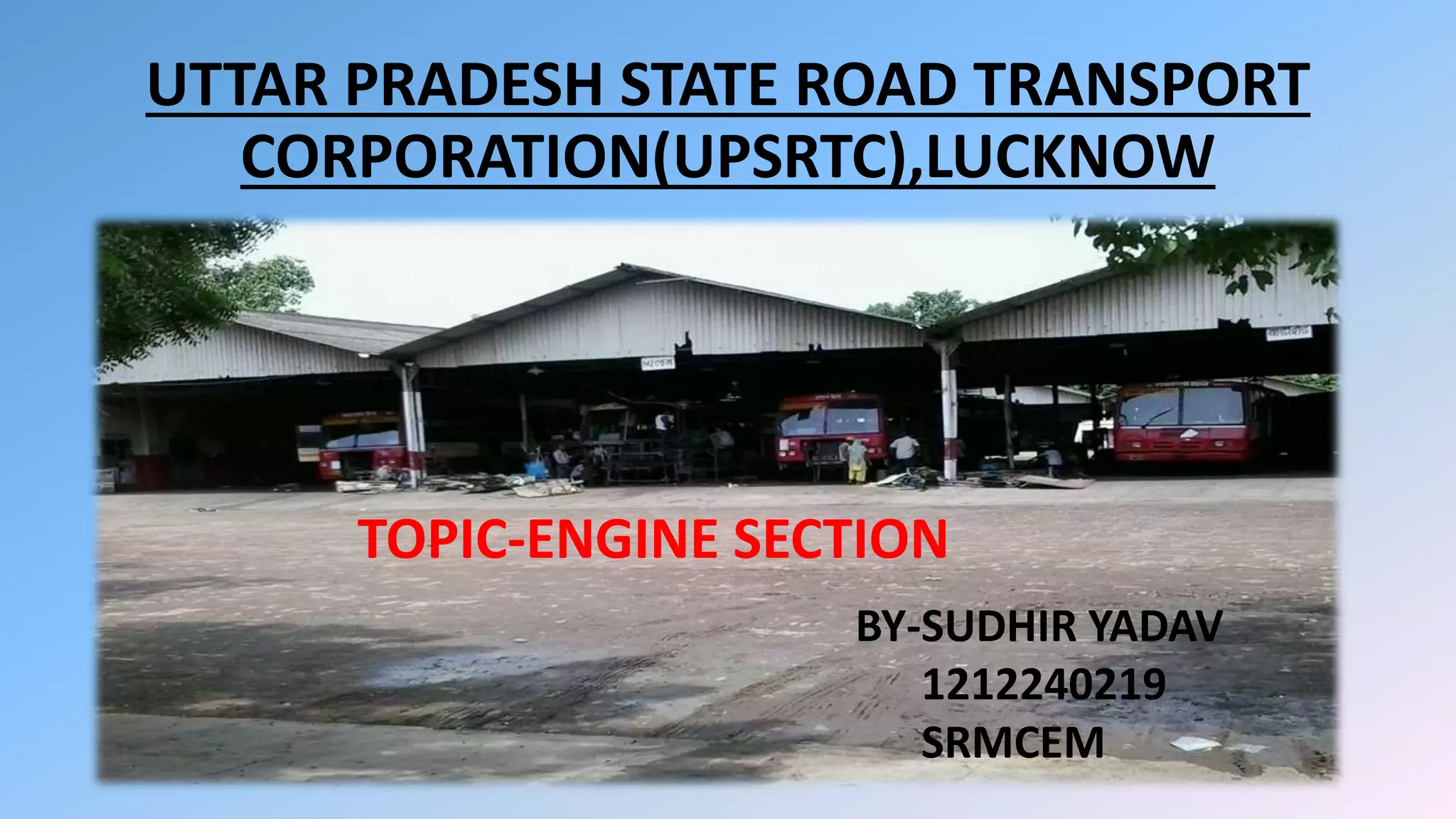
UTTAR PRADESH STATE ROAD TRANSPORT
CORPORATION(UPSRTC),LUCKNOW
BY-SUDHIR YADAV
1212240219
SRMCEM
TOPIC-ENGINE SECTION
INTRODUCTION
• Passenger road transport services in U.P. started on 15th
May, 1947
• First route is from LUCKNOW – BARABANKI
• There are around 7668 buses are running
• Operate over 2.5 million kilometers
• Over 1.3 million peoples travelling everyday
• Earning of UPSRTC over Rs.38.3 million everyday
OBJECTIVES
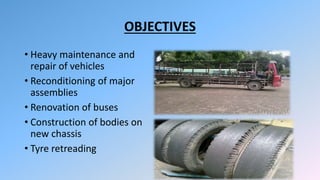
• Heavy maintenance and
repair of vehicles
• Reconditioning of major
assemblies
• Renovation of buses
• Construction of bodies on
new chassis
• Tyre retreading
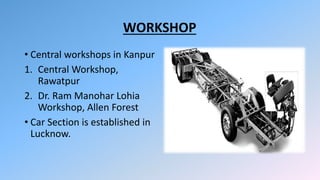
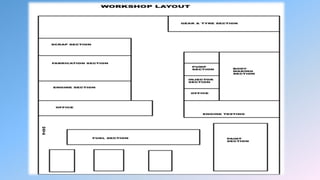
WORKSHOP
• Central workshops in Kanpur
1. Central Workshop,
Rawatpur
2. Dr. Ram Manohar Lohia
Workshop, Allen Forest
• Car Section is established in
Lucknow.
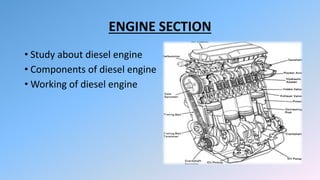
ENGINE SECTION
• Study about diesel engine
• Components of diesel engine
• Working of diesel engine
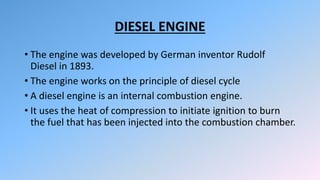
DIESEL ENGINE
• The engine was developed by German inventor Rudolf
Diesel in 1893.
• The engine works on the principle of diesel cycle
• A diesel engine is an internal combustion engine.
• It uses the heat of compression to initiate ignition to burn
the fuel that has been injected into the combustion chamber.
SOME COMPONENTS OF DIESEL ENGINE
• Cylinder Block
• Gasket
• Manifold: inlet and outlet
• Turbocharger
• Flywheel
• Piston
• Piston Rings
• Connecting Rod
• Crankshaft
• Camshaft
• Fuel injector
• Valves
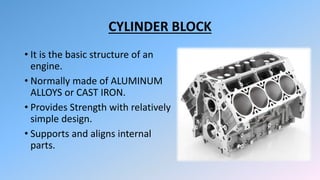
CYLINDER BLOCK
• It is the basic structure of an
engine.
• Normally made of ALUMINUM
ALLOYS or CAST IRON.
• Provides Strength with relatively
simple design.
• Supports and aligns internal
parts.
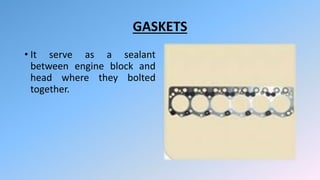
GASKETS
• It serve as a sealant
between engine block and
head where they bolted
together.
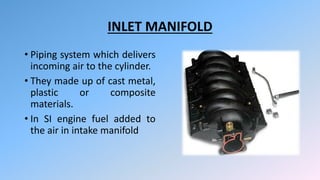
INLET MANIFOLD
• Piping system which delivers
incoming air to the cylinder.
• They made up of cast metal,
plastic or composite
materials.
• In SI engine fuel added to
the air in intake manifold
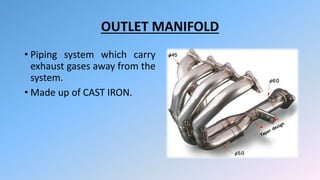
OUTLET MANIFOLD
• Piping system which carry
exhaust gases away from the
system.
• Made up of CAST IRON.
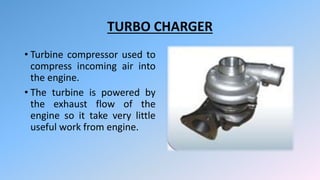
TURBO CHARGER
• Turbine compressor used to
compress incoming air into
the engine.
• The turbine is powered by
the exhaust flow of the
engine so it take very little
useful work from engine.
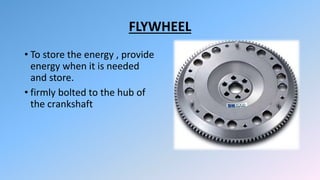
FLYWHEEL
• To store the energy , provide
energy when it is needed
and store.
• firmly bolted to the hub of
the crankshaft
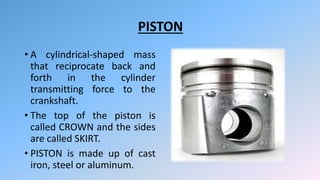
PISTON
• A cylindrical-shaped mass
that reciprocate back and
forth in the cylinder
transmitting force to the
crankshaft.
• The top of the piston is
called CROWN and the sides
are called SKIRT.
• PISTON is made up of cast
iron, steel or aluminum.
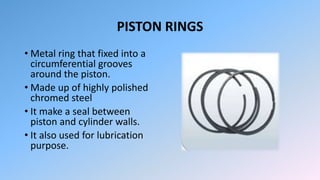
PISTON RINGS
• Metal ring that fixed into a
circumferential grooves
around the piston.
• Made up of highly polished
chromed steel
• It make a seal between
piston and cylinder walls.
• It also used for lubrication
purpose.
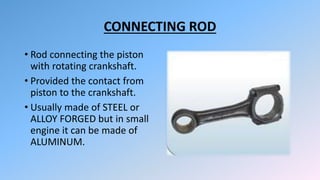
CONNECTING ROD
• Rod connecting the piston
with rotating crankshaft.
• Provided the contact from
piston to the crankshaft.
• Usually made of STEEL or
ALLOY FORGED but in small
engine it can be made of
ALUMINUM.
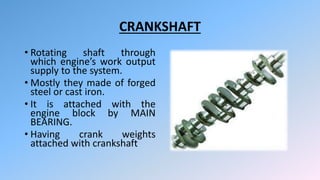
CRANKSHAFT
• Rotating shaft through
which engine’s work output
supply to the system.
• Mostly they made of forged
steel or cast iron.
• It is attached with the
engine block by MAIN
BEARING.
• Having crank weights
attached with crankshaft
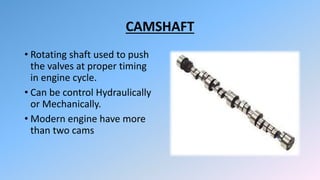
CAMSHAFT
• Rotating shaft used to push
the valves at proper timing
in engine cycle.
• Can be control Hydraulically
or Mechanically.
• Modern engine have more
than two cams
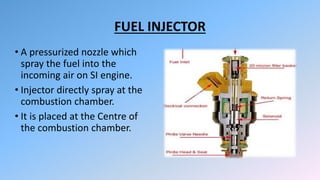
FUEL INJECTOR
• A pressurized nozzle which
spray the fuel into the
incoming air on SI engine.
• Injector directly spray at the
combustion chamber.
• It is placed at the Centre of
the combustion chamber.
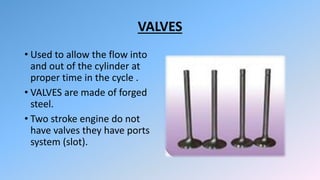
VALVES
• Used to allow the flow into
and out of the cylinder at
proper time in the cycle .
• VALVES are made of forged
steel.
• Two stroke engine do not
have valves they have ports
system (slot).
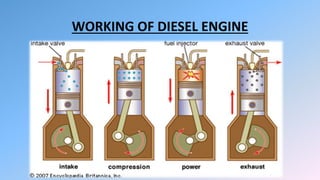
WORKING OF DIESEL ENGINE
UPSRTC Workshop,Lucknow

UPSRTC Workshop,Lucknow

  • 1.
    UTTAR PRADESH STATEROAD TRANSPORT CORPORATION(UPSRTC),LUCKNOW BY-SUDHIR YADAV 1212240219 SRMCEM TOPIC-ENGINE SECTION
  • 2.
    INTRODUCTION • Passenger roadtransport services in U.P. started on 15th May, 1947 • First route is from LUCKNOW – BARABANKI • There are around 7668 buses are running • Operate over 2.5 million kilometers • Over 1.3 million peoples travelling everyday • Earning of UPSRTC over Rs.38.3 million everyday
  • 3.
    OBJECTIVES • Heavy maintenanceand repair of vehicles • Reconditioning of major assemblies • Renovation of buses • Construction of bodies on new chassis • Tyre retreading
  • 4.
    WORKSHOP • Central workshopsin Kanpur 1. Central Workshop, Rawatpur 2. Dr. Ram Manohar Lohia Workshop, Allen Forest • Car Section is established in Lucknow.
  • 6.
    ENGINE SECTION • Studyabout diesel engine • Components of diesel engine • Working of diesel engine
  • 7.
    DIESEL ENGINE • Theengine was developed by German inventor Rudolf Diesel in 1893. • The engine works on the principle of diesel cycle • A diesel engine is an internal combustion engine. • It uses the heat of compression to initiate ignition to burn the fuel that has been injected into the combustion chamber.
  • 8.
    SOME COMPONENTS OFDIESEL ENGINE • Cylinder Block • Gasket • Manifold: inlet and outlet • Turbocharger • Flywheel • Piston • Piston Rings • Connecting Rod • Crankshaft • Camshaft • Fuel injector • Valves
  • 9.
    CYLINDER BLOCK • Itis the basic structure of an engine. • Normally made of ALUMINUM ALLOYS or CAST IRON. • Provides Strength with relatively simple design. • Supports and aligns internal parts.
  • 10.
    GASKETS • It serveas a sealant between engine block and head where they bolted together.
  • 11.
    INLET MANIFOLD • Pipingsystem which delivers incoming air to the cylinder. • They made up of cast metal, plastic or composite materials. • In SI engine fuel added to the air in intake manifold
  • 12.
    OUTLET MANIFOLD • Pipingsystem which carry exhaust gases away from the system. • Made up of CAST IRON.
  • 13.
    TURBO CHARGER • Turbinecompressor used to compress incoming air into the engine. • The turbine is powered by the exhaust flow of the engine so it take very little useful work from engine.
  • 14.
    FLYWHEEL • To storethe energy , provide energy when it is needed and store. • firmly bolted to the hub of the crankshaft
  • 15.
    PISTON • A cylindrical-shapedmass that reciprocate back and forth in the cylinder transmitting force to the crankshaft. • The top of the piston is called CROWN and the sides are called SKIRT. • PISTON is made up of cast iron, steel or aluminum.
  • 16.
    PISTON RINGS • Metalring that fixed into a circumferential grooves around the piston. • Made up of highly polished chromed steel • It make a seal between piston and cylinder walls. • It also used for lubrication purpose.
  • 17.
    CONNECTING ROD • Rodconnecting the piston with rotating crankshaft. • Provided the contact from piston to the crankshaft. • Usually made of STEEL or ALLOY FORGED but in small engine it can be made of ALUMINUM.
  • 18.
    CRANKSHAFT • Rotating shaftthrough which engine’s work output supply to the system. • Mostly they made of forged steel or cast iron. • It is attached with the engine block by MAIN BEARING. • Having crank weights attached with crankshaft
  • 19.
    CAMSHAFT • Rotating shaftused to push the valves at proper timing in engine cycle. • Can be control Hydraulically or Mechanically. • Modern engine have more than two cams
  • 20.
    FUEL INJECTOR • Apressurized nozzle which spray the fuel into the incoming air on SI engine. • Injector directly spray at the combustion chamber. • It is placed at the Centre of the combustion chamber.
  • 21.
    VALVES • Used toallow the flow into and out of the cylinder at proper time in the cycle . • VALVES are made of forged steel. • Two stroke engine do not have valves they have ports system (slot).
  • 22.