UPPER
ABDOMINAL
SURGERY
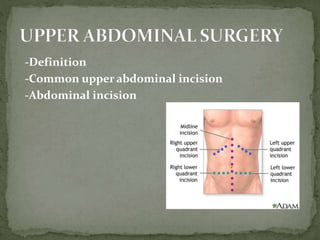
-Definition
-Common upper abdominal incision
-Abdominal incision
It is a surgery involving an incision above or
extending more than 50% above the umbilicus
Lower abdominal surgery:
More than 50% of incision below the umbilicus.
Extensive abdominal surgery:
More than one incision site..
1- splenic surgery
2- Gasrtic surgery
3- Gallbladder surgery
4- Herniotomy
5-Hepatic surgery
6-Vagotomy
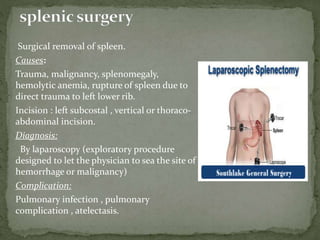
Surgical removal of spleen.
Causes:
Trauma, malignancy, splenomegaly,
hemolytic anemia, rupture of spleen due to
direct trauma to left lower rib.
Incision : left subcostal , vertical or thoraco-
abdominal incision.
Diagnosis:
By laparoscopy (exploratory procedure
designed to let the physician to sea the site of
hemorrhage or malignancy)
Complication:
Pulmonary infection , pulmonary
complication , atelectasis.
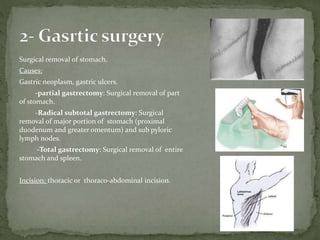
Surgical removal of stomach.
Causes:
Gastric neoplasm, gastric ulcers.
-partial gastrectomy: Surgical removal of part
of stomach.
-Radical subtotal gastrectomy: Surgical
removal of major portion of stomach (proximal
duodenum and greater omentum) and sub pyloric
lymph nodes.
-Total gastrectomy: Surgical removal of entire
stomach and spleen.
Incision: thoracic or thoraco-abdominal incision.
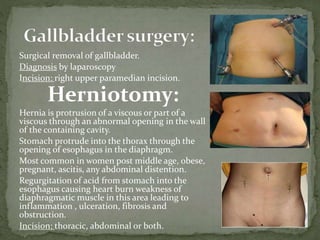
Surgical removal of gallbladder.
Diagnosis by laparoscopy
Incision: right upper paramedian incision.
Herniotomy:
Hernia is protrusion of a viscous or part of a
viscous through an abnormal opening in the wall
of the containing cavity.
Stomach protrude into the thorax through the
opening of esophagus in the diaphragm.
Most common in women post middle age, obese,
pregnant, ascitis, any abdominal distention.
Regurgitation of acid from stomach into the
esophagus causing heart burn weakness of
diaphragmatic muscle in this area leading to
inflammation , ulceration, fibrosis and
obstruction.
Incision: thoracic, abdominal or both.
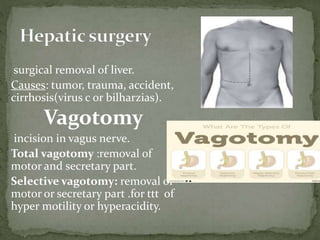
surgical removal of liver.
Causes: tumor, trauma, accident,
cirrhosis(virus c or bilharzias).
Vagotomy
incision in vagus nerve.
Total vagotomy :removal of
motor and secretary part.
Selective vagotomy: removal of
motor or secretary part .for ttt of
hyper motility or hyperacidity.
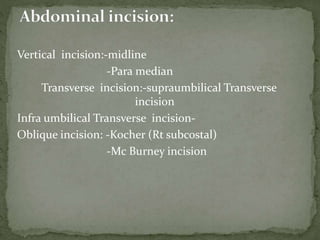
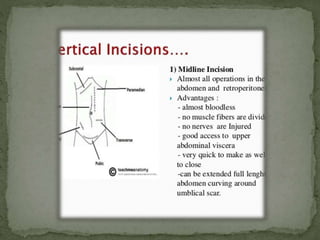
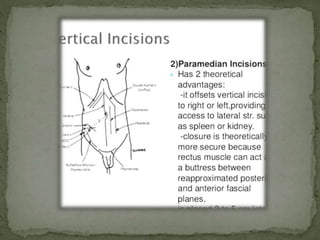
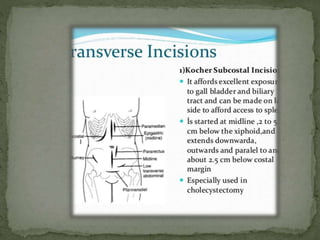
Vertical incision:-midline
-Para median
Transverse incision:-supraumbilical Transverse
incision
Infra umbilical Transverse incision-
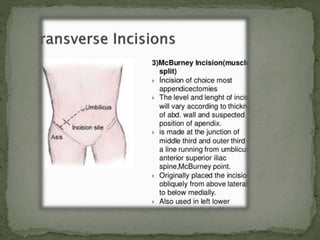
Oblique incision: -Kocher (Rt subcostal)
-Mc Burney incision
3 stages:
1st stages:1st and 2nd days post surgery.
2nd stage:3rd and 4th days post surgery.
3rd stage: 5th day post surgery until discharge
Rehabilitation of UAS:
Postoperative problems
Postoperative pain
Incisional wound
Respiratory complications
Circulatory complications
1st stages
1st and 2nd days post surgery
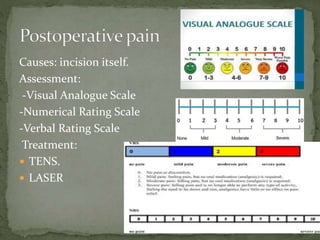
Causes: incision itself.
Assessment:
-Visual Analogue Scale
-Numerical Rating Scale
-Verbal Rating Scale
Treatment:
 TENS.
 LASER
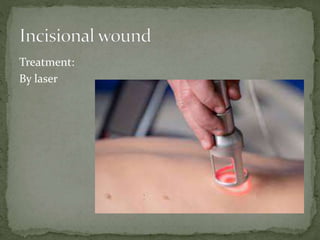
Treatment:
By laser
Causes:
1- anesthesia Causes inhibition of respiratory center
,relaxation of respiratory muscles and inhibit cilia action
Assessment:
chest expansion
Treatment:
Breathing ex: diaphragmatic and lateral costalbreathing
Causes:
1-Anaesthesia and bleeding lead to :
increase tendency of blood to clot
slowness of the venous circulation
injury to intima of the vein
2- prolonged immobilization
Those leading to edema formation and
DVT
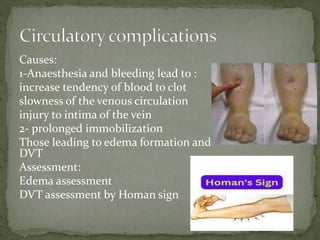
Assessment:
Edema assessment
DVT assessment by Homan sign
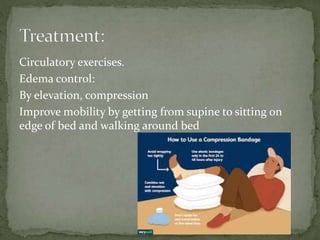
Circulatory exercises.
Edema control:
By elevation, compression
Improve mobility by getting from supine to sitting on
edge of bed and walking around bed
3rd and 4th days post surgery.
Problems:
respiratory complications
circulatory complications
Weakness of abdominal muscles
Modalities of ttt:
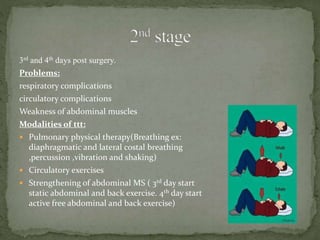
 Pulmonary physical therapy(Breathing ex:
diaphragmatic and lateral costal breathing
,percussion ,vibration and shaking)
 Circulatory exercises
 Strengthening of abdominal MS ( 3rd day start
static abdominal and back exercise. 4th day start
active free abdominal and back exercise)
5th day post surgery until discharge:
Problems:
pulmonary complications.
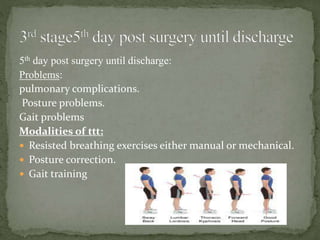
Posture problems.
Gait problems
Modalities of ttt:
 Resisted breathing exercises either manual or mechanical.
 Posture correction.
 Gait training

Upper abdominal surgery (hospital) pptx.pptx

  • 1.
  • 2.
    -Definition -Common upper abdominalincision -Abdominal incision
  • 3.
    It is asurgery involving an incision above or extending more than 50% above the umbilicus Lower abdominal surgery: More than 50% of incision below the umbilicus. Extensive abdominal surgery: More than one incision site..
  • 4.
    1- splenic surgery 2-Gasrtic surgery 3- Gallbladder surgery 4- Herniotomy 5-Hepatic surgery 6-Vagotomy
  • 5.
    Surgical removal ofspleen. Causes: Trauma, malignancy, splenomegaly, hemolytic anemia, rupture of spleen due to direct trauma to left lower rib. Incision : left subcostal , vertical or thoraco- abdominal incision. Diagnosis: By laparoscopy (exploratory procedure designed to let the physician to sea the site of hemorrhage or malignancy) Complication: Pulmonary infection , pulmonary complication , atelectasis.
  • 6.
    Surgical removal ofstomach. Causes: Gastric neoplasm, gastric ulcers. -partial gastrectomy: Surgical removal of part of stomach. -Radical subtotal gastrectomy: Surgical removal of major portion of stomach (proximal duodenum and greater omentum) and sub pyloric lymph nodes. -Total gastrectomy: Surgical removal of entire stomach and spleen. Incision: thoracic or thoraco-abdominal incision.
  • 7.
    Surgical removal ofgallbladder. Diagnosis by laparoscopy Incision: right upper paramedian incision. Herniotomy: Hernia is protrusion of a viscous or part of a viscous through an abnormal opening in the wall of the containing cavity. Stomach protrude into the thorax through the opening of esophagus in the diaphragm. Most common in women post middle age, obese, pregnant, ascitis, any abdominal distention. Regurgitation of acid from stomach into the esophagus causing heart burn weakness of diaphragmatic muscle in this area leading to inflammation , ulceration, fibrosis and obstruction. Incision: thoracic, abdominal or both.
  • 8.
    surgical removal ofliver. Causes: tumor, trauma, accident, cirrhosis(virus c or bilharzias). Vagotomy incision in vagus nerve. Total vagotomy :removal of motor and secretary part. Selective vagotomy: removal of motor or secretary part .for ttt of hyper motility or hyperacidity.
  • 9.
    Vertical incision:-midline -Para median Transverseincision:-supraumbilical Transverse incision Infra umbilical Transverse incision- Oblique incision: -Kocher (Rt subcostal) -Mc Burney incision
  • 14.
    3 stages: 1st stages:1stand 2nd days post surgery. 2nd stage:3rd and 4th days post surgery. 3rd stage: 5th day post surgery until discharge Rehabilitation of UAS:
  • 15.
    Postoperative problems Postoperative pain Incisionalwound Respiratory complications Circulatory complications 1st stages 1st and 2nd days post surgery
  • 16.
    Causes: incision itself. Assessment: -VisualAnalogue Scale -Numerical Rating Scale -Verbal Rating Scale Treatment:  TENS.  LASER
  • 17.
  • 18.
    Causes: 1- anesthesia Causesinhibition of respiratory center ,relaxation of respiratory muscles and inhibit cilia action Assessment: chest expansion Treatment: Breathing ex: diaphragmatic and lateral costalbreathing
  • 19.
    Causes: 1-Anaesthesia and bleedinglead to : increase tendency of blood to clot slowness of the venous circulation injury to intima of the vein 2- prolonged immobilization Those leading to edema formation and DVT Assessment: Edema assessment DVT assessment by Homan sign
  • 20.
    Circulatory exercises. Edema control: Byelevation, compression Improve mobility by getting from supine to sitting on edge of bed and walking around bed
  • 21.
    3rd and 4thdays post surgery. Problems: respiratory complications circulatory complications Weakness of abdominal muscles Modalities of ttt:  Pulmonary physical therapy(Breathing ex: diaphragmatic and lateral costal breathing ,percussion ,vibration and shaking)  Circulatory exercises  Strengthening of abdominal MS ( 3rd day start static abdominal and back exercise. 4th day start active free abdominal and back exercise)
  • 22.
    5th day postsurgery until discharge: Problems: pulmonary complications. Posture problems. Gait problems Modalities of ttt:  Resisted breathing exercises either manual or mechanical.  Posture correction.  Gait training