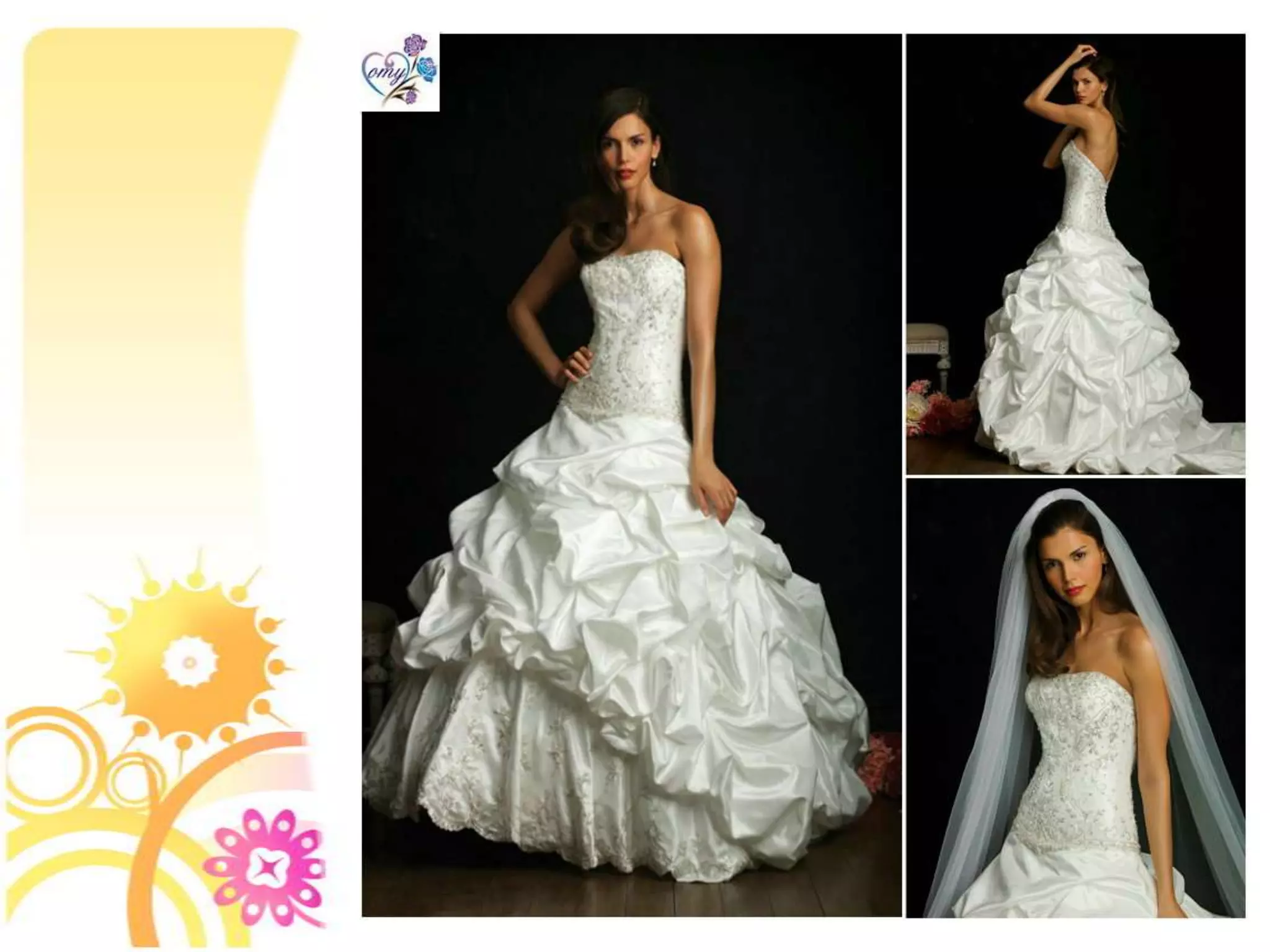
PRINCIPLE OF DESIGN

  UNITY
The Principle of Unity
Unity is the hallmark of a good design. It's the final result in a
composition when all the design elements work
harmoniously together giving the viewer a satisfying sense of
belonging and relationship. Unity has been achieved when all
aspects of the design complement one another rather than
compete for attention. It serves to reinforce the relationship
between the design elements and relates them to the key
theme being expressed through a dress.
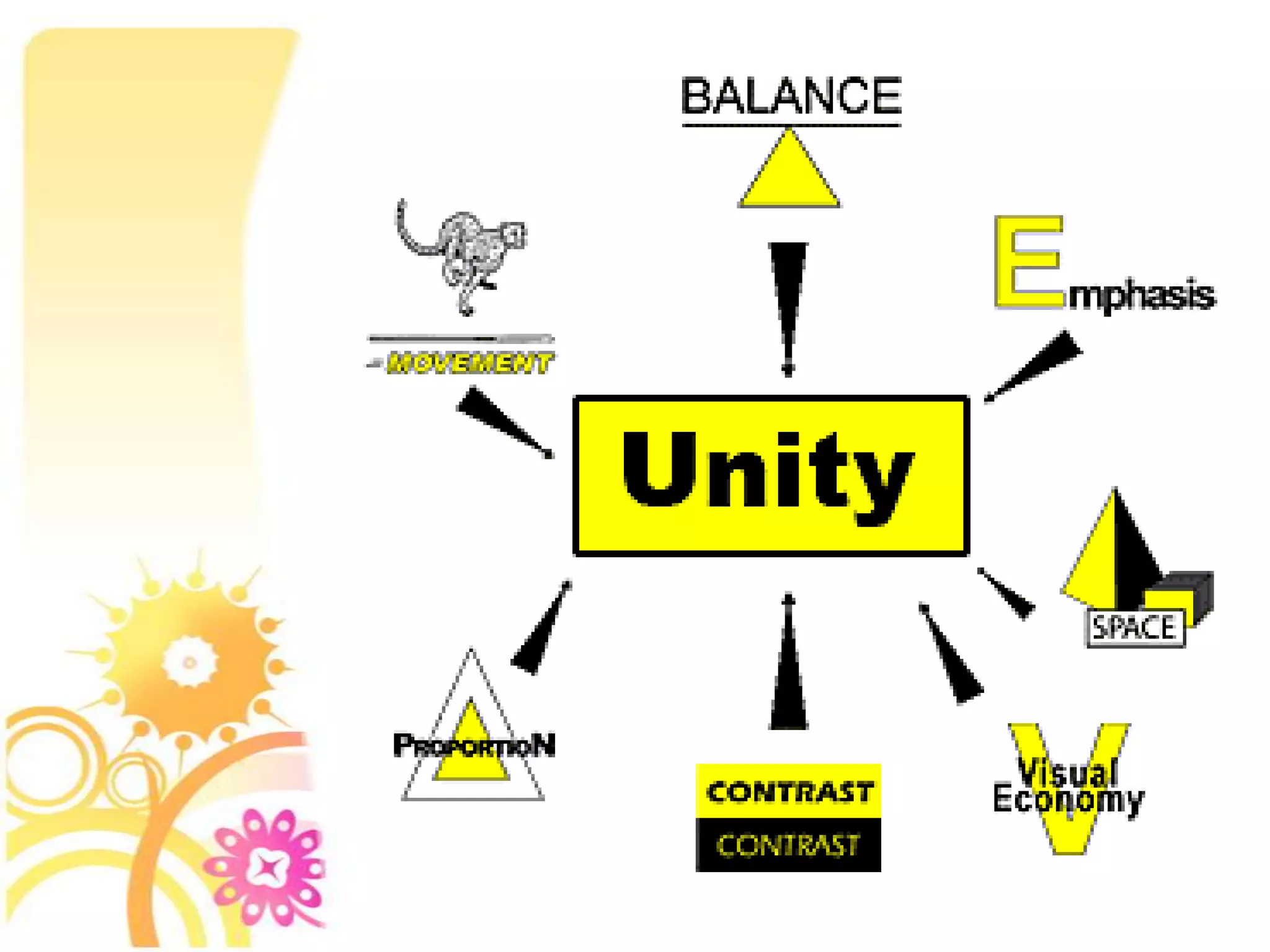
• Unity in a composition is achieved when all of the
  design principles (balance, movement, emphasis,
  visual economy, contrast, proportion and space)
  have been correctly applied.
• Everything selected for use in a composition must
  complement the key theme and must also serve
  some functional purpose within the design.
• Achieving unity in compositions will only result
  from practicing, knowing and selecting the right
  visual elements and using the best principles of
  design to relate them.
Unity within a well composed design
accomplishes two things:
 Unity creates a sense of order. When a design
  possesses unity there will be a consistency of
  sizes and shapes, as well as a harmony of color
  and pattern. One way this is accomplished is by
  repeating the key elements, balancing them
  throughout the composition, and then adding a
  little variety so that the design has its own
  sense of personality. Learning to juggle the
  elements and principles in such a way as to
  achieve the right mix is a key to good design.
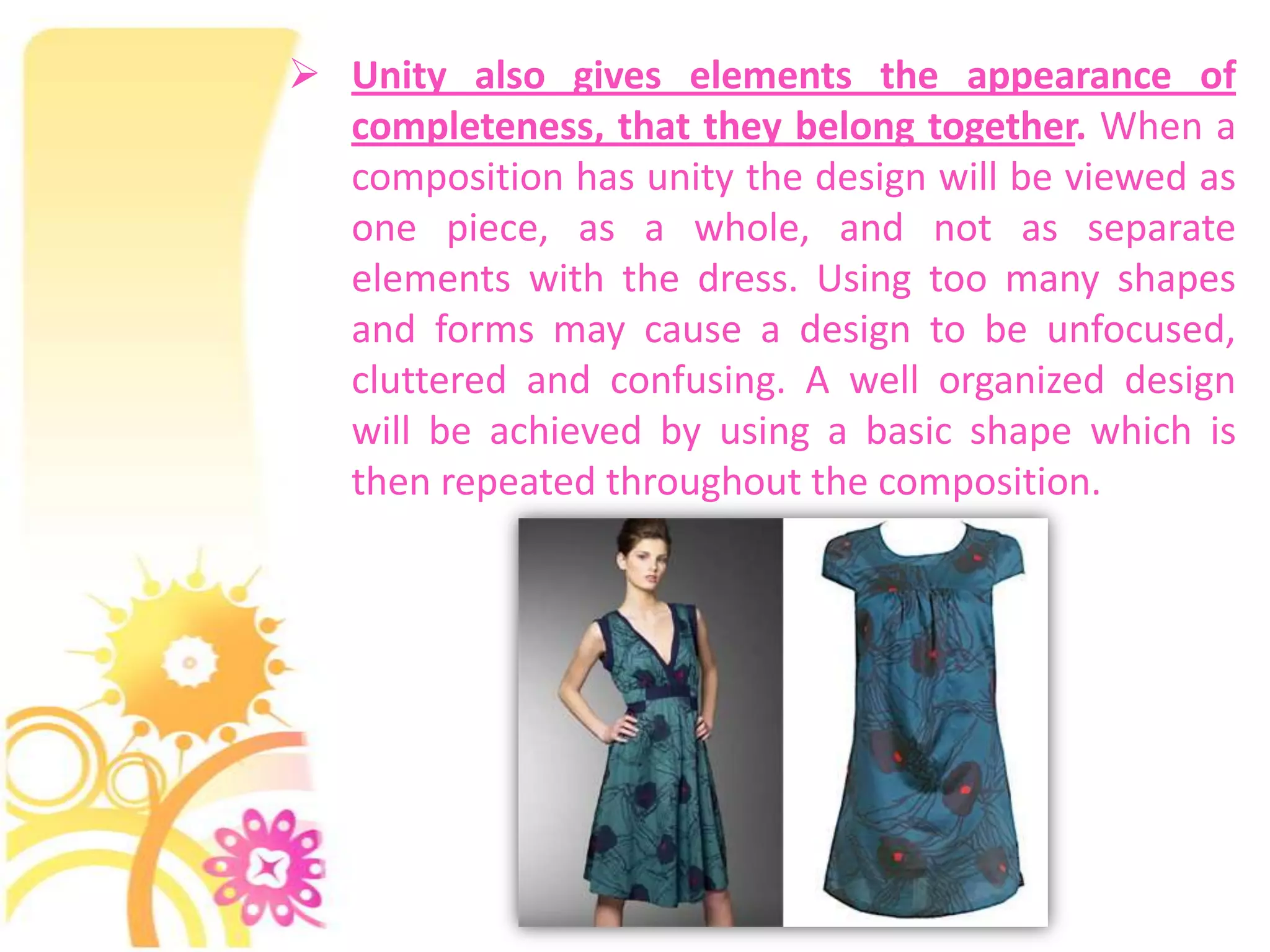
 Unity also gives elements the appearance of
  completeness, that they belong together. When a
  composition has unity the design will be viewed as
  one piece, as a whole, and not as separate
  elements with the dress. Using too many shapes
  and forms may cause a design to be unfocused,
  cluttered and confusing. A well organized design
  will be achieved by using a basic shape which is
  then repeated throughout the composition.
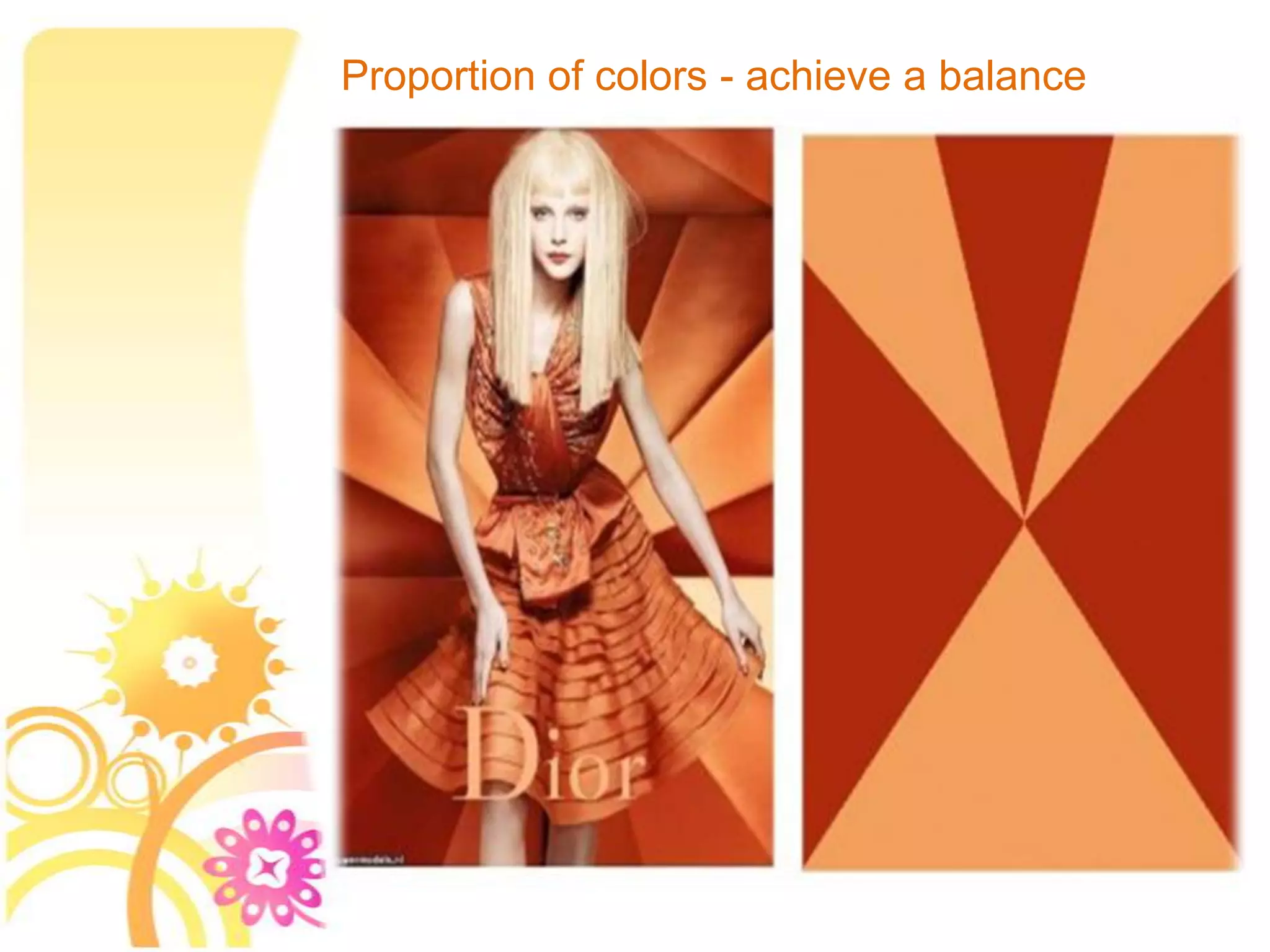
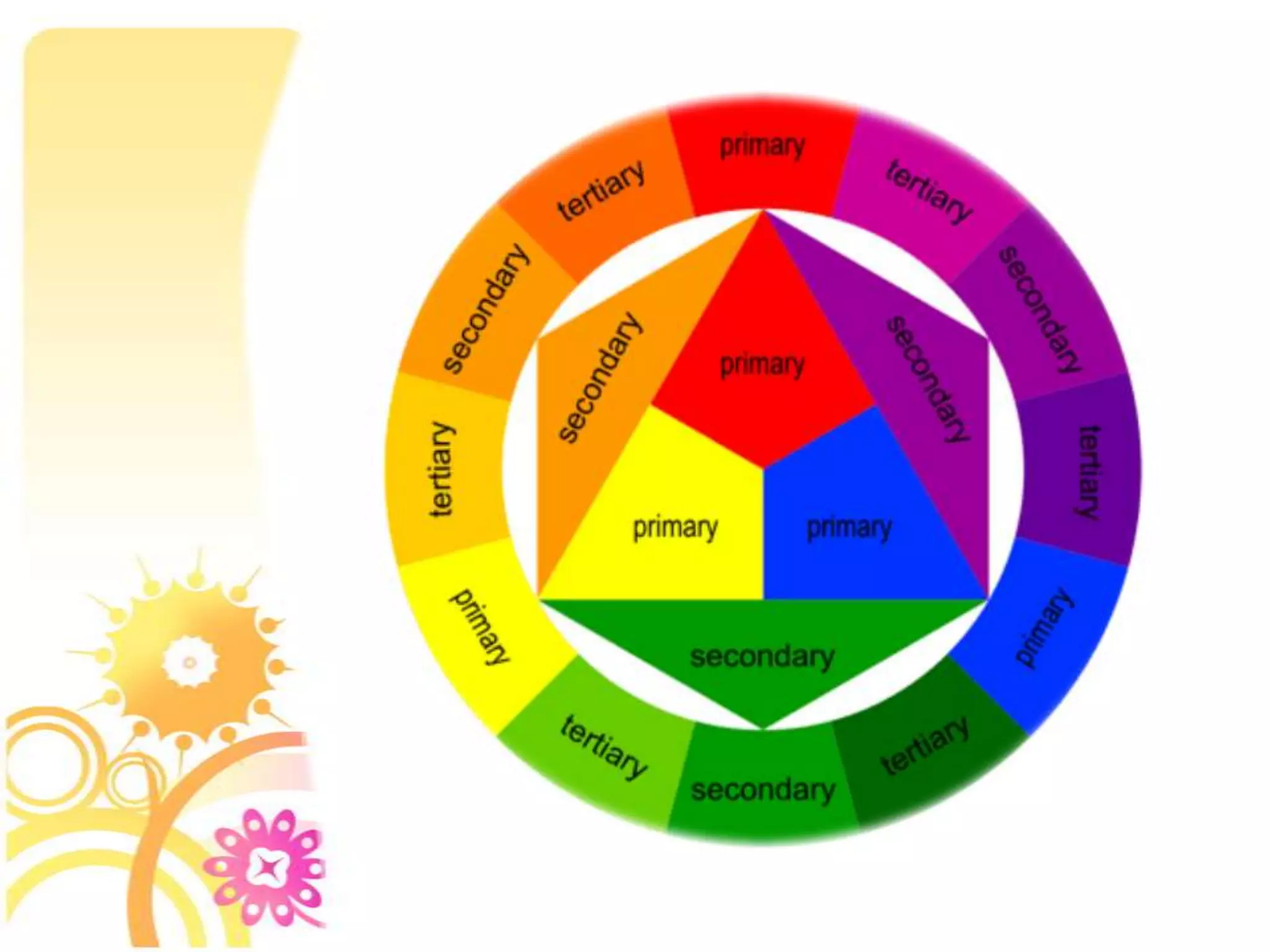
Proportion of colors - achieve a balance
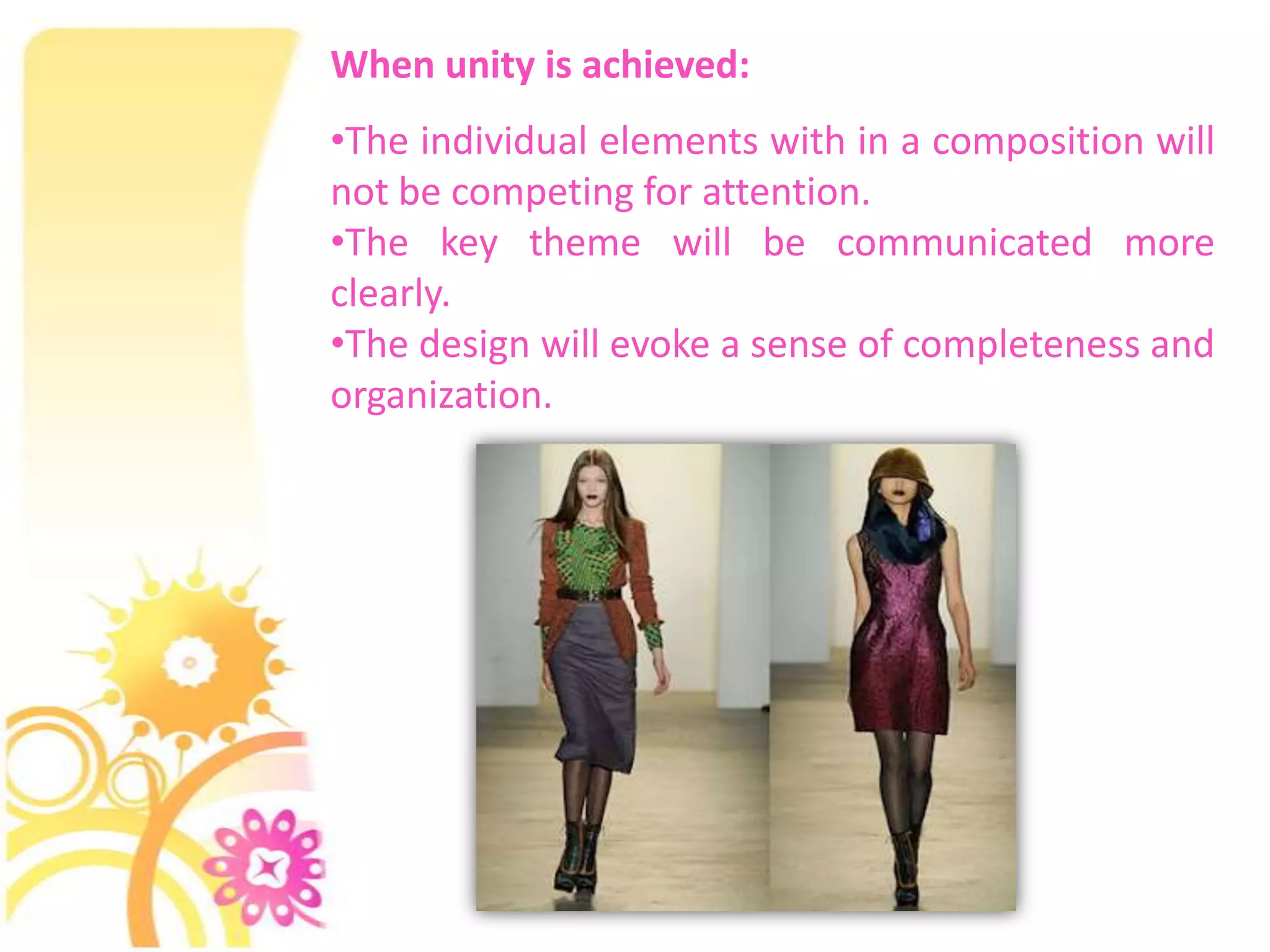
When unity is achieved:
•The individual elements with in a composition will
not be competing for attention.
•The key theme will be communicated more
clearly.
•The design will evoke a sense of completeness and
organization.
Some easy ways to achieve unity include:
• Similarity: Try repeating colors, shapes, values,
  textures, or lines to create a visual relationship
  between the elements. Repetition works to unify all
  parts of a design because it creates a sense of
  consistency and completeness.
• Continuity: Treat different elements in the same
  manner. Continuity helps to create "family
  resemblances" between different forms. This helps
  to tie them together by creating an uninterrupted
  connection or union.
• Alignment: Arranging shapes so that the line or edge
  of one shape leads into another helps creates unity
  in your design. When an element is placed in a
  composition, it creates an implied horizontal and
  vertical axis at its top, bottom, center and sides.
  Aligning other elements to these axes creates a
  visual relationship which unifies them.
• Proximity: Group related items together so that
  these                   related                items
  are seen as one cohesive group rather than a bunch
  of unrelated elements. Elements that are positioned
  close to one another are perceived as being related
  while elements that are farther apart are considered
  less related. How close together or far apart
  elements are placed in a composition suggests a
  relationship (or lack of) between otherwise disparate
  parts. Using a "third element" such as a road to
  connect near-by elements with distant ones also
  helps to create a sense of relationship between the
  forms which are not grouped together.
IN CONCLUSION: USING
     The Design Principles
   This study on the design principles would not be complete
    without giving some practical guidelines on the use of the
    principles of design:
1. Apply the principles in every assignment either consciously
    or subconsciously.
2. Don't apply the principles equally, because one may be
    more important than another depending on the mood
    and purpose of the design. One design may be strong in
    balance, another in proportion, another in movement and
    so on.
3. Try to include as many, and as much as will work of each
    principle into each design.
4. You, as the designer, should always add a bit of your own
    personality into your designs. Without this touch, your
    work may be well designed, but lack character.
5. As you become more self confident, then you should dare
    to violate one or more of the principles of design to
    promote growth in your creativity.

  Once the designer has an objective in mind, the effective
  use of the design principles of balance, movement,
  emphasis, contrast, proportion, and space will aid in the
  achievement of unity in a work of art. Whether an artist
  uses the principles consciously or subconsciously, unity
  should always be the goal of every artist.
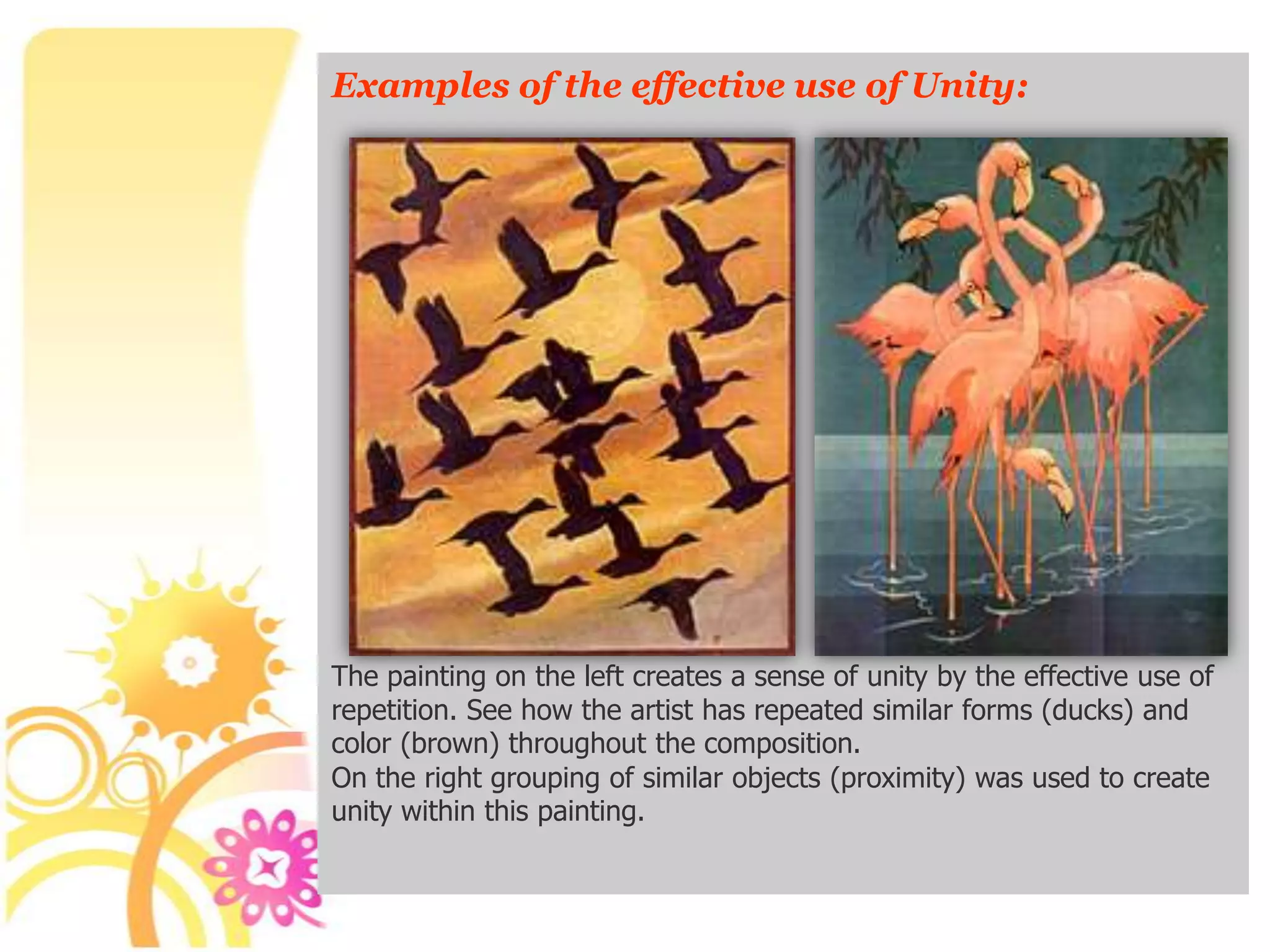
Examples of the effective use of Unity:


The painting on the left creates a sense of unity by the effective use of
repetition. See how the artist has repeated similar forms (ducks) and
color (brown) throughout the composition.
On the right grouping of similar objects (proximity) was used to create
unity within this painting.
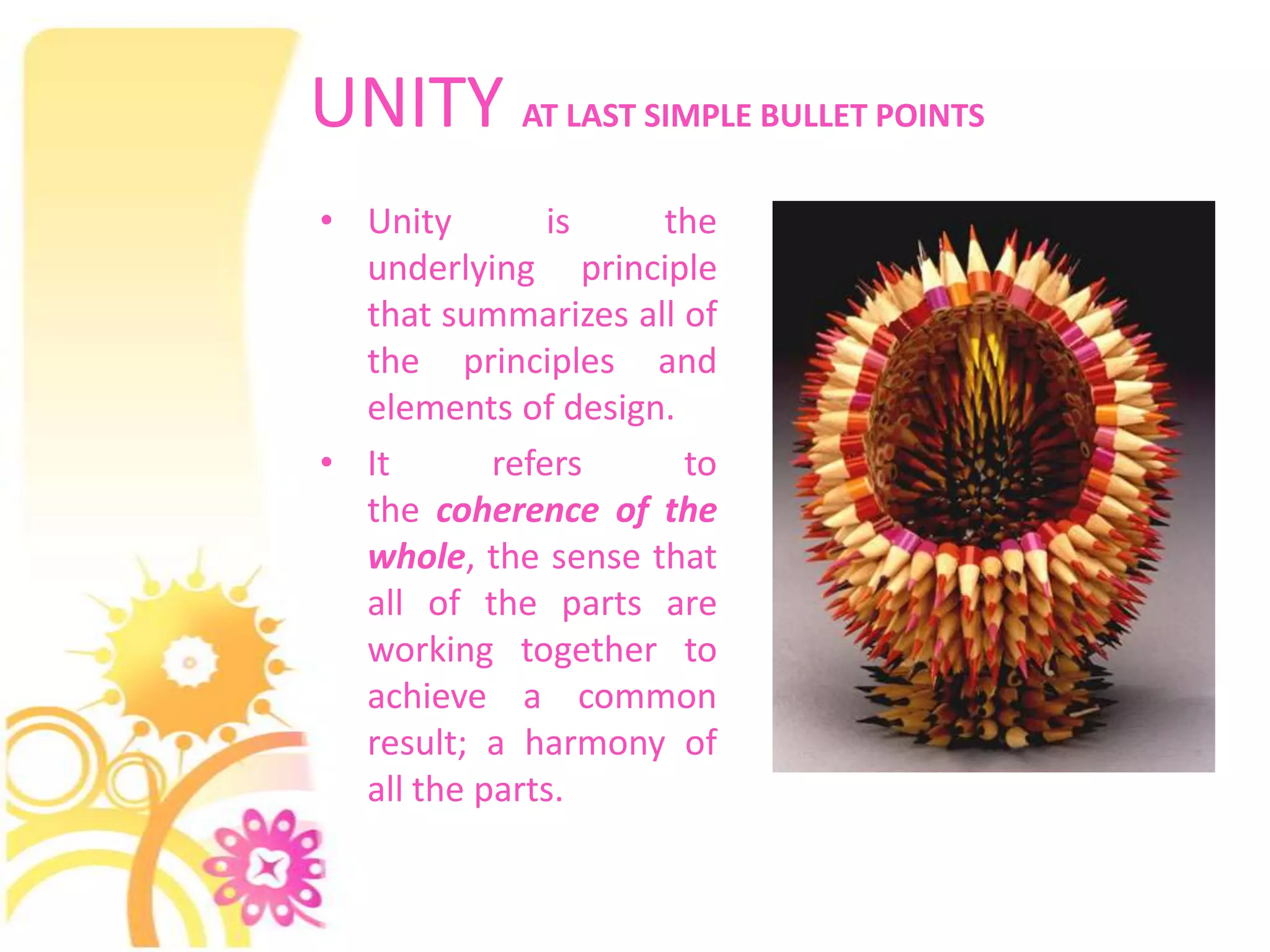
UNITY AT LAST SIMPLE BULLET POINTS
• Unity        is   the
  underlying principle
  that summarizes all of
  the principles and
  elements of design.
• It       refers     to
  the coherence of the
  whole, the sense that
  all of the parts are
  working together to
  achieve a common
  result; a harmony of
  all the parts.
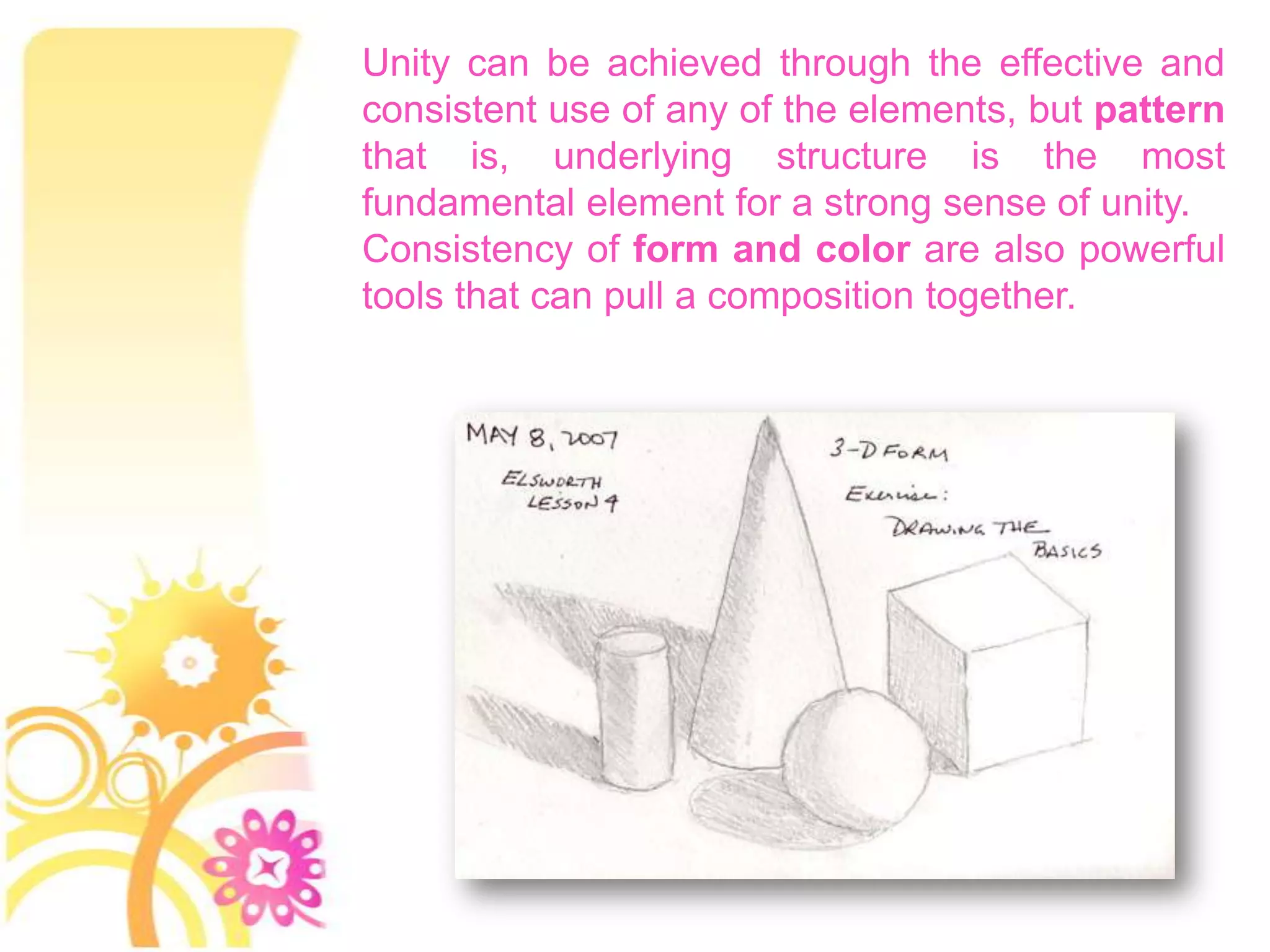
Unity can be achieved through the effective and
consistent use of any of the elements, but pattern
that is, underlying structure is the most
fundamental element for a strong sense of unity.
Consistency of form and color are also powerful
tools that can pull a composition together.
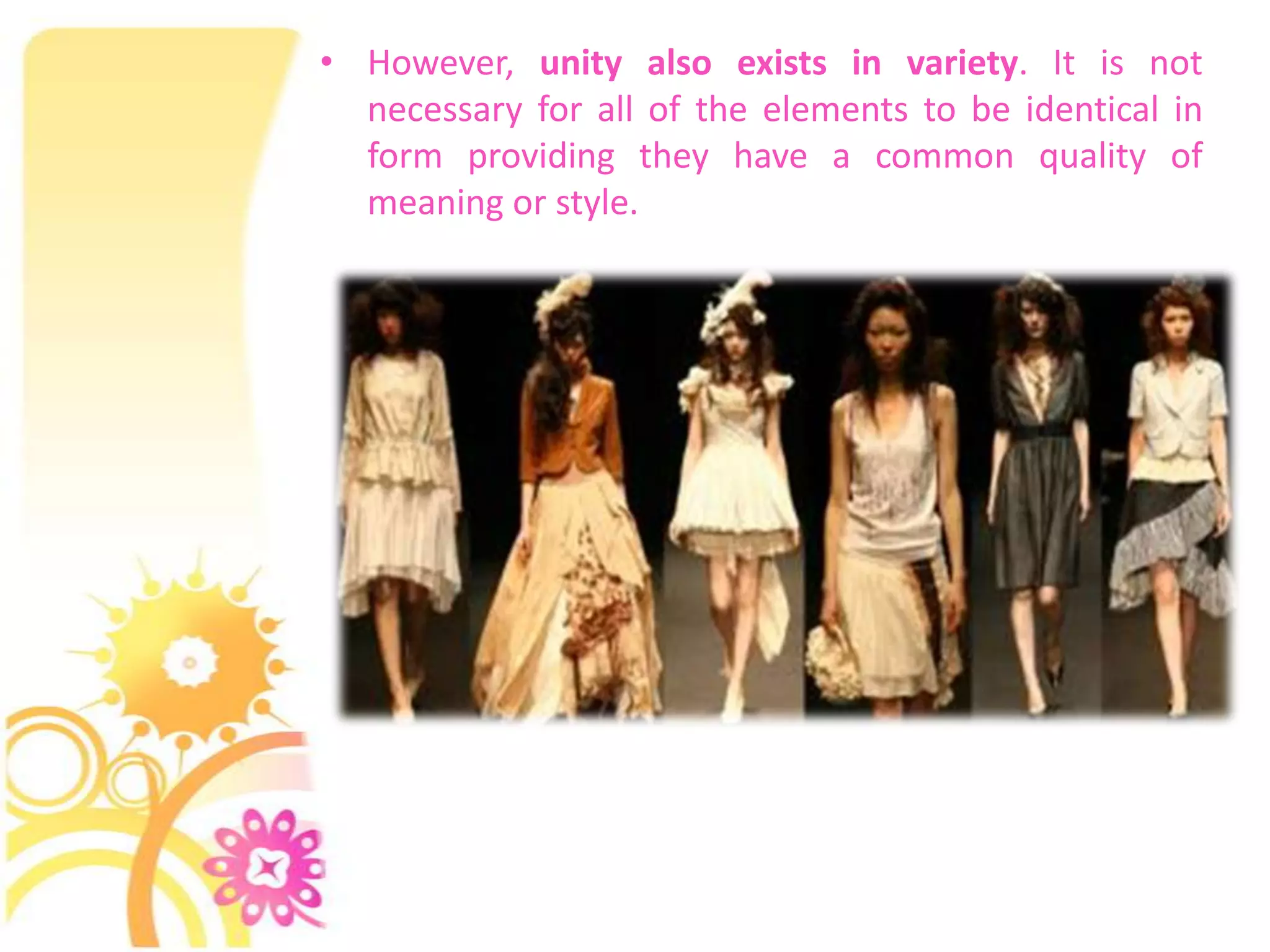
• However, unity also exists in variety. It is not
  necessary for all of the elements to be identical in
  form providing they have a common quality of
  meaning or style.
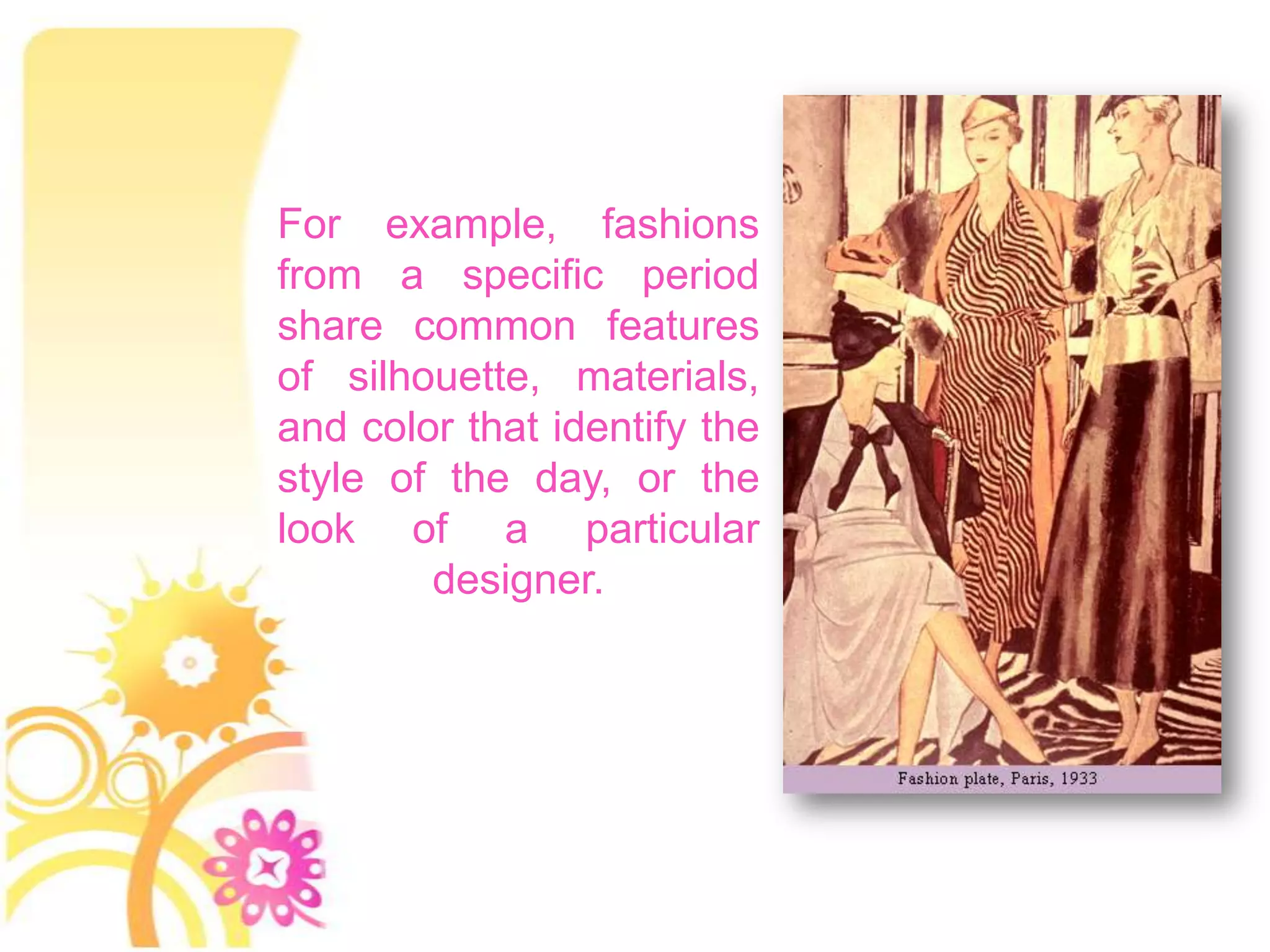
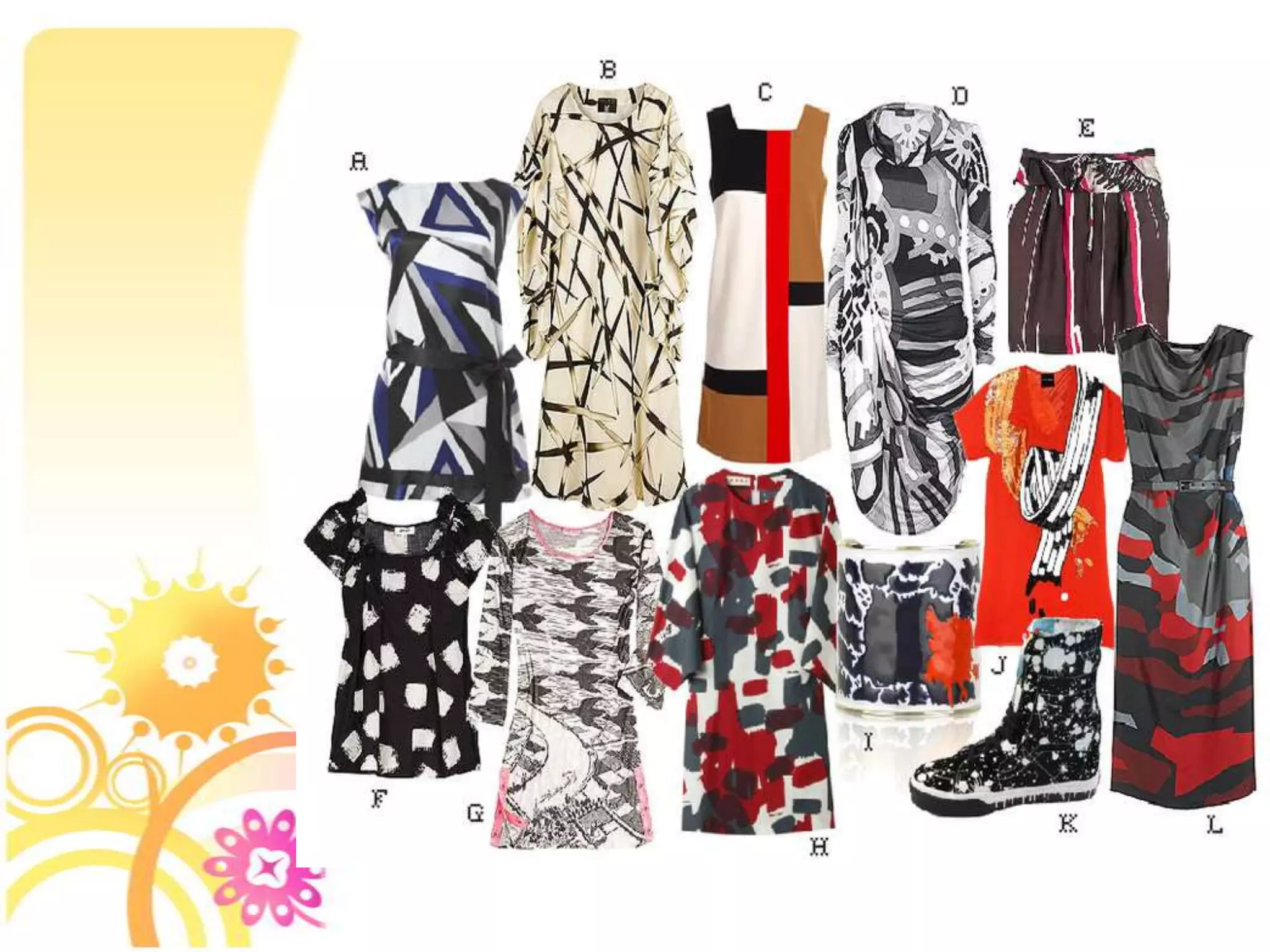
For example, fashions
from a specific period
share common features
of silhouette, materials,
and color that identify the
style of the day, or the
look of a particular
        designer.
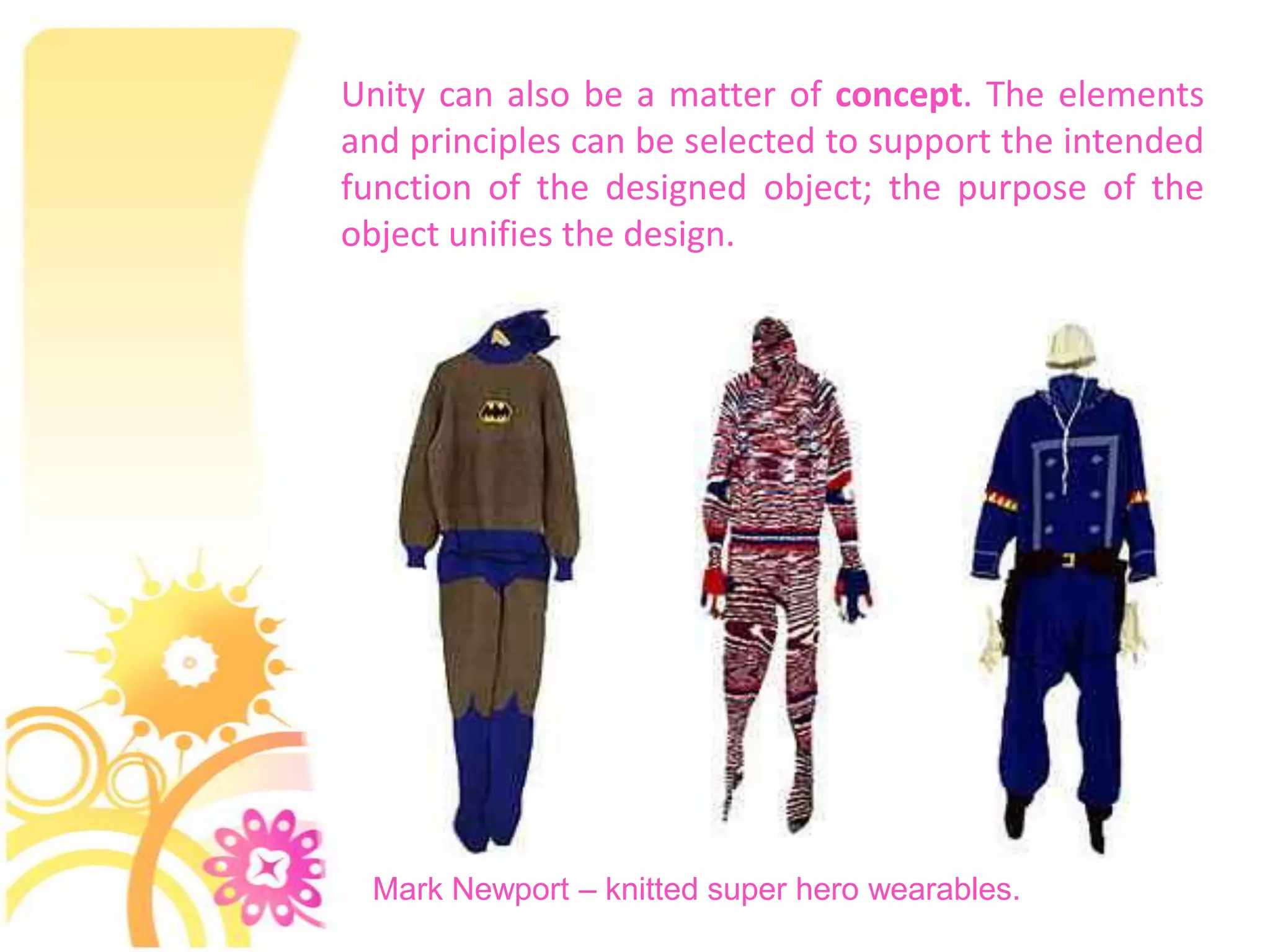
Unity can also be a matter of concept. The elements
and principles can be selected to support the intended
function of the designed object; the purpose of the
object unifies the design.


 Mark Newport – knitted super hero wearables.
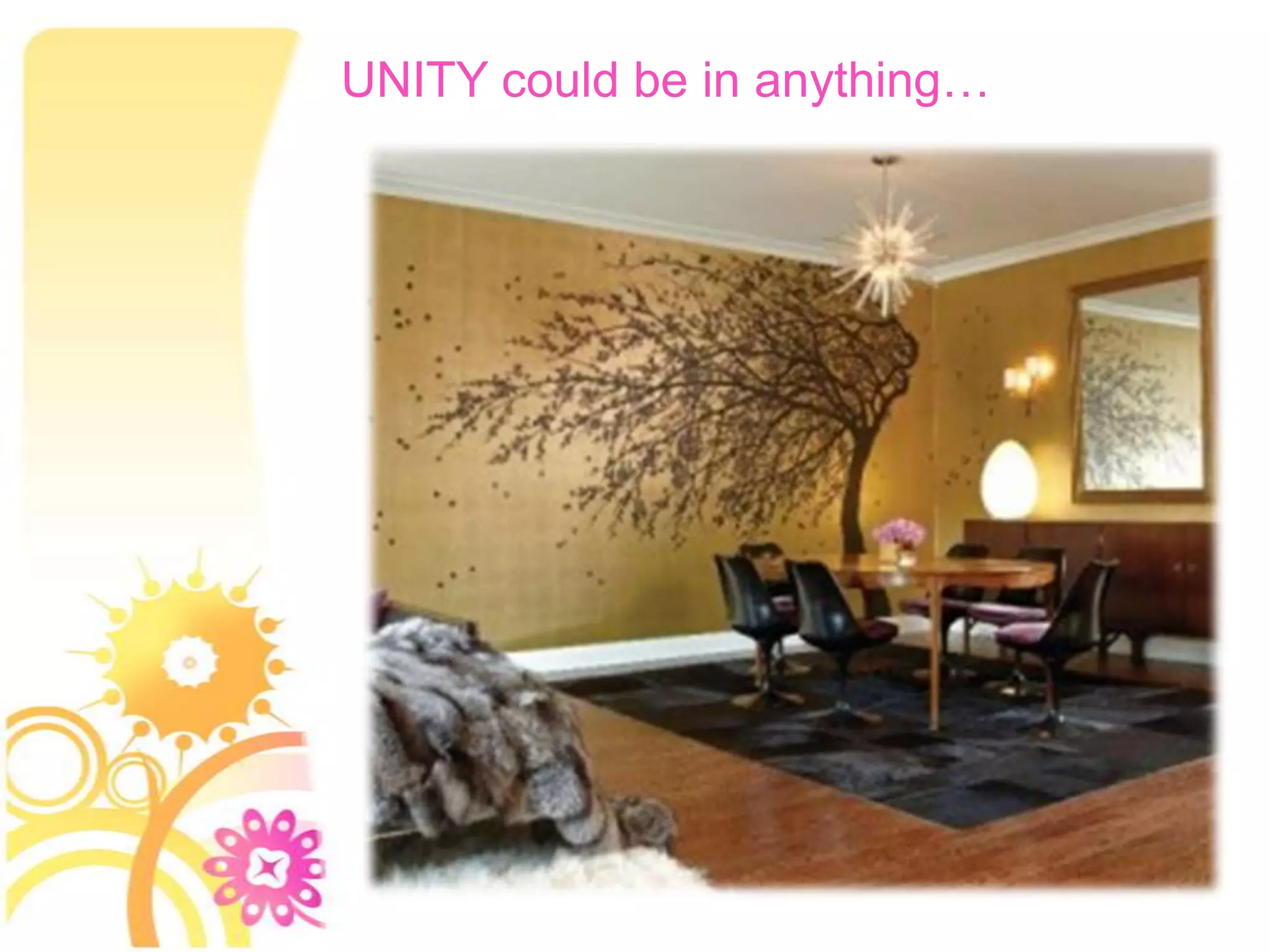
UNITY could be in anything…
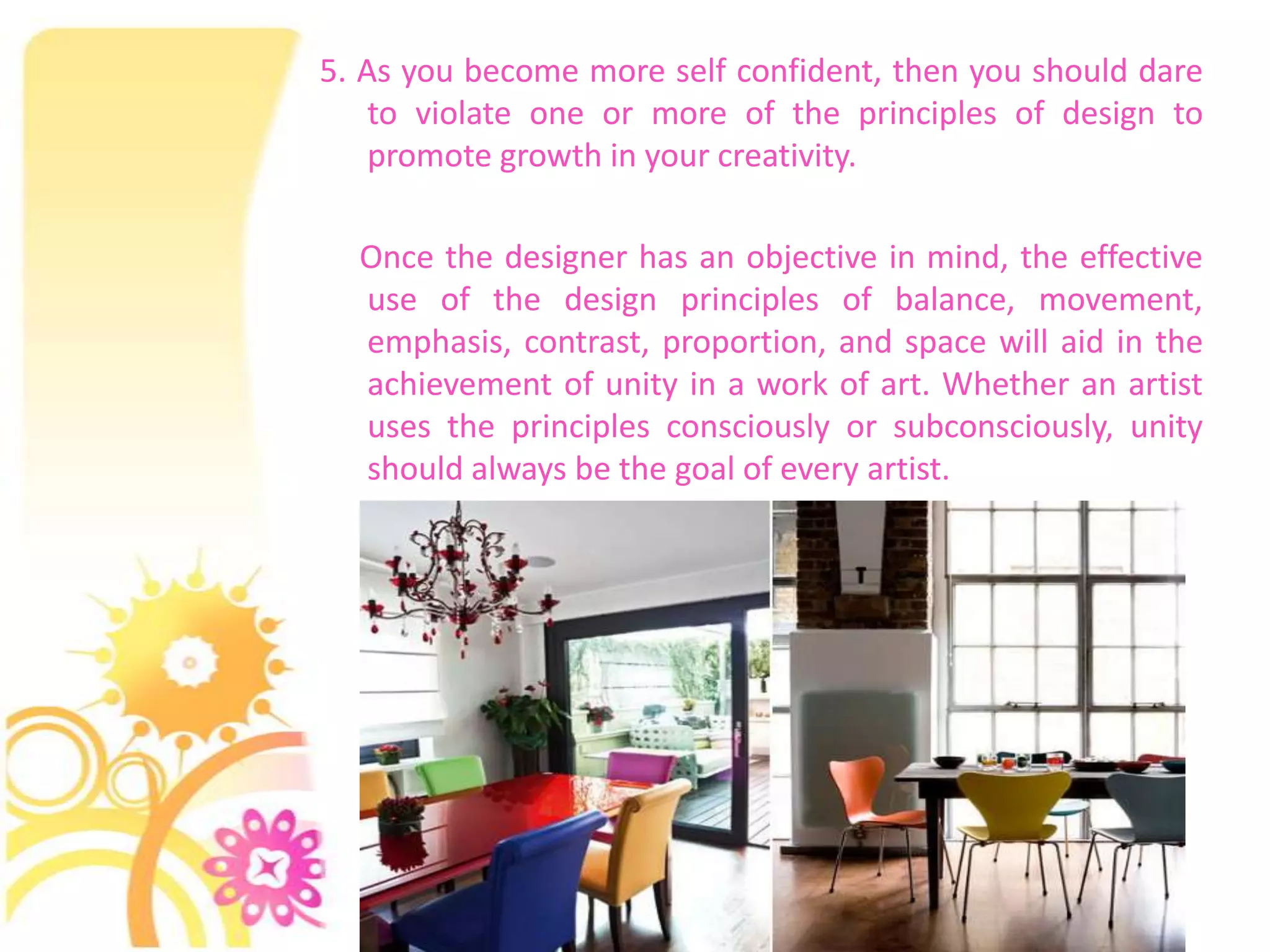
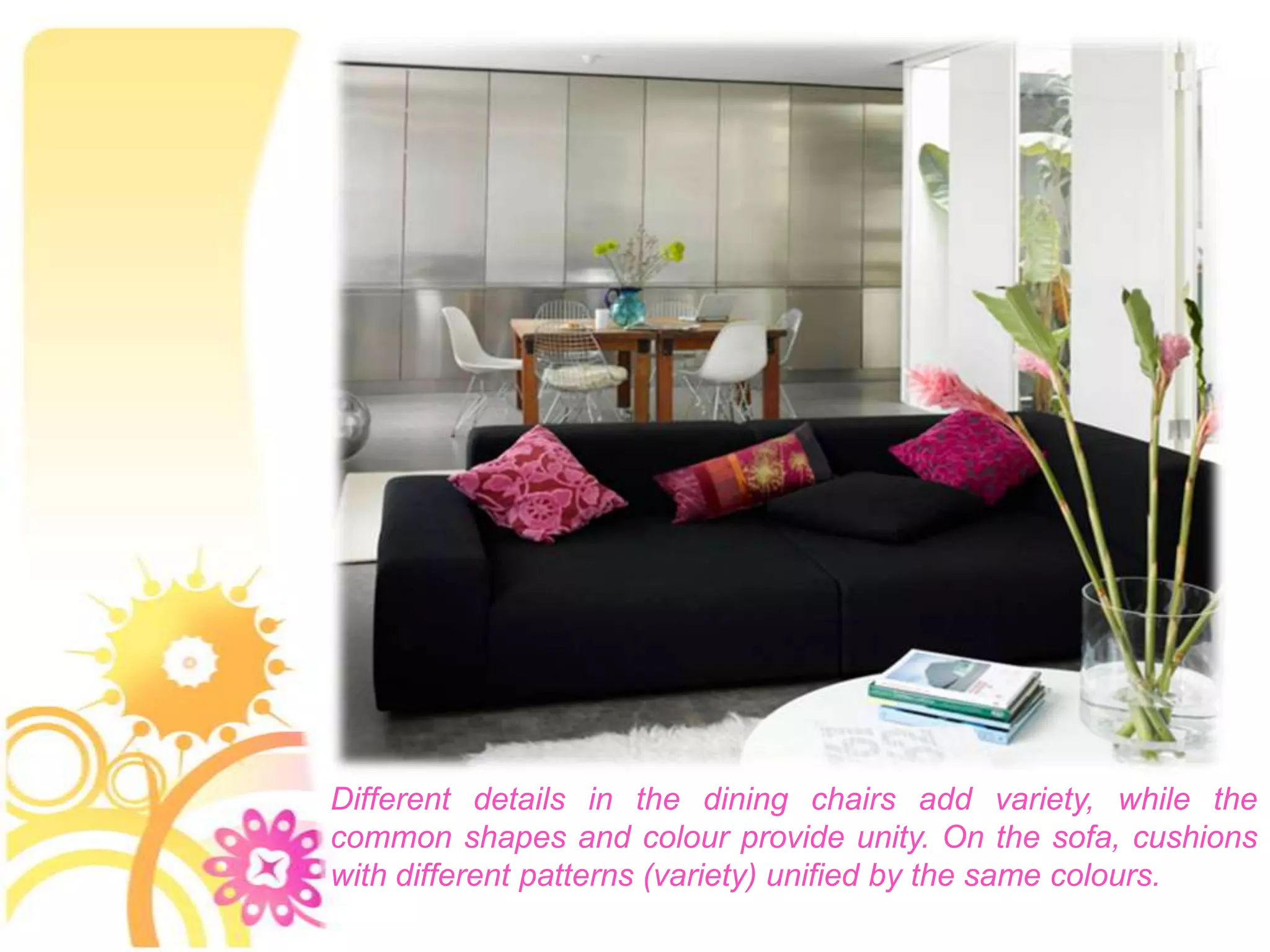
Different details in the dining chairs add variety, while the
common shapes and colour provide unity. On the sofa, cushions
with different patterns (variety) unified by the same colours.
REFERENCES

•   www.wikipedia.com
•   http://www.ansun.com/history.html
•   http://www.fashiondesignscope.com/?p=3302
•   http://dictionary.reference.com/
•   http://www.garmentsunity.com/
UTKARSH


                  SEERAT
MOHIT

Unity sad

  • 1.
  • 2.
    The Principle ofUnity Unity is the hallmark of a good design. It's the final result in a composition when all the design elements work harmoniously together giving the viewer a satisfying sense of belonging and relationship. Unity has been achieved when all aspects of the design complement one another rather than compete for attention. It serves to reinforce the relationship between the design elements and relates them to the key theme being expressed through a dress.
  • 4.
    • Unity ina composition is achieved when all of the design principles (balance, movement, emphasis, visual economy, contrast, proportion and space) have been correctly applied. • Everything selected for use in a composition must complement the key theme and must also serve some functional purpose within the design. • Achieving unity in compositions will only result from practicing, knowing and selecting the right visual elements and using the best principles of design to relate them.
  • 6.
    Unity within awell composed design accomplishes two things:  Unity creates a sense of order. When a design possesses unity there will be a consistency of sizes and shapes, as well as a harmony of color and pattern. One way this is accomplished is by repeating the key elements, balancing them throughout the composition, and then adding a little variety so that the design has its own sense of personality. Learning to juggle the elements and principles in such a way as to achieve the right mix is a key to good design.
  • 7.
     Unity alsogives elements the appearance of completeness, that they belong together. When a composition has unity the design will be viewed as one piece, as a whole, and not as separate elements with the dress. Using too many shapes and forms may cause a design to be unfocused, cluttered and confusing. A well organized design will be achieved by using a basic shape which is then repeated throughout the composition.
  • 8.
    Proportion of colors- achieve a balance
  • 9.
    When unity isachieved: •The individual elements with in a composition will not be competing for attention. •The key theme will be communicated more clearly. •The design will evoke a sense of completeness and organization.
  • 10.
    Some easy waysto achieve unity include: • Similarity: Try repeating colors, shapes, values, textures, or lines to create a visual relationship between the elements. Repetition works to unify all parts of a design because it creates a sense of consistency and completeness. • Continuity: Treat different elements in the same manner. Continuity helps to create "family resemblances" between different forms. This helps to tie them together by creating an uninterrupted connection or union. • Alignment: Arranging shapes so that the line or edge of one shape leads into another helps creates unity in your design. When an element is placed in a composition, it creates an implied horizontal and vertical axis at its top, bottom, center and sides. Aligning other elements to these axes creates a visual relationship which unifies them.
  • 11.
    • Proximity: Grouprelated items together so that these related items are seen as one cohesive group rather than a bunch of unrelated elements. Elements that are positioned close to one another are perceived as being related while elements that are farther apart are considered less related. How close together or far apart elements are placed in a composition suggests a relationship (or lack of) between otherwise disparate parts. Using a "third element" such as a road to connect near-by elements with distant ones also helps to create a sense of relationship between the forms which are not grouped together.
  • 12.
    IN CONCLUSION: USING The Design Principles This study on the design principles would not be complete without giving some practical guidelines on the use of the principles of design: 1. Apply the principles in every assignment either consciously or subconsciously. 2. Don't apply the principles equally, because one may be more important than another depending on the mood and purpose of the design. One design may be strong in balance, another in proportion, another in movement and so on. 3. Try to include as many, and as much as will work of each principle into each design. 4. You, as the designer, should always add a bit of your own personality into your designs. Without this touch, your work may be well designed, but lack character.
  • 13.
    5. As youbecome more self confident, then you should dare to violate one or more of the principles of design to promote growth in your creativity. Once the designer has an objective in mind, the effective use of the design principles of balance, movement, emphasis, contrast, proportion, and space will aid in the achievement of unity in a work of art. Whether an artist uses the principles consciously or subconsciously, unity should always be the goal of every artist.
  • 14.
    Examples of theeffective use of Unity: The painting on the left creates a sense of unity by the effective use of repetition. See how the artist has repeated similar forms (ducks) and color (brown) throughout the composition. On the right grouping of similar objects (proximity) was used to create unity within this painting.
  • 15.
    UNITY AT LASTSIMPLE BULLET POINTS • Unity is the underlying principle that summarizes all of the principles and elements of design. • It refers to the coherence of the whole, the sense that all of the parts are working together to achieve a common result; a harmony of all the parts.
  • 16.
    Unity can beachieved through the effective and consistent use of any of the elements, but pattern that is, underlying structure is the most fundamental element for a strong sense of unity. Consistency of form and color are also powerful tools that can pull a composition together.
  • 19.
    • However, unityalso exists in variety. It is not necessary for all of the elements to be identical in form providing they have a common quality of meaning or style.
  • 20.
    For example, fashions froma specific period share common features of silhouette, materials, and color that identify the style of the day, or the look of a particular designer.
  • 21.
    Unity can alsobe a matter of concept. The elements and principles can be selected to support the intended function of the designed object; the purpose of the object unifies the design. Mark Newport – knitted super hero wearables.
  • 22.
    UNITY could bein anything…
  • 23.
    Different details inthe dining chairs add variety, while the common shapes and colour provide unity. On the sofa, cushions with different patterns (variety) unified by the same colours.
  • 25.
    REFERENCES • www.wikipedia.com • http://www.ansun.com/history.html • http://www.fashiondesignscope.com/?p=3302 • http://dictionary.reference.com/ • http://www.garmentsunity.com/
  • 26.
    UTKARSH SEERAT MOHIT