The Brainstem
ANATOMY & PHYSIOLOGY
BY: MR. VISHAL SINGH (ASSISTANT PROFESSOR, KIPS- KANPUR)
The Brainstem
The brainstem is the lower part of the
brain that connects the brain to the spinal
cord.
It contains several structures, including the
medulla oblongata, the pons, and the
midbrain.
plays a crucial role in maintaining many of
the body's basic functions, including
respiration, circulation, and digestion.
The medulla oblongata: functions
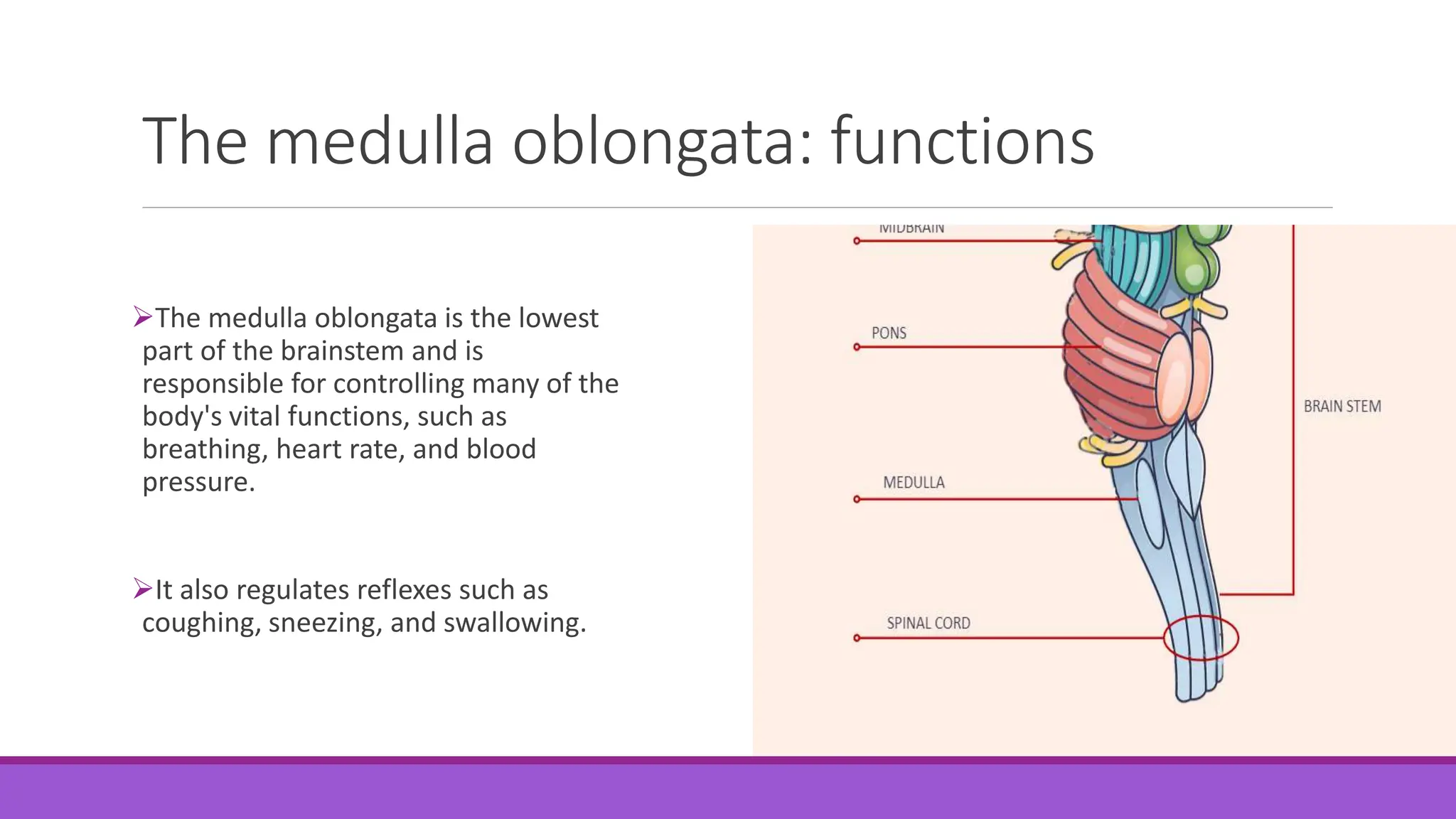
The medulla oblongata is the lowest
part of the brainstem and is
responsible for controlling many of the
body's vital functions, such as
breathing, heart rate, and blood
pressure.
It also regulates reflexes such as
coughing, sneezing, and swallowing.
The Pons
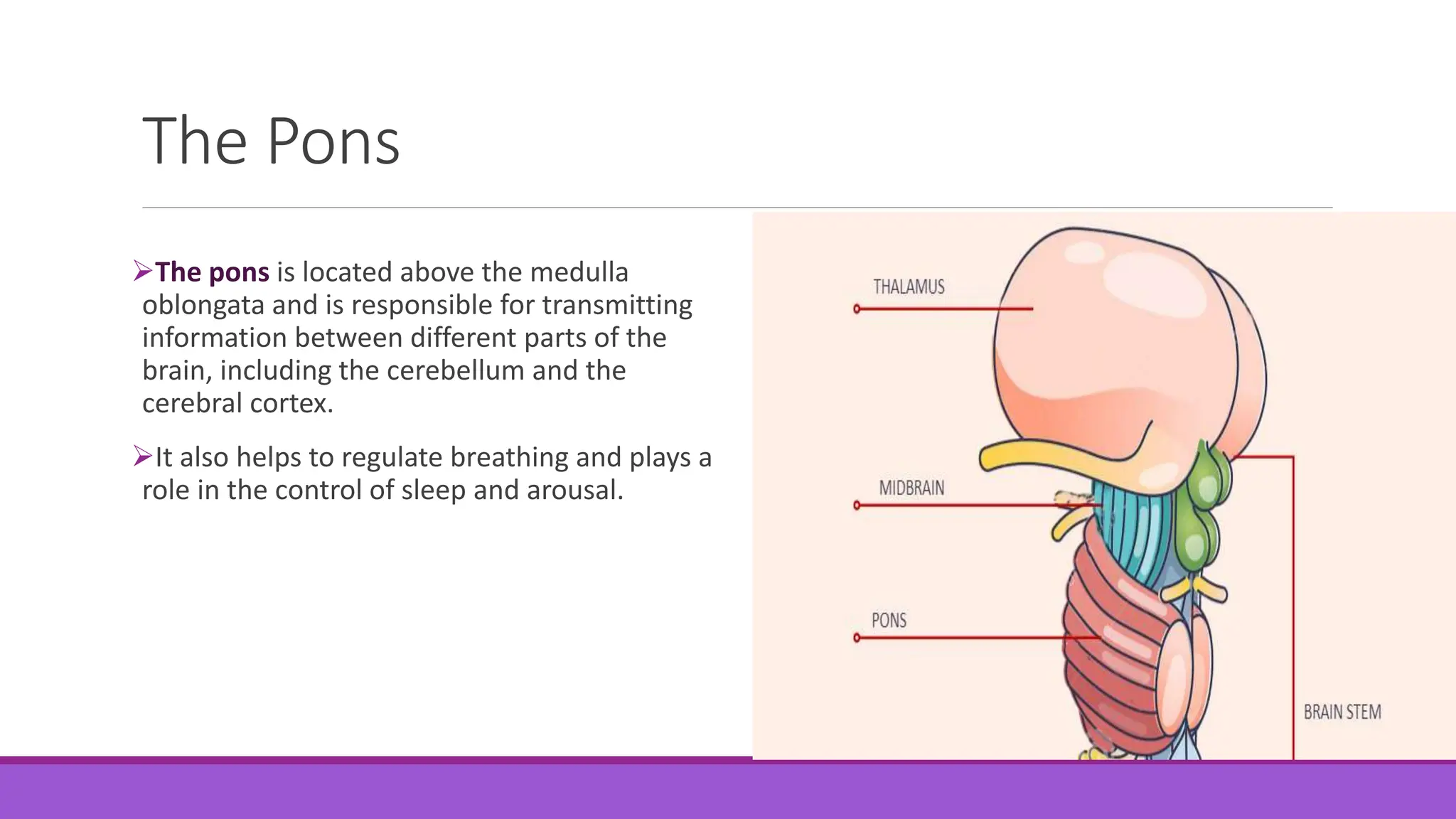
The pons is located above the medulla
oblongata and is responsible for transmitting
information between different parts of the
brain, including the cerebellum and the
cerebral cortex.
It also helps to regulate breathing and plays a
role in the control of sleep and arousal.
The Midbrain: functions
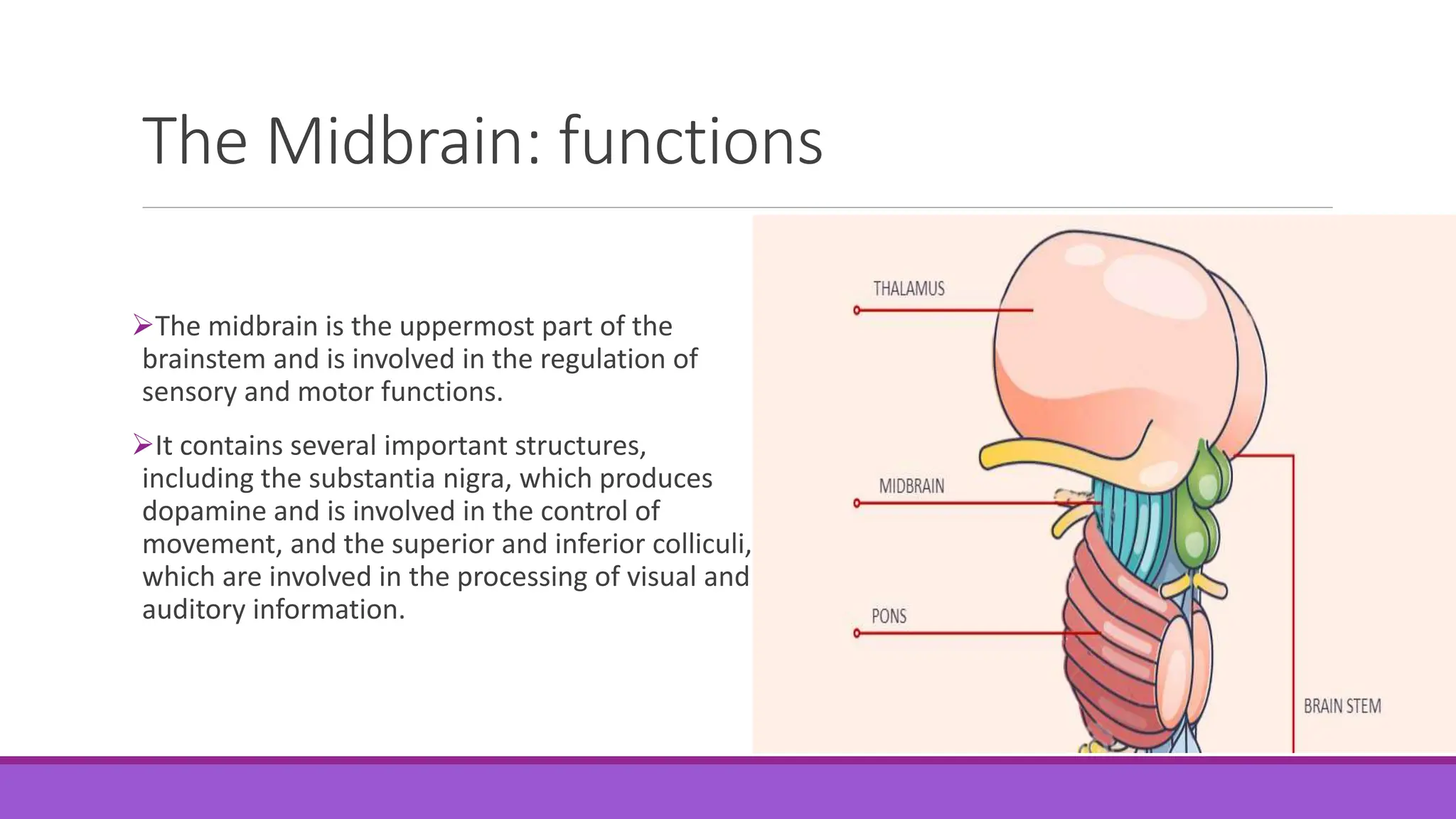
The midbrain is the uppermost part of the
brainstem and is involved in the regulation of
sensory and motor functions.
It contains several important structures,
including the substantia nigra, which produces
dopamine and is involved in the control of
movement, and the superior and inferior colliculi,
which are involved in the processing of visual and
auditory information.
Thank You

Unit-I; The anatomy and Physiology of The Brainstem.pptx

  • 1.
    The Brainstem ANATOMY &PHYSIOLOGY BY: MR. VISHAL SINGH (ASSISTANT PROFESSOR, KIPS- KANPUR)
  • 2.
    The Brainstem The brainstemis the lower part of the brain that connects the brain to the spinal cord. It contains several structures, including the medulla oblongata, the pons, and the midbrain. plays a crucial role in maintaining many of the body's basic functions, including respiration, circulation, and digestion.
  • 3.
    The medulla oblongata:functions The medulla oblongata is the lowest part of the brainstem and is responsible for controlling many of the body's vital functions, such as breathing, heart rate, and blood pressure. It also regulates reflexes such as coughing, sneezing, and swallowing.
  • 4.
    The Pons The ponsis located above the medulla oblongata and is responsible for transmitting information between different parts of the brain, including the cerebellum and the cerebral cortex. It also helps to regulate breathing and plays a role in the control of sleep and arousal.
  • 5.
    The Midbrain: functions Themidbrain is the uppermost part of the brainstem and is involved in the regulation of sensory and motor functions. It contains several important structures, including the substantia nigra, which produces dopamine and is involved in the control of movement, and the superior and inferior colliculi, which are involved in the processing of visual and auditory information.
  • 6.