Iona Spence-Dingle Unit 9 Evaluation 
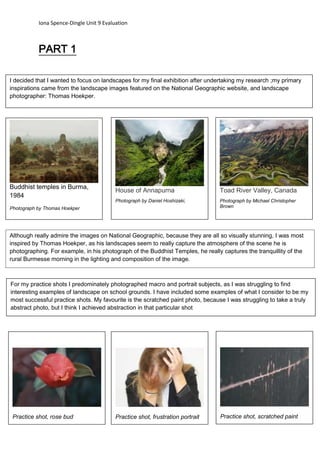
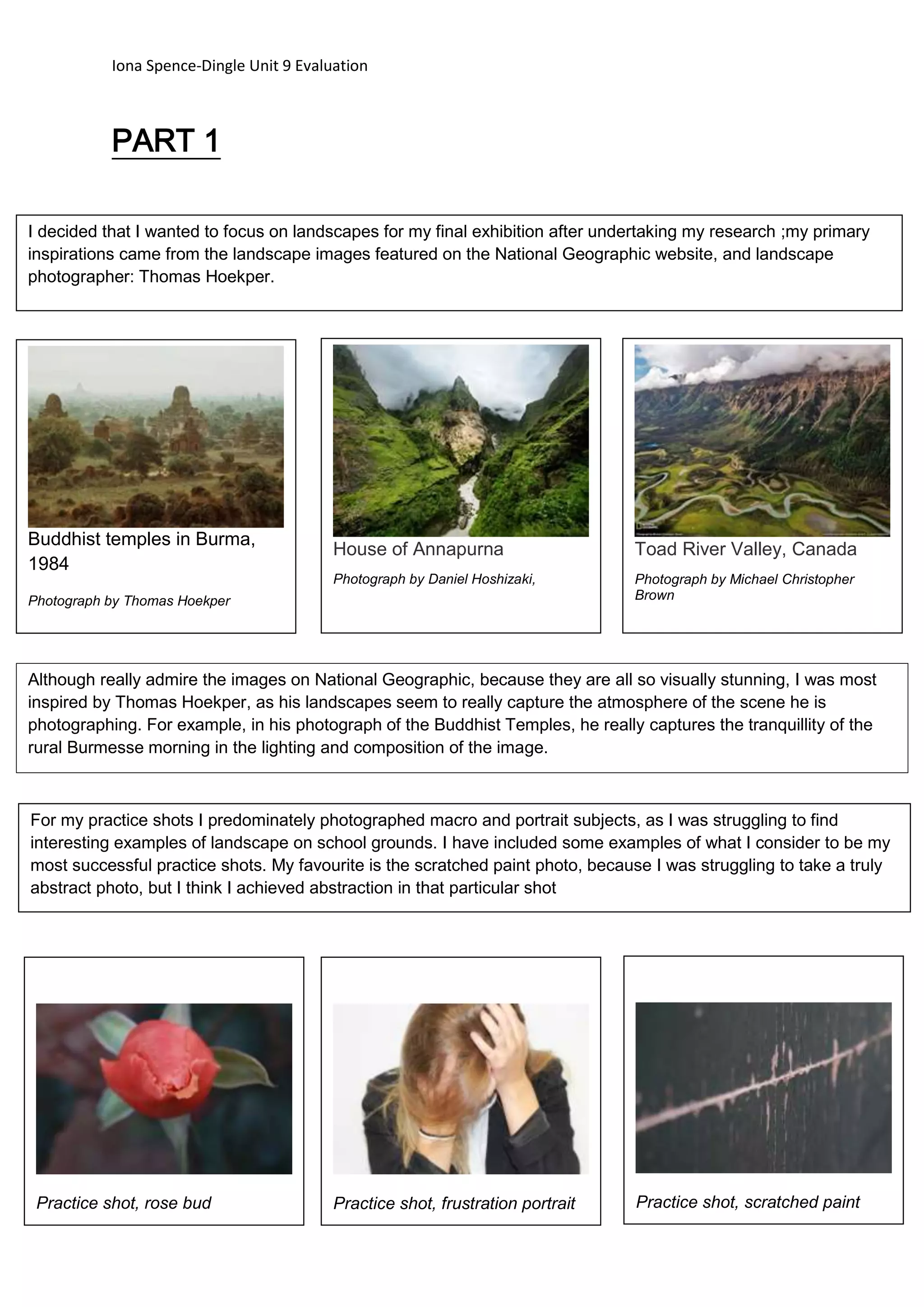
I decided that I wanted to focus on landscapes for my final exhibition after undertaking my research ;my primary 
inspirations came from the landscape images featured on the National Geographic website, and landscape 
photographer: Thomas Hoekper. 
Buddhist temples in Burma, 
1984 
Photograph by Thomas Hoekper 
Practice shot, rose bud 
Practice shot, scratched paint 
Practice shot, frustration portrait 
PART 1 
House of Annapurna 
Photograph by Daniel Hoshizaki, 
Toad River Valley, Canada 
Photograph by Michael Christopher 
Brown 
Although really admire the images on National Geographic, because they are all so visually stunning, I was most 
inspired by Thomas Hoekper, as his landscapes seem to really capture the atmosphere of the scene he is 
photographing. For example, in his photograph of the Buddhist Temples, he really captures the tranquillity of the 
rural Burmesse morning in the lighting and composition of the image. 
For my practice shots I predominately photographed macro and portrait subjects, as I was struggling to find 
interesting examples of landscape on school grounds. I have included some examples of what I consider to be my 
most successful practice shots. My favourite is the scratched paint photo, because I was struggling to take a truly 
abstract photo, but I think I achieved abstraction in that particular shot
Iona Spence-Dingle Unit 9 Evaluation 
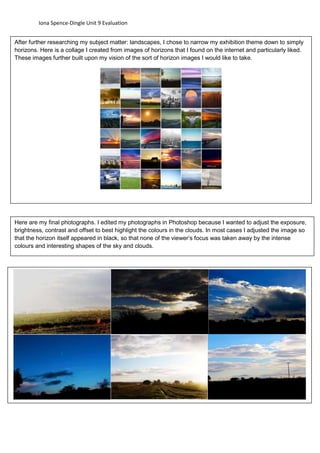
After further researching my subject matter: landscapes, I chose to narrow my exhibition theme down to simply 
horizons. Here is a collage I created from images of horizons that I found on the internet and particularly liked. 
These images further built upon my vision of the sort of horizon images I would like to take. 
Here are my final photographs. I edited my photographs in Photoshop because I wanted to adjust the exposure, 
brightness, contrast and offset to best highlight the colours in the clouds. In most cases I adjusted the image so 
that the horizon itself appeared in black, so that none of the viewer’s focus was taken away by the intense 
colours and interesting shapes of the sky and clouds.
Iona Spence-Dingle Unit 9 Evaluation 
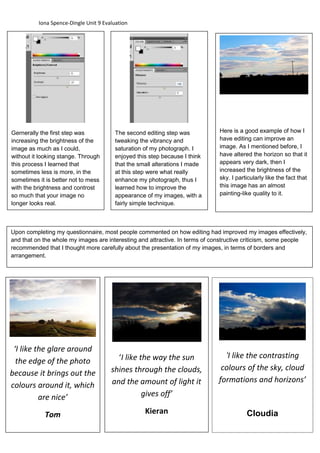
Gernerally the first step was 
increasing the brightness of the 
image as much as I could, 
without it looking stange. Through 
this process I learned that 
sometimes less is more, in the 
sometimes it is better not to mess 
with the brightness and controst 
so much that your image no 
longer looks real. 
The second editing step was 
tweaking the vibrancy and 
saturation of my photograph. I 
enjoyed this step because I think 
that the small alterations I made 
at this step were what really 
enhance my photograph, thus I 
learned how to improve the 
appearance of my images, with a 
fairly simple technique. 
Here is a good example of how I 
have editing can improve an 
image. As I mentioned before, I 
have altered the horizon so that it 
appears very dark, then I 
increased the brightness of the 
sky. I particularly like the fact that 
this image has an almost 
painting-like quality to it. 
Upon comp leting my questionnaire, mos t people commented on how editing had improved my images effectively, 
and that on the whole my images are interesting and attractive. In terms of constructive criticism, some people 
recommended that I thought more carefully about the presentation of my images, in terms of borders and 
arrangement. 
‘I like the glare around 
the edge of the photo 
because it brings out the 
colours around it, which 
are nice’ 
Tom 
‘I like the way the sun 
shines through the clouds, 
and the amount of light it 
gives off’ 
Kieran 
‘I like the contrasting 
colours of the sky, cloud 
formations and horizons’ 
Cloudia
Iona Spence-Dingle Unit 9 Evaluation 
Overall I am very pleased with my final exhibition photos, as I feel like I have achieved everything I wanted in 
my images; they are all aesthetically pleasing, and really capture the natural beauty of the New Forest. If I 
was to do the project again then I would perhaps choose a topic that allowed me to experiment with different 
subject matter, for example macro. In my questionnaire the most common criticism was that not all of my 
photos were particularly eye-catching, but I think choosing a more open exhibition title will ensure that this is 
not an issue next time. Furthermore, I would probably arrange my photos slightly differently, maybe with 
larger boarders, next time.

Unit 9 evaluation

  • 1.
    Iona Spence-Dingle Unit9 Evaluation I decided that I wanted to focus on landscapes for my final exhibition after undertaking my research ;my primary inspirations came from the landscape images featured on the National Geographic website, and landscape photographer: Thomas Hoekper. Buddhist temples in Burma, 1984 Photograph by Thomas Hoekper Practice shot, rose bud Practice shot, scratched paint Practice shot, frustration portrait PART 1 House of Annapurna Photograph by Daniel Hoshizaki, Toad River Valley, Canada Photograph by Michael Christopher Brown Although really admire the images on National Geographic, because they are all so visually stunning, I was most inspired by Thomas Hoekper, as his landscapes seem to really capture the atmosphere of the scene he is photographing. For example, in his photograph of the Buddhist Temples, he really captures the tranquillity of the rural Burmesse morning in the lighting and composition of the image. For my practice shots I predominately photographed macro and portrait subjects, as I was struggling to find interesting examples of landscape on school grounds. I have included some examples of what I consider to be my most successful practice shots. My favourite is the scratched paint photo, because I was struggling to take a truly abstract photo, but I think I achieved abstraction in that particular shot
  • 2.
    Iona Spence-Dingle Unit9 Evaluation After further researching my subject matter: landscapes, I chose to narrow my exhibition theme down to simply horizons. Here is a collage I created from images of horizons that I found on the internet and particularly liked. These images further built upon my vision of the sort of horizon images I would like to take. Here are my final photographs. I edited my photographs in Photoshop because I wanted to adjust the exposure, brightness, contrast and offset to best highlight the colours in the clouds. In most cases I adjusted the image so that the horizon itself appeared in black, so that none of the viewer’s focus was taken away by the intense colours and interesting shapes of the sky and clouds.
  • 3.
    Iona Spence-Dingle Unit9 Evaluation Gernerally the first step was increasing the brightness of the image as much as I could, without it looking stange. Through this process I learned that sometimes less is more, in the sometimes it is better not to mess with the brightness and controst so much that your image no longer looks real. The second editing step was tweaking the vibrancy and saturation of my photograph. I enjoyed this step because I think that the small alterations I made at this step were what really enhance my photograph, thus I learned how to improve the appearance of my images, with a fairly simple technique. Here is a good example of how I have editing can improve an image. As I mentioned before, I have altered the horizon so that it appears very dark, then I increased the brightness of the sky. I particularly like the fact that this image has an almost painting-like quality to it. Upon comp leting my questionnaire, mos t people commented on how editing had improved my images effectively, and that on the whole my images are interesting and attractive. In terms of constructive criticism, some people recommended that I thought more carefully about the presentation of my images, in terms of borders and arrangement. ‘I like the glare around the edge of the photo because it brings out the colours around it, which are nice’ Tom ‘I like the way the sun shines through the clouds, and the amount of light it gives off’ Kieran ‘I like the contrasting colours of the sky, cloud formations and horizons’ Cloudia
  • 4.
    Iona Spence-Dingle Unit9 Evaluation Overall I am very pleased with my final exhibition photos, as I feel like I have achieved everything I wanted in my images; they are all aesthetically pleasing, and really capture the natural beauty of the New Forest. If I was to do the project again then I would perhaps choose a topic that allowed me to experiment with different subject matter, for example macro. In my questionnaire the most common criticism was that not all of my photos were particularly eye-catching, but I think choosing a more open exhibition title will ensure that this is not an issue next time. Furthermore, I would probably arrange my photos slightly differently, maybe with larger boarders, next time.