Unit 8: The Endocrine System Chapter 44:  Drugs for Diabetes Mellitus
Pancreas Describe the secretory function of the pancreas. Which pancreatic cells are essential to the endocrine function? Why is the endocrine function of the pancreas so important?
Insulin Secretion regulated by chemical, hormonal, and neural factors Key to metabolic process in most body cells  Transport vehicle for glucose (except brain) Why does glucose not need a transport vehicle into brain cells?  What is the most important regulator of insulin secretion?  (Think about the negative feedback loop)
Contributors to Glucose Homeostasis  Hyperglycemic effects Hormones Epinephrine Thyroid hormone Growth hormone conticosteroids Drugs Phenytoin NSAIDs Diuretics Steroids  Hypoglycemic effects  Drugs Alcohol Lithium ACE Inhibitors Beta-adrenergic blockers
Diabetes Mellitus Chronic metabolic disorder characterized by hyperglycemia Etiology: combination of genetic and environmental factors Increasing incidence Group of disorders caused by: Deficient to absent insulin secretion Decreased insulin receptor sensitivity
Type I Diabetes Mellitus Usually presents during childhood Aka: insulin dependent diabetes mellitus Etiology:  autoimmune destruction of pancreatic beta cells Interaction of genetic, immunologic, and environmental factors Consistent presenting signs/symptoms Hyperglycemia, polyuria, polyphagia, polydipsia, glycosuria, weight loss, fatigue
Potential Complications Arterial damage Altered peripheral circulation Nerve degeneration Impaired lipid metabolism
Pharmacotherapy for  Type I Diabetes Mellitus What are the current options for Insulin therapy? What is the therapeutic goal and desired outcome of insulin therapy?  What additional measures are used with insulin pharmacotherapy to control Type 1 DM?
Insulin Therapy Fundamental Principle: “ the right amount of insulin must be available to cells when glucose is available in the blood.”  What is the consequence of administering insulin when glucose is not available? What is the consequence of forgetting or skipping scheduled insulin dosage?
Insulin Therapy What is the primary adverse effect of insulin therapy? Other adverse effects include: Localized allergic reaction  Generalized urticaria Swollen lymph glands
Hypoglycemia (Insulin Reaction) Symptoms occur when there is more insulin in the blood than needed. Causes: Insulin levels peak during exercise Received too much insulin Skipped meal after taking dose of insulin  May be treated with glucagon  Can cause response in ≤ 20 min
Somogyi Phenomenon Rapid decrease in blood glucose (typically at night) Stimulates release of hormones that increase blood glucose Morning blood glucose is elevated
Types of Insulin Most insulin given today is human insulin  Human insulin has been modified to produce a more rapid onset or longer duration. (Insulin Analogs) Classified as rapid, short, intermediate, or long acting
Nursing Considerations  What are nursing considerations for insulin therapy? What  must  the nurse be familiar with?  What teaching must be included?
Type 2 Diabetes Mellitus Major type of diabetes mellitus Endogenous insulin present in deficient amounts Fundamental problem Insulin resistance Poor management results in same complications as Type 1 diabetes mellitus  Recommendation: preprandial glucose < 110 mg/dl
Oral Hypoglycemics Lower blood sugar Some may cause hypoglycemia Classified based on structure and mechanism of action Initially monotherapy Insulin may need to be added to regimin Some combination drugs are available.  Why?
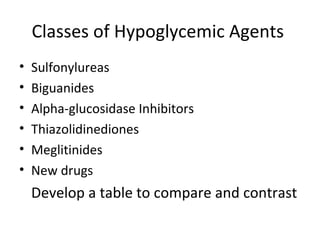
Classes of Hypoglycemic Agents  Sulfonylureas Biguanides Alpha-glucosidase Inhibitors  Thiazolidinediones Meglitinides  New drugs Develop a table to compare and contrast
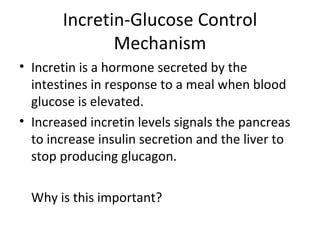
Incretin-Glucose Control Mechanism Incretin is a hormone secreted by the intestines in response to a meal when blood glucose is elevated. Increased incretin levels signals the pancreas to increase insulin secretion and the liver to stop producing glucagon. Why is this important?
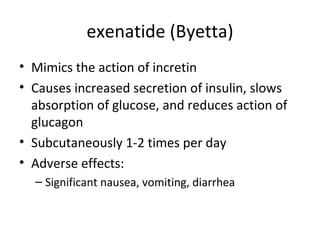
exenatide (Byetta) Mimics the action of incretin Causes increased secretion of insulin, slows absorption of glucose, and reduces action of glucagon Subcutaneously 1-2 times per day Adverse effects: Significant nausea, vomiting, diarrhea
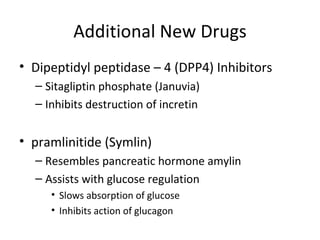
Additional New Drugs Dipeptidyl peptidase – 4 (DPP4) Inhibitors Sitagliptin phosphate (Januvia) Inhibits destruction of incretin pramlinitide (Symlin) Resembles pancreatic hormone amylin Assists with glucose regulation Slows absorption of glucose Inhibits action of glucagon
Nursing Considerations  What are the nursing considerations for hypoglycemic agents? What needs to be included in teaching?

Unit 8 chapter 44 diabetes mellitus

  • 1.
    Unit 8: TheEndocrine System Chapter 44: Drugs for Diabetes Mellitus
  • 2.
    Pancreas Describe thesecretory function of the pancreas. Which pancreatic cells are essential to the endocrine function? Why is the endocrine function of the pancreas so important?
  • 3.
    Insulin Secretion regulatedby chemical, hormonal, and neural factors Key to metabolic process in most body cells Transport vehicle for glucose (except brain) Why does glucose not need a transport vehicle into brain cells? What is the most important regulator of insulin secretion? (Think about the negative feedback loop)
  • 4.
    Contributors to GlucoseHomeostasis Hyperglycemic effects Hormones Epinephrine Thyroid hormone Growth hormone conticosteroids Drugs Phenytoin NSAIDs Diuretics Steroids Hypoglycemic effects Drugs Alcohol Lithium ACE Inhibitors Beta-adrenergic blockers
  • 5.
    Diabetes Mellitus Chronicmetabolic disorder characterized by hyperglycemia Etiology: combination of genetic and environmental factors Increasing incidence Group of disorders caused by: Deficient to absent insulin secretion Decreased insulin receptor sensitivity
  • 6.
    Type I DiabetesMellitus Usually presents during childhood Aka: insulin dependent diabetes mellitus Etiology: autoimmune destruction of pancreatic beta cells Interaction of genetic, immunologic, and environmental factors Consistent presenting signs/symptoms Hyperglycemia, polyuria, polyphagia, polydipsia, glycosuria, weight loss, fatigue
  • 7.
    Potential Complications Arterialdamage Altered peripheral circulation Nerve degeneration Impaired lipid metabolism
  • 8.
    Pharmacotherapy for Type I Diabetes Mellitus What are the current options for Insulin therapy? What is the therapeutic goal and desired outcome of insulin therapy? What additional measures are used with insulin pharmacotherapy to control Type 1 DM?
  • 9.
    Insulin Therapy FundamentalPrinciple: “ the right amount of insulin must be available to cells when glucose is available in the blood.” What is the consequence of administering insulin when glucose is not available? What is the consequence of forgetting or skipping scheduled insulin dosage?
  • 10.
    Insulin Therapy Whatis the primary adverse effect of insulin therapy? Other adverse effects include: Localized allergic reaction Generalized urticaria Swollen lymph glands
  • 11.
    Hypoglycemia (Insulin Reaction)Symptoms occur when there is more insulin in the blood than needed. Causes: Insulin levels peak during exercise Received too much insulin Skipped meal after taking dose of insulin May be treated with glucagon Can cause response in ≤ 20 min
  • 12.
    Somogyi Phenomenon Rapiddecrease in blood glucose (typically at night) Stimulates release of hormones that increase blood glucose Morning blood glucose is elevated
  • 13.
    Types of InsulinMost insulin given today is human insulin Human insulin has been modified to produce a more rapid onset or longer duration. (Insulin Analogs) Classified as rapid, short, intermediate, or long acting
  • 14.
    Nursing Considerations What are nursing considerations for insulin therapy? What must the nurse be familiar with? What teaching must be included?
  • 15.
    Type 2 DiabetesMellitus Major type of diabetes mellitus Endogenous insulin present in deficient amounts Fundamental problem Insulin resistance Poor management results in same complications as Type 1 diabetes mellitus Recommendation: preprandial glucose < 110 mg/dl
  • 16.
    Oral Hypoglycemics Lowerblood sugar Some may cause hypoglycemia Classified based on structure and mechanism of action Initially monotherapy Insulin may need to be added to regimin Some combination drugs are available. Why?
  • 17.
    Classes of HypoglycemicAgents Sulfonylureas Biguanides Alpha-glucosidase Inhibitors Thiazolidinediones Meglitinides New drugs Develop a table to compare and contrast
  • 18.
    Incretin-Glucose Control MechanismIncretin is a hormone secreted by the intestines in response to a meal when blood glucose is elevated. Increased incretin levels signals the pancreas to increase insulin secretion and the liver to stop producing glucagon. Why is this important?
  • 19.
    exenatide (Byetta) Mimicsthe action of incretin Causes increased secretion of insulin, slows absorption of glucose, and reduces action of glucagon Subcutaneously 1-2 times per day Adverse effects: Significant nausea, vomiting, diarrhea
  • 20.
    Additional New DrugsDipeptidyl peptidase – 4 (DPP4) Inhibitors Sitagliptin phosphate (Januvia) Inhibits destruction of incretin pramlinitide (Symlin) Resembles pancreatic hormone amylin Assists with glucose regulation Slows absorption of glucose Inhibits action of glucagon
  • 21.
    Nursing Considerations What are the nursing considerations for hypoglycemic agents? What needs to be included in teaching?