Endocrine drugs
Chapter 8
Endocrine drugs
 Hypothalamic & pituitary hormones
 Antidiabetic drugs
 Drugs for thyroid disorders
 Adrenocorticosteroids & adrenocortical
antagonists
 The gonadal hormones & inhibitors
 A gents that affect bone mineral homeostasis
2
Endocrine drugs
I. Antidiabetic Drugs
3
Overview of DM
 DM is not a single disease entity but rather a
group of metabolic disorders sharing the common
underlying feature of hyperglycemia
 Hyperglycemia in DM results from
 Defects in insulin secretion, insulin action, or,
most commonly, both
 It affects more than 120 million people world-wide
 It is estimated that it will affect 220 million by
the yr 2020
4
Overview of DM …
 Type 1 DM
 An autoimmune disease in which islet
destruction is caused primarily by
• T lymphocytes reacting against as yet poorly
defined β-cell antigens, resulting in a
reduction in β-cell mass
 Genetic susceptibility & environmental influences
play important roles in the pathogenesis
 Most commonly develops in childhood, becomes
manifest at puberty & progressive with age
5
Overview of DM …
 Type 2 DM
 Like Type 1 DM, the pathogenesis of type 2 DM
remains enigmatic
 Environmental influences, such as a sedentary
life style & dietary habits have a role
 Genetic factors are more important than in type 1
DM
 The 2 metabolic defects that characterize type 2
DM
• Insulin resistance
• ↓ed ability of peripheral tissues to respond to insulin
6
Overview of DM…
 β-cell dysfunction
• Manifested as inadequate insulin secretion in
the face of insulin resistance & hyperglycemia
NB: In most cases, insulin resistance is the 10
event
& followed by ↑sing degrees of β-cell dysfunction
 Type 3 DM
 The type 3 designation refers to multiple other
specific causes of an elevated blood glucose:
pancreatectomy, pancreatitis, non-pancreatic
diseases, drug therapy, etc
7
Overview of DM…
 Type 4 DM
 Gestational diabetes (GDM) is defined as any
abnormality in glucose levels noted for the 1st
time
during pregnancy
 During pregnancy, the placenta & placental hormones
create an insulin resistance that is most pronounced in
the last trimester
 Risk assessment for DM is suggested starting at the 1st
prenatal visit
 High-risk women should be screened immediately
 Screening may be deferred in lower-risk women until the
24th to 28th wk of gestation
8
What are therisksfactorsassociatedwith
GDM?
• Althoughany womancan develop GDMduringpregnancy,
someof thefactors thatmay↑the riskinclude thefollowing:
• Overweightor obesity
• Family history of DM
• Havinggivenbirth previously to avery largeinfant,astill
birth,ora childwitha birthdefect
• Age (women who are older than25areata greater risk for
developing GDM than youngerwomen)
• Race (womenwho areAfrican-American,American Indian,
AsianAmerican,Hispanic/Latino, or PacificIslander havea
higher risk)
• Prediabetes
Types of Antidiabetic Agents
A. Injectable antidiabetic agents: Insulins
B. Oral antidiabetic agents
Both aim to produce normal blood glucose states
9
A. Insulin preparations:
 Role of Insulin
 The actions of insulin on cells include:
• Increased glycogen synthesis
• Increased fatty acid synthesis
• Increased esterification of fatty acids
• Decreased proteinolysis
• Decreased lipolysis
• Decreased gluconeogenesis
• Increased amino acid uptake
• Increased potassium uptake
10
Insulin preparations
 4 principal types of injected insulins are available:
 Rapid-acting→ very fast onset & short duration
 Short-acting → rapid onset of action
 Intermediate-acting →slow onset of action
 Long-acting: → slow onset of action
11
Insulin preparations …
 Rapid acting
 Most rapid onset of action (5-15 min)
 Shorter duration
• Insulin aspart, Insulin lispro
 Short acting
 Regular insulin
 The only insulin product that can be given by IV bolus,
IV infusion, or even IM
 NB: Injected rapid acting & short-acting insulins are
dispensed as clear solutions at neutral pH & contain small
amts of zinc to improve their stability and shelf life
12
Insulin preparations …
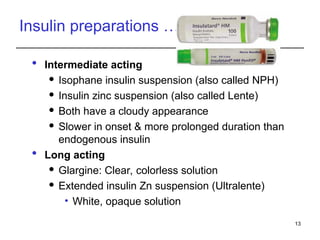
 Intermediate acting
 Isophane insulin suspension (also called NPH)
 Insulin zinc suspension (also called Lente)
 Both have a cloudy appearance
 Slower in onset & more prolonged duration than
endogenous insulin
 Long acting
 Glargine: Clear, colorless solution
 Extended insulin Zn suspension (Ultralente)
• White, opaque solution
13
Insulin preparations …
 Combination Insulin products
 NPH 70% & regular insulin 30% (70/30)
 NPH 50% & regular insulin 50% (50/50)
 Insulin lispro protamine susp 75% & insulin
lispro 25% (75/25)
14
15
PK of most commonly used insulin preparations
Insulin type Onset of
action
Peak effect Duration
of action
pH
Lispro, aspart,
glulisine
5 - 15 min 45 - 75 min 2 - 4 h 6.9 - 7.8
R-insulin About 30 min 2 - 4 h 5 - 8 h 6.9 - 7.8
NPH About 2 h 4 - 12 h 18 - 28 h
Insulin
glargine
About 2 h No peak 20 - >24 h 4
Insulin detemir About 2 h 3 - 9 h 6 - 24 h*
NPL About 2 h 6 h 15 h
* Duration of action is dose-dependent. At higher doses (≥0.8 units/kg), mean
duration of action is longer & less variable (22 -23 hrs).
Insulin preparations …
 Complications of insulin therapy
 Hypoglycemia (“hypo” “insulin rxn”)
• Most common adverse effect of insulin
• Timing of hypoglycemia differs among various insulin
formulations
• Hypoglycemia may result from
• Late meal, too little CHO, extra exercise, too
much insulin
 Weight gain
 Local lipodystrophy (lipohypertrophy or
lipoatrophy)
16
Fig. lipoatrophy
Fig: Abdomen siteof injection showing
hypertrophyand scars
B. Oral Antidiabetic Agents
 Used for type 2 DM
 Tx for type 2 DM includes lifestyle modifications
 Diet, exercise, smoking cessation, wt loss
 Oral antidiabetic agents may not be effective
unless the pt also makes behavioral or lifestyle
changes
17
a) Sulfonylureas
 Drugs includes: glibenclamide, glipizide, glimepride
 Stimulate release of insulin from pancreas to lower
blood glucose
 Must have functioning pancreatic beta cells
 Side effects: Hypoglycemia, N, skin reactions
(including photosensitivity), & abnormal liver
function tests, Wt gain
 Administer 30 minutes before meals
18
Fig. One model of control of insulin release from the pancreatic beta
cell by glucose and by sulfonyl urea drugs
b) Biguanide: metformin
 Increases use of glucose by muscle & fat cells
 Decreases hepatic glucose production
 Decreases intestinal absorption of glucose
 Most common SEs of metformin are GI, including
 A metallic taste in the mouth, mild anorexia, N, D,
abdominal discomfort
 Lactic acidosis is an uncommon SE
 C/I in serious hepatic or renal impairment or other
conditions that may ↑ lactate production- potentially
fatal lactic acidosis
 Administer with meals
19
– In pts with renal disease, alcoholism, hepatic
disease, or
– Conditions predisposing to tissue anoxia (eg,
chronic cardiopulmonary dysfunction)
– b/c of the increased risk of lactic acidosis
induced by this drug
Metformin is C/I:
c) Meglitinides
 Includes: Repaglinide & nateglinide
 Similar action to sulfonylureas- stimulate
pancreatic secretion of insulin
 Short-acting glucose-lowering drugs given alone or
in combination with metformin
 Efficacy when taken just 15 minutes before meals
 A duration of effect of no more than 3 hrs
 Similar risk for wt gain as sulfonylureas but
possibly less risk of hypoglycemia
20
d) Glitazones (Thiazolidinediones)
 Includes: Rosiglitazone, pioglitazone
 Reduce insulin resistance in the tissues
 ↑ insulin sensitivity by acting on adipose, Ms, &
liver to ↑glucose utilization & ↓ glucose production
 Use cautiously in pts with CHF: ↑ plasma volume &
may cause fluid retention
 Administer with meals
21
e) Alpha-Glucosidase Inhibitors
 Includes: Acarbose, Miglitol
 Inhibit digestive enzymes in GIT (such as sucrase,
maltase, amylase) responsible for release of glucose
from consumed CHO, so absorption is delayed
 C/I in inflammatory or malabsorptive intestinal
disorders
 Administer just before meals
22
Antidiabetic Agents: Nursing
Implications
 Before giving any drugs that alter glucose levels,
obtain & document:
 A thorough history
 Vital signs
 Blood glucose level
 Potential complications & drug interactions
23
Nursing Implications…
 Before giving any drugs that alter glucose levels:
 Assess the pt’s ability to consume food
 Assess for N or V
 Hypoglycemia may be a problem if antidiabetic
agents are given & the pt does not eat
 If a pt is NPO for a test or procedure, consult
physician to clarify orders for antidiabetic drug
therapy
24
Nursing Implications…
 Keep in mind that overall concerns for any diabetic
pt ↑when the pt:
 Is under stress
 Has an infection
 Has an illness or trauma
 Is pregnant
 Thorough pt education is essential regarding:
 Disease process
 Diet & exercise recommendations
 Self-administration of insulin or oral agents
 Potential complications
25
Nursing Implications…
 When insulin is ordered, ensure:
 Correct route
 Correct type of insulin
 Timing of the dose
 Correct dosage
 Insulin order & prepared dosages are second-
checked with another nurse
26
Nursing Implications…
 Insulin
 Check blood glucose level before giving insulin
 Roll vials b/n hands instead of shaking them to mix susp
 Ensure correct storage of insulin vials
 ONLY insulin syringes, calibrated in units, are to be used to
measure & give insulin
 Ensure correct timing of insulin dose with meals
 When drawing up 2 types of insulin in one syringe, always
withdraw the regular insulin first
 Provide thorough pt education regarding self-administration of
insulin injections, including timing of doses, monitoring blood
glucoses, & injection site rotations
27
Nursing Implications…
 Oral antidiabetic agents
 Always check blood glucose levels before giving
 Usually given 30 minutes before meals
 Alpha-glucosidase inhibitors are given with the
first bite of each main meal
 Metformin is taken with meals to reduce GI effects
28
Nursing Implications…
 Assess for signs of hypoglycemia
 If hypoglycemia occurs:
 Give glucagon
 Have the pt eat glucose tabs or gel, corn syrup,
honey, fruit juice or non-diet soft drink
 Or have the pt eat a small snack such as
crackers or half a sandwich
29
Nursing Implications…
 Monitor blood glucose levels
 Monitor for therapeutic response
 ↓ in blood glucose levels to the level
prescribed by physician
 Watch for hypoglycemia & hyperglycemia
 Measure hemoglobin A1c to monitor long-term
compliance to diet & drug therapy
30
Endocrine drugs…
II. Drugs for thyroid disorders
Overview
 The thyroid gland is located in the neck in front of
the trachea
 This highly vascular gland manufactures &
secretes 2 hormones: thyroxine (T4) &
triiodothyronine (T3)
 Iodine is an essential element for the manufacture
of both of these hormones
 The activity of the thyroid gland is regulated by
thyroid-stimulating hormone, produced by the
anterior pituitary gland
32
Overview
 Two diseases are related to the hormone-producing
activity of the thyroid gland:
 Hypothyroidism—a decrease in the amt of
thyroid hormones manufactured & secreted
 Hyperthyroidism—an ↑ in the amt of thyroid
hormones manufactured & secreted
• A severe form of hyperthyroidism, called
thyrotoxicosis or thyroid storm, is
characterized by high fever, extreme
tachycardia, & altered mental status
33
A. Drugs for Hypothyroidism
 Thyroid hormone influences many systems &
processes in the body, including the following:
 Metabolic: energy levels, body temp, wt, lipids,
appetite
 CV: HR, heart rhythm, BP, fluid distribution
 Skin & hair: composition, thickness, texture
 GI: motility
 Musculoskeletal: bone growth, tendon reflexes
 Hematologic: erythropoiesis
 Reproductive: ovulation & spermatogenesis
34
Drugs for Hypothyroidism…
 Thyroid hormone preparations include:
 Levothyroxine Na
 Others: Liothyronine, liotrix, thyroid (desiccated)
 Levothyroxine Na
 Dosage Forms: Tabs, injection
 Indication: Hypothyroidism from any cause
35
Drugs for Hypothyroidism…
 Levothyroxine Na…
 Adverse reactions: most common
• Fatigue, ↑ed appetite, wt loss, heat intolerance,
hyperhidrosis
 Adverse reactions: rare/severe/important
• Hair loss, menstrual irregularities, nervousness,
irritability, insomnia
 C/Is:
• Caution must be exercised in conditions in which
tachycardia is dangerous (CAD, aortic stenosis,
mitral stenosis)
36
Drugs for Hypothyroidism…
 Levothyroxine Na: Nursing considerations
 The Tx is initiated slowly (with small doses) &
gradually increased
 Store medications in cool dark place
 Take complete nursing history
 Note if the client is taking antidiabetic drugs &
document
 Take baseline ECG. then at regular intervals
 Monitor thyroid function closely
 Observe client for side effects
37
Drugs for Hypothyroidism…
 Levothyroxine Na: Nursing considerations…
 Monitor PT & PTT closely since the drug ↑
hypoprothrombinemia
 Monitor HR & BP closely for cardiac pts
 Instruct the client to report SEs e.g. wt loss &
nervousness to physician
 Have dietitian counsel clients regarding diet
according to the energy demands
 Female client should record menstrual irregularities
 Encourage the client to keep follow-up visits
38
B. Drugs for Hyperthyroidism
 Drugs for Hyperthyroidism
 Thionamides: propylthiouracil (PTU) &
methimazole
 Radioactive Iodine (131
I)
 Nonradioactive Iodine: Strong Iodine Solution
(Lugol's Solution), Na Iodide (IV), K Iodide
 Beta blockers
• can suppress tachycardia & other symptoms
of Hyperthyroidism
39
Drugs for Hyperthyroidism...
1. Thionamides: propylthiouracil (PTU)
 Act primarily by blocking the synthesis of thyroid
hormone
 Require about 3 to 12 wks to exert their effects b/c
of the thyroid precursors of thyroid synthesis that are
stored inside the thyroid gland
 Adverse Effects:
• The most common (in 6% to 10% of pts) are skin rash,
fever, & arthralgia (sore joints)
• Serious, Rare Side Effects : Agranulocytosis,
Hepatotoxicity, Vasculitis
40
Drugs for Hyperthyroidism...
 PTU has 4 therapeutic applications in
hyperthyroidism:
 Reduction of thyroid hormone production in
Graves' disease
 Control of hyperthyroidism until the effects of
radiation on the thyroid become manifest
 Suppression of thyroid hormone production prior
to subtotal thyroidectomy
 Treatment of thyrotoxic crisis
41
Drugs for Hyperthyroidism...
 PTU: Nursing implication
 Obtain serum levels of free T3 & free T4 as a
baseline data
 Use with caution during pregnancy & lactation
 Instruct the pt to take PTU at regular intervals
around-the-clock (usually every 8 hrs)
 Evaluate Tx by monitoring for wt gain, ↓ed HR, &
other indications that levels of thyroid hormone have
declined
 Inform pts about early signs of agranulocytosis
(fever, sore throat), & instruct them to notify the
physician if these develop
42
Drugs for Hyperthyroidism...
2. Radioactive iodine (131
I)
 Destroys the thyroid gland via radiation
 Indications: Hyperthyroidism, Thyroid cancer
 Adverse effects:
• Hypothyroidism: Almost all pts require lifelong thyroid
replacement after radioactive ablation
• Sialadenitis: Inflammation of the salivary glands
occurs b/c of uptake of 131
I
• Salivary damage can result in xerostomia (dry
mouth), altered taste, ↑ed dental caries, & pain
• Cancer: Although very small, a risk of cancer arises
from the radiation from the 131
I
43
Drugs for Hyperthyroidism...
 C/Is:
 Absolutely C/I in pregnancy pregnancy &
lactation
• Furthermore, pregnancy must be avoided for
6 months following administration of 131
I
 Relatively contraindicated in children: There is a
small risk of cancer
44
Drugs for Hyperthyroidism...
3. Strong iodine solution (lugol's solution)
 Therapeutic Goal:
• Suppression of thyroid hormone production
in preparation for subtotal thyroidectomy
• Also used to suppress thyroid hormone
release in pts experiencing thyroid storm
 Baseline Data: Obtain tests of thyroid function
 Administration:
• Advise pts to dilute strong iodine solution with
fruit juice or some other beverage to increase
palatability
45
Drugs for Hyperthyroidism...
 Mild Toxicity
 Inform pts about Sx of iodism (brassy taste, burning
sensations in the mouth, soreness of gums & teeth), &
instruct them to discontinue Tx & notify the prescriber if
these occur
 Symptoms fade upon drug withdrawal
 Severe Toxicity
 Iodine solution can cause corrosive injury to the GIT
 Instruct pts to discontinue the drug & notify the prescriber
immediately if severe abdominal distress develops
 Tx includes gastric lavage & giving Na thiosulfate
46

Chapter 8 Endocrine.ppt endocrine medications

  • 1.
  • 2.
    Endocrine drugs  Hypothalamic& pituitary hormones  Antidiabetic drugs  Drugs for thyroid disorders  Adrenocorticosteroids & adrenocortical antagonists  The gonadal hormones & inhibitors  A gents that affect bone mineral homeostasis 2
  • 3.
  • 4.
    Overview of DM DM is not a single disease entity but rather a group of metabolic disorders sharing the common underlying feature of hyperglycemia  Hyperglycemia in DM results from  Defects in insulin secretion, insulin action, or, most commonly, both  It affects more than 120 million people world-wide  It is estimated that it will affect 220 million by the yr 2020 4
  • 5.
    Overview of DM…  Type 1 DM  An autoimmune disease in which islet destruction is caused primarily by • T lymphocytes reacting against as yet poorly defined β-cell antigens, resulting in a reduction in β-cell mass  Genetic susceptibility & environmental influences play important roles in the pathogenesis  Most commonly develops in childhood, becomes manifest at puberty & progressive with age 5
  • 6.
    Overview of DM…  Type 2 DM  Like Type 1 DM, the pathogenesis of type 2 DM remains enigmatic  Environmental influences, such as a sedentary life style & dietary habits have a role  Genetic factors are more important than in type 1 DM  The 2 metabolic defects that characterize type 2 DM • Insulin resistance • ↓ed ability of peripheral tissues to respond to insulin 6
  • 7.
    Overview of DM… β-cell dysfunction • Manifested as inadequate insulin secretion in the face of insulin resistance & hyperglycemia NB: In most cases, insulin resistance is the 10 event & followed by ↑sing degrees of β-cell dysfunction  Type 3 DM  The type 3 designation refers to multiple other specific causes of an elevated blood glucose: pancreatectomy, pancreatitis, non-pancreatic diseases, drug therapy, etc 7
  • 8.
    Overview of DM… Type 4 DM  Gestational diabetes (GDM) is defined as any abnormality in glucose levels noted for the 1st time during pregnancy  During pregnancy, the placenta & placental hormones create an insulin resistance that is most pronounced in the last trimester  Risk assessment for DM is suggested starting at the 1st prenatal visit  High-risk women should be screened immediately  Screening may be deferred in lower-risk women until the 24th to 28th wk of gestation 8 What are therisksfactorsassociatedwith GDM? • Althoughany womancan develop GDMduringpregnancy, someof thefactors thatmay↑the riskinclude thefollowing: • Overweightor obesity • Family history of DM • Havinggivenbirth previously to avery largeinfant,astill birth,ora childwitha birthdefect • Age (women who are older than25areata greater risk for developing GDM than youngerwomen) • Race (womenwho areAfrican-American,American Indian, AsianAmerican,Hispanic/Latino, or PacificIslander havea higher risk) • Prediabetes
  • 9.
    Types of AntidiabeticAgents A. Injectable antidiabetic agents: Insulins B. Oral antidiabetic agents Both aim to produce normal blood glucose states 9
  • 10.
    A. Insulin preparations: Role of Insulin  The actions of insulin on cells include: • Increased glycogen synthesis • Increased fatty acid synthesis • Increased esterification of fatty acids • Decreased proteinolysis • Decreased lipolysis • Decreased gluconeogenesis • Increased amino acid uptake • Increased potassium uptake 10
  • 11.
    Insulin preparations  4principal types of injected insulins are available:  Rapid-acting→ very fast onset & short duration  Short-acting → rapid onset of action  Intermediate-acting →slow onset of action  Long-acting: → slow onset of action 11
  • 12.
    Insulin preparations … Rapid acting  Most rapid onset of action (5-15 min)  Shorter duration • Insulin aspart, Insulin lispro  Short acting  Regular insulin  The only insulin product that can be given by IV bolus, IV infusion, or even IM  NB: Injected rapid acting & short-acting insulins are dispensed as clear solutions at neutral pH & contain small amts of zinc to improve their stability and shelf life 12
  • 13.
    Insulin preparations … Intermediate acting  Isophane insulin suspension (also called NPH)  Insulin zinc suspension (also called Lente)  Both have a cloudy appearance  Slower in onset & more prolonged duration than endogenous insulin  Long acting  Glargine: Clear, colorless solution  Extended insulin Zn suspension (Ultralente) • White, opaque solution 13
  • 14.
    Insulin preparations … Combination Insulin products  NPH 70% & regular insulin 30% (70/30)  NPH 50% & regular insulin 50% (50/50)  Insulin lispro protamine susp 75% & insulin lispro 25% (75/25) 14
  • 15.
    15 PK of mostcommonly used insulin preparations Insulin type Onset of action Peak effect Duration of action pH Lispro, aspart, glulisine 5 - 15 min 45 - 75 min 2 - 4 h 6.9 - 7.8 R-insulin About 30 min 2 - 4 h 5 - 8 h 6.9 - 7.8 NPH About 2 h 4 - 12 h 18 - 28 h Insulin glargine About 2 h No peak 20 - >24 h 4 Insulin detemir About 2 h 3 - 9 h 6 - 24 h* NPL About 2 h 6 h 15 h * Duration of action is dose-dependent. At higher doses (≥0.8 units/kg), mean duration of action is longer & less variable (22 -23 hrs).
  • 16.
    Insulin preparations … Complications of insulin therapy  Hypoglycemia (“hypo” “insulin rxn”) • Most common adverse effect of insulin • Timing of hypoglycemia differs among various insulin formulations • Hypoglycemia may result from • Late meal, too little CHO, extra exercise, too much insulin  Weight gain  Local lipodystrophy (lipohypertrophy or lipoatrophy) 16 Fig. lipoatrophy Fig: Abdomen siteof injection showing hypertrophyand scars
  • 17.
    B. Oral AntidiabeticAgents  Used for type 2 DM  Tx for type 2 DM includes lifestyle modifications  Diet, exercise, smoking cessation, wt loss  Oral antidiabetic agents may not be effective unless the pt also makes behavioral or lifestyle changes 17
  • 18.
    a) Sulfonylureas  Drugsincludes: glibenclamide, glipizide, glimepride  Stimulate release of insulin from pancreas to lower blood glucose  Must have functioning pancreatic beta cells  Side effects: Hypoglycemia, N, skin reactions (including photosensitivity), & abnormal liver function tests, Wt gain  Administer 30 minutes before meals 18 Fig. One model of control of insulin release from the pancreatic beta cell by glucose and by sulfonyl urea drugs
  • 19.
    b) Biguanide: metformin Increases use of glucose by muscle & fat cells  Decreases hepatic glucose production  Decreases intestinal absorption of glucose  Most common SEs of metformin are GI, including  A metallic taste in the mouth, mild anorexia, N, D, abdominal discomfort  Lactic acidosis is an uncommon SE  C/I in serious hepatic or renal impairment or other conditions that may ↑ lactate production- potentially fatal lactic acidosis  Administer with meals 19 – In pts with renal disease, alcoholism, hepatic disease, or – Conditions predisposing to tissue anoxia (eg, chronic cardiopulmonary dysfunction) – b/c of the increased risk of lactic acidosis induced by this drug Metformin is C/I:
  • 20.
    c) Meglitinides  Includes:Repaglinide & nateglinide  Similar action to sulfonylureas- stimulate pancreatic secretion of insulin  Short-acting glucose-lowering drugs given alone or in combination with metformin  Efficacy when taken just 15 minutes before meals  A duration of effect of no more than 3 hrs  Similar risk for wt gain as sulfonylureas but possibly less risk of hypoglycemia 20
  • 21.
    d) Glitazones (Thiazolidinediones) Includes: Rosiglitazone, pioglitazone  Reduce insulin resistance in the tissues  ↑ insulin sensitivity by acting on adipose, Ms, & liver to ↑glucose utilization & ↓ glucose production  Use cautiously in pts with CHF: ↑ plasma volume & may cause fluid retention  Administer with meals 21
  • 22.
    e) Alpha-Glucosidase Inhibitors Includes: Acarbose, Miglitol  Inhibit digestive enzymes in GIT (such as sucrase, maltase, amylase) responsible for release of glucose from consumed CHO, so absorption is delayed  C/I in inflammatory or malabsorptive intestinal disorders  Administer just before meals 22
  • 23.
    Antidiabetic Agents: Nursing Implications Before giving any drugs that alter glucose levels, obtain & document:  A thorough history  Vital signs  Blood glucose level  Potential complications & drug interactions 23
  • 24.
    Nursing Implications…  Beforegiving any drugs that alter glucose levels:  Assess the pt’s ability to consume food  Assess for N or V  Hypoglycemia may be a problem if antidiabetic agents are given & the pt does not eat  If a pt is NPO for a test or procedure, consult physician to clarify orders for antidiabetic drug therapy 24
  • 25.
    Nursing Implications…  Keepin mind that overall concerns for any diabetic pt ↑when the pt:  Is under stress  Has an infection  Has an illness or trauma  Is pregnant  Thorough pt education is essential regarding:  Disease process  Diet & exercise recommendations  Self-administration of insulin or oral agents  Potential complications 25
  • 26.
    Nursing Implications…  Wheninsulin is ordered, ensure:  Correct route  Correct type of insulin  Timing of the dose  Correct dosage  Insulin order & prepared dosages are second- checked with another nurse 26
  • 27.
    Nursing Implications…  Insulin Check blood glucose level before giving insulin  Roll vials b/n hands instead of shaking them to mix susp  Ensure correct storage of insulin vials  ONLY insulin syringes, calibrated in units, are to be used to measure & give insulin  Ensure correct timing of insulin dose with meals  When drawing up 2 types of insulin in one syringe, always withdraw the regular insulin first  Provide thorough pt education regarding self-administration of insulin injections, including timing of doses, monitoring blood glucoses, & injection site rotations 27
  • 28.
    Nursing Implications…  Oralantidiabetic agents  Always check blood glucose levels before giving  Usually given 30 minutes before meals  Alpha-glucosidase inhibitors are given with the first bite of each main meal  Metformin is taken with meals to reduce GI effects 28
  • 29.
    Nursing Implications…  Assessfor signs of hypoglycemia  If hypoglycemia occurs:  Give glucagon  Have the pt eat glucose tabs or gel, corn syrup, honey, fruit juice or non-diet soft drink  Or have the pt eat a small snack such as crackers or half a sandwich 29
  • 30.
    Nursing Implications…  Monitorblood glucose levels  Monitor for therapeutic response  ↓ in blood glucose levels to the level prescribed by physician  Watch for hypoglycemia & hyperglycemia  Measure hemoglobin A1c to monitor long-term compliance to diet & drug therapy 30
  • 31.
    Endocrine drugs… II. Drugsfor thyroid disorders
  • 32.
    Overview  The thyroidgland is located in the neck in front of the trachea  This highly vascular gland manufactures & secretes 2 hormones: thyroxine (T4) & triiodothyronine (T3)  Iodine is an essential element for the manufacture of both of these hormones  The activity of the thyroid gland is regulated by thyroid-stimulating hormone, produced by the anterior pituitary gland 32
  • 33.
    Overview  Two diseasesare related to the hormone-producing activity of the thyroid gland:  Hypothyroidism—a decrease in the amt of thyroid hormones manufactured & secreted  Hyperthyroidism—an ↑ in the amt of thyroid hormones manufactured & secreted • A severe form of hyperthyroidism, called thyrotoxicosis or thyroid storm, is characterized by high fever, extreme tachycardia, & altered mental status 33
  • 34.
    A. Drugs forHypothyroidism  Thyroid hormone influences many systems & processes in the body, including the following:  Metabolic: energy levels, body temp, wt, lipids, appetite  CV: HR, heart rhythm, BP, fluid distribution  Skin & hair: composition, thickness, texture  GI: motility  Musculoskeletal: bone growth, tendon reflexes  Hematologic: erythropoiesis  Reproductive: ovulation & spermatogenesis 34
  • 35.
    Drugs for Hypothyroidism… Thyroid hormone preparations include:  Levothyroxine Na  Others: Liothyronine, liotrix, thyroid (desiccated)  Levothyroxine Na  Dosage Forms: Tabs, injection  Indication: Hypothyroidism from any cause 35
  • 36.
    Drugs for Hypothyroidism… Levothyroxine Na…  Adverse reactions: most common • Fatigue, ↑ed appetite, wt loss, heat intolerance, hyperhidrosis  Adverse reactions: rare/severe/important • Hair loss, menstrual irregularities, nervousness, irritability, insomnia  C/Is: • Caution must be exercised in conditions in which tachycardia is dangerous (CAD, aortic stenosis, mitral stenosis) 36
  • 37.
    Drugs for Hypothyroidism… Levothyroxine Na: Nursing considerations  The Tx is initiated slowly (with small doses) & gradually increased  Store medications in cool dark place  Take complete nursing history  Note if the client is taking antidiabetic drugs & document  Take baseline ECG. then at regular intervals  Monitor thyroid function closely  Observe client for side effects 37
  • 38.
    Drugs for Hypothyroidism… Levothyroxine Na: Nursing considerations…  Monitor PT & PTT closely since the drug ↑ hypoprothrombinemia  Monitor HR & BP closely for cardiac pts  Instruct the client to report SEs e.g. wt loss & nervousness to physician  Have dietitian counsel clients regarding diet according to the energy demands  Female client should record menstrual irregularities  Encourage the client to keep follow-up visits 38
  • 39.
    B. Drugs forHyperthyroidism  Drugs for Hyperthyroidism  Thionamides: propylthiouracil (PTU) & methimazole  Radioactive Iodine (131 I)  Nonradioactive Iodine: Strong Iodine Solution (Lugol's Solution), Na Iodide (IV), K Iodide  Beta blockers • can suppress tachycardia & other symptoms of Hyperthyroidism 39
  • 40.
    Drugs for Hyperthyroidism... 1.Thionamides: propylthiouracil (PTU)  Act primarily by blocking the synthesis of thyroid hormone  Require about 3 to 12 wks to exert their effects b/c of the thyroid precursors of thyroid synthesis that are stored inside the thyroid gland  Adverse Effects: • The most common (in 6% to 10% of pts) are skin rash, fever, & arthralgia (sore joints) • Serious, Rare Side Effects : Agranulocytosis, Hepatotoxicity, Vasculitis 40
  • 41.
    Drugs for Hyperthyroidism... PTU has 4 therapeutic applications in hyperthyroidism:  Reduction of thyroid hormone production in Graves' disease  Control of hyperthyroidism until the effects of radiation on the thyroid become manifest  Suppression of thyroid hormone production prior to subtotal thyroidectomy  Treatment of thyrotoxic crisis 41
  • 42.
    Drugs for Hyperthyroidism... PTU: Nursing implication  Obtain serum levels of free T3 & free T4 as a baseline data  Use with caution during pregnancy & lactation  Instruct the pt to take PTU at regular intervals around-the-clock (usually every 8 hrs)  Evaluate Tx by monitoring for wt gain, ↓ed HR, & other indications that levels of thyroid hormone have declined  Inform pts about early signs of agranulocytosis (fever, sore throat), & instruct them to notify the physician if these develop 42
  • 43.
    Drugs for Hyperthyroidism... 2.Radioactive iodine (131 I)  Destroys the thyroid gland via radiation  Indications: Hyperthyroidism, Thyroid cancer  Adverse effects: • Hypothyroidism: Almost all pts require lifelong thyroid replacement after radioactive ablation • Sialadenitis: Inflammation of the salivary glands occurs b/c of uptake of 131 I • Salivary damage can result in xerostomia (dry mouth), altered taste, ↑ed dental caries, & pain • Cancer: Although very small, a risk of cancer arises from the radiation from the 131 I 43
  • 44.
    Drugs for Hyperthyroidism... C/Is:  Absolutely C/I in pregnancy pregnancy & lactation • Furthermore, pregnancy must be avoided for 6 months following administration of 131 I  Relatively contraindicated in children: There is a small risk of cancer 44
  • 45.
    Drugs for Hyperthyroidism... 3.Strong iodine solution (lugol's solution)  Therapeutic Goal: • Suppression of thyroid hormone production in preparation for subtotal thyroidectomy • Also used to suppress thyroid hormone release in pts experiencing thyroid storm  Baseline Data: Obtain tests of thyroid function  Administration: • Advise pts to dilute strong iodine solution with fruit juice or some other beverage to increase palatability 45
  • 46.
    Drugs for Hyperthyroidism... Mild Toxicity  Inform pts about Sx of iodism (brassy taste, burning sensations in the mouth, soreness of gums & teeth), & instruct them to discontinue Tx & notify the prescriber if these occur  Symptoms fade upon drug withdrawal  Severe Toxicity  Iodine solution can cause corrosive injury to the GIT  Instruct pts to discontinue the drug & notify the prescriber immediately if severe abdominal distress develops  Tx includes gastric lavage & giving Na thiosulfate 46

Editor's Notes

  • #5 There is a long preclinical period (up to 9 -13 yrs) marked by the presence of immune markers when β-cell destruction is thought to occur Hyperglycemia occurs when 80% - 90% of β- cells are destroyed It generally develops in childhood or early adulthood & results from immunemediated destruction of pancreatic β-cells, resulting in an absolute deficiency of insulin Accounts for 5%-10% of all diabetes cases
  • #6 , as will become evident when obesity is considered
  • #7 Unlike type 1 DM, however, the disease is not linked to genes involved in immune tolerance & regulation
  • #8 Some of these hormones (estrogen, cortisol, and human placental lactogen) can have a blocking effect on insulin
  • #13 Injected intermediate-acting NPH insulins have been modified to provide prolonged action and are dispensed as a turbid suspension at neutral pH with protamine in phosphate buffer (neutral protamine Hagedorn [NPH] insulin)
  • #16 Lipohypertrophy is the formation of fatty lumps at or around insulin injection sites
  • #24 non per os or nil per os, nothing by mouth
  • #27 Storage Vials of insulin not in use should be refrigerated. Extreme temperatures (<36 or >86°F, <2 or >30°C) and excess agitation should be avoided to prevent loss of potency, clumping, frosting, or precipitation . Insulin in use may be kept at room temperature to limit local irritation at the injection site, which may occur when cold insulin is used.
  • #39 Thionamides: propylthiouracil (PTU) and methimazole Radioactive Iodine (131I) Nonradioactive Iodine: Strong Iodine Solution (Lugol's Solution), Sodium Iodide (IV), Potassium Iodide
  • #40 Antithyroid drugs inhibit the manufacture of thyroid hormones They do not affect existing thyroid hormones that are circulating in the blood or stored in the thyroid gland For this reason, therapeutic effects of the antithyroid drugs may not be observed for 3 to 4 wks Thionamides: propylthiouracil (PTU)