TEMA 6
RENACIMIENTO, HUMANISMO Y
REFORMA
2º ESO
Geografía e Historia.
Josefinas, 2021
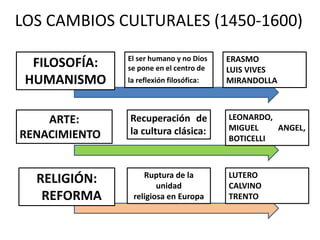
LOS CAMBIOS CULTURALES (1450-1600)
El ser humano y no Dios
se pone en el centro de
la reflexión filosófica:
FILOSOFÍA:
HUMANISMO
ARTE:
RENACIMIENTO
RELIGIÓN:
REFORMA
Recuperación de
la cultura clásica:
Ruptura de la
unidad
religiosa en Europa
LEONARDO,
MIGUEL ANGEL,
BOTICELLI
LUTERO
CALVINO
TRENTO
ERASMO
LUIS VIVES
MIRANDOLLA
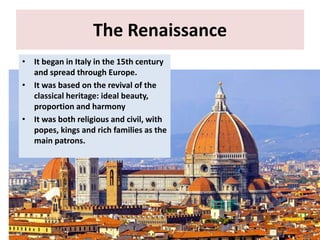
The Renaissance
• It began in Italy in the 15th century
and spread through Europe.
• It was based on the revival of the
classical heritage: ideal beauty,
proportion and harmony
• It was both religious and civil, with
popes, kings and rich families as the
main patrons.
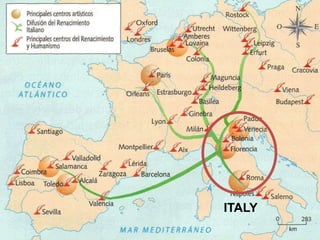
The Renaissance
• It began in Italy in the 15th century
and spread through Europe.
• It was based on the revival of the
classical heritage: ideal beauty,
proportion and harmony
• It was both religious and civil, with
popes, kings and rich families as the
main patrons.
ITALY
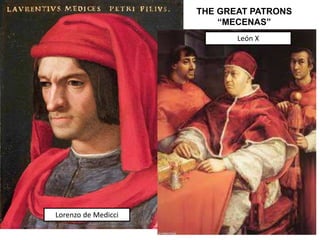
Lorenzo de Medicci
León X
THE GREAT PATRONS
“MECENAS”
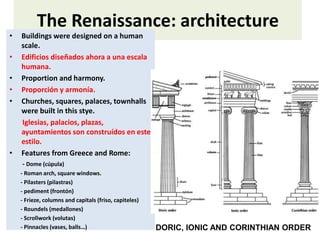
The Renaissance: architecture
• Buildings were designed on a human
scale.
• Edificios diseñados ahora a una escala
humana.
• Proportion and harmony.
• Proporción y armonía.
• Churches, squares, palaces, townhalls
were built in this stye.
Iglesias, palacios, plazas,
ayuntamientos son construídos en este
estilo.
• Features from Greece and Rome:
- Dome (cúpula)
- Roman arch, square windows.
- Pilasters (pilastras)
- pediment (frontón)
- Frieze, columns and capitals (friso, capiteles)
- Roundels (medallones)
- Scrollwork (volutas)
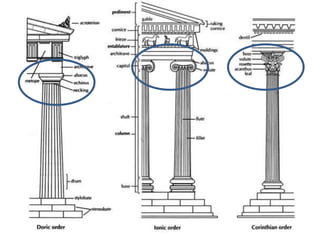
- Pinnacles (vases, balls…) DORIC, IONIC AND CORINTHIAN ORDER
The Renaissance: architecture
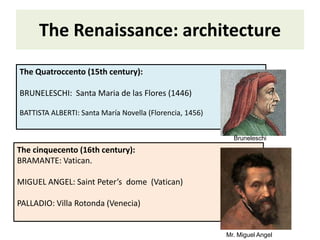
The Quatroccento (15th century):
BRUNELESCHI: Santa Maria de las Flores (1446)
BATTISTA ALBERTI: Santa María Novella (Florencia, 1456)
The cinquecento (16th century):
BRAMANTE: Vatican.
MIGUEL ANGEL: Saint Peter’s dome (Vatican)
PALLADIO: Villa Rotonda (Venecia)
Bruneleschi
Mr. Miguel Angel
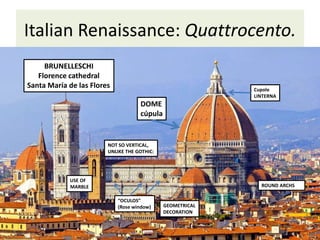
Italian Renaissance: Quattrocento.
DOME
cúpula
ROUND ARCHS
NOT SO VERTICAL,
UNLIKE THE GOTHIC:
GEOMETRICAL
DECORATION
USE OF
MARBLE
“OCULOS”
(Rose window)
Cupole
LINTERNA
BRUNELLESCHI
Florence cathedral
Santa María de las Flores
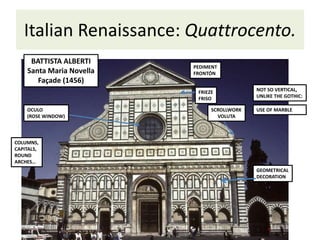
Italian Renaissance: Quattrocento.
NOT SO VERTICAL,
UNLIKE THE GOTHIC:
GEOMETRICAL
DECORATION
USE OF MARBLE
BATTISTA ALBERTI
Santa Maria Novella
Façade (1456)
PEDIMENT
FRONTÓN
FRIEZE
FRISO
OCULO
(ROSE WINDOW)
SCROLLWORK
VOLUTA
COLUMNS,
CAPITALS,
ROUND
ARCHES…
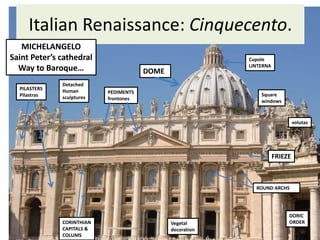
Italian Renaissance: Cinquecento.
DOME
ROUND ARCHS
PEDIMENTS
frontones
FRIEZE
CORINTHIAN
CAPITALS &
COLUMS
Vegetal
decoration
Cupole
LINTERNA
MICHELANGELO
Saint Peter’s cathedral
Way to Baroque…
PILASTERS
Pilastras
volutas
Square
windows
DORIC
ORDER
Detached
Human
sculptures
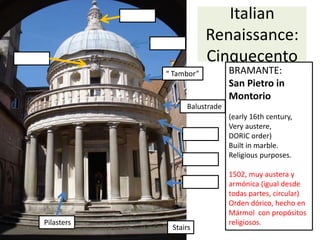
Italian
Renaissance:
Cinquecento
Stairs
“ Tambor”
Balustrade
BRAMANTE:
San Pietro in
Montorio
(early 16th century,
Very austere,
DORIC order)
Built in marble.
Religious purposes.
1502, muy austera y
armónica (igual desde
todas partes, circular)
Orden dórico, hecho en
Mármol con propósitos
religiosos.
Pilasters
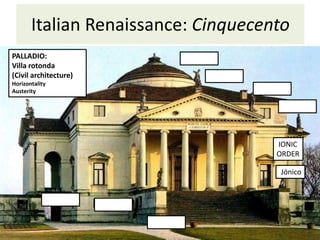
Italian Renaissance: Cinquecento
PALLADIO:
Villa rotonda
(Civil architecture)
Horizontality
Austerity
IONIC
ORDER
Jónico
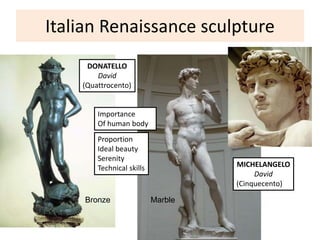
Italian Renaissance sculpture
DONATELLO
David
(Quattrocento)
Bronze
Importance
Of human body
Proportion
Ideal beauty
Serenity
Technical skills MICHELANGELO
David
(Cinquecento)
Marble
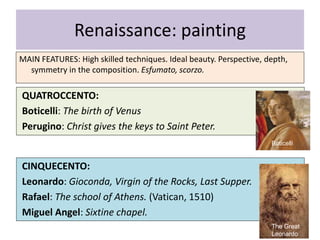
Renaissance: painting
MAIN FEATURES: High skilled techniques. Ideal beauty. Perspective, depth,
symmetry in the composition. Esfumato, scorzo.
QUATROCCENTO:
Boticelli: The birth of Venus
Perugino: Christ gives the keys to Saint Peter.
CINQUECENTO:
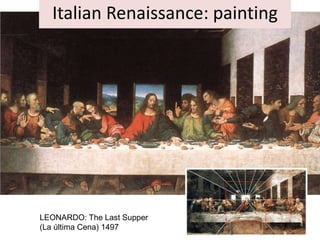
Leonardo: Gioconda, Virgin of the Rocks, Last Supper.
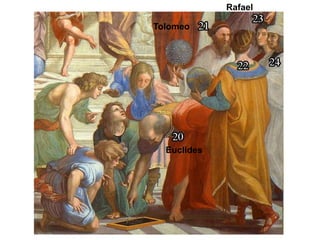
Rafael: The school of Athens. (Vatican, 1510)
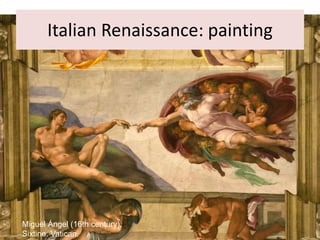
Miguel Angel: Sixtine chapel.
Boticelli
The Great
Leonardo
Italian Renaissance: Painting
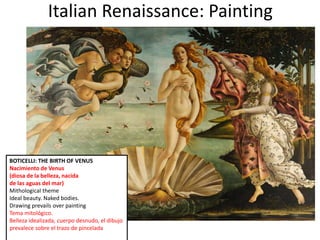
BOTICELLI: THE BIRTH OF VENUS
Nacimiento de Venus
(diosa de la belleza, nacida
de las aguas del mar)
Mithological theme
Ideal beauty. Naked bodies.
Drawing prevails over painting
Tema mitológico.
Belleza idealizada, cuerpo desnudo, el dibujo
prevalece sobre el trazo de pincelada
Italian Renaissance: painting.
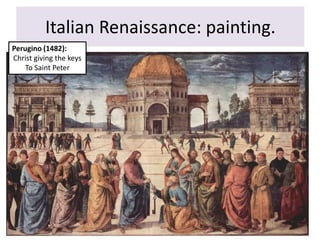
Perugino (1482):
Christ giving the keys
To Saint Peter
Italian Renaissance: painting.
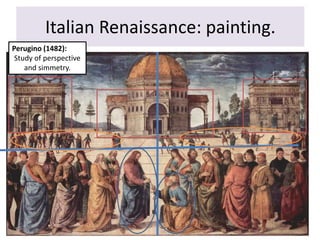
Perugino (1482):
Study of perspective
and simmetry.
Italian Renaissance: painting.
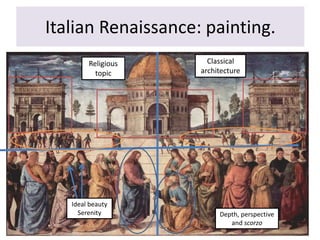
Ideal beauty
Serenity Depth, perspective
and scorzo
Classical
architecture
Religious
topic
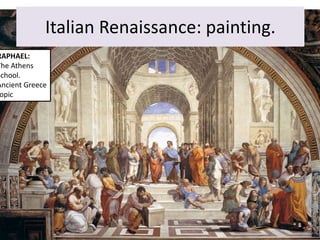
Italian Renaissance: painting.
RAPHAEL:
The Athens
School.
Ancient Greece
opic
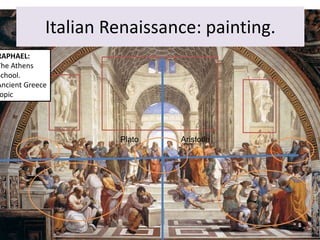
Italian Renaissance: painting.
RAPHAEL:
The Athens
School.
Ancient Greece
opic
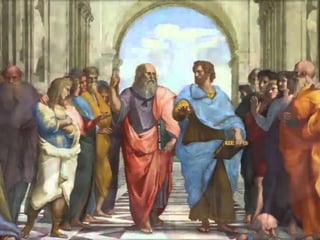
Plato Aristotle
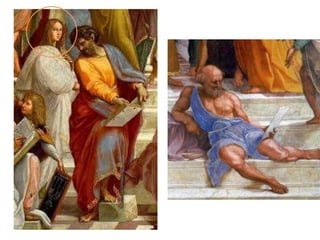
Euclides
Rafael
Tolomeo
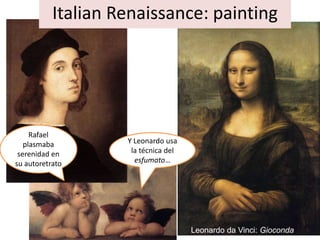
Rafael
plasmaba
serenidad en
su autoretrato
Y Leonardo usa
la técnica del
esfumato…
Italian Renaissance: painting
Leonardo da Vinci: Gioconda
Italian Renaissance: painting
Leonardo da Vinci: Gioconda
LEONARDO: The Last Supper
(La última Cena) 1497
Italian Renaissance: painting
Miguel Ángel (16th century).
Sixtine. Vatican.
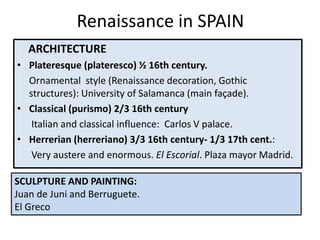
Renaissance in SPAIN
ARCHITECTURE
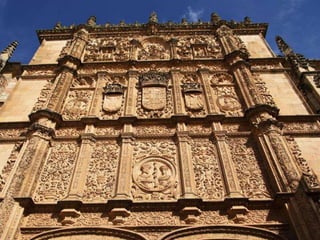
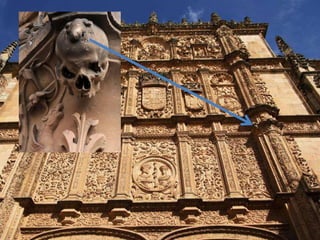
• Plateresque (plateresco) ½ 16th century.
Ornamental style (Renaissance decoration, Gothic
structures): University of Salamanca (main façade).
• Classical (purismo) 2/3 16th century
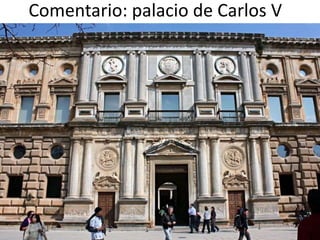
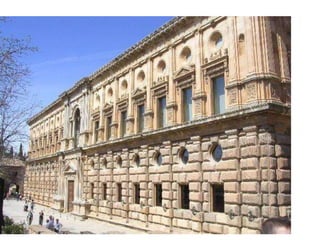
Italian and classical influence: Carlos V palace.
• Herrerian (herreriano) 3/3 16th century- 1/3 17th cent.:
Very austere and enormous. El Escorial. Plaza mayor Madrid.
SCULPTURE AND PAINTING:
Juan de Juni and Berruguete.
El Greco
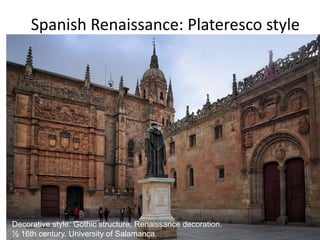
Spanish Renaissance: Plateresco style
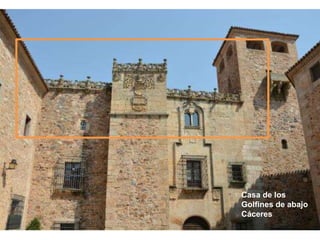
Decorative style. Gothic structure, Renaissance decoration.
½ 16th century. University of Salamanca.
Casa de los
Golfines de abajo
Cáceres
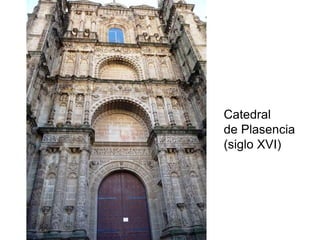
Catedral
de Plasencia
(siglo XVI)
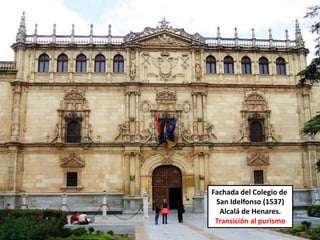
Fachada del Colegio de
San Idelfonso (1537)
Alcalá de Henares.
Transición al purismo
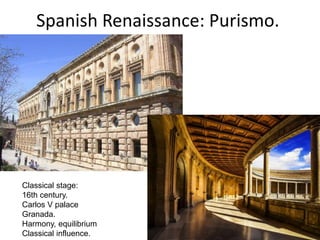
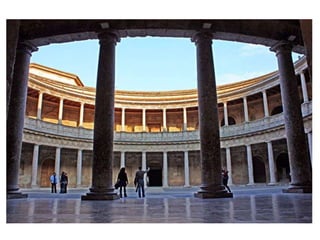
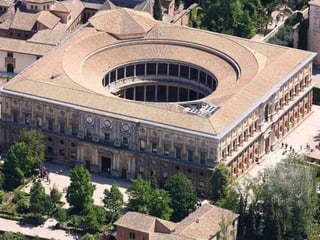
Spanish Renaissance: Purismo.
Classical stage:
16th century.
Carlos V palace
Granada.
Harmony, equilibrium
Classical influence.
Comentario: palacio de Carlos V
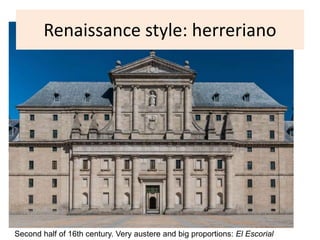
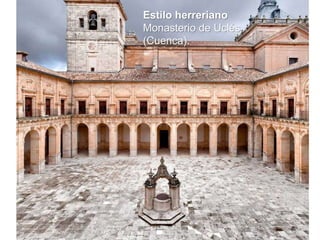
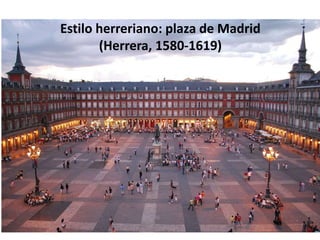
Renaissance style: herreriano
Second half of 16th century. Very austere and big proportions: El Escorial
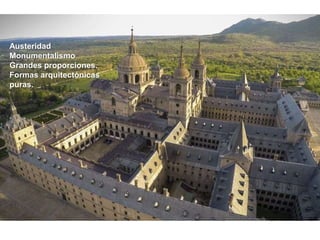
Austeridad
Monumentalismo
Grandes proporciones.
Formas arquitectónicas
puras.
Estilo herreriano
Monasterio de Uclés
(Cuenca).
Estilo herreriano: plaza de Madrid
(Herrera, 1580-1619)
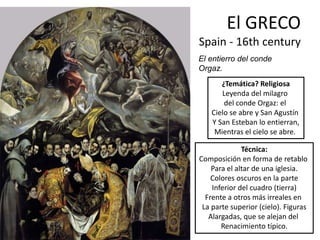
El GRECO
Spain - 16th century
El entierro del conde
Orgaz.
¿Temática? Religiosa
Leyenda del milagro
del conde Orgaz: el
Cielo se abre y San Agustín
Y San Esteban lo entierran,
Mientras el cielo se abre.
Técnica:
Composición en forma de retablo
Para el altar de una iglesia.
Colores oscuros en la parte
Inferior del cuadro (tierra)
Frente a otros más irreales en
La parte superior (cielo). Figuras
Alargadas, que se alejan del
Renacimiento típico.
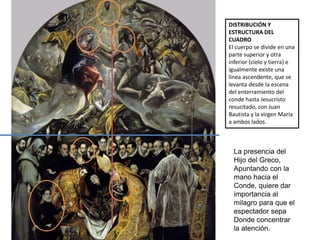
DISTRIBUCIÓN Y
ESTRUCTURA DEL
CUADRO
El cuerpo se divide en una
parte superior y otra
inferior (cielo y tierra) e
igualmente existe una
línea ascendente, que se
levanta desde la escena
del enterramiento del
conde hasta Jesucristo
resucitado, con Juan
Bautista y la virgen María
a ambos lados.
La presencia del
Hijo del Greco,
Apuntando con la
mano hacia el
Conde, quiere dar
importancia al
milagro para que el
espectador sepa
Donde concentrar
la atención.
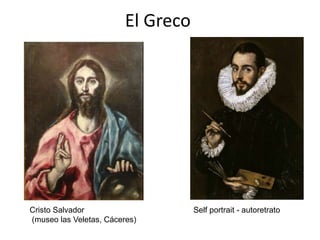
El Greco
Cristo Salvador
(museo las Veletas, Cáceres)
Self portrait - autoretrato
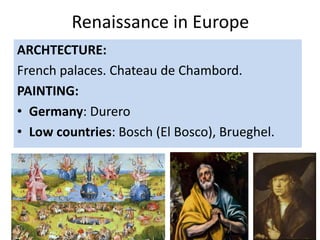
Renaissance in Europe
ARCHTECTURE:
French palaces. Chateau de Chambord.
PAINTING:
• Germany: Durero
• Low countries: Bosch (El Bosco), Brueghel.
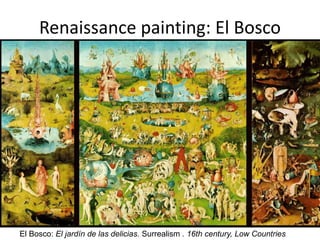
Renaissance painting: El Bosco
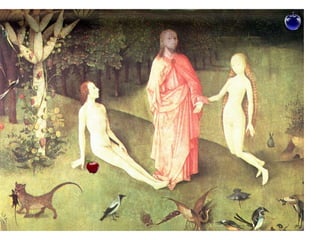
El Bosco: El jardín de las delicias. Surrealism . 16th century, Low Countries
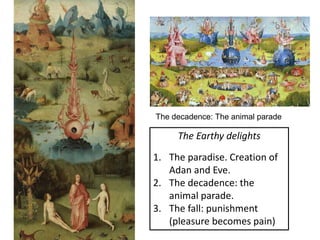
The Earthy delights
1. The paradise. Creation of
Adan and Eve.
2. The decadence: the
animal parade.
3. The fall: punishment
(pleasure becomes pain)
The decadence: The animal parade
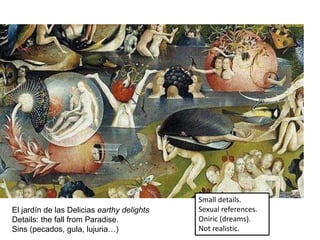
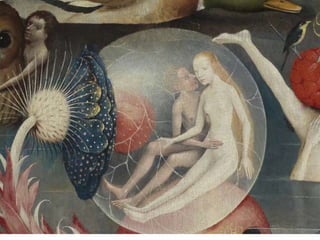
El jardín de las Delicias earthy delights
Details: the fall from Paradise.
Sins (pecados, gula, lujuria…)
Small details.
Sexual references.
Oniric (dreams).
Not realistic.
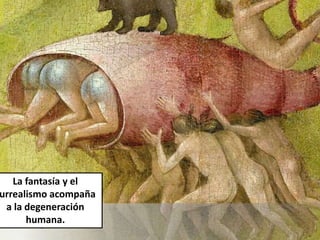
La fantasía y el
urrealismo acompaña
a la degeneración
humana.
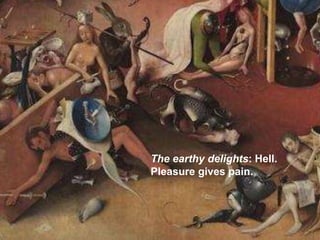
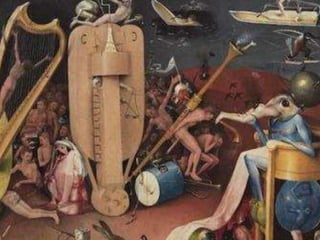
The earthy delights: Hell.
Pleasure gives pain.
The earthy delights: Hell.
Pleasure gives pain.
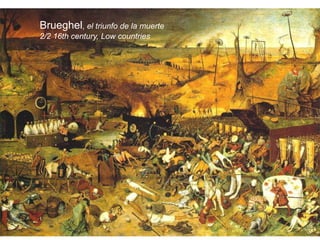
Brueghel, el triunfo de la muerte
2/2 16th century, Low countries
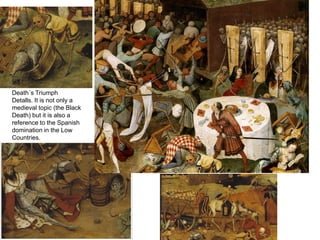
Death´s Triumph
Detalls. It is not only a
medieval topic (the Black
Death) but it is also a
reference to the Spanish
domination in the Low
Countries.
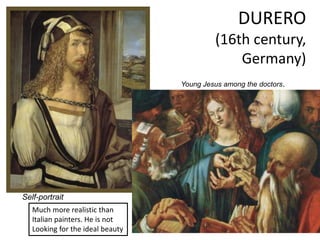
DURERO
(16th century,
Germany)
Self-portrait
Much more realistic than
Italian painters. He is not
Looking for the ideal beauty
Young Jesus among the doctors.
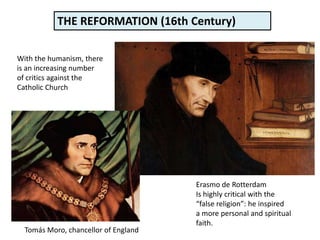
With the humanism, there
is an increasing number
of critics against the
Catholic Church
Erasmo de Rotterdam
Is highly critical with the
“false religion”: he inspired
a more personal and spiritual
faith.
Tomás Moro, chancellor of England
THE REFORMATION (16th Century)
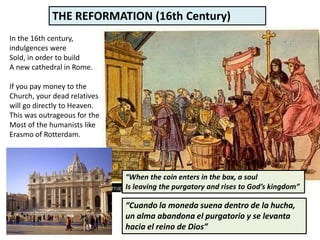
In the 16th century,
indulgences were
Sold, in order to build
A new cathedral in Rome.
If you pay money to the
Church, your dead relatives
will go directly to Heaven.
This was outrageous for the
Most of the humanists like
Erasmo of Rotterdam.
“When the coin enters in the box, a soul
Is leaving the purgatory and rises to God’s kingdom”
THE REFORMATION (16th Century)
“Cuando la moneda suena dentro de la hucha,
un alma abandona el purgatorio y se levanta
hacia el reino de Dios”
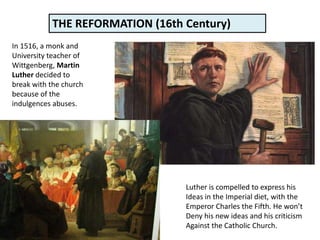
In 1516, a monk and
University teacher of
Wittgenberg, Martin
Luther decided to
break with the church
because of the
indulgences abuses.
Luther is compelled to express his
Ideas in the Imperial diet, with the
Emperor Charles the Fifth. He won’t
Deny his new ideas and his criticism
Against the Catholic Church.
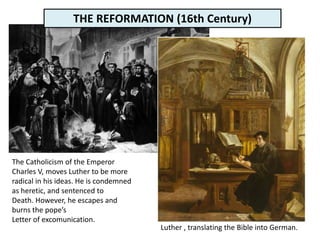
THE REFORMATION (16th Century)
The Catholicism of the Emperor
Charles V, moves Luther to be more
radical in his ideas. He is condemned
as heretic, and sentenced to
Death. However, he escapes and
burns the pope’s
Letter of excomunication.
Luther , translating the Bible into German.
THE REFORMATION (16th Century)
THE LUTHERAN PRECEPTS
- People can make a free interpretation of the
Bible.
- The Pope is not a true representative of God
in Earth.
- Only two sacraments are legitimate.
- Faith, and not good works, will save. If you
don’t have faith, good works don’t count.
THE REFORMATION (16th Century)
LOS PRECEPTOS LUTERANOS
- La gente corriente puede hacer una libre
interpretación de la biblia.
- El Papa no es el representante verdadero de
Dios en la tierra.
- Solo hay dos sacramentos legítimos: bautismo
y eucaristía.
- La fe, y no las buenas obras, son las que salvan
a los hombres. Sin fe no hay salvación.
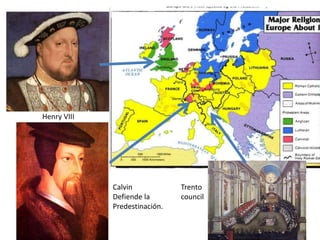
THE REFORMATION (16th Century)
Calvin
Defiende la
Predestinación.
Henry VIII
Trento
council
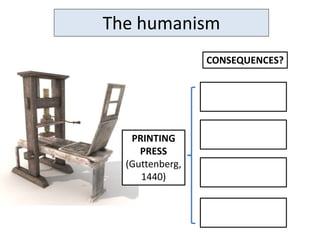
The humanism
PRINTING
PRESS
(Guttenberg,
1440)
CONSEQUENCES?
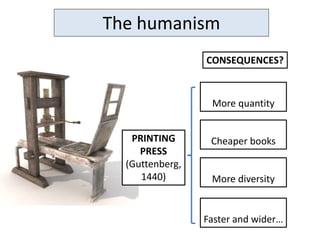
The humanism
PRINTING
PRESS
(Guttenberg,
1440)
CONSEQUENCES?
More quantity
Cheaper books
More diversity
Faster and wider…
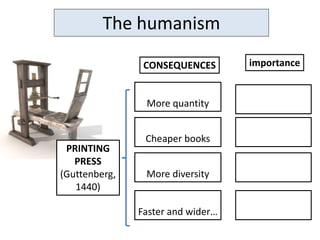
The humanism
PRINTING
PRESS
(Guttenberg,
1440)
CONSEQUENCES
More quantity
Cheaper books
More diversity
Faster and wider…
importance
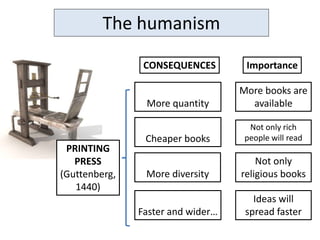
The humanism
PRINTING
PRESS
(Guttenberg,
1440)
CONSEQUENCES
More quantity
Cheaper books
More diversity
Faster and wider…
Importance
More books are
available
Not only rich
people will read
Not only
religious books
Ideas will
spread faster

Unit 6.Renacimiento y reforma.

  • 1.
    TEMA 6 RENACIMIENTO, HUMANISMOY REFORMA 2º ESO Geografía e Historia. Josefinas, 2021
  • 2.
    LOS CAMBIOS CULTURALES(1450-1600) El ser humano y no Dios se pone en el centro de la reflexión filosófica: FILOSOFÍA: HUMANISMO ARTE: RENACIMIENTO RELIGIÓN: REFORMA Recuperación de la cultura clásica: Ruptura de la unidad religiosa en Europa LEONARDO, MIGUEL ANGEL, BOTICELLI LUTERO CALVINO TRENTO ERASMO LUIS VIVES MIRANDOLLA
  • 3.
    The Renaissance • Itbegan in Italy in the 15th century and spread through Europe. • It was based on the revival of the classical heritage: ideal beauty, proportion and harmony • It was both religious and civil, with popes, kings and rich families as the main patrons.
  • 4.
    The Renaissance • Itbegan in Italy in the 15th century and spread through Europe. • It was based on the revival of the classical heritage: ideal beauty, proportion and harmony • It was both religious and civil, with popes, kings and rich families as the main patrons. ITALY
  • 6.
    Lorenzo de Medicci LeónX THE GREAT PATRONS “MECENAS”
  • 7.
    The Renaissance: architecture •Buildings were designed on a human scale. • Edificios diseñados ahora a una escala humana. • Proportion and harmony. • Proporción y armonía. • Churches, squares, palaces, townhalls were built in this stye. Iglesias, palacios, plazas, ayuntamientos son construídos en este estilo. • Features from Greece and Rome: - Dome (cúpula) - Roman arch, square windows. - Pilasters (pilastras) - pediment (frontón) - Frieze, columns and capitals (friso, capiteles) - Roundels (medallones) - Scrollwork (volutas) - Pinnacles (vases, balls…) DORIC, IONIC AND CORINTHIAN ORDER
  • 9.
    The Renaissance: architecture TheQuatroccento (15th century): BRUNELESCHI: Santa Maria de las Flores (1446) BATTISTA ALBERTI: Santa María Novella (Florencia, 1456) The cinquecento (16th century): BRAMANTE: Vatican. MIGUEL ANGEL: Saint Peter’s dome (Vatican) PALLADIO: Villa Rotonda (Venecia) Bruneleschi Mr. Miguel Angel
  • 10.
    Italian Renaissance: Quattrocento. DOME cúpula ROUNDARCHS NOT SO VERTICAL, UNLIKE THE GOTHIC: GEOMETRICAL DECORATION USE OF MARBLE “OCULOS” (Rose window) Cupole LINTERNA BRUNELLESCHI Florence cathedral Santa María de las Flores
  • 11.
    Italian Renaissance: Quattrocento. NOTSO VERTICAL, UNLIKE THE GOTHIC: GEOMETRICAL DECORATION USE OF MARBLE BATTISTA ALBERTI Santa Maria Novella Façade (1456) PEDIMENT FRONTÓN FRIEZE FRISO OCULO (ROSE WINDOW) SCROLLWORK VOLUTA COLUMNS, CAPITALS, ROUND ARCHES…
  • 12.
    Italian Renaissance: Cinquecento. DOME ROUNDARCHS PEDIMENTS frontones FRIEZE CORINTHIAN CAPITALS & COLUMS Vegetal decoration Cupole LINTERNA MICHELANGELO Saint Peter’s cathedral Way to Baroque… PILASTERS Pilastras volutas Square windows DORIC ORDER Detached Human sculptures
  • 13.
    Italian Renaissance: Cinquecento Stairs “ Tambor” Balustrade BRAMANTE: San Pietroin Montorio (early 16th century, Very austere, DORIC order) Built in marble. Religious purposes. 1502, muy austera y armónica (igual desde todas partes, circular) Orden dórico, hecho en Mármol con propósitos religiosos. Pilasters
  • 14.
    Italian Renaissance: Cinquecento PALLADIO: Villarotonda (Civil architecture) Horizontality Austerity IONIC ORDER Jónico
  • 15.
    Italian Renaissance sculpture DONATELLO David (Quattrocento) Bronze Importance Ofhuman body Proportion Ideal beauty Serenity Technical skills MICHELANGELO David (Cinquecento) Marble
  • 16.
    Renaissance: painting MAIN FEATURES:High skilled techniques. Ideal beauty. Perspective, depth, symmetry in the composition. Esfumato, scorzo. QUATROCCENTO: Boticelli: The birth of Venus Perugino: Christ gives the keys to Saint Peter. CINQUECENTO: Leonardo: Gioconda, Virgin of the Rocks, Last Supper. Rafael: The school of Athens. (Vatican, 1510) Miguel Angel: Sixtine chapel. Boticelli The Great Leonardo
  • 17.
    Italian Renaissance: Painting BOTICELLI:THE BIRTH OF VENUS Nacimiento de Venus (diosa de la belleza, nacida de las aguas del mar) Mithological theme Ideal beauty. Naked bodies. Drawing prevails over painting Tema mitológico. Belleza idealizada, cuerpo desnudo, el dibujo prevalece sobre el trazo de pincelada
  • 18.
    Italian Renaissance: painting. Perugino(1482): Christ giving the keys To Saint Peter
  • 19.
    Italian Renaissance: painting. Perugino(1482): Study of perspective and simmetry.
  • 20.
    Italian Renaissance: painting. Idealbeauty Serenity Depth, perspective and scorzo Classical architecture Religious topic
  • 21.
    Italian Renaissance: painting. RAPHAEL: TheAthens School. Ancient Greece opic
  • 22.
    Italian Renaissance: painting. RAPHAEL: TheAthens School. Ancient Greece opic Plato Aristotle
  • 25.
  • 26.
    Rafael plasmaba serenidad en su autoretrato YLeonardo usa la técnica del esfumato… Italian Renaissance: painting Leonardo da Vinci: Gioconda
  • 27.
    Italian Renaissance: painting Leonardoda Vinci: Gioconda LEONARDO: The Last Supper (La última Cena) 1497
  • 28.
    Italian Renaissance: painting MiguelÁngel (16th century). Sixtine. Vatican.
  • 29.
    Renaissance in SPAIN ARCHITECTURE •Plateresque (plateresco) ½ 16th century. Ornamental style (Renaissance decoration, Gothic structures): University of Salamanca (main façade). • Classical (purismo) 2/3 16th century Italian and classical influence: Carlos V palace. • Herrerian (herreriano) 3/3 16th century- 1/3 17th cent.: Very austere and enormous. El Escorial. Plaza mayor Madrid. SCULPTURE AND PAINTING: Juan de Juni and Berruguete. El Greco
  • 30.
    Spanish Renaissance: Platerescostyle Decorative style. Gothic structure, Renaissance decoration. ½ 16th century. University of Salamanca.
  • 33.
    Casa de los Golfinesde abajo Cáceres
  • 34.
  • 35.
    Fachada del Colegiode San Idelfonso (1537) Alcalá de Henares. Transición al purismo
  • 36.
    Spanish Renaissance: Purismo. Classicalstage: 16th century. Carlos V palace Granada. Harmony, equilibrium Classical influence.
  • 37.
  • 41.
    Renaissance style: herreriano Secondhalf of 16th century. Very austere and big proportions: El Escorial
  • 42.
  • 43.
  • 44.
    Estilo herreriano: plazade Madrid (Herrera, 1580-1619)
  • 45.
    El GRECO Spain -16th century El entierro del conde Orgaz. ¿Temática? Religiosa Leyenda del milagro del conde Orgaz: el Cielo se abre y San Agustín Y San Esteban lo entierran, Mientras el cielo se abre. Técnica: Composición en forma de retablo Para el altar de una iglesia. Colores oscuros en la parte Inferior del cuadro (tierra) Frente a otros más irreales en La parte superior (cielo). Figuras Alargadas, que se alejan del Renacimiento típico.
  • 46.
    DISTRIBUCIÓN Y ESTRUCTURA DEL CUADRO Elcuerpo se divide en una parte superior y otra inferior (cielo y tierra) e igualmente existe una línea ascendente, que se levanta desde la escena del enterramiento del conde hasta Jesucristo resucitado, con Juan Bautista y la virgen María a ambos lados. La presencia del Hijo del Greco, Apuntando con la mano hacia el Conde, quiere dar importancia al milagro para que el espectador sepa Donde concentrar la atención.
  • 47.
    El Greco Cristo Salvador (museolas Veletas, Cáceres) Self portrait - autoretrato
  • 48.
    Renaissance in Europe ARCHTECTURE: Frenchpalaces. Chateau de Chambord. PAINTING: • Germany: Durero • Low countries: Bosch (El Bosco), Brueghel.
  • 49.
    Renaissance painting: ElBosco El Bosco: El jardín de las delicias. Surrealism . 16th century, Low Countries
  • 50.
    The Earthy delights 1.The paradise. Creation of Adan and Eve. 2. The decadence: the animal parade. 3. The fall: punishment (pleasure becomes pain) The decadence: The animal parade
  • 52.
    El jardín delas Delicias earthy delights Details: the fall from Paradise. Sins (pecados, gula, lujuria…) Small details. Sexual references. Oniric (dreams). Not realistic.
  • 54.
    La fantasía yel urrealismo acompaña a la degeneración humana.
  • 55.
    The earthy delights:Hell. Pleasure gives pain.
  • 56.
    The earthy delights:Hell. Pleasure gives pain.
  • 57.
    Brueghel, el triunfode la muerte 2/2 16th century, Low countries
  • 58.
    Death´s Triumph Detalls. Itis not only a medieval topic (the Black Death) but it is also a reference to the Spanish domination in the Low Countries.
  • 59.
    DURERO (16th century, Germany) Self-portrait Much morerealistic than Italian painters. He is not Looking for the ideal beauty Young Jesus among the doctors.
  • 60.
    With the humanism,there is an increasing number of critics against the Catholic Church Erasmo de Rotterdam Is highly critical with the “false religion”: he inspired a more personal and spiritual faith. Tomás Moro, chancellor of England THE REFORMATION (16th Century)
  • 61.
    In the 16thcentury, indulgences were Sold, in order to build A new cathedral in Rome. If you pay money to the Church, your dead relatives will go directly to Heaven. This was outrageous for the Most of the humanists like Erasmo of Rotterdam. “When the coin enters in the box, a soul Is leaving the purgatory and rises to God’s kingdom” THE REFORMATION (16th Century) “Cuando la moneda suena dentro de la hucha, un alma abandona el purgatorio y se levanta hacia el reino de Dios”
  • 62.
    In 1516, amonk and University teacher of Wittgenberg, Martin Luther decided to break with the church because of the indulgences abuses. Luther is compelled to express his Ideas in the Imperial diet, with the Emperor Charles the Fifth. He won’t Deny his new ideas and his criticism Against the Catholic Church. THE REFORMATION (16th Century)
  • 63.
    The Catholicism ofthe Emperor Charles V, moves Luther to be more radical in his ideas. He is condemned as heretic, and sentenced to Death. However, he escapes and burns the pope’s Letter of excomunication. Luther , translating the Bible into German. THE REFORMATION (16th Century)
  • 64.
    THE LUTHERAN PRECEPTS -People can make a free interpretation of the Bible. - The Pope is not a true representative of God in Earth. - Only two sacraments are legitimate. - Faith, and not good works, will save. If you don’t have faith, good works don’t count. THE REFORMATION (16th Century)
  • 65.
    LOS PRECEPTOS LUTERANOS -La gente corriente puede hacer una libre interpretación de la biblia. - El Papa no es el representante verdadero de Dios en la tierra. - Solo hay dos sacramentos legítimos: bautismo y eucaristía. - La fe, y no las buenas obras, son las que salvan a los hombres. Sin fe no hay salvación. THE REFORMATION (16th Century)
  • 66.
  • 67.
  • 68.
  • 69.
  • 70.
    The humanism PRINTING PRESS (Guttenberg, 1440) CONSEQUENCES More quantity Cheaperbooks More diversity Faster and wider… Importance More books are available Not only rich people will read Not only religious books Ideas will spread faster