Inventory control and recent
trends in PPC
Unit-4
Inventory control
• Inventory Control is the supervision of supply, storage and accessibility of
items in order to ensure an adequate supply without excessive oversupply.
• It can also be referred as internal control - an accounting procedure or
system designed to promote efficiency or assure the implementation of a
policy or safeguard assets or avoid fraud and error etc.
• Inventory control may refer to:
– In economics, the inventory control problem, which aims to reduce overhead cost
without hurting sales
– In the field of loss prevention, systems designed to introduce technical barriers
to shoplifting
– It answers the 3 basic questions of any supply chain:
1. When?
2. Where?
3. How much?
Purpose of holding stock
• Safety stock is the amount of inventory a business
carries over and above their calculations for actual
need. ie, a packaging company maintains enough
plastic to manufacture packaging ordered by
customers in the amount needed until their next
shipment of plastic arrives.
• But, because orders vary and shipping times vary,
the company decides to keep 5% more on hand than
likely to be needed. This extra 5% is safety stock.
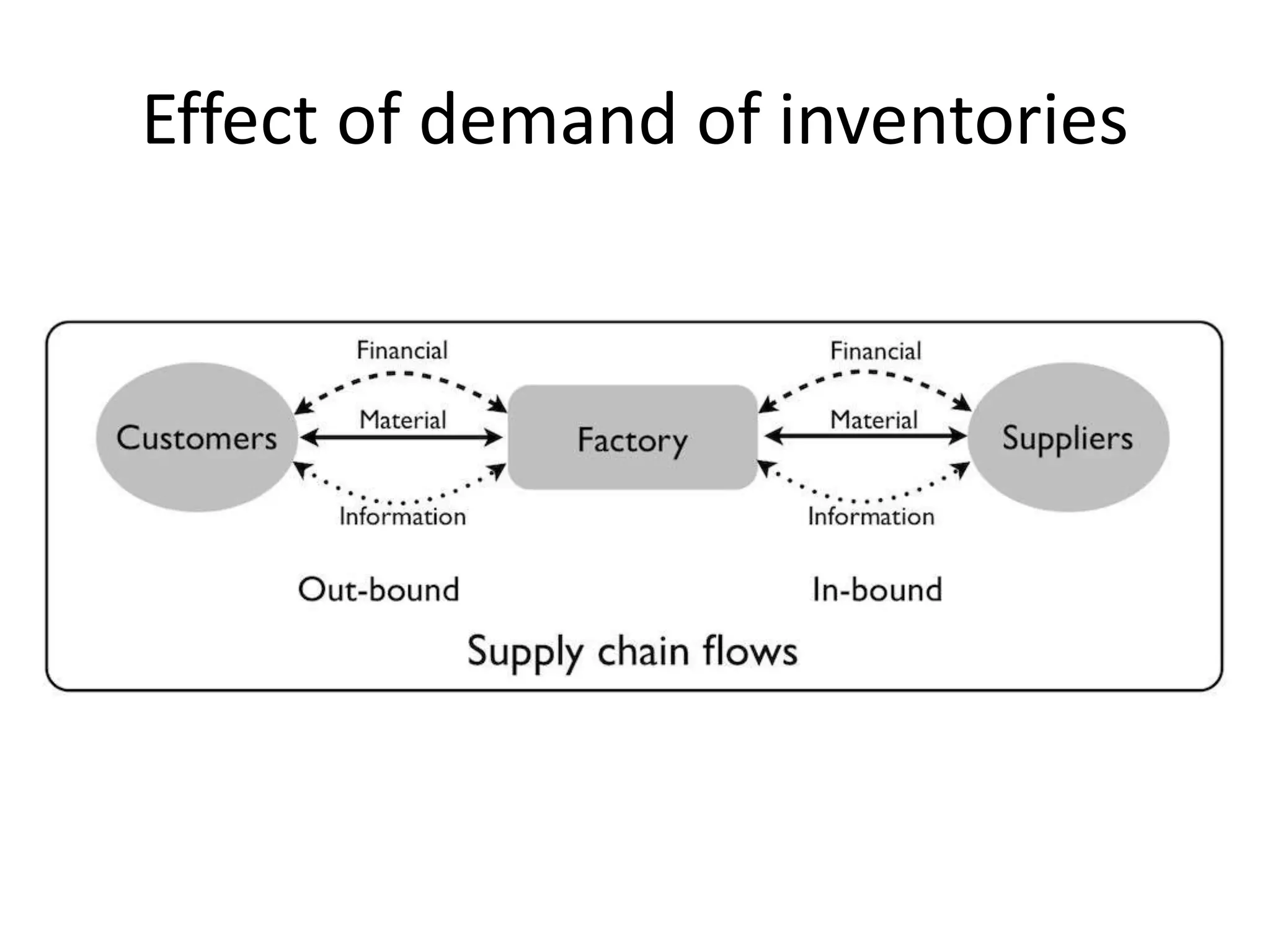
Effect of demand of inventories
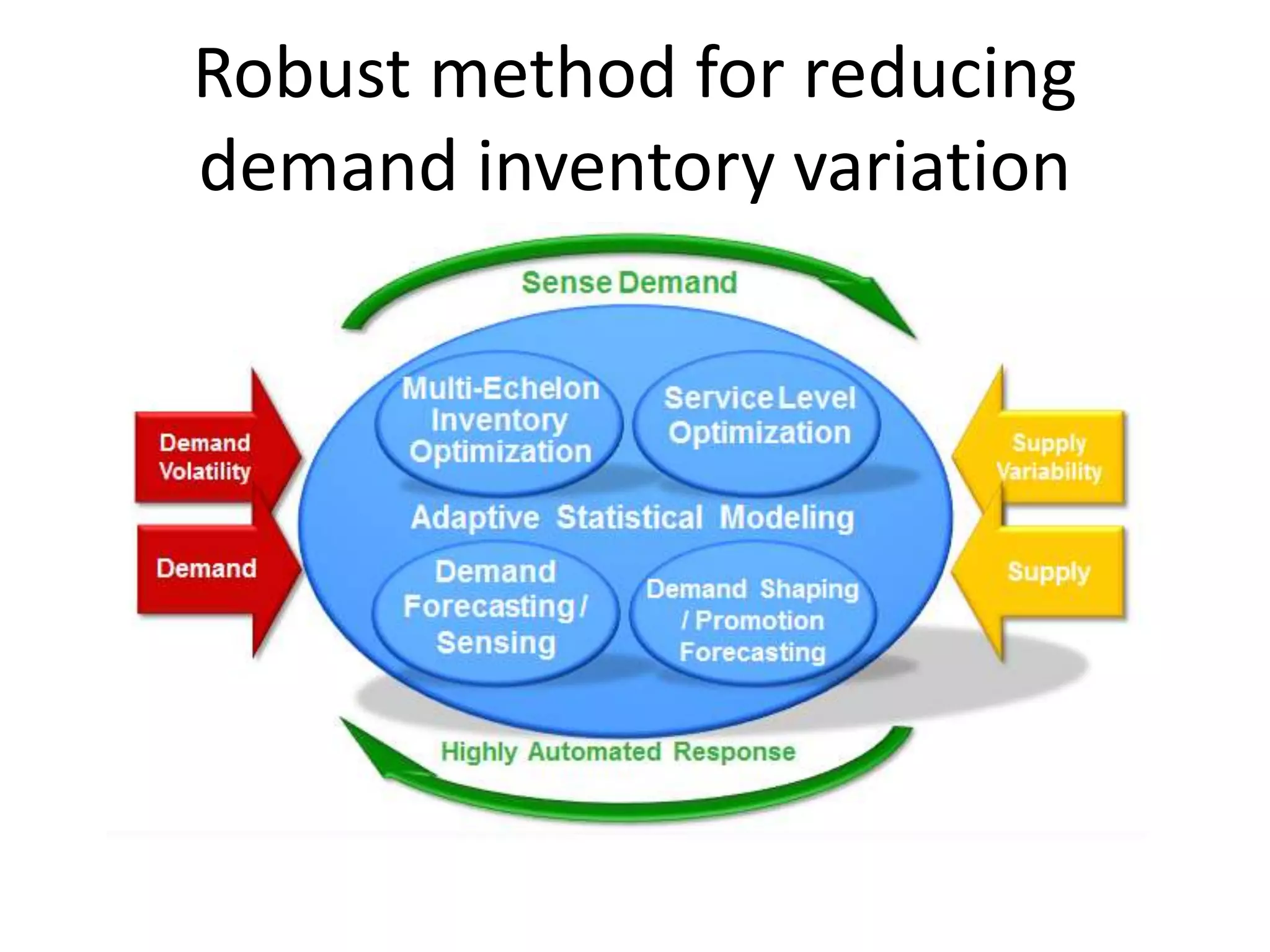
Robust method for reducing
demand inventory variation
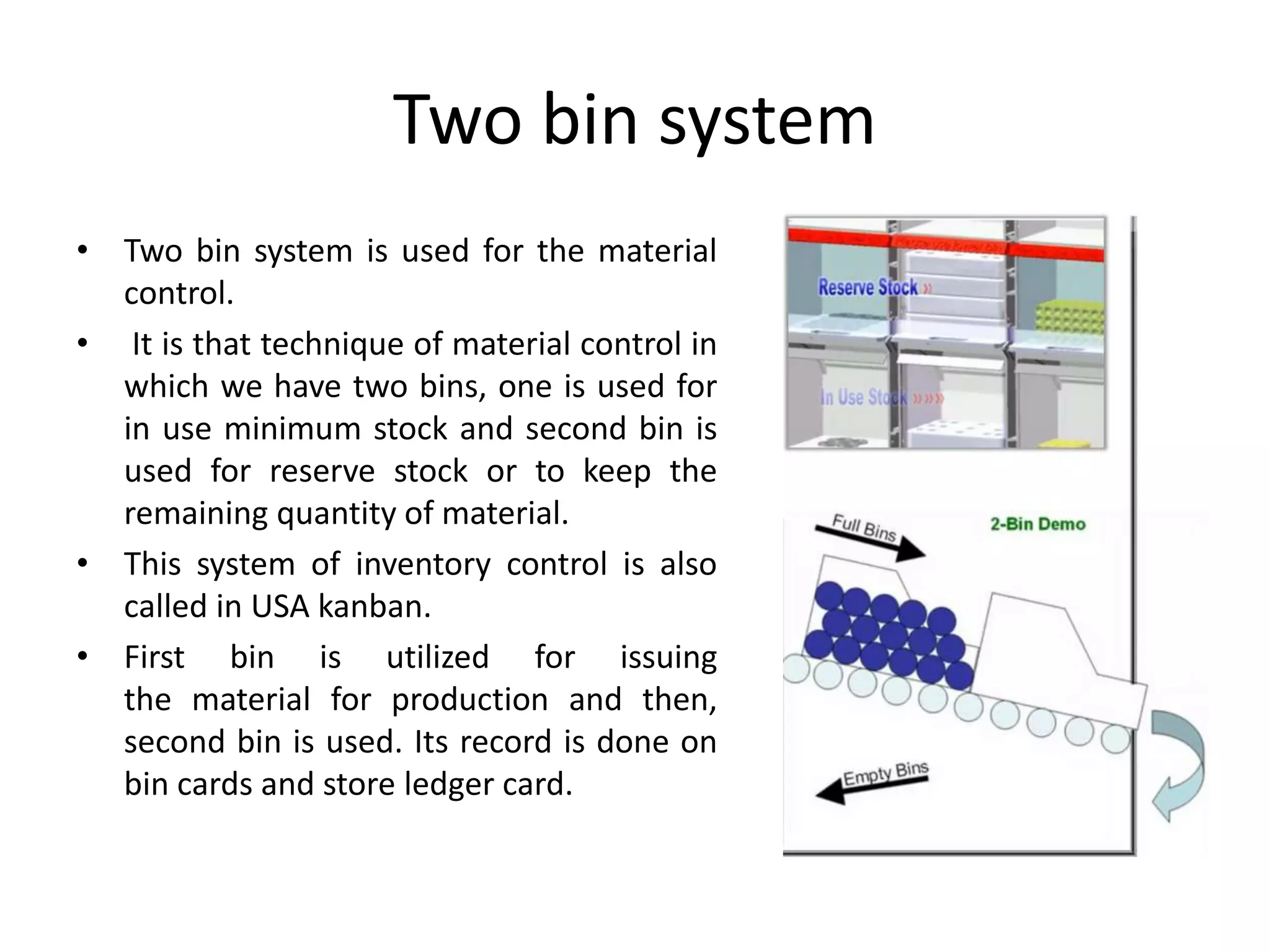
Two bin system
• Two bin system is used for the material
control.
• It is that technique of material control in
which we have two bins, one is used for
in use minimum stock and second bin is
used for reserve stock or to keep the
remaining quantity of material.
• This system of inventory control is also
called in USA kanban.
• First bin is utilized for issuing
the material for production and then,
second bin is used. Its record is done on
bin cards and store ledger card.
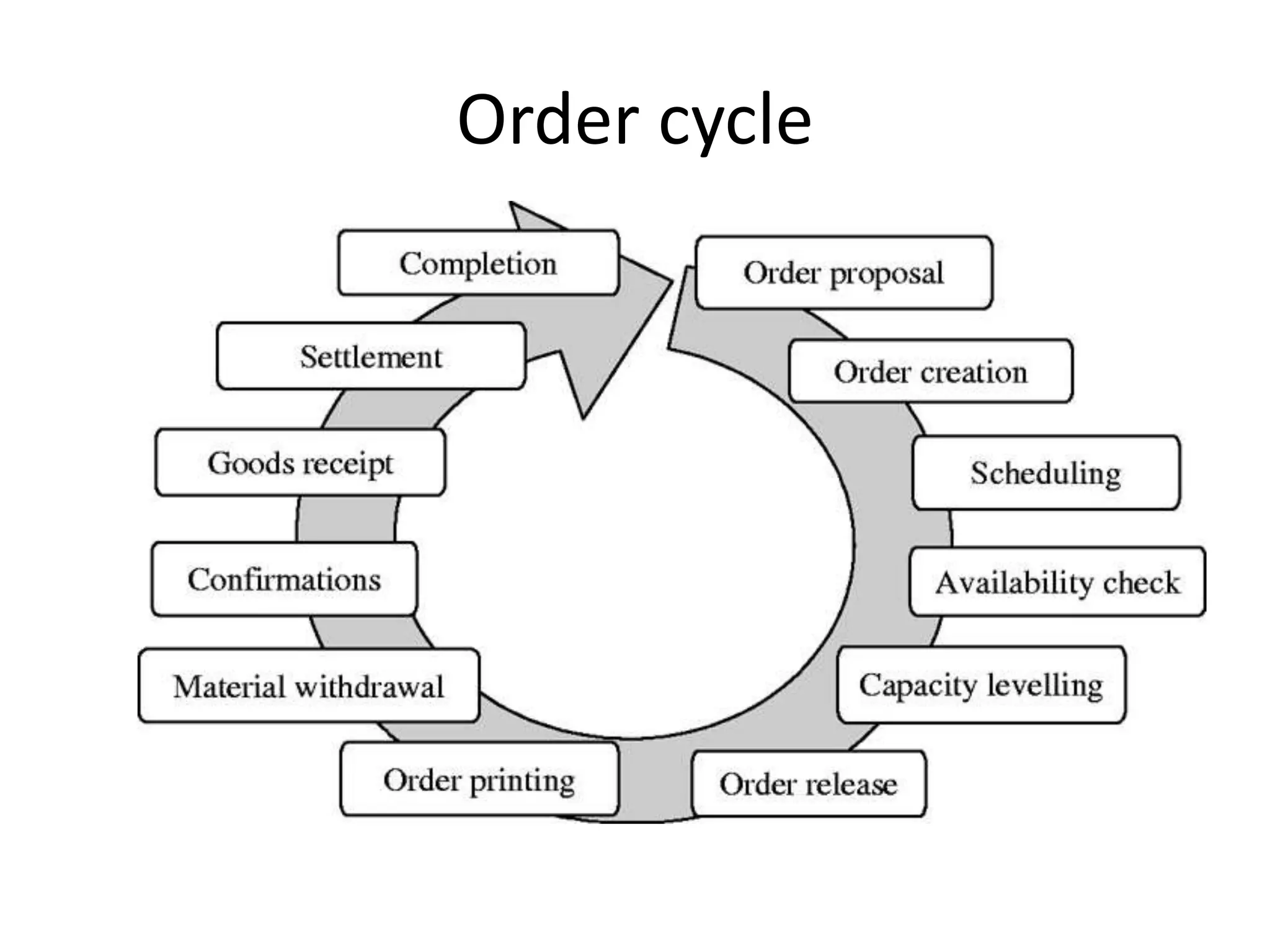
Order cycle
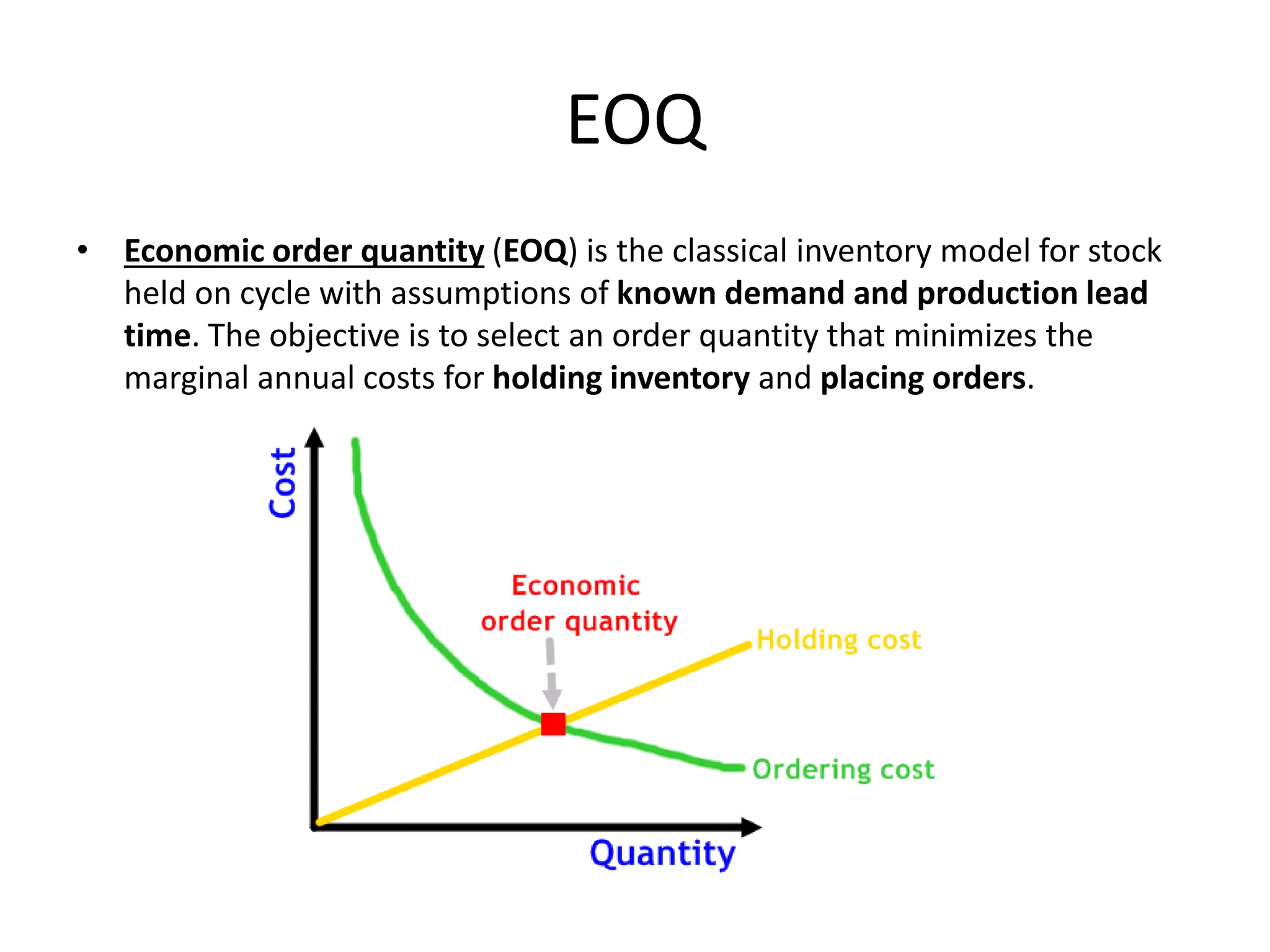
EOQ
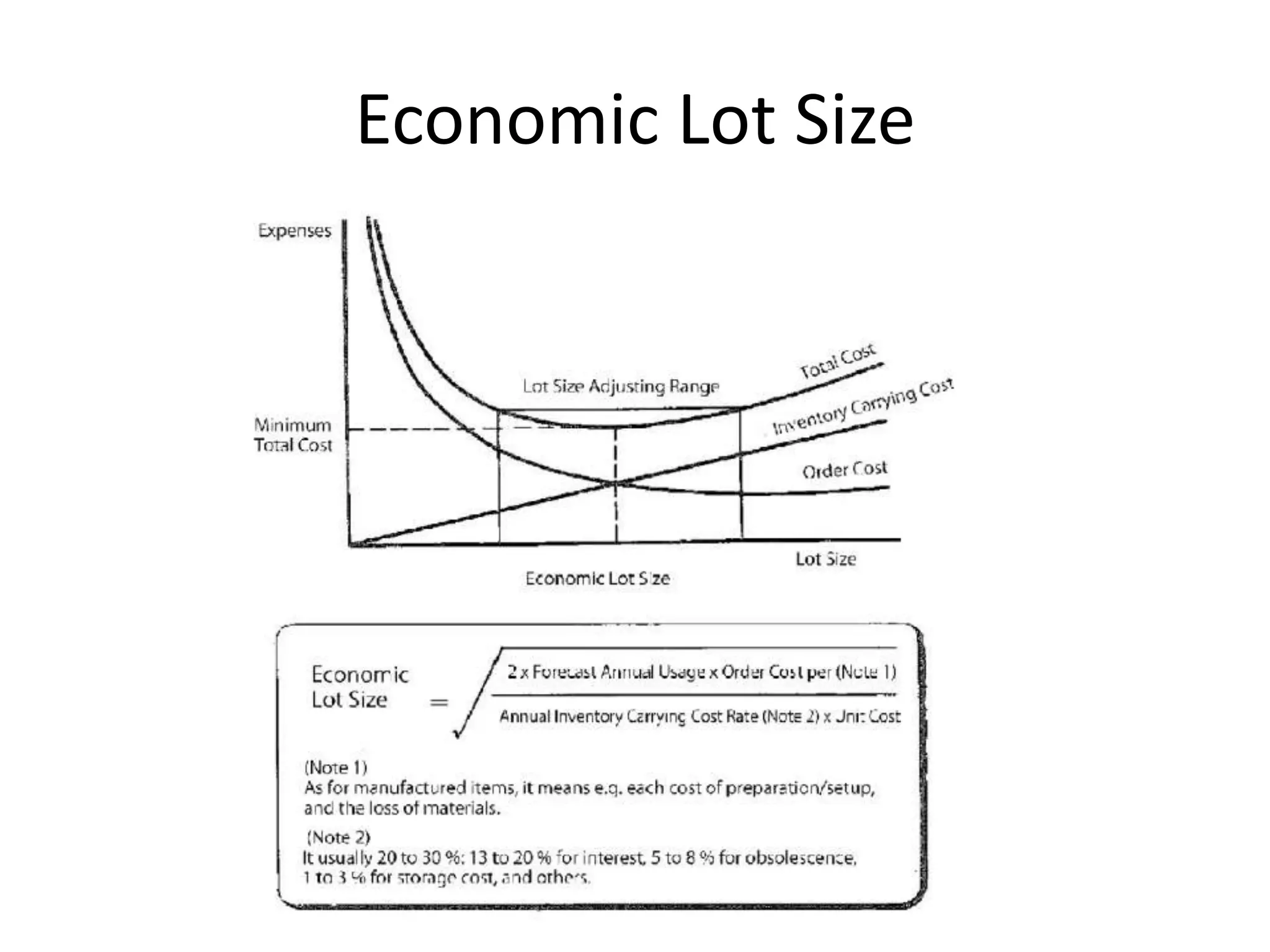
• Economic order quantity (EOQ) is the classical inventory model for stock
held on cycle with assumptions of known demand and production lead
time. The objective is to select an order quantity that minimizes the
marginal annual costs for holding inventory and placing orders.
Economic Lot Size
ABC analysis
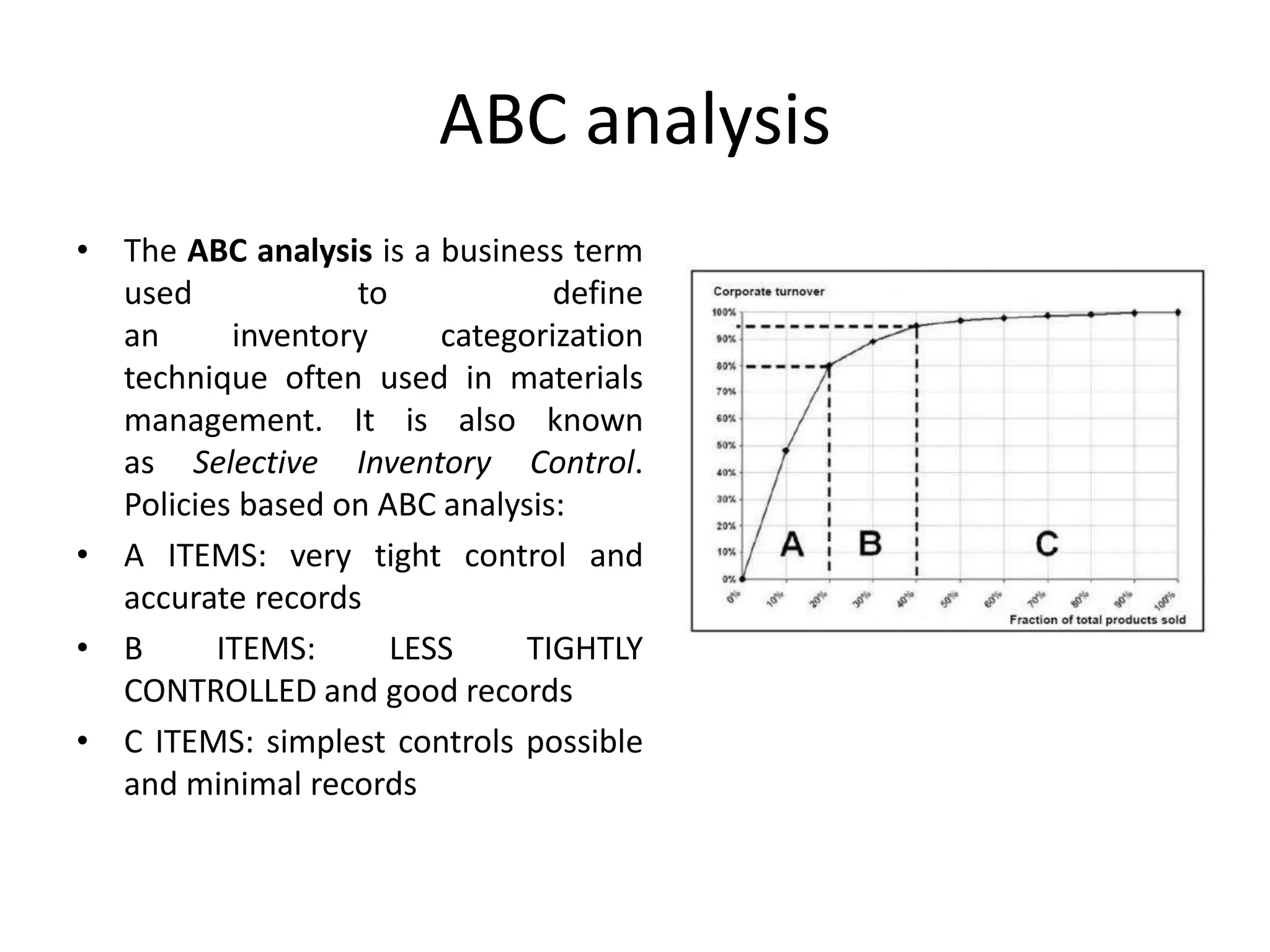
• The ABC analysis is a business term
used to define
an inventory categorization
technique often used in materials
management. It is also known
as Selective Inventory Control.
Policies based on ABC analysis:
• A ITEMS: very tight control and
accurate records
• B ITEMS: LESS TIGHTLY
CONTROLLED and good records
• C ITEMS: simplest controls possible
and minimal records
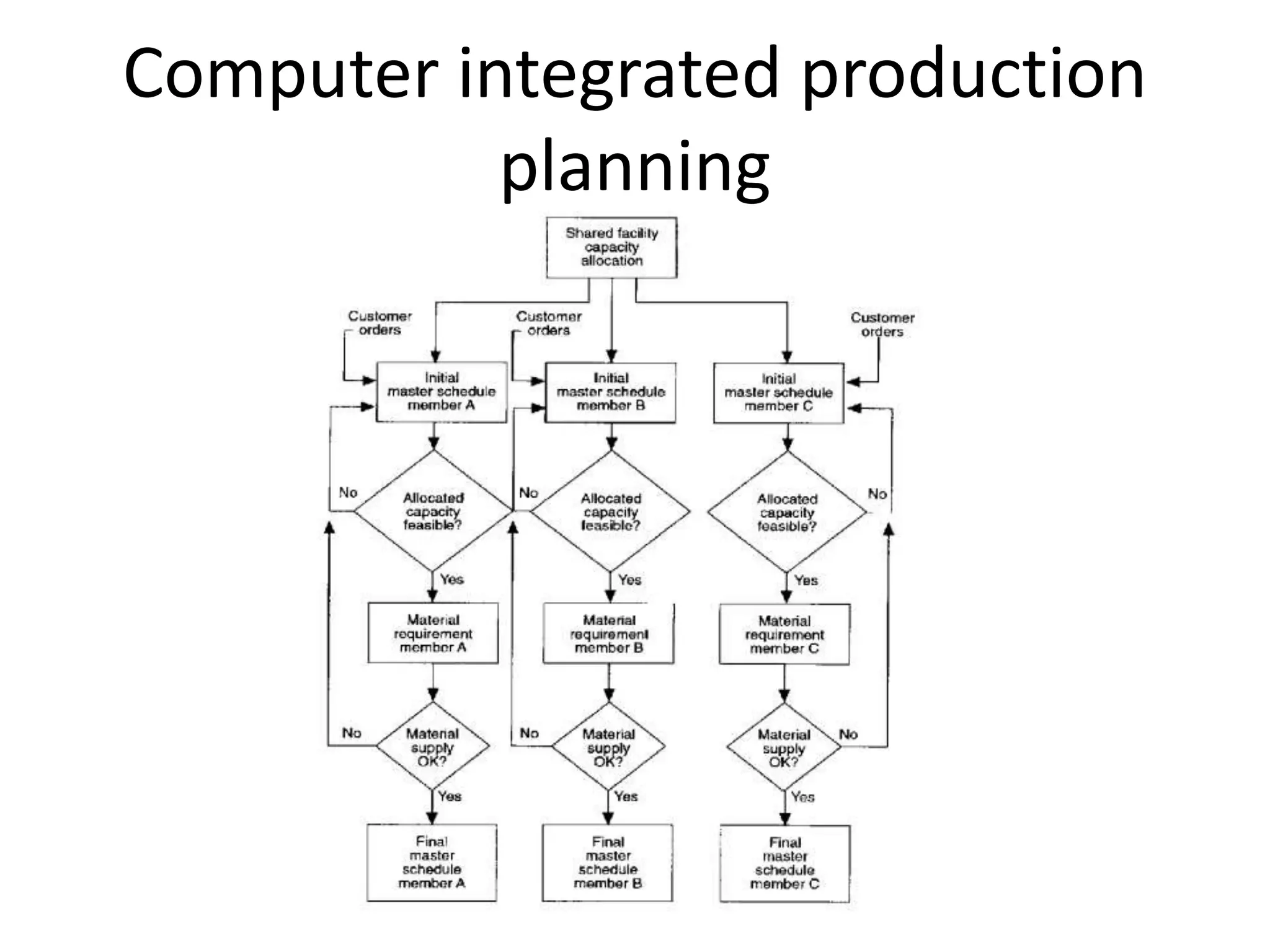
Computer integrated production
planning
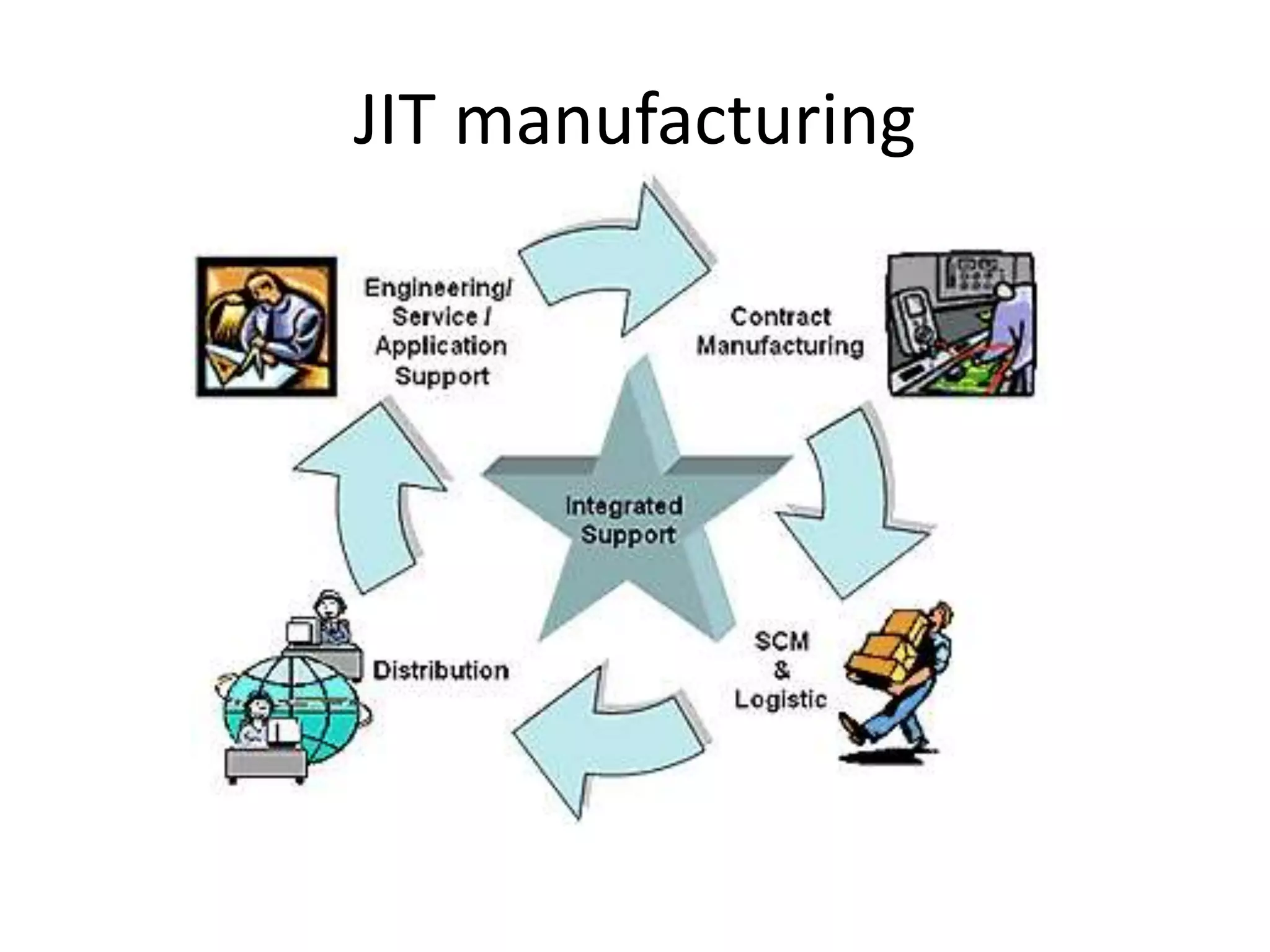
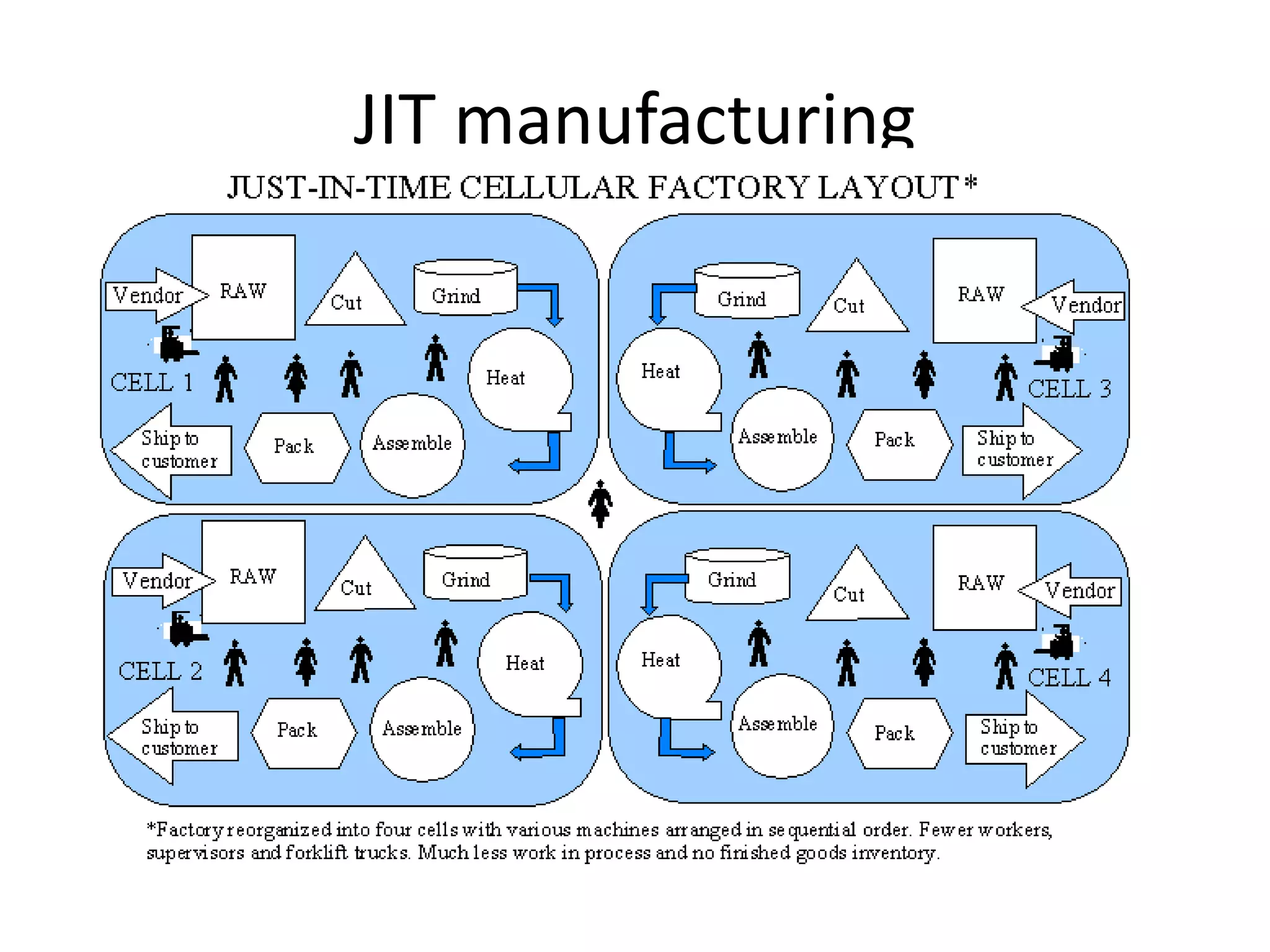
JIT manufacturing
JIT manufacturing
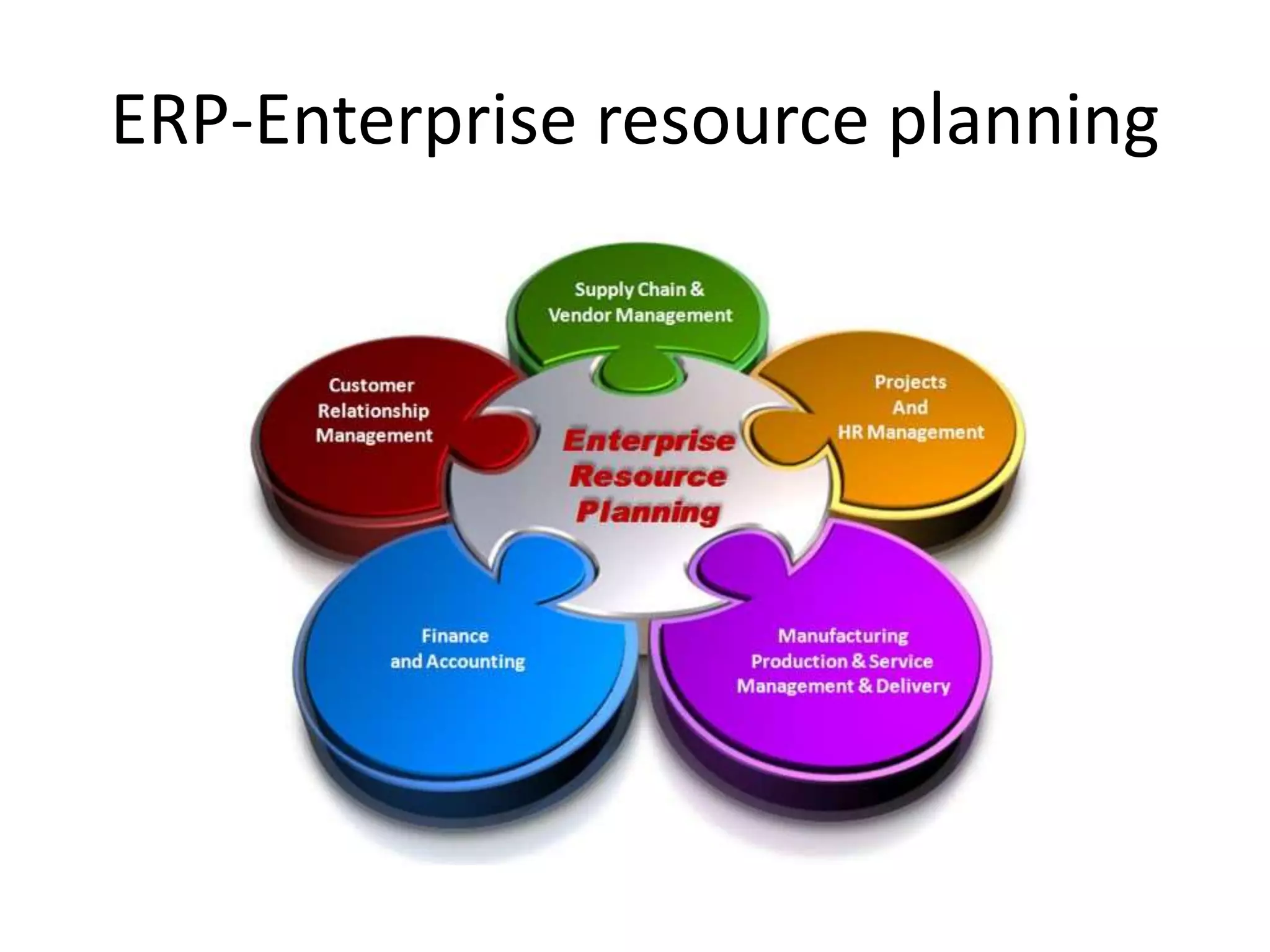
ERP-Enterprise resource planning
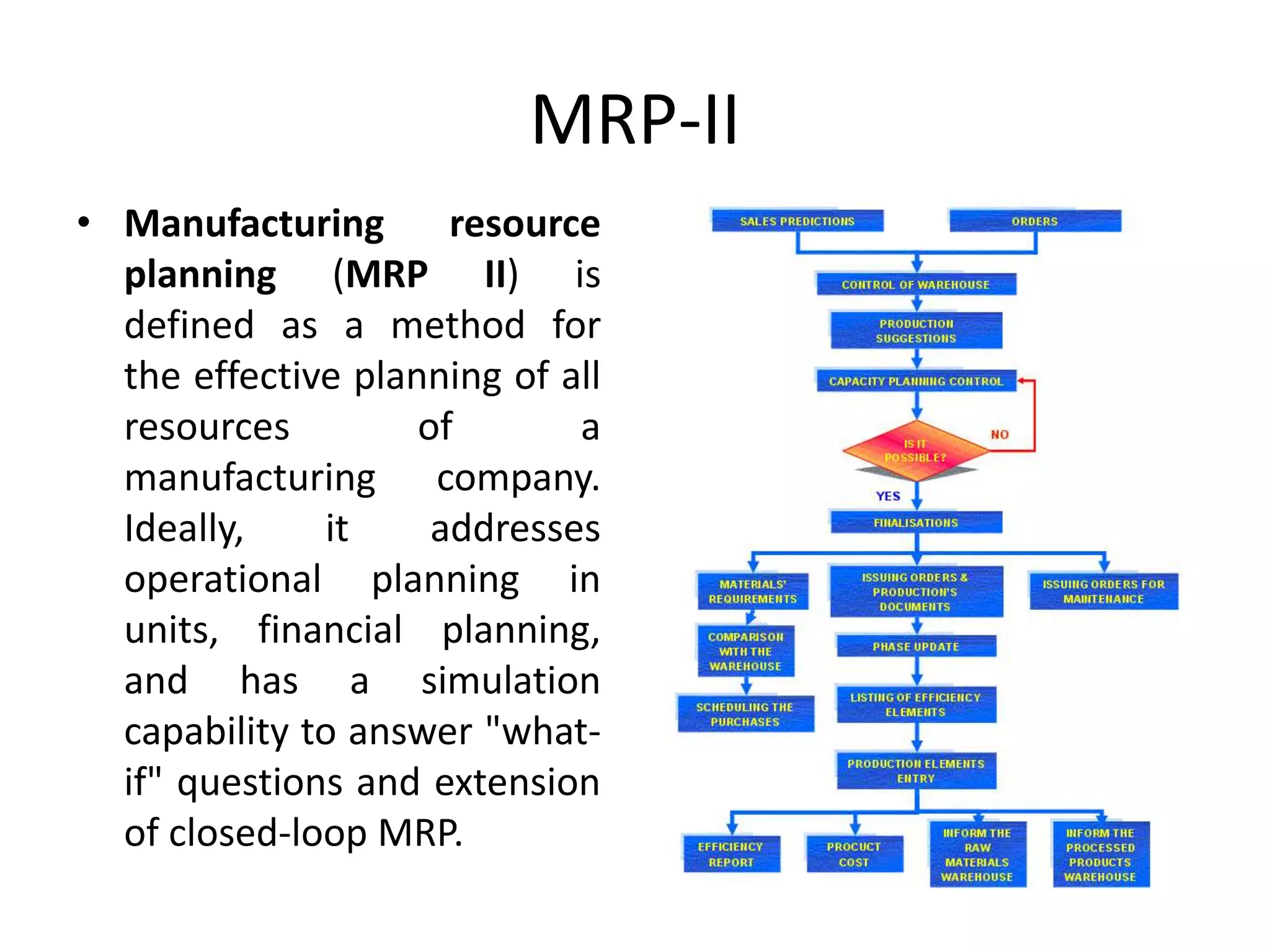
MRP-II
• Manufacturing resource
planning (MRP II) is
defined as a method for
the effective planning of all
resources of a
manufacturing company.
Ideally, it addresses
operational planning in
units, financial planning,
and has a simulation
capability to answer "what-
if" questions and extension
of closed-loop MRP.

Unit 5

  • 1.
    Inventory control andrecent trends in PPC Unit-4
  • 2.
    Inventory control • InventoryControl is the supervision of supply, storage and accessibility of items in order to ensure an adequate supply without excessive oversupply. • It can also be referred as internal control - an accounting procedure or system designed to promote efficiency or assure the implementation of a policy or safeguard assets or avoid fraud and error etc. • Inventory control may refer to: – In economics, the inventory control problem, which aims to reduce overhead cost without hurting sales – In the field of loss prevention, systems designed to introduce technical barriers to shoplifting – It answers the 3 basic questions of any supply chain: 1. When? 2. Where? 3. How much?
  • 3.
    Purpose of holdingstock • Safety stock is the amount of inventory a business carries over and above their calculations for actual need. ie, a packaging company maintains enough plastic to manufacture packaging ordered by customers in the amount needed until their next shipment of plastic arrives. • But, because orders vary and shipping times vary, the company decides to keep 5% more on hand than likely to be needed. This extra 5% is safety stock.
  • 4.
    Effect of demandof inventories
  • 5.
    Robust method forreducing demand inventory variation
  • 6.
    Two bin system •Two bin system is used for the material control. • It is that technique of material control in which we have two bins, one is used for in use minimum stock and second bin is used for reserve stock or to keep the remaining quantity of material. • This system of inventory control is also called in USA kanban. • First bin is utilized for issuing the material for production and then, second bin is used. Its record is done on bin cards and store ledger card.
  • 7.
  • 8.
    EOQ • Economic orderquantity (EOQ) is the classical inventory model for stock held on cycle with assumptions of known demand and production lead time. The objective is to select an order quantity that minimizes the marginal annual costs for holding inventory and placing orders.
  • 9.
  • 10.
    ABC analysis • TheABC analysis is a business term used to define an inventory categorization technique often used in materials management. It is also known as Selective Inventory Control. Policies based on ABC analysis: • A ITEMS: very tight control and accurate records • B ITEMS: LESS TIGHTLY CONTROLLED and good records • C ITEMS: simplest controls possible and minimal records
  • 11.
  • 12.
  • 13.
  • 14.
  • 15.
    MRP-II • Manufacturing resource planning(MRP II) is defined as a method for the effective planning of all resources of a manufacturing company. Ideally, it addresses operational planning in units, financial planning, and has a simulation capability to answer "what- if" questions and extension of closed-loop MRP.