Orbitals and Energy States Introduction
Purpose
• To understand the properties of atoms, you must understand the
arrangement of the electrons in an atom. In this unit, you will learn about
the organization of electrons then look at and predict some properties of
atoms based on their position on the periodic table.
Electrons in Atoms Occupy Specific Energy
States Described by Orbitals
• While there is a lot of mathematics involved with getting to this point,
which you do not need to understand, you do need to know that there are
many different energy states available to electrons in an atom. The energy
states are represented as orbitals in models of the atom. An orbital is the
space where you are most likely to find the electron within an energy
state.
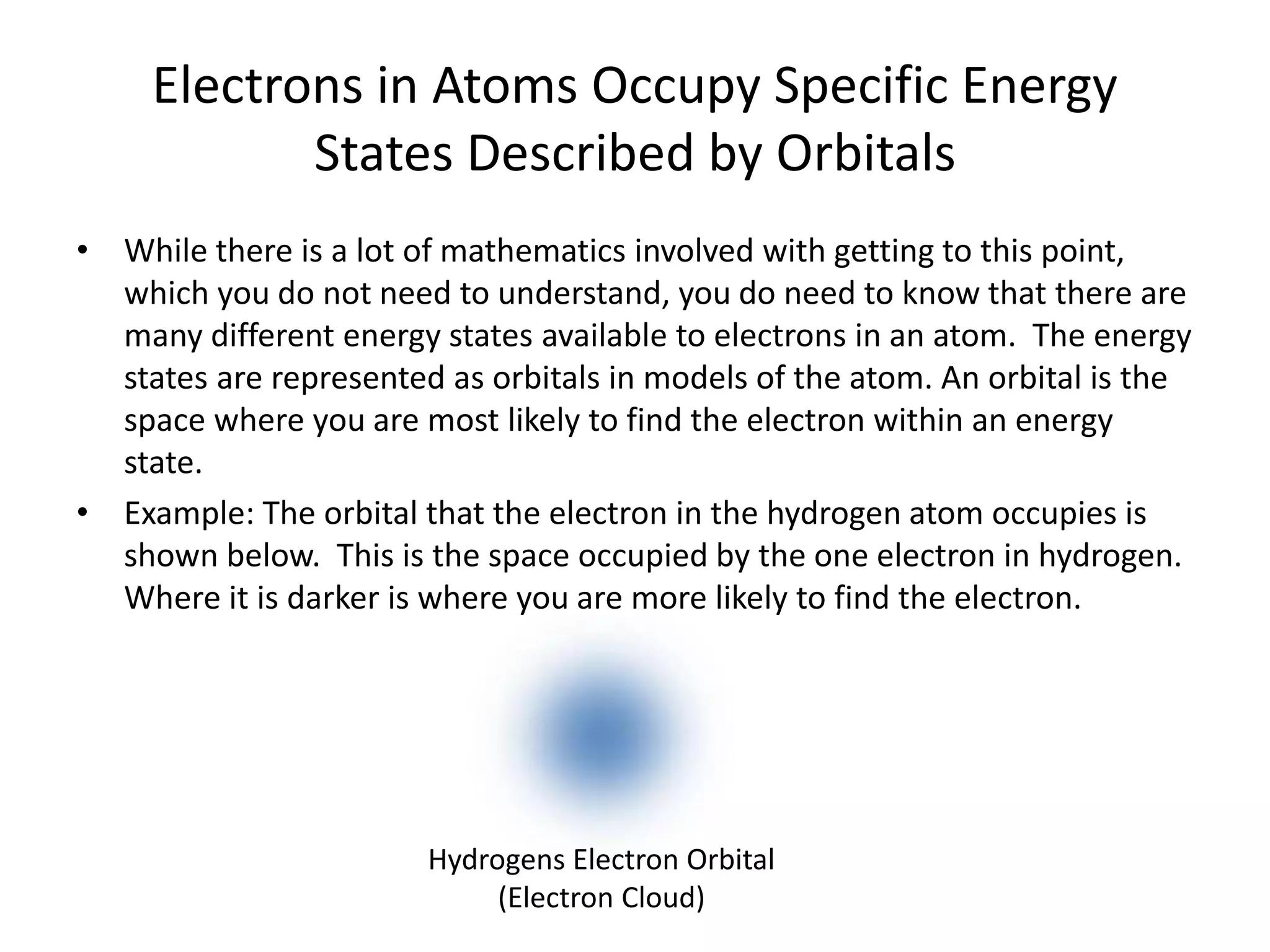
• Example: The orbital that the electron in the hydrogen atom occupies is
shown below. This is the space occupied by the one electron in hydrogen.
Where it is darker is where you are more likely to find the electron.
Hydrogens Electron Orbital
(Electron Cloud)
Misconception Alert!
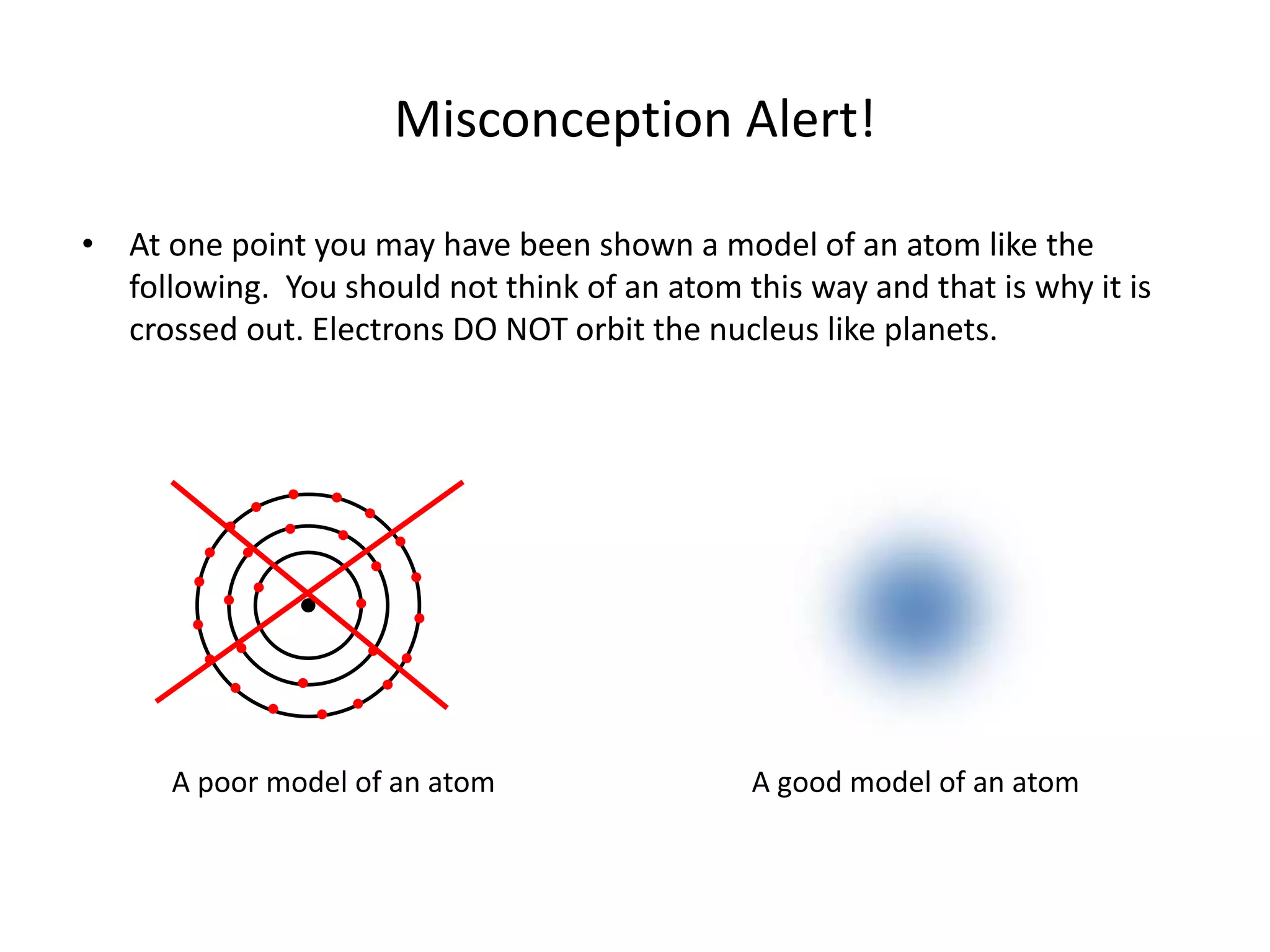
• At one point you may have been shown a model of an atom like the
following. You should not think of an atom this way and that is why it is
crossed out. Electrons DO NOT orbit the nucleus like planets.
A poor model of an atom A good model of an atom
Going Forward
• As you progress through this unit, please try to think of the electrons
occupying orbitals that have specific energies associated with them.

Unit 4 1 orbitals introduction

  • 1.
    Orbitals and EnergyStates Introduction
  • 2.
    Purpose • To understandthe properties of atoms, you must understand the arrangement of the electrons in an atom. In this unit, you will learn about the organization of electrons then look at and predict some properties of atoms based on their position on the periodic table.
  • 3.
    Electrons in AtomsOccupy Specific Energy States Described by Orbitals • While there is a lot of mathematics involved with getting to this point, which you do not need to understand, you do need to know that there are many different energy states available to electrons in an atom. The energy states are represented as orbitals in models of the atom. An orbital is the space where you are most likely to find the electron within an energy state. • Example: The orbital that the electron in the hydrogen atom occupies is shown below. This is the space occupied by the one electron in hydrogen. Where it is darker is where you are more likely to find the electron. Hydrogens Electron Orbital (Electron Cloud)
  • 4.
    Misconception Alert! • Atone point you may have been shown a model of an atom like the following. You should not think of an atom this way and that is why it is crossed out. Electrons DO NOT orbit the nucleus like planets. A poor model of an atom A good model of an atom
  • 5.
    Going Forward • Asyou progress through this unit, please try to think of the electrons occupying orbitals that have specific energies associated with them.