introduction to digital learning
                      uni bridges workshop
                 Sylvia Guidara 12.12.2011
the digital landscape and implications for
                    teaching and learning
essential questions


• How would you define digital age learning?
• What are the implications for what and how we teach /
  engage students?

• If students were asked to define essential literacies for a
  digital age teacher, what would they include?
australian council of deans – 2001!

• skills of collaboration will supersede the competitive
  skills of the old industrial economy.

• 21st century learners must be open to autonomous,
  assisted and collaborative learning

• shape students with attributes rather than just
  knowledge

• shape students who know how to learn what they don’t
  know through problem solving
our values and norms in education are
being challenged by a shifting landscape
    of media and communications
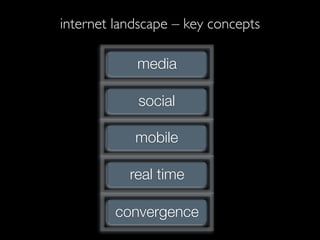
internet landscape – key concepts

            media

            social

            mobile

           real time

         convergence
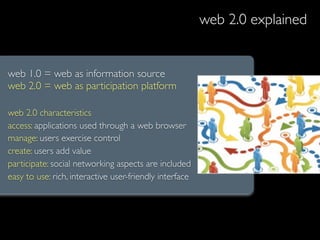
web 2.0 explained


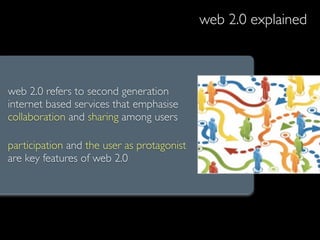
web 2.0 refers to second generation
internet based services that emphasise
collaboration and sharing among users

participation and the user as protagonist
are key features of web 2.0
web 2.0 explained


web 1.0 = web as information source
web 2.0 = web as participation platform

web 2.0 characteristics
access: applications used through a web browser
manage: users exercise control
create: users add value
participate: social networking aspects are included
easy to use: rich, interactive user-friendly interface
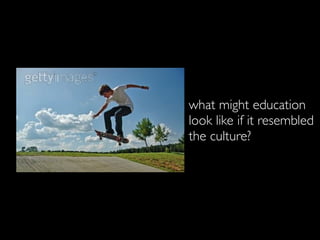
what might education
look like if it resembled
the culture?
what might education look like if it
                                  resembled the culture?

online

flexible

participatory

multimodal

user-driven

challenge traditional teacher – student roles
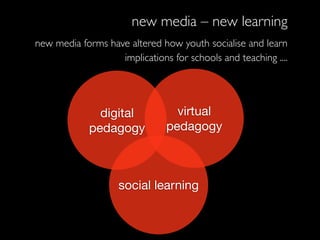
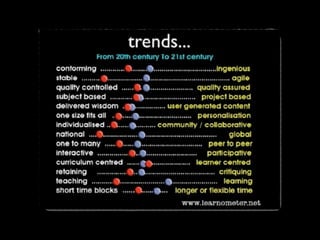
new media – new learning
new media forms have altered how youth socialise and learn
                   implications for schools and teaching ....


               digital           virtual
             pedagogy          pedagogy


                    social learning
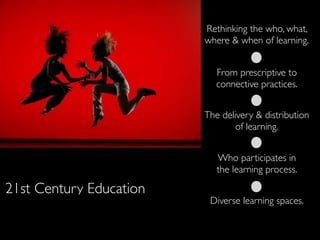
Rethinking the who, what,
                         where & when of learning.


                            From prescriptive to
                            connective practices.


                         The delivery & distribution
                                 of learning.


                            Who participates in
                            the learning process.

21st Century Education
                          Diverse learning spaces.
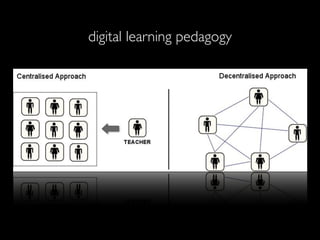
digital learning pedagogy
current technology demands a totally different approach
to instructional design and also teaching methodology

  it requires new skills from both teacher and student
Sylvia Guidara

www.digimuve.com
twitter.com/digimuve
sguidara@me.com

Uni Bridges Introduction to Digital Learning

  • 1.
    introduction to digitallearning uni bridges workshop Sylvia Guidara 12.12.2011
  • 2.
    the digital landscapeand implications for teaching and learning
  • 3.
    essential questions • Howwould you define digital age learning? • What are the implications for what and how we teach / engage students? • If students were asked to define essential literacies for a digital age teacher, what would they include?
  • 4.
    australian council ofdeans – 2001! • skills of collaboration will supersede the competitive skills of the old industrial economy. • 21st century learners must be open to autonomous, assisted and collaborative learning • shape students with attributes rather than just knowledge • shape students who know how to learn what they don’t know through problem solving
  • 5.
    our values andnorms in education are being challenged by a shifting landscape of media and communications
  • 6.
    internet landscape –key concepts media social mobile real time convergence
  • 7.
    web 2.0 explained web2.0 refers to second generation internet based services that emphasise collaboration and sharing among users participation and the user as protagonist are key features of web 2.0
  • 8.
    web 2.0 explained web1.0 = web as information source web 2.0 = web as participation platform web 2.0 characteristics access: applications used through a web browser manage: users exercise control create: users add value participate: social networking aspects are included easy to use: rich, interactive user-friendly interface
  • 9.
    what might education looklike if it resembled the culture?
  • 10.
    what might educationlook like if it resembled the culture? online flexible participatory multimodal user-driven challenge traditional teacher – student roles
  • 11.
    new media –new learning new media forms have altered how youth socialise and learn implications for schools and teaching .... digital virtual pedagogy pedagogy social learning
  • 13.
    Rethinking the who,what, where & when of learning. From prescriptive to connective practices. The delivery & distribution of learning. Who participates in the learning process. 21st Century Education Diverse learning spaces.
  • 14.
  • 15.
    current technology demandsa totally different approach to instructional design and also teaching methodology it requires new skills from both teacher and student
  • 16.