Unexplained persistence
Essential facts for a theory of
postcolonial imperialism
© CREATIVE COMMONS LICENSE
ALAN FREEMAN, GEOPOLITICAL ECONOMY RESEARCH GROUP DATA PROJECT,
UNIVERSITY OF MANITOBA
PROJECT AND DATASET: HTTPS://GITHUB.COM/AXFREEMAN/ECONOMIC-HISTORY
RESEARCH GROUP SITE: HTTPS://GEOPOLITICALECONOMY.ORG
PAPERS:HTTPS://GEOPOLITICALECONOMY.ACADEMIA.EDU/ALANFREEMAN
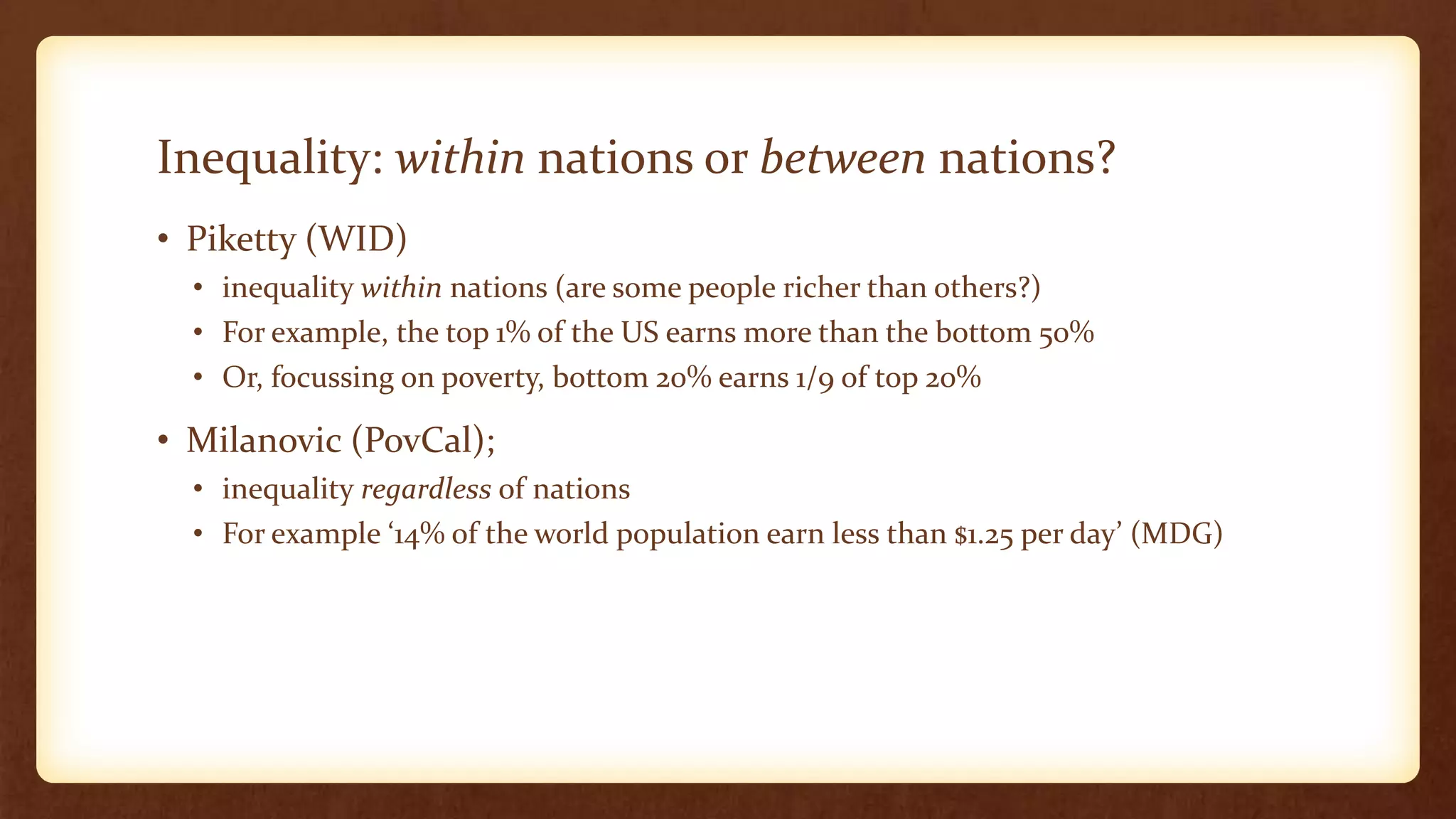
Inequality: within nations or between nations?
• Piketty (WID)
• inequality within nations (are some people richer than others?)
• For example, the top 1% of the US earns more than the bottom 50%
• Or, focussing on poverty, bottom 20% earns 1/9 of top 20%
• Milanovic (PovCal);
• inequality regardless of nations
• For example ‘14% of the world population earn less than $1.25 per day’ (MDG)
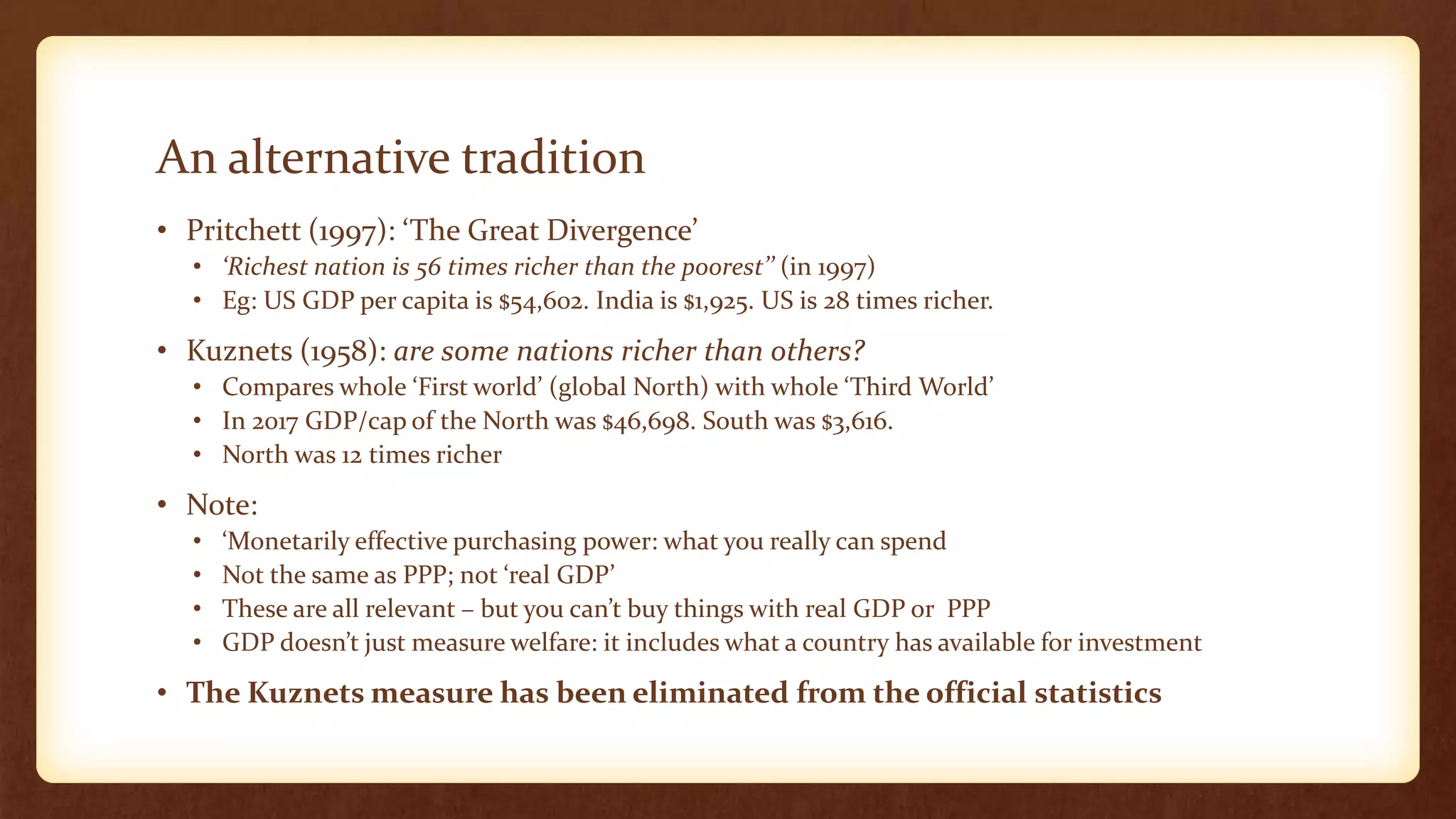
An alternative tradition
• Pritchett (1997): ‘The Great Divergence’
• ‘Richest nation is 56 times richer than the poorest’’ (in 1997)
• Eg: US GDP per capita is $54,602. India is $1,925. US is 28 times richer.
• Kuznets (1958): are some nations richer than others?
• Compares whole ‘First world’ (global North) with whole ‘Third World’
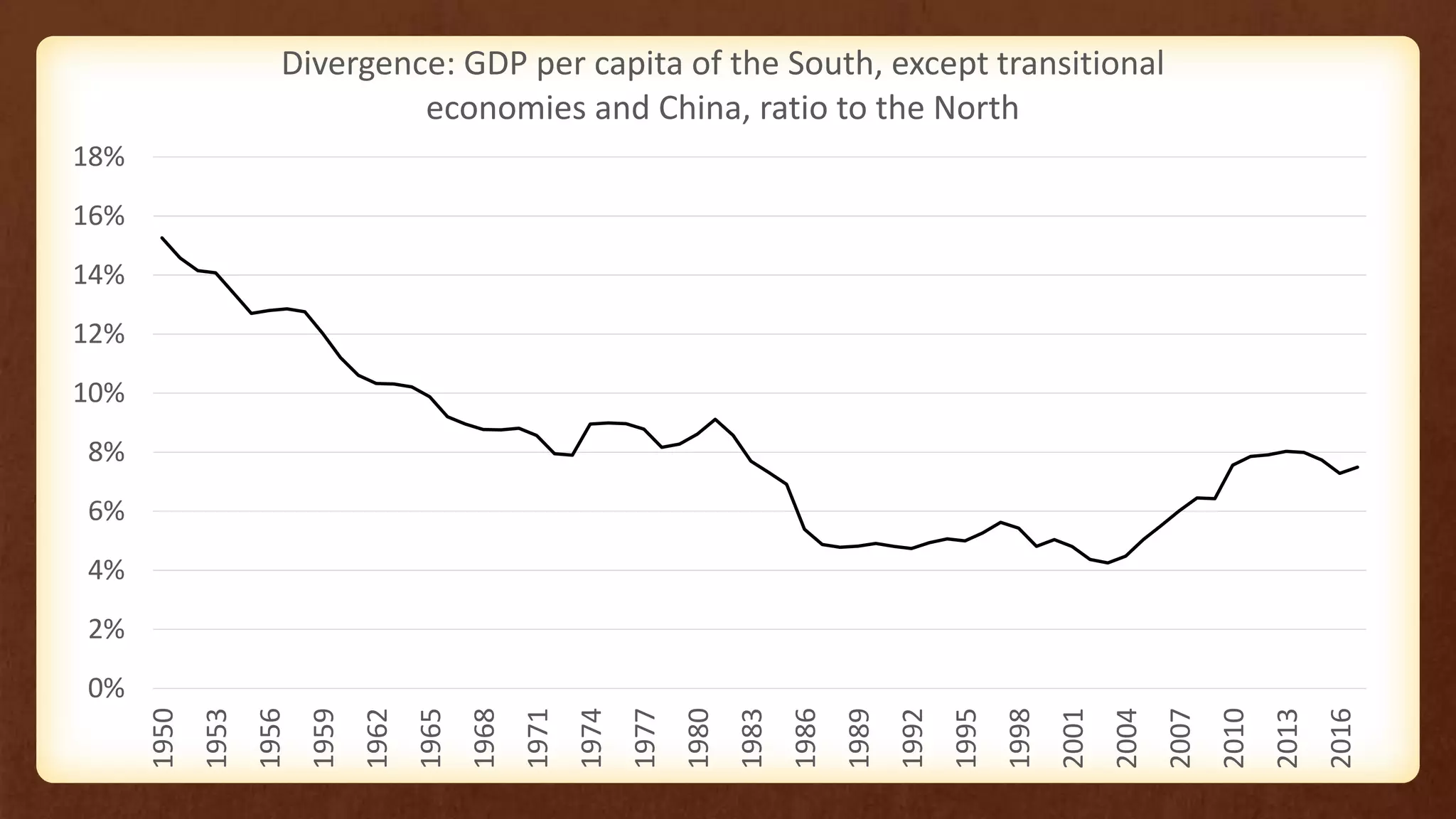
• In 2017 GDP/cap of the North was $46,698. South was $3,616.
• North was 12 times richer
• Note:
• ‘Monetarily effective purchasing power: what you really can spend
• Not the same as PPP; not ‘real GDP’
• These are all relevant – but you can’t buy things with real GDP or PPP
• GDP doesn’t just measure welfare: it includes what a country has available for investment
• The Kuznets measure has been eliminated from the official statistics
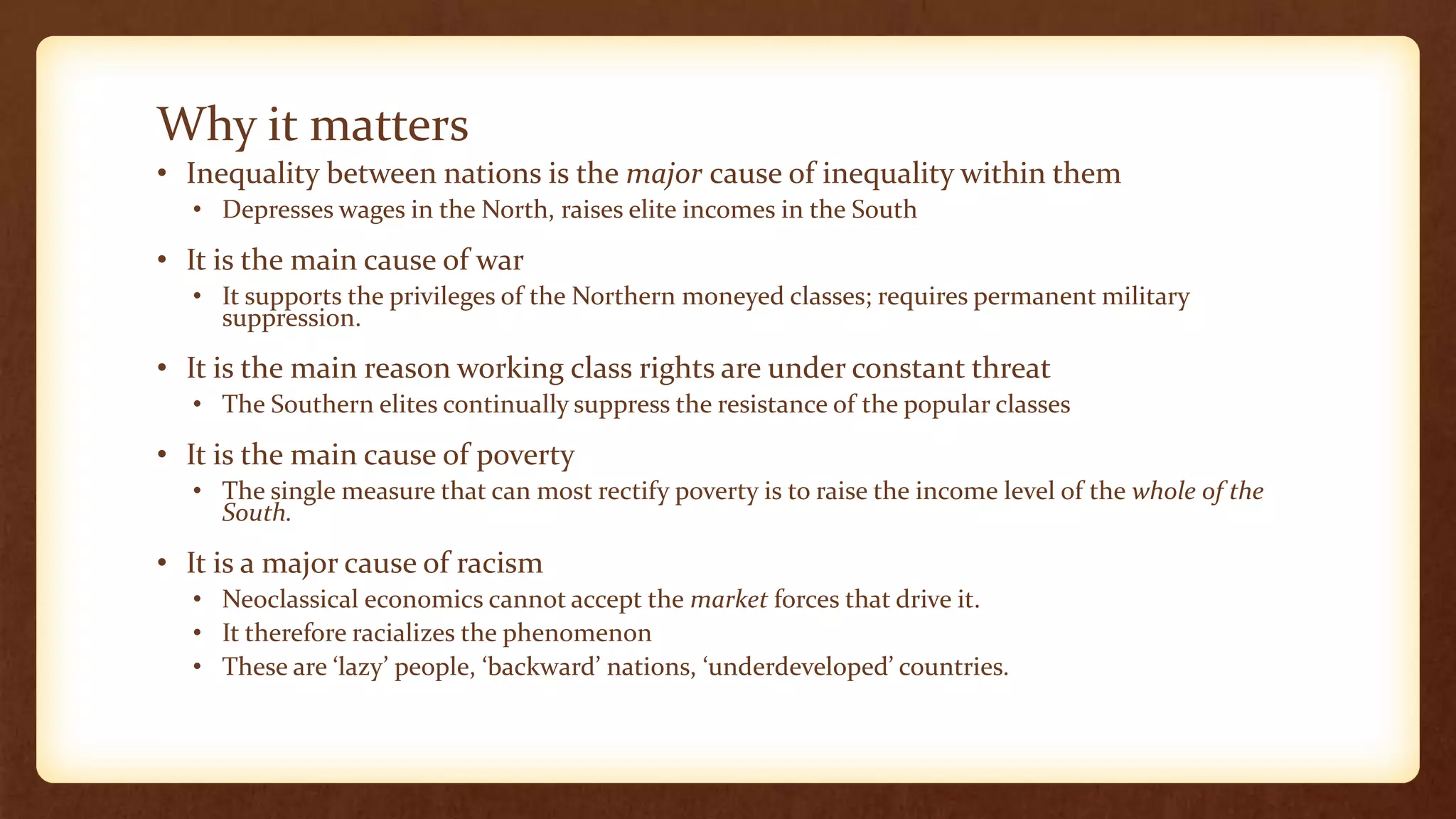
Why it matters
• Inequality between nations is the major cause of inequality within them
• Depresses wages in the North, raises elite incomes in the South
• It is the main cause of war
• It supports the privileges of the Northern moneyed classes; requires permanent military
suppression.
• It is the main reason working class rights are under constant threat
• The Southern elites continually suppress the resistance of the popular classes
• It is the main cause of poverty
• The single measure that can most rectify poverty is to raise the income level of the whole of the
South.
• It is a major cause of racism
• Neoclassical economics cannot accept the market forces that drive it.
• It therefore racializes the phenomenon
• These are ‘lazy’ people, ‘backward’ nations, ‘underdeveloped’ countries.
0%
2%
4%
6%
8%
10%
12%
14%
16%
18% 1950
1953
1956
1959
1962
1965
1968
1971
1974
1977
1980
1983
1986
1989
1992
1995
1998
2001
2004
2007
2010
2013
2016
Divergence: GDP per capita of the South, except transitional
economies and China, ratio to the North
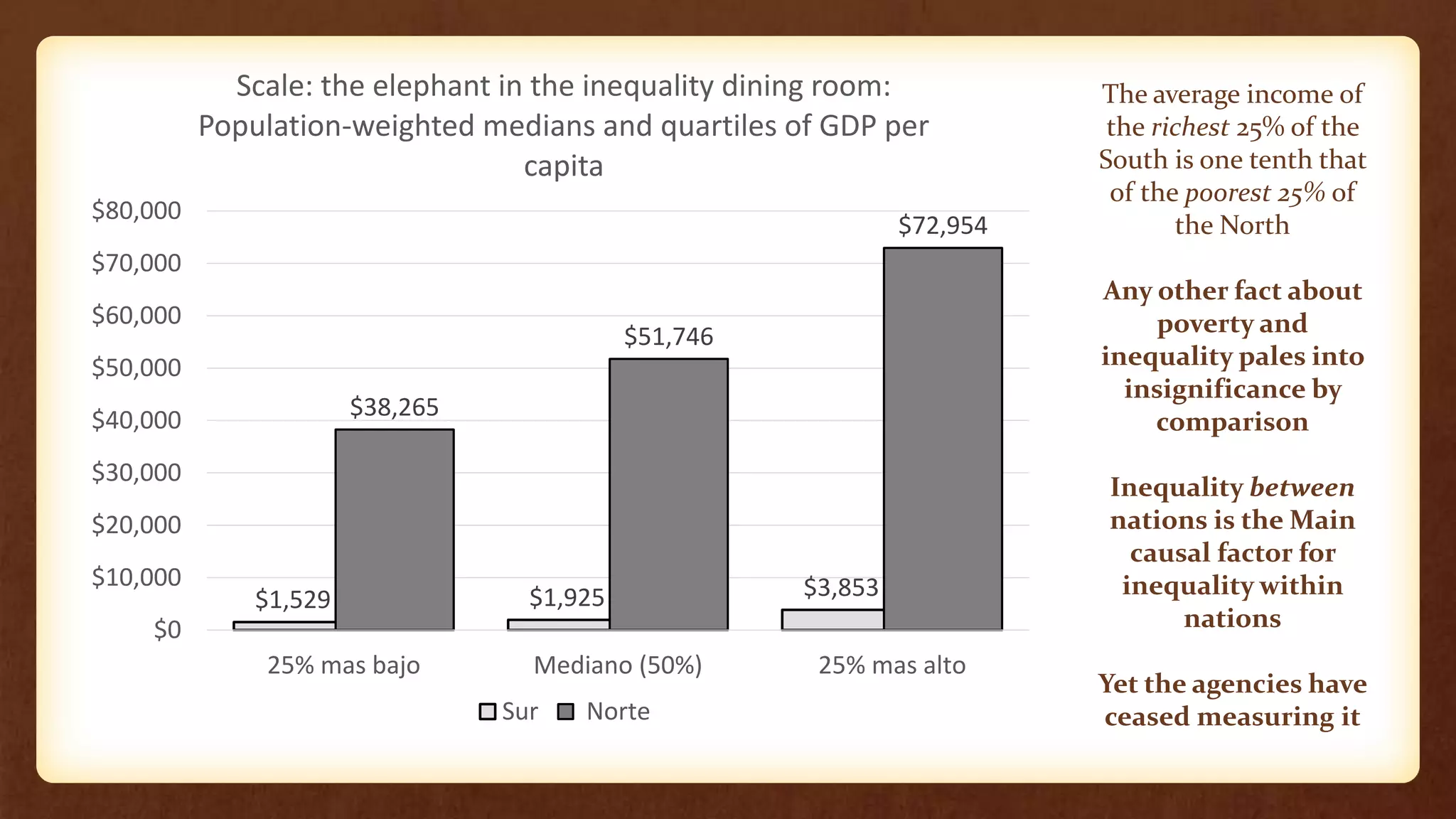
The average income of
the richest 25% of the
South is one tenth that
of the poorest 25% of
the North
Any other fact about
poverty and
inequality pales into
insignificance by
comparison
Inequality between
nations is the Main
causal factor for
inequality within
nations
Yet the agencies have
ceased measuring it
$1,529 $1,925 $3,853
$38,265
$51,746
$72,954
$0
$10,000
$20,000
$30,000
$40,000
$50,000
$60,000
$70,000
$80,000
25% mas bajo Mediano (50%) 25% mas alto
Scale: the elephant in the inequality dining room:
Population-weighted medians and quartiles of GDP per
capita
Sur Norte
0%
2%
4%
6%
8%
10%
12%
14%
16%
18%
1950
1953
1956
1959
1962
1965
1968
1971
1974
1977
1980
1983
1986
1989
1992
1995
1998
2001
2004
2007
2010
2013
2016
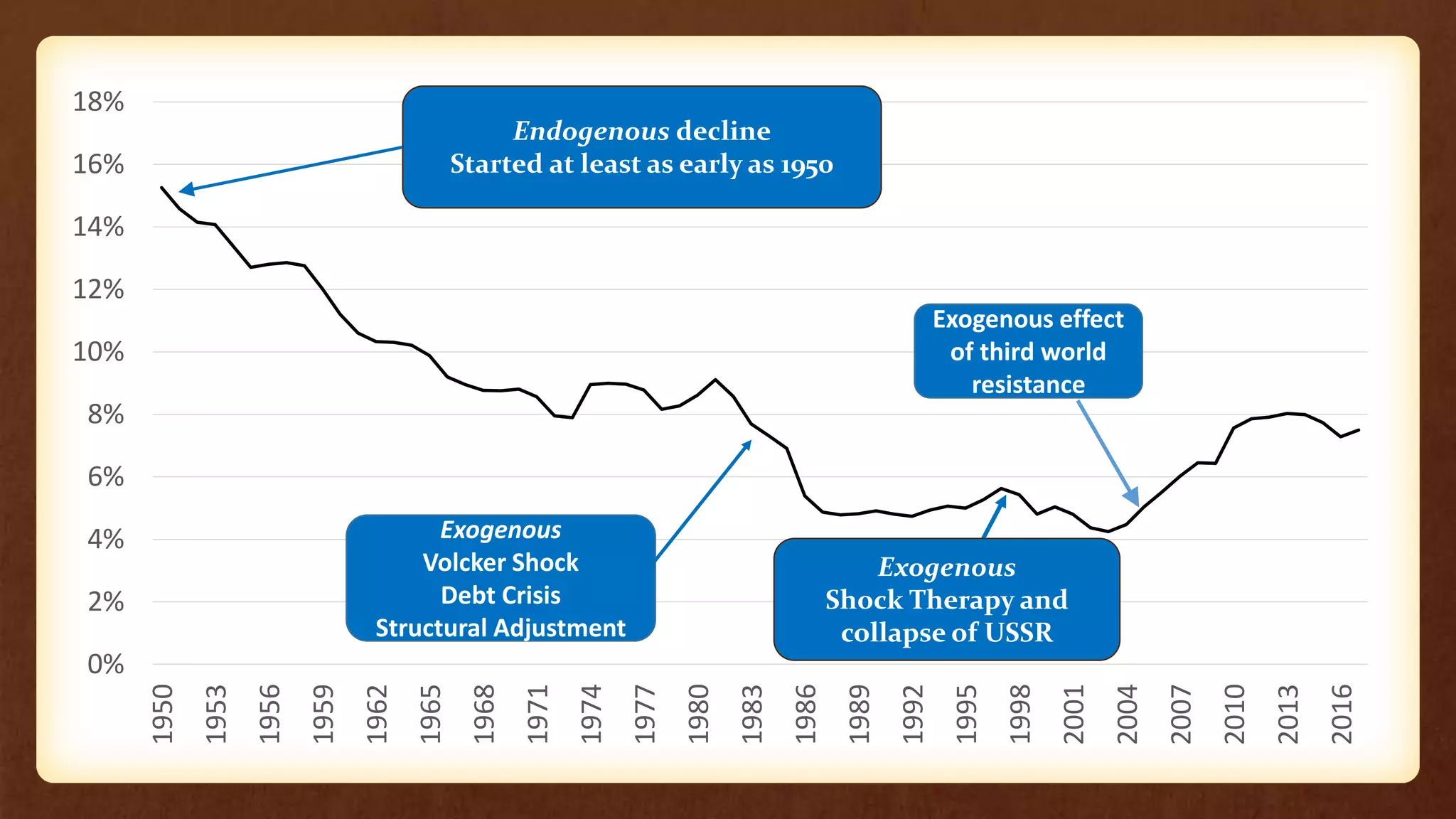
Exogenous
Volcker Shock
Debt Crisis
Structural Adjustment
Exogenous effect
of third world
resistance
Endogenous decline
Started at least as early as 1950
Exogenous
Shock Therapy and
collapse of USSR
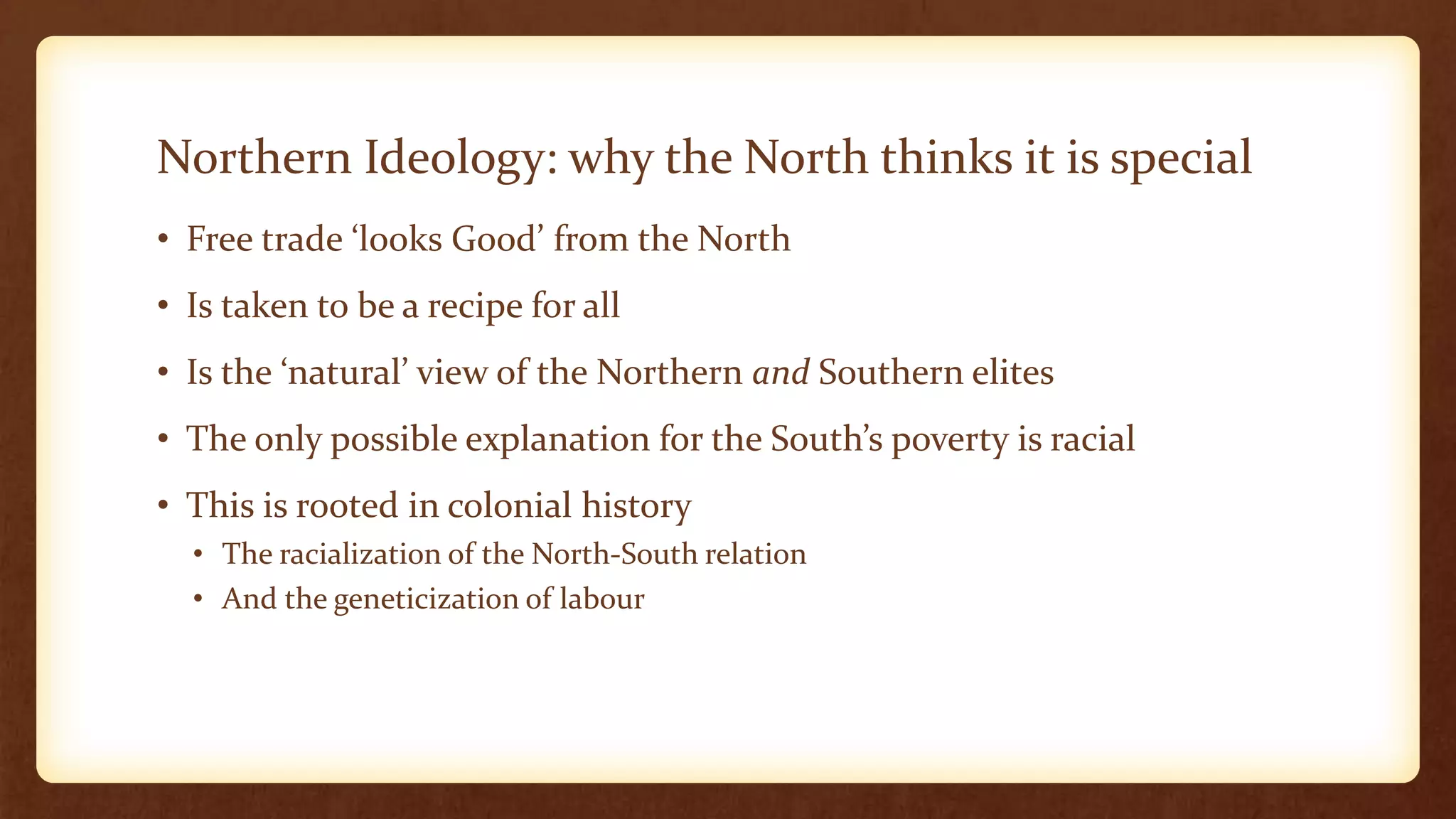
Northern Ideology: why the North thinks it is special
• Free trade ‘looks Good’ from the North
• Is taken to be a recipe for all
• Is the ‘natural’ view of the Northern and Southern elites
• The only possible explanation for the South’s poverty is racial
• This is rooted in colonial history
• The racialization of the North-South relation
• And the geneticization of labour
The exception
0%
2%
4%
6%
8%
10%
12%
14%
16%
18%
20%
1952
1955
1958
1961
1964
1967
1970
1973
1976
1979
1982
1985
1988
1991
1994
1997
2000
2003
2006
2009
2012
2015
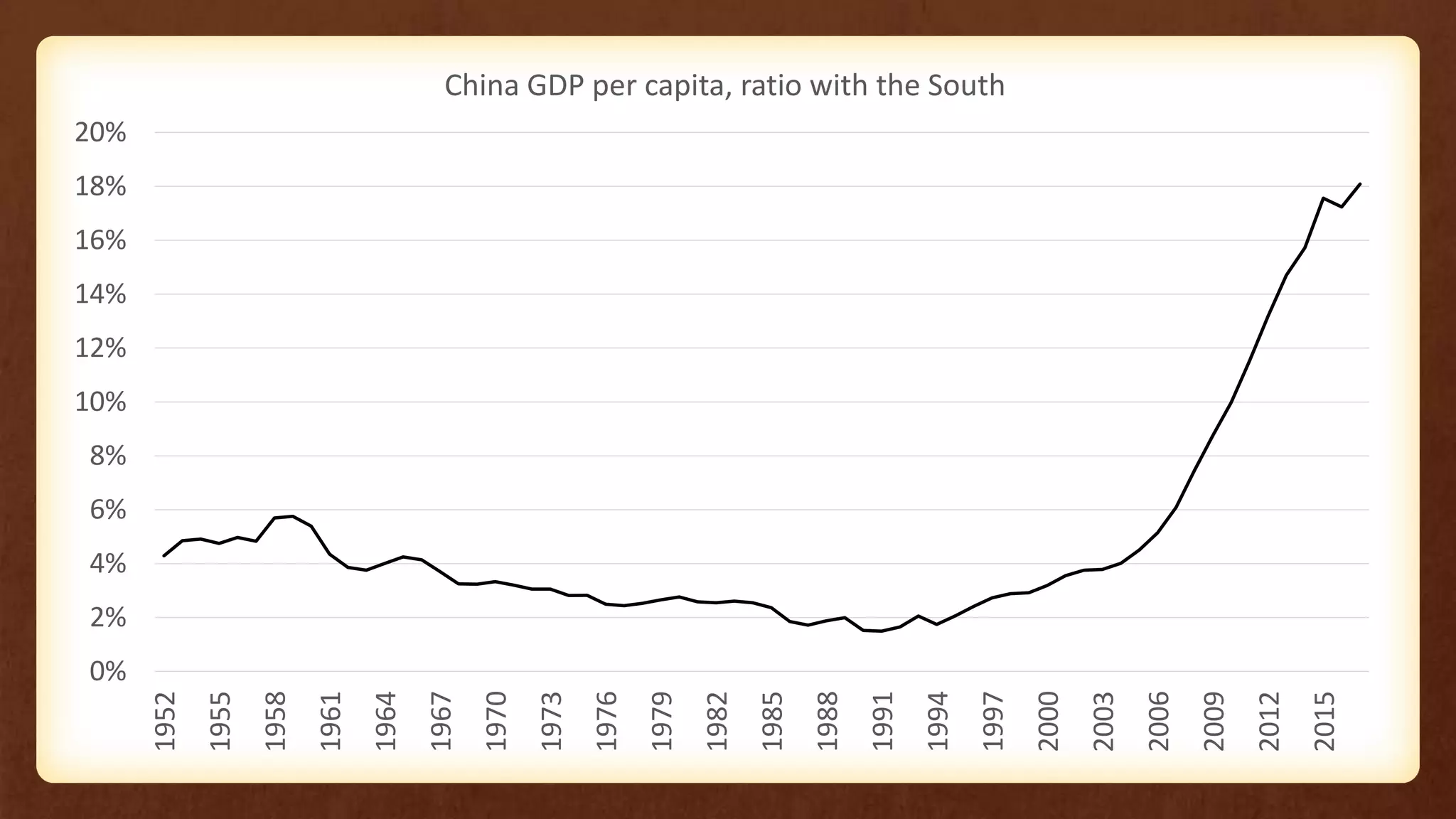
China GDP per capita, ratio with the South
Does the South exist?
• Official Institutions (World Bank, UN, etc) don’t recognise that there is any
such thing as ‘the Third World’ or ‘global South’
• They treat nations as a continuum, from rich to poor.
• They treat small states as ‘countries’
• The UN even classifies the Vatican as a developed country!
• Three of the UN’s ‘developed’ countries are islands with no inhabitants at all.
• Sixteen of the top 25 ‘richest’ South countries have less than a million inhabitants
• The other ‘rich’ South countries are enclaves such as Qatar or Kuwait
• Essentially ‘oil wells with borders’
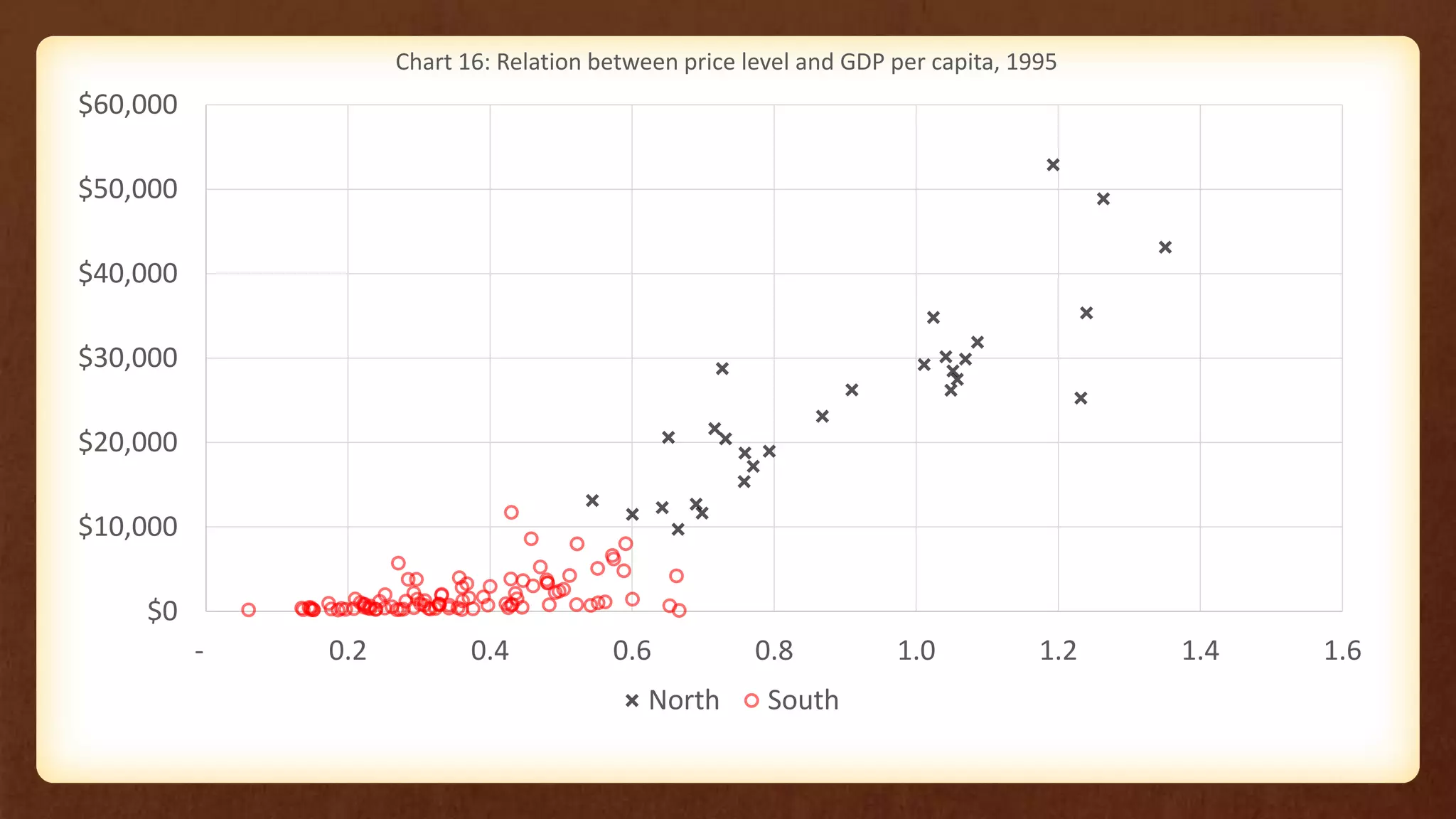
• Actually there are two completely distinct blocs of countries
• Dispersion analysis shows this
• Regional analysis shows this
• It is clearest when we ask ‘how many people live’ in each type of country
$0
$10,000
$20,000
$30,000
$40,000
$50,000
$60,000
- 0.2 0.4 0.6 0.8 1.0 1.2 1.4 1.6
Chart 16: Relation between price level and GDP per capita, 1995
North South
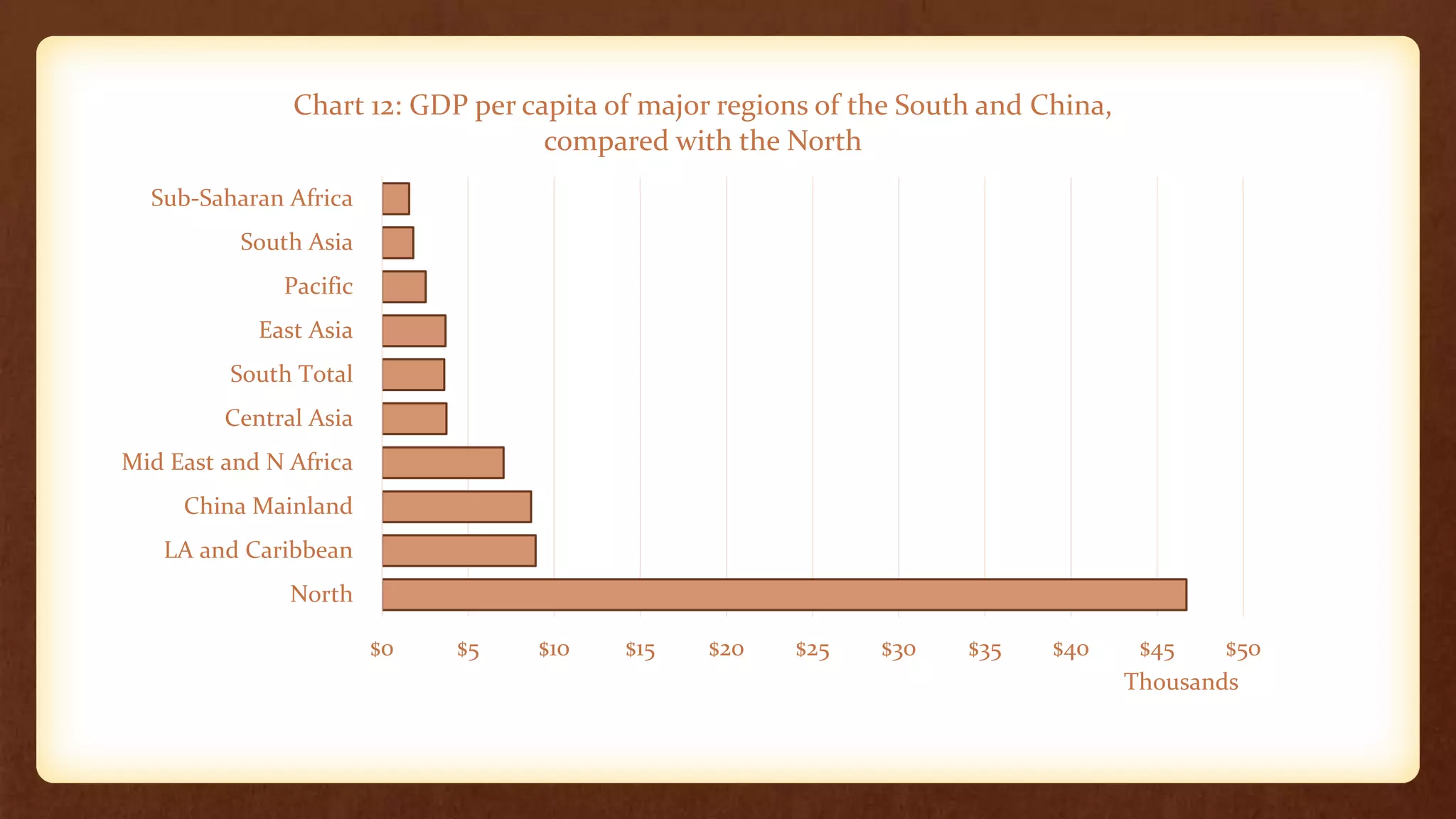
How far apart are the regions of the world?
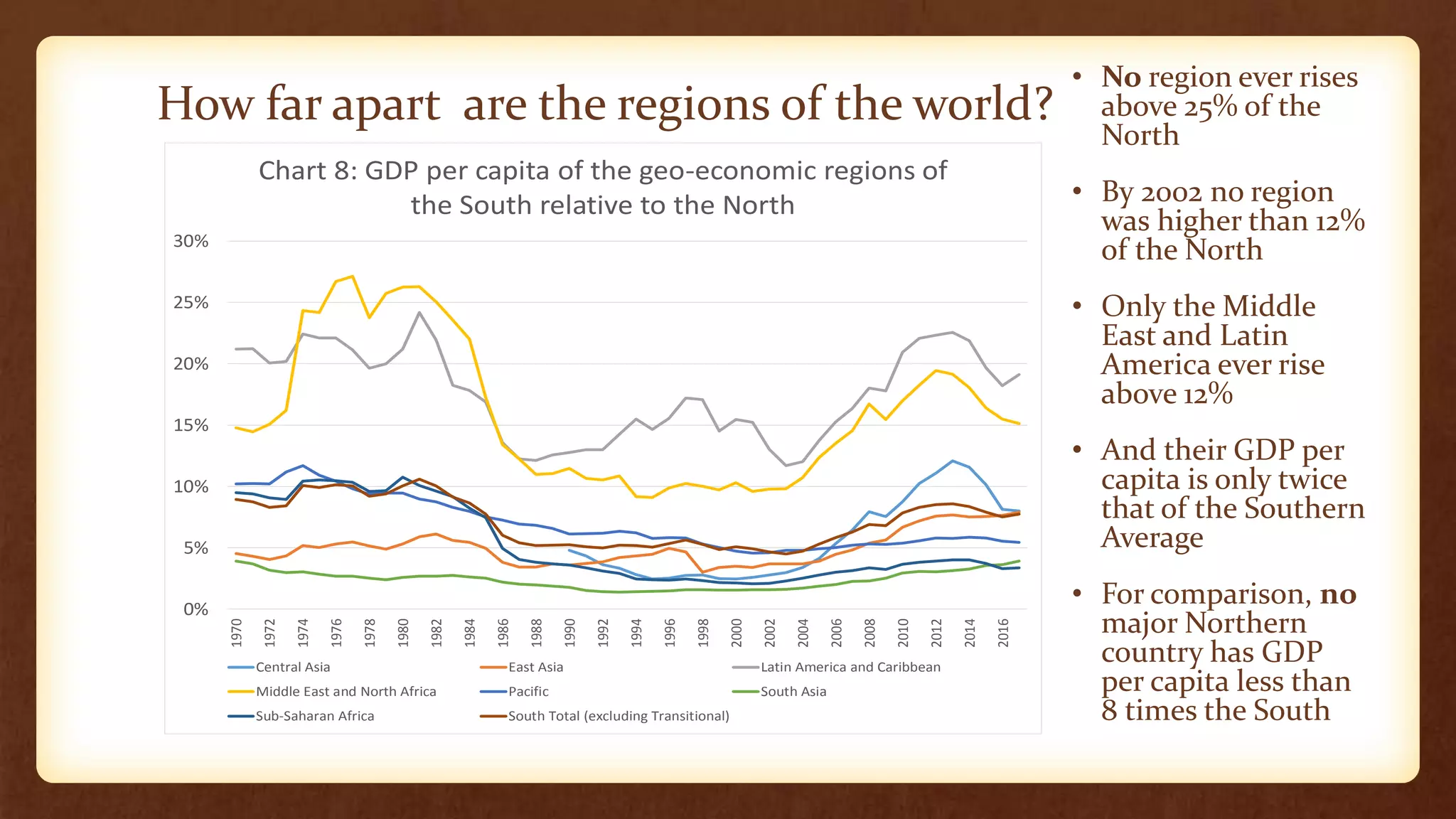
• No region ever rises
above 25% of the
North
• By 2002 no region
was higher than 12%
of the North
• Only the Middle
East and Latin
America ever rise
above 12%
• And their GDP per
capita is only twice
that of the Southern
Average
• For comparison, no
major Northern
country has GDP
per capita less than
8 times the South
0%
5%
10%
15%
20%
25%
30% 1970
1972
1974
1976
1978
1980
1982
1984
1986
1988
1990
1992
1994
1996
1998
2000
2002
2004
2006
2008
2010
2012
2014
2016
Chart 8: GDP per capita of the geo-economic regions of
the South relative to the North
Central Asia East Asia Latin America and Caribbean
Middle East and North Africa Pacific South Asia
Sub-Saharan Africa South Total (excluding Transitional)
$0 $5 $10 $15 $20 $25 $30 $35 $40 $45 $50
North
LA and Caribbean
China Mainland
Mid East and N Africa
Central Asia
South Total
East Asia
Pacific
South Asia
Sub-Saharan Africa
Thousands
Chart 12: GDP per capita of major regions of the South and China,
compared with the North
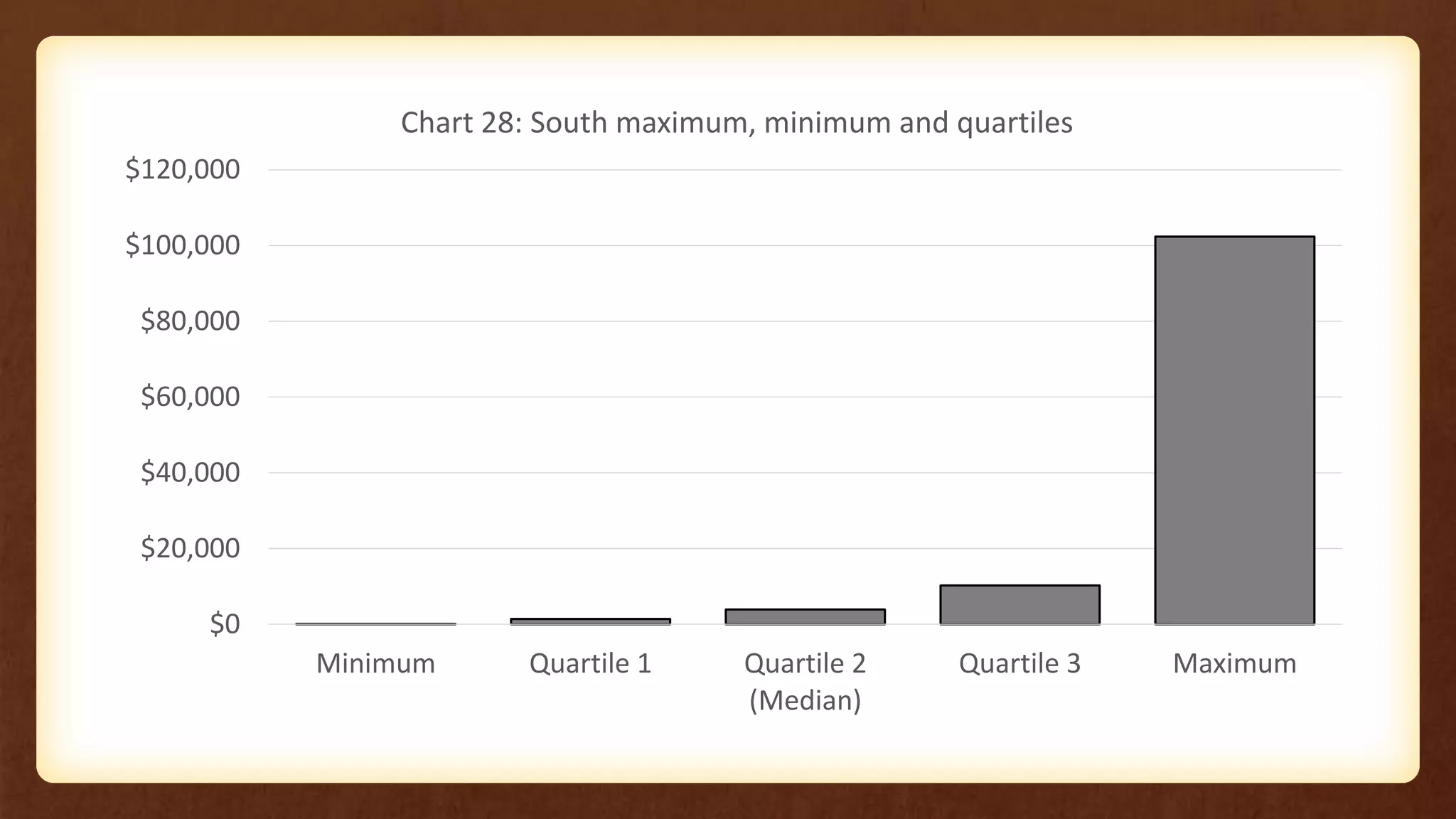
$0
$20,000
$40,000
$60,000
$80,000
$100,000
$120,000
Minimum Quartile 1 Quartile 2
(Median)
Quartile 3 Maximum
Chart 28: South maximum, minimum and quartiles
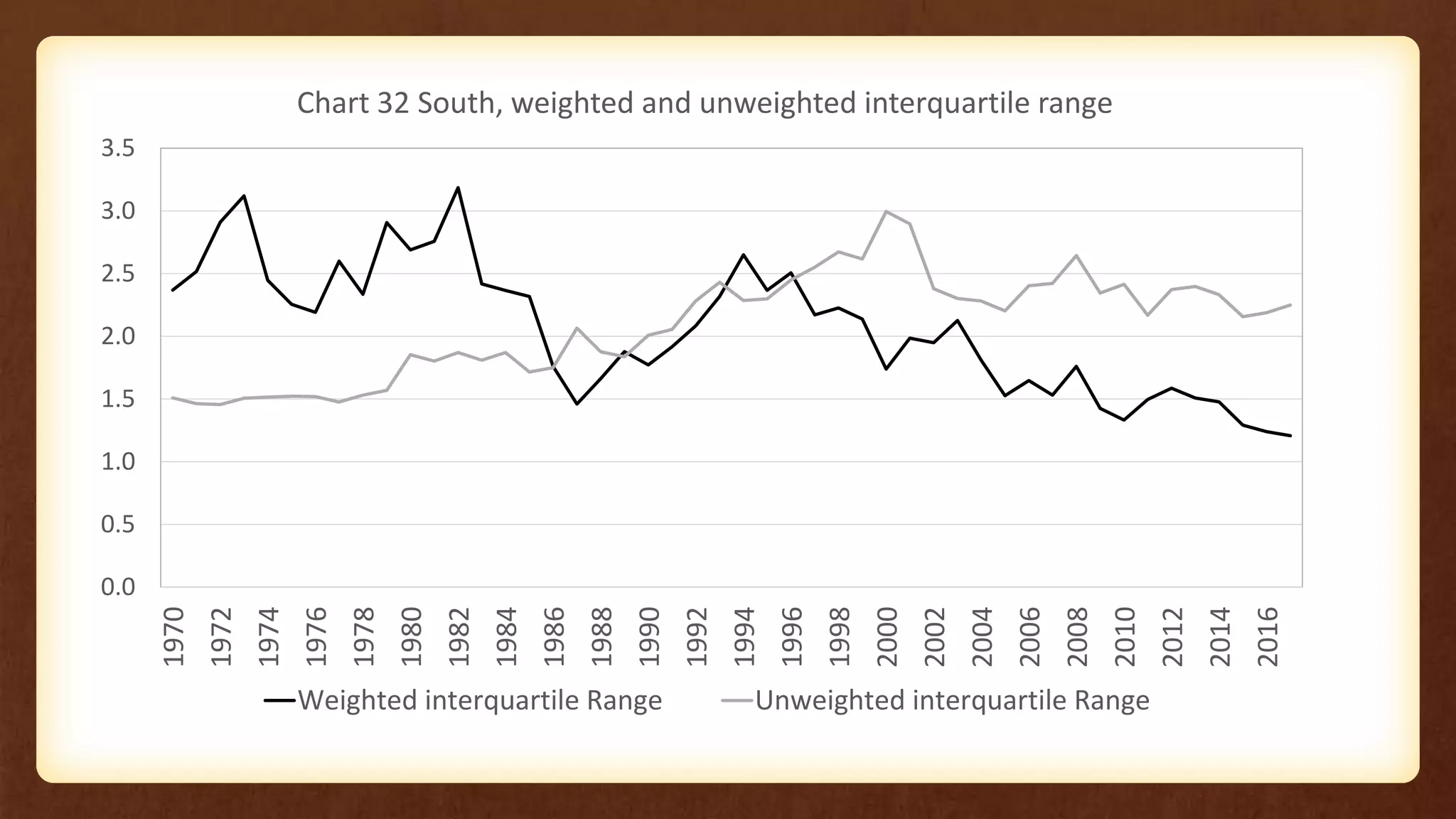
0.0
0.5
1.0
1.5
2.0
2.5
3.0
3.5
1970
1972
1974
1976
1978
1980
1982
1984
1986
1988
1990
1992
1994
1996
1998
2000
2002
2004
2006
2008
2010
2012
2014
2016
Chart 32 South, weighted and unweighted interquartile range
Weighted interquartile Range Unweighted interquartile Range
Project and dataset:
https://github.com/axfreeman/Economic-History
Research Group Site:
https://geopoliticaleconomy.org
Papers:
https://geopoliticaleconomy.academia.edu/AlanFree
man

Unexplained persistence: Essential facts for a theory of postcolonial imperialism

  • 1.
    Unexplained persistence Essential factsfor a theory of postcolonial imperialism © CREATIVE COMMONS LICENSE ALAN FREEMAN, GEOPOLITICAL ECONOMY RESEARCH GROUP DATA PROJECT, UNIVERSITY OF MANITOBA PROJECT AND DATASET: HTTPS://GITHUB.COM/AXFREEMAN/ECONOMIC-HISTORY RESEARCH GROUP SITE: HTTPS://GEOPOLITICALECONOMY.ORG PAPERS:HTTPS://GEOPOLITICALECONOMY.ACADEMIA.EDU/ALANFREEMAN
  • 2.
    Inequality: within nationsor between nations? • Piketty (WID) • inequality within nations (are some people richer than others?) • For example, the top 1% of the US earns more than the bottom 50% • Or, focussing on poverty, bottom 20% earns 1/9 of top 20% • Milanovic (PovCal); • inequality regardless of nations • For example ‘14% of the world population earn less than $1.25 per day’ (MDG)
  • 3.
    An alternative tradition •Pritchett (1997): ‘The Great Divergence’ • ‘Richest nation is 56 times richer than the poorest’’ (in 1997) • Eg: US GDP per capita is $54,602. India is $1,925. US is 28 times richer. • Kuznets (1958): are some nations richer than others? • Compares whole ‘First world’ (global North) with whole ‘Third World’ • In 2017 GDP/cap of the North was $46,698. South was $3,616. • North was 12 times richer • Note: • ‘Monetarily effective purchasing power: what you really can spend • Not the same as PPP; not ‘real GDP’ • These are all relevant – but you can’t buy things with real GDP or PPP • GDP doesn’t just measure welfare: it includes what a country has available for investment • The Kuznets measure has been eliminated from the official statistics
  • 4.
    Why it matters •Inequality between nations is the major cause of inequality within them • Depresses wages in the North, raises elite incomes in the South • It is the main cause of war • It supports the privileges of the Northern moneyed classes; requires permanent military suppression. • It is the main reason working class rights are under constant threat • The Southern elites continually suppress the resistance of the popular classes • It is the main cause of poverty • The single measure that can most rectify poverty is to raise the income level of the whole of the South. • It is a major cause of racism • Neoclassical economics cannot accept the market forces that drive it. • It therefore racializes the phenomenon • These are ‘lazy’ people, ‘backward’ nations, ‘underdeveloped’ countries.
  • 5.
  • 6.
    The average incomeof the richest 25% of the South is one tenth that of the poorest 25% of the North Any other fact about poverty and inequality pales into insignificance by comparison Inequality between nations is the Main causal factor for inequality within nations Yet the agencies have ceased measuring it $1,529 $1,925 $3,853 $38,265 $51,746 $72,954 $0 $10,000 $20,000 $30,000 $40,000 $50,000 $60,000 $70,000 $80,000 25% mas bajo Mediano (50%) 25% mas alto Scale: the elephant in the inequality dining room: Population-weighted medians and quartiles of GDP per capita Sur Norte
  • 7.
    0% 2% 4% 6% 8% 10% 12% 14% 16% 18% 1950 1953 1956 1959 1962 1965 1968 1971 1974 1977 1980 1983 1986 1989 1992 1995 1998 2001 2004 2007 2010 2013 2016 Exogenous Volcker Shock Debt Crisis StructuralAdjustment Exogenous effect of third world resistance Endogenous decline Started at least as early as 1950 Exogenous Shock Therapy and collapse of USSR
  • 8.
    Northern Ideology: whythe North thinks it is special • Free trade ‘looks Good’ from the North • Is taken to be a recipe for all • Is the ‘natural’ view of the Northern and Southern elites • The only possible explanation for the South’s poverty is racial • This is rooted in colonial history • The racialization of the North-South relation • And the geneticization of labour
  • 9.
  • 10.
  • 11.
    Does the Southexist? • Official Institutions (World Bank, UN, etc) don’t recognise that there is any such thing as ‘the Third World’ or ‘global South’ • They treat nations as a continuum, from rich to poor. • They treat small states as ‘countries’ • The UN even classifies the Vatican as a developed country! • Three of the UN’s ‘developed’ countries are islands with no inhabitants at all. • Sixteen of the top 25 ‘richest’ South countries have less than a million inhabitants • The other ‘rich’ South countries are enclaves such as Qatar or Kuwait • Essentially ‘oil wells with borders’ • Actually there are two completely distinct blocs of countries • Dispersion analysis shows this • Regional analysis shows this • It is clearest when we ask ‘how many people live’ in each type of country
  • 12.
    $0 $10,000 $20,000 $30,000 $40,000 $50,000 $60,000 - 0.2 0.40.6 0.8 1.0 1.2 1.4 1.6 Chart 16: Relation between price level and GDP per capita, 1995 North South
  • 13.
    How far apartare the regions of the world? • No region ever rises above 25% of the North • By 2002 no region was higher than 12% of the North • Only the Middle East and Latin America ever rise above 12% • And their GDP per capita is only twice that of the Southern Average • For comparison, no major Northern country has GDP per capita less than 8 times the South 0% 5% 10% 15% 20% 25% 30% 1970 1972 1974 1976 1978 1980 1982 1984 1986 1988 1990 1992 1994 1996 1998 2000 2002 2004 2006 2008 2010 2012 2014 2016 Chart 8: GDP per capita of the geo-economic regions of the South relative to the North Central Asia East Asia Latin America and Caribbean Middle East and North Africa Pacific South Asia Sub-Saharan Africa South Total (excluding Transitional)
  • 14.
    $0 $5 $10$15 $20 $25 $30 $35 $40 $45 $50 North LA and Caribbean China Mainland Mid East and N Africa Central Asia South Total East Asia Pacific South Asia Sub-Saharan Africa Thousands Chart 12: GDP per capita of major regions of the South and China, compared with the North
  • 15.
    $0 $20,000 $40,000 $60,000 $80,000 $100,000 $120,000 Minimum Quartile 1Quartile 2 (Median) Quartile 3 Maximum Chart 28: South maximum, minimum and quartiles
  • 16.
  • 17.
    Project and dataset: https://github.com/axfreeman/Economic-History ResearchGroup Site: https://geopoliticaleconomy.org Papers: https://geopoliticaleconomy.academia.edu/AlanFree man