The pursuit of class
struggle by other
means
Alan Freeman
Fuijian September 2023
Theses on war and modernity
War and Modernization
Modernization has to overcome backwardness
War is the most backward Western practice
Modernization has to overcome War
War as competition
In ‘normal’ times, capitalists exploit living labour.
Not just the living labour of their own workers
But the living labour of other capitalists
This is the true function of competition
War is the most extreme form of competition
$2.00
$2.50
$3.00
$3.50
$4.00
$4.50 1930
1931
1932
1933
1934
1935
1936
1937
1938
1939
1940
1941
1942
1943
1944
1945
1946
1947
1948
1949
$Billions
PPP
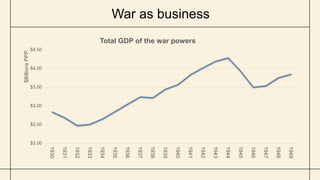
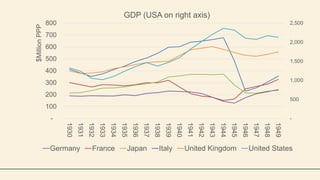
Total GDP of the war powers
War as business
-
500
1,000
1,500
2,000
2,500
-
100
200
300
400
500
600
700
800
1930
1931
1932
1933
1934
1935
1936
1937
1938
1939
1940
1941
1942
1943
1944
1945
1946
1947
1948
1949
$Million
PPP
GDP (USA on right axis)
Germany France Japan Italy United Kingdom United States
$0
$100
$200
$300
$400
$500
$600
$700
$800
$900
$1,000
1930
1931
1932
1933
1934
1935
1936
1937
1938
1939
1940
1941
1942
1943
1944
1945
1946
1947
1948
1949
1950
1951
1952
1953
$Millions
PPP
USSR Germany
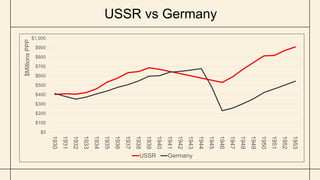
USSR vs Germany
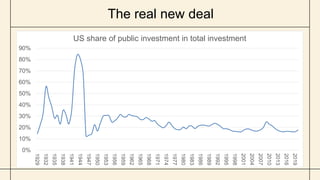
The real new deal
0%
10%
20%
30%
40%
50%
60%
70%
80%
90%
1929
1932
1935
1938
1941
1944
1947
1950
1953
1956
1959
1962
1965
1968
1971
1974
1977
1980
1983
1986
1989
1992
1995
1998
2001
2004
2007
2010
2013
2016
2019
US share of public investment in total investment
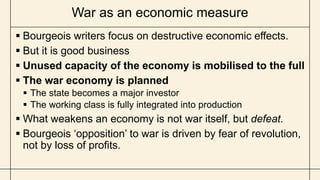
War as an economic measure
 Bourgeois writers focus on destructive economic effects.
 But it is good business
 Unused capacity of the economy is mobilised to the full
 The war economy is planned
 The state becomes a major investor
 The working class is fully integrated into production
 What weakens an economy is not war itself, but defeat.
 Bourgeois ‘opposition’ to war is driven by fear of revolution,
not by loss of profits.
Imperialism: highest form of Exploitation
As a result of the War, the world finds itself divided today into two
great colonial empires…
The United States of America endeavours to assume supreme and
exclusive right of exploiting and ruling the entire New World,
while Great Britain has annexed to its empire practically the entire
continents of Asia and Africa …
[T]he destruction of its monopolist right of exploitation in
the vast Eastern colonial empire is a vital factor in the final and
successful overthrow of the capitalist order –
M. N. Roy-Congress of toilers of the East
What does imperialism do?
• Imperialism is the direct or indirect exploitation of foreign labour
• This transfers, to the capitalists of an imperial nation, a mass of
surplus value created by workers outside that nation
• Competition is a struggle for a share of imperial superprofit
• This multiplies the value at their disposal by a factor of 5-10
• ‘Imperial superprofit’ is far higher than achievable within a nation
• This is the ultimate cause of imperialist war
Columbianism: Super or ultra-imperialism?
 Why, after World War II, did the imperialists conclude that the
‘risks’ of another inter-imperialist war was too high?
 Why does the USA ‘present itself’ as the enemy of old-style
imperialism and champion of national freedom?
 Whilst actually it is the most aggressive, ruthless and
destructive imperial power in the whole of world history?
 Why do the European powers put up with it?
 My suggestion: the dialectic of competition (capitalist versus
capitalist) and class struggle (capitalists vs non-capitalists)
The hiding hand of the market
 Colonial superprofit: direct exploitation of the workforce.
 Pioneered by Columbus. Potosi by 1600 employed 160,000 people
 But colonists also combined direct with indirect exploitation
 Pioneered by British in India
 Neocolonialism can exploit entirely indirectly via world market
 Provided the exploited countries have no economic sovereignty
 Provided the military powers enforce unequal trading relations
 Imperialist ‘system’ consists of cooperation to suppress economic
sovereignty but compete for superprofit
 War is simply ‘competition by other means’
The warfare state and its limits
 Warfare State has to suppress the character of classes.
 The competitive nature of its capitalists
 The cooperative nature of its workers
 It overrides capitalist competition within the nation
 It overrides the workers’ solidarity outside the nation
 Absolute limits, eg the cost of buying off the workers
 Accelerates the formation of class consciousness
 Elevates the class struggle to the political level
 War is the cradle of revolution
War and revolution
 Until 1918, Europe’s capitalists sought to use the ‘threat of
revolution’ as a weapon of war – sealed train, etc.
 The wave of revolutions of 1917-1919 revealed that
revolution was now a greater threat than defeat.
 Impossible to maintain war as a ‘mode of production’
 ‘Dialectic of defeat and victory’
 The capitalists seek the destruction of rival states
 But the risk is working class revolt and even success
 From 1917, imperial bourgeoisies became ‘apostles of
peace but practitioners of war’
The Columbian world order
 US reconstructs imperialism as an ‘imperial club’
 Anti-Communism as the political basis
 Neocolonial imperialism as the economic basis
 Germany and Japan entirely shorn of empire
 Fleets sunk or expropriated, No nukes, no colonies
 BUT allowed to rebuild by internal investment as anti-communist buffer
 A division of imperialist superprofits
 US financial and monopoly profit
 Struggle between US and France, UK over monopoly-colonial profit
 Germany, Japan, Korea ‘technical superprofit’ – through the market
Peace, precondition of modernization
 Working class resistance to war: the only guarantee
 They are the ones who die
 They have ‘nothing to lose but their chains’
 But they have to be united, world wide, against war
 The capitalist ‘instinct for war’ must be suppressed
 To realise the benefits of a world without war
The absolute precondition for World
Modernization is
PEACE

War as Competition.pptx

  • 1.
    The pursuit ofclass struggle by other means Alan Freeman Fuijian September 2023 Theses on war and modernity
  • 2.
    War and Modernization Modernizationhas to overcome backwardness War is the most backward Western practice Modernization has to overcome War
  • 3.
    War as competition In‘normal’ times, capitalists exploit living labour. Not just the living labour of their own workers But the living labour of other capitalists This is the true function of competition War is the most extreme form of competition
  • 4.
  • 5.
  • 6.
  • 7.
    The real newdeal 0% 10% 20% 30% 40% 50% 60% 70% 80% 90% 1929 1932 1935 1938 1941 1944 1947 1950 1953 1956 1959 1962 1965 1968 1971 1974 1977 1980 1983 1986 1989 1992 1995 1998 2001 2004 2007 2010 2013 2016 2019 US share of public investment in total investment
  • 8.
    War as aneconomic measure  Bourgeois writers focus on destructive economic effects.  But it is good business  Unused capacity of the economy is mobilised to the full  The war economy is planned  The state becomes a major investor  The working class is fully integrated into production  What weakens an economy is not war itself, but defeat.  Bourgeois ‘opposition’ to war is driven by fear of revolution, not by loss of profits.
  • 9.
    Imperialism: highest formof Exploitation As a result of the War, the world finds itself divided today into two great colonial empires… The United States of America endeavours to assume supreme and exclusive right of exploiting and ruling the entire New World, while Great Britain has annexed to its empire practically the entire continents of Asia and Africa … [T]he destruction of its monopolist right of exploitation in the vast Eastern colonial empire is a vital factor in the final and successful overthrow of the capitalist order – M. N. Roy-Congress of toilers of the East
  • 10.
    What does imperialismdo? • Imperialism is the direct or indirect exploitation of foreign labour • This transfers, to the capitalists of an imperial nation, a mass of surplus value created by workers outside that nation • Competition is a struggle for a share of imperial superprofit • This multiplies the value at their disposal by a factor of 5-10 • ‘Imperial superprofit’ is far higher than achievable within a nation • This is the ultimate cause of imperialist war
  • 11.
    Columbianism: Super orultra-imperialism?  Why, after World War II, did the imperialists conclude that the ‘risks’ of another inter-imperialist war was too high?  Why does the USA ‘present itself’ as the enemy of old-style imperialism and champion of national freedom?  Whilst actually it is the most aggressive, ruthless and destructive imperial power in the whole of world history?  Why do the European powers put up with it?  My suggestion: the dialectic of competition (capitalist versus capitalist) and class struggle (capitalists vs non-capitalists)
  • 12.
    The hiding handof the market  Colonial superprofit: direct exploitation of the workforce.  Pioneered by Columbus. Potosi by 1600 employed 160,000 people  But colonists also combined direct with indirect exploitation  Pioneered by British in India  Neocolonialism can exploit entirely indirectly via world market  Provided the exploited countries have no economic sovereignty  Provided the military powers enforce unequal trading relations  Imperialist ‘system’ consists of cooperation to suppress economic sovereignty but compete for superprofit  War is simply ‘competition by other means’
  • 13.
    The warfare stateand its limits  Warfare State has to suppress the character of classes.  The competitive nature of its capitalists  The cooperative nature of its workers  It overrides capitalist competition within the nation  It overrides the workers’ solidarity outside the nation  Absolute limits, eg the cost of buying off the workers  Accelerates the formation of class consciousness  Elevates the class struggle to the political level  War is the cradle of revolution
  • 14.
    War and revolution Until 1918, Europe’s capitalists sought to use the ‘threat of revolution’ as a weapon of war – sealed train, etc.  The wave of revolutions of 1917-1919 revealed that revolution was now a greater threat than defeat.  Impossible to maintain war as a ‘mode of production’  ‘Dialectic of defeat and victory’  The capitalists seek the destruction of rival states  But the risk is working class revolt and even success  From 1917, imperial bourgeoisies became ‘apostles of peace but practitioners of war’
  • 15.
    The Columbian worldorder  US reconstructs imperialism as an ‘imperial club’  Anti-Communism as the political basis  Neocolonial imperialism as the economic basis  Germany and Japan entirely shorn of empire  Fleets sunk or expropriated, No nukes, no colonies  BUT allowed to rebuild by internal investment as anti-communist buffer  A division of imperialist superprofits  US financial and monopoly profit  Struggle between US and France, UK over monopoly-colonial profit  Germany, Japan, Korea ‘technical superprofit’ – through the market
  • 16.
    Peace, precondition ofmodernization  Working class resistance to war: the only guarantee  They are the ones who die  They have ‘nothing to lose but their chains’  But they have to be united, world wide, against war  The capitalist ‘instinct for war’ must be suppressed  To realise the benefits of a world without war The absolute precondition for World Modernization is PEACE