1
2
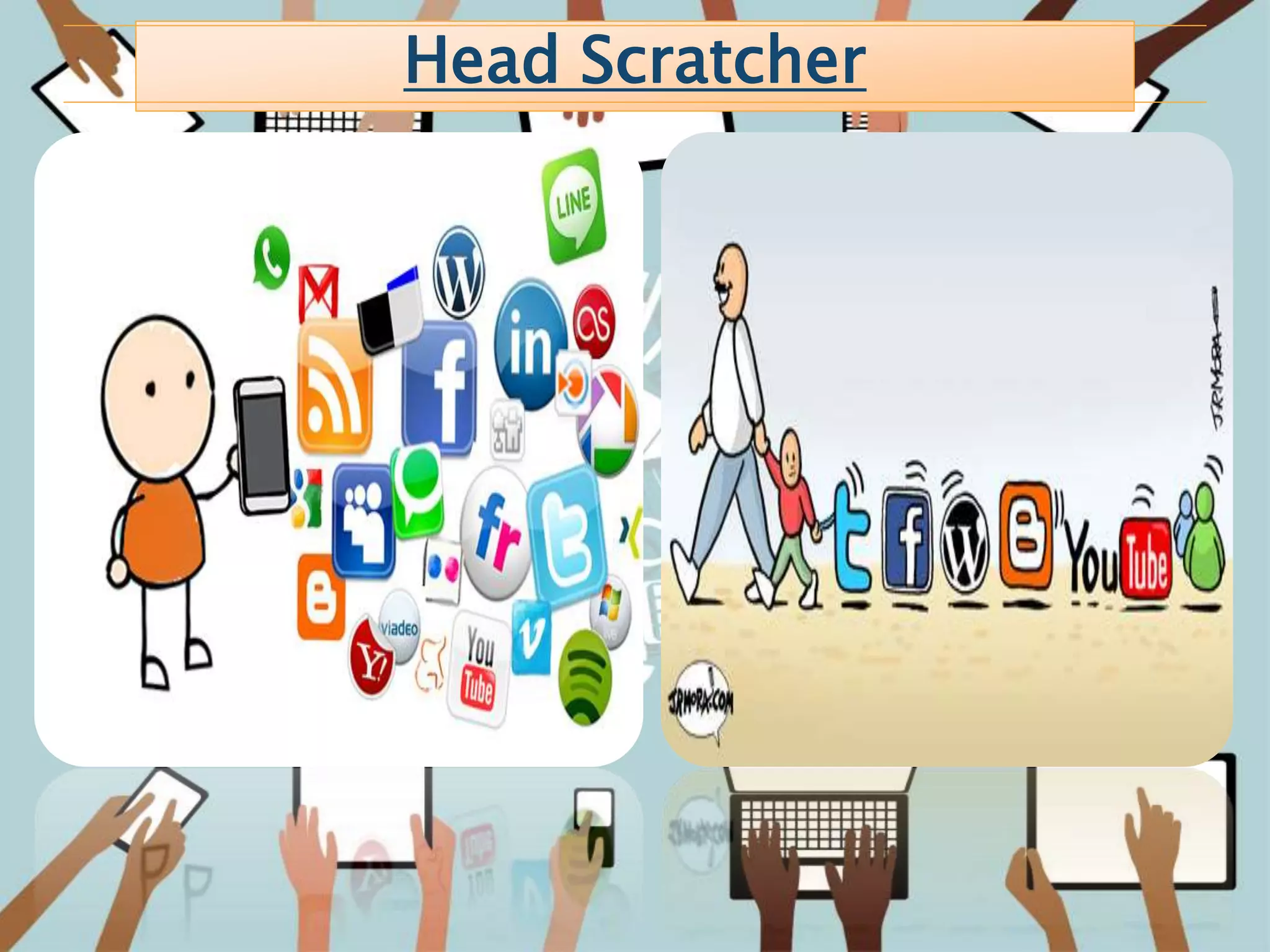
Head Scratcher
3
Delving into the Experiences of Teachers
on the Social Promotion of Students:
A Qualitative Exploration
Lead Researcher:
Aimee Joy C. Conejero
By:By:
Delving into the Experiences of Teachers
on the Social Promotion of Students:
A Qualitative Exploration
Lead Researcher:
Aimee Joy C. Conejero
6
Class Graffiti
Delving into the Experiences of Teachers
on the Social Promotion of Students:
A Qualitative Exploration
Lead Researcher:
Aimee Joy C. Conejero
By:
8
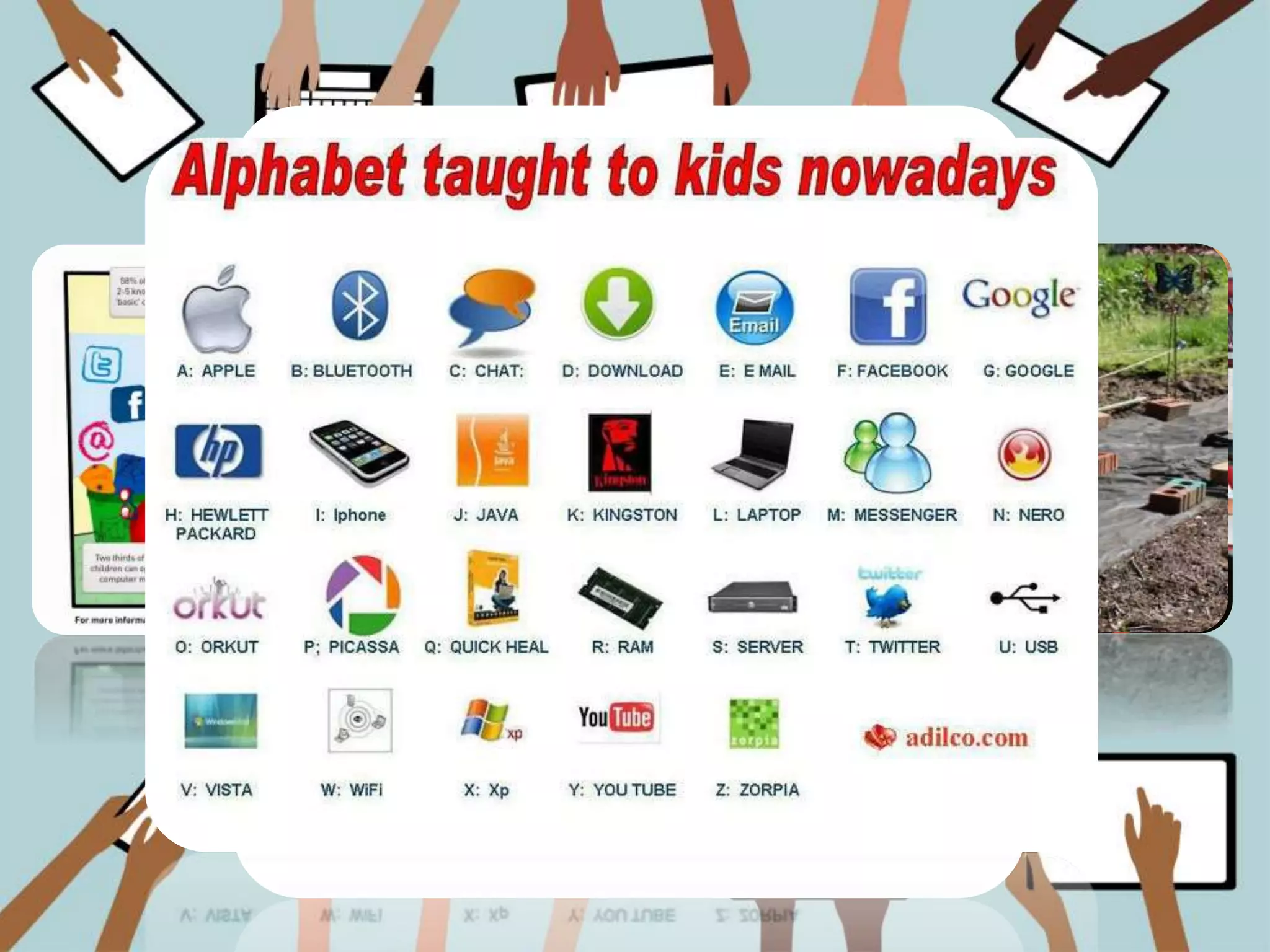
Today’s learners appear smarter, yet
they can’t read as their parents do and
they are addicted to the Internet. Even in
classes, their concentration is
questionable as they are uneasy to
simply sit and listen. They become alive
again through video presentations, group
activities and computer classes.
Nature of Learners
9
Teachers/Educators
 Generally use the traditional
education program which is
applicable to the learners in the
past.
 They fail to realize that the new
learners are information technology
or digital learners.
10
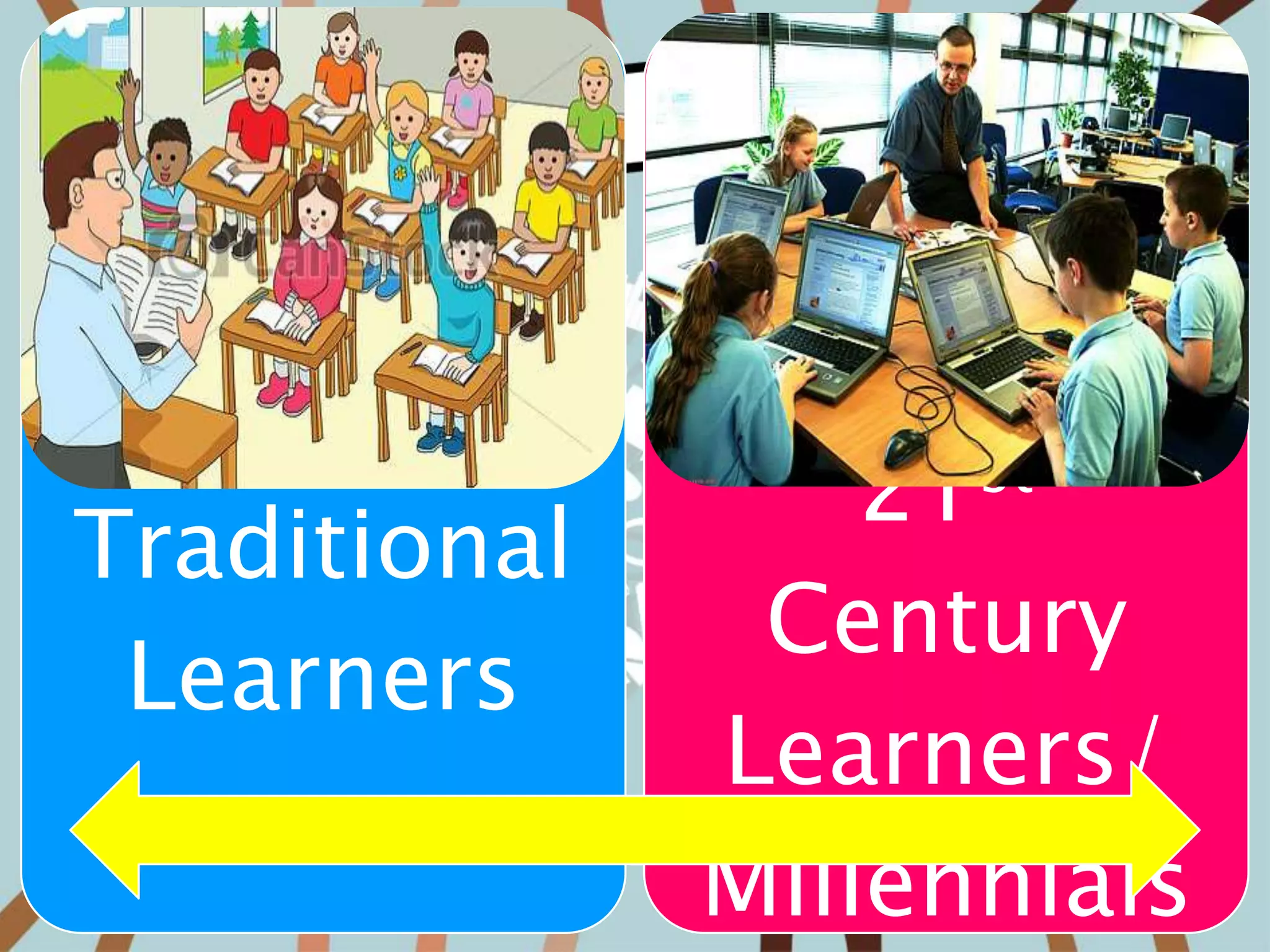
Traditional
Learners
21st
Century
Learners/
Millennials
11
12
Millennial Learners
 Spend more time talking to friends
over the phone, sending text
messages, interacting through the
social Internet media e.g. Facebook,
playing video games and surfing
the World Wide Web.
13
14
Daily exposure to information
technology strengthens the brain.
Current technological revolution is
creating an intellectual revolution,
faster and better than ever before.
15
Exposure to technology can harm
our eyes.
Tech cannot function without
electricity.
16
Jean Piaget’s
Chart
17
18
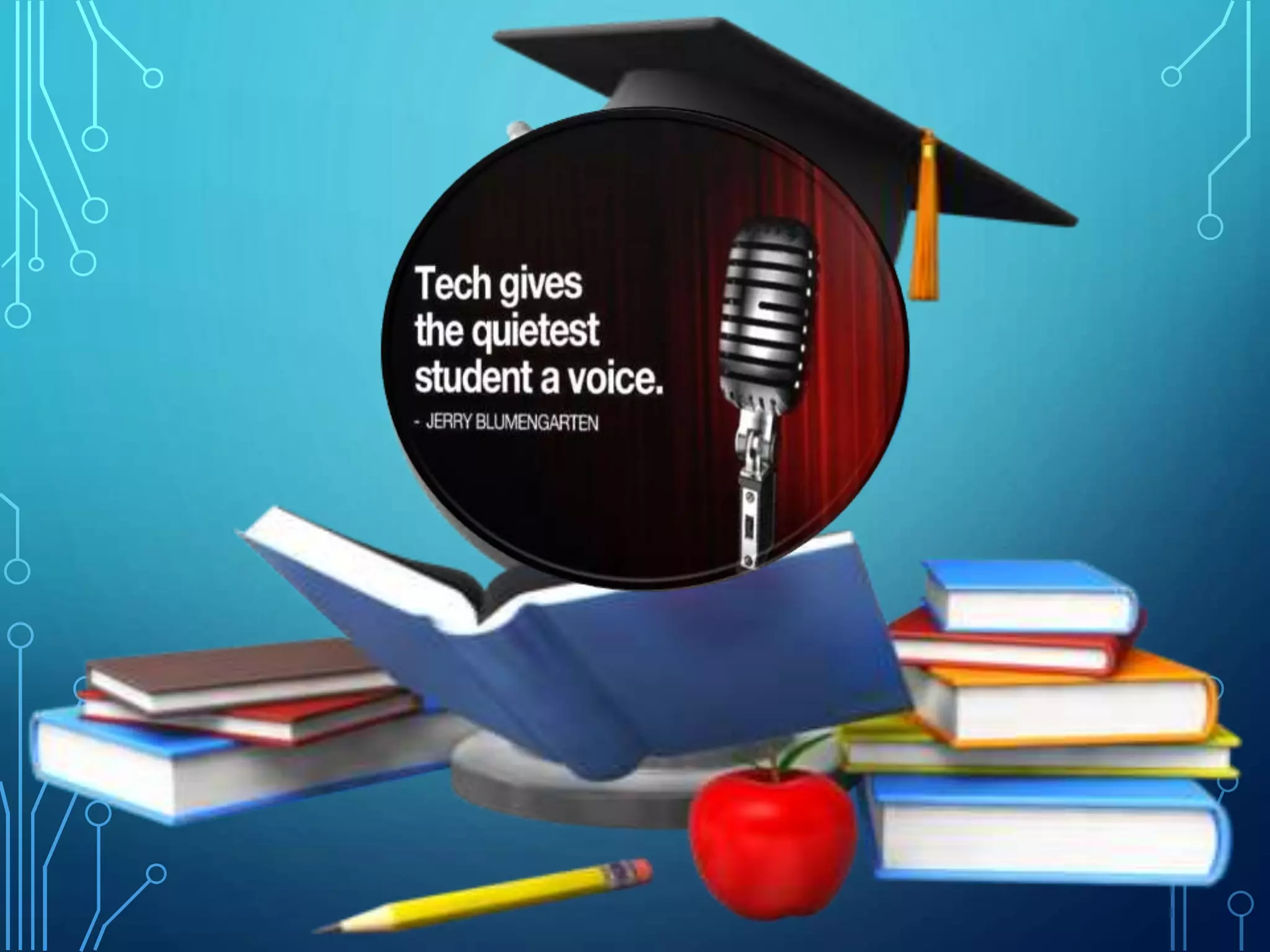
“As a future teacher, we
must be a
teachnology because
our learners are
learnology.”
REALIZA
TION
19
20
21

UNDERSTANDING TECHNOLOGY LEARNERS

  • 1.
  • 2.
  • 3.
  • 4.
    Delving into theExperiences of Teachers on the Social Promotion of Students: A Qualitative Exploration Lead Researcher: Aimee Joy C. Conejero By:By:
  • 5.
    Delving into theExperiences of Teachers on the Social Promotion of Students: A Qualitative Exploration Lead Researcher: Aimee Joy C. Conejero
  • 6.
  • 7.
    Delving into theExperiences of Teachers on the Social Promotion of Students: A Qualitative Exploration Lead Researcher: Aimee Joy C. Conejero By:
  • 8.
    8 Today’s learners appearsmarter, yet they can’t read as their parents do and they are addicted to the Internet. Even in classes, their concentration is questionable as they are uneasy to simply sit and listen. They become alive again through video presentations, group activities and computer classes. Nature of Learners
  • 9.
    9 Teachers/Educators  Generally usethe traditional education program which is applicable to the learners in the past.  They fail to realize that the new learners are information technology or digital learners.
  • 10.
  • 11.
  • 12.
    12 Millennial Learners  Spendmore time talking to friends over the phone, sending text messages, interacting through the social Internet media e.g. Facebook, playing video games and surfing the World Wide Web.
  • 13.
  • 14.
    14 Daily exposure toinformation technology strengthens the brain. Current technological revolution is creating an intellectual revolution, faster and better than ever before.
  • 15.
    15 Exposure to technologycan harm our eyes. Tech cannot function without electricity.
  • 16.
  • 17.
  • 18.
    18 “As a futureteacher, we must be a teachnology because our learners are learnology.” REALIZA TION
  • 19.
  • 20.
  • 21.

Editor's Notes

  • #3 Because as we all know, the 21st century learners are increasingly digital, constantly connected, has instant access, communicators and creators and most of all they are so called “LEARNOLOGY”
  • #4 One of the hottest and phenomenal topics in the field of Elementary Education now especially in public schools is about the social promotion that is regularly practice in schools today and degrade the importance of mastery and competence. The central issue about this was the problems associated with students progressing through the educational system when they have not learned what they were supposed to learn. Chen (2016) said that 85 large urban school districts do not have a policy endorsing social promotion. Yet a majority of teachers said they promoted students up that were not prepared for the next grade level. Reasons given for these social promotions were fear that high failure rates would reflect poorly on the school and school personnel, pressure exerted by principals and parents to promote unready students, knowledge that retention is ineffective, and the absence or insufficiency of effective educational alternatives to social promotion. Abbott (2014) found that a majority of participating public-school teachers reported that they promoted academically underprepared students in the preceding year. In one of the municipality here in Davao del Norte, public teachers there are practicing social promotion. We interviewed a particular teacher and she said that, academic promotion become part of their life as a teacher. Also on the part of their students who undergo academic promotion, they observed that some of those students are not really excelling in their subjects and just relying on the notion that “bawal mubagsak ang mga maestro”. Additionally, some elementary teachers (names are intentionally not mentioned for confidentiality) from the Division of Tagum City stated that they are really practicing social promotion academically because of the EFA or Education for All programs, No Retention Policy and NCLB or No Child Left Behind Act. These policies and programs were implemented by the Department of Education. Moreover, if teachers have failed students they are obliged to conduct summer classes without pay, or if not, they will make a module for students if they opt not to conduct the summer class. (names are intentionally not mentioned for confidentiality)
  • #7 Because as we all know, the 21st century learners are increasingly digital, constantly connected, has instant access, communicators and creators and most of all they are so called “LEARNOLOGY”
  • #10 But the concern is, mostly but not all, of our teachers nowadays are still using the traditional education program which is applicable to learners of the past. They fail to realized that the new generation of learners are not the kind of learners that they were before.
  • #11 Because as we all know, the 21st century learners are increasingly digital, constantly connected, has instant access, communicators and creators and most of all they are so called “LEARNOLOGY”
  • #12 Because as we all know, the 21st century learners are increasingly digital, constantly connected, has instant access, communicators and creators and most of all they are so called “LEARNOLOGY”
  • #13 Because as we all know, the 21st century learners are increasingly digital, constantly connected, has instant access, communicators and creators and most of all they are so called “LEARNOLOGY”
  • #19 One of the hottest and phenomenal topics in the field of Elementary Education now especially in public schools is about the social promotion that is regularly practice in schools today and degrade the importance of mastery and competence. The central issue about this was the problems associated with students progressing through the educational system when they have not learned what they were supposed to learn. Chen (2016) said that 85 large urban school districts do not have a policy endorsing social promotion. Yet a majority of teachers said they promoted students up that were not prepared for the next grade level. Reasons given for these social promotions were fear that high failure rates would reflect poorly on the school and school personnel, pressure exerted by principals and parents to promote unready students, knowledge that retention is ineffective, and the absence or insufficiency of effective educational alternatives to social promotion. Abbott (2014) found that a majority of participating public-school teachers reported that they promoted academically underprepared students in the preceding year. In one of the municipality here in Davao del Norte, public teachers there are practicing social promotion. We interviewed a particular teacher and she said that, academic promotion become part of their life as a teacher. Also on the part of their students who undergo academic promotion, they observed that some of those students are not really excelling in their subjects and just relying on the notion that “bawal mubagsak ang mga maestro”. Additionally, some elementary teachers (names are intentionally not mentioned for confidentiality) from the Division of Tagum City stated that they are really practicing social promotion academically because of the EFA or Education for All programs, No Retention Policy and NCLB or No Child Left Behind Act. These policies and programs were implemented by the Department of Education. Moreover, if teachers have failed students they are obliged to conduct summer classes without pay, or if not, they will make a module for students if they opt not to conduct the summer class. (names are intentionally not mentioned for confidentiality)
  • #22 Because as we all know, the 21st century learners are increasingly digital, constantly connected, has instant access, communicators and creators and most of all they are so called “LEARNOLOGY”